DHAHRAN — Saudi Arabia arrives at Saturday’s OPEC+ meeting holding a weapon it cannot fire: 3 million barrels per day of spare production capacity trapped behind a pipeline that maxes out at 7 million bpd, while futures markets have already priced in the damage, dragging Brent from $141.36 spot to $112.42 in forward contracts. The kingdom’s choice on April 5 — whether to abandon voluntary output cuts that have propped up oil prices since April 2023 — is less an energy decision than a war-financing calculation, one that pits Iran’s $164-per-barrel fiscal breakeven against Saudi Arabia’s own $87–94 threshold in a contest of who bleeds out slower.
Eight OPEC+ nations will decide whether to accelerate, pause, or fully unwind 1.65 million bpd of voluntary cuts that have anchored the cartel’s pricing power for three years. Standard Chartered’s head of energy research, Emily Ashford, warned on April 2 that the meeting “could result in abandonment of voluntary output cuts and compensation cuts” — language that spooked a market already reeling from the double compression of blocked Hormuz volumes and collapsing demand forecasts. But no decision made in a conference room can matter much when the Strait of Hormuz, the chokepoint through which 20 million bpd once flowed, remains shut.
Table of Contents
- What Will OPEC+ Decide on April 5?
- The Pipeline Trap: Why Paper Barrels Stay on Paper
- The 1986 Playbook and Why It Breaks in 2026
- Can Iran Survive an Oil Price Collapse?
- Saudi Arabia’s Fiscal Pain Threshold
- Does MBS’s Temporal Bet on a Short War Actually Work?
- The $29 Spread That Prices the War’s End
- Russia’s Quiet Veto Inside OPEC+
- Frequently Asked Questions
What Will OPEC+ Decide on April 5?
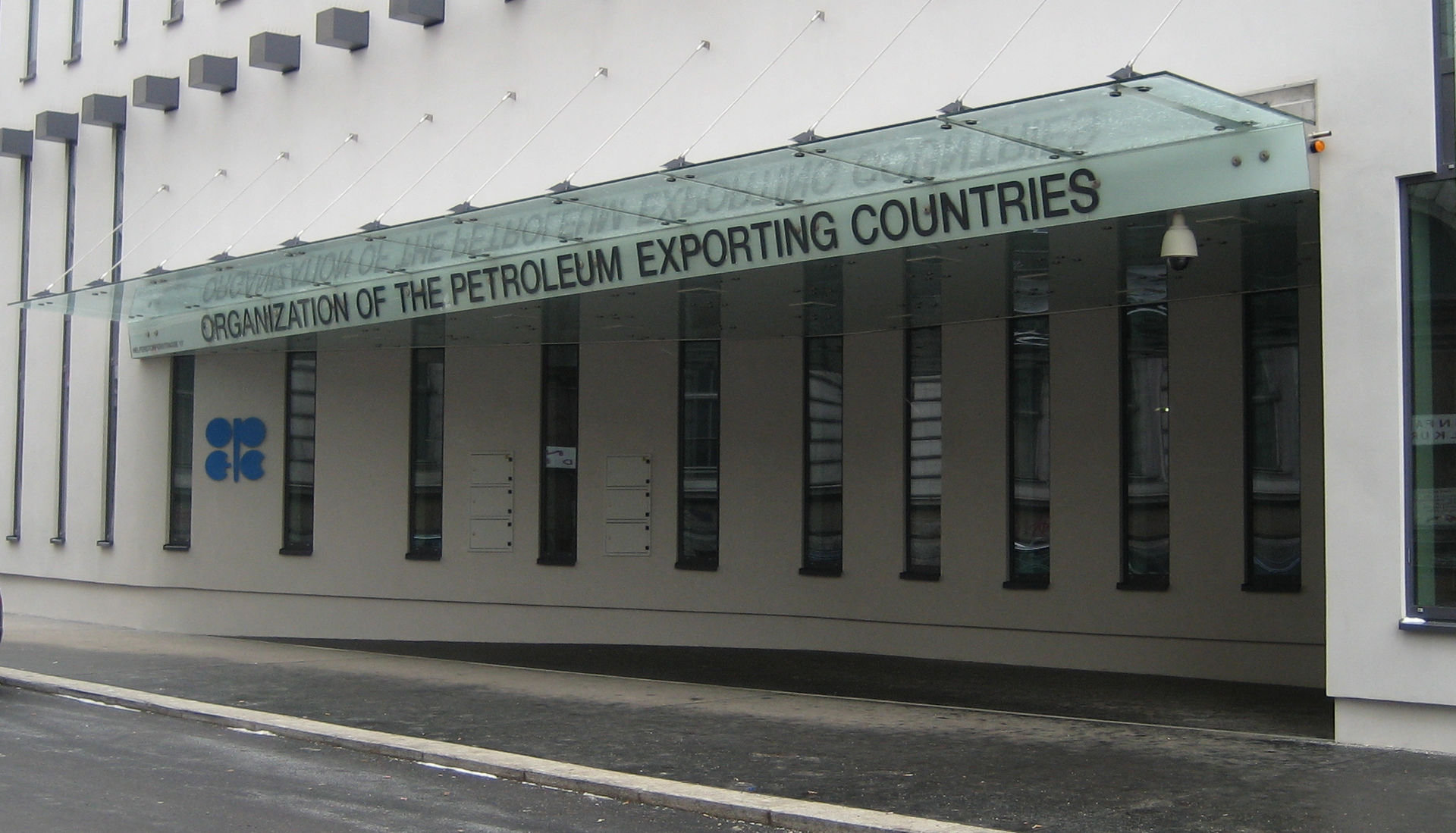
OPEC+ will most likely maintain its current trajectory of gradual unwinding — adding approximately 206,000 bpd per month as agreed on March 1 — rather than fully abandoning voluntary cuts, because the physical infrastructure to deliver additional barrels does not exist while Hormuz remains closed. The decision carries enormous symbolic weight but limited immediate market impact, a gap that defines the peculiar economics of wartime OPEC.
The voluntary cuts originated in April 2023, when Saudi Arabia, Russia, Iraq, the UAE, Kuwait, Kazakhstan, Algeria, and Oman collectively pulled 1.65 million bpd off the market to arrest a price slide driven by weakening Chinese demand. On March 1, 2026 — days before Iran’s missile barrage triggered the largest supply disruption in the history of the global oil market, according to the IEA — the group agreed to begin unwinding those cuts at 206,000 bpd for April. Saturday’s meeting must decide the pace from May onward.
Returning real barrels to the market, particularly given logistical constraints on exports in the Gulf, will be more difficult to achieve.
— Emily Ashford, Head of Energy Research, Standard Chartered Bank, April 2, 2026
Three options sit on the table. The first is continuation — another 206,000 bpd tranche for May, kicking the structural decision down the road. The second is acceleration, which would signal intent to flood the market once Hormuz reopens but change nothing in the near term. The third is full abandonment of the voluntary framework, a move that would crash futures prices and amount to a declaration that OPEC+ no longer believes coordinated restraint serves its members’ interests during wartime. CSIS energy analyst Raad Alkadiri assessed that the group is “most likely to continue its standing short-term market management strategy — adjusting supply to prevent price declines” — which in practice means option one, the path of least disruption.
The problem with forecasting the outcome is that MBS’s strategic imperatives point in a different direction from his fiscal ones. Collapsing the price hurts Iran more than it hurts Saudi Arabia, because Iran’s breakeven sits $70 per barrel above the kingdom’s. But Saudi Arabia is already absorbing a painful GDP contraction, and every dollar off the Brent price widens the hole in a budget that was stretched before a single missile flew.
The Pipeline Trap: Why Paper Barrels Stay on Paper
The East-West pipeline — the 1,200-kilometre artery connecting Saudi Arabia’s Eastern Province oil fields to the Red Sea port of Yanbu — has been running at its maximum capacity of 7 million bpd since March 11, when Hormuz effectively closed. Of those 7 million barrels, approximately 2 million bpd are diverted to Saudi domestic refineries, leaving roughly 5 million bpd available for export through Yanbu. Before the war, Saudi Arabia was exporting more than 7 million bpd through multiple ports, including the now-inaccessible Ras Tanura terminal on the Persian Gulf coast.
This creates a physical ceiling that renders any OPEC+ paper decision partly theoretical. Saudi Arabia raised production by 340,000 bpd to 10.34 million bpd in February 2026, pre-positioning volumes ahead of the Hormuz shutdown and notifying OPEC of a 782,000-bpd surge. But IEA data from March showed the kingdom sitting on 1.71 million bpd of effective spare capacity it “cannot currently deploy” due to the shipping constraint. Even if OPEC+ unanimously agreed to abandon all voluntary cuts on Saturday, those barrels would have nowhere to go until either Hormuz reopens or alternative export infrastructure is built — a process that would take years, not weeks.
Kate Dourian, a fellow at the Arab Gulf States Institute, estimated that “Yanbu capacity is likely 2–3 million bpd currently, not the theoretical maximums” — a figure that, if accurate, means Saudi Arabia is already exporting close to the physical limit. Monica Malik, ADCB’s chief economist, reinforced the point: “If they export 7 million bpd, the fiscal position strengthens — however, recent tanker data shows much lower volumes than 7 million.” The gap between pipeline capacity and actual tanker loadings at Yanbu is the gap between Saudi Arabia’s stated production policy and the oil that actually reaches buyers.
Iran’s recent drone strike on the SAMREF refinery at Yanbu exposed a vulnerability that OPEC+ production quotas cannot address. The kingdom’s entire export capacity now runs through a single corridor, and Tehran has demonstrated it can reach both ends of Saudi Arabia’s oil infrastructure. Any production increase agreed on April 5 would funnel additional volume through this same bottleneck, concentrating risk rather than distributing it.
The 1986 Playbook and Why It Breaks in 2026
Saudi strategists have done this before. In 1986, Riyadh opened the taps from 2.4 million bpd to 5 million bpd in four months, deliberately crashing prices from $32 to $10 per barrel in what amounted to an economic assassination attempt on the Soviet Union. It worked: the USSR lost more than $20 billion that year alone, roughly 7.5% of its annual income, accelerating the fiscal crisis that contributed to the empire’s collapse. The kingdom repeated a version of the strategy in 2014, refusing to cut output and letting prices fall from $115 to below $30 by January 2016, this time targeting US shale producers.
The institutional memory is there, and so is the appetite. Saudi Arabia has historically treated regional wars as market-share opportunities — during the 1990 Gulf War, Aramco surged production from 5.3 million bpd to 8.35 million bpd in five months, a 57% increase. The pattern is consistent: when competitors are distracted or disabled, Riyadh grabs volume.
But the 2026 version of this playbook has a flaw that the 1986 and 2014 versions did not. In both previous campaigns, the kingdom could physically deliver the additional barrels. The pipeline from the Eastern Province to Yanbu could not handle a full Soviet-style production surge even if Riyadh wanted one, because every barrel above the current 7-million-bpd throughput has no export route. The weapon exists on paper — 3 million bpd of spare capacity — but it is a gun with a blocked barrel.
| Factor | 1986 (vs. USSR) | 2026 (vs. Iran) |
|---|---|---|
| Production surge | 2.4 to 5.0 million bpd | 10.3 million bpd (capped by pipeline) |
| Price collapse | $32 to $10/barrel | $141 spot / $112 futures (and falling) |
| Target fiscal breakeven | ~$25/barrel (USSR) | ~$164/barrel (Iran, 2026 IMF est.) |
| Saudi fiscal breakeven | ~$18/barrel | $87–94/barrel (up to $111 incl. PIF) |
| Export route | Multiple open ports | Yanbu only (Hormuz closed) |
| Target adversary export disruption | None (USSR exported via pipelines) | Iran also blocked by Hormuz |
| Duration of Saudi fiscal pain | ~18 months | Unknown — depends on war length |
The other difference is that the target is already wounded. Iran’s crude exports from Persian Gulf terminals had fallen to 1.39 million bpd by January 2026 — a 26% year-on-year drop — before the war even started, and the Hormuz closure cut off the strait that Iran itself controls. Tehran played its strongest card and dealt itself the worst hand: it cannot export through the chokepoint it shut down. A Saudi price-war strategy aimed at finishing Iran off financially may be redundant when Iran’s own military strategy has already done much of the damage.
Can Iran Survive an Oil Price Collapse?
Iran needs oil at approximately $164 per barrel to balance its 2026 budget, according to IMF estimates — up from a pre-war figure of $124 per barrel, with the gap driven by wartime military expenditure and the collapse of non-oil revenue. Even before the Hormuz closure, Tehran was collecting far less than headline export figures suggested: a member of Iran’s parliament Budget Commission disclosed that in the first eight months of the fiscal year, Iran earned $20 billion from oil exports on paper but only $13 billion actually reached the treasury, meaning 35% of nominal revenue evaporated somewhere between the tanker and the central bank.
The discounting problem compounds the collection problem. Iran has been forced to sell crude at $11–12 per barrel below benchmark prices to retain Chinese buyers — more than triple the $3-per-barrel discount it offered before the war. At Brent futures of $112, that means Iranian crude is selling for approximately $100–101 per barrel when it sells at all, against a fiscal need of $164. Every barrel Iran manages to export loses the state approximately $63 relative to what the budget requires, and that is before accounting for the 35% collection gap.
CSIS analyst Sarah Emerson noted that “energy disruption will pressure Iran too,” pointing to Tehran’s reliance on crude exports to China and the paradox that the Hormuz closure cuts off Iran’s own replenishment capabilities. Iranian state television has framed OPEC+’s March 1 production increase as evidence of Gulf Arab betrayal coordinated with US-Israeli military strikes — a narrative that plays domestically but cannot paper over an arithmetic that puts Tehran fighting a war on a budget that was insufficient before the first missile launched, selling oil at a discount into a market where its primary export route is closed by its own military operation.
If Saudi Arabia were to drive Brent futures below $100 through an aggressive OPEC+ output signal, Iran’s per-barrel loss against breakeven would exceed $75, and the collection rate suggests Tehran would see perhaps 50–55 cents on every dollar of that reduced revenue. Iran’s war effort cannot survive on those economics for more than a few months — which raises the possibility that Iran’s target list reflects a military strategy designed to end the war before the money runs out.
Saudi Arabia’s Fiscal Pain Threshold
Saudi Arabia can survive lower oil prices far longer than Iran can, but “survive” is not the same as “thrive,” and the kingdom entered this war with a budget already under strain. The IMF places Saudi Arabia’s fiscal breakeven at approximately $78–87 per barrel. Bloomberg Economics puts it at $94. When you add Public Investment Fund expenditures — the spending vehicle for virtually every Vision 2030 megaproject — the number rises to $111 per barrel, just $1 below where Brent futures currently trade.
At $112 per barrel and roughly 9 million bpd of export-equivalent production, the kingdom generates approximately $119 million per day in revenue above its baseline fiscal breakeven — a cushion that sounds comfortable until you subtract war costs. Goldman Sachs MENA economist Farouk Soussa estimated that Gulf states collectively are losing approximately $700 million in oil revenue daily due to the Hormuz closure, a figure that captures the gap between what these nations would be earning at pre-war export volumes and what they are actually collecting through constrained alternative routes.
Tim Callen, a former IMF mission chief to Saudi Arabia, framed the dilemma precisely: “The budget depends on both oil prices and production — as exports face shipping difficulties, production suffers, determining overall impact.” The kingdom is caught between two moving variables, and a deliberate price crash through OPEC+ output signals would move one in the wrong direction while the war keeps the other pinned. Goldman Sachs projects Saudi GDP declining approximately 3.0% if the disruption persists, a figure that would represent the worst economic performance since the 2020 pandemic crash.
The double compression — Hormuz blocking the volume while market expectations kill the forward price — is already punishing an economy increasingly isolated by the war. Any OPEC+ decision that further depresses futures would widen the gap between what Saudi Arabia needs and what it can earn, transferring pain from Riyadh’s strategic adversary to its own treasury.
Does MBS’s Temporal Bet on a Short War Actually Work?
The logic of weaponizing oil supply against Iran requires one assumption that dwarfs all others in importance: that the war ends fast enough for Saudi Arabia to absorb the short-term revenue loss before it compounds into structural fiscal damage. If MBS is making the 1986 bet — accept pain now to collapse the adversary’s financing — the math works only if “now” means weeks or a few months, not a year or more.
Consider the arithmetic. At current Brent futures of $112, Saudi Arabia’s daily revenue cushion above the IMF breakeven is approximately $119 million. If an aggressive output signal crashed futures to $95 — the approximate level where Saudi Arabia’s Bloomberg-estimated breakeven starts to bite — that cushion disappears entirely, and the kingdom begins deficit spending on a war it did not start and cannot easily stop. Every month at $95 Brent would cost the Saudi treasury roughly $3.6 billion more than it earns, a burn rate that the kingdom’s $410 billion in foreign reserves can sustain for years but that would force painful choices on Vision 2030 spending within quarters.
Iran’s position is worse — at $95 Brent minus its $11–12 discount, Tehran would be selling crude at $83–84 against a $164 breakeven, losing more than $80 per barrel before the 35% collection gap even applies. The differential pain is real and measurable. But the temporal question remains: can MBS be confident enough in a short war to justify a strategy whose upside depends on timing he does not control?
Karen E. Young and Tatiana Mitrova at Columbia’s Center on Global Energy Policy identified the deeper structural bind. Saudi Arabia faces a dilemma where aligning with Washington risks fracturing OPEC+ unity and triggering price wars, while maintaining the Russia relationship could strain US-Saudi ties — and all of this is happening precisely as Vision 2030 demands increased fiscal discipline. The temporal bet is not just about oil prices and war duration; it is about whether the entire post-2016 economic reform programme can survive a period of deliberate revenue suppression.
| Metric | Saudi Arabia | Iran |
|---|---|---|
| IMF fiscal breakeven | $78–87/barrel | ~$164/barrel |
| Bloomberg/expanded breakeven | $94–111/barrel (incl. PIF) | N/A |
| Current export price received | ~$112/barrel (futures) | ~$100–101/barrel (benchmark minus discount) |
| Revenue collection rate | ~95%+ (est.) | ~65% ($13B of $20B collected) |
| Pre-war export volume | >7 million bpd | 1.39 million bpd (Jan 2026) |
| Current export constraint | ~5 million bpd (Yanbu only) | Hormuz-blocked (own closure) |
The $29 Spread That Prices the War’s End
Brent crude spot sits at $141.36 as of April 2. Brent futures for near-term delivery traded at $112.42 on April 3. That $28.94 gap — the widest backwardation in the contract’s history — is the market’s real-time probability estimate that the Hormuz disruption ends within months, and it tells you more about the OPEC+ meeting’s likely impact than any ministerial communique will.
The spread functions as a built-in pricing mechanism for the war’s duration. Spot prices reflect the physical shortage today — tankers cannot transit Hormuz, Gulf crude is bottlenecked through Yanbu and alternative routes, and every barrel on the water commands a premium. Futures prices reflect the market’s expectation that this shortage is temporary, that Hormuz will reopen, and that the roughly 8 million bpd of curtailed Gulf production (per IEA estimates) will come back. A roughly 50% implied probability of near-term resolution is baked into that $29 spread.
Any signal from the April 5 OPEC+ meeting that Saudi Arabia intends to flood the market once Hormuz reopens would widen this spread further by pulling futures down while spot remains elevated by the physical shortage. Conversely, a decision to maintain restraint would narrow the spread by reassuring the market that post-war supply will not overshoot demand. The meeting’s real audience is not energy ministers or national oil company executives — it is the trading desks that price whether the war ends in April or drags past summer.
The irony is that OPEC+ members who want to weaponize supply against Iran are constrained by the same Hormuz closure that creates the price premium they would sacrifice. Any production increase agreed on Saturday cannot reach the physical market until Hormuz reopens, and when Hormuz reopens, the spot premium that makes $141 oil possible will collapse on its own. Saudi Arabia would be selling futures at $112 or below to gain a strategic advantage over an adversary whose oil infrastructure is already crippled — paying a fiscal price for a military outcome that may arrive regardless.
Russia’s Quiet Veto Inside OPEC+
Moscow has reasons to resist any aggressive Saudi move on production quotas that have nothing to do with Iran and everything to do with Ukraine. Russia, the second-largest producer in the OPEC+ framework, has consistently pushed back against rapid unwinding of voluntary cuts because its own revenue depends on price stability — and because the 1986 precedent that Saudi strategists cite as a template is the same precedent that Russian strategists remember as an economic attack. Alkadiri at CSIS noted that “fiscal pressure on key producers, including Saudi Arabia, is growing sharply” and that “OPEC+’s market management task this year just got a lot more difficult,” diplomatic language for the fact that the alliance’s two most powerful members want different things from Saturday’s meeting.
Saudi Arabia’s pre-war production surge — the 782,000 bpd notified to OPEC in February — already strained the alliance. Russia, Iraq, and Kazakhstan had been under pressure for months to compensate for overproduction relative to their quotas, and Saudi Arabia’s unilateral increase before the war complicated the compliance framework that holds OPEC+ together. A full abandonment of voluntary cuts would effectively end the cooperative production management that has defined the OPEC+ era since 2016, returning the market to a free-for-all that benefits whoever can ship the most barrels fastest.
MBS is trying to use the same OPEC+ framework to punish one adversary (Iran) without alienating a partner (Russia) whose cooperation he needs for post-war price management, all while protecting the US-Saudi alliance newly upgraded to Major Non-NATO Ally status — a balancing act that the April 5 communique will either sustain or shatter.
The most likely outcome is a statement that changes nothing substantive — another 206,000-bpd tranche, another round of compliance reviews, another commitment to “market stability” — because that is the only outcome that all eight voluntary-cut participants can agree to. The real decision on weaponizing oil supply against Iran will not be made at an OPEC+ conference table; it will be made by whoever decides when Hormuz reopens.
Frequently Asked Questions
What are the voluntary cuts that OPEC+ is debating on April 5?
The voluntary cuts are production reductions totalling 1.65 million bpd, initiated in April 2023 by eight OPEC+ members — Saudi Arabia, Russia, Iraq, UAE, Kuwait, Kazakhstan, Algeria, and Oman — separate from the broader OPEC+ mandatory quotas. Unlike mandatory quotas that require full group consensus, these voluntary cuts were self-imposed by willing participants, which means they can technically be unwound unilaterally. The March 1 agreement began restoring 206,000 bpd for April. The April 5 meeting must set the pace for May and potentially signal the timeline for full reversal of the remaining cuts.
How much oil does the Strait of Hormuz normally handle?
Before the war, approximately 20 million barrels per day transited the Strait of Hormuz — roughly 20% of global oil consumption and more than a third of all seaborne crude trade. The IEA’s March 12 report described the strait’s effective closure as reducing that flow to “a trickle,” curtailing Gulf crude production by at least 8 million bpd and severing the primary export route for Saudi Arabia, the UAE, Kuwait, Iraq, and Iran simultaneously. The partial reopening under Iranian naval escort with yuan-denominated tolls has restored only a fraction of pre-war volumes, and Western ships paying Iran to cross remain a political flashpoint rather than a commercial solution.
At what oil price does Iran’s war effort become financially unsustainable?
Below approximately $100 per barrel, Iran’s war financing enters crisis territory. With a $164 fiscal breakeven, an $11–12 discount forced on Chinese buyers, and only 65 cents of every nominal dollar of export revenue actually reaching the treasury, Iran needs Brent trading well above $140 to cover its stated budget needs. At the $95 Brent scenario modeled by Saudi planners, Tehran would receive roughly $83–84 per barrel against that $164 breakeven — a per-barrel deficit exceeding $80 before the collection gap applies. Iran’s historical pattern is to accelerate military operations when fiscal pressure peaks rather than negotiate from weakness.
Could Saudi Arabia increase production even if OPEC+ agrees to unwind cuts?
Technically yes, physically no — and the distinction is the entire story of Saturday’s meeting. Saudi Arabia holds approximately 3 million bpd of spare capacity and was producing 10.34 million bpd in February, but the East-West pipeline maxes out at 7 million bpd, and Yanbu is the only functioning major export terminal. With 2 million bpd consumed by domestic refineries, the effective export ceiling through Yanbu is roughly 5 million bpd, which tanker data suggests is close to the current maximum. Increasing production without a functioning Hormuz export route would simply fill domestic storage tanks, not pressure global prices or Iranian revenue.
Why is Iran’s fiscal breakeven so much higher than Saudi Arabia’s?
Iran’s $164-per-barrel breakeven (2026 IMF estimate, up from $124 pre-war) reflects three compounding factors absent from the Saudi equation. First, Iran’s non-oil revenue base has been eroded by decades of sanctions, making the budget disproportionately dependent on crude exports. Second, wartime military spending has added an estimated $40 per barrel to the breakeven calculation. Third, Iran’s sanctions-related collection problem — only 65% of nominal export revenue actually reaches the treasury — means Tehran needs a higher gross price to achieve the same net fiscal intake, a structural tax on Iranian crude that Saudi Arabia does not pay.