
The ceasefire was nine hours old when the bombs fell on Corniche al-Mazraa.
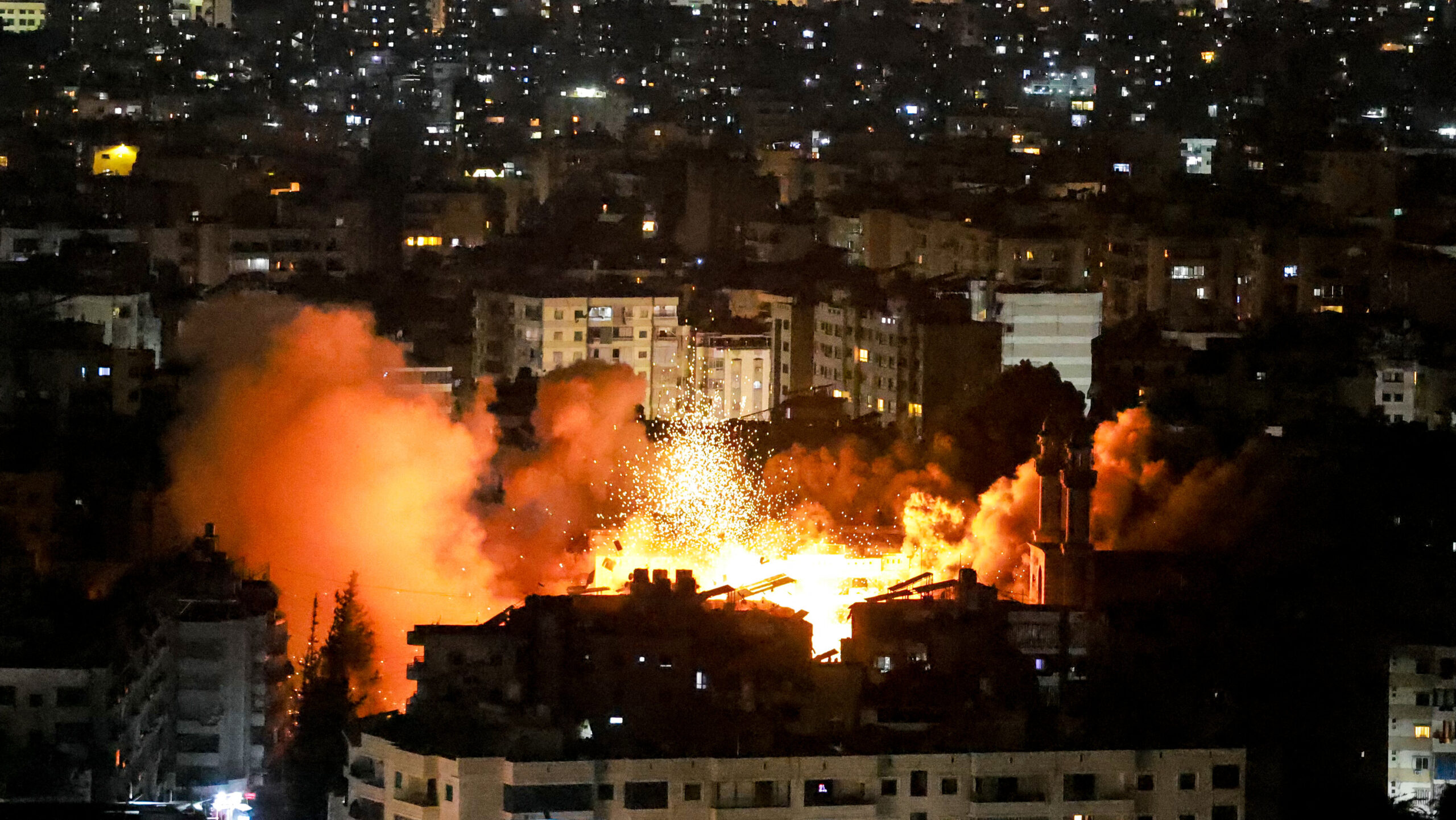
It was rush hour in one of Beirut’s busiest commercial districts — a neighbourhood of nut shops and dried-fruit vendors, apartment blocks and crowded pavements. No evacuation warning had been issued. No leaflets had been dropped. At approximately 4 p.m. local time on April 8, fifty Israeli fighter jets released 160 munitions across more than 100 targets in Lebanon simultaneously. The Israeli Defence Forces said afterward that the entire first wave was completed within ten minutes.
Associated Press journalists who reached Corniche al-Mazraa reported charred bodies in vehicles and on the ground at one of the capital’s busiest intersections. A member of the Beirut municipal council, Mohammed Balouza, stood in the wreckage and said what survivors across five neighbourhoods were saying: “This is a residential area. There is nothing here.”
The Israeli military had a name for it. Operation Eternal Darkness. It had been, by the IDF’s own admission, “planned for several weeks.” The IDF Arabic-language spokesperson confirmed that most of the targeted sites were located “within civilian areas.” The BBC assessed the actual military gains of the operation as “limited.”
By midnight, Lebanon’s Civil Defence reported 254 people killed and 1,165 wounded — the single deadliest day of the entire war across all theatres, surpassing any 24-hour period in Iran, Israel, or the Gulf. Lebanon declared a national day of mourning. President Joseph Aoun called it a “massacre.” The head of Lebanon’s doctors’ syndicate, Elias Chlela, issued an emergency appeal for “all physicians from all specialities” to go to any hospital they could reach. The American University of Beirut Medical Center called for blood donations of all types. MedGlobal’s Lebanon director, Dr Tania Baban, described the situation in Beirut as “total chaos” and called the attacks “an open war crime.”
This was not collateral damage from an ongoing operation. This was a pre-planned, mass-casualty strike executed in the precise window between the announcement of a ceasefire and the beginning of peace negotiations — designed to reshape facts on the ground before anyone sat down at a table in Islamabad.
The Middle East briefing 3,000+ readers start their day with.
One email. Every weekday morning. Free.
The Ceasefire That Didn’t Mean What Everyone Thought
At 6:32 p.m. Eastern on April 7, President Trump announced a two-week ceasefire with Iran, conditional on the reopening of the Strait of Hormuz. Ninety minutes earlier, he had been threatening to destroy Iran’s power grid and bridges. The abrupt reversal was brokered by Pakistan’s Prime Minister Shehbaz Sharif and army chief General Asim Munir, who had spent the preceding 48 hours shuttling messages between Washington and Tehran.
Sharif’s announcement was unambiguous. He wrote on X: “The Islamic Republic of Iran and the United States of America, along with their allies, have agreed to an immediate ceasefire everywhere, including Lebanon and elsewhere, EFFECTIVE IMMEDIATELY.” The word “everywhere” left no room for geographical exceptions. The phrase “including Lebanon” was not incidental — it addressed the question everyone in the region was asking.
Iran’s position was consistent with Sharif’s. Tehran’s 10-point proposal, which Trump called “a workable basis on which to negotiate,” explicitly demanded the “cessation of the war against all components of the resistance axis” — language that includes Hezbollah by definition, by design, and by Tehran’s repeated public statements over the preceding five weeks. Iran’s Foreign Minister Araghchi confirmed that the ceasefire covered “all fronts.”
Three hours later, Netanyahu’s office issued a statement — in English only, not Hebrew — that contradicted every word of it. “Israel supports President Trump’s decision to suspend strikes against Iran for two weeks,” it read. “The two-week ceasefire does not include Lebanon.”
Then came the detail that explains everything. Axios reported, citing a senior American official, that Netanyahu had called Trump shortly before the ceasefire announcement. During that call, Netanyahu raised the issue of continuing military operations in Lebanon. Trump did not object. In the language of presidential diplomacy, not objecting is a green light. Netanyahu asked. Trump did not say stop. The bombs were already loaded.
Trump confirmed the exclusion publicly. Asked by PBS why Lebanon was not included, he answered: “Because of Hezbollah. They were not included in the deal. That’ll get taken care of too.” Vice President Vance, speaking in Budapest, was more blunt. He said Iran’s belief that Lebanon was covered was a “legitimate misunderstanding” and added: “If Iran wants to let this negotiation fall apart in a conflict where they were getting hammered, over Lebanon, which has nothing to do with them … that would be dumb.”
White House Press Secretary Karoline Leavitt formalised the position: the ceasefire covers only direct US-Iran hostilities and the Strait of Hormuz. Lebanon is not included. The mediator said one thing. The parties said another. And in the gap between those two positions, 254 people died.
What Happened on the Ground
The scale of the April 8 strikes was without precedent in the current Lebanon war. The IDF described them as the “largest coordinated strike” since fighting resumed on March 2. The areas hit included central Beirut — five neighbourhoods that had not previously been targeted — as well as the southern suburbs, the port city of Sidon, the Bekaa Valley in eastern Lebanon, and the coastal city of Tyre in the south.
The central Beirut strikes were the most devastating and the most politically explosive. Israel had largely avoided striking central Beirut since March 2, concentrating its campaign on the southern suburbs (Dahieh), southern Lebanon, and the Bekaa Valley. On April 8, bombs fell on Corniche al-Mazraa, Barbour, Ain al-Mreisseh, Burj Abi Haidar, and Tallet al-Khayyat — mixed residential and commercial areas in the heart of the capital. No warnings were issued for any of them.
In Sidon, an Israeli strike hit a café during what had been, minutes earlier, an ordinary afternoon. The Daily Sabah reported cards, leftover snacks, and plastic plates littered across bloodstained ground. “Fear … pure fear,” survivor Moustafa Chahid told The National. “I keep replaying the scene in my head … people just living, playing … and suddenly, a massacre.”
In the Bekaa Valley village of Shmestar, an Israeli airstrike hit a cemetery during a funeral, killing at least ten mourners and wounding four others. The Lebanese National News Agency confirmed the strike hit the cemetery directly while the burial was underway.
In the coastal town of Adloun, south of Sidon, three girls were killed. Near Tyre, Israel struck an ambulance. At Hiram Hospital in Tyre, Doctors Without Borders reported that its healthcare staff were injured by Israeli forces, with extensive damage to the facility. A separate strike near the hospital killed four more people.
Hezbollah, notably, had halted all attacks on Israel hours before the strikes began. A political source close to the group told Reuters that Hezbollah had been “notified of a ceasefire” and “committed to it since this morning.” The group’s last confirmed attack on Israel occurred at approximately 1 a.m. on April 8, around the time the ceasefire took effect. Israel’s largest single assault of the war against Lebanon was launched against an enemy that had already stopped fighting.
The Strategic Logic — And Its Costs
Operation Eternal Darkness was not impulsive. The IDF confirmed it had been planned for weeks. The timing — hours after a ceasefire that Israel insisted did not cover Lebanon — was not coincidental. It was the point.
Netanyahu’s calculation is legible. With Iran’s direct military capacity degraded, Hormuz nominally reopening, and the United States pivoting to diplomacy, the window for large-scale operations in Lebanon was closing. If the Islamabad talks produce a comprehensive deal that Iran insists must include Lebanon, Israel’s freedom to operate against Hezbollah narrows dramatically. April 8 was the last day Netanyahu could conduct an operation of this magnitude with full American acquiescence — or at least American silence.
The military objective, insofar as it was articulated, was the destruction of Hezbollah command infrastructure. Israel claimed to have killed Naim Qassem’s secretary — a senior aide to Hezbollah’s chief — along with “hundreds of Hezbollah terrorists at command centres across Lebanon.” Defence Minister Katz described the targets as Hezbollah infrastructure. The IDF Chief of Staff, Lt. Gen. Eyal Zamir, said Israel would continue to “utilise every operational opportunity.”
The cost of that operational opportunity was 254 lives in a single day, in a country that was not party to the war between the United States and Iran, struck by an ally of the country that had just signed a ceasefire. The BBC’s assessment — that the military gains were “limited” — suggests the operation achieved less against Hezbollah’s command structure than it achieved against the ceasefire’s credibility.
The Ceasefire Fractures
Iran’s response was immediate and multi-layered. The Supreme National Security Council condemned the strikes as a “grave violation.” Araghchi called counterparts in Pakistan, Turkey, and several European capitals, describing the Lebanon attacks as a breach of the agreement. Parliament Speaker Ghalibaf wrote on X that there was “no room for denial and backtracking” and warned of “strong responses.” An unnamed Iranian official told Fars that Tehran would consider resuming attacks on Israel and closing the Strait of Hormuz if the Lebanon campaign continued.
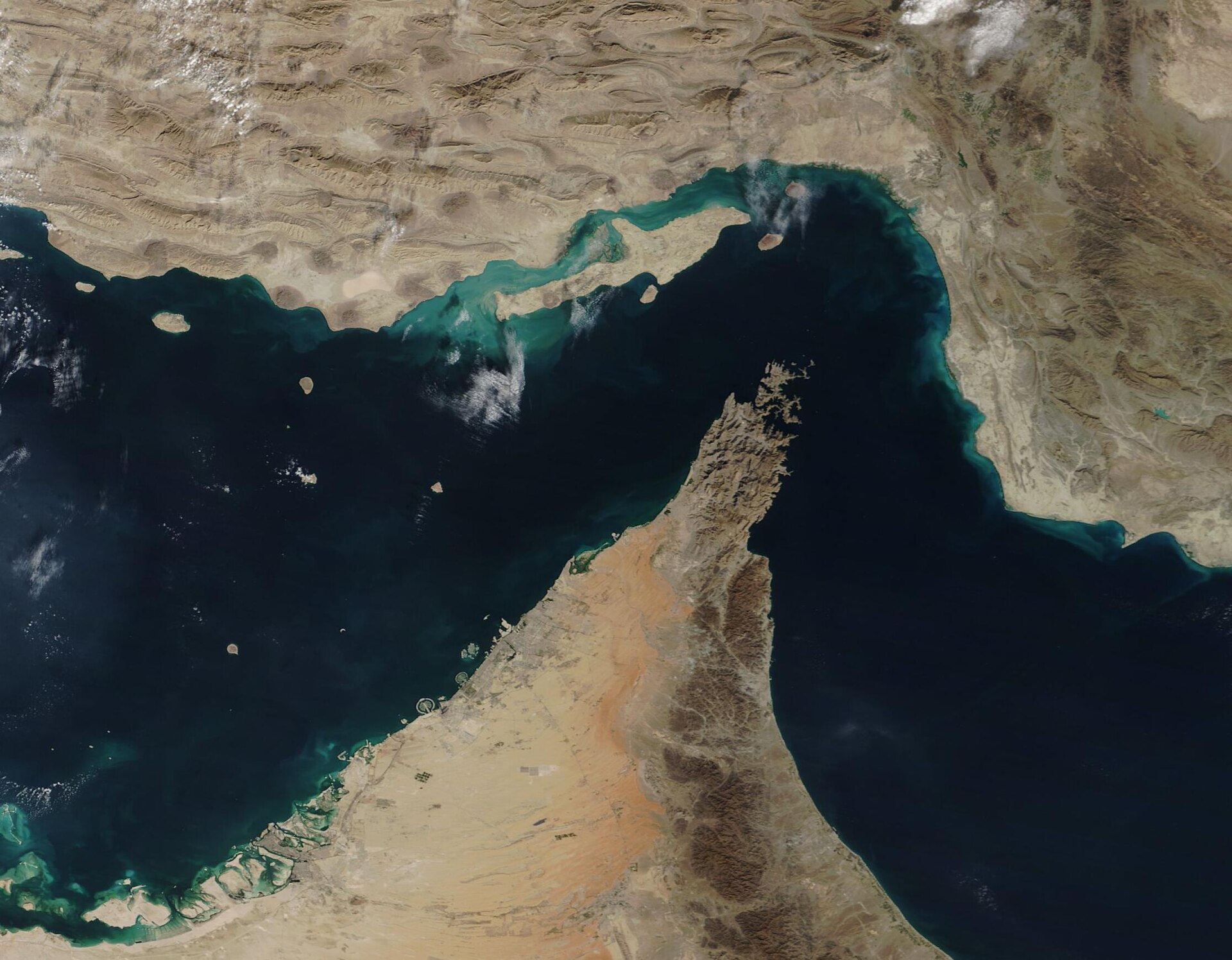
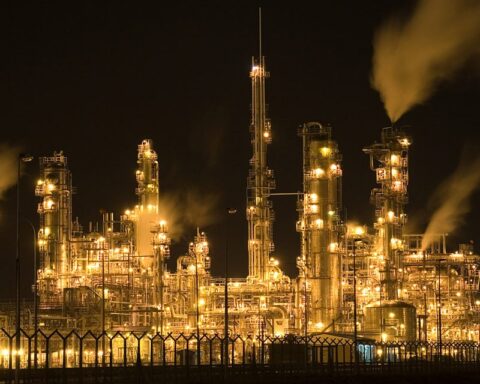
And then Iran acted. Iranian state media reported that the Strait of Hormuz had been closed again in response to the Lebanon strikes. The Fars news agency said oil tankers passing through the strait had been stopped. Middle East Eye, citing an industry source, reported that Iran struck Saudi Arabia’s East-West Pipeline — the Kingdom’s only remaining crude oil export route — though the extent of damage was being assessed. If confirmed, that strike represents a direct Iranian response not to an American action but to an Israeli one, delivered against a third country’s infrastructure.
Sultan Al Jaber, the UAE’s minister of industry and CEO of ADNOC, posted on LinkedIn on April 9: “The Strait of Hormuz is not open.” The two ships that had transited on April 8 — the Daytona Beach and NJ Earth — were followed by at most seven vessels in the first 24 hours, none of them oil tankers. The ceasefire’s central economic promise — the reopening of Hormuz — was already unravelling because of events in Beirut, not in Tehran.
The diplomatic fallout extended well beyond Iran. Qatar condemned what it called a “brutal series” of attacks. Egypt accused Israel of “premeditated intent” to undermine de-escalation. Spain’s Prime Minister Pedro Sánchez said Netanyahu’s “contempt for life and international law is intolerable.” France condemned the strikes and called for Lebanon’s inclusion in the ceasefire. Italy condemned the “bombings on civilian population.” The Arab League’s secretary-general accused Israel of “persistently seeking to sabotage” the Iran deal.
Even Israel’s own opposition attacked the operation’s strategic logic. Opposition leader Yair Lapid said Netanyahu was responsible for Israel’s worst-ever “diplomatic disaster” and that the strategic damage would take years to correct.
The Islamabad Question
Vice President Vance is due in Islamabad on Saturday to lead the American delegation alongside special envoy Steve Witkoff and Jared Kushner. Pakistan has deployed paramilitary forces, sealed roads with shipping containers, and secured hotels in the Red Zone. Iran’s delegation arrives Thursday evening.
But the question that will define whether those talks produce anything — or collapse before the first session ends — is whether Lebanon is on the table. Iran says it must be. The United States and Israel say it is not. Pakistan’s mediators assumed it was. And 254 people are dead because of the gap between those positions.
Araghchi framed the stakes on X with a clarity that leaves Tehran no room to retreat: “The Iran-US ceasefire terms are clear and explicit: the US must choose — ceasefire or continued war via Israel. It cannot have both. The world sees the massacres in Lebanon. The ball is in the US court, and the world is watching whether it will act on its commitments.”
Vance’s response, from Budapest, was equally uncompromising: “If Iran wants to let this negotiation fall apart … over Lebanon, which has nothing to do with them, and which the United States never once said was part of the ceasefire, that’s ultimately their choice.”
These are not negotiating positions. These are walls. When the delegations sit down in Islamabad, they will be separated not by details but by a structural disagreement about what they agreed to two days earlier. Iran believes it was promised a ceasefire on all fronts. The United States believes it promised a ceasefire on one front. Israel used the gap between those beliefs to launch the deadliest attack of the entire war — and dared both sides to do something about it.
The thread was already narrow. It may now be severed. Not by the countries that signed the ceasefire, but by the one country that insisted it did not apply to the place where it chose to kill 254 people on the first day of peace.