
ISLAMABAD — Pakistan signed a Strategic Mutual Defence Agreement with Saudi Arabia six months ago pledging that an attack on one would be treated as an attack on both. Since then, more than 575 Iranian drones and 42 ballistic missiles have struck Saudi territory, Yanbu’s oil export terminal has been hit, and Riyadh’s eastern cities have endured nightly air raid sirens. Islamabad has responded with diplomatic visits, statements of concern, and studied silence on the question that now defines the pact’s credibility: whether it means anything at all.
The September 2025 agreement, signed by Crown Prince Mohammed bin Salman and Prime Minister Shehbaz Sharif at Al Yamamah Palace in Riyadh, was hailed as the most significant Saudi-Pakistani security arrangement in four decades. Its language invoked “all military means,” a phrase that analysts at the Belfer Center, CSIS, and RUSI immediately flagged as a potential reference to Pakistan’s nuclear arsenal. Yet three weeks into a war that has struck the very targets the pact was theoretically designed to protect, Pakistan’s military contribution remains precisely what it was before the agreement was signed: a small garrison guarding holy sites in the Hejaz and a series of joint training exercises that have never produced a single operational deployment.
The gap between the pact’s language and Pakistan’s behaviour reveals something that both Riyadh and Islamabad understood from the start but neither would say publicly. The agreement was never a mutual defence guarantee in the NATO Article 5 sense. It was a signal — to Iran, to Washington, to Beijing — that Saudi Arabia had options beyond American protection and that Pakistan’s nuclear shadow extended, however faintly, over the Arabian Peninsula. The bluff was the strategy. Iran, by launching the largest sustained aerial campaign against Gulf states since the Tanker War, has called it.
Table of Contents
- What Does the Pakistan-Saudi Defense Pact Actually Say?
- The Pact Activation Matrix
- Why Did Pakistan Refuse to Fight for Saudi Arabia in 2015?
- How Many Pakistani Troops Are Already in Saudi Arabia?
- The CPEC Constraint and Beijing’s Veto
- What Would Pakistan Gain From Entering the Iran War?
- Nine Hundred Kilometres of Trouble Along the Balochistan Border
- Does Pakistan’s Nuclear Arsenal Cover Saudi Arabia?
- Is the Defense Pact a Paper Tiger?
- Saudi Arabia’s Leverage Over Islamabad
- The Diplomatic Track Pakistan Is Actually Running
- Frequently Asked Questions
What Does the Pakistan-Saudi Defense Pact Actually Say?
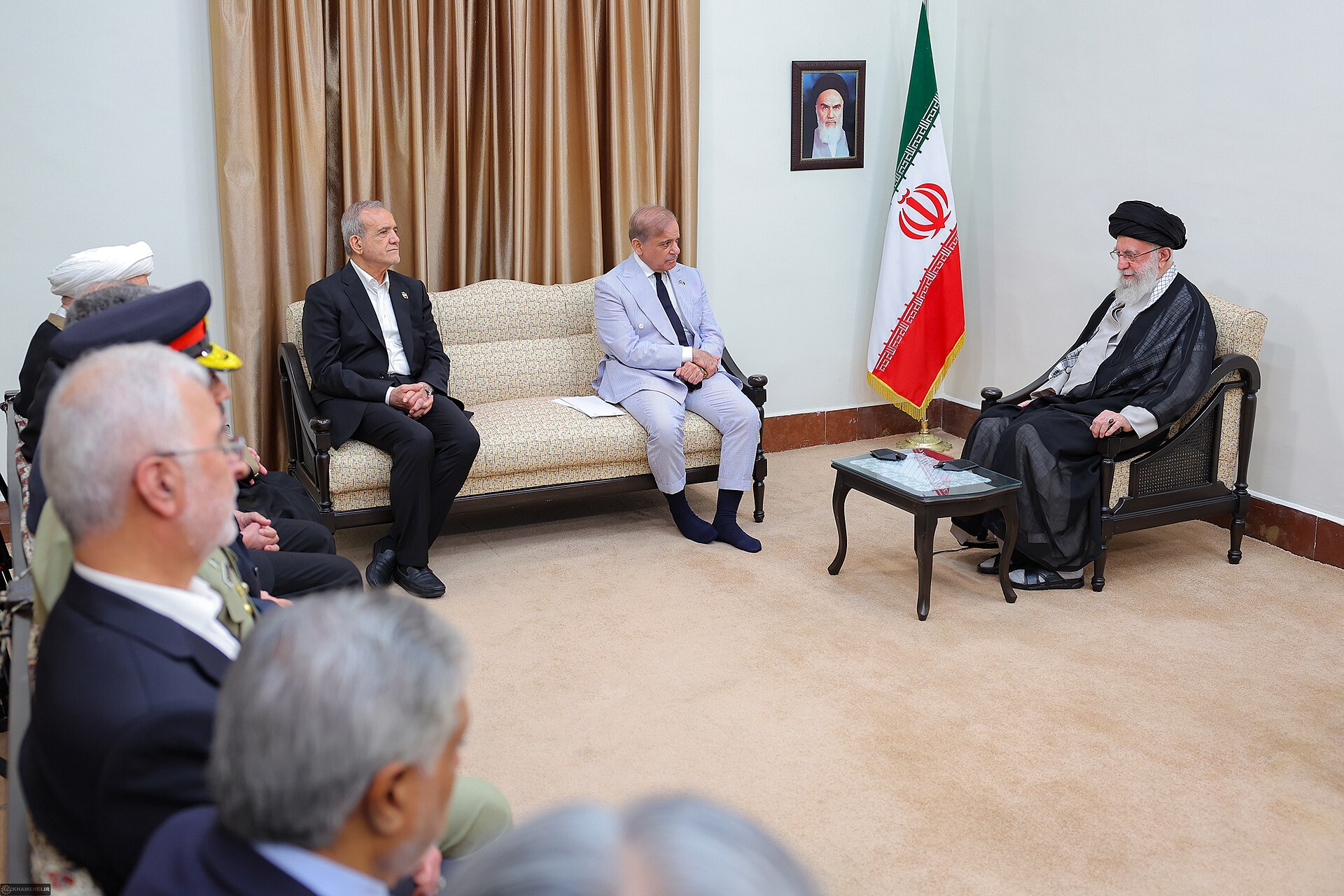
The Strategic Mutual Defence Agreement, signed on 17 September 2025, commits both countries to treating any act of aggression against one as an act against both. The full text has never been published. What is known comes from the joint statement issued by Pakistan’s Ministry of Foreign Affairs and from subsequent briefings by officials in both capitals who described the agreement’s scope in deliberately ambiguous terms.
The phrase that generated the most analysis was the commitment to defend one another using “all military means.” Pakistani Defence Minister Muhammad Asif initially suggested this included the nuclear dimension before publicly retracting the statement within 48 hours, according to reporting by the Washington Institute for Near East Policy. The retraction did nothing to quell speculation. RAND Corporation assessed in September 2025 that the pact was “important primarily to those who were not party to it” — meaning Iran, India, and Israel — rather than to the signatories themselves.
Three structural features of the agreement distinguish it from a conventional mutual defence treaty. First, it contains no automatic trigger mechanism. Unlike NATO’s Article 5, which was invoked after the September 11 attacks and required all members to treat the attack on the United States as an attack on themselves, the Pakistan-Saudi agreement leaves the definition of “aggression” and the nature of the response to be determined by consultation. Second, the agreement does not specify a command structure, joint operational planning, or force contribution commitments. Third, it was signed without legislative ratification by Pakistan’s National Assembly, raising questions about its constitutional standing under Pakistani law.
The Middle East briefing 3,000+ readers start their day with.
One email. Every weekday morning. Free.
| Feature | NATO Article 5 | Pakistan-Saudi SMDA |
|---|---|---|
| Automatic trigger | Yes — attack on one is attack on all | No — requires consultation |
| Force contribution | Specified by member commitments | Unspecified |
| Command structure | SACEUR, integrated command | None |
| Legislative ratification | Required by member parliaments | Not ratified by Pakistan’s National Assembly |
| Nuclear dimension | Implicit via US/UK/France arsenals | Ambiguous — denied after initial suggestion |
| Invoked in practice | Once (2001) | Never |
The Belfer Center’s assessment that the pact was “primarily a political signal of solidarity and strategic cooperation, rather than an unconditional war guarantee” has been validated by three weeks of Iranian strikes on Saudi territory during which Pakistan’s military posture has not changed in any observable way.
The Pact Activation Matrix
Five factors determine whether Pakistan would convert the September 2025 agreement from diplomatic signalling into military action. Each operates independently, but all five would need to align before Islamabad deployed combat forces to defend Saudi Arabia.
| Factor | Threshold for Activation | Current Status (March 2026) | Score (1-5) |
|---|---|---|---|
| Threat proximity | Iranian strikes directly threaten Pakistani nationals or territory | No Iranian strikes on Pakistan; 2.5M+ Pakistani workers in Gulf remain unharmed | 2 |
| Domestic political cost | Intervention would not trigger Shia backlash or parliamentary revolt | 10-15% Shia population, 2015 precedent of parliamentary rejection; high domestic risk | 1 |
| External patron alignment | China and/or US support Pakistani intervention | Beijing opposes escalation; Washington has not requested Pakistani forces | 1 |
| Economic exposure | Saudi economic leverage exceeds cost of intervention | $6.2B in remittances, Saudi loans, but CPEC dependency on Chinese goodwill higher | 3 |
| Historical precedent | Pakistan has previously deployed combat forces to Gulf in similar circumstances | 1979 Makkah operation, 1980s Iran-Iraq war deployment, but 2015 Yemen rejection | 2 |
A combined score below 15 suggests activation is unlikely. The current aggregate of 9 out of 25 places the probability of Pakistani combat deployment in the Iran war at roughly the same level as European NATO members sending ground forces to the Gulf — theoretically possible but practically constrained by domestic politics, competing security commitments, and the absence of a direct existential threat.
The matrix reveals that the single factor most likely to shift the calculation is economic exposure. Saudi Arabia holds more financial leverage over Pakistan than any other external actor except China. But deploying that leverage — threatening to expel Pakistani workers, suspending loan facilities, or cutting oil supply — would destroy the bilateral relationship that the defence pact was designed to cement. Riyadh’s dilemma is that the tools available to compel Pakistani action are the same tools whose use would make the alliance worthless.
Why Did Pakistan Refuse to Fight for Saudi Arabia in 2015?
Pakistan’s relationship with Saudi Arabia has been tested before, and the result offers the clearest precedent for the current crisis. In March 2015, when Saudi Arabia launched Operation Decisive Storm against Houthi rebels in Yemen and requested Pakistani military support, Islamabad’s response was unambiguous. Pakistan’s National Assembly voted unanimously to maintain neutrality, rejecting Saudi Arabia’s request for troops, aircraft, or naval vessels.
The parliamentary vote was extraordinary for several reasons. Pakistan had received an estimated $1.5 billion in Saudi financial support in the preceding two years, according to the Middle East Institute. Saudi Arabia had provided Pakistan with discounted oil shipments during its 2014 balance-of-payments crisis. Former Pakistani Army Chief General Raheel Sharif maintained close personal ties with senior Saudi royals. None of it was sufficient to overcome three countervailing pressures.
The first was sectarian. Pakistan’s Shia community, estimated at 10 to 15 percent of the population by the Pew Research Center and as high as 20 to 25 percent by some domestic surveys, opposed any intervention perceived as anti-Iranian. The Shia Majlis Wahdat-e-Muslimeen threatened nationwide protests if Pakistan joined a Sunni-led coalition against a Shia-backed movement. The second was strategic. Pakistan’s military assessed that deploying forces to Yemen would weaken its posture along the Indian border and the Afghan frontier at a time when both theatres demanded attention. The third was Iranian. Tehran warned Islamabad privately that Pakistani intervention in Yemen would have consequences for the 900-kilometre shared border in Balochistan, where Iran had the capacity to support or suppress Baloch insurgent groups depending on the political climate.
The 2015 precedent established a pattern that has held for a decade. Pakistan will provide Saudi Arabia with security guarantees on paper, military training partnerships, intelligence sharing, and garrison deployments to non-combat roles protecting holy sites. It will not deploy combat forces into a conflict where the adversary is Iran.
How Many Pakistani Troops Are Already in Saudi Arabia?
Pakistan has maintained a continuous military presence in Saudi Arabia since 1982, when approximately 15,000 troops were deployed during the Iran-Iraq War to protect the Kingdom’s borders and key infrastructure, according to the LSE South Asia Centre. That deployment was the largest foreign troop commitment to Saudi Arabia until the 1990-91 Gulf War coalition.
The current deployment is far smaller. As of early 2026, an estimated 2,600 Pakistani military personnel are stationed in Saudi Arabia, comprising approximately 1,600 troops on a long-standing garrison rotation and an additional 1,000 deployed in 2018 under an arrangement that Al Jazeera reported was kept deliberately opaque by both governments. These forces serve in advisory, training, and protective roles. They guard the holy cities of Makkah and Madinah, provide counter-terrorism expertise, and participate in joint exercises including the annual Al-Samsam and Dera al-Baidha series.
None of these personnel are deployed in combat roles. They have not participated in air defence operations against Iranian drones or missiles. They are not integrated into the multinational coalition that has formed organically around Saudi Arabia’s defence, which includes Greek Patriot batteries, British RAF fighter jets, and French naval vessels in the Red Sea. The distinction is deliberate. Pakistan’s military leadership has drawn a clear line between presence — which signals commitment — and participation, which would transform Pakistan from a neutral mediator into a belligerent.
| Period | Approximate Strength | Role | Trigger |
|---|---|---|---|
| 1979 | Special forces unit | Grand Mosque operation in Makkah | Seizure of Masjid al-Haram |
| 1982-1988 | ~15,000 | Border protection, deterrence | Iran-Iraq War spillover risk |
| 1990-1991 | ~5,000 | Gulf War coalition support | Iraqi invasion of Kuwait |
| 1996-present | ~1,600 | Holy site protection, training | Permanent garrison rotation |
| 2018-present | +1,000 | Advisory, counter-terrorism | Expanded bilateral agreement |
| 2026 (current) | ~2,600 total | Non-combat, garrison duties | No change despite SMDA and Iran war |
The CPEC Constraint and Beijing’s Veto
The single most powerful restraint on Pakistani intervention in the Gulf is not domestic politics, sectarian risk, or border security. It is China. The China-Pakistan Economic Corridor, valued at over $62 billion and representing the flagship project of Beijing’s Belt and Road Initiative, has made Pakistan more economically dependent on Chinese goodwill than on Saudi financial support.
During the first eight months of fiscal year 2025-26, China provided $635.7 million in foreign direct investment to Pakistan, more than any other country. CPEC projects have built power plants, highways, and port infrastructure across Pakistan, with Gwadar Port in Balochistan serving as the corridor’s strategic anchor on the Arabian Sea. Any Pakistani military action against Iran would directly threaten CPEC in at least three ways.
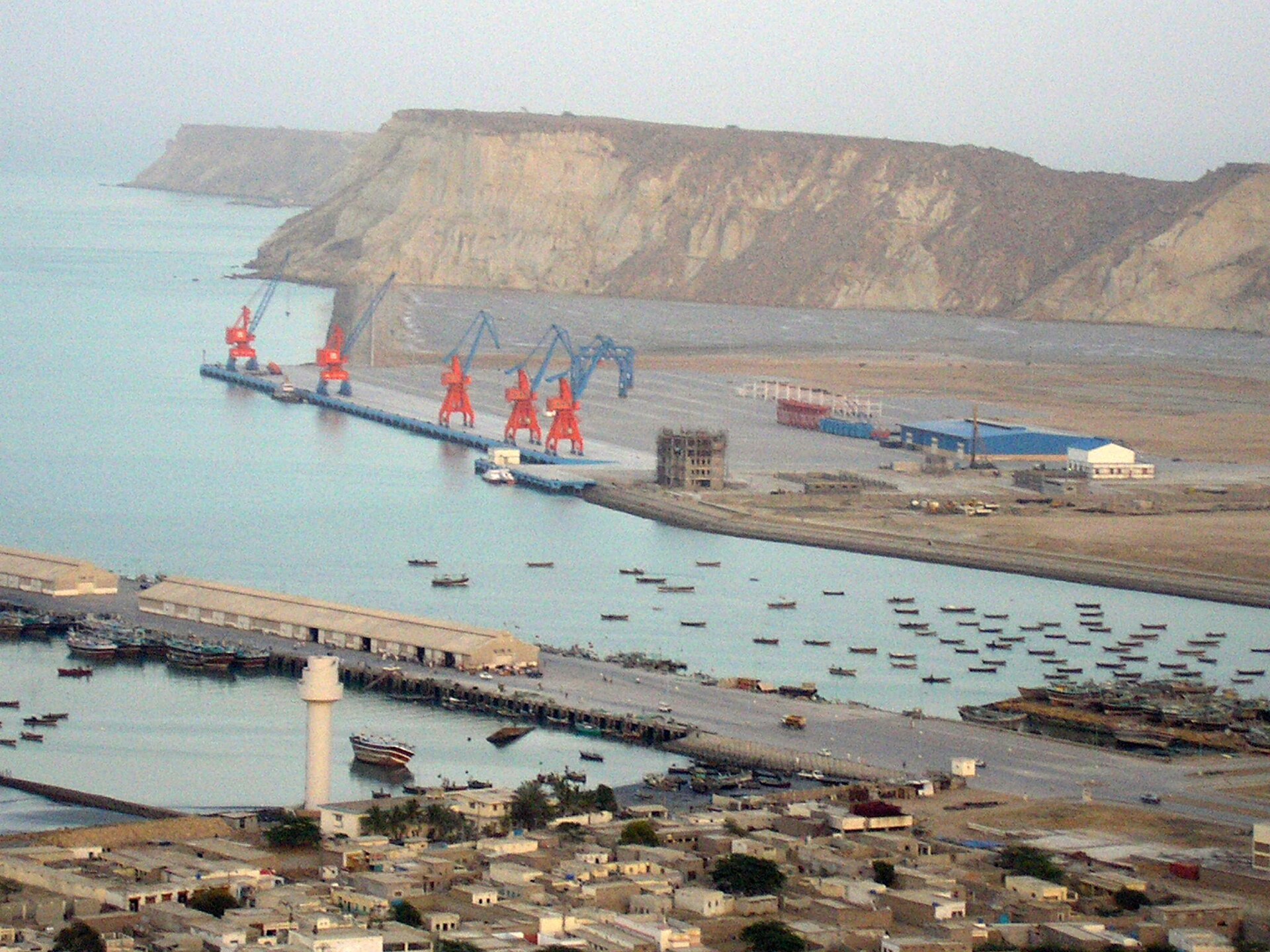
First, Gwadar sits approximately 120 kilometres from the Iranian border. An Iran-Pakistan military confrontation would transform the port from an economic asset into a frontline vulnerability. Second, Beijing maintains its own strategic relationship with Tehran, including a 25-year comprehensive cooperation agreement signed in 2021 worth an estimated $400 billion. China has been Iran’s largest oil customer and has quietly continued purchasing Iranian crude at discounted rates even as Western sanctions tightened. A Pakistani attack on Iran would force China to choose between two partners — precisely the scenario Beijing has spent a decade constructing its regional diplomacy to avoid. Third, CPEC projects in Balochistan already face security threats from the Balochistan Liberation Army, which carried out 254 attacks in the province in 2025 alone, a 26 percent increase over the previous year according to the Pakistan Institute for Peace Studies. An Iranian-backed escalation of Baloch insurgency would be catastrophic for Chinese investments.
The Diplomat reported in March 2026 that Beijing communicated to Islamabad through diplomatic channels that it would view Pakistani military intervention against Iran as inconsistent with China’s interests in regional stability. The message was not a formal warning. It did not need to be. Pakistan’s economic lifeline now runs through Beijing, not Riyadh, and both capitals understand the arithmetic.
What Would Pakistan Gain From Entering the Iran War?
The strategic calculus for Pakistani intervention is almost entirely negative. The potential gains — strengthened Saudi partnership, possible arms transfers, enhanced regional influence — are outweighed by risks that touch every dimension of Pakistani security.
Saudi Arabia’s financial relationship with Pakistan is significant but not irreplaceable. Saudi Arabia was the largest source of Pakistani worker remittances during July-February of fiscal year 2025-26, sending $6.168 billion, according to the State Bank of Pakistan. Approximately 62 percent of Pakistani nationals registered for overseas employment in 2024 were headed to Saudi Arabia. An estimated 2.5 million Pakistani workers currently reside in the Gulf states, with the largest concentration in the Kingdom. These workers are hostages to the relationship in both directions — Saudi Arabia needs their labour, and Pakistan needs their earnings.
But the remittance dependency cuts against intervention rather than supporting it. Pakistani workers in the Gulf are concentrated in the eastern provinces and industrial centres that have been targeted by Iranian strikes. Escalating Pakistan’s involvement would increase the risk to these populations without providing additional protection. The 2019 Aramco attacks demonstrated that even the most sophisticated air defences cannot prevent all strikes, and the military that Saudi Arabia built for its own defence is already stretched thin across the eastern and western fronts.
On the other side of the ledger, Pakistan would gain an adversary with 900 kilometres of shared border, a demonstrated willingness to use proxy forces, and relationships with Pakistani Shia groups that could be activated for domestic destabilisation. Iran’s intelligence services have maintained networks in Balochistan, Karachi, and the tribal areas for decades. Jaish al-Adl, the Sunni Baloch militant group that operates across the Iran-Pakistan border, has alternately served as a tool of Iranian and Pakistani intelligence depending on the bilateral climate. In December 2025, Jaish al-Adl and other Baloch organisations merged into the People’s Fighters Front, creating a unified insurgent structure that could be weaponised by either side.
Nine Hundred Kilometres of Trouble Along the Balochistan Border
The Pakistan-Iran border running through Balochistan is one of the most volatile frontiers in Asia. It is porous, mountainous, largely unfenced, and contested by armed groups that owe allegiance to neither government. For Pakistan’s military planners, this border represents the most immediate and tangible consequence of any deterioration in relations with Tehran. Pakistan already deploys an estimated 70,000 troops and paramilitary forces in Balochistan, according to the International Crisis Group, more than the entire British deployment to Afghanistan at the peak of that war.
In January and February 2026, the Balochistan Liberation Army carried out what the West Point Combating Terrorism Center described as “one of the largest and most wide-scale” series of coordinated attacks in the insurgency’s history, targeting schools, hospitals, banks, security installations, and a high-security prison across multiple districts. Pakistani security forces responded with operations that killed at least 216 militants, according to the military’s own figures, alongside 22 security personnel and 36 civilians. The attacks demonstrated that Pakistan’s internal security forces are already fully committed in Balochistan without the additional burden of an Iranian-directed escalation.
The cross-border dynamics are complex. In August 2025, Pakistan carried out strikes against separatist targets inside Iranian territory, hitting what Islamabad described as hideouts used by the BLA and the Balochistan Liberation Front. Iran protested but took no retaliatory action, in part because its own security forces had been conducting similar operations against Jaish al-Adl targets on the Pakistani side of the border. This mutual tolerance of cross-border strikes rests on an implicit understanding that both countries face a shared Baloch insurgent threat. Pakistani intervention in the Iran war would shatter that understanding overnight.
Iran’s capacity for asymmetric retaliation through Balochistan is well documented. During periods of bilateral tension, Iranian intelligence has demonstrated the ability to reduce or increase pressure on Baloch militant groups operating from its territory into Pakistan. The Jamestown Foundation assessed in 2025 that Iran maintains “persistent capabilities” to escalate violence along the frontier through both direct action and proxy facilitation. For a Pakistani military already fighting a counterinsurgency in Balochistan, a war in Waziristan, and maintaining readiness along the Indian border, opening a fourth front against Iranian proxies would be operationally catastrophic.
Does Pakistan’s Nuclear Arsenal Cover Saudi Arabia?
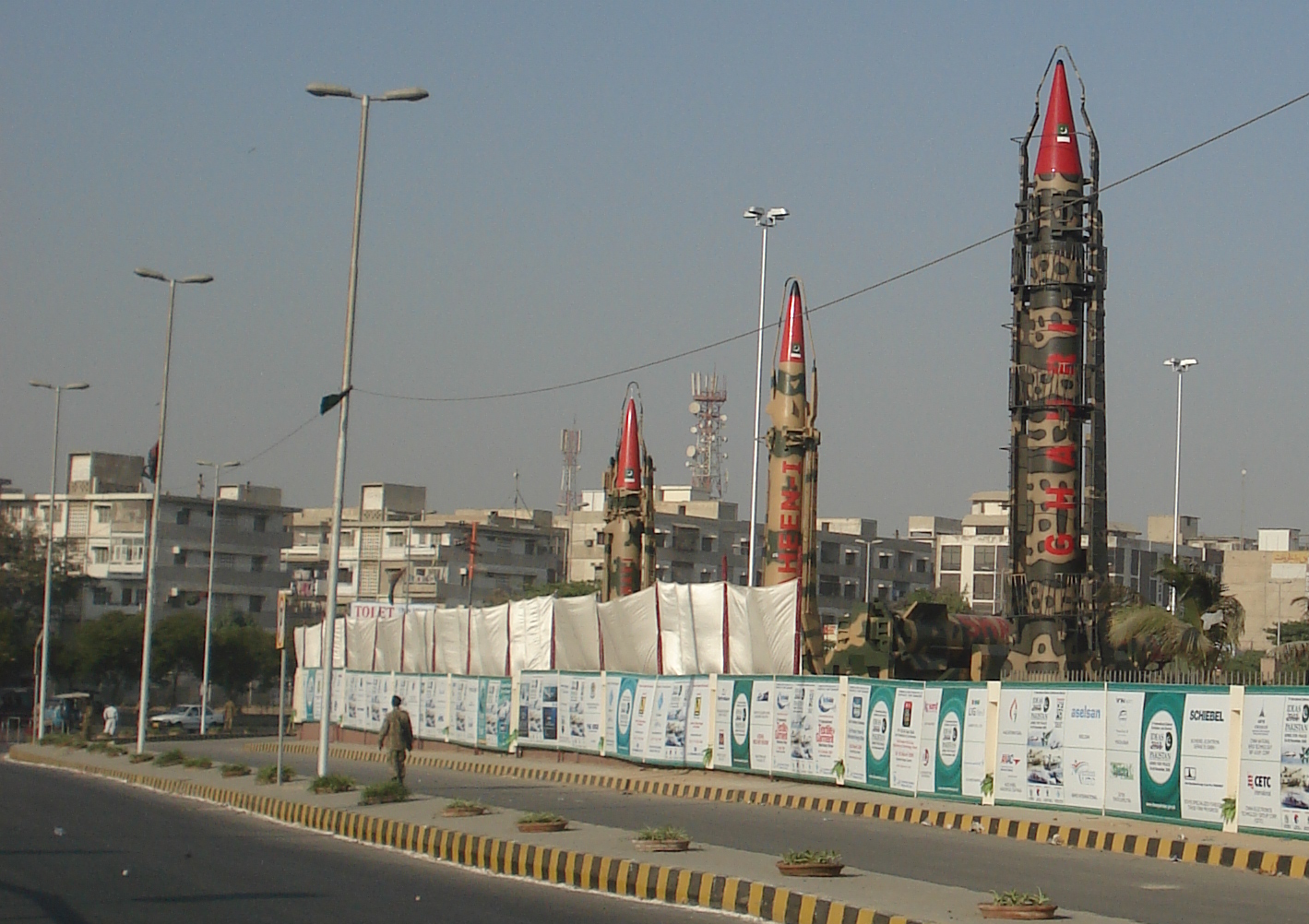
The nuclear question is the subtext of every conversation about the Pakistan-Saudi defence relationship, and it has been for three decades. Pakistan is estimated to possess approximately 170 nuclear warheads, according to the Federation of American Scientists, making it the world’s fifth-largest nuclear power. Saudi Arabia has no nuclear weapons of its own, though it operates Chinese-supplied CSS-2 intermediate-range ballistic missiles that are theoretically capable of delivering a nuclear payload and has invested heavily in civilian nuclear infrastructure.
The speculation that Saudi Arabia might one day acquire or share Pakistani nuclear weapons dates to the 1990s. Former Saudi intelligence chief Prince Turki al-Faisal and former Pakistani President Pervez Musharraf both acknowledged that nuclear discussions had taken place, though both denied that any transfer agreement existed. The 2025 defence pact reignited these discussions. When Pakistan’s defence minister initially stated that “all military means” included nuclear capabilities before reversing himself, the Washington Institute for Near East Policy published two analyses within a week arguing that nuclear ambiguity was a deliberate feature of the agreement, not a diplomatic misstep.
ICAN, the International Campaign to Abolish Nuclear Weapons, assessed in October 2025 that Pakistan’s nuclear doctrine remains “India-specific” and does not extend to providing a nuclear umbrella to any state. CSIS’s Nuclear Network published a detailed analysis arguing that the strategic logic of extended deterrence — where one state’s nuclear arsenal protects another — requires integration of early warning systems, command-and-control protocols, and pre-delegated launch authority that do not exist between Pakistan and Saudi Arabia. Without these mechanisms, a Saudi claim to Pakistani nuclear protection would be no more credible than a claim to French nuclear protection — technically possible but practically meaningless.
The destruction of Iran’s nuclear programme in the opening days of the 2026 war has changed this calculus in one critical respect. With Iran’s enrichment facilities at Natanz and Fordow destroyed and its weapons research infrastructure eliminated, according to IAEA reports cited by the Washington Post, the nuclear question has shifted from deterrence to post-war equilibrium. RUSI assessed in March 2026 that Saudi Arabia’s interest in Pakistani nuclear capabilities has intensified precisely because Iran’s nuclear programme has been destroyed — Riyadh wants to ensure that any future Iranian reconstitution effort faces a credible counterweight.
Is the Defense Pact a Paper Tiger?
The conventional wisdom, reinforced by Pakistan’s inaction during three weeks of Iranian strikes on Saudi territory, holds that the Strategic Mutual Defence Agreement is a paper tiger — an agreement signed for diplomatic show with no intention of enforcement. This assessment is correct in its narrow conclusion but wrong in its analytical framework. The pact was never designed to function as a mutual defence guarantee. It was designed to function as a deterrent signal, and by that standard, it has failed not because it was a bluff but because Iran chose to call it.
Pakistan’s inaction is part of a broader pattern. The collapse of Saudi neutrality in the war’s third week exposed every security partnership Riyadh had built — from the Pakistani pact to the Beijing-brokered rapprochement — as insufficient for the scale of threat Iran ultimately delivered. An analysis scoring ten of Riyadh’s partnerships against an Alliance Durability Matrix reveals precisely which alliances buckled and which held when the missiles started flying.
The recognition that bilateral pacts alone are insufficient has since driven Saudi Arabia toward a broader security architecture. On March 19, Turkey, Saudi Arabia, Egypt, and Pakistan held their first quadrilateral security talks in Riyadh, exploring a four-party defence cooperation framework that could transform the region’s post-war security order.
The failure is instructive. Deterrence works only when the adversary believes the commitment is credible. Iran’s calculation, articulated indirectly through statements by IRGC commanders reported by Iran International in March 2026, was that Pakistan would not intervene regardless of what the pact said. Tehran reached this conclusion based on three pieces of evidence: the 2015 parliamentary rejection, China’s opposition to escalation, and Pakistan’s own internal security crisis in Balochistan. Each factor was publicly known. The deterrent, in other words, was transparent in its weakness.
But describing the pact as worthless misunderstands its function for both signatories. For Saudi Arabia, the agreement served as a hedge against American unreliability. The September 2025 Israeli airstrikes in Doha, which the Financial Times reported “deeply unsettled Gulf states’ sense of security,” accelerated a Saudi strategy of diversifying security partnerships beyond Washington. The Pakistan pact, alongside the deployment of European forces to the Gulf and the expansion of bilateral agreements with France and the United Kingdom, formed part of a layered security architecture designed to ensure that no single partner’s withdrawal would leave Saudi Arabia exposed.
For Pakistan, the agreement delivered immediate diplomatic returns. It reinforced Islamabad’s claim to regional relevance at a moment when Pakistan’s influence in Afghanistan was waning and its relationship with Washington had soured over human rights concerns. It guaranteed continued Saudi financial support — Riyadh deposited $3 billion in Pakistan’s central bank in December 2025, according to Bloomberg — and it positioned Pakistan as the only nuclear-armed Muslim state with a formal defence relationship with the Arab world’s richest oil producer.
Saudi Arabia’s Leverage Over Islamabad
Riyadh’s influence over Pakistan extends well beyond the defence agreement and encompasses financial, labour, religious, and diplomatic dimensions that give the Kingdom substantial but not unlimited leverage.
The financial dimension is the most immediate. Saudi Arabia has served as Pakistan’s lender of last resort during multiple economic crises. The $3 billion central bank deposit in December 2025 was the latest in a series of bailout-style interventions that have included discounted oil supply agreements, deferred payment facilities, and direct grants. Pakistan’s external debt stood at approximately $131 billion in December 2025, according to the State Bank of Pakistan, and its foreign exchange reserves covered barely two months of imports. In this context, Saudi financial support is not a bonus — it is a lifeline.
The labour dimension is equally powerful. Saudi Arabia employs more Pakistani workers than any other country, with over 120,000 Pakistanis registered for Saudi employment in the first three months of 2025 alone. Their remittances — $6.168 billion in the first eight months of fiscal year 2025-26 — represent Pakistan’s single largest source of foreign exchange after exports. Any disruption to this labour flow, whether through expulsion, visa restrictions, or conflict-related evacuation, would trigger a balance-of-payments crisis that Pakistan’s fragile economy could not absorb.
The religious dimension is less quantifiable but no less significant. Saudi Arabia controls access to the holy cities of Makkah and Madinah, a responsibility that confers enormous soft power over the Muslim world. Pakistan’s Hajj quota — the number of Pakistani pilgrims permitted to perform the annual pilgrimage — is subject to Saudi government allocation. In a country of 240 million Muslims where Hajj carries profound religious and social significance, the implied threat of quota reduction is a political weapon that Pakistani leaders cannot ignore.
Yet all this leverage has limits. Saudi Arabia cannot compel Pakistani military action without risking the bilateral relationship itself. Expelling Pakistani workers would create a labour shortage in Saudi Arabia’s construction, hospitality, and service sectors at precisely the moment when Vision 2030 megaprojects demand maximum manpower. Cutting financial support would push Pakistan closer to China and potentially to Iran, undermining the very security architecture that the defence pact was designed to create. And using Hajj access as political coercion would generate a backlash across the Islamic world that would damage Saudi Arabia’s claim to custodianship of the holy sites. The leverage exists, but deploying it would be self-defeating — the diplomatic equivalent of burning your own house to warm your hands.
The most likely path forward is a quiet recalibration of expectations. Saudi Arabia will continue to treat Pakistan as a strategic partner while building alternative security relationships with European and Asian powers. Pakistan will continue to offer diplomatic solidarity, intelligence cooperation, and the implicit nuclear shadow without converting any of these into operational military commitments. The defence pact will persist as a political document rather than an operational one — a ceiling for ambition rather than a floor for action.
The Diplomatic Track Pakistan Is Actually Running
While the military dimension of the Saudi-Pakistani relationship has attracted the most attention, Islamabad’s actual engagement with the Iran crisis has been concentrated on diplomacy. Prime Minister Shehbaz Sharif, Foreign Minister Ishaq Dar, and Army Chief General Asim Munir have made at least seven visits to Riyadh since the war began on 28 February, according to reporting by Dawn and the Express Tribune. General Munir alone has visited three times, meeting both Crown Prince Mohammed bin Salman and Saudi Defence Minister Prince Khalid bin Salman on each occasion. Their stated objective is not to join the war but to prevent one — specifically, to prevent a direct Saudi-Iranian military confrontation that would force Pakistan to choose between its two neighbours.
Pakistan’s diplomatic position, as articulated by the foreign ministry, rests on three pillars: support for Saudi Arabia’s sovereignty and territorial integrity, opposition to Iranian attacks on Gulf states, and advocacy for an immediate ceasefire and diplomatic resolution. This formula is designed to satisfy Riyadh’s minimum requirements for solidarity without crossing the lines that would antagonise Tehran or Beijing.
Al Jazeera reported in March 2026 that Pakistan had emerged as “one of the few actors still talking to both Iran and Saudi Arabia” while the two countries stood on the brink of direct confrontation. NPR noted that Pakistan was “trying to straddle warring sides as conflict widens,” a characterisation that captures both the ambition and the fragility of Islamabad’s position. The diplomatic track has produced no visible results — the broader ceasefire mediation landscape includes at least twelve actors, none of whom have achieved a breakthrough — but it allows Pakistan to demonstrate engagement without commitment.
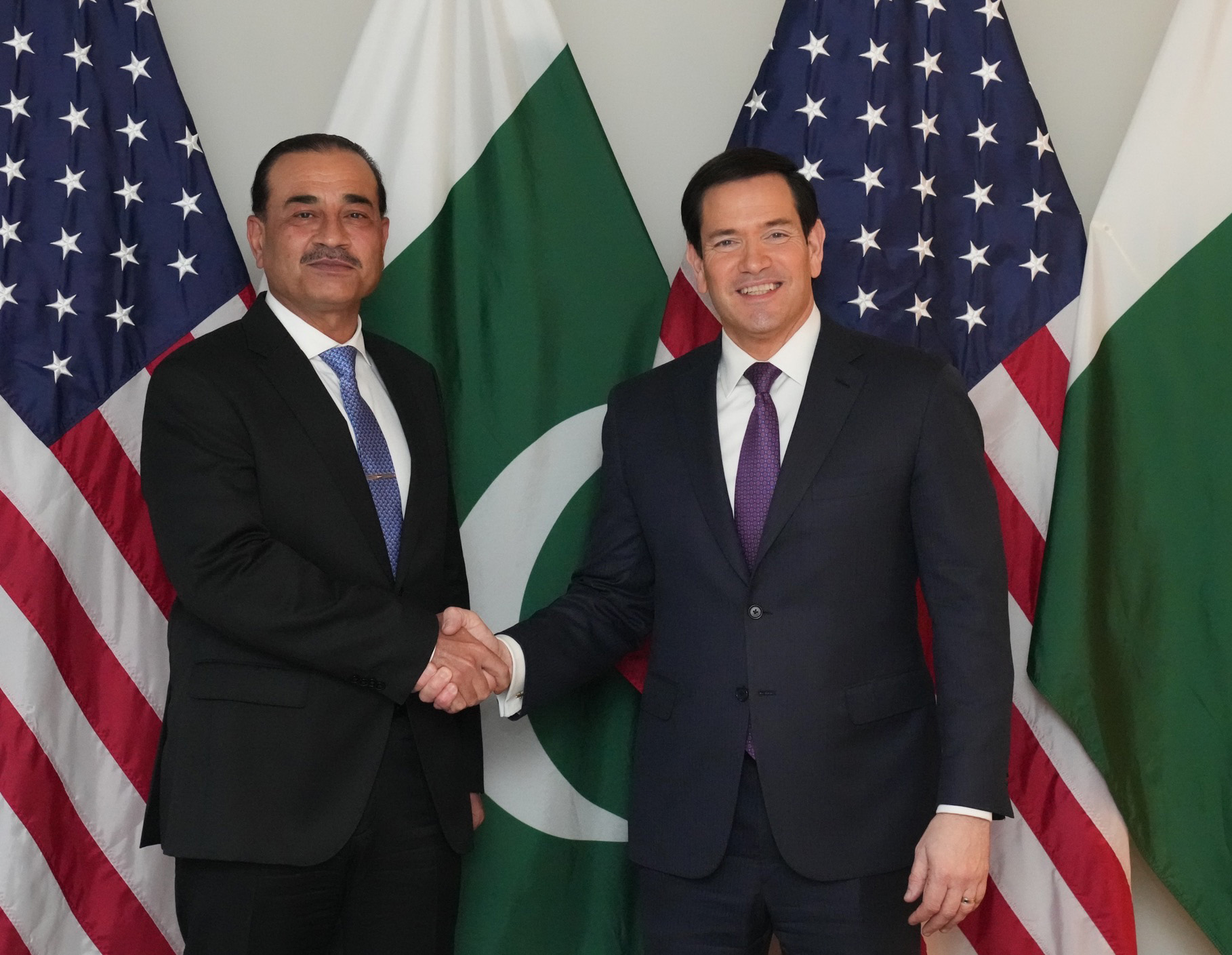
The real question is how long this balancing act can continue. Every Iranian drone that strikes Saudi territory increases the pressure on Islamabad to convert words into action. Every day that passes without Pakistani military contribution erodes the credibility of the defence pact and, by extension, Pakistan’s claim to be a security partner rather than merely a recipient of Saudi generosity. General Munir, who met US Secretary of State Marco Rubio at the Munich Security Conference in February 2026, is navigating the most consequential foreign policy challenge of Pakistan’s post-Cold War history. The outcome will determine whether the Strategic Mutual Defence Agreement becomes a foundation for a genuine security architecture or a monument to diplomatic aspiration disconnected from strategic reality.
“Pakistan cannot afford to divert military resources away from its own borders at a moment when the country faces growing instability along the frontier with Afghanistan.”Pakistani foreign ministry official, as reported by MEMRI, March 2026
The contrarian reading of Pakistan’s position — and the one that deserves more attention than it receives — is that Islamabad is not failing to honour its commitments but rather executing the only viable strategy available to a mid-tier power caught between three larger patrons with conflicting interests. China wants de-escalation. Saudi Arabia wants solidarity. Iran wants neutrality. The United States, consumed by its own war with Iran, has not asked Pakistan for forces and may prefer Islamabad’s role as a diplomatic back-channel to Tehran over its marginal military value in a theatre already saturated with American firepower. The scenarios for how this war ends may ultimately depend more on Pakistani diplomacy than Pakistani battalions. Pakistan’s Navy has, however, independently launched Operation Muhafiz-ul-Bahr to escort Pakistani merchant vessels through the Gulf of Oman, deploying Chinese-built Type 054A frigates to protect the country’s energy supply lines.
The full scope of Pakistan’s diplomatic manoeuvring — from General Munir’s direct line to Trump to Islamabad’s back-channel communications with Tehran’s security establishment — has since made the Pakistani capital the single most consequential venue in the war. A comprehensive analysis of Islamabad’s emergence as the war’s indispensable diplomatic broker maps how Pakistan converted its impossible position between three patrons into the conflict’s only functioning peace channel.
Frequently Asked Questions
What is the Pakistan-Saudi Strategic Mutual Defence Agreement?
The Strategic Mutual Defence Agreement is a security pact signed on 17 September 2025 by Crown Prince Mohammed bin Salman and Prime Minister Shehbaz Sharif at Al Yamamah Palace in Riyadh. It commits both countries to treating aggression against one as aggression against both and references “all military means,” though the full text has never been published and the agreement lacks automatic trigger mechanisms.
Has Pakistan sent troops to fight Iran for Saudi Arabia?
Pakistan has not deployed combat forces to support Saudi Arabia against Iranian attacks during the 2026 Iran war. Approximately 2,600 Pakistani military personnel serve in non-combat roles in Saudi Arabia, primarily guarding holy sites in Makkah and Madinah and conducting joint training exercises. Pakistan’s diplomatic engagement has focused on mediation rather than military intervention.
Why does Pakistan refuse to fight for Saudi Arabia?
Pakistan faces multiple constraints that prevent military intervention on Saudi Arabia’s behalf. These include a 10-15 percent Shia population that opposes anti-Iranian action, a 900-kilometre shared border with Iran, Chinese opposition to escalation due to $62 billion in CPEC investments, an active Baloch insurgency that consumed 254 attacks in 2025, and the precedent of the 2015 parliamentary vote unanimously rejecting Saudi Arabia’s request for support in Yemen.
Does Pakistan’s nuclear arsenal protect Saudi Arabia?
The nuclear dimension of the Saudi-Pakistani relationship remains deliberately ambiguous. Pakistan’s defence minister initially suggested the 2025 pact covered nuclear capabilities before retracting the statement. Analysts at CSIS, ICAN, and RUSI have assessed that Pakistan’s nuclear doctrine remains India-specific and that the command-and-control infrastructure required for extended deterrence does not exist between the two countries.
How many Pakistani workers are in Saudi Arabia?
An estimated 2.5 million Pakistani workers reside in Gulf states, with the largest concentration in Saudi Arabia. In 2024, approximately 62 percent of Pakistani nationals registered for overseas employment were headed to the Kingdom. Saudi Arabia was the single largest source of Pakistani remittances during July-February of fiscal year 2025-26, sending $6.168 billion according to the State Bank of Pakistan.
Could Saudi Arabia force Pakistan to enter the war?
Saudi Arabia holds substantial leverage over Pakistan through financial support, labour market access, Hajj quotas, and oil supply arrangements. However, deploying this leverage to compel military action would risk destroying the bilateral relationship itself. Expelling Pakistani workers would create Saudi labour shortages, and cutting financial support would push Pakistan closer to China and potentially Iran, making coercion self-defeating. Pakistan has since leveraged its unique position by offering Islamabad as the venue for the first face-to-face US-Iran peace talks.