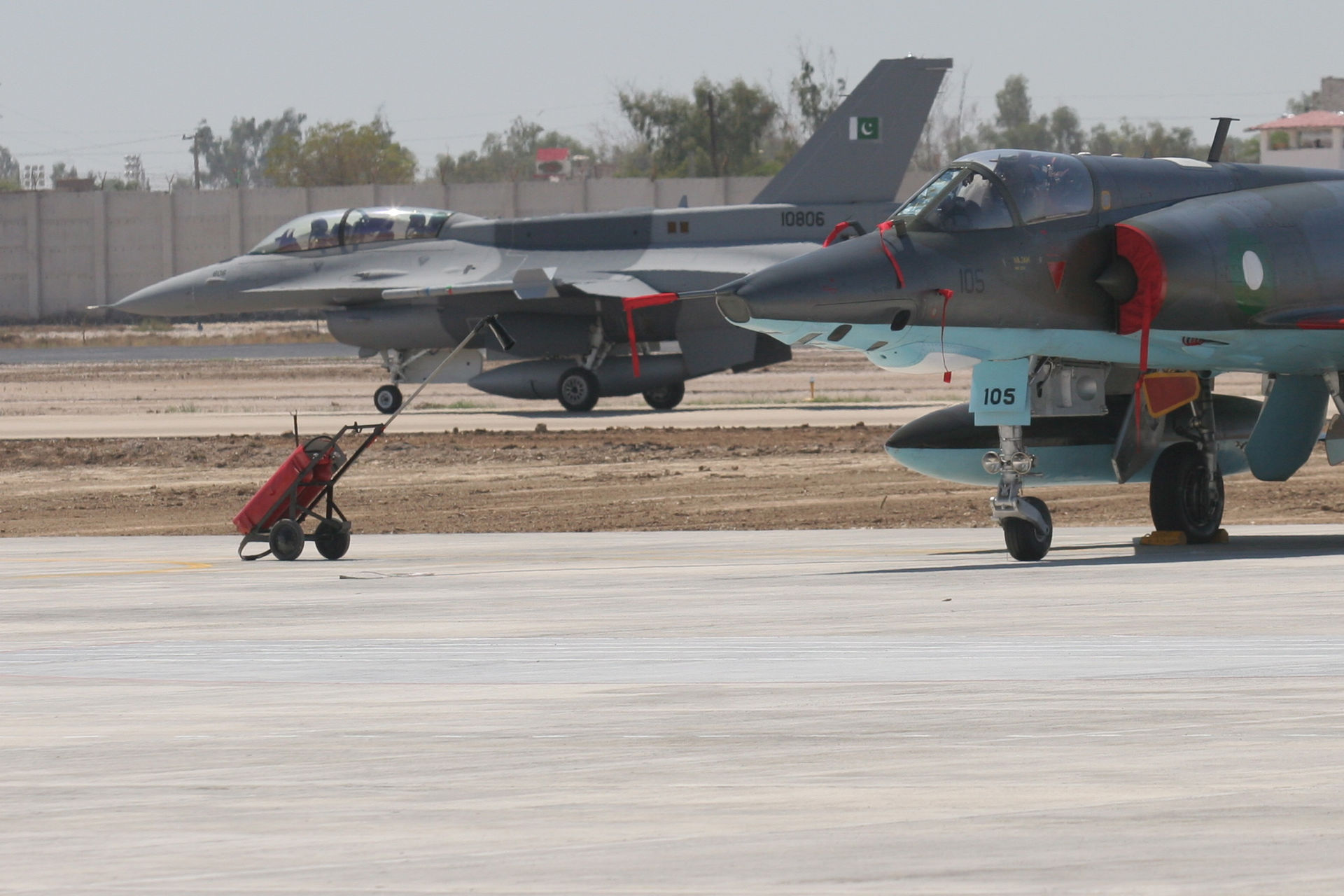

RIYADH — Pakistan has deployed air defense systems, troops, and military personnel to Saudi Arabia under the terms of a wartime defense pact, Bloomberg reported on March 11, as Iranian drone and missile attacks on the Kingdom enter their second week. A spokesperson for Pakistani Prime Minister Shehbaz Sharif told reporters that Islamabad “will be there before it is needed,” confirming that members of Pakistan’s army, air force, and navy are now working alongside Saudi forces to defend against the sustained Iranian barrage.
The deployment marks the first operational activation of the Strategic Mutual Defence Agreement signed by Crown Prince Mohammed bin Salman and Prime Minister Sharif at Al Yamamah Palace in Riyadh on September 17, 2025. The agreement’s unspoken nuclear dimension has become a central question of the Iran war. Pakistani air defense batteries, including LY-80 and FM-90 missile systems, have been integrated into Saudi Arabia’s layered air defense network at a time when Iranian Shahed drones and ballistic missiles have struck targets from the Shaybah oil field in the Empty Quarter to residential areas in Al-Kharj, killing two civilians and wounding twelve more.
Table of Contents
- What Has Pakistan Deployed to Saudi Arabia?
- Asim Munir and Khalid bin Salman Activate the Defense Pact
- Why Is Pakistan Risking Conflict With Iran?
- How Does Pakistan’s Military Compare to Iran’s Threat?
- The Domestic Price of Picking Sides
- Saudi Arabia Secures an Alternative Oil Route Through Pakistan
- What Comes Next for the Pakistan-Saudi Military Alliance?
- Frequently Asked Questions
What Has Pakistan Deployed to Saudi Arabia?
Pakistan has sent a package of air defense systems, logistics aircraft, and military personnel from all three branches of its armed forces to reinforce Saudi Arabia’s defenses, according to reporting from Bloomberg, the Kyiv Independent, and Pakistani defense outlets.
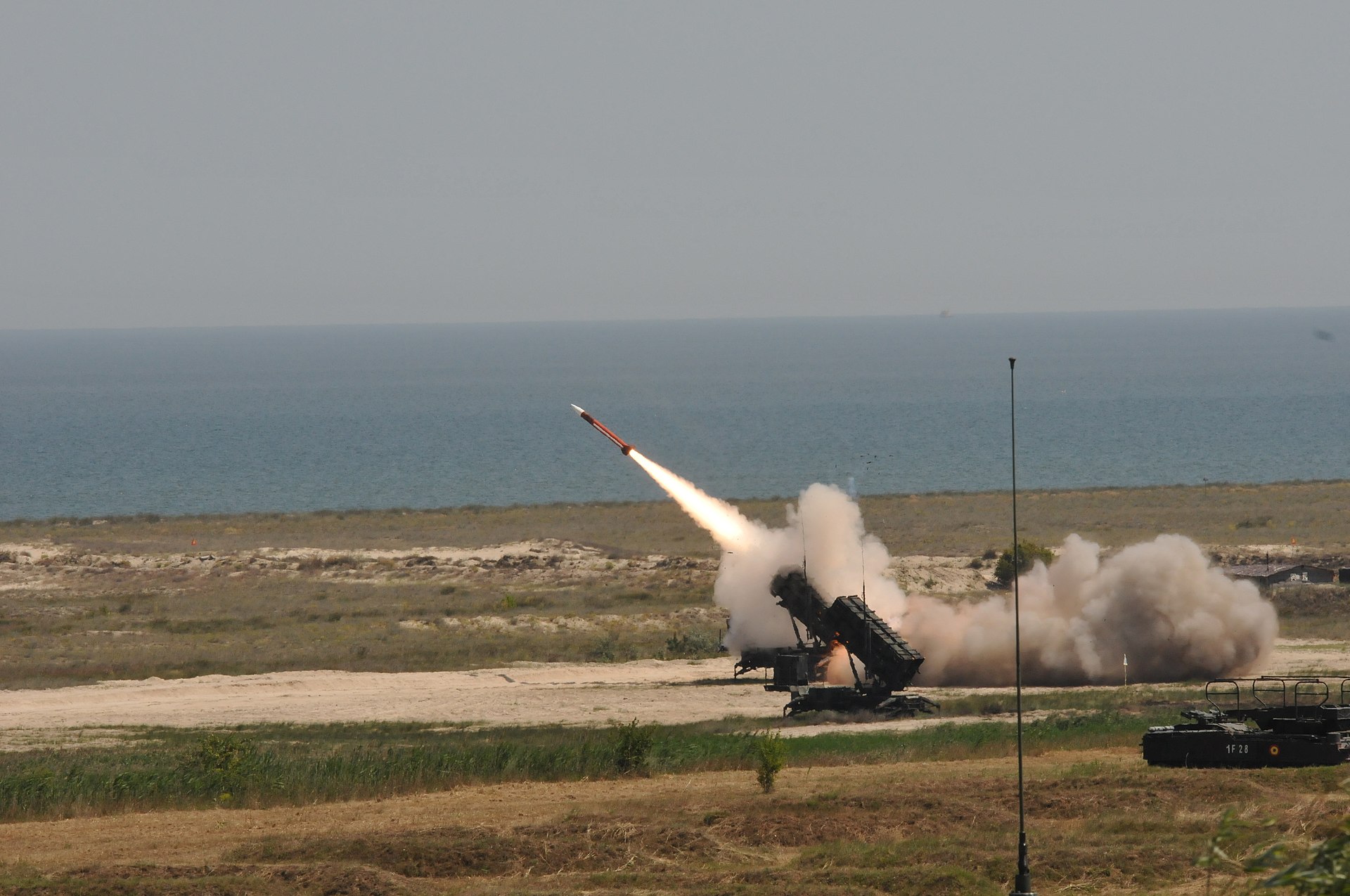
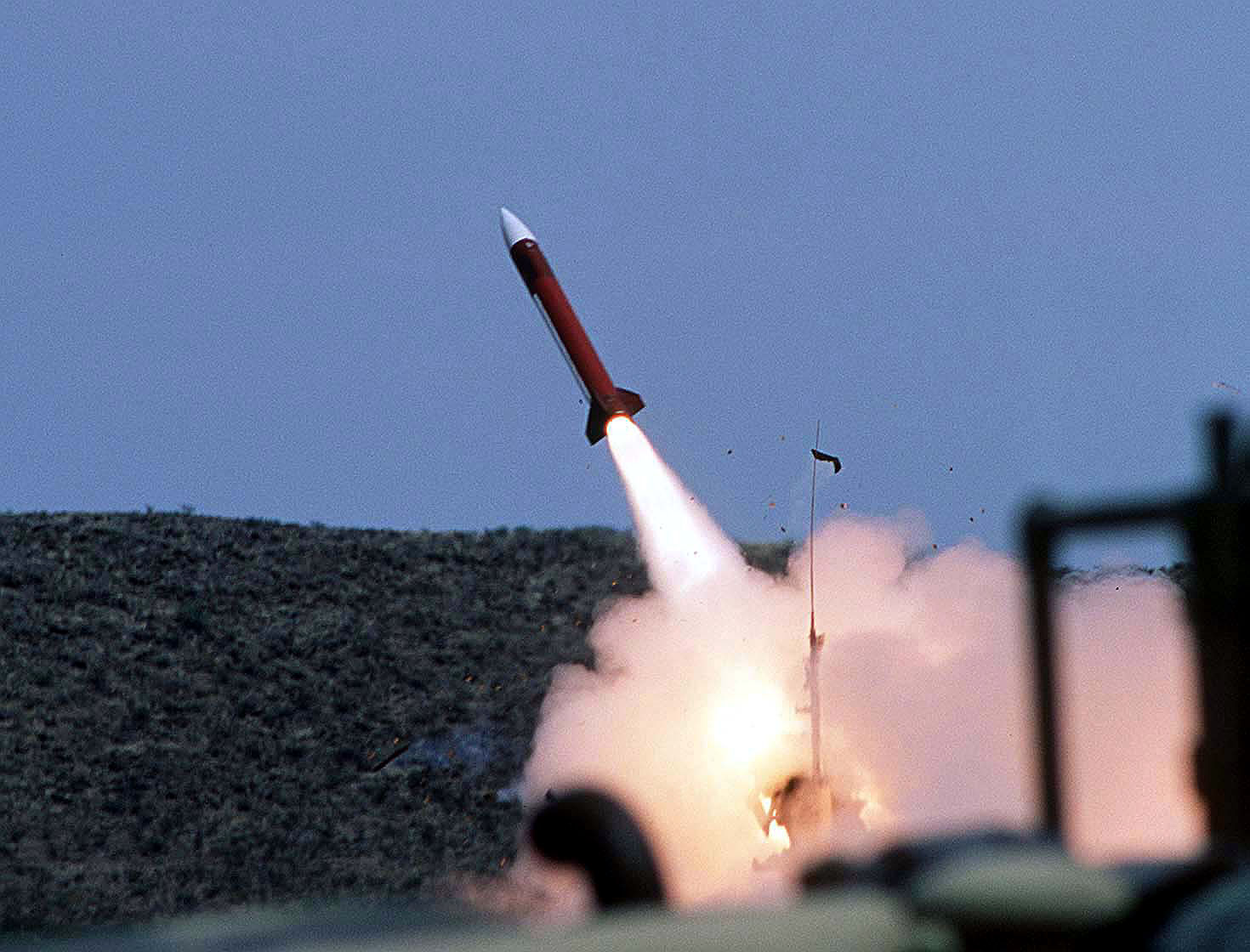
The air defense component includes LY-80 medium-range missile systems, FM-90 short-range missile systems, and Anza-series man-portable air defense systems (MANPADS), according to defence.newsd.in, which cited Pakistani military sources. These systems remain under Pakistani command while being integrated into the Kingdom’s existing air defense architecture, which has intercepted hundreds of Iranian projectiles since the war began on February 28.
Two Pakistan Air Force IL-78MP tanker and cargo aircraft, with registrations R11-003 and R09-001, were relocated from Nur Khan Air Base near Islamabad to Karachi’s Masroor Air Base on March 1, Pakistani media reported. The aircraft transported additional troops, equipment, and supplies for onward deployment to the Kingdom.
| Asset | Type | Capability | Status |
|---|---|---|---|
| LY-80 (HQ-16 export) | Medium-range SAM | 40km range, anti-aircraft and anti-missile | Deployed, integrated with Saudi network |
| FM-90 (Crotale derivative) | Short-range SAM | 15km range, point defense against low-flying threats | Deployed |
| Anza Mk-III | MANPADS | 6km range, anti-drone and anti-helicopter | Deployed |
| IL-78MP aircraft (x2) | Tanker / cargo | Strategic airlift and aerial refueling | Repositioned to Karachi |
| Army, Air Force, Navy personnel | Tri-service deployment | Air defense operations, logistics, coordination | Active alongside Saudi forces |
An estimated 1,500 to 2,000 Pakistani troops were already stationed in Saudi Arabia under a decades-long military relationship, according to Al Jazeera. The new deployments represent a qualitative escalation, adding dedicated air defense batteries to what had previously been a training and advisory presence.
The LY-80, known domestically in China as the HQ-16, is a road-mobile system capable of engaging aircraft, cruise missiles, and precision-guided munitions at ranges up to 40 kilometers. Pakistan acquired the system from China and has deployed it in its own air defense network since 2017, according to Jane’s Defence. The FM-90, derived from the French Crotale system, is designed for point defense against low-flying targets, making it particularly suited to intercepting the Shahed-136 propeller drones that Iran has launched in waves numbering dozens per sortie, according to Pakistani defense reporting.
The inclusion of Anza Mk-III shoulder-fired missiles adds a final intercept layer. Portable enough to be deployed by individual soldiers, the Anza systems allow Pakistani forces to engage drones and low-altitude threats that slip through the medium and short-range missile nets. The tri-layered approach mirrors the doctrine used by Ukraine against Russian drone attacks, a parallel that has not been lost on Gulf defense planners, according to the Middle East Institute.
Asim Munir and Khalid bin Salman Activate the Defense Pact
The deployment follows a meeting on March 7 in Riyadh between Pakistan’s Chief of Army Staff and Chief of Defense Forces, Field Marshal Syed Asim Munir, and Saudi Defense Minister Prince Khalid bin Salman Al Saud, according to a statement from the Saudi Press Agency. Prince Khalid confirmed the meeting on social media, writing that the two leaders “discussed Iranian attacks on the Kingdom and the measures needed to halt them within the framework of our Joint Strategic Defense Agreement.”
The encounter was the highest-level bilateral military meeting since the Iran war began on February 28. It formalized what multiple Pakistani defense analysts described as the first operational test of the Strategic Mutual Defence Agreement, which contains a central clause stating that “any aggression against either country shall be considered aggression against both,” Bloomberg reported.
We have a defence pact with Saudi Arabia, and the whole world knows about it.
Deputy Prime Minister Ishaq Dar, in remarks to Iranian Foreign Minister Abbas Araghchi, March 2026
Former Pakistani Army Chief General Raheel Sharif, who leads the 43-nation Islamic Military Counter Terrorism Coalition headquartered in Riyadh, is overseeing the coordination of the deployment, Pakistani media reported. General Sharif has maintained close ties with the Saudi military establishment since stepping down as Pakistan’s army chief in 2016, and his role in the current operation underscores the depth of institutional links between the two militaries.
The Asim Munir-Khalid bin Salman meeting also addressed Saudi oil supplies to Pakistan. With the Strait of Hormuz effectively closed by Iranian naval operations, Pakistan formally requested an alternative crude oil supply route through the Red Sea port of Yanbu, and Saudi Arabia agreed to dispatch one vessel immediately, the Saudi Press Agency confirmed.
Why Is Pakistan Risking Conflict With Iran?
Pakistan’s decision to deploy military assets to Saudi Arabia during an active conflict with Iran, which shares a 959-kilometer border with Pakistan, carries enormous risks. The calculus, according to analysts, rests on three pillars: treaty obligation, economic dependency, and the fear that inaction would permanently damage the most important bilateral relationship in Pakistan’s foreign policy.
“Perhaps this is the last time the Saudis will test Pakistan, and if Pakistan doesn’t fulfil its commitments now, the relationship will be irreversibly damaged,” Umer Karim, a research fellow at the University of Birmingham, told Al Jazeera.
Saudi Arabia is Pakistan’s largest source of oil imports, its second-largest source of worker remittances after the UAE, and a critical provider of emergency financial support. Riyadh deposited $3 billion in Pakistan’s central bank in 2023 to shore up the country’s foreign exchange reserves, and Saudi investment commitments to Pakistan exceed $10 billion under agreements signed alongside the defense pact in September 2025, Reuters reported.
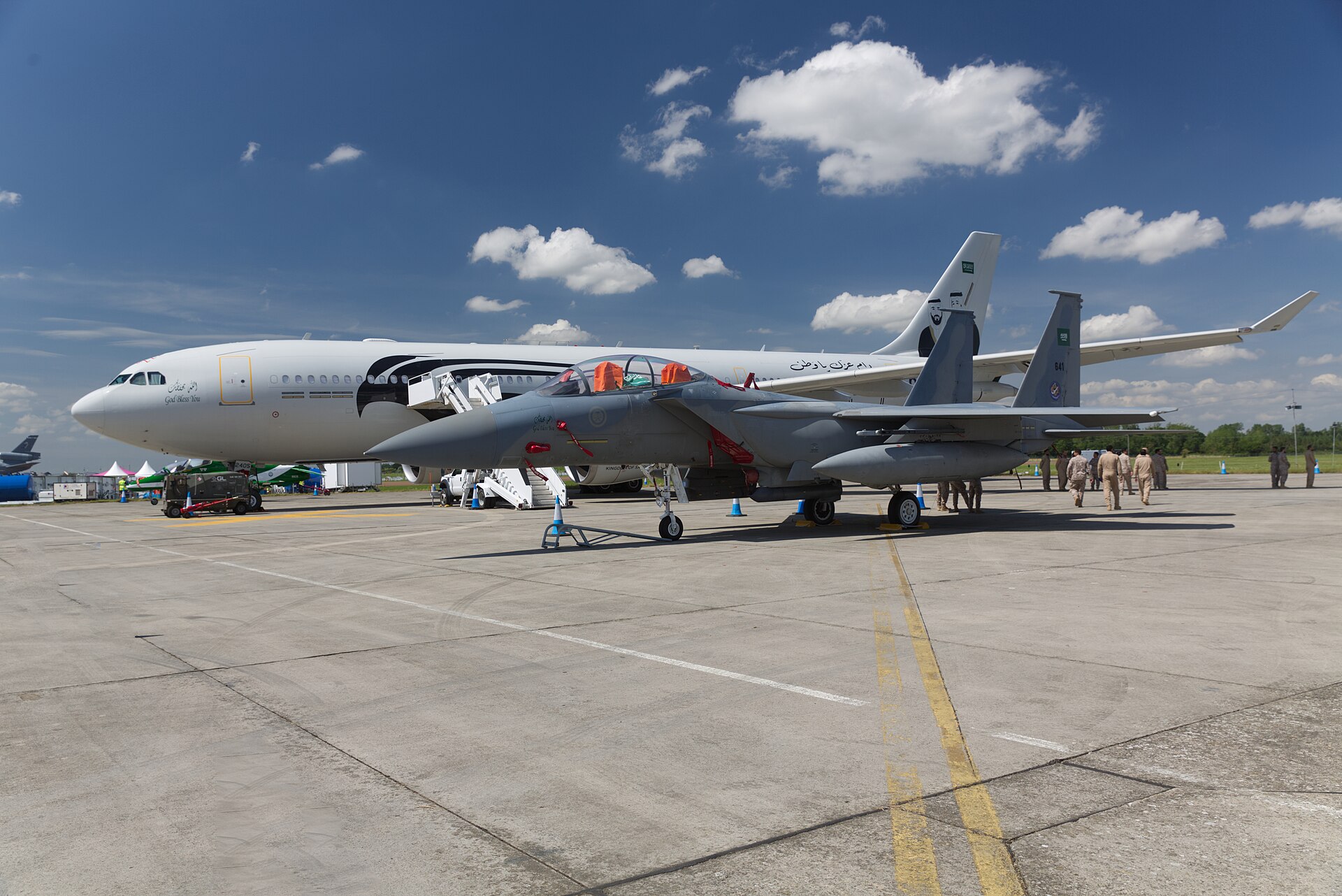
The defense pact was modeled on NATO’s Article 5, according to the Chatham House assessment published after the September 2025 signing. The agreement is the first mutual defense treaty between an Arab Gulf state and a nuclear-armed power, a distinction that has fueled years of speculation about whether Pakistan’s nuclear umbrella could extend to Saudi Arabia. Pakistani Defence Minister Muhammad Asif initially hinted at a nuclear dimension but later denied it, Reuters reported at the time of the signing.
The comparison with NATO gained new urgency on March 13, when Iranian missiles triggered air raid sirens at NATO’s Incirlik Air Base in Turkey — yet the alliance declined to invoke Article 5, raising questions about whether any mutual defense clause can deter Iran’s expanding missile campaign.
Security analyst Amir Rana told Al Jazeera that direct Pakistani offensive military action against Iran remained “unrealistic” given domestic constraints, and that the most viable option involved providing “covert operational support” through air defense deployments while maintaining diplomatic engagement with Tehran.
The economic dimension extends beyond government-to-government financing. An estimated 2.7 million Pakistani workers are employed in Saudi Arabia, according to the Bureau of Emigration and Overseas Employment, sending home approximately $7.8 billion in remittances in 2025. Another 1.6 million work in the UAE, Bahrain, Kuwait, and Qatar, countries that have all come under Iranian fire during the current conflict. Any disruption to Gulf labor markets would cascade directly into Pakistan’s balance of payments.
How Does Pakistan’s Military Compare to Iran’s Threat?
Pakistan’s military contribution to Saudi Arabia’s defense adds specific capabilities that address gaps exposed by the Iranian campaign. The sustained barrage of Shahed-136 and Shahed-238 drones, combined with Emad and Khoramshahr ballistic missiles, has tested the Kingdom’s air defense network to its operational limits, according to Western defense officials cited by the Financial Times.
| Pakistani System | Range | Primary Target | Threat Matched |
|---|---|---|---|
| LY-80 | 40 km | Aircraft, cruise missiles | Iranian cruise missiles, Shahed-238 jet drones |
| FM-90 | 15 km | Low-flying aircraft, drones | Shahed-136 propeller drones |
| Anza Mk-III | 6 km | Helicopters, low-altitude drones | Terminal-phase drone intercept |
Saudi Arabia has intercepted the majority of Iranian projectiles using its Patriot PAC-2 and PAC-3 batteries, supplemented by THAAD systems at critical sites, the Saudi Defense Ministry reported. On March 11 alone, Saudi forces intercepted seven ballistic missiles aimed at Prince Sultan Air Base and the Eastern Region, plus five drones near the Shaybah oil field and Hafar al-Batin, according to Major General Turki Al-Maliki.
The problem, according to defense analysts, is one of volume and cost. Each Patriot PAC-3 interceptor costs approximately $4 million, according to the Center for Strategic and International Studies, while the Iranian Shahed-136 drones they are shooting down cost an estimated $20,000 to $50,000 each. Pakistan’s FM-90 and Anza systems provide a lower-cost intercept layer against the drone threat that does not deplete the Kingdom’s finite supply of premium interceptors.
Ukrainian interceptor drones are also being procured by Saudi Arabia to address this cost asymmetry, but those systems have not yet arrived in theater, the Kyiv Independent reported on March 10.
The Domestic Price of Picking Sides
Pakistan’s decision to side with Saudi Arabia against Iran has already triggered significant domestic unrest. At least 23 people were killed in protests across Pakistan following Ayatollah Ali Khamenei’s assassination on February 28, with violence concentrated in areas with large Shia populations, Al Jazeera reported. Pakistan’s Shia community, estimated at 15 to 20 percent of the country’s 250 million population, has deep religious and cultural ties to Iran.
The Zainabiyoun Brigade, a Pakistan-origin Shia militia recruited and trained by Iran’s Islamic Revolutionary Guard Corps to fight in Syria, represents a latent security threat on Pakistani soil. Pakistan formally banned the group in 2024, but analysts at the Middle East Institute warned that hardened fighters could shift from defensive to offensive operations if the Iran conflict deepens and Pakistan is perceived as a belligerent.
Deputy Prime Minister Ishaq Dar has attempted to thread the diplomatic needle, conducting what Pakistani media described as “shuttle communication” between Tehran and Riyadh. Dar personally reminded Iranian Foreign Minister Abbas Araghchi of Pakistan’s defense obligations to Saudi Arabia while simultaneously condemning the US-Israeli strikes that killed Khamenei as “unwarranted,” according to the Pakistani foreign ministry.
The balancing act reflects a broader pattern. Pakistan condemned the American and Israeli strikes on Iran on February 28, but simultaneously condemned Iran’s retaliatory strikes on Gulf states as “blatant violations of sovereignty.” The dual condemnation satisfies neither side fully but preserves Pakistan’s position as a potential mediator, analysts at the RAND Corporation noted in a March assessment.
Saudi Arabia Secures an Alternative Oil Route Through Pakistan
The Asim Munir-Khalid bin Salman meeting produced a tangible economic outcome beyond the military deployment. With the Strait of Hormuz effectively closed by Iranian naval operations since March 2, Pakistan formally requested an alternative crude oil supply route through Saudi Arabia’s Red Sea port of Yanbu, the Saudi Press Agency confirmed.
Saudi Arabia agreed to the request immediately. One tanker was dispatched from Yanbu to Pakistan’s port of Karachi, and discussions are underway for a sustained supply arrangement, according to Pakistani energy ministry officials cited by Dawn.
Pakistan imports approximately 85 percent of its crude oil, with roughly 60 percent originating from Gulf states that normally ship through the Strait of Hormuz, according to Pakistan’s Petroleum Division. The Hormuz closure has caused oil prices to spike above $110 per barrel, according to CNBC, and has forced Pakistan to seek emergency supply alternatives.
Saudi Arabia’s East-West pipeline, which can carry up to 7 million barrels of crude daily from its Eastern Province to the Red Sea terminal at Yanbu, has become the Kingdom’s primary export route during the conflict. Aramco confirmed in its March 9 earnings call that the pipeline was operating at near-maximum capacity, rerouting crude that would normally transit the Gulf.
The arrangement also illustrates a pattern that has defined the Pakistan-Saudi relationship for decades: security guarantees exchanged for economic lifelines. Pakistan has historically provided military manpower and training to Saudi Arabia, including during the 1990-1991 Gulf War when approximately 10,000 Pakistani troops were deployed to the Kingdom. In return, Saudi Arabia has provided discounted oil, emergency loans, and investment capital during Pakistan’s recurring financial crises, according to the Carnegie Endowment for International Peace.
The Yanbu route, while functional, adds approximately 2,500 nautical miles and 7-10 days to the voyage compared to the traditional Gulf-to-Karachi route through Hormuz, according to shipping analysts at Windward. The longer transit time increases fuel costs and ties up tanker capacity, but provides a viable alternative while the strait remains inaccessible to commercial shipping.
What Comes Next for the Pakistan-Saudi Military Alliance?
The current deployment could expand significantly if the war continues. Pakistani defense analysts cited by the Nation newspaper said the next phase could include the deployment of JF-17 Thunder fighter jets, jointly developed by Pakistan and China, for combat air patrol over the Arabian Sea and Saudi Arabia’s eastern approaches.
Pakistan’s naval assets could also play a role. The Pakistan Navy operates eight submarines, including five French-built Agosta-class boats, and a surface fleet of frigates capable of escort and patrol duties in the Gulf of Oman and Arabian Sea, according to the International Institute for Strategic Studies Military Balance 2026.
The political dynamics in Washington are also shaping the alliance. Senator Lindsey Graham has threatened to block a US-Saudi defense treaty over Riyadh’s refusal to participate in offensive strikes against Iran. Pakistan’s willingness to step into the breach strengthens the Kingdom’s strategic position, giving Crown Prince Mohammed bin Salman an alternative defense partner at a moment when American congressional support is uncertain.
The CSIS analysis published after the September 2025 signing asked whether the Pakistan-Saudi defense pact could become “the first step toward a NATO-style alliance” in the Middle East. Twelve days into the Iran war, that question is no longer hypothetical. Pakistani troops are defending Saudi soil, Pakistani air defense batteries are integrated into the Kingdom’s shield, and a nuclear-armed nation has publicly committed to treating any aggression against Saudi Arabia as aggression against itself.
Turkey, which has its own military relationship with both Saudi Arabia and Pakistan, has been watching the deployment closely. Chatham House published an analysis in January 2026 describing discussions about a Turkish-Pakistani-Saudi military alignment as reflecting Ankara’s “opportunistic hedging strategy.” If Pakistan’s deployment proves effective and the three-way defense relationship deepens, it would create a significant new security architecture in the Muslim world that operates independently of American command structures.
For Crown Prince Mohammed bin Salman, the Pakistani deployment validates a bet placed in September 2025 when the defense pact was signed. At the time, critics dismissed the agreement as a symbolic gesture unlikely to produce real military cooperation. The sight of Pakistani air defense batteries integrated into Saudi Arabia’s missile shield on Day 12 of a war MBS did not start suggests the pact was anything but symbolic.
Pakistan’s deployment gains additional urgency as the American missile defense architecture in the Gulf continues to degrade. Iranian strikes have destroyed key AN/TPY-2 radar systems and depleted interceptor stockpiles to critically low levels, creating gaps that Pakistani-operated Chinese HQ-9 batteries — which operate independently of the American sensor network — are uniquely positioned to fill.
Frequently Asked Questions
Has Pakistan officially declared war on Iran?
Pakistan has not declared war on Iran. The deployment is classified as a defensive operation under the Strategic Mutual Defence Agreement signed in September 2025. Pakistan has condemned Iranian attacks on Saudi Arabia as “blatant violations of sovereignty” while simultaneously condemning the US-Israeli strikes that initiated the conflict. Pakistani officials are engaged in diplomatic communication with Tehran alongside the military deployment.
What air defense systems has Pakistan sent to Saudi Arabia?
Pakistan has deployed LY-80 medium-range surface-to-air missile systems with a 40-kilometer range, FM-90 short-range missile systems with a 15-kilometer range, and Anza Mk-III man-portable air defense systems, according to Pakistani defense reporting. These systems are under Pakistani command but integrated into Saudi Arabia’s broader air defense network to provide additional intercept layers against Iranian drones and missiles.
How many Pakistani troops are in Saudi Arabia?
An estimated 1,500 to 2,000 Pakistani troops were already stationed in Saudi Arabia under a long-standing military relationship, according to Al Jazeera. The new deployment adds personnel from all three branches of Pakistan’s armed forces, though exact numbers have not been publicly disclosed. The total Pakistani military presence is expected to grow if the conflict continues.
Could Pakistan use nuclear weapons to defend Saudi Arabia?
The Strategic Mutual Defence Agreement does not explicitly reference nuclear weapons. Pakistani Defence Minister Muhammad Asif initially hinted at a nuclear dimension to the pact but later denied it, Reuters reported. Analysts at the International Campaign to Abolish Nuclear Weapons (ICAN) and Chatham House have described the agreement as creating “nuclear shadows” over the Gulf, but there is no public evidence of a formal nuclear-sharing arrangement between the two countries.
When was the Pakistan-Saudi Strategic Mutual Defence Agreement signed?
The agreement was signed on September 17, 2025, at Al Yamamah Palace in Riyadh by Saudi Crown Prince Mohammed bin Salman and Pakistani Prime Minister Shehbaz Sharif. It was the first mutual defense treaty between an Arab Gulf state and a nuclear-armed power. The pact was prompted by deteriorating regional security, particularly Israeli airstrikes in Doha, Qatar, on September 9, 2025, which deepened Gulf concerns about reliance on the United States for security guarantees.