
ISLAMABAD — On the night of February 28, 2026, as American and Israeli ordnance tore through Iran’s nuclear facilities and killed Supreme Leader Ali Khamenei, Prime Minister Shehbaz Sharif placed three phone calls in rapid succession — to Crown Prince Mohammed bin Salman in Riyadh, President Mohamed bin Zayed in Abu Dhabi, and Emir Tamim bin Hamad in Doha. Within hours, he declared Pakistan’s “full solidarity” with the Gulf states. Within days, Iranian missiles were slamming into Saudi soil, twenty Pakistanis lay dead in pro-Iran protests at home, and the September 2025 Strategic Mutual Defence Agreement — a pact that treats an attack on one signatory as an attack on both — faced its first existential test. Pakistan, a nuclear-armed nation of 240 million people wedged between a burning Iran and a besieged Saudi Arabia, confronts the most dangerous foreign policy decision in its history.
The stakes extend far beyond diplomacy. Pakistan depends on Saudi Arabia for $9.64 billion in annual remittances, $3 billion in central bank deposits that underpin its IMF programme, and employment for 2.64 million citizens. It shares a 900-kilometre border with Iran, hosts the world’s second-largest Shia population, and has just signed a defence pact whose nuclear ambiguity has alarmed every non-proliferation expert from Geneva to Washington. This is the anatomy of an impossible choice — and its outcome will reshape the security architecture of the Middle East and South Asia for a generation.
Table of Contents
- What Is Pakistan’s Strategic Mutual Defence Agreement with Saudi Arabia?
- How Has Pakistan Responded to the Iran-Saudi War?
- Can Riyadh Activate Pakistan’s Nuclear Umbrella?
- The 2015 Yemen Vote — A Template for Defiance
- Why Are Pakistan’s Shia Communities Rising Against the War?
- The $9 Billion Thread — How Saudi Financial Leverage Shapes Pakistan’s Choices
- What Happens to Pakistan If the Strait of Hormuz Stays Closed?
- The China Factor — Why Beijing’s Silence Speaks Louder Than Words
- The Encirclement Doctrine — Pakistan’s Worst-Case Scenario
- The Islamabad Pressure Matrix — Five Forces Pulling Pakistan Apart
- The Contrarian Case — Why Pakistan’s Weakness May Be Its Greatest Strength
- What Comes Next for Pakistan in the Iran-Saudi Conflict?
- Frequently Asked Questions
What Is Pakistan’s Strategic Mutual Defence Agreement with Saudi Arabia?
The Strategic Mutual Defence Agreement, signed on September 17, 2025, at Al Yamamah Palace in Riyadh by Crown Prince Mohammed bin Salman and Prime Minister Shehbaz Sharif, treats any act of aggression against one signatory as an act against both. Saudi officials described it as a “comprehensive defensive arrangement encompassing all military means” — five words that sent shockwaves through the non-proliferation community, the Iranian establishment, and the halls of the Pentagon simultaneously.
The pact was forged in the aftermath of the September 9, 2025, Israeli airstrikes in Doha, which deeply unsettled every Gulf capital and convinced Crown Prince Mohammed bin Salman that the Kingdom needed a security guarantee from a nuclear-armed ally outside the Western orbit. The full text of the agreement has never been officially published, a deliberate ambiguity that serves both signatories — Pakistan gains leverage without commitment, while Saudi Arabia gains deterrence through uncertainty.
The Bulletin of the Atomic Scientists characterised it as “the Saudi-Pakistani strategic mutual defense pact that no one saw coming.” Chatham House assessed that it “sets a precedent for extended deterrence” in the Middle East. The Middle East Institute offered a more sceptical reading, publishing an analysis titled “Don’t believe the hype: The modest reality of the Saudi-Pakistani defense pact,” arguing the agreement’s operational substance falls short of its signal value.
Three elements make this pact extraordinary. First, it binds a nuclear-armed state to defend a non-nuclear one — a relationship previously exclusive to NATO and the US-Japan alliance. Second, it was signed between the custodian of Islam’s two holiest mosques and the world’s only Muslim-majority nuclear power, giving it civilisational weight that transcends conventional alliance politics. Third, it was tested within five months of signature, before either side had established the command structures, communication protocols, or rules of engagement necessary to operationalise it.
The Asia-Pacific Leadership Network published a blunt assessment: “Paper Promises: The Limits of Pakistan’s Defence Guarantee to Saudi Arabia.” Harvard’s Belfer Center was equally direct, concluding the pact is “not a Saudi nuclear umbrella.” Yet in the fog of war, perception matters as much as capability — and Iran’s leadership has taken the agreement seriously enough to calibrate its retaliatory strikes accordingly. A deeper analysis of whether Pakistan’s 170 nuclear warheads constitute a genuine deterrent reveals that nuclear ambiguity itself may be the most powerful weapon in this equation.
How Has Pakistan Responded to the Iran-Saudi War?
Pakistan’s response to the conflict that erupted on February 28 reveals a government performing the most delicate diplomatic ballet in its history — simultaneously invoking the defence pact with Saudi Arabia, mediating with Iran, and suppressing violent domestic unrest triggered by Khamenei’s assassination.
Deputy Prime Minister and Foreign Minister Ishaq Dar, speaking at a parliamentary briefing on March 3, disclosed that Pakistan had explicitly reminded Iran of the SMDA during backchannel engagements. “I while in Saudi Arabia immediately sensitised the leadership of Iran that they should keep that in mind,” Dar told lawmakers. He revealed conducting “shuttle communication” between Iranian and Saudi leaders, facilitating assurances from Riyadh to Tehran that Saudi territory would not be used as a staging ground for attacks against Iran.
Dar claimed the mediation yielded results: “Unlike all other countries, Saudi Arabia faced the least attacks other than Oman that was the mediator.” The claim is difficult to verify independently — Iranian missiles and drones have struck multiple Saudi targets including the Ras Tanura refinery, Prince Sultan Air Base in Al-Kharj, and locations in the Eastern Province and Riyadh — but it signals Pakistan’s active diplomatic engagement on both sides of the conflict.
Interior Minister Rana Sanaullah stated Pakistan is “doing this work of communication” between Saudi Arabia and Iran, with the goal of ensuring “this war imposed on Iran ends in some kind of agreement or understanding.” At the United Nations Security Council, Pakistan’s delegate condemned the “initiation of unwarranted attacks against Iran,” stating “diplomacy has once again been derailed.”
An in-camera parliamentary briefing on March 4, convened at the Prime Minister’s House and lasting over two hours, brought together PPP Chairman Bilawal Bhutto-Zardari, JUI-F Chief Maulana Fazlur Rehman, and leaders from MQM-P, IPP, BAP, and PML-Q. The conspicuous absence was PTI, which declined attendance and demanded prior meetings with its jailed founder, former Prime Minister Imran Khan. The briefing covered Operation Ghazab lil-Haq against domestic terrorists, Pakistan-Afghanistan border tensions, and the Iran-Gulf hostilities. Participants emphasised “national unity, consensus and unanimity.”
The simultaneous messaging — solidarity with Saudi Arabia, condemnation of strikes on Iran, mediation between both — is not contradiction but calculation. Pakistan is attempting to replicate the role Oman has traditionally played in Gulf crises, positioning itself as an honest broker while maintaining its alliance obligations.
Can Riyadh Activate Pakistan’s Nuclear Umbrella?
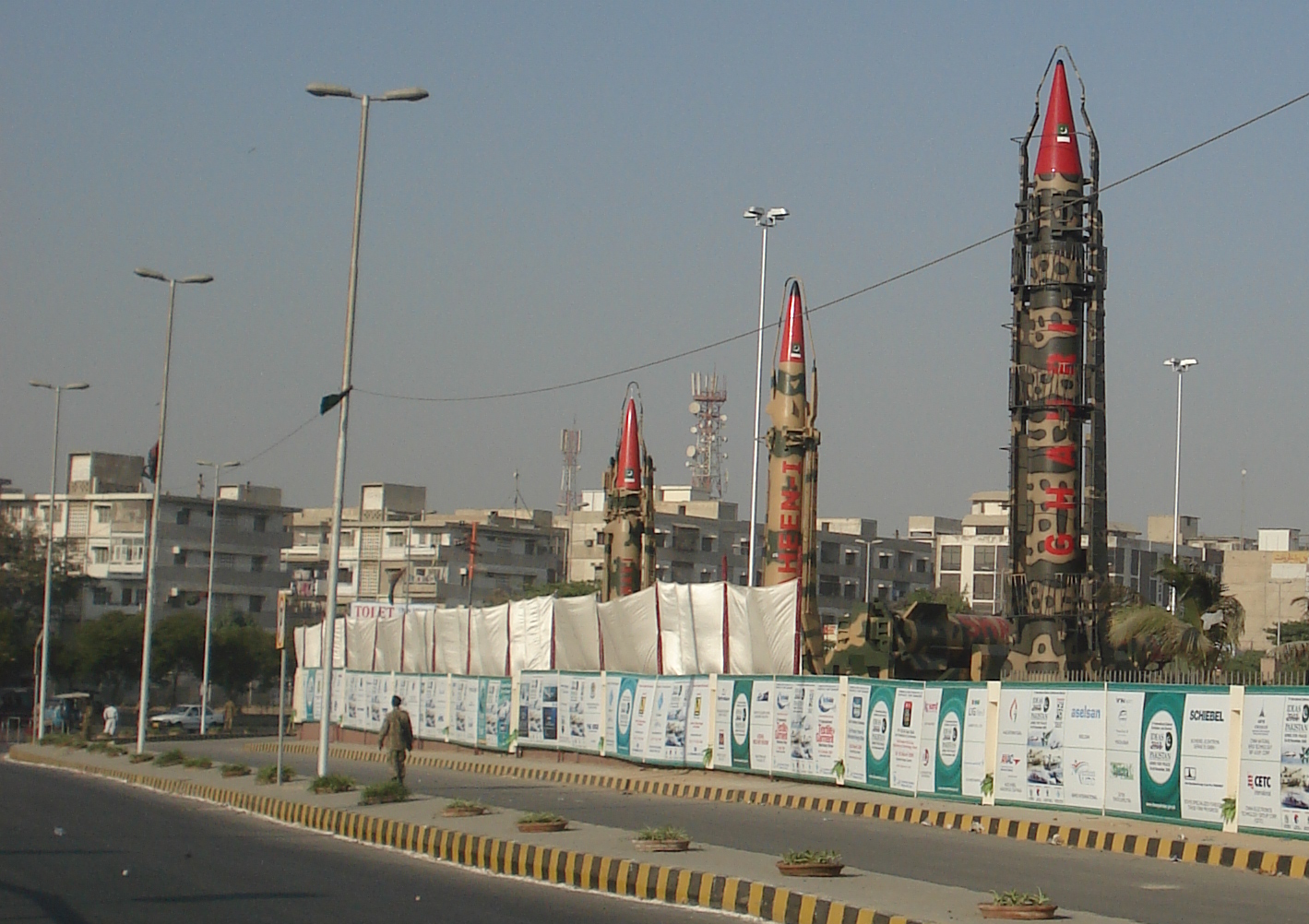
The question haunting every strategic capital from Washington to Tehran is whether the September 2025 pact gives Saudi Arabia access to Pakistan’s nuclear arsenal — approximately 170 warheads, according to SIPRI’s 2025 Yearbook, with none deployed and all stored disassembled in peacetime.
The ambiguity was created deliberately, then accidentally inflamed. Pakistan’s Defence Minister Khawaja Muhammad Asif initially stated that nuclear capabilities “will be made available” to Saudi Arabia under the agreement, then swiftly backtracked. The damage was done. Arms control observers seized on the phrase “all military means” in Saudi descriptions of the pact, and the question has dominated non-proliferation forums ever since.
The strategic reality is less dramatic than the headlines suggest. A CSIS Nuclear Network analysis concluded that Pakistan’s nuclear arsenal is fundamentally India-centric — designed for survival against its principal adversary, not power projection in the Middle East. Pakistan’s “Credible Minimum Deterrence” policy would become “unviable if extended beyond South Asia.” The authors delivered a precise verdict: “Pakistan’s limited number of warheads may be sufficient to deter India but would require substantial qualitative and quantitative improvements to do so for additional adversaries.”
The historical record is murkier. European intelligence sources have indicated Saudi Arabia paid for up to 60 percent of Pakistan’s atomic bomb programme and retains the option to acquire warheads. Riyadh reportedly provided an annual grant of $1 billion to develop what observers called the “Sunni bomb.” After the United States imposed sanctions on Pakistan’s nuclear programme, Saudi Arabia supplied 50,000 barrels of oil per day to keep the programme funded. Following Pakistan’s 1998 nuclear tests, the Saudi defence minister visited the uranium enrichment plant in 1999.
The A.Q. Khan proliferation network adds another layer of complexity. Khan sold gas-centrifuge enrichment technology to Iran, North Korea, and Libya. Saudi Arabia is suspected of being the network’s “mystery fourth customer” — Khan travelled to the Kingdom and Egypt, and the purpose of those trips remains officially unclear. Carnegie Endowment researchers and IAEA investigators believe Saudi Arabia may have been in the market for nuclear technology, though no credible international body has confirmed the Kingdom possesses a nuclear weapon.
Pakistan’s expanding nuclear infrastructure amplifies the concern. New reactor blocks at the Khushab facility, completed in late 2024, lift potential output to 40-45 kilograms of weapons-grade plutonium per year — enough for 8 to 12 additional compact warheads annually. Strategic Plans Division exercises in 2024-25 demonstrated missile units achieving launch readiness within hours. Saudi Arabia’s own nuclear ambitions, including its push for domestic enrichment capability, remain a parallel track that the current conflict may accelerate.
The CSIS analysis identified three primary risks of maintaining nuclear ambiguity: a credibility gap that erodes deterrence, international suspicion that complicates relations with Western powers and Iran, and regional instability as Iran may accelerate its own nuclear programme in response. The Arms Control Association published a direct assessment in October 2025: “Pakistan Extends Nuclear Deterrence to Saudi Arabia.” The Belfer Center at Harvard disagreed, calling it “ideally speculative at best.”
In March 2026, the speculation is no longer academic. Iran has struck Saudi territory. The defence pact’s collective security clause has been triggered. Whether it extends to nuclear coverage may be the single most consequential ambiguity in global security today.
The 2015 Yemen Vote — A Template for Defiance
Pakistan’s current predicament has a direct historical precedent, one that both Riyadh and Islamabad remember vividly. On April 10, 2015, Pakistan’s parliament passed a unanimous resolution affirming neutrality in the Yemen conflict, rejecting Saudi Arabia’s request for fighter jets, ground troops, and naval warships for Operation Decisive Storm.
The resolution expressed “desire that Pakistan should maintain neutrality” while paradoxically reaffirming “unequivocal support of the Kingdom of Saudi Arabia” and pledging to “stand shoulder to shoulder” if Saudi territory was directly violated. Saudi media characterised the subsequent period as “somewhat cool.” The vote was described by analysts as a “major blow” to Saudi Arabia’s military campaign, raising fundamental doubts about Pakistan’s reliability as a security partner.
Pakistan refused for reasons that resonate powerfully in 2026. The military was overstretched, fighting Taliban militants in the northwest while maintaining its posture against India on the eastern border. Pakistan’s Shia population — among the largest in the world — made participation in what was widely perceived as a sectarian conflict politically toxic. The civilian government calculated that the diplomatic cost of refusal was lower than the domestic cost of participation.
The aftermath offers a roadmap for repair. Army Chief General Raheel Sharif visited Riyadh in November 2015 to begin mending the rift. In January 2017, at Saudi request, he was appointed to lead the Islamic Military Counter Terrorism Coalition, a 41-nation alliance headquartered in Riyadh. In February 2018, Pakistan agreed to deploy additional troops to Saudi Arabia beyond the approximately 1,600 permanently stationed there under a 1982 agreement, on the strict condition they would be deployed only within Saudi borders, not in Yemen.
The 2015 template demonstrates three things. Pakistan can say no to Saudi Arabia and survive — the relationship bends but does not break. The military and civilian leadership can find common ground when forced into a corner. And Saudi Arabia, despite its frustration, ultimately values the relationship too highly to impose permanent consequences.
The crucial difference in 2026 is the September 2025 defence pact. In 2015, Pakistan had no formal obligation to join the fight. In 2026, a signed agreement with a collective security clause is on the table. Invoking neutrality when your treaty partner’s territory is under missile attack carries a different weight entirely. On March 7, that weight became concrete when Field Marshal Asim Munir flew to Riyadh to formally invoke the defence pact with Saudi Defense Minister Prince Khalid bin Salman.
The comparison extends to the military dimension. In 2015, Pakistan had approximately 1,600 troops permanently stationed in Saudi Arabia under a bilateral agreement dating to 1982. Pakistani soldiers had deployed to the Kingdom during the Iran-Iraq war in the 1980s, with tens of thousands stationed there before most were recalled after the 1988 ceasefire. During the 1990-91 Gulf War, Pakistani officers served in technical and advisory roles. The permanent garrison — small but symbolically significant — represented a commitment that predated the Yemen conflict by decades.
Joint military exercises have deepened operational interoperability in the years since the Yemen rift. The Al-Samsam series, conducted annually, reached its eighth iteration in October 2024. The Al-Kassah series reached its fourth edition in 2023. Most recently, the Al-Battar-II counter-terrorism exercise concluded in November 2025, focusing on fighting in built-up areas, countering improvised explosive devices, and tactical coordination. These exercises were not diplomatic theatre; they were preparation for precisely the scenario now unfolding.
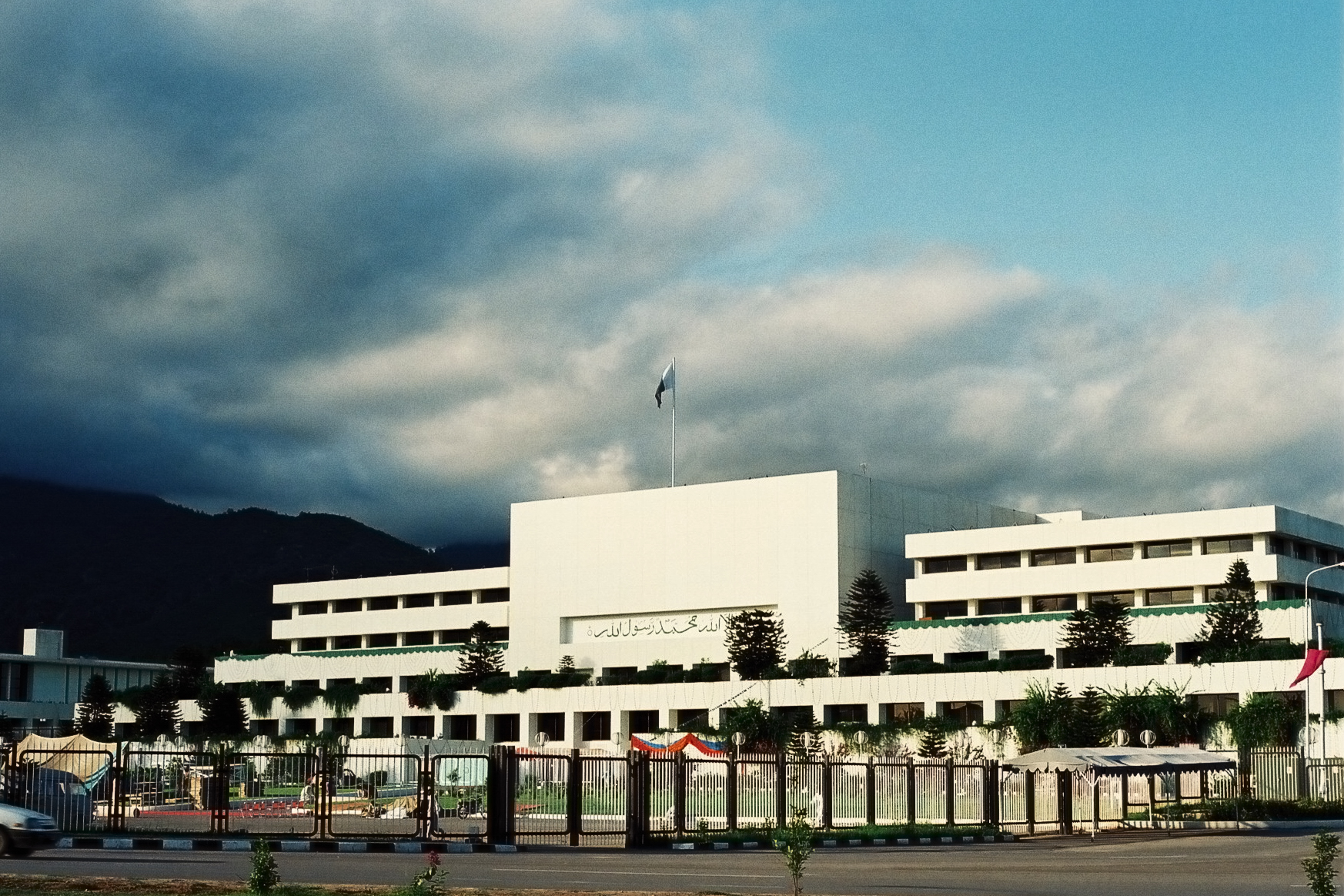
Yet the core dynamic remains. When Saudi Arabia needed military support against the Houthis in 2015, Pakistan’s parliament — elected representatives accountable to a constituency that includes 40 million Shias — said no. Whether the same institution would reach the same conclusion in 2026, with a defence treaty in force and Iranian missiles falling on Saudi cities, is the question that keeps every strategist in Rawalpindi, Riyadh, and Washington awake at night.
Why Are Pakistan’s Shia Communities Rising Against the War?
Twenty Pakistanis died in the first 72 hours after Khamenei’s assassination, not from Iranian missiles but from their own government’s security forces attempting to contain pro-Iran protests that erupted across the country.
In Karachi, ten people were killed at the US Consulate when Marines fired on armed protesters who breached the outer gate. In Skardu, in the Shia-majority Gilgit-Baltistan region, eight died after protesters set fire to a United Nations office building, prompting a three-day curfew and military deployment. Two more died in Islamabad. Over seventy were wounded nationally.
Pakistan’s Shia population — estimated at 15 to 25 percent of 240 million people, roughly 30 to 48 million individuals — constitutes the second-largest Shia community in the world after Iran itself. For many, Khamenei was not merely a foreign head of state but, as analysts at Al-Monitor described, “a defender of their identity.” The combination of anti-American sentiment, anti-Israeli sentiment, and religious solidarity created what one Pakistani journalist called “a powerful potion.”
The sectarian violence that has plagued Pakistan for decades provides grim context. Over 4,000 Shias have been killed by sectarian violence in the past twenty years. The year 2013 was the worst, with some 700 Shias murdered. More than 2,000 Hazara — an ethnically distinct Shia community concentrated in Balochistan — have been killed in fourteen years through suicide bombings and targeted assassinations. In February 2026, weeks before the Iran crisis, a high-profile attack on a Shia mosque in Islamabad prompted the government to launch Operation Ghazab lil-Haq against terrorist groups.
The government’s response to the post-Khamenei protests has been to suppress while sympathising — condemning the “initiation of unwarranted attacks” on Iran at the UN Security Council while deploying troops to contain Shia anger at home. This is not cognitive dissonance but the fundamental logic of Pakistan’s position: it must demonstrate solidarity with the Shia street without alienating Saudi Arabia, and solidarity with Riyadh without provoking the 40 million Shias who form a crucial political constituency.
The sectarian dimension transforms Pakistan’s foreign policy calculation from a traditional alliance question into an existential domestic security challenge. Any perceived tilt toward Saudi Arabia’s military campaign risks igniting sectarian violence at a scale Pakistan has never experienced. Any perceived tilt toward Iran risks the economic and diplomatic relationship that underwrites Pakistan’s solvency.
The $9 Billion Thread — How Saudi Financial Leverage Shapes Pakistan’s Choices
Saudi Arabia’s influence over Pakistan is measured not in diplomatic communiqués but in bank transfers, employment visas, and oil shipments. The financial architecture of the relationship gives Riyadh extraordinary leverage — and both capitals know it.
The numbers tell the story with cold precision. In fiscal year 2025, Pakistani workers in Saudi Arabia sent home $9.64 billion in remittances, a 15 percent increase over the previous year’s $8.34 billion. Saudi Arabia accounts for approximately 24 percent of Pakistan’s total remittance inflow. Total remittances from all sources hit a record $31.2 billion, making overseas worker income the single largest source of foreign exchange in an economy perpetually teetering on the edge of default.
The human dimension is equally significant. An estimated 2.64 million Pakistanis live and work in Saudi Arabia. In 2025 alone, 530,256 Pakistanis relocated to the Kingdom — a 17 percent increase over the previous year and representing roughly 70 percent of Pakistan’s total overseas manpower exports. Since 1972, approximately 7.69 million Pakistanis have migrated to Saudi Arabia, most returning after their work contracts ended. Disrupting this pipeline — through visa restrictions, deportations, or simply the chilling effect of diplomatic tension — would constitute an economic weapon of devastating power.
Saudi Arabia holds a $3 billion deposit with Pakistan’s State Bank, renewed on December 5, 2024, extending it for another year. This deposit was not merely generous — it was a critical condition for the IMF to approve Pakistan’s $7 billion Extended Fund Facility in September 2024. Without the Saudi deposit, the IMF programme would have collapsed, and with it Pakistan’s access to international capital markets. Prime Minister Sharif called it what he hoped would be “Pakistan’s last IMF programme.” Pakistan is currently in its 24th such programme since 1958. No Pakistani prime minister has ever completed a five-year term.
The trade relationship tilts heavily in Saudi Arabia’s favour. Pakistan imported $4.47 billion from the Kingdom in 2024 while exporting just $710 million — a deficit of $3.76 billion driven primarily by petroleum imports. Crown Prince Mohammed bin Salman’s February 2019 visit yielded $20 billion in memorandums of understanding, though the translation of MoUs into actual investment has been slower than either side anticipated.
The Brookings Institution has documented how Saudi financial influence extends beyond government-to-government transactions. Since the 1970s, Saudi funding has supported Ahl-e-Hadith and Deobandi madrasas teaching a more puritanical version of Islam. A 2008 US diplomatic cable expressed alarm that Saudi-financed madrasas were fostering “religious radicalism” in “previously moderate regions of Pakistan.” The religious funding pipeline predated the Afghan jihad and has outlasted it, creating a parallel influence channel that operates largely through private Saudi sources rather than official state channels.
The nuclear programme itself was the original Saudi investment in Pakistan. European intelligence sources have documented Saudi financing of up to 60 percent of Pakistan’s atomic bomb projects, and after US sanctions threatened to derail the programme, Saudi Arabia supplied 50,000 barrels of oil per day to keep the centrifuges spinning. This financial DNA — Saudi money enabling Pakistani strategic capability — creates an obligation that transcends normal alliance politics. It is less a partnership than a debt, and debts carry expectations.
Brookings’ assessment of the overall relationship is unsparing: Pakistan “skillfully balances relationships between Iran and Saudi Arabia while remaining closer to Riyadh.” The qualifier “while remaining closer to Riyadh” is not an observation — it is a structural reality enforced by $9.64 billion in annual remittances, a $3 billion deposit that keeps the central bank solvent, and 2.64 million hostages to fortune working in Saudi cities. Pakistan’s alignment toward Riyadh is not a choice — it is a financial gravitational field from which escape velocity requires resources Islamabad simply does not possess.
What Happens to Pakistan If the Strait of Hormuz Stays Closed?
The war’s most immediate threat to Pakistan is not diplomatic but logistical. Pakistan consumes approximately 450,000 barrels of crude oil daily, with 85 percent imported from Gulf producers — virtually all of it transiting the Strait of Hormuz, which Iran has effectively closed to commercial shipping.
Qatar and the UAE account for 99 percent of Pakistan’s liquefied natural gas imports. As of early March 2026, Pakistan maintains 28 days of fuel reserves — seven days above the 21-day mandatory minimum. Two crude tankers bound for Pakistan were stranded in the Strait. CNBC analysis concluded that if Hormuz remains closed beyond two weeks, Pakistan faces “one of its most significant energy disruptions in recent years.”
The energy vulnerability compounds Pakistan’s financial exposure. Oil price spikes driven by the conflict — Brent crude has risen 9 percent since hostilities began, with benchmark prices approaching $100 per barrel — translate directly into balance-of-payments pressure on an economy already dependent on IMF life support. Every dollar increase in oil prices costs Pakistan roughly $450 million annually in additional import expenditure.
The irony is structural. Pakistan’s energy dependence on Gulf producers gives it a powerful incentive to support the rapid conclusion of hostilities — which aligns with its mediating posture — while simultaneously making it vulnerable to pressure from any party that can influence oil flows. Saudi Arabia’s decision to reroute crude exports through the Red Sea via the East-West Pipeline bypasses Hormuz for Saudi oil but does nothing for Pakistan’s imports from Qatar, the UAE, and Kuwait.
Pakistan-Iran trade, while smaller than the Saudi economic relationship, is not negligible. Bilateral trade reached $3.13 billion between March 2024 and March 2025, a 13.6 percent increase. Iran exports petroleum products, powdered milk, and dates to Pakistan; Pakistan sends rice, oilseeds, and meat in return. Iran also supplies electricity to Gwadar and numerous districts in Balochistan — a dependency that adds another strand to the web of vulnerability.
The shelved Iran-Pakistan gas pipeline, a 2,775-kilometre project stalled since 2014 by US sanctions, represents the road not taken. In January 2026 — mere weeks before the war — Pakistan informed Iran of its decision to shelve the project under an out-of-court settlement, but offered revival if a US sanctions waiver could be secured. The conflict has rendered that prospect moot. Iran’s $18 billion penalty ultimatum, issued in late 2022, remains a latent financial threat.
The energy crisis creates a paradoxical incentive structure. Pakistan’s dependence on Gulf oil imports gives it every reason to want the war over quickly — aligning its interests with diplomatic resolution rather than military escalation. Yet the same dependency gives Saudi Arabia leverage to demand alignment as the price of continued energy supply. Aramco’s decision to reroute crude through the Red Sea via the East-West Pipeline bypasses Hormuz for Kingdom exports but does nothing for Pakistan’s supply from other Gulf states. Pakistan faces the worst of both worlds: the costs of the war without the benefits of the oil rerouting, and the pressure to align with Riyadh without the energy security that alignment is supposed to guarantee.
The China Factor — Why Beijing’s Silence Speaks Louder Than Words
Pakistan’s relationship with China adds a third gravitational pull to its strategic calculations, and Beijing’s response to the Iran crisis has been conspicuous for its restraint.
China condemned the US-Israeli strikes as having “no UN Security Council authorization” and violating international law. Beyond rhetoric, Beijing has done remarkably little. CNN noted that the United States “just took out two China-friendly leaders in two months” — a reference to the removal of Iran’s supreme leader and the earlier toppling of Syria’s Assad — and Beijing “has done very little about it.” Pentagon chief Pete Hegseth dismissed China and Russia as “non-factors” in the Iran war.
Chatham House characterised China’s approach as “playing the long game over Iran.” Carnegie Endowment published an analysis titled “Beijing Doesn’t Think Like Washington — and the Iran Conflict Shows Why,” arguing China prioritises economic stability over military confrontation and sees no benefit in heightening tension with the United States over Iran while a trade truce holds.
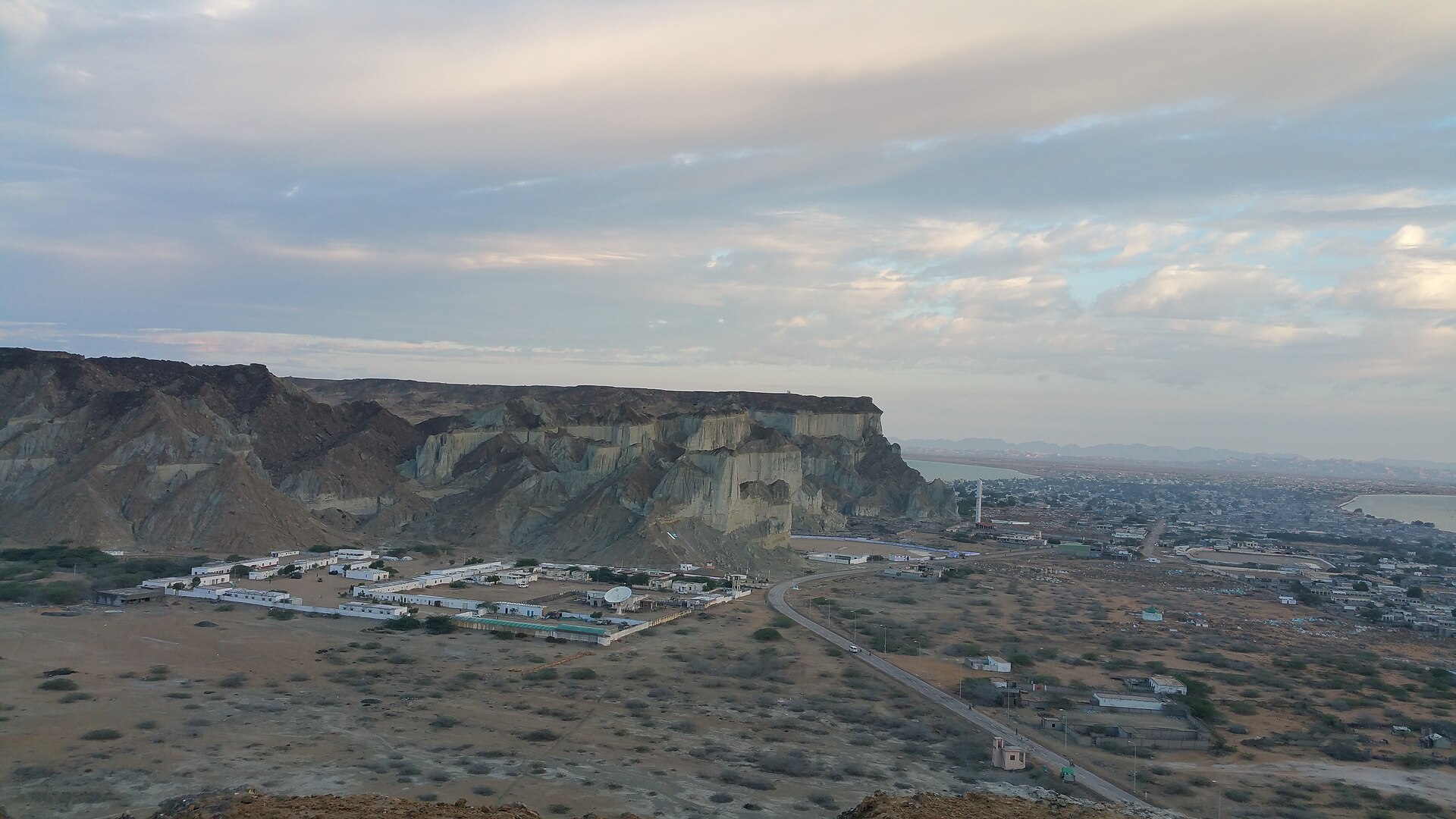
For Pakistan, China’s passivity creates a vacuum. The China-Pakistan Economic Corridor, launched in 2015 with an initial estimate of $46 billion and expanded to over $60 billion, is the centrepiece of Pakistan’s development strategy. In January 2026, Pakistan and China agreed to launch CPEC 2.0 during talks co-chaired by Chinese Foreign Minister Wang Yi and Dar, focusing on industrialisation, agriculture, mining, and sustainable growth. China is Pakistan’s largest trading partner and a crucial source of infrastructure investment.
The complication is geographic. Gwadar Port, CPEC’s crown jewel, sits in Balochistan — the same province through which Pakistan shares its 900-kilometre border with Iran. Iran views Gwadar as a rival to its own Chabahar port, which was built with Indian assistance — though India has now frozen the Chabahar deal under US pressure — adding a geopolitical dimension to what is nominally an economic project. An Iranian collapse or prolonged instability threatens the Balochistan corridor through refugee flows, separatist movements, and potential cross-border violence.
Pakistani analyst Muhammad Osama Shafiq articulated the dilemma: Pakistan “cannot depend on Washington in a crisis with India” and must prioritise Beijing as its long-term strategic partner. Yet China has shown no appetite to confront the United States over the Iran conflict, leaving Pakistan without the great-power backing it would need to resist Saudi pressure. China’s preferred role is investor, not protector — and in a shooting war, investors tend to hedge their positions.
In August 2023, China, Pakistan, and Iran held their first trilateral security consultation, suggesting an emerging framework for cooperation. That framework is now under extreme stress. If Iran’s regime collapses, China may reassess its entire regional strategy, potentially prioritising stability over engagement — which would leave Pakistan exposed on its western flank without either Chinese or Iranian cooperation to stabilise Balochistan.
The Encirclement Doctrine — Pakistan’s Worst-Case Scenario
Defence Minister Khawaja Muhammad Asif articulated a fear on March 3 that goes beyond the immediate crisis to Pakistan’s most fundamental strategic anxiety: encirclement. Asif warned that Iran’s collapse would create a “Taliban-India-Israel nexus” in which a post-regime-change Tehran, India, and Afghanistan’s Taliban government would share a “joint single point agenda” of “enmity towards Pakistan.”
The reasoning, while inflammatory in its rhetoric, reflects a genuine strategic calculus. Pakistan already fights a low-intensity war against the Tehrik-i-Taliban Pakistan (TTP) in its northwest, having launched Operation Ghazab lil-Haq in February 2026 after a high-profile mosque attack in Islamabad. The Pakistan-Afghanistan border is tense, with Pakistani airstrikes on Afghan territory in late February adding another dimension of friction.
If Iran’s government falls or fragments, Pakistan faces the prospect of instability on its western border simultaneously with its existing eastern confrontation with India and northwestern conflict with the Taliban. Balochistan’s ethnic Baloch population straddles the Pakistan-Iran border, and separatist movements in both countries have historically exploited cross-border sanctuaries. A weakened or collapsed Iran removes the restraining force on Iranian Baloch militants and potentially opens a corridor for Indian intelligence operations — a scenario that Pakistani military planners have war-gamed for decades.
The irony that Asif identified is devastating in its logic: Pakistan’s defence pact with Saudi Arabia, designed to enhance security, could contribute to the very outcome — Iranian regime change — that most threatens Pakistan’s strategic position. Supporting Saudi Arabia’s confrontation with Iran, even passively, brings closer the possibility of an unstable western border, a Balochistan insurgency fuelled by Iranian state collapse, and the loss of the strategic depth that a stable Iran has traditionally provided against Indian encirclement.
Pakistan monitors proposals to redraw regional boundaries, including Kurdish independence and Balochistan separatism, with the acute awareness of a state that could lose territory in any post-war settlement. The Diplomat assessed that Pakistan’s ability to manage “multifaceted pressures — balancing public sentiment, economic imperatives, and alliance obligations — will be sorely tested.”
The January 2024 cross-border exchange offers a preview of what instability on the Iran-Pakistan border looks like in practice. On January 16, 2024, Iran launched missile and drone strikes into Panjgur, Balochistan, killing two children and injuring several others — targeting Jaish al-Adl, a Sunni militant group that had killed 27 members of Iran’s Islamic Revolutionary Guard Corps in 2019. Two days later, Pakistan retaliated with Operation Marg Bar Sarmachar, using drones and fighter jets against BLA and BLF hideouts inside Iran — the first known Pakistani military strikes on Iranian soil since the end of the Iran-Iraq War. Relations severed for approximately one week before de-escalation.
The 2024 incident demonstrated that cross-border violence can escalate rapidly, and that neither state has the capacity to fully control the borderlands. A post-war scenario in which Iran’s central government weakens or collapses would remove even the limited restraint that currently exists. The nearly 3,500 Pakistani pilgrims, students, and businesspeople who were evacuated from Iran via five buses on a 1,500-kilometre journey from Tehran to Zahedan in the first days of the war illustrate the human dimension of the border’s vulnerability. A joint Pakistan-Iran operation in November 2024 that killed 12 Jaish al-Adl militants, including leader Salahuddin Farooqui, showed that cooperation is possible — but cooperation requires two functioning states, and Iran’s capacity to function as a security partner is precisely what the war threatens to destroy.
The Islamabad Pressure Matrix — Five Forces Pulling Pakistan Apart
Five simultaneous pressures act on Pakistan’s decision-making, each pointing in a different direction. The interaction between them creates a strategic environment of extraordinary complexity — one that no formal alliance framework or diplomatic playbook can fully navigate.
| Pressure Dimension | Source | Direction | Intensity (1-10) | Key Metric |
|---|---|---|---|---|
| Financial dependency | Saudi Arabia | Pro-Riyadh | 9 | $9.64B remittances + $3B deposit |
| Domestic sectarian risk | Shia population | Pro-neutrality/Pro-Iran | 8 | 40M Shia citizens, 20 killed in protests |
| Treaty obligation | SMDA (Sept 2025) | Pro-Riyadh | 7 | Collective security clause triggered |
| Energy vulnerability | Hormuz closure | Pro-ceasefire | 8 | 28 days reserves, 85% crude via Gulf |
| Great-power alignment | China / United States | Contradictory | 6 | CPEC 2.0 vs Board of Peace membership |
The matrix reveals that no single course of action satisfies all five dimensions simultaneously. Full alignment with Saudi Arabia satisfies the financial and treaty dimensions but ignites the sectarian dimension and potentially alienates China. Full neutrality satisfies the domestic and Chinese dimensions but risks the financial lifeline and treaty credibility. Active mediation — Pakistan’s current strategy — partially satisfies all dimensions but fully satisfies none, leaving every pressure point unresolved and vulnerable to sudden escalation.
A comparison with other regional actors underscores Pakistan’s unique predicament. The UAE has aligned fully with Saudi Arabia, accepting the economic costs of conflict. Oman has adopted a mediating posture but faces no domestic sectarian pressure and no treaty obligations to either side. Turkey has adopted its own precarious balancing act, criticising the strikes on Iran while maintaining its NATO membership, but Ankara lacks Pakistan’s financial dependency on Riyadh. No other state in the international system faces all five pressures simultaneously.
Egypt presents perhaps the closest parallel — a major regional power with deep economic ties to Saudi Arabia that has nonetheless chosen to stay out of the fighting. Cairo’s refusal to enter the war stems from a cold calculation that the collapse of Suez Canal revenue and the risk of domestic instability outweigh any benefit from joining Riyadh’s coalition.
| Option | Financial Impact | Domestic Risk | Treaty Credibility | Regional Standing |
|---|---|---|---|---|
| Full alignment with Saudi Arabia | Secured | Severe sectarian violence | Upheld | Loses Iran, strains China ties |
| Formal neutrality (2015 repeat) | At severe risk | Manageable | Destroyed | Balanced but untrusted |
| Active mediation (current path) | Maintained for now | Elevated but contained | Ambiguous | Enhanced if successful |
| Military contribution (limited) | Strengthened | High | Partially upheld | Loses Iran permanently |
The matrix suggests that active mediation is Pakistan’s least-worst option — a conclusion that Islamabad appears to have reached independently. The risk is that mediation fails, the war escalates, and Pakistan is forced into a binary choice that the matrix shows is catastrophic regardless of which side it takes.
The Contrarian Case — Why Pakistan’s Weakness May Be Its Greatest Strength
Conventional analysis frames Pakistan’s predicament as paralysis — a nation too weak, too dependent, and too divided to act decisively. The contrarian reading suggests the opposite: Pakistan’s very inability to commit to either side is what makes it the only credible mediator in the conflict, and its diplomatic value increases precisely because it cannot afford to take sides.
Consider the alternatives. The United States is a combatant. China has abdicated the mediator role. Russia is compromised by its own relationship with Iran’s military establishment. The European Union lacks leverage. Turkey has NATO obligations that constrain its freedom of action. Oman, the traditional Gulf mediator, is a small state without the strategic weight to broker an agreement between combatants of this scale.
Pakistan brings unique assets to the mediating table. It has active communication channels with both Riyadh and Tehran, demonstrated by Dar’s shuttle diplomacy. It has a defence pact with Saudi Arabia, giving Riyadh confidence that Pakistan’s mediation is not cover for abandonment. It has a 900-kilometre border with Iran and a 40-million-strong Shia population, giving Tehran confidence that Pakistan has genuine stakes in Iran’s survival. And it has a nuclear arsenal that, regardless of its operational applicability to the Middle East, commands attention from all parties.
The 2015 Yemen vote, often cited as evidence of Pakistan’s unreliability, can be reread as evidence of its strategic autonomy — the capacity to resist even its most powerful patron when the national interest demands it. That Pakistan could say no to Saudi Arabia and repair the relationship within three years suggests a resilience in the bilateral dynamic that pure dependency models fail to capture.
Historical precedent supports the contrarian case. Pakistan facilitated the 1972 normalisation of relations between the United States and China, with Henry Kissinger transiting through Islamabad on his secret mission to Beijing. In the current crisis, Dar’s disclosure that Pakistan facilitated assurances between Riyadh and Tehran — essentially serving as a guarantor of Saudi non-belligerency — echoes that earlier diplomatic role.
The argument has limits. Mediation requires both parties to want a settlement, and the trajectory of the conflict suggests escalation rather than de-escalation. Pakistan’s financial vulnerability means it cannot sustain a mediating posture indefinitely if Saudi Arabia demands alignment. And the domestic sectarian pressure creates a time constraint — every week of war increases the risk of violence that could overwhelm the state’s capacity to manage it.
Nevertheless, the contrarian case reframes the strategic conversation. Pakistan is not paralysed; it is positioned. Its weakness is not incapacity but restraint. And in a region where every other actor has chosen a side, the last uncommitted player holds a value that no amount of military capability can replicate.
The financial dimension reinforces the argument. Saudi Arabia’s $3 billion deposit in Pakistan’s central bank is not merely aid — it is an investment in a strategic asset. If Riyadh forces Pakistan into full alignment and the resulting sectarian violence destabilises the country, Saudi Arabia loses not only a mediating partner but also the value of its financial exposure. The $9.64 billion remittance corridor, the 2.64 million workers, and the defence pact itself all depend on a stable Pakistan — and stability requires the balancing act that full alignment would destroy. Saudi Arabia needs Pakistan weak enough to comply but stable enough to function. The paradox constrains Riyadh’s leverage as much as it constrains Islamabad’s freedom of action.
What Comes Next for Pakistan in the Iran-Saudi Conflict?
Three scenarios define Pakistan’s near-term trajectory, each with distinct implications for Saudi Arabia’s strategic position in the conflict.
In the first scenario — rapid de-escalation — Pakistan’s mediation succeeds, and its diplomatic stock rises dramatically. This outcome validates the SMDA as a deterrent mechanism, reinforces Pakistan’s value to Saudi Arabia beyond military support, and positions Islamabad as an indispensable interlocutor in any post-conflict settlement. The probability of this scenario depends on variables Pakistan does not control, principally Iran’s willingness to negotiate from a position of military weakness and the United States’ appetite for a diplomatic exit.
In the second scenario — prolonged conflict — Pakistan’s balancing act becomes increasingly untenable. Fuel reserves deplete. Remittance flows are disrupted as Saudi Arabia redirects economic resources to its war effort. Sectarian tensions escalate as the body count in Iran rises and the Shia street demands more forceful opposition to the US-Saudi-Israeli axis. Pakistan is forced to choose, and the financial architecture of the relationship — $9.64 billion in remittances, $3 billion in deposits, 2.64 million jobs — pulls it inexorably toward Riyadh. The cost is measured in domestic stability.
In the third scenario — Iranian collapse — Pakistan faces its worst strategic nightmare. A fragmenting Iran exports refugees, militants, and separatist energy into Balochistan. The Houthi movement in Yemen, severed from its Iranian patron, either collapses or mutates into an uncontrollable rogue force on Saudi Arabia’s southern border. Pakistan’s western frontier becomes a security vacuum requiring military resources it cannot spare from the Indian border. The SMDA’s collective security clause becomes a mechanism for Saudi Arabia to demand Pakistani military engagement in stabilising the post-war Middle East — a commitment that would stretch the sixth-largest military in the world beyond its operational capacity.
The military dimensions of Pakistan’s capabilities provide context for these scenarios. Pakistan maintains 660,000 active military personnel, supported by over 291,000 paramilitary forces. Its air force operates 465 combat aircraft, and the army fields over 6,000 armoured fighting vehicles. The defence budget of 2.55 trillion rupees — approximately $9 billion, representing 1.97 percent of GDP — was increased by 20 percent in June 2025, the largest hike in a decade. These are formidable numbers, but they are India-oriented. Redeploying them to the Middle East would require a strategic reorientation that no Pakistani military chief would accept without a fundamental renegotiation of the country’s defence posture.
The immediate indicators to watch are Pakistan’s fuel reserve levels, the status of the two stranded tankers in the Strait of Hormuz, and the intensity of sectarian violence in Karachi, Skardu, and Quetta. If reserves drop below the 21-day mandatory minimum, Pakistan will face emergency energy rationing. If sectarian violence escalates beyond localised incidents to coordinated, sustained unrest, the government may be forced to redirect military resources from border operations to domestic security — weakening both its deterrent against India and its capacity to contribute to Gulf defence.
Field Marshal Hafiz Syed Asim Munir, Pakistan’s first Chief of Defence Forces and the man Al Jazeera described as “Trump’s favourite field marshal,” embodies the contradictions. He met Donald Trump in June 2025, signalling a major thaw in US-Pakistan relations. Trump remarked that Pakistanis “know Iran very well, better than most.” Iran’s top military commander subsequently called Munir to thank Pakistan for its support during an earlier confrontation, praising Pakistan’s “courageous stance.” Munir is simultaneously Washington’s interlocutor, Riyadh’s treaty partner, and Tehran’s backchannel — a diplomatic trifecta that cannot survive a binary war indefinitely.
Pakistan’s impossible choice is not between Saudi Arabia and Iran. It is between the version of itself that can survive the war and the version that emerges from it. Every path leads through pain. The question is which pain is survivable — and that question has no answer that satisfies every constituency, every ally, and every border simultaneously.
Frequently Asked Questions
What is the Pakistan-Saudi Arabia Strategic Mutual Defence Agreement?
The SMDA, signed on September 17, 2025, is a bilateral defence pact that treats any act of aggression against one signatory as an act against both. Saudi officials described it as encompassing “all military means,” creating deliberate ambiguity about whether Pakistan’s nuclear arsenal falls within its scope. The agreement’s full text has not been publicly released.
How many Pakistanis live in Saudi Arabia?
Approximately 2.64 million Pakistanis live and work in Saudi Arabia as of 2023. In 2025, over 530,000 additional Pakistanis relocated to the Kingdom, representing 70 percent of Pakistan’s total overseas manpower exports. Pakistani workers in Saudi Arabia sent home $9.64 billion in remittances in fiscal year 2025, constituting 24 percent of Pakistan’s total remittance income.
Has Pakistan invoked the defence pact in the current Iran-Saudi conflict?
Deputy Prime Minister Ishaq Dar disclosed on March 3, 2026, that Pakistan explicitly reminded Iran of the SMDA during backchannel communications. Dar stated he “immediately sensitised the leadership of Iran that they should keep that in mind” and conducted shuttle diplomacy between Riyadh and Tehran, facilitating mutual assurances. Pakistan has not, however, committed military forces to the conflict.
Does Pakistan have nuclear weapons that could be deployed to defend Saudi Arabia?
Pakistan possesses approximately 170 nuclear warheads according to SIPRI’s 2025 Yearbook, all stored disassembled in peacetime. CSIS analysis concluded Pakistan’s nuclear arsenal is fundamentally India-centric and would require “substantial qualitative and quantitative improvements” to deter additional adversaries. Harvard’s Belfer Center described the nuclear umbrella interpretation as “ideally speculative at best.”
How is the Strait of Hormuz closure affecting Pakistan?
Pakistan imports 85 percent of its crude oil through the Strait of Hormuz and receives 99 percent of its LNG from Qatar and the UAE via the same route. As of early March 2026, Pakistan maintains 28 days of fuel reserves. Two crude tankers bound for Pakistan were stranded in the Strait. Analysts warn that closure beyond two weeks would constitute one of Pakistan’s most significant energy disruptions in recent history.
What happened when Pakistan refused to join the Saudi-led Yemen coalition in 2015?
On April 10, 2015, Pakistan’s parliament unanimously voted for neutrality in the Yemen conflict, rejecting Saudi Arabia’s request for fighters, troops, and warships. The decision strained relations but did not break them. Pakistan subsequently repaired the relationship by appointing former Army Chief Raheel Sharif to lead the Islamic Military Counter Terrorism Coalition in 2017 and deploying additional troops to Saudi territory in 2018.
What is China’s role in Pakistan’s decision-making during the Iran war?
China, Pakistan’s largest trading partner and the architect of the $60 billion China-Pakistan Economic Corridor, has largely abstained from the Iran conflict. Chatham House characterised China as “playing the long game over Iran.” Pakistan’s strategic dependence on Beijing complicates its alignment with Saudi Arabia, as China has avoided confronting the United States over Iran and prioritises economic stability over military engagement in the Middle East.