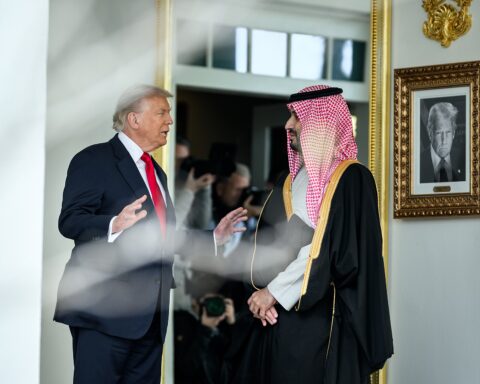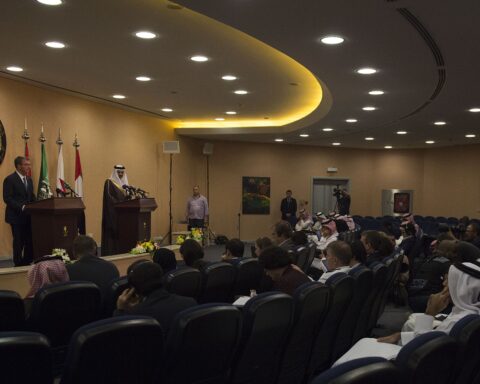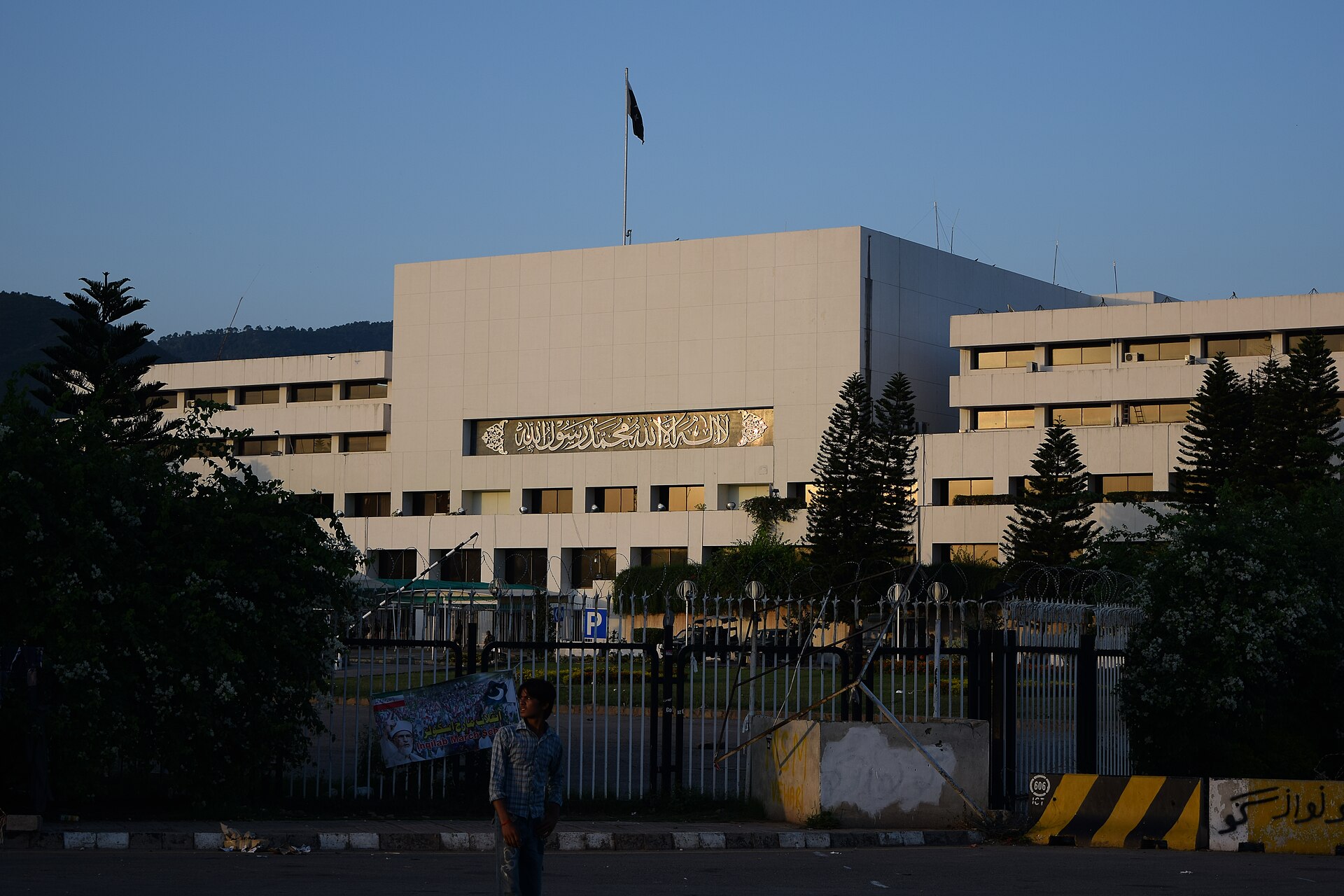

ISLAMABAD — Pakistan has become the single most consequential neutral actor in the Iran war, serving as the sole diplomatic channel between Washington and Tehran while bound by a mutual defence pact to the country absorbing Iranian missiles every night. On 26 March 2026, Pakistani Foreign Minister Ishaq Dar confirmed that Islamabad has been facilitating “indirect talks” between the United States and Iran, relaying messages on the 15-point American ceasefire proposal that Tehran has so far rejected. The confirmation transformed Pakistan from a regional bystander into the war’s indispensable intermediary — and placed its government on a diplomatic tightrope with no precedent in modern South Asian history.
The stakes extend far beyond shuttle diplomacy. Pakistan shares a 900-kilometre border with Iran, hosts two million workers in Saudi Arabia whose remittances sustain its fragile economy, signed a Strategic Mutual Defence Agreement with Riyadh just six months before the first Iranian missile struck the Eastern Province, and possesses the world’s seventh-largest nuclear arsenal. Every pressure point in the Iran war runs through Islamabad, making it simultaneously the most useful mediator and the most vulnerable domino in a conflict that has already drawn in more than a dozen nations.
Table of Contents
- Why Is Pakistan the Only Country Both Sides Will Talk To?
- What Does Pakistan’s Defense Pact With Saudi Arabia Actually Require?
- The 900-Kilometre Fault Line
- The Strategic Alignment Pressure Matrix
- Can Pakistan’s Military Defend Saudi Arabia While Bordering Iran?
- The $6 Billion Thread — Saudi Economic Leverage Over Islamabad
- How Is Pakistan Facilitating Indirect Talks Between the US and Iran?
- Gwadar, China, and the Third Power in the Room
- Pakistan’s Nuclear Shadow Over the Gulf
- The Balochistan Crisis Nobody Is Counting
- What Happens If Pakistan’s Neutrality Breaks?
- Five Scenarios for Pakistan’s Next Move
- Frequently Asked Questions
Why Is Pakistan the Only Country Both Sides Will Talk To?
Pakistan occupies a diplomatic position that no other state can replicate: it maintains functional relationships with the United States, Iran, Saudi Arabia, and China simultaneously, while possessing the military credibility to make its guarantees meaningful. No European nation, no Gulf state, and no Asian power can claim all four of those relationships at once, which is why messages between Washington and Tehran are travelling through Islamabad rather than through Ankara, Beijing, or Doha.
The foundations of this unique position are both historical and structural. Pakistan was a founding member of the Central Treaty Organisation alongside Iran and Turkey in 1955, establishing an intelligence and military cooperation framework with Tehran that survived the 1979 Islamic Revolution. Pakistani and Iranian intelligence services continued back-channel communication throughout the 1980s, even as Islamabad aligned with Washington during the Soviet-Afghan War. According to a Middle East Institute analysis published in October 2025, Pakistan has maintained “continuous, unbroken diplomatic relations with Iran for 75 years — the longest uninterrupted relationship between any Sunni-majority and Shia-majority state.”
On the American side, Pakistan has been a Major Non-NATO Ally since 2004 and has hosted US military operations, intelligence facilities, and supply lines for more than two decades. The CIA’s drone programme operated from Pakistani bases for years with Islamabad’s tacit approval, creating a web of dependencies that Washington cannot easily replicate elsewhere. Pakistan’s military establishment, trained at Sandhurst and West Point, speaks the institutional language of both the Pentagon and the State Department.
The Saudi relationship adds a third dimension. Pakistan’s military ties to Riyadh date back to the 1960s, when Pakistani officers helped establish the Royal Saudi Air Force and trained early cohorts of Saudi ground forces. Between 1,500 and 2,000 Pakistani military personnel remain deployed in Saudi Arabia on training and advisory missions, according to the International Institute for Strategic Studies. The September 2025 defence pact formalised a relationship that has operated informally for sixty years.
Iran, for its part, views Pakistan as the only nuclear-armed Muslim state that has never taken military action against it, a distinction that matters when every other regional power has either joined the American-led campaign or is edging toward participation. Pakistani diplomats can enter Tehran’s Foreign Ministry without being treated as adversaries — a privilege that not even Turkish officials currently enjoy, given Ankara’s ambiguous stance toward NATO operations in the conflict.
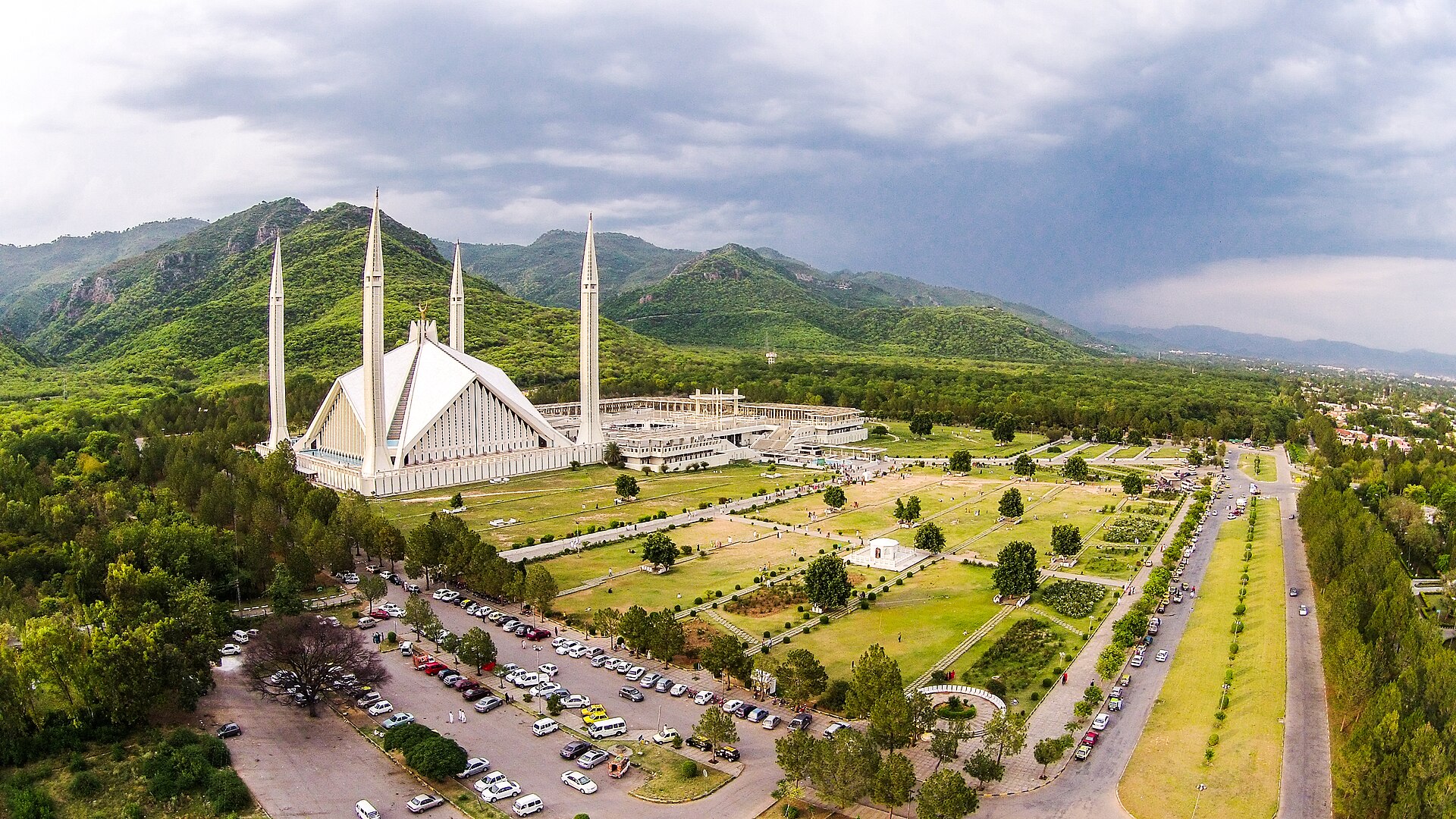
What Does Pakistan’s Defense Pact With Saudi Arabia Actually Require?
The Strategic Mutual Defence Agreement signed at Al Yamamah Palace in Riyadh on 17 September 2025 represents the most significant bilateral security commitment in the Middle East since the Camp David Accords. Its core clause declares that “any aggression against either country shall be considered an aggression against both,” according to the joint statement released by the Pakistani and Saudi foreign ministries. In legal structure, it mirrors Article 5 of the NATO Treaty — the collective defence provision that has only been invoked once, after the September 11 attacks.
The pact’s operational meaning, however, remains deliberately ambiguous. When a Saudi official was asked by the Financial Times whether the agreement included the use of Pakistan’s nuclear arsenal, the response was: “This is a comprehensive defensive agreement that encompasses all military means.” Pakistan’s government has neither confirmed nor denied that nuclear protection extends to Saudi Arabia, maintaining what analysts at the Bulletin of the Atomic Scientists described in October 2025 as “constructive ambiguity designed to maximise deterrence value while minimising diplomatic fallout.”
Three specific obligations are clearer. First, the pact commits both nations to intelligence sharing on threats to either country’s territorial integrity, a provision that has been activated daily since Iranian drone and missile attacks on Saudi Arabia began on 28 February 2026. Second, it requires “defence coordination” in the event of armed aggression, which Pakistani officials have interpreted as stopping short of automatic military intervention. Third, it facilitates joint training, weapons development, and technology transfer — provisions that build on the existing relationship in which Pakistan has trained between 8,000 and 10,000 Saudi military personnel since the 1960s, according to CSIS research.
The pact was driven by specific events. The Financial Times reported that the September 2025 Israeli airstrikes in Doha, Qatar deeply unsettled Gulf states’ sense of security, providing the immediate catalyst for formalising a relationship that had existed informally for decades. A RAND Corporation analysis published in September 2025 noted that the agreement “fills a security gap that no American guarantee currently covers” — specifically, the scenario in which a Gulf state faces sustained conventional attack from a regional adversary while the United States is either unwilling or unable to provide a full defensive umbrella.
Pakistani Foreign Minister Ishaq Dar has publicly invoked the pact in conversations with Iranian officials. In a remarkable disclosure in March 2026, Dar told reporters that he had personally reminded Iranian Foreign Minister Abbas Araghchi of Pakistan’s defence obligations, stating: “We have a defence pact with Saudi Arabia, and the whole world knows about it.” The message was simultaneously a warning to Tehran and a reassurance to Riyadh — the kind of dual-use diplomacy that only Pakistan’s unique position allows.
The 900-Kilometre Fault Line
Pakistan’s border with Iran stretches 909 kilometres through some of the most ungovernable terrain on earth. The boundary runs from the tripoint with Afghanistan near Koh-i-Malik Siah in the north, through the Sistan basin and the volcanic Taftan range, down to the Arabian Sea coast near Gwadar. The entirety of the border falls within Balochistan — Pakistan’s largest province by area and its most volatile, where separatist insurgencies have simmered for more than half a century.
The border is a geography of paradoxes. It divides communities that share ethnicity, language, and tribal allegiance. The Baloch people straddle both sides, and informal trade has been the economic lifeblood of border towns for generations. According to a March 2026 report by the Arab News, Iran regularly supplies more than one million litres of fuel to Pakistan daily through informal smuggling channels, with some government estimates placing the figure as high as five to six million litres. The disruption of this trade since the war began has caused fuel prices in Pakistani Balochistan to spike by 40 per cent, according to local dealers cited by the Tribune.
The refugee dimension is equally precarious. The United Nations High Commissioner for Refugees estimated in March 2026 that 3.2 million people had already been displaced within Iran since US-Israeli strikes began. Pakistan, which already hosts more than three million Afghan refugees — the world’s second-largest refugee population — faces the prospect of a second mass displacement across its western border. The Al Jazeera reported in mid-March that Pakistan had reinforced border posts along the Iran frontier and deployed additional Frontier Corps personnel to Balochistan, but the border’s porous geography makes a complete seal impossible.
The security calculus compounds the humanitarian one. Balochistan’s separatist groups — the Balochistan Liberation Army on the Pakistani side and Jaish ul-Adl on the Iranian side — have exploited the war to intensify operations. A March 2026 analysis by The Diplomat warned that “if the Iranian regime’s grip on Sistan-Balochistan weakens due to ongoing conflict, Baloch ethno-separatist groups will likely fill that vacuum, potentially making Sistan-Balochistan a staging ground for more ferocious attacks in Pakistan’s Balochistan province.”
For Islamabad, the border is not an abstraction on a map. It is the point where Pakistan’s neutrality faces its hardest physical test. Iranian refugees, Baloch militants, disrupted fuel supplies, and the gravitational pull of a collapsing neighbouring state all converge on a strip of territory that Pakistan’s civilian government has never fully controlled.
The Strategic Alignment Pressure Matrix
Pakistan faces competing demands from four major powers, each exerting pressure through different instruments and toward different objectives. Mapping these pressures reveals why Islamabad’s balancing act is not just difficult but structurally unsustainable beyond a narrow time horizon.
| Power | Primary Demand | Leverage Instrument | Pressure Intensity | Pakistan’s Risk if It Refuses |
|---|---|---|---|---|
| United States | Facilitate ceasefire talks; deny Iran any strategic depth via Pakistan | $2B+ annual security aid; IMF programme influence; F-16 sustainment | Very High | Sanctions, loss of military equipment access, IMF programme collapse |
| Saudi Arabia | Invoke defence pact; deploy military assets if Saudi territory is breached | $6.16B annual remittances; $3B sovereign loan; $6B refinery project; $2.8B investment MoUs | High | Economic isolation, loss of 2 million Pakistani jobs in KSA |
| Iran | Maintain neutrality; block US use of Pakistani territory; continue energy trade | 900km shared border; fuel smuggling lifeline; Baloch insurgency card; refugee pressure | High | Border destabilisation, refugee flood, Baloch insurgency escalation |
| China | Protect CPEC infrastructure (especially Gwadar); prevent war from disrupting Belt and Road | $62B CPEC investment; diplomatic cover at UN Security Council; military equipment sales | Medium-High | CPEC slowdown, loss of China’s Security Council veto protection |
The matrix reveals a pattern that conventional diplomatic analysis often misses: no two of Pakistan’s four patrons want the same outcome. The United States wants Pakistan to broker a deal on American terms and, failing that, to support the military campaign. Saudi Arabia wants Pakistan to stand ready for combat if Iranian attacks breach a threshold that Riyadh has not publicly defined. Iran wants Pakistan to remain neutral and to serve as a lifeline for energy trade and potential sanctions evasion. China wants Pakistan to keep the war away from Gwadar and the China-Pakistan Economic Corridor.
The structural tension is not simply that these demands conflict — it is that they are accelerating. In the war’s first week, Pakistan could satisfy all four by maintaining “active neutrality” — condemning attacks by all sides while offering its good offices for mediation. By the fourth week, the space for that position has narrowed drastically. The US 15-point peace plan requires an active intermediary, not a passive one. Saudi Arabia’s increasing willingness to enter the war raises the question of whether the defence pact’s trigger clause has already been met. Iran’s refugee outflows and fuel disruptions are imposing costs on Pakistan’s border provinces that no amount of diplomatic skill can offset. And Chinese officials have privately warned Islamabad that any military entanglement in the Gulf would jeopardise CPEC’s second phase.
A metric captures the dilemma. Pakistan’s economy depends on approximately $26.5 billion in annual remittances, according to State Bank of Pakistan data for the first eight months of fiscal year 2026 — extrapolated to a full-year pace of nearly $40 billion. Saudi Arabia alone contributes $6.16 billion of that figure over the same period. Simultaneously, Pakistan’s GDP depends on Chinese investment flowing through CPEC. Antagonising either Riyadh or Beijing would be economically catastrophic; antagonising both would be terminal for a government that already governs with an IMF stabilisation programme as its fiscal backstop.
Can Pakistan’s Military Defend Saudi Arabia While Bordering Iran?
Pakistan maintains the world’s sixth-largest military, with approximately 654,000 active personnel, 469 combat aircraft, 109 naval vessels including eight submarines, and a defence budget of 2.55 trillion rupees — roughly $9 billion — for fiscal year 2025-26, according to Global Firepower data. These are not trivial numbers. By comparison, Saudi Arabia’s active military numbers approximately 257,000 personnel, meaning Pakistan has more than twice the manpower.
The question, however, is not whether Pakistan has a capable military. It is whether that military can project power into the Gulf while simultaneously defending a 900-kilometre border with Iran and maintaining its primary force posture against India along the Line of Control in Kashmir. The answer, according to multiple defence analysts, is that it cannot do all three simultaneously.
Pakistan’s force structure is overwhelmingly India-centric. Of its 26 infantry divisions and two armoured divisions, the vast majority are deployed along the eastern border or held in reserve for an eastern contingency. The Pakistan Air Force’s 469 combat aircraft — including JF-17 Thunders, F-16 Fighting Falcons, and Mirage IIIs — are organized around the defence of Pakistani airspace against the Indian Air Force, not for expeditionary operations in the Arabian Peninsula. Redeploying meaningful air or ground assets to Saudi Arabia would require either a strategic decision that Pakistan is no longer primarily threatened by India, or a confidence-building arrangement with New Delhi that does not currently exist.
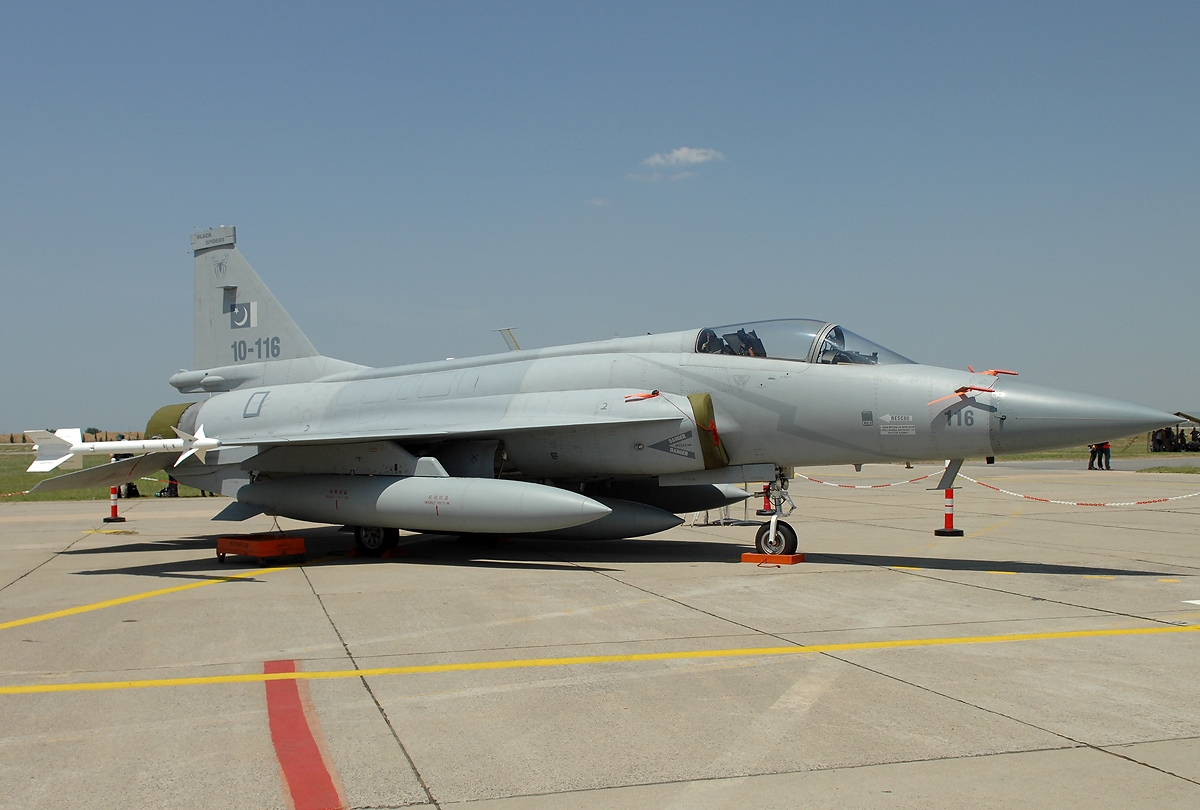
What Pakistan can provide — and has historically provided — is more targeted. The 1,500 to 2,000 Pakistani troops already deployed in Saudi Arabia on training and advisory missions represent a template for how Islamabad might deepen its military commitment without a full deployment. Air defence operators, special forces advisors, intelligence officers, and naval personnel could be deployed incrementally in ways that reinforce Saudi capabilities without constituting an entry into the war. Pakistan’s expertise in counter-insurgency operations — honed through two decades of fighting in the Federally Administered Tribal Areas and Balochistan — is also directly relevant to the internal security challenges that prolonged Iranian proxy operations could create inside the Kingdom.
The nuclear dimension adds a deterrent layer that conventional force analysis cannot capture. Pakistan’s estimated 170 nuclear warheads, deliverable by aircraft, land-based missiles (the Shaheen-III has a range of 2,750 kilometres, putting all of Iran within reach), and potentially sea-launched cruise missiles from its Agosta-90B submarines, create an implicit deterrent umbrella that extends over any country Pakistan formally commits to defending. Whether Islamabad has actually extended nuclear deterrence to Riyadh remains officially ambiguous — but in deterrence theory, ambiguity itself is a form of protection.
The $6 Billion Thread — Saudi Economic Leverage Over Islamabad
The economic relationship between Pakistan and Saudi Arabia is not a partnership of equals. It is an asymmetric dependency that gives Riyadh extraordinary leverage over Islamabad’s strategic choices, particularly during a crisis that threatens Saudi Arabia’s own survival.
The numbers are stark. Saudi Arabia is the second-largest source of remittances to Pakistan, sending $685.5 million in February 2026 alone, according to the State Bank of Pakistan. Over the first eight months of fiscal year 2026, Saudi remittances totalled $6.16 billion — a 5 per cent increase year-on-year despite the war. Approximately two million Pakistani workers in Saudi Arabia sustain families back home; their earnings constitute a lifeline for Pakistan’s balance of payments, which has been under IMF management since 2019.
Beyond remittances, Saudi Arabia provides direct financial support that Pakistan cannot replace from any other source. In October 2025, the two countries signed memoranda of understanding covering $2.8 billion in Saudi investments, alongside a $3 billion sovereign loan to bolster Pakistan’s foreign exchange reserves. A $6 billion brownfield refinery project — Saudi Arabia’s single largest investment in Pakistani industrial infrastructure — is under development. The Washington Institute for Near East Policy described the economic relationship in early 2026 as “the deepest it has been since the 1990s, when Saudi Arabia was effectively subsidising Pakistan’s nuclear programme.”
This economic dependency creates a structural constraint on Pakistan’s freedom of action. If Riyadh perceives that Islamabad is not fulfilling its defence pact obligations — or worse, that Pakistan is providing diplomatic cover for Iran’s continued attacks — the consequences would be immediate and severe. Saudi Arabia could restrict Pakistani work visas, delay or cancel investment commitments, call in the $3 billion loan, or simply reduce the flow of economic cooperation that keeps Pakistan’s fiscal position viable. None of these actions would require a formal diplomatic breach; they could be implemented through administrative channels that would never generate a headline.
Pakistan’s government is acutely aware of this vulnerability. Prime Minister Shehbaz Sharif’s visit to Jeddah on approximately 12 March 2026, where he expressed “full solidarity and support” for Saudi Arabia while simultaneously engaging with Iranian officials, was an exercise in delivering reassurance without commitment, according to Bloomberg’s reporting on the trip. The message was crafted for two audiences: enough solidarity for Mohammed bin Salman to maintain economic ties, and enough distance from military action for Tehran to maintain the diplomatic channel.
How Is Pakistan Facilitating Indirect Talks Between the US and Iran?
The diplomatic architecture that Pakistan has constructed between Washington and Tehran operates through a mechanism that diplomatic historians will recognise from the Cold War: shuttle diplomacy conducted by a trusted intermediary when direct communication between belligerents has collapsed. The specifics, pieced together from statements by Pakistani, American, and Iranian officials across multiple news conferences in late March 2026, reveal a process that is more structured than either side publicly acknowledges.
Pakistani Foreign Minister Ishaq Dar confirmed on 26 March that his country had been “facilitating indirect talks” by relaying messages between the two sides. More specifically, Dar stated that “the United States has shared 15 points, being deliberated upon by Iran,” referring to Washington’s 15-point ceasefire proposal. The disclosure was significant because it confirmed Pakistan’s role not merely as a venue but as an active interlocutor — a country that carries messages, provides context, and presumably offers its own assessment of each side’s flexibility.
The mechanics appear to work as follows. The United States communicates its positions to Pakistan’s Foreign Ministry and, in parallel, through intelligence channels between the ISI and CIA. Pakistan’s diplomats then travel to Tehran or communicate with Iranian counterparts to relay the American position, receive Iran’s response, and transmit it back. Vice President JD Vance was reportedly planning to visit Islamabad in late March 2026 to deepen this channel, according to multiple reports, suggesting that Washington views the Pakistan channel as its primary diplomatic pathway.
Iran’s response to the 15-point plan has been publicly negative. Tehran rejected the proposal and countered with its own five conditions, which include an end to all military operations, recognition of Iranian sovereignty over the Strait of Hormuz, and compensation for civilian casualties. Iran’s Foreign Minister Abbas Araghchi stated that Tehran will continue its “resistance” and does not intend to negotiate under duress.
The gap between the two positions is vast — as analysis of the ceasefire arithmetic demonstrates — but the existence of an active channel through Pakistan is itself strategically significant. It provides both sides with a face-saving mechanism to explore compromises without appearing to negotiate directly. It also gives Pakistan enormous informational advantage: Islamabad knows what both sides are willing to accept before either side knows what the other is willing to concede, a position of intelligence supremacy that few countries in history have enjoyed during an active war.
Gwadar, China, and the Third Power in the Room
China’s presence in Pakistan’s strategic calculus operates through a single physical point: Gwadar, the deep-water port on Pakistan’s southwestern coast, just 72 kilometres from the Iranian border and approximately 400 kilometres from the Strait of Hormuz. Built with $1.62 billion in Chinese investment as the centrepiece of the China-Pakistan Economic Corridor, Gwadar is simultaneously a commercial port, a potential naval facility, and the most visible symbol of Beijing’s Belt and Road Initiative in the entire Middle East.
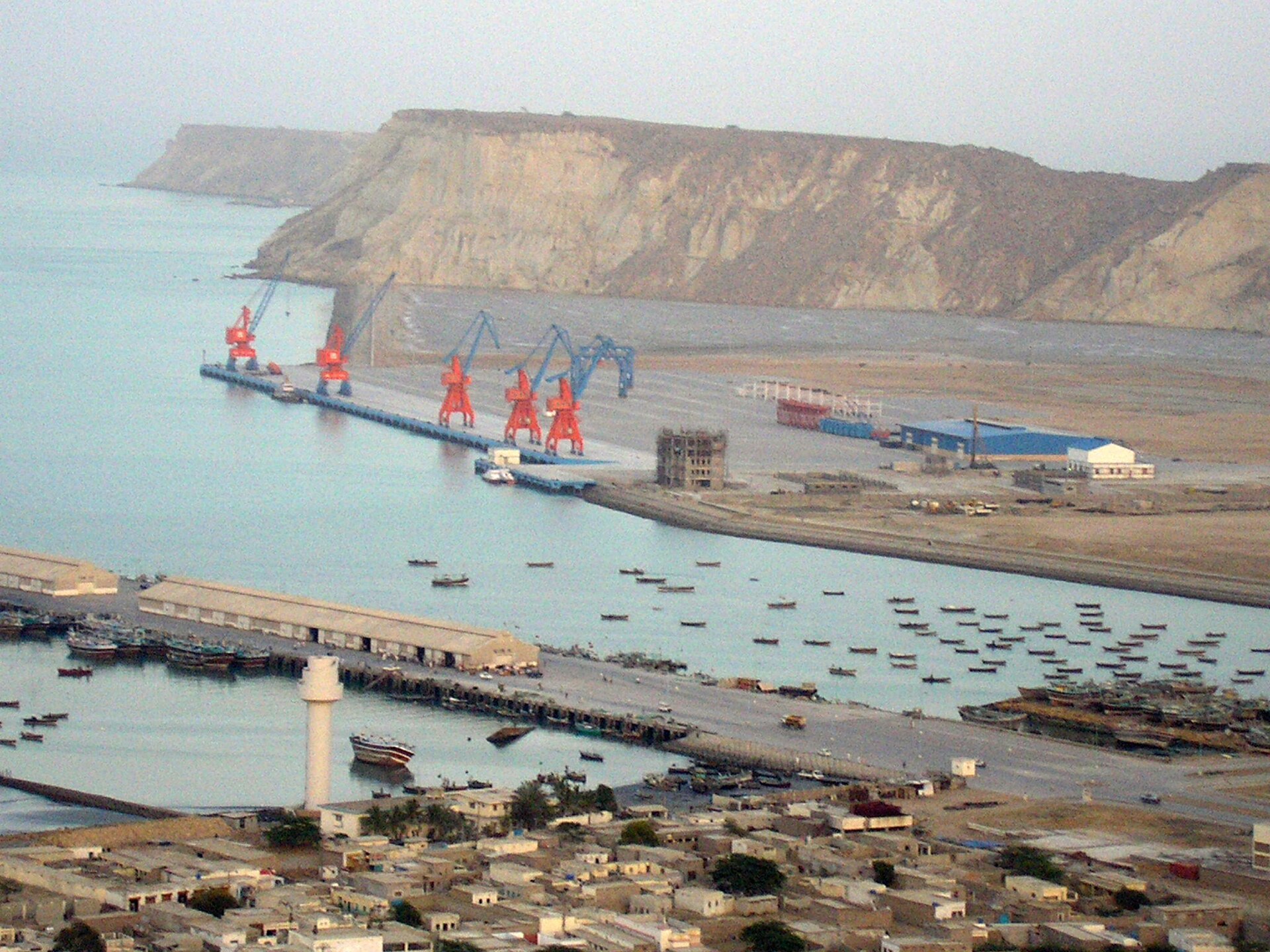
The war has placed Gwadar at the centre of a geopolitical triangle. China’s $62 billion CPEC investment — the largest single-country infrastructure programme in Belt and Road history — depends on stability in Balochistan and freedom of navigation in the Arabian Sea. Iranian missile and drone attacks on Gulf shipping have already disrupted maritime traffic patterns in the region, and any escalation that draws Pakistan into the conflict would directly threaten CPEC’s viability. Beijing has communicated this concern to Islamabad through both diplomatic and military channels, according to reporting by the South China Morning Post.
China’s interests in the Iran war are more complex than simple neutrality. Beijing was the architect of the 2023 Saudi-Iranian rapprochement, the diplomatic breakthrough that temporarily normalised relations between the two regional rivals. That achievement has been obliterated by the war, and China’s credibility as a Middle Eastern peacemaker has been damaged. Beijing’s preferred outcome — a rapid ceasefire that preserves both Iranian sovereignty and Gulf stability — aligns more closely with Pakistan’s mediating role than with either American or Saudi objectives.
This creates a subtle alignment between Chinese and Pakistani interests. Both want the war to end quickly. Both want to avoid choosing between Iran and Saudi Arabia. Both have economic exposure to the Gulf that makes prolonged conflict costly. The difference is that China can afford to watch from a distance, while Pakistan — bordered by the war, bound by a defence pact, and economically dependent on all parties — cannot.
The CPEC factor also constrains Pakistan’s military options. If Islamabad were to deploy significant forces to Saudi Arabia under the mutual defence pact, it would necessarily thin its western border security, potentially exposing CPEC infrastructure in Balochistan to attack from either Baloch separatists or Iranian-backed groups. China has spent billions protecting its investments in Pakistan; the prospect of that investment being jeopardised by Pakistan’s entry into a Gulf war would strain the Islamabad-Beijing relationship in ways that both capitals want to avoid.
Pakistan’s Nuclear Shadow Over the Gulf
The question that no official will answer directly — and that every intelligence agency is analysing — is whether Pakistan’s nuclear arsenal provides an implicit deterrent umbrella over Saudi Arabia. The Strategic Mutual Defence Agreement’s deliberate ambiguity on this point is not an oversight. It is the agreement’s most strategically potent feature.
Pakistan possesses an estimated 170 nuclear warheads, according to the Federation of American Scientists’ 2026 assessment, with fissile material production capacity from four Khushab heavy-water reactors supporting 14 to 27 new warheads annually. The delivery systems include the Shaheen-III intermediate-range ballistic missile with a range of 2,750 kilometres — sufficient to reach any target in Iran from Pakistani territory — as well as air-delivered weapons from F-16s and JF-17s, and the Babur cruise missile, potentially deployable from Pakistan’s Agosta-90B submarines.
The nuclear calculus matters because it creates a deterrent dynamic that operates independently of Pakistan’s conventional military posture. Even if Pakistan never deploys a single soldier to Saudi Arabia, the mere existence of the defence pact plus the nuclear arsenal creates what deterrence theorists call “extended deterrence by doubt” — Iran cannot be certain that a sufficiently devastating attack on Saudi Arabia would not trigger a Pakistani nuclear response. In a conflict where Iran has already fired ballistic missiles at Riyadh, this ambiguity has operational significance.
Iranian officials have reportedly sought and received assurances from Pakistan on this exact question. According to a Jerusalem Post report citing Israeli intelligence assessments, Iranian officials claimed that Pakistan had assured Tehran of a “nuclear response if Israel used nuclear weapons against Iran.” Pakistan’s official position is that its nuclear doctrine is India-centric and does not extend to other theatres. But the Strategic Mutual Defence Agreement’s reference to “all military means” creates a deliberate gap between Pakistan’s declared doctrine and its legal obligations — a gap that serves Islamabad’s interests by maximising deterrence value without committing to a specific course of action.
The nuclear dimension also explains why the United States has been willing to work through Pakistan as an intermediary despite the complications of the defence pact. Washington understands that a nuclear-armed Pakistan committed to Saudi Arabia’s defence creates a deterrent structure that reduces the probability of catastrophic Iranian escalation — specifically, the use of chemical weapons or the targeting of Saudi desalination plants that supply drinking water to tens of millions. The nuclear umbrella, even if unofficial and ambiguous, adds a layer of strategic stability that the American conventional military presence alone cannot provide.
The Balochistan Crisis Nobody Is Counting
While the world’s attention focuses on the Strait of Hormuz and the air defence war over Riyadh, a slower-moving catastrophe is unfolding along Pakistan’s western border. The United Nations estimates that 3.2 million Iranians have been internally displaced since the bombing campaign began. An unknown number have already crossed into Pakistan, joining the three million Afghan refugees who already make Pakistan the world’s second-largest refugee host country after Turkey.
The Pakistani government has responded by sealing border crossings and reinforcing Frontier Corps positions along the Iranian frontier, according to reporting by the Media Line. But the border’s geography — 909 kilometres of desert, mountain, and scrubland with limited infrastructure — makes a complete seal physically impossible. Informal crossing points that have been used for smuggling fuel, goods, and people for decades remain active, and local Baloch communities on both sides of the border maintain family ties that no government order can sever.
The economic impact on Pakistani Balochistan has been immediate. The disruption of Iranian fuel smuggling — estimated at between one and six million litres daily before the war — has caused fuel prices in border districts to spike, according to local dealers cited by the Tribune and the Asia News Network. Markets in Gwadar, Kech, and surrounding areas are reporting sharp price increases for food and basic goods, as supply chains that depended on Iranian exports have collapsed. For communities that were already among Pakistan’s poorest, the war has transformed economic hardship into genuine privation.
The security dimension is equally alarming. The Balochistan Liberation Army, which has waged a separatist insurgency against the Pakistani state for decades, has intensified operations in 2026, targeting Chinese workers, Pakistani military convoys, and government installations. The war’s disruption of Iranian security forces along the border has created a vacuum that militant groups are exploiting. A Diplomat analysis in March 2026 warned that the weakening of Iranian control in Sistan-Balochistan could “make the province a staging ground for more ferocious attacks in Pakistan’s Balochistan province” — effectively turning the Iran war into a catalyst for Pakistan’s own internal conflict.
Islamabad’s ability to manage this crisis is constrained by resources. Pakistan’s civilian disaster management infrastructure is designed for natural disasters — earthquakes, floods — not for the slow-motion consequences of a neighbouring state’s collapse. The military, which has historically been the institution of last resort in Balochistan, is already stretched by the defence pact with Saudi Arabia, the Indian border posture, and counterterrorism operations in the northwest. Adding a refugee crisis and a reinvigorated separatist insurgency in Balochistan would tax even a well-resourced state; for Pakistan, operating under IMF fiscal constraints with a defence budget of $9 billion, it represents a potential overload.
What Happens If Pakistan’s Neutrality Breaks?
The prevailing assumption in most diplomatic capitals is that Pakistan will maintain its neutral mediating role for the duration of the conflict. This assumption is wrong — or at best, time-limited. Pakistan’s neutrality is not a stable equilibrium but a temporary position sustained by the absence of a forcing event. Three categories of events could shatter it.
The first is a direct Iranian attack on Pakistani territory. Iran has already struck every Gulf state with missiles and drones, and its proxy forces have attacked targets in Iraq, Lebanon, and beyond. A stray missile landing in Pakistani Balochistan, a drone crossing the border, or an Iranian-backed militant attack on a Pakistani target would transform the defence pact from a theoretical obligation into an operational crisis. Pakistan’s military would face immediate pressure to respond, and the government’s ability to characterise the incident as an accident rather than an act of war would depend on circumstances it cannot control.
The second forcing event would be a Saudi demand for military assistance under the defence pact. As Saudi Arabia moves closer to entering the war, the threshold for invoking the pact’s collective defence clause lowers. If a major Iranian strike kills significant numbers of Saudi civilians, destroys critical infrastructure, or breaches a red line that Riyadh has privately communicated to Islamabad, the pressure to deploy Pakistani forces — even in a defensive capacity — would become overwhelming. Refusing a Saudi request would risk the entire economic relationship: the remittances, the loans, the investments, and the two million Pakistani jobs in the Kingdom.
The third scenario is an American ultimatum. Washington’s patience with Pakistan’s balanced approach has limits, particularly if the indirect talks fail and the war intensifies. The United States has a history of forcing Pakistan to choose sides — most memorably after September 11, when Deputy Secretary of State Richard Armitage reportedly told Pakistan’s intelligence chief that America would bomb Pakistan “back to the Stone Age” if it did not cooperate. While such extreme pressure is unlikely in the current conflict, the United States has subtler instruments: conditioning IMF programme reviews, restricting F-16 spare parts, or designating Pakistani entities under secondary sanctions.
The contrarian reading of Pakistan’s position is therefore the opposite of the conventional one. Pakistan’s neutrality is not its strength — it is a ticking clock. The qualities that make Islamabad the only viable mediator — its relationships with all sides, its military capability, its geographic position — are the same qualities that make it the most likely country to be dragged unwillingly into the conflict. Every day the war continues, the space for neutrality shrinks. And Pakistan, unlike Switzerland or Singapore, does not have the luxury of geographic distance or economic self-sufficiency to sustain indefinite non-alignment in a war that is being fought on its doorstep.
Five Scenarios for Pakistan’s Next Move
The trajectory of Pakistan’s involvement in the Iran war will depend on which combination of pressures proves decisive. Five scenarios capture the range of possibilities, each with distinct implications for Saudi Arabia and the broader conflict.
| Scenario | Trigger | Pakistan’s Action | Impact on Saudi Arabia | Probability |
|---|---|---|---|---|
| Successful mediation | Iran accepts modified ceasefire terms via Pakistan channel | Hosts direct US-Iran talks in Islamabad; guarantees compliance | War ends; Saudi Arabia avoids direct entry; reconstruction begins | 15-20% |
| Incremental military support | Saudi request for air defence operators, intelligence, and special forces | Deploys 5,000-10,000 additional personnel under defence pact; avoids combat operations | Saudi defence capabilities reinforced; Pakistan maintains plausible neutrality | 30-35% |
| Forced entry via border incident | Iranian missile or drone strikes Pakistani territory | Military retaliation against Iranian positions; defence pact fully activated | War expands to Pakistan-Iran front; global escalation risk increases | 10-15% |
| Neutrality collapse under economic pressure | Saudi Arabia restricts Pakistani workers or cancels investments | Pakistan publicly sides with Saudi Arabia and US coalition | Saudi gains a powerful conventional ally; Iran faces encirclement | 15-20% |
| Status quo — diminishing neutrality | No single trigger; gradual erosion | Continues mediation while quietly increasing Saudi support | Saudi Arabia receives marginal benefit; Pakistan’s leverage slowly depletes | 20-25% |
The scenario most favourable to all parties — successful mediation leading to a ceasefire — remains the least likely, not because Pakistan lacks the diplomatic skill to broker it, but because the war’s fundamental dynamics have not yet produced the conditions for compromise. Iran has not been militarily defeated to the point of accepting American terms, and the United States has not absorbed enough cost to accept Iranian conditions. Iran’s economic collapse may eventually change this calculus, but that process operates on a timeline of months, not weeks.
The most probable trajectory — incremental military support combined with continued mediation — represents Pakistan’s attempt to satisfy Saudi and American demands without triggering Iranian retaliation. This is the path of least resistance but also the most strategically corrosive. Each incremental step toward Saudi Arabia reduces Pakistan’s credibility as a neutral intermediary, the very quality that makes it useful to both sides. A mediator who is simultaneously arming one party is a mediator whose shelf life is limited.
For Saudi Arabia, Pakistan’s trajectory matters more than any other single variable in the war’s diplomatic dimension. If Pakistan can deliver a ceasefire, the Kingdom avoids the costs and risks of direct military entry. If Pakistan’s neutrality collapses, Saudi Arabia gains a conventionally powerful ally with nuclear capabilities — but at the cost of the war’s only functioning diplomatic channel. Mohammed bin Salman’s management of the Pakistan relationship may prove to be one of the most consequential decisions of the entire conflict.
We have a defence pact with Saudi Arabia, and the whole world knows about it.
Pakistani Foreign Minister Ishaq Dar to Iranian counterpart Abbas Araghchi, March 2026
Frequently Asked Questions
What is Pakistan’s role in the 2026 Iran war?
Pakistan is serving as the sole diplomatic intermediary between the United States and Iran, facilitating indirect talks by relaying messages between the two sides. Pakistani Foreign Minister Ishaq Dar confirmed on 26 March 2026 that Islamabad has been transmitting the US 15-point ceasefire proposal to Tehran and relaying Iran’s responses. Pakistan has adopted a policy of official neutrality while maintaining a mutual defence pact with Saudi Arabia signed in September 2025.
Does Pakistan have a defense pact with Saudi Arabia?
Pakistan and Saudi Arabia signed the Strategic Mutual Defence Agreement on 17 September 2025 at Al Yamamah Palace in Riyadh. The pact declares that any aggression against either country shall be considered an aggression against both — a collective defence clause modelled on NATO’s Article 5. The agreement covers intelligence sharing, defence coordination, joint training, and “all military means,” though neither government has confirmed whether this includes Pakistan’s nuclear arsenal.
How many Pakistani workers are in Saudi Arabia?
Approximately two million Pakistani nationals work in Saudi Arabia across construction, services, logistics, and domestic sectors, making them the Kingdom’s second-largest expatriate community. These workers sent $6.16 billion in remittances to Pakistan during the first eight months of fiscal year 2026, according to the State Bank of Pakistan. The remittance flow represents a critical economic lifeline that gives Saudi Arabia significant leverage over Pakistani foreign policy decisions.
Could Pakistan use nuclear weapons to defend Saudi Arabia?
The question remains deliberately unanswered. Pakistan possesses an estimated 170 nuclear warheads with delivery systems capable of reaching any target in Iran. The 2025 defence pact’s reference to “all military means” creates ambiguity about whether nuclear deterrence extends to Saudi Arabia. Pakistan’s official nuclear doctrine is India-centric, but the Bulletin of the Atomic Scientists has described the agreement’s nuclear dimension as “constructive ambiguity designed to maximise deterrence value.”
What happens if Iran attacks Pakistan?
A direct Iranian attack on Pakistani territory — whether deliberate or accidental — would transform the conflict’s dynamics entirely. Pakistan shares a 909-kilometre border with Iran through Balochistan, and any border incident could trigger the defence pact’s collective security clause, potentially drawing Pakistan’s 654,000-strong military into active combat. Defence analysts assess a border incident as having a 10 to 15 per cent probability during the current phase of the war, with the risk rising as the conflict intensifies near the Iran-Pakistan frontier.