
RIYADH — The Pentagon has made detailed preparations for the direct deployment of American ground forces into Iran, according to multiple officials briefed on the discussions, a significant escalation that would transform Saudi Arabia from a reluctant host of US air operations into the primary launchpad for the first American ground war in the Middle East since Iraq. Senior military commanders have submitted specific requests aimed at preparing for such an option as President Donald Trump weighs the next phase of the three-week-old conflict, CBS News reported on March 20, citing officials who spoke on condition of anonymity.
The preparations come as the Kingdom has already opened King Fahd Air Base in Taif to American forces and as more than 50,000 US troops operate across the region in what US Central Command has described as the largest American military buildup in the Middle East since the 2003 invasion of Iraq. The prospect of ground troops staging from Saudi soil raises urgent questions about the Kingdom’s role in a war it has sought to frame as someone else’s fight.
Table of Contents
What Has the Pentagon Prepared?
Pentagon officials have completed detailed preparations for deploying US ground forces into Iran, including planning for the detention and processing of captured Iranian soldiers and paramilitary operatives. The preparations do not represent a final decision by the president, but rather an effort to provide what White House Press Secretary Karoline Leavitt described as “maximum optionality” for the commander in chief.
The planning encompasses three categories of potential ground operations, according to officials familiar with the discussions. The first involves raids on specific military targets, including missile launch sites, command bunkers, and weapons storage facilities. The second covers the seizure of strategic infrastructure, particularly oil export terminals and port facilities. The third envisions short-duration occupation of key terrain to deny Iran the ability to reconstitute its military capabilities.
Military officials have also held meetings to determine how to handle the possible detention of Iranian soldiers and members of the Islamic Revolutionary Guard Corps if American troops enter the country. The discussions include identifying where detained Iranians would be sent, a logistical challenge that recalls the controversies of the early Iraq War, according to CBS News.
The preparations extend beyond theoretical planning. Senior military commanders at US Central Command have submitted specific procurement and deployment requests, signalling that the Pentagon is moving beyond contingency studies into active operational preparation, according to two officials who spoke on condition they not be identified because the discussions remain classified.
The Middle East briefing 3,000+ readers start their day with.
One email. Every weekday morning. Free.
Which Military Units Are Deploying to the Gulf?
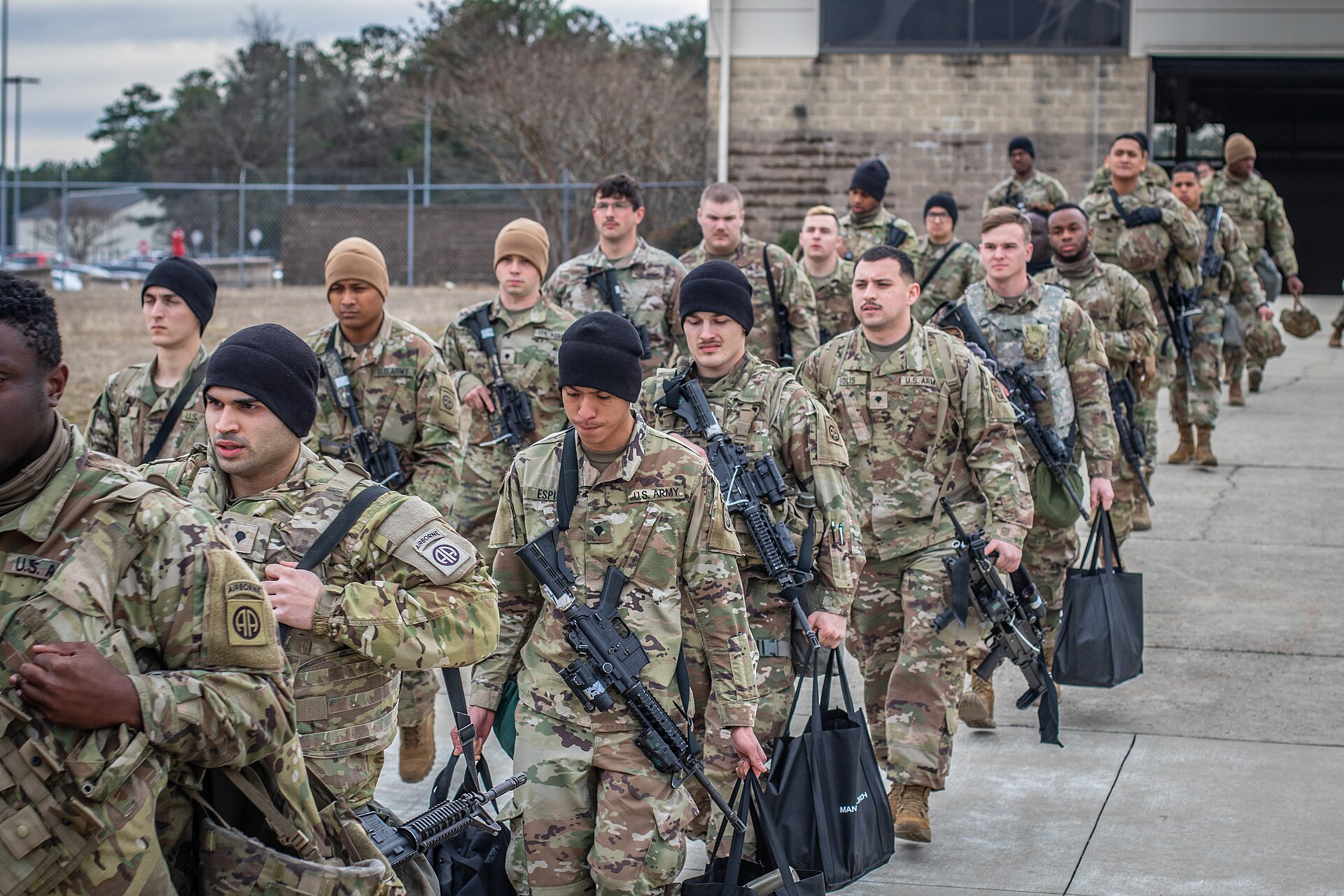
The 82nd Airborne Division, the US Army’s premier rapid-deployment force based at Fort Liberty in North Carolina, is at the centre of the ground force preparations. Elements of the division and the broader 18th Airborne Corps have been identified for potential deployment to the Middle East, officials told CBS News. The 82nd Airborne serves as part of the Army’s Global Response Force, a designation that means it can deploy anywhere in the world within 18 hours of receiving orders.
The Marine Corps is simultaneously expanding its presence in the region. The USS Boxer amphibious ready group, carrying thousands of Marines from the 11th Marine Expeditionary Unit, departed San Diego this week for what the Navy described as a three-week transit to the Gulf. A second Marine unit aboard the USS Tripoli, carrying more than 2,000 Marines, is expected to arrive from Japan, according to NPR.
These deployments supplement the forces already in theatre. CENTCOM confirmed in early March that more than 50,000 American troops, 200 fighter jets, and two aircraft carrier strike groups are participating in the ongoing conflict with Iran. The naval component includes the USS Abraham Lincoln and USS Gerald R. Ford carrier strike groups, each carrying approximately 5,000 sailors and 70 aircraft, along with guided-missile cruisers, destroyers, and support vessels.
| Unit | Type | Status | Personnel |
|---|---|---|---|
| 82nd Airborne Division | Army Rapid Deployment | Preparing | 3,500+ |
| 11th Marine Expeditionary Unit | Marines (USS Boxer) | En route from San Diego | 2,200 |
| USS Tripoli Marine Group | Marines | En route from Japan | 2,000+ |
| USS Abraham Lincoln CSG | Carrier Strike Group | Deployed | ~5,000 |
| USS Gerald R. Ford CSG | Carrier Strike Group | Deployed | ~5,000 |
| CENTCOM Total (all services) | Combined force | Operational | 50,000+ |
The Marine Expeditionary Units are particularly significant in the ground troops discussion. Each MEU is a self-contained force capable of amphibious assault, sustained ground operations, and humanitarian assistance. They carry their own helicopter squadrons, armoured vehicles, artillery, and logistics support, making them capable of independent operations ashore for up to 15 days without resupply.
Why Is Saudi Arabia the Staging Ground?
Saudi Arabia has become the primary platform for US military operations against Iran through a series of decisions that have progressively deepened the Kingdom’s involvement. The most significant came on March 20, when Riyadh agreed to open King Fahd Air Base in Taif to American forces, multiple US and Western officials told Middle East Eye.
The selection of King Fahd Air Base was strategic. Located in western Saudi Arabia near the city of Taif, the base sits approximately 1,200 kilometres from the Iranian border, placing it well beyond the effective range of Iran’s remaining drone arsenal. Prince Sultan Air Base near Riyadh, which has hosted US forces intermittently since the 1990s, has faced repeated Iranian drone attacks since the war began on February 28, making it increasingly untenable as a primary staging location.
King Fahd Air Base offers hardened aircraft shelters, weapons storage bunkers, and a runway capable of supporting C-5 Galaxy and C-17 Globemaster III heavy transport aircraft, the same planes that would deliver ground troops, armoured vehicles, and heavy equipment in any invasion scenario. The facility requires no significant construction to support US Air Force operations, according to officials.
Beyond Taif, Jeddah has emerged as a critical logistics hub. With the Strait of Hormuz effectively closed by Iranian naval forces since early March, the Red Sea port city has absorbed supply chain functions previously routed through the Persian Gulf. Military logistics follow the same pattern: equipment and personnel that would normally arrive through Gulf ports are increasingly being routed to American staging facilities on Saudi territory via the Red Sea.
The Kharg Island Scenario
Among the specific operations under discussion is a potential seizure of Kharg Island, the small but strategically vital landmass in the northern Persian Gulf through which approximately 90 percent of Iran’s crude oil exports pass. Defence Security Asia reported that planning involves a potential “occupation or blockade” of the island, with the stated objective being “temporary control sufficient to force Tehran to alter its blockade posture” over the Strait of Hormuz.
Kharg Island sits roughly 25 kilometres off Iran’s southern coast in the Bushehr province. The island’s oil terminal handles the vast majority of Iranian crude exports, processing roughly 5 million barrels per day at peak capacity before the war. Seizing or neutralising the facility would eliminate Iran’s ability to export oil by sea, stripping the regime of its primary revenue source and its leverage over global energy markets.
A Kharg Island operation would likely involve Marine amphibious forces rather than Army airborne units, given the island’s coastal geography. The two Marine Expeditionary Units currently transiting to the Gulf carry the specialised capabilities required for such an operation, including landing craft, amphibious assault vehicles, and close air support helicopters.
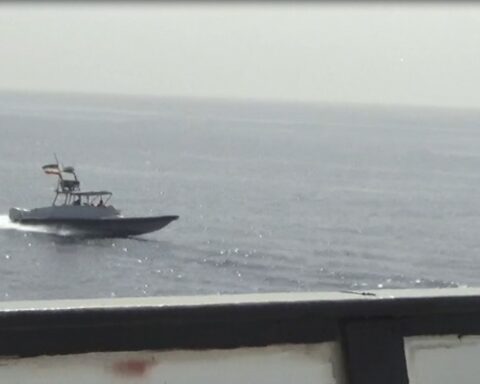
The scenario carries enormous risks. Iran has spent decades fortifying Kharg Island and the surrounding waters with anti-ship missiles, coastal artillery, and naval mines. Any assault force approaching the island would face a gauntlet of defensive fire. The IRGC Navy has also deployed fast attack craft and explosive-laden drone boats throughout the northern Gulf, as documented in recent reporting on Iran’s asymmetric naval warfare tactics.
What Did Trump Say About Ground Troops?
President Trump has sent contradictory signals about the possibility of ground forces in Iran. When asked directly on March 20 whether he planned to deploy troops, Trump told reporters in the Oval Office: “No, I’m not putting troops anywhere.” He then immediately added: “If I were, I certainly wouldn’t tell you.”
The ambiguity was deliberate, according to officials familiar with the president’s thinking. Trump has simultaneously described the war as nearing its conclusion and authorised the deployment of thousands of additional troops to the region. On March 20, he told reporters the administration was considering “winding down” military operations, even as the Marine Corps dispatched its second amphibious ready group to the Gulf in three weeks.
White House Press Secretary Karoline Leavitt sought to contain the implications of the CBS News report, stating: “It’s the job of the Pentagon to make preparations in order to give the Commander in Chief maximum optionality. It does not mean the President has made a decision, and as the President said in the Oval Office yesterday, he is not planning to send ground troops anywhere at this time.”
The Pentagon itself declined to comment on specific operational planning but did not deny the report. A senior defence official, speaking on background, noted that “prudent military planning for a full range of contingencies is standard practice during active operations.”
The gap between Trump’s public statements and the Pentagon’s preparations mirrors a pattern seen throughout the three-week conflict. Trump initially described the joint US-Israeli strikes on February 28 as a limited operation, yet the campaign has expanded to encompass more than 8,000 targets across Iran, according to CENTCOM, with no clear timeline for conclusion.
Congressional reaction has been swift and largely divided along partisan lines. Several Democratic senators have called for the administration to seek congressional authorisation before deploying ground forces, arguing that the existing authorisations for military force do not cover an invasion of Iran. Republican leaders have broadly supported the president’s approach, with Senate Armed Services Committee members describing the preparations as prudent contingency planning given Iran’s continued attacks on Gulf allies and the closure of the Strait of Hormuz.
The Largest US Military Buildup Since Iraq
The scale of the American military presence in the Middle East has reached levels not seen since the 2003 invasion of Iraq. Beginning in late January 2026, the United States carried out what the Middle East Forum described as its most significant force projection into the region in a generation, positioning assets across multiple countries in the Gulf.
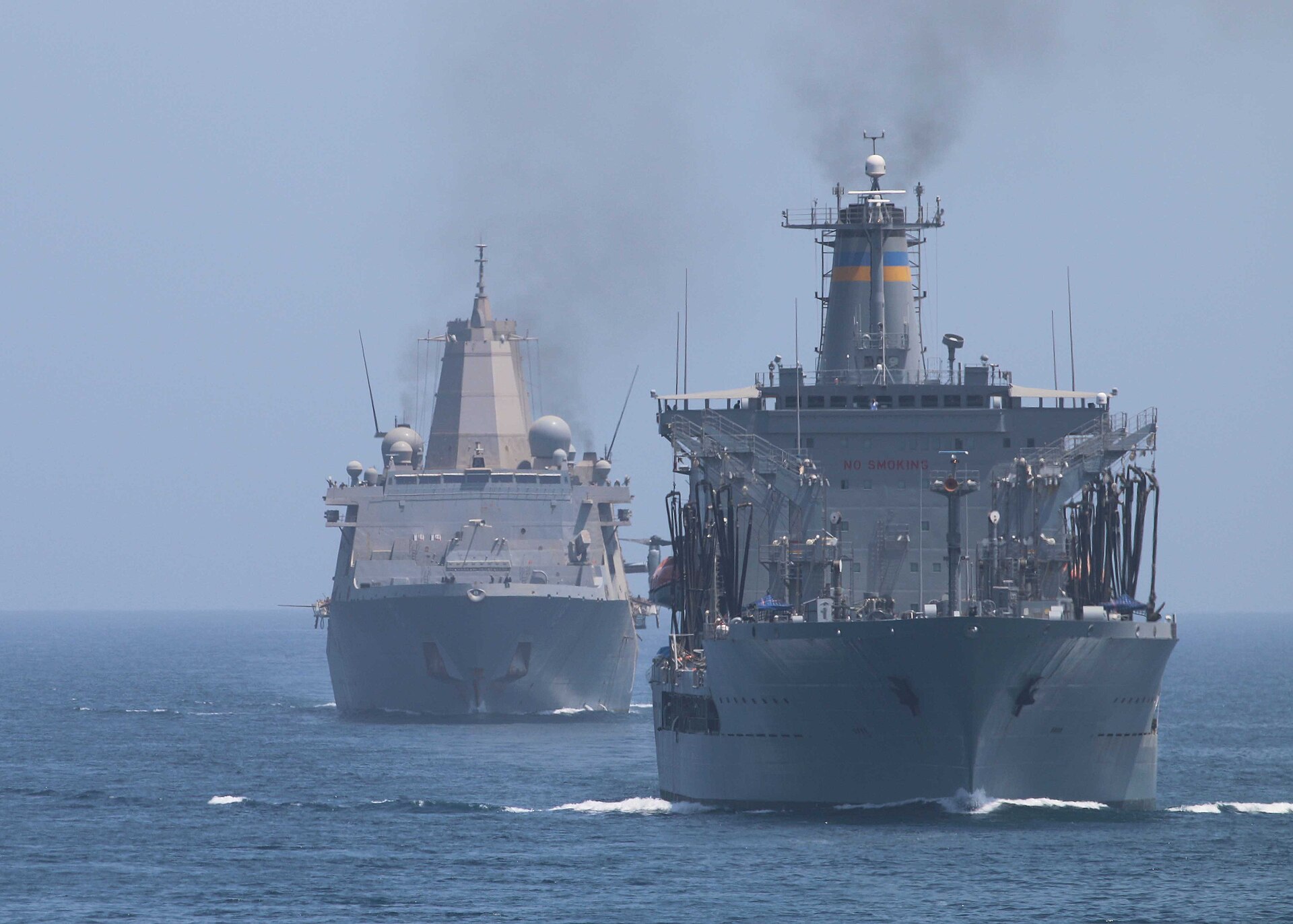
CENTCOM reported in early March that more than 50,000 American troops are involved in operations against Iran, supported by approximately 200 combat aircraft and two carrier strike groups. The air campaign has struck more than 8,000 Iranian targets, and US and Israeli officials claim to have reduced Iran’s missile launch rate by 90 percent and its drone launch rate by 83 percent compared to the opening days of the conflict, according to Admiral Brad Cooper, deputy commander of CENTCOM.
The operational tempo has shifted from the initial aerial bombardment phase to what military officials describe as a “suppression and sustainment” phase. Apache helicopters and A-10 Warthog ground attack aircraft have taken on a larger role, hunting Iranian fast attack boats in the Persian Gulf and supporting operations to reopen the Strait of Hormuz. The transition to these platforms, designed for close air support and ground operations, suggests the military is already positioning for a potential ground component.
The human cost of the conflict continues to mount. More than 1,400 people have been killed in Iran since the war began on February 28, according to Iranian authorities cited by Al Jazeera. The death toll includes at least 204 children. On the coalition side, 13 US military personnel have been killed in the region, and more than 100 people were wounded in a single Iranian missile strike on the Israeli city of Arad on March 21, according to CBS News.
| Metric | Figure | Source |
|---|---|---|
| US troops in theatre | 50,000+ | CENTCOM |
| Iranian targets struck | 8,000+ | CENTCOM |
| Killed in Iran | 1,400+ | Iranian authorities / Al Jazeera |
| US military killed | 13 | Pentagon |
| Drones intercepted by Saudi Arabia | 575+ | Saudi Defence Ministry |
| Commercial ships stranded | 3,000+ | NPR |
| Oil price increase since war began | ~45% | Market data |
| Hormuz shipping traffic decline | 81% | S&P Global |
What Do Ground Troops Mean for Saudi Arabia?
The prospect of American ground forces staging from Saudi territory represents the most consequential foreign policy decision facing Crown Prince Mohammed bin Salman since the war began. The Kingdom has navigated the conflict by presenting itself as a victim of Iranian aggression rather than a belligerent, a distinction that has provided diplomatic cover even as Saudi Arabia intercepted more than 575 Iranian drones over its territory and expelled Iran’s military attaché on March 21.
That distinction collapses if American ground troops launch operations against Iran from Saudi soil. International law and the broader Arab world would regard the Kingdom as a co-belligerent, exposing it to direct Iranian retaliation against civilian targets and critical infrastructure beyond the drone and missile strikes it has already endured. Saudi Arabia’s posture of non-belligerent restraint has already frayed under three weeks of Iranian attacks, but active participation in a ground invasion would destroy it entirely.
The domestic political dimension is equally fraught. Saudi Arabia’s population broadly opposes the American-Israeli military campaign against Iran, viewing it as an assault on a Muslim nation conducted by the same Israeli government responsible for operations in Gaza and Lebanon. Allowing Saudi territory to serve as the staging ground for an invasion of Iran would test the social contract between the Al Saud ruling family and its citizens in ways that the monarchy has historically sought to avoid.
Defence Minister Prince Khalid bin Salman has managed the Kingdom’s military relationship with Washington throughout the crisis, balancing Riyadh’s security dependence on the United States against its desire to avoid being drawn into the conflict as a combatant. The opening of King Fahd Air Base to US forces represented one calibrated step. Hosting ground troops preparing for an invasion of Iran would represent an entirely different category of involvement.
The four-party security pact being negotiated between Saudi Arabia, Turkey, Egypt, and Pakistan adds another layer of complexity. The agreement, discussed at a foreign ministers’ meeting in Riyadh on March 19, aims to construct a regional security architecture that reduces Saudi dependence on American military protection. An American ground invasion of Iran launched from Saudi territory would simultaneously demonstrate the depth of that dependence and complicate the diplomatic relationships Riyadh is trying to build.
The economic dimension compounds the strategic risk. Saudi Arabia’s Eastern Province, home to the vast majority of its oil production and export infrastructure, has absorbed more than 575 Iranian drone strikes since February 28. The Saudi Defence Ministry reported on March 21 that it intercepted 92 drones in a single 24-hour period, the largest single-day barrage since the conflict began, including a concentrated wave of 38 drones within just three hours. A ground invasion launched from Saudi territory would almost certainly trigger an escalation in these attacks, potentially targeting the Ras Tanura export terminal, the Abqaiq processing facility, or the desalination plants that provide drinking water to millions.
For now, Saudi officials have neither confirmed nor denied discussions about hosting ground force preparations. The Kingdom’s public position remains that it reserves the right to defend itself against Iranian aggression while supporting diplomatic solutions to the conflict. Whether that position can survive the trajectory of American military planning is the question confronting Riyadh.
On March 24, those preparations became orders. Trump ordered approximately 2,000 paratroopers from the 82nd Airborne Division to deploy to the Gulf, including the division commander and his headquarters staff, marking the first confirmed ground force movement of the war.
Frequently Asked Questions
Has the Pentagon confirmed it is preparing ground troops for Iran?
The Pentagon has not officially confirmed the reports but has not denied them. CBS News reported on March 20, citing multiple officials briefed on the discussions, that senior military commanders have submitted specific requests for ground force preparations. White House Press Secretary Karoline Leavitt said the Pentagon makes preparations to provide the president with “maximum optionality” but that no decision has been made.
Which US military units would be involved in a ground operation?
The 82nd Airborne Division, the Army’s Global Response Force, and Marine Expeditionary Units have been identified in the planning, according to CBS News. Two Marine amphibious groups carrying more than 4,200 Marines are currently en route to the Gulf aboard the USS Boxer and USS Tripoli.
Why is Saudi Arabia hosting US military forces?
Saudi Arabia opened King Fahd Air Base in Taif to American forces on March 20, according to US and Western officials. The base was selected because its location in western Saudi Arabia places it approximately 1,200 kilometres from Iran, beyond the effective range of most Iranian drones. Prince Sultan Air Base near Riyadh has faced repeated attacks since the war began.
What is the Kharg Island scenario?
Planning reportedly includes a potential seizure or blockade of Iran’s Kharg Island, through which roughly 90 percent of Iran’s crude oil exports flow. Controlling the island would strip Iran of its primary revenue source and its leverage over global energy markets, potentially forcing Tehran to negotiate over the Strait of Hormuz.
The Kharg Island scenario is one of five ground operation options assessed in a comprehensive feasibility analysis of invading Iran, which concludes that even limited operations carry severe escalation risks for Saudi Arabia and the Gulf states providing staging areas.
What has President Trump said about sending ground troops to Iran?
Trump told reporters on March 20: “No, I’m not putting troops anywhere,” before adding: “If I were, I certainly wouldn’t tell you.” He has simultaneously described considering “winding down” the war while authorising thousands of additional troops to deploy to the region.