
WASHINGTON — A preliminary Pentagon investigation has concluded that a U.S. Tomahawk cruise missile struck the Shajareh Tayyebeh girls’ elementary school in Minab, Iran, on 28 February, killing at least 175 people, most of them children aged between seven and twelve. The findings, first reported by NPR and CNN on 11 March, directly contradict President Donald Trump’s repeated claims that Iran was responsible for the deadliest single civilian casualty event of the 2026 Iran war. For Saudi Arabia, which has anchored its wartime strategy on its alliance with Washington while simultaneously pursuing a diplomatic backchannel to Tehran, the revelation threatens to complicate an already precarious balancing act.
The strike occurred during the opening hours of the U.S.-Israeli military campaign against Iran on 28 February. According to sources briefed on the investigation, U.S. Central Command used target coordinates derived from outdated Defence Intelligence Agency data that identified the school compound as part of an adjacent Islamic Revolutionary Guard Corps naval base. Satellite imagery from 2013 showed the school and the IRGC facility as a single compound, but images from 2016 revealed that a fence had been erected to separate the two, according to CNN. The school had been operating independently as a civilian educational facility for at least a decade.
Forty-six U.S. senators have since written to Defence Secretary Pete Hegseth demanding a full accounting by 18 March, while UNESCO, the UN Committee on the Rights of the Child, and Human Rights Watch have called for independent investigations. Iran’s government has seized on the findings to bolster its narrative that the U.S.-led campaign amounts to a war against the Iranian people, not just its military infrastructure.
Table of Contents
- What Did the Pentagon Investigation Find?
- How Did the Minab Strike Happen?
- How Has Trump Responded to the Findings?
- What Has Saudi Arabia Said About the Minab Strike?
- Why the Strike Tests Saudi-American Relations
- How Has the Muslim World Reacted?
- International Demands for Accountability
- What Comes Next for the Investigation?
- Frequently Asked Questions
What Did the Pentagon Investigation Find?
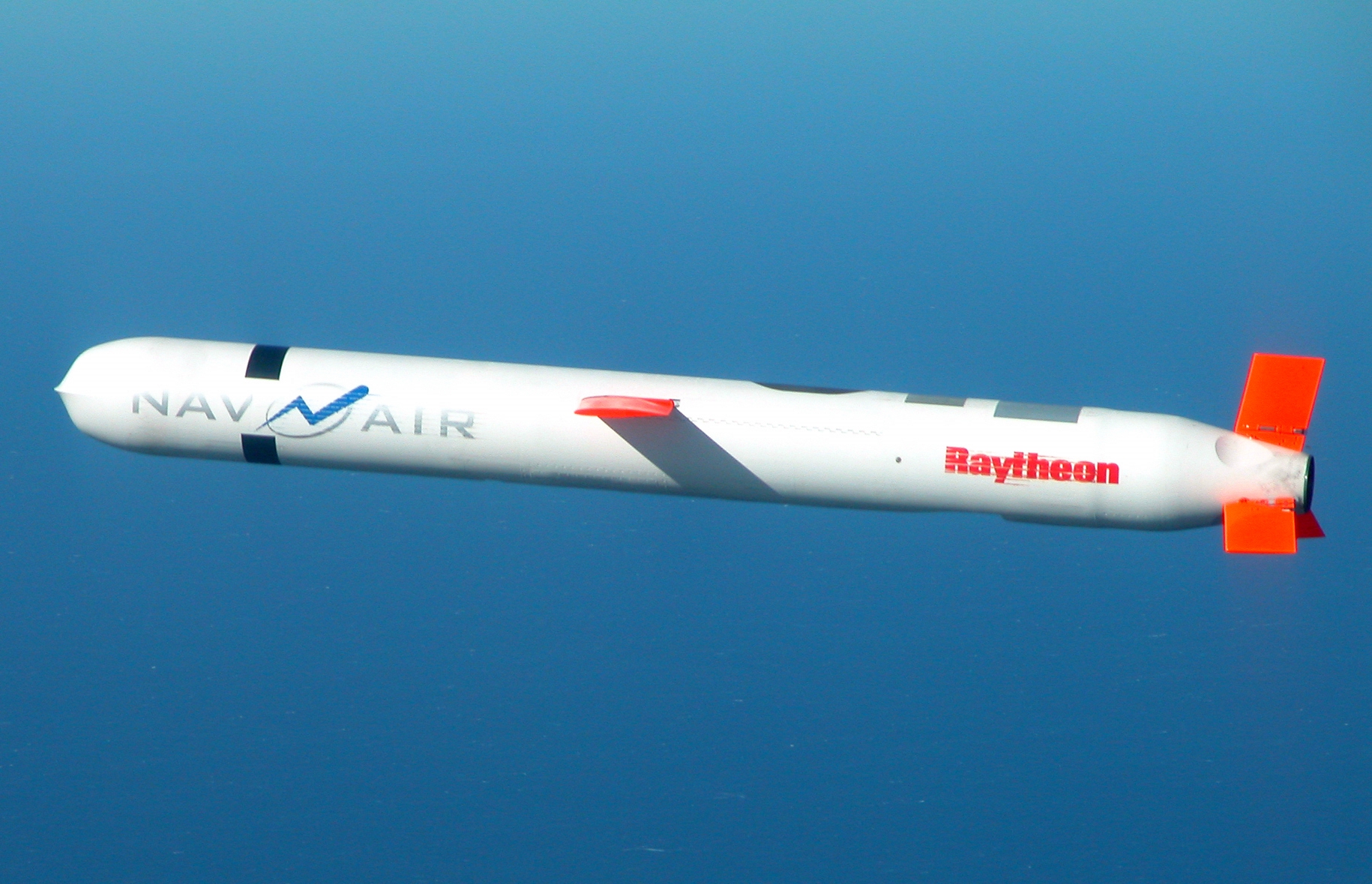
The preliminary investigation determined that the United States was at fault in the strike on the Shajareh Tayyebeh elementary school, according to a U.S. official and a second person briefed on the findings, as reported by the Associated Press on 11 March. The investigation found that U.S. Central Command fired at least one Tomahawk Block IV cruise missile at coordinates that corresponded to the school building rather than the intended IRGC naval facility located nearby.
Open-source investigations by Bellingcat, BBC Verify, and The New York Times independently corroborated the finding. Bellingcat geolocated footage released by Iranian state media outlet Mehr News, identifying the weapon as an American Tomahawk missile based on its size, shape, and flight characteristics. The Tomahawk is exclusively operated by the U.S. Navy, the Royal Navy, and the Royal Australian Navy. Neither Britain nor Australia is a party to the current conflict, making the United States the only plausible source of the munition.
According to witnesses cited by Iranian media and verified by CBC News, the school was struck by three distinct impacts in what investigators described as a “triple tap” pattern. The roof collapsed on students who had arrived for the morning session. Saturday is a regular school day in Iran, and the strikes began at approximately 10:00 a.m. Iran Standard Time, when the building was at peak occupancy.
Iranian health authorities put the final death toll at 165 to 180 people, with at least 95 others wounded. As of 5 March, the Minab attack was the deadliest single strike in terms of civilian casualties in the entire 2026 Iran war, according to data compiled by the Al Jazeera investigative unit.
How Did the Minab Strike Happen?
The Washington Post reported on 11 March that U.S. target lists may have mistaken the elementary school for a military site due to the use of outdated intelligence. Central Command created its target coordinates using information provided by the Defence Intelligence Agency that had not been updated since 2013, when the school and the IRGC base were part of the same compound.
By 2016, a physical fence had been erected separating the school from the military facility, and the school had been operating as a standalone civilian institution. The DIA’s targeting database, however, still classified the entire compound as a military site. The preliminary investigation attributed the error to a failure in the intelligence pipeline that generates coordinates for Tomahawk missile strikes.
| Date | Event | Source |
|---|---|---|
| 28 Feb 2026 | U.S.-Israeli strikes on Iran begin. Shajareh Tayyebeh school in Minab destroyed during first wave. | NPR, Al Jazeera |
| 28 Feb 2026 | Iran reports 85 dead at school, later revised upward. | Iranian state media |
| 1 Mar 2026 | Both U.S. and Israel deny responsibility. Iran blames the strike on the U.S.-Israeli coalition. | Al Jazeera |
| 3 Mar 2026 | Al Jazeera investigation describes strike as likely “deliberate.” | Al Jazeera |
| 6 Mar 2026 | Washington Post and CNN publish open-source analysis pointing to a U.S. Tomahawk missile. | Washington Post, CNN |
| 7 Mar 2026 | Trump tells reporters: “In my opinion, that was done by Iran.” | The Hill, Al Jazeera |
| 7 Mar 2026 | Human Rights Watch calls for investigation of strike as a potential war crime. | HRW |
| 8 Mar 2026 | Video released showing Tomahawk missile trajectory near school. | Bellingcat, BBC Verify |
| 9 Mar 2026 | 46 Senate Democrats write to Defence Secretary Hegseth demanding answers. | The Hill |
| 11 Mar 2026 | Pentagon preliminary investigation finds U.S. at fault, citing outdated DIA intelligence. | NPR, CNN, AP |
The Intercept reported that the investigation is expected to take several months to complete and will include interviews with planners, commanders, and personnel who carried out the strike. The preliminary findings represent the first formal acknowledgment by the U.S. military that one of its weapons hit the school.
How Has Trump Responded to the Findings?
President Trump’s public statements on the Minab strike have shifted repeatedly since the attack occurred. On 7 March, standing alongside Defence Secretary Hegseth, Trump told reporters: “In my opinion, based on what I’ve seen, that was done by Iran. Because they are very inaccurate, as you know, with their munitions. They have no accuracy whatsoever. It was done by Iran,” according to The Hill.
Hegseth, standing behind the president during the press conference, notably declined to endorse that assessment, stating only that the Pentagon was investigating the incident, as reported by The Intercept on 9 March.
PolitiFact’s analysis published on 11 March documented that open-source intelligence contradicted Trump’s claims, noting that the Tomahawk cruise missile identified in the strike is a precision-guided weapon exclusively used by the United States and two allied navies not involved in the conflict. More recently, Trump has told reporters he “does not know the details” of the strike, a marked retreat from his earlier categorical attribution to Iran.
Common Dreams reported that the preliminary Pentagon findings “directly contradict” Trump’s assertions, creating what analysts describe as a credibility gap at the worst possible moment for the administration’s wartime messaging.
What Has Saudi Arabia Said About the Minab Strike?
Riyadh has not issued a formal public statement on the Minab school strike as of 12 March. The Saudi government has neither endorsed Washington’s initial denial nor responded to the Pentagon’s admission of fault. This silence is notable given that Crown Prince Mohammed bin Salman has spoken publicly on nearly every other dimension of the Iran conflict, from condemning Iranian missile attacks on Gulf states to expressing solidarity with affected nations.
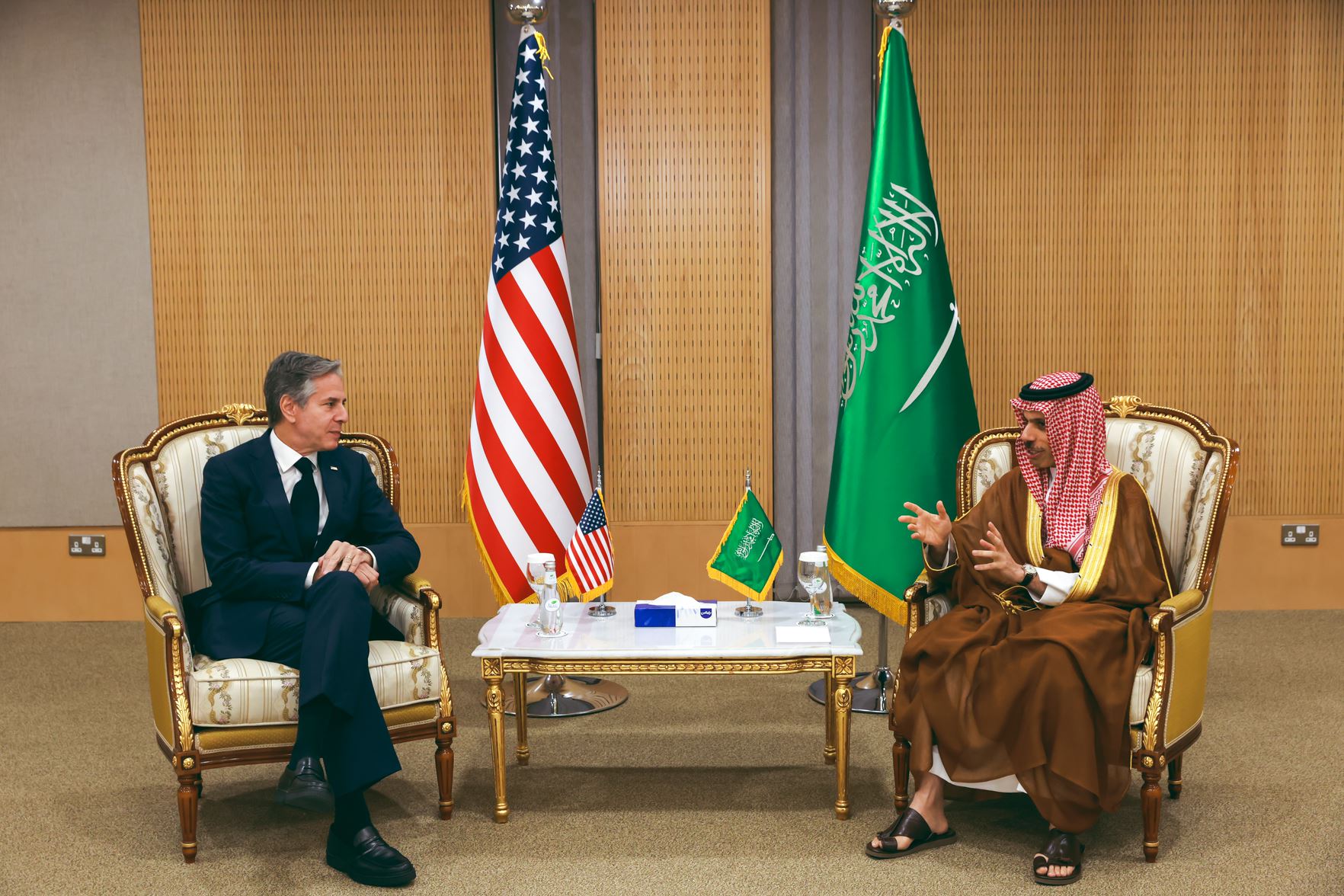
On 11 March, Prince Faisal bin Farhan, the Saudi Foreign Minister, held discussions with U.S. Secretary of State Marco Rubio. The Saudi Foreign Ministry’s readout of the call focused on “Iranian aggression against GCC states” and the designation of the Sudanese Muslim Brotherhood, making no mention of the Minab findings, according to the Saudi Press Agency. The Sudan designation appeared to dominate the bilateral agenda.
Saudi Arabia’s position is complicated by its parallel diplomatic engagement with Iran. Bloomberg reported on 6 March that Saudi officials have intensified their backchannel communications with Tehran in an effort to de-escalate the conflict and prevent it from spiralling further. Riyadh’s ability to serve as a credible intermediary depends in part on its willingness to distance itself from the most controversial aspects of the U.S.-led military campaign.
Analysts at the Centre for Strategic and International Studies noted that Saudi Arabia’s $1 trillion investment pledge to the Trump administration makes any public criticism of Washington politically costly for MBS. At the same time, silence on the killing of schoolchildren risks alienating the broader Muslim world at a moment when Riyadh is positioning itself as the voice of regional restraint.
Why the Strike Tests Saudi-American Relations
The Minab findings arrive at a particularly sensitive juncture for the Saudi-American relationship. Riyadh is simultaneously dependent on Washington for military protection against Iranian attacks and pursuing a diplomatic track that runs counter to the Trump administration’s stated goal of regime change in Tehran.
Since the war began on 28 February, Saudi Arabia has intercepted dozens of Iranian ballistic missiles and drone swarms targeting its territory, relying heavily on U.S.-supplied Patriot and THAAD systems. At least two people were killed in Al-Kharj on 8 March when an Iranian projectile struck a residential area, and Iranian drones have targeted Ras Tanura, Prince Sultan Air Base, and the diplomatic quarter in Riyadh itself.
This dependence on American military hardware gives Riyadh limited room to publicly criticise Washington. Yet the Minab strike introduces a new dynamic. According to Reuters, the attack has become the single most discussed event of the war across Arabic-language social media platforms, with the hashtag #MinabMassacre trending in Saudi Arabia, the UAE, and across the Arab world for six consecutive days.
The Christian Science Monitor reported on 4 March that Gulf Arab states had been lobbying Washington for a diplomatic resolution before being drawn into a wider conflict. The Minab revelation reinforces concerns in Riyadh that the war’s conduct may prove more damaging to Saudi interests than the conflict itself.
A senior Gulf diplomatic source, speaking to the Financial Times on condition of anonymity, described the school strike as “the single biggest obstacle to maintaining Arab public support for the alliance with Washington.” The source added: “Every government in the region understands that accidents happen in war. But 175 children is not something that can be managed with a press statement.”
How Has the Muslim World Reacted?
The strike on a girls’ school has resonated across the Islamic world with particular intensity. Nobel laureate Malala Yousafzai, whose campaign for girls’ education in Pakistan made her a global symbol of the right to schooling, condemned the attack in a statement: “They were girls who went to school to learn, with hopes and dreams for their future. Today, their lives were brutally cut short. The killing of civilians, especially children, is unconscionable, and I condemn it unequivocally.”
The timing compounds the political sensitivity. Ramadan begins on 28 February or 1 March 2026, meaning the strike occurred on or near the first day of the Muslim holy month. In many Islamic countries, the juxtaposition of a children’s massacre with the start of Ramadan has intensified public anger.
Iran’s IRGC-linked media outlets have aggressively exploited the incident. The Jerusalem Post reported that IRGC-linked accounts circulated a propaganda video depicting the strike using Lego-style animation, a format designed for viral dissemination on social platforms. The video framed the school attack as justification for Iran’s retaliatory strikes on Gulf states including Saudi Arabia, the UAE, Bahrain, and Iraq.
For Saudi Arabia, which positions itself as the custodian of Islam’s two holiest sites in Mecca and Medina, the optics of silent alignment with the party responsible for killing Muslim schoolchildren carry particular weight. The Organisation of Islamic Cooperation, headquartered in Jeddah, has faced growing pressure from member states to issue a formal condemnation.
International Demands for Accountability
Multiple international bodies have called for independent probes. UNESCO described the airstrike as “a grave violation of humanitarian law” in a statement reported by UN News. The UN Committee on the Rights of the Child said it was “alarmed” by the strike and stated that children must be protected from armed conflict under international law.
A panel of 18 independent UN experts from the Office of the High Commissioner for Human Rights strongly condemned the strike and called for an independent investigation, according to the OHCHR press release issued in early March.
Human Rights Watch, in a detailed report published on 7 March, called on both the United States and Israel to investigate the attack as a potential war crime. The HRW report noted that under international humanitarian law, attacking a clearly civilian object such as a school constitutes a violation of the laws of armed conflict, regardless of the proximity of military targets.
| Organisation | Response | Date |
|---|---|---|
| UNESCO | Condemned strike as “grave violation of humanitarian law” | Early Mar 2026 |
| UN Human Rights Experts (18 independent experts) | Called for independent investigation | Early Mar 2026 |
| UN Committee on the Rights of the Child | Expressed alarm, called for child protection | Early Mar 2026 |
| Human Rights Watch | Called for investigation as potential war crime | 7 Mar 2026 |
| Bellingcat / BBC Verify | Identified weapon as U.S. Tomahawk missile | 8 Mar 2026 |
| 46 U.S. Senate Democrats | Letter to Hegseth demanding answers by 18 March | 9 Mar 2026 |
| U.S. Pentagon (preliminary) | Found U.S. at fault due to outdated intelligence | 11 Mar 2026 |
The UN Security Council, which recently passed a near-unanimous resolution condemning Iran’s attacks on Gulf states, may face pressure to address the Minab findings as well. Russia and China, both of which abstained from the anti-Iran resolution, could use the school strike to push for a broader ceasefire resolution that addresses civilian casualties on all sides.
What Comes Next for the Investigation?
The preliminary findings represent the opening phase of what the Pentagon described as a comprehensive investigation expected to take several months. The inquiry will include interviews with planners, intelligence analysts, and military personnel involved in generating and approving the target list for the opening strikes, according to NPR.
Senate Democrats have set a 18 March deadline for Hegseth to respond to their letter, which demanded a full accounting of “any U.S. military actions causing civilian harm” during the Iran campaign. Senator Jeanne Shaheen, the ranking member of the Senate Foreign Relations Committee, stated that “the findings must be released to the public as soon as possible, along with any measures to pursue accountability,” according to The Washington Times.
Senator John Fetterman was notably the only Democratic senator who declined to sign the letter, a fact that prompted CNN anchor Kaitlan Collins to question him about his decision on air, as reported by Mediaite.
For Saudi Arabia, the trajectory of the investigation will shape its diplomatic options. A full acknowledgment of fault by Washington could give Riyadh political cover to push more aggressively for a ceasefire, framing it as a humanitarian necessity rather than a strategic concession. Conversely, an attempt by the Trump administration to minimise the findings could force Saudi Arabia into an uncomfortable choice between loyalty to its most important military patron and credibility in the wider Islamic world.
Diplomatic channels are already active. The Trump-Putin call on 11 March, in which both leaders discussed a “quick end” to the conflict, and Saudi Arabia’s own intensified backchannel to Tehran suggest that the Minab findings may accelerate rather than derail peace efforts. The question is whether Washington will allow its closest Gulf ally the space to broker a settlement while acknowledging the human cost of its own military campaign.
Frequently Asked Questions
What was the Minab school strike?
On 28 February 2026, during the opening hours of the U.S.-Israeli military campaign against Iran, a missile struck the Shajareh Tayyebeh girls’ elementary school in Minab, Hormozgan province. At least 175 people were killed, most of them girls aged seven to twelve. A preliminary Pentagon investigation released on 11 March found the U.S. military was at fault due to outdated targeting intelligence.
Has Saudi Arabia commented on the Minab school strike?
As of 12 March, Saudi Arabia has not issued a formal public statement on the Minab findings. Riyadh’s silence reflects its difficult position as both the United States’ closest Gulf ally and a nation pursuing a diplomatic backchannel to Tehran to end the wider Iran conflict.
What weapon was used in the strike?
Multiple independent investigations by Bellingcat, BBC Verify, and The New York Times identified the weapon as a U.S. Tomahawk Block IV cruise missile. The Tomahawk is operated exclusively by the United States, the United Kingdom, and Australia. Only the U.S. is a combatant in the current Iran war, making it the sole plausible source of the munition.
What international investigations have been launched?
UNESCO condemned the strike as a violation of humanitarian law. The UN Committee on the Rights of the Child and 18 independent UN human rights experts called for independent investigations. Human Rights Watch urged both the U.S. and Israel to investigate the strike as a potential war crime. Forty-six U.S. senators demanded answers from Defence Secretary Pete Hegseth by 18 March.
How could the strike affect Saudi Arabia’s diplomatic position?
The Minab findings complicate Saudi Arabia’s wartime balancing act. Riyadh depends on U.S. military systems to defend against Iranian attacks but is simultaneously pursuing diplomatic channels to de-escalate the conflict. The killing of 175 schoolchildren by a U.S. weapon has generated intense public anger across the Muslim world, putting pressure on Saudi Arabia to distance itself from the most controversial aspects of the American military campaign.