
WASHINGTON — Defense Secretary Pete Hegseth announced on Tuesday that the United States would carry out its most intense day of strikes against Iran since Operation Epic Fury began eleven days ago, as Chairman of the Joint Chiefs of Staff Gen. Dan Caine revealed that Iranian missile launches against Israel and Persian Gulf allies had fallen by 90 percent since the campaign’s opening hours. The Pentagon briefing, delivered from the same podium where officials once described the early days of the Iraq invasion, painted a picture of a military operation approaching its stated objectives at a pace that has surprised even its architects.
For Saudi Arabia and the five other Gulf Cooperation Council states that have endured nearly two weeks of Iranian ballistic missiles and drones crashing into residential areas, oil infrastructure, and military bases, the 90 percent figure carries enormous significance. The Kingdom intercepted two more Iranian drones over its eastern oil-producing region on Tuesday alone, according to the Saudi Defense Ministry, while Kuwait shot down six, Qatar intercepted 17 ballistic missiles and seven drones, and Bahrain lost a 29-year-old woman killed when a missile struck a residential building in Manama. The numbers are falling, but the war is not over.
Table of Contents
- What Did the Pentagon Reveal on Day 11 of Operation Epic Fury?
- Five Thousand Targets and the Destruction of Iran’s Navy
- How Has the 90 Percent Missile Reduction Changed the War for Saudi Arabia?
- Tuesday’s Intercepts Across the Gulf
- Iran Vows to Fight On Despite Collapsing Military Capacity
- Why Is the Strait of Hormuz Still Closed?
- What Does This Mean for the War’s Endgame?
- Saudi Arabia’s Stakes in a Diminished Iran
- Frequently Asked Questions
What Did the Pentagon Reveal on Day 11 of Operation Epic Fury?
Secretary of War Pete Hegseth and Gen. Dan Caine stood at the Pentagon briefing room podium on Tuesday morning with a large map of Iran displaying the scope of Operation Epic Fury’s first 100 hours of strikes. Their message was designed to project overwhelming force and imminent conclusion, though the gap between political rhetoric and battlefield reality remained visible throughout the 45-minute session.
“Today will be, yet again, our most intense day of strikes inside Iran — the most fighters, the most bombers, the most strikes,” Hegseth told reporters, according to CBS News. He framed the campaign in historical terms that deliberately separated it from Washington’s post-September 11 wars: “This is not 2003, this is not endless nation-building under those types of quagmires we saw under Bush or Obama.”
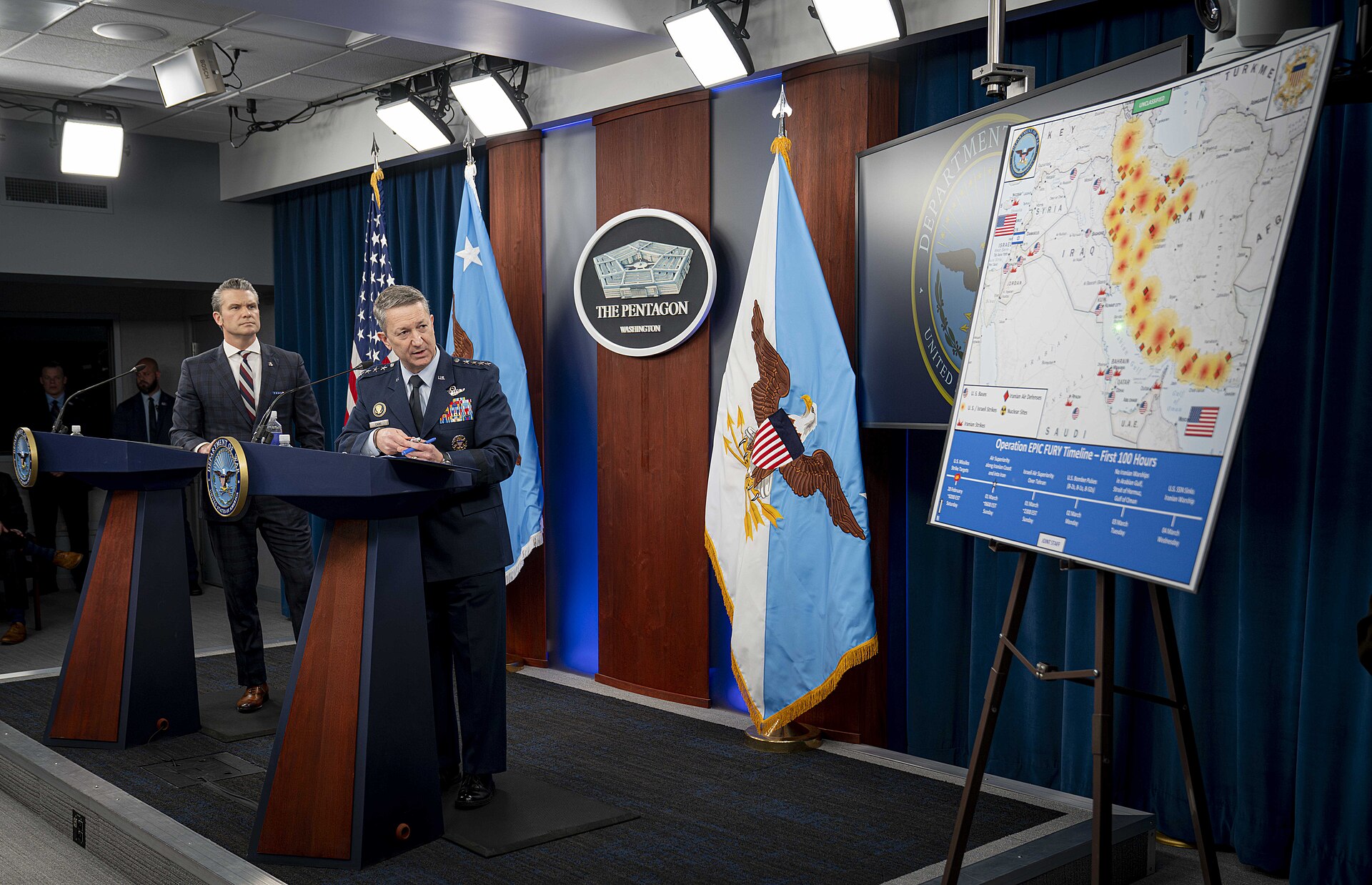
Gen. Caine disclosed that the U.S. military had struck more than 5,000 targets across Iran since the campaign began on February 28, Reuters reported. He identified three continuing military objectives: destroying Iran’s remaining missile and drone capability, striking the Iranian navy, and targeting what he described as Iran’s “military and industrial base.” The campaign has already reached 24 of Iran’s 31 provinces, according to CENTCOM data.
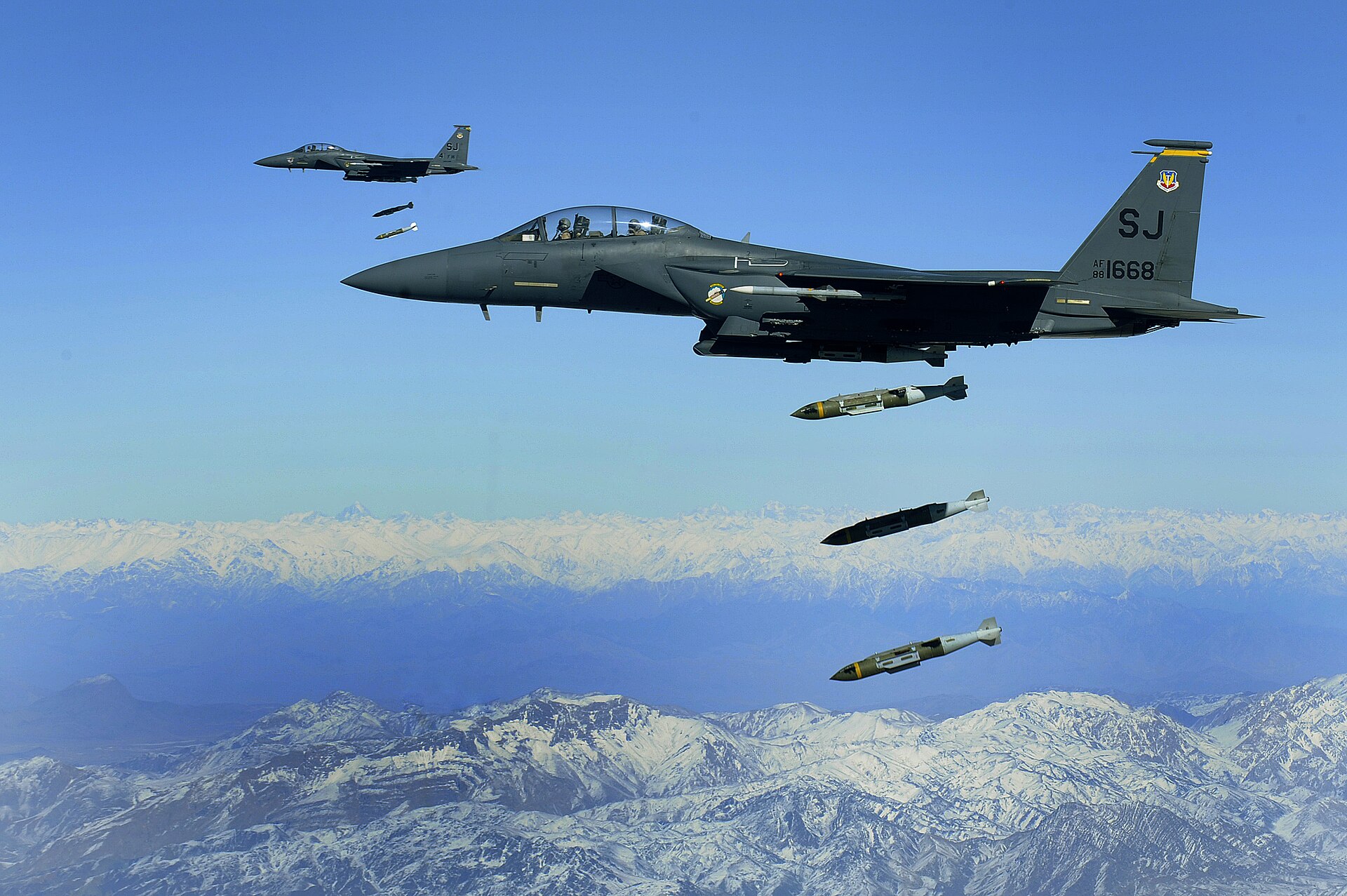
The 5,000-target figure represents a dramatic escalation from the 1,250 targets struck in the first 48 hours and the 2,000 confirmed by the Pentagon four days into the war. CENTCOM conducted over 1,700 sorties in the opening two days alone, according to the Center for Strategic and International Studies. The pace has not slowed. Caine told reporters that U.S. forces would “now begin to expand inland, striking progressively deeper into Iranian territory,” a statement that suggested the campaign’s geographic scope continues to widen even as Iran’s capacity to respond diminishes.
Five Thousand Targets and the Destruction of Iran’s Navy
The breadth of destruction inflicted on Iran’s military infrastructure during Operation Epic Fury has few modern precedents outside of the opening days of the 2003 Iraq war. More than 30 Iranian naval vessels have been sunk or destroyed, according to Fox News, citing Pentagon officials. CENTCOM Commander Admiral Brad Cooper described the campaign’s intent in stark terms: “We’re not just hitting what they have. We’re destroying their ability to rebuild.”
The target categories disclosed by the Pentagon include command and control centers, integrated air defense systems, ballistic missile sites, naval vessels and submarines, anti-ship missile batteries, military communications infrastructure, and ballistic missile and drone manufacturing facilities. The systematic dismantling of Iran’s air defenses enabled what Caine described as “localized air superiority across the southern flank of the Iranian coast,” according to the Gulf News, allowing strikes to penetrate deeper inland with each passing day.
The initial strikes on February 28 eliminated key figures in Iran’s military chain of command. Supreme Leader Ayatollah Ali Khamenei was killed within the first 48 hours, along with his defense minister, army chief of staff, and the commander-in-chief of the Islamic Revolutionary Guard Corps in a separate strike on a defense council meeting, NPR reported. The decapitation of Iran’s military leadership compounded the structural damage to its weapons systems and manufacturing capacity.
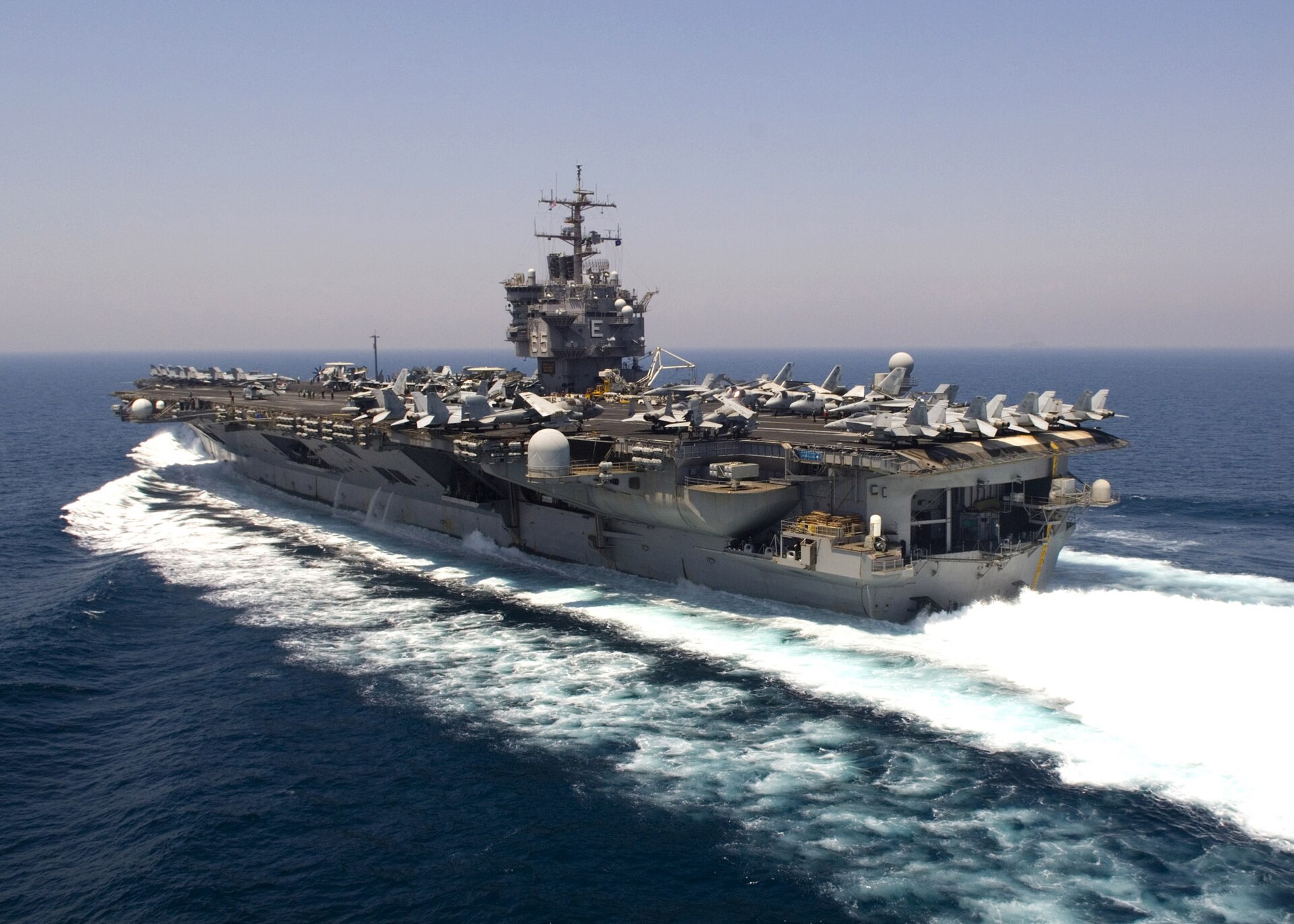
One Iranian drone carrier ship “roughly the size of a World War II aircraft carrier” was hit and set on fire in recent strikes, Fox News reported, illustrating the asymmetric nature of the naval campaign. Iran’s conventional naval forces have been functionally eliminated, though its ability to project power through the Islamic Revolutionary Guard Corps Navy — which operates fast attack craft, mines, and shore-based anti-ship missiles — remains a threat in the confined waters of the Strait of Hormuz.
The Air and Space Forces reported that U.S. airstrikes had shifted deeper inside Iran as the air force gained air superiority over progressively larger portions of Iranian territory. The destruction of Iran’s Russian-supplied S-300 and domestically produced air defense networks opened corridors for precision strikes on military infrastructure that would have been heavily defended two weeks ago.
How Has the 90 Percent Missile Reduction Changed the War for Saudi Arabia?
The 90 percent reduction in Iranian ballistic missile launches against Israel and Persian Gulf allies represents the single most consequential data point to emerge from Tuesday’s Pentagon briefing for the six GCC states that have been absorbing Iran’s retaliatory strikes since March 1. Gen. Caine also disclosed that Iranian drone attacks had decreased by 83 percent since the war’s opening day, according to Fox News.
For Saudi Arabia, which has intercepted waves of ballistic missiles, cruise missiles, and Shahed-series kamikaze drones targeting Prince Sultan Air Base, the Shaybah oilfield, Riyadh’s diplomatic quarter, and residential areas in Al-Kharj, the operational tempo has shifted perceptibly. The Saudi Defense Ministry reported intercepting just two drones over the Kingdom’s eastern region on Tuesday — a fraction of the barrage that struck in the war’s first week, when dozens of projectiles were launched daily.
Hegseth attributed the decline to “destruction of launch systems and disrupted command-and-control networks,” CBS News reported, noting that “the last 24 hours have seen Iran fire the lowest number of missiles they have been capable of firing yet.” The phrasing was significant: it characterized Iran’s reduced fire rate as a product of diminished capacity rather than strategic choice.
The cumulative burden on Gulf air defense systems has been staggering nonetheless. The UAE Ministry of Defense disclosed that its air force and air defense forces had engaged 165 ballistic missiles, two cruise missiles, and 541 Iranian drones since February 28, according to Al Jazeera. Kuwait reported intercepting 97 ballistic missiles and 283 drones in total. Bahrain, the smallest GCC state, had shot down 45 Iranian missiles and nine drones, including Shahed-136 kamikaze drones. These numbers underscore how aggressively Iran burned through its weapons stockpile in the war’s early days — a rate that appears increasingly unsustainable.
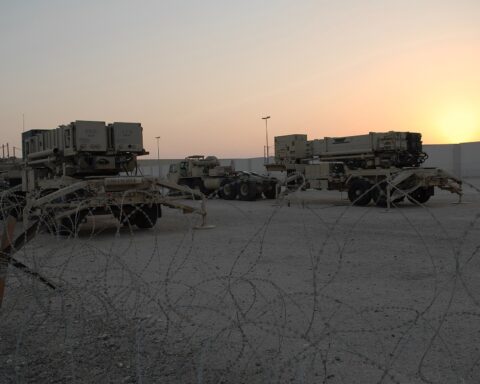
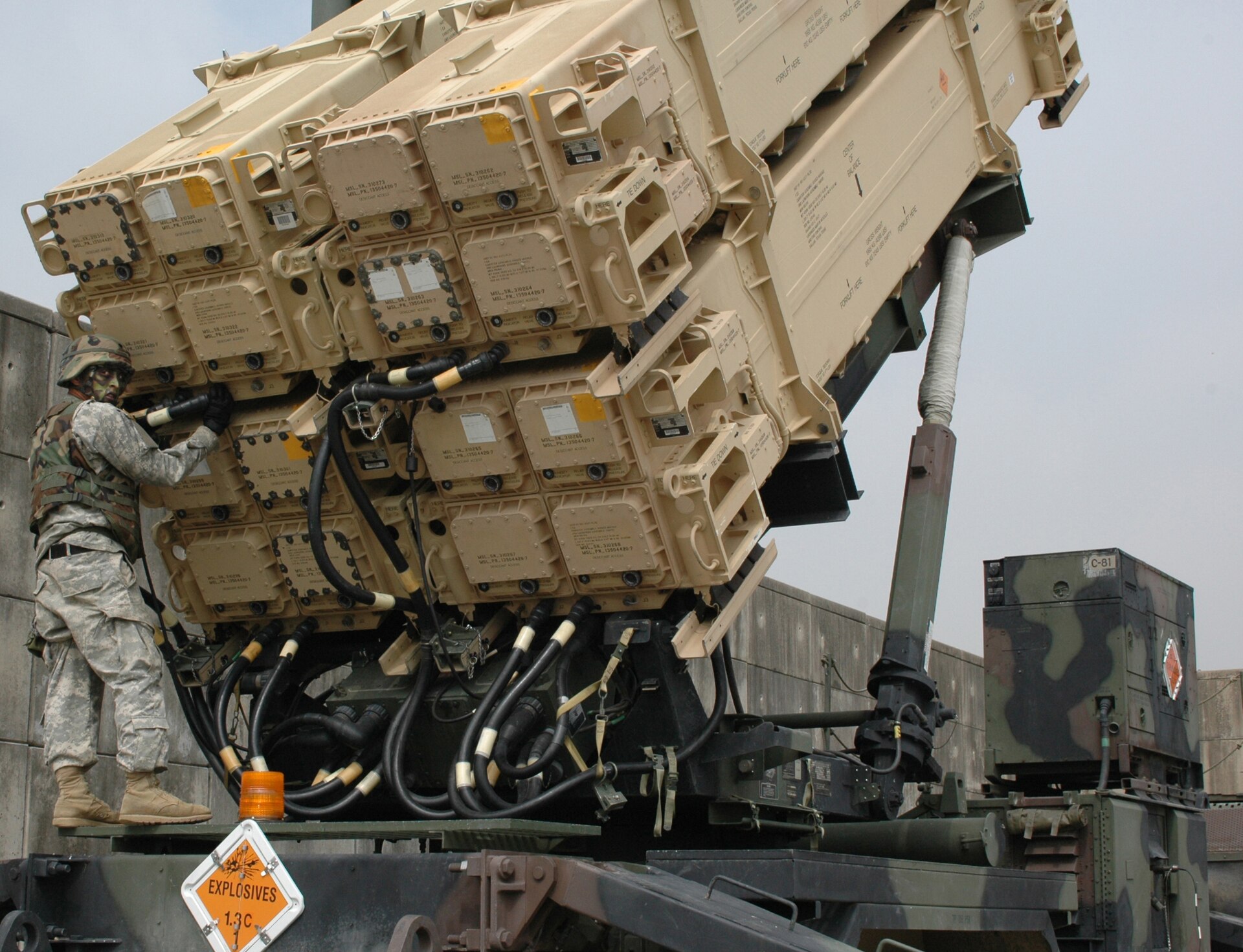
The implications for Saudi Arabia’s defense posture are profound. Riyadh’s Patriot PAC-3, THAAD — whose critical radar sensors sustained devastating Iranian strikes — and newly acquired European air defense systems have been tested under conditions no simulation could replicate. The 90 percent reduction eases the pressure on interceptor stockpiles that were being consumed at rates neither Saudi Arabia nor its American suppliers had planned for, though the Kingdom’s three-front war — military, economic, and diplomatic — is far from resolved.
Tuesday’s Intercepts Across the Gulf
Iranian strikes continued on Tuesday despite the diminished rate, targeting energy infrastructure and civilian areas across the Gulf in what appeared to be a deliberate strategy to maintain psychological pressure even as Tehran’s military capacity contracts. Al Jazeera reported that attacks were “particularly focused on energy infrastructure,” with the Shaybah oilfield — which produces one million barrels per day and sits in the remote Empty Quarter — coming under repeated drone assault.
| Country | Tuesday Intercepts | Cumulative Total (Since Feb 28) | Casualties Tuesday |
|---|---|---|---|
| Saudi Arabia | 2 drones destroyed (eastern region) | Not disclosed | None reported |
| Kuwait | 6 drones shot down (north and south) | 97 ballistic missiles, 283 drones | None reported |
| Qatar | 17 ballistic missiles, 7 drones | Not fully disclosed | None reported |
| Bahrain | Multiple intercepts | 45 missiles, 9 drones (Shahed-136) | 1 killed, 8 injured (Manama) |
| UAE | Multiple missiles and drones | 165 ballistic, 2 cruise, 541 drones | None (Abu Dhabi fire, no injuries) |
Bahrain’s national oil company Bapco declared force majeure after Iranian strikes hit its energy installations, meaning it could not meet some contractual supply obligations because of disruptions, Al Jazeera reported. A fire broke out at a facility in Abu Dhabi’s Ruwais industrial complex after a drone attack, though no injuries were reported. In Manama, a 29-year-old Bahraini woman was killed and eight people were injured when an Iranian missile struck a residential building.
Saudi Arabia’s civil defense agency separately confirmed that a drone struck a residential area in Az Zulfi, a city in Riyadh province roughly 260 kilometers northwest of the capital, causing “limited material damage and no injuries,” Al Jazeera reported. The strike on Az Zulfi marked a new geographic expansion of Iranian targeting within Saudi territory, reaching a small city far from the oil infrastructure and military bases that had been Tehran’s primary objectives in the war’s early days.
The pattern of Tuesday’s strikes suggested a shift in Iranian targeting priorities from high-value military and energy installations — many of which have already been hit — toward softer targets designed to remind Gulf populations that the war continues. Whether this represents a strategic recalculation or simply reflects Tehran’s diminished ability to target hardened sites remains a subject of debate among military analysts.
Iran Vows to Fight On Despite Collapsing Military Capacity
Iran’s new supreme leader, Mojtaba Khamenei — the 56-year-old son of Ayatollah Ali Khamenei, who was killed in the war’s opening strikes — was appointed by the Assembly of Experts on March 8 under what Iran International described as “repeated contacts and psychological and political pressure” from IRGC commanders. His selection signaled continuity with the hardline posture that has defined Iran’s response to the war.
Iranian Foreign Minister Abbas Araghchi rejected calls for a ceasefire on Tuesday, telling NBC News that the country needed “to continue fighting for the sake of our people.” When asked about prospects for negotiations, a spokesperson said that as long as attacks continue, there was “no point to talk about anything but defense and retaliation against enemies,” NBC reported. Ali Larijani, head of Iran’s Supreme National Security Council, responded to Trump’s escalation threats on social media: “Beware lest you be the ones to vanish,” according to ABC News.
An Islamic Revolutionary Guard Corps spokesperson, Ali Mohammad Naini, declared that “Iran will determine when the war ends,” Al Jazeera reported — a statement that projected defiance even as the Pentagon catalogued the systematic destruction of the IRGC’s conventional military assets. The gap between Iran’s rhetoric and its remaining operational capacity has become the central paradox of the war’s second week.
The contradiction was visible in the Pentagon’s own messaging. President Trump told CBS News on Monday that the “war is very complete, pretty much,” adding that “there’s nothing left in a military sense.” Yet the Department of War posted a video on social media with the caption “We have Only Just Begun to Fight” — a message that directly undercut the president’s suggestion that hostilities were winding down.
Why Is the Strait of Hormuz Still Closed?
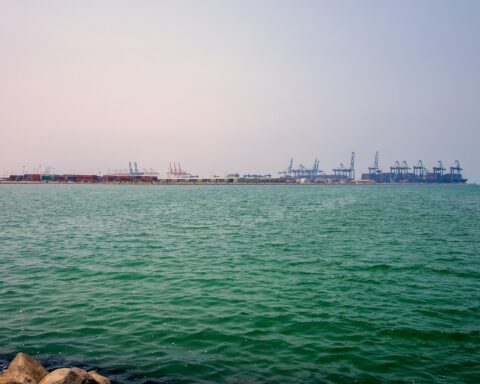
Despite the 90 percent reduction in Iranian missile launches and the destruction of over 30 naval vessels, the Strait of Hormuz — through which approximately 20 percent of the world’s oil supply normally transits — remains effectively closed. The IRGC issued radio warnings prohibiting vessel passage through the strait in the war’s first days, and has maintained the blockade using mines, fast attack craft, and shore-based anti-ship missiles that survive in hardened positions along Iran’s southern coastline.
The IRGC has vowed it will not allow “one liter of oil” to leave the region until U.S. and Israeli attacks cease, Euronews reported. This represents an explicit linkage between the Hormuz blockade and a ceasefire — a negotiating position that gives Tehran extraordinary leverage even as its conventional military degrades. Nearly 15 million barrels per day of crude production, plus another 4.5 million barrels per day of refined fuels, remain stranded in the Gulf, according to the Wikipedia article tracking the crisis.
Trump signaled readiness to use the U.S. Navy to escort oil tankers through the strait, but a senior administration official told CNN there was currently “no specific timeline” on launching any naval escort. A U.S. official told Fox News that American forces were not currently escorting ships through the strait and declined to speculate on future operations. The U.S. Navy separately told shipping industry leaders that it did not have the naval availability to provide escorts, CNBC reported — an admission that hundreds of stranded ships could wait weeks for relief.
Brent crude spiked to nearly $120 per barrel on Monday before settling around $90 on Tuesday — still nearly 24 percent above the $72.50 price on February 28 when the war began, according to Al Jazeera. Saudi Arabia’s oil exports have been rerouted through the Red Sea via the East-West Pipeline where possible, but the Kingdom’s eastern ports at Dammam and Jubail remain inaccessible for tanker traffic.
What Does This Mean for the War’s Endgame?
The convergence of declining Iranian military capacity and intensifying American strikes points toward one of two outcomes: either Iran’s ability to wage conventional warfare collapses entirely within days, forcing some form of ceasefire, or the conflict shifts into a protracted asymmetric phase in which Tehran relies on proxy networks, the Hormuz blockade, and cyber operations to extract concessions.
Hegseth’s statement that Trump “gets to determine the end stage” of operations in Iran, reported by CBS News, suggested that the military was awaiting political direction on when to declare objectives achieved. The 90 percent missile reduction and destruction of Iran’s navy provide the empirical basis for such a declaration. But the Hormuz blockade, continued drone strikes on Gulf states, and the humanitarian toll inside Iran — where the government says more than 1,255 people have been killed and 10,000 injured, according to NPR — complicate any premature declaration of victory.
The war has extracted a significant cost from the American military as well. Eight U.S. service members have been killed in the conflict, including Sgt. Benjamin N. Pennington, 26, of Glendale, Kentucky, who died on Sunday from injuries sustained during a March 1 attack at a military base in Saudi Arabia, NPR reported. The toll, while modest compared to post-September 11 conflicts, has generated domestic political pressure on the Trump administration to define a clear exit strategy.
Iran’s internet blackout — now in its 240th hour, according to cybersecurity watchdog NetBlocks — has made independent verification of conditions inside the country nearly impossible. The information vacuum benefits both sides: Tehran can control the domestic narrative, while Washington can present its version of events largely unchallenged. The reality of conditions on the ground in Iran remains opaque.
Saudi Arabia’s Stakes in a Diminished Iran
For Crown Prince Mohammed bin Salman, the Pentagon’s Day 11 briefing contained both reassurance and warning. The 90 percent reduction in missile fire eases the immediate threat to Saudi cities, military installations, and the oil infrastructure that finances Vision 2030. The destruction of Iran’s navy removes a longstanding threat to Saudi shipping in the Gulf. The elimination of Iran’s senior military leadership disrupts the command architecture that directed proxy warfare across the region for decades.
But the war has also demonstrated vulnerabilities that Riyadh will spend years addressing. The IRGC’s pledge of one-ton warheads exposed gaps in Saudi air defense coverage. Civilian casualties in Al-Kharj and the drone strike on Az Zulfi showed that Iran could reach targets beyond the heavily defended urban cores and military installations. And the Hormuz blockade proved that even a militarily weakened Iran could inflict severe economic damage on the entire Gulf through control of a single 33-kilometer-wide waterway.
Saudi Arabia’s diplomatic posture has hardened in parallel with the military campaign. The Saudi Foreign Ministry stated on Tuesday that “continued Iranian attacks would lead to further escalation” and would have grave impact on bilateral relations “both presently and in the future,” Al Jazeera reported. Earlier, Riyadh warned that Iran would be “the biggest loser” if it continued striking Arab states, Fortune reported. Yet Riyadh has also instructed Gulf allies to avoid steps that could inflame tensions further, according to Middle East Eye — a dual message of firmness and restraint that reflects Mohammed bin Salman’s management of a war he did not start but cannot afford to see escalate beyond control.
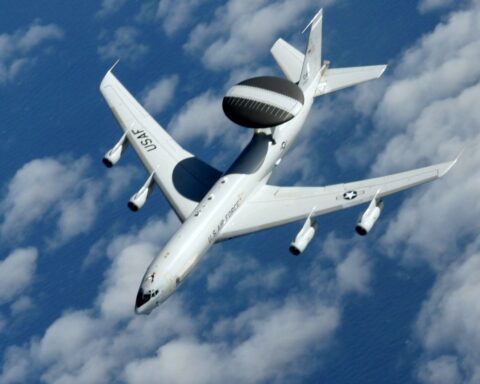
The coalition supporting Gulf defense has meanwhile expanded beyond the traditional American security umbrella. Australia announced on Tuesday that it would deploy an E-7A Wedgetail surveillance aircraft to the Gulf and provide Advanced Medium Range Air-to-Air Missiles to the UAE to replenish depleted air defense stocks, according to a statement from Australia’s Defence Minister. The United Kingdom has already reactivated its military presence in the region. The financial cost of the war is mounting for every party involved, but for Saudi Arabia, the strategic calculation remains unchanged: a diminished Iran is worth the price, provided the Kingdom emerges from the conflict with its own economy, security architecture, and regional standing intact.
| Metric | Figure | Source |
|---|---|---|
| Targets struck | 5,000+ | Gen. Dan Caine / CENTCOM |
| Iranian provinces hit | 24 of 31 | CENTCOM |
| Iranian naval vessels destroyed | 30+ | Pentagon / Fox News |
| Ballistic missile reduction | 90% | Gen. Dan Caine |
| Drone attack reduction | 83% | Pentagon / Fox News |
| Sorties (first 48 hours) | 1,700+ | CSIS |
| U.S. service members killed | 8 | NPR / Pentagon |
| Iranian casualties (Iran gov’t figures) | 1,255+ killed, 10,000+ injured | Iran government / NPR |
| Brent crude (Feb 28 vs. peak) | $72.50 → $119.50 | Al Jazeera |
| Iran internet blackout | 240+ hours | NetBlocks |
Frequently Asked Questions
What is Operation Epic Fury?
Operation Epic Fury is the joint U.S.-Israeli military campaign launched on February 28, 2026, targeting Iran’s nuclear infrastructure, ballistic missile stockpiles, naval assets, and military leadership. The campaign has struck more than 5,000 targets across 24 of Iran’s 31 provinces in its first eleven days, according to CENTCOM, and has destroyed over 30 Iranian naval vessels.
How many Iranian missiles has Saudi Arabia intercepted?
Saudi Arabia has not disclosed a cumulative total of intercepts, but the Kingdom’s Defense Ministry has reported daily intercepts of ballistic missiles, cruise missiles, and drones targeting Prince Sultan Air Base, the Shaybah oilfield, Riyadh, Al-Kharj, and Az Zulfi since the war began on February 28. On Tuesday, March 10, Saudi forces intercepted two drones over the eastern oil-producing region.
Is the Strait of Hormuz still closed?
The Strait of Hormuz remains effectively closed to commercial shipping as of March 10, 2026. The Islamic Revolutionary Guard Corps has maintained a blockade using mines, fast attack craft, and shore-based anti-ship missiles, and has vowed not to allow “one liter of oil” to leave the region until U.S. and Israeli attacks cease. The U.S. Navy has not yet launched escort convoys despite Trump’s stated willingness to do so.
How many U.S. troops have been killed in the Iran war?
Eight U.S. service members have been killed in the conflict as of March 10, 2026, according to NPR and Pentagon statements. The most recent confirmed casualty was Army Sgt. Benjamin N. Pennington, 26, of Glendale, Kentucky, who died on March 9 from injuries sustained during a March 1 Iranian attack on a military base in Saudi Arabia.
Who is Iran’s new supreme leader?
Mojtaba Khamenei, the 56-year-old son of the late Ayatollah Ali Khamenei, was appointed Iran’s new supreme leader by the Assembly of Experts on March 8, 2026. His father was killed in U.S.-Israeli strikes on February 28. Iran International reported that the IRGC pressured the Assembly to select Mojtaba Khamenei, whose close ties with the Revolutionary Guard signal a continuation of hardline policy.
While Iran’s missile and drone fire may be declining, a new threat has emerged at sea. On the same day the Pentagon reported its 90 percent reduction figure, Iran began laying naval mines in the Strait of Hormuz, prompting the U.S. Navy to destroy 16 minelaying vessels in a preemptive strike.