
WASHINGTON — The U.S. International Development Finance Corporation on Tuesday named Chubb as the lead underwriter for a $20 billion maritime reinsurance plan designed to restart commercial shipping through the Strait of Hormuz, a move that acknowledges what insurers concluded days earlier: the Persian Gulf has become too dangerous to cover on private-market terms alone.
The announcement, made jointly by the DFC and Chubb on March 11, follows the near-total withdrawal of war risk insurance by the world’s largest maritime mutual insurers since the Iran war began on February 28. Transit volumes through the strait have collapsed by more than 80 percent since March 5, when five of the seven largest protection and indemnity clubs simultaneously cancelled war risk coverage for vessels entering the Persian Gulf and adjacent waters. Benchmark VLCC freight rates have hit an all-time high of $423,736 per day, according to shipping data providers, while at least five commercial vessels have been struck by Iranian projectiles or drones since the war began.
Table of Contents
What Is the $20 Billion DFC-Chubb Insurance Program?
The DFC Maritime Reinsurance Plan is a government-backed insurance facility designed to fill the vacuum left by private insurers who have fled the Persian Gulf market. Under the program, the DFC provides reinsurance — secondary insurance for insurance companies — covering approximately $20 billion in damages on a rolling basis, with Chubb providing the front-end insurance directly to shippers, according to the DFC press release issued on March 11.
The coverage applies to hull and machinery insurance as well as cargo insurance for vessels meeting specified eligibility criteria. It targets ships transiting the Strait of Hormuz and operating within the Persian Gulf, the area that private insurers have designated as an exclusion zone since March 5.
“DFC’s Maritime Reinsurance plan combines Chubb’s premier underwriting expertise with the financial commitment of the U.S. Government,” DFC CEO Ben Black said in the announcement. “We are confident that our reinsurance plan will get oil, gasoline, LNG, jet fuel and fertilizer through the Strait of Hormuz and flowing again to the world.”
Chubb Chairman and CEO Evan Greenberg described the strait’s commerce as “vital” to the global economy. “Providing vessels with insurance protection is essential for resuming trade flows,” Greenberg said. The DFC and Chubb said they have identified additional American reinsurance providers to participate in the facility but did not disclose their names.
The DFC, established in 2019 as the successor to the Overseas Private Investment Corporation, typically finances infrastructure, energy, and technology projects in developing nations. The maritime reinsurance plan represents what CBS News described as “a profound departure” from the agency’s traditional development mandate, raising questions about whether a body designed to fund clinics and solar farms in sub-Saharan Africa is equipped to backstop supertanker convoys transiting a live combat zone.
How Did Gulf Shipping Insurance Collapse?
The insurance withdrawal began within days of the first Iranian retaliatory strikes on February 28, 2026. As U.S. and Israeli forces launched coordinated strikes on Iran, Tehran declared the Strait of Hormuz closed and warned that any vessel attempting to pass would be attacked. The IRGC Navy subsequently formalized this threat into a declared permit system requiring all ships to seek Iranian permission before transiting the Strait of Hormuz, transforming an implicit blockade into an explicit assertion of Iranian sovereignty over international waters. The first system to break was not military but actuarial.
War risk insurance premiums — the additional coverage that shipowners must purchase to transit conflict zones — had been running at approximately 0.125 percent of the insured hull value per transit before the war. Within 48 hours of the first strikes, rates surged to between 0.2 percent and 0.4 percent, according to data cited by CNBC. By March 3, premiums had climbed to as high as 1 percent of ship value within 48 hours, according to Al Jazeera, citing insurance market sources. The IRGC’s subsequent threat to burn Gulf oil and gas infrastructure only widened the gap between coverage and risk.
For a very large crude carrier valued at $100 million, that translated to a premium increase from roughly $200,000 to $1 million per voyage, Al Jazeera reported.
Then, on March 5, the market effectively shut down. Five of the largest protection and indemnity clubs — Gard, Skuld, NorthStandard, the London P&I Club, and the American Club — simultaneously issued notices cancelling war risk coverage for Iranian waters, the Persian Gulf, adjacent waterways, and the Strait of Hormuz. The cancellations took effect at midnight London time on March 5, according to Lloyd’s List, with the clubs citing the withdrawal of their own reinsurers as the trigger. The insurance void has created a stark asymmetry: while mainstream tankers cannot transit, Iran’s shadow fleet continues shipping oil to China using opaque insurance arrangements that bypass Western regulatory frameworks entirely.
“Each underwriter is invariably increasing rates or, in many cases, even declining to offer terms right now,” David Smith, a senior broker at McGill and Partners, told Al Jazeera. Marcus Baker, global head of marine at the insurance broker Marsh, projected premium increases of “50 to 100 percent or even higher” for any coverage that remained available.
The withdrawal was not total. Lloyd’s List noted that war risk coverage technically remained available from some London market underwriters, but at premiums so high that most shipowners considered them prohibitive. Lloyd’s of London itself was reported to be in discussions with the U.S. government about participating in a broader insurance framework, according to the Insurance Journal on March 5.
According to Lloyd’s List, U.S., UK, and Israeli-flagged ships were being charged approximately three times more than vessels registered under other flags for whatever residual war risk coverage remained available.
The Ship Attacks That Broke the Market
The insurance withdrawal was not theoretical. At least five commercial vessels sustained damage from Iranian projectiles and drones in the first twelve days of the conflict, according to reporting by Al Jazeera, CNBC, and the UK Maritime Trade Operations.
| Vessel | Flag | Incident | Casualties |
|---|---|---|---|
| Nova | Honduras | Hit by two drones; caught fire in Strait of Hormuz | Crew evacuated; vessel burning |
| Stena Imperative | United States | Damaged by aerial impacts | One shipyard worker killed |
| MKD VYOM | Marshall Islands | Projectile strike | One crew member killed |
| Hercules Star | Gibraltar | Projectile strike off UAE coast | No reported fatalities |
| Mayuree Naree | Thailand | Hit north of Oman in the Strait; set on fire | Under investigation |
The UK Maritime Trade Operations reported on March 11 that an unknown projectile struck a container vessel approximately 25 nautical miles northwest of the UAE’s Ras al-Khaimah emirate, setting it ablaze. A second bulk carrier was hit 50 nautical miles northwest of Dubai, the British military said.
Iran’s mine-laying campaign has compounded the risk. The Times of Israel reported on March 11, citing unnamed sources, that Iran had laid approximately a dozen mines in the Strait of Hormuz. The U.S. Navy responded by destroying 16 Iranian mine-laying vessels, according to the Associated Press, but the presence of even a small number of mines is sufficient to render a waterway uninsurable under standard commercial terms.
The threat has since escalated further with the deployment of Iranian kamikaze drone boats that struck six vessels in a single day, a weapon even harder to insure against than mines. The insurance crisis deepened after Iranian drone boats struck two tankers in Iraqi waters near Basra, forcing Iraq to shut down all oil export terminal operations.
Approximately 150 ships were stranded in and around the strait as of early March, and an estimated 10 percent of the world’s container fleet was caught in the resulting backlog, according to Al Jazeera. Saudi Arabia has since moved to absorb some of that displaced container traffic, opening emergency logistics corridors on March 12 to funnel Gulf-bound commercial cargo through Jeddah Islamic Port on the Red Sea.
What Does Saudi Arabia Stand to Lose?
Saudi Arabia is the world’s largest crude oil exporter, and the overwhelming majority of its seaborne exports have historically transited the Strait of Hormuz. Aramco’s principal export terminals — Ras Tanura, Ju’aymah, and the offshore facilities in the Eastern Province — all feed into the Persian Gulf, making the Kingdom uniquely exposed to the insurance crisis.
Aramco has activated its East-West crude oil pipeline to reroute exports to the port of Yanbu on the Red Sea, a pivot that has rewritten the Kingdom’s energy export map in just eleven days. The pipeline has a capacity of approximately 5 million barrels per day, with temporary expansion to 7 million barrels per day achievable by converting natural gas liquids lines, according to the U.S. Energy Information Administration.
Yanbu’s port capacity, however, limits actual throughput. Effective loading capacity at Yanbu’s two terminals is approximately 4 million barrels per day, according to Argus Media, well below the Kingdom’s pre-war export capacity of more than 7 million barrels per day from its Gulf terminals.
The insurance collapse adds a cost layer even for Red Sea shipments. While the Strait of Hormuz is the primary exclusion zone, the broader regional instability has pushed up insurance rates across the Persian Gulf, the Gulf of Oman, and into parts of the Red Sea, where Houthi-related shipping risks already elevated premiums throughout 2024 and 2025.
The economic pressure on the Saudi riyal’s dollar peg and the broader fiscal impact of war on Vision 2030 spending add urgency. Every dollar of additional shipping cost reduces the net revenue from Saudi crude at a time when Riyadh needs maximum revenue to fund both a war and a generational economic transformation.
VLCC Rates and the Real Cost of Moving Oil
The benchmark freight rate for very large crude carriers hauling oil from the Middle East to China hit $423,736 per day on March 3, an increase of more than 94 percent from the previous Friday’s close, according to shipping data compiled by CNBC. That figure represented an all-time high for the benchmark route.
Individual fixtures have been even more extreme. An Indian petrochemical firm chartered a VLCC at $770,000 per day in early March, according to maritime trade reports, a rate that would have been inconceivable weeks earlier.
| Metric | Pre-War (Feb 27) | War Peak | Change |
|---|---|---|---|
| VLCC rate (ME-to-China) | ~$218,000/day | $423,736/day | +94% |
| War risk premium (% of hull) | 0.125% | Up to 1.0% | +700% |
| Premium on $100M tanker (per voyage) | ~$125,000 | ~$1,000,000 | +700% |
| Daily Hormuz crossings | 20–30 vessels | “A handful” | -80%+ |
| Brent crude | ~$70/bbl | $120/bbl (peak) | +71% |
| Dutch/UK wholesale gas | Baseline | +50% from baseline | +50% |
| Asian LNG | Baseline | +39% from baseline | +39% |
The cost of the insurance crisis extends beyond premiums. Tankers that cannot secure war risk coverage cannot legally load cargo at most Gulf terminals, because charterers, port authorities, and banks in the letter-of-credit chain all require valid insurance documentation. Without coverage, the ship is effectively grounded — insurable in theory, but inoperable in practice.
Oil tanker charter rates surged 77 percent on some routes due to Hormuz disruptions, according to Maritime News. Daily crossings through the strait fell from a typical 20 to 30 vessels to a handful, with the remainder rerouting around Africa or sitting idle. Brent crude futures rose 13 percent in a single session during the first week of the war, while Dutch and British wholesale gas prices jumped approximately 50 percent and Asian LNG prices climbed 39 percent, Al Jazeera reported.
Will $20 Billion Be Enough?
Analysts and industry critics have questioned whether the DFC’s $20 billion facility is adequate to cover the scale of shipping at risk in the Persian Gulf. JPMorgan analysts estimated that the total insurance exposure for vessels and cargo transiting the Hormuz corridor could reach $352 billion, according to CBS News, which would make the DFC program a fraction of the required coverage.
The $20 billion figure operates on a “rolling basis,” meaning the facility can insure multiple consecutive voyages as claims are settled and capacity frees up. But a single VLCC carrying 2 million barrels of crude at $90 per barrel represents approximately $180 million in cargo value alone, before accounting for the hull. A cluster of simultaneous losses — a mine strike disabling two tankers in a single day, for example — could consume a significant share of the facility’s capacity overnight.
There are also questions of eligibility. The DFC has not publicly disclosed whether coverage extends only to U.S.-flagged vessels or includes the far larger fleet of international ships operating under flags of convenience — Liberia, Marshall Islands, Panama — that carry the majority of Gulf crude. If coverage is limited to American-flagged ships, the program’s impact on overall shipping volumes would be minimal, since U.S.-flagged tankers constitute a small fraction of the Gulf fleet.
The U.S. Department of Defense is coordinating with the DFC on the program, CBS News reported, suggesting that naval escorts will be part of the insurance framework. Trump earlier announced that the United States would provide both insurance and military escort for tankers transiting the strait, according to CNBC and Al Jazeera reporting from March 3.
The taxpayer risk is considerable. If Iranian strikes destroy or severely damage insured vessels, the DFC — and by extension the U.S. government — would bear the claims. A single VLCC loss, including hull, cargo, and environmental cleanup, could run into the hundreds of millions of dollars. The market’s sensitivity to Gulf shipping news was demonstrated when a false report about a Hormuz tanker escort wiped billions from oil prices in minutes.
The military dimension of the escort plan has since crystallized as Operation Maritime Shield, the G7 naval convoy proposal that would pair warship escorts with government-backed insurance to restart tanker traffic through the strait. Whether the combined military-insurance framework can overcome the mine threat and the underwriters’ reluctance remains an open question.
The 1980s Tanker War Returns
The current crisis bears unmistakable parallels to the “Tanker War” phase of the Iran-Iraq conflict between 1984 and 1988, when both Iraq and Iran attacked commercial shipping in the Persian Gulf. During that conflict, more than 400 ships were attacked, and the United States launched Operation Earnest Will, the largest naval escort operation since World War II, to protect Kuwaiti tankers re-flagged under the American flag.
The insurance market’s response in the 1980s followed a similar arc. Lloyd’s of London initially provided war risk coverage, then raised rates dramatically, then withdrew coverage for certain routes entirely, forcing the U.S. government to step in as the insurer of last resort. The Reagan administration used the Federal Ship Financing Fund to backstop tanker insurance — a program that bore costs but also succeeded in keeping oil flowing.
The current DFC program echoes that precedent, but the scale of the challenge is far larger. In the 1980s, approximately 6 million barrels per day transited Hormuz. Today, the figure exceeds 15 million barrels per day, and the strait handles roughly 20 percent of global petroleum trade and a significant share of the world’s liquefied natural gas, according to the U.S. Energy Information Administration.
Iran’s arsenal has also evolved. The mines of the 1980s were contact mines — crude but effective. Tehran now deploys precision-guided anti-ship ballistic missiles, loitering munitions, fast-attack drones, and advanced naval mines capable of autonomous target discrimination. The risk profile for insurers is correspondingly higher, and the premium required to cover that risk reflects a threat environment fundamentally different from anything the global shipping industry has confronted since the Second World War.
The insurance market’s collapse — and the U.S. government’s decision to step into the breach — signals that the Iran war has moved beyond a regional military conflict and into the plumbing of global commerce. When the world’s largest insurers refuse to cover the world’s most important shipping lane, the problem is no longer confined to Tehran and Riyadh. It belongs to every economy that burns oil, every airline that burns jet fuel, and every nation that imports liquefied natural gas through the Persian Gulf. The insurance vacuum has forced some countries to take matters into their own hands: India and Pakistan have deployed warships to escort their tankers through the Gulf of Oman, but naval protection alone cannot replace the financial guarantees that ports and cargo owners require before accepting vessels.
Frequently Asked Questions
What is the Strait of Hormuz and why does it matter for shipping insurance?
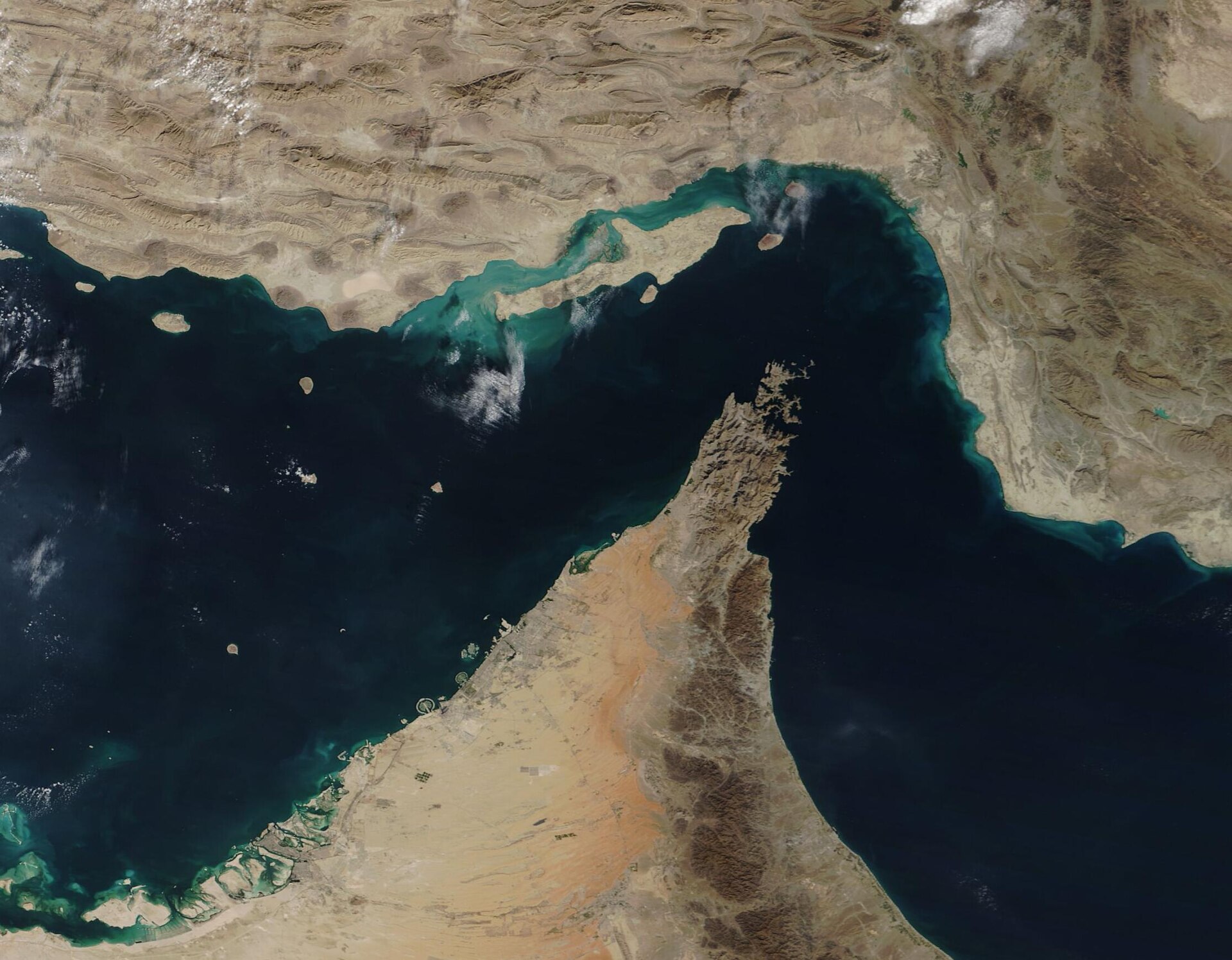
The Strait of Hormuz is a narrow waterway between Iran and Oman connecting the Persian Gulf to the Gulf of Oman and the open ocean. Approximately 20 percent of the world’s petroleum — roughly 15 million barrels per day — transits through the strait, making it the single most important oil shipping chokepoint on earth. When insurers withdrew war risk coverage for the strait in March 2026, it effectively halted most commercial shipping through the waterway regardless of whether individual ships were under direct military threat.
How much does war risk insurance cost for ships transiting the Persian Gulf?
Before the Iran war, war risk premiums for the Strait of Hormuz ran at approximately 0.125 percent of the insured hull value per transit. By early March 2026, premiums had surged to between 0.2 and 1.0 percent of hull value — an increase of up to 700 percent. For a $100 million tanker, that translates to a jump from roughly $125,000 to $1 million per voyage, according to insurance market data cited by Al Jazeera and CNBC.
Who is Chubb and why was it chosen to lead the DFC program?
Chubb is the world’s largest publicly traded property and casualty insurer, listed on the New York Stock Exchange. The DFC selected Chubb as lead underwriter for the $20 billion Maritime Reinsurance Plan because of its global underwriting expertise and capacity to issue policies at scale. Chubb CEO Evan Greenberg described the program as essential to “resuming trade flows” through the Strait of Hormuz.
Does the DFC insurance program cover all ships or only American vessels?
The DFC has not publicly clarified whether coverage extends to internationally flagged ships or is restricted to U.S.-flagged vessels. This distinction is critical because the vast majority of tankers carrying Gulf crude operate under flags of convenience — Liberia, the Marshall Islands, Panama — rather than the American flag. If coverage is limited to U.S.-flagged ships, the program’s impact on total shipping volumes would be marginal.
How does the current shipping insurance crisis compare to the 1980s Tanker War?
The current crisis echoes the 1984–1988 Tanker War, when Iran and Iraq attacked more than 400 commercial ships in the Persian Gulf. In that conflict, Lloyd’s of London raised premiums dramatically before partially withdrawing coverage, and the Reagan administration launched Operation Earnest Will to escort re-flagged tankers. The key differences today are scale — 15 million barrels per day transit Hormuz versus 6 million in the 1980s — and Iran’s far more sophisticated arsenal of anti-ship missiles, drones, and advanced naval mines.
The insurance vacuum extends beyond maritime risk. As international banks flee the Gulf after Iran declared financial institutions military targets, property and casualty insurers are also repricing commercial real estate coverage across Dubai, Doha, and Manama, creating a compound crisis where neither ships nor the offices that finance them can obtain adequate war risk coverage.