
TEHRAN — Iran’s elected president stood in a closed-door meeting on April 4 and accused his own military commanders by name of destroying any remaining chance of a ceasefire — and the fact that nothing happened to him afterward is the most damning indictment of the Iranian constitutional order that exists. Masoud Pezeshkian told former IRGC intelligence chief Hossein Taeb that Commander-in-Chief Ahmad Vahidi and Khatam al-Anbiya Central Headquarters Commander Ali Abdollahi were “acting unilaterally and driving escalation through attacks on regional countries, especially against infrastructure,” steering Iran toward “a huge catastrophe,” according to two sources close to the presidential office who spoke to Iran International.
He was right on every count, and it changed nothing, because the Iranian constitution gives the president zero authority over the men he was accusing — a structural fact that makes any agreement reached at the Islamabad talks worth less than the paper Ghalibaf’s delegation will sign it on.
Table of Contents
- The Accusation That Broke the Surface
- Article 110 vs. Article 113 — The Constitutional Trap
- Who Actually Commands Iran’s Military in April 2026?
- Why 31 Autonomous Corps Make Any Ceasefire Unenforceable
- The 1988 Mechanism — And Why It Cannot Repeat
- Who Is Vance Negotiating With in Islamabad?
- The Zolghadr Chokepoint
- The First Hours Proved the Point
- FAQ
The Accusation That Broke the Surface
The April 4 confrontation did not happen in public and was not designed to be public — Pezeshkian made his accusation during a closed-door meeting with Hossein Taeb, the former IRGC intelligence chief, and the details emerged only because sources inside the presidential office leaked them to Iran International, the London-based opposition outlet that Tehran treats as hostile but has been unable to discredit on sourcing. The president did not confront Vahidi face-to-face; he spoke through an intermediary. That choice of channel tells you everything about the balance of institutional power in Tehran in the sixth week of a war the elected government did not want and cannot stop.
Pezeshkian’s language was specific in a way that Iranian presidents almost never are when discussing the Guards. He did not speak in generalities about “certain elements” or “parallel institutions” — the diplomatic euphemisms that Rouhani and Khatami used for decades to complain about IRGC interference without naming names. He identified Vahidi and Abdollahi personally, accused them of steering Iran toward “a huge catastrophe,” and said their unilateral operations against regional infrastructure had eliminated any diplomatic pathway to a ceasefire. Ynet News and iBTimes independently corroborated the account within days.
The accusation was not new in substance — Pezeshkian had warned on March 28 that without a ceasefire, Iran’s economy could collapse “within three weeks to a month,” a timeline that IRGC operational planning appears to have treated as irrelevant. What was new was the naming. In the Islamic Republic’s internal grammar, naming a commander is an act of desperation rather than defiance, because it implicitly acknowledges that the president’s constitutional authority is insufficient to address the problem through institutional channels — that the only tool available to the elected head of state is a leak to hostile media, hoping external pressure will accomplish what executive power cannot.
Article 110 vs. Article 113 — The Constitutional Trap
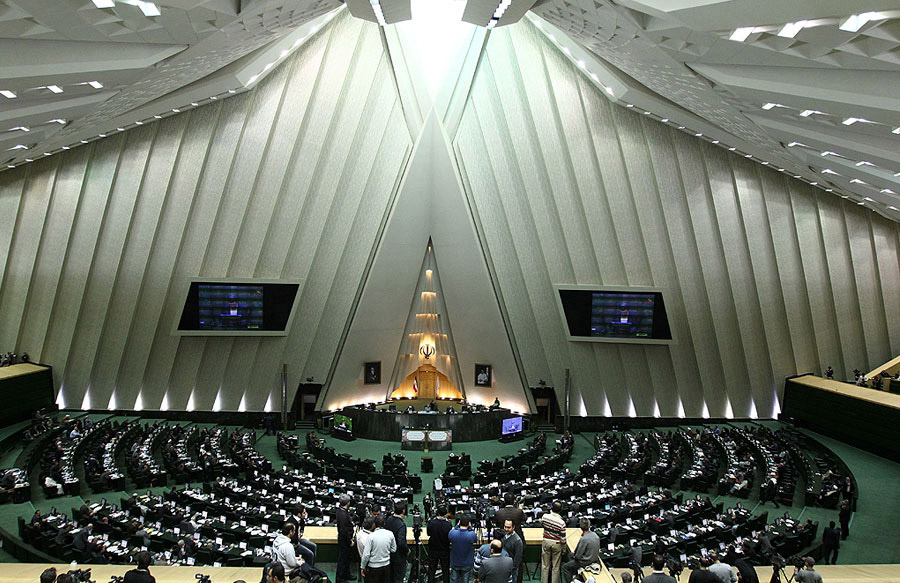
The Iranian constitution was written to produce exactly this outcome, though the men who drafted it in 1979 would have described the design differently. Article 113 declares the president “the highest official in the country” after the Supreme Leader — a sentence that sounds like authority until you reach the subordinate clause: “except in matters directly under the jurisdiction of the Leader.” Those matters, enumerated in Article 110, include supreme command of the armed forces, the power to declare war and peace, and sole authority to appoint, dismiss, or accept the resignation of the IRGC’s commander-in-chief, the commanders of the Army and police, and the chief of the Joint Staff.
The Middle East briefing 3,000+ readers start their day with.
One email. Every weekday morning. Free.
The president does not command a single soldier. He chairs the Supreme National Security Council under Article 176, but SNSC decisions become binding only “after the confirmation by the Supreme Leader” — and the current Supreme Leader, Mojtaba Khamenei, has not appeared publicly for more than six weeks, with the Times of London reporting an intelligence memo describing him as potentially “unconscious in Qom.” The constitutional architecture was designed to subordinate elected authority to clerical oversight, with the Supreme Leader serving as the final arbiter between civilian government and military power. Remove the arbiter, and the architecture does not produce a stalemate — it produces IRGC supremacy by default, because the Guards hold the only authority that is self-executing rather than dependent on confirmation from above.
| Authority | Constitutional Basis | Current Status | Effective Power |
|---|---|---|---|
| Supreme Leader (Mojtaba Khamenei) | Art. 110 — supreme command of armed forces, war/peace, IRGC appointments | Absent 42+ days; reportedly incapacitated | Non-functional |
| President (Masoud Pezeshkian) | Art. 113 — highest official except in matters under Leader’s jurisdiction | Active but constitutionally excluded from military command | Zero over IRGC |
| SNSC Secretary (Mohammad Bagher Zolghadr) | Art. 176 — coordinates defence policy; decisions require Leader’s confirmation | Appointed under IRGC pressure; US/EU/UN sanctioned (UNSCR 1747) | Gatekeeping without constitutional legitimacy |
| IRGC Commander-in-Chief (Ahmad Vahidi) | Appointed by Leader (Art. 110); answers only to Leader | Operating without functional superior | De facto supreme military authority |
| Parliament Speaker (Mohammad Bagher Ghalibaf) | Legislative — no executive or military authority | Leading Islamabad delegation | Cannot bind any military commitment |
The table above is the structural argument against any Islamabad agreement in a single frame. Every actor with the authority to sign lacks the power to enforce, and the actor with the power to enforce — Vahidi — is not at the table and has publicly declared that “all critical and sensitive government positions must be selected and overseen directly by the IRGC,” a statement that redefines civilian governance as an IRGC subsidiary rather than the reverse.
Who Actually Commands Iran’s Military in April 2026?
The honest answer, based on the available evidence, is that nobody commands all of it — and this is by design rather than by accident. When an unnamed Iranian parliamentarian told NBC that “Vahidi is in charge of the country,” that was a political assessment rather than a constitutional one, and the distinction matters because Vahidi’s authority is not the centralised command that the phrase implies. He operates without a functional Supreme Leader above him and without institutional mechanisms below him that would allow his orders to override the pre-delegated contingency authorities that 31 provincial IRGC corps have held since General Mohammad Ali Jafari’s 2008 restructuring of the Guards into what defence analysts call the mosaic defence architecture.
Vahidi forced Pezeshkian to appoint Zolghadr as SNSC Secretary over the president’s objections — a direct override of what should be an executive prerogative. The Guards also rejected all of Pezeshkian’s candidates for intelligence minister, including Hossein Dehghan, a former defence minister whose credentials should have been beyond question. These are not negotiations between competing power centres; they are notifications from an institution that views the elected government as an administrative layer beneath it, useful for international representation but irrelevant to operational decisions.
Ali Abdollahi, the other commander Pezeshkian named, is the third head of Khatam al-Anbiya Central Headquarters in less than a year — his two predecessors were killed, and IranWire reported his appointment in September 2025 as part of an accelerating cycle of battlefield attrition among senior IRGC commanders. Abdollahi commands the organisation responsible for Iran’s strategic construction and, in wartime, major infrastructure and engineering operations. That Pezeshkian named him alongside Vahidi suggests the president believes Khatam al-Anbiya’s operations against Gulf infrastructure were directed without presidential knowledge, let alone approval — a suspicion that gains weight when you consider the structural impossibility of Pakistan enforcing any agreement against commanders the Iranian president himself cannot reach.
Why 31 Autonomous Corps Make Any Ceasefire Unenforceable
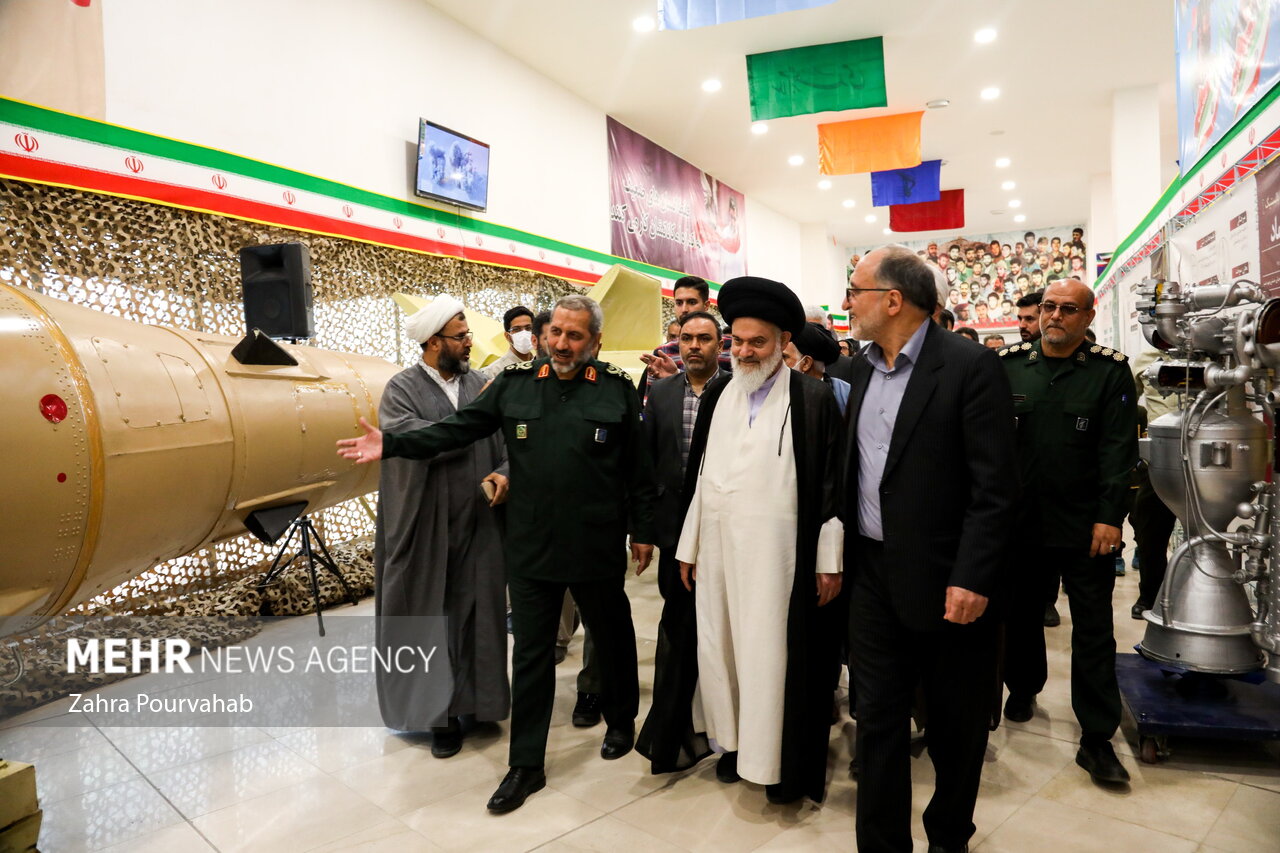
General Jafari restructured the IRGC in June 2008 with a specific design objective: survivability after leadership decapitation. Each of the 31 provincial commands was given independent intelligence, weapons, logistics, and Basij militia units, with pre-delegated authority for contingency operations — meaning that if communications with Tehran were severed or the central command structure was destroyed, each corps could continue fighting under standing orders without requiring new authorisation. The Soufan Center’s March 2026 analysis described this as a military organisation intentionally built to resist centralised control, even from its own commanders.
The Iranian Ministry of Foreign Affairs confirmed the operational reality in a statement that may be the most consequential diplomatic admission of the war. “Our military units are now, in fact, independent and somewhat isolated,” the MFA said, “and they are acting based on general instructions given to them in advance.” Read that sentence from the perspective of a diplomat in Islamabad trying to draft enforcement mechanisms: even if the delegation signs a ceasefire, even if Vahidi endorses it, the 31 provincial corps are operating under pre-delegated authority and may not receive, acknowledge, or obey a stand-down order — and the Iranian government’s own foreign ministry has already provided the explanation for why.
Our military units are now, in fact, independent and somewhat isolated, and they are acting based on general instructions given to them in advance.
Iranian Ministry of Foreign Affairs, official statement, April 9, 2026
The White House tacitly acknowledged the same problem when it stated that “it will take time for orders to reach lower ranks” — diplomatic language for a possibility that the Iranian MFA’s own words make concrete: these are not units waiting for delayed orders, but units executing pre-delegated authority that may never be countermanded because countermanding it requires a chain of command that currently terminates in an empty office in Qom.
The 1988 Mechanism — And Why It Cannot Repeat
The Islamic Republic has achieved exactly one successful ceasefire in its 47-year history, and the mechanism that produced it does not exist in 2026. In August 1988, Akbar Hashemi Rafsanjani persuaded Ayatollah Khomeini to accept UN Security Council Resolution 598, ending the eight-year war with Iraq. The mechanism was not diplomatic — it was constitutional. Khomeini had appointed Rafsanjani acting Commander-in-Chief on May 12, 1988, giving a single individual simultaneous authority over both the civilian negotiating track and the military chain of command. When Khomeini described his acceptance as “more deadly than drinking poison,” he was exercising the one power that made the ceasefire enforceable: a functioning Supreme Leader issuing an order that the armed forces were constitutionally bound to obey, through a commander who held both civilian credibility and military command.
Every element of that mechanism is absent in April 2026. The Supreme Leader is absent or incapacitated. No civilian figure holds acting Commander-in-Chief authority. Pezeshkian has no command power. Ghalibaf has no executive authority. Vahidi answers to a Supreme Leader who cannot answer back. The 31 provincial corps operate under pre-delegated authority from an era when the command structure was intact, and no constitutional process exists to revoke that delegation without a functioning Leader — the very office whose vacancy created the autonomy problem.
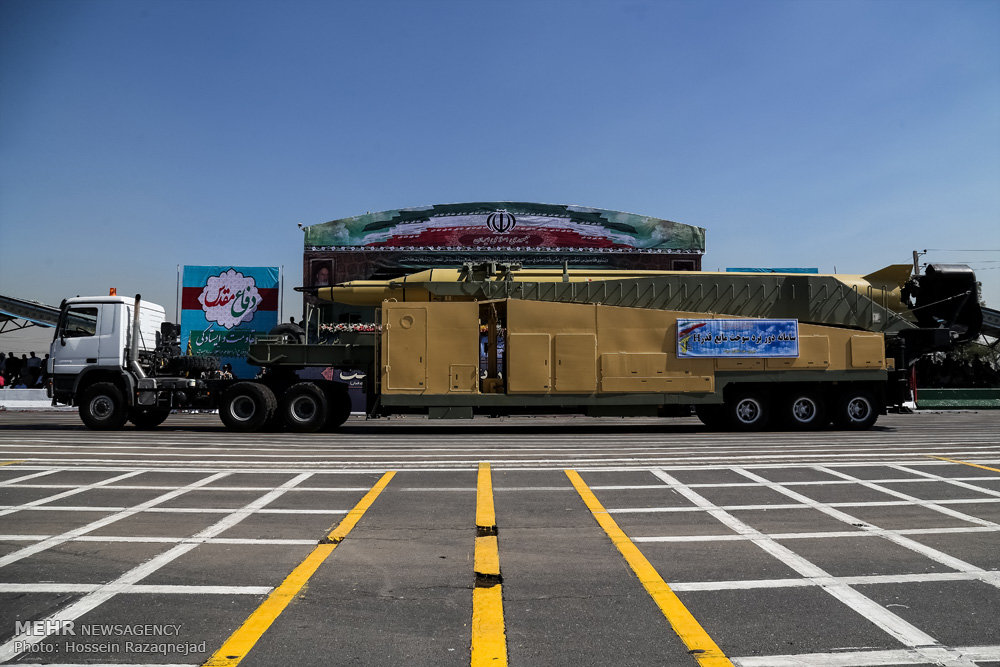
Hassan Rouhani, who negotiated the JCPOA under Khamenei Senior’s conditional endorsement, described the IRGC’s relationship to diplomatic agreements in a 2017 presidential debate: “We saw how they wrote slogans on missiles and showed underground missile cities to disrupt the JCPOA.” The missiles Rouhani was complaining about were labelled “Death to Israel” — the IRGC’s way of signalling that the nuclear deal did not bind its ballistic programme, regardless of what the elected government had agreed. Rouhani’s only tool was complaint; the IRGC’s tool was fait accompli. Pezeshkian’s April 4 accusation against Vahidi and Abdollahi is the same complaint, eight years later, from a weaker president facing a stronger Guards Corps during an active war rather than a diplomatic negotiation — and if Rouhani could not prevent missile tests with slogans during peacetime, Pezeshkian’s chances of preventing missile strikes on Saudi infrastructure during wartime are functionally zero.
Who Is Vance Negotiating With in Islamabad?
Iran’s delegation to the Islamabad talks is led by Parliament Speaker Ghalibaf — a former IRGC Aerospace Force commander (1997-2000) who carries institutional credibility with the Guards but holds no executive or military authority under the constitution — and Foreign Minister Araghchi, whose diplomatic credentials are irrelevant to the enforcement question because the foreign ministry has already admitted it cannot speak for the military units conducting operations. No current IRGC operational commander has been confirmed as attending, and Vahidi attempted to insert Zolghadr into the negotiating team before the delegation pushed back — though Vahidi also insisted, according to the Jerusalem Post, that the delegation refuse to negotiate Iran’s missile programme under any circumstances.
The South China Morning Post quoted a Chinese analyst observing that “to truly represent Iran and have a decisive say, one must command the trust of the IRGC — and Ghalibaf certainly possesses that legitimacy.” The analysis is half right: Ghalibaf has the IRGC’s trust, but trust is not command authority, and the distance between those two things is the gap through which every post-ceasefire violation has fallen. Ghalibaf himself appeared to acknowledge the problem when he told PressTV on April 8 that “in such a situation, a bilateral ceasefire or negotiations is unreasonable” — citing three of Iran’s 10-point conditions that he said were already violated before talks began, including Israeli attacks on Lebanon, a drone entering Iranian airspace, and denial of Iran’s enrichment rights.
The JCPOA precedent is instructive but points in a grimmer direction than most current commentary acknowledges. That agreement was signed by Zarif and Rouhani under Khamenei Senior’s conditional endorsement, but the IRGC was not a signatory, did not consider itself bound beyond the Supreme Leader’s explicit orders, and conducted provocative missile tests specifically designed to signal non-compliance. When Trump withdrew in 2018, the IRGC argued the withdrawal voided all Iranian obligations. Any Islamabad agreement faces the same structural defect, magnified by the absence of a functioning Supreme Leader who could play the enforcement role that Khamenei Senior — grudgingly, incompletely — played for the JCPOA’s first three years.
The Zolghadr Chokepoint
Al Jazeera’s Ali Hashem, one of the most connected correspondents covering Iranian institutional politics, described the real decision-making architecture in a single sentence on March 25: “Whoever is sitting at the negotiation table will have to get Zolghadr’s approval before anything passes.” Mohammad Bagher Zolghadr — the SNSC Secretary whom Vahidi forced Pezeshkian to appoint against the president’s wishes — sits outside the negotiating room and holds a veto inside it, a structural arrangement that makes the Islamabad delegation’s negotiating authority conditional on the approval of a man who is sanctioned under UN Security Council Resolution 1747 for links to Iran’s nuclear and missile programmes, under EU Council Decision 2010/413, and under US executive orders.
Whoever is sitting at the negotiation table will have to get Zolghadr’s approval before anything passes.
Ali Hashem, Al Jazeera correspondent, March 25, 2026
The sanctions dimension creates a compliance trap that extends beyond Iran’s borders. Any negotiating framework that requires Zolghadr’s approval — which Hashem’s reporting and Vahidi’s institutional manoeuvring both confirm — means that the agreement’s enforcement mechanism runs through a designated individual whose participation could trigger secondary sanctions exposure for states providing guarantees. Pakistan, as the host and would-be enforcer of a ceasefire with unresolved chokepoint questions, faces particular exposure: its $5 billion Saudi loan matures in June 2026, and any framework that puts Islamabad in a position of facilitating Zolghadr’s gatekeeping role risks triggering the kind of US sanctions scrutiny that the Saudi loan’s terms were designed to prevent.
The IRGC’s 1999 letter to President Khatami — in which senior commanders warned that “the elected president could not determine the boundaries of political life” — was treated at the time as a threat from an institution that knew its constitutional limits and was signalling willingness to exceed them. Twenty-seven years later, the letter reads less like a warning than a mission statement quietly implemented across two decades, arriving at an arrangement in which Vahidi does not need to write threatening letters because he simply appoints the SNSC Secretary, vetoes cabinet ministers, and dictates the negotiating delegation’s terms of reference. Pezeshkian’s April 4 accusation named the men who hold this power. It did not — and constitutionally cannot — take it from them.
The First Hours Proved the Point
Within hours of the ceasefire’s nominal start on April 8, the constitutional theory became operational fact across five Gulf states simultaneously. The UAE intercepted 17 ballistic missiles and 35 drones, per regional defence tracking. Qatar intercepted 7 ballistic missiles and additional drone salvos. Kuwait absorbed 28 separate drone attacks. Saudi Arabia’s East-West Pipeline — the bypass route keeping crude flowing to Yanbu — was struck. Bahrain reported continued attacks.
The combined assault was either the most spectacular ceasefire violation in modern diplomatic history or, as the mosaic architecture would predict, the execution of pre-delegated operational orders by autonomous corps that had not yet received or chosen to obey a stand-down directive.
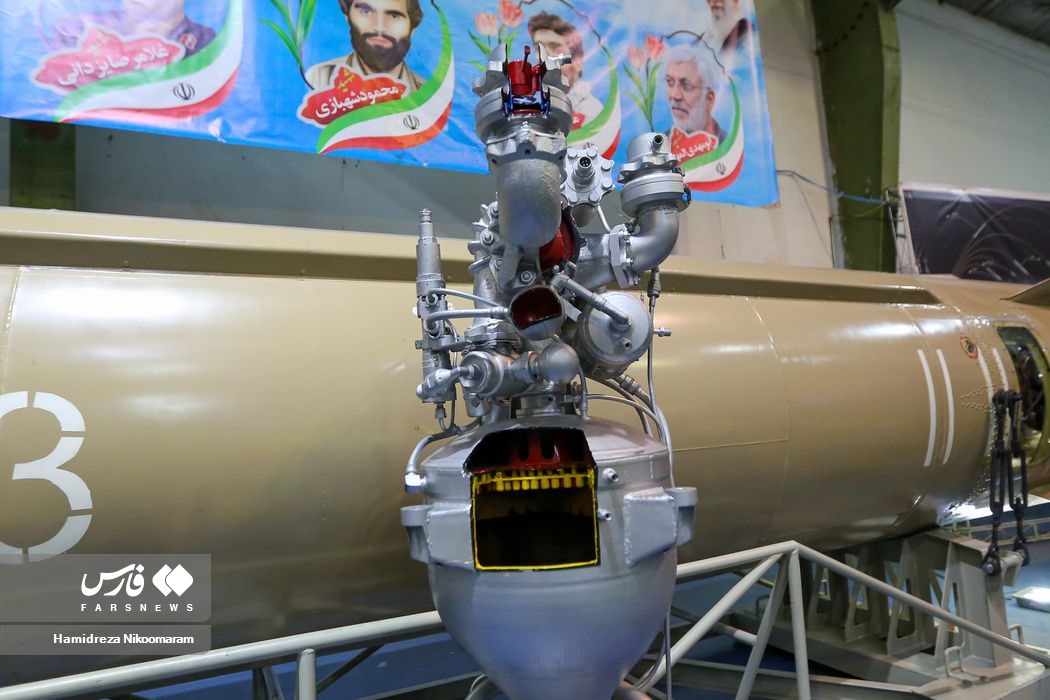
The IRGC’s formal response on April 9 was a masterwork of institutional deniability: “The armed forces of the Islamic Republic of Iran have not launched any missiles at any country during the ceasefire hours until now,” the Guards stated, attributing every post-ceasefire strike to Israeli or American false-flag operations. The statement’s internal logic is revealing — it implicitly acknowledges that missiles were launched while denying that “the armed forces” launched them, a formulation that is either a lie or a confirmation that the IRGC’s central command does not control all of its own units. Both readings validate Pezeshkian’s accusation. If the IRGC is lying, its word is worthless in any agreement. If it genuinely believes its own denial — that attacks came from Iranian military systems but were not centrally ordered — then the mosaic architecture has produced the command fragmentation that makes enforcement impossible, exactly as Jafari designed it to.
The IRGC Aerospace Commander’s April 8 statement that “our hands are on the trigger” and his vow of a “powerful response” to any ceasefire violation completed the institutional contradiction: the same organisation denied conducting post-ceasefire attacks while simultaneously promising to resume them at its own discretion, claiming both innocence and readiness in the same news cycle. Tasnim News, the IRGC-affiliated outlet, reported that Tehran was “assessing the possibility of exiting the deal should the Israeli regime persist in its breaches” — framing a potential exit as reactive rather than premeditated, preserving the option to collapse the agreement while attributing its collapse to the other side.
This is the same institutional playbook the IRGC ran against the JCPOA, where provocative actions created conditions for international pressure that the Guards then cited as evidence of Western bad faith. The Guards’ institutional survival depends on a threat environment that justifies their constitutional prerogatives, their economic empire, and their autonomy from civilian oversight — a ceasefire negotiated by civilians and enforced by Pakistan does not threaten Israel or America, it threatens the IRGC’s domestic position, and the domestic position is the one threat the Guards are structured to defeat. Pezeshkian named Vahidi and Abdollahi on April 4 because naming is what presidents do when the constitution forbids ordering, and the Gulf states absorbing the strikes will keep absorbing them regardless of what text emerges from Islamabad, because the men who command the missiles were not consulted on the ceasefire, do not answer to the men who were, and sit inside a constitutional architecture whose apex — the one office that could reconcile authority with command — has been empty for six weeks, with no mechanism to fill it and no precedent for what happens when it stays that way.
FAQ
Has an Iranian president ever successfully overridden an IRGC military decision?
No Iranian president has reversed an IRGC operational decision through constitutional authority alone. Rafsanjani achieved it in 1988, but only because Khomeini had appointed him acting Commander-in-Chief — a dual-hatted position derived from the Supreme Leader’s authority, not from the presidency. Khatami attempted to restrain the IRGC after the 1999 student protests and received a letter from senior commanders warning him in direct terms that civilian authority did not extend to decisions the Guards considered within their revolutionary mandate — he backed down within days. Ahmadinejad, despite his own IRGC background and hardline credentials, was publicly overruled by the Guards on multiple intelligence and foreign policy appointments during his second term, including his choice of intelligence minister. The constitutional framework does not merely make presidential authority over the IRGC difficult; it makes it structurally impossible, vesting all military command in the Leader’s office and specifically excluding “matters under the Leader’s jurisdiction” from presidential competence.
Could Mojtaba Khamenei reassert control over the IRGC if he recovers?
Even a recovered Mojtaba Khamenei would face institutional obstacles that his father did not. Ali Khamenei spent 35 years building personal relationships with IRGC commanders, rotating appointments to prevent any single commander from consolidating power, and maintaining the intelligence ministry as a civilian counterweight to the Guards’ own intelligence apparatus. Mojtaba inherited the title but not the patronage network — his authority derives from lineage rather than from the decades of carefully managed loyalty and threat that made his father’s commands self-enforcing within the IRGC. The six-week absence has already allowed Vahidi to consolidate institutional positions — the SNSC Secretary appointment, the intelligence minister veto, control over the Islamabad delegation’s mandate — that would each require a separate confrontation to reverse, and the elder Khamenei’s practice of never confronting the IRGC publicly suggests that even he viewed direct institutional conflict with the Guards as a losing proposition.
What would an enforceable ceasefire mechanism require for Iran?
An enforceable mechanism would require either the reconstitution of unified civilian-military command — meaning the appointment of an acting Commander-in-Chief with authority over all 31 provincial corps, something only a functioning Supreme Leader can do under Article 110 — or an external enforcement architecture with the intelligence and military capacity to impose costs on individual corps that violate terms. No mediator has proposed the latter, and no state in the region possesses the intelligence infrastructure to monitor 31 autonomous commands simultaneously across Iranian territory. The JCPOA’s enforcement relied on IAEA inspections of fixed nuclear facilities with known locations; a military ceasefire across a mosaic of autonomous commands with pre-delegated authority, independent weapons stores, and mobile assets would require verification capabilities closer to a full-spectrum peacekeeping operation, deployed in a country that has not consented to foreign military presence since 1979 and whose constitution designates the IRGC as the guardian of the revolution itself.
Why did Pezeshkian confront Taeb rather than Vahidi directly?
Hossein Taeb served as head of IRGC intelligence from 2009 to 2022 and retains influence within the Guards’ internal networks despite his removal — he functions as an intermediary who can carry messages between the presidency and the IRGC command structure without the institutional confrontation that a direct presidential summons of the IRGC commander would represent. The choice of channel is itself diagnostic: a president who believed he could issue orders to the IRGC would not need a retired intelligence chief to relay his objections. Taeb’s intermediary role also suggests that Pezeshkian was attempting to mobilise an internal IRGC faction against Vahidi’s escalation strategy — a political manoeuvre rather than a constitutional one, appealing to intra-Guards rivalries because the institutional authority to discipline commanders is constitutionally located in an office that appears to be vacant.