RIYADH — Saudi Arabia’s Public Investment Fund is in advanced talks to take an anchor stake of roughly $5 billion in SpaceX’s initial public offering — a deal that would make the Kingdom’s sovereign wealth fund the single largest outside investor in what is on track to become the biggest IPO in history. The discussions, first reported by Reuters on April 2, remain fluid and no binding agreement has been reached, but the shape of the negotiation tells a story that extends well beyond capital markets.
The $75 billion offering, targeting a June Nasdaq listing at a valuation above $1.75 trillion, would be the largest IPO on record. The anchor stake is structured in part to prevent dilution of PIF’s existing equity position in SpaceX — a position that traces back through the fund’s $3 billion xAI investment via HUMAIN, the Saudi AI entity, which converted to SpaceX equity after the February 2026 merger.
That a sovereign wealth fund under active Iranian drone and missile attack is directing $5 billion toward a company whose satellite network Tehran has formally designated a “legitimate military target” is not a contradiction. It is the clearest expression yet of how Crown Prince Mohammed bin Salman has collapsed the distinction between financial strategy and national security — and of where Riyadh believes the real balance of power is being forged.
Table of Contents
- How Much Is PIF Investing in SpaceX’s IPO?
- The Musk-Riyadh Nexus: From xAI to Orbit
- Why Has Iran Designated Starlink a Military Target?
- A Wartime Portfolio Reallocation
- The Starshield Dimension
- What Is PIF’s Track Record on IPO Anchoring?
- The Domestic Cost of Offshore Conviction
- What Does the SpaceX Bet Signal About MBS and Sovereign Wealth?
- Valuation Risk at Atmospheric Altitude
- Frequently Asked Questions
How Much Is PIF Investing in SpaceX’s IPO?
SpaceX filed confidentially with the SEC on April 1, 2026, targeting a June Nasdaq listing that would raise roughly $75 billion — dwarfing Saudi Aramco’s 2019 record of $29 billion. At approximately $5 billion, PIF’s proposed anchor would represent roughly 6.7% of the total raise, structured in part to protect the fund’s existing equity from dilution at IPO.
In the architecture of mega-IPOs, an anchor investor of that scale does more than buy shares — it signals to the underwriter syndicate (Bank of America, Citigroup, Goldman Sachs, JPMorgan, and Morgan Stanley are all on the ticket) that the book has a floor. PIF’s participation would give institutional investors a reference point for conviction, particularly given the SpaceX valuation range Bloomberg has placed above $2 trillion.
For PIF, the $5 billion comes atop existing exposure. The fund currently holds slightly under 1% of SpaceX equity, accumulated through a pathway that began not with rockets but with artificial intelligence. In February 2026, HUMAIN — the Saudi government’s AI vehicle, backed by PIF — invested $3 billion in xAI’s Series E round. When SpaceX absorbed xAI the same month in a deal that combined a $1 trillion SpaceX with a $250 billion xAI, HUMAIN’s stake converted to approximately 0.24% of the merged entity. The IPO anchor would consolidate and expand that position.
The Musk-Riyadh Nexus: From xAI to Orbit
The PIF-SpaceX negotiation did not materialize from a cold call. It is the latest node in an accelerating relationship between Elon Musk’s companies and the Saudi state — a relationship that has moved from AI to data infrastructure to satellite communications to, now, a potential equity position in the most valuable private-turned-public company on Earth.
The sequence matters. In November 2025, HUMAIN and xAI announced a joint 500-megawatt data center partnership in Saudi Arabia. In February 2026, HUMAIN’s $3 billion Series E investment made it one of xAI’s largest backers. That same month, Musk merged xAI into SpaceX, describing the combined entity as AI, rockets, and space-based internet folded into a single vertically-integrated company. The merger converted Saudi Arabia’s AI bet into a space bet without Riyadh having to sign a new check.
Starlink had already entered the Saudi regulatory environment. In May 2025, at the Saudi-US Investment Forum in Riyadh, Musk announced that Starlink had been approved for aviation and maritime use in the Kingdom. ARABSAT, the Riyadh-headquartered satellite consortium, had launched its Badr-8 satellite on a SpaceX Falcon 9 in May 2023. The commercial connective tissue was already dense before the IPO discussions began.
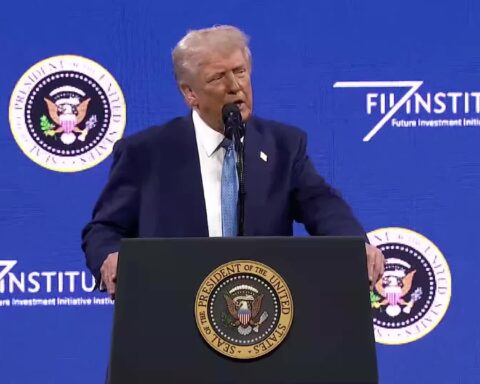
PIF Governor Yasir Al Rumayyan, speaking at the Future Investment Initiative Priority event in Miami on March 26, 2026, framed the fund’s posture in language that gestured toward the SpaceX talks without naming them. The Saudi macroeconomic position, he said, “remains strong, stable and resilient.” PIF, he added, “remains committed to its investments around the world” and wants “to get more and more people to work with us” and “to encourage third-party capital to work with us.” The audience — sovereign fund managers, Wall Street allocators, Gulf family offices — included the institutions that would be deciding whether to follow PIF into the SpaceX book.
Why Has Iran Designated Starlink a Military Target?
Iran’s Fars News Agency formally designated Starlink a “legitimate military target” in March 2026, citing the network’s operational presence across Bahrain, Kuwait, and the UAE. The Islamic Revolutionary Guard Corps has threatened attacks on Musk’s broader business empire, including Tesla, calling US tech companies complicit in the American and Israeli war effort. In April 2026, Iranian state media expanded the threat to the Middle East operations of at least 12 US tech companies.
These are not empty declarations. In January 2026, Iran deployed military-grade RF jamming — likely sourced from Chinese and Russian electronic warfare platforms — that degraded Starlink performance by up to 80% in contested zones. Military.com documented the first confirmed state use of GPS spoofing against commercial satellite internet terminals: Iran broadcast false location data to disable Starlink ground equipment. Iranian security forces physically seized Starlink devices inside the country.
The Iranian campaign against Starlink is, in practical terms, a campaign against the infrastructure PIF is now proposing to buy into at scale. When Tehran says Starlink is a military target, it is designating a network in which Saudi Arabia already holds equity and into which PIF may pour an additional $5 billion. The investment, viewed from Tehran, is not a financial transaction — it is a strategic alignment.
China’s defense commentariat has reached a similar conclusion from a different angle. Chinese state commentary has framed Starlink’s militarization as a development requiring direct countermeasure investment, treating the satellite constellation not as a commercial broadband provider but as dual-use military infrastructure with intelligence, surveillance, and reconnaissance applications. PIF’s anchor position places Saudi capital on one side of that assessment.
A Wartime Portfolio Reallocation
The $5 billion anchor sits inside a PIF portfolio that has undergone a visible wartime restructuring — one that is sending capital offshore to strategic technology positions while simultaneously slashing domestic construction spending.
PIF construction contracts dropped from $71 billion in 2024 to approximately $30 billion in 2025-2026, a decline of nearly 60%. The fund mandated a minimum 20% spending reduction across more than 100 portfolio companies. Investment Minister Khalid Al Falih confirmed a decisive reprioritization: Expo 2030 and FIFA 2034 are now at the top of the domestic funding stack. Everything else — including the giga-projects that defined Vision 2030’s early public identity — has been subordinated.
| Category | 2024 | 2025-2026 | Change |
|---|---|---|---|
| PIF domestic construction contracts | $71B | ~$30B | -58% |
| PIF US equity holdings (peak → rotation) | $23.8B (Q2 2025) | $12.9B (Q4 2025) | -46% |
| xAI/SpaceX investment (via HUMAIN) | $0 | $3B | New position |
| Proposed SpaceX IPO anchor | — | ~$5B | Under negotiation |
| Saudi military budget (annual, wartime) | ~$78B | ~$78B | Sustained |
| PAC-3 MSE missile purchase (DSCA) | — | $9B (730 missiles) | Jan 2026 notification |
The US equity rotation is equally telling. PIF lifted its American stock holdings to $23.8 billion by mid-2025, then cut to $12.9 billion by Q4 2025. But this was not a general withdrawal from US markets. It was a sectoral rebalancing. PIF exited Meta, PayPal, Alibaba, and Shopify — consumer internet and e-commerce plays. It doubled its position in Arm Holdings and opened new stakes in Apple, ASML, and Analog Devices — semiconductor architecture, chip fabrication equipment, and analog signal processing.
The proposed SpaceX anchor accelerates that trajectory. Unlike the consumer internet positions PIF exited, Starlink is 6,000+ satellites providing broadband, maritime communication, aviation connectivity, and — through its classified Starshield variant — military intelligence infrastructure. PIF’s capital is migrating toward companies whose products have direct wartime utility.
The Starshield Dimension
SpaceX’s S-1, when it becomes public, will present the company’s revenue in commercial terms: $16 billion in 2025 Starlink revenue, $7.5 billion in EBITDA, 17 million active subscribers, projections above $22 billion for 2026. These are the figures that will price the IPO. They are also incomplete.
Starshield — SpaceX’s military-grade variant of Starlink — currently serves 54 US military mission partners. Its capabilities include target tracking, optical and radio reconnaissance, and early missile warning. The Pentagon’s Proliferated Low Earth Orbit (PLEO) program, which relies on Starshield infrastructure, saw its contract ceiling grow from $900 million to $13 billion. In January 2026, SpaceX won $739 million to launch five batches of Tranche 2 satellites for the Space Development Agency — 44 satellites forming the tracking layer and fire-control network for missile defense.
For PIF, this dual-use architecture is not a complication — it is the attraction. Saudi Arabia was designated a major non-NATO ally by President Trump on November 19, 2025, the same day the US-Saudi Strategic Defense Agreement was signed — a framework encompassing $142 billion in arms commitments. That designation theoretically opens the door to Saudi participation in programs that use Starshield infrastructure. A $5 billion equity stake in the parent company does not, by itself, grant access to classified military satellite capabilities, but it embeds PIF inside the cap table of the company that builds the missile warning systems the Kingdom currently depends on, at a moment when the Kingdom is purchasing $9 billion in PAC-3 MSE interceptors to defend against the Iranian arsenal targeting its cities.

What Is PIF’s Track Record on IPO Anchoring?
PIF has anchored large IPOs before, and the track record is uneven. The most relevant precedent is Coupang, the South Korean e-commerce company whose 2021 NYSE debut PIF helped anchor. Coupang’s stock declined sharply from its IPO price and has not recovered its listing valuation. The investment became a cautionary reference point within the sovereign wealth community about the risks of anchor positioning in high-valuation IPOs.
The SpaceX situation differs in structure. PIF already holds equity in SpaceX — the anchor is partly an anti-dilution mechanism, not a pure new-money bet. That equity, acquired indirectly through the HUMAIN-xAI-SpaceX chain, would shrink at IPO unless PIF participates in the offering. The $5 billion, in this framing, is partly defensive: maintaining a position PIF has already accumulated rather than building one from scratch.
But the Coupang parallel carries a specific warning. Anchor investors in oversubscribed mega-IPOs often accept lockup periods that prevent them from selling during early post-IPO volatility. If SpaceX lists at a $1.75-$2 trillion valuation and the market reprices downward — as happened with many 2021-era tech IPOs — PIF would be holding a large, illiquid position in a declining asset. At $930 billion in assets under management, PIF can absorb a $5 billion markdown. Whether it can absorb the optics of a wartime sovereign fund losing money on a trophy US tech IPO is a different question.
The Domestic Cost of Offshore Conviction
The Tadawul tells its own story. The TASI index has declined 13.88% over the past 12 months. Goldman Sachs published a wartime scenario projecting Saudi GDP at -3.0% if the Iran conflict persists through end of April 2026. Aramco has cut dividends by approximately $40 billion for 2025, directly reducing PIF’s domestic funding capacity. The fiscal deficit is widening as oil export volumes and prices compress simultaneously — what analysts have called the double compression of Hormuz disruption and global tariff pressure.
Against this backdrop, a $5 billion commitment to a US tech IPO carries domestic political weight. Saudi contractors who saw their PIF-backed construction pipelines collapse by 60% are unlikely to view the SpaceX anchor as abstract portfolio theory. The 20% spending reduction across 100-plus PIF portfolio companies has triggered layoffs, project delays, and a visible slowdown in the giga-project ecosystem that was supposed to be the physical manifestation of Vision 2030.
Al Rumayyan’s Miami messaging — stability, resilience, commitment to global investments — is calibrated for an international audience. The domestic audience receives it differently. When PIF can find $5 billion for Elon Musk’s rocket company but has cut NEOM and Red Sea Global budgets to the bone, the implicit message is that MBS has made a judgment about where returns — strategic and financial — are more likely to materialize. That judgment may be correct. The Saudi contractors whose construction pipelines shrank by 60% between 2024 and 2026 are not yet persuaded.
We want to get more and more people to work with us… to encourage third-party capital to work with us.
Yasir Al Rumayyan, Governor of PIF, FII Priority Miami, March 26, 2026
What Does the SpaceX Bet Signal About MBS and Sovereign Wealth?
The SpaceX anchor, if completed, would represent the culmination of a doctrinal shift that has been visible in PIF’s behavior for at least 18 months: the treatment of sovereign wealth as a national security instrument rather than a purely financial one. MBS has used PIF to buy influence before — the $3.5 billion SoftBank Vision Fund commitment, the Lucid Motors stake, the $45 billion SoftBank technology fund. SpaceX sits at a different intersection: commercial revenue, military infrastructure, and a founder who has become Washington’s most prominent defense-adjacent entrepreneur.
HUMAIN’s $3 billion xAI investment gave Saudi Arabia proximity to the frontier AI company. When xAI merged into SpaceX, Saudi capital moved with it — into the company that operates the world’s dominant satellite internet constellation, the only reusable orbital launch system, and a classified military satellite network serving 54 US defense mission partners. The proposed anchor would convert that accumulated indirect exposure into a direct, publicly listed position in the combined entity.
This is happening while Iran is firing missiles at Saudi territory. The hedge-against-Washington strategy that characterized MBS’s earlier foreign policy — the BRICS flirtation, the China-brokered Iran detente, the studied distance from American partisan politics — has been replaced, under wartime pressure, by a deep integration into the Musk ecosystem specifically and the US defense-industrial base generally. The $142 billion US-Saudi arms framework, the major non-NATO ally designation, the $9 billion PAC-3 purchase, and now the SpaceX anchor form a single pattern.
| Date | Event | Amount / Terms |
|---|---|---|
| May 2023 | ARABSAT launches Badr-8 on Falcon 9 | Commercial launch contract |
| Nov 2025 | HUMAIN-xAI 500MW data center partnership | Joint venture, Saudi Arabia |
| May 2025 | Starlink approved for Saudi aviation/maritime | Regulatory authorization |
| Feb 2026 | HUMAIN invests in xAI Series E | $3B |
| Feb 2026 | SpaceX absorbs xAI; HUMAIN stake converts | ~0.24% of combined SpaceX |
| Apr 2026 | PIF-SpaceX IPO anchor talks (ongoing) | ~$5B (under negotiation) |
The Iranian dimension sharpens the reading. Tehran’s formal designation of Starlink as a military target, its deployment of jamming systems that degrade Starlink by up to 80%, and its threats against Musk’s companies in the Middle East all treat the Starlink constellation as enemy infrastructure. PIF’s proposed $5 billion investment ratifies that framing from the opposite direction — Saudi sovereign capital is buying into the system Iran is trying to destroy. In the grammar of this war, the IPO anchor is a weapons procurement decision dressed in financial clothing.
Valuation Risk at Atmospheric Altitude
SpaceX’s targeted valuation — above $1.75 trillion, with Bloomberg reporting above $2 trillion — would make it the sixth most valuable company on Earth at listing. The $75 billion raise would be nearly three times Saudi Aramco’s 2019 record. At $16 billion in 2025 revenue, a $1.75 trillion valuation implies a price-to-revenue multiple above 100x. Even at $22 billion in projected 2026 revenue, the multiple remains stratospheric by any traditional measure.
SpaceX’s defenders point to the uniqueness of the asset: the only company with a reusable orbital launch system, a 17-million-subscriber satellite internet business, $22 billion in federal contracts, and — after the xAI merger — a frontier AI platform. There is no comparable publicly traded entity. The valuation reflects the absence of competition as much as the presence of revenue.
For PIF, the risk is compounded by the size of the position. A $5 billion anchor in a $75 billion IPO, combined with the existing sub-1% stake, would create a total SpaceX exposure that ranks among PIF’s largest single-name positions globally. In a fund managing $930 billion, $5-8 billion in a single equity is not existentially risky. But sovereign wealth funds are judged by their worst outcomes, not their best — and a high-profile loss on the world’s largest IPO, during a war, would provide ammunition to every critic of MBS’s investment philosophy.
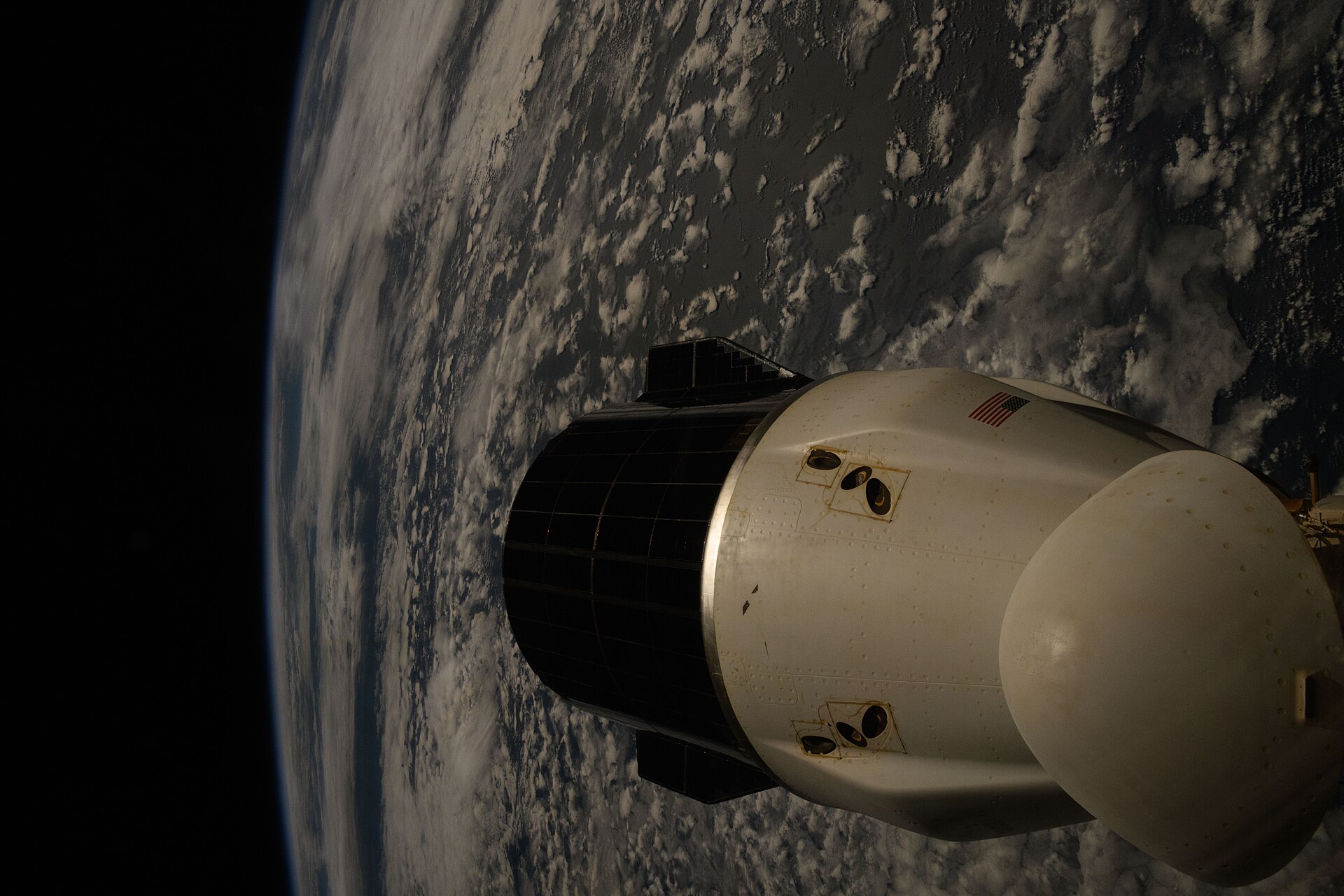
The underwriter syndicate will manage the book-building process through late spring 2026. PIF’s anchor commitment, if confirmed, would be established before the roadshow begins, giving the banks a demand signal that de-risks the pricing conversation. Whether that signal benefits PIF as much as it benefits SpaceX is the question anchor investors always face — the company gets price validation; the anchor gets lockup restrictions.
The most ambitious, vertically-integrated innovation engine on (and off) Earth, with AI, rockets, space-based internet.
Elon Musk, on the xAI-SpaceX merger, February 3, 2026
Al Rumayyan’s “strong, stable and resilient” language in Miami was delivered on March 26, 2026, while Saudi equity markets were down 13.88% over the prior twelve months. The SpaceX IPO is scheduled for June. The two timelines will run in parallel.
PIF’s portfolio evolution — from consumer internet stocks to semiconductor infrastructure, from domestic giga-projects to offshore strategic technology, from passive minority stakes to active IPO anchoring in dual-use defense companies — traces a coherent arc that ends, for now, with SpaceX. The market will deliver its verdict in June. The war is on a different schedule.
Frequently Asked Questions
When is SpaceX expected to go public?
SpaceX filed confidentially with the SEC on April 1, 2026, and is targeting a June 2026 listing on the Nasdaq. The public S-1 filing is anticipated in late April or May 2026, followed by an investor roadshow. The five underwriters — Bank of America, Citigroup, Goldman Sachs, JPMorgan, and Morgan Stanley — are managing the offering, which at $75 billion would be the largest IPO in history, exceeding Alibaba’s 2014 and Aramco’s 2019 records combined.
How does PIF’s SpaceX interest connect to the HUMAIN AI investment?
HUMAIN, the Saudi government’s AI entity backed by PIF, invested $3 billion in xAI’s Series E in February 2026. When SpaceX absorbed xAI that same month — combining a $1 trillion SpaceX with a $250 billion xAI — HUMAIN’s stake automatically converted to approximately 0.24% of the merged company. The proposed $5 billion IPO anchor would expand this position and prevent dilution, creating a total PIF-linked SpaceX exposure potentially exceeding $8 billion across the HUMAIN and direct PIF channels.
What does Saudi Arabia’s major non-NATO ally designation mean for Starshield access?
The major non-NATO ally designation, granted by President Trump on November 19, 2025, gives Saudi Arabia preferential access to US defense equipment and training programs, and theoretically broadens eligibility for co-production and technology transfer arrangements. However, MNNA status does not automatically authorize access to classified satellite capabilities like Starshield — that requires separate government-to-government agreements under the International Traffic in Arms Regulations framework. An equity stake in SpaceX carries no direct ITAR clearance.
How long would PIF be locked up after the SpaceX IPO?
Anchor investors in major IPOs typically accept lockup periods of 90 to 180 days, during which they cannot sell shares regardless of price movements. At the scale PIF is contemplating — a combined position of up to $8 billion including the existing HUMAIN-derived stake — a six-month lockup would prevent any exit if SpaceX’s stock declines sharply from its listing price, replicating the mechanism that made the Coupang investment painful. The lockup duration for the SpaceX offering has not been publicly disclosed and will be specified in the final underwriting agreement.
What happened to PIF’s previous major IPO anchor investment?
PIF’s most comparable precedent is its anchor role in Coupang’s 2021 NYSE IPO, the South Korean e-commerce giant. Coupang raised approximately $4.6 billion at a $60 per share offering price; the stock traded below $15 within eighteen months and has not recovered. Within the sovereign wealth community, the investment is cited as evidence that guaranteed allocation in a hot IPO does not protect against post-listing repricing, particularly when the anchor is locked up during the decline. The SpaceX situation differs structurally — PIF already holds equity and the anchor partly prevents dilution — but the mechanism of risk is the same.