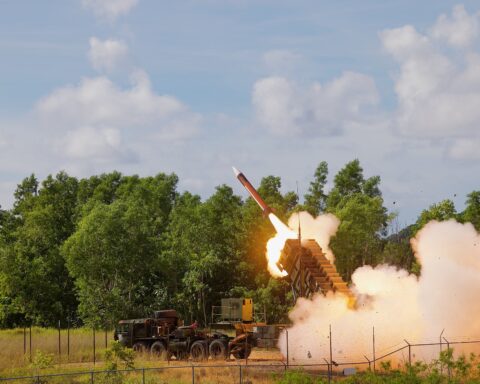
WASHINGTON — Poland has publicly rejected a US request to transfer one of its two operational Patriot PAC-3 batteries to the Middle East, closing the most direct NATO resupply route available to Gulf states running dangerously low on air defense interceptors after 35 days of Iranian strikes. Defense Minister Wladyslaw Kosiniak-Kamysz announced the refusal on March 31, 2026, making Poland the only NATO ally to put its rejection on the public record.
The refusal removes approximately 200 PAC-3 MSE interceptors from the pool of assets Washington could redirect to Saudi Arabia, where stockpiles have fallen to roughly 400 rounds — 14% of Saudi Arabia’s own pre-war stock of approximately 2,800 PAC-3 MSE interceptors, according to prior House of Saud reporting. At current intercept rates, according to analysts at the Center for New American Security, Poland’s inventory would have provided Saudi air defenses with two to three additional weeks of capacity. That bridge is now closed, and no comparable NATO source remains available.
Table of Contents
What Poland Refused and Why
Kosiniak-Kamysz left no ambiguity in his public statement. “Our Patriot batteries and their armament serve to secure Polish skies and NATO’s eastern flank,” he told reporters on March 31. “Nothing is changing in this field, and we do not plan to move them anywhere.”
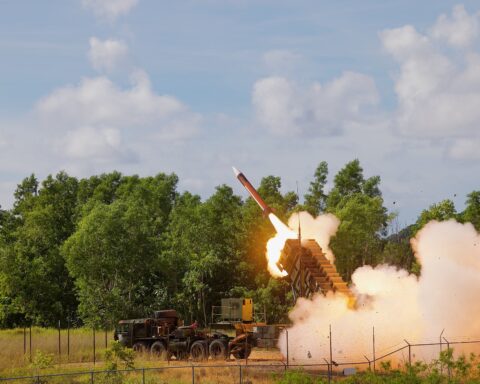
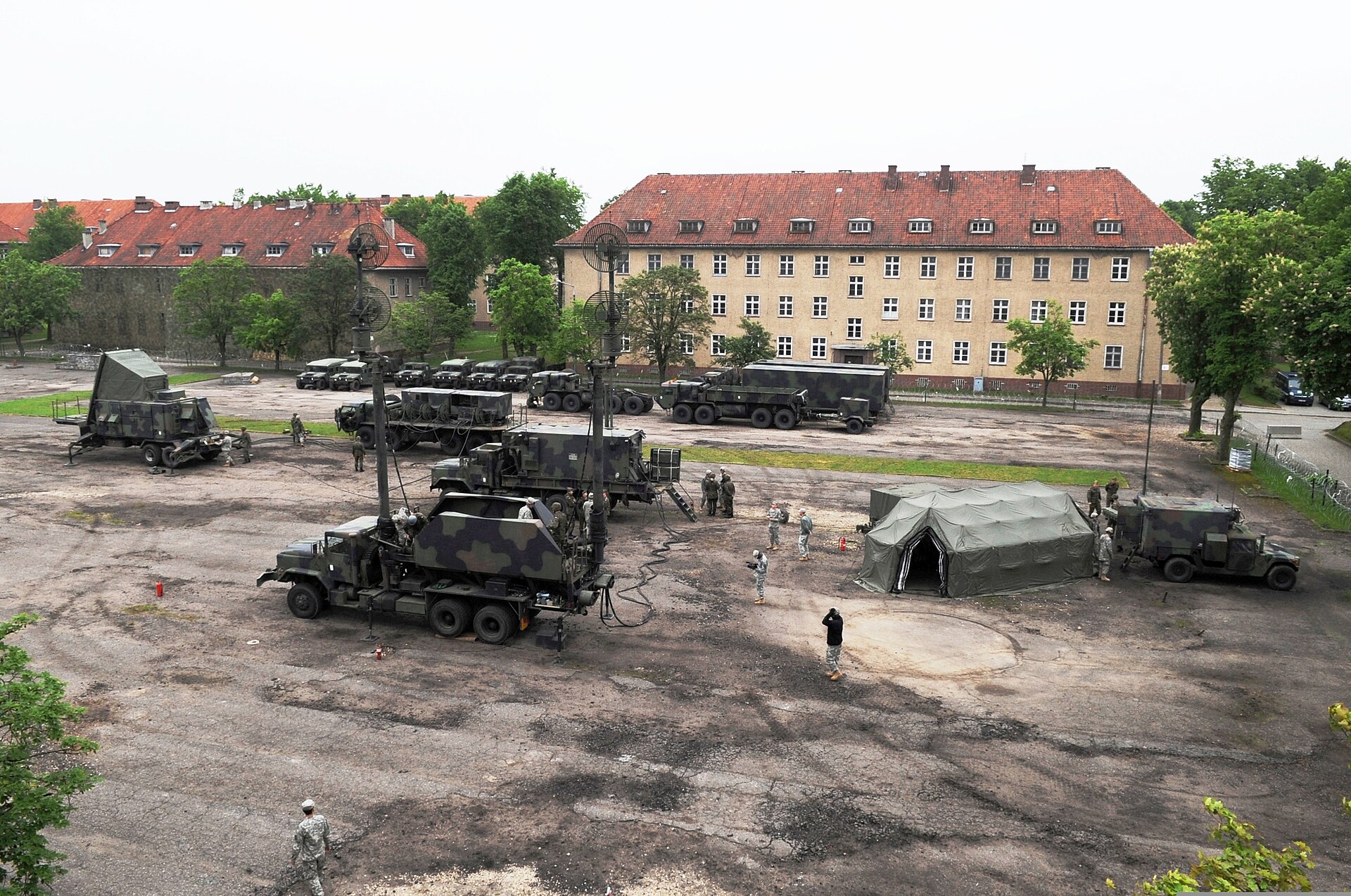
Poland operates exactly two Configuration 3+ Patriot batteries under the WISLA Phase 1 program, a $4.75 billion acquisition signed in 2018. The batteries comprise 16 launchers deployed with the 37th Air Defense Missile Squadron in Sochaczew, west of Warsaw. In December 2025, Poland declared them fully operationally ready — the first NATO ally to fully operationalize the Integrated Battle Command System (IBCS), the latest-generation Patriot fire control architecture.
Four months later, Washington asked Warsaw to send one of those batteries to the Gulf. Defense Ministry spokesman Janusz Sejmej stated that “the Americans are not pressuring us in any way on these matters,” while Chief of General Staff Wieslaw Kukula went further, dismissing the reports entirely and declaring “no one is asking for it.” Kosiniak-Kamysz added a second public statement reinforcing his original refusal: “Our allies know well and understand how important are our tasks here.”
The layered denials — from the defense minister, the military chief, and the ministry spokesman — follow a pattern recognizable in NATO alliance management. Warsaw made its position clear at every institutional level while leaving Washington room to deny the request was ever formally made.
The Informal Channel That Failed
The story broke through Rzeczpospolita, a Polish daily, which reported that Washington had requested both a battery transfer and the release of PAC-3 MSE interceptors from Polish military stockpiles for Gulf nations depleted by Iranian attacks. Politico subsequently reported that the US had asked multiple NATO allies to deploy Patriot batteries to the Middle East. Poland was the most explicit in its rejection.
Polish presidential aide Zbigniew Bogucki confirmed there had been “no formal request from Washington” — a distinction that matters. The US approached Poland through informal governmental channels, not through a formal diplomatic or NATO request. This allowed both sides to characterize the exchange differently: Washington could maintain it never formally asked; Warsaw could maintain it formally refused.
The informal channel contrasts with how the one successful PAC-3 transfer to the Gulf region was arranged. Greece — the bilateral architecture behind whose intercepts has been documented separately — negotiated a direct bilateral arrangement in which Saudi Arabia funded the PAC-3 MSE system upgrade. Poland received no comparable financial offer from Riyadh. The US-coordinated track, which bypassed direct Saudi-to-ally bilateral funding, produced a refusal. The bilateral track, which put Saudi money on the table, produced a transfer.
How Fast Are Saudi Air Defense Stocks Depleting?
GCC states collectively fired approximately 2,400 interceptors — primarily PAC-3 and GEM-T variants — in the 35 days since hostilities began on February 28, 2026. The pre-conflict combined GCC stockpile stood at approximately 2,800 units. That represents 85% depletion in just over a month, according to reporting by Defense News and Bloomberg.
Saudi Arabia’s own PAC-3 MSE stock has fallen to approximately 400 rounds. The Saudi Ministry of Defense reported intercepting 575 drones and 49 ballistic missiles as of March 24 alone. Under the standard “shoot-shoot-look” employment doctrine — which requires a minimum of two interceptors per inbound threat — those 624 engagements consumed at minimum 1,248 interceptors from Saudi batteries, with additional rounds expended in failed or repeat engagements. The intercept of seven Iranian missiles over Riyadh on April 5 continued to draw down reserves that are not being replenished.
Iran’s attack tempo has accelerated, reaching approximately 40 missiles per day during March 28-30 — roughly double the earlier daily average. Since February 28, Iran has launched approximately 1,200 ballistic missiles and 4,000 Shahed-class drones at GCC targets, a combined volume that has tested Gulf air defenses at a pace no pre-war planning assumed.
| Metric | Figure | Source |
|---|---|---|
| Pre-war GCC interceptor stockpile (PAC-3 + GEM-T) | ~2,800 | Defense News / Bloomberg |
| Interceptors fired through April 4 | ~2,400 | Defense News / Bloomberg |
| GCC depletion rate | 85% in 35 days | Calculated |
| Saudi PAC-3 MSE remaining | ~400 rounds | houseofsaud.com prior reporting |
| Saudi PAC-3 MSE remaining (% of pre-war) | ~14% | houseofsaud.com prior reporting |
| Iran ballistic missiles launched | ~1,200 | Defense News |
| Iran Shahed-class drones launched | ~4,000 | Defense News |
| Peak Iranian missile tempo (March 28-30) | 40/day | Defense News |
Analysts at the Center for New American Security assessed that the intercept pace at current Operation Epic Fury levels “could not continue indefinitely” and “perhaps could not continue for more than several weeks.” Poland’s 200 PAC-3 MSE interceptors — roughly the number at stake in the refused transfer — would have extended that timeline by approximately two to three weeks at current Saudi burn rates. They would not have solved the depletion problem. They would have bought time.
The Production Timeline Gap
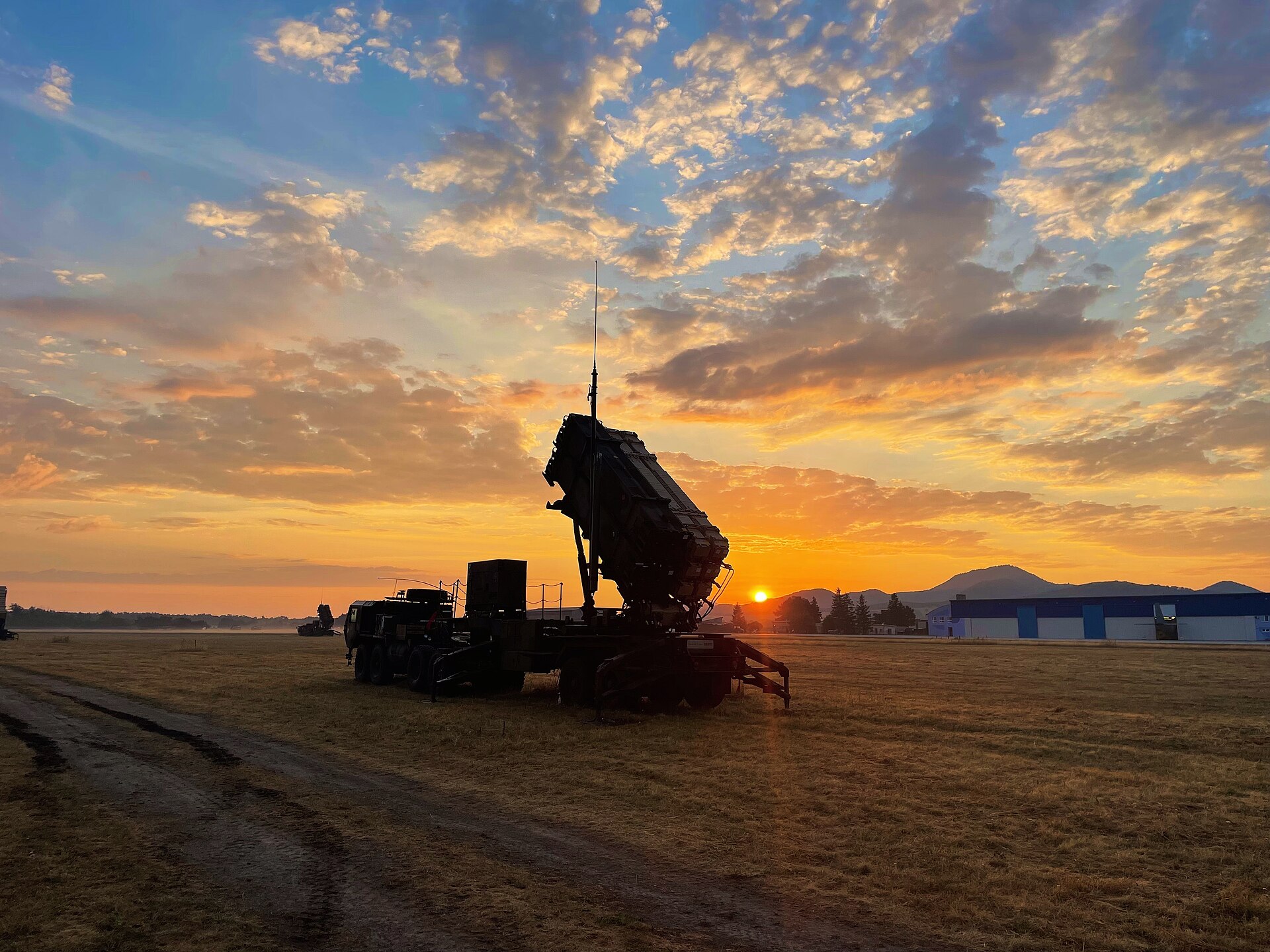
Lockheed Martin’s Camden, Arkansas facility — the sole US manufacturer of PAC-3 MSE interceptors — produced 620 rounds in 2025, a 20% increase over 2024 output. Under a framework agreement signed January 6, 2026, production is scheduled to ramp to 2,000 interceptors per year. That target will not be reached until the end of 2030.
The arithmetic of the gap is straightforward. The GCC has consumed 2,400 interceptors in 35 days. At 620 per year, replacing them takes 3.9 years of total Camden output — assuming no other customer receives a single round. At the post-2030 target of 2,000 per year, replacement still requires 14 months. Saudi Arabia’s own 400 remaining rounds would be exhausted in days, not months, if Iran sustains its March 28-30 tempo of 40 daily missile launches, each requiring a two-interceptor engagement.
The US Defense Security Cooperation Agency (DSCA) approved a $9 billion sale of 730 PAC-3 MSE interceptors to Saudi Arabia on January 30, 2026 — 29 days before the conflict began. Those 730 rounds are new-build units in the future production queue. They will not arrive from existing stockpiles. They will be manufactured at Camden on a production line that currently produces 620 per year for all customers worldwide.
THAAD interceptors face a similar constraint. Production stands at 96 units per year, per the Missile Defense Agency’s 2025 annual report, with a framework agreement signed January 29, 2026, targeting a ramp to 400 per year. Saudi Arabia’s 2017 THAAD deal covered 360 interceptors total; that inventory has been drawn down by weeks of engagements against Iranian medium-range ballistic missiles. The debris-field engagements at Al-Kharj documented how even successful intercepts consume inventory at rates the production base cannot match.
NATO’s Broader Refusal Pattern
Poland’s rejection does not stand alone. The US had already shifted Patriot missiles from Europe to the Middle East prior to the Polish refusal, leaving documented air defense gaps on NATO’s eastern flank — gaps that made remaining European NATO allies less willing to part with their own inventory.
Germany led a coalition effort that assembled only 35 PAC-3 interceptors for Ukraine across all European partners as of March 2026, per NATO logistics reporting — a figure that illustrates how thin European holdings are. The Netherlands, Romania, and Spain hold smaller inventories. All have signaled resistance to Middle East redeployment. Beyond Patriot systems, the refusal pattern extends across the alliance: France closed airspace to US military supply flights to Israel; Spain closed airspace to US military flights; Italy denied US bombers access to Sicilian bases; the United Kingdom restricted US bombers to defensive missions only; Germany declined naval coalition participation.
Poland’s refusal is distinct from these actions because it involves a direct bilateral hardware request — not an airspace or basing dispute, but a demand to physically relocate operational air defense batteries from one theater to another. Secretary of State Marco Rubio’s comment in late March — “We have to re-examine the value of NATO and that alliance for our country” — preceded the Polish refusal by days and may have hardened Warsaw’s calculation that compliance would earn no lasting goodwill from an administration already questioning the alliance’s value.
Poland’s WISLA Phase 2, covering six additional Patriot batteries and approximately 644 PAC-3 MSE interceptors, was signed in 2022 for $15 billion. Deliveries begin in 2027. Warsaw is not going to deplete its only two operational batteries while waiting two years for replacements, particularly when Russia maintains military forces in Belarus and Kaliningrad on Polish borders. Poland deployed both batteries to Sochaczew for one reason — Russia — and will not move them for a Gulf war it has no treaty obligation to fight.
| Phase | Cost | Batteries | PAC-3 MSE Interceptors | Status |
|---|---|---|---|---|
| Phase 1 | $4.75 billion | 2 | ~200 | Operational (December 2025) |
| Phase 2 | $15 billion | 6 | ~644 | Delivery begins 2027 |
| Total | $19.75 billion | 8 | ~844 | Full delivery by 2029 |
Tehran and Moscow Read the Signal
Iran’s IRGC-affiliated Mehr News Agency released a map in late March showing power plants across the UAE, Saudi Arabia, Qatar, and Kuwait that could be targeted by Iranian strikes — a signal that any additional allied military hardware transferred to the Gulf faces an explicit targeting threat. The map publication coincided with the broader NATO debate over air defense redeployment, and Iranian authorities have framed NATO involvement in Gulf defense as an extension of the conflict they intend to sustain.
Russian sources told TASS that “NATO is experiencing an air defense shortage,” treating the Polish refusal as a validating signal for Moscow’s broader thesis that Western alliance cohesion cannot survive simultaneous pressure on the European and Middle Eastern fronts. For Russia, every Patriot battery that stays on the eastern flank is one less battery available to Ukraine or the Gulf — but it also represents a Polish government that prioritizes the Russian threat above Washington’s requests, which Moscow reads as evidence that US alliance management is fracturing.
The adversary logic is not complicated. Iran launched approximately 1,200 ballistic missiles in 35 days and has watched air defense debris cause collateral damage at industrial sites across the Gulf. Every interceptor fired is one that cannot be replaced for years. Every NATO refusal to resupply means the depletion rate runs closer to terminal. Tehran does not need to overwhelm Saudi air defenses in a single salvo. It needs to sustain launch tempo until the interceptor stockpile is functionally exhausted.
What Resupply Options Remain for Saudi Arabia?
With Poland’s refusal, the field of near-term resupply options has narrowed to a short list. The Greek bilateral track — in which Saudi Arabia funded the PAC-3 MSE upgrade directly — remains the only model that has produced an actual transfer during the conflict. Replicating it requires finding another NATO ally with Patriot inventory and the willingness to enter a bilateral financial arrangement with Riyadh outside the US-coordinated formal channel.
The DSCA-approved sale of 730 PAC-3 MSE interceptors is real but distant. Those rounds enter a production queue at Camden behind existing orders from the US military, Poland’s Phase 2 deliveries, and other foreign military sales. At 620 rounds per year, the full Saudi order requires more than a year of dedicated production — and Camden does not produce for one customer at a time.
US stockpile transfers remain theoretically possible but politically constrained. The US has already moved Patriot assets from Europe to the Middle East, drawing criticism from NATO allies who see their own security degraded. Further drawdowns risk leaving US forces in Europe below readiness thresholds that the Pentagon has not publicly disclosed but that Congress monitors closely. The Yanbu pipeline bypass reduced some economic pressure on the kingdom, but it does not reduce the physical demand for interceptors over Riyadh, Dhahran, and Jubail.
South Korea and Japan both operate Patriot systems but have shown no indication of willingness to transfer interceptors to the Gulf. Taiwan, another PAC-3 operator, is excluded by geography and political constraints. Israel has drawn down its own air defense stocks and is a net consumer, not a supplier. The practical universe of PAC-3 MSE sources outside the Camden production line is small, and Poland just removed itself from it.
FAQ
Could the US override Poland’s refusal and order a NATO-wide redeployment of Patriot batteries?
No. NATO has no mechanism to compel a member state to transfer nationally owned defense assets to another theater. Patriot batteries purchased through Foreign Military Sales belong to the buying nation. The Supreme Allied Commander Europe (SACEUR) can request force contributions, but approval requires national consent. Even under Article 5 invocations, which do not apply to the Iran-Gulf conflict, NATO members determine their own contributions. The US could apply economic or diplomatic pressure — linking future arms sales, military aid, or trade access to compliance — but any such coercion would risk a broader alliance rupture at a time when Washington is already questioning NATO’s value publicly.
Does Poland’s refusal affect its relationship with the United States on future arms deals?
Poland has approximately $30 billion in pending US defense procurement, including WISLA Phase 2 ($15 billion for six additional Patriot batteries), 96 AH-64E Apache helicopters ($12 billion), and HIMARS rocket systems. The Polish government has framed its refusal as consistent with NATO obligations — defending the eastern flank — rather than as opposition to US policy. Washington’s leverage is limited because Poland is simultaneously the largest European buyer of US defense equipment and the NATO ally most exposed to Russian military proximity. Penalizing Warsaw risks pushing Poland toward European defense alternatives, including the Franco-German ASTER-30 system, which Poland evaluated before selecting Patriot in 2018.
Are there non-Patriot air defense systems that could fill the Saudi interceptor gap?
Saudi Arabia operates THAAD for higher-altitude ballistic missile threats, but THAAD interceptor production is even more constrained — 96 per year, scaling to 400 only under a January 2026 framework agreement. The kingdom also operates older Hawk and Shahine systems, which lack the capability to engage modern Iranian ballistic missiles. South Korea’s KM-SAM (Cheongung) and Israel’s David’s Sling are medium-range systems that could theoretically supplement Patriot, but neither has been offered to Saudi Arabia, and integration with existing Saudi battle management systems would require months of technical work. The European SAMP/T (MAMBA) system uses ASTER-30 interceptors manufactured by MBDA — a separate production line from Camden — but France and Italy, the primary operators, have both signaled opposition to Gulf involvement.
How many PAC-3 MSE interceptors exist worldwide outside of US military stocks?
Precise allied inventories are classified, but open-source estimates place the combined non-US PAC-3 MSE inventory at approximately 1,500 to 2,000 rounds spread across 10 operator nations: Saudi Arabia, UAE, Qatar, Kuwait, Poland, Germany, the Netherlands, Romania, South Korea, and Japan. Taiwan and Sweden operate older PAC-3 variants. Prior to the conflict, the GCC states held the majority of non-US PAC-3 MSE stocks. With GCC inventories 85% depleted, the global non-US pool outside East Asia has contracted to European holdings — which Germany’s 35-interceptor coalition contribution to Ukraine revealed to be far thinner than official force posture documents suggested.
What is the “shoot-shoot-look” doctrine and why does it double interceptor consumption?
Standard Patriot employment doctrine fires two interceptors at each inbound threat in rapid succession, then evaluates whether the target was destroyed before deciding whether to fire again. This “shoot-shoot-look” protocol exists because single-interceptor probability of kill against ballistic missiles is approximately 70-80%, while a two-interceptor engagement raises cumulative kill probability above 95%. The doctrine means that every single Iranian ballistic missile that enters a Patriot battery’s engagement zone consumes at minimum two PAC-3 MSE rounds, regardless of whether the first interceptor achieves a kill. Against drone threats, some operators have shifted to single-interceptor engagements to conserve stocks, accepting higher leakage rates in exchange for extending inventory life — a trade-off that carries particular risk over population centers during the Hajj season.