
WASHINGTON — Ten anonymous cryptocurrency wallets appeared on the prediction market platform Polymarket on Sunday, wagering a combined $160,000 that the United States and Iran would reach a ceasefire by the end of March — hours before President Donald Trump announced he was postponing strikes on Iranian energy infrastructure and claimed to be engaged in “productive conversations” with Tehran. The wallets had no prior transaction history, were created at the same time, and have since accumulated more than $300,000 in unrealized gains, according to on-chain data reviewed by CoinDesk and Investing.com. The bets have triggered fresh scrutiny from US lawmakers and regulatory officials already investigating whether prediction markets have become a vehicle for insider trading on matters of war and peace — with direct implications for the oil markets on which Saudi Arabia’s wartime economy now depends.
Iran’s Foreign Ministry denied on Monday that any negotiations had taken place. Parliament Speaker Mohammad Bagher Ghalibaf called Trump’s claims “fake news” designed to “manipulate the financial and oil markets and escape the quagmire in which the US and Israel are trapped,” according to Al Jazeera. Whether the denial is credible or not, someone with access to Polymarket believed a ceasefire was imminent enough to wager six figures on it — and the oil market moved $25 per barrel in a single session as a result, the largest single-day drop since the Iran war began.
Table of Contents
- What Did the Polymarket Ceasefire Bets Show?
- How Did Oil and Equity Markets React?
- Who Has Profited From Previous Iran War Bets on Polymarket?
- Israeli Authorities File First Criminal Charges Linked to Prediction Market Intelligence
- US Lawmakers Push for Prediction Market Regulation
- What Do Prediction Market Bets Mean for Saudi Arabia and the Gulf?
- Prediction Markets and the New Intelligence Economy
- Frequently Asked Questions
What Did the Polymarket Ceasefire Bets Show?
Ten wallets appeared on Polymarket’s US-Iran ceasefire contract on Sunday, March 22, placing bets totalling $160,000 that the war would end by March 31. The potential payout exceeded $1,000,000, according to CoinDesk’s Crypto Daybook Americas report published on March 23. None of the wallets had any prior transaction history. All ten were created at the same time, a pattern consistent with a single entity distributing capital across multiple accounts to avoid detection thresholds.
By Monday afternoon, after Trump posted on Truth Social that the United States had reached “major points of agreement” with Iran and that his son-in-law Jared Kushner and special envoy Steve Witkoff had participated in talks with “a top person” in Tehran, the prediction market positions from those ten accounts had increased by more than $300,000 in unrealized gains, Investing.com reported.
The timing raised immediate questions. The bets were placed before Trump made any public statement. They were placed before any news outlet reported on the existence of talks. And they were placed on a specific, high-confidence outcome — a ceasefire within days — rather than hedged across multiple timeframes, a betting pattern that on-chain analytics firms associate with informed positioning rather than speculative gambling.
| Date/Time (ET) | Event | Source |
|---|---|---|
| Sunday, March 22 | 10 anonymous wallets place $160,000 in ceasefire bets | CoinDesk |
| Sunday evening | Kushner and Witkoff reportedly in contact with Iranian parliament speaker Ghalibaf | Axios |
| Monday morning, March 23 | Trump posts on Truth Social claiming “productive conversations” with Iran | Washington Post |
| Monday morning | Trump announces 5-day pause on strikes against Iranian energy infrastructure | Bloomberg |
| Monday morning | Iran denies any negotiations have taken place | Al Jazeera |
| Monday afternoon | Polymarket ceasefire positions gain $300,000+ in unrealized value | Investing.com |
| Monday close | Brent crude falls 13% to just above $100/barrel from $113 intraday high | Euronews |
Polymarket operates on the Polygon blockchain, where all transactions are publicly visible. The platform allows users to buy and sell shares in the outcome of real-world events, with shares priced between $0 and $1. A ceasefire contract trading at $0.08 means the market assigns an 8 percent probability to the event occurring. If the ceasefire happens, each share pays $1. The ten wallets purchased shares at low prices, maximising the potential return — a strategy that only makes sense if the buyer has reason to believe the probability is significantly higher than the market’s assessment.

How Did Oil and Equity Markets React?
The financial impact was immediate and dramatic. Brent crude, which had been trading above $113 per barrel on Monday morning as Trump’s 48-hour Hormuz ultimatum expired, fell more than 13 percent to just above $100 by the close — the largest single-day crude oil drop since the Iran war began on February 28, according to Euronews.
West Texas Intermediate dropped below $89 per barrel, down from above $100 earlier the same day. US stock futures rallied. The dollar fell against other major currencies. The Saudi Tadawul exchange, which had reopened on Sunday after an eight-day closure, saw its early gains erased as traders recalculated the probability of a ceasefire that would reopen the Strait of Hormuz and crash oil prices further.
Morgan Stanley analysts noted in a research report published March 22 that every $10 decline in oil prices translates to approximately $35 billion in lost annual revenue for Saudi Arabia. The 13 percent drop on March 23 — triggered in part by ceasefire speculation that may have originated with a handful of anonymous prediction market accounts — represented a potential $45 billion annual revenue swing for the Kingdom if sustained.
The episode illustrated a feedback loop that regulators have struggled to address: prediction market bets, potentially informed by insider knowledge, can shape the narrative around geopolitical events, which in turn moves commodity and equity markets worth trillions of dollars. A $160,000 bet on Polymarket may have contributed to conditions that moved $25 per barrel in crude oil prices.
No negotiations have been held with the US. Trump is trying to manipulate the financial and oil markets and escape the quagmire in which the US and Israel are trapped.
Mohammad Bagher Ghalibaf, Speaker of the Iranian Parliament, March 23, 2026
Who Has Profited From Previous Iran War Bets on Polymarket?
The March 22 ceasefire bets are the latest in a pattern of suspicious trading activity on prediction markets since the Iran war began on February 28. The scale of wartime betting has been unprecedented. Polymarket has processed more than $529 million in bets on the question of whether the United States would strike Iran, making it one of the platform’s largest contracts ever, CoinDesk reported. A separate contract on Ayatollah Ali Khamenei leaving power by March 31 attracted $45 million in volume. Total Iran-related wagering across Polymarket and rival platform Kalshi has exceeded $1 billion, according to CNBC.
The most prominent case involved an account trading under the username “Magamyman,” which made more than $553,000 betting on Khamenei’s death before the Israeli strike that killed him on the opening night of the war, NPR reported on March 1. The account had placed a $7,600 bet on the US striking Iran by February 28 and an $11,283 bet on a strike by March 1, winning over $85,000 on those two bets alone. The same account subsequently bet $8,005 on a ceasefire by March 31 and an additional $15,614 on a ceasefire by April 15.
On-chain analytics firm Bubblemaps identified six separate wallets that collectively netted $1.2 million in profit by betting on the exact date of the US strike — February 28. Most of the wallets were funded within 24 hours of the attack and purchased “yes” shares hours before the military operation began, according to Snopes, which investigated the claims and found the timing “highly suspicious but not conclusive.”
| Contract | Volume | Notable Bets | Outcome |
|---|---|---|---|
| US strikes Iran | $529 million | 6 wallets bet on Feb 28 date, netted $1.2M | Strikes began Feb 28 |
| Khamenei leaves power by March 31 | $45 million | “Magamyman” won $553,000 | Killed in opening strikes |
| Ceasefire by March 31 | Not disclosed | 10 wallets wagered $160,000 on March 22 | Pending |
| All Iran-related contracts (Polymarket + Kalshi) | $1+ billion | Record volume for geopolitical event | Ongoing |
Israeli Authorities File First Criminal Charges Linked to Prediction Market Intelligence
The suspicion of insider trading on prediction markets is no longer theoretical. Israeli authorities have charged a civilian and a military reservist with using classified intelligence to place Polymarket bets on the Iran war — the first known criminal prosecution tied to insider trading on a prediction market, CNN reported on March 7.
The case involves bets placed on the timing and nature of Israeli military operations against Iran. Israeli prosecutors allege that the military reservist had access to operational planning information and shared it with a civilian associate, who then used the information to place bets on Polymarket. The details of the charges remain partially sealed, but the case has established that prediction market betting based on classified military intelligence falls within existing espionage and fraud statutes in at least one jurisdiction.
The precedent has implications for the March 22 ceasefire bets. If the ten anonymous wallets were funded by individuals with knowledge of the Kushner-Witkoff discussions with Iranian officials — which Axios reported were conducted on Sunday evening, the same day the bets were placed — similar legal exposure could apply under US commodity trading law, which prohibits event contracts tied to war and terrorism.
Under current US law, the Commodity Futures Trading Commission has oversight of event contracts but has taken a largely permissive approach to prediction markets. Polymarket operates from a US-sanctioned entity but routes its blockchain operations through Polygon, making enforcement jurisdiction unclear. The platform officially prohibits US-based users from trading but enforces the restriction only through IP-address geoblocking, which is easily circumvented.
US Lawmakers Push for Prediction Market Regulation
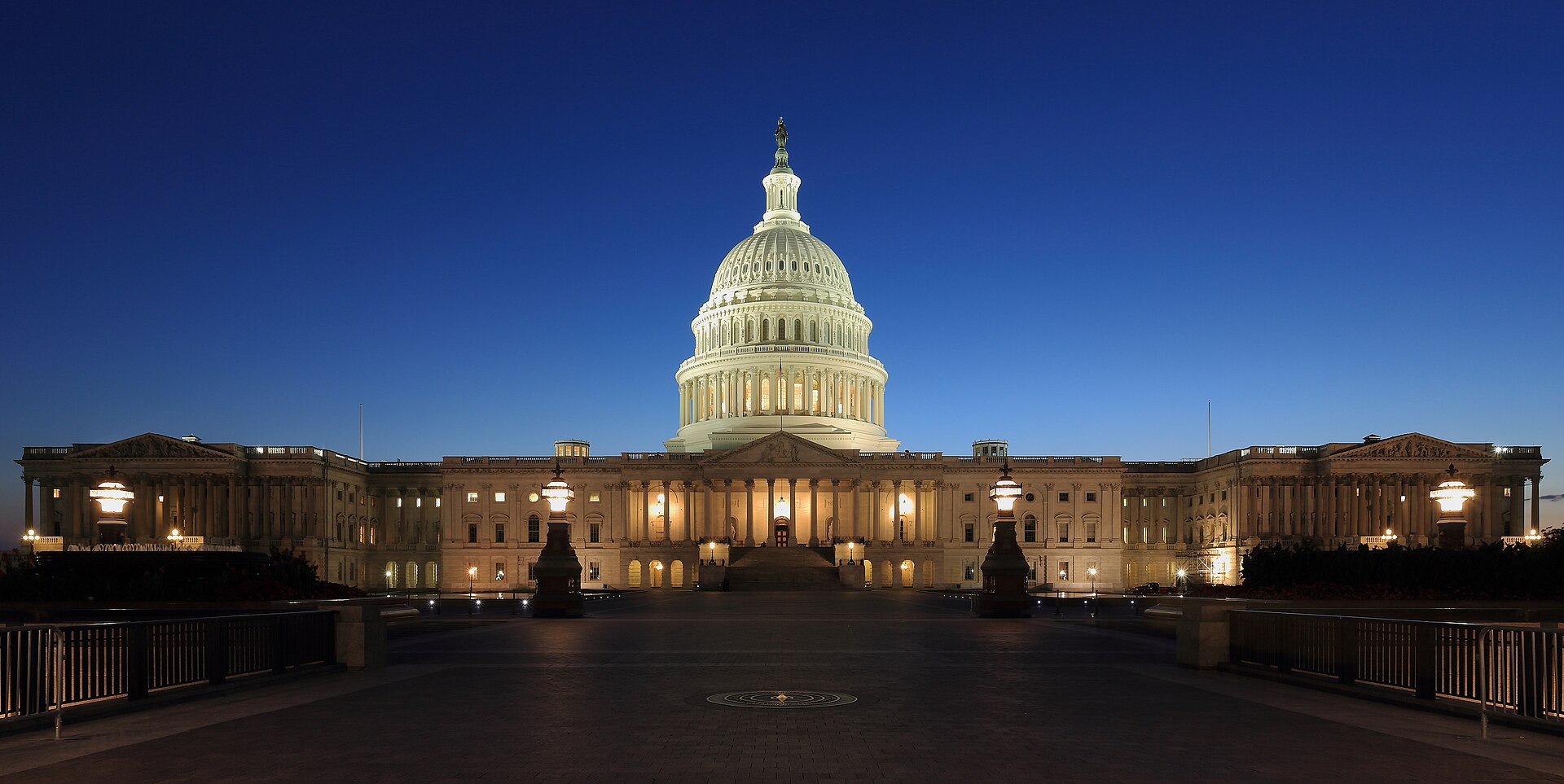
The pattern of suspicious Iran war bets has prompted a bipartisan — though uneven — response on Capitol Hill. Senator Chris Murphy, a Democrat from Connecticut, has vowed to introduce legislation specifically targeting prediction market bets on geopolitical violence, CBS News reported. “This is insider trading in broad daylight,” Murphy said, according to CBS. “People are profiting from death and destruction, and we don’t have the tools to stop it.”
Senators Jeff Merkley and Amy Klobuchar introduced a separate bill that would require prediction market platforms to comply with the same disclosure and anti-manipulation rules that govern traditional financial markets. The bill would also mandate that platforms implement know-your-customer verification that goes beyond IP-address checks. The legislation does not yet have Republican co-sponsors, and GOP lawmakers in Congress have not signalled support, according to NPR.
Kalshi, Polymarket’s US-based rival, has taken a different approach. CEO Tarek Mansour announced that the company would refund fees collected on the Khamenei death market. “We don’t list markets directly tied to death,” Mansour wrote on X. Kalshi issued partial refunds to users who placed bets before and after the Iranian leader’s death was confirmed, pegged to the last traded price before the news broke.
The regulatory gap matters for energy markets. If prediction market bets can move oil prices — and the March 23 episode suggests they can, at least indirectly, by shaping the media narrative around ceasefire probability — then the absence of meaningful oversight creates a channel through which a small number of informed actors can influence commodity prices that affect every oil-producing and oil-consuming nation on earth. Saudi Arabia, as the world’s largest crude exporter, is among the most exposed.
What Do Prediction Market Bets Mean for Saudi Arabia and the Gulf?
The connection between anonymous cryptocurrency bets and Saudi Arabia’s wartime economy may seem indirect, but the transmission mechanism is straightforward. Prediction market activity shapes sentiment. Sentiment shapes headlines. Headlines shape oil futures. And oil futures determine whether the Kingdom runs a surplus or a deficit.
On March 23, the sequence played out in real time. Brent crude opened above $113, driven by the expiry of Trump’s 48-hour ultimatum to Iran to reopen the Strait of Hormuz. By the close, it had fallen to just above $100 after Trump’s ceasefire claims — claims that Iran denied, and that may have been anticipated by ten anonymous Polymarket accounts. The 13 percent swing was worth approximately $1.3 trillion in annualised global oil trade value, according to Bloomberg calculations.
Saudi Arabia’s position on a ceasefire is more complex than simple oil revenue calculations suggest. A rapid reopening of the Strait of Hormuz would crash oil prices further, potentially below $80 per barrel, at a moment when the Kingdom has committed to elevated defence spending and accelerated negotiations over Hormuz’s future status. At the same time, continued closure threatens global recession, which would destroy demand and lower prices over a longer horizon.
The Tadawul, Saudi Arabia’s stock exchange, reopened on March 23 after an eight-day closure following the start of the war. Early gains were erased as ceasefire speculation intensified during the trading day. The volatility underscored how prediction market signals — even unverified ones — can propagate through traditional financial infrastructure within hours.

The Gulf states have not publicly commented on prediction market activity related to the war. But Saudi officials have privately expressed concern about the ease with which unverified ceasefire claims can move energy markets, according to Reuters, citing two people familiar with internal government discussions. The Kingdom’s Energy Minister, Prince Abdulaziz bin Salman, has repeatedly warned against speculative positioning in oil markets — a message that now extends to a class of financial instruments that did not exist during previous oil crises.
| Benchmark | Morning High | Close | Change |
|---|---|---|---|
| Brent Crude | $113/bbl | $100/bbl | -11.5% |
| WTI Crude | $100+/bbl | $89/bbl | -11%+ |
| Saudi Aramco (Tadawul) | Opened higher | Gains erased | Flat |
Prediction Markets and the New Intelligence Economy
Prediction markets have existed in various forms since the Iowa Electronic Markets launched in 1988 to forecast US presidential elections. But the Iran war has transformed them into something qualitatively different: a real-time, publicly visible betting layer on active military operations, accessible to anyone with a cryptocurrency wallet and a VPN.
Polymarket processed $529 million on its US-Iran strike contract alone, CNBC reported. The platform’s Iran-related markets have attracted more volume than any geopolitical event in prediction market history, surpassing the $500 million wagered on the 2024 US presidential election that made Polymarket a household name.
The shift has created what analysts at the Brookings Institution described in a March 9 paper as a “parallel intelligence economy” — a market where information about military operations, diplomatic back-channels, and classified decision-making has direct monetary value. The paper noted that prediction market prices now regularly appear in media coverage of the war as proxy indicators of ceasefire probability, creating a feedback loop in which the market’s assessment of reality shapes reality itself.
For the ongoing conflict between Iran and the US-Israeli coalition, the stakes of this feedback loop are measured in lives and barrels. A false signal — or a deliberately planted one — can move oil prices, shift diplomatic calculations, and alter the financial calculus of war for every nation involved. The ten wallets that bet $160,000 on a ceasefire on March 22 may have been lucky speculators, well-connected insiders, or something in between. What is certain is that the infrastructure now exists for a small number of actors to wager on war with real-time consequences for the global economy.
Egypt, Pakistan, and Turkey were passing messages between the US and Iran on Sunday and attempting to set up a call between Ghalibaf and Trump’s team on Monday, Axios reported. If that call happened, it was not publicly confirmed. The ceasefire contract on Polymarket was trading at approximately 15 percent probability as of Monday evening — up from 8 percent before the bets were placed, but far from the certainty that would justify the scale of the wagers.
Frequently Asked Questions
What is Polymarket and how does it work?
Polymarket is a blockchain-based prediction market platform where users buy and sell shares in the outcome of real-world events. Shares are priced between $0 and $1, with $1 payouts for correct predictions. The platform operates on the Polygon blockchain and has processed over $1 billion in Iran war-related bets since February 28, 2026. It officially restricts US-based users but enforces the rule only through IP-address geoblocking.
Were the ceasefire bets definitively insider trading?
No definitive determination has been made. The timing, scale, and pattern of the ten anonymous wallets are consistent with informed positioning, according to on-chain analysts, but do not constitute proof. Israeli authorities have filed the only criminal charges to date related to prediction market insider trading on the Iran war, involving a military reservist accused of using classified intelligence.
How much money has been wagered on the Iran war through prediction markets?
More than $1 billion has been wagered across Polymarket and Kalshi on various Iran war outcomes, according to CNBC. The single largest contract — on whether the US would strike Iran — attracted $529 million in volume on Polymarket alone. Individual bettors have won as much as $553,000 on single wagers.
How do prediction market bets affect oil prices and Saudi Arabia?
Prediction market activity can influence oil prices indirectly by shaping media narratives and market sentiment around ceasefire probability. On March 23, Brent crude fell more than 13 percent after Trump’s ceasefire claims, partly amplified by prediction market signals. Every $10 per barrel movement translates to approximately $35 billion in annual revenue for Saudi Arabia, making the Kingdom highly exposed to sentiment-driven price swings.
What regulation exists for prediction market bets on war?
US commodity trading law prohibits event contracts tied to war, terrorism, and assassination. However, enforcement is complicated by the blockchain-based structure of platforms like Polymarket, which operate outside traditional financial infrastructure. Senators Murphy, Merkley, and Klobuchar have proposed new legislation, but no bill has advanced through Congress as of late March 2026.