
RIYADH — Prince Abdulaziz bin Salman, the Saudi energy minister who once warned oil speculators they would be “ouching like hell,” now presides over the most volatile energy market since the 1973 embargo. Two weeks into the Iran war, with the Strait of Hormuz mined and Saudi oil production slashed by two million barrels a day, the 65-year-old prince has become the most consequential energy policymaker on earth — managing a crisis that his four decades in the petroleum bureaucracy spent preparing for but never expected to face. While his half-brother, Crown Prince Mohammed bin Salman, commands the Kingdom’s strategic response and Defence Minister Khalid bin Salman manages the military dimension, Abdulaziz bin Salman holds the lever that matters most: the world’s marginal barrel of oil.
The first royal ever to hold the energy portfolio, Prince Abdulaziz has spent more than 37 years inside the Saudi petroleum apparatus — longer than most OPEC members have been exporting oil. His appointment in September 2019 broke a tradition stretching back to the ministry’s creation: every previous oil minister had been a technocrat, not a prince. The decision to install a member of the ruling family signalled that oil policy had become too important to delegate. In a kingdom where energy revenue still funds roughly 60 percent of government spending, the man controlling production levels wields a form of power that no military commander can match.
Table of Contents
- Who Is Prince Abdulaziz bin Salman?
- The 37-Year Climb Through Saudi Arabia’s Oil Ministry
- Why Did MBS Make His Brother the First Royal Energy Minister?
- The Speculator’s Nightmare — How Abdulaziz bin Salman Runs OPEC
- The 2020 Oil Price War That Proved His Ruthlessness
- What Makes Saudi Arabia’s Production Discipline Different From Every Other Oil State?
- Managing the Iran War’s Energy Crisis
- How Does Abdulaziz bin Salman Handle the Russia-OPEC Paradox?
- Four Oil Ministers, Four Eras — A Comparison
- The Minister Who Matters More Than the General
- The Wartime Energy Leadership Matrix
- Beyond Oil — Abdulaziz bin Salman and Saudi Arabia’s Energy Transition
- What Comes After the War for Saudi Arabia’s Oil Strategy?
- Frequently Asked Questions
Who Is Prince Abdulaziz bin Salman?
Prince Abdulaziz bin Salman Al Saud is Saudi Arabia’s Minister of Energy, the first member of the royal family to hold the position, and the architect of OPEC+’s production management strategy since 2019. Born in Jeddah in 1960, he is the fourth son of King Salman bin Abdulaziz and an older half-brother of Crown Prince Mohammed bin Salman. At 65, he has spent more continuous years in the Saudi petroleum sector than any living official — a career that began when oil was trading at $27 a barrel and OPEC’s existence was barely two decades old.
His appointment on 8 September 2019 replaced Khalid al-Falih, who had held the post for just three years. The timing was deliberate: it came weeks before Saudi Aramco’s initial public offering, the largest in history, which raised $25.6 billion on the Tadawul exchange. Installing a prince in the energy ministry sent an unmistakable signal to global markets — the Kingdom’s oil policy now carried the personal authority of the ruling family, not merely the expertise of a career bureaucrat. Bloomberg described him as “the most powerful man in petroleum,” a title his predecessors had earned through longevity but which Abdulaziz bin Salman claimed through lineage.
Unlike many Saudi royals educated at Western universities, Prince Abdulaziz studied entirely within the Kingdom. He earned a bachelor’s degree in industrial management from King Fahd University of Petroleum and Minerals in 1982, followed by a master’s in business administration from the same institution in 1985. The choice of KFUPM — Saudi Arabia’s premier technical university, located in Dhahran, the heartland of the oil industry — embedded him within the petroleum establishment from the start. In April 2025, he was appointed chairman of the board of trustees at King Abdullah University of Science and Technology (KAUST), expanding his institutional influence beyond energy into the Kingdom’s broader research agenda.
The 37-Year Climb Through Saudi Arabia’s Oil Ministry
Prince Abdulaziz’s career inside the petroleum ministry is unusual not for its trajectory but for its patience. In a kingdom where royal princes often parachute into senior positions, he spent decades ascending through technical and advisory roles before reaching the top.
From 1985 to 1987, immediately after completing his MBA, he served as Director of Economic and Industrial Studies at the Research Institute of King Fahd University of Petroleum and Minerals. The role immersed him in the empirical foundations of oil market analysis — supply-demand modelling, price forecasting, and the economic impact of production decisions — at a time when Saudi Arabia was engaged in a bruising market-share battle that had sent crude prices below $10 a barrel.
In 1987, he moved to the Ministry of Petroleum and Mineral Resources as an advisor to the minister, serving under Hisham Nazer. He held advisory positions for three consecutive years before being appointed to progressively senior roles. In June 1995, he was promoted to deputy oil minister under Ali al-Naimi, the legendary technocrat who would dominate OPEC for two decades. The Abdulaziz-Naimi partnership lasted more than twenty years, with the prince learning the art of OPEC negotiation from its acknowledged master.
In 2005, his title shifted to assistant oil minister — an administrative adjustment that reflected the ministry’s restructuring rather than any diminishment of responsibilities. When Mohammed bin Salman consolidated power and renamed the ministry in 2017, Prince Abdulaziz was elevated to State Minister for Energy Affairs, placing him just one step below the ministerial chair.
| Year | Position | Oil Price Context |
|---|---|---|
| 1982 | BA Industrial Management, KFUPM | $33/bbl (post-Iran revolution spike) |
| 1985 | MBA, KFUPM; Director of Economic Studies | $27/bbl (OPEC market-share battle) |
| 1987 | Advisor to Minister of Petroleum | $18/bbl (price collapse aftermath) |
| 1995 | Deputy Oil Minister | $17/bbl |
| 2005 | Assistant Oil Minister | $55/bbl (China-driven super-cycle) |
| 2017 | State Minister for Energy Affairs | $54/bbl |
| 2019 | Minister of Energy | $64/bbl (pre-Aramco IPO) |
| 2025 | Also Chairman, KAUST Board of Trustees | $70/bbl (pre-war) |
| 2026 | Minister during Iran War energy crisis | $100+/bbl (war premium) |
The breadth of this career matters because it gave Abdulaziz bin Salman something no other OPEC energy minister possesses: institutional memory spanning every major oil crisis of the past four decades. He was inside the ministry during the 1986 price collapse, the 1990 Gulf War spike, the 1998 Asian crisis crash, the 2008 super-cycle peak, the 2014 shale revolution, and the 2020 COVID collapse. Each crisis taught a lesson. By the time the Iran war created the energy market’s most severe disruption since 1973, he had already lived through six rehearsals.
Why Did MBS Make His Brother the First Royal Energy Minister?
For sixty years, Saudi Arabia’s oil ministers were technocrats — brilliant, experienced professionals who served at the pleasure of the king but were not members of the Al Saud family. Ahmed Zaki Yamani, a Hejazi lawyer, held the post for 24 years. Ali al-Naimi, a geologist who rose through Aramco’s ranks, served for 21 years. Khalid al-Falih, an engineer, lasted just three. The pattern was clear: long-serving specialists who accumulated expertise over decades, insulated from court politics by their non-royal status.
Mohammed bin Salman broke this pattern for reasons that reflect both his consolidation of power and his understanding of oil’s strategic importance. According to analysis from the Atlantic Council, the appointment signalled that “energy policy had been elevated to a matter of royal prerogative.” Three factors drove the decision.
First, the Aramco IPO demanded royal credibility. Listing the world’s most valuable company required a minister who could personally guarantee to global investors that Saudi production policy would remain predictable. A prince carried that guarantee in a way no technocrat could.
Second, OPEC+ negotiations had become geopolitically charged. The 2016 deal with Russia that created the OPEC+ framework transformed oil production management from a technical exercise into a diplomatic relationship between two nuclear powers. Managing Alexander Novak required someone who could speak with the authority of the Saudi state, not merely the Ministry of Energy.
Third, MBS wanted a minister who was family — someone whose loyalty was structural, not contingent. Khalid al-Falih had been removed partly because of disagreements over Aramco’s IPO strategy. A half-brother would not publicly contradict the Crown Prince’s vision. Abdulaziz bin Salman’s decades of petroleum experience made the appointment defensible on merit, but his bloodline made it permanent in a way that no technocratic appointment could be. As a senior Al Saud with deep institutional knowledge, he bridged the gap between royal authority and technical competence.
The Speculator’s Nightmare — How Abdulaziz bin Salman Runs OPEC
Prince Abdulaziz bin Salman’s management of OPEC+ is distinguished by a confrontational public persona that masks meticulous behind-the-scenes diplomacy. No previous Saudi oil minister threatened financial markets with such relish.
The minister’s greatest challenge may not be managing prices or production but sustaining the OPEC+ partnership with a country that simultaneously arms Saudi Arabia’s enemy. The structural analysis of why Saudi Arabia cannot afford to lose its Russian oil partner reveals the constraints within which Abdulaziz bin Salman operates.
At the OPEC+ Joint Ministerial Monitoring Committee in September 2020, he delivered the line that would define his public image: “I’m going to make sure whoever gambles on this market will be ouching like hell.” The warning was directed at short sellers betting against OPEC+ production cuts, but it resonated far beyond the derivatives market. It signalled that Saudi Arabia under Abdulaziz bin Salman would not tolerate speculative attacks on oil prices — and that the minister was willing to use surprise production adjustments as a weapon against traders.
He repeated the performance at the Qatar Economic Forum in May 2023: “I don’t have to show my cards. I’m not a poker player. But I would just tell them — watch out.” Within days, OPEC+ announced surprise production cuts of 1.16 million barrels per day, a decision that had been kept secret from analysts and traders until the announcement. Oil prices jumped 6 percent. Short sellers, as promised, were ouching.
I’m going to make sure whoever gambles on this market will be ouching like hell.
Prince Abdulaziz bin Salman, OPEC+ JMMC Meeting, September 2020
His three stated priorities for OPEC+ — “vigilance, initiative, and hedging of what may come in the future” — reveal a minister who sees oil market management as an exercise in pre-emption rather than reaction. Where Ali al-Naimi famously allowed market forces to correct imbalances naturally, Abdulaziz bin Salman intervenes before the imbalance becomes entrenched. The contrast is instructive: Naimi let oil crash to $26 a barrel in 2016 to punish US shale producers; Abdulaziz bin Salman would never tolerate such a prolonged collapse because it would drain the Saudi treasury faster than it would discipline competitors.
The 2020 Oil Price War That Proved His Ruthlessness
The defining test of Abdulaziz bin Salman’s tenure before the Iran war came in March 2020, when Saudi Arabia launched an oil price war against Russia that sent crude prices into negative territory for the first time in history. The episode revealed a minister willing to inflict enormous economic pain — on Saudi Arabia’s own finances as much as on its rivals — to enforce OPEC+ discipline.
The confrontation erupted when Russian Energy Minister Alexander Novak refused to support deeper production cuts at the OPEC+ meeting on 6 March 2020. COVID-19 was destroying global oil demand, and Saudi Arabia wanted the group to remove 1.5 million barrels per day from the market. Russia refused, calculating that lower prices would eliminate high-cost US shale producers and benefit Moscow’s long-term market share.
Abdulaziz bin Salman’s response was immediate and devastating. Saudi Arabia announced it would increase production to a record 12.3 million barrels per day — flooding the market with cheap crude at the exact moment demand was collapsing. According to reporting by Middle East Eye, the decision followed a “shouting match” between MBS and Russian President Putin. Oil prices crashed from $45 to below $20 within days.
The price war lasted five weeks before a Trump-brokered deal restored the OPEC+ framework in April 2020. Russia agreed to cut 2.5 million barrels per day, the largest reduction in OPEC history. The episode cost Saudi Arabia an estimated $12 billion in lost revenue during March and April alone, according to the International Monetary Fund. But it established a critical precedent: Saudi Arabia under Abdulaziz bin Salman would absorb short-term losses to maintain long-term market discipline. No OPEC+ member has seriously challenged Saudi production leadership since.
The 2020 episode also revealed the interpersonal dynamics of the Saudi-Russian energy relationship. Bloomberg reported that the relationship between Abdulaziz bin Salman and Novak was “strictly formal and lacked the rapport” that Novak had established with his predecessor al-Falih. The prince did not seek personal warmth — he sought compliance. The distinction proved effective.
What Makes Saudi Arabia’s Production Discipline Different From Every Other Oil State?
Saudi Arabia’s ability to manage oil production as a strategic weapon depends on a capability that no other OPEC member possesses: roughly 2-3 million barrels per day of spare production capacity. This spare capacity — maintained at enormous cost, requiring infrastructure investment that produces no immediate revenue — is the foundation of Saudi Arabia’s oil market power and the tool that Abdulaziz bin Salman wields with precision. Yet the Iran war has exposed a structural challenge to that power: African producers are capturing market share with barrels that travel routes no Iranian missile can threaten.
As of February 2026, before the Iran war began, Saudi Arabia was producing approximately 10.88 million barrels per day against a maximum sustainable capacity of roughly 12.5 million. The gap of approximately 1.6 million barrels per day represented both a reserve and a threat — a reserve that could be deployed to calm markets during supply disruptions, and a threat that could be unleashed against rivals who defied production agreements.
Abdulaziz bin Salman’s management of OPEC+ compliance has been notably more aggressive than his predecessors. In April 2025, he warned that “free riders will face consequences,” targeting Kazakhstan, Iraq, and the UAE — all of which had been exceeding their production quotas. By June 2025, he escalated further, threatening that Riyadh might “abandon its role as the lone wolf stabilizing markets” unless compliance improved. The threat worked: OPEC+ explicitly stated that participating countries would “fully compensate for any overproduced volume since January 2024,” establishing enforcement mechanisms that previous ministers had never demanded.
The strategy shifted dramatically in the second half of 2025, when Saudi Arabia pivoted from defending prices to reclaiming market share. Bloomberg reported in June 2025 that “Saudi Arabia wants more super-size OPEC+ hikes in a push for oil market share.” The Kingdom’s output was scheduled to increase from 9.07 million barrels per day in March 2025 to 9.98 million by September, with Riyadh positioned to capture market share from US shale firms forced to slow drilling at lower prices.
This oscillation between price defense and market-share aggression is the hallmark of Abdulaziz bin Salman’s approach. He uses production cuts to maintain revenue when prices are weak, and production increases to punish non-compliance or capture share when prices are strong. The strategy requires a minister who can read market dynamics months in advance and has the authority to implement decisions without legislative approval or public debate — an authority that only a royal prince in an absolute monarchy possesses.
Managing the Iran War’s Energy Crisis
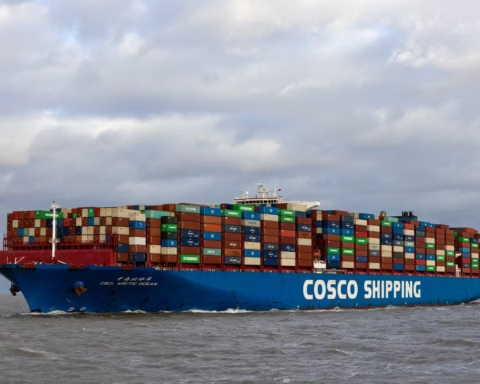
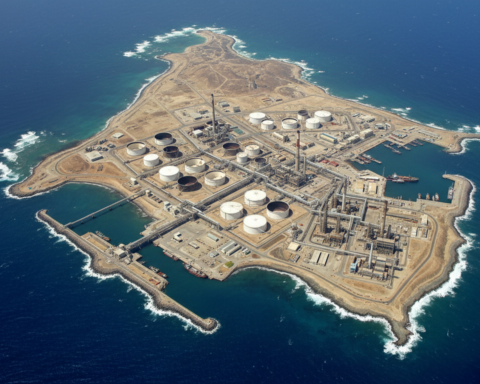
The Iran war that began on 28 February 2026 has subjected Abdulaziz bin Salman to the most severe test any Saudi energy minister has faced since Yamani managed the 1973 embargo. Within hours of the US-Israeli strikes that killed Supreme Leader Khamenei, Iran’s Islamic Revolutionary Guard Corps began attacking Gulf energy infrastructure — including Saudi oil facilities at Ras Tanura and Shaybah. Iran’s naval forces mined the Strait of Hormuz, through which approximately 21 million barrels of oil and petroleum products transit daily, according to the US Energy Information Administration.
The immediate impact on Saudi production was staggering. According to a report by WION citing industry sources, Saudi Arabia reduced output by approximately two million barrels per day, bringing production down to roughly eight million barrels per day. The cuts were not voluntary — they reflected physical damage to Eastern Province infrastructure, the closure of the Hormuz shipping lane, and the redirection of crude flows away from the Persian Gulf toward the Red Sea port of Yanbu via the East-West Pipeline (Petroline).
Abdulaziz bin Salman’s response has been characteristically methodical. Rather than panic, he executed a three-part strategy that exploited Saudi Arabia’s unique infrastructure advantages.
The first element was the Petroline pivot. The East-West Pipeline, stretching 1,200 kilometres from Saudi Arabia’s Eastern Province to Yanbu on the Red Sea, has an estimated design capacity of approximately five million barrels per day following recent expansions. According to CNBC reporting, this pipeline — along with the UAE’s Habshan-Fujairah pipeline (ADCOP) — represents the Gulf’s primary bypass around the Hormuz chokepoint. Abdulaziz bin Salman ordered maximum utilisation of the Petroline immediately after Hormuz was mined, a decision that has since produced a new global oil allocation hierarchy dictated by Yanbu’s loading constraints, rerouting crude exports through the Red Sea and effectively splitting Saudi Arabia’s export infrastructure into a war zone (east) and a functional corridor (west).
The second element was pre-war positioning. Bloomberg reported on 13 March 2026 that OPEC output had surged in February, with Saudi Arabia accounting for roughly half of a 640,000 barrel-per-day increase. The timing was not coincidental. Saudi intelligence agencies had assessed a high probability of conflict following the Trump-MBS summit in January, and Abdulaziz bin Salman appears to have boosted production proactively, filling storage and honouring export contracts before hostilities disrupted Eastern Province operations.
The third element was strategic reserve deployment. Saudi Arabia entered the war with foreign reserves at a six-year high of $475 billion, according to the Saudi Central Bank (SAMA). While reserves are not the energy minister’s direct responsibility, Abdulaziz bin Salman’s production decisions during 2025 — increasing output to recapture market share and boost export revenue — contributed directly to the fiscal buffer that now sustains the Kingdom’s wartime economy.
How Does Abdulaziz bin Salman Handle the Russia-OPEC Paradox?
The Iran war has created an existential contradiction at the heart of OPEC+: Russia, Saudi Arabia’s most important production management partner, is simultaneously providing Iran with the intelligence and weapons being used to attack Saudi cities. Western intelligence reports published in early March 2026 reveal a pattern of Russian assistance to Tehran — including satellite intelligence, drone technology, and tactical guidance — so extensive that it challenges the foundational assumptions of the Saudi-Russian partnership built over the past decade.
Abdulaziz bin Salman has navigated this contradiction by compartmentalising. OPEC+ has historically treated production decisions and geopolitics as separate domains. The framework survived the 2020 oil price war, a global pandemic, and Russia’s invasion of Ukraine. Whether it can survive Russian drones hitting Saudi residential areas — two civilians were killed in Al-Kharj on 8 March — is a question that oil market analysts are only beginning to address.
The pragmatic case for maintaining the OPEC+ framework is straightforward: without it, Saudi Arabia would face an unmanaged oil market during a war. With Hormuz closed and global supply disrupted by approximately eight million barrels per day (including production from Iran, Iraq, Kuwait, and other affected Gulf states), the absence of OPEC+ coordination would amplify price volatility to levels that could trigger a global recession. Abdulaziz bin Salman appears to have concluded that punishing Russia through OPEC+ would hurt Saudi Arabia more than Moscow.
Trump’s decision on 13 March to lift Russian oil sanctions — ostensibly to bring more supply to a market starved by the Hormuz blockade — may have been coordinated with Saudi Arabia. If Russian barrels flowing to global markets can partially offset lost Gulf supply, it reduces pressure on Saudi Arabia to max out its own production capacity during a conflict that has already damaged its Eastern Province infrastructure. The geopolitics are cynical but the oil market logic is sound.
Four Oil Ministers, Four Eras — A Comparison
Saudi Arabia’s energy ministers have shaped global oil markets more profoundly than any other officials in petroleum history. Each brought a distinct style to the role, and each served during a defining crisis that tested their approach. Understanding Abdulaziz bin Salman requires understanding the lineage he inherited.
| Minister | Tenure | Background | Defining Crisis | Signature Move | Market Philosophy |
|---|---|---|---|---|---|
| Ahmed Zaki Yamani | 1962-1986 | Lawyer, Hejazi commoner | 1973 oil embargo | Weaponised oil supply against the West | Oil as political instrument |
| Ali al-Naimi | 1995-2016 | Geologist, Aramco lifer | 2014 shale revolution | Let prices crash to kill US shale | Market forces should self-correct |
| Khalid al-Falih | 2016-2019 | Engineer, Aramco CEO | OPEC+ formation | Built Russia partnership | Managed consensus |
| Abdulaziz bin Salman | 2019-present | MBA, royal prince, 37-year insider | 2020 price war; 2026 Iran war | Threatens speculators; pre-emptive cuts | Active intervention; speculator punishment |
Yamani used oil as a weapon — the 1973 embargo was an act of economic warfare that quadrupled crude prices and reshaped the global economy. His approach was confrontational and political, treating OPEC as an instrument of Arab power. King Fahd eventually dismissed him in 1986 for disagreements over price and output policy.
Naimi was the anti-Yamani: quiet, data-driven, and allergic to drama. His most consequential decision — refusing to cut production in November 2014, allowing prices to halve — was rooted in the belief that market forces would eventually eliminate high-cost competitors without Saudi Arabia needing to sacrifice its own production. The strategy worked against some shale producers but damaged Saudi Arabia’s fiscal position: the Kingdom ran a budget deficit of $98 billion in 2015, according to Saudi Ministry of Finance data.
Al-Falih served as a transitional figure whose primary achievement was constructing the OPEC+ framework with Russia. The alliance, forged at a September 2016 meeting in Algiers, brought non-OPEC producers — most crucially Russia — into coordinated production management for the first time. Al-Falih’s engineering background suited the technical task of building consensus among 23 nations, but his relationship with MBS deteriorated over the Aramco IPO’s timing and valuation.
Abdulaziz bin Salman synthesises elements of all three predecessors. He shares Yamani’s willingness to use oil as leverage, Naimi’s deep market knowledge, and al-Falih’s commitment to the OPEC+ framework. What distinguishes him is the velocity of his interventions. Previous ministers operated on quarterly or annual cycles; Abdulaziz bin Salman announces surprise cuts within days of detecting adverse market conditions, keeping traders perpetually off-balance. The “ouching like hell” persona is not performance — it is strategy.
The Minister Who Matters More Than the General
Conventional analysis of the Iran war focuses on military capabilities — interceptor inventories, drone kill ratios, naval assets in the Persian Gulf. But the war’s outcome will be determined as much by energy economics as by ballistic trajectories. Iran’s ability to sustain its campaign depends on oil revenue, which the war has virtually eliminated. Saudi Arabia’s ability to absorb the conflict’s costs depends on oil revenue, which — thanks to surging Brent prices above $100 — has actually increased despite lower production volumes.
This asymmetry is Abdulaziz bin Salman’s strategic contribution. By managing production to maintain high prices rather than flooding the market to suppress them, he has created a situation where Saudi Arabia earns roughly the same revenue from eight million barrels at $100+ as it did from ten million barrels at $70-80. Iran, meanwhile, has lost virtually all export revenue: its production has been decimated by Israeli strikes on oil infrastructure, its remaining output cannot transit through its own mined strait, and sanctions (only recently lifted for Russia) remain in place.
The financial warfare dimension of the Iran conflict may prove more decisive than any military operation. Saudi Arabia entered the war with $475 billion in foreign reserves. Iran, by contrast, held approximately $14 billion in accessible reserves, according to IMF estimates prior to the conflict. At current burn rates — with Iran spending heavily on missile and drone production while earning almost nothing from oil exports — the Islamic Republic faces fiscal exhaustion within months. Saudi Arabia, collecting premium oil revenue through its Red Sea export corridor, can sustain the current posture for years.
Abdulaziz bin Salman did not design this financial asymmetry by accident. His 2025 production increases, which boosted Saudi output and filled storage ahead of the conflict, look in retrospect like war preparation. His maintenance of OPEC+ discipline, which prevented a pre-war price collapse, ensured that the war premium would deliver maximum revenue when hostilities began. Whether these decisions reflected foresight or fortune, they have positioned the energy ministry as the most important institution in Saudi Arabia’s war effort — more consequential, in financial terms, than the Ministry of Defence’s decision not to fire a single offensive shot.
The Wartime Energy Leadership Matrix
Evaluating an energy minister’s wartime performance requires a framework that captures both market management and strategic positioning. Five dimensions define effectiveness during a supply crisis, and each can be scored against historical precedents.
| Dimension | Definition | Abdulaziz bin Salman (2026) | Yamani (1973) | Naimi (2014-15) |
|---|---|---|---|---|
| Pre-crisis positioning | Actions taken before the crisis to build resilience | Strong — pre-war production surge, full storage, fiscal reserves at $475B | Strong — embargo planned months in advance | Weak — no preparation for shale-driven oversupply |
| Supply management | Ability to redirect or maintain supply during disruption | Strong — Petroline pivot to Yanbu, Red Sea corridor activated | Strong — controlled embargo execution | N/A — not a supply crisis |
| Revenue protection | Maintaining government income despite volume losses | Strong — higher prices offset lower volumes | Strong — price spike quadrupled revenue | Weak — revenue collapsed with prices |
| Alliance management | Keeping production partners aligned during stress | Mixed — OPEC+ maintained but Russia paradox unresolved | Strong — OAPEC solidarity held | Weak — failed to prevent Russia defection |
| Market communication | Signalling to traders, governments, and allies | Strong — “ouching like hell” persona maintains deterrence | Strong — clear political messaging | Mixed — market confused by strategy |
Across these five dimensions, Abdulaziz bin Salman scores notably higher than Naimi during the 2014-2016 downturn and comparably to Yamani during the 1973 embargo — though in fundamentally different circumstances. Yamani weaponised oil scarcity against Western consumers; Abdulaziz bin Salman is managing oil scarcity that was imposed on Saudi Arabia by an adversary. The distinction matters: Yamani chose his crisis, while Abdulaziz bin Salman had his thrust upon him.
The matrix also highlights his primary vulnerability: the Russia paradox. The OPEC+ framework requires Saudi-Russian cooperation, but Russia’s military support for Iran undermines the partnership’s legitimacy. If the war continues for months, Abdulaziz bin Salman may face a choice between maintaining OPEC+ cohesion and responding to domestic pressure to punish a “partner” whose client is bombing Saudi cities. No framework, however well-constructed, can survive indefinite contradictions at its foundation.
Beyond Oil — Abdulaziz bin Salman and Saudi Arabia’s Energy Transition
Prince Abdulaziz bin Salman’s influence extends beyond oil production management into Saudi Arabia’s broader energy transformation. His April 2025 appointment as chairman of the KAUST Board of Trustees connected the energy ministry directly to the Kingdom’s most advanced research institution, signalling that future energy policy would incorporate scientific innovation alongside petroleum management.
Under his tenure, the Ministry of Energy has overseen Saudi Arabia’s expansion into renewable energy, including the Kingdom’s commitment to generate 50 percent of its electricity from renewable sources by 2030 as part of Vision 2030. The Saudi Green Initiative, announced in 2021, targets net-zero emissions by 2060 — a commitment that Abdulaziz bin Salman has defended against critics who question whether the world’s largest oil exporter can credibly lead an energy transition. His response at COP28 in Dubai was characteristic: Saudi Arabia would not apologise for its oil, but it would invest in alternatives that ensured the Kingdom’s relevance regardless of the global energy mix.
The NEOM Green Hydrogen project — a $8.4 billion joint venture with Air Products and ACWA Power — represents the most tangible outcome of this dual strategy. Located in the northwest corner of the Kingdom, the project is on track for production by 2027 and will produce up to 600 tonnes of green hydrogen daily. Abdulaziz bin Salman has positioned Saudi Arabia to dominate the emerging hydrogen economy using the same infrastructure and export networks that currently handle petroleum.
The war has complicated but not abandoned these ambitions. While construction across much of Saudi Arabia has slowed since February, the green hydrogen project — located far from the Eastern Province conflict zone — continues on schedule. Abdulaziz bin Salman’s dual mandate — maximising oil revenue during the war while maintaining long-term energy diversification — may prove to be the most difficult balancing act in the ministry’s history. The minister who built his reputation punishing speculators may ultimately be judged by whether he can sustain the trillion-dollar economic transformation while managing a wartime oil market.
Indeed, analysis of how the Iran war is accelerating the global energy transition suggests that the conflict may be doing more to erode long-term oil demand than any climate policy ever achieved — a trend that makes Abdulaziz bin Salman’s dual mandate not merely difficult but existentially urgent for the Kingdom’s economic future.
What Comes After the War for Saudi Arabia’s Oil Strategy?
The post-war energy landscape will test Abdulaziz bin Salman in ways that differ fundamentally from the current crisis. When Hormuz reopens — whether through military clearance, diplomatic agreement, or Iranian exhaustion — the global oil market will face a simultaneous supply surge as Gulf producers restore capacity, strategic reserves are replenished by consuming nations, and war-disrupted production across Iraq, Kuwait, and Iran gradually returns.
Managing this transition without a catastrophic price collapse will require the same pre-emptive discipline that characterised Abdulaziz bin Salman’s pre-war approach. Historical precedent is not encouraging: oil prices crashed after the 1991 Gulf War, after the 2003 Iraq invasion’s initial supply fears subsided, and after the 2008 financial crisis popped the super-cycle bubble. Each post-crisis collapse punished producers who were slow to cut production.
Abdulaziz bin Salman has one advantage his predecessors lacked: the OPEC+ framework gives him a multilateral mechanism for coordinating the post-war production recovery. If the framework survives the Russia paradox — and the minister has shown extraordinary pragmatism in maintaining it despite Moscow’s dual role as partner and adversary enabler — it could orchestrate a controlled return to pre-war production levels that prevents the boom-bust cycle from repeating.
The alternative — a fractured OPEC+ and a free-for-all among producers racing to restore market share — would replicate the conditions of 2014-2016, when prices halved and Saudi Arabia ran its largest-ever budget deficit. Abdulaziz bin Salman’s entire career has been dedicated to preventing exactly that outcome. The Iran war may be the crisis that makes or breaks his legacy, but the peace that follows will test him just as severely.
Frequently Asked Questions
Who is Prince Abdulaziz bin Salman and what is his role in Saudi Arabia?
Prince Abdulaziz bin Salman is Saudi Arabia’s Minister of Energy, appointed on 8 September 2019. He is the first member of the Saudi royal family to hold the energy portfolio, having previously served as deputy and assistant oil minister for over two decades. As energy minister, he oversees Saudi Arabia’s oil production policy, chairs OPEC+ production decisions, and manages the Kingdom’s energy infrastructure — a role that has become critically important during the 2026 Iran war and Hormuz crisis.
How is Prince Abdulaziz bin Salman related to MBS?
Prince Abdulaziz bin Salman is the older half-brother of Crown Prince Mohammed bin Salman (MBS). Both are sons of King Salman bin Abdulaziz, but they have different mothers. Born in 1960, Abdulaziz is approximately 25 years older than MBS, who was born in 1985. Despite the age gap, Abdulaziz bin Salman serves as a trusted member of MBS’s inner circle, his appointment reflecting the Crown Prince’s strategy of placing family members in the Kingdom’s most sensitive positions.
Why did Saudi Arabia’s energy minister warn oil speculators they would be “ouching like hell”?
Prince Abdulaziz bin Salman made his famous “ouching like hell” warning at an OPEC+ meeting in September 2020, targeting short sellers who were betting against OPEC+ production cuts. The statement reflected his management philosophy of using surprise production decisions to keep traders off-balance and prevent speculative attacks on oil prices. He repeated similar warnings in 2023, telling speculators to “watch out” before announcing surprise cuts. The confrontational style has proven effective: few traders now bet against OPEC+ announcements.
How has Prince Abdulaziz bin Salman managed Saudi oil during the Iran war?
During the 2026 Iran war, Abdulaziz bin Salman has managed a three-part strategy. He pivoted crude exports from the Persian Gulf to the Red Sea port of Yanbu via the East-West Pipeline (Petroline), bypassing the mined Strait of Hormuz. He had pre-positioned Saudi production at elevated levels in February 2026, filling storage before hostilities began. And he has maintained OPEC+ coordination despite Russia’s paradoxical role as both a production partner and a military supplier to Iran, ensuring that the global oil market retains some structure during the crisis.
What is Prince Abdulaziz bin Salman’s net worth and personal life?
Prince Abdulaziz bin Salman’s personal net worth is not publicly disclosed, consistent with the privacy maintained by most senior members of the Saudi royal family. As a son of King Salman, he is a member of one of the wealthiest families in the world. His public life is almost entirely defined by his energy portfolio — he rarely appears at social events or makes statements outside the context of oil policy, maintaining a professional profile that contrasts with the public visibility of other senior royals.