
DOHA — Qatar shot down two Iranian Su-24 tactical bombers on 2 March 2026, marking the first aerial combat kill in the country’s history and transforming the Gulf’s most prolific peace broker into an active combatant in the widening Iran war. The intercept, which occurred roughly two minutes before the Iranian aircraft would have struck Al Udeid Air Base and the Ras Laffan gas complex, saved an estimated 10,000 American service members and prevented the destruction of infrastructure responsible for one-fifth of global liquefied natural gas supply.
The significance of this moment extends far beyond the wreckage of two ageing Soviet-era bombers now resting in Qatar’s territorial waters. A nation that spent the better part of a decade positioning itself as the indispensable mediator between Washington and Tehran — the country that hosted backchannel negotiations, brokered prisoner swaps, and urged restraint on all sides — fired live weapons in anger for the first time. The consequences for Gulf security architecture, global energy markets, and the diplomatic endgame of the Iran conflict are still unfolding. What is already clear is that Iran’s decision to target Qatar has redrawn the map of allegiances in the Middle East, consolidated a GCC unity that many analysts believed impossible after the 2017 blockade, and revealed a military capability that Doha spent more than $30 billion assembling in near-total secrecy.
Table of Contents
- What Happened When Iran Attacked Qatar?
- How Did Qatar Shoot Down Two Iranian Bombers in Under Two Minutes?
- Why Is Al Udeid Air Base Iran’s Highest-Value Target in the Gulf?
- How Strong Is Qatar’s Air Force in 2026?
- Why Did Qatar’s Diplomatic Channel to Tehran Collapse?
- What Does Qatar’s LNG Shutdown Mean for Global Energy Markets?
- How Has the Saudi-Qatar Reconciliation Shaped the War Response?
- What Is the Al Thani Family’s Strategic Calculus?
- The Small State Survival Matrix — How Tiny Nations Fight Existential Wars
- Why Qatar’s War Entry May Shorten, Not Extend, the Conflict
- Can Qatar Still Mediate an End to the Iran War?
- Frequently Asked Questions
What Happened When Iran Attacked Qatar?
Iran’s retaliation against Qatar began within hours of the US-Israeli strikes on Iranian nuclear and military facilities on 28 February 2026. Tehran’s Islamic Revolutionary Guard Corps launched a coordinated campaign of missile and drone strikes against every Gulf state hosting American military assets, and Qatar — home to the forward headquarters of US Central Command — sat at the top of the target list.
The opening salvo hit Al Udeid Air Base on 1 March with a single ballistic missile that struck a logistics area, causing structural damage but no casualties. The following day brought a far more ambitious attack: seven ballistic missiles, five drones, and two Su-24MK tactical bombers converged on Qatari territory simultaneously. The bombers, flying at approximately 80 feet to evade radar detection, carried guided munitions aimed at both Al Udeid and the Ras Laffan Industrial City, the world’s largest LNG processing complex.
Qatar’s air defences intercepted the ballistic missiles and drones, while its fighter jets destroyed the two bombers — an event CNN described as “minutes from disaster.” On 3 March, another missile struck Al Udeid, and the following day two more ballistic missiles targeted the base, with one successfully intercepted and one hitting a perimeter facility. By 6 March, additional drone attacks prompted the Qatari Ministry of Defence to announce the successful interception of yet another unmanned aerial vehicle approaching the base.
The attacks on Qatar represented a significant escalation in Iran’s strategy. Unlike the strikes on Saudi Arabia and Bahrain, which Tehran could frame as targeting American assets on hostile soil, Qatar had maintained diplomatic relations with Iran throughout the preceding years. The use of manned bombers — a move Iran had not attempted against any neighbour since the Iran-Iraq War — signalled that Tehran viewed the destruction of Al Udeid as a strategic priority worth risking its limited pilot corps and rapidly diminishing airframe inventory. Analysis of every weapon Iran has fired at Gulf states suggests that the Su-24 sortie was among the most operationally daring missions of the entire conflict.
| Date | Target | Weapon | Quantity | Outcome |
|---|---|---|---|---|
| 1 March | Al Udeid Air Base | Ballistic missile | 1 | Hit — logistics area damaged, no casualties |
| 2 March | Al Udeid / Ras Laffan | Ballistic missiles | 7 | Intercepted |
| 2 March | Al Udeid / Ras Laffan | Drones | 5 | Intercepted |
| 2 March | Al Udeid / Ras Laffan | Su-24MK bombers | 2 | Shot down by Qatari F-15QA |
| 3 March | Al Udeid Air Base | Ballistic missile | 1 | Hit — no casualties reported |
| 4 March | Al Udeid Air Base | Ballistic missiles | 2 | 1 intercepted, 1 hit perimeter |
| 6 March | Al Udeid Air Base | Drone | 1 | Intercepted |
How Did Qatar Shoot Down Two Iranian Bombers in Under Two Minutes?
The interception of two Iranian Su-24MK Fencer tactical bombers on 2 March stands as the defining military moment of Qatar’s modern history — and one of the most dramatic aerial engagements since the 1991 Gulf War. According to reporting by CNN and confirmed by US and Qatari defence officials, the entire engagement lasted approximately 120 seconds from initial visual identification to both aircraft crashing into Qatar’s territorial waters.
The Iranian bombers had launched from Bushehr Air Base on Iran’s southwestern coast and crossed the Persian Gulf at extremely low altitude — roughly 80 feet above the water — to avoid detection by ground-based radar systems. The tactic, known as sea-skimming, exploits radar limitations near the surface but sacrifices manoeuvrability and situational awareness. The aircraft were reportedly loaded with FAB-500 unguided bombs and guided munitions, with one bomber vectoring toward Al Udeid and the other toward the Ras Laffan gas processing complex approximately 80 kilometres to the north.
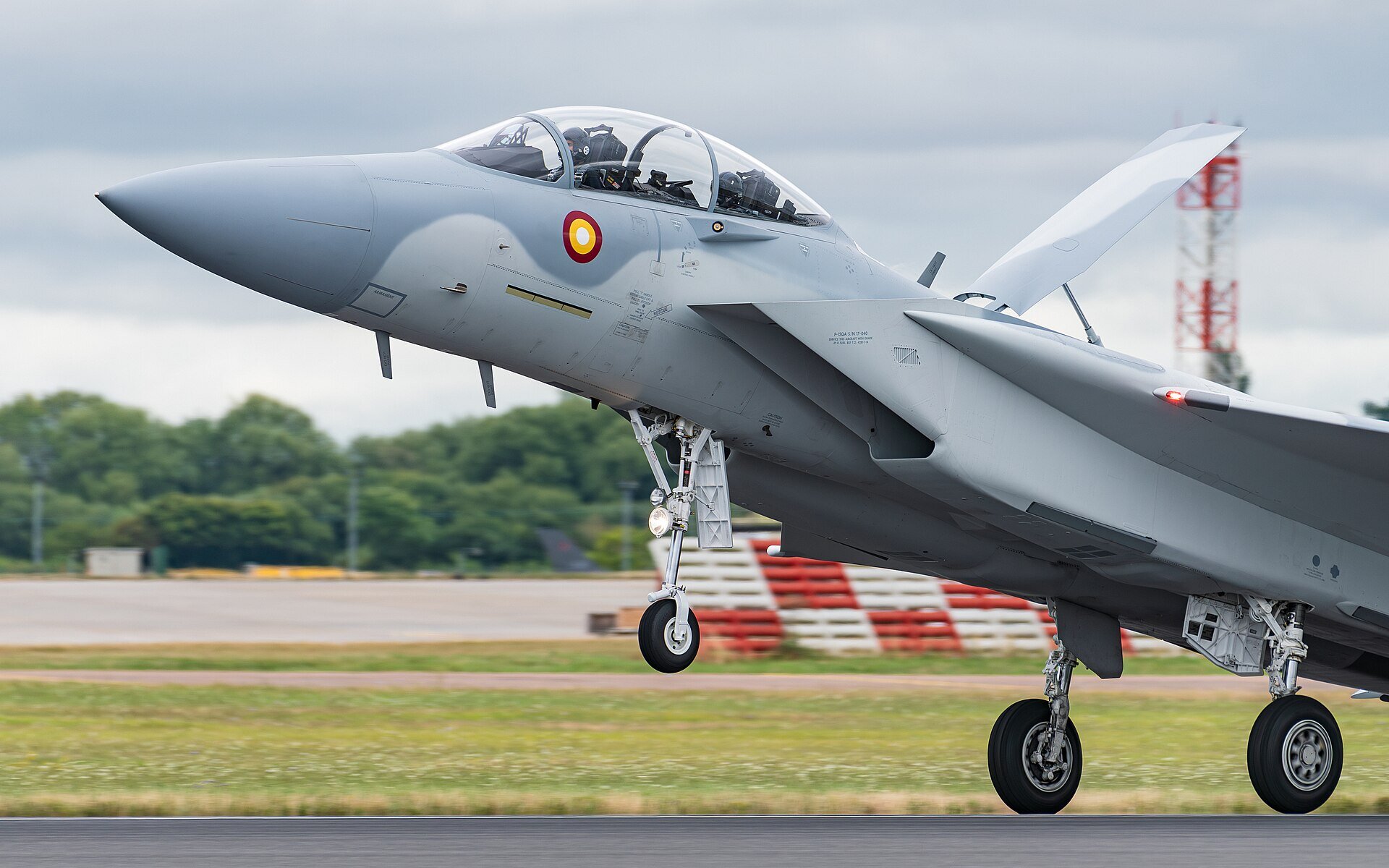
Initial reports from The Aviationist identified the intercepting aircraft as F-15QA Ababils from Qatar’s air superiority squadron. Subsequent confirmation by Qatari and American sources established that the two Su-24s were destroyed “two minutes” from their targets. The National later reported that a Eurofighter Typhoon armed with MBDA Meteor beyond-visual-range air-to-air missiles also participated in the engagement, suggesting a coordinated response involving multiple fighter types scrambled from different alert positions.
The engagement exposed both the desperation and the limitations of Iran’s air campaign. The Su-24 is a 1960s-vintage swing-wing bomber that Iran acquired from the Soviet Union, and its remaining fleet of operational airframes — estimated at fewer than 30 by the International Institute for Strategic Studies — represents an increasingly scarce resource. Sending two on a one-way mission against the most heavily defended air base in the Middle East reflected a calculation that the destruction of Al Udeid and Ras Laffan would be worth the near-certain loss of the aircraft and their crews.
The pilots did not eject. Both aircraft crashed into the sea, and Iranian state media subsequently confirmed the deaths of the crew members, whom Tehran described as “martyrs defending the sovereignty of the Islamic Republic.” The incident marked the first time the Qatar Emiri Air Force had engaged in air-to-air combat in its 52-year history.
“The bombers were two minutes from the largest US air base in the Middle East. If Qatar’s pilots had hesitated — even for thirty seconds — the consequences would have been catastrophic.”CNN, 4 March 2026
Why Is Al Udeid Air Base Iran’s Highest-Value Target in the Gulf?
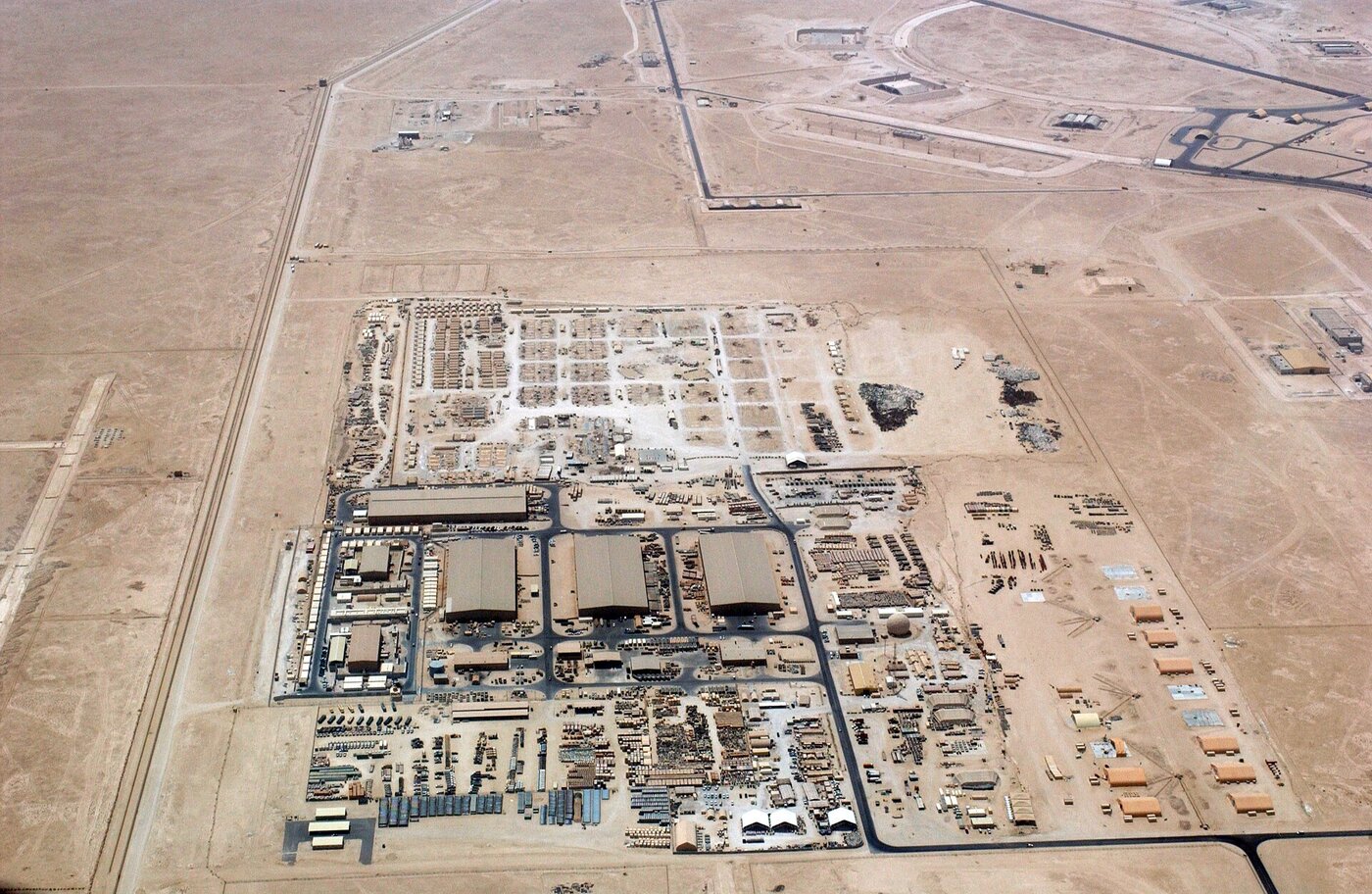
Al Udeid Air Base, located approximately 35 kilometres southwest of Doha, is the single most important American military installation between Europe and the Pacific. Understanding why Iran has devoted a disproportionate share of its dwindling missile inventory to attacking this facility requires grasping the scale of what sits behind its perimeter fence.
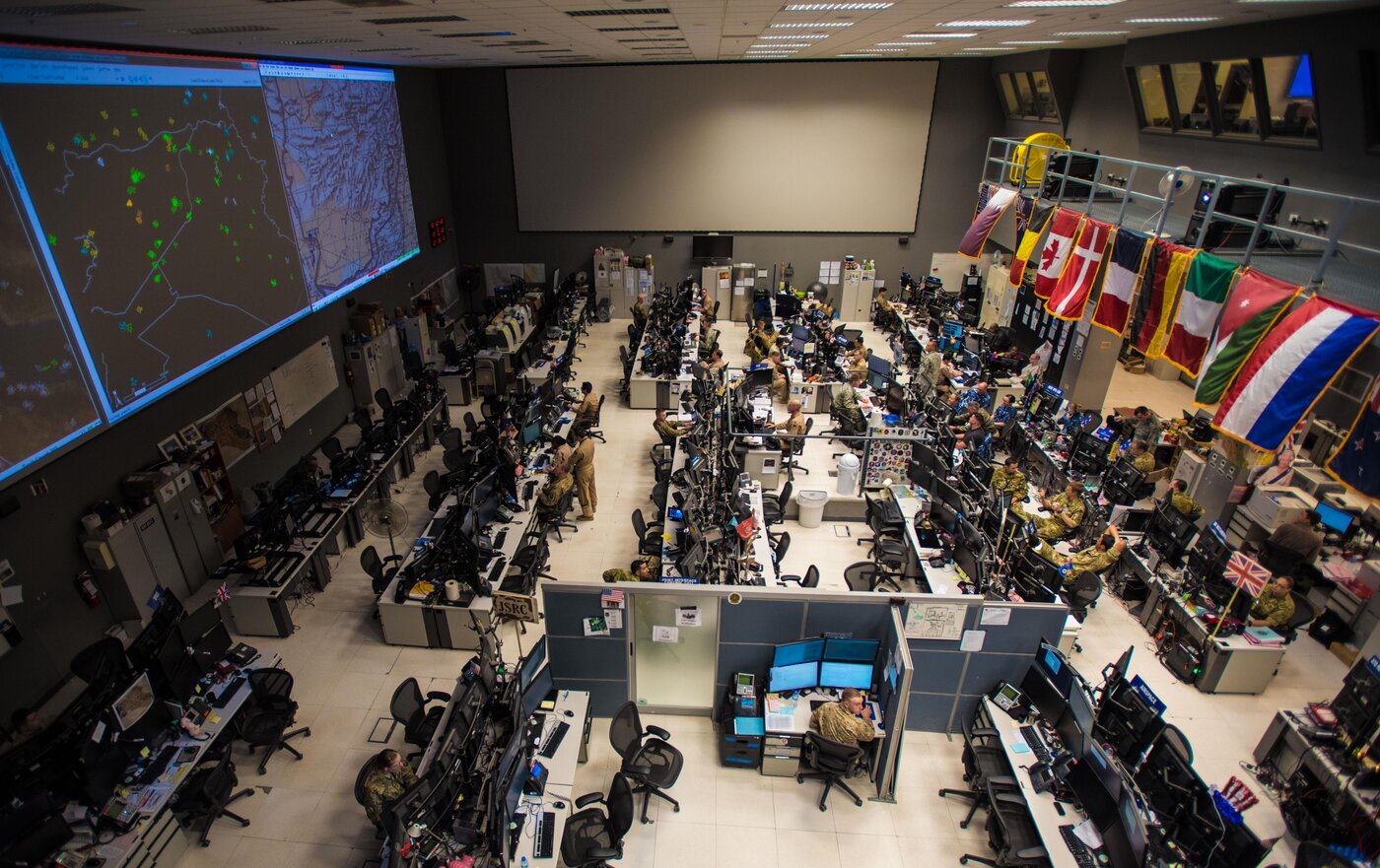
The base hosts the Combined Air Operations Center, the nerve centre from which every US and coalition air sortie across the Middle East, Central Asia, and East Africa is planned and coordinated. On any given day before the current conflict, approximately 10,000 US service members operated from Al Udeid, alongside personnel from the Royal Air Force, the Royal Australian Air Force, and several other coalition partners. The base houses fighter squadrons, aerial refuelling tankers, intelligence and surveillance platforms, and the communications infrastructure that links CENTCOM to the Pentagon in real time.
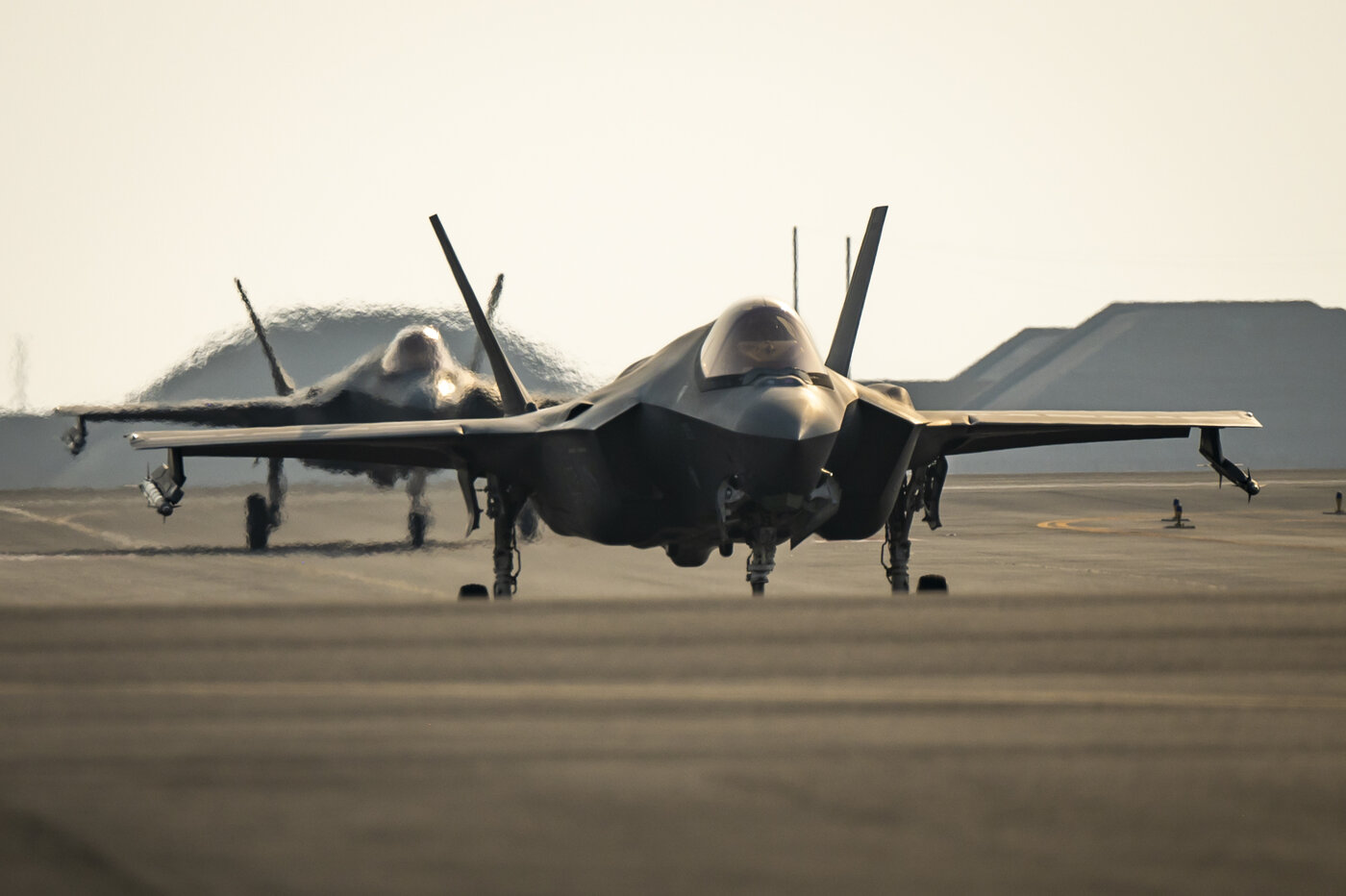
Since the war began, Al Udeid has served as the primary staging point for American air operations over Iran. F-35A Lightning IIs, F-15E Strike Eagles, and B-1B Lancers have launched sorties from its runways, while KC-135 Stratotankers based at the facility provide the aerial refuelling capability without which sustained operations over Iranian territory would be impossible. Destroying or degrading Al Udeid would, in Tehran’s calculation, force the United States to either withdraw to bases further from Iran — in Diego Garcia or the continental United States — or accept a significant reduction in sortie rates.
The base also sits within the broader Qatari security ecosystem. Ras Laffan, the gas processing complex that the second Iranian bomber was targeting, lies 80 kilometres to the north. Together, these two installations represent the twin pillars of Qatar’s strategic value to the West: military power projection and energy security. An assessment of Gulf air defence architecture shows that Al Udeid benefits from layered protection including Patriot PAC-3 batteries, THAAD interceptors operated by the US military, and Qatar’s own National Advanced Surface-to-Air Missile System.
The vulnerability, however, lies in concentration. Unlike Saudi Arabia, which distributes its military assets across a land mass the size of Western Europe, Qatar’s 11,581 square kilometres means that nearly everything of value — the air base, the gas infrastructure, the seat of government — sits within a 100-kilometre radius. A single ballistic missile that penetrates defences could strike any of these targets within seconds of launch from Iran’s southwestern coast, just 250 kilometres across the Gulf. This geographic vulnerability is precisely what makes the layered air defence system — combining American THAAD and Patriot batteries with Qatar’s own NASAMS and the fighter interceptors that proved their worth on 2 March — not merely useful but existentially necessary. Every intercept failure carries consequences that are, in a literal sense, orders of magnitude more damaging per square kilometre than equivalent failures in larger Gulf states.
How Strong Is Qatar’s Air Force in 2026?
Qatar’s military transformation over the past decade ranks among the most ambitious defence modernisation programmes in modern history, measured not by the absolute size of the armed forces — which remain small at approximately 25,000 active personnel — but by the quality and cost of the equipment acquired. The Qatar Emiri Air Force operates 275 active military aircraft, including 124 combat platforms, ranking 18th globally despite protecting a population of just 2.9 million.
The combat fleet centres on three advanced Western fighter types, a combination that no other Gulf state matches in terms of per-capita capability. Thirty-six F-15QA Ababils, the most advanced variant of the F-15 Eagle ever produced, form the air superiority backbone. Twenty-four Eurofighter Typhoons provide multi-role capability. And 36 Dassault Rafale DQ/EQ fighters — identical to the variant France operates from its own aircraft carrier — deliver precision strike and nuclear-capable delivery options.
This “triple threat” fleet, as defence analysts at 19FortyFive termed it, gives Qatar 96 fourth-generation-plus fighters across three airframes, each armed with a different but complementary weapons suite. The Rafales carry MBDA’s SCALP EG cruise missiles capable of striking targets over 500 kilometres away, as well as Exocet anti-ship missiles for maritime strike. The Typhoons deploy Meteor beyond-visual-range missiles with a no-escape zone exceeding 60 kilometres. The F-15QAs carry the full spectrum of American precision-guided munitions, including JDAM satellite-guided bombs and AIM-120D AMRAAM missiles.
| Aircraft | Type | Quantity | Primary Role | Key Weapons |
|---|---|---|---|---|
| Boeing F-15QA Ababil | Air superiority / Strike | 36 | Air dominance, precision strike | AIM-120D, JDAM, SDB |
| Eurofighter Typhoon | Multi-role | 24 | Air defence, ground attack | Meteor BVRAAM, Paveway, Storm Shadow |
| Dassault Rafale DQ/EQ | Multi-role | 36 | Strike, maritime, nuclear-capable | SCALP EG, Exocet, MICA, AASM |
| AH-64E Apache Guardian | Attack helicopter | 24 | Close air support, anti-armour | Hellfire, Hydra 70 |
| NH90 TTH | Transport helicopter | 12 | Troop transport, SAR | N/A |
| C-17 Globemaster III | Strategic airlift | 8 | Heavy transport | N/A |
The defence budget that assembled this arsenal has grown by 434 percent between 2014 and 2024, reaching approximately $14.4 billion annually — a figure that makes Qatar’s per-capita military spending the highest in the world by a significant margin. A $1 billion agreement with Raytheon signed in late 2025 added MQ-9B SkyGuardian drones and counter-UAS technologies to the inventory, capabilities that have proven directly relevant to the current conflict.
What the Su-24 intercept revealed was not merely that Qatar possessed advanced fighters — that was public knowledge — but that its pilots could execute a scramble, identify low-flying targets in a complex electromagnetic environment, and prosecute a kill chain in under two minutes. The speed of response suggests a level of combat readiness and training that defence analysts had not previously credited to the Qatari military, which has historically been viewed as a “showroom force” — well-equipped but untested. That assessment died on 2 March.
The training pipeline that produced this result has been quietly operating for over a decade. Qatari F-15QA pilots train alongside US Air Force personnel at Al Udeid under a bilateral agreement renewed in 2022, and the Typhoon and Rafale squadrons conduct regular exercises with their British and French counterparts. Between 2020 and 2025, Qatar participated in 14 multinational air exercises, including Red Flag at Nellis Air Force Base in Nevada — the US Air Force’s premier combat training programme — and the multinational Eagle Resolve exercise hosted annually in the Gulf. The French Air and Space Force maintains a permanent training detachment in Qatar specifically to support Rafale readiness.
The logistics chain that sustains this fleet is equally revealing. Qatar has invested in hardened aircraft shelters capable of withstanding conventional missile strikes, underground fuel storage depots, and redundant command-and-control systems designed to operate even if the primary air operations centre is destroyed. An $8 billion airbase expansion programme completed in 2024 added a second runway, expanded ramp space, and installed what defence industry sources describe as one of the most advanced integrated air defence command systems outside NATO — a network linking Patriot, NASAMS, and indigenous radar systems into a single tactical picture.
The question now facing regional defence planners is whether Qatar’s combat debut will accelerate or constrain its military ambitions. Doha has pending orders for additional F-15QAs and has expressed interest in acquiring the F-35 — a request that Washington has historically deferred to avoid upsetting the regional balance of power. The performance of Qatar’s pilots on 2 March may strengthen Doha’s case. A nation that has demonstrated the ability and willingness to fight in defence of American interests presents a qualitatively different case for advanced weapons transfers than one that merely writes large cheques.
Why Did Qatar’s Diplomatic Channel to Tehran Collapse?
Qatar’s transformation from Iran’s closest Gulf interlocutor to an active combatant represents one of the sharpest diplomatic reversals in modern Middle Eastern history. Understanding the collapse requires tracing a relationship that was, until late February 2026, the most productive backchannel between the Western alliance and the Islamic Republic.
Throughout the 2017-2021 GCC blockade, when Saudi Arabia, the UAE, Bahrain, and Egypt severed ties with Doha, Qatar deepened its engagement with Iran out of necessity. Tehran kept its airspace open to Qatar Airways, maintained trade flows, and provided a geopolitical counterweight to the blockading states. This pragmatic alignment survived the January 2021 Al Ula Declaration that formally ended the blockade, with Qatar maintaining its embassy in Tehran and continuing to host Iranian diplomatic staff in Doha.
Between 2021 and early 2026, Qatar served as the primary facilitator of US-Iran negotiations. Doha hosted indirect talks on the nuclear file, mediated prisoner exchanges, and maintained the kind of access to Iranian decision-makers that no other Gulf capital could replicate. In January 2026, as tensions between Washington and Tehran escalated over Iran’s nuclear enrichment programme and its provision of drones to Russia, Qatar led a regional diplomatic push that Euronews described as the most energetic Gulf peace effort in a decade.
The collapse was sudden and total. When US and Israeli forces struck Iran on 28 February, Tehran made no effort to distinguish between Gulf states that had lobbied for strikes — principally Saudi Arabia and the UAE, where Abu Dhabi now weighs the staggering cost of a war that has brought 941 drones and 189 missiles onto Emirati soil — and those that had advocated against military action. Qatar, according to Al Jazeera’s reporting from Doha, received no warning before Iranian missiles began falling on its territory. The Qatari Foreign Ministry stated publicly on 3 March that “there is currently no communication between Doha and Tehran,” a diplomatic rupture that would have been unthinkable 72 hours earlier.
Qatar’s prime minister, Sheikh Mohammed bin Abdulrahman Al Thani, condemned the attacks in a call with Iran’s foreign minister, accusing Tehran of seeking to “harm its neighbours and drag them into a war that is not theirs.” The phrase “a war that is not theirs” captured Qatar’s fundamental grievance: Doha had spent years warning both Washington and Tehran that military escalation would engulf the entire region, and now its warnings had been proven correct — with Iranian ordinance falling on Qatari soil as the proof. The efforts by Saudi Arabia to maintain its own diplomatic backchannel to Tehran now represent the last remaining line of communication between the GCC and Iran.
What Does Qatar’s LNG Shutdown Mean for Global Energy Markets?
The economic shockwave from Iran’s attacks on Qatar has, in certain respects, exceeded even the oil market disruption caused by strikes on Saudi Aramco’s Ras Tanura facility. On 2 March, QatarEnergy announced the cessation of all LNG production at Ras Laffan Industrial City and Mesaieed Industrial City, removing approximately 77 million tonnes per annum of liquefied natural gas from global supply — roughly one-fifth of the world’s total.
The market response was immediate and severe. European benchmark gas prices surged by nearly 50 percent within 48 hours of the shutdown announcement, according to Bloomberg. Asian LNG spot prices jumped 39 percent. The combined effect of Qatar’s LNG shutdown and the disruption to Saudi oil exports through the Strait of Hormuz created what traders described as the worst simultaneous oil-and-gas supply crisis since the 1973 Arab embargo.
Qatar’s dominance of the global LNG market makes its shutdown particularly consequential. The country is the world’s second-largest LNG exporter, with long-term supply contracts serving customers across Europe, Asia, and South America. Japan, South Korea, and China — all of which depend heavily on Qatari gas — face immediate supply shortfalls that alternative producers in Australia, the United States, and Mozambique cannot fully offset, given the limited spare LNG liquefaction capacity globally. A detailed examination of Qatar’s gas blackout and its cascading effects reveals why the LNG crisis may ultimately prove more destabilising than the oil shortage that has dominated international attention.
QatarEnergy also halted production of associated products, including urea, polymers, methanol, and aluminium — materials that flow through supply chains affecting agriculture, manufacturing, and construction worldwide. The fertiliser impact alone threatens to compound food price inflation that was already elevated due to the oil price spike.
| Metric | Pre-War Level | Post-Shutdown Level | Change |
|---|---|---|---|
| European gas benchmark (Dutch TTF) | €28/MWh | €42/MWh | +50% |
| Asian LNG spot price | $11.20/MMBtu | $15.60/MMBtu | +39% |
| Qatar LNG production | 77 mtpa | 0 mtpa | -100% |
| Global LNG supply removed | — | ~20% of world total | — |
| Estimated restart timeline | — | 2-4 weeks minimum | — |
The question analysts are now asking is not whether Qatar can restart production — the physical infrastructure at Ras Laffan appears largely intact, as Iranian strikes did not directly hit the liquefaction trains — but whether it will. As long as Iranian missiles continue to fall on Qatari territory, the risk calculus for resuming operations at a facility processing explosive cryogenic materials under active bombardment remains prohibitive. Modern Diplomacy’s assessment projects a “weeks-long disruption” at minimum, with full restoration dependent on either a ceasefire or the degradation of Iran’s missile capability to a level that no longer threatens Ras Laffan.
The geopolitical ripple effects extend to markets that have no direct stake in the Gulf conflict. South Korea, which imports approximately 25 percent of its LNG from Qatar under long-term contracts, has activated emergency energy reserves for the first time since 2011. Japan’s Ministry of Economy, Trade and Industry convened crisis meetings with utility executives to assess whether Australian and American LNG can fill the gap — preliminary assessments suggest a shortfall of at least 8 million tonnes over the next quarter. The cascading impact on interconnected energy and digital infrastructure has amplified the disruption far beyond what physical damage alone would suggest.
QatarEnergy’s planned expansion to 142 million tonnes per annum by 2030, anchored by the North Field expansion projects, now faces an uncertain timeline. The $30 billion investment programme was predicated on geopolitical stability that no longer exists. Insurance premiums for Gulf LNG shipments have already risen by an estimated 400 percent since the conflict began, according to Lloyd’s of London market data — a cost that will be passed directly to consumers in Tokyo, Seoul, Berlin, and London.
How Has the Saudi-Qatar Reconciliation Shaped the War Response?
The speed and depth of Saudi-Qatari cooperation since 28 February has vindicated the Al Ula Declaration in ways that neither Riyadh nor Doha could have anticipated when they signed it in January 2021. A reconciliation that many analysts — including those at Chatham House and the Arab Center in Washington — described as fragile and incomplete has, under the pressure of Iranian bombardment, produced the most coordinated GCC military response since the 1991 liberation of Kuwait.
The backstory is essential context. In June 2017, Saudi Arabia led a coalition of states in severing diplomatic ties with Qatar, closing their shared land border, and imposing a de facto blockade. The 13 demands issued by the blockading states — including the closure of Al Jazeera, the shuttering of a Turkish military base, and a drastic reduction in ties with Iran — were designed to bring Qatar to heel. Doha refused. The crisis lasted three and a half years, during which Qatar diversified its food imports, strengthened its Turkish alliance, and deepened engagement with Iran.
The Al Ula Declaration ended the blockade but left deep institutional scars. Military-to-military cooperation was slow to resume. Intelligence sharing remained limited. The Saudi-led coalition command structure excluded Qatar, and Doha’s continued hosting of Hamas political leadership remained a point of friction with Riyadh.
Iran’s attacks dissolved these residual tensions overnight. The GCC’s 50th Extraordinary Ministerial Council meeting, convened within 48 hours of the first strikes, issued a joint statement condemning “Iranian aggression against the GCC” — language that would have been impossible before Al Ula given Qatar’s diplomatic position. Saudi Defence Minister Prince Khalid bin Salman, who leads the Kingdom’s defence establishment, immediately contacted his Qatari counterpart, and intelligence-sharing protocols that had been dormant since 2017 were reactivated.
The speed of this reconciliation has stunned regional analysts. What began as crisis coordination is rapidly evolving into something far more ambitious — Qatar’s surprising role in the emerging Gulf military alliance suggests that Iran’s attacks have achieved the opposite of their strategic intent, forging the genuine GCC collective defense pact that decades of summitry could not.
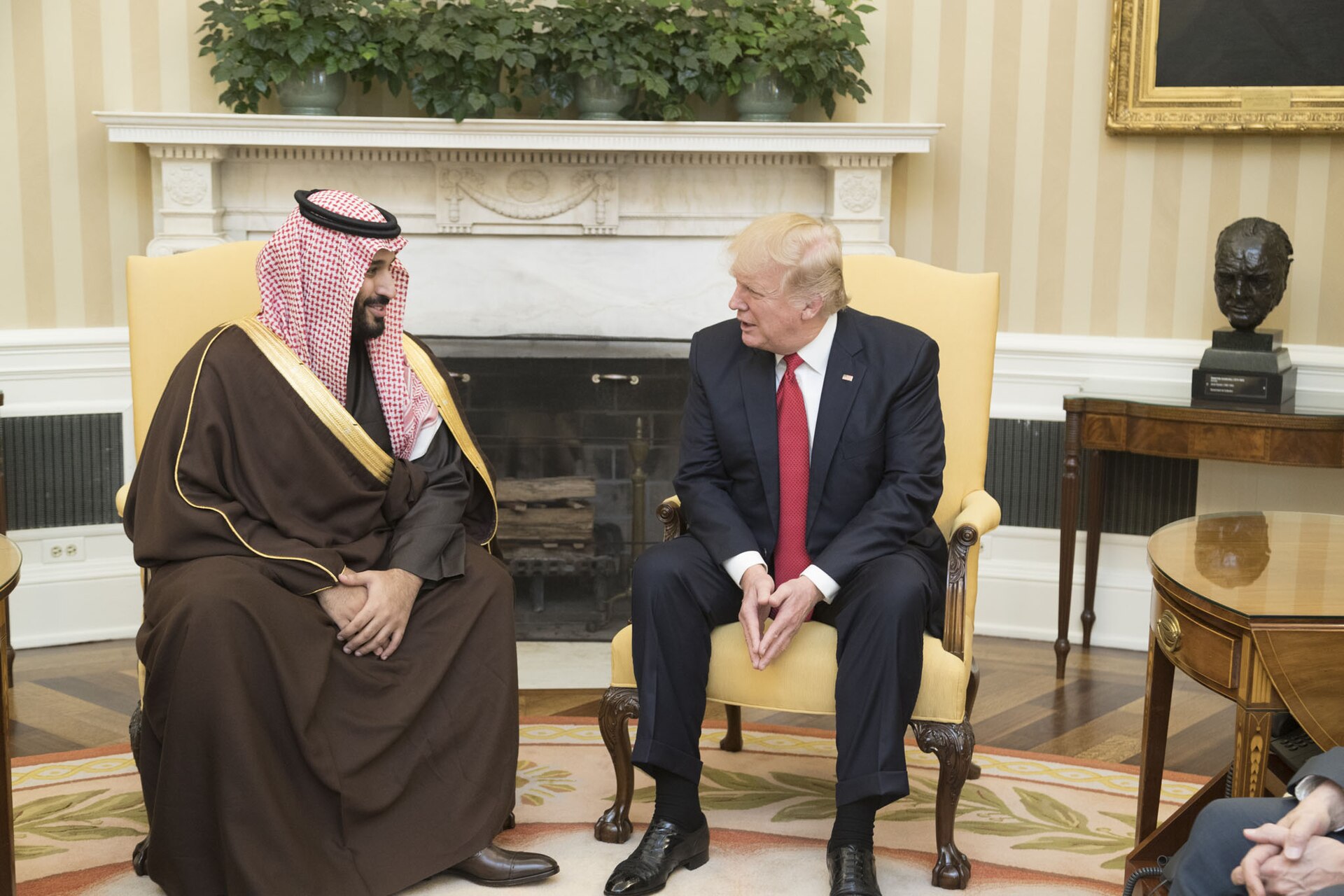
Saudi Arabia’s response to the strikes on Qatar also revealed the maturation of Crown Prince Mohammed bin Salman’s strategic thinking. Rather than viewing Qatar’s military engagement as a threat to Saudi primacy — the zero-sum lens through which Riyadh viewed Doha’s foreign policy during the blockade era — MBS appears to have recognised that a combat-capable Qatar strengthens the collective deterrent against Iran. Riyadh has told its Gulf allies to avoid steps that could inflame tensions further, according to Middle East Eye, but it has not discouraged Qatar’s robust self-defence.
The reconciliation also carries economic dimensions that strengthen the collective war footing. Saudi Arabia’s Red Sea ports, connected to the Kingdom’s industrial heartland by pipeline and rail, offer Qatar alternative export routes for LNG-derived products that cannot currently transit the Persian Gulf due to Iranian interdiction and the broader regional instability. Conversely, Qatar’s financial reserves — held through the Qatar Investment Authority’s $475 billion portfolio — provide a fiscal buffer that the GCC can collectively draw upon to sustain military operations without the austerity measures that prolonged conflict would otherwise demand. When Crown Prince Mohammed bin Salman and Sheikh Tamim spoke by phone on 1 March, the conversation reportedly covered not only military coordination but joint economic contingency planning, including the possible activation of GCC mutual defence spending commitments first agreed in 2013 but never tested.
The practical implications are significant. Qatar’s air force, with its F-15QAs and Rafales, now operates as a de facto extension of the GCC’s air defence umbrella. Saudi and Qatari radar data is being shared in real time for the first time since 2017. The Saudi-Qatari border crossing at Salwa, which was shuttered during the blockade, is now open for military logistics — a development that allows the land-locked air base to receive supplies overland if maritime routes through the Gulf are compromised.
What Is the Al Thani Family’s Strategic Calculus?
Emir Sheikh Tamim bin Hamad Al Thani faces the most consequential decision any Qatari ruler has confronted since his father’s bloodless palace coup in 1995. The calculations he makes in the coming weeks will determine whether Qatar emerges from this conflict with enhanced regional standing or diminished sovereignty, and whether the Al Thani dynasty’s signature foreign policy achievement — positioning a tiny gas-rich peninsula as an indispensable global intermediary — survives the war.
Three strategic imperatives compete for priority. The first is physical survival. Qatar is a state of 11,581 square kilometres — smaller than the US state of Connecticut — with a citizen population of approximately 380,000. Its entire economic model depends on the uninterrupted operation of gas infrastructure concentrated in a single industrial corridor along its northeastern coast. A sustained Iranian campaign that degrades this infrastructure would be existentially threatening in a way that similar attacks on Saudi Arabia, which possesses continental scale and diversified geography, simply are not.
The second imperative is alliance management. Qatar hosts not only the largest American military installation in the Middle East but also a Turkish military base — the first permanent Turkish military deployment in the Gulf since the Ottoman Empire. The Al Thani family’s security guarantee rests on the assumption that the United States and Turkey will defend Qatari sovereignty. The current conflict is testing that assumption in real time. American Patriot and THAAD batteries at Al Udeid are actively intercepting Iranian missiles, but the question of whether Washington would extend its nuclear umbrella to cover a direct Iranian escalation against Doha remains unanswered.
The third imperative is diplomatic capital preservation. Qatar has invested billions and decades in building a reputation as the Gulf’s honest broker — the country that talks to everyone, offends no one fatally, and provides a neutral venue for negotiations that cannot happen elsewhere. The Taliban talks were held in Doha. The Abraham Accords involved Qatari facilitation. The US-Iran backchannel ran through Qatari intelligence. Every missile that falls on Qatari soil erodes the neutrality that made this role possible, and every Qatari weapon that fires at an Iranian aircraft converts diplomatic capital into military credibility — a currency that is useful in war but depleted in peace.
The Small State Survival Matrix — How Tiny Nations Fight Existential Wars
Qatar’s predicament — a wealthy micro-state caught in a conflict between regional and global powers — has historical parallels that illuminate both the opportunities and the dangers ahead. Examining how small states have navigated existential military threats reveals patterns that apply directly to Doha’s current situation.
Small states facing military aggression from larger neighbours have historically relied on one or more of five survival strategies: alliance integration, where the small state binds itself so tightly to a great power that an attack on it becomes an attack on the patron; deterrence by capability, where technological superiority compensates for lack of strategic depth; economic indispensability, where the small state’s role in global supply chains makes its destruction too costly for any rational actor to pursue; diplomatic diversification, where relationships with multiple powers prevent isolation; and strategic hedging, where the small state maintains channels to all sides to ensure it always has a negotiating partner.
| State | Threat | Primary Strategy | Outcome | Qatar Parallel |
|---|---|---|---|---|
| Israel (1948-73) | Arab coalition | Deterrence by capability | Survived — built nuclear deterrent | Qatar’s $30B+ fleet |
| Kuwait (1990) | Iraqi invasion | Alliance integration (US) | Liberated — but fully occupied first | Al Udeid as US shield |
| Singapore (1965-present) | Regional instability | Economic indispensability | Thriving — too important to attack | LNG supply leverage |
| Finland (1939-44) | Soviet Union | Strategic hedging | Survived — ceded territory | Qatar’s Iran channel |
| Luxembourg (1940-44) | Nazi Germany | None viable | Occupied — geography fatal | Qatar’s lack of depth |
Qatar has, remarkably, pursued all five strategies simultaneously. It hosts the largest American military installation in the Middle East (alliance integration). It operates 96 advanced fighters — more per capita than any state on earth (deterrence by capability). It controls one-fifth of global LNG supply (economic indispensability). It maintains relations with Turkey, France, the UK, and multiple Asian powers (diplomatic diversification). And until 28 February, it maintained the only functioning diplomatic channel between the GCC and Iran (strategic hedging).
The current crisis has eliminated the fifth strategy and is severely testing the fourth. What remains — and what will determine Qatar’s survival — is whether the combination of American military protection, Qatari air power, and LNG leverage is sufficient to deter Iran from escalation that crosses the threshold from harassment into destruction. The lesson of Kuwait in 1990 is instructive: alliance guarantees are only as strong as the patron’s willingness to enforce them, and the speed of enforcement matters as much as its certainty. Kuwait’s alliance with the United States did not prevent Saddam Hussein’s invasion; it only ensured a liberation that came seven months later, after the country had been gutted.
Qatar cannot afford Kuwait’s experience. The concentration of its critical infrastructure — and citizen population — means that a successful Iranian strike on Ras Laffan or central Doha would inflict damage from which recovery might take years rather than months. The margin for error is measured not in provinces or cities, as it is for Saudi Arabia, but in individual buildings and pipeline junctions. This geographic reality — not ideology, not alliance politics, not historical grievance — is what makes Qatar’s participation in this conflict qualitatively different from any other Gulf state’s.
Why Qatar’s War Entry May Shorten, Not Extend, the Conflict
The conventional analysis, voiced by commentators across the spectrum from Al Jazeera to the Carnegie Endowment, holds that Qatar’s transition from mediator to combatant eliminates the last credible diplomatic off-ramp for Iran. Without Doha as an interlocutor, Tehran has no remaining channel to the West that it trusts, and the conflict grinds on indefinitely. This analysis is wrong — or at best incomplete — for three reasons that the conventional wisdom has not adequately considered.
The first reason is deterrent credibility. Iran’s decision to attack Qatar rested on an assumption that Doha, given its diplomatic orientation, would absorb strikes without responding kinetically. The Su-24 shootdown shattered that assumption. Tehran must now factor into its targeting calculus that every attack on Qatar risks not only interception but active counterforce — Qatari Rafales armed with SCALP cruise missiles have the range to strike Iranian territory from Qatari airspace without aerial refuelling. A mediator that fights back is paradoxically more useful as a mediator than one that simply absorbs punishment, because it negotiates from a position of demonstrated capability rather than perceived weakness.
The second reason is economic leverage. Qatar’s LNG shutdown has inflicted more damage on Iran’s remaining allies and trading partners — particularly China, which receives approximately 20 percent of its LNG from Qatar — than any military strike could. Beijing, which has studiously avoided condemning Iran’s nuclear programme or its retaliatory campaign, is now facing a gas supply crisis that threatens industrial production and residential heating across northern China. The pressure this creates on Beijing to push Tehran toward de-escalation far exceeds anything Western sanctions have achieved. An analysis of how allied powers are recalibrating their Gulf relationships suggests that Qatar’s energy leverage is reshaping diplomatic calculations far beyond the Middle East.
The third reason is GCC consolidation. Iran’s strategic objective in attacking Gulf states was to fracture the coalition supporting American operations, forcing individual states to calculate that the cost of hosting US forces exceeded the benefit. The opposite has occurred. The GCC is more unified than at any point since its founding in 1981. Doha and Riyadh are sharing intelligence and coordinating air defence in real time. The Bahraini and Kuwaiti armed forces are operating under integrated command structures. Iran has achieved the one outcome its strategists most feared: a Gulf alliance that is not merely diplomatic but operational, not merely aligned but fighting together.
The historical precedent most relevant here is not the Gulf Wars but the Falklands conflict of 1982. Argentina’s invasion of the Falkland Islands was predicated on an assumption that Britain would not fight for remote islands 8,000 miles from London. Britain’s decision to deploy a naval task force — at enormous cost and risk — fundamentally altered Argentina’s calculus. The war lasted 74 days. Had Britain accepted the invasion, the resulting power vacuum in the South Atlantic would have destabilised the region for decades. Iran’s assumption about Qatar mirrors Argentina’s about Britain: the belief that a wealthy, small, diplomatically oriented state will absorb aggression rather than resist it. Qatar’s response, like Britain’s, creates the conditions for a resolution that accommodation never could.
This does not guarantee a short war. But it does mean that the common assumption — that Qatar’s war entry removes a path to peace — inverts the actual dynamics. A Qatar that is fighting, suffering, and paying the economic cost of conflict has more leverage in any eventual negotiation, not less. It can offer Iran something that a neutral Qatar could not: the cessation of hostilities by a state that has demonstrated both the willingness and the ability to fight.
Can Qatar Still Mediate an End to the Iran War?
History offers a precedent that the architects of Qatar’s foreign policy know well. Egypt fought Israel in four wars before Anwar Sadat flew to Jerusalem in 1977 and negotiated the Camp David Accords. France and Germany fought three devastating wars in 70 years before building the European Coal and Steel Community. The idea that a state must choose permanently between fighting and mediating is a fallacy that the record of diplomacy does not support.
Qatar retains structural advantages that no other state in the region possesses. Its wealth — GDP per capita exceeds $80,000, among the highest in the world — gives it the resources to fund reconstruction and incentivise settlement. Its media infrastructure, centred on Al Jazeera, provides a platform that reaches every capital in the Middle East. Its diaspora networks and investment holdings across Iran, Turkey, Europe, and Asia give it influence that extends far beyond its geographic footprint. And crucially, Qatar’s very participation in the conflict gives it standing at any future negotiating table that pure neutrals — Oman, for instance — cannot claim.
The Qatari government has signalled, through carefully calibrated public statements, that it views its current military posture as defensive and temporary. Prime Minister Sheikh Mohammed bin Abdulrahman Al Thani’s use of the phrase “a war that is not theirs” was not accidental. It preserves the narrative space for Doha to re-engage diplomatically once conditions permit, positioning Qatar as a reluctant combatant forced to defend itself rather than an enthusiastic participant in a campaign of regime change.
Whether this positioning proves credible depends on factors largely outside Doha’s control. If the United States and Israel achieve their stated objective of degrading Iran’s nuclear and military capabilities to a level that Tehran accepts a new security framework, Qatar could emerge as the facilitator of a regional settlement — the country that fought when it had to and mediated when it could. If the conflict escalates into a prolonged attritional campaign, Qatar’s dual identity as combatant and would-be peacemaker may become untenable.
Sheikh Tamim’s personal background shapes his approach. He was educated at the Royal Military Academy Sandhurst and served as commander of the Qatari armed forces before ascending to the emirship. Unlike some Gulf rulers whose military experience is ceremonial, Sheikh Tamim has operational fluency and maintains direct relationships with American and British military commanders. His decision to authorise the use of force on 2 March — reportedly taken within seconds of receiving confirmation that Iranian aircraft were inbound — reflected a comfort with military decision-making that surprised observers who had categorised him primarily as a diplomat.
The economic dimension of the Al Thani calculus is equally consequential. Qatar’s sovereign wealth fund, the Qatar Investment Authority, manages assets estimated at $475 billion. Its holdings span London’s Canary Wharf, stakes in Volkswagen and Credit Suisse, the Paris Saint-Germain football club, and properties across Asia and the Americas. These investments represent not merely wealth but influence — leverage that can be deployed to shape the foreign policy of states that might otherwise remain indifferent to Qatar’s security concerns. The Al Thani family’s ability to translate financial power into political protection has been a cornerstone of Qatari strategy since the discovery of the North Field gas reserve in 1971.
The Al Thani family’s bet — and it is a bet, with the nation’s future as the stake — is that the war will be short, that Iran’s conventional capabilities will be degraded faster than its willingness to escalate, and that a window for diplomacy will open before Qatar’s economy and infrastructure sustain irreversible damage. The $14.4 billion annual defence budget, the 96-fighter air force, the American garrison at Al Udeid — these are not merely instruments of war. They are the foundation of a negotiating position that Qatar intends to occupy when the shooting stops.
| Category | Defensive Indicators | Offensive Indicators |
|---|---|---|
| Military action | Intercepted missiles and drones, shot down bombers approaching Qatari airspace | No strikes on Iranian soil, no deployment of SCALP cruise missiles |
| Diplomatic language | “A war that is not theirs” — positions Qatar as victim, not aggressor | Suspension of all communication with Tehran |
| Economic action | LNG shutdown framed as safety measure, not weapon | No formal sanctions on Iranian trade |
| Alliance posture | Coordinating with GCC on defence, not offence | Hosting US offensive air operations from Al Udeid |
| Media positioning | Al Jazeera covering civilian impact on both sides | Reduced coverage of anti-war protests in Gulf states |
Frequently Asked Questions
Did Qatar shoot down Iranian jets during the 2026 Iran war?
Qatar shot down two Iranian Su-24MK tactical bombers on 2 March 2026 as they approached Al Udeid Air Base and the Ras Laffan gas complex at low altitude. Qatari F-15QA Ababil fighters intercepted the bombers approximately two minutes before they would have reached their targets. The engagement marked the first aerial combat kill in the Qatar Emiri Air Force’s 52-year history and the first use of manned Iranian aircraft against a neighbouring country since the Iran-Iraq War.
Why did Iran attack Qatar if Qatar was a diplomatic partner?
Iran attacked Qatar because Al Udeid Air Base hosts the forward headquarters of US Central Command and serves as the primary staging point for American air operations against Iran. Tehran’s retaliatory campaign following the US-Israeli strikes of 28 February targeted every Gulf state hosting American military assets, without distinguishing between states that had supported the strikes and those, like Qatar, that had advocated against them. Qatar’s Foreign Ministry stated there was no advance warning from Tehran.
How many American troops are stationed at Al Udeid Air Base?
Al Udeid Air Base typically houses approximately 10,000 US military personnel, making it the largest American military installation in the Middle East. The base hosts the Combined Air Operations Center, fighter squadrons, aerial refuelling tankers, and intelligence platforms. Since the war began, the base has served as the primary launch point for F-35A, F-15E, and B-1B sorties against Iranian targets, alongside Royal Air Force and Australian Air Force assets.
What is the impact of Qatar’s LNG shutdown on global energy?
Qatar’s shutdown of LNG production at Ras Laffan removed approximately 77 million tonnes per annum from global supply — roughly one-fifth of the world’s total LNG output. European gas benchmark prices surged nearly 50 percent, while Asian LNG spot prices jumped 39 percent. The shutdown also halted production of associated products including urea, polymers, and methanol, affecting agricultural and manufacturing supply chains globally.
Is Qatar officially at war with Iran?
Qatar has not formally declared war on Iran and has characterised its military actions as purely defensive — intercepting missiles, drones, and aircraft that entered Qatari airspace. The Qatari government has described the conflict as “a war that is not theirs,” positioning itself as a victim of Iranian aggression rather than a willing participant. However, Qatar hosts the US air operations centre from which offensive strikes on Iran are planned and launched, making the distinction between host and combatant increasingly academic.
What military aircraft does Qatar operate?
Qatar operates one of the most advanced air forces in the Middle East relative to its size, with 96 fourth-generation-plus fighters across three platforms: 36 Boeing F-15QA Ababils, 24 Eurofighter Typhoons, and 36 Dassault Rafale DQ/EQ fighters. The fleet is supplemented by 24 AH-64E Apache attack helicopters, eight C-17 Globemaster III strategic airlifters, and an expanding drone capability including MQ-9B SkyGuardians. Qatar’s annual defence budget of approximately $14.4 billion — the highest per capita in the world — funds this force.
How does the Saudi-Qatar reconciliation affect the war?
The Al Ula Declaration of January 2021, which ended the three-and-a-half-year GCC blockade of Qatar, has proven its strategic value during the current conflict. Saudi Arabia and Qatar are sharing intelligence and coordinating air defence operations in real time for the first time since 2017. The Salwa border crossing is open for military logistics. The GCC’s 50th Extraordinary Ministerial Council issued a joint statement condemning Iranian aggression — a level of unanimity that would have been impossible before reconciliation. The cooperation extends to joint economic contingency planning and mutual defence spending commitments, representing the deepest Saudi-Qatari military integration since the GCC’s founding in 1981.