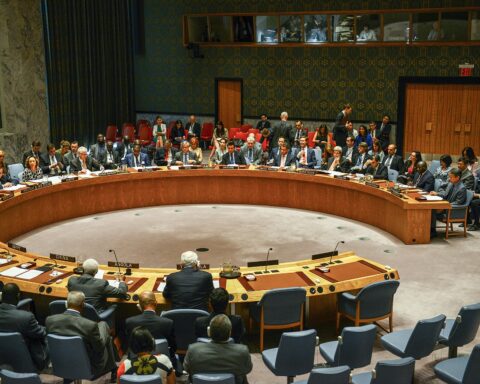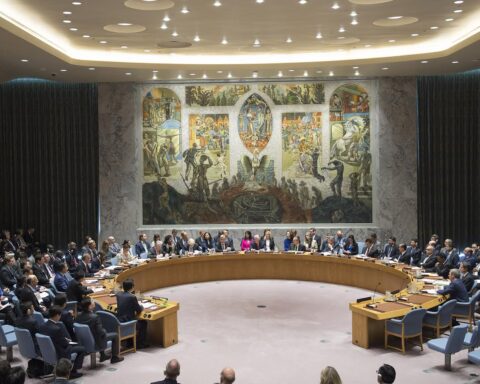

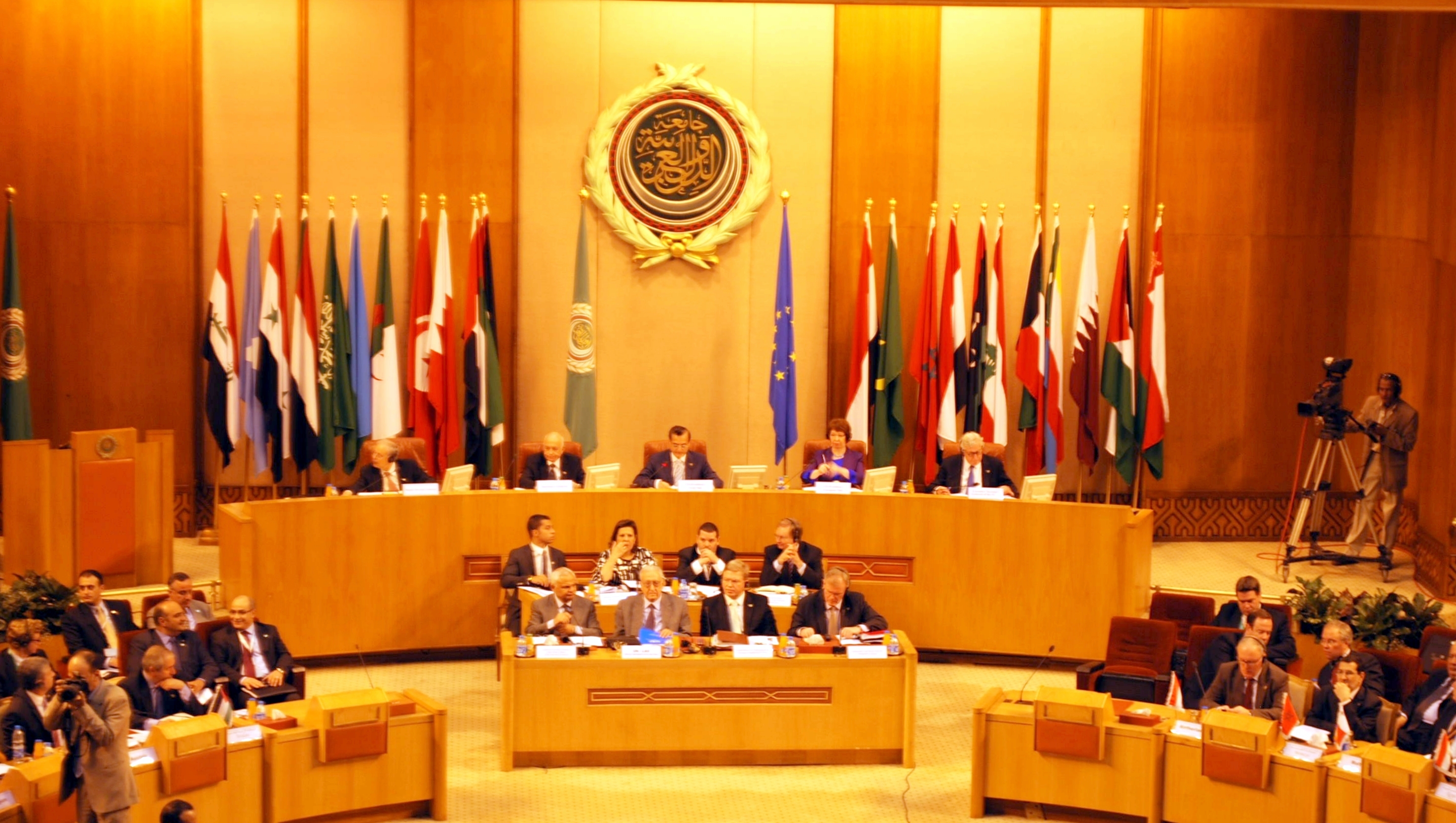
RIYADH — Saudi Arabia convened an emergency ministerial meeting of foreign ministers from Arab and Islamic nations in Riyadh on Wednesday evening, as Iran unleashed its most intense wave of retaliatory strikes across the Gulf following the Israeli assassination of Ali Larijani, Tehran’s de facto wartime leader. The consultative session, announced by the Saudi Foreign Ministry hours before it began, gathered senior diplomats to coordinate a collective response to what Riyadh described as threats to “the security and stability of the region” — diplomatic language that belied the severity of a crisis now entering its third week with no ceasefire in sight.
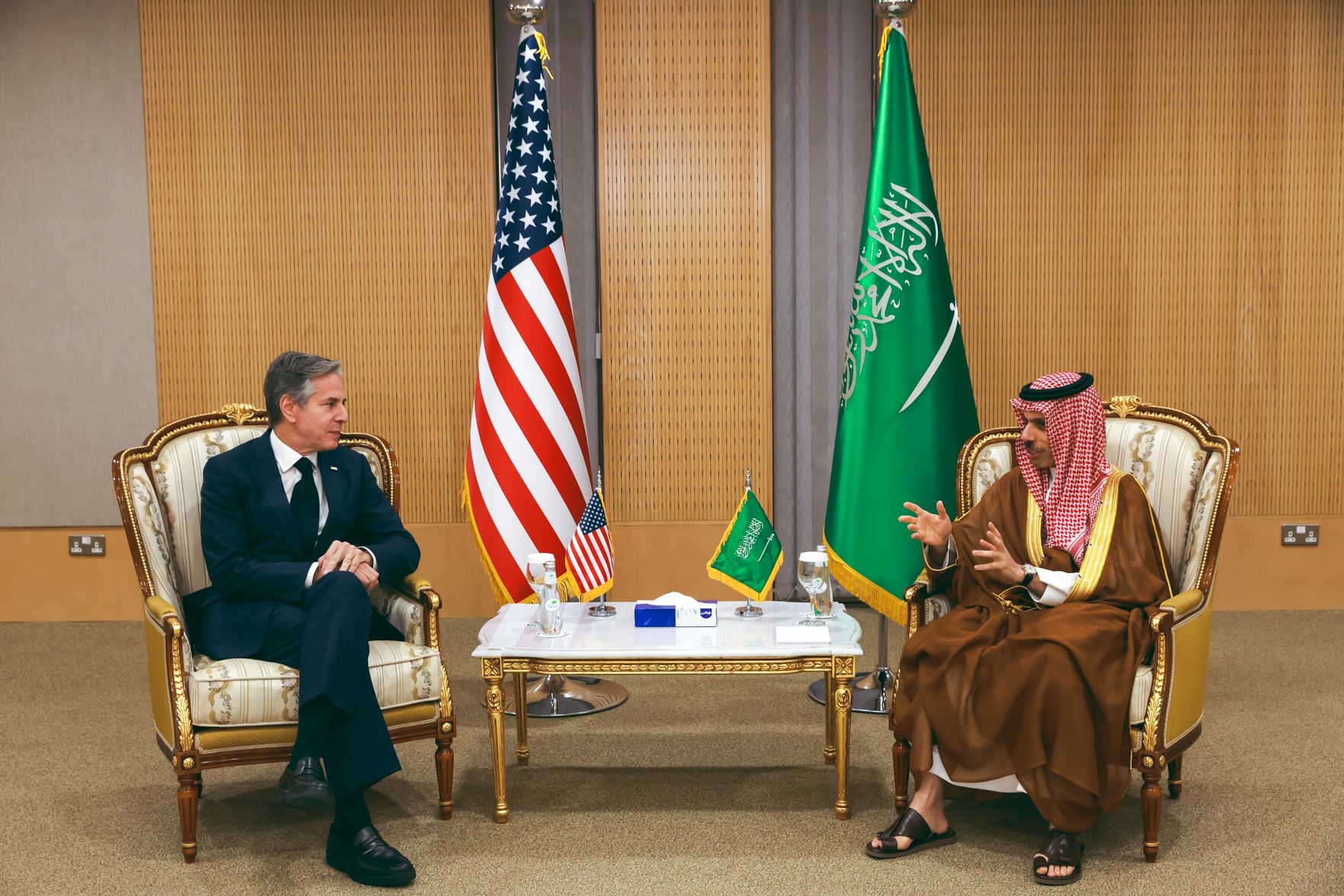
Prince Faisal bin Farhan, Saudi Arabia’s foreign minister and the architect of the Kingdom’s wartime diplomatic strategy, chaired the session after spending the preceding 48 hours in a marathon of bilateral phone calls with counterparts from the United States, Russia, China, Turkey, and a dozen Arab states. The meeting came as air raid sirens sounded across multiple Gulf capitals for the second consecutive day, with Saudi air defenses intercepting drones targeting Riyadh’s diplomatic quarter even as ministers gathered.
Table of Contents
- What Prompted the Emergency Ministerial Meeting?
- The Larijani Assassination and Its Regional Fallout
- How Has Iran Retaliated Across the Gulf?
- Saudi Arabia’s Air Defense Response
- Which Countries Are at the Table?
- Washington’s Role and the Rubio-Faisal Channel
- Can Diplomacy Still Prevent a Wider War?
- Frequently Asked Questions
What Prompted the Emergency Ministerial Meeting?
The Saudi Foreign Ministry announced the consultative meeting on Wednesday morning, inviting foreign ministers from “a number of Arab and Islamic countries” to Riyadh for urgent discussions on regional security. The invitation, reported by Asharq Al-Awsat and confirmed by Agence France-Presse, emphasized “further consultation and coordination on ways to support the security and stability of the region.” The phrasing was deliberately broad, but the timing left no ambiguity about the catalyst.
Within the preceding 36 hours, two seismic events had converged. First, Israel announced on the night of March 16-17 that its armed forces had killed Ali Larijani, secretary of Iran’s Supreme National Security Council and the most powerful figure in Tehran since the assassination of Supreme Leader Ali Khamenei on February 28. Iran confirmed the death hours later, along with the killing of Basij militia commander Gholamreza Soleimani in the same strike wave.
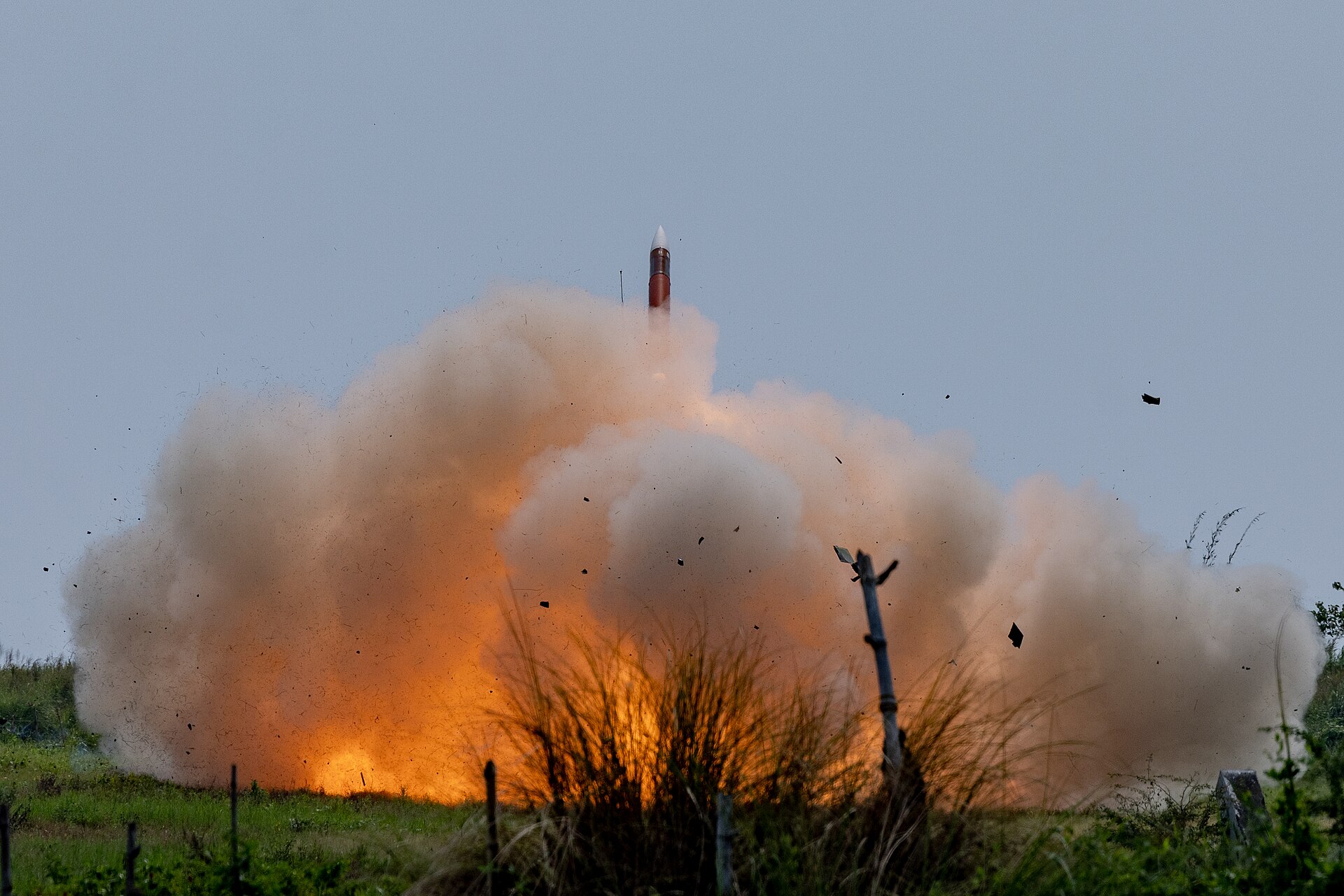
Second, Iran responded with its broadest retaliatory barrage since the war began. Missiles and drones struck or were intercepted over Saudi Arabia, Bahrain, Qatar — which would later expel Iranian military attachés after its Ras Laffan LNG facility was struck — Kuwait, the United Arab Emirates, Oman, Azerbaijan, the Kurdistan Region of Iraq, and even the British Overseas Territory of Akrotiri and Dhekelia on Cyprus, according to Al Jazeera and Reuters. The attacks hit sovereign territory of at least eight nations simultaneously, marking a dramatic escalation in the war’s geographic scope.
For Riyadh, the combination of a decapitation strike that eliminated Iran’s most pragmatic wartime leader and a retaliatory wave that reached the Kingdom’s own capital demanded an immediate multilateral response. The meeting represented Saudi Arabia’s assertion of its convening power — the ability to gather the Muslim world’s most senior diplomats at short notice in the middle of an active conflict.
The Middle East briefing 3,000+ readers start their day with.
One email. Every weekday morning. Free.
The Larijani Assassination and Its Regional Fallout
Ali Larijani’s death on March 17 removed the last figure in Tehran’s hierarchy whom Western and Gulf diplomats considered a viable interlocutor. Israeli Defense Minister Israel Katz confirmed the strike, calling Larijani “the architect of Iran’s war machine.” Iran’s state media confirmed the death within hours, a notable departure from Tehran’s initial silence after Khamenei’s killing on the war’s opening day.
Larijani, 67, had served as secretary of the Supreme National Security Council since August 2025, when President Masoud Pezeshkian reappointed him to the role. A philosopher by training who had written extensively on Immanuel Kant, he was also a consummate political operative. He had previously served as Iran’s chief nuclear negotiator from 2005 to 2007, as speaker of parliament for over a decade, and had been instrumental in securing parliamentary approval for the 2015 nuclear deal with world powers, according to CNN and Britannica.
From the moment of Khamenei’s death on February 28 until his own assassination 17 days later, multiple media outlets described Larijani as Iran’s de facto leader — the man holding together a fragmented wartime government while the country’s formal succession process stalled around Mojtaba Khamenei, the late supreme leader’s son. Just weeks before the February 28 strikes, Larijani had been engaged in indirect negotiations with Washington, telling Al Jazeera in an interview that Iran’s position on talks was “positive.”
His killing, analysts warned, eliminated the one Iranian official who understood both the nuclear file and the backchannel diplomacy that any ceasefire would require. “Larijani was a true insider of Iran’s regime and its public face,” CNN’s analysis noted. “His killing could prolong the war.” The question of whether Saudi Arabia can end a war it did not start hinges precisely on whether any remaining Iranian figure can fill the diplomatic void Larijani left behind. The Spokesman-Review described him as “Iran’s ultimate backroom powerbroker.” For the Arab and Islamic ministers arriving in Riyadh, his death raised an urgent question: with whom could a peace deal now be negotiated?
The answer remained unclear. Mojtaba Khamenei, named as Iran’s new supreme leader in the days after his father’s death, had largely been absent from public view. President Pezeshkian retained formal executive authority but lacked the security establishment’s trust. The IRGC’s operational commanders, who controlled Iran’s retaliatory strikes, answered to no civilian authority that foreign diplomats could reach.
How Has Iran Retaliated Across the Gulf?
Iran’s response to the Larijani assassination began within hours and escalated through Wednesday, March 18. The Islamic Revolutionary Guard Corps said its missiles struck more than 100 military and security targets inside Israel as “revenge” for Larijani’s killing, according to Iranian state media reported by Al Jazeera. But the strikes extended far beyond Israel.
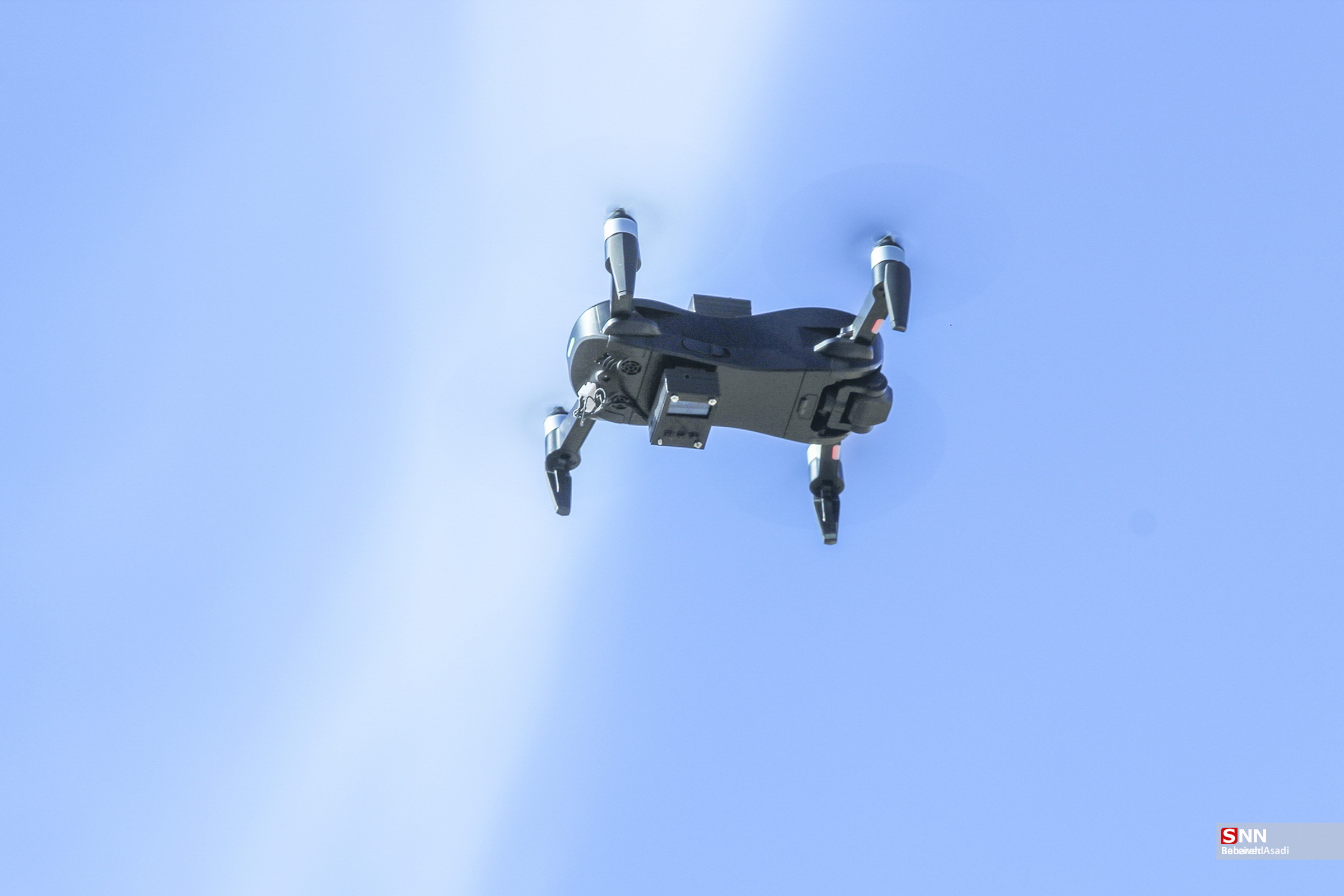
Saudi Arabia’s Ministry of Defense said on Wednesday that it intercepted two drones targeting the diplomatic quarter of Riyadh, the capital — a symbolically loaded target given that foreign ministers were gathering there for the emergency summit. Separately, Saudi air defenses intercepted a missile launched toward the Al-Kharj Governorate, where Prince Sultan Air Base hosts American military personnel. Shrapnel fell in the base’s vicinity, but the Saudi Defense Ministry reported no damage.
Across the Gulf, the picture was grimmer. Qatar’s Ministry of Defense confirmed it had intercepted a missile attack, with blasts audible in Doha. Kuwait’s National Guard shot down an unmanned aircraft at dawn, hours after the Kuwaiti army reported intercepting hostile missile and drone attacks. The UAE’s Ministry of Defense said its air defenses were “currently responding to incoming missile and drone threats from Iran,” with a loud explosion heard in Dubai. An Iranian projectile struck near Australia’s military headquarters for the Middle East in the Emirates, Euronews reported.
The scale of the March 18 retaliatory wave was significant even by the standards of a conflict that had already seen more than a hundred drone launches per day targeting Gulf infrastructure. Human Rights Watch, in a statement released the day before, had already condemned Iran’s “unlawful strikes across the Gulf” for “endangering civilians” across sovereign nations. The March 18 strikes added fresh urgency to those warnings.
| Country | Target | Weapon Type | Outcome |
|---|---|---|---|
| Saudi Arabia | Riyadh diplomatic quarter | Drones (2) | Intercepted |
| Saudi Arabia | Al-Kharj / Prince Sultan Air Base | Missile | Intercepted; shrapnel fell near base |
| Qatar | Doha area | Missile | Intercepted; blasts heard in capital |
| Kuwait | Undisclosed | Drone | Shot down by National Guard |
| UAE | Multiple targets | Missiles and drones | Air defenses responding; explosion heard in Dubai |
| Bahrain | Multiple targets | Missiles and drones | Intercepted, per defense ministry |
Saudi Arabia’s Air Defense Response
Saudi Arabia’s air defense network has been under sustained pressure since the war’s opening days, with the Ministry of Defense issuing near-daily interception reports. In the week preceding the Riyadh summit, the pace of engagements intensified sharply.
On March 16 alone, Major General Turki Al-Maliki, the Defense Ministry spokesperson, announced three separate interception events: six drones destroyed in the Eastern Region, seven more drones destroyed in the same area, and eight additional drones intercepted hours later, according to the Saudi Press Agency via GlobalSecurity.org. The previous days had seen a steady drumbeat of similar engagements — three drones on March 15, two in the Eastern Region on March 14, and three in Al-Kharj and the Empty Quarter on March 13.
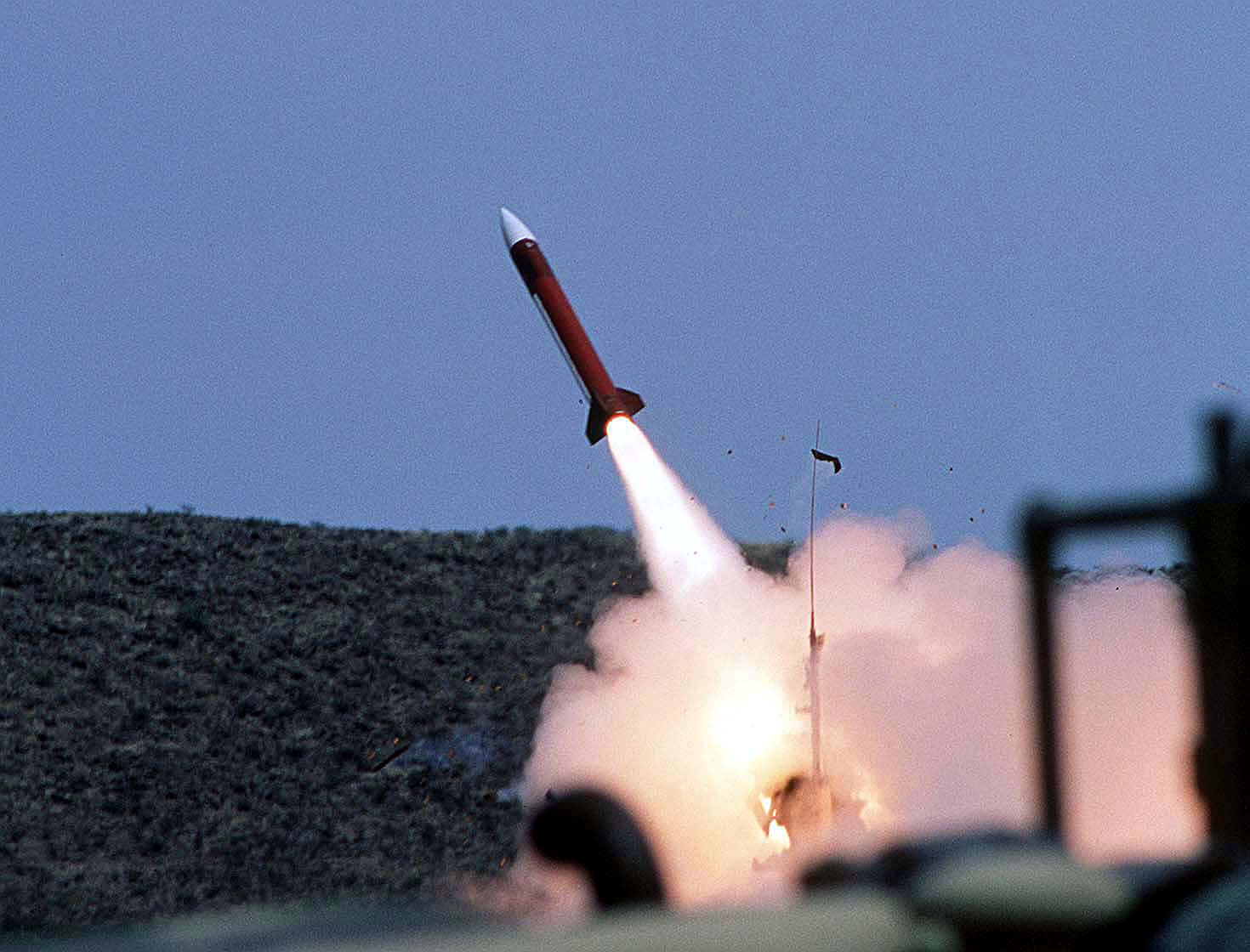
The pattern revealed both the effectiveness and the strain of the Saudi air defense architecture. Patriot missile batteries, THAAD systems, and shorter-range point defense platforms had successfully intercepted the vast majority of incoming threats. But the sheer volume — dozens of drones and missiles per day — raised questions about interceptor stockpile sustainability that defense planners across the Gulf were already grappling with.
Earlier in the month, three ballistic missiles aimed at Prince Sultan Air Base had been intercepted and destroyed, per Qatar News Agency. Two cruise missiles were intercepted east of Al-Jouf. The base, which hosts U.S. military personnel, had already been the site of the war’s seventh American combat death — Army Sergeant Benjamin Pennington, 26, who died on March 8 from wounds sustained in an earlier Iranian ballistic missile strike.
Saudi Defense Minister Prince Khalid bin Salman had spoken by phone with his UAE and Dubai counterparts in the days preceding the summit, condemning Iran’s aggression and coordinating defensive postures across the GCC. The defensive coordination extended to practical measures: shared early-warning radar data, coordinated interceptor deployment, and joint airspace management protocols that had been tested in earlier GCC exercises but never employed under live fire at this scale.
Which Countries Are at the Table?
The Saudi Foreign Ministry described the gathering as a “consultative ministerial meeting” — a format that carried specific diplomatic weight. Unlike a formal Arab League summit, which requires weeks of preparation and unanimous scheduling, a consultative meeting could be convened at the host nation’s discretion, allowing Riyadh to assemble the group within hours.
While the full attendee list was not publicly released in advance, the diplomatic groundwork laid by Prince Faisal bin Farhan in the preceding days provided a clear outline. The Saudi foreign minister had conducted phone consultations with counterparts from the UAE, Egypt, Iraq, Syria, Algeria, and Bosnia and Herzegovina, according to Saudi Press Agency reports. Qatar’s prime minister and foreign minister, Sheikh Mohammed bin Abdulrahman Al-Thani, had also spoken with Prince Faisal on March 16, per QNA.
The inclusion of non-Arab Islamic nations — signaled by the meeting’s explicit “Arab and Islamic” framing — suggested participation from Turkey, Pakistan, Indonesia, Malaysia, and possibly other Organisation of Islamic Cooperation (OIC) member states. Pakistan’s relevance was particularly acute: Prime Minister Shehbaz Sharif had flown to Riyadh on March 12 for urgent consultations with Crown Prince Mohammed bin Salman, and Pakistan had already deployed air defense assets and troops to the Kingdom under their bilateral defense pact.
The meeting’s convening power reflected Riyadh’s position at the center of both the conflict and its potential resolution. Saudi Arabia was simultaneously a target of Iranian strikes, the host of American military assets that Iran sought to hit, and a diplomatic heavyweight whose refusal to directly attack Iran had preserved channels that other belligerents had burned.
Washington’s Role and the Rubio-Faisal Channel
The United States was not at the Riyadh table — the meeting was explicitly an Arab-Islamic forum — but Washington’s shadow fell across every discussion point. Secretary of State Marco Rubio spoke with Prince Faisal bin Farhan in the hours preceding the summit, according to a State Department readout. Rubio “condemned Iran’s reprehensible attacks against the Kingdom of Saudi Arabia” and the two officials “discussed how to reinforce Saudi Arabia’s defense as Iran continues its baseless aggression against civilian targets.”
The Rubio-Faisal channel had become the primary conduit for U.S.-Saudi coordination since the war began. The State Department had released at least 12 readouts of their calls since February 28, an extraordinary frequency that underscored both the crisis’s severity and the personal rapport between the two diplomats. Rubio’s earlier calls had commended Saudi Arabia’s evacuation efforts and the Kingdom’s protection of diplomatic missions — a pointed reference to Saudi Arabia’s role in facilitating the departure of foreign nationals from the Gulf conflict zone.
Beyond Washington, Prince Faisal’s phone diplomacy had extended to Moscow, Beijing, and Ankara. Russia’s Foreign Minister Sergey Lavrov called his Saudi counterpart on March 2, according to a Russian Foreign Ministry press release. China’s Wang Yi spoke with Prince Faisal on March 5, per China’s Ministry of Foreign Affairs. Turkey’s foreign minister discussed “diplomatic efforts to end the conflict” with the Saudi minister, with both sides calling for restraint, Worldwide News Canada reported.
The breadth of these consultations pointed to Saudi Arabia’s carefully maintained multi-alignment policy — Riyadh was simultaneously America’s primary Gulf security partner, Beijing’s top oil supplier, and Moscow’s OPEC+ co-architect. That positioning gave the Kingdom diplomatic reach that no other Gulf state could match, but also imposed constraints: any Riyadh-brokered framework would need to satisfy actors with fundamentally divergent interests in the war’s outcome.
Can Diplomacy Still Prevent a Wider War?
The Riyadh summit convened against a backdrop of diminishing diplomatic options. With Larijani dead and Khamenei before him, the two Iranians most capable of negotiating a ceasefire had been eliminated by the strikes of a country — Israel — that showed no interest in a negotiated end to hostilities. The IRGC commanders now directing Iran’s war effort had spent their careers in operational planning, not diplomatic compromise.
Middle East Eye reported that Saudi Arabia had in recent weeks “told Gulf allies to avoid any steps that could inflame tensions with Iran” — a message that reflected Riyadh’s fear of an uncontrollable escalation spiral rather than any sympathy for Tehran. The Kingdom’s own position was deliberately ambiguous: it had neither joined the U.S.-Israeli strikes on Iran nor expelled American forces from its territory, a calibrated neutrality that drew criticism from hawks in Washington, including Senator Lindsey Graham, who had threatened to kill the U.S.-Saudi defense pact over Riyadh’s refusal to strike Iran directly.
The International Institute for Strategic Studies (IISS) published an analysis in March examining the “Gulf states’ offensive options against Iran,” concluding that while the GCC nations possessed significant military capability, the political will for direct engagement remained absent. The IISS assessment aligned with the posture Riyadh had adopted since the war’s first day: defend the homeland, protect allies, but do not become a co-belligerent.
For the ministers gathered in Riyadh, the most pressing question was not whether to escalate but how to de-escalate without appearing to reward Iranian aggression. Any framework that emerged would need to address three simultaneous crises: the active missile and drone war striking Gulf civilian infrastructure, the Strait of Hormuz closure that had disrupted global energy flows, and the political vacuum in Tehran that made identifying a negotiating partner nearly impossible.
The summit took on added urgency after Israel struck Iran’s South Pars gas field on the same day, prompting Tehran to name Saudi Arabia’s Jubail Petrochemical Complex and Samref refinery as specific targets for retaliatory strikes. The consultative framework established at this emergency meeting bore fruit the following day, when twelve nations reconvened in Riyadh to issue a joint condemnation of Iran and endorse the right of targeted states to self-defense under Article 51 — the strongest collective statement of the war.
Crown Prince Mohammed bin Salman had conveyed private messages to the leaders of Bahrain, Kuwait, Qatar, and the UAE in the days before the summit, urging restraint and coordination. The consultative format of Wednesday’s meeting — designed for frank discussion rather than binding communiques — suggested that Riyadh was seeking consensus before making any public diplomatic move, a cautious approach suited to a crisis where a single miscalculation could draw the entire Gulf into a wider war.
| Date | Counterpart | Country | Key Topic |
|---|---|---|---|
| March 2 | Sergey Lavrov | Russia | Regional de-escalation |
| March 5 | Wang Yi | China | Energy security, mediation |
| March 5 | Marco Rubio | United States | Saudi defense reinforcement |
| March 12 | PM Shehbaz Sharif (visit) | Pakistan | Defense pact activation |
| March 16 | Sheikh Mohammed bin Abdulrahman | Qatar | Regional coordination |
| March 17-18 | Counterparts from UAE, Egypt, Iraq, Syria, Algeria, Turkey, Japan, Bosnia | Multiple | Summit preparation, war response |
| March 18 | Marco Rubio | United States | Larijani fallout, Gulf defense |
Frequently Asked Questions
What is the purpose of the Riyadh emergency ministerial meeting on March 18?
Saudi Arabia convened foreign ministers from Arab and Islamic nations to coordinate a collective response to escalating Iranian strikes across the Gulf, particularly following the Israeli assassination of Ali Larijani, Iran’s de facto wartime leader. The meeting aimed to align positions on regional security and explore potential diplomatic pathways to de-escalation, according to the Saudi Foreign Ministry statement.
Who was Ali Larijani and why does his death matter?
Ali Larijani served as secretary of Iran’s Supreme National Security Council and was widely regarded as Iran’s de facto leader after Supreme Leader Khamenei’s assassination on February 28. A former nuclear negotiator and parliament speaker, he was the most pragmatic senior figure in Tehran’s hierarchy and the individual Western and Gulf diplomats considered most capable of negotiating a ceasefire, according to CNN and Bloomberg reporting.
Which countries did Iran strike in retaliation on March 18?
Iran launched missiles and drones targeting Saudi Arabia, Qatar, Kuwait, the UAE, Bahrain, Oman, Azerbaijan, the Kurdistan Region of Iraq, and the British territory of Akrotiri on Cyprus, according to Al Jazeera and Euronews. The strikes were described as retaliation for the Israeli killing of Larijani and Basij commander Gholamreza Soleimani on March 17.
Is Saudi Arabia directly fighting Iran in this war?
Saudi Arabia has maintained a defensive posture throughout the conflict, intercepting incoming missiles and drones but not launching offensive strikes against Iranian territory. Riyadh has hosted American military assets at Prince Sultan Air Base and other facilities, making it a target for Iranian retaliation, but has resisted pressure from some Washington lawmakers to become a co-belligerent, according to IISS analysis and multiple news reports. The assassination campaign has since intensified, with Israel killing intelligence minister Esmaeil Khatib on March 18 under a standing authorization that removes the requirement for case-by-case political approval of targeted killings.
What role is the United States playing in the Riyadh summit?
The United States was not formally represented at the Arab-Islamic ministerial meeting, but Secretary of State Marco Rubio spoke with Saudi Foreign Minister Prince Faisal bin Farhan immediately before the summit. The State Department said Rubio condemned Iranian attacks on Saudi Arabia and discussed reinforcing the Kingdom’s defense, signaling close behind-the-scenes coordination between Washington and Riyadh.