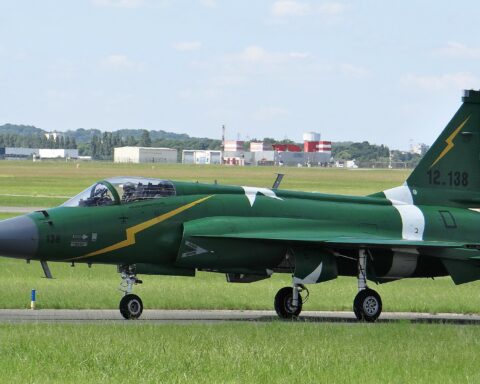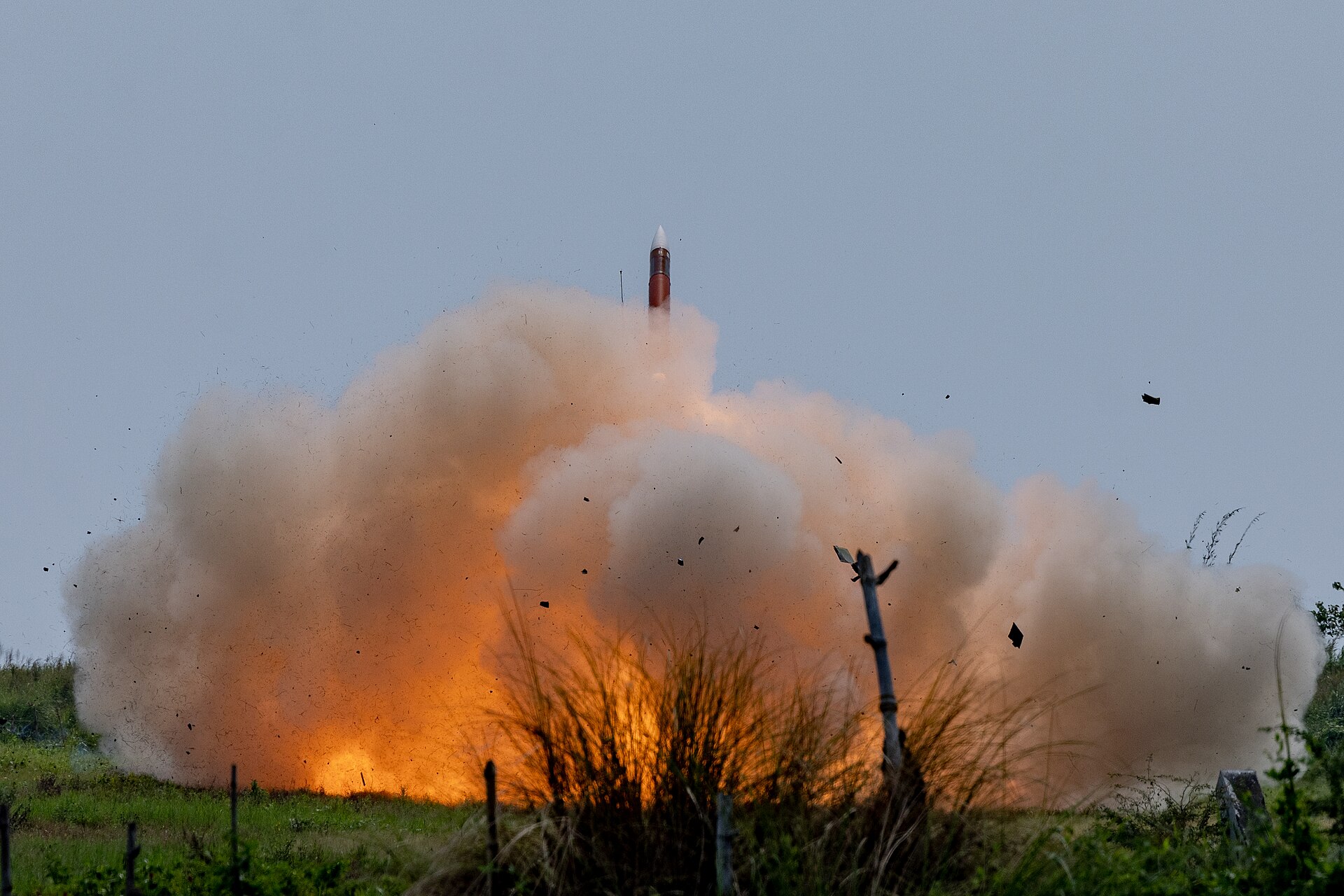

RIYADH — The same drone that destroyed a Ukrainian power substation in Kharkiv last month struck a Saudi desalination plant outside Jubail this week. The airframe was identical. The guidance software bore the same Russian-upgraded firmware. The only difference was the flag on the target. Twenty-seven days into the Iran war, the conflict that began as a US-Israeli strike campaign against Tehran’s nuclear infrastructure has merged with the four-year Russian invasion of Ukraine into a single, interconnected global confrontation — and the nations that recognised this convergence first are the ones now shaping the outcome.
Table of Contents
- One Drone, Two Wars
- How Did Russia Become Iran’s Intelligence Service in the Gulf?
- From Bakhmut to Riyadh — Ukraine’s Transformation Into a Drone Superpower
- What Is Zelenskyy Trading for Gulf Missile Stocks?
- The Supply Chain Axis — How Russia, China, and Iran Built an Arms Pipeline
- The Convergence Conflict Matrix
- Why Can’t Washington Fight Both Wars at Once?
- Saudi Arabia’s Strategic Pivot From Consumer to Connector
- Is a Ceasefire in One War Impossible Without the Other?
- The Ammunition Arithmetic That Neither Side Can Solve
- The Contrarian Case — Convergence Favours the Defenders
- What Happens If the Two Wars Decouple?
- Frequently Asked Questions
One Drone, Two Wars
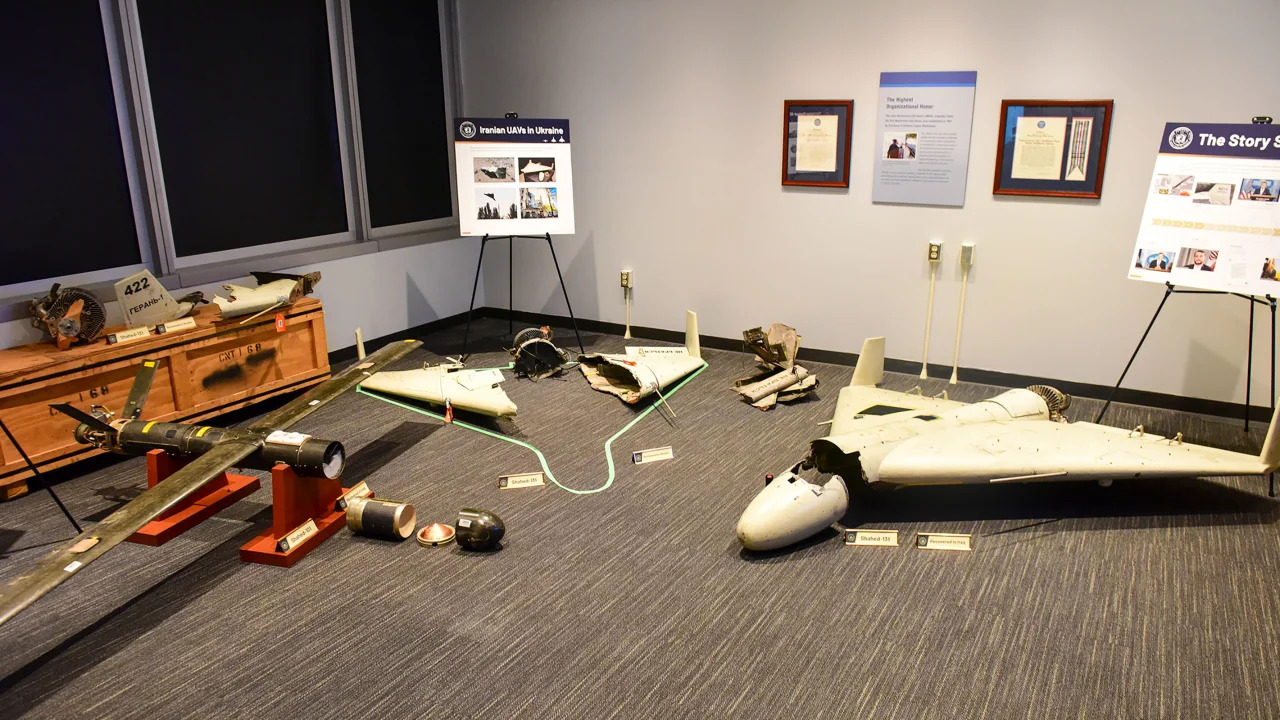
The Shahed-136 one-way attack drone entered mass production in Iran around 2021. Within a year, hundreds had been shipped to Russia for use against Ukrainian infrastructure. By 2025, Moscow had moved roughly 90 percent of Shahed assembly to the Alabuga Special Economic Zone in Tatarstan, where the factory now produces more than 5,500 units per month — approximately 66,000 per year, according to Ukraine’s Defence Intelligence Directorate. When Iran launched retaliatory strikes against Saudi Arabia and Gulf states beginning on 28 February 2026, the drones flying over Riyadh and Jubail carried upgraded Russian components: improved navigation modules, hardened communication links, and targeting software refined through two years of combat testing over Ukraine.
This is not a metaphor. The physical hardware connecting the two conflicts is the same. Russia transferred 600 disassembled Shahed-136 airframes to the Alabuga factory in 2022, along with components for 1,300 more, plus Iranian technical expertise. By early 2026, the technology flow had reversed. The Wall Street Journal reported on 17 March that Russia was shipping modified Shahed-type drones back to Iran, complete with upgraded avionics drawn from lessons learned in Ukrainian skies. Western intelligence officials confirmed to the Washington Post that Russia was simultaneously providing Iran with satellite imagery from its VKS (Russian Aerospace Forces) fleet, giving Tehran granular targeting data on US military positions, allied installations, and naval assets across the Gulf.
The implications are structural, not incidental. Two wars that most analysts, governments, and media organisations treat as separate crises share the same weapons, the same supply chains, the same intelligence networks, and — increasingly — the same combatants.
How Did Russia Become Iran’s Intelligence Service in the Gulf?
Moscow’s intelligence support for Tehran has moved well beyond the vague “strategic partnership” rhetoric of previous years into direct operational assistance. According to a senior European intelligence officer cited by the Wall Street Journal, Russia has been providing Iran with three categories of military-grade intelligence since the war began: satellite imagery of US base layouts and force movements across the Middle East; upgraded Shahed drone components including improved communication, navigation, and targeting systems; and tactical guidance on drone deployment drawn from Russia’s own operations in Ukraine — specifically, how many drones to launch in saturation attacks and at what altitudes to fly them to evade radar.
The EU’s foreign policy chief, Kaja Kallas, stated on 26 March that Russia had provided Iran with intelligence used to target and kill Americans — a charge Moscow dismissed as fabrication. CNN reported, citing multiple US officials, that Russia’s intelligence sharing began as early as the first week of March 2026, coinciding with Iran’s initial retaliatory strikes against US assets in Iraq, Bahrain, and Kuwait.
The operational impact has been measurable. Iranian strikes have hit radar installations in Jordan, targeted specific hangars at Prince Sultan Air Base in Saudi Arabia where US Air Force tanker aircraft were parked, and struck fuel storage facilities at military airfields in Kuwait and Bahrain with a precision that suggested foreknowledge of base layouts. Five US Air Force tanker aircraft at Prince Sultan Air Base sustained damage in strikes that targeted the exact coordinates of hardened aircraft shelters — the kind of intelligence that tactical reconnaissance alone, without satellite support, would be unlikely to produce.
Russia’s motivation is straightforward. Every Patriot missile fired over Riyadh is one fewer available for Ukraine’s defence. Every US military asset redeployed to the Gulf is one withdrawn from NATO’s eastern flank. Every dollar Washington spends on the Iran war is a dollar less available for Ukrainian military aid. Moscow did not start the Iran war, but it has found in Tehran’s campaign a force multiplier for its own strategic objectives — a second front that bleeds American resources without requiring a single Russian soldier.
From Bakhmut to Riyadh — Ukraine’s Transformation Into a Drone Superpower
Ukraine’s emergence as the world’s leading combat drone innovator is one of the most consequential military-industrial developments of the decade. In February 2022, when Russia launched its full-scale invasion, Ukraine had a handful of small drone manufacturers producing a few hundred units per month. By early 2026, the country was on track to produce seven million drones domestically — a figure comparable to China’s annual output, according to Ukraine’s defence minister. The transformation was driven by necessity: Ukraine could not match Russia’s artillery advantage, so it built a drone ecosystem from scratch, combining Silicon Valley-style startup culture with battlefield iteration cycles measured in days rather than years.
The crown jewel of this ecosystem is the interceptor drone — a category of weapon that barely existed before the Ukraine war. The Wild Hornets Sting, developed by a team of approximately 25 engineers, costs roughly $2,100 to $2,500 per unit and has destroyed over 3,900 Russian Geran drones (the Russian-produced variant of the Shahed-136) as of early March 2026. The company can produce 10,000 units per month. For comparison, a single Patriot PAC-3 interceptor missile costs between $4 million and $12 million. A Shahed attack drone costs approximately $35,000. The Sting interceptor thus represents a 1,500-to-1 cost advantage over traditional air defence for countering the same threat.
When Iran began launching Shahed-derived drones at Saudi Arabia and Gulf states, the demand signal was immediate. The Atlantic Council confirmed Ukraine’s status as a drone warfare superpower. Defence News reported on 20 March that Ukraine had deployed interception units to five Middle Eastern countries. The Defense Post reported that around 200 Ukrainian military experts were operating in the UAE, Qatar, Saudi Arabia, and Kuwait by 18 March, providing hands-on counter-drone expertise.
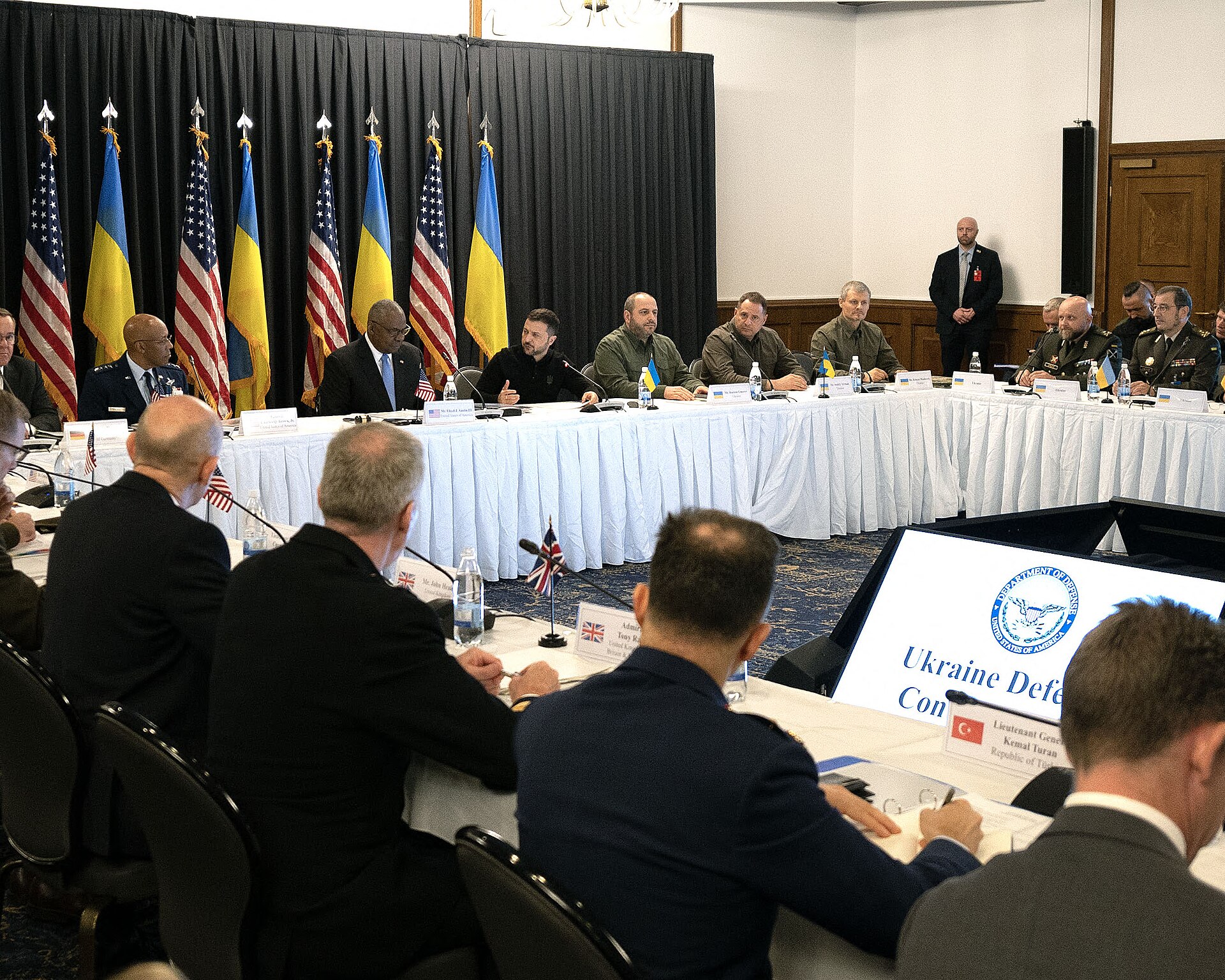
The Kyiv Independent reported that Saudi Arabia was preparing a “huge deal” for Ukrainian weapons, with a Saudi arms company having already signed an agreement for Ukrainian-made interceptor missiles. Separately, Ukraine’s Defence Minister Rustem Umerov toured the UAE, Saudi Arabia, Qatar, Kuwait, and Jordan in late March, outlining long-term security cooperation deals that would extend well beyond the current conflict.
What Is Zelenskyy Trading for Gulf Missile Stocks?
Zelenskyy’s arrival in Riyadh on 26 March crystallised a transaction that had been developing for weeks. The terms are simple and mutually beneficial: Ukraine offers battle-tested drone interception technology, operational expertise from four years of continuous combat against Iranian-designed drones, and the ability to deploy specialist units within days. In return, Ukraine seeks the one thing Gulf states possess in abundance and Kyiv desperately needs — high-end Western air defence missiles, particularly Patriot and THAAD interceptors that Saudi Arabia, the UAE, and Qatar hold in significant quantities.
The economics of the exchange reveal why both sides find it compelling. Saudi Arabia has spent roughly $80 billion on military equipment over the past decade, including stockpiles of PAC-3 interceptors that cost up to $12 million each. Those interceptors are being consumed at an alarming rate against $35,000 Iranian drones — an exchange ratio that threatens to bankrupt even the wealthiest defence budgets. Ukraine’s Sting interceptor, at $2,100, can neutralise the same Shahed drone at a fraction of the cost. For Riyadh, swapping surplus Patriot missiles — which Kyiv needs against Russia’s ballistic missile attacks — for Ukrainian interceptor technology that protects Saudi oil infrastructure at 1/5,000th of the per-unit cost is not charity. It is rational defence economics.
The arrangement also carries strategic weight beyond hardware. Ukraine has spent four years developing tactics, techniques, and procedures for countering Iranian drone warfare under conditions of sustained bombardment. No NATO military has this experience. No Western defence contractor can offer it. When Ukrainian specialists arrive at a Gulf air base, they bring institutional knowledge that would take any other country’s military years to develop organically — knowledge of Shahed flight profiles, radar cross-section characteristics, optimal interception geometries, and electronic warfare countermeasures tested against thousands of live targets.
The Supply Chain Axis — How Russia, China, and Iran Built an Arms Pipeline
The convergence of the two wars extends far deeper than battlefield cooperation. A trilateral supply chain connecting China, Russia, and Iran has emerged as the logistical backbone of both conflicts — and understanding its structure is essential to understanding why the wars cannot be separated.
The Atlantic Council documented this network in detail on 26 March 2026. The chain operates as follows: China exports dual-use technology — precision machine tools, microelectronics, navigation components, and industrial chemicals — to both Russia and Iran, often through intermediary firms in the UAE, Turkey, and Central Asia. Russia, using this technology alongside Iranian know-how, produces Shahed-type drones at the Alabuga factory and ships upgraded variants back to Iran. Iran deploys these drones against Gulf targets while simultaneously supplying Houthi forces in Yemen with similar technology. China, meanwhile, has allowed Iranian state-owned vessels to load sodium perchlorate — a key ingredient in solid rocket fuel — at its Gaolan Port on at least two documented occasions, including during the week of 2 March 2026, just days after the Iran war began.
The scale of this network is significant. The Institute for Science and International Security assessed that the Alabuga factory’s production capacity expanded dramatically through 2025, aided by satellite imagery showing “hundreds of new residential buildings and a dozen new production facilities” constructed to house thousands of additional workers. Reports from November 2025 indicated Russia was planning to recruit approximately 12,000 North Korean labourers for Alabuga’s enterprises — a workforce transfer that itself represents a convergence of three authoritarian states’ strategic interests.
| Origin | Destination | Material/Technology | End Use | Documentation |
|---|---|---|---|---|
| Iran | Russia | 600 Shahed-136 airframes + 1,300 component kits | Strikes on Ukraine | US intelligence, 2022-2023 |
| China | Russia (Alabuga) | Dual-use electronics, machine tools, logistics infrastructure | Drone manufacturing | CSIS satellite analysis, 2024 |
| Russia | Iran | Modified Shahed drones with upgraded avionics | Strikes on Gulf states | WSJ/FT, March 2026 |
| Russia | Iran | VKS satellite imagery of US/allied positions | Targeting US bases | Washington Post, CNN, March 2026 |
| China | Iran | 1,000+ tonnes sodium perchlorate (rocket fuel component) | Ballistic missiles | Atlantic Council, March 2026 |
| Russia | Iran | Shoulder-fired air defence systems (Igla-type) | Iranian ground forces | FDD analysis, February 2026 |
| North Korea | Russia (Alabuga) | 12,000 labourers (planned) | Drone factory workforce | Ukraine intelligence, November 2025 |
This supply chain creates mutual dependency that reinforces convergence. Iran cannot sustain its drone campaign against the Gulf without Russian-upgraded components and Chinese-supplied rocket fuel precursors. Russia cannot maintain its own drone attacks on Ukraine without the production capacity built on Iranian blueprints and Chinese machine tools. Neither can operate at scale without Chinese dual-use technology exports. The result is a tripartite arms economy in which disrupting one node affects all three partners — and in which escalation in one theatre generates demand that benefits all three.
The Convergence Conflict Matrix
The interconnections between the Ukraine and Iran wars can be mapped across seven dimensions, each reinforcing the others. This Convergence Conflict Matrix reveals that these are not parallel conflicts but interlocking components of a single geopolitical confrontation.
| Dimension | Ukraine Theatre | Iran/Gulf Theatre | Connection Point | Convergence Strength |
|---|---|---|---|---|
| Weapons systems | Shahed/Geran drones strike Ukrainian infrastructure | Upgraded Shahed drones strike Gulf infrastructure | Identical airframes, Russian-upgraded firmware | Direct |
| Intelligence sharing | Iran provided Russia with drone blueprints (2022) | Russia provides Iran with satellite imagery (2026) | Bidirectional intelligence flow via VKS | Direct |
| Counter-drone technology | Ukraine developed Sting interceptors against Shaheds | Ukraine deploys same interceptors in Gulf | 200+ Ukrainian experts operating in 5 Gulf states | Direct |
| Munitions competition | US/NATO Patriot stocks depleted for Ukraine | US/Gulf Patriot stocks depleted against Iran | Same interceptor inventory drawn from both theatres | Critical |
| Supply chains | China supplies Russia with dual-use tech via Alabuga | China supplies Iran with rocket fuel precursors | Trilateral China-Russia-Iran procurement network | Structural |
| Force posture | US troops redeployed from European positions | US troops deployed to Gulf from global reserves | Same force pool stretched across two active fronts | Critical |
| Diplomatic leverage | Russia uses Iran war to drain Western focus | Iran uses Ukraine precedent for legitimacy claims | Each conflict provides strategic cover for the other | Indirect |
The matrix reveals that five of the seven dimensions involve direct or critical connections — shared physical hardware, shared intelligence systems, shared munitions inventories, shared supply chains, and shared force pools. Only diplomatic leverage operates at an indirect level. The implication is that decisions made in one theatre immediately affect outcomes in the other, whether or not policymakers intend them to.
Why Can’t Washington Fight Both Wars at Once?
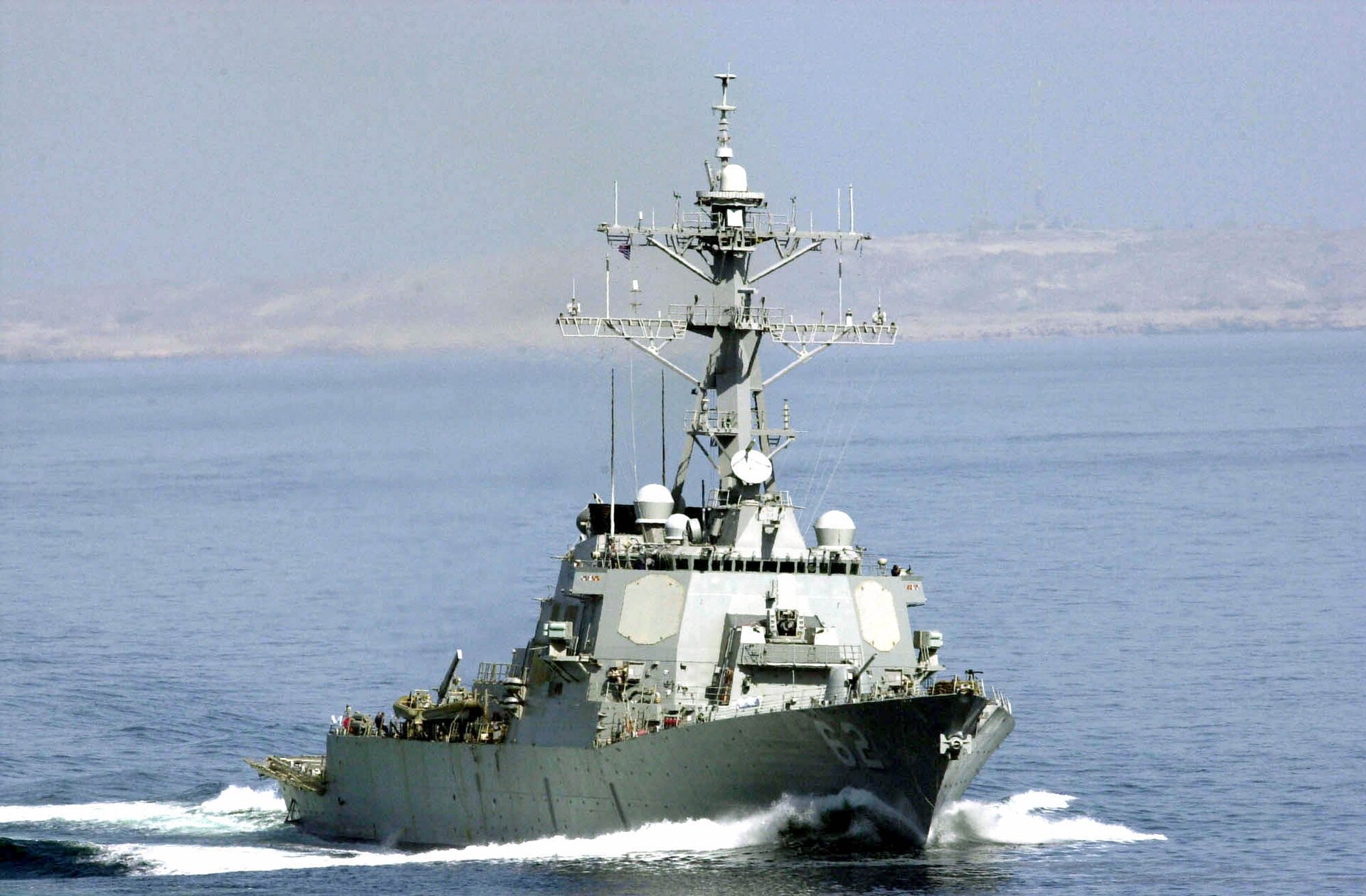
The United States maintains the world’s most powerful military, with a defence budget exceeding $886 billion in fiscal year 2025. Yet the simultaneous demands of supporting Ukraine and conducting operations in the Gulf have exposed structural limitations that no amount of spending can immediately resolve.
The most acute pressure point is interceptor missiles. The US has transferred significant quantities of Patriot and NASAMS interceptors to Ukraine since 2022, drawing down stockpiles that were already below pre-war planning levels. Simultaneously, the Iran war has placed unprecedented demands on the same interceptor inventory in the Gulf. Saudi Arabia’s air defence systems have intercepted hundreds of Iranian drones and missiles in less than four weeks — each engagement consuming interceptors that take months or years to manufacture. Raytheon’s PAC-3 production line can deliver approximately 500 interceptors per year. At current consumption rates across both theatres, that production capacity is insufficient to replenish stocks in either.
The personnel dimension is equally constrained. The Pentagon has deployed approximately 50,000 additional troops to the Gulf region since the war began, according to reporting from multiple outlets. These forces include carrier strike groups, air defence battalions, and logistics units — many of which were previously earmarked for European deterrence or Indo-Pacific contingencies. Every battalion commander sent to the Gulf is one unavailable for NATO’s eastern flank. Every aerial refuelling aircraft positioned at King Fahd Air Base in Taif is one not supporting operations from Ramstein or Kadena.
The fiscal burden compounds the problem. The Pentagon has requested $200 billion for Iran war operations, according to Congressional reporting. This comes on top of approximately $175 billion in military and economic aid committed to Ukraine since February 2022. A combined expenditure approaching $375 billion on two simultaneous conflicts — neither of which has produced decisive results — tests both Congressional patience and industrial production capacity.
Saudi Arabia’s Strategic Pivot From Consumer to Connector
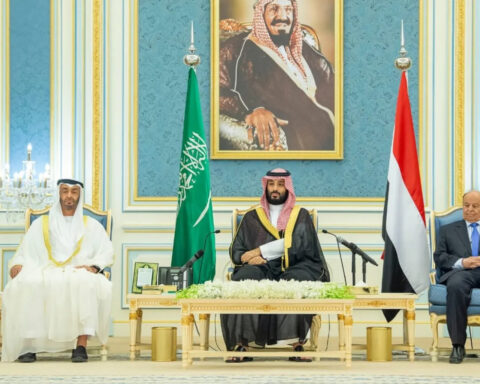
For decades, Saudi Arabia’s defence posture was defined by a single relationship: buy American weapons, host American bases, defer to American strategy. The convergence of the Ukraine and Iran wars has disrupted this model by demonstrating that the United States cannot simultaneously serve as Ukraine’s arsenal, the Gulf’s shield, and the Indo-Pacific’s deterrent. Crown Prince Mohammed bin Salman’s response has been to pivot the Kingdom from passive consumer of Western defence goods to active connector in a new, multipolar defence architecture.
The evidence of this pivot is visible across multiple domains. Saudi Arabia opened King Fahd Air Base in Taif to US forces — reversing its earlier position that Saudi bases could not be used for offensive operations against Iran. Simultaneously, Riyadh signed a defence cooperation agreement with France, deepening ties with Europe’s only independent nuclear power. Prince Khalid bin Salman met with French Defence Minister Catherine Vautrin to discuss strengthened bilateral defence cooperation, signalling that the Kingdom no longer views its security through an exclusively American lens.
Most significantly, Saudi Arabia turned to Ukraine — a country with no historical defence relationship with the Gulf — for the counter-drone technology that its traditional American suppliers could not deliver quickly enough. This decision was not driven by sentiment but by arithmetic. The Patriot system, Saudi Arabia’s backbone air defence platform, costs $1 billion per battery and up to $12 million per interceptor. Ukraine’s Wild Hornets Sting costs $2,100 and can destroy the same Shahed drone. When your adversary is launching hundreds of cheap drones per week and your ally’s factory can only produce 500 interceptors per year, diversifying your supplier base is survival, not diplomacy.
The Saudi Arabian Military Industries (SAMI) corporation has entered negotiations for licensed production of Ukrainian drone interceptors — a deal that, if completed, would give the Kingdom an indigenous counter-drone manufacturing capability for the first time. This would represent a structural shift in Gulf defence procurement, breaking the near-monopoly that American and European defence contractors have held since the oil boom era.
The convergence has also rewritten the Kingdom’s diplomatic playbook. Saudi Arabia traditionally avoided military entanglements beyond the Arabian Peninsula. Today, the Kingdom’s defence architecture includes Ukrainian drone operators in its Eastern Province, Greek Patriot batteries defending its oil infrastructure, British mine-clearing coalitions securing its shipping lanes, French fighter aircraft integrated into Gulf air defence networks, and American strike aircraft operating from Taif. This is not the security architecture of a nation that buys protection from a single patron. It is the security architecture of a regional power building redundancy into every layer of its defence — a direct response to the lesson that relying on one ally in a two-front war means relying on an ally whose attention is perpetually divided.
The PIF’s recent decision to redirect capital from megaprojects to strategic reserves — including significant grain purchases — further underscores the pivot. Vision 2030’s transformation was always premised on a stable regional environment. The Iran war has not killed that vision, but it has forced MBS to sequence differently: defence and food security first, entertainment cities and ski resorts second. The convergence of two wars accelerated a prioritisation that Saudi planners had been debating in private since the Houthi attacks on Aramco facilities in 2019.
Is a Ceasefire in One War Impossible Without the Other?
The convergence of supply chains, intelligence networks, and munitions inventories raises a question that policymakers in Washington, Moscow, Tehran, and Kyiv have been reluctant to confront: can either war end independently of the other?
Consider the scenario in which the Iran war concludes through a negotiated settlement — as the US 15-point peace proposal, conveyed through Pakistani intermediaries, attempts to achieve. If Iran agrees to halt drone and missile strikes on the Gulf and reopen the Strait of Hormuz, does Russia lose its most valuable strategic distraction? Does the freed-up supply of Patriot interceptors flow immediately to Ukraine, fundamentally altering the air defence balance on the Eastern Front? Does Ukraine’s drone expertise — no longer needed in the Gulf — return to the domestic fight with lessons learned from a second theatre? The answer to all three questions is likely yes, which means Moscow has a direct strategic interest in ensuring the Iran war continues for as long as possible.
The reverse scenario is equally instructive. If Russia and Ukraine reach a ceasefire, does Iran lose its primary source of upgraded drone technology and satellite intelligence? Does the release of US military assets from European commitments create overwhelming force availability for Gulf operations? Does China — currently enabling both conflicts through dual-use technology exports — face concentrated Western pressure rather than the divided attention it currently exploits? Again, the structural answer suggests that a ceasefire in Ukraine would materially degrade Iran’s military position in the Gulf.
This interdependence creates a perverse incentive structure. Each conflict serves as strategic cover for the other. Russia benefits from the Iran war draining American resources. Iran benefits from the Ukraine war tying down Western attention and depleting interceptor stocks. Both benefit from China’s willingness to supply dual-use technology without consequences. The result is a system in which no individual actor has sufficient incentive to make peace, because the continuation of both wars provides strategic advantages that a single-war environment would not.
The Ammunition Arithmetic That Neither Side Can Solve
The convergence crisis is ultimately a manufacturing problem. Both alliances — the Russia-Iran-China axis and the US-Ukraine-Gulf coalition — are consuming munitions faster than they can produce them, and the consumption rates in one theatre directly affect availability in the other.
| System | Unit Cost | Annual Production | Ukraine Demand | Gulf Demand | Deficit |
|---|---|---|---|---|---|
| Patriot PAC-3 | $4-12M | ~500/year | 200+ fired since 2023 | Unknown, hundreds consumed March 2026 | Severe |
| NASAMS AMRAAM | $1.1M | ~2,400/year | Continuous use since 2022 | Limited Gulf deployment | Moderate |
| Ukrainian Sting interceptor | $2,100 | 120,000+/year | 3,900+ drones destroyed | Gulf deployment began March 2026 | None (scaling) |
| Shahed-136/Geran | $35,000 | 66,000+/year (Alabuga) | Continuous strikes since 2022 | Continuous strikes since March 2026 | None (mass production) |
The table reveals a fundamental asymmetry. The Russia-Iran side has solved its production problem through the Alabuga factory, which now produces more drones per month than Raytheon produces Patriot interceptors per year. The US-led coalition has not solved its equivalent challenge. The only system in the Western arsenal with comparable production scalability is Ukraine’s Sting interceptor — which is why Gulf states are so eager to acquire it, and why Zelenskyy’s visit to Riyadh carried military significance far beyond its diplomatic symbolism.
The ammunition arithmetic also explains why the Iran war has triggered the largest arms race since the Cold War. Every nation watching the convergence crisis is reaching the same conclusion: existing Western defence industrial capacity is insufficient for even one major conflict, let alone two. The result is a global scramble to expand production lines, sign new supply agreements, and develop indigenous manufacturing — a trend that will reshape the defence industry for a generation regardless of how either war ends.
Japan, South Korea, and Australia have all announced emergency defence procurement reviews in March 2026, driven by the recognition that interceptor scarcity in the Gulf and Ukraine theatres could foreshadow their own vulnerability in any Indo-Pacific contingency. Taiwan, which depends on American Patriot deliveries for its air defence against a potential Chinese attack, has watched the two-front depletion with growing alarm. If the Patriot production line is fully allocated to Ukraine and Gulf replenishment for the next three to five years, Taipei’s air defence modernisation timeline extends proportionally — a reality that Beijing has almost certainly factored into its own strategic calculations.
The drone production disparity is the starkest number in the convergence equation. The Russia-Iran axis can produce over 66,000 attack drones per year from the Alabuga factory alone, supplemented by Iran’s own domestic production. Ukraine’s seven-million-drone annual target — mostly small FPV types for close combat — includes a growing share of interceptors, but the exportable surplus for Gulf clients remains constrained by Kyiv’s own needs. The race is not simply between offence and defence. It is between two industrial models: the authoritarian model that conscripts labour (including North Korean workers) and ignores export controls, versus the democratic model that must navigate licensing restrictions, Congressional oversight, and allied procurement bureaucracies. So far, the authoritarian model is manufacturing faster. Whether the democratic model can innovate faster is the open question.
The Contrarian Case — Convergence Favours the Defenders
The prevailing narrative in Western capitals holds that the convergence of two wars is an unmitigated strategic disaster — a two-front problem that stretches resources to breaking point and benefits the Russia-Iran-China axis. This narrative is incomplete, and possibly wrong.
The convergence has produced three developments that favour the US-led coalition and would not have occurred in a single-war environment. First, it has forced innovation in defence economics. Ukraine’s Sting interceptor — a weapon that rewrites the cost curve of air defence by a factor of 1,500 — was developed under the pressure of the Russian drone campaign. Without the Ukraine war, this technology would not exist. Without the Iran war, it would not have a second market. The Gulf’s adoption of Ukrainian counter-drone technology has created a revenue stream and a production incentive that strengthens Ukraine’s defence industrial base at precisely the moment it needs strengthening.
Second, the convergence has shattered the illusion of strategic ambiguity that several important nations maintained. Turkey, India, the UAE, and Saudi Arabia all attempted to balance between the Western and Russian/Chinese camps. The convergence of two wars makes this balancing act untenable — and it is notable that every fence-sitter has moved toward the Western coalition since the Iran war began. Saudi Arabia’s $80 billion military is now operationally integrated with Ukrainian drone specialists, French air defence units, British mine-clearing coalitions, and Greek Patriot batteries. Six months ago, Riyadh was buying Russian grain and hosting Chinese diplomats. Today, it is hosting American strike aircraft at Taif and Ukrainian engineers at its Eastern Province air bases.
Third, the convergence has exposed the fragility of the Russia-Iran-China supply chain. The trilateral axis depends on China’s willingness to supply dual-use technology without facing consequences. But the Iran war has made those consequences visible in a way the Ukraine war alone did not. When Chinese-supplied sodium perchlorate ends up in missiles that strike American bases, the political cost of Chinese complicity becomes impossible to ignore. The USCC (US-China Economic and Security Review Commission) published a fact sheet on the China-Iran relationship in March 2026 that effectively laid the evidentiary groundwork for secondary sanctions — an escalation that Beijing has spent years trying to avoid.
The contrarian conclusion is this: the convergence of two wars is painful for the defenders in the short term, but it accelerates alliance formation, technological innovation, and strategic clarity in ways that a single conflict would not. The Russia-Iran-China axis is winning the ammunition production race, but it is losing the coalition-building race. Wars are ultimately won by coalitions, not by factories.
What Happens If the Two Wars Decouple?
The most dangerous scenario for the US-led coalition is not that the two wars continue converging, but that they decouple — that one ends while the other continues, releasing resources and attention asymmetrically.
If Russia achieves a frozen conflict in Ukraine — a ceasefire that leaves occupied territories under Russian control — Moscow would be free to redirect its drone production capacity, intelligence assets, and strategic focus entirely toward supporting Iran. The Alabuga factory’s 66,000-drone annual capacity, currently split between domestic use and Iranian exports, could be fully devoted to Gulf-bound shipments. Russian satellite intelligence, currently balancing Ukrainian front-line coverage with Gulf targeting data, could concentrate entirely on American and Saudi positions. The Iran war would intensify precisely when Washington expected it to become more manageable.
Conversely, if the Iran war ends through a negotiated settlement, the strategic picture for Ukraine improves dramatically but not instantly. Gulf states would have surplus interceptor stocks available for transfer to Kyiv. The Pentagon could redeploy carrier strike groups and air defence battalions from the Gulf to European positions. But the timing of any such redeployment would be measured in months, not days — during which Russia could exploit the transition period.
The optimal strategy for the US-led coalition is therefore to prevent decoupling — to ensure that both conflicts move toward resolution simultaneously, or not at all. This is the implicit logic behind Zelenskyy’s Gulf tour: by embedding Ukrainian military expertise in the Gulf’s defence architecture, Kyiv ensures that its fate remains linked to the region’s. A Saudi Arabia that depends on Ukrainian drone operators has a direct stake in Ukraine’s survival. A Ukraine that depends on Gulf interceptor stocks has a direct stake in the Gulf’s security. The convergence, managed correctly, transforms a two-front vulnerability into a two-front alliance.
The same drone that Russia launches at Kharkiv, Iran launches at Riyadh. The same interceptor that Ukraine builds for itself, Saudi Arabia now needs. When the weapons are identical, the wars are identical — and the peace, when it comes, will have to cover both theatres at once.
European defence official briefing, March 2026
Frequently Asked Questions
How are the Ukraine war and Iran war connected?
The two conflicts share weapons systems (Shahed drones produced at Russia’s Alabuga factory are used against both Ukrainian and Gulf targets), intelligence networks (Russia provides Iran with satellite targeting data), supply chains (China provides dual-use technology to both Russia and Iran), and munitions inventories (the same Patriot interceptor stocks are drawn down for both theatres). Ukrainian drone experts now operate in five Gulf countries, while Russia provides Iran with combat-tested drone upgrades from the Ukraine front.
What is Ukraine providing to Saudi Arabia and Gulf states?
Ukraine has deployed approximately 200 military experts to Saudi Arabia, the UAE, Qatar, Kuwait, and Jordan to provide counter-drone expertise against Iranian Shahed attacks. Ukraine also offers the Sting interceptor drone ($2,100 per unit), which has destroyed over 3,900 Shahed-type drones in Ukrainian skies. Saudi Arabia is negotiating a major weapons purchase from Ukraine, and talks are underway for licensed production of Ukrainian interceptors in the Kingdom.
What intelligence is Russia providing to Iran?
According to the Wall Street Journal, Washington Post, and CNN, citing Western intelligence officials, Russia has provided Iran with satellite imagery from its VKS (Russian Aerospace Forces) fleet showing US base layouts and force movements across the Middle East, upgraded drone components including improved navigation and targeting systems, and tactical guidance on drone deployment methods drawn from Russia’s own operations in Ukraine. The EU has stated this intelligence was used to target and kill Americans.
Why can’t the United States fight both wars simultaneously?
The primary constraint is interceptor missile production. Raytheon produces approximately 500 Patriot PAC-3 interceptors per year, but both the Ukraine and Gulf theatres are consuming them faster than they can be manufactured. The Pentagon has deployed approximately 50,000 additional troops to the Gulf, reducing availability for European and Indo-Pacific commitments. The combined fiscal burden of both conflicts approaches $375 billion, testing Congressional spending limits.
Could a ceasefire in one war affect the other?
Almost certainly. An Iran war ceasefire would free up interceptor stocks for Ukraine, release US military assets for European redeployment, and deprive Russia of its most effective strategic distraction. A Ukraine ceasefire would allow Russia to redirect drone production and intelligence assets entirely toward supporting Iran, potentially intensifying the Gulf conflict. This interdependence creates perverse incentives where each side benefits from the continuation of both wars, making simultaneous resolution the most likely path to lasting peace in either theatre.
What role does China play in connecting the two wars?
China serves as the supply chain backbone for both Russia and Iran. Beijing exports dual-use technology — electronics, machine tools, and logistics infrastructure — to Russia’s Alabuga drone factory, while also allowing Iranian vessels to load sodium perchlorate (a solid rocket fuel component) at Chinese ports. The CSIS-affiliated Beyond Parallel program and the Atlantic Council have documented these supply networks, which effectively make China a silent enabler of both conflicts without direct military participation.