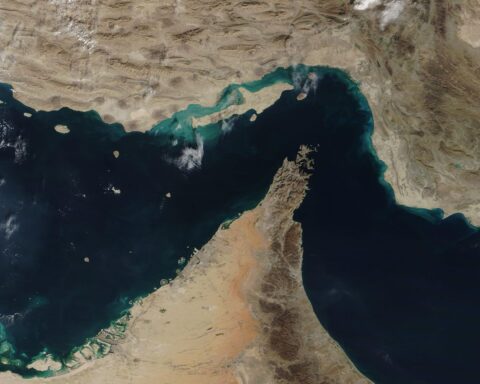
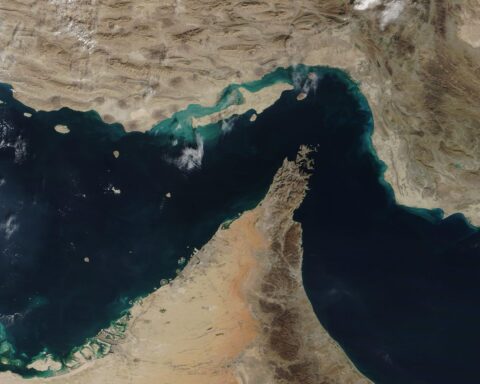
DHAHRAN — Saudi Arabia officially quantified its war damage for the first time on Wednesday, disclosing through state news agency SPA that Iranian strikes had knocked 600,000 barrels per day of upstream production offline and reduced East-West Pipeline throughput by 700,000 bpd — a combined 1.3 million bpd impairment that Riyadh held in silence for 48 hours before releasing through an unnamed Energy Ministry official on April 9, 2026.
The timing was not incidental. The SPA statement landed on the same day Saudi Foreign Minister Prince Faisal bin Farhan held his first publicly announced call with Iranian counterpart Abbas Araghchi since the war began — and one day before the Islamabad bilateral talks from which Saudi Arabia has been excluded. Riyadh cannot sit at the table on April 10, so it published its economic brief through the market instead, converting infrastructure damage into a negotiating document addressed to every crude importer on the planet.
Table of Contents
The Numbers: Manifa, Khurais, and the Pipeline
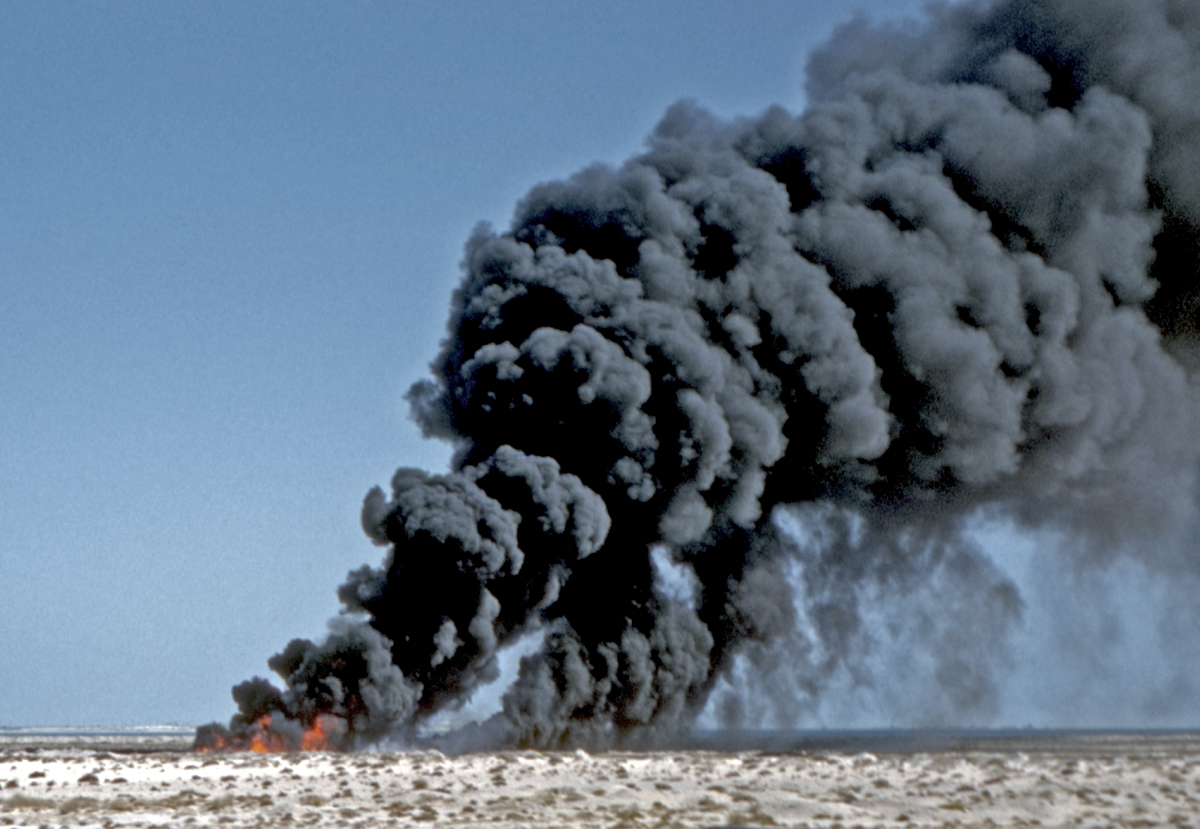
The SPA statement attributed the 600,000 bpd upstream loss to two facilities: the Manifa offshore field, which lost 300,000 bpd, and the Khurais onshore complex, which lost the same amount. Manifa, redeveloped from 2006 at a cost of $10 billion, operates at a total capacity of 900,000 bpd across 27 man-made islands and three gas-oil separation plants rated at 300,000 bpd each. A 300,000 bpd loss means at least one GOSP is fully offline — the kind of damage that cannot be patched from a control room in Dhahran.
Khurais, producing 1.2 to 1.5 million bpd of Arabian Light crude, absorbed a smaller proportional hit — roughly 20 to 25 percent of its capacity. But Khurais crude routes through the East-West Pipeline, which itself lost 700,000 bpd of throughput, creating a compounding problem: the field’s output and its primary westward export corridor are both degraded simultaneously. The SPA statement explicitly flagged this dependency, calling the pipeline “a main route for supplying global markets.”
The combined 1.3 million bpd represents approximately 10 percent of Saudi Arabia’s total production capacity. The pipeline loss alone eliminates 700,000 bpd of capacity that would otherwise bypass the Strait of Hormuz via the Red Sea terminal at Yanbu — the very bypass route the IRGC struck on ceasefire day.
Why Did Riyadh Wait 48 Hours?
The attacks on Manifa and the East-West Pipeline pumping station occurred after the April 8 ceasefire announcement, and Saudi Arabia held the damage figures for approximately two days before disclosing them. Bloomberg reported on April 8, citing anonymous sources, that damage was “limited.” By April 9, SPA issued the formal 1.3 million bpd figure — an official upgrade that contradicted the earlier anonymous framing and turned a background murmur into an on-the-record economic fact.
The Middle East briefing 3,000+ readers start their day with.
One email. Every weekday morning. Free.
The disclosure arrived calibrated to maximum diplomatic visibility. On the same day, April 9, Prince Faisal held the first Saudi-Iran foreign minister call of the war — a conversation that The National reported as the first publicly announced direct contact at that level since hostilities began. Riyadh held a co-guarantor seat at the March 29-30 multilateral talks; it has no seat at Islamabad on April 10. The SPA statement is its only direct input into a negotiating environment it cannot attend.
The Energy Ministry’s language reinforced this framing. The unnamed official warned that “the continuation of these attacks leads to reduced supply and slows recovery, thereby affecting the security of supply for consuming countries and contributing to increased volatility in oil markets.” That sentence is not addressed to Tehran. It is addressed to Washington, Beijing, New Delhi, and Tokyo — the consuming capitals whose economic exposure gives them standing to press Iran at the table where Saudi Arabia has no chair.
The Downstream Cascade
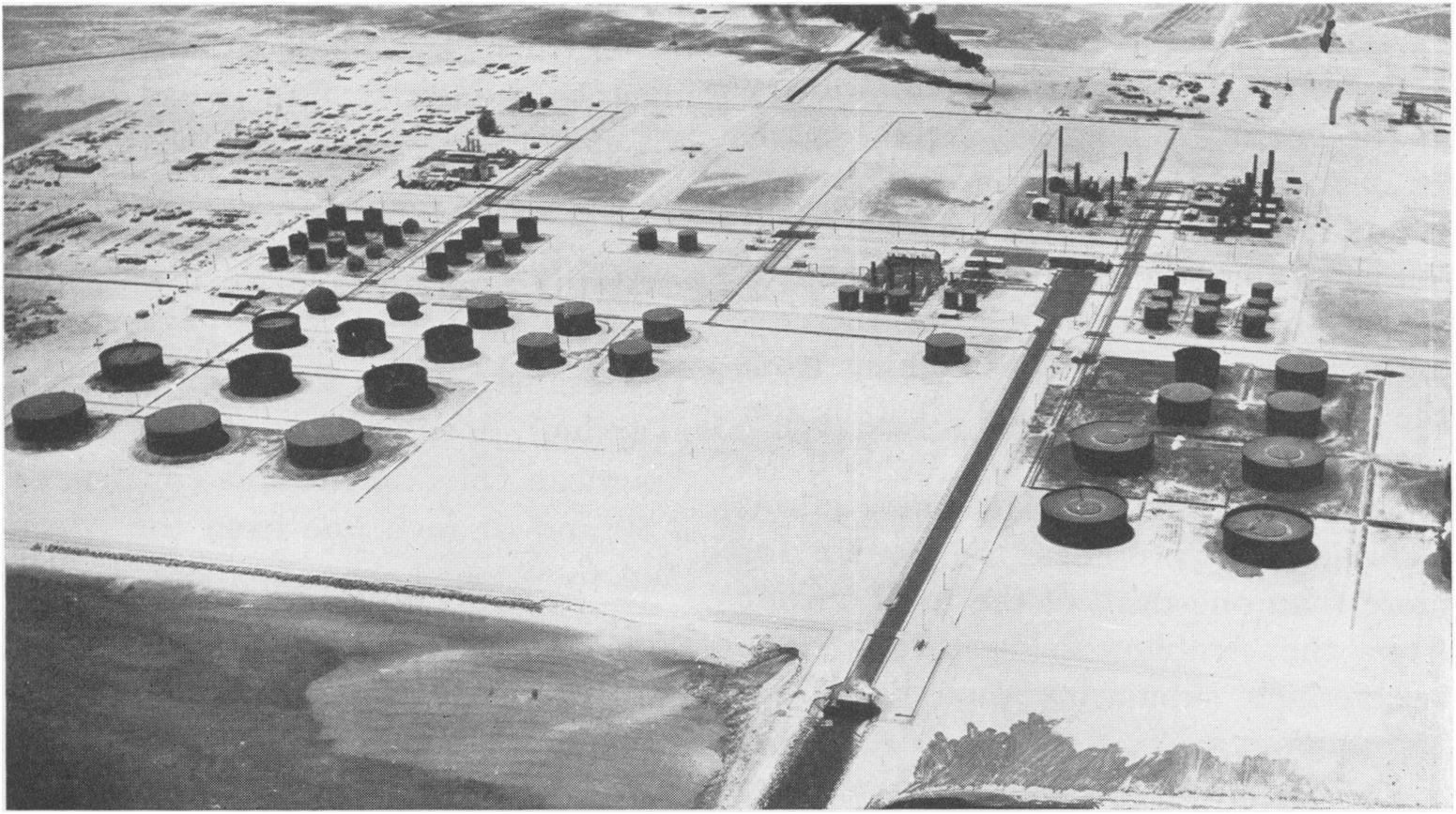
The damage is not confined to wellheads and pipeline valves. The SPA statement named five downstream facilities affected by reduced feedstock: the SATORP joint venture in Jubail, the Ras Tanura refinery, the SAMREF refinery in Yanbu, the Riyadh refinery, and the Ju’aymah processing facility, where LPG and NGL exports have been disrupted. Each of these facilities depends on upstream crude and pipeline throughput that is now 1.3 million bpd below capacity.
The human cost, disclosed in the same SPA release, was one Saudi national from Aramco’s industrial security personnel killed and seven other Saudi employees wounded. Saudi Aramco corporate declined to comment separately — the disclosure came exclusively through the Energy Ministry channel, a deliberate routing that kept the damage figures under government rather than corporate authority and ensured the statement read as sovereign communication rather than an investor relations update.
ADNOC CEO Sultan al-Jaber, speaking separately, offered a regional assessment that underscored the Saudi numbers. “Let’s be clear: The Strait of Hormuz is not open,” al-Jaber said, according to Argus Media. “Access is being restricted, conditioned and controlled.” That language from Abu Dhabi’s state oil company chief reinforced the SPA framing: the war’s damage extends beyond physical infrastructure into the operating assumptions of every barrel that moves through the Gulf.
Can Aramco Restore Production Under Fire?
Fraser McKay, head of upstream analysis at Wood Mackenzie, estimated that regional upstream wells and infrastructure could take six to nine months to restore in a worst case. “All this comes with a health warning,” McKay said, per the Maritime Executive. “Operators hastened by regulators and governments to restore production too rapidly, will risk doing more long-term damage to foundational assets.” Qatar’s Ras Laffan south LNG train, damaged in separate strikes, is projected offline until August 2026.
The six-to-nine-month estimate carries a qualifier that the SPA statement left implicit: restoration timelines assume workers can reach the sites safely. Manifa’s 27 man-made islands sit in the shallow waters of the Persian Gulf, exposed to the same drone and missile threats that struck them in the first place. Under active ceasefire uncertainty — with IRGC units operating under decentralized command authority and post-ceasefire intercepts still occurring across the Gulf — Aramco cannot commit maintenance crews to exposed offshore infrastructure with any confidence in their security.
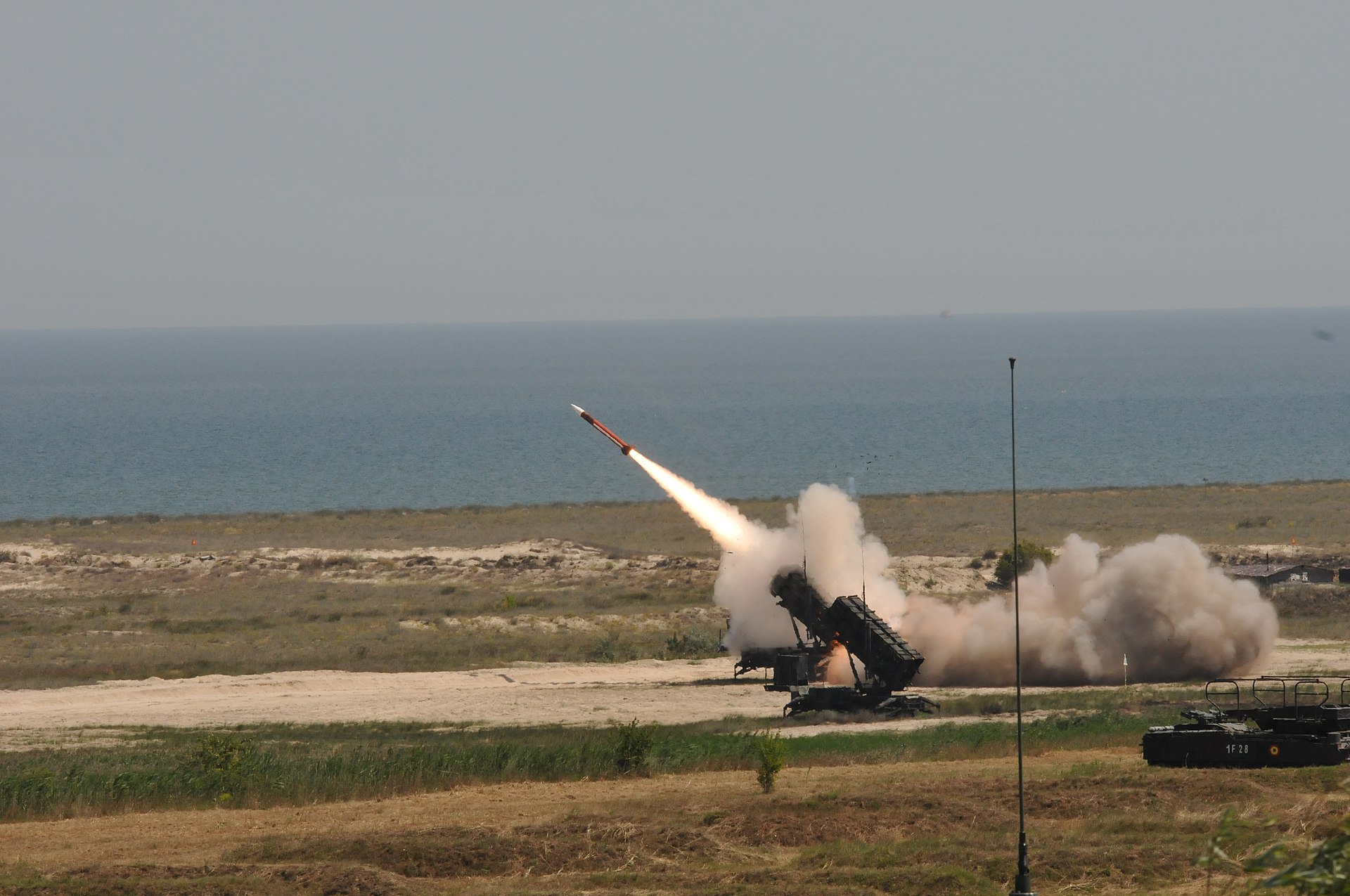
The 894 intercepts Saudi air defenses have achieved since March 3 demonstrate both the scale of the threat and the cost of defending against it. With approximately 400 PAC-3 interceptors remaining, diverting air defense assets to cover offshore repair crews competes directly with protecting population centers, refineries, and the approaching Hajj season.
What the IRGC Claims — and What It Omits
The IRGC claimed the Jubail petrochemical complex strike explicitly, describing it as targeting “the heart of the Saudi downstream energy sector.” IRGC statements referenced strikes on “refineries in Jubail, Ras Tanura, Yanbu and Riyadh, which had a direct impact on exports of refined products to global markets” — a list consistent with, but broader than, the Saudi ministry’s accounting of affected downstream facilities.
What the IRGC has not claimed is telling. Iran has not acknowledged striking Manifa or the East-West Pipeline pumping station by name. IRGC statements focus on the downstream and refinery portfolio rather than upstream production fields and pipeline infrastructure, a gap that may be intentional — calibrating public acknowledgment to avoid appearing to sabotage the ceasefire talks that Tehran’s own diplomats are conducting. Striking refineries can be framed as proportionate retaliation; striking a nation’s production fields and export pipelines after a ceasefire reads differently.
Iran’s broader framing describes attacks on Saudi energy infrastructure as proportionate response to Saudi Arabia hosting US military assets used in strikes on Iranian territory — the co-belligerence doctrine the IRGC has invoked since the war’s opening days. The SPA damage disclosure effectively rejects that framing by channeling the figures through the Energy Ministry rather than the Defense Ministry, casting the strikes as attacks on global energy supply rather than military-adjacent infrastructure.
Fiscal Exposure at $97 Brent
At 600,000 bpd of upstream production offline and Brent crude trading around $97 per barrel on April 10, the direct lost revenue runs to approximately $58 million per day. The East-West Pipeline’s 700,000 bpd throughput loss does not destroy barrels but eliminates the Red Sea export route to European and Mediterranean buyers, forcing remaining volumes through Hormuz-dependent channels where transit now requires IRGC permission.
Saudi Arabia’s fiscal break-even sits at $108 to $111 per barrel on a Bloomberg PIF-inclusive basis. At $97 Brent, Riyadh is running approximately $10-13 per barrel below that threshold on every barrel it sells, while 600,000 bpd of those barrels are not being produced at all. Goldman Sachs projects a 2026 Saudi budget deficit of $80-90 billion against the kingdom’s official projection of $44 billion — a gap that the 1.3 million bpd disclosure now explains with engineering specificity.
The Aramco May OSP, set at $19.50 above benchmark, was priced when the market assumed supply disruption would keep spot prices elevated. With Brent having fallen from $109 to $97 in the days surrounding the ceasefire, that differential now sits roughly $19.50 above current spot — a pricing structure that assumes production the SPA statement now confirms is partially offline. The PIF 2026-2030 strategy revision, which already acknowledged $71 billion in commitment cuts, was drafted before these figures were public.
| Facility | Type | Capacity Loss (bpd) | Share of Total Capacity |
|---|---|---|---|
| Manifa offshore field | Upstream production | 300,000 | ~33% of Manifa (900K total) |
| Khurais onshore complex | Upstream production | 300,000 | ~20-25% of Khurais (1.2-1.5M total) |
| East-West Pipeline | Export throughput | 700,000 | ~10% of Yanbu export route capacity |
| Combined impairment | — | 1,300,000 | ~10% of total Saudi production capacity |
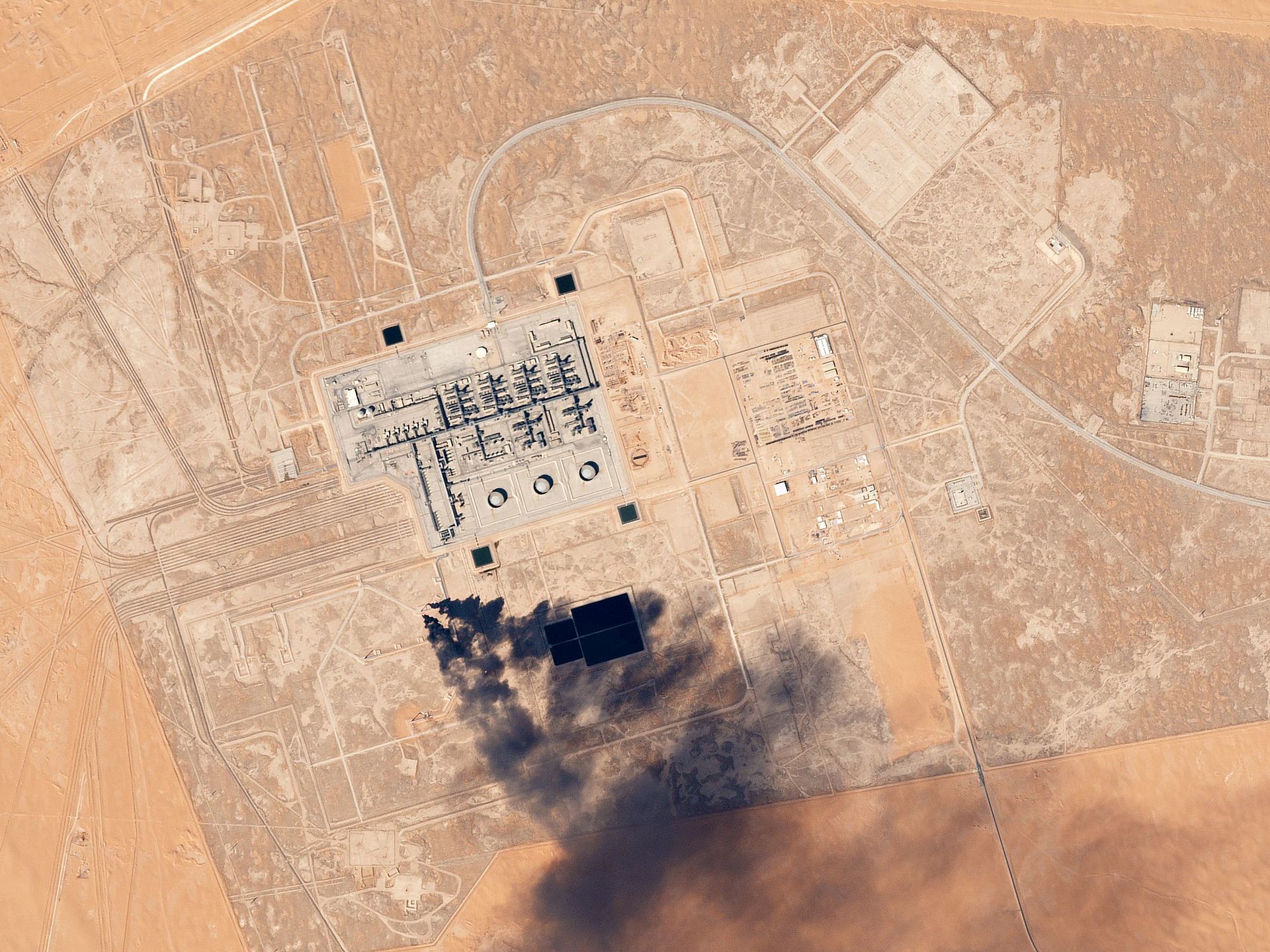
Background: The 2019 Precedent That No Longer Applies
The closest comparison is the September 14, 2019 attack on Abqaiq and Khurais, which knocked 5.7 million bpd offline in a single strike — more than four times the current disclosed loss. Saudi Aramco restored full production in approximately two weeks, an achievement enabled by peacetime conditions, the absence of ongoing threat, and an emergency airlift of US and European repair equipment. The 2026 situation inverts every enabling condition: the ceasefire is fragile, IRGC command authority remains decentralized, and the facilities in question sit within range of the same weapons that damaged them.
The 2019 restoration also benefited from a specific technical circumstance — the Abqaiq processing facility was damaged but not its wellheads, meaning crude continued flowing once processing capacity was restored. The 2026 disclosure describes upstream production losses at the field level, which implies damage to wells, GOSPs, or gathering infrastructure that cannot be repaired with the same speed as a processing bottleneck. Wood Mackenzie’s six-to-nine-month worst-case estimate reflects this distinction.
The 48-hour disclosure delay has its own precedent. After the 2019 attack, Aramco disclosed the scale of disruption within hours, and energy minister Prince Abdulaziz bin Salman held a press conference the following day. In 2026, Riyadh held the figures for two days, released them through an unnamed official rather than a named minister, and timed publication to coincide with the first Saudi-Iran diplomatic contact of the war. The difference between 2019 and 2026 is not the damage — it is what the damage is for.
FAQ
How does the 1.3 million bpd loss compare to Saudi Arabia’s total spare capacity?
Saudi Arabia entered the war with an estimated 3 million bpd of spare capacity above its OPEC+ quota of roughly 9 million bpd, per IEA and OPEC+ tracking data. The 600,000 bpd upstream loss reduces that spare capacity by approximately 20 percent, but the 700,000 bpd pipeline throughput loss is structurally different — it does not destroy production capacity, it eliminates a specific export route, meaning barrels that could be produced cannot reach Yanbu and the Red Sea. Spare capacity figures assume functioning export infrastructure, an assumption the SPA statement has now formally challenged.
Has Saudi Arabia requested OPEC+ quota relief or emergency production coordination?
As of April 10, no public request has been made. The OPEC+ meeting on April 5 resulted in an output pause rather than an increase, a decision that pre-dated the formal damage disclosure by four days. The SPA statement’s language about “security of supply for consuming countries” reads as a signal toward the International Energy Agency’s strategic reserve coordination mechanism rather than OPEC+ internal quota adjustment — Riyadh is framing the loss as a consumer-side problem, not a producer-side one.
Which consuming countries are most exposed to the pipeline throughput loss?
The East-West Pipeline terminates at Yanbu on the Red Sea, serving European and Mediterranean refineries that receive Saudi crude via the Suez Canal or the SUMED pipeline. With 700,000 bpd of Yanbu-routed throughput offline, those refineries must source replacement barrels through Hormuz-dependent channels or from non-Saudi suppliers. South Korean and Japanese refiners face a different exposure: their Hormuz-routed Saudi imports now compete with redirected European demand for the same constrained transit slots.
Could the damage figures be understated?
Bloomberg’s April 8 reporting, citing anonymous sources, described the damage as “limited” — a characterization the April 9 SPA statement formally contradicted with specific bpd figures. Saudi Aramco corporate declined to comment separately, and the IRGC’s own strike claims reference a broader set of targets than the SPA statement accounts for, including refineries at Jubail and Ras Tanura that the SPA mentions only as downstream facilities affected by reduced feedstock. Whether the SPA figures represent a complete accounting or an initial disclosure remains an open question, but the choice to publish specific numbers suggests Riyadh calculated that the 1.3 million bpd figure serves its purposes even if the full picture is worse.
What happens to the damage disclosure if the Islamabad talks produce a durable ceasefire?
The SPA figures become the baseline for any reconstruction or compensation framework. By publishing specific numbers through official state channels before the April 10 bilateral, Saudi Arabia has established an economic record that any post-war settlement must address — whether through Iranian reparations, Gulf reconstruction funds, or insurance claims. The numbers also set a floor for the scale of production recovery the market should expect over Wood Mackenzie’s six-to-nine-month timeline, anchoring expectations below the rapid-restoration narrative that the 2019 precedent might otherwise encourage. The fiscal arithmetic behind Saudi Arabia’s export losses — including the kingdom’s $108–111 break-even against $96 Brent and the $78 million daily revenue shortfall — is examined in full in the fiscal trap the ceasefire built.