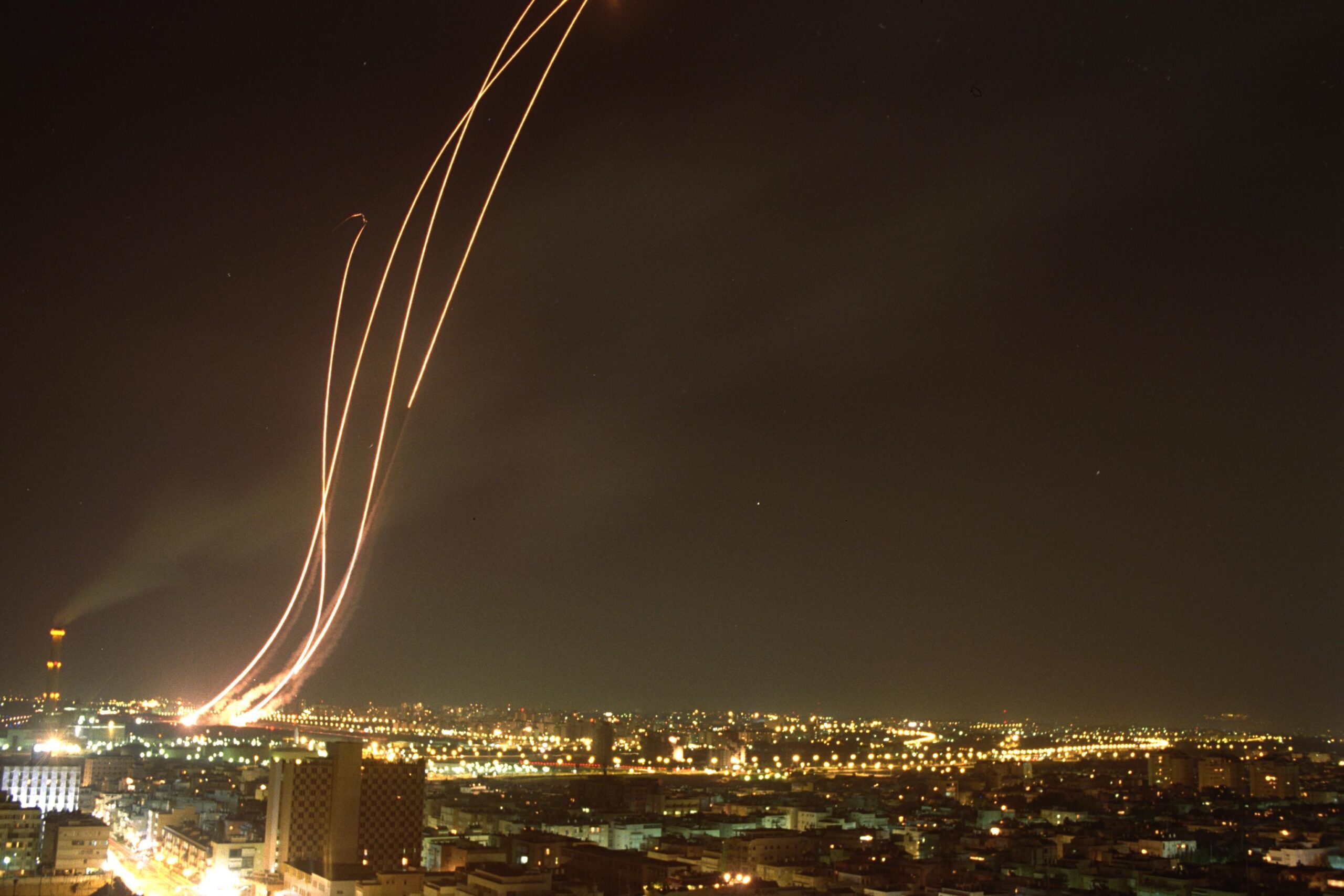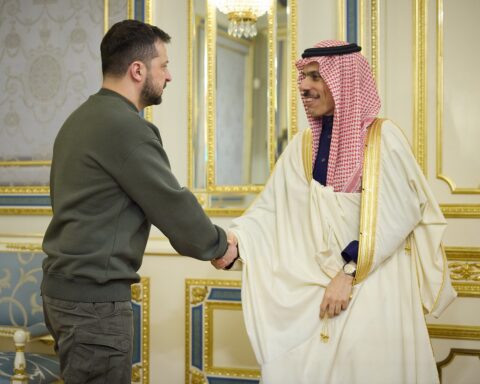

RIYADH — Saudi Arabia’s multi-layered air defense network has intercepted dozens of Iranian ballistic missiles, cruise missiles, and attack drones since Tehran launched retaliatory strikes against Gulf states on 28 February 2026, marking the largest sustained test of the Kingdom’s missile shield in its history. The system — built over three decades at a cost exceeding $80 billion — has achieved an estimated interception rate above 90 percent for ballistic missiles, a performance that contrasts sharply with the catastrophic failure of the same defenses during the 2019 Abqaiq attack, when not a single incoming weapon was intercepted.
The threat extends beyond Saudi airspace. Iraq, on Saudi Arabia’s 814-kilometre northern border, is fragmenting under the weight of militia violence and collapsing oil production, opening a front that no air defense system can address.
The stakes could hardly be higher. Iranian strikes have targeted Prince Sultan Air Base, the Ras Tanura oil refinery, military installations in the Eastern Province, and urban areas around Riyadh. Yet air defense is only one dimension of the challenge — the Kingdom’s wartime homefront and internal security apparatus face pressures that no Patriot battery can address. Falling debris and leakage drones have struck the United States Embassy compound and damaged critical energy infrastructure. For Crown Prince Mohammed bin Salman, whose government has spent more on air defense procurement than any nation outside the United States, the shield’s performance in March 2026 represents a vindication of investment decisions stretching back nearly a decade — and a warning that even the most expensive defenses have exploitable gaps.
Table of Contents
- How Does Saudi Arabia’s Air Defense System Work?
- What Systems Make Up Saudi Arabia’s Missile Shield?
- What Missile and Drone Arsenal Is Iran Using Against Saudi Arabia?
- The Abqaiq Disaster — Why 2019 Changed Everything
- How Has Saudi Arabia Rebuilt Its Air Defenses Since 2019?
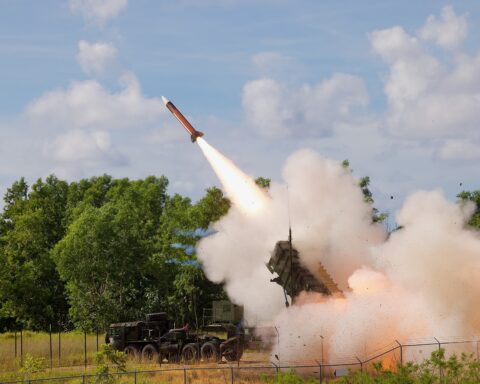
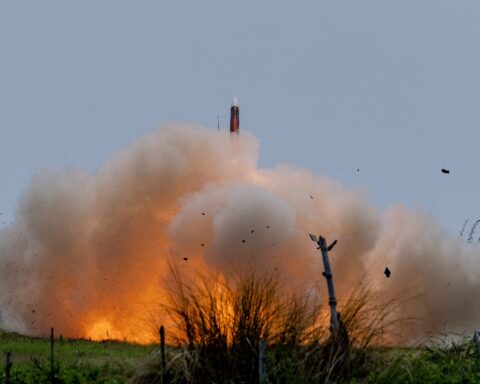
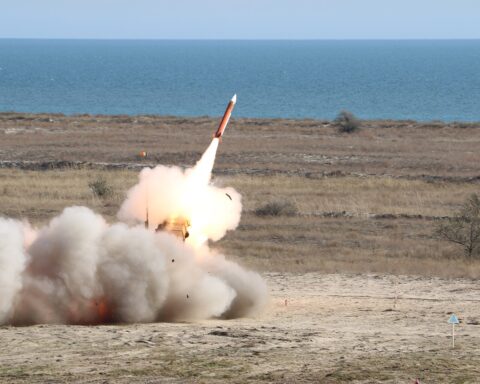
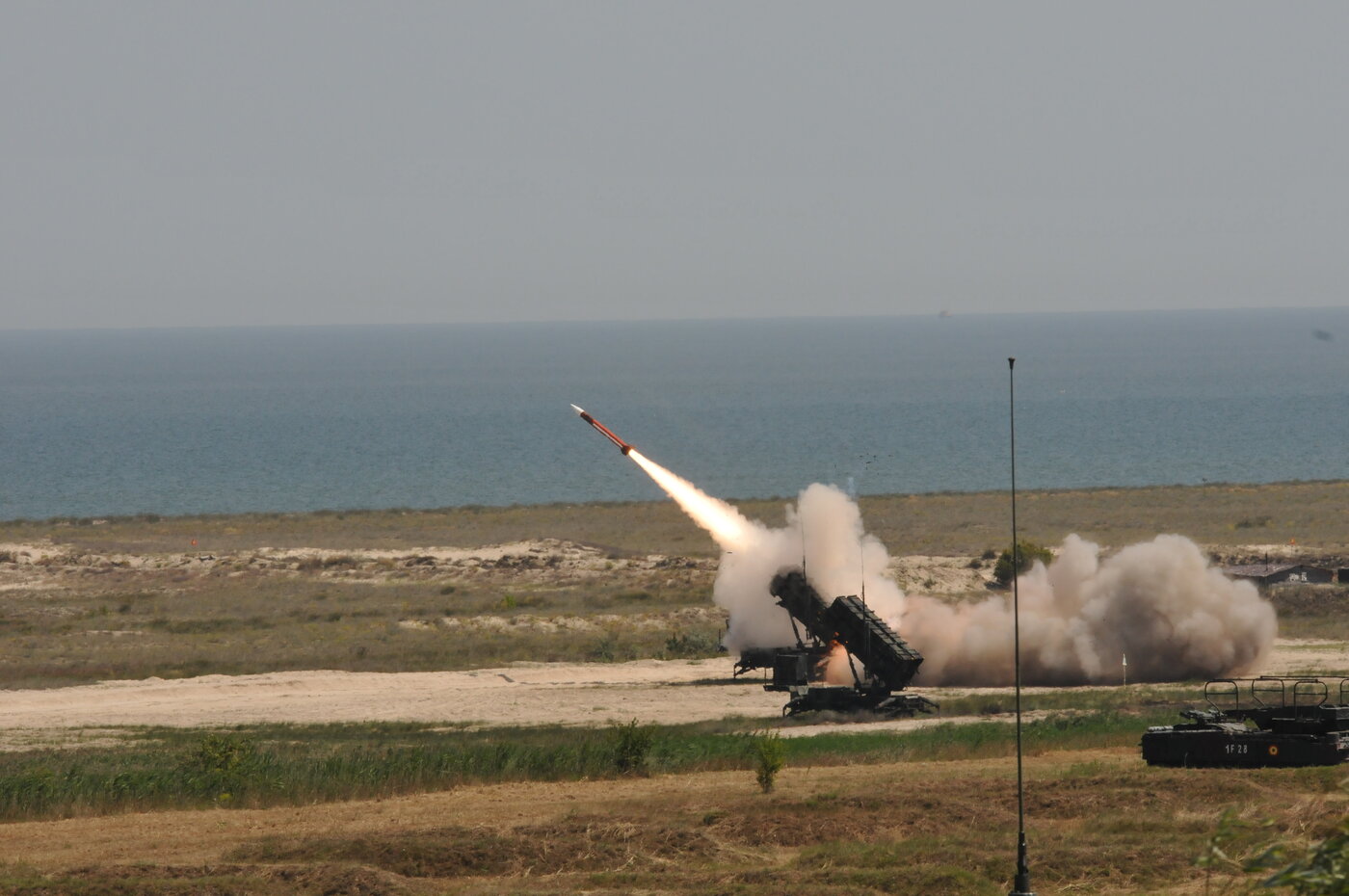
- Can Saudi Arabia’s Patriot Batteries Stop Iranian Ballistic Missiles?
- The THAAD Factor — Saudi Arabia’s Upper-Tier Shield
- Command, Control, and the Brain Behind the Shield
- The Interceptor Cost Equation — A Framework for Sustainability
- How Effective Has Saudi Air Defense Been Against Iran in March 2026?
- Where the Shield Failed — The Gaps Iran Exploited
- Saudi Arabia’s Push to Build Its Own Air Defenses
- What Comes Next for Saudi Arabia’s Air Defense?
- Frequently Asked Questions
How Does Saudi Arabia’s Air Defense System Work?
Saudi Arabia’s air defense operates as an integrated, multi-layered system designed to engage incoming threats at different altitudes and ranges. The architecture follows the same layered-defense principle used by the United States and Israel, where overlapping systems create multiple engagement opportunities against each incoming weapon.
The system comprises three principal tiers. The upper tier, managed by the Terminal High Altitude Area Defense (THAAD) system, engages ballistic missiles in the exo-atmospheric and upper endo-atmospheric phase of flight — intercepting warheads at altitudes above 150 kilometres and ranges exceeding 200 kilometres, according to the Missile Defense Advocacy Alliance. The middle tier relies on Patriot PAC-3 batteries, which engage ballistic missiles, cruise missiles, and aircraft at altitudes up to 36 kilometres and ranges up to 120 kilometres. The lower tier, consisting of short-range air defense systems including NASAMS and Oerlikon Skyshield units, handles low-flying drones, cruise missiles, and tactical aircraft that penetrate the upper and middle layers.
These three tiers are connected through a centralised command-and-control network that fuses data from early-warning radars, space-based sensors, and shared intelligence feeds from the United States. The system is operated by the Royal Saudi Air Defense Forces, a separate branch of the Saudi military that commands an estimated 16,000 personnel dedicated solely to air and missile defense operations.
| Layer | System | Target Type | Range | Altitude | Status (2026) |
|---|---|---|---|---|---|
| Upper Tier | THAAD | Ballistic missiles (short/medium range) | 200+ km | 150+ km | 4 of 7 sites active |
| Middle Tier | Patriot PAC-3 MSE | Ballistic missiles, cruise missiles, aircraft | 120 km | 36 km | 6 battalions, 108 launchers |
| Middle Tier | Patriot PAC-2 GEM-T | Aircraft, cruise missiles, large drones | 160 km | 24 km | Legacy batteries, active |
| Lower Tier | NASAMS / Skyshield | Low-altitude drones, cruise missiles | 25-40 km | 15 km | Deployed around critical sites |
| Point Defense | C-RAM / SHORAD | Rockets, artillery, small drones | 2-5 km | 3 km | Limited deployment |
The fundamental challenge facing Saudi air defense planners is geographic. The Kingdom spans 2.15 million square kilometres — an area roughly the size of Western Europe — with critical infrastructure concentrated in three widely separated clusters: the oil facilities of the Eastern Province, the government and military centres around Riyadh, and the holy cities and Red Sea coast in the Western Province. Defending all three simultaneously against a 360-degree threat environment requires hundreds of individual weapon systems and a vast sensor network, a reality that explains the scale of Saudi procurement spending. The challenge is particularly acute in the Empty Quarter, where Iran targeted the Shaybah oil field with sixteen drones on March 7, testing whether Saudi defenses can protect a million-barrel-per-day facility 500 kilometres from the nearest major military installation.
What Systems Make Up Saudi Arabia’s Missile Shield?
The Kingdom’s air defense inventory is the most extensive in the Middle East and among the largest of any non-NATO nation. Saudi Arabia operates 108 M902 launchers for the Patriot PAC-3 system, organised into six operational battalions, according to the International Institute for Strategic Studies. Each battalion typically deploys six to eight fire units, with each fire unit consisting of a radar set, an engagement control station, and up to eight launchers carrying four PAC-3 MSE interceptors apiece.
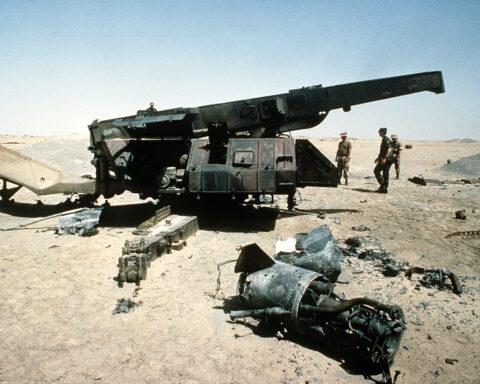
The Patriot system has been the backbone of Saudi air defense since the Kingdom purchased its first batteries in the 1990s, following Iraq’s Scud missile attacks during the 1991 Gulf War. The initial PAC-2 variant, designed primarily as an anti-aircraft system, proved unreliable against ballistic missiles — an assessment later confirmed by a Government Accountability Office review that found the system’s effectiveness against Scuds was significantly overstated. Successive upgrades have transformed the Patriot into a capable ballistic missile interceptor. The current PAC-3 MSE variant uses hit-to-kill technology, physically striking the incoming warhead rather than detonating a proximity-fused warhead nearby, dramatically increasing the probability of a successful intercept.
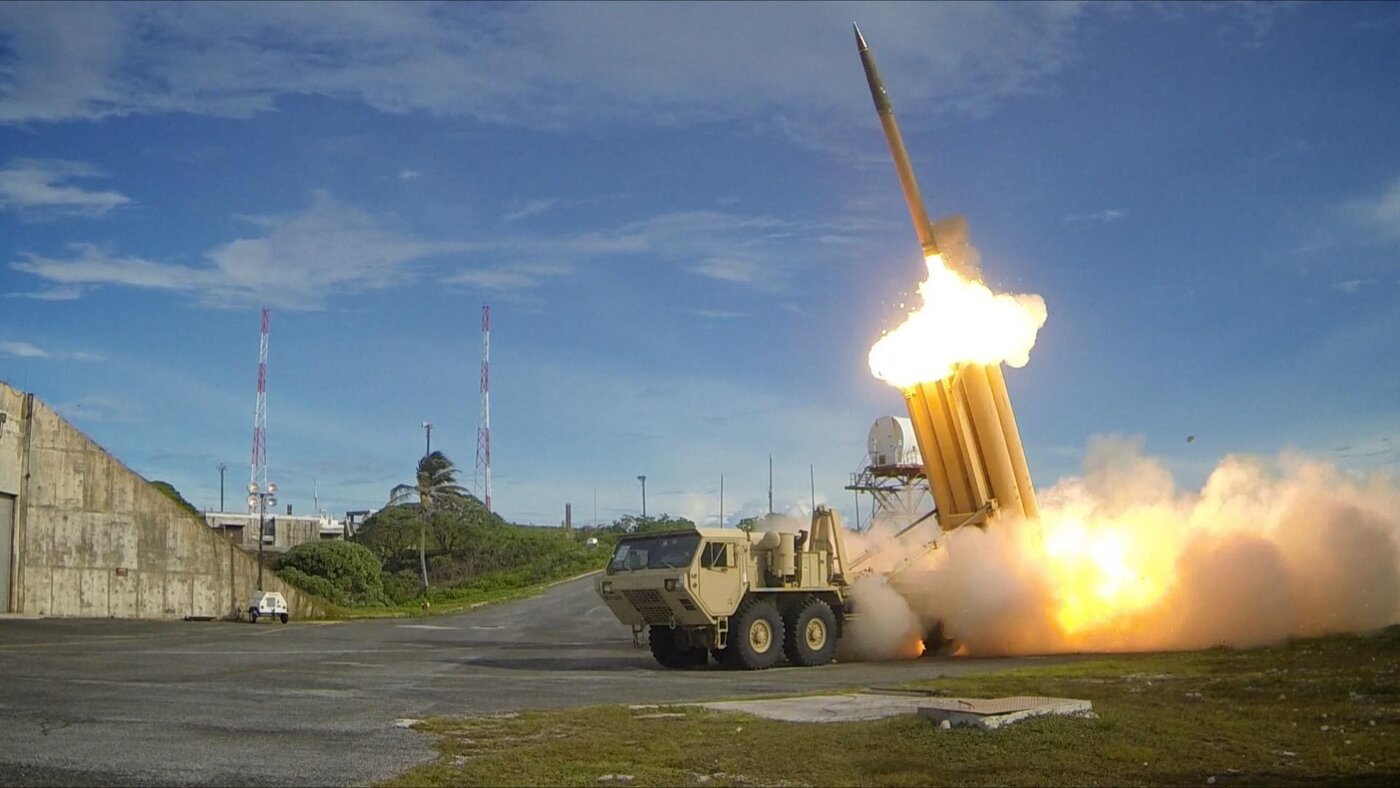
The THAAD system represents the most significant addition to Saudi air defenses in the past decade. In 2017, the Kingdom signed a landmark agreement with Lockheed Martin worth an estimated $15 billion for 44 THAAD launchers and 360 interceptor missiles, according to the Defense Security Cooperation Agency. The first operational THAAD battery was activated in mid-2025, and four of the seven planned sites are scheduled to reach operational capability by the end of 2026. THAAD provides a capability the Patriot cannot — engaging ballistic missiles at extreme altitude during the terminal phase, creating a layered engagement zone where incoming missiles face interception attempts at both high and low altitude.
Beyond Patriot and THAAD, Saudi Arabia has acquired shorter-range systems to address the growing drone threat. Norwegian-designed NASAMS units, firing AMRAAM missiles, provide medium-range coverage against cruise missiles and larger drones. Oerlikon Skyshield systems and various counter-unmanned aerial system (C-UAS) platforms protect specific high-value sites. The Kingdom has also invested in electronic warfare capabilities, including drone-jamming systems that can disrupt guidance signals and force attacking UAVs off course.
| Year | System | Quantity | Value | Supplier | Status |
|---|---|---|---|---|---|
| 2017 | THAAD | 44 launchers, 360 interceptors | $15 billion | Lockheed Martin | 4 of 7 sites active |
| 2022 | PAC-3 MSE interceptors | Batch replenishment | $3.05 billion | Raytheon/RTX | Delivered |
| 2025 | $142B package (air defense component) | Multiple systems | ~$30 billion (est.) | Multiple US firms | Contracting phase |
| 2026 | PAC-3 MSE interceptors | 730 missiles | $9 billion | Raytheon/RTX | Approved January 2026 |
What Missile and Drone Arsenal Is Iran Using Against Saudi Arabia?
Understanding Saudi air defense performance requires understanding what the system is defending against. Iran has deployed its full spectrum of long-range strike capabilities against Gulf targets since 28 February 2026, employing a deliberately diverse mix designed to overwhelm defenders through simultaneous multi-domain attack.
Iran’s ballistic missile force — the largest in the Middle East, with an estimated arsenal of over 3,000 missiles according to the International Institute for Strategic Studies — provides the highest-end threat. The Shahab-3, with a range of approximately 1,300 kilometres, can reach any target in Saudi Arabia from launch sites in central Iran. The Emad variant adds a separating manoeuvrable reentry vehicle (MaRV) that complicates terminal-phase tracking. The Ghadr-110, essentially an extended-range Shahab-3, achieves ranges of 1,950 kilometres with a lighter warhead. The solid-fuelled Sejjil-2 reaches 2,000 kilometres with significantly shorter flight preparation and boost-phase time, compressing the warning window available to Saudi defenders.
Iran’s cruise missile inventory includes the Soumar and Hoveyzeh land-attack cruise missiles, both believed to be reverse-engineered from Ukrainian Kh-55 missiles acquired on the black market. With ranges exceeding 1,350 kilometres and terrain-hugging flight profiles at altitudes as low as 30 metres, these weapons exploit the altitude gap between THAAD engagement zones (above 40 kilometres) and the effective low-altitude coverage of ground-based radars, creating a challenging defensive problem.
| Weapon | Type | Range | Est. Cost | Primary Challenge for Defenders |
|---|---|---|---|---|
| Shahab-3 / Emad | Medium-range BM | 1,300 km | $1-2 million | MaRV complicates terminal tracking |
| Sejjil-2 | Medium-range BM (solid fuel) | 2,000 km | $2 million | Short boost phase, higher velocity |
| Soumar / Hoveyzeh | Land-attack cruise missile | 1,350+ km | $500,000 | Low-altitude, terrain-following flight |
| Shahed-136 | One-way attack drone | 2,500 km | $35,000 | Tiny radar cross-section, mass volume |
| Shahed-238 | Jet-powered attack drone | 1,500+ km | $100,000 | Higher speed, harder to intercept |
| Mohajer-6 | Armed reconnaissance UAV | 200 km | $1 million | Loitering capability, precision strike |
The most prolific threat is the Shahed-136 one-way attack drone. With a wingspan of approximately 2.5 metres, a top speed of around 185 kilometres per hour, and a 50-kilogram warhead, the Shahed-136 is cheap enough to produce in thousands and expendable by design. Its small radar cross-section — comparable to a large bird — makes detection by conventional air surveillance radars extremely difficult, particularly against ground clutter. Iran is believed to have manufactured several thousand Shahed-136 units, providing a deep inventory that can sustain prolonged campaign-rate launches far longer than Saudi Arabia can sustain interceptor expenditure against them.
Iran’s operational concept exploits this diversity deliberately. Ballistic missiles launched first force defenders to activate radar systems and expend upper-tier interceptors. Cruise missiles launched on different trajectories arrive in a second wave, attacking from unexpected directions. Drone swarms follow, exploiting the gaps created by sensor saturation and the defenders’ focus on higher-tier threats. This layered attack methodology, refined through observation of similar Iranian operations against Israel in April 2024, creates a complex defensive problem that no single air defense system can solve alone. For a comprehensive analysis of every weapon system in Iran’s arsenal, including the technical specifications and deployment patterns of each platform, see our detailed breakdown.
The scale of Iran’s sustained campaign was demonstrated on March 12, when Saudi forces shot down 31 drones and three ballistic missiles in a single engagement over Riyadh’s Diplomatic Quarter, marking the largest coordinated interception over the capital since the war began and underscoring the relentless tempo that Iran’s layered attack doctrine imposes on Saudi air defense crews.
The Abqaiq Disaster — Why 2019 Changed Everything
The September 2019 attack on Saudi Aramco’s Abqaiq processing facility and Khurais oil field remains the defining failure of Saudi air defense — the event that exposed every systemic weakness and triggered the largest defensive overhaul in the Kingdom’s history. On 14 September 2019, a combination of eighteen drones and seven cruise missiles struck the world’s largest oil processing plant, knocking out 5.7 million barrels per day of production — roughly half of Saudi output and 5 percent of global supply.
Not a single incoming weapon was intercepted. The result was a humiliation that reverberated through Riyadh’s defence establishment and the global energy market. Oil prices surged 15 percent in a single trading session, and the attack demonstrated that a relatively inexpensive swarm of drones could inflict damage that hundreds of billions of dollars in conventional defence spending could not prevent.
Analysis of the Abqaiq failure by the Washington Institute for Near East Policy identified several critical vulnerabilities. The attacking weapons approached from the north-northwest — from the direction of Iraq and Kuwait — while Saudi Patriot batteries defending Abqaiq were oriented to face threats from the east and south, toward Iran and Yemen. The Patriot’s AN/MPQ-65 radar has a 120-degree forward arc, meaning the batteries had no coverage against threats approaching from behind. The low-altitude cruise missiles and small drones also flew below the effective engagement altitude of the Patriot system, which was designed to intercept high-altitude ballistic missiles rather than terrain-hugging cruise weapons.
Personnel readiness compounded the technical failures. A Congressional Research Service assessment noted that Saudi air defense crews were reported to have “low readiness, low competence, and are largely inattentive” at the time of the attack. The system’s radar operators allegedly missed or dismissed early indications of the incoming strike, and social media posts from civilians who heard and saw the attacking drones passed without triggering a military response.
The Abqaiq disaster forced a comprehensive reassessment. Within weeks, the Pentagon deployed additional Patriot batteries and a THAAD system to Saudi Arabia, along with thousands of US troops. The Kingdom launched a multi-year programme to restructure its air defence posture around 360-degree coverage, integrated sensor networks, and dedicated counter-drone capabilities — the programme now being tested in real time against Iranian strikes.
How Has Saudi Arabia Rebuilt Its Air Defenses Since 2019?
The seven years between the Abqaiq disaster and the current Iranian strikes have seen the most intensive air defense buildup in Saudi military history. The restructuring, driven by Defence Minister Prince Khalid bin Salman, addressed every failure identified in the 2019 attack through a four-pillar strategy: expanding the sensor network, adding layered weapon systems, restructuring command and control, and investing in counter-drone technology.
The sensor network received the most dramatic upgrade. Saudi Arabia expanded its early-warning radar coverage from what analysts at the International Institute for Strategic Studies described as “significant gaps” in 2019 to near-continuous 360-degree surveillance by 2024. The Kingdom acquired AN/TPS-80 Ground/Air Task Oriented Radar (G/ATOR) systems from Northrop Grumman, which can detect low-altitude cruise missiles and drones that the older AN/FPS-117 long-range radars missed. Space-based early warning data, shared through a bilateral intelligence agreement with the United States, now provides launch detection for Iranian ballistic missiles within seconds of ignition. Yet this intelligence-sharing infrastructure failed at the most critical moment — Washington did not warn its Gulf partners before launching the February 28 strikes that triggered the very barrage this air defense network is now struggling to contain, a failure that has shaken the foundations of the US-Gulf security alliance.
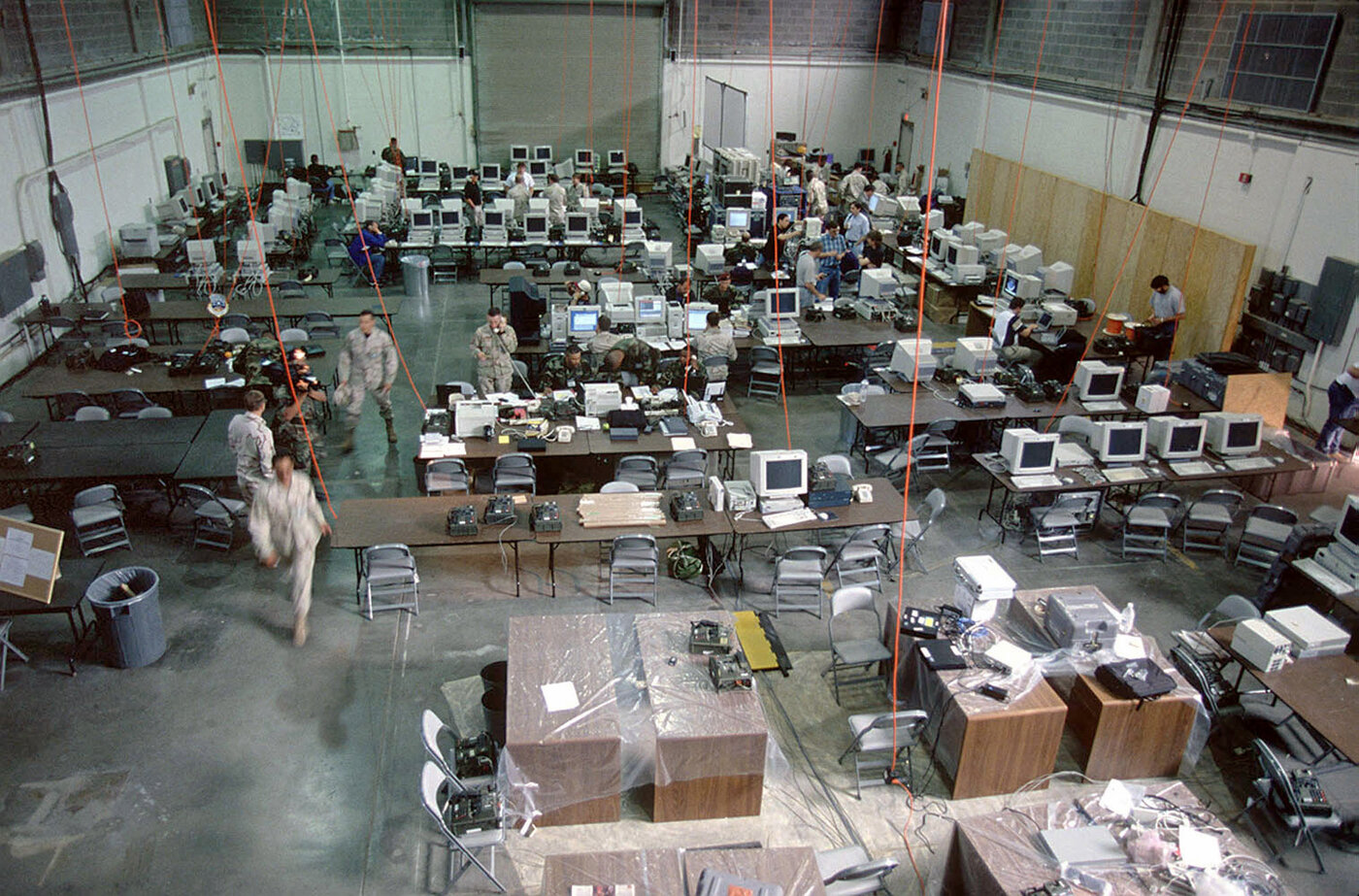
Weapon system deployment shifted from a threat-axis model — where batteries faced the most likely direction of attack — to a defended-asset model, where batteries surround critical infrastructure in 360-degree configurations. Patriot batteries at Abqaiq, Ras Tanura, and other key oil facilities were repositioned to provide all-around coverage rather than facing a single direction. Additional fire units were deployed to cover previously undefended approaches, particularly from the north and northwest.
The THAAD acquisition, finalised in 2018, filled the most critical gap in the Saudi architecture — the absence of an upper-tier system capable of engaging ballistic missiles at extreme altitude. THAAD’s first operational battery, activated in July 2025, provides an engagement opportunity before the threat descends to Patriot engagement altitude, creating a “shoot-look-shoot” capability where THAAD engages first and Patriot serves as the backup layer.
Counter-drone investment accelerated dramatically after 2019. Saudi Arabia acquired dedicated C-UAS systems including the Coyote Block 3 interceptor drone, electronic warfare jammers capable of disrupting GPS and radio-command guidance links, and directed-energy prototypes for eventual deployment. The World Defense Show in Riyadh in February 2026 — held just weeks before the Iranian strikes began — showcased Saudi Arabia’s growing domestic defense sector, including several indigenous counter-drone platforms developed by Saudi Arabian Military Industries.
| Capability | September 2019 (Abqaiq) | March 2026 (Iran Strikes) |
|---|---|---|
| Upper-tier BMD (THAAD) | None operational | 4 sites active, 3 more building |
| Patriot coverage | Forward-facing only | 360-degree defended-asset model |
| Counter-drone systems | Minimal | Dedicated C-UAS at all critical sites |
| Radar coverage | Significant gaps, especially low-altitude | Near-continuous 360-degree surveillance |
| Ballistic missile intercept rate | N/A (no BMs in 2019) | 90%+ claimed by GCC states |
| Drone/cruise missile intercept | 0% (none intercepted) | Majority intercepted; some leakage |
| Command integration | Fragmented | Centralised with US data fusion |
| Defence spending (annual) | $62 billion | $78 billion |
Can Saudi Arabia’s Patriot Batteries Stop Iranian Ballistic Missiles?
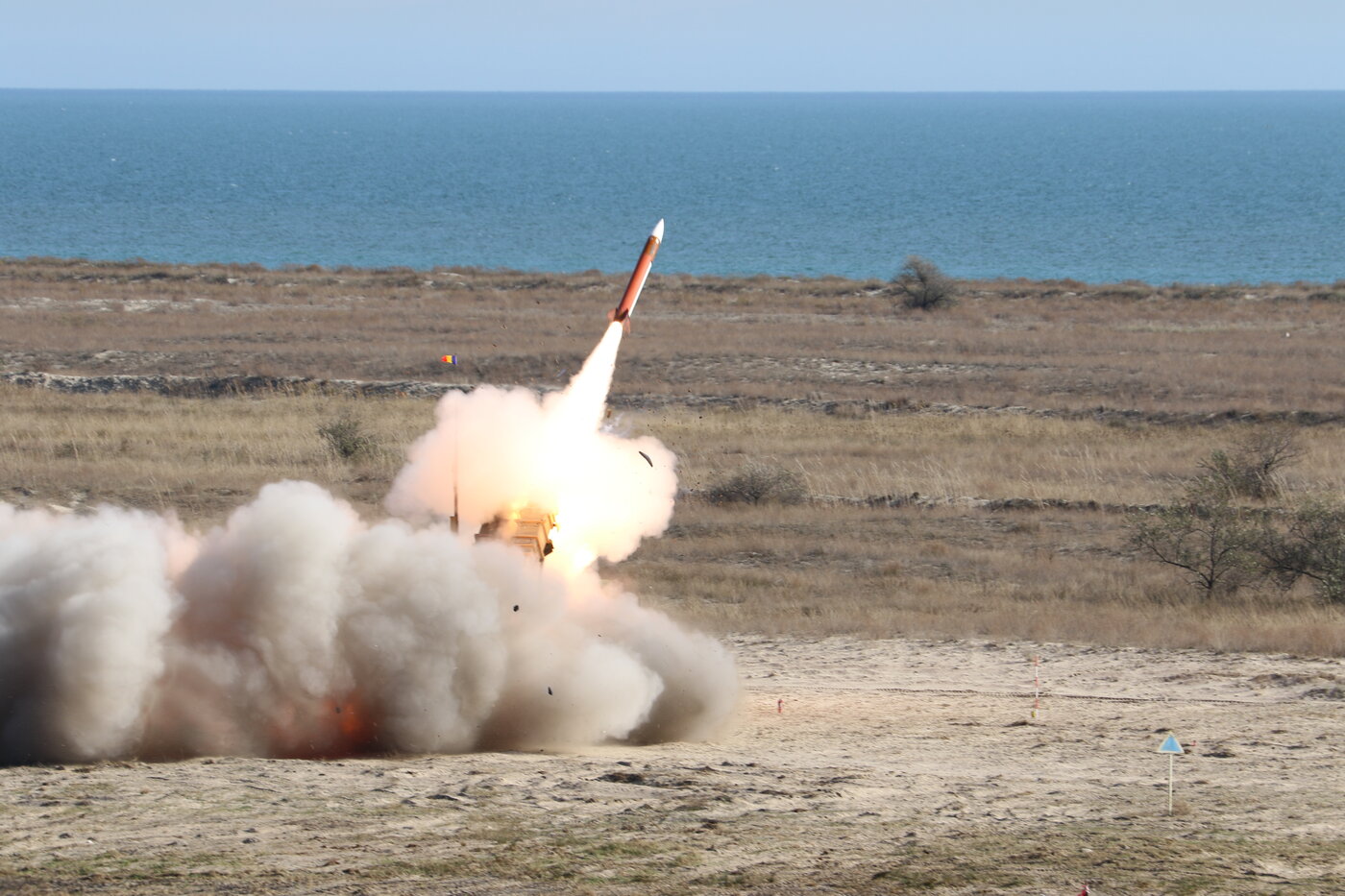
The Patriot PAC-3 MSE has demonstrated a credible capability against Iranian ballistic missiles in the opening week of the 2026 conflict. Saudi Arabia’s Ministry of Defence reported intercepting three ballistic missiles launched toward Prince Sultan Air Base in Al-Kharj on 6 March, and additional ballistic threats were neutralised in preceding days. The system’s hit-to-kill technology — where the interceptor physically collides with the incoming warhead at a closing speed exceeding Mach 10 — represents a fundamental improvement over the PAC-2’s blast-fragmentation approach that proved unreliable during the 1991 Gulf War.
Iran’s ballistic missile arsenal presents a range of challenges. The Shahab-3, with a range of approximately 1,300 kilometres, and the more modern Emad and Ghadr variants, carry separating warheads that complicate the interceptor’s tracking problem. The solid-fuelled Sejjil-2, with a range of 2,000 kilometres, reaches higher velocities and shorter flight times than liquid-fuelled alternatives, compressing the engagement window. Intelligence assessments from the Foundation for Defense of Democracies noted that Iran’s ballistic missile launch rate declined after the first 72 hours of the conflict, suggesting that either stockpiles were depleting or that the high interception rate was reducing Tehran’s willingness to expend expensive ballistic missiles on targets protected by Patriot.
The PAC-3 MSE’s effectiveness against ballistic missiles in combat conditions appears to validate the system’s design improvements. The missile uses an active radar seeker and aerodynamic control fins supplemented by small attitude-control motors for terminal-phase manoeuvring, enabling it to track and strike a warhead travelling at speeds above Mach 8. Each engagement typically involves two interceptors fired in rapid succession — a standard doctrine that doubles the probability of kill but also doubles the rate of interceptor expenditure.
The critical vulnerability is inventory depth. At a cost of approximately $12 million per PAC-3 MSE round for international customers, according to CSIS analysis, each successful intercept of an Iranian ballistic missile costing an estimated $500,000 to $2 million represents a cost asymmetry ratio of between six-to-one and twenty-four-to-one in Iran’s favour. The January 2026 approval of a $9 billion sale of 730 additional PAC-3 MSE interceptors — at roughly $12.3 million per missile — reflects the urgency of replenishing stocks that a sustained Iranian campaign could deplete within weeks.
The THAAD Factor — Saudi Arabia’s Upper-Tier Shield
The Terminal High Altitude Area Defense system represents Saudi Arabia’s most expensive and most capable air defense acquisition. Designed to intercept short- and medium-range ballistic missiles during their terminal descent phase — at altitudes above 150 kilometres, well outside the atmosphere — THAAD provides a capability that no other system in the Saudi inventory can replicate. Its interceptor, the Lockheed Martin Missile Assembly, uses kinetic kill technology to destroy the incoming warhead through direct impact at extreme closing velocities.
Saudi Arabia’s THAAD programme has been operational since mid-2025, when the first battery achieved initial operating capability at a site believed to be near Riyadh. The $15 billion acquisition, which includes 44 launchers, 360 interceptor missiles, and associated AN/TPY-2 radars, represents the largest THAAD sale to any nation outside the United States. The AN/TPY-2 radar — one of the world’s most powerful mobile radar systems — can detect and track ballistic missiles at ranges exceeding 1,000 kilometres, providing early warning data that benefits the entire Saudi air defense network, not just the THAAD batteries themselves.
In the March 2026 engagements, THAAD’s contribution remains partially classified, but its deployment around Riyadh and critical infrastructure sites provides the upper tier of a layered engagement. A ballistic missile launched from Iran toward Riyadh would first be detected by space-based infrared sensors and the AN/TPY-2 radar in forward mode. As the missile arcs through its trajectory and begins its terminal descent, THAAD would engage at high altitude. If the THAAD interceptor misses — or if the incoming missile deploys countermeasures or multiple reentry vehicles — the Patriot PAC-3 provides a second engagement opportunity at lower altitude. This layered architecture dramatically increases the cumulative probability of intercept.
Four of the seven planned THAAD sites are scheduled for completion by the end of 2026, with the remaining three sites reaching operational status by 2028, according to defence industry sources. The geographic placement of THAAD batteries reflects Saudi threat analysis: sites are positioned to cover the Riyadh metropolitan area, the Eastern Province oil infrastructure, and key military installations. The system’s 200-kilometre engagement range means a single THAAD battery can provide coverage over a substantial area, but the Kingdom’s vast geography still requires multiple batteries to achieve comprehensive protection.
THAAD’s single-shot probability of kill against unitary ballistic missiles is assessed at above 90 percent by Lockheed Martin, though this figure derives from controlled test conditions rather than combat. The system has completed over 20 successful flight tests, including multiple target intercepts at altitudes simulating real-world threats. The March 2026 engagements represent THAAD’s first combat employment outside the United States, making Saudi Arabia the testing ground for a system that allies across East Asia and the Middle East are closely watching.
The Saudi THAAD deployment represents the most significant proliferation of advanced missile defense technology since the United States deployed Patriot batteries to Israel during the 1991 Gulf War. Its performance in the current conflict will shape procurement decisions across the Indo-Pacific and Europe for the next decade.
International Institute for Strategic Studies, Strategic Survey 2025-2026
The financial scale of the THAAD investment reflects the system’s strategic importance. At approximately $41 million per interceptor missile, a single THAAD engagement costs more than most fighter aircraft sorties. The 360 interceptors in the Saudi order provide approximately 45 engagement opportunities per THAAD site across the seven planned locations — sufficient for the current low-intensity conflict but potentially inadequate against a maximum-effort Iranian ballistic missile salvo. The mathematics of interceptor inventory underscore a fundamental truth of modern air defense: the system’s capability is measured not just in technical performance but in the depth of its magazine.
Command, Control, and the Brain Behind the Shield
The most significant transformation in Saudi air defense since 2019 is not a weapon system but an architecture — the integration of disparate sensors, shooters, and intelligence feeds into a unified command-and-control network. Before the Abqaiq attack, Saudi air defense operated in what analysts at the Center for Strategic and International Studies described as a fragmented posture, where individual Patriot batteries operated semi-autonomously with limited coordination and minimal data sharing between units.
The Kingdom has since invested heavily in the Integrated Battle Command System (IBCS), an American-developed architecture that connects every sensor and every shooter in the air defense network into a single operational picture. Under IBCS, a radar in the Eastern Province that detects an incoming missile can pass tracking data directly to a Patriot battery near Riyadh, even if that battery’s own radar has not yet acquired the target. This “any sensor, any shooter” approach eliminates the delays and information gaps that plagued the pre-2019 system.
The United States plays a critical role in Saudi air defense command and control. US Central Command operates the Combined Air Operations Center (CAOC) at Al Udeid Air Base in Qatar — itself a target of Iranian strikes that forced Doha to choose between diplomacy and war — which coordinates air defence across the Gulf region. American early-warning satellites detect Iranian missile launches within seconds, and this data is transmitted to Saudi defence commanders through bilateral intelligence-sharing channels. US Air Force personnel are embedded with Saudi air defense units in an advisory capacity, providing technical support and tactical guidance.
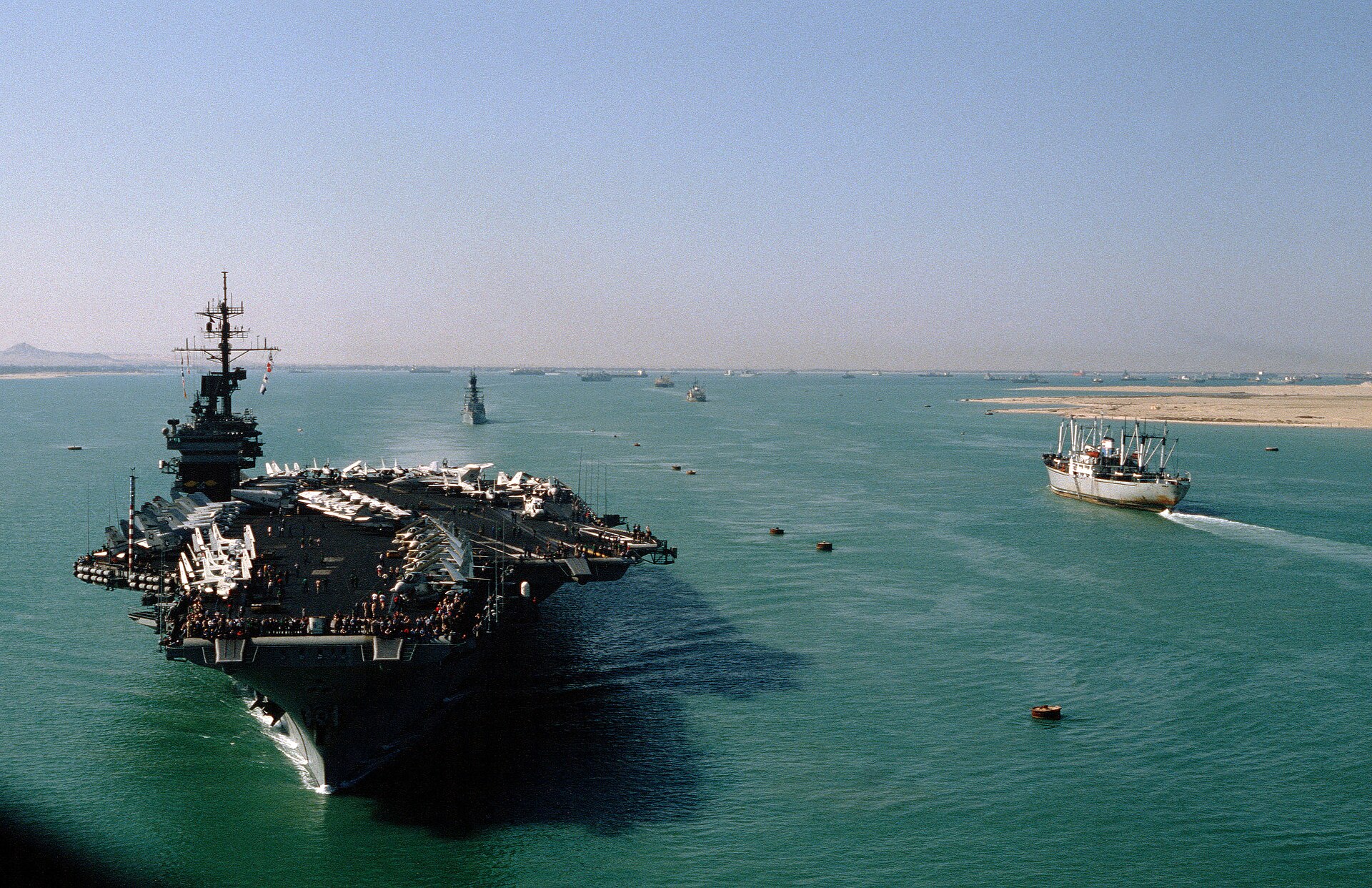
This American integration creates both capability and vulnerability. The US presence dramatically enhances Saudi detection and response times, but it also means that any disruption to American intelligence sharing — whether through political decision, communications jamming, or physical attack on relay nodes — would degrade Saudi air defense performance. The Iranian strike on the US Embassy compound in Riyadh on 3 March, and the reported hit on the CIA station within the compound according to the Washington Post, suggest that Tehran understands the value of disrupting American intelligence nodes in the Kingdom. The Pentagon has responded by deploying three carrier strike groups to the Gulf region, the largest concentration of American naval power in the Middle East since 2003, providing Aegis-based air defense coverage that extends Saudi Arabia’s protective umbrella into surrounding waters.
The cost of that vulnerability became tragically clear when Army Sergeant Benjamin Pennington, 26, became the first American to die on Saudi soil during the conflict. Pennington was wounded during a March 1 Iranian ballistic missile strike on Prince Sultan Air Base at Al-Kharj and died one week later, making him the seventh U.S. service member killed in Operation Epic Fury.
Saudi Arabia has responded by investing in indigenous command-and-control capabilities that can function independently of US support. Crown Prince Mohammed bin Salman’s defence modernisation programme includes the development of a national air defense operations centre staffed entirely by Saudi military personnel, reducing — though not eliminating — dependence on American technical support for day-to-day operations.
The Interceptor Cost Equation — A Framework for Sustainability
Every engagement between a Saudi interceptor and an Iranian weapon reveals the central paradox of modern air defense: the defender’s costs vastly exceed the attacker’s. This cost asymmetry threatens the long-term sustainability of Saudi Arabia’s air defense posture, regardless of its tactical effectiveness.
A framework for assessing air defense sustainability must account for three variables: the cost per intercept, the rate of interceptor expenditure, and the time required to replenish stocks. Analysis of publicly available data on interceptor costs and estimated Iranian weapon costs reveals the scale of the challenge facing Saudi defense planners.
| Interceptor | Cost Per Round | Target Weapon | Cost Per Weapon | Cost Ratio (Defender:Attacker) |
|---|---|---|---|---|
| PAC-3 MSE | $12 million | Shahab-3 BM | $1.5 million | 8:1 |
| PAC-3 MSE (x2 doctrine) | $24 million | Shahab-3 BM | $1.5 million | 16:1 |
| THAAD interceptor | $41 million | Sejjil-2 BM | $2 million | 20:1 |
| PAC-3 MSE | $12 million | Shahed-136 drone | $35,000 | 343:1 |
| NASAMS (AMRAAM) | $1.1 million | Shahed-136 drone | $35,000 | 31:1 |
The most alarming ratio involves the use of expensive interceptors against inexpensive drones. When a PAC-3 MSE missile costing $12 million destroys a Shahed-136 drone costing an estimated $35,000, the cost ratio reaches 343:1 — a figure that, sustained over weeks or months, would strain even Saudi Arabia’s considerable financial resources. This dynamic is not theoretical; the financial impact of the conflict is already measurable in Saudi markets, and CSIS analysis published in December 2025 warned that Gulf states face “serious interceptor inventory challenges” in any sustained conflict with Iran.
Saudi Arabia’s interceptor inventory provides a finite number of engagement opportunities. The Kingdom’s estimated stockpile of PAC-3 MSE interceptors, prior to the January 2026 replenishment order, stood at approximately 1,200 missiles according to defence industry estimates. At a consumption rate of 10-20 interceptors per day — the approximate rate observed in the first week of the conflict — the existing stockpile would be depleted within 60-120 days without resupply. The 730 additional interceptors approved in January would extend this window, but production of PAC-3 MSE missiles at Raytheon’s facilities in Arizona is limited to approximately 500 units per year, creating a bottleneck that no amount of spending can immediately resolve.
The interceptor sustainability challenge explains Saudi Arabia’s interest in lower-cost alternatives. Directed-energy weapons, which use lasers or high-powered microwaves to destroy drones at a cost of a few dollars per shot, are under development but remain years from operational deployment. Electronic warfare systems that jam drone guidance signals offer a cost-effective complement to kinetic interceptors, but they are ineffective against pre-programmed autonomous drones that do not rely on external guidance. The search for an affordable counter-drone solution remains one of the most consequential defence technology challenges of the decade.
How Effective Has Saudi Air Defense Been Against Iran in March 2026?
Saudi Arabia’s air defense performance since 28 February 2026 represents the largest sustained combat test of the Kingdom’s missile shield. Based on Saudi Ministry of Defence statements, allied intelligence assessments, and open-source analysis, the system has achieved a markedly higher interception rate than the zero-percent performance during the 2019 Abqaiq attack — though the results are not uniform across all threat types.
The Kingdom has faced a multi-axis, multi-domain assault. Iran has employed ballistic missiles, cruise missiles, and one-way attack drones simultaneously, forcing Saudi defenders to discriminate between threat types and allocate appropriate interceptors in real time. The volume of attack has been substantial — Al Jazeera reported that Iran launched “hundreds of missiles and drones” at Gulf states within the first 36 hours, with Saudi Arabia absorbing a significant share of the barrage.
| Date | Threat | Target | Intercepted | Outcome |
|---|---|---|---|---|
| 1 March | Ballistic missiles, drones | Riyadh airport, Prince Sultan Air Base | Yes | Intercepted without material losses |
| 2 March | 2 drones | Ras Tanura oil refinery | 5 of 5 drones intercepted; shrapnel fire | Minor fire from debris; refinery shut precautionary |
| 2 March | 2 drones | US Embassy, Riyadh | Not intercepted | Limited fire, minor structural damage |
| 3 March | 8 drones | Riyadh, Al-Kharj | Yes | All intercepted |
| 4 March | Projectile | Ras Tanura (second strike) | Partial | Shrapnel from intercept caused minor damage |
| 5 March | Drone | Al-Jouf region | Yes | Intercepted and destroyed |
| 6 March | Cruise missile | East of Al-Kharj | Yes | Destroyed |
| 6 March | 3 ballistic missiles | Prince Sultan Air Base | Yes | All three destroyed |
| 6 March | 5 drones | Eastern Province, Al-Kharj, eastern Riyadh | Yes | All destroyed |
Preliminary assessments suggest that Saudi ballistic missile interception rates have exceeded 90 percent, consistent with figures released by the UAE and Qatar for their own Patriot and THAAD engagements. The system appears particularly effective against unitary ballistic missiles following predictable trajectories — the scenario for which Patriot PAC-3 and THAAD were specifically designed. That optimistic assessment carries a caveat: Iran’s arsenal includes the Khoramshahr-4, a multi-warhead ballistic missile that disperses several independent re-entry vehicles in the terminal phase, fundamentally altering the intercept mathematics that have favoured the defenders so far.
Performance against drones and cruise missiles has been less consistent. While the Ministry of Defence has reported multiple successful drone intercepts, the strike on the US Embassy compound in Riyadh on 2-3 March — including what the Washington Post reported was a hit on the CIA station — demonstrates that some low-flying threats have penetrated the defense network. The disparity is not surprising: ballistic missiles follow detectable, predictable arcs that give defenders minutes of warning, while small drones flying at low altitude can exploit gaps in radar coverage and approach from unexpected directions.
The overall assessment from allied governments has been cautiously positive. The US State Department’s joint statement on Iran’s attacks, issued on 3 March, commended the air defense performance of Gulf partners while acknowledging that “some weapons reached their targets.” Breaking Defense characterised the situation as a “nightmare scenario” that GCC air defenses were nonetheless “managing with considerable effectiveness” — a marked contrast to the helpless posture of September 2019.
Where the Shield Failed — The Gaps Iran Exploited
The conventional narrative of Saudi air defense success in March 2026 obscures a more nuanced reality: the shield held against the threats it was designed to counter, but Iran found and exploited gaps that call into question the completeness of the defensive transformation since 2019.
The most consequential failure was the inability to prevent drone strikes on the US Embassy compound in Riyadh. Two Iranian drones struck the compound on 2-3 March, causing what Saudi authorities described as “limited fire and minor material damages.” The Washington Post subsequently reported that the CIA’s station within the embassy compound suffered a direct hit. This failure is significant not because of the physical damage — which was minor — but because it demonstrates that Iran can put weapons on target in the Saudi capital despite billions of dollars in defensive investment.
The Ras Tanura engagements revealed a different limitation. Saudi forces successfully intercepted five drones approaching the refinery on 2 March, but falling debris from the intercepts caused a fire that contributed to Aramco’s decision to halt operations — triggering the emergency rerouting of Saudi oil exports to the Red Sea. On 4 March, a second strike on Ras Tanura caused additional minor damage from intercept debris. The lesson is sobering: even when air defense works perfectly, the physical consequences of intercepting weapons near critical infrastructure can approximate the damage from a successful attack. Shrapnel from a Patriot missile detonating a drone’s warhead at low altitude can still start fires, damage equipment, and force precautionary shutdowns.
The drone threat remains the most significant gap in Saudi air defense. Iran’s one-way attack drones — including variants of the Shahed-136 and newer designs — fly at low altitude, have small radar cross-sections, and can approach from any direction. A single Shahed-136, with a wingspan of approximately 2.5 metres and a radar cross-section smaller than a bird, can be extremely difficult to detect against ground clutter using conventional air defense radars. The sheer volume of drones Iran can produce and launch creates an attrition challenge: even with a 90 percent intercept rate, a barrage of 100 drones would result in 10 successful strikes.
Geographic coverage gaps also persist. Saudi Arabia’s early-warning and air defense assets are concentrated around the Eastern Province oil infrastructure, the Riyadh metropolitan area, and key military bases. Vast stretches of the Kingdom’s territory — including the northern border region, the Empty Quarter, and much of the Red Sea coast — have limited or no air defense coverage. Iran and its proxies could exploit these gaps to route attacking weapons through undefended airspace before turning toward defended targets. The March 5 intercept of a drone east of Al-Jouf, in the Kingdom’s sparsely populated north, suggests that at least some Iranian weapons are being routed through these peripheral corridors.
The human cost of these defense gaps has already materialised. In Al-Kharj, a projectile penetrated the area around Prince Sultan Air Base and struck a worker compound, killing two civilians — the first confirmed deaths on Saudi soil from the conflict, underscoring that even high interception rates leave residual threats capable of reaching populated areas.
The proxy dimension adds further complexity. Yemen’s Houthi movement, which has conducted drone and missile attacks against Saudi Arabia since 2015, could open a second front from the south while Iranian weapons arrive from the east and northeast. Saudi air defense architecture was substantially reorganised after the Houthi attacks of 2015-2022, with Patriot batteries deployed along the southern border, but a simultaneous two-front attack would force difficult allocation decisions between northern and southern defense sectors. The vulnerability of Saudi desalination plants along the Gulf coast — facilities that provide 70 percent of the Kingdom’s drinking water — represents a target set that, if successfully struck, could create a humanitarian crisis within days.
The contrarian view of Saudi air defense performance in March 2026 is this: the system has succeeded primarily because Iran has chosen not to fully test it. Tehran has employed a fraction of its estimated 3,000-missile arsenal, launched attacks in waves separated by hours rather than minutes, and has not yet deployed its most sophisticated weapons — including the Fattah-2 hypersonic glide vehicle, which no existing air defense system in the Saudi inventory can reliably intercept. If Iran escalates to a maximum-effort strike — launching hundreds of ballistic missiles, cruise missiles, and drones simultaneously — the mathematical reality of finite interceptor inventories and sensor saturation suggests the shield would experience far higher leakage rates than the current 10 percent. The shield has held, but it has not been truly tested at full capacity.
Saudi Arabia’s Push to Build Its Own Air Defenses
The vulnerability exposed by Saudi Arabia’s near-total dependence on American air defense systems — where 80 percent of arms imports come from the United States, according to the Stockholm International Peace Research Institute — has accelerated the Kingdom’s drive to develop indigenous defense capabilities. Saudi Arabian Military Industries (SAMI), established in 2017 as a wholly owned subsidiary of the Public Investment Fund, aims to localise 50 percent of military spending by 2030 under the Vision 2030 economic diversification programme.
SAMI’s air defense portfolio includes partnerships with leading international manufacturers. The broader question of whether Saudi Arabia’s overall military can fight a conventional war against Iran extends well beyond air defense into ground forces, naval capability, and the strategic reserves needed to sustain prolonged operations. A joint venture with Thales covers short-range air defense systems, counter-rocket radars, command-and-control systems, and multi-mission missiles, with a target localisation ratio of 70 percent. A separate memorandum of understanding with European missile consortium MBDA, signed at the 2022 World Defense Show, establishes a framework for domestic production of tactical missile systems, including the creation of a missile maintenance, repair, and overhaul facility on Saudi soil.
The most significant domestic production achievement involves THAAD components. Lockheed Martin, the Saudi General Authority for Military Industries (GAMI), and Arabian International Company for Steel Structures have confirmed the successful domestic production of the first Missile Round Pallet-Transportable (MRP-T), a logistical component used to transport THAAD interceptor missiles. Plans include eventual domestic production of THAAD launchers and storage canisters, reducing the Kingdom’s dependence on American manufacturing capacity for critical replacement parts.
Counter-drone systems represent the most promising area for indigenous development. Saudi firms displayed several domestically designed C-UAS platforms at the 2026 World Defense Show, including electronic warfare systems, drone-detection radars, and kinetic interceptor drones. The relatively lower technological barriers to counter-drone development — compared to ballistic missile defense — make this sector accessible to Saudi manufacturers operating with technology transfer from Western partners.
The challenge is timeline. Localising the production of complex air defense systems requires not just factory capacity but deep engineering expertise, sophisticated supply chains, and decades of institutional knowledge that cannot be purchased off the shelf. Saudi Arabia’s dependence on American interceptor resupply — highlighted by the $9 billion emergency PAC-3 order in January 2026 — will persist for years even under the most optimistic localisation scenarios. The current conflict has, paradoxically, both justified the long-term investment in indigenous capability and demonstrated how far the Kingdom remains from self-sufficiency.
The broader strategic implications of Saudi Arabia’s indigenous defence ambitions extend beyond air defense. The Kingdom’s total defence spending reached $78 billion in 2025, making it the fifth-largest military budget globally, according to the International Institute for Strategic Studies. Of that figure, approximately $62 billion flows to foreign manufacturers — predominantly American firms. Redirecting even a fraction of that expenditure to domestic industry would create tens of thousands of high-skill jobs, generate technology transfer to the civilian economy, and reduce the strategic vulnerability that comes with depending on a single foreign supplier for the weapons that protect the Kingdom’s critical infrastructure and population centres. The March 2026 conflict has transformed this ambition from a Vision 2030 aspiration to a national security imperative.
What Comes Next for Saudi Arabia’s Air Defense?
The March 2026 conflict is reshaping Saudi air defense planning in real time. Three immediate priorities are emerging from the operational experience of the first week of sustained combat.
The first priority is interceptor resupply. Saudi Arabia is consuming PAC-3 MSE and THAAD interceptors at rates that will deplete existing stocks within months if the conflict continues. The $9 billion PAC-3 replenishment order approved in January 2026 was prescient but insufficient if Iran sustains its current rate of attack. Defence industry sources indicate that Raytheon’s PAC-3 production line operates at approximately 500 missiles per year — far below the consumption rate of a sustained conflict. Expanding production capacity requires capital investment in manufacturing facilities that will take 18-24 months to yield additional output.
The second priority is closing the counter-drone gap. The disparity between the cost of intercepting drones with PAC-3 missiles (up to $12 million per intercept) and the cost of the drones themselves ($35,000 for a Shahed-136) is economically unsustainable. Saudi Arabia needs cost-effective counter-drone systems that can neutralise swarm attacks without depleting the interceptor stocks reserved for ballistic missiles. Directed-energy weapons, kinetic C-UAS interceptors costing less than $100,000 per round, and electronic warfare jamming systems all offer partial solutions, but none has been validated at scale in combat conditions.
The third priority is deepening the sensor network. The ability to detect and track small, low-flying drones at ranges sufficient for timely engagement remains the weakest link in Saudi air defense. Ground-based radar systems optimised for detecting objects with radar cross-sections as small as 0.01 square metres, persistent surveillance drones providing wide-area airborne detection, and acoustic sensors for last-resort warning are all under evaluation. Israel’s layered detection network, which achieved notable success against Iranian drone swarms in April 2024, provides a model that Saudi planners are studying.
Beyond the immediate conflict, the March 2026 experience will influence Gulf air defense architecture for the next decade. The GCC’s collective vulnerability to Iranian missile and drone attack — with all six member states reporting strikes in the first week — is generating momentum for a regional integrated air defense network, analogous to NATO’s Air Defense Ground Environment. Such a network would share sensor data, coordinate engagement across national boundaries, and pool interceptor resources, addressing the geographic coverage gaps that no single Gulf state can fill alone.
That momentum is already producing results. The war has catalyzed unprecedented real-time air defense data sharing between GCC states, with Gulf militaries exchanging targeting information and coordinating intercepts across national boundaries in ways that four decades of peacetime planning never achieved.
The most pressing test of these systems lies ahead. With Hajj 2026 scheduled for late May, Saudi Arabia must extend its air defense umbrella across the entire western corridor from Jeddah to Medina to protect nearly two million pilgrims in open-air locations.
For the Saudi-American defence partnership, the conflict has reinforced mutual dependency while exposing its constraints. American technology, intelligence, and resupply are indispensable to Saudi air defense. But American willingness to sustain this support is contingent on political factors that lie outside Saudi control. The long-term imperative — building sovereign air defense capability — remains decades from realisation, even as the current crisis demonstrates its urgency.
Britain’s decision to deploy HMS Dragon, a Type 45 air defense destroyer, and additional Typhoon fighters to the Gulf underscores the growing international commitment to defending Saudi Arabia from Iranian strikes. The UK-Saudi defense alliance, dormant for decades, has been reactivated by the very crisis that is testing Saudi air defenses.
Saudi Arabia is also looking beyond its own arsenal. On March 7, Pakistan formally activated its mutual defense pact with the Kingdom, with Field Marshal Asim Munir traveling to Riyadh to discuss joint air defense measures with Prince Khalid bin Salman. Pakistan’s air defense expertise and additional radar operators could help plug gaps in the Kingdom’s layered missile shield.
Frequently Asked Questions
What air defense systems does Saudi Arabia use?
Saudi Arabia operates a multi-layered air defense network centred on three principal systems: the Patriot PAC-3 MSE for middle-tier ballistic missile and cruise missile defence, the THAAD system for upper-tier ballistic missile interception at extreme altitude, and shorter-range systems including NASAMS for counter-drone and low-altitude defence. The Kingdom operates 108 Patriot launchers in six battalions and has activated four of seven planned THAAD sites as of March 2026.
How effective is Saudi air defense against Iranian missiles?
Saudi Arabia’s air defense has achieved estimated interception rates above 90 percent against Iranian ballistic missiles during the March 2026 conflict, according to preliminary allied assessments. Performance against drones and cruise missiles has been less consistent, with some low-flying threats penetrating the defense network. The system’s performance represents a dramatic improvement over the 2019 Abqaiq attack, when no incoming weapons were intercepted.
How much has Saudi Arabia spent on air defense?
Saudi Arabia has invested over $80 billion in air defense systems since the 1990s. Recent acquisitions include a $15 billion THAAD purchase in 2017, a $3.05 billion PAC-3 MSE interceptor order in 2022, and a $9 billion PAC-3 replenishment approved in January 2026. The Kingdom’s total annual defence budget reached $78 billion in 2025, approximately 21 percent of total government spending.
What happened at the Abqaiq attack in 2019?
On 14 September 2019, a combined drone and cruise missile attack struck Saudi Aramco’s Abqaiq processing facility and Khurais oil field, knocking out 5.7 million barrels per day of oil production. Not a single incoming weapon was intercepted. The attack exposed critical failures in Saudi air defense: forward-facing radar with no 360-degree coverage, absence of counter-drone systems, and personnel readiness issues. The disaster triggered a comprehensive overhaul of Saudi air defense architecture.
Can THAAD intercept Iranian ballistic missiles?
THAAD is specifically designed to intercept short- and medium-range ballistic missiles like those in Iran’s arsenal. The system engages targets at altitudes above 150 kilometres, outside the atmosphere, using kinetic hit-to-kill technology. Saudi Arabia activated its first THAAD battery in mid-2025, and the system has completed over 20 successful intercept tests. Its performance against Iranian missiles in the March 2026 conflict represents THAAD’s first combat use outside the United States.
Why does it cost more to defend against drones than to build them?
The cost asymmetry between air defense interceptors and attack drones is extreme. A PAC-3 MSE interceptor costs approximately $12 million, while an Iranian Shahed-136 drone costs an estimated $35,000 — a ratio of 343:1 in the attacker’s favour. This imbalance exists because interceptors require sophisticated radar seekers, guidance systems, and high-performance propulsion to hit fast-moving targets, while attack drones need only basic navigation and a simple warhead. The search for affordable counter-drone solutions is one of the most urgent defence technology challenges. Ukraine, which has spent three years fighting the exact same Shahed drones now targeting the Gulf, has developed interceptor drones costing just $2,100 that have already destroyed more than 1,000 Shaheds — a potential breakthrough in counter-drone economics.
The challenge facing these systems intensified on March 10, when the IRGC commander pledged to use only warheads weighing over one ton, a shift that raises the stakes of any interception failure against Saudi critical infrastructure.
Is Saudi Arabia developing its own air defense systems?
Saudi Arabian Military Industries (SAMI), established in 2017, aims to localise 50 percent of military spending by 2030. The Kingdom has established joint ventures with Thales for short-range air defense and with MBDA for tactical missile systems. Saudi firms have begun domestic production of THAAD logistics components and are developing indigenous counter-drone platforms. Full self-sufficiency in air defense production remains years away, but the March 2026 conflict has accelerated investment in indigenous capabilities.