
RIYADH — Twenty-seven days of sustained Iranian bombardment have delivered the verdict that a decade of Western analysis failed to produce: Saudi Arabia’s military works. The Kingdom has intercepted an estimated 85 to 90 percent of incoming ballistic missiles, maintained air sovereignty over the world’s most valuable energy infrastructure, and absorbed the largest sustained aerial assault in Middle Eastern history without losing a single major population centre or critical oil facility to permanent destruction. The military that stumbled through Yemen has, under fire, become something its critics never expected it could be.
That assessment requires immediate qualification. Saudi Arabia has not fought offensively. Its air force has not struck Iran. Its ground forces have not deployed beyond their own borders. The intercept rates, while impressive, have come at a cost of roughly $100 million per week in Patriot interceptors alone — a burn rate that no country, however wealthy, can sustain indefinitely. Iran destroyed at least four THAAD radar arrays worth $1.2 billion in the war’s opening days, exposing a vulnerability that continues to erode the defensive shield’s long-term reliability. The Kingdom remains dependent on American technicians, American intelligence, and American resupply for every major weapons system it operates. Yet the central fact remains: when the missiles came, the defences held. The question now is what Saudi Arabia does with a military reputation it never had before.
Table of Contents
- What Has Saudi Arabia’s Military Actually Achieved in Four Weeks?
- The Yemen Shadow — Why Everyone Expected Failure
- How Effective Is Saudi Arabia’s Air Defense Shield?
- The Royal Saudi Air Force — 210 Eagles and No Offensive Orders
- The Wartime Combat Performance Matrix
- What Got Through — The Strikes Iran Landed
- Is Saudi Arabia Spending $100 Million a Week to Run Out of Interceptors?
- The Naval Gap Saudi Arabia Cannot Close Alone
- How Does This Compare to Other Nations’ First Tests of Fire?
- The Contrarian Case — War as the Catalyst Saudi Defence Needed
- What Must Change Before the Next War?
- Frequently Asked Questions
What Has Saudi Arabia’s Military Actually Achieved in Four Weeks?
Saudi Arabia’s armed forces have achieved what no analyst confidently predicted before February 28, 2026: they have defended the Kingdom against a sustained state-on-state aerial campaign. In twenty-seven days, Iran has fired an estimated 500 or more missiles and drones at Saudi territory, according to the Saudi Ministry of Defence. The vast majority were destroyed before reaching their targets. Not a single Saudi city has suffered the kind of catastrophic infrastructure destruction that many pre-war scenarios forecast.
The achievement is specific, measurable, and historically significant. Saudi Patriot and THAAD batteries have intercepted between 75 and 90 ballistic missiles, with a success rate that the International Institute for Strategic Studies in London estimates at between 85 and 90 percent. For drones, the intercept rate sits at approximately 85 percent, with cheaper systems including short-range air defence guns and electronic warfare taking the bulk of the load. On March 12, in the largest single-day assault since hostilities began, Saudi forces intercepted all 31 drones and all three ballistic missiles launched at the Eastern Province — a perfect interception record for that day.
The Kingdom’s oil infrastructure has sustained damage but not destruction. The Samref refinery at Yanbu, jointly owned by Saudi Aramco and ExxonMobil, took a drone strike on March 19 that briefly disrupted Red Sea oil loadings. Facilities in the Eastern Province have been repeatedly targeted. Yet Aramco continues to export, having activated the East-West pipeline to full capacity and rerouted significant volumes through Red Sea terminals. Energy production, the lifeblood of the Saudi state, continues.
Beyond hardware, Saudi Arabia’s military has demonstrated something less tangible but equally important: institutional resilience under sustained pressure. Command and control structures have held. Air defence crews have maintained operational tempo across nearly four continuous weeks without the rotational collapse that many analysts feared. The civil defence system, which barely existed before the war, was improvised from scratch — sending air raid alerts to eight million mobile phones in Riyadh during the first week and establishing shelter protocols across the Eastern Province.
The Yemen Shadow — Why Everyone Expected Failure
The scepticism was earned. Saudi Arabia’s decade-long intervention in Yemen, launched in March 2015 under the banner of Operation Decisive Storm, became one of the most scrutinised military failures of the twenty-first century. The campaign’s stated objective — reversing the Houthi takeover of Sana’a — was never achieved. By the time Saudi Arabia effectively withdrew, the Houthis controlled more territory than when the war began.
The operational deficiencies exposed in Yemen were systemic, not incidental. Saudi pilots flew at high altitudes to avoid ground fire, producing inaccurate strikes that killed thousands of civilians and generated worldwide condemnation without degrading Houthi military capability. Ground forces, when deployed, performed unevenly. Coalition coordination fractured as the UAE pursued separate objectives in southern Yemen and ultimately withdrew most of its forces. The Washington Institute for Near East Policy assessed that the Saudi air campaign “lacked the precision, intelligence integration, and ground-air coordination” required for effective counterinsurgency operations.
Defence analysts at the Arab Center Washington DC concluded in a 2025 retrospective that the intervention “unequivocally failed in its mission.” The Middle East Institute described Saudi strategy as “running around in circles.” Al Jazeera labelled the entire operation “a strategic failure.” Western militaries, which had provided weapons, training, and intelligence support, privately questioned whether Saudi Arabia possessed the institutional capacity to conduct modern warfare at any level.
These assessments shaped the pre-war predictions in February 2026. When Iranian missiles began falling on the Eastern Province, analysts across Washington, London, and Brussels expected catastrophe. The International Crisis Group warned of “a Gulf defence architecture that has never been tested against a state-level adversary.” Breaking Defense described the Iranian assault as a “nightmare scenario” for GCC countries whose forces had never faced anything more sophisticated than Houthi drones.
The predictions were wrong — but they were not unreasonable. What changed between Yemen and the Iran war was not the Saudi military’s character but its circumstances. Defence is a fundamentally different operation from offence. Intercepting incoming missiles over your own territory, with your own radar coverage and prepared positions, is militarily distinct from projecting force across a border into hostile terrain. Saudi Arabia’s military in 2026 is not demonstrating that it can conquer. It is demonstrating that it can defend. That distinction matters enormously, and it is the lens through which every assessment of Saudi military performance should be viewed.
How Effective Is Saudi Arabia’s Air Defense Shield?
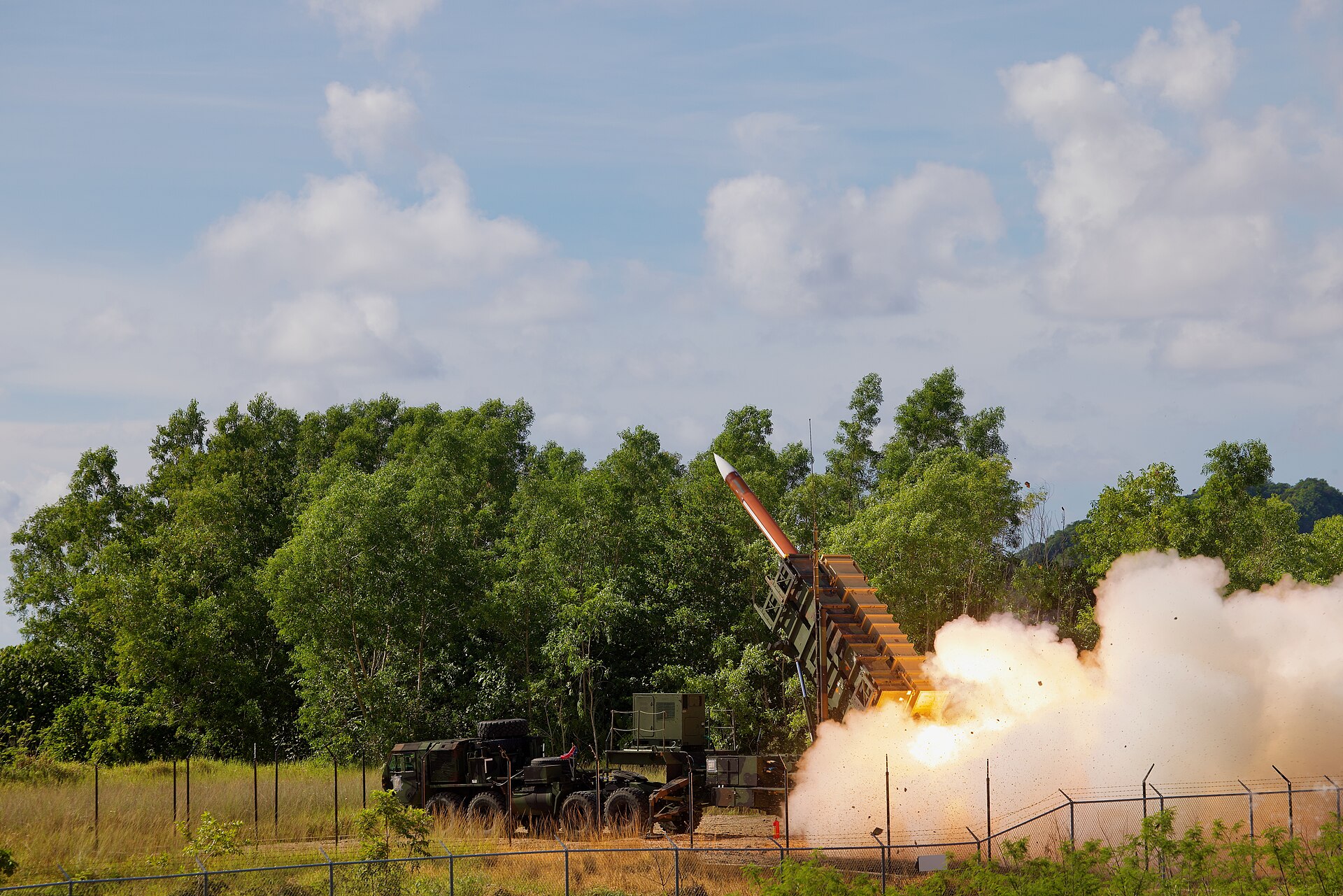
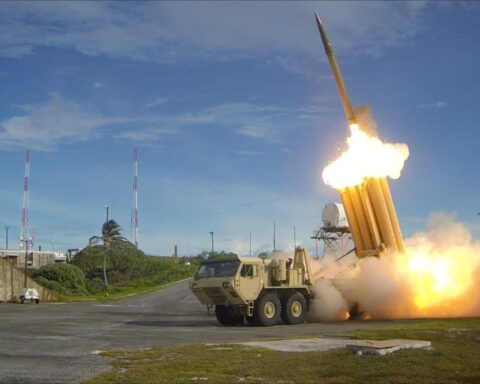
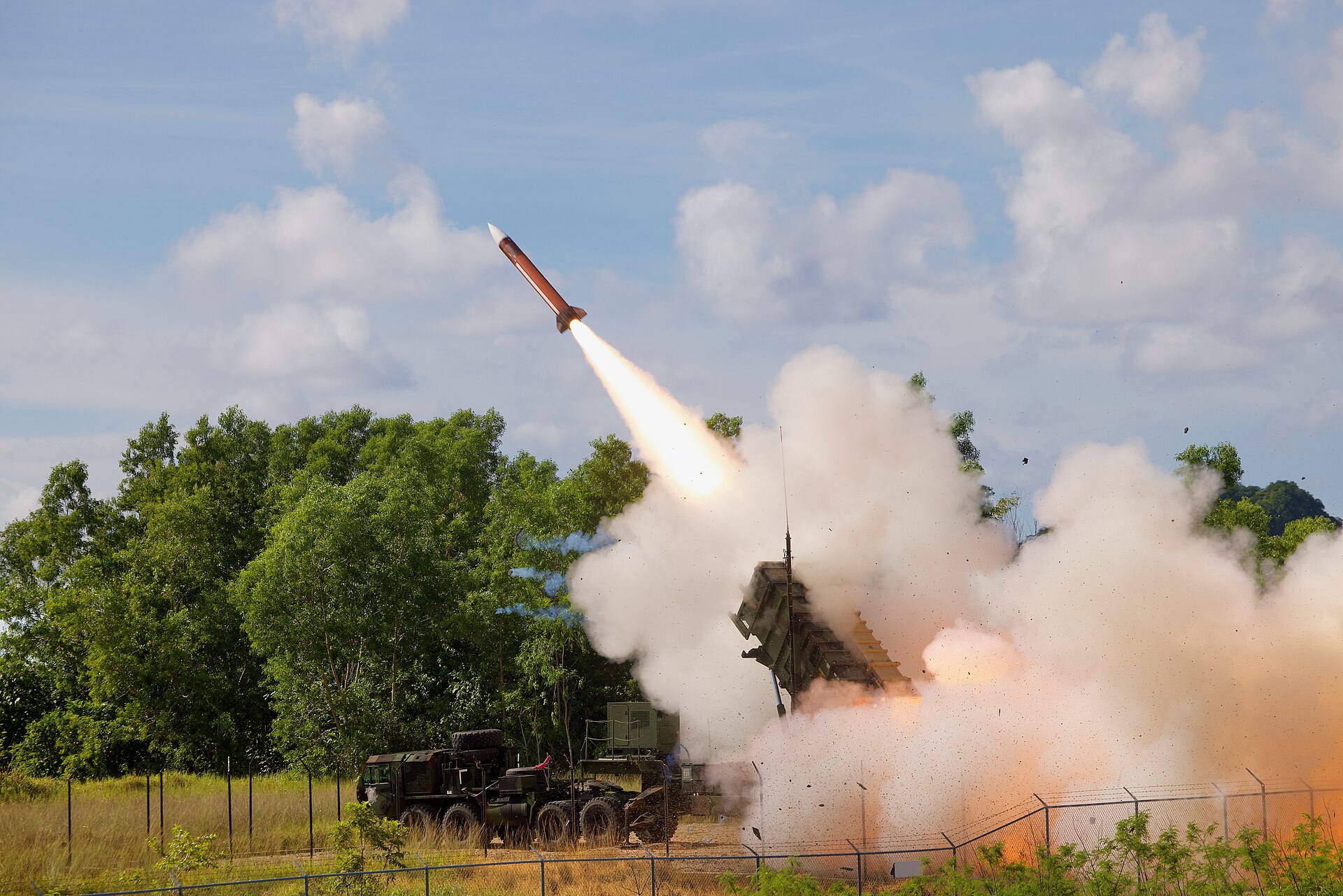
Saudi Arabia operates 108 MIM-104 Patriot launchers organised into six battalions — more than any country except the United States. The system fields a mix of PAC-2 GEM-T interceptors, designed primarily for aircraft and cruise missiles, and PAC-3 MSE interceptors capable of engaging ballistic missile threats. Alongside the Patriot network sit two Terminal High Altitude Area Defence batteries, the THAAD systems that provide the upper-tier shield against medium-range ballistic missiles descending from high altitude.
The layered architecture has performed well against the specific threat Iran has presented. The engagement ratio — approximately two interceptors fired per incoming ballistic missile — is consistent with standard doctrine and suggests that crews are following established procedures rather than panic-firing. The 85 to 90 percent interception rate for ballistic missiles significantly exceeds what many defence analysts expected, particularly given the mixed record of Patriot systems during the 2019 Abqaiq-Khurais drone and cruise missile attack, when Saudi defences failed to prevent significant damage to Aramco processing facilities.
Several factors explain the improved performance. First, Saudi Arabia has invested heavily in air defence since the Abqaiq shock. The Kingdom upgraded its Patriot batteries to the latest PAC-3 MSE configuration, which offers improved kinematic performance against manoeuvring ballistic warheads. Second, the United States deployed additional Patriot and THAAD batteries to the Gulf in the weeks preceding the war, augmenting Saudi coverage. Third, the threat environment, paradoxically, plays to Saudi strengths: ballistic missiles follow predictable trajectories that radar systems can track from launch, unlike the low-altitude cruise missiles and drones that evaded Saudi defences in 2019.
Against drones, the picture is more complex. Iran’s one-way attack drones — particularly variants of the Shahed-136, which cost an estimated $20,000 to $50,000 each — present a fundamentally different challenge. They fly low, slowly, and in swarms. Engaging them with $4 million Patriot interceptors is economically irrational but sometimes operationally necessary when cheaper alternatives are unavailable or overwhelmed. The financial calculus of this asymmetry has become one of the defining strategic questions of the conflict.
The 85 percent drone interception rate, while respectable, means that roughly one in seven drones reaches its target area. In a single day with 30 incoming drones, that translates to four or five impacts. Over twenty-seven days of continuous operations, the cumulative leakage explains the scattered damage visible across the Eastern Province — dented rooftops, cratered roads, and missile debris falling on residential areas.
The Royal Saudi Air Force — 210 Eagles and No Offensive Orders
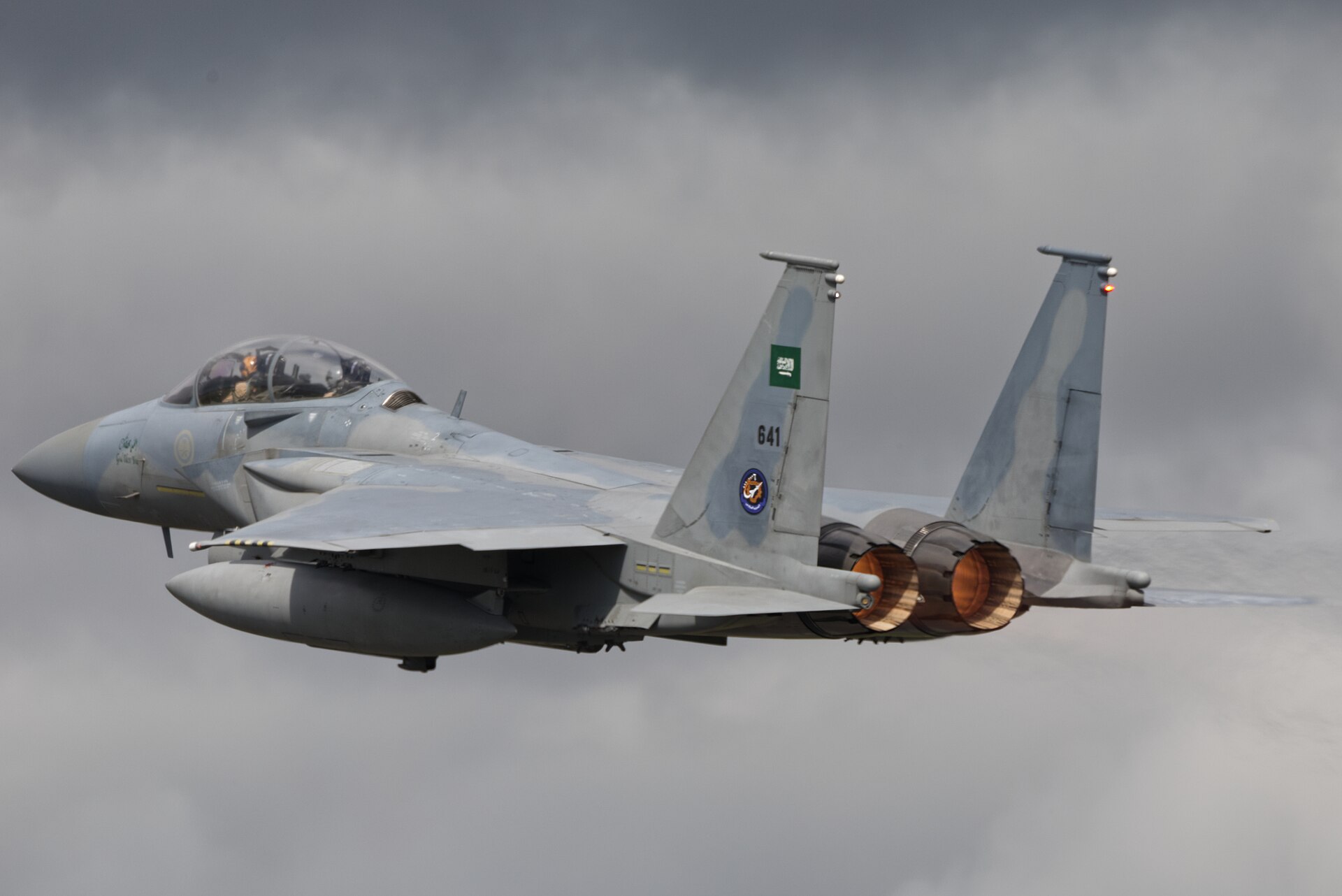
The Royal Saudi Air Force fields approximately 210 F-15 variants, including 84 of the advanced F-15SA — the most modern F-15 variant in service anywhere in the world. This fleet represents an estimated $60 billion in cumulative acquisition and modernisation costs. It is the second-largest F-15 fleet on Earth. In February 2026, just weeks before the war began, the United States approved a $3 billion sustainment deal to keep the fleet combat-ready through the decade.
Yet in twenty-seven days of war, not a single Saudi F-15 has been ordered to strike Iran.
The restraint is deliberate, reflecting a strategic calculation by Crown Prince Mohammed bin Salman and Defence Minister Prince Khalid bin Salman rather than any operational limitation. Saudi Arabia has not officially entered the war as a belligerent. Its forces are operating under a defensive mandate, intercepting threats to Saudi territory but not contributing to the US-Israeli offensive campaign against Iranian military infrastructure. The Wall Street Journal reported on March 24 that Saudi Arabia has taken “steps toward joining the Iran war,” including granting the US military access to King Fahd Air Base, but has stopped short of committing its own offensive forces.
This restraint has tactical implications. The RSAF has maintained combat air patrols over Saudi airspace, providing the fighter screen that protects the air defence network from saturation. F-15SAs have reportedly been used to intercept slower-moving drones that would waste expensive surface-to-air missiles. But the fleet’s primary role — air superiority and deep strike — remains unused.
Whether this represents strategic wisdom or a missed opportunity depends on the observer. Saudi Arabia’s neutrality on the offensive question preserves diplomatic flexibility and avoids the legal and political complications of becoming a co-belligerent. It also means that the RSAF’s warfighting capability remains unproven in the one dimension that matters most: striking defended targets in hostile airspace. The air force that emerged from Yemen with a reputation for inaccuracy has not yet had the chance to prove whether American training, advanced avionics, and a decade of modernisation have changed the result.
The Wartime Combat Performance Matrix
Measuring military performance requires separating what Saudi Arabia has done from what it has been asked to do. The following matrix scores the Kingdom’s armed forces across six operational dimensions, each rated from one to five, where one represents critical failure and five represents exceptional performance. The scores are derived from publicly available data, allied assessments cited in Bloomberg and Reuters reporting, and the operational outcomes of twenty-seven days of continuous operations.
| Operational Dimension | Pre-War Expectation | Actual Score (1-5) | Evidence |
|---|---|---|---|
| Ballistic Missile Defence | Moderate concern after Abqaiq | 4.5 | 85-90% interception rate, 75-90 BMs neutralised |
| Drone Defence | Major concern — swarm tactics feared | 3.5 | ~85% interception, but cost asymmetry unsustainable |
| Air Sovereignty | Expected to hold with US support | 4.0 | No penetration of Saudi airspace by manned aircraft |
| Critical Infrastructure Protection | High vulnerability assumed | 3.5 | Minor damage to Samref refinery, Yanbu briefly disrupted, Eastern Province facilities operational |
| Command and Control | Unknown — never stress-tested | 4.0 | 27 consecutive days of continuous ops without collapse |
| Offensive Strike Capability | Not applicable — not employed | N/A | No offensive operations ordered; capability untested |
| Civil Defence | Virtually non-existent | 3.0 | Improvised alert system, no pre-built shelters, debris casualties |
| Sustainment and Logistics | Heavy dependency on US resupply | 2.5 | $100M/week burn rate, THAAD radars unreplaced, interceptor stocks declining |
The matrix reveals a military that performs well above expectations in the operational domains it has been asked to execute — particularly ballistic missile defence and command and control — while remaining untested in offensive operations and critically vulnerable in sustainment. The 2.5 score for logistics and sustainment is the most concerning figure. Saudi Arabia is consuming interceptors faster than they can be manufactured. The United States, which produces PAC-3 MSE interceptors at Lockheed Martin’s facility in Camden, Arkansas, has a maximum production rate of approximately 500 per year. Saudi Arabia alone may have consumed 150 to 250 interceptors in twenty-seven days.
The N/A score for offensive strike capability is not a failure — it is a deliberate strategic choice. But it means that the combat performance matrix is incomplete. Saudi Arabia has demonstrated that it can absorb punishment. Whether it can deliver punishment remains the unanswered question of this war.
What Got Through — The Strikes Iran Landed
No air defence system achieves perfect interception rates over sustained periods, and Saudi Arabia’s shield is no exception. The strikes that penetrated Saudi defences tell a story of vulnerabilities that the Kingdom must address regardless of how the current conflict ends.
The most consequential Iranian success was the destruction of at least four AN/TPY-2 forward-based X-band radars, the sophisticated sensor arrays that provide targeting data to the THAAD system. Each radar costs approximately $300 million. Iran identified these radars as priority targets and struck them in the war’s opening days using a combination of ballistic missiles and precision-guided cruise missiles. The loss degraded Saudi Arabia’s ability to detect and track incoming missiles at the highest altitudes, forcing greater reliance on the shorter-range Patriot system and reducing early warning times.
The Samref refinery attack on March 19 demonstrated that Iran could reach targets on Saudi Arabia’s Red Sea coast — a geographic expansion that shattered the assumption that the East-West Pipeline and Yanbu port represented a safe bypass for Hormuz-dependent oil exports. The drone that struck the refinery caused limited damage, but the Aramco decision to briefly halt oil loadings at Yanbu sent a signal to energy markets that reverberated far beyond the physical impact of the strike.
Scattered drone impacts across the Eastern Province have produced civilian consequences. Ballistic missile debris has fallen on residential areas, damaging homes and prompting the civil defence directorate to issue shelter-in-place orders that disrupted daily life for millions. At least eleven people were killed in strikes on Gulf hotels, airports, and residential areas across the region in the war’s third week, according to Saudi civil defence authorities.
Prince Sultan Air Base, the primary US military facility in central Saudi Arabia, has come under repeated Iranian drone attack. While the base’s defences have prevented catastrophic damage, the sustained targeting demonstrates Iran’s ability to impose operational friction on coalition forces even when individual strikes fail to destroy high-value assets.
Is Saudi Arabia Spending $100 Million a Week to Run Out of Interceptors?
The mathematics of air defence in the Iran war are brutally simple. A PAC-3 MSE interceptor costs approximately $4 million. Standard doctrine calls for firing two interceptors at each incoming ballistic missile to ensure a high kill probability. Iran’s ballistic missiles cost a fraction of the interceptor price. The Shahab-3, Iran’s workhorse medium-range ballistic missile, is estimated to cost between $500,000 and $1 million per unit. The Fateh-110 family of short-range ballistic missiles costs even less.
The cost exchange ratio — the relationship between the cost of attack and the cost of defence — heavily favours Iran. For every dollar Tehran spends on a ballistic missile, Riyadh spends eight to sixteen dollars shooting it down. For drones, the disparity is even more extreme. An Iranian Shahed-136 drone costs an estimated $20,000 to $50,000. If intercepted by a Patriot missile, the cost ratio reaches 80 to 200 in Iran’s favour.
| Iranian Weapon | Est. Unit Cost | Saudi Interceptor Used | Est. Interceptor Cost | Cost Ratio (Iran:Saudi) |
|---|---|---|---|---|
| Shahab-3 MRBM | $500K-$1M | PAC-3 MSE (x2) | $8M | 1:8 to 1:16 |
| Fateh-110 SRBM | $200K-$500K | PAC-2 GEM-T or PAC-3 | $2M-$4M | 1:4 to 1:20 |
| Shahed-136 drone | $20K-$50K | PAC-2 or SHORAD | $1M-$4M | 1:20 to 1:200 |
| Cruise missile | $100K-$300K | PAC-2 GEM-T | $2M-$3M | 1:7 to 1:30 |
At current consumption rates, Saudi Arabia is expending interceptors worth approximately $100 million every week, according to defence analysts at the Royal United Services Institute. Over twenty-seven days, total interceptor expenditure may have reached $350 million to $400 million — roughly 10 percent of the annual PAC-3 MSE global production capacity consumed by a single country in less than a month.
The sustainment problem extends beyond cost. The 50,000 US troops deployed to the Gulf include logistics and maintenance teams essential to keeping Saudi Patriot systems operational. Lockheed Martin contractors and Raytheon engineers provide the technical expertise that Saudi Arabia’s own military technicians cannot yet fully replicate. If the war continues for months rather than weeks, the interceptor supply chain becomes the binding constraint on Saudi Arabia’s defensive capability.
Saudi officials have not publicly disclosed interceptor stockpile levels, but defence procurement records suggest the Kingdom held an estimated 600 to 800 PAC-3 interceptors at the war’s outset. At a consumption rate of 150 to 250 in the first four weeks, the stockpile could be half depleted by mid-April unless emergency resupply accelerates. The United States has approved expedited deliveries, but production capacity, not political will, is the bottleneck.
The Naval Gap Saudi Arabia Cannot Close Alone
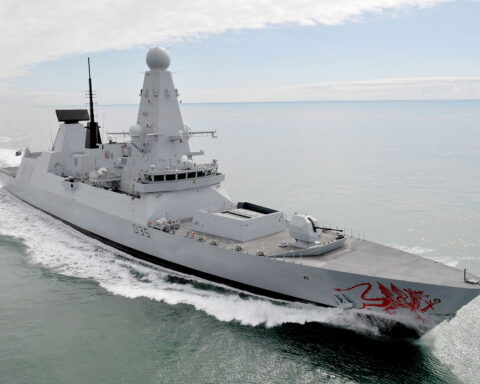
If air defence represents Saudi Arabia’s unexpected strength, naval capability represents its most glaring weakness. The Royal Saudi Naval Forces operate approximately 55 surface combatants, including seven frigates and four corvettes, but the fleet lacks the integrated anti-submarine warfare capability, the mine countermeasures capacity, and the area air defence systems necessary to operate independently in a contested maritime environment.
The consequences are visible in the Strait of Hormuz. Iran’s naval blockade — enforced by a combination of mines, fast attack craft, anti-ship missiles, and the threat of submarine attack — has shut the world’s most important energy chokepoint. Saudi Arabia’s navy cannot reopen it. That mission has fallen to the US Fifth Fleet, the Royal Navy, and a coalition of allied navies that includes French, Greek, and Bahraini vessels.
The sinking of the Iranian frigate IRIS Dena by the US submarine USS Charlotte on March 4 — the first torpedo kill by a submarine since the Falklands War in 1982 — demonstrated the overwhelming superiority of coalition naval forces. But it also demonstrated Saudi Arabia’s absence from the naval fight. The Kingdom’s military strength assessment consistently identifies the navy as the weakest of the three service branches, a legacy of decades of strategic emphasis on air power and ground forces.
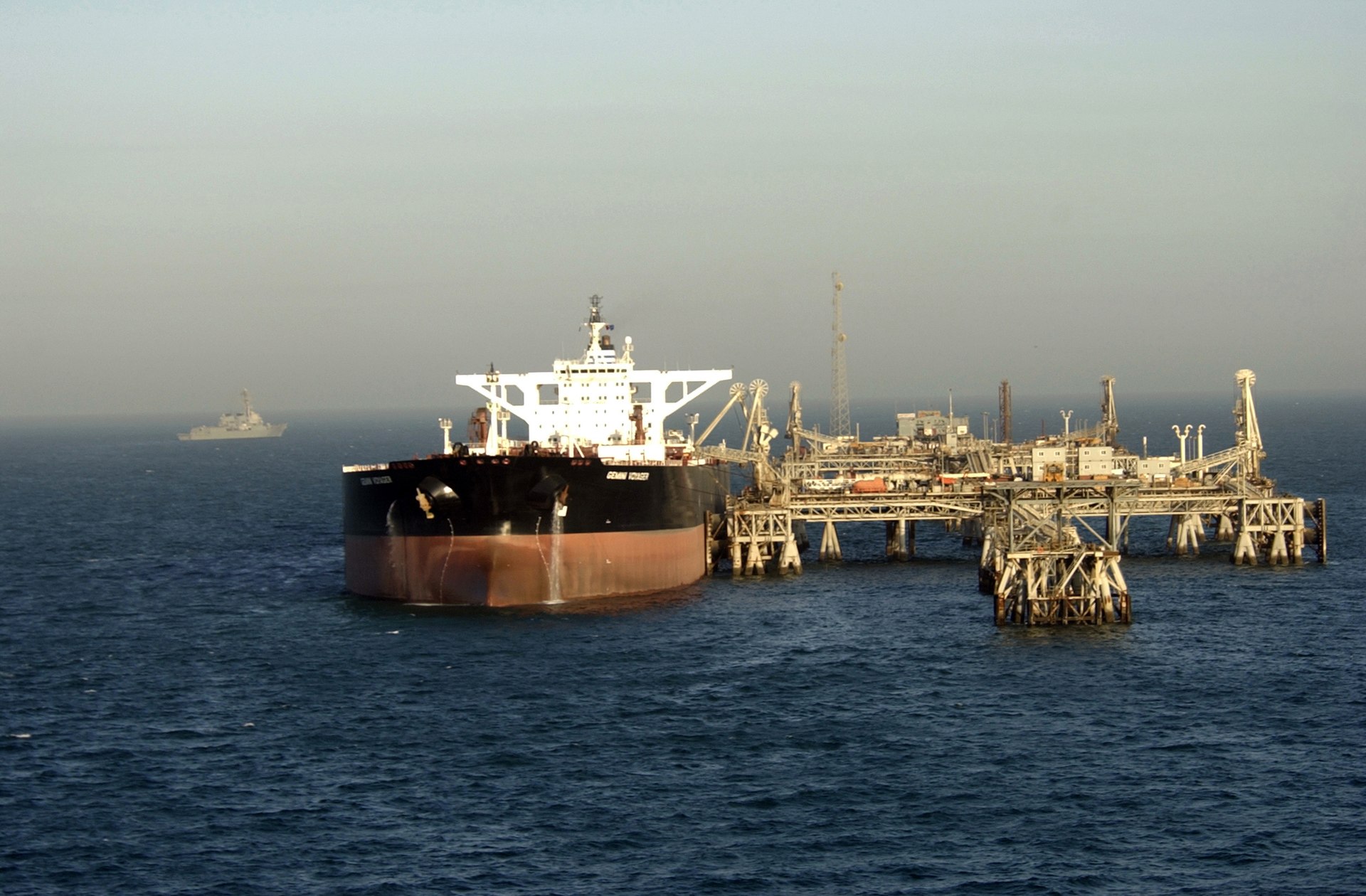
The naval gap has strategic consequences beyond the current war. Saudi Arabia exports approximately 7 million barrels of oil per day, the vast majority by sea. Whether that oil flows through the Strait of Hormuz or the Red Sea port of Yanbu, it must pass through waters that Saudi Arabia cannot defend alone. The Kingdom’s long-term security depends on resolving this vulnerability — either through a massive naval expansion programme, a permanent alliance commitment from the United States, or some combination of both.
The $3.5 billion Multi-Mission Surface Combatant programme, which will deliver five new frigates built by Spain’s Navantia, represents Saudi Arabia’s most significant naval investment. But the first vessel is not expected until 2027 at the earliest. The war arrived before the new fleet.
How Does This Compare to Other Nations’ First Tests of Fire?
Every military enters its first major war carrying assumptions that combat rapidly disproves. Saudi Arabia’s performance in the Iran war follows a pattern observed across modern military history, and placing it in comparative context illuminates both achievements and limitations.
Israel’s performance in the 1973 Yom Kippur War offers the closest parallel. A military widely regarded as invincible after its 1967 victory was caught off guard by a coordinated Egyptian and Syrian assault. Israel lost hundreds of tanks and dozens of aircraft in the opening days before stabilising and ultimately prevailing. The war exposed critical deficiencies in Israeli intelligence, armoured doctrine, and strategic planning — but it also validated the fundamental competence of Israel’s conscript army and its ability to adapt under fire. Saudi Arabia in 2026 is experiencing a similar dynamic: an initial shock followed by institutional adaptation that has proven more resilient than expected.
Britain’s 1982 Falklands War is instructive for a different reason. The Royal Navy deployed an expeditionary task force 8,000 miles from home with minimal air cover, losing six ships to Argentine air attack. The campaign succeeded but exposed vulnerabilities — particularly in air defence and logistics — that reshaped British defence policy for a generation. Saudi Arabia’s Iran war is having a similar catalytic effect, forcing investments and doctrinal changes that peacetime procurement processes would have taken decades to deliver.
| Nation and Conflict | Year | Pre-War Assessment | Actual Performance | Key Lesson |
|---|---|---|---|---|
| Saudi Arabia — Iran War | 2026 | Severe doubts after Yemen | Strong defensive, untested offensive | Defence ≠ offence; systems work when operated as designed |
| Israel — Yom Kippur War | 1973 | Presumed invincible | Near-defeat, then recovery | Overconfidence kills; adaptability saves |
| UK — Falklands War | 1982 | Questioned expeditionary capability | Strategic success, tactical losses | Naval power projection requires air cover |
| Iraq — Gulf War | 1991 | “Fourth largest army” | Catastrophic collapse | Quantity without quality is meaningless |
| Ukraine — Russia invasion | 2022 | Expected to fall in days | Sustained defence, territorial recovery | Will to fight matters more than hardware |
The Ukraine comparison is particularly resonant. In February 2022, Western intelligence agencies estimated that Kyiv would fall within 72 hours of a Russian invasion. Ukraine’s military, dismissed as inferior to Russia’s, instead fought the invading force to a standstill and eventually recaptured significant territory. The parallel to Saudi Arabia is imperfect — Saudi forces face a different threat and operate in a different strategic context — but the underlying lesson is the same: pre-war assessments based on peacetime metrics consistently underestimate the performance of forces fighting for their own survival on their own soil.
The Contrarian Case — War as the Catalyst Saudi Defence Needed
The conventional assessment of the Iran war’s impact on Saudi Arabia’s military is negative: interceptor stocks depleting, infrastructure damaged, a trillion-dollar economy disrupted. This assessment is accurate on its own terms but misses the larger strategic picture. The war is delivering something that $80 billion in annual defence spending and decades of peacetime procurement never could: a military that has actually been tested and, crucially, has learned what works and what does not.
Before February 2026, Saudi Arabia’s military existed in a peculiar state of expensive uncertainty. The Kingdom was the world’s seventh-largest military spender, with an estimated $80.3 billion in expenditure in 2024, according to the Stockholm International Peace Research Institute. It operated some of the most advanced American weapons systems available for export — F-15SAs, Patriot PAC-3 MSEs, THAAD batteries, Typhoon fighters. Yet no one knew whether these systems, in Saudi hands, would work when it mattered.
Yemen provided a negative answer, but it was the wrong test. Counterinsurgency in mountainous terrain against a resilient guerrilla force is the hardest form of warfare for any conventional military. The United States spent two decades in Afghanistan demonstrating that advanced technology does not guarantee success against determined insurgents. Saudi Arabia’s failure in Yemen proved that the Kingdom could not conduct expeditionary counterinsurgency. It did not prove that it could not defend its own airspace against incoming missiles.
The Iran war has supplied the correct test, and the results are reshaping the Kingdom’s defence establishment in real time. Crown Prince Mohammed bin Salman, who oversees defence policy as Prime Minister, has used the war to accelerate procurement decisions that were stalled in peacetime bureaucracy. Emergency orders for additional Patriot interceptors have bypassed the normal Foreign Military Sales process. Civil defence infrastructure that did not exist four weeks ago is being built. Training programmes are being redesigned around the specific threats that Iranian missiles and drones present.
The war has compressed a decade of military reform into a single month. Saudi Arabia’s armed forces on April 1 will bear little resemblance to the forces that existed on February 28.
Senior Gulf defence official, speaking to Bloomberg, March 2026
The analogy is not to Yemen but to Israel after 1973. The Yom Kippur War produced a fundamental transformation of the Israel Defence Forces — new intelligence doctrines, new armoured tactics, new air defence concepts, and a military-industrial complex that within a decade was producing world-class indigenous weapons systems. Saudi Arabia in 2026 is at the beginning of a similar transformation, driven not by strategic planning documents but by the urgent pressure of incoming missiles.
The defence localisation agenda underscores this point. Saudi Arabia aims to localise 50 percent of its military spending by the end of the decade under Vision 2030. As of late 2024, the localisation rate stood at 24.89 percent — roughly $19 billion in military spending directed to Saudi-based manufacturers. The war economy is accelerating this timeline. Saudi Arabian Military Industries, the state-owned defence conglomerate, has received emergency authorisation to expand production of munitions, drone countermeasures, and electronic warfare systems that the Kingdom previously imported entirely from Western suppliers.
What Must Change Before the Next War?
The Iran war has validated Saudi Arabia’s defensive military capability while exposing five critical gaps that must be addressed before the Kingdom can consider itself secure against future threats. Each gap represents a multi-year investment programme, and the post-war period will determine whether the lessons of combat translate into lasting institutional reform.
The first gap is interceptor sustainment. Saudi Arabia cannot continue to consume Patriot interceptors at a rate that exceeds global production capacity. The Kingdom needs either a dramatically expanded interceptor manufacturing base — potentially including licensed production of PAC-3 MSE components in Saudi Arabia — or a diversified air defence architecture that includes cheaper systems for lower-end threats. Israel’s Iron Dome, which costs approximately $50,000 per interceptor, and emerging directed-energy weapons offer models for addressing the cost exchange ratio.
The second gap is naval capability. The Royal Saudi Naval Forces must be rebuilt from a coastal patrol force into a blue-water navy capable of defending the Kingdom’s maritime energy export routes. The Multi-Mission Surface Combatant programme is a start, but five frigates do not constitute a fleet. Saudi Arabia needs mine countermeasures vessels, anti-submarine warfare capability, and maritime patrol aircraft — none of which are on order in sufficient quantities.
The third gap is indigenous maintenance and technical support. Saudi Arabia’s dependence on American contractors to maintain its most advanced weapons systems creates a single point of failure. If US political support wavers — as it did during the Obama administration’s reconsideration of the Yemen war — the Kingdom’s military capability degrades rapidly. Building an indigenous technical workforce capable of maintaining Patriot, THAAD, and F-15 systems requires a generation of investment in military education and technical training.
The fourth gap is civil defence infrastructure. Saudi cities were designed for peacetime prosperity, with glass-walled towers, exposed industrial facilities, and zero underground shelters. The war has demonstrated that eight million people in Riyadh cannot be protected by mobile phone alerts alone. A serious civil defence programme — including public shelters, hardened infrastructure, and civilian evacuation protocols — will require billions in investment and a fundamental rethinking of urban planning.
The fifth gap is offensive capability. Saudi Arabia has demonstrated that it can absorb incoming fire. It has not demonstrated that it can project force against a defended adversary. If the Kingdom enters a future conflict as a belligerent rather than a target, it will need precision-strike capabilities, intelligence-surveillance-reconnaissance networks, and the operational planning capacity to conduct complex air campaigns. The $3 billion F-15 sustainment deal and potential future F-35 acquisition address the hardware dimension. Developing the human capital and institutional expertise to employ that hardware effectively is a longer and harder task.
| Gap | Current Status | Required Investment | Timeline |
|---|---|---|---|
| Interceptor sustainment | Stocks depleting, dependent on US production | Licensed production, cheaper alternatives (Iron Dome model) | 3-5 years |
| Naval capability | Coastal patrol force, 55 vessels | MMSC frigates, MCM vessels, ASW aircraft, submarines | 5-10 years |
| Indigenous maintenance | ~75% reliant on US/Western contractors | Military technical academies, licensed repair facilities | 5-15 years |
| Civil defence infrastructure | Improvised, no pre-built shelters | Public shelters, hardened utilities, evacuation systems | 3-7 years |
| Offensive strike capability | Hardware exists, institutional capacity limited | ISR networks, precision munitions stocks, staff training | 5-10 years |
None of these gaps will be closed by the time the current war ends. But the war has created something more valuable than any single weapons system: institutional knowledge of what works, what fails, and what must be prioritised. The Saudi military that emerges from this conflict will carry the scars and lessons of combat — a currency that no amount of peacetime spending can purchase.
The broader strategic context is equally important. The Iran war has demonstrated that Saudi Arabia cannot defend itself alone. The US military presence — including Patriot and THAAD augmentation, intelligence sharing, maintenance support, and naval protection — has been essential to every aspect of the Kingdom’s defence. The post-war security architecture must formalise this relationship, ideally through a defence treaty that provides Saudi Arabia with the security guarantees it has sought for decades while committing the Kingdom to the military reforms that would make it a more capable alliance partner.
The House of Saud has historically treated its military as a tool of prestige rather than operational necessity — a source of contracts for the royal family and a symbol of modernity for international audiences. The Iran war has forced a reckoning with that tradition. A military that exists primarily to be purchased is different from a military that exists primarily to fight. Saudi Arabia is transitioning, under fire, from the first category to the second. Whether that transition survives the return of peace will determine the Kingdom’s security for a generation.
Frequently Asked Questions
How many Iranian missiles has Saudi Arabia intercepted during the 2026 war?
Saudi Patriot and THAAD batteries have intercepted an estimated 75 to 90 ballistic missiles since the war began on February 28, 2026, achieving an interception rate between 85 and 90 percent according to the International Institute for Strategic Studies. Drone interception rates are slightly lower at approximately 85 percent, with hundreds of one-way attack drones neutralised through a combination of surface-to-air missiles, short-range air defence systems, and electronic warfare.
How does Saudi Arabia’s military performance in the Iran war compare to its performance in Yemen?
The two conflicts test fundamentally different military capabilities. Yemen required offensive expeditionary operations — counterinsurgency in hostile mountainous terrain — where Saudi forces performed poorly. The Iran war requires defensive operations on Saudi soil — air defence, infrastructure protection, and civil defence — where Saudi forces have performed significantly above expectations. The improved performance reflects both the different nature of the threat and substantial investments in air defence systems since the 2019 Abqaiq drone attack.
What is Saudi Arabia’s biggest military vulnerability exposed by the Iran war?
The most critical vulnerability is interceptor sustainment. Saudi Arabia is consuming Patriot PAC-3 MSE interceptors at approximately $100 million per week — a rate that exceeds global production capacity. Each interceptor costs roughly $4 million, and standard doctrine requires firing two per incoming ballistic missile. If the war continues for months, interceptor depletion could degrade the Kingdom’s defensive capability regardless of crew performance or system reliability.
Why has Saudi Arabia not launched offensive strikes against Iran?
Crown Prince Mohammed bin Salman has maintained Saudi Arabia’s non-belligerent status, intercepting threats to Saudi territory without contributing to the US-Israeli offensive campaign. This restraint preserves diplomatic flexibility, avoids the legal complications of co-belligerency, and reduces the risk of Iranian escalation specifically targeting Saudi infrastructure. Reports suggest MBS is weighing further steps, but no decision to launch offensive strikes had been made as of March 26, 2026.
How many Patriot missile batteries does Saudi Arabia operate?
Saudi Arabia operates approximately 16 Patriot batteries and two THAAD batteries, fielding a total of 108 Patriot launchers — the second-largest Patriot fleet in the world after the United States. The system uses a mix of PAC-2 GEM-T interceptors for aircraft and cruise missiles and PAC-3 MSE interceptors for ballistic missile threats. The United States has deployed additional batteries to augment Saudi coverage since the war began.
What defence reforms will Saudi Arabia likely pursue after the Iran war?
Five priority areas have emerged from wartime experience: interceptor sustainment through licensed production and cheaper alternative systems; naval expansion including new frigates, mine countermeasures vessels, and anti-submarine capability; indigenous maintenance capacity to reduce dependence on American contractors; civil defence infrastructure including public shelters and hardened utilities for major cities; and offensive strike capability development including intelligence-surveillance-reconnaissance networks and precision munitions stockpiling.