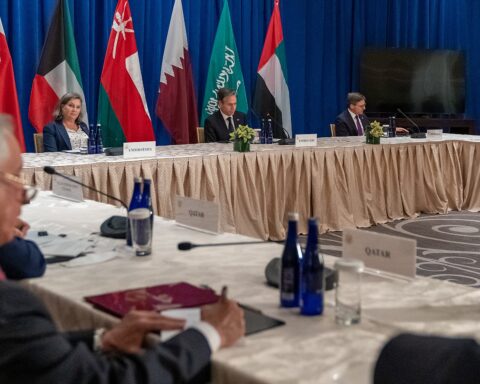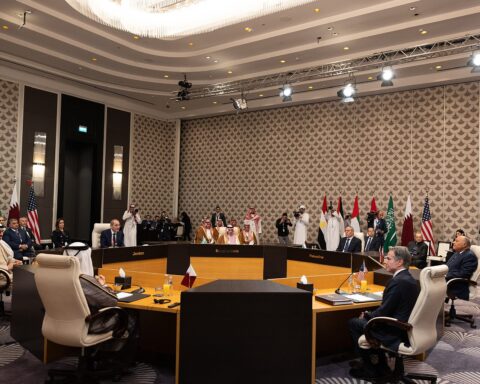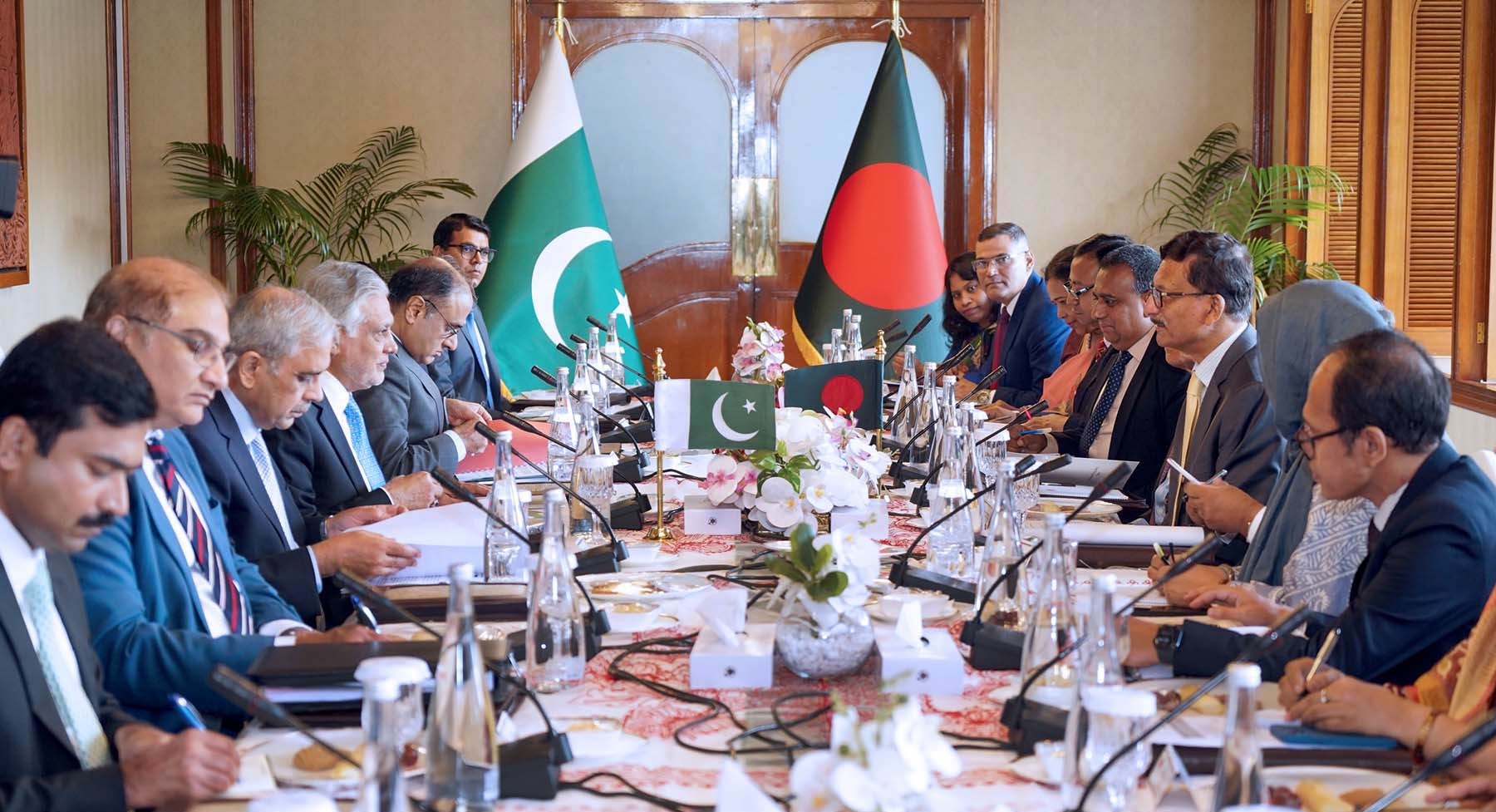
ISLAMABAD — Twenty days after expelling Iran’s military attaché from Riyadh and declaring that Saudi patience “is not unlimited,” Prince Faisal bin Farhan sat down at a quadrilateral ministerial table in Islamabad as a named co-guarantor of the only surviving ceasefire framework for the US-Iran war — a framework that requires Iranian consent to function and Iranian trust to endure. The structural contradiction is not a bug in the Islamabad backchannel; it is, depending on whom you ask, either the load-bearing feature of the entire architecture or the fracture that will bring it down.
Saudi Arabia is simultaneously a target of more than 750 Iranian missile and drone strikes, a Major Non-NATO Ally of the United States with a $142 billion arms pipeline, a nation whose foreign minister has publicly reserved the right to take military action against Tehran, and — as of March 29 — a structural co-signer of a peace deal alongside Pakistan, Turkey, and Egypt. No ceasefire guarantor in modern diplomatic history has occupied all four of those positions at once, and the question of whether that unprecedented overlap makes the Islamabad framework stronger or doomed is the single most consequential analytical question on Day 37 of the war.
Table of Contents
- The Four-Nation Framework and How Saudi Arabia Got In
- Can a Country Under 750 Missile Strikes Be a Neutral Guarantor?
- The Functional Contradiction: Why Iran Might Want Riyadh Inside the Tent
- Anatomy of the Saudi-Iran Backchannel
- Does Iran Actually Accept the Quadrilateral?
- Guarantors Who Had Skin in the Game: Minsk, Oslo, and Doha
- The Pakistan Defence Pact That Was Never Invoked
- Was Saudi Arabia Lobbying for War While Sitting at the Ceasefire Table?
- The Pakistan-China Five-Point Plan and What It Changes
- Frequently Asked Questions
The Four-Nation Framework and How Saudi Arabia Got In
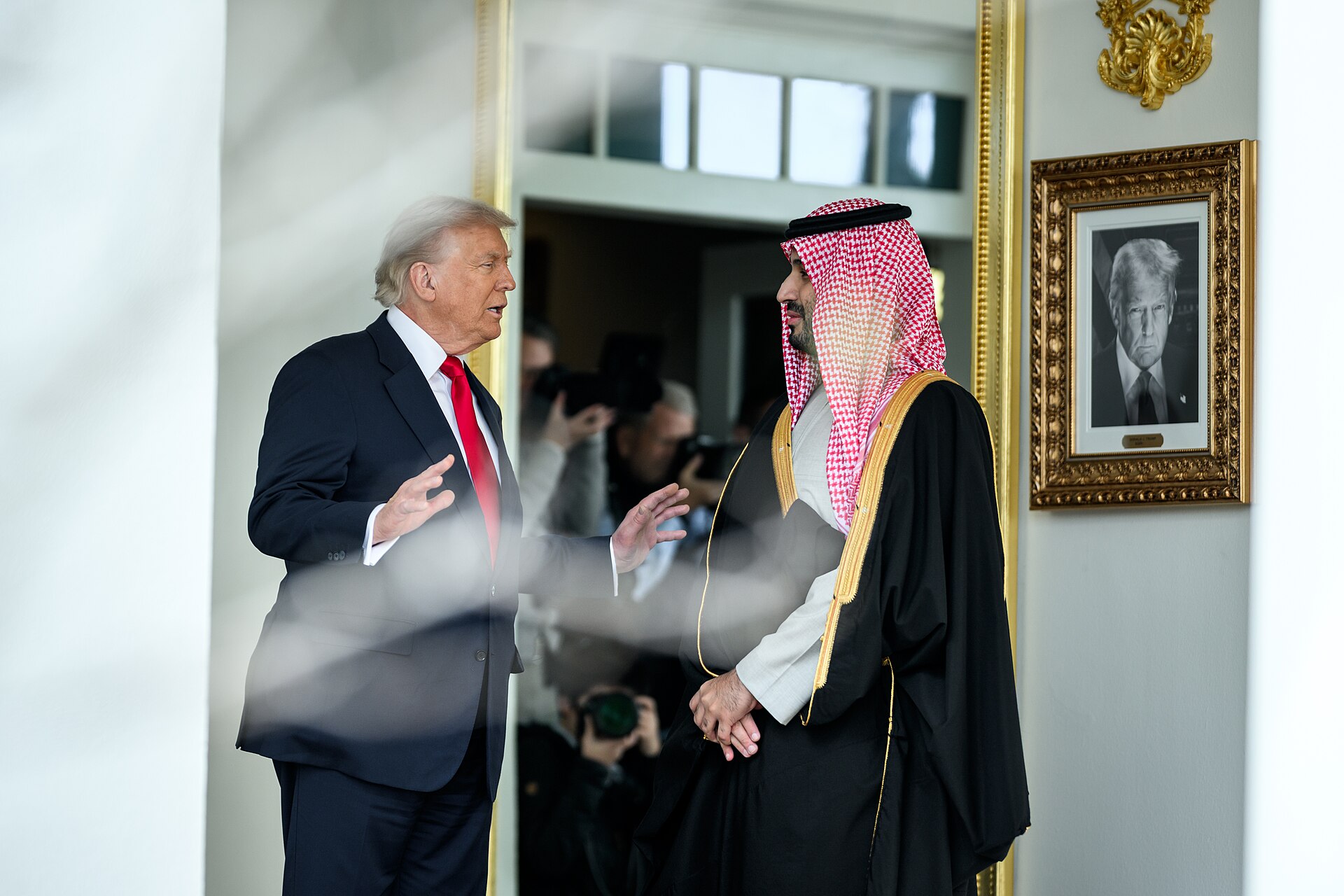
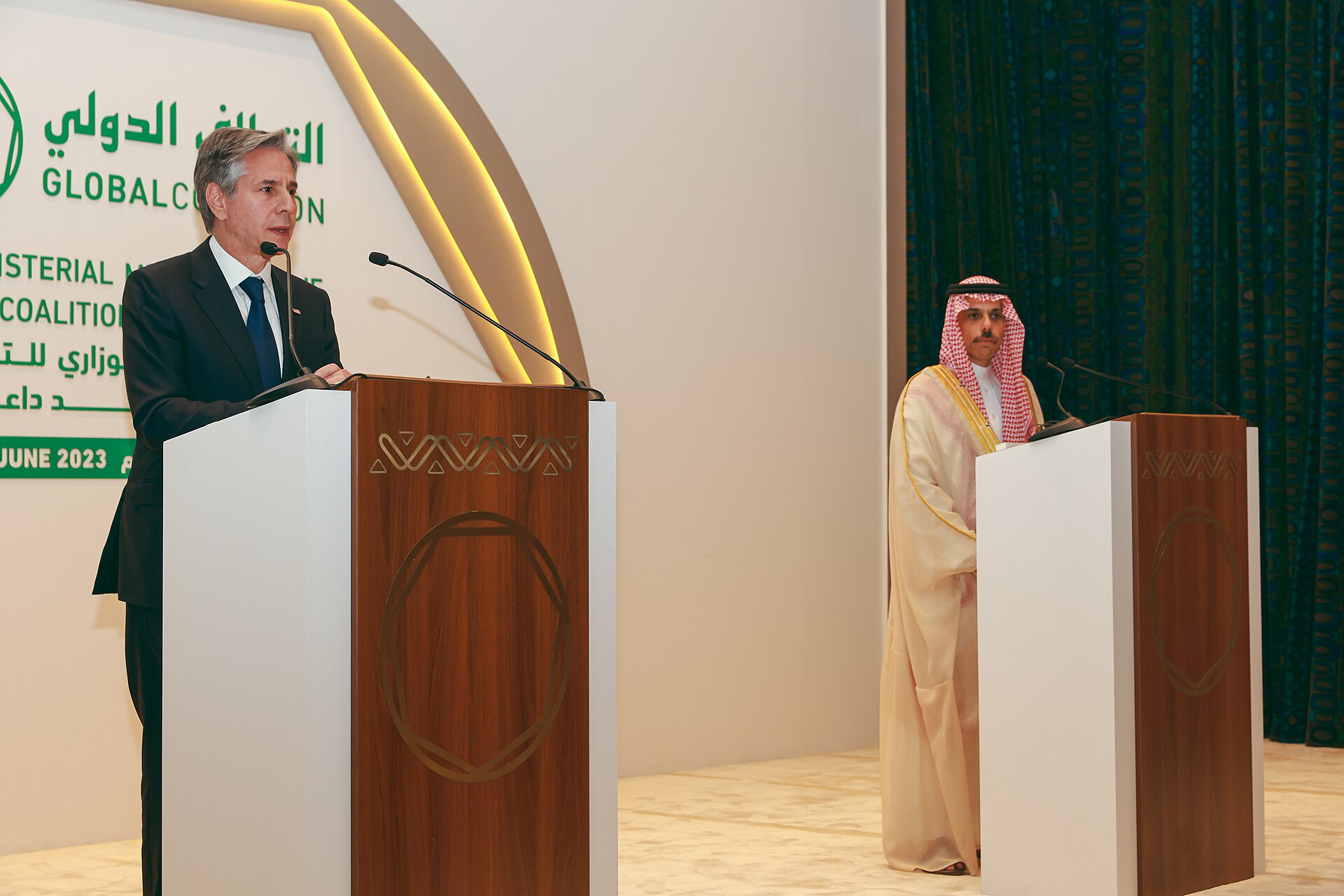
The quadrilateral — Pakistan, Saudi Arabia, Turkey, Egypt — did not begin as a formal ceasefire mechanism. It coalesced on the margins of a broader Arab and Islamic consultative meeting in Riyadh on March 19, 2026, and hardened into a dedicated format within ten days, with formal two-day ministerial consultations in Islamabad on March 29–30 bringing together Foreign Ministers Ishaq Dar, Faisal bin Farhan, Hakan Fidan, and Badr Abdelatty. Each nation occupies a distinct structural role: Pakistan serves as the primary US-Iran interlocutor with direct access to both Washington and Tehran; Turkey provides NATO-member credibility and maintains working relations with both belligerents; Egypt contributes Suez Canal exposure and economic weight; Saudi Arabia brings the element that none of the others can — it is the largest economic stakeholder in the Gulf, the country with direct lines to both Tehran and the White House, and the state that will have to lead any post-conflict maritime security architecture in the Strait of Hormuz.
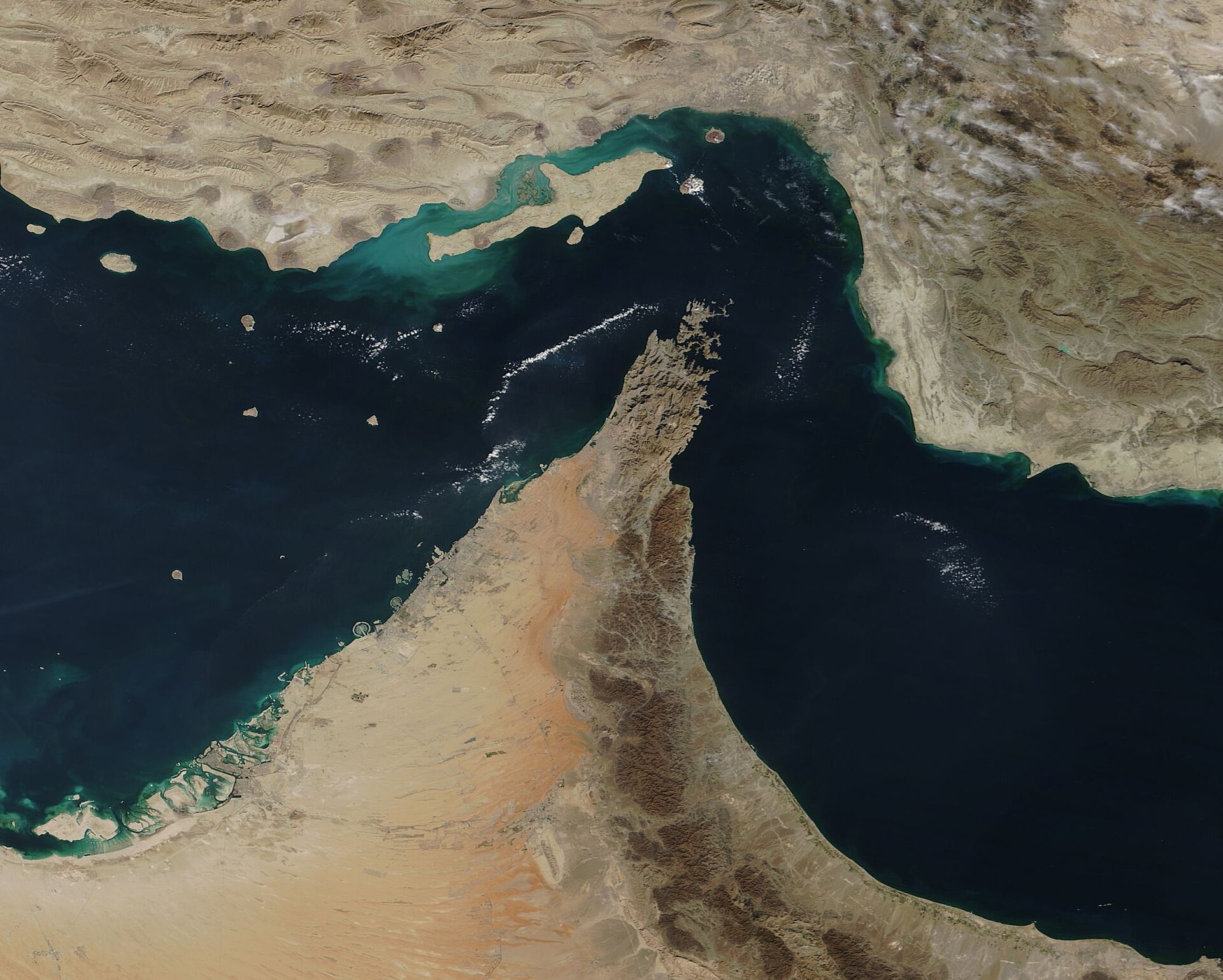
The proposed framework rests on three structural pillars, as reported by Bloomberg and the analytical outlet Frontier Affairs: a 10-day strike pause as a confidence-building measure, a Strait of Hormuz Protocol involving phased reopening contingent on Iranian naval withdrawal, and a longer-term transition of maritime security responsibilities to a Saudi-Egyptian-led Gulf Coast Force. The “co-guarantor” language is embedded in that third pillar, which places Saudi Arabia as a named security underwriter of the post-ceasefire maritime order — not merely a facilitator, but a party with enforcement obligations.
Qatar’s absence from the quadrilateral is itself telling. Doha, which hosted mediation channels during the Gaza wars and maintained closer ties to Tehran than any other Gulf capital, reportedly remains frustrated over Iran’s strikes on Ras Laffan LNG facilities and declined to participate in a framework it considers structurally tilted toward Washington.
Can a Country Under 750 Missile Strikes Be a Neutral Guarantor?
The raw numbers answer this question before the analysis does. Since the war began on February 28, Iran has launched more than 750 missiles and drones at Saudi territory, with nearly 70 percent targeting Eastern Province oil infrastructure — Ras Tanura refinery and the arterial network that connects Saudi Arabia’s petroleum economy to the global market. On approximately March 9, Riyadh expelled Iran’s military attaché, his assistant, and three embassy staff, declaring all five persona non grata with 24 hours to leave, citing “repeated Iranian attacks” including the targeting of Yanbu. Ten days later, on the same day the quadrilateral first convened in Riyadh, Faisal bin Farhan told reporters: “We have reserved the right to take military actions if deemed necessary. The patience we have shown is not unlimited. It could be a day, two days, or a week — I will not say.”
That is not the language of a neutral party. It is the language of a belligerent exercising restraint, and the distinction matters enormously for the architecture of the Islamabad framework. A guarantor is supposed to be the entity that enforces compliance after both parties sign; Saudi Arabia, in this case, would be enforcing compliance against a country that has hit it with 750 projectiles and against which it has publicly threatened military retaliation. The closest analogy is not a mediator at a negotiating table but a plaintiff who has been asked to serve as the judge.
The US-Saudi military relationship compounds the problem. Trump designated Saudi Arabia a Major Non-NATO Ally and announced a $142 billion arms framework — the largest in history — including 48 F-35A stealth fighters approved on March 28, one day before the Islamabad ministerial session opened. From Tehran’s perspective, the co-guarantor is not merely a country that has been attacked by Iran; it is a country that is being armed by Iran’s attacker on a scale that dwarfs every previous Gulf defence arrangement.
The Functional Contradiction: Why Iran Might Want Riyadh Inside the Tent
The case against Saudi neutrality is overwhelming on paper, which is precisely why the more interesting question is why Tehran has not torpedoed Saudi participation outright. The answer lies in what game theorists call a “commitment device”: by accepting Saudi Arabia as a co-guarantor, Iran locks Riyadh into the deal’s durability in a way that constrains future Saudi aggression. If Saudi Arabia is a named party to the ceasefire architecture, it cannot subsequently join a US-led military campaign against Iran without violating its own guarantor obligations — obligations that would carry weight in the UN, the ICJ, and the court of Gulf public opinion.
From Tehran’s calculus, a hostile Saudi Arabia inside the tent is preferable to one outside it with 750 reasons to escalate. Abdulaziz Sager, chairman of the Gulf Research Center, framed the underlying logic when he told the Christian Science Monitor: “The lesson of this war is that dialogue on its own is not enough if it is not backed by credible deterrence.” The inverse is equally true: deterrence on its own is not enough if it is not channeled into a structure that converts military restraint into diplomatic capital. Saudi Arabia’s inclusion in the framework provides exactly that conversion mechanism — it transforms what would otherwise be a unilateral Saudi decision not to strike Iran into a multilateral commitment with institutional weight.
Michael Ratney, CSIS Senior Adviser and former US Ambassador to Saudi Arabia, captured the Saudi calculus from the other direction. The Saudis, he noted, “have no love for the Islamic Republic and its ideology, but they know they can’t wish it away.” Saudi Arabia’s twin enemies are Iran and instability itself — the kingdom “needs investors, tourists, and visitors to come to the Gulf, which won’t happen if there’s conflict in the region.” The co-guarantor role, for Riyadh, is not an expression of neutrality but an investment in the kind of post-conflict stability that Vision 2030 requires to survive.
Anatomy of the Saudi-Iran Backchannel
The quadrilateral is not the only channel, and may not even be the primary one. Bloomberg reported on March 6 that Saudi officials had intensified direct engagement with Iran to contain the war, with talks involving security agencies and diplomats operating in parallel to the multilateral track. Several European and Middle Eastern nations are backing these efforts, according to European officials cited by Bloomberg, suggesting a web of quiet diplomacy running underneath the headline-grabbing ministerial meetings.
This dual-track architecture — a public quadrilateral for institutional legitimacy and a private bilateral for operational speed — is structurally similar to the arrangement that produced the 2023 Beijing normalization deal, which restored Saudi-Iranian diplomatic relations after a seven-year rupture. That deal, brokered by China, was itself built on months of secret direct contacts between Saudi and Iranian intelligence officials. Faisal bin Farhan’s description of the trust built in that process is worth recalling: by March 19, 2026, he declared that “what little trust there was before has completely been shattered” — a public obituary for a diplomatic achievement that was barely 36 months old.
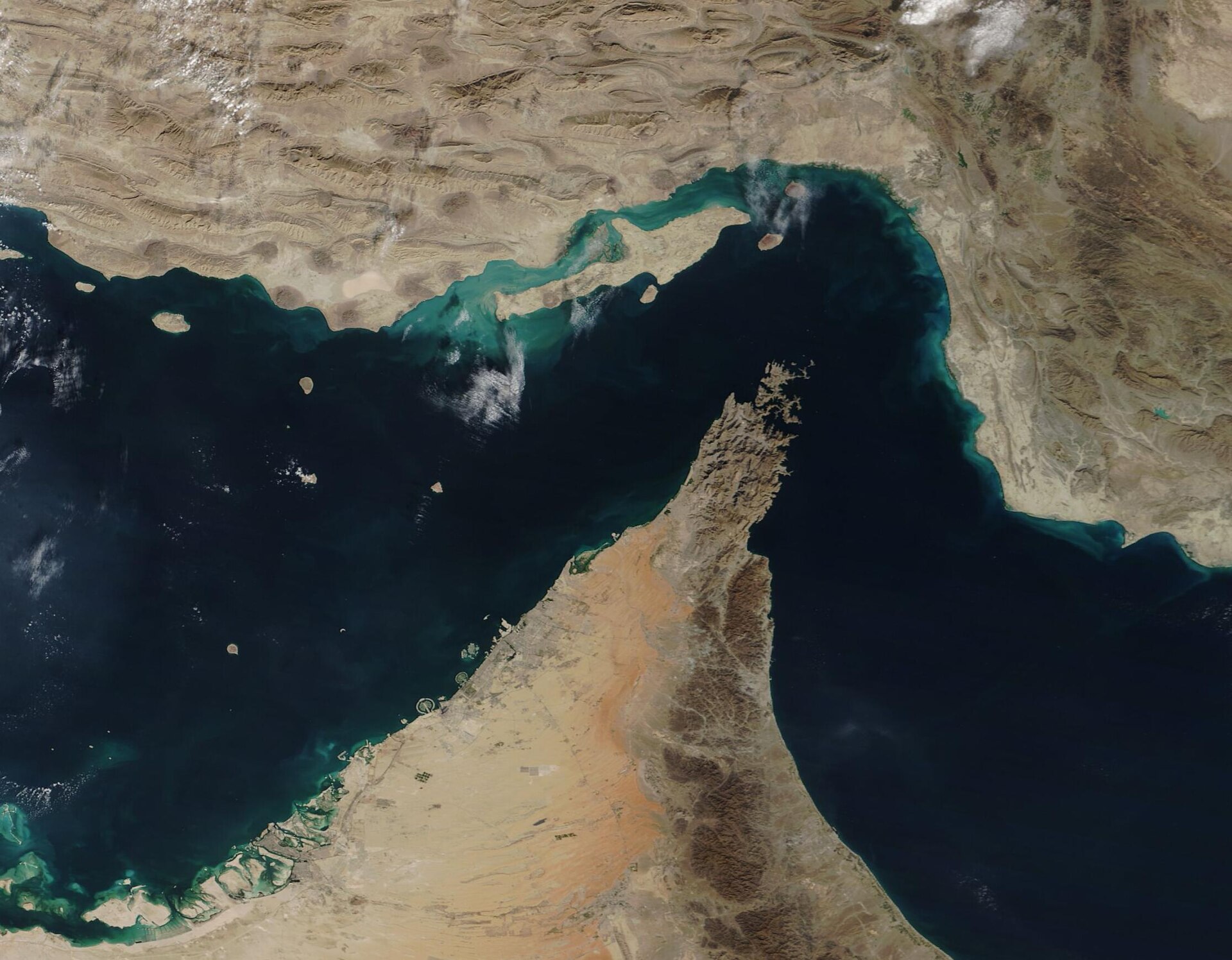
The backchannel’s single tangible output to date is modest but revealing: Iran agreed to allow 20 Pakistani-flagged vessels through the Strait of Hormuz, the first practical concession extracted from Tehran since the war began. The concession was routed through Pakistan’s mediation, not the Saudi bilateral channel, but its existence suggests that the framework — in some configuration — retains enough traction to produce limited operational outcomes even as the broader ceasefire architecture stalls.
Does Iran Actually Accept the Quadrilateral?
The short answer is: Iran accepts Pakistan’s mediation and has carefully avoided endorsing the quadrilateral as a collective framework. The parsing is deliberate and consistent. When the Wall Street Journal reported on April 3 that ceasefire mediation had “reached a dead end” — with Iran declining to meet US officials in Islamabad and considering US demands unacceptable — Iran’s Foreign Minister Abbas Araghchi responded within 24 hours on X: “Iran’s position is being misrepresented by US media. We are deeply grateful to Pakistan for its efforts and have never refused to go to Islamabad. What we care about are the terms of a conclusive and lasting END to the illegal war that is imposed on us.”
The statement is a masterclass in selective validation. Araghchi thanks Pakistan by name. He does not mention Saudi Arabia, Turkey, or Egypt. He characterises the issue as “terms” rather than “format,” allowing Iran to engage with the Islamabad venue while declining to characterise the four-nation body as a legitimate framework. Pakistan’s Foreign Office spokesperson, Tahir Andrabi, welcomed the clarification while adding a pointed reminder: “We categorically reject these false insinuations attributed to purported official sources as baseless and a figment of imagination. At a time of heightened regional sensitivity, diplomacy required both discretion and responsibility.”
Iran’s formal conditions for any ceasefire, reported by Reuters via a senior source on April 1, make no reference to the four-nation framework as an acceptable enforcement mechanism. Tehran demands a comprehensive permanent ceasefire with no-resumption guarantees, US reparations, US withdrawal from Middle East bases, an end to attacks on Iranian proxies, and recognition of Iranian sovereignty over the Strait of Hormuz. That last condition is structurally incompatible with the Islamabad framework’s third pillar, which envisions a Saudi-Egyptian-led Gulf Coast Force managing post-conflict Hormuz security — Saudi Arabia would, in effect, be guaranteeing a deal that requires it to validate Iranian sovereignty claims over the waterway its own economy depends on.
“Tehran will not compromise on its existence. And therefore, Iranians are willing to fight for as long as it takes.”
Reza Khanzadeh, adjunct professor, George Mason University, speaking to Al Jazeera
An Arab diplomat told Middle East Eye that Tehran would look to Beijing — not Riyadh — as the guarantor of any peace deal with the United States. China, however, indicated it is “highly unlikely” to accept a guarantor role that requires military assets, according to the same report. Vali Nasr, the former State Department official, told Al Jazeera that Iran may demand Chinese guarantees as a precondition for US talks, with Pakistan’s FM serving as the intermediary to secure Beijing’s commitment. Yun Sun of the Stimson Center captured the structural constraint: “Pakistan can mediate between the US and Iran. China cannot.”
Guarantors Who Had Skin in the Game: Minsk, Oslo, and Doha
The Islamabad framework is not the first time a ceasefire guarantor has been structurally compromised by its own interests, and the precedents are not encouraging. France and Germany served as guarantors of the Minsk II agreement in 2015 while maintaining direct economic and security interests in the outcome of the Russia-Ukraine conflict — the structure failed, and Chatham House’s post-mortem concluded that the guarantors “were so keen for a ceasefire that they assented to political provisions at odds with Ukraine’s existence as a sovereign entity.” The guarantors’ eagerness to end the fighting overrode their obligation to ensure that the terms were enforceable, and the agreement collapsed into a seven-year frozen conflict that ended in full-scale invasion.
The Oslo Accords offer a different pathology. Norway mediated the 1993 Israeli-Palestinian framework while being structurally closer to one party than it acknowledged — the Norwegian historian Hilde Waage, writing for the Peace Research Institute Oslo, described Norway’s role as acting as “Israel’s helpful errand boy.” Saudi Arabia’s position in the Islamabad framework echoes this dynamic, with an additional layer of complexity: Norway was not under direct military attack from the party it was supposedly mediating with. Saudi Arabia is. The Doha Agreement of 2020 between the US and the Taliban, meanwhile, demonstrates the opposite failure mode: the absence of a named guarantor with enforcement mechanisms made the agreement structurally deficient from inception, and it collapsed within 18 months.
The Islamabad framework’s architects appear to have studied these precedents and arrived at a deliberate overcorrection: rather than excluding interested parties (the Doha model) or including parties that pretend to be neutral (the Oslo model), the framework names a party that is openly non-neutral but whose inclusion creates enforcement incentives that a genuinely neutral party could never provide. Whether this innovation works or whether it reproduces the Minsk pathology — guarantors so eager for a deal that they accept structurally flawed terms — is the question the next ten days will answer.
| Framework | Guarantor(s) | Guarantor Interest Level | Outcome |
|---|---|---|---|
| Minsk II (2015) | France, Germany | Economic/security interests in outcome | Collapsed; full-scale war by 2022 |
| Oslo Accords (1993) | Norway | Structurally aligned with Israel | Framework eroded; no enforcement |
| Doha Agreement (2020) | None named | N/A | Collapsed within 18 months |
| Islamabad Framework (2026) | Pakistan, Saudi Arabia, Turkey, Egypt | Saudi Arabia: active target, US ally, co-belligerent | Ongoing — single concession (20 vessels) to date |
The Pakistan Defence Pact That Was Never Invoked
The untold story of the Islamabad framework is not what Saudi Arabia signed in March 2026 but what it signed in September 2025 and never used. The Strategic Mutual Defence Agreement between Saudi Arabia and Pakistan, finalised on September 17, 2025, was the first mutual defence pact between an Arab Gulf state and a nuclear power — an attack on either country would be treated as an attack on both. Iran has since launched more than 750 projectiles at Saudi territory, and Pakistan has not invoked the pact.
Elie Podeh of Hebrew University identified this non-invocation as “the single most revealing indicator of the framework’s limits” — if Pakistan will not honour a mutual defence treaty when its treaty partner is under sustained missile attack, the enforcement credibility of any ceasefire framework in which Pakistan serves as lead mediator is structurally undermined. The pact exists as a piece of paper that both sides have tacitly agreed to treat as aspirational rather than operational, and that tacit agreement tells Iran everything it needs to know about the enforcement ceiling of the Islamabad architecture.
For Saudi Arabia, the non-invocation serves a different purpose: it preserves the fiction that Riyadh is not a co-belligerent in the US-Iran war, which in turn preserves its eligibility to serve as a ceasefire guarantor. Invoking the Pakistan defence pact would trigger a formal state of war between Pakistan and Iran, destroy Pakistan’s mediator credibility, and collapse the only surviving diplomatic track. The pact’s value, paradoxically, lies in its non-use — it is a loaded gun in a drawer that keeps everyone at the table precisely because nobody is willing to reach for it.
Was Saudi Arabia Lobbying for War While Sitting at the Ceasefire Table?
The most corrosive fact for Saudi Arabia’s co-guarantor credibility appeared not in Islamabad but in Washington. The Washington Post reported on March 30 — the final day of the Islamabad ministerial session — that Gulf allies including Saudi Arabia and the UAE were privately urging Trump to keep prosecuting the war rather than accept a ceasefire, arguing that a month of strikes had not weakened Tehran enough and that the moment offered a “historic opportunity to cripple Tehran’s clerical rule.” The UAE emerged as “perhaps the most hawkish,” pushing for a ground invasion, with Kuwait and Bahrain also favouring continued military action.
This reporting, if accurate, means Saudi Arabia was sitting at the Islamabad ceasefire table on March 29 while its representatives were simultaneously telling the White House that the war should continue. The dual posture is not hypocrisy in the conventional sense — it is hedging of a kind that is rational for a country caught between an ally it cannot refuse and an enemy it cannot defeat. But it is fatal for the institutional trust that a guarantor framework requires, and if Tehran’s intelligence services have access to the same reporting (they read the Washington Post), then Iran’s calculation of Saudi Arabia’s co-guarantor reliability has already been discounted to near zero.
Ratney’s analysis from CSIS frames this as a structural constraint rather than a moral failure: Saudi Arabia faces “extraordinary vulnerability” and fears that deeper involvement would invite “far greater Iranian retaliation, potentially causing long-lasting damage to the Saudi economy and its reputation.” The kingdom’s hedging between ceasefire diplomacy and war lobbying is the behaviour of a state that cannot afford either outcome — a permanent war destroys Vision 2030, and a premature ceasefire leaves Iran’s missile capability intact and pointed at Ras Tanura. The $142 billion arms pipeline makes the dilemma worse, not better: every F-35 delivery deepens the dependency that constrains Saudi decision-making while simultaneously validating Tehran’s classification of Riyadh as a co-belligerent.
The Pakistan-China Five-Point Plan and What It Changes
On April 4, Ishaq Dar and Faisal bin Farhan spoke by phone to discuss a new variable: the Pakistan-China five-point initiative, jointly unveiled during Dar’s recent visit to Beijing, which calls for an immediate cessation of hostilities, the start of peace talks, protection of civilians and non-military targets, restoration of Strait of Hormuz maritime traffic, and a comprehensive UN Charter-based peace framework. The plan’s significance is not its content — which restates principles already embedded in the Islamabad framework — but its authorship. By co-sponsoring with China, Pakistan has created a diplomatic vehicle that carries Beijing’s imprimatur without requiring China to accept the military guarantor role it has explicitly rejected.
For Saudi Arabia, the five-point plan introduces both opportunity and risk. The opportunity is that Chinese endorsement of the broader peace architecture gives the Islamabad framework a great-power patron that Iran respects — Vali Nasr’s assessment that Iran may demand Chinese guarantees as a precondition finds a partial answer in this structure. The risk is that the five-point plan dilutes Saudi Arabia’s centrality in the framework, reducing Riyadh from a co-guarantor to one participant among several in a Chinese-backed process. Yasmine Farouk of the Carnegie Endowment captured the urgency driving the acceleration: “This group of four started becoming very active because this is really a dangerous stage” of the conflict.
The timing is dictated by Trump’s April 6 deadline, which threatens strikes on Iranian power plants and bridges if Tehran does not reopen the Strait of Hormuz. That deadline — which Trump described as “Power Plant Day, and Bridge Day, all wrapped up in one” — converts the Islamabad framework from a medium-term peace architecture into an emergency mechanism running on a 48-hour clock. Whether the Saudi-Pakistani phone call on April 4 was coordination or crisis management depends on which version of the framework survives the weekend.
“Mediation requires trust; brokerage requires leverage; Pakistan has little of either.”
Junaid S. Ahmad, Middle East Monitor
The analytical resolution of the Saudi co-guarantor contradiction is, in the end, not a binary. Saudi Arabia’s role in the Islamabad framework is simultaneously genuine and performative, structurally essential and structurally compromised, accepted by Iran in practice and rejected by Iran in principle. Mushahid Hussain Sayed, the former Pakistani information minister, described the entire quadrilateral as “the first institutional initiative from the Muslim world aimed at opening a pathway to dialogue” while warning that it represents “baby steps for diplomacy in a war scenario.” Masood Khan, Pakistan’s former ambassador to the US and UN, identified “Tehran’s demands for war reparations and its sovereignty over the Strait of Hormuz” as the issues that will determine whether Saudi Arabia’s contradictions matter or are papered over by exhaustion on both sides.
The Islamabad backchannel has produced one tangible result in 37 days of war: 20 Pakistani-flagged ships allowed through a strait that should be open to all. Saudi Arabia’s name is on a framework it cannot neutrally enforce, attached to a deal whose terms it cannot accept, in a room where its counterpart has been privately lobbying Washington to keep bombing. On April 6, the deadline that compresses all of these contradictions into a single decision point arrives, and the four foreign ministers who sat together in Islamabad will discover whether their architecture was a foundation or a façade — and the 750 missiles that have already landed on Saudi soil will be the evidence Tehran cites either way.
Frequently Asked Questions
What are the three pillars of the Islamabad ceasefire framework?
The framework rests on a 10-day strike pause as a confidence-building measure, a Strait of Hormuz Protocol requiring phased reopening contingent on Iranian naval withdrawal, and a transition of maritime security to a Saudi-Egyptian-led Gulf Coast Force. The third pillar is where the “co-guarantor” designation resides, making Saudi Arabia a named security underwriter of the post-ceasefire order rather than a passive observer. Iran’s insistence on a permanent ceasefire — not a 10-day trial — creates a structural mismatch with the first pillar that has not been resolved, and Iran’s demand for sovereignty recognition over the Strait of Hormuz is directly incompatible with the third pillar’s proposed multinational security force.
Why is Qatar absent from the quadrilateral?
Qatar, which hosted Hamas mediation during the Gaza conflicts and maintained closer relations with Tehran than any other Gulf Cooperation Council member, reportedly declined participation in the quadrilateral after Iranian strikes on Ras Laffan — Qatar’s critical LNG facility and the backbone of its $80 billion annual gas export economy. Doha’s position is that the framework is structurally tilted toward Washington, and Qatari officials have been exploring whether Doha could serve as an alternative venue for direct US-Iran talks, though Turkey and Egypt have also floated Istanbul as a possibility following the WSJ’s “dead end” report. The absence removes the Gulf state with the deepest operational ties to Iranian interlocutors and narrows the framework’s channels to Tehran.
Has China accepted a guarantor role in the ceasefire process?
China has explicitly declined a guarantor role that would require military assets or enforcement commitments, according to an Arab diplomat cited by Middle East Eye on March 31. However, the Pakistan-China five-point initiative announced in late March — co-sponsored during Dar’s visit to Beijing — gives the Islamabad framework Chinese diplomatic cover without the military commitment Tehran would prefer. Beijing’s calculus is shaped by the 2023 Saudi-Iran normalization deal it brokered, which represented China’s largest Middle East diplomatic achievement and collapsed within three years of signing. A second failure would damage Chinese credibility in a region where it has spent decades building economic relationships, making Beijing cautious about formal commitments while remaining willing to lend its name to broad principles.
What is the Strategic Mutual Defence Agreement between Saudi Arabia and Pakistan?
Signed on September 17, 2025, the pact was the first mutual defence agreement between an Arab Gulf state and a nuclear-armed nation, stipulating that an attack on either country is treated as an attack on both. Despite Iran launching over 750 projectiles at Saudi territory since February 28, 2026, the pact has not been invoked. The non-invocation is deliberate: triggering the mutual defence clause would place Pakistan in a formal state of war with Iran, destroying Islamabad’s mediator credibility and collapsing the only surviving ceasefire track. The Middle East Institute assessed the pact as establishing “a new security architecture in the wider Middle East,” but its operational value at Day 37 remains theoretical — a deterrent in storage rather than a commitment in force.
What single concession has the Islamabad framework produced?
Iran agreed to allow 20 Pakistani-flagged vessels through the Strait of Hormuz — the only tangible operational result of the backchannel in 37 days of war. The concession was routed through Pakistan’s bilateral mediation rather than the quadrilateral collectively, reinforcing Iran’s preference for engaging with Islamabad as an individual interlocutor rather than the four-nation body. For context, approximately 20 percent of the world’s oil — roughly 17 million barrels per day under pre-war conditions — transits the Strait of Hormuz, meaning Iran’s selective exemption for 20 vessels represents a fraction of normal traffic volume while establishing the principle that Tehran controls access and can grant or revoke passage at will.