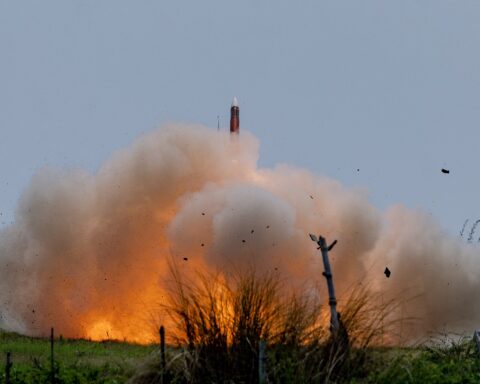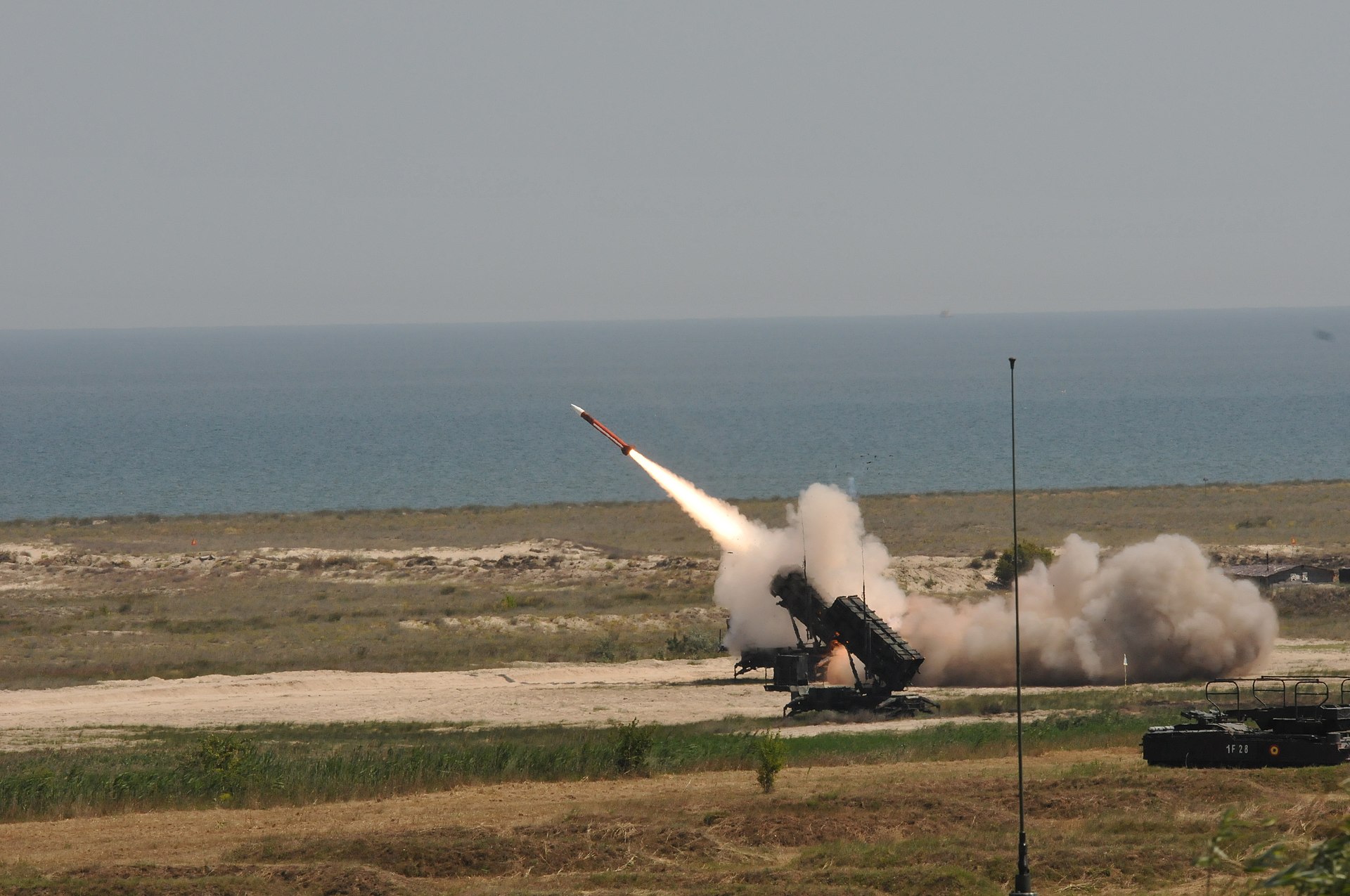

RIYADH — Ten days into the most sustained aerial bombardment the Arabian Peninsula has faced in modern history, Saudi Arabia confronts a reality that $75 billion in annual defense spending failed to prevent: the Kingdom cannot build, maintain, or reload its own weapons. Every Patriot missile that intercepts an Iranian Shahed drone over Riyadh was manufactured in Andover, Massachusetts. Every THAAD battery protecting Aramco refineries was assembled in Troy, Alabama. Every replacement part, every software update, every maintenance crew rotates through a supply chain that begins and ends in the United States. The Iran war has not just tested Saudi Arabia’s military readiness — it has exposed the most dangerous vulnerability in the Kingdom’s national security architecture. The question is no longer whether Saudi Arabia needs a domestic defense industry, but whether it can build one fast enough to survive.
Table of Contents
- How Dependent Is Saudi Arabia on Foreign Weapons?
- What Has the Iran War Revealed About Saudi Military Gaps?
- The SAMI Revolution — Saudi Arabia Builds Its Own Arsenal
- Can a Nation Buy Its Way to Military Self-Sufficiency?
- The Drone Dilemma — From Buyer to Builder
- Who Are Saudi Arabia’s New Defense Partners?
- Khalid bin Salman’s Defense Overhaul
- The Defense Sovereignty Matrix
- Why the Iran War May Be Saudi Defense’s Greatest Catalyst
- What Will Saudi Arabia’s Military Look Like in 2030?
- Frequently Asked Questions
How Dependent Is Saudi Arabia on Foreign Weapons?
Saudi Arabia’s weapons dependency on the United States represents one of the most lopsided arms relationships in the modern world. Between 2020 and 2024, the United States supplied 74 percent of Saudi Arabia’s arms imports, according to the Stockholm International Peace Research Institute (SIPRI). Spain accounted for 10 percent, France for 6.2 percent, and the remaining 9.8 percent was scattered across a dozen smaller suppliers. No major military power on earth relies on a single foreign supplier for three-quarters of its arsenal.
The numbers tell a story of structural dependency that decades of diplomacy and defense agreements have failed to diversify. Saudi Arabia was the world’s largest arms importer from 2015 to 2019, and the fourth-largest from 2020 to 2024, according to SIPRI’s March 2024 trends report. Between 2000 and 2019, the United States accounted for 60.6 percent of Saudi imports, with the United Kingdom at 18.2 percent. The UK share has since declined as London tightened export controls following the Yemen war, but no alternative supplier has filled the gap.
The practical implications are stark. Saudi Arabia’s air defense shield — the system currently protecting 35 million people from Iranian ballistic missiles — consists almost entirely of American-made Patriot PAC-3 batteries and THAAD systems. The Royal Saudi Air Force flies American F-15 Strike Eagles and Eurofighter Typhoons. The Royal Saudi Navy operates French-built frigates and American littoral combat ships. Even the Kingdom’s communications infrastructure, satellite intelligence feeds, and encrypted command networks depend on American-provided systems.
This dependency carries a political price. As a recent analysis detailed, Saudi Arabia’s arsenal has an American kill switch — Washington retains contractual authority over software updates, spare parts flows, and maintenance schedules for the majority of Saudi weapons systems. During the Obama administration’s final years, the United States briefly suspended delivery of precision-guided munitions over civilian casualties in Yemen. The message was unmistakable: American weapons come with American conditions.
The tangible human cost of that dependency became clear when the seventh U.S. service member killed in Operation Epic Fury died from wounds sustained at Prince Sultan Air Base in Al-Kharj. The base, which hosts more than 2,300 American troops and serves as the backbone of the air campaign against Iran, has itself come under sustained Iranian missile and drone fire — a vulnerability that Saudi Arabia’s own indigenous defence industry cannot yet address.
| Period | Largest Supplier | Share (%) | Second Supplier | Share (%) | Global Import Rank |
|---|---|---|---|---|---|
| 2000-2019 | United States | 60.6 | United Kingdom | 18.2 | Top 3 |
| 2015-2019 | United States | 73.0 | United Kingdom | 13.0 | 1st |
| 2019-2023 | United States | 75.0 | France | 7.6 | 2nd |
| 2020-2024 | United States | 74.0 | Spain | 10.0 | 4th |
The localization rate of Saudi military spending — the share of defense expenditure that stays within the Kingdom’s borders — stood at just 4 percent in 2018, according to the General Authority for Military Industries (GAMI). Six years and tens of billions of dollars later, that figure had risen to 24.89 percent by the end of 2024. Progress, certainly, but still less than a quarter of the way toward the 50 percent target set for 2030. And that target was set during peacetime, when urgency was an abstract concept.
What Has the Iran War Revealed About Saudi Military Gaps?
The Iran war has transformed abstract defense planning documents into concrete, life-or-death lessons. Since February 28, 2026, Iran has launched more than 1,200 missiles and drones at targets across Saudi Arabia, the UAE, Qatar, Bahrain, and Kuwait. The Saudi Ministry of Defense has intercepted the vast majority — a testament to the performance of its air defense systems. But each interception carries a price tag that threatens to make victory unaffordable. The Pentagon’s Day 11 briefing underscored the sheer scale of the campaign, reporting that coalition strikes had destroyed more than 5,000 targets and reduced Iranian missile fire by 90 percent — yet the residual drone threat continues to drain Saudi interceptor stocks at an unsustainable rate.
The core lesson is arithmetic. A single Iranian Shahed-136 drone costs between $20,000 and $50,000 to manufacture, according to a Carnegie Endowment analysis published in March 2026. A Patriot PAC-3 interceptor missile costs approximately $4 million per shot. As Foreign Policy detailed in a March 5, 2026, analysis titled “The Drone Attrition Trap,” this cost asymmetry is the defining strategic challenge of the conflict. Iran can produce Shaheds in bulk at a fraction of the cost of the interceptors designed to destroy them. The $35,000 drone versus the $4 million interceptor is not just a headline — it is a fiscal crisis disguised as a military one.
The war has exposed five critical gaps in Saudi Arabia’s defense architecture:
- Counter-drone capability at scale. Saudi Arabia lacks sufficient quantities of low-cost drone interceptors. Its reliance on Patriot and THAAD for even small drone threats burns through expensive munitions at an unsustainable rate.
- Ammunition reserves and resupply speed. Interceptor missile stockpiles are finite, and replenishment depends on American production lines operating at capacity. The U.S. defense industrial base was already strained by commitments to Ukraine and Taiwan contingency planning.
- Maintenance and repair autonomy. With American maintenance contractors evacuating the Kingdom alongside embassy staff — the U.S. State Department ordered non-emergency personnel to leave Saudi Arabia on March 9, 2026 — Saudi Arabia’s ability to service its own weapons systems has been compromised at the worst possible moment.
- Distributed defense infrastructure. Iran’s strategy of targeting multiple sites simultaneously, from Shaybah in the Empty Quarter to Prince Sultan Air Base near Riyadh, has demonstrated that concentrated defense installations are vulnerable to saturation attacks.
- Intelligence, surveillance, and reconnaissance (ISR) gaps. The Kingdom’s domestic drone fleet is inadequate for the scope of surveillance required along a border that stretches more than 2,000 kilometers from the Iraqi frontier to the Yemeni coast.
When Saudi Arabia’s defense ministry reported intercepting nine drones targeting the Shaybah oil field on March 10, 2026 — the latest in a series of attacks on the remote facility — it was a tactical success but a strategic warning. Each interception consumed munitions that Saudi Arabia cannot independently replace. The Kingdom’s entire military strength assessment must now be recalculated through the lens of sustainability, not just firepower.
The SAMI Revolution — Saudi Arabia Builds Its Own Arsenal
Saudi Arabian Military Industries, known as SAMI, was founded in 2017 as the industrial arm of the Kingdom’s defense ambitions. For its first three years, the company existed more on paper than in factories. In 2020, SAMI’s annual revenue was $20 million — negligible for a company tasked with transforming a nation’s military-industrial base. By 2021, that figure had surged to $690 million, a 2,407 percent increase driven by the consolidation of existing military enterprises under the SAMI umbrella and the signing of major joint venture agreements.
Today, SAMI operates with a contract backlog exceeding $10 billion and a stated ambition to become a top-25 global defense company by 2030. The company’s target is to contribute 14 billion Saudi riyals ($3.7 billion) annually to the Saudi economy by the end of the decade, according to SAMI CEO Walid Abukhaled. As a wholly owned subsidiary of the Public Investment Fund, SAMI’s accelerating growth reflects PIF’s broader wartime transformation from development bank to defense financier.
The World Defense Show in February 2026, held in Riyadh just weeks before the war began, provided the clearest signal yet of the acceleration underway. More than 220 agreements were signed during the event, including 93 government-to-government deals and 127 partnership agreements with defense companies, according to Arab News. The total value exceeded 33 billion Saudi riyals ($8.8 billion). SAMI alone signed 25 strategic agreements, while the Ministry of Defense inked 28 contracts with companies including MBDA of France, Raytheon Saudi Arabia, South Korea’s Hanwha Aerospace, and Italy’s Leonardo.
The most visible investment is the new Land Systems Industrial Complex in Al-Kharj, a facility spanning one million square meters that is designed for the manufacture, testing, and sustainment of wheeled and tracked armored vehicles. The complex is expected to produce up to 1,500 military vehicles annually and create more than 1,000 skilled jobs for Saudi nationals. SAMI’s new HEET program — a family of wheeled armored vehicles in 4×4, 6×6, and 8×8 configurations — represents the first armored vehicle designed and built entirely in Saudi Arabia.
The irony is impossible to ignore: the Al-Kharj industrial complex sits in the same governorate where two foreign residents were killed by Iranian projectiles on March 8, 2026. The factory that will build Saudi Arabia’s next generation of military vehicles is located in the same area that the current generation of imported weapons failed to fully protect.
“Saudi Arabia aims to localize more than 50 percent of military spending by the end of the decade, channeling tens of billions of dollars into domestic manufacturing, research and development, and high-skilled employment.”
GAMI strategic framework, 2024
Can a Nation Buy Its Way to Military Self-Sufficiency?
Saudi Arabia’s defense budget tells the story of a nation that has been spending enormously without building proportionally. The Kingdom allocated $78 billion to defense in 2025, making it the sixth-largest military spender on earth, according to Breaking Defense. The 2026 budget reduced that slightly to $74.76 billion — still exceeding the military spending of Russia, Germany, and Japan. Over the past five years, Saudi defense expenditure grew from $53.9 billion in 2021 to $72.5 billion in 2025, a compound annual growth rate of 7.7 percent, according to a January 2026 Research and Markets report.
The question is where that money goes. For decades, the majority of Saudi defense spending flowed overseas — to Boeing, Raytheon, BAE Systems, Lockheed Martin, and the constellation of Western defense contractors that have treated the Kingdom as their most reliable customer. The economic logic was straightforward: Saudi Arabia has capital, Western companies have technology, and the transaction required no domestic industrial capacity. But this arrangement created what defense economists call a “consumption military” — one that can buy weapons but cannot build, maintain, or evolve them.
| Year | Budget ($B) | % of GDP | Localization Rate (%) | Global Rank |
|---|---|---|---|---|
| 2018 | 67.6 | 8.8 | 4.0 | 3rd |
| 2020 | 57.5 | 8.4 | ~10 | 6th |
| 2021 | 53.9 | 6.6 | ~14 | 8th |
| 2023 | ~65 | ~7.0 | 19.35 | 5th |
| 2024 | ~70 | ~7.0 | 24.89 | 5th |
| 2025 | 78.0 | 7.1 | ~28 (est.) | 6th |
| 2026 | 74.76 | — | Target: 30+ | 5th |
| 2030 | — | — | Target: 50+ | — |
The localization push represents a fundamental reorientation. GAMI, the regulatory body overseeing defense industrialization, reported that the localization rate reached 24.89 percent by the end of 2024 — a sixfold increase from the 4 percent baseline in 2018. That trajectory is impressive in percentage terms but modest in absolute terms. At $74.76 billion in annual defense spending, a 24.89 percent localization rate means roughly $18.6 billion stays in the Saudi economy. The remaining $56 billion — more than the entire defense budget of most European nations — still leaves the country.
The GE Aerospace agreement signed at WDS 2026 illustrates the localization strategy in practice. The industrial participation deal aims to enhance repair and maintenance capabilities for F110 engines — the powerplants that drive Saudi Arabia’s F-15 fleet — within the Kingdom itself. A separate memorandum of understanding explores building a “globally competitive aviation industrial base” in Saudi Arabia, with knowledge transfer and component manufacturing. The goal is not to stop buying American engines, but to stop being helpless when those engines need servicing.
History suggests that buying military self-sufficiency is possible but slow. South Korea, now a major defense exporter in its own right, spent four decades transitioning from a pure weapons importer to a builder of K9 howitzers, K2 tanks, and KF-21 fighters. Turkey’s defense industry transformation, spearheaded by companies like Baykar and Turkish Aerospace Industries, took two decades of sustained government investment and was catalyzed by U.S. arms embargoes in the 1970s and 2019. Israel built its defense industry from scratch over 30 years, driven by the existential necessity of repeated wars. Saudi Arabia is attempting the same transformation in under a decade — and the Iran war has just compressed the timeline further.
The Drone Dilemma — From Buyer to Builder
Nowhere is the urgency of defense localization more acute than in unmanned aerial systems. The Iran war has been, above all, a drone war. Iran’s Shahed-series drones — cheap, numerous, and effective — have forced Saudi Arabia to expend billions of dollars in interceptor missiles against threats that cost a fraction of the defense. The drone killer Saudi Arabia desperately needs does not yet exist in sufficient quantities within its own borders.
Saudi Arabia’s domestic drone industry is embryonic but growing rapidly. The Saqr, a locally developed surveillance drone first flown in 2012, exists in over 200 active units, primarily in intelligence, surveillance, and reconnaissance roles. The ASEF drone, unveiled in 2019 at the Dubai International Aviation Exhibition, represented the first fully Saudi-made unmanned aircraft. Neither system is capable of the armed combat roles that the current conflict demands.
Three major partnerships are designed to close the gap:
The China-Saudi Wing Loong-3 deal, reportedly valued at $5 billion, will establish a UAV assembly line in Jeddah with an annual production capacity of 48 advanced combat drones, according to Defence Security Asia. The Wing Loong-3 is a medium-altitude, long-endurance (MALE) drone capable of carrying precision-guided munitions — a significant step up from the Kingdom’s existing ISR-focused fleet.
The Baykar Akinci agreement, Turkey’s largest defense export in history, encompasses not just the purchase of combat drones but extensive technology transfer, joint production, and localized manufacturing within Saudi Arabia. Joint ventures with SAMI are expected to deliver the first locally assembled Akinci UCAVs by 2026. Saudi drone operators have already graduated from Baykar’s training program, signaling that integration into Royal Saudi Air Force units could occur ahead of schedule.
Intra Defense Technologies, in collaboration with GAMI, has established a drone manufacturing facility in Riyadh with an annual capacity of 120 aircraft. While smaller in scale than the Chinese and Turkish programs, this facility represents genuine indigenous manufacturing capability rather than foreign-designed assembly.
| Program | Partner | Investment ($B) | Annual Capacity | Type | Status (March 2026) |
|---|---|---|---|---|---|
| Wing Loong-3 | China (AVIC/CETC) | 5.0 | 48 | Armed MALE UCAV | Factory construction |
| Bayraktar Akinci | Turkey (Baykar) | 3.0+ | TBD | Heavy UCAV | First local assembly 2026 |
| Intra Defense | GAMI domestic | — | 120 | Various UAV | Operational in Riyadh |
| CETC JV | China (CETC) | — | — | ISR systems | R&D center established |
| Saqr/ASEF (indigenous) | Saudi domestic | — | 200+ in service | ISR | Operational |
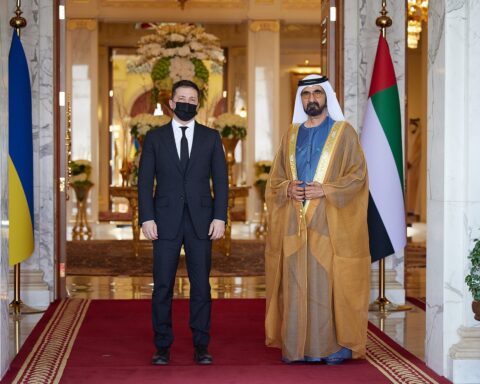
The missing piece remains counter-drone technology. Ukraine has emerged as an unexpected potential partner. Ukrainian drone defense teams have been dispatched to the Gulf, and President Zelenskyy personally offered Mohammed bin Salman assistance in countering Iranian drones during a March 7, 2026, phone call. Ukraine’s domestically produced interceptor drones — low-cost systems priced between $1,000 and $2,000 per unit — represent precisely the asymmetric counter to Iran’s drone strategy that Saudi Arabia lacks. According to Fortune, the U.S. and Gulf states have made “repeated requests” for Ukraine’s interceptor drones, though Kyiv’s wartime export ban has complicated deliveries.
Saudi Arabia has also acquired China’s SkyShield integrated counter-drone system, which combines 3D radar, electronic jamming, and the Silent Hunter directed-energy laser weapon. But performance has been mixed. The Silent Hunter laser, developed by China Electronics Technology Group Corporation, required between 15 and 30 minutes of continuous targeting to guarantee a drone kill — a timeframe measured in geological ages during a saturation attack.
Who Are Saudi Arabia’s New Defense Partners?
The Iran war has accelerated a quiet diversification of Saudi Arabia’s defense supply chain that was already underway before the first missiles flew. While the United States remains the primary partner — and will continue to be for any system involving Patriot, THAAD, or F-15 platforms — the Kingdom is building relationships with a constellation of new suppliers that collectively represent the most significant shift in Saudi procurement strategy since the Al-Yamamah arms deal with Britain in the 1980s.
South Korea has emerged as a major new partner. Hanwha Aerospace signed a contract worth $867 million to supply M-SAM-II multi-function radar systems to Saudi Arabia — the Chungoong-II medium-range surface-to-air missile system that South Korea co-developed with its own military. The system’s combat record has since vindicated the decision: the Cheongung-II achieved a 96 percent intercept rate defending the UAE against Iranian missiles, prompting Riyadh to expand the deal to $3.2 billion for a full air defense package. At WDS 2026, Hanwha was among the four companies to sign direct contracts with the Saudi Ministry of Defense. Demonstrations of the K9 howitzer to Saudi National Guard delegations in 2024, followed by negotiations restarting in March 2025, suggest that South Korean land systems could soon supplement the Kingdom’s artillery capabilities.
Turkey’s defense relationship with Saudi Arabia has expanded far beyond the Baykar drone deal. At WDS 2026, Turkey and Saudi Arabia signed a memorandum of understanding for joint production of the Gökbey multi-purpose helicopter, Turkish Aerospace Industries’ domestically developed platform. President Erdogan disclosed in February 2026 that discussions were underway for Saudi investment in KAAN, Turkey’s fifth-generation stealth fighter program. If finalized, the KAAN partnership would represent Saudi Arabia’s first involvement in the development of a cutting-edge combat aircraft — a level of technological engagement that the United States has historically restricted.
Italy’s Leonardo signed contracts at WDS 2026 for helicopter and electronics systems. France’s MBDA — Europe’s largest missile manufacturer — secured agreements for advanced missile systems, building on the existing relationship that saw France supply 6.2 percent of Saudi arms imports between 2020 and 2024. The pattern is clear: Saudi Arabia is not abandoning its American alliance, but it is building redundancy into a supply chain that the war has proven dangerously brittle.
| Partner Country | Key Companies | Systems/Programs | Estimated Value ($B) | Localization Component |
|---|---|---|---|---|
| South Korea | Hanwha Aerospace | M-SAM-II radar, K9 howitzer (under negotiation) | 0.87+ | Technology transfer |
| Turkey | Baykar, TAI | Akinci UCAV, Gökbey helicopter, KAAN fighter (discussions) | 3.0+ | Joint production in Saudi Arabia |
| China | AVIC, CETC | Wing Loong-3 factory, SkyShield counter-drone, ISR systems | 5.0+ | Factory in Jeddah, R&D center |
| France | MBDA | Advanced missile systems | TBD | Joint ventures |
| Italy | Leonardo | Helicopters, electronics | TBD | Under negotiation |
| United States | Raytheon, GE, Lockheed Martin | Patriot, THAAD, F-15, F110 engines | Dominant | GE engine maintenance localization |
| Ukraine | Multiple drone firms | Low-cost interceptor drones, counter-UAS expertise | Emerging | Knowledge transfer |
| South Africa | Milkor | Drone manufacturing | — | Production in Saudi Arabia |
The most strategically significant shift is the deepening relationship with China. Beijing has already supplied the SkyShield counter-drone system and is building the Wing Loong-3 factory in Jeddah. China’s willingness to transfer military technology without the political conditions that accompany American sales makes it an attractive partner, even as it creates friction with Washington. The United States has historically opposed Chinese military sales to Gulf states, viewing them as a threat to interoperability and intelligence security. The Iran war may have made that opposition moot. When American maintenance crews are evacuating and replacement interceptors are weeks away, a Chinese drone factory in Jeddah looks less like a diplomatic problem and more like a survival strategy.
Khalid bin Salman’s Defense Overhaul
The architect of Saudi Arabia’s military transformation is Prince Khalid bin Salman, the younger brother of Crown Prince Mohammed bin Salman and the Kingdom’s Defense Minister since September 2022. A former fighter pilot and Saudi ambassador to the United States, Khalid bin Salman brings both operational military experience and diplomatic fluency to a portfolio that has historically been the preserve of aging royals with limited technical knowledge.
The defense reform program under Khalid bin Salman operates across three phases, according to an analysis by Italy’s Institute for International Political Studies (ISPI). The first phase involves restructuring the Ministry of Defense itself — building a modern institutional center with specialized undersecretaries for strategic affairs, procurement, and force development. The second phase reorganizes the armed forces to improve joint operations efficiency and interservice coordination. The third phase — the one that the Iran war has thrust into urgent prominence — focuses on rearming and capability building through domestic industrial development.
In February 2024, Khalid bin Salman was appointed chairman of the SAMI board, placing the defense minister in direct oversight of the Kingdom’s primary defense manufacturer. Four months later, he inaugurated the Saudi Arabian National Defense University (SANDU), a transformation of the existing war college into a modern defense institution designed to produce both military and civilian leaders in the national security domain. The university aims to create the professional class of defense planners, procurement specialists, and military engineers that Saudi Arabia has historically imported along with its weapons.
The prince’s most consequential contribution may prove to be the WDS 2026 contracts he personally oversaw. Defense Assistant Minister Khaled Biyari, acting under Khalid bin Salman’s authority, signed the four critical contracts with MBDA, Raytheon Saudi Arabia, Hanwha Aerospace, and Leonardo. These agreements represent a deliberate diversification of Saudi Arabia’s supplier base — the first time a major contract-signing event included non-American companies at this scale of commitment.
Mohammed bin Salman’s three-front war — military, diplomatic, and economic — depends in large part on whether his brother can deliver a military capable of sustaining a prolonged conflict without American resupply on American timelines. The Iran war has compressed what was designed as a decade-long transformation into a matter of months.
The Defense Sovereignty Matrix
Saudi Arabia’s progress toward defense self-sufficiency can be assessed across six dimensions, each representing a critical element of military sovereignty. This framework evaluates where the Kingdom stands today, where it needs to be, and the gap that the Iran war has made painfully visible.
| Dimension | Definition | Current Score (1-10) | Target Score (2030) | Gap | Key Constraint |
|---|---|---|---|---|---|
| Production Capacity | Ability to manufacture weapons systems domestically | 3 | 7 | -4 | Factory construction timelines |
| Maintenance Autonomy | Ability to service and repair weapons without foreign contractors | 2 | 6 | -4 | Workforce skills gap |
| Ammunition Independence | Domestic production of missiles, munitions, and consumables | 1 | 5 | -4 | No domestic missile production line |
| R&D and Design | Ability to design new systems, not just assemble foreign designs | 2 | 5 | -3 | Brain drain, limited research base |
| Supply Chain Diversification | Number of independent supplier nations | 4 | 8 | -4 | US systems dominance |
| Human Capital | Trained defense engineers, technicians, and planners | 3 | 7 | -4 | SANDU at early stage |
Across all six dimensions, Saudi Arabia scores between 1 and 4 out of 10. The lowest score — ammunition independence at 1 — reflects the stark reality that Saudi Arabia cannot domestically produce a single Patriot interceptor, THAAD missile, or precision-guided munition. Every round fired in defense of the Kingdom was manufactured abroad, shipped across oceans, and cleared through foreign export controls. For a nation absorbing 1,200 missiles and drones in 10 days, this represents an existential dependency.
Production capacity scores slightly higher at 3, reflecting the SAMI factory investments, the HEET armored vehicle program, and the drone manufacturing partnerships. But the gap between an operational factory and a capable production ecosystem is measured in years. South Korea’s Hanwha took decades to reach the point where it could export K9 howitzers globally. Turkey’s Baykar needed 15 years from its founding to produce the TB2 drone that transformed battlefield dynamics in Libya, Syria, and Ukraine.
Maintenance autonomy — the ability to keep weapons functional without foreign contractors — sits at 2. The GE Aerospace agreement on F110 engine maintenance represents an attempt to address this, but it will take years before Saudi technicians can independently service the complex systems that currently require American specialists. The mass departure of U.S. maintenance personnel following the embassy evacuation order has made this gap visible in real time.
The matrix reveals that Saudi Arabia’s defense transformation is not a single challenge but six interlocking ones. Building a factory is insufficient without the engineers to design what it produces. Diversifying suppliers is meaningless without the maintenance capability to service multiple weapons platforms. The war has not created these gaps, but it has illuminated them with a clarity that no peacetime review could match.
Why the Iran War May Be Saudi Defense’s Greatest Catalyst
The conventional analysis frames the Iran war as a catastrophe for Saudi Arabia’s modernization ambitions. Vision 2030 is under fire — literally. Megaprojects are stalled. Tourism has collapsed. Foreign investment is frozen. But there is a contrarian case, supported by historical evidence, that wars of this nature are the single most effective catalyst for defense industrial development. Every major defense-industrial power in the world built its capabilities in response to existential military threats, not in the comfort of peacetime procurement cycles.
Israel’s defense industry was forged in the wars of 1967 and 1973, when French arms embargoes forced the nation to develop the Kfir fighter, the Merkava tank, and what eventually became the Iron Dome system. Turkey’s Baykar revolution was seeded by a U.S. arms embargo following the 1974 Cyprus intervention and accelerated by the realization during the 2015-2016 Kurdish conflict that its military lacked domestic drone capability. South Korea’s defense industry grew directly from the need to reduce dependency on American weapons in the aftermath of the Korean War, a process that accelerated dramatically after U.S. troop reductions in the 1970s.
The Iran war provides Saudi Arabia with three conditions that peacetime could not replicate:
Political will without opposition. Defense localization was a Vision 2030 goal, but it competed for attention and capital with NEOM, entertainment projects, and sports diplomacy. The war has eliminated that competition. There is no constituency in Saudi Arabia today arguing against investing in domestic missile production. The political barriers to redirecting tens of billions of dollars from imported weapons to domestic factories have evaporated.
Real-world performance data. Before February 28, Saudi Arabia’s defense planning was based on simulations, exercises, and the experience of other nations. The Kingdom now has detailed, firsthand data on Iranian weapon performance, interception rates, system vulnerabilities, maintenance demands under combat conditions, and logistics bottlenecks. This data is invaluable for designing the next generation of Saudi defense systems. No amount of peacetime research can substitute for combat experience.
A generation of military personnel who have operated under fire. The Saudi Air Defense Force operators who have intercepted hundreds of missiles, the Saudi National Guard personnel who have secured critical infrastructure, and the military planners who have coordinated a distributed defense across the Kingdom’s vast territory — these individuals represent the first cadre of combat-experienced Saudi military professionals in a generation. They will form the human capital base of the defense industry that Saudi Arabia must now build.
“Tehran’s strategy of asymmetric attrition through cheap drones and missiles has inadvertently created the most powerful argument for defense localization that Saudi Arabia’s industrial planners could have wished for.”
Foreign Policy, March 2026
The risk in this contrarian view is timing. Wars that last weeks create motivation. Wars that last months create exhaustion. If the Iran conflict extends beyond the “short-term” timeline President Trump suggested on March 9, 2026, the urgency that drives today’s procurement decisions could be overtaken by the fiscal strain of sustained combat operations. The window for transformative investment is measured in months, not years.
What Will Saudi Arabia’s Military Look Like in 2030?
If the current trajectory of investment holds — and the Iran war has almost certainly accelerated it — the Saudi armed forces of 2030 will bear only a passing resemblance to the military that entered the conflict in February 2026. Four structural shifts are already in motion.
The first is the drone transformation. By 2030, Saudi Arabia will operate a domestically assembled fleet of Bayraktar Akinci heavy combat drones, Chinese Wing Loong-3 MALE UAVs, and a growing inventory of indigenous ISR platforms. The SAMI-Baykar joint venture and the Jeddah Wing Loong factory will have reached production scale, giving the Kingdom the ability to replace drone losses from domestic production rather than foreign imports. Counter-drone systems — potentially including Ukrainian interceptor technology and improved directed-energy weapons — will have matured from prototype to operational status.
The second is the armored vehicle revolution. The Al-Kharj Land Systems Industrial Complex will be producing HEET armored vehicles at scale, reducing the Kingdom’s dependence on imported APCs and IFVs. If the Hanwha K9 deal materializes, South Korean artillery systems may be manufactured under license in Saudi Arabia, following the model that has made the K9 the world’s most exported self-propelled howitzer.
The third is the air defense evolution. Four of seven planned THAAD sites are expected to be operational by the end of 2026, with all seven completed by 2028. The integration of South Korean M-SAM-II systems, alongside continued Patriot upgrades, will create a layered air defense architecture that no longer depends on a single American-supplied system. Future plans include AI-assisted tracking, directed-energy weapons for low-cost drone defense, and short-range air defense systems designed for the saturation attack scenarios that Iran has demonstrated.
The fourth and most ambitious shift is the aerospace aspiration. The Turkey-Saudi discussions around the KAAN fifth-generation fighter, the Gökbey helicopter joint production, and the GE Aerospace engine maintenance localization collectively point toward a Saudi Arabia that participates in — rather than merely purchases — the development of advanced aerial platforms. This is the most speculative element of the 2030 vision, as combat aircraft development requires decades of accumulated expertise that cannot be purchased outright.
A fifth dimension, less visible but potentially more consequential, runs beneath all four: Saudi Arabia’s nuclear programme and enrichment ambitions, which have accelerated sharply since the destruction of Iran’s centrifuge infrastructure removed the primary obstacle to the Kingdom’s own nuclear fuel cycle.
| Year | Milestone | Significance |
|---|---|---|
| 2026 | First Saudi-assembled Bayraktar Akinci delivered | Domestic UCAV assembly begins |
| 2026 | Al-Kharj Land Systems Complex fully operational | 1,500 armored vehicles/year capacity |
| 2026 | 4 of 7 THAAD sites operational | Layered air defense expands |
| 2027 | Wing Loong-3 Jeddah factory begins production | 48 combat drones/year from Saudi facility |
| 2027 | GE F110 engine maintenance localized | Reduced dependency on American technicians |
| 2028 | All 7 THAAD sites operational | Complete ballistic missile defense coverage |
| 2028 | Gökbey helicopter joint production begins | First rotorcraft manufactured in Saudi Arabia |
| 2029 | SAMI targets top-25 global defense company | $3.7 billion annual economic contribution |
| 2030 | 50% defense spending localization achieved | GAMI target fulfilled |
The greatest unknown is whether Saudi Arabia can build the human infrastructure to match its physical infrastructure. Factories require engineers. Maintenance facilities require technicians. Defense design requires a research ecosystem that takes a generation to cultivate. SANDU, the new National Defense University, is part of the solution, but the Kingdom will need to attract and retain technical talent at a scale it has never achieved. The 1,000 skilled jobs promised by the Al-Kharj complex are a start. The defense industry that GAMI envisions by 2030 will require tens of thousands more.
The Iran war has posed a question that Saudi Arabia spent decades avoiding. The answer will determine not just the Kingdom’s military future but the durability of its sovereignty in a region where the distance between peacetime and existential threat can be measured in the flight time of a Shahed drone.
The defense industry transformation carries its own price tag that compounds the broader fiscal pressure. A comprehensive accounting of the total economic cost of the war to Saudi Arabia shows that military expenditure is only one of eight categories of damage, with interceptor consumption alone burning through billions in the first ten days.
Frequently Asked Questions
What percentage of Saudi Arabia’s weapons are imported?
Between 2020 and 2024, Saudi Arabia imported approximately 74 percent of its arms from the United States alone, with an additional 10 percent from Spain and 6.2 percent from France, according to SIPRI data. The overall localization rate of Saudi military spending reached 24.89 percent by end of 2024, meaning roughly three-quarters of all defense expenditure still flows to foreign manufacturers and contractors. The financial dynamics of this dependency — and how defence contractors are profiting from every interceptor Saudi Arabia fires — are examined in the defence industry’s Iran war windfall.
What is SAMI and what does it produce?
Saudi Arabian Military Industries (SAMI) is the Kingdom’s primary defense manufacturing company, owned by the Public Investment Fund. Founded in 2017, SAMI has grown from $20 million in annual revenue to a contract backlog exceeding $10 billion. Its current production includes the HEET family of wheeled armored vehicles, and it oversees joint ventures for drone manufacturing with Turkey’s Baykar and China’s AVIC, among other defense partnerships.
Can Saudi Arabia manufacture its own drones?
Saudi Arabia is rapidly building domestic drone manufacturing capacity through multiple partnerships. A $5 billion deal with China will produce 48 Wing Loong-3 combat drones annually in Jeddah. Joint ventures with Turkey’s Baykar will assemble Akinci heavy combat drones locally. The Intra Defense facility in Riyadh can produce 120 aircraft per year. Indigenous programs include the Saqr surveillance drone with over 200 units in service.
How much does Saudi Arabia spend on defense annually?
Saudi Arabia allocated $78 billion to defense in 2025, making it the sixth-largest military spender globally, according to Breaking Defense. The 2026 budget is $74.76 billion. Defense expenditure grew from $53.9 billion in 2021 to $72.5 billion in 2025, reflecting a compound annual growth rate of 7.7 percent. These figures exceed the military budgets of Russia, Germany, and Japan.
What is the 50 percent localization target?
The General Authority for Military Industries (GAMI) has set a target of localizing more than 50 percent of Saudi military spending by 2030, channeling tens of billions of dollars into domestic manufacturing, R&D, and skilled employment. Starting from a 4 percent baseline in 2018, the rate reached 24.89 percent by end of 2024. Achieving the target will require sustained investment in factories, workforce training, and technology transfer partnerships across the defense sector. One such partnership is already taking shape: the Saudi-Ukraine weapons deal includes technology transfer provisions for interceptor drone manufacturing that could accelerate domestic production and reduce dependence on slower Western supply chains.
Who is leading Saudi Arabia’s military transformation?
Prince Khalid bin Salman, Saudi Arabia’s Defense Minister since September 2022 and younger brother of Crown Prince Mohammed bin Salman, oversees the military transformation. A former fighter pilot and ambassador to the United States, he chairs the SAMI board and has inaugurated the Saudi Arabian National Defense University. His reform program operates in three phases: ministry restructuring, force reorganization, and capability building through domestic industrial development.