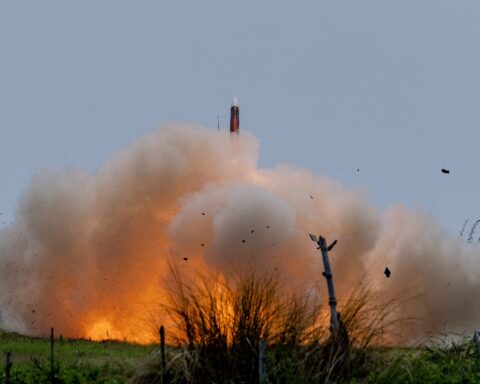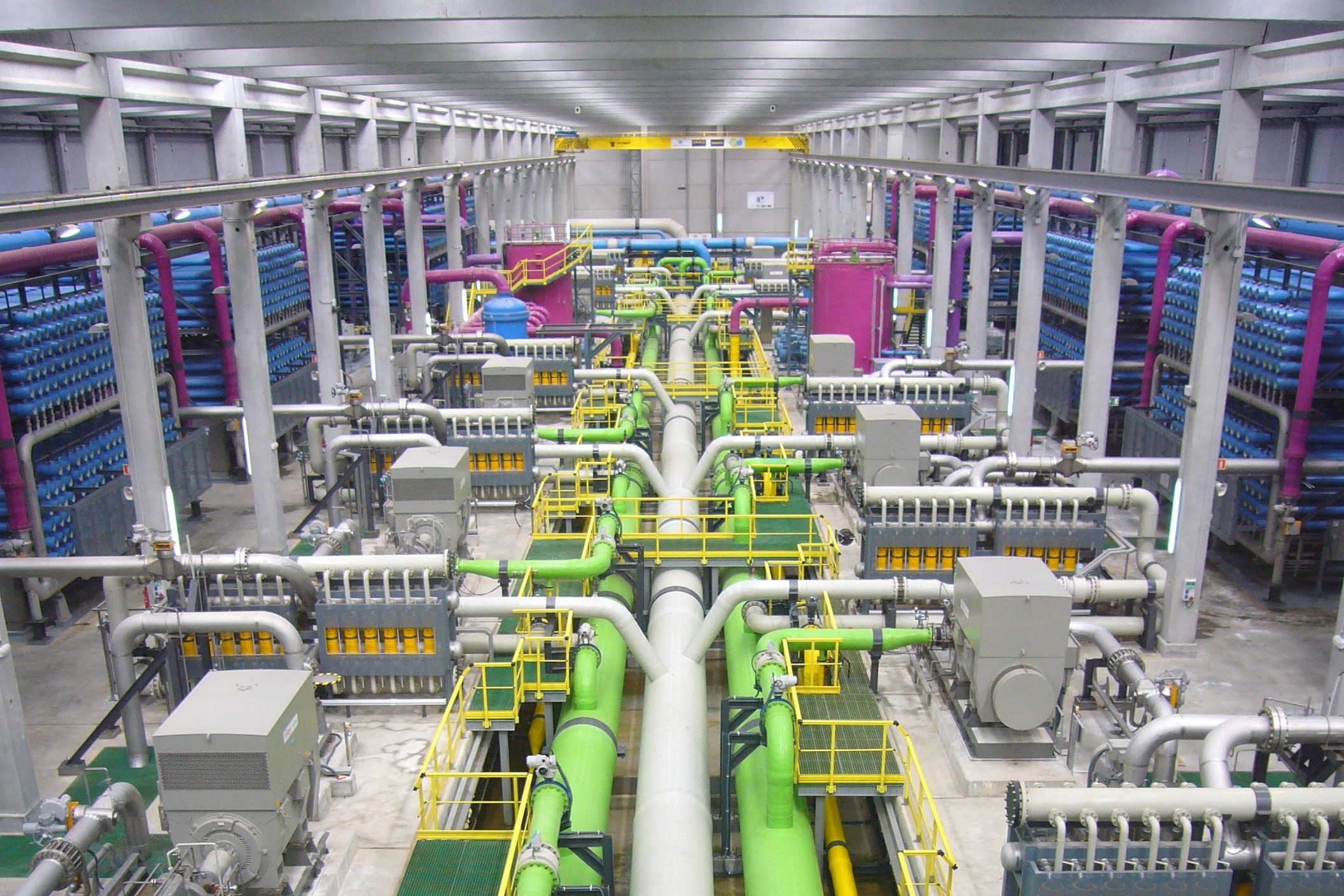

RIYADH — Twenty-eight days into the Iran war, global attention remains locked on oil prices, missile trajectories, and the geopolitics of the Strait of Hormuz. That focus is dangerously incomplete. The most consequential vulnerability threatening Saudi Arabia’s 35.9 million residents is not crude oil — which can be rerouted through the Yanbu terminal on the Red Sea — but desalinated water, which cannot. Seventy percent of the Kingdom’s drinking water flows from coastal desalination plants, more than 90 percent of the Gulf’s desalinated water comes from just 56 facilities, and nearly every one of those facilities sits within range of Iran’s ballistic missiles and drones. A sustained strike on Saudi Arabia’s largest desalination complex at Ras Al-Khair would cut water to seven million people within 72 hours. Iran has already demonstrated willingness to hit such targets, striking a Bahraini desalination plant on March 8 and damaging Kuwait’s Doha West water station with drone debris. The question is no longer whether desalination infrastructure is at risk. The question is whether Saudi Arabia can defend it.
Table of Contents
- Why Is Saudi Arabia’s Water Supply the War’s Most Overlooked Vulnerability?
- How Much of Saudi Arabia’s Water Comes From the Sea?
- The Fifty-Six Plants That Keep the Gulf Alive
- Has Iran Already Struck Desalination Infrastructure?
- What Would a Strike on Ras Al-Khair Mean for Seven Million People?
- The Desalination Vulnerability Index
- Can Patriot Missiles Protect Water Plants?
- Why Water Is More Dangerous Than Oil in This War
- The Kuwait Precedent
- What Are Saudi Arabia’s Emergency Water Options?
- The Invisible Weakness — Saudi Arabia’s Water Pipeline Network
- How the War Is Accelerating a Desalination Revolution
- Frequently Asked Questions
Why Is Saudi Arabia’s Water Supply the War’s Most Overlooked Vulnerability?
Saudi Arabia’s desalination infrastructure represents the single largest concentration of civilian critical infrastructure anywhere in the current conflict zone, yet it receives a fraction of the strategic attention devoted to oil refineries and military bases. The reason is simple: oil generates revenue and headlines, while water sustains life quietly in the background. When a missile strikes an oil facility, markets move instantly and television cameras follow. When a drone damages a water plant, the consequences unfold over days — silently, cumulatively, and catastrophically.
The Kingdom operates the world’s largest desalination network. The Saline Water Conversion Corporation, the state-owned utility responsible for most of the country’s desalinated water, produces 11.5 million cubic metres of freshwater daily from 30 desalination plants and 139 purification facilities, according to SWCC’s own reporting. That output accounts for approximately 22 percent of all desalinated water produced globally. No other country on Earth depends on a single technology to this degree for its population’s survival.
The twenty-eight days of conflict have exposed every vulnerability in the Gulf’s infrastructure. Oil tankers have been diverted, airports closed, and refineries damaged. But the desalination network has so far escaped a direct, sustained assault — a reprieve that owes more to Iranian strategic restraint than to any physical invulnerability. Military analysts at the Center for Strategic and International Studies warned in March 2026 that the GCC’s desalination plants are “large, fixed, open-air industrial complexes mostly concentrated along the coast within 350 kilometres of the Islamic Republic,” making them “as exposed to Iranian weaponry as any civilian infrastructure that has been targeted.”
That assessment carries a specific Saudi implication. The Kingdom’s four largest desalination complexes — Ras Al-Khair, Jubail, Shoaiba, and Yanbu — collectively produce enough water for roughly 20 million people. Ras Al-Khair and Jubail sit on the Persian Gulf coast, directly exposed to Iranian missiles. Shoaiba and Yanbu sit on the Red Sea, ostensibly safer, but as Houthi capabilities in the Red Sea have demonstrated, no coastline is truly beyond reach.
How Much of Saudi Arabia’s Water Comes From the Sea?
Saudi Arabia derives approximately 70 percent of its drinking water from seawater desalination, according to the Ministry of Environment, Water, and Agriculture. Groundwater provides roughly 25 percent, and treated wastewater and surface water account for the remaining 5 percent. By 2030, the Kingdom plans to increase desalination’s share to 90 percent under its National Water Strategy, a component of Vision 2030’s broader infrastructure ambitions.
These numbers are without precedent in any nation of comparable size. Israel, often cited as a desalination success story, produces about 80 percent of its drinking water through desalination — but Israel’s population is 9.8 million. Saudi Arabia’s 35.9 million residents consume water at one of the highest per-capita rates in the world, averaging 263 litres per person per day, according to the United Nations, well above the global average of 171 litres. The combination of massive population, extreme aridity, and profligate consumption creates a dependency that no other large nation faces.
| Source | Share of Supply | Daily Output | Trend |
|---|---|---|---|
| Seawater desalination | ~70% | 7.6 million m³/day | Rising (target: 90% by 2030) |
| Groundwater | ~25% | ~2.7 million m³/day | Declining (aquifer depletion) |
| Treated wastewater | ~4% | ~0.4 million m³/day | Slowly rising |
| Surface water | ~1% | Negligible | Stable |
The groundwater figures conceal a deeper crisis. Saudi Arabia’s primary aquifers — the Saq, Wajid, and Tabuk formations — are non-renewable fossil water reserves laid down millions of years ago. Decades of agricultural extraction, particularly for wheat farming under King Faisal’s food security programme in the 1970s and 1980s, have depleted them severely. The Borgen Project reported that the Saq aquifer’s water table has dropped by more than 150 metres in some areas since the 1980s. These reserves cannot be replenished on any human timescale. Every cubic metre of groundwater consumed today is permanently subtracted from the Kingdom’s strategic reserve.
This geological reality makes desalination not just a convenience but an existential necessity. Saudi Arabia chose desalination not because it was efficient — it requires enormous energy — but because the Kingdom had no alternative. The Arabian Peninsula receives an average of just 100 millimetres of rainfall annually, compared to 860 millimetres in the United Kingdom. There are no permanent rivers. The Wadi Hanifah, which runs through Riyadh, flows only after rare storms. For the vast majority of the year, Saudi Arabia’s cities survive on water that was seawater hours earlier.
The Fifty-Six Plants That Keep the Gulf Alive
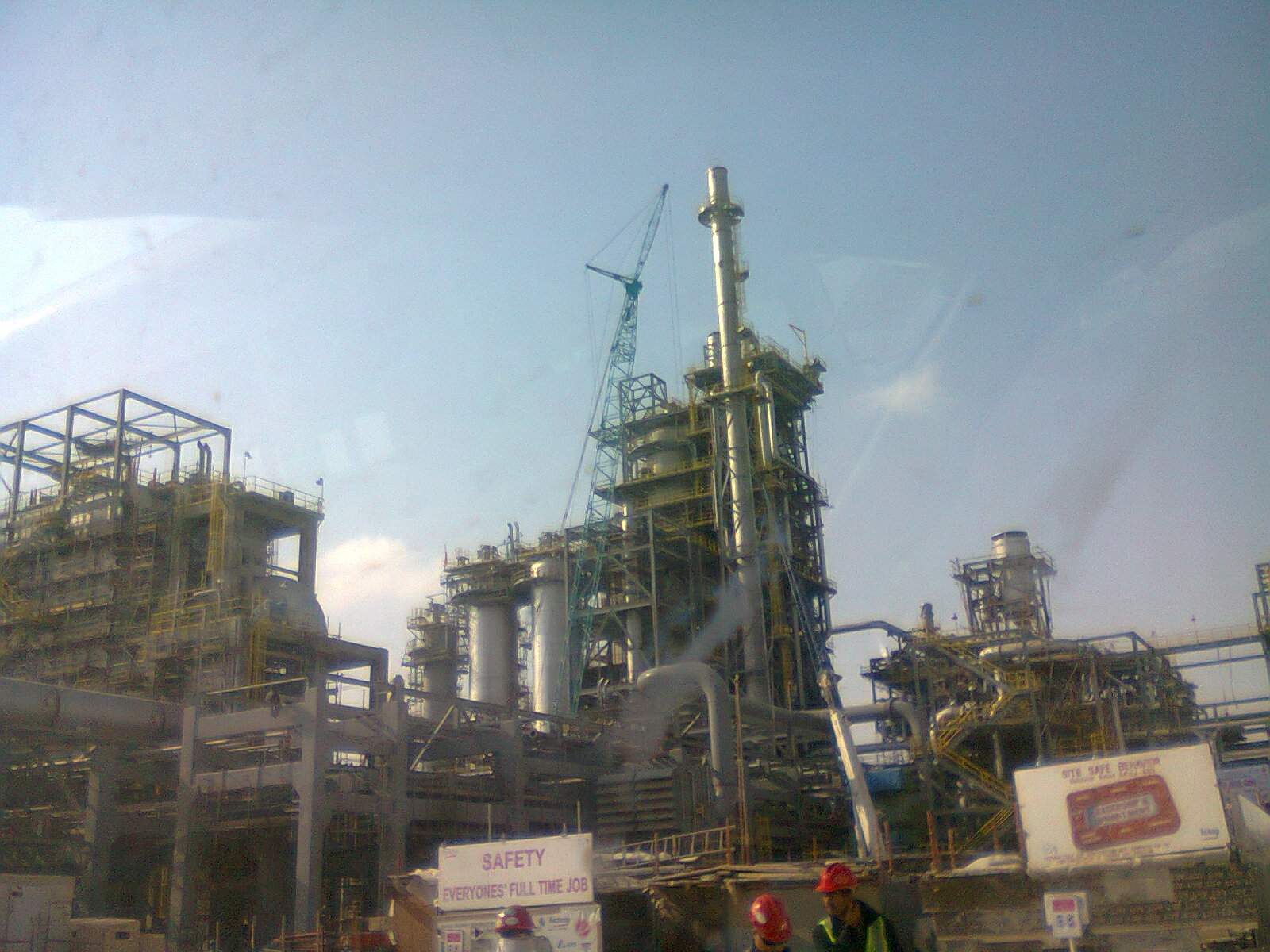
A CSIS analysis published in March 2026 identified 56 desalination plants that produce more than 90 percent of the Gulf Cooperation Council’s desalinated water. These facilities are concentrated in six countries — Saudi Arabia, the UAE, Kuwait, Bahrain, Qatar, and Oman — and their output sustains a combined population exceeding 60 million people. The concentration is staggering: a successful strike against fewer than a dozen of these plants would trigger a humanitarian water crisis affecting tens of millions.
Saudi Arabia operates the largest share. The Kingdom’s major desalination facilities include:
| Plant | Coast | Capacity (m³/day) | Population Served | Distance to Iran |
|---|---|---|---|---|
| Ras Al-Khair | Persian Gulf | 2,998,000 | ~7 million | ~300 km |
| Jubail (multiple facilities) | Persian Gulf | 1,400,000 | ~4 million | ~280 km |
| Shoaiba | Red Sea | 1,282,000 | ~5 million | ~1,500 km |
| Yanbu III + IV | Red Sea | 1,000,000 | ~3 million | ~1,400 km |
| Shuaiba 3 (new, 2025) | Red Sea | 600,000 | ~2 million | ~1,500 km |
| Al-Khobar/Dammam | Persian Gulf | ~480,000 | ~2 million | ~250 km |
The geography tells the story. Four of Saudi Arabia’s six largest desalination complexes sit on the Persian Gulf coast, concentrated along a 200-kilometre stretch from Dammam to Ras Al-Khair. This corridor supplies water to Riyadh, Dammam, Dhahran, Al-Khobar, and the surrounding Eastern Province — home to approximately 12 million people and the bulk of Saudi Arabia’s oil infrastructure. Every drop of that water travels through pipelines that cross hundreds of kilometres of open desert, themselves vulnerable to disruption.
The Red Sea plants at Shoaiba and Yanbu supply Jeddah, Mecca, Medina, and the western Hejaz region. While these are farther from Iran’s launch sites, they are within range of Houthi cruise missiles and drones. The March 20 attack on Yanbu’s refinery infrastructure demonstrated that the Red Sea coast is not a sanctuary.
Has Iran Already Struck Desalination Infrastructure?
Iran has already demonstrated both the capability and the willingness to target water infrastructure in the current conflict. On March 8, 2026, an Iranian drone struck a desalination plant in Bahrain, causing material damage and injuring three people, according to the Bahraini government. Al Jazeera reported that the strike hit one of Bahrain’s key water production facilities, though nationwide supply was not immediately disrupted because the damage was contained to a single processing unit.
The same week, debris from an intercepted Iranian drone caused a fire at Kuwait’s Doha West Power and Water Distillation Station, according to Kuwaiti authorities. The fire was extinguished before it could damage the desalination equipment, but the incident revealed how even a failed intercept — drone debris falling on a water plant — can threaten supply.
Iran’s own infrastructure has also been targeted. On March 7, strikes destroyed a desalination plant on Qeshm Island, a strategically located Iranian island in the Strait of Hormuz that produces freshwater for approximately 30 villages. Iranian Foreign Minister Abbas Araghchi accused the United States of the attack, stating that “the U.S. set this precedent, not Iran.” Both the United States and Israel denied responsibility. Regardless of who struck Qeshm, the attack established a dangerous new norm: desalination plants are now legitimate military targets in the Gulf.
The Atlantic Council, in a March 2026 analysis titled “Attacks on desalination plants in the Iran war forecast a dark future,” warned that the Qeshm and Bahrain strikes represent “the crossing of a threshold that has profound implications for the future of armed conflict in arid regions.” The Bulletin of the Atomic Scientists published a similar assessment, noting that the deliberate targeting of water infrastructure had been considered a wartime taboo since the Geneva Conventions established protections for “objects indispensable to the survival of the civilian population.”
The GCC’s desalination plants are large, fixed, open-air industrial complexes mostly concentrated along the coast within 350 kilometres of the Islamic Republic, making them as exposed to Iranian weaponry as any civilian infrastructure that has been targeted.
Center for Strategic and International Studies, March 2026
What Would a Strike on Ras Al-Khair Mean for Seven Million People?
The Ras Al-Khair desalination and power complex is the world’s largest hybrid desalination plant, producing approximately three million cubic metres of freshwater per day while generating 2,690 megawatts of electricity. Located on Saudi Arabia’s eastern coast approximately 75 kilometres north of Jubail, it was commissioned in 2014 at a cost exceeding $7.2 billion. A sustained strike that disabled this single facility would remove roughly 40 percent of the Eastern Province’s water supply within hours.
The consequences would cascade rapidly. Saudi Arabia’s urban water storage capacity is limited. While the government does not publish exact figures for strategic water reserves, industry experts estimate that most Saudi cities maintain three to five days of water storage in elevated tanks and reservoirs. The UAE, by comparison, has invested heavily in underground aquifer storage and recharge facilities capable of sustaining 45 days of emergency supply under its 2036 Water Security Strategy. Saudi Arabia has not achieved comparable strategic depth.
A three-day supply buffer means that any disruption lasting longer than 72 hours without alternative sourcing would begin to produce rationing, then shortages, then a humanitarian emergency. Riyadh, the capital, receives a significant portion of its water from Persian Gulf desalination plants via the East-West Pipeline, a transmission line running approximately 450 kilometres across the desert. Damage to Ras Al-Khair, combined with damage to the pipeline itself — an above-ground structure vulnerable to sabotage — would leave a city of eight million people dependent on depleting groundwater reserves and emergency trucking.
The scenario is not theoretical. Fortune magazine reported in March 2026 that Gulf desalination experts have warned that sustained damage to even two or three major plants could “force the evacuation of entire cities” — an assessment that the article described as applying specifically to smaller states like Bahrain and Qatar but that carries obvious implications for Saudi Arabia’s Eastern Province.
The Desalination Vulnerability Index
Not all desalination plants face equal risk. Five factors determine the vulnerability of any given facility: proximity to Iranian launch sites, air defense coverage, redundancy within the local water network, strategic water storage capacity, and the availability of alternative supply routes. Mapping these factors against Saudi Arabia’s major plants produces a clear picture of where the greatest danger lies.
| Plant | Proximity Risk (1-5) | Air Defense (1-5) | Redundancy (1-5) | Storage Buffer (1-5) | Alt. Supply (1-5) | Overall Risk |
|---|---|---|---|---|---|---|
| Ras Al-Khair | 5 | 3 | 2 | 2 | 2 | Critical |
| Jubail Complex | 5 | 4 | 3 | 2 | 2 | Critical |
| Al-Khobar/Dammam | 5 | 3 | 2 | 2 | 1 | Critical |
| Shoaiba | 1 | 3 | 3 | 3 | 3 | Moderate |
| Yanbu III/IV | 1 | 2 | 3 | 2 | 3 | Moderate |
| Shuaiba 3 | 1 | 2 | 4 | 3 | 3 | Low |
The scoring methodology: Proximity Risk measures distance from known Iranian launch sites on a 1-5 scale (5 = within 350 km of Iran’s Khuzestan province launch sites). Air Defense measures the density of known Patriot, THAAD, and allied missile defense assets in the area (5 = heavy coverage, 1 = minimal). Redundancy measures whether other plants in the same region can compensate for lost output (5 = no redundancy, 1 = full backup). Storage Buffer measures local strategic water reserves in days (5 = under 3 days, 1 = over 30 days). Alternative Supply measures the availability of groundwater, pipeline connections to other regions, or emergency water import capacity (5 = no alternatives, 1 = robust alternatives).
Three plants score “Critical” — all on the Persian Gulf coast. Ras Al-Khair receives the highest overall risk rating because it combines maximum proximity to Iran with limited redundancy: no other single plant in the Eastern Province can replace its three-million-cubic-metre daily output. Jubail scores marginally better on air defense coverage because its co-location with Aramco’s refining infrastructure means it benefits from the same Patriot and THAAD batteries protecting oil assets. The Al-Khobar/Dammam cluster scores worst on alternative supply because the Eastern Province has the Kingdom’s most depleted aquifers.
Red Sea plants score “Moderate” rather than “Low” because Houthi strike capability, demonstrated repeatedly throughout the war, means that no Saudi facility is truly out of reach. The Shuaiba 3 plant, commissioned in 2025, scores “Low” largely because it was designed with built-in redundancy — multiple reverse osmosis trains that can operate independently — and because the Jeddah-Mecca corridor has the Kingdom’s deepest emergency water storage.
Can Patriot Missiles Protect Water Plants?
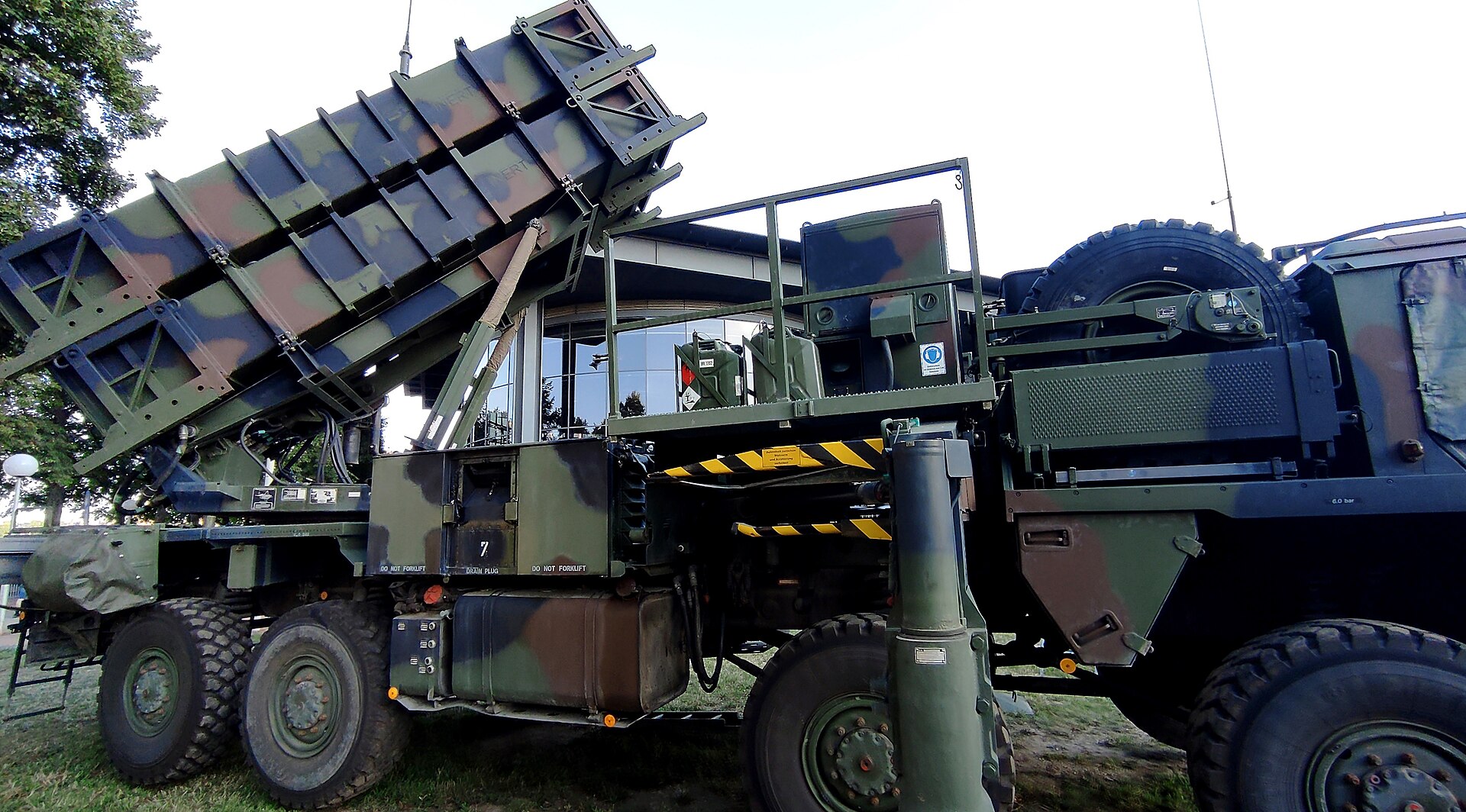
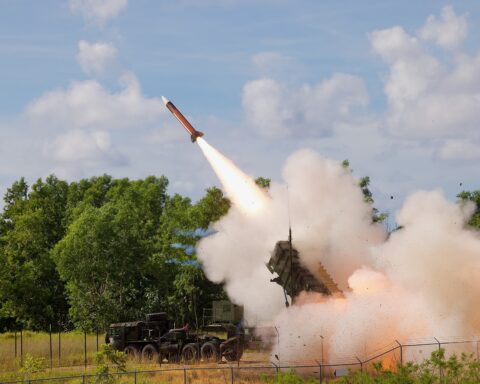
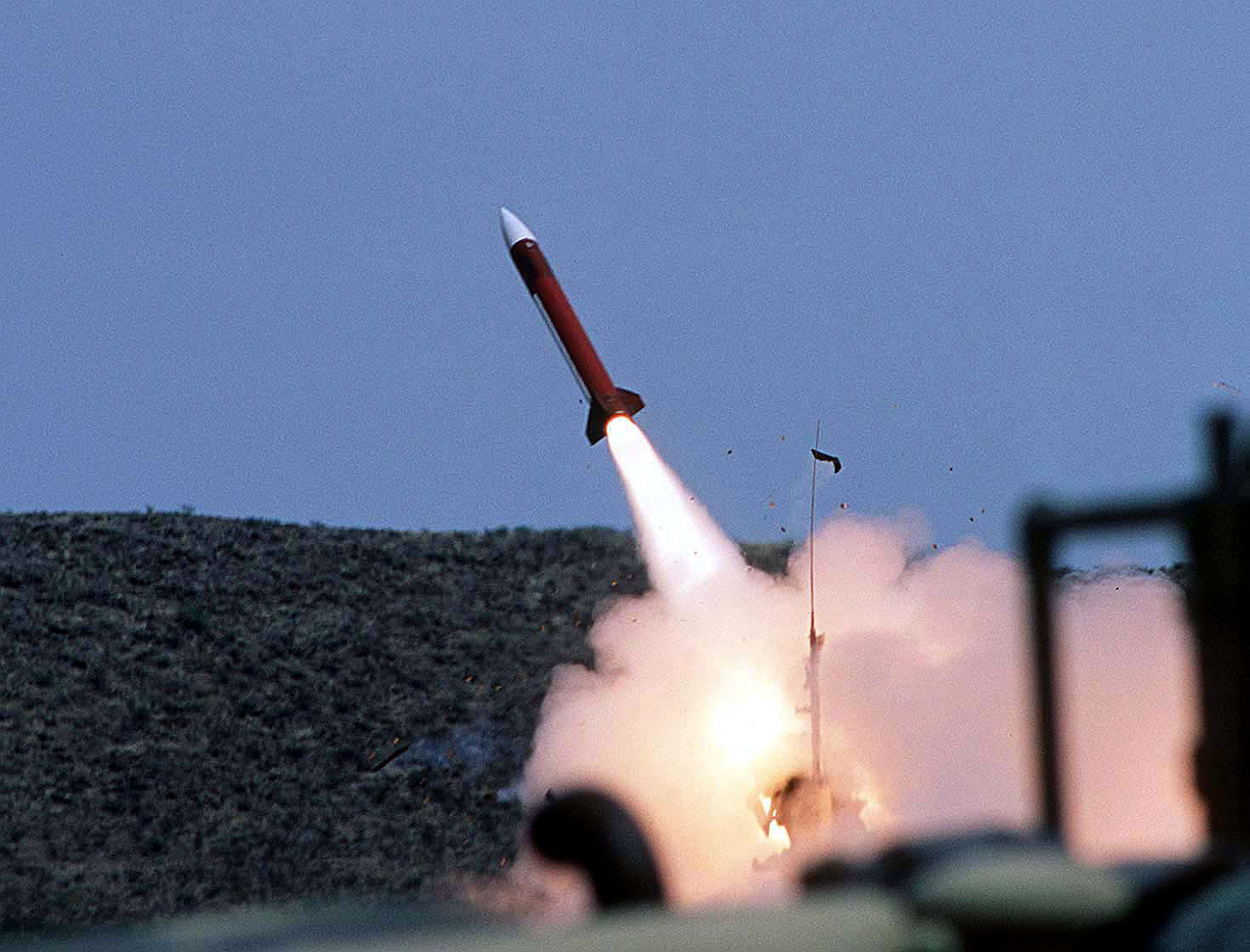
Saudi Arabia operates one of the world’s most extensive integrated air defense networks, featuring American-made Patriot PAC-3 batteries, Lockheed Martin’s Terminal High Altitude Area Defense system, and indigenous Saudi systems. Greece has deployed a Patriot battery that has intercepted Iranian ballistic missiles targeting Saudi oil refineries. The United Kingdom has committed additional air defense assets. The Pentagon is weighing whether to divert air defense systems from Ukraine to reinforce Gulf coverage.
Yet the mathematics of air defense in this conflict work against comprehensive protection of desalination plants. Saudi Arabia has at least 40 high-value sites requiring missile defense coverage: Aramco facilities at Abqaiq, Ras Tanura, and Dhahran; military installations at Prince Sultan Air Base and King Fahd Air Base; urban centres including Riyadh, Jeddah, and Dammam; and critical infrastructure including desalination plants, power stations, and telecommunications hubs. Each Patriot battery can defend an area of approximately 60-80 kilometres in radius. Defending every critical site would require dozens of batteries — more than the Kingdom and its allies currently possess in the theatre.
The cost asymmetry compounds the problem. Iran’s arsenal relies heavily on drones costing $20,000-$50,000 each and short-range ballistic missiles costing $300,000-$500,000 per unit. A single Patriot PAC-3 interceptor costs approximately $4 million. Every successful intercept is a tactical victory but a financial loss. As analysts have noted, Saudi Arabia’s $80 billion annual defence budget buys an enormous arsenal but cannot sustain unlimited intercept operations against a determined adversary launching hundreds of projectiles per week.
The operational reality is that Saudi air defenses must prioritise. A ballistic missile heading for Riyadh will always take precedence over a drone heading for a water plant in the Eastern Province. A cruise missile targeting Aramco’s Abqaiq processing facility — which handles 70 percent of Saudi oil output — will draw interceptors away from nearby Ras Al-Khair. This is the defender’s dilemma: Iran chooses when and where to strike, while Saudi Arabia must defend everything, everywhere, simultaneously.
Drone swarms present a particular challenge. Iran has launched as many as 100 drones in a single day during the conflict. A coordinated swarm targeting a desalination plant could overwhelm local air defenses simply through volume, even if the majority of drones are intercepted. The Doha West incident in Kuwait — where debris from a successfully intercepted drone still caused a fire at a water plant — illustrates that even a “successful” defense can damage the facility it is protecting.
Why Water Is More Dangerous Than Oil in This War
Conventional strategic analysis treats oil infrastructure as the Gulf’s centre of gravity. Markets certainly behave this way: when Iranian missiles struck Saudi facilities, oil prices surged past $114 per barrel. When a drone hit the SAMREF refinery, global indices moved within minutes. The financial world responds to oil disruptions with immediate, measurable panic.
Water disruptions produce no such immediate market signal — and that is precisely what makes them more dangerous. Oil disruptions are expensive. Water disruptions are lethal.
Consider the timelines. If Iran disabled Saudi Arabia’s Ras Tanura oil terminal — the world’s largest offshore oil loading facility — the Kingdom could reroute exports through Yanbu on the Red Sea within days. Saudi Aramco’s East-West Pipeline, the Petroline, can carry five million barrels per day across the peninsula. Oil storage facilities at both coasts hold weeks of supply. Global strategic petroleum reserves, maintained by International Energy Agency member states, add another buffer. Oil disruptions are painful and expensive, but they are survivable because alternatives exist and response times are measured in weeks.
Water disruptions follow a fundamentally different timeline. If Iran disabled Ras Al-Khair, no equivalent “water pipeline” can reroute supply from the Red Sea coast to the Eastern Province at comparable volume. The East-West Pipeline carries oil, not water. Building a water pipeline of sufficient capacity would take years. Emergency water trucking can supply a village but not a city of millions. Desalination plants take 12-36 months to repair after significant damage, according to the International Desalination Association. The gap between destruction and restoration is measured in months — but human survival without water is measured in days.
This temporal mismatch is the core of the vulnerability. A population can endure $150 oil for months. It cannot endure three days without water. Iran does not need to destroy Saudi Arabia’s oil economy to force a strategic capitulation. It merely needs to credibly threaten a water crisis affecting millions of civilians — a crisis that would produce mass displacement, overwhelm hospitals, and trigger a humanitarian emergency visible to every camera in the world.
The economic calculus reinforces this assessment. Saudi Aramco’s oil infrastructure, while enormously valuable, is insured, repairable, and — as demonstrated after the 2019 Abqaiq-Khurais attack — can be restored to full capacity within weeks. The Kingdom’s oil infrastructure has also been hardened since 2019, with redundant systems, fire suppression, and physical barriers. Desalination plants have received no comparable hardening. They were never designed as military targets. Their thin-walled structures, exposed intake pipes, and delicate reverse osmosis membranes are industrial equipment, not fortified installations. The cost to repair a damaged mega-desalination plant runs into billions of dollars and years of construction time.
The deterrence implications are profound. If Iran’s leadership concluded that attacking desalination plants would produce a humanitarian crisis severe enough to force Saudi Arabia — or its American allies — to the negotiating table, the strategic logic of such an attack becomes compelling from Tehran’s perspective. The IRGC has publicly warned that it views all Gulf civilian infrastructure as legitimate targets in response to coalition strikes on Iranian territory. Senior Iranian military officials have specifically named desalination plants in their threats, according to Al Jazeera reporting from early March.
Oil built the Persian Gulf. Desalinated water keeps it alive. War could threaten both — but only one threatens the survival of millions of people within days rather than months.
CNN, March 11, 2026
The Kuwait Precedent
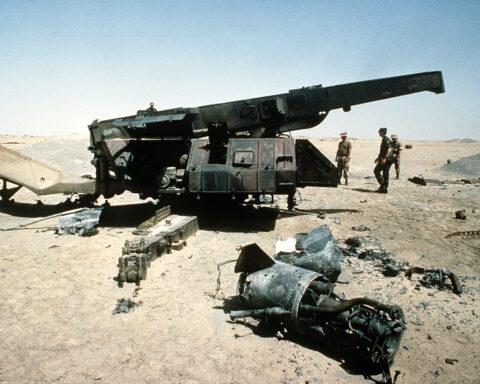
The Gulf has experienced the deliberate destruction of desalination infrastructure before. During the 1990-1991 Gulf War, retreating Iraqi forces systematically destroyed Kuwait’s desalination capacity as part of a broader scorched-earth campaign. Iraqi saboteurs targeted power stations that supplied electricity to desalination plants, damaged the plants’ seawater intake systems, and contaminated the Persian Gulf itself by releasing hundreds of millions of barrels of crude oil — creating one of the largest environmental disasters in history and threatening every desalination intake pipe along the western Gulf coast.
The consequences were severe and long-lasting. Kuwait, a nation that was then almost entirely dependent on desalinated water, lost the vast majority of its production capacity overnight. The country was forced to rely on emergency water imports from Saudi Arabia — delivered by tanker truck across the border — for years while its infrastructure was rebuilt. The full restoration of Kuwait’s desalination network took more than five years, at a cost that consumed a significant portion of Kuwait’s reconstruction budget.
The 1991 precedent carries a specific warning for 2026. Kuwait in 1991 had a population of approximately 2.1 million. Saudi Arabia today has 35.9 million residents. The logistical challenge of supplying emergency water to a population 17 times larger, in a nation 100 times the size, would be incomparably more difficult. Saudi Arabia does not have a neighbouring state capable of supplying water at the scale it would need. There is no “Saudi Arabia” next door to bail out Saudi Arabia.
The parallels extend further. Iraq’s destruction of Kuwait’s water infrastructure was an act of retreating vindictiveness — Saddam Hussein’s forces knew they were losing and sought to inflict maximum damage on their way out. Iran in 2026, while not retreating, faces a similar incentive structure: as the air campaign degrades its conventional military capability, the temptation to strike at soft civilian infrastructure grows. Striking desalination plants would not require precision-guided munitions or sophisticated targeting data. These are enormous, fixed facilities visible on commercial satellite imagery, their locations as well-known as any military base.
Iraq’s environmental strategy in 1991 also holds contemporary relevance. The deliberate contamination of the Gulf’s waters fouled desalination intake systems far from the direct combat zone. In 2026, the environmental dimension of the conflict has already emerged. Oil spills from damaged tankers in the Strait of Hormuz, chemical contamination from struck industrial facilities, and the general degradation of Gulf water quality from weeks of military operations all degrade the seawater that desalination plants depend upon. A plant can survive a missile miss and still fail if its seawater intake draws in contaminated water that fouls its reverse osmosis membranes.
The Middle East Council on Global Affairs, in a March 2026 analysis, argued that “water must not become a target in the region’s wars” — but acknowledged that the precedent set in Kuwait in 1991, and reinforced by the Bahrain and Qeshm Island strikes in 2026, has already eroded the norm against targeting water infrastructure. International humanitarian law, specifically Additional Protocol I of the Geneva Conventions, prohibits attacks on “objects indispensable to the survival of the civilian population,” including drinking water installations. Enforcement of that prohibition in the current conflict has been nonexistent.
What Are Saudi Arabia’s Emergency Water Options?
If a sustained attack disabled the Persian Gulf desalination plants, Saudi Arabia would face five emergency options — none of them adequate at scale.
The first option is groundwater surge pumping. The Kingdom could dramatically increase extraction from its remaining aquifer reserves. Saudi Arabia’s non-renewable fossil aquifers still hold substantial volumes of water, though extraction rates have declined as water tables have dropped. Emergency pumping could sustain populations for weeks, but the water quality from deep aquifers is often brackish and requires treatment, and the infrastructure to pump and distribute groundwater at urban scale in the Eastern Province is limited.
The second option is Red Sea plant over-production. The Shoaiba, Yanbu, and Shuaiba complexes on the Red Sea coast are theoretically capable of increasing output by 10-15 percent above rated capacity for short periods. However, this additional water serves the western provinces. Transporting it to the Eastern Province or Riyadh would require pipeline infrastructure that does not currently exist in sufficient capacity.
The third option is emergency desalination units. The Saudi military and civil defence agencies maintain mobile reverse osmosis units designed for field deployment. These units typically produce 50-200 cubic metres per day — useful for a military base, wholly inadequate for a city. Riyadh alone consumes approximately 1.5 million cubic metres daily.
The fourth option is water importation by sea. In extremis, Saudi Arabia could import freshwater by tanker from countries with surplus capacity. Australia, Singapore, and Mediterranean states have excess desalination output. However, the logistics of loading, shipping, and distributing bulk freshwater at the scale of millions of cubic metres per day have never been attempted. The shipping time alone — 10-14 days from the nearest surplus producer — would exceed the storage buffer of most Saudi cities.
The fifth option is demand destruction through rationing. Cutting per-capita consumption from 263 litres per day to survival-level rations of 15-20 litres per day — the minimum recommended by the World Health Organisation for emergency situations — could extend available supplies by a factor of 13-17. But enforcing such rationing across a population of 35.9 million in temperatures that regularly exceed 45 degrees Celsius during the Gulf summer would produce severe health consequences, particularly for the elderly, children, and the approximately 13 million foreign workers who form the backbone of the economy.
| Option | Potential Output (m³/day) | Requirement (m³/day) | Gap | Feasibility |
|---|---|---|---|---|
| Groundwater surge | ~2,000,000 | 7,600,000 | -5,600,000 | Weeks only; quality issues |
| Red Sea over-production | ~400,000 extra | 7,600,000 | -7,200,000 | No pipeline to east |
| Mobile RO units | ~50,000 | 7,600,000 | -7,550,000 | Field use only |
| Seaborne import | ~200,000 | 7,600,000 | -7,400,000 | 10-14 day shipping lag |
| Extreme rationing | N/A (reduces demand) | ~560,000 | Varies | Health crisis above 45°C |
The table reveals an uncomfortable truth: no single emergency option comes close to replacing the output of the Persian Gulf desalination plants. Even combining all five options simultaneously would leave a gap of millions of cubic metres per day. The only path to full recovery is restoring the plants themselves — a process that, for major structural damage, would take months to years.
The Invisible Weakness — Saudi Arabia’s Water Pipeline Network
Even if every desalination plant survived the war unscathed, Saudi Arabia’s water supply would remain vulnerable through a second, less visible pathway: the pipeline network that carries desalinated water from coastal plants to inland cities. Riyadh, the capital, sits approximately 450 kilometres from the nearest Persian Gulf desalination complex. The water arrives through the East-West Transmission System, a network of large-diameter pipelines crossing open desert terrain.
These pipelines are above-ground infrastructure running through sparsely populated areas with minimal physical security. A saboteur — or a single drone — could rupture a major trunk line at any point along its 450-kilometre route. Unlike an oil pipeline, where a spill is environmentally damaging but can be repaired by rerouting flow, a water pipeline rupture creates an immediate supply deficit to every community downstream. The pipeline does not store water; it transmits it continuously. When the flow stops, cities begin drawing down their three-to-five-day reserves.
Saudi Arabia’s pipeline vulnerability is compounded by the limited redundancy in the distribution network. Most major cities receive their water through a single primary transmission line with limited backup routing. Riyadh’s water supply from the east coast, for instance, depends on a relatively small number of trunk lines whose precise routes are visible on satellite imagery and publicly documented in engineering literature. The Kingdom has invested in some pipeline hardening since the 2019 Abqaiq attack heightened awareness of infrastructure vulnerability, but the sheer length of the water transmission network — thousands of kilometres of pipe crossing open desert — makes comprehensive defence impractical.
Iran has demonstrated the ability to target linear infrastructure. Its proxies have struck pipelines and transmission lines across Iraq for years. A coordinated campaign against Saudi water transmission lines, while less dramatic than a strike on a desalination plant, could produce comparable disruption at a fraction of the cost and risk. A water pipeline in the desert is an undefended, fixed target stretching across hundreds of kilometres of empty terrain.
How the War Is Accelerating a Desalination Revolution
The vulnerability exposed by the Iran war is already reshaping Saudi Arabia’s water strategy. Three shifts are underway, each accelerated by the conflict’s demonstration that concentrated coastal infrastructure is a strategic liability.
The first shift is geographic diversification. The Saudi Water Authority announced in January 2026 plans to construct five new desalination plants by 2028, with a deliberate emphasis on inland locations and Red Sea sites. The Kingdom is exploring the feasibility of extremely long-distance water pipelines — modelled on Libya’s Great Man-Made River project — that could carry desalinated water from the relatively secure Red Sea coast to the eastern cities. The cost would be enormous, estimated at $15-25 billion for a pipeline of sufficient capacity, but the war has made the case that the cost of not building it could be higher.
The second shift is toward distributed, smaller-scale desalination. Traditional Gulf desalination philosophy favoured mega-plants: fewer facilities, greater economies of scale, lower per-unit costs. The war has inverted this logic. A single drone can disable a mega-plant serving millions, but a distributed network of 50 smaller plants, each serving 100,000 people, presents 50 separate targets. Saudi Arabia’s National Water Company is reportedly accelerating procurement of modular reverse osmosis units that can be deployed rapidly and moved if threatened — a concept borrowed from the mobile infrastructure strategy that Aramco has employed to protect oil processing after the 2019 Abqaiq attack.
The third shift is investment in aquifer storage and recovery. The UAE’s model — injecting treated desalinated water into underground aquifer formations during peacetime, then extracting it during emergencies — is being studied by Saudi water planners. The Asian Infrastructure Investment Bank approved a loan in 2024 for SWCC’s desalination rebuild and upgrade programme, part of which includes strategic water storage expansion. The goal, according to industry analysts, is to increase Saudi Arabia’s emergency water buffer from the current estimated three to five days to a minimum of 30 days by 2030.
These transformations will take years. In the meantime, Saudi Arabia’s desalination network remains concentrated, exposed, and inadequately defended. The war has made this vulnerability visible. Whether it has made it visible quickly enough is the question that haunts every water planner in Riyadh.
Frequently Asked Questions
How much of Saudi Arabia’s drinking water comes from desalination?
Approximately 70 percent of Saudi Arabia’s drinking water is produced by seawater desalination plants, according to the Ministry of Environment, Water, and Agriculture. The Saline Water Conversion Corporation operates 30 plants producing 11.5 million cubic metres per day, accounting for roughly 22 percent of global desalinated water output. The Kingdom plans to increase desalination’s share to 90 percent by 2030 under its National Water Strategy.
Has Iran attacked desalination plants during the 2026 war?
Iran struck a desalination plant in Bahrain on March 8, 2026, causing material damage and injuring three people, according to the Bahraini government. Drone debris also caused a fire at Kuwait’s Doha West Power and Water Distillation Station. A desalination plant on Iran’s own Qeshm Island was destroyed on March 7 in a strike Iran attributed to the United States. These incidents have established that desalination infrastructure is now a target in the conflict.
What is the world’s largest desalination plant?
The Ras Al-Khair desalination and power complex in Saudi Arabia’s Eastern Province is the world’s largest hybrid desalination plant, producing approximately three million cubic metres of freshwater per day while generating 2,690 megawatts of electricity. Commissioned in 2014 at a cost exceeding $7.2 billion, it supplies water to approximately seven million people in the Eastern Province and Riyadh via pipeline.
How long can Saudi cities survive without desalinated water?
Most Saudi cities maintain an estimated three to five days of water storage in elevated tanks and local reservoirs, according to industry analysts. This compares unfavourably with the UAE’s target of 45 days under its 2036 Water Security Strategy. Emergency groundwater pumping could extend supply for several weeks, but water quality and distribution limitations would create severe shortages within the first week of a major desalination outage.
What happened to Kuwait’s water supply during the 1991 Gulf War?
During the 1990-1991 Gulf War, retreating Iraqi forces systematically destroyed most of Kuwait’s desalination capacity as part of a scorched-earth campaign, also releasing hundreds of millions of barrels of oil into the Persian Gulf to contaminate seawater intakes. Kuwait was forced to rely on emergency water imports from Saudi Arabia by truck for years. Full restoration of Kuwait’s desalination network took more than five years, a precedent that carries stark implications for the current conflict.
Could Iran shut down Saudi Arabia’s water supply entirely?
A coordinated, sustained missile and drone campaign targeting all Persian Gulf coast desalination plants could theoretically eliminate approximately 60 percent of Saudi Arabia’s total desalination capacity. Red Sea plants would remain operational unless Houthi forces also targeted them. Complete shutdown of all plants would require a level of sustained offensive capability that exceeds Iran’s demonstrated capacity, but even partial disruption — disabling two or three major Eastern Province plants — would produce a severe water crisis for millions within days.