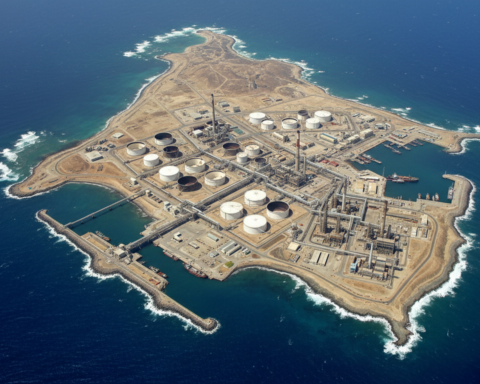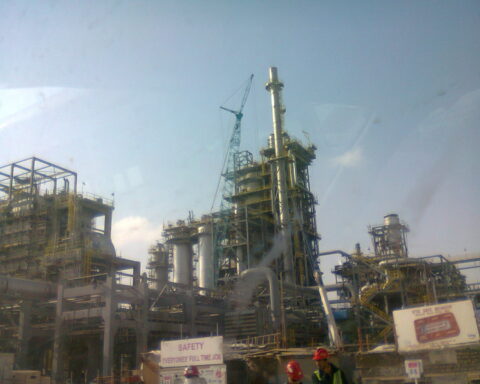

DHAHRAN — On March 10, Saudi Aramco chief executive Amin Nasser made a disclosure that would have been unthinkable six months ago. The Kingdom’s 1,200-kilometre East-West crude oil pipeline, a Cold War-era contingency built in 1981 and rarely operated at capacity, would hit its emergency maximum of seven million barrels per day “in the next couple of days.” Yanbu, a modest Red Sea port that processed fewer than 800,000 barrels daily in February, had tripled its throughput in barely a week. Five supertankers loaded with roughly ten million barrels had already departed westward. Aramco was not just rerouting Saudi Arabia’s oil exports. It was redrawing the Kingdom’s entire energy geography in real time.
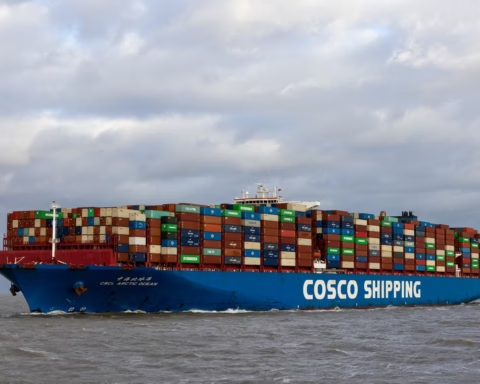
The Iran war has forced the most dramatic restructuring of global oil trade flows since the 1973 Arab embargo. With the Strait of Hormuz effectively shut since late February 2026, tanker traffic through the world’s most important maritime chokepoint has collapsed from twenty-one million barrels per day to near zero. Major container lines — Maersk, CMA CGM, Hapag-Lloyd — suspended transits within forty-eight hours of the first Iranian mine warnings. The danger was underscored on March 11 when Iran’s IRGC fired on three commercial vessels — the Mayuree Naree, One Majesty, and Star Gwyneth — in the deadliest single-day attack on merchant shipping since the war began. For Saudi Arabia, a nation that exported roughly seven million barrels daily through eastern terminals before the war, this was not an inconvenience. It was an existential economic threat. The response has been the fastest peacetime-to-wartime industrial pivot in the history of the global energy sector — and it may prove permanent.
Table of Contents
- The Pipeline That Saved Saudi Arabia’s Economy
- How Did Yanbu Become Saudi Arabia’s Busiest Port Overnight?
- What Happens to the Three Million Barrels Yanbu Cannot Handle?
- The UAE’s Fujairah Bypass and the Gulf’s Hidden Pipeline Network
- Can Saudi Arabia Revive the Dormant IPSA Pipeline Through Iraq?
- The Energy Export Resilience Index
- Saudi Arabia’s Dual-Coast Advantage and Why No Other Gulf State Has It
- Why Did Jafurah Come Online at Exactly the Right Moment?
- Is Green Hydrogen Saudi Arabia’s Post-Hormuz Insurance Policy?
- The War That Made Saudi Energy Exports Stronger
- How the Reroute Is Reshaping Who Buys Saudi Oil
- Will the Great Reroute Outlast the War?
- Frequently Asked Questions
The Pipeline That Saved Saudi Arabia’s Economy
The East-West Crude Oil Pipeline — known formally as the Petroline and informally as the lifeline — was conceived in the aftermath of the 1979 Iranian Revolution, when Riyadh first confronted the strategic vulnerability of routing the majority of its oil exports through the narrow Strait of Hormuz. Construction began in 1981 under Aramco’s engineering division. The original configuration consisted of two parallel steel arteries: a 48-inch diameter line and a larger 56-inch line, stretching 1,200 kilometres from the Abqaiq processing complex in the Eastern Province to the export terminal at Yanbu on the Red Sea coast.
Initial capacity stood at approximately five million barrels per day. In 1992, following the Gulf War’s vivid demonstration of Hormuz vulnerability, Saudi engineers expanded the system. In 2019, after Iranian-backed Houthi drones struck Aramco’s Abqaiq processing facility and the Shaybah oil field, Aramco converted several natural gas liquids pipelines to accept crude oil, temporarily boosting total capacity to approximately seven million barrels per day.
That emergency capacity sat largely dormant for six years. Until now.
Before the Iran war, the East-West pipeline operated at roughly two million barrels per day, according to S&P Global Commodity Insights. The remaining three to five million barrels of capacity represented the world’s largest idle crude oil insurance policy. When the Strait of Hormuz effectively closed on February 28, Aramco activated the emergency protocols within hours. Pipeline flows increased by one million barrels per day in the first forty-eight hours. By March 6, flows exceeded four million barrels daily. By March 10, Nasser confirmed the pipeline would reach its seven-million-barrel emergency maximum.
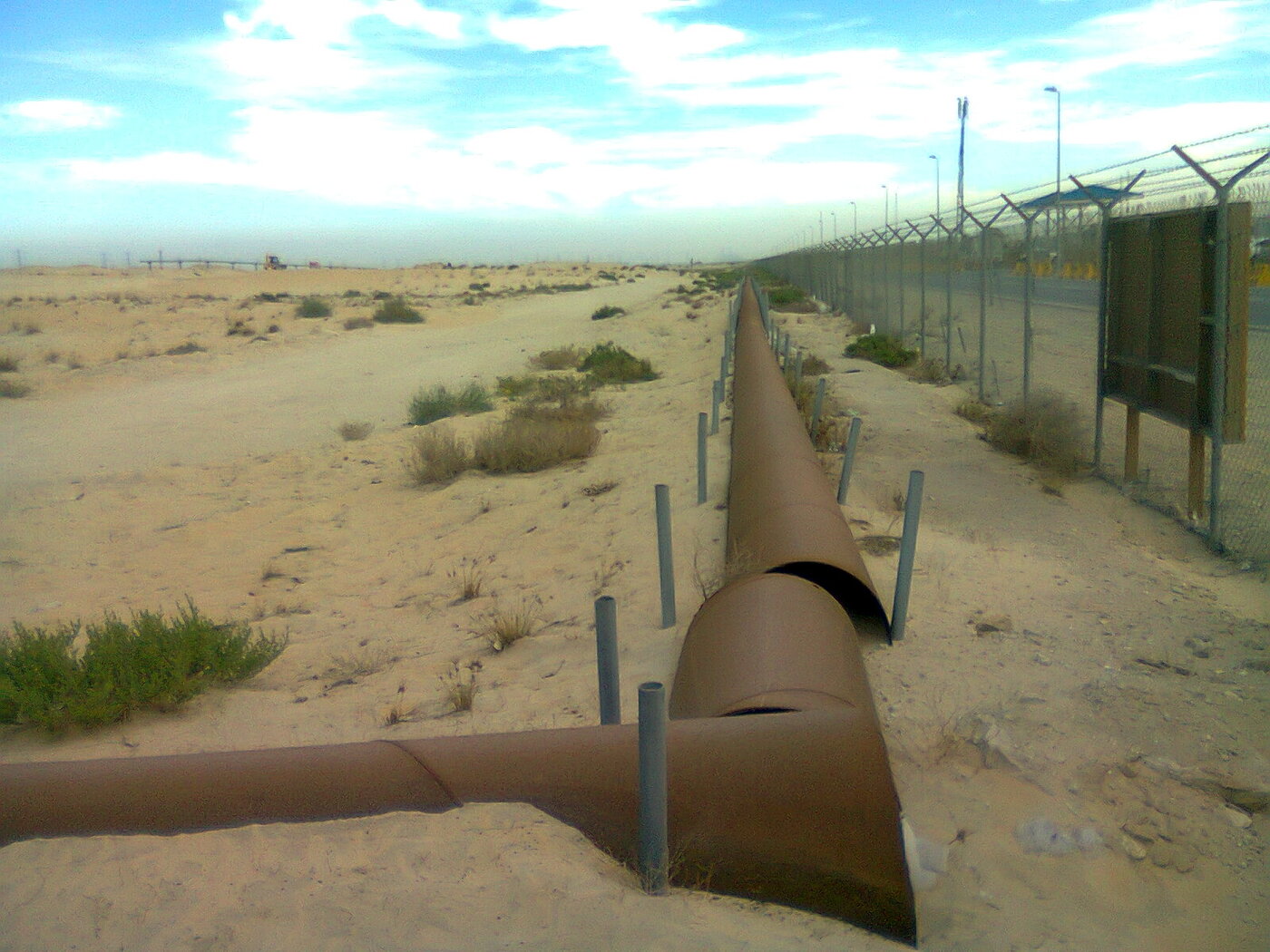
The infrastructure achievement is considerable. Moving seven million barrels of crude oil across 1,200 kilometres of desert every day requires approximately thirty pumping stations operating at maximum output, continuous pressure monitoring across hundreds of kilometres of pipeline, and coordination between Eastern Province production facilities and Red Sea export terminals. Aramco accomplished this ramp-up without a single reported pipeline failure — a testament to the company’s obsessive maintenance protocols and the fundamental soundness of the Cold War-era engineering.
How Did Yanbu Become Saudi Arabia’s Busiest Port Overnight?
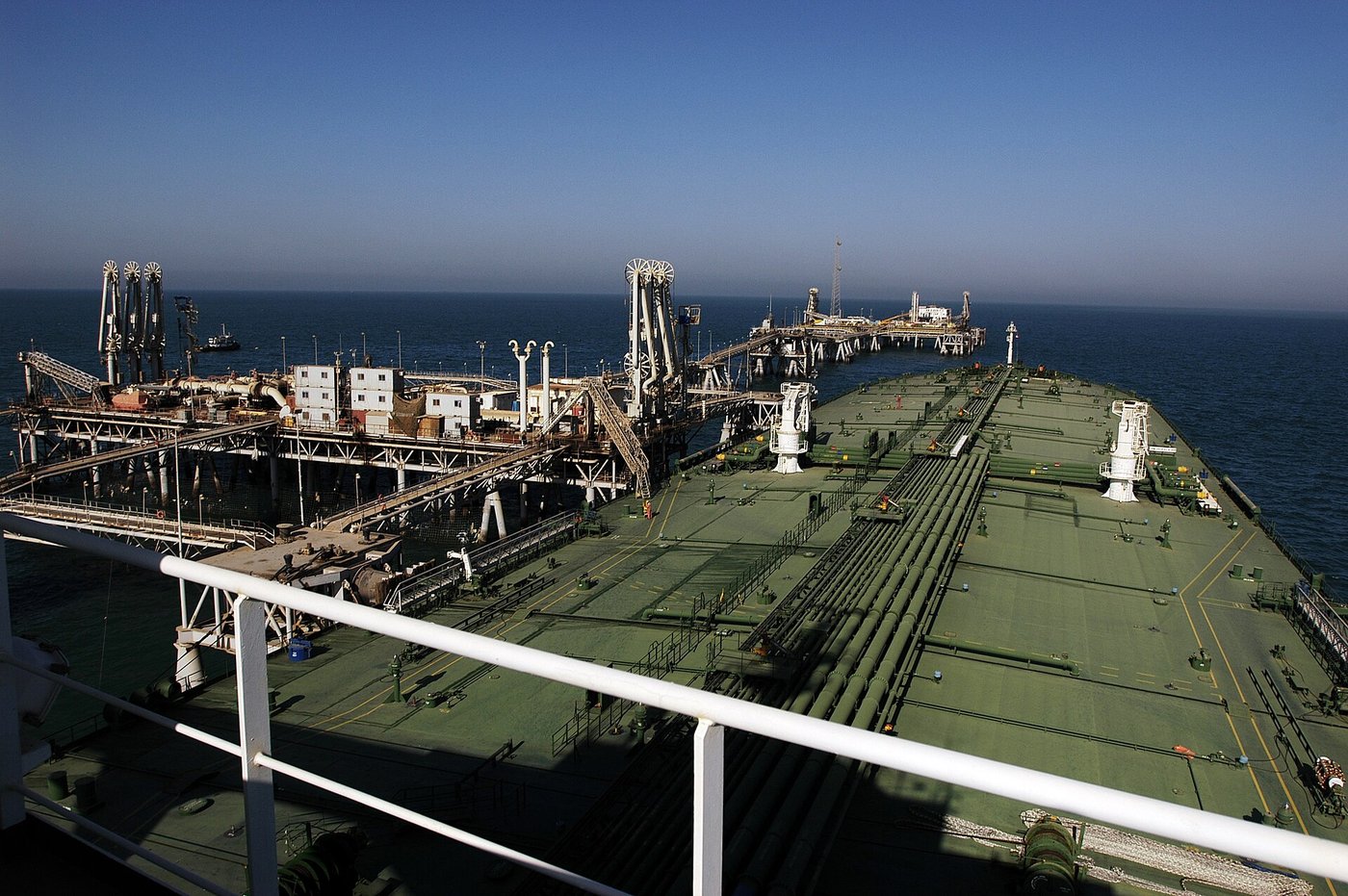
Yanbu’s transformation from a secondary export terminal to the Kingdom’s primary crude oil gateway represents one of the most rapid port logistics pivots in commercial maritime history. The port’s two terminals — Yanbu North (1.5 million barrels per day capacity) and Yanbu South (three million barrels per day) — possess a combined nominal loading capacity of approximately 4.5 million barrels daily. Market sources at Argus Media put the effective operational ceiling closer to four million barrels per day.
The numbers tell the story of the reroute’s speed. In January 2026, Yanbu loaded an average of 1.3 million barrels per day. In February, before the war, loadings ran at roughly 1.1 million barrels daily. In the first nine days of March, according to tanker tracking firm Kpler, Yanbu averaged 2.2 million barrels per day — a jump of more than 100 percent in under two weeks.
| Period | Avg. Daily Loadings (bpd) | Change vs. January | Tankers Loaded |
|---|---|---|---|
| January 2026 | 1,300,000 | Baseline | ~12 |
| February 2026 | 1,100,000 | -15% | ~10 |
| March 1-5, 2026 | 1,900,000 | +46% | 5 VLCCs |
| March 1-9, 2026 | 2,200,000 | +69% | 11 departed |
| March 2026 (projected) | 2,500,000+ | +92% | 37 expected |
A total of 37 tankers are expected to load at Yanbu during March, compared with roughly twelve in a normal month, according to Baird Maritime. India’s Reliance Industries provisionally agreed to lift one supertanker carrying up to two million barrels plus a smaller Suezmax vessel with one million barrels. South Korea’s refiners chartered the tanker Pantanassa for late March loading. These are customers who normally receive Saudi crude from eastern terminals via the Strait of Hormuz.
Aramco’s planning division signalled an even more ambitious shift for April. According to Baird Maritime, the company is exploring dual-port loading plans for April crude cargoes — a logistical arrangement where tankers load partially at Yanbu and complete filling at Jeddah’s commercial port, effectively doubling available berth capacity on the Red Sea coast.
What Happens to the Three Million Barrels Yanbu Cannot Handle?
The arithmetic reveals a structural problem that no amount of pipeline engineering can immediately solve. Before the war, Saudi Arabia exported approximately 7.4 million barrels per day of crude oil and refined products, according to JODI data. The East-West pipeline can deliver up to seven million barrels to the Red Sea coast. Yanbu’s terminals can load roughly four to 4.5 million barrels per day. The gap between pipeline capacity and port capacity — approximately 2.5 to three million barrels daily — represents crude that arrives at the Red Sea coast but cannot physically load onto tankers fast enough.
Several mechanisms are absorbing this surplus. Aramco has cut total production. The company reduced output from its pre-war level of approximately 10.1 million barrels per day (the January 2026 figure reported by CEIC Data) to between eight and nine million barrels daily, according to industry estimates. This is not purely a logistics decision. With oil trading above $110 per barrel, the reduced volume still generates substantial revenue — and it prevents Red Sea storage infrastructure from reaching capacity.
Yanbu’s tank farm capacity, while substantial, was never designed for the volumes now flowing through it. Aramco engineers are reportedly running tanker scheduling with zero idle time at loading berths, a practice that marine logistics experts describe as operationally risky but necessary during the crisis. Every hour of berth downtime costs approximately 83,000 barrels of potential exports at current flow rates.
The UAE’s Fujairah Bypass and the Gulf’s Hidden Pipeline Network
Saudi Arabia is not the only Gulf state with a Hormuz bypass. The United Arab Emirates operates the Abu Dhabi Crude Oil Pipeline (ADCOP), a 370-kilometre conduit linking onshore oil fields to the Fujairah export terminal on the Gulf of Oman — critically, outside the Strait of Hormuz. The pipeline carries approximately 1.8 million barrels per day at maximum capacity.
Before the war, ADCOP typically operated at roughly half capacity. The Fujairah terminal, one of the world’s largest bunkering hubs, could absorb increased flows relatively quickly. Combined with Saudi Arabia’s East-West pipeline, the two systems represent approximately nine million barrels per day of theoretical Hormuz bypass capacity — nearly half of the twenty-one million barrels per day that previously transited the Strait.
| Pipeline | Route | Max Capacity (bpd) | Pre-War Flow (bpd) | Available Spare (bpd) |
|---|---|---|---|---|
| East-West (Petroline) | Abqaiq → Yanbu (Red Sea) | 7,000,000 | 2,000,000 | 5,000,000 |
| ADCOP (UAE) | Habshan → Fujairah (Gulf of Oman) | 1,800,000 | ~900,000 | ~900,000 |
| IPSA (dormant) | Basra → Mu’ajjiz (Red Sea) | 1,600,000 | 0 | 1,600,000* |
*IPSA has been mothballed since 1990 and would require significant rehabilitation. The practical reality is that these bypass systems, even at maximum capacity, cannot replace the full volume of Hormuz transit. The vulnerability of these alternatives was underscored on March 11, when Iranian drones struck Oman’s Salalah port, destroying fuel storage tanks and suspending operations at a facility that had emerged as the Gulf’s primary maritime Hormuz bypass. They can, however, ensure that Saudi Arabia and the UAE — the two largest Gulf oil exporters — maintain enough flow to prevent a complete collapse of global supply. For other Gulf producers — Kuwait, Qatar, Bahrain, and Iraq — no comparable bypass infrastructure exists, making them entirely dependent on Hormuz reopening or alternative routing through Saudi territory.

Can Saudi Arabia Revive the Dormant IPSA Pipeline Through Iraq?
Buried beneath the Saudi-Iraqi border lies infrastructure that could change the calculus entirely. The Iraqi Pipeline in Saudi Arabia (IPSA) was a 1.6 million barrel per day crude oil conduit running from Iraq’s Al-Zubair district near Basra to the Mu’ajjiz terminal on the Saudi Red Sea coast. Completed in 1985, the pipeline supplied Iraqi crude to the Red Sea for five years before being confiscated and shut down by Saudi Arabia following Iraq’s 1990 invasion of Kuwait.
The pipeline has sat dormant for thirty-six years. Parts of the infrastructure were converted for domestic Saudi use. The terminal at Mu’ajjiz, once capable of handling supertankers, has not processed export cargo since the early 1990s. Rehabilitation would require assessment of pipeline integrity across hundreds of kilometres, replacement of corroded sections, refurbishment of pumping stations, and reconstruction of terminal loading facilities.
Iraqi officials have periodically proposed reviving IPSA access. In 2017, during a period of Saudi-Iraqi rapprochement, Baghdad formally expressed interest in the pipeline as an alternative to its vulnerable northern export route through Turkey. More recently, Iraq has advanced plans for a Basra-Aqaba pipeline through Jordan — a new-build project that would carry one million barrels per day to Jordan’s Red Sea port, skirting the Saudi border.
The war changes the political calculus for IPSA revival dramatically. Iraq — caught between Iran’s missile fire and American air operations, as analysis of regional military dynamics has documented — desperately needs alternative export routes. Saudi Arabia needs additional Red Sea loading capacity. The alignment of interests has never been stronger. A rapid rehabilitation of even partial IPSA capacity — say, 500,000 to 800,000 barrels per day within six to twelve months — would significantly ease the pressure on Yanbu while giving Iraq a lifeline independent of both Hormuz and the politically unstable Turkish route.
The Energy Export Resilience Index
The Iran war provides the first real-world stress test of Gulf energy export infrastructure since the 1990-91 Gulf War. Measuring how each major Gulf producer has fared reveals a hierarchy of preparedness that will shape investment decisions for the next decade.
Five factors determine energy export resilience during a Hormuz closure: the availability of bypass pipeline infrastructure, spare port capacity on alternative coastlines, domestic storage buffer, production flexibility (the ability to reduce output without catastrophic fiscal damage), and customer diversification (whether exports flow to multiple regions via multiple routes).
| Producer | Bypass Pipeline (0-10) | Alt. Port Capacity (0-10) | Storage Buffer (0-10) | Production Flex (0-10) | Customer Diversification (0-10) | Total (0-50) |
|---|---|---|---|---|---|---|
| Saudi Arabia | 9 | 7 | 7 | 8 | 8 | 39 |
| UAE | 6 | 5 | 6 | 6 | 7 | 30 |
| Iraq | 2 | 2 | 3 | 3 | 5 | 15 |
| Kuwait | 0 | 1 | 4 | 4 | 4 | 13 |
| Qatar | 0 | 1 | 5 | 3 | 6 | 15 |
| Bahrain | 0 | 0 | 2 | 2 | 3 | 7 |
Saudi Arabia’s dominance in this framework is not accidental. Decades of investment in the East-West pipeline, the development of Yanbu as a full-service export terminal, and the maintenance of spare production capacity — the Kingdom held roughly two to three million barrels per day of spare capacity before the war — created layers of redundancy. The UAE’s Fujairah pipeline provides a meaningful, if smaller, alternative. Every other Gulf producer is essentially trapped.
Kuwait, which had its airspace closed and airport damaged by Iranian strikes as recent reporting has detailed, possesses no bypass pipeline whatsoever. Qatar, the world’s largest LNG exporter, depends entirely on Hormuz for its maritime exports. Bahrain, the smallest Gulf producer, has virtually no alternative infrastructure. These nations’ economic survival during a prolonged Hormuz closure depends entirely on the war ending quickly — or on Saudi Arabia offering transit access through its Red Sea facilities.
Saudi Arabia’s Dual-Coast Advantage and Why No Other Gulf State Has It
A fact of geography that most energy analysts take for granted is, in wartime, the single most important strategic asset Saudi Arabia possesses. The Kingdom spans two coastlines — the Persian Gulf to the east and the Red Sea to the west — separated by approximately 1,200 kilometres of desert. No other major Gulf oil producer enjoys this geographic redundancy.
Kuwait’s coastline faces exclusively into the Persian Gulf. Qatar occupies a peninsula jutting into Gulf waters. Bahrain is an island archipelago in the Gulf. The UAE has Gulf coast and a small stretch on the Gulf of Oman (where the Fujairah terminal sits), but its major production, population, and infrastructure centres remain Gulf-facing. Iraq’s single maritime access point — the Shatt al-Arab waterway and the Faw Peninsula — sits at the northern head of the Gulf, even more vulnerable to Hormuz disruption than Saudi eastern terminals.
Saudi Arabia’s Red Sea coast stretches approximately 1,800 kilometres from the Jordanian border in the north to the Yemeni border in the south. This coastline hosts not only the Yanbu oil export terminal but also the commercial ports of Jeddah (the Kingdom’s largest container port), Jazan (a growing industrial and agricultural export hub near the Yemeni border), and the future NEOM development zone. The port of Jeddah alone handles approximately 65 percent of Saudi Arabia’s non-oil imports — a logistical reality that means the Red Sea coast was already a mature shipping and trade zone before the war demanded its use for crude oil exports.
The dual-coast advantage extends beyond oil. Saudi Arabia’s Red Sea ports receive food imports from Europe, East Africa, and the Mediterranean without any dependence on Hormuz transit. Pharmaceutical supplies, construction materials, and consumer goods flow through Jeddah regardless of what happens in the Persian Gulf. This is the structural reason why Saudi Arabia, despite being a primary target of Iranian missile attacks, faces lower risk of comprehensive economic isolation than any other Gulf state. The war has not created this advantage. It has revealed its true strategic value. On March 12, Riyadh extended this dual-coast logic beyond food and medicine by launching the Kingdom’s Logistics Corridors Initiative, redirecting container shipping and commercial cargo from the paralyzed Persian Gulf to Jeddah Islamic Port.
Why Did Jafurah Come Online at Exactly the Right Moment?
On February 26, 2026 — two days before the first American and Israeli strikes on Iran — Saudi Aramco announced that its Jafurah unconventional gas field had commenced production. The timing was coincidental. The significance was not.
Jafurah is the largest non-associated gas field in the Middle East, covering 17,000 square kilometres with an estimated 229 trillion standard cubic feet of raw gas reserves and 75 billion barrels of condensate. Aramco expects the processing facility to reach 2.6 billion cubic feet per day of raw gas capacity during 2026, scaling to sales volumes of two billion cubic feet per day by 2030. The project will also yield up to 420 million cubic feet per day of ethane and 630,000 barrels per day of liquids by the end of the decade.
Jafurah’s importance to the energy reroute is structural rather than immediate. The field reduces Saudi Arabia’s dependence on associated gas — gas produced as a byproduct of oil extraction. Before Jafurah, the Kingdom’s gas supply was tightly coupled to crude oil production levels. When Aramco reduced crude output in response to the Hormuz closure, associated gas production fell proportionally, threatening domestic power generation, desalination plants, and petrochemical feedstock.
Jafurah breaks that coupling. Independent gas production allows Saudi Arabia to cut crude output for export logistics reasons without starving its domestic energy system. This is not a theoretical benefit — it is being tested in real time during the current crisis. Aramco’s ability to reduce crude production from 10.1 million barrels per day to roughly eight to nine million barrels per day without triggering domestic power shortages depends substantially on Jafurah’s supplementary gas volumes.
The broader gas strategy compounds the effect. Aramco’s target of increasing total gas and liquids production to six million barrels of oil equivalent per day by 2030 — an 80 percent increase over 2021 levels — represents a fundamental shift in the Kingdom’s energy export portfolio. Natural gas, unlike crude oil, does not depend on tanker transit through Hormuz. Pipeline gas can flow through overland routes. Liquefied natural gas can be exported from Red Sea terminals. The diversification of export product type is as strategically important as the diversification of export route.
Is Green Hydrogen Saudi Arabia’s Post-Hormuz Insurance Policy?
At NEOM, on the Kingdom’s Red Sea coast, the world’s largest green hydrogen production facility is approaching completion. The $5 billion NEOM Green Hydrogen Company (NGHC) project — a joint venture between NEOM, Air Products, and ACWA Power — will produce 600 tonnes of carbon-free hydrogen daily, converted into approximately 1.2 million tonnes of green ammonia annually for global export. Commissioning is expected in 2027.

The hydrogen project’s location is the critical detail. NEOM sits on the Gulf of Aqaba, an arm of the Red Sea. Every tonne of green ammonia produced at the facility will be exported through Red Sea shipping lanes that have no connection whatsoever to the Strait of Hormuz. European, East African, and Mediterranean customers can receive shipments without a single vessel passing through the Persian Gulf.
Saudi Arabia’s broader hydrogen ambitions amplify this geographic advantage. The Kingdom plans to produce four million tonnes of clean hydrogen annually by 2030, according to government targets. The strategic vision positions hydrogen and ammonia exports as long-term complements to crude oil — revenue streams that are structurally immune to Hormuz disruption. Financing costs for Saudi hydrogen projects run approximately 200 basis points lower than equivalent German facilities, according to industry analysis, reflecting both abundant solar resources and sovereign credit strength.
The war has accelerated this timeline in a way that no peacetime policy document could. Before the Hormuz closure, green hydrogen was a Vision 2030 aspiration — important but not urgent. Now it is an insurance policy. Every megawatt of renewable capacity built on the Red Sea coast, every tonne of green ammonia exported through Hormuz-independent ports, reduces the Kingdom’s vulnerability to a repeat of the current crisis.
The War That Made Saudi Energy Exports Stronger
The prevailing narrative describes the Iran war as an economic catastrophe for Saudi Arabia. Hormuz is closed. Exports are down. OPEC+ production quotas are rendered academic. Oil at $110 per barrel generates windfall revenue per barrel but on reduced volumes. The fiscal math, by this reading, is punishing.
The evidence suggests a more complex reality. Saudi Arabia is exporting fewer barrels but at vastly higher prices. At $110 per barrel and eight million barrels per day of total output, daily revenue runs at approximately $880 million. Before the war, at $65 per barrel and 10.1 million barrels per day, daily revenue was approximately $657 million. The net effect — roughly $220 million more per day — represents an annualized revenue increase of approximately $80 billion, even with reduced production.
| Metric | Pre-War (Feb 2026) | Wartime (Mar 2026) | Change |
|---|---|---|---|
| Crude price (Brent, $/bbl) | $65 | $110 | +69% |
| Production (M bpd) | 10.1 | ~8.5 | -16% |
| Daily revenue (est.) | $657M | $935M | +42% |
| Annualized revenue | $240B | $341B | +$101B |
| Export route | ~70% Hormuz | ~95% Red Sea | Inverted |
Beyond the revenue arithmetic, the war is achieving three structural objectives that Saudi planners had pursued for decades without urgency. First, it has proven that the East-West pipeline can operate at or near emergency maximum capacity for sustained periods — a capability that was theoretical until March 2026. Second, it has demonstrated to global customers that Saudi crude is available through Red Sea routing, establishing commercial relationships and logistics patterns that will persist after the war. Third, it has created irresistible political momentum for infrastructure investments — additional pipeline capacity, expanded Red Sea port facilities, hydrogen export projects — that peacetime budget processes would have delayed for years.
The Hormuz closure did not expose Saudi Arabia’s vulnerability. It revealed the depth of its preparation — and the speed at which a state-owned energy company with unlimited fiscal backing can pivot when survival demands it.
Editorial analysis, March 2026
None of this minimises the genuine costs of the war. The broader shipping disruption has devastated Saudi Arabia’s non-oil imports, driven up food prices during Ramadan, and inflicted damage on civilian infrastructure. The argument is not that the war is economically beneficial. The argument is that the energy export system — the foundation of the Saudi state — has proven far more resilient than critics predicted, and the forced diversification may yield lasting structural advantages.
How the Reroute Is Reshaping Who Buys Saudi Oil
The geography of oil export routes determines the geography of oil customers. When Saudi crude flowed predominantly eastward through Hormuz, the Kingdom’s natural customers were Asian refiners — China, Japan, South Korea, and India consumed the majority of Saudi exports. Red Sea routing changes this calculus fundamentally.
Crude loaded at Yanbu reaches Mediterranean refineries in roughly eight to ten days via the Suez Canal — faster than the traditional Hormuz-to-Suez route by approximately four to five days. European refiners in Italy, Greece, Spain, and Turkey suddenly find Saudi crude competitively positioned against North Sea, West African, and Caspian alternatives. This is not a theoretical shift. Tanker tracking data from early March shows Saudi crude cargoes heading to destinations in Europe that had not received direct Yanbu shipments in years.
The implications for Asian customers are more sobering. War risk insurance premiums for vessels transiting anywhere near the Persian Gulf have made Hormuz-route deliveries prohibitively expensive for many refiners. Saudi crude loaded at Yanbu and transiting the Suez Canal, the Indian Ocean, and onward to East Asia adds approximately fifteen to twenty days to the voyage compared with the pre-war Hormuz route. The additional shipping cost — estimated at $3 to $5 per barrel in current market conditions — erodes Saudi crude’s price competitiveness against closer alternatives like Russian, Central Asian, or Australian crude for East Asian buyers.
Aramco’s commercial team is managing this transition with characteristic discipline. Long-term supply contracts with Asian customers are being honoured through Red Sea routing, absorbing the additional cost rather than losing market share. The company’s April dual-port loading plan — splitting cargoes between Yanbu and Jeddah — is explicitly designed to increase throughput velocity and reduce shipping delays for Asia-bound cargoes.
The customer diversification has a secondary diplomatic dimension. Before the war, China consumed approximately 1.7 million barrels per day of Saudi crude — the Kingdom’s single largest customer. Beijing’s muted response to the war, despite its stated partnership with both Saudi Arabia and Iran, has complicated the relationship. European buyers, who had been steadily reducing Gulf crude purchases in favour of shorter-haul North Sea and North African alternatives, are suddenly eager customers. The war is doing what years of Saudi diplomatic courtship of European energy ministers failed to achieve: making the Kingdom an essential supplier to the European refining system.
This is not without risk. European energy policy under the EU’s Green Deal framework explicitly targets reduced fossil fuel dependence by 2030. Saudi crude that replaces Russian barrels in European refineries today may face regulatory headwinds within five years. Aramco’s strategists are navigating this tension by positioning the Red Sea route not as a permanent European crude supply channel but as a bridge — one that creates commercial relationships and port infrastructure that will later serve hydrogen, ammonia, and refined product exports as Europe’s energy mix evolves.
Will the Great Reroute Outlast the War?
History suggests that emergency infrastructure pivots, once proven, become permanent features of the energy landscape. The Trans-Arabian Pipeline (Tapline), built in 1950 to carry Saudi crude to Lebanon’s Mediterranean coast, operated for decades after its original strategic justification faded. The Baku-Tbilisi-Ceyhan pipeline, conceived as a post-Soviet bypass of Russian-controlled routes, became the default Caspian export corridor regardless of political conditions.
Several factors favour the permanence of Saudi Arabia’s Red Sea pivot. Commercial relationships established during the crisis will persist. European refiners that have configured their logistics for Yanbu crude will continue purchasing it even after Hormuz reopens, particularly if Saudi Aramco offers competitive official selling prices. Investors who fund expanded Red Sea port infrastructure will demand returns over decades, not months. Insurance markets, once burned by Hormuz risk, will price future Gulf routing at a permanent premium. The scale of the withdrawal became apparent on March 11, when Washington was forced to launch a $20 billion government-backed reinsurance facility with Chubb to fill the void left by private insurers.
Aramco’s own capital allocation signals permanence. The company’s discussion of dual-port loading plans for April suggests internal acceptance that Red Sea exports will remain a substantial portion of total volume even in a post-war scenario. The hydrogen investments at NEOM are thirty-year bets on Red Sea export infrastructure. The Jafurah gas field’s full development — designed to reach maximum capacity by 2030 — is premised on a diversified energy portfolio that reduces, not eliminates, dependence on crude oil exports through any single route.
The most telling indicator may be what other Gulf states do in the war’s aftermath. Kuwait, Qatar, and Bahrain — the Hormuz-dependent producers who scored lowest on the Energy Export Resilience Index — face an existential strategic question. Do they invest billions in their own bypass infrastructure? Do they negotiate transit agreements with Saudi Arabia for Red Sea access? Or do they accept permanent vulnerability and price the risk into their fiscal planning? The answer will reshape Gulf economic cooperation for a generation.
The International Energy Agency, in its pre-war assessment of Hormuz alternatives, estimated that approximately 2.6 million barrels per day of usable bypass capacity existed across the Saudi and UAE pipeline systems. The war has demonstrated that the actual figure, when emergency protocols are activated, exceeds six million barrels per day. This revelation alone changes the strategic calculus. Aramco’s Red Sea lifeline is no longer a contingency plan. It is becoming the primary channel through which the world’s most important crude oil reaches global markets.
The scale of the disruption that triggered Saudi Arabia’s energy reroute also prompted a historic international response: the IEA authorized the release of 400 million barrels from emergency reserves, the largest coordinated drawdown in the agency’s history, underscoring how severely the Hormuz closure has strained global oil supply.
The reroute is not merely a logistical adjustment — it is part of a broader reckoning with fossil fuel dependency that the Iran war has forced upon the global economy. The conflict has simultaneously vindicated Saudi Arabia’s dual strategy of maintaining oil dominance while investing in renewables, proving that the world cannot transition away from Gulf energy on any timeline that matters.
The pipeline’s strategic importance has only grown as Iran has concentrated its drone campaign on the facilities that feed it. By March 17, Iran was launching one hundred drones a day at the Eastern Province oil infrastructure that Abqaiq and the East-West Pipeline depend on — threatening the Kingdom’s last export lifeline at its source.
Frequently Asked Questions
How much oil can Saudi Arabia export through the Red Sea?
Saudi Arabia’s East-West pipeline can deliver up to seven million barrels per day to the Red Sea coast, and Yanbu’s two terminals have a combined loading capacity of approximately 4.5 million barrels per day. Current March 2026 exports through the Red Sea average roughly 2.2 to 2.5 million barrels daily, with capacity to increase further as Aramco implements dual-port loading at Yanbu and Jeddah.
What is the East-West pipeline and when was it built?
The East-West Crude Oil Pipeline, also called the Petroline, is a 1,200-kilometre dual pipeline system connecting Saudi Arabia’s eastern oil fields near Abqaiq to the Red Sea export terminal at Yanbu. Built in 1981 as a strategic hedge against Strait of Hormuz disruption, it was expanded in 1992 and again in 2019 to reach a maximum emergency capacity of approximately seven million barrels per day.
Does the UAE have a pipeline that bypasses the Strait of Hormuz?
Yes. The Abu Dhabi Crude Oil Pipeline (ADCOP) carries up to 1.8 million barrels per day from onshore fields to the Fujairah export terminal on the Gulf of Oman, outside the Strait of Hormuz. Combined with Saudi Arabia’s East-West pipeline, the Gulf’s total bypass capacity exceeds eight million barrels per day at maximum output.
What is the Jafurah gas field and why does it matter during the war?
Jafurah is Saudi Arabia’s largest unconventional gas field, covering 17,000 square kilometres with 229 trillion cubic feet of reserves. Production began on February 26, 2026, just days before the Iran war started. The field allows Saudi Arabia to maintain domestic gas supply — for power generation and desalination — even when crude oil production is reduced due to export logistics constraints.
Will Saudi Arabia’s energy exports permanently shift to the Red Sea?
Partially. While Persian Gulf terminals will resume operations after the war, the crisis has established Red Sea routing as a commercially viable and strategically necessary alternative. European customer relationships, expanded port infrastructure investments, and hydrogen export projects at NEOM all point toward a permanent increase in Red Sea export volumes compared with pre-war levels.
How does the energy reroute affect oil prices?
The reroute has contributed to oil prices exceeding $110 per barrel by reducing available Saudi export volumes from pre-war levels of roughly 7.4 million barrels per day to an estimated 4 to 5 million barrels per day through Red Sea channels. The constrained supply, combined with broader geopolitical risk premiums, has driven the largest sustained oil price increase since the 2022 Russia-Ukraine crisis. Paradoxically, the higher per-barrel price means Saudi Arabia is generating more daily revenue despite lower export volumes.
What happened to Saudi oil exports through the Persian Gulf?
Eastern terminal exports — previously handled through Ras Tanura, Ju’aymah, and other Gulf coast facilities — have effectively ceased since late February 2026. Tanker traffic through the Strait of Hormuz collapsed from approximately twenty-one million barrels per day to near zero after Iran’s IRGC issued transit warnings and deployed mines. Major shipping companies including Maersk, CMA CGM, and Hapag-Lloyd suspended all Hormuz transits. Saudi Arabia’s entire exportable crude production is now being rerouted through the East-West pipeline to Red Sea terminals at Yanbu.