
RIYADH — Saudi Arabia imports more than 80 percent of its food, spends upward of $25 billion a year doing so, and receives the bulk of those shipments through maritime chokepoints now under Iranian fire. The Strait of Hormuz has been effectively closed to commercial traffic since March 1, container insurance premiums have surged tenfold, and Ramadan — when food consumption spikes by as much as 66 percent (see our Saudi Arabia food and dining guide) — began the same week Iranian missiles started falling on Gulf infrastructure. Two weeks into the war, the Kingdom faces the most severe test of its food supply chain in modern history.
Yet the shelves in Riyadh’s supermarkets remain stocked. Strategic grain reserves hold roughly four months of wheat supply. The Saudi Grains Organization purchased 907,000 metric tonnes of wheat in January alone, weeks before the first missiles flew. And a sprawling overseas agricultural portfolio, quietly assembled over fifteen years across thirteen countries, now functions as the insurance policy it was always designed to be. The question is not whether Saudi Arabia can weather two weeks of disruption. It is whether the Kingdom’s food security architecture — built for exactly this kind of crisis — can sustain 35 million people through a war with no end date.
Table of Contents
- The 80 Percent Problem
- How Did the Hormuz Closure Hit Food Shipments?
- Why Did the War Start at the Worst Possible Time for Food Demand?
- What Is in Saudi Arabia’s Strategic Grain Reserves?
- The Farms Saudi Arabia Bought While Nobody Was Watching
- Can the Red Sea Replace Hormuz for Food Imports?
- How Much Food Can Saudi Arabia Produce on Its Own?
- The $3,500 Container That Tells the Real Story
- What Happens When the Gulf Stops Exporting Fertilizer?
- The Food Sovereignty Matrix
- Why Saudi Arabia’s Neighbors Are in Deeper Trouble
- The Kingdom That Prepared for a War It Never Expected
- Frequently Asked Questions
The 80 Percent Problem
Saudi Arabia is one of the world’s largest food importers per capita. The Kingdom produces less than 20 percent of the calories its population consumes, according to the United States Department of Agriculture’s Foreign Agricultural Service. The rest — wheat, rice, poultry, dairy products, red meat, fruits, vegetables, and processed foods — arrives by sea and, to a lesser extent, by air and overland from Jordan and the UAE.
The scale of the dependency is staggering. Saudi Arabia imports between 3.5 and 4.25 million metric tonnes of wheat annually, making it one of the ten largest wheat buyers on earth. Poultry imports exceed 700,000 tonnes per year. Rice imports run to approximately 1.5 million tonnes. Barley — critical for livestock feed in a country with significant camel and sheep herds — accounts for another 7 to 8 million tonnes annually, according to USDA data.
| Commodity | Annual Volume | Estimated Value | Primary Sources |
|---|---|---|---|
| Barley | 7-8 million MT | $2.4 billion | Australia, EU, Black Sea |
| Wheat | 3.5-4.25 million MT | $1.5 billion | Canada, EU, Black Sea, Australia |
| Rice | ~1.5 million MT | $1.2 billion | India, Pakistan, Thailand |
| Poultry | 700,000+ MT | $1.8 billion | Brazil, France, Ukraine |
| Dairy products | Varied | $1.1 billion | EU, New Zealand, USA |
| Red meat (beef/lamb) | ~350,000 MT | $2.0 billion | Brazil, Australia, India |
| Fruits and vegetables | ~4 million MT | $4.5 billion | Egypt, Jordan, Turkey, India |
This dependency is not an accident of geography. It is the product of a deliberate policy decision made in 2008, when the Saudi government concluded that using depleted fossil aquifers to grow wheat in the desert was ecologically catastrophic. By some estimates, Saudi Arabia had already extracted 80 percent of the 500 billion cubic meters of non-renewable groundwater beneath the Arabian Peninsula. The Kingdom produced enough wheat to be self-sufficient in the 1990s, but the cost — measured in aquifer depletion, not riyals — was existential. Riyadh chose to phase out domestic wheat production entirely between 2008 and 2016 and import what it needed instead.
That trade-off looked rational when global shipping lanes were open, insurance was cheap, and the Persian Gulf was at peace. It looks considerably more precarious when Iranian drones are deciding who passes through Hormuz and container ships are anchoring outside the strait rather than risk the transit. The threat widened further on March 14, when the Houthis declared “Hour Zero” and signalled coordinated operations against shipping in the Bab al-Mandab, potentially cutting Saudi Arabia’s Red Sea supply lines as well.
How Did the Hormuz Closure Hit Food Shipments?
The Strait of Hormuz handles approximately 21 percent of global oil trade, but its role in food supply chains — while less discussed — is equally critical. Before the war, roughly 40 percent of Saudi Arabia’s containerized food imports transited the strait, arriving at the Kingdom’s eastern ports of Dammam and Jubail from suppliers in India, Pakistan, Southeast Asia, and Australia.
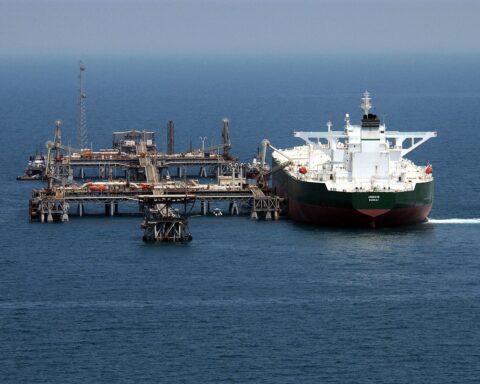
Since March 1, tanker traffic through the strait has dropped by approximately 70 percent, according to Lloyd’s List data. More than 150 commercial vessels have anchored outside the waterway rather than risk Iranian mines, missile boats, and drone attacks. Seven of the twelve clubs belonging to the International Group of Protection and Indemnity Clubs issued 72-hour cancellation notices for war risk coverage in the Persian Gulf within the first 48 hours of the conflict, according to Al Jazeera’s economic reporting.
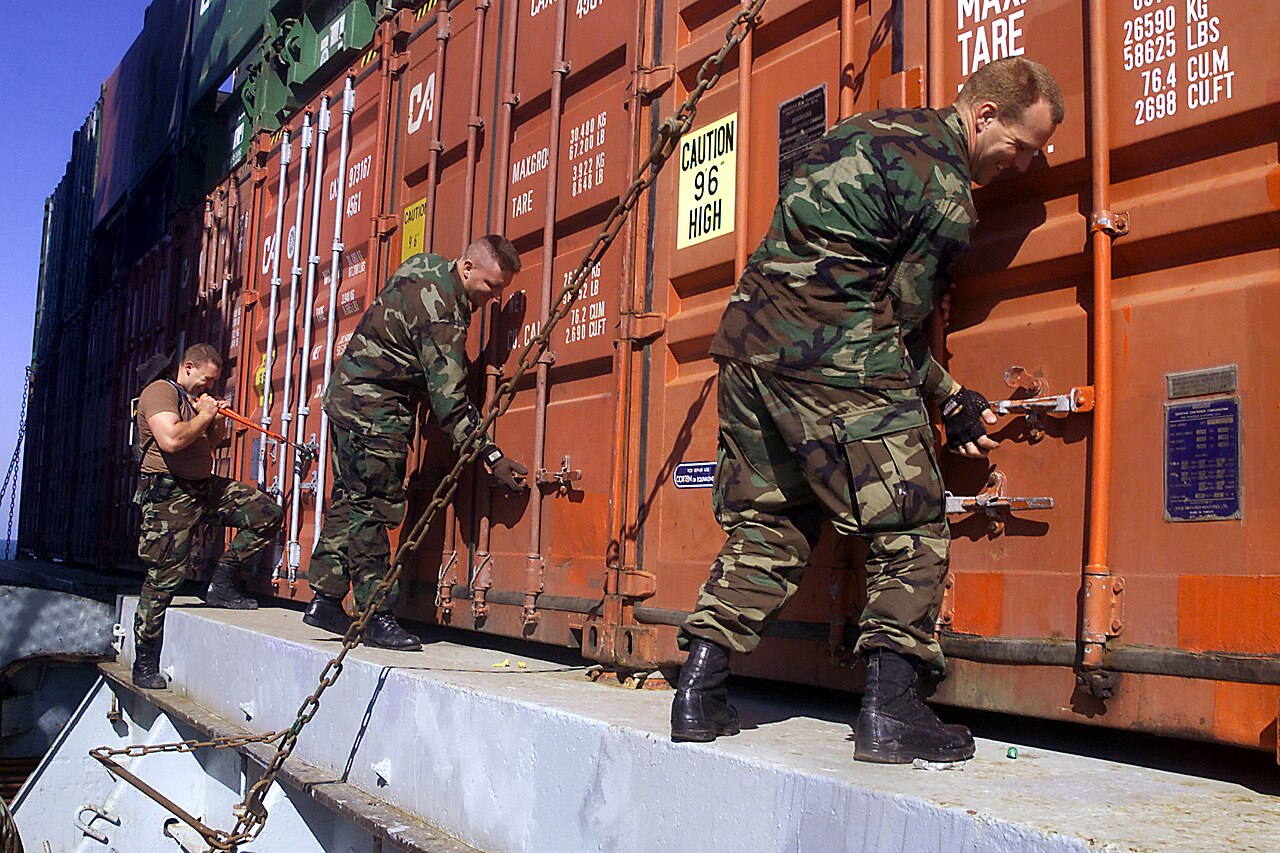
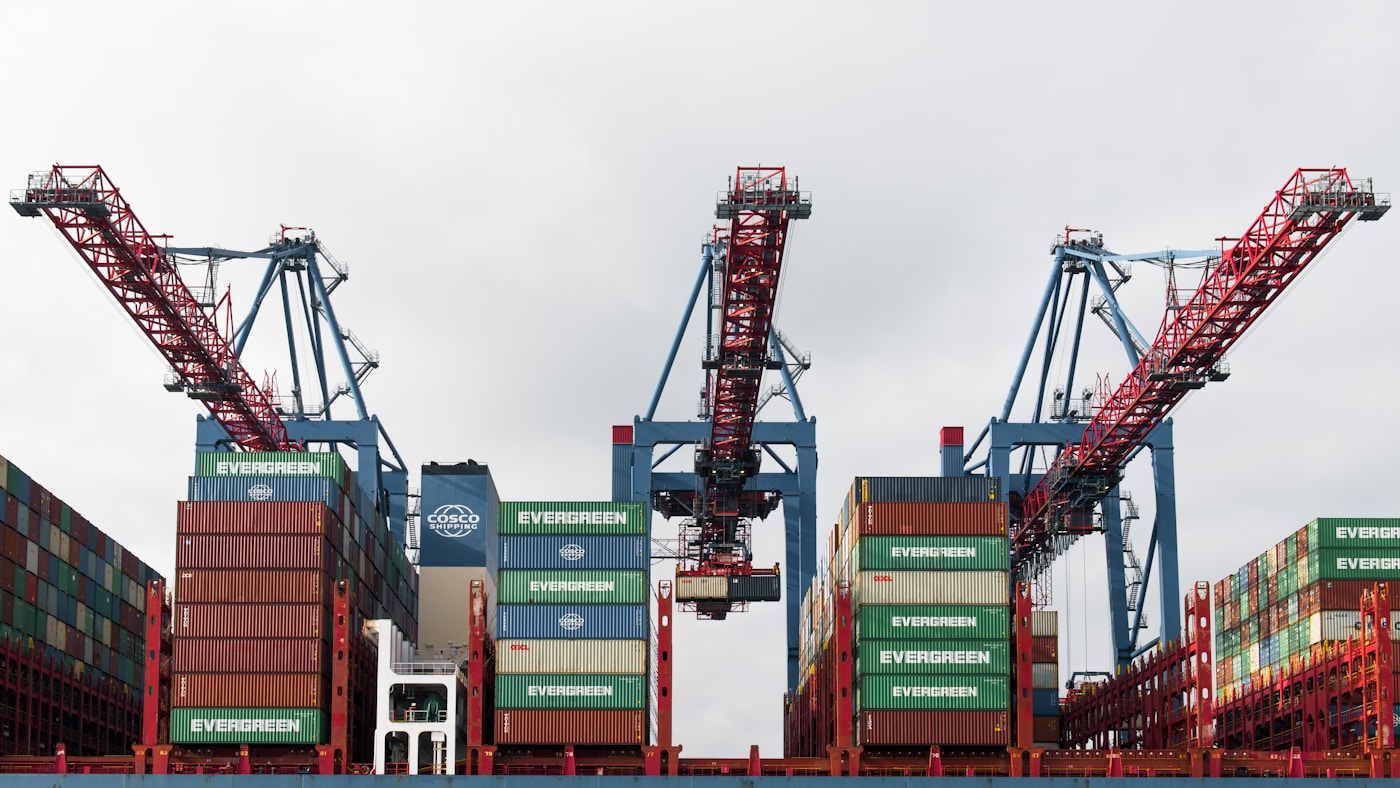
The immediate impact on food supply chains has been severe for the Gulf’s eastern ports. Container throughput at King Abdulaziz Port in Dammam has fallen by an estimated 50 to 60 percent since the conflict began, industry sources told Bloomberg. Reefer containers — the refrigerated units that carry perishable food — have been hit hardest, as shipping lines refuse to risk expensive temperature-controlled cargo in a war zone.
For Saudi Arabia specifically, the eastern port disruption affects a significant but not dominant share of total food imports. The Kingdom’s geographic advantage — spanning the Arabian Peninsula from the Persian Gulf to the Red Sea — means it has major port infrastructure on both coasts. Jeddah Islamic Port on the Red Sea has long handled the largest share of Saudi containerized imports, and that infrastructure is now proving its strategic value in ways its planners may have anticipated but never expected to test during a live conflict.
The disruption extends beyond direct shipping. Over 3,000 ships carrying 20,000 sailors remain trapped in the Persian Gulf, unable to transit the strait in either direction. Among them are grain carriers, reefer ships, and container vessels loaded with food products destined for Gulf state markets. Each day they sit idle increases spoilage risk, insurance costs, and the probability that their cargo will never reach its intended destination.
Why Did the War Start at the Worst Possible Time for Food Demand?
Ramadan 1447 began on approximately February 17, 2026. Iranian missiles began striking Gulf targets on February 28. The collision between the Muslim world’s holiest month — when food consumption reaches its annual peak — and the worst military crisis in the region’s modern history created a supply-demand mismatch of almost theatrical timing.
During Ramadan, Saudi food consumption does not merely increase. It transforms. Bread consumption rises 63 percent above non-Ramadan levels, according to HLB Global’s analysis of Gulf consumer spending patterns. Chicken consumption surges 66.5 percent. Dairy demand increases by more than 40 percent. Consumer spending on food jumps 35 percent in the week before Ramadan begins, with nearly a third of that spending concentrated in food stores.
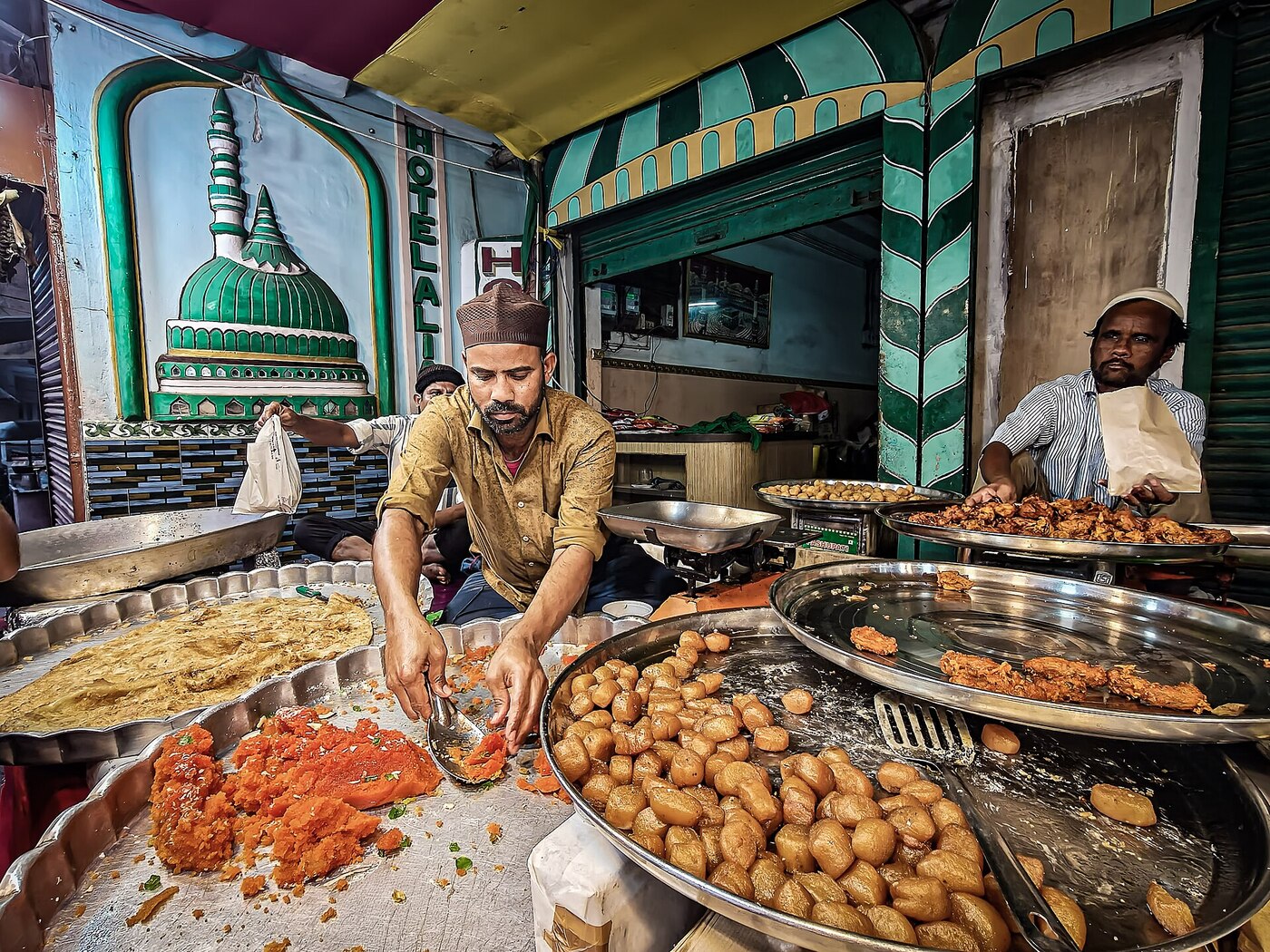
The reasons are cultural and religious. Fasting during daylight hours compresses eating into the evening and pre-dawn periods. Iftar — the evening meal that breaks the fast — is typically elaborate, communal, and abundant. Families prepare multiple dishes. Charitable organizations distribute millions of iftar meals to workers and the less fortunate. The Grand Mosque in Mecca alone serves iftar to hundreds of thousands of worshippers nightly. The estimated cash equivalent for Zakat al-Fitr — the charitable obligation at Ramadan’s end — stands at 25 to 30 Saudi riyals per person in 2026, based on current market prices for basic food commodities.
The timing would have been challenging under any circumstances. But the war introduced a compounding factor: logistics capacity. Even food that Saudi Arabia had already purchased and stockpiled needed to be distributed from central warehouses to retail outlets across a country the size of Western Europe. Trucking routes, warehouse labor (much of it supplied by foreign workers whose movements are constrained by wartime security measures), and last-mile delivery all face disruption in a country where air raid sirens have sounded in Riyadh, Dhahran, and Jeddah.
What Is in Saudi Arabia’s Strategic Grain Reserves?
Saudi Arabia maintains one of the most substantial strategic grain reserve programs in the Middle East, managed by the General Food Security Authority (formerly the Saudi Grains Organization, or SAGO). The reserves are designed to buffer the Kingdom against exactly the kind of supply disruption it now faces.
In January 2026 — weeks before the war — GFSA conducted a major procurement, purchasing 907,000 metric tonnes of wheat through international tender. The timing, while coincidental, proved fortuitous. The purchased grain, sourced from multiple origins including Canada, Australia, and the European Union, was contracted for delivery through both Red Sea and Gulf ports.
Industry analysts estimate Saudi Arabia’s current strategic wheat reserves at approximately four months of domestic consumption, based on average annual wheat demand of approximately 4 million metric tonnes. This places the Kingdom in a significantly stronger position than its Gulf neighbors. The UAE, by comparison, maintains an estimated 8 to 10 days of fresh produce reserves, according to reporting by The National. Qatar and Bahrain — smaller states with even less storage infrastructure — are believed to hold less.
| Country | Wheat/Grain Reserves | Fresh Produce Buffer | Total Caloric Buffer | Assessment |
|---|---|---|---|---|
| Saudi Arabia | ~4 months | ~3-4 weeks | 3-4 months | Manageable |
| UAE | ~6-8 weeks | 8-10 days | 4-6 weeks | Vulnerable |
| Kuwait | ~2-3 months | ~2 weeks | 2-3 months | Moderate |
| Qatar | ~4-6 weeks | ~1 week | 3-4 weeks | Critical |
| Bahrain | ~3-4 weeks | ~5-7 days | 2-3 weeks | Severe |
| Oman | ~6-8 weeks | ~10 days | 4-6 weeks | Vulnerable |
The reserves are not unlimited, and they are heavily concentrated in staple grains — wheat, rice, and barley. Perishable goods — fresh fruits, vegetables, dairy, and meat — cannot be stockpiled in the same way and are far more vulnerable to shipping disruption. The Kingdom’s cold chain infrastructure, while substantial, was designed for peacetime throughput volumes, not for rerouting an entire coast’s worth of imports through alternative channels under wartime conditions.
GFSA has also invested in modern storage technology. Temperature-controlled silos, distributed storage facilities across the Kingdom’s major population centers, and computerized inventory management systems give Saudi Arabia more granular control over its reserves than any other Gulf state. The organization’s procurement strategy — buying from multiple origin countries across multiple shipping routes — reflects a food security doctrine built on diversification rather than dependency on any single supplier or chokepoint.
The Farms Saudi Arabia Bought While Nobody Was Watching
If strategic grain reserves are Saudi Arabia’s short-term buffer, the Saudi Agricultural and Livestock Investment Company — SALIC — is its long-term insurance policy. Created as a subsidiary of the Public Investment Fund in 2009, SALIC has spent the past fifteen years quietly assembling one of the world’s largest sovereign agricultural portfolios.
The scale is remarkable. SALIC owns approximately 195,000 hectares of farmland in Ukraine. It holds a 75 percent stake in G3 Global Grain Group, one of Canada’s largest grain handling and export companies. It operates agricultural ventures across thirteen countries spanning five continents: Australia, Argentina, Brazil, India, Sudan, Ethiopia, South Africa, Ukraine, Canada, the United States, and several others.
| Country | Asset Type | Scale | Primary Products |
|---|---|---|---|
| Canada | G3 Global Grain Group (75% stake) | Major grain handler and exporter | Wheat, canola, barley |
| Ukraine | Farmland ownership | 195,000 hectares | Wheat, corn, sunflower |
| Australia | Agricultural investments | Significant holdings | Wheat, barley, livestock |
| Brazil | Agricultural ventures | Major operations | Soybeans, poultry, beef |
| India | Livestock and grain | Strategic partnerships | Rice, buffalo meat |
| Sudan/Ethiopia | Farmland | Large-scale | Cereals, livestock feed |
| Argentina | Agricultural investments | Expanding | Beef, soybeans, wheat |
The strategic logic is clear in retrospect. Rather than depending solely on spot market purchases — where prices spike during crises — Saudi Arabia built a vertically integrated supply chain that begins at the farm gate. SALIC’s Canadian operations alone give the Kingdom preferential access to one of the world’s most reliable wheat-producing nations, with export routes through Pacific and Atlantic ports that are nowhere near the Persian Gulf.
The challenge now is logistics. SALIC’s Ukrainian holdings, while intact, face their own set of disruptions related to the Russia-Ukraine conflict. Canadian grain must transit the Atlantic or Pacific before reaching the Red Sea. Brazilian soybeans and poultry exports take two to three weeks by sea. None of these supply chains can replace the rapid turnaround that Gulf-based shipping once provided. But they do provide something arguably more valuable: origin diversification. If one route is blocked, others remain open. If one supplier faces its own crisis, twelve others can compensate.
The foresight is particularly striking given the political context. When Saudi Arabia began purchasing overseas farmland in 2009, the strategy attracted criticism from food sovereignty advocates who argued that wealthy nations were “land grabbing” in developing countries. The critique was not entirely wrong on ethical grounds. But as a strategic calculation — buying food production capacity in stable jurisdictions connected to open shipping routes — it now looks like one of the most prescient investments the Kingdom’s leadership ever authorized.
Can the Red Sea Replace Hormuz for Food Imports?
The answer, increasingly, is yes — but not without pain. Saudi Arabia’s Red Sea ports have become the Kingdom’s primary lifeline since the Hormuz closure, and the infrastructure to handle the surge was, remarkably, already in place.
Jeddah Islamic Port completed an $800 million expansion program before the war, bringing total Red Sea port capacity to approximately 18.6 million twenty-foot equivalent units (TEU). The port is the largest in the Red Sea and the busiest in Saudi Arabia. It has always handled the majority of the Kingdom’s containerized imports from Europe, the Americas, and East Africa. What has changed since March 1 is the volume of traffic being redirected from eastern Gulf ports.
On March 12, Saudi Arabia announced the Logistics Corridors Initiative — a program to open Red Sea cargo corridors not just for its own imports but for the entire GCC. Under this arrangement, goods destined for Kuwait, Qatar, Bahrain, and even the UAE are being routed through Jeddah and then distributed overland via Saudi Arabia’s trans-peninsular highway and rail network. The initiative effectively makes Saudi Arabia the supply chain hub for the Gulf.
The strategic implications extend beyond food. Aramco’s East-West Pipeline — the 750-mile Petroline connecting eastern oil fields to the Red Sea port of Yanbu — had already demonstrated the viability of cross-peninsular infrastructure for oil. The same geographic logic now applies to food: if goods cannot arrive from the east, they arrive from the west. Saudi Arabia’s size, which is often framed as a logistical challenge, becomes a strategic advantage. The Kingdom controls territory on both coasts, with highway and rail connections linking them.
Challenges remain. Jeddah’s port was not designed to handle the entire Gulf’s food imports simultaneously. Queue times for container ships have increased. Cold chain continuity — critical for perishable food — is strained at transfer points where reefer containers are offloaded and trucked across the peninsula. And the Red Sea itself is not entirely risk-free: Houthi attacks on shipping in 2024-2025 demonstrated that Iran’s proxies can threaten that waterway as well, though the Houthis have remained conspicuously quiet since the broader war began.
How Much Food Can Saudi Arabia Produce on Its Own?
More than most observers assume. While the Kingdom cannot approach food self-sufficiency — the climate and water constraints are simply too severe — domestic production covers significant shares of several critical food categories.
Dairy is the standout. Almarai, headquartered in Riyadh, is the world’s largest integrated dairy company by market capitalization. It operates massive dairy farms in the Kingdom’s interior, maintaining herds of over 100,000 cows in climate-controlled facilities. Saudi Arabia is effectively self-sufficient in fresh dairy products — milk, yogurt, and cheese — thanks to decades of investment in industrial-scale dairy farming. Almarai alone accounts for approximately 45 percent of the domestic dairy market.
Poultry production has also scaled substantially. Al Watania, the largest integrated poultry company in the Middle East, operates farms, hatcheries, and processing plants across Saudi Arabia. Domestic production covers approximately 60 percent of chicken consumption, with the remaining 40 percent imported — primarily from Brazil and France.
Dates are the most symbolically significant domestic crop. Saudi Arabia is the world’s second-largest date producer after Egypt, harvesting approximately 1.5 million tonnes annually from over 30 million palm trees. Dates are a staple of the Ramadan iftar meal — the traditional food used to break the fast — and domestic production ensures this culturally critical commodity is not vulnerable to import disruption.
Egg production meets most domestic demand. The Kingdom’s fish farming industry, while smaller, has grown substantially under Vision 2030 incentives. The National Aquaculture Group operates large-scale shrimp and fish farms along the Red Sea coast. And greenhouse-based vegetable production, using desalinated water and climate-controlled environments, now supplies a growing share of domestic tomato, cucumber, and leafy green consumption.
The gap — and it is a large one — remains in cereals, red meat, and the sheer volume of calories needed to feed 35 million people. Saudi Arabia cannot grow wheat at scale without destroying its remaining aquifers. It cannot raise enough cattle and sheep to replace Brazilian and Australian beef and lamb. And it cannot produce rice at all. These structural dependencies are permanent features of the Kingdom’s food system, not temporary inconveniences that wartime mobilization can fix.
The $3,500 Container That Tells the Real Story
The most revealing data point about the food crisis is not a commodity price or a stockpile figure. It is a surcharge. On March 3, Hapag-Lloyd — one of the world’s five largest container shipping lines — announced a war risk surcharge of $3,500 per reefer container for cargo transiting the Persian Gulf. That single charge, applied to a single refrigerated container, tells the story of how the war has transformed the economics of feeding the Gulf.
Before the conflict, shipping a 40-foot reefer container from Mumbai to Dammam cost approximately $2,000 to $3,000 in freight charges. The Hapag-Lloyd surcharge alone — before any increase in base freight rates — nearly doubles the cost. And Hapag-Lloyd is not alone. Maersk, MSC, CMA CGM, and other major lines have imposed similar charges, cancelled services to Gulf ports, or simply stopped booking cargo for the region entirely.
When seven of the twelve P&I clubs covering 90 percent of the global fleet cancelled war risk coverage within 48 hours of the conflict starting, the insurance market did what no military force could: it shut the strait to commerce.
Maritime insurance analysis, Al Jazeera, March 3, 2026
The insurance dimension is equally punishing. Lloyd’s of London, which insures more than 85 percent of global mercantile shipping, has applied rate increases of up to tenfold since the war began, according to the Insurance Journal. A tanker or container ship valued at $200 to $300 million could face war risk premiums of approximately 3 percent of hull value per transit — roughly $7.5 million — compared to approximately $625,000 before the conflict. For a reefer ship carrying $5 to $10 million worth of perishable food, the insurance cost can exceed the value of the cargo.
The practical consequence: food that was economically rational to ship through the Gulf two weeks ago is now economically irrational. Shipping lines, driven by insurance costs and crew safety concerns, are rerouting vessels around the Cape of Good Hope — adding 10 to 14 days to transit times from South and Southeast Asia. Food that is still shipped to Red Sea ports arrives later and costs more. Food that would have arrived at Dammam or Jubail simply does not arrive at all unless rerouted overland from Jeddah.
The cost increase flows downstream. Wholesale food prices in Gulf states have begun to rise, though Saudi government subsidies on bread and essential commodities are absorbing much of the shock for now. How long those subsidies can hold depends on the duration of the conflict — and on whether Saudi Arabia’s fiscal position, strengthened by higher oil revenues but strained by war-related costs, can sustain the burden.
What Happens When the Gulf Stops Exporting Fertilizer?
The food crisis threatening Saudi Arabia has a mirror image that threatens the rest of the world: fertilizer. The Gulf states — Qatar, Oman, Iran, and Saudi Arabia collectively — produce and export a disproportionate share of the global urea and phosphate supply, virtually all of it transiting the Strait of Hormuz. When the strait closed, the disruption rippled outward far beyond the Gulf.
According to analysis by Kpler, a commodity data firm, approximately 49 percent of global seaborne urea trade passes through the Strait of Hormuz. Qatar alone accounts for roughly 16 percent of global urea exports, and its production facilities on the Gulf coast have no alternative export route. Oman contributes another significant share. Iran, despite being under sanctions, exports substantial volumes to Asian markets. The combined disruption has removed nearly half the world’s traded urea from the market.
Urea prices have spiked 26 to 35 percent since the war began, according to the Carnegie Endowment for International Peace. The timing is catastrophic. Northern Hemisphere spring planting — when farmers in the United States, Europe, India, and China apply the bulk of their annual fertilizer — begins in March and April. Farmers who cannot access affordable fertilizer will either reduce plantings, reduce application rates, or both. Either choice leads to the same destination: lower crop yields six months from now.
| Product | Gulf Share of Global Exports | Price Increase Since March 1 | Primary Affected Regions |
|---|---|---|---|
| Urea | ~49% | 26-35% | India, Southeast Asia, East Africa |
| Phosphates | ~15% | 12-18% | India, Brazil, Australia |
| Ammonia | ~20% | 30-40% | Global industrial consumers |
| Potash (indirect) | Minimal | 8-12% | Sympathy price movements |
The International Food Policy Research Institute (IFPRI) warned in a March analysis that the Hormuz closure’s fertilizer disruption could trigger a “delayed food price shock” — one that hits not in March, when stored grain covers immediate needs, but in late 2026 and early 2027, when reduced harvests arrive at market. The pattern echoes the 2022 fertilizer crisis that followed Russia’s invasion of Ukraine, which contributed to food price spikes across Africa and South Asia. This time, the disruption is larger: nearly half of traded urea versus the roughly 20 percent affected by the Russia-Ukraine conflict.
For Saudi Arabia specifically, the fertilizer disruption is a double-edged issue. The Kingdom’s domestic agriculture depends on imported fertilizers, adding another layer of vulnerability to its food supply chain. But Saudi Arabia is also a producer — SABIC, one of the world’s largest petrochemical companies, manufactures fertilizers at facilities in Jubail and other industrial cities. Some of that production, normally exported, could theoretically be redirected to domestic use. The challenge is that SABIC’s Gulf coast facilities face the same shipping constraints as everything else east of the peninsula.
The Food Sovereignty Matrix
The war has exposed a fundamental divide across the Gulf: the difference between states that prepared for food supply disruption and those that assumed the shipping lanes would always remain open. A framework for assessing food sovereignty across five dimensions reveals where each Gulf state stands — and why the outcomes of this crisis will diverge sharply.
| Dimension | Saudi Arabia | UAE | Kuwait | Qatar | Bahrain | Oman |
|---|---|---|---|---|---|---|
| Strategic Reserve Depth | 4 months grain | 6-8 weeks grain | 2-3 months | 4-6 weeks | 3-4 weeks | 6-8 weeks |
| Domestic Production Capacity | High (dairy, poultry, dates, eggs) | Moderate (some dairy, poultry) | Low | Very low (some dairy) | Minimal | Low-moderate (fisheries) |
| Import Route Diversification | Strong (Red Sea + Gulf + overland) | Moderate (Gulf + limited overland) | Weak (Gulf-dependent) | Weak (Gulf + some air) | Very weak (Saudi-dependent) | Weak (Gulf + limited Indian Ocean) |
| Overseas Agricultural Holdings | Extensive (13 countries, SALIC) | Moderate (some overseas farms) | Limited | Moderate (Hassad Food) | Minimal | Limited |
| Fiscal Capacity to Subsidize | Strong ($600B+ debt capacity, oil revenue) | Strong (ADIA reserves) | Strong (KIA reserves) | Moderate (QIA) | Limited | Moderate |
The matrix reveals three tiers. Saudi Arabia sits in the first tier — not because it is self-sufficient, but because it has built redundancy into every dimension: reserves, production, routes, overseas holdings, and fiscal buffers. The UAE and Kuwait occupy a second tier, with meaningful reserves and some production but dangerous exposure to the Hormuz chokepoint. Qatar, Bahrain, and Oman constitute a third tier of acute vulnerability, where strategic reserves can be measured in weeks rather than months and alternative import routes are limited or nonexistent.
The matrix also highlights a counterintuitive dynamic: Bahrain’s food security depends almost entirely on Saudi Arabia. The causeway connecting the two kingdoms carries the majority of Bahrain’s fresh food imports, trucked from Saudi ports and warehouses. If Saudi supply chains hold, Bahrain eats. If they fracture, Bahrain faces a crisis within days. The same logic applies, to a lesser degree, to Qatar, which receives significant volumes of food overland from Saudi Arabia via the Abu Samra border crossing.
Why Saudi Arabia’s Neighbors Are in Deeper Trouble
The conventional narrative frames Saudi Arabia as the most exposed Gulf state because of its size, population, and import dependency. The data tells a different story. The Kingdom’s smaller neighbors — states with populations ranging from Bahrain’s 1.5 million to the UAE’s 10 million — face proportionally greater food security risks because they lack Saudi Arabia’s infrastructure depth, geographic flexibility, and strategic planning horizon.
The UAE illustrates the paradox. Dubai and Abu Dhabi are among the wealthiest cities on earth, home to world-class logistics infrastructure and the Jebel Ali port complex — one of the busiest container terminals outside East Asia. But nearly all of that infrastructure faces the Persian Gulf. The UAE has no Red Sea coast. Its overland connections run through Saudi Arabia or Oman, both of which face their own disruptions. And its strategic food reserves, while adequate for peacetime fluctuations, were designed for short-term disruptions — not for the sustained closure of the country’s only maritime access.
Dubai’s 8 to 10 day fresh produce buffer, reported by The National, is particularly alarming. In a city of 3.6 million people — the majority of them foreign workers with limited savings and no agricultural fallback — a 10-day supply buffer offers almost no margin for error. If shipping disruptions extend beyond two weeks with no alternative resupply, Dubai faces not a food security challenge but a humanitarian one.
Qatar’s position is similarly precarious. The 2017 blockade by Saudi Arabia, the UAE, Bahrain, and Egypt exposed Qatar’s food supply vulnerability, prompting Doha to invest in domestic dairy production and strategic reserves. Those investments have helped — Baladna, the national dairy company, now covers a significant share of domestic demand. But Qatar’s total food import dependency remains above 90 percent, its only port faces the Gulf, and its population of 3 million (the vast majority migrant workers) requires constant resupply of staples it cannot produce domestically.
The fractures within the GCC that the war has exposed extend directly to food security. Saudi Arabia’s Logistics Corridors Initiative — offering Red Sea transit access to the wider Gulf — is both a lifeline and a demonstration of dependence. States that accept Saudi food transit assistance acknowledge, implicitly, that their own infrastructure cannot sustain their populations independently. That dependence gives Riyadh leverage that extends far beyond the current crisis.
The Kingdom That Prepared for a War It Never Expected
The prevailing assumption among Western analysts has been that Saudi Arabia’s food import dependency constitutes a critical strategic vulnerability — a pressure point that any adversary could exploit. The two-week stress test of the Iran war suggests that assumption is, at minimum, overstated.
Saudi Arabia did not prepare for this specific war. Nobody in GFSA’s procurement department was buying 907,000 tonnes of wheat in January because they anticipated Iranian missiles in March. Nobody at SALIC was acquiring Ukrainian farmland because they foresaw a Hormuz closure. The Jeddah port expansion was not timed to coincide with a Persian Gulf conflict.
What Saudi Arabia did prepare for was disruption in general. The Kingdom’s food security apparatus — built over two decades, funded by oil revenue, and driven by the institutional memory of a country that was genuinely food-insecure within living memory — was designed for a world where shipping lanes could close, prices could spike, and supply chains could fracture. The specific cause of disruption mattered less than the certainty that disruption would eventually come.
Saudi Arabia chose between water and wheat in 2008. It chose water, and then spent fifteen years building a food supply chain sophisticated enough to make that choice survivable. The Iran war is the first real test of whether it succeeded.
Food security analysis, March 2026
The contrarian position is not that Saudi Arabia is immune to food disruption. It is that the Kingdom has invested more systematically in food security resilience than any other Gulf state — and potentially any other major food-importing nation. Strategic reserves, overseas agricultural portfolios, dual-coast port infrastructure, a domestic production base in dairy and poultry, and the fiscal capacity to subsidize food prices for months if necessary: these are not the characteristics of a nation that will collapse under supply pressure. They are the characteristics of a nation that recognized its vulnerability and spent the resources to mitigate it.
The risk is duration. Four months of grain reserves is adequate for a two-week war or even a two-month one. It is not adequate for a year-long conflict. SALIC’s overseas farms produce continuously, but shipping those products to the Kingdom through alternative routes takes time and costs more. And the environmental damage being inflicted on the Persian Gulf — oil spills, unexploded ordnance, mine contamination — could keep the strait functionally impaired long after a ceasefire. Saudi Arabia’s food security architecture is built for resilience, not invulnerability. The distinction matters, and the clock is running.
Food, moreover, is only one link in a chain of non-oil commodities now under duress. The blockade is simultaneously disrupting the metals chokehold that oil headlines obscure — copper and aluminum flows critical to construction, desalination, and the industrial diversification the Kingdom’s future depends on. Perhaps most urgently, the strait’s closure has triggered a parallel pharmaceutical supply crisis that threatens Saudi hospitals with drug shortages far harder to substitute than any metal.
Frequently Asked Questions
How much of its food does Saudi Arabia import?
Saudi Arabia imports approximately 80 percent of its total food consumption, spending upward of $25 billion annually. Major imports include wheat (3.5 to 4.25 million metric tonnes per year), barley (7 to 8 million tonnes), rice (1.5 million tonnes), poultry (700,000 tonnes), and red meat (350,000 tonnes). The Kingdom is effectively self-sufficient only in dairy products, dates, and eggs.
Does Saudi Arabia have emergency food reserves?
Yes. Saudi Arabia’s General Food Security Authority maintains strategic grain reserves estimated at approximately four months of domestic wheat consumption. In January 2026, GFSA purchased 907,000 metric tonnes of wheat through international tender. The Kingdom also maintains reserves of rice, barley, and sugar at facilities distributed across major population centers.
How has the Hormuz closure affected food prices in Saudi Arabia?
Food price inflation in Saudi Arabia remained low at 0.2 percent in January 2026, before the war. Since March 1, wholesale food prices have begun rising, particularly for imported perishables. However, government subsidies on bread and essential commodities are absorbing much of the increase for consumers. Shipping costs have surged, with Hapag-Lloyd imposing a $3,500 per container war risk surcharge and insurance premiums rising tenfold for Gulf transits.
What is SALIC and why does it matter for food security?
The Saudi Agricultural and Livestock Investment Company (SALIC) is a PIF subsidiary that manages the Kingdom’s overseas agricultural portfolio. It owns approximately 195,000 hectares of farmland in Ukraine, holds a 75 percent stake in Canada’s G3 Global Grain Group, and operates agricultural ventures across thirteen countries. SALIC gives Saudi Arabia direct access to food production in stable jurisdictions with open shipping routes, reducing dependency on spot market purchases during crises.
Can Saudi Arabia feed itself without imports?
Not sustainably. Saudi Arabia phased out domestic wheat production between 2008 and 2016 because growing grain in the desert was depleting irreplaceable fossil aquifers — an estimated 80 percent of 500 billion cubic meters had already been extracted. The Kingdom produces significant volumes of dairy (Almarai), poultry (Al Watania), dates, eggs, and some vegetables. But cereals, red meat, and rice — which constitute the bulk of caloric consumption — must be imported. The Kingdom’s food security strategy is built on import resilience, not self-sufficiency.