
RIYADH — Saudi air defenses intercepted and destroyed 31 drones and three ballistic missiles on Wednesday in what the Ministry of Defense described as the largest coordinated aerial assault on the Kingdom since the Iran war began on February 28. One drone penetrated Saudi airspace far enough to approach Riyadh’s Diplomatic Quarter, home to more than 60 foreign embassies and international organizations, before it was shot down, according to a statement from Ministry of Defense spokesperson Major General Turki al-Maliki.
The attacks spanned the full breadth of Saudi territory, with 20 drones intercepted over the Eastern Province, five destroyed in the Empty Quarter while heading toward Aramco’s remote Shaybah oil field, three ballistic missiles shot down over Prince Sultan Air Base, and additional drones engaged near Riyadh. The U.S. Embassy in Riyadh immediately issued a shelter-in-place order for all American citizens across the Kingdom, according to a security alert published on the embassy website, marking a further escalation from the March 8 order that evacuated all non-emergency U.S. government employees.
Table of Contents
- What Happened During the March 12 Aerial Assault?
- Why Did Iran Target Riyadh’s Diplomatic Quarter?
- How Did Saudi Air Defenses Perform on March 12?
- What Is the Threat to Shaybah Oil Field?
- Prince Sultan Air Base Faces Sustained Ballistic Missile Barrage
- U.S. Embassy Orders Shelter-in-Place Across the Kingdom
- Where Does the Air Defense War Stand After Two Weeks?
- Gulf States Absorb Simultaneous Attacks Across Eight Nations
- Frequently Asked Questions
What Happened During the March 12 Aerial Assault?
The March 12 attacks unfolded in multiple waves across at least four distinct target zones spanning more than 1,200 kilometres of Saudi territory, according to the Saudi Ministry of Defense and Al Arabiya News. The assault represented a significant escalation in both scale and geographic breadth compared to previous days of the conflict.
Saudi air defenses destroyed 20 hostile drones over the Eastern Province, the Kingdom’s oil-producing heartland that houses Aramco’s Dhahran headquarters and the bulk of Saudi crude production infrastructure. Five additional drones were shot down in the Rub’ al-Khali desert while heading toward the Shaybah oil field, which sits roughly 800 kilometres from the nearest Iranian launch sites, according to Al Arabiya. A further drone was intercepted while approaching the Diplomatic Quarter in central Riyadh, the Saudi Gazette reported.
Three ballistic missiles targeting Prince Sultan Air Base near Al-Kharj, approximately 80 kilometres south of Riyadh, were intercepted and destroyed, according to the Anadolu Agency and the Saudi Press Agency. Prince Sultan Air Base hosts both Saudi Royal Air Force units and U.S. military personnel supporting Operation Epic Fury, the American-led air campaign against Iran.
| Target Zone | Region | Threat Type | Intercepted | Primary Defense System |
|---|---|---|---|---|
| Eastern Province oil infrastructure | East | Attack drones | 20 | Patriot PAC-3 |
| Shaybah Oil Field | Rub’ al-Khali | Attack drones | 5 | Patriot / point defense |
| Riyadh Diplomatic Quarter | Central | Attack drone | 1 | Patriot PAC-3 |
| Additional Riyadh approaches | Central | Attack drones | 5 | Patriot PAC-3 |
| Prince Sultan Air Base | Al-Kharj | Ballistic missiles | 3 | THAAD / Patriot PAC-3 |
The combined total of 34 aerial threats intercepted in a single day exceeded the previous single-day record of approximately 25 engagements recorded on March 5, according to tracking by the Foundation for Defense of Democracies’ Long War Journal. The assault demonstrated Iran’s continued capacity to launch large-scale coordinated attacks despite nearly two weeks of sustained U.S. and Israeli strikes against Iranian military infrastructure.
Why Did Iran Target Riyadh’s Diplomatic Quarter?
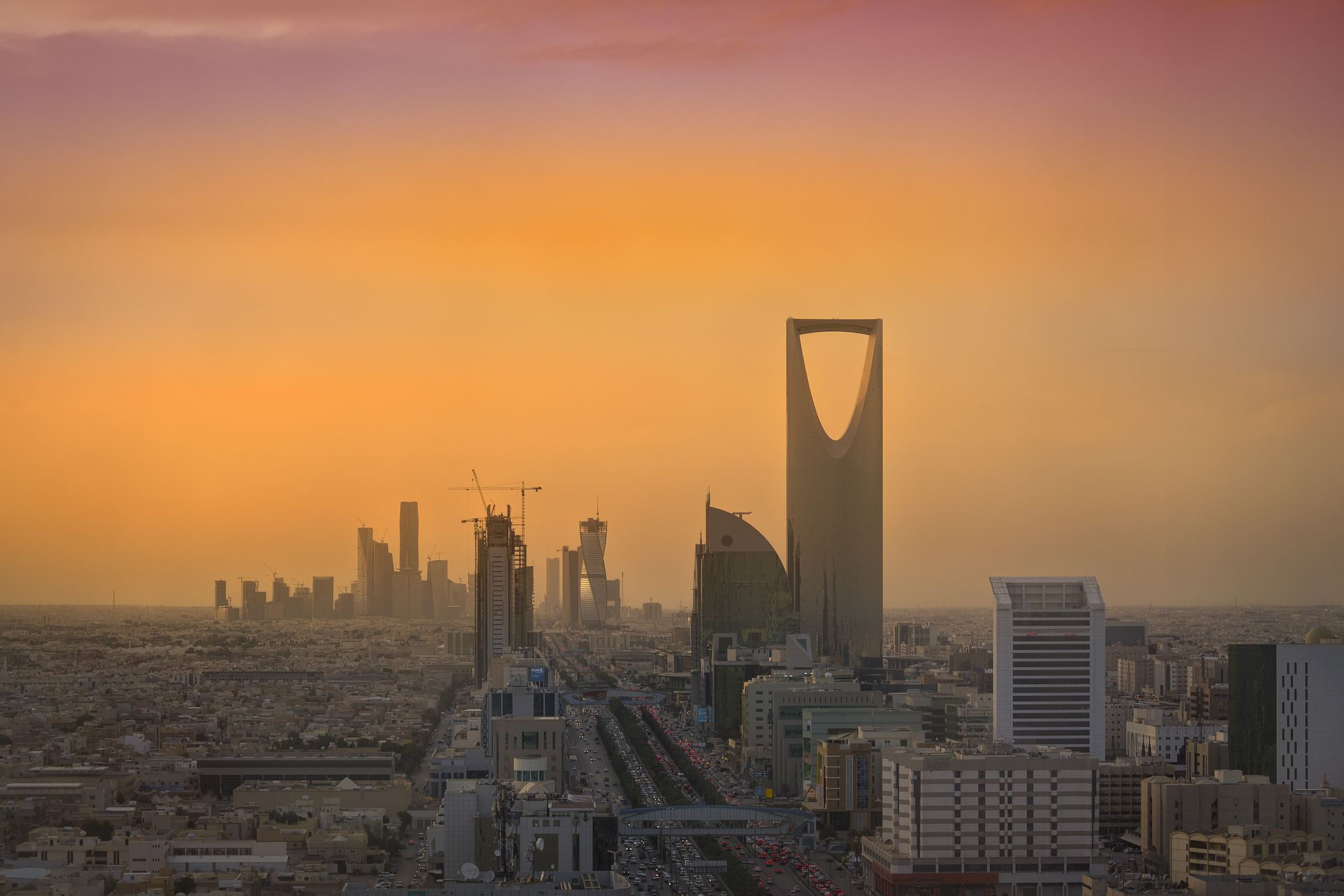
The Diplomatic Quarter is a 7.8-square-kilometre compound in western Riyadh that serves as the administrative centre for foreign diplomatic missions in the Kingdom. It houses embassies and consulates from more than 60 countries, including the United States, United Kingdom, France, China, and Russia, along with offices of international organizations such as the World Bank and the International Monetary Fund, according to the Saudi Ministry of Foreign Affairs.
The drone intercepted on March 12 was not the first time the Diplomatic Quarter has come under threat during the conflict. On March 3, two Iranian-made Shahed-type drones struck the U.S. Embassy compound, causing what the Saudi Defense Ministry described as “limited fire and minor material damages.” The Washington Post reported that the March 3 attack also hit the CIA station operating within the embassy grounds, an incident that prompted an immediate security lockdown and forced the evacuation of intelligence personnel to secure facilities.
The targeting of diplomatic compounds represents a calculated escalation by Iran. By striking near embassies, Tehran sends a political signal to third-party nations that supporting the U.S.-led coalition carries real physical risk to their personnel in the Gulf, according to analysis by the International Institute for Strategic Studies. The tactic mirrors Hezbollah’s strategy during the 2006 Lebanon war, when Hizballah rockets targeted the Haifa area in part to discourage foreign nationals from remaining in Israel. The denial contrasts sharply with the evidence: Iran’s ambassador to Riyadh, Alireza Enayati, has denied that Tehran is responsible for strikes on Saudi oil infrastructure, claiming Iran targets only U.S. and Israeli assets.
The escalation continued on Friday with Israel striking Tehran’s Ferdowsi Square during the Al-Quds Day rally, an attack that Gulf diplomats warn will trigger another wave of retaliatory Iranian strikes on Saudi and Gulf targets.
The Saudi government has condemned the targeting of diplomatic facilities as a violation of the 1961 Vienna Convention on Diplomatic Relations. “Attacks on embassies and diplomatic compounds are an unacceptable escalation that violates every norm of international law,” the Saudi Ministry of Foreign Affairs said in a statement carried by the Saudi Press Agency on March 12. Crown Prince Mohammed bin Salman has privately told allied governments that Saudi Arabia will ensure the safety of all diplomatic missions, while publicly maintaining the Kingdom’s posture of strategic restraint from direct military engagement, according to Bloomberg.
How Did Saudi Air Defenses Perform on March 12?
Saudi Arabia achieved a 100 percent interception rate on March 12, destroying all 31 drones and all three ballistic missiles before they reached their targets, according to the Ministry of Defense. No damage to critical infrastructure or civilian casualties were reported from the day’s attacks, the Saudi Press Agency confirmed.
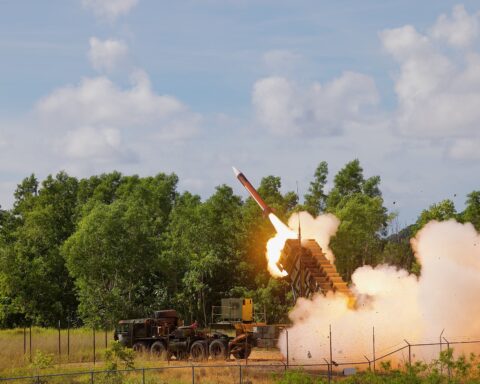
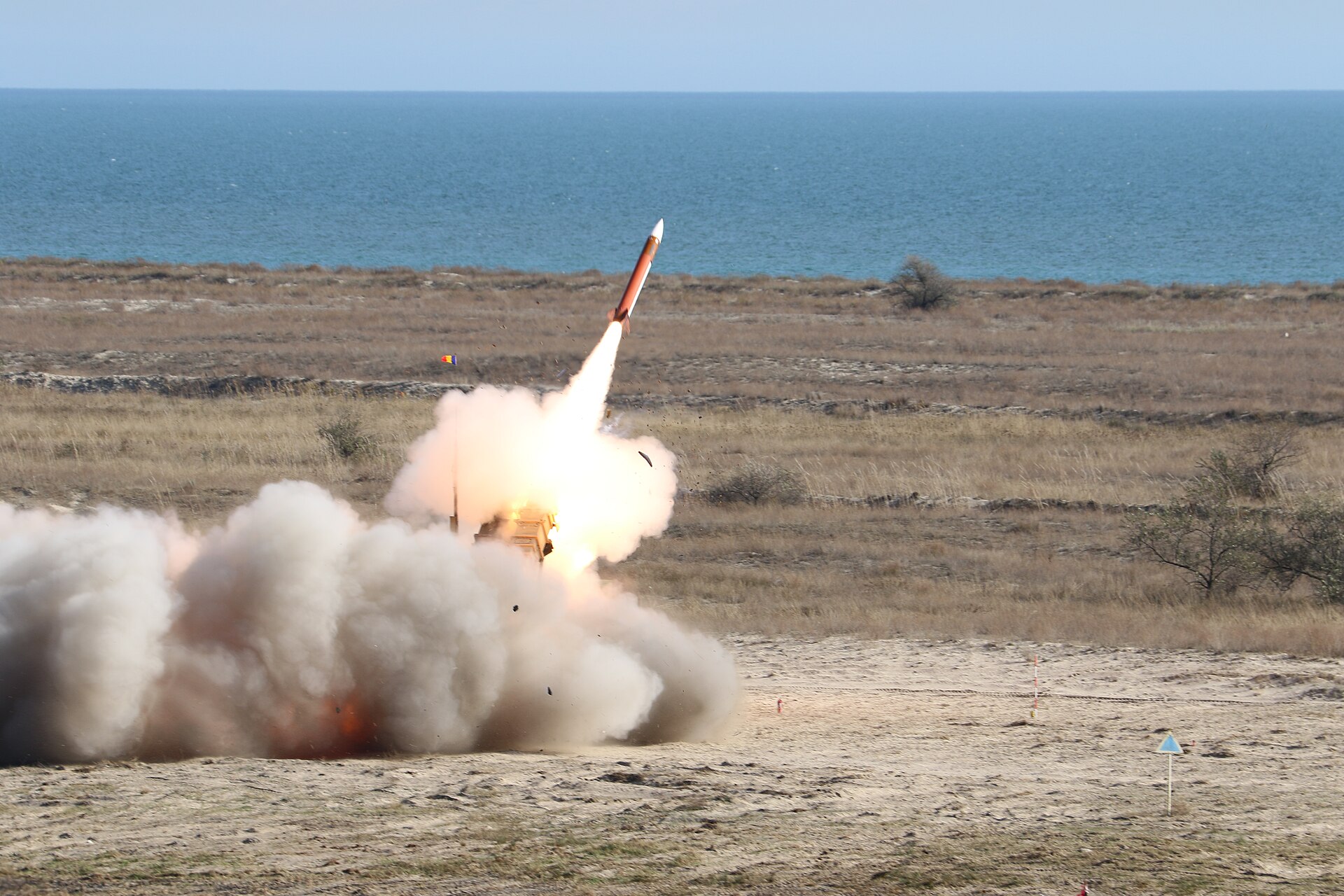
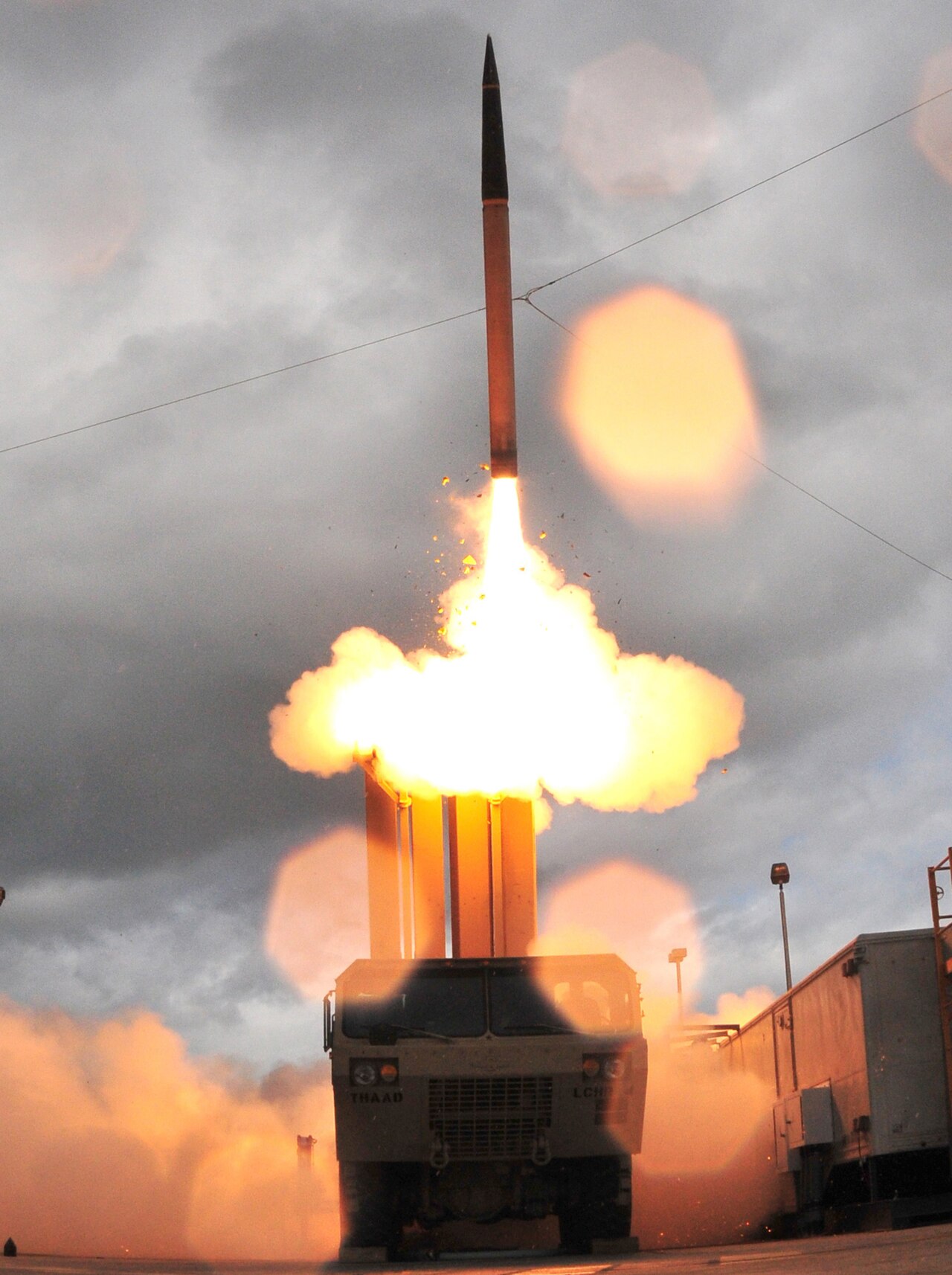
The Kingdom’s air defense architecture relies on a layered system that integrates American-made Patriot PAC-3 batteries, which provide medium-range coverage against aircraft and cruise missiles, with Terminal High Altitude Area Defense (THAAD) systems that intercept ballistic missiles during their terminal descent phase. Saudi Arabia operates approximately 16 Patriot batteries and two THAAD batteries, according to the Stockholm International Peace Research Institute’s Arms Transfers Database. The Royal Saudi Air Defense Forces also operate older Shahine and Crotale short-range systems for point defense around critical installations.
March 12’s performance contrasted with earlier days of the war when gaps in coverage allowed some projectiles through. On March 3, drones reached the U.S. Embassy compound in Riyadh. On March 8, a ballistic missile strike near Al-Kharj killed two civilians when debris fell on a residential building after an interception, according to Al Jazeera. The cumulative stress on air defense radars and missile inventories has raised questions among defense analysts about whether the Kingdom can sustain its current interception rate.
The cost asymmetry remains a persistent concern. An Iranian Shahed-136 drone costs approximately $20,000 to $50,000 to manufacture, according to the Royal United Services Institute, while a single Patriot PAC-3 MSE interceptor missile costs approximately $4 million. Destroying 31 drones and three ballistic missiles in a single day consumed an estimated $140 million to $160 million in interceptor missiles, according to defense cost estimates from the Center for Strategic and International Studies.
What Is the Threat to Shaybah Oil Field?
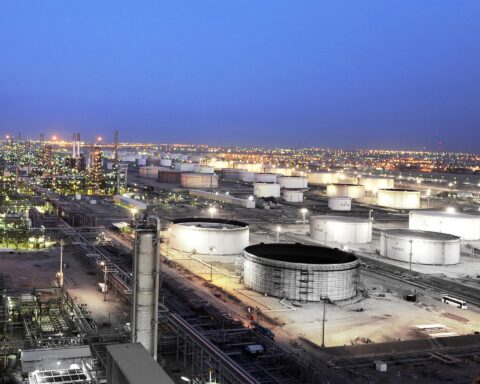
Shaybah is one of Saudi Aramco’s most strategically important production sites, producing approximately 1 million barrels of oil per day and holding estimated reserves of 14.3 billion barrels of light crude, according to Aramco’s 2025 annual report. The field sits deep in the Rub’ al-Khali desert, approximately 800 kilometres from the nearest Iranian launch point and more than 600 kilometres from the nearest Saudi population centre, making it both difficult to reach and difficult to defend.
Iranian drones have targeted Shaybah on at least seven separate occasions since the war began, according to tracking by the Foundation for Defense of Democracies. The facility was previously struck by Houthi drones in August 2019, when 10 drones hit a natural gas liquefaction facility at the site, temporarily shutting down gas production. The Houthis have so far refrained from joining the current conflict, sparing Saudi Arabia from a devastating second front. That attack demonstrated the vulnerability of remote desert installations to drone swarms that can fly low and exploit gaps in radar coverage.
The March 12 interceptions over the Empty Quarter highlight a specific defensive challenge. Drones crossing the vast, sparsely populated desert can fly at altitudes below 300 metres to avoid detection by fixed radar installations, forcing Saudi air defense operators to rely on forward-deployed mobile radar units and surveillance aircraft to detect threats at range, according to Jane’s Defence Weekly. The repeated targeting of Shaybah suggests Iranian planners believe eventually a swarm will overwhelm the point defenses protecting the facility.
If Shaybah were seriously damaged, the impact on global oil markets would compound the supply disruption already caused by the Strait of Hormuz closure. Saudi crude shipments through the strait have fallen to 4.06 million barrels per day from a pre-crisis baseline of 6.64 million barrels per day, according to Bloomberg tanker tracking data, representing a 39 percent reduction. Losing Shaybah’s 1 million barrels per day on top of that would push the total Saudi production shortfall past 3.5 million barrels per day.
Prince Sultan Air Base Faces Sustained Ballistic Missile Barrage
Prince Sultan Air Base, located near Al-Kharj approximately 80 kilometres south of Riyadh, has become the most heavily targeted Saudi military installation of the war. The base has absorbed at least 15 ballistic missile attacks since February 28, according to a tally compiled from Saudi Press Agency statements and Al Arabiya reporting: three on March 6, two on March 7, one on March 8, one on March 9, six on March 11, and three on March 12.
The base serves as a critical hub for both Saudi and U.S. air operations. It hosts elements of the 378th Air Expeditionary Wing, which flies F-15E Strike Eagles, KC-135 tankers, and support aircraft for Operation Epic Fury. The base also houses Saudi Royal Air Force F-15SA fighters and Eurofighter Typhoons that provide combat air patrols over the Kingdom.
Iran’s persistent targeting of Prince Sultan Air Base with ballistic missiles rather than drones reflects the facility’s distance from Iranian territory and the nature of its defenses. While drones launched from Iraq-based Iran-aligned militias can reach targets in the Eastern Province, Prince Sultan Air Base lies in central Saudi Arabia, requiring either longer-range drones or medium-range ballistic missiles to reach, Reuters reported. Iran has employed Emad and Ghadr-type ballistic missiles against the base, which travel at speeds exceeding Mach 8 during terminal descent, according to the Missile Defense Project at the Center for Strategic and International Studies.
The sustained barrage has tested the THAAD battery deployed at Prince Sultan Air Base to its operational limits. Each THAAD launcher carries eight interceptor missiles, and replenishing expended interceptors requires logistical chains stretching back to U.S. production facilities, according to the Congressional Research Service. The Pentagon has not disclosed how many THAAD interceptors remain in Saudi inventory, but the pace of ballistic missile attacks — 15 in two weeks — has raised concerns in Congress about the sustainability of the U.S. forward-deployed missile defense posture.
U.S. Embassy Orders Shelter-in-Place Across the Kingdom
The U.S. Embassy in Riyadh issued a security alert on March 12 directing all American citizens in Riyadh, Jeddah, and Dhahran to shelter in place immediately, according to the embassy’s official website. The alert stated that all U.S. government employees had been directed to shelter in place and that American citizens should “avoid the Embassy until further notice.” The alert remained in effect as of March 13.
The shelter-in-place order followed a sequence of escalating security measures. On March 8, the U.S. Department of State ordered all non-emergency government employees to depart Saudi Arabia amid sustained drone and missile threats, according to a State Department notice. The March 3 drone strikes on the embassy compound itself — which the Washington Post reported hit both the main embassy building and the adjacent CIA station — demonstrated that the Diplomatic Quarter was no longer immune to attack.
An estimated 70,000 to 100,000 American citizens reside in Saudi Arabia, the majority concentrated in Dhahran, Riyadh, and Jeddah, according to the State Department’s Bureau of Consular Affairs. The shelter-in-place advisory affects not just government employees but also the large population of American civilians working for Aramco, defense contractors such as Raytheon and Lockheed Martin, and financial institutions. Several major U.S. companies have begun rotating non-essential staff out of the Kingdom on a voluntary basis, Reuters reported, though no formal corporate evacuation has been announced.
Britain, France, Germany, and Canada have issued similar travel advisories urging their nationals to avoid non-essential travel to Saudi Arabia, and the British Foreign Office raised its travel advisory to “advise against all travel” on March 9, the most severe warning level available.
Where Does the Air Defense War Stand After Two Weeks?
Since the war began on February 28, Saudi Arabia has intercepted hundreds of drones and dozens of ballistic missiles across the Kingdom, according to cumulative reporting from the Saudi Ministry of Defense. While the Saudi government has not released an official aggregate figure, the Foundation for Defense of Democracies estimated that Saudi air defenses engaged more than 300 aerial threats in the first 13 days of the conflict, based on daily reporting from Saudi state media. A comprehensive assessment of the Iran war’s first fourteen days details how Gulf air defense systems intercepted more than 3,133 Iranian missiles and drones across the region.
The attrition equation tilts in Iran’s favour over time. Iran entered the conflict with an estimated arsenal of 3,000 to 4,000 ballistic missiles and an effectively unlimited capacity to produce simple attack drones at a rate of approximately 50 per day, according to the International Institute for Strategic Studies and the Defense Intelligence Agency. Saudi Arabia’s interceptor inventory, by contrast, is finite and expensive to replenish. A Patriot PAC-3 MSE round costs roughly $4 million, and lead times for new production run 18 to 24 months, according to Raytheon’s public filings.
Saudi Arabia’s layered air defense network has performed well under sustained fire, but defense analysts warn that Iran is testing the system’s capacity rather than attempting to destroy individual targets. “The Iranians understand they cannot overwhelm the defenses in a single strike,” Fabian Hinz, a missile analyst at the IISS, told Reuters on March 11. “They are conducting a sustained campaign of attrition designed to deplete interceptor stockpiles and exhaust radar operators.”
| Metric | Estimated Figure | Source |
|---|---|---|
| Total drones engaged | 250+ | FDD Long War Journal cumulative tracking |
| Total ballistic missiles engaged | 30+ | Saudi Press Agency daily statements |
| Interception success rate (overall) | ~95% | Defense analyst estimates |
| Civilian casualties from attacks | 4 confirmed | Al Jazeera, Saudi Civil Defense |
| Estimated interceptor cost (13 days) | $1.2–1.5 billion | CSIS missile cost data |
| Single-day record (March 12) | 34 intercepts | Saudi Ministry of Defense |
Gulf States Absorb Simultaneous Attacks Across Eight Nations
The March 12 assault on Saudi Arabia was part of a broader regional barrage. Iran and its allied militias launched drones, cruise missiles, and ballistic missiles at targets across Iraq, Saudi Arabia, Kuwait, Bahrain, Qatar, the United Arab Emirates, Jordan, and Oman on the same day, according to the Foundation for Defense of Democracies’ Long War Journal. The multi-front nature of the attacks stretches Gulf air defense networks and forces each country to prioritize the defense of its own territory. The killing of two foreign workers in Oman’s Sohar industrial zone on March 13 demonstrated that even neutral states cannot shield their populations from the campaign’s geographic sprawl.
In Bahrain, Iranian drones struck a fuel depot near the airport, according to Al Jazeera. In the UAE, explosions near the Burj Khalifa in Dubai were caused by air defense intercepts against incoming aerial threats, authorities confirmed. In Oman, two people were killed when a drone was brought down over a residential area, marking the first Omani casualties of the conflict. Kuwait’s international airport sustained damage from an earlier strike on March 10, and Iraq suspended all oil exports after Iranian drone strikes near Basra.
The Saudi response has been to maintain a posture of active defense without direct offensive retaliation against Iran. Riyadh has condemned the attacks in the strongest terms but has not joined the U.S.-Israeli offensive operations, instead focusing on defending its territory and pursuing diplomatic channels. Saudi Foreign Minister Prince Faisal bin Farhan has worked to maintain a backchannel to Tehran through Omani and Chinese intermediaries, Bloomberg reported on March 6.
Pakistan’s Prime Minister Shehbaz Sharif flew to Jeddah on March 12 for emergency consultations with Crown Prince Mohammed bin Salman, pledging “full solidarity and support” for the Kingdom, according to Al Arabiya and the Dawn newspaper. Pakistan earlier invoked its defense pact with Saudi Arabia and deployed air defense units and troops to the Kingdom, reflecting the depth of the bilateral security relationship.
The drone assault continued into Friday, with Saudi Arabia intercepting a record 56 drones and two ballistic missiles on day 14 of the conflict, the largest single-day aerial attack since the war began.
Frequently Asked Questions
How many drones did Saudi Arabia intercept on March 12, 2026?
Saudi air defenses intercepted and destroyed 31 drones and three ballistic missiles on March 12, 2026, according to the Saudi Ministry of Defense. The 34 total interceptions represented the largest single-day aerial engagement since the Iran war began on February 28. Targets included the Eastern Province, Shaybah oil field, Riyadh’s Diplomatic Quarter, and Prince Sultan Air Base near Al-Kharj.
Was the Diplomatic Quarter in Riyadh hit by a drone?
A hostile drone approaching the Diplomatic Quarter was intercepted and destroyed before reaching its target, according to the Saudi Gazette and Al Arabiya. The Diplomatic Quarter, which houses more than 60 foreign embassies, was previously struck on March 3 when two drones hit the U.S. Embassy compound. No casualties were reported from the March 12 intercept.
What air defense systems does Saudi Arabia use against Iranian drones and missiles?
Saudi Arabia operates a layered air defense network including approximately 16 Patriot PAC-3 batteries for medium-range interception and two THAAD systems for ballistic missile defense, according to the Stockholm International Peace Research Institute. The Kingdom also uses older Shahine and Crotale short-range systems. The U.S. has deployed additional radar and interceptor assets since the war began to supplement Saudi capabilities.
Why does Iran keep targeting Shaybah oil field?
Shaybah produces roughly 1 million barrels of oil per day and sits deep in the Empty Quarter desert, approximately 800 kilometres from Iranian territory. Its remote location creates defensive challenges because drones can fly at low altitudes across the sparsely populated desert to evade radar detection. Iran appears to be testing whether sustained drone waves can eventually overwhelm the point defenses protecting the facility.
How many ballistic missiles have targeted Prince Sultan Air Base since the war began?
At least 15 ballistic missiles have been launched at Prince Sultan Air Base between February 28 and March 12, 2026, according to a tally of Saudi Press Agency statements and Al Arabiya reporting. The base hosts both Saudi Royal Air Force units and U.S. military personnel supporting Operation Epic Fury. THAAD and Patriot batteries have intercepted all confirmed incoming ballistic missiles to date.