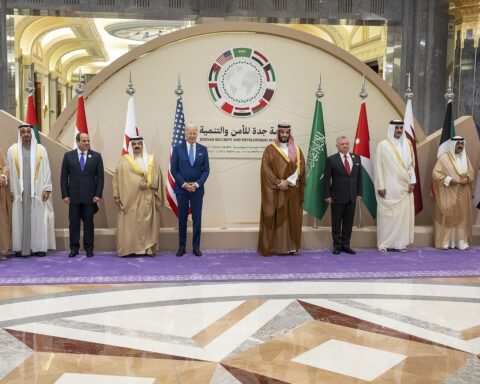

RIYADH — The war in Iran will end. Whether it ends next week through the Witkoff fifteen-point framework floated on March 26, or grinds forward past President Trump’s April 6 deadline, the last American cruise missile will eventually find its last target. And then the harder question arrives — one that no missile can answer and no sanctions regime can resolve. Who rebuilds Iran? Twenty-eight days of sustained American and Israeli strikes have killed more than 1,900 Iranians, destroyed upward of 82,000 buildings, and shattered energy infrastructure that took decades to construct. Somebody will pour concrete into those craters. Somebody will rewire those power grids, refit those refineries, and reconstruct the roads connecting a nation of 88 million people to its own economy. The identity of that somebody will shape Middle Eastern security for the next half-century. Saudi Arabia — the country Iran’s missiles struck repeatedly during this conflict — cannot afford to sit this one out.
Table of Contents
- What Has Twenty-Eight Days of War Destroyed?
- What Will It Cost to Rebuild Iran?
- Why Did Iraq’s Reconstruction Fail?
- What the Marshall Plan Got Right That Iraq Got Wrong
- Who Are the Competing Powers in Iran’s Reconstruction?
- Can China Deliver What It Promised Iran?
- Why Saudi Arabia Must Lead Iran’s Rebuilding
- The Reconstruction Leverage Matrix
- What Would a Saudi-Led Reconstruction Framework Look Like?
- How Does Reconstruction Prevent the Next War?
- The Reparations Trap That Could Destroy the Peace
- Frequently Asked Questions
What Has Twenty-Eight Days of War Destroyed?
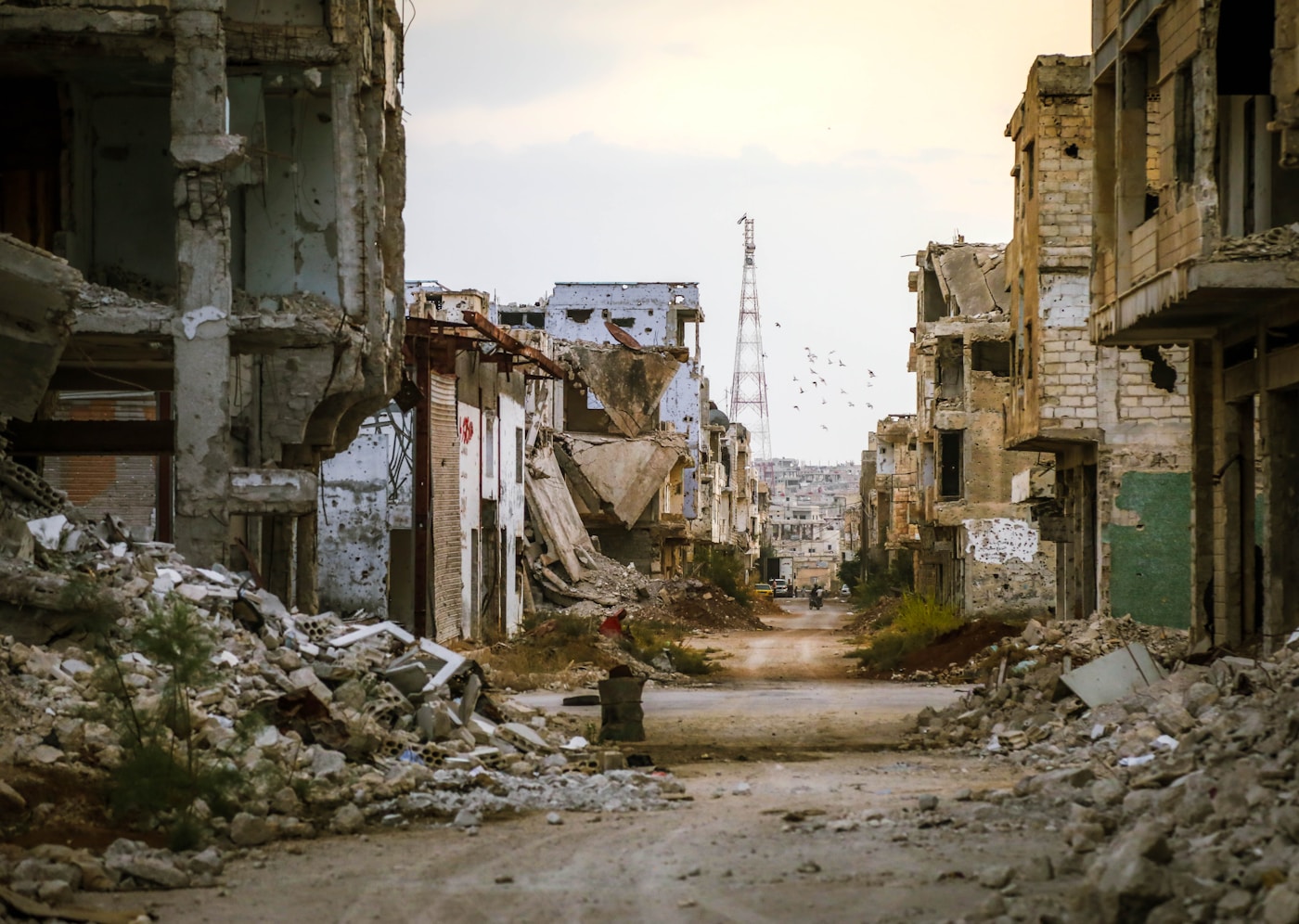
Since February 28, 2026 — Day 1 of what the Pentagon calls Operation Epic Fury — the United States and Israel have conducted the most concentrated aerial campaign against a single nation since the 2003 invasion of Iraq. By Day 28, the damage is staggering in both scale and strategic specificity. More than 82,000 structures across Iran have been destroyed or rendered unusable, according to satellite damage assessments compiled by open-source intelligence groups. At least 1,900 Iranians have been killed, a figure that Iranian state media claims is far higher and that independent verification cannot yet confirm.
The physical destruction, however, tells only part of the story. The American campaign has targeted Iran’s energy infrastructure with surgical precision — refineries at Isfahan, Abadan, and Bandar Abbas; sections of the pipeline network feeding both domestic consumption and export terminals; and critically, components of the South Pars gas field complex in the Persian Gulf, which before the war supplied roughly 70 percent of Iran’s natural gas. Power generation capacity has been degraded across multiple provinces. The electrical grid connecting Iran’s major population centers — Tehran, Isfahan, Tabriz, Mashhad, Shiraz — has suffered repeated disruption.
As House of Saud’s ongoing war coverage has documented, the maritime dimension compounds the land-based destruction. Eighty-five oil tankers remain trapped in the Persian Gulf, carrying approximately 21 billion liters of crude oil and petroleum products. The Strait of Hormuz, through which roughly 20 percent of the world’s daily oil supply transited before the war, remains effectively closed to commercial traffic. Iran’s ability to export oil — the single largest source of state revenue — has been severed not merely by sanctions but by the physical destruction of export infrastructure.
The United States had spent an estimated $11.3 billion on the campaign by Day 6 and $16.5 billion by Day 12. Those figures have continued to climb. The war’s cost to the American taxpayer, however, pales beside the cost to Iran’s economy. Before the conflict, Iran’s GDP stood at approximately $400 billion. Early reconstruction estimates, drawing on methodologies applied to Iraq, Syria, and post-earthquake recovery in Turkey, suggest that restoring Iran’s infrastructure to prewar functionality could require $180 billion to $300 billion — and possibly more if the Trump administration follows through on its stated intention to strike Iran’s remaining energy infrastructure by the April 6 deadline.
What Will It Cost to Rebuild Iran?
Reconstruction cost estimates at this stage are necessarily imprecise — damage assessment teams have not been able to operate inside Iran, and the Iranian government has every incentive to inflate figures for reparations purposes while simultaneously minimizing them for domestic morale. But historical parallels and the observable scope of destruction allow reasonable projections.
The reconstruction of Iraq following the 2003 invasion ultimately cost an estimated $220 billion across all funding sources — bilateral aid, multilateral lending, Iraqi government expenditure, and private investment. Of that total, the United States alone contributed roughly $60 billion in direct reconstruction spending. Iraq’s prewar GDP was approximately $30 billion, meaning the reconstruction investment exceeded the entire prewar economy by more than seven times.
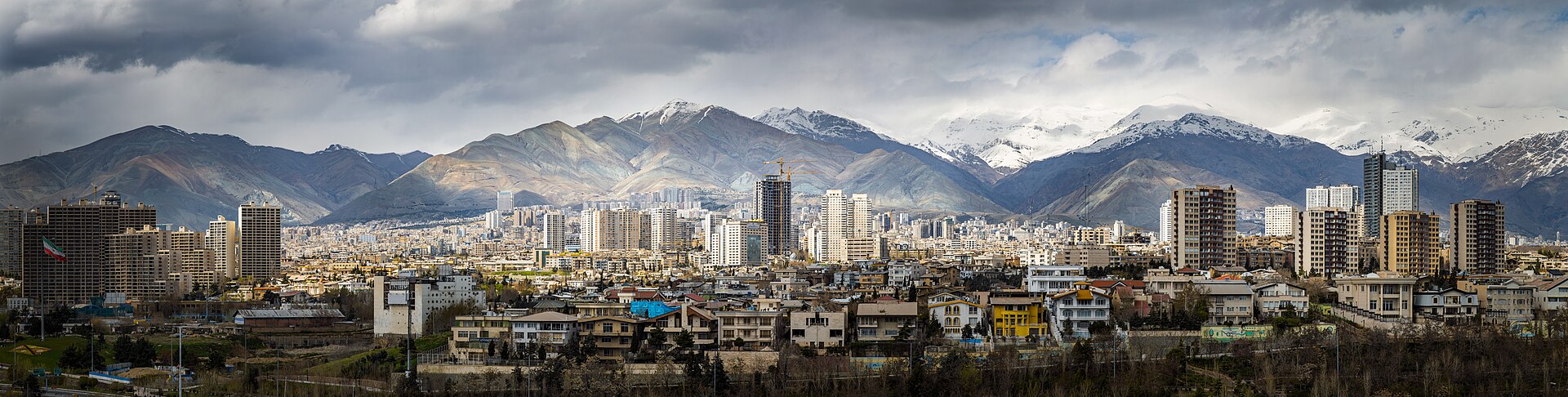
Iran’s prewar economy was dramatically larger — a $400 billion GDP supporting 88 million people, compared to Iraq’s 26 million in 2003. Iran also possessed significantly more sophisticated infrastructure: a national rail network, extensive highway systems, a partially modernized power grid, and an energy sector that, while degraded by decades of sanctions, remained the fourth-largest crude oil producer in OPEC before the war. Rebuilding infrastructure of this scale and complexity costs more than reconstructing Iraq’s comparatively rudimentary prewar systems.
The World Bank estimated Syria’s reconstruction needs at $250 billion to $400 billion after a decade of civil war that displaced half the population and destroyed roughly 30 percent of the housing stock. Iran’s war has been shorter but the destruction of energy and industrial infrastructure has been more targeted and more thorough. A conservative reconstruction estimate for Iran falls in the range of $200 billion to $350 billion over a ten-to-fifteen-year period. The energy sector alone — refineries, pipelines, gas processing facilities, power generation — could account for $80 billion to $120 billion of that total.
No single nation or institution can fund this. The question is not whether international participation will be required, but who will organize it, who will control the allocation of contracts, and whose strategic interests the reconstruction will ultimately serve.
Why Did Iraq’s Reconstruction Fail?
Any serious discussion of Iran’s reconstruction must begin with the most expensive failure in the history of nation-building: Iraq. The United States Special Inspector General for Iraq Reconstruction (SIGIR), in its final report published in 2013, documented a litany of waste, fraud, and institutional failure that turned $60 billion in American reconstruction spending into a case study in how not to rebuild a country.
The failures were structural, not incidental. The Coalition Provisional Authority, led by L. Paul Bremer III, made a series of decisions in the first months of the occupation that crippled reconstruction before it began. The disbandment of the Iraqi military put 400,000 armed men on the streets without employment. The de-Ba’athification program purged the civil service of precisely the administrators and engineers who knew how to operate state infrastructure. The decision to award the largest reconstruction contracts to American firms — Bechtel, Halliburton’s KBR subsidiary, Parsons Corporation — meant that American taxpayer money flowed back to American companies while Iraqi firms with local knowledge and local labor were sidelined.
Stuart Bowen, the Special Inspector General, found that of 2,797 reconstruction projects reviewed by SIGIR, more than 800 were never completed. Completed projects frequently deteriorated within months due to lack of maintenance capacity — because the Iraqis who would have maintained them had been excluded from the process. The Basra Children’s Hospital, a flagship project budgeted at $50 million, eventually cost $165 million and took eight years to build. A $40 million prison in Khan Bani Sa’ad was never finished and was eventually stripped for parts by looters.
The deeper failure was political. Iraq’s reconstruction was designed in Washington, managed from the Green Zone, and executed by contractors who had minimal interaction with the Iraqi population. Local government officials — the mayors, provincial governors, and municipal engineers who understood which roads mattered, which power substations served which neighborhoods, and which contractors could actually deliver — were treated as obstacles rather than partners. The result was an infrastructure program that built things Iraqis did not need in places Iraqis did not prioritize, using methods that Iraqis could not sustain.
The corruption that consumed Iraq’s own reconstruction budget — estimated by Transparency International at between $150 billion and $300 billion in stolen funds between 2003 and 2020 — was a predictable consequence of a system designed without accountability mechanisms rooted in local institutions. When you bypass a country’s existing governance structures, you do not eliminate corruption; you create a vacuum that corruption fills with extraordinary speed.
What the Marshall Plan Got Right That Iraq Got Wrong
The Marshall Plan — formally the European Recovery Program — disbursed approximately $13 billion between 1948 and 1952, equivalent to more than $150 billion in 2025 dollars. It is routinely invoked by policymakers as proof that postwar reconstruction can succeed. It is less routinely understood for the specific reasons it worked.
George C. Marshall, in his June 1947 speech at Harvard that launched the program, made a statement that has been quoted endlessly but absorbed rarely: “The initiative, I think, must come from Europe.” This was not diplomatic courtesy. It was the architectural principle that separated the Marshall Plan from every failed reconstruction effort that followed it.
The Marshall Plan succeeded not because America wrote the checks, but because Europeans wrote the plans. Every subsequent reconstruction effort that reversed this formula — from Iraq to Afghanistan to Libya — produced the same result: billions spent, little built, and the intended beneficiaries left more resentful than grateful.
Historical analysis of postwar reconstruction programs, Brookings Institution, 2021
The Marshall Plan required recipient nations to develop their own recovery plans. The United States provided capital; Europeans provided institutional knowledge, labor, and accountability. The Organization for European Economic Co-operation (OEEC), the predecessor to the OECD, was created specifically to coordinate reconstruction planning among recipient nations — ensuring that European governments, not American administrators, determined spending priorities.
The plan also channeled funds through existing institutions rather than creating parallel structures. French ministries managed French reconstruction. German state governments allocated German rebuilding budgets. The United States audited expenditures, but it did not manage them. This preserved institutional capacity — the civil servants who processed reconstruction spending in 1948 were the same civil servants who managed peacetime governance in 1955.
The contrast with Iraq could not be starker. In Iraq, the Coalition Provisional Authority created an entirely new bureaucratic structure staffed by Americans, many of whom had been selected for political loyalty rather than relevant expertise. The economist Rajiv Chandrasekaran, in his 2006 book “Imperial Life in the Emerald City,” documented a reconstruction authority that hired a twenty-four-year-old with no financial experience to manage Iraq’s stock exchange and a group of Republican Party activists to design Iraq’s new traffic regulations. The Marshall Plan this was not.
For Iran, the Marshall Plan lesson is straightforward: reconstruction funding must flow through Iranian institutions, be managed by Iranian professionals, and be directed by Iranian priorities. External funders provide capital, technical assistance, and oversight. They do not provide governance.
Who Are the Competing Powers in Iran’s Reconstruction?
The morning after a ceasefire — whenever it arrives — will trigger one of the largest infrastructure investment competitions in modern history. The timing remains uncertain, complicated by a widening rift between Washington and Jerusalem over how the war should end. At least six major powers or blocs have the combination of capital, capability, and strategic motive to seek a significant role in Iran’s reconstruction. Their motivations, however, are radically different.
China enters the field with the most established prewar economic relationship with Iran. The 25-year Comprehensive Strategic Partnership signed in 2021 pledged $400 billion in Chinese investment across energy, infrastructure, telecommunications, and transportation. As a framework for reconstruction, this agreement provides Beijing with a preexisting legal and institutional basis for large-scale engagement. But as the Hudson Institute’s Michael Doran and Peter Rough argued in a March 15 analysis, “China bet its Middle East strategy on Iran. That bet has failed.” The gap between pledge and delivery — $400 billion promised, $9 billion actually invested over nearly five years, with bilateral trade declining 25 percent — suggests that Beijing’s commitment to Iran has been largely rhetorical.
Russia, Iran’s closest military partner before the war, has limited capacity for large-scale infrastructure investment. Russia’s own economy, constrained by Western sanctions since 2022 and the ongoing costs of its war in Ukraine, cannot fund significant reconstruction abroad. Moscow’s contribution would be confined to the military and nuclear sectors — areas where it has both expertise and strategic interest, but which represent a narrow slice of Iran’s total reconstruction needs.
Turkey, which has positioned itself as a mediator alongside Pakistan and Egypt, brings significant construction sector capacity. Turkish construction firms are among the world’s most prolific — Turkey has ranked second only to China in international construction contracts for much of the past decade. Ankara also has the geographic proximity and cultural connections to deploy labor and materials quickly. But Turkey lacks the financial depth for a leading reconstruction role; its economy has been strained by years of high inflation and currency depreciation.
The European Union and its member states have reconstruction experience from the Balkans and limited engagement in Iraq, but internal political constraints — particularly regarding Iran’s nuclear program and human rights record — make large-scale EU participation conditional on political developments that may not materialize quickly. The EU’s Iran policy has been paralyzed since the collapse of the JCPOA; Brussels cannot agree internally on whether to prioritize nuclear nonproliferation, human rights conditionality, or energy security in its approach to Tehran. This institutional paralysis makes the EU a potential contributor to a reconstruction consortium but an unlikely leader of one.
Japan and South Korea, both heavily dependent on Persian Gulf energy imports, have strong economic motivation to see Iran stabilized and the Strait of Hormuz permanently secured. Both possess world-class engineering and construction capabilities. But neither has the political relationships with Iran or the broader Middle East to operate independently; their role would be as technical partners within a broader framework, not as primary architects of reconstruction policy.
The United States, having spent $16.5 billion and counting on destroying Iran’s infrastructure, faces the question of whether it will spend anything rebuilding it. The historical precedent is mixed. Washington spent $60 billion in Iraq reconstruction but has shown no appetite for similar commitments in the current political environment. The Trump administration’s rhetoric — centered on Iranian capitulation rather than reconciliation — suggests that American reconstruction participation, if it occurs, will be minimal and conditioned on regime-level political changes.
Can China Deliver What It Promised Iran?
The 25-year Iran-China deal, signed with fanfare in March 2021, was supposed to transform Iran’s economic isolation into strategic partnership. China would invest $400 billion across Iranian infrastructure, energy, and technology over 25 years. Iran would supply discounted oil and grant Chinese firms preferential access to development projects. The agreement was presented by both governments as proof that Western sanctions could not isolate Iran from the global economy.
Five years later, the evidence is damning. Of the $400 billion pledged, approximately $9 billion has actually been invested — a delivery rate of roughly 2.25 percent. Bilateral trade between Iran and China, rather than expanding, declined by 25 percent in the years following the agreement’s signing. Chinese state-owned enterprises, wary of secondary sanctions from the United States, repeatedly delayed or canceled projects in Iran. The Belt and Road Initiative’s Iranian corridor — promised railways, ports, and industrial zones — exists primarily on maps and in memoranda of understanding.
Wire China reported on March 15 that Beijing is “caught between Iran and the United States” and has been unable to formulate a coherent response to the war. China’s initial reaction — calling for a ceasefire while carefully avoiding criticism of the American campaign — reflected a government that had miscalculated both the depth of its Iran commitment and the speed at which events could overtake its hedging strategy. A Chinese envoy arrived in Riyadh earlier this month with a five-point ceasefire proposal that was received politely and set aside.
The structural problem with Chinese reconstruction of Iran is threefold. First, China’s own economic slowdown — decelerating GDP growth, a deflating property sector, and mounting local government debt — constrains its capacity for large-scale overseas investment commitments. Second, Chinese construction firms operate on a model that imports Chinese labor and materials rather than building local capacity, replicating precisely the failures that doomed American reconstruction in Iraq. Third, any significant Chinese investment in Iran will trigger American opposition, including potential secondary sanctions on Chinese firms involved in reconstruction — a risk that Chinese companies have already demonstrated they are unwilling to bear.
Iran, for its part, has reason to be skeptical of Chinese promises. Five years of a $400 billion deal that delivered $9 billion has taught Tehran that Beijing’s strategic commitments evaporate when they conflict with Beijing’s commercial interests. A postwar Iran that relies on China for reconstruction is a country building its future on a foundation that has already cracked.
Why Saudi Arabia Must Lead Iran’s Rebuilding
This is the argument that will strike many readers as counterintuitive, even absurd. Iran attacked Saudi Arabia. Iranian-manufactured ballistic missiles struck Saudi cities. Iranian-backed Houthi forces in Yemen intensified their campaign against Saudi border regions. The Kingdom suffered direct military assault from a government whose proxies have threatened Saudi security for a decade. Why should Saudi Arabia invest a single riyal in rebuilding the country that bombed it?
Because the alternative is worse. Every alternative is worse.
A destroyed Iran left to fester — economically shattered, politically humiliated, and dependent on whatever crumbs of investment Beijing or Moscow deign to provide — does not become a chastened, cooperative neighbor. It becomes a permanent source of regional instability: a nation of 88 million people with a devastated economy, a radicalized population, and a government whose only remaining source of legitimacy is grievance against the very countries that destroyed it and then turned their backs.
This is not speculation. It is the lived history of every punitive postwar settlement in modern memory. The Treaty of Versailles created the conditions for the next war within two decades. The de-Ba’athification of Iraq created the conditions for ISIS within a decade. The destruction of Libya’s state without reconstruction created a failed state that has exported instability across North Africa for fifteen years. The pattern is consistent: destroy without rebuilding, and you guarantee that what fills the vacuum will be worse than what you destroyed.
Saudi Arabia, under Crown Prince Mohammed bin Salman, has spent the past decade building the institutional and financial infrastructure for precisely this kind of strategic investment. The Public Investment Fund controls more than $1 trillion in assets. Saudi Arabia’s construction and engineering sector — expanded massively to support Vision 2030’s domestic building program — possesses the project management capacity to coordinate large-scale infrastructure rebuilding. The Kingdom’s geographic proximity to Iran means that materials, equipment, and personnel can be deployed faster and more cheaply than from any non-regional competitor.
Critically, the economic reality facing Saudi Arabia in the spring of 2026 creates a practical convergence of strategic necessity and available capacity. Foreign direct investment into Saudi Arabia fell 60 to 70 percent in the first quarter of 2026 as the war deterred international capital. Construction contract awards through the PIF dropped from $71 billion in 2024 to below $30 billion in 2025 — a 60 percent decline that has left significant construction capacity idle. Saudi Arabia has, at this moment, both the strategic motive and the spare industrial capacity to mount a major reconstruction effort next door.
The PIF’s trillion-dollar portfolio — diversified across global equities, infrastructure, technology, and real estate — gives Saudi Arabia a financial instrument purpose-built for the kind of long-horizon, high-capital investment that reconstruction demands. No other regional actor possesses a sovereign wealth fund of comparable scale with active infrastructure investment mandates. The Abu Dhabi Investment Authority and Qatar Investment Authority manage significant assets, but their mandates are oriented toward financial returns rather than strategic development. The PIF, by contrast, was explicitly restructured under Mohammed bin Salman to serve both financial and strategic objectives — making it the natural anchor for a regional reconstruction fund.
There is also the matter of human capital. Vision 2030’s domestic building program has created a Saudi workforce — project managers, engineers, logistics specialists, financial analysts — with direct experience managing construction at mega-project scale. NEOM, the Red Sea Project, Diriyah Gate, and a dozen other giga-projects have trained thousands of Saudi professionals in precisely the skills required for postwar reconstruction. The recalibration of Vision 2030 construction spending, rather than representing a strategic retreat, has freed capacity that could be redeployed across the Gulf toward Iran.
The question is not whether Saudi Arabia can afford to rebuild Iran. With a trillion-dollar sovereign wealth fund, it self-evidently can. The question is whether Saudi Arabia can afford not to — and the answer, measured against the cost of a permanently hostile, economically failed state on its northeastern border, is equally self-evident.
Strategic calculus facing the Saudi leadership, March 2026
The Reconstruction Leverage Matrix
To assess which nations or blocs are best positioned to lead Iran’s reconstruction, it is useful to evaluate each potential player across five dimensions: financial capacity to fund large-scale investment, geographic proximity to Iran, political influence with both Iranian and Western governments, technical expertise in relevant infrastructure sectors, and strategic interest in the outcome. The following matrix scores each player on a scale of 1 (lowest) to 10 (highest) across these dimensions.
| Player | Financial Capacity | Geographic Proximity | Political Influence | Technical Expertise | Strategic Interest | Composite Score |
|---|---|---|---|---|---|---|
| Saudi Arabia | 9 | 9 | 7 | 8 | 10 | 43 |
| China | 8 | 3 | 6 | 9 | 7 | 33 |
| United States | 10 | 1 | 8 | 10 | 5 | 34 |
| Turkey | 4 | 8 | 5 | 7 | 6 | 30 |
| Russia | 2 | 6 | 6 | 5 | 6 | 25 |
| European Union | 7 | 2 | 4 | 9 | 4 | 26 |
| UAE/Gulf States | 8 | 9 | 5 | 7 | 8 | 37 |
| Japan/South Korea | 7 | 2 | 3 | 9 | 5 | 26 |
Saudi Arabia scores highest on the composite index — not because it leads in every category, but because it ranks in the top tier across all five dimensions simultaneously. The United States possesses greater financial capacity and technical expertise, but its geographic distance and limited strategic interest (in the current political environment) drag its composite score down. China has the technical capacity but its distance, its track record of non-delivery, and its political positioning between Iran and Washington constrain its effective role. The UAE and broader Gulf states score well and would logically serve as a Saudi-led coalition’s primary partners rather than independent actors.
The matrix reveals a structural reality: no single actor commands dominant advantage across all dimensions. This favors a coalition model — and the player best positioned to assemble and lead that coalition is Saudi Arabia, which combines the financial depth to anchor investment, the geographic proximity to manage logistics, and the strategic motivation to sustain commitment across the decade or more that reconstruction will require.
What Would a Saudi-Led Reconstruction Framework Look Like?
A Saudi-led reconstruction effort in Iran would need to avoid the mistakes of both Iraq (top-down, foreign-managed, corruption-prone) and the China-Iran deal (over-promised, under-delivered, commercially exploitative). The following framework draws on Marshall Plan principles adapted for the specific political and economic conditions of a postwar Iran.
The institutional architecture would center on a multilateral Iran Reconstruction Fund — capitalized initially at $50 billion, with Saudi Arabia contributing $15 billion to $20 billion through the PIF, the UAE contributing $8 billion to $10 billion, and remaining capital drawn from the World Bank, Asian Infrastructure Investment Bank, and bilateral contributions from Japan, South Korea, and European states. The fund would be governed by a board that includes Iranian representatives holding a majority of seats — ensuring the Marshall Plan principle that recipients, not donors, set priorities.
Contract allocation would follow a 60-30-10 rule: 60 percent of reconstruction contracts by value would be reserved for Iranian firms, 30 percent for regional firms (Saudi, Emirati, Turkish, Iraqi), and 10 percent for international firms providing specialized technology or equipment not available regionally. This addresses simultaneously the local ownership imperative from the Marshall Plan and the practical reality that Iran’s domestic construction sector — while significant before the war — has been degraded and will need foreign partnership for the most technically complex projects.
The energy sector — the most valuable and strategically contested piece of the reconstruction — would be structured through joint ventures between Iranian state energy entities and Gulf energy companies. Saudi Aramco and ADNOC possess the engineering expertise to rebuild refinery capacity and pipeline infrastructure, while Iranian firms retain the institutional knowledge of their own systems. Joint ventures create mutual economic dependency — the surest form of security guarantee.
Critically, reconstruction financing would include a debt-for-development swap mechanism. Iran’s prewar external debt was modest by regional standards — approximately $10 billion. But the postwar economy will be unable to service even this modest burden while simultaneously funding recovery. A Saudi-led framework would convert portions of Iran’s bilateral debt obligations into equity stakes in reconstruction projects — giving creditor nations a financial interest in Iran’s economic success rather than its continued distress.
The Saudi royal family’s existing relationships with the broader Gulf Cooperation Council would provide the diplomatic architecture for assembling the coalition. The GCC already functions as a coordination mechanism for regional economic policy; extending its mandate to include Iran reconstruction would be an institutional adaptation, not an institutional creation.
How Does Reconstruction Prevent the Next War?
The most powerful argument for Saudi-led reconstruction is not altruistic. It is strategic. Economic integration between former adversaries is the most reliable conflict-prevention mechanism in the historical record — more reliable than arms control treaties, more durable than security guarantees from third parties, more effective than deterrence through military buildup.
The European Coal and Steel Community, established in 1951, placed the two resources most essential for waging war — coal and steel — under shared Franco-German governance. This was not idealism; it was the cold calculation of Robert Schuman and Jean Monnet that making war materially impossible was more reliable than making war politically undesirable. France and Germany had fought three wars in seventy years. They have not fought since. The mechanism was economic integration, not political reconciliation — the reconciliation followed the integration, not the other way around.
For Saudi Arabia and Iran, the equivalent of coal and steel is energy infrastructure and petrochemical processing. Iran’s refinery capacity, if rebuilt with Saudi co-investment, creates a web of shared economic interest that raises the cost of future conflict beyond any rational calculation. If Saudi Aramco engineers are operating joint ventures in Isfahan and Iranian technicians are participating in Saudi downstream projects, the bilateral relationship acquires a material foundation that transcends the ideological hostility between Riyadh’s Sunni monarchy and whatever government emerges in postwar Tehran.
The economic integration model also addresses the specific driver of Iranian regional aggression: economic isolation. Iran’s proxy network across Lebanon, Iraq, Syria, and Yemen was not merely an ideological project; it was a strategic response to exclusion from the legitimate regional economy. A country locked out of international financial markets, denied access to foreign investment, and unable to sell its primary export at fair market prices will find alternative channels of influence — and those channels will be covert, destabilizing, and violent. Reconstruction that reintegrates Iran into the regional economy removes the strategic rationale for proxy warfare more effectively than any military campaign.
The second tanker war that has trapped 85 vessels in the Persian Gulf carrying 21 billion liters of oil illustrates the interdependence that already exists. Saudi Arabia, Iran, Iraq, Kuwait, and the UAE share a maritime corridor whose disruption costs all of them. Reconstruction built on this shared interest — converting involuntary interdependence into voluntary economic integration — transforms a vulnerability into a strategic asset.
Consider the specific numbers. Saudi Arabia’s non-oil GDP growth — the centerpiece of Vision 2030 — requires regional stability to attract the foreign investment that the war has already deterred by 60 to 70 percent. Iran’s postwar recovery requires access to Gulf capital markets, construction capacity, and energy sector expertise that only Saudi Arabia and its neighbors can provide at scale and at speed. The mutual interest is not abstract; it is measurable in billions of dollars of lost economic activity on both sides of the Gulf during each month the current crisis continues.
A Saudi-Iranian economic relationship built on reconstruction co-investment would also alter the calculations of third parties whose interests are served by Gulf instability. Russia’s influence in the Middle East depends in part on the region’s fragmentation — a unified Gulf economic bloc that includes a reconstructed Iran is far less susceptible to Moscow’s divide-and-influence strategy. The same logic applies to non-state actors: Hezbollah, the Houthis, and Iranian-backed militia groups in Iraq draw their purpose from a confrontational regional order. Economic integration does not eliminate these groups overnight, but it erodes the strategic rationale that sustains their recruitment, funding, and political relevance.
The Reparations Trap That Could Destroy the Peace
Iran’s five counter-demands to the Witkoff fifteen-point peace framework, circulated on March 26, include a demand for war reparations. This demand is politically inevitable — no Iranian government that accepted a ceasefire without at least seeking compensation for 82,000 destroyed buildings and 1,900 dead could survive domestically. It is also, if mishandled, the single most dangerous element of any peace settlement.
The history of war reparations is a history of postwar settlements that either bankrupted the loser, enriched the victor at the expense of long-term stability, or both. The reparations imposed on Germany at Versailles — 132 billion gold marks, equivalent to roughly $442 billion in current dollars — did not compensate France and Belgium for war damage. They radicalized German politics, enabled the rise of extremist movements, and created the economic conditions for a second, more devastating conflict. John Maynard Keynes’s prescient 1919 warning in “The Economic Consequences of the Peace” — that punitive reparations would destroy the German economy without meaningfully repairing France — was vindicated within fifteen years.
Iraq’s experience provides a more recent cautionary tale. The UN Compensation Commission, established after the 1991 Gulf War, assessed $352 billion in claims against Iraq for its invasion of Kuwait. Iraq ultimately paid approximately $52 billion in reparations, funded by a surcharge on oil exports, before the program concluded in 2022. While more modest in scale than Versailles, the reparations regime contributed to the immiseration of the Iraqi population during the 1990s sanctions era and generated precisely the kind of anti-Western grievance that insurgent groups later exploited.
For Iran, the reparations question intersects with the reconstruction question in a way that can either enable or destroy the peace. If reparations are framed as punitive transfers — Iran paying Saudi Arabia for missile damage, or Iran paying the United States for the cost of the military campaign — they will function as an ongoing source of national humiliation and economic drain, guaranteeing that whatever regime governs Tehran will define itself against the countries extracting payment.
The alternative is to subsume reparations into reconstruction. Rather than demanding cash transfers, Saudi Arabia and the Gulf states could structure their reconstruction investment as the practical equivalent of reparations-in-reverse: the countries that were attacked invest in the country that attacked them, creating a moral asymmetry that strengthens rather than undermines the peace. This is not generosity; it is the purchase of long-term security at a fraction of the cost of the next war.
The Witkoff framework, as currently structured, does not adequately address this dynamic. Its fifteen points focus on security arrangements, nuclear constraints, and diplomatic normalization — necessary but insufficient conditions for durable peace. Without a reconstruction component that addresses Iran’s economic devastation while avoiding the reparations trap, any ceasefire agreement will be a pause, not a settlement.
Pakistan, Egypt, and Turkey — each competing to mediate a ceasefire — have focused their proposals on immediate conflict termination rather than the economic architecture of the postwar order. This is understandable; stopping the killing is the urgent priority. But urgency must not crowd out importance. The decisions made in the first six months after a ceasefire will determine whether the peace lasts six years or sixty. And the single most consequential decision is whether Iran’s reconstruction will be organized around investment or extraction — around building a stake in Iran’s future or demanding payment for its past.
| Precedent | Reparations Demanded | Outcome | Time to Destabilization |
|---|---|---|---|
| Versailles (1919) | $442B (current) | Economic collapse, political radicalization, World War II | 14 years |
| Iraq/Kuwait (1991) | $52B paid of $352B assessed | Population immiseration, insurgency conditions | 12 years |
| Marshall Plan (1948) | $0 (reparations replaced by investment) | European recovery, NATO alliance, 80 years of peace | None |
| Japan (1952) | Minimal (San Francisco Treaty waived most claims) | Economic miracle, US alliance, regional stability | None |
The pattern is consistent across a century of postwar settlements: investment in the defeated produces stability; extraction from the defeated produces the next war. Saudi Arabia, positioned to set the terms of Iran’s postwar economic engagement, has the opportunity — and the obligation — to apply this lesson before it is too late.
Frequently Asked Questions
How much would Iran’s reconstruction cost?
Conservative estimates place Iran’s total reconstruction needs at $200 billion to $350 billion over ten to fifteen years, with the energy sector accounting for $80 billion to $120 billion. This exceeds Iraq’s $220 billion reconstruction but reflects Iran’s larger economy, more sophisticated infrastructure, and the concentrated targeting of its energy systems during 28 days of American and Israeli strikes.
Why would Saudi Arabia invest in rebuilding a country that attacked it?
Because a destroyed, economically failed Iran of 88 million people on Saudi Arabia’s northeastern border represents a greater long-term security threat than an economically integrated Iran with Saudi investment stakes. Historical precedent — from Versailles to Iraq — demonstrates that destruction without reconstruction guarantees the conditions for future conflict rather than preventing it.
Can China fund Iran’s reconstruction?
China’s 25-year deal with Iran pledged $400 billion but delivered only $9 billion in five years, with bilateral trade declining 25 percent. Chinese economic slowdown, secondary sanctions risk from the United States, and Beijing’s model of importing Chinese labor rather than building local capacity all constrain China’s ability to lead reconstruction effectively.
What did the Marshall Plan cost and why did it succeed?
The Marshall Plan disbursed $13 billion between 1948 and 1952 — equivalent to over $150 billion in 2025 dollars. It succeeded because it channeled funds through European institutions rather than American administrators, required recipient nations to develop their own recovery plans, and preserved local institutional capacity rather than replacing it with foreign management structures.
What is the April 6 deadline and how does it affect reconstruction?
President Trump set April 6, 2026, as the deadline for striking Iran’s remaining energy infrastructure if no ceasefire is reached. If executed, this would significantly increase reconstruction costs — particularly in the energy sector — and further degrade the industrial base needed for Iran’s economic recovery, making the reconstruction challenge substantially more expensive and complex.
How does the Strait of Hormuz crisis affect reconstruction planning?
Eighty-five oil tankers carrying 21 billion liters of oil remain trapped in the Persian Gulf. Reopening the Strait is a precondition for both Iran’s oil export revenue and the physical logistics of delivering reconstruction materials. Any reconstruction framework must address Hormuz security as an integral component, not a separate negotiation track.
Would Saudi Arabia act alone or lead a coalition?
A coalition model is both more practical and more politically sustainable. Saudi Arabia would anchor the effort with $15 billion to $20 billion from the Public Investment Fund, supported by UAE, Kuwaiti, and Qatari contributions, World Bank and AIIB financing, and technical participation from European and East Asian firms. No single actor has the capacity or the political standing to manage Iran’s reconstruction alone.