RIYADH — Saudi Arabia called Iran a “sister nation” and condemned American-Israeli strikes against it in June 2025. Nine months later, the Kingdom’s Foreign Ministry described Iranian attacks as “brazen and cowardly,” reserved the right to respond with military force, and — according to The Washington Post — Crown Prince Mohammed bin Salman had privately lobbied President Donald Trump for weeks to launch the very strikes Riyadh had publicly opposed. The reversal was the most dramatic shift in Saudi foreign policy since the Kingdom severed ties with Iran in 2016, and it did not happen overnight. It was the product of a diplomatic architecture that was always conditional, a détente that served its purpose until circumstances changed, and a crown prince who maintained strategic ambiguity until the cost of neutrality exceeded the cost of confrontation.
The trajectory from the China-brokered rapprochement of March 2023 to the battlefield of March 2026 reveals a Saudi diplomatic doctrine that most Western analysts misread. The détente was never an alliance. It was a hedge — a form of strategic insurance that allowed Riyadh to reduce tension on its eastern flank while pursuing Vision 2030 without the distraction of Iranian hostility. When Iran’s retaliatory strikes on Saudi soil rendered that insurance void, the Kingdom pivoted with a speed that suggests the contingency had been planned for years. Khalid bin Salman’s own trajectory — from hand-delivering a letter to Khamenei in April 2025 to privately lobbying Washington for strikes ten months later — mirrors the Kingdom’s broader pivot.
Table of Contents
- How Did Saudi Arabia Move From Détente to Declaration of Threat?
- What Did the China-Brokered Agreement Actually Achieve?
- The June 2025 Test — When Saudi Arabia Called Iran a Sister Nation
- Did MBS Lobby Trump to Attack Iran?
- The Diplomatic Posture Spectrum — Five Positions Between Peace and War
- Why Did Iran Attack the Kingdom It Was Trying to Court?
- Faisal bin Farhan and the Dual-Channel Doctrine
- What Does the Saudi Media’s Tone Shift Reveal About Riyadh’s Intentions?
- The Military Calculation Behind the Diplomatic Reversal
- The Post-War Architecture Saudi Arabia Is Already Building
- Can the Détente Ever Be Restored?
- Frequently Asked Questions
How Did Saudi Arabia Move From Détente to Declaration of Threat?
The shift occurred in three distinct phases across nine months, each representing an escalation in Saudi Arabia’s willingness to confront Iran directly. The timeline reveals a pattern that was less a sudden reaction to Iranian aggression than a graduated response calibrated to domestic and international conditions.
Phase one ran from March 2023 to mid-2025 — the period of active détente. Saudi Arabia and Iran reopened embassies, exchanged ambassadors, restored direct flights between Mashhad and Dammam in December 2024, and reactivated a 2001 security cooperation agreement. Bilateral trade increased. Houthi attacks on Saudi territory declined. The relationship, while never warm, functioned as a workable non-aggression pact that served both countries’ immediate interests.
Phase two began with Israel’s strikes on Iranian nuclear sites in June 2025. Saudi Arabia publicly condemned the strikes as “blatant Israeli aggressions against the brotherly Islamic Republic of Iran,” according to Arab News. The language was deliberate: “brotherly” and “sister nation” signalled that Riyadh stood with Tehran against Israeli-American military action, a position that cost nothing diplomatically while reinforcing the détente. Behind the scenes, however, Saudi intelligence assessments of Iran’s vulnerability were already being revised upward, according to the Arab Center in Washington.
Phase three arrived on 28 February 2026, when American and Israeli forces assassinated Supreme Leader Ali Khamenei and struck dozens of military targets across Iran. Iran’s retaliatory barrage — hundreds of drones and ballistic missiles launched at US military bases in Saudi Arabia, Bahrain, Kuwait, Qatar, Jordan, Turkey, and the United Arab Emirates — destroyed the diplomatic architecture in hours. Within 48 hours, the Saudi Foreign Ministry issued a statement describing the attacks as “brazen and cowardly” and “a direct threat to [the Kingdom’s] national security,” according to MEMRI’s translation. The contrast with June 2025 could not have been starker: the same Foreign Ministry that had called Iran a sister nation now reserved the right to respond with military force.
What Did the China-Brokered Agreement Actually Achieve?
The Beijing Agreement of March 2023 was the most significant diplomatic achievement in Gulf politics since the end of the Iran-Iraq war. Its collapse in 2026 has led many analysts to dismiss it as a failure. That assessment misunderstands what the agreement was designed to do — and what it actually accomplished during its three-year lifespan.
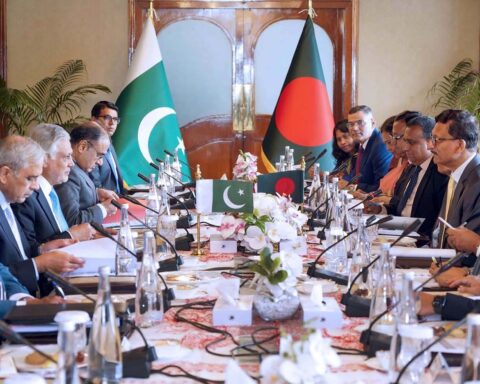
The negotiations took place between 6 and 10 March 2023 in Beijing. Saudi Arabia’s delegation was led by Musaad bin Mohammed Al-Aiban, Minister of State and National Security Advisor. Iran’s delegation was led by Admiral Ali Shamkhani, Secretary of the Supreme National Security Council. The Chinese mediation built on prior rounds of dialogue hosted by Iraq and Oman between 2021 and 2022, according to the joint trilateral statement published by China’s Ministry of Foreign Affairs.
The agreement produced concrete results. Iran reopened its embassy in Riyadh on 6 June 2023. By September 2023, the two countries had exchanged ambassadors — Alireza Enayati representing Tehran in Riyadh and Abdullah bin Saud al Anzi representing Riyadh in Tehran. A 2001 security cooperation agreement was reactivated. Direct flights between Mashhad and Dammam resumed in December 2024 after a nine-year hiatus, opening channels for religious tourism and limited business travel.
| Date | Event | Significance |
|---|---|---|
| 10 March 2023 | Beijing Agreement signed | Diplomatic normalisation after 7 years |
| 6 June 2023 | Iran reopens Riyadh embassy | Physical diplomatic presence restored |
| 5 September 2023 | Ambassadors exchanged | Full diplomatic representation |
| December 2024 | Direct flights resume (Mashhad-Dammam) | People-to-people ties reestablished |
| June 2025 | Saudi Arabia calls Iran “sister nation” | Peak of rhetorical alignment |
| 28 February 2026 | US-Israeli strikes on Iran | Beginning of the end |
| 1 March 2026 | Iran strikes Saudi territory | Détente effectively dead |
The agreement’s primary achievement was not friendship but containment of risk. Houthi cross-border attacks on Saudi Arabia declined significantly during the détente period. Iran’s support for the Houthis did not end, but the frequency and scale of attacks that directly threatened Saudi infrastructure diminished. For Crown Prince Mohammed bin Salman, this was the agreement’s purpose: reducing one source of instability while the Kingdom invested hundreds of billions of dollars in Vision 2030 megaprojects that required a perception of security to attract foreign capital.
The Atlantic Council’s one-year assessment of the deal, published in March 2024, noted that while security cooperation remained limited and deep strategic trust was absent, the agreement had “proved vital for de-escalation” across the region. The Century Foundation made a similar assessment, warning that “regional war could still break it” — a prediction that proved prescient within two years.
The June 2025 Test — When Saudi Arabia Called Iran a Sister Nation
The first real test of the détente came in June 2025, when Israeli and American forces struck multiple sites linked to Iran’s nuclear programme. Saudi Arabia’s response was unambiguous: the Kingdom was the first Arab nation to speak out, condemning the strikes as “blatant Israeli aggressions against the brotherly Islamic Republic of Iran, which undermine its sovereignty and security,” according to the Saudi Foreign Ministry statement reported by Arab News.
The language was carefully chosen. “Brotherly” and “sister nation” were not casual diplomatic pleasantries — they were strategic signals. By framing Iran as a fellow Islamic state under external aggression, Riyadh simultaneously reinforced the Beijing détente, distanced itself from Israeli military action, and positioned the Kingdom as a defender of Muslim sovereignty. Saudi Arabia refused to allow its territory or airspace to be used in the June 2025 strikes, a decision that the Arab Center in Washington described as vindicating the Kingdom’s push for détente.
Several European and Middle Eastern officials interviewed by Bloomberg and Reuters at the time described Saudi Arabia’s stance as reflecting MBS’s belief that a stable, non-hostile Iran served Saudi interests better than a destabilised one. The logic was straightforward: a collapsed Iranian state could unleash proxy chaos across Iraq, Lebanon, Yemen, and Syria — precisely the territories where Saudi Arabia had spent billions trying to reduce Iranian influence.
Yet the June 2025 response also contained seeds of ambiguity that became visible only in retrospect. The Saudi statement condemned Israeli aggression but did not offer Iran any material support. There were no emergency aid shipments, no offers to host Iranian diplomatic consultations, no joint military posturing. The “sister nation” rhetoric was a shield, not a sword — designed to maintain Saudi Arabia’s position as a responsible regional actor without committing resources to Iran’s defence.
This distinction matters because it establishes a pattern. Saudi Arabia’s relationship with Iran under the détente was always transactional, never ideological. When the transaction changed — when Iran went from being a manageable rival to an active attacker of Saudi territory — the language changed with it.
Did MBS Lobby Trump to Attack Iran?
The Washington Post reported on 28 February 2026 that Crown Prince Mohammed bin Salman had made “multiple private phone calls to Trump over the past month advocating military action” against Iran, according to four unnamed people familiar with the matter. The report claimed that both MBS and Israeli Prime Minister Benjamin Netanyahu had lobbied Trump “repeatedly” to launch strikes, and that Trump’s decision came after sustained pressure from Riyadh and Jerusalem.
Saudi Arabia denied the report immediately. A Saudi diplomat stated that “at no point in all our communication with the Trump Administration did we lobby the President to adopt a different policy,” insisting the Kingdom had been “consistent in supporting diplomatic efforts.” The denial was reported by Israel National News and several Pakistani outlets.
The truth almost certainly lies between the two positions. The New York Times separately reported that MBS had been “speaking regularly with Trump, urging harsh action against Iran” in the weeks preceding the strikes. If both reports are accurate, MBS was simultaneously maintaining public support for diplomacy while privately encouraging the military option — a classic example of what diplomatic historians call strategic ambiguity.
This was not unprecedented for Saudi Arabia. During the 2019 Abqaiq-Khurais drone attacks, then-Crown Prince Mohammed bin Salman similarly maintained public restraint while Saudi intelligence shared targeting data with American forces. The Kingdom has a long history of outsourcing military confrontation — preferring American firepower to Saudi deployment, and private encouragement to public endorsement.
The alleged lobbying also explains the speed of Saudi Arabia’s pivot after 28 February. If MBS had already concluded that an Iranian war served Saudi strategic interests — weakening Iran’s proxy network, degrading its military capacity, and eliminating Khamenei as a personal adversary — then the subsequent Iranian strikes on Saudi territory provided the public justification for a position the crown prince had already adopted in private. The $16 billion cost of the war would have been factored into the calculus long before the first missile was launched.
The Diplomatic Posture Spectrum — Five Positions Between Peace and War
Saudi Arabia’s nine-month evolution from détente partner to de facto belligerent can be understood through a framework that maps the stages between diplomatic engagement and military confrontation. Each position on the spectrum represents a distinct combination of public rhetoric, private communication, military posture, and economic behaviour. States rarely jump from one end to the other; they move through intermediate positions, often maintaining elements of multiple stances simultaneously.
| Position | Public Rhetoric | Private Channels | Military Posture | Economic Stance | Saudi Arabia’s Dates |
|---|---|---|---|---|---|
| Active Partner | “Sister nation,” joint statements | Ambassador-level engagement | Defensive, cooperative | Trade expansion, flights resumed | Mar 2023 – Jun 2025 |
| Sympathetic Neutral | Condemns attacks on Iran, defends sovereignty | Maintains channels, limits scope | Refuses airspace/basing for strikes | Business as usual | Jun 2025 – Jan 2026 |
| Strategic Ambiguity | Calls for diplomacy, avoids specifics | Multiple channels, mixed messaging | Elevated readiness, no deployment | Contingency planning begins | Jan – Feb 2026 |
| Defensive Confrontation | “Brazen and cowardly,” reserves right to respond | Backchannel de-escalation, frontchannel condemnation | Active air defense, intercepts | Oil output adjustments, OPEC+ coordination | 1 Mar 2026 – present |
| Active Belligerent | Declares war, mobilises forces | Ceasefire demands, ultimatums | Offensive operations | War economy | Not reached (as of 16 March) |
Saudi Arabia currently occupies Position Four — Defensive Confrontation. The Kingdom has not launched offensive strikes against Iran, has not formally declared war, and continues to maintain backchannel communications through intermediaries. But it has abandoned all pretence of neutrality, condemned Iran in language that mirrors wartime declarations, and actively intercepted Iranian weapons over its territory on a daily basis since 1 March.
The distinction between Position Four and Position Five is critical. Saudi Arabia has calculated that Defensive Confrontation — absorbing attacks, intercepting missiles, condemning Iran diplomatically, and letting American and Israeli forces handle offensive operations — maximises its strategic gains while minimising its military exposure. Entering the war as an active belligerent would risk Saudi casualties, invite escalated Iranian targeting of civilian infrastructure, and undermine the narrative that Iran is the sole aggressor.
This framework also explains why the Kingdom has not expelled the Iranian ambassador, despite calling Iran’s actions an existential threat. The ambassador’s presence in Riyadh serves multiple functions: it maintains a direct communication channel, signals to Beijing that Saudi Arabia has not fully abandoned the spirit of the 2023 agreement, and provides a mechanism for future de-escalation without the humiliation of having to request the restoration of severed ties.
Why Did Iran Attack the Kingdom It Was Trying to Court?
Iran’s decision to include Saudi Arabia in its retaliatory strikes remains the single most consequential strategic error in the conflict. Tehran’s targeting of American military bases on Saudi soil — Prince Sultan Air Base in Al Kharj, facilities in the Eastern Province, and intercepted strikes aimed at the Shaybah oil field — destroyed three years of diplomatic investment in a single night.
The rationale, as articulated by IRGC-linked media and analysed by RAND Corporation experts, was straightforward: Iran’s military doctrine treats American bases on foreign soil as legitimate targets regardless of the host nation’s political stance. From Tehran’s perspective, Prince Sultan Air Base was not Saudi infrastructure but an American forward operating position. The fact that attacking it also attacked Saudi sovereignty was, in the Iranian military calculus, a secondary consideration.
This was a catastrophic miscalculation. By treating Saudi Arabia as a mere host for American targets rather than a sovereign state with its own strategic agency, Iran replicated the mistake Saddam Hussein made when he attacked Kuwait in 1990 — a comparison Saudi commentator Daoud Al-Shirian drew explicitly in the Saudi press, according to MEMRI’s analysis. The attack unified Gulf states that had been divided on how to respond to the Iranian-American confrontation and gave MBS the domestic political cover to adopt the hardline stance he may have favoured all along.
Two civilians were killed and 12 others wounded when a projectile struck a residential area in Al Kharj, according to Saudi government statements reported by Al Jazeera. Five US Air Force refuelling planes were damaged at Prince Sultan Air Base. The U.S. Embassy in Riyadh issued shelter-in-place orders and evacuated non-emergency personnel. For ordinary Saudis who had spent three years being told that the Iranian threat was receding, the sirens over Riyadh shattered that narrative more effectively than any government statement could have.
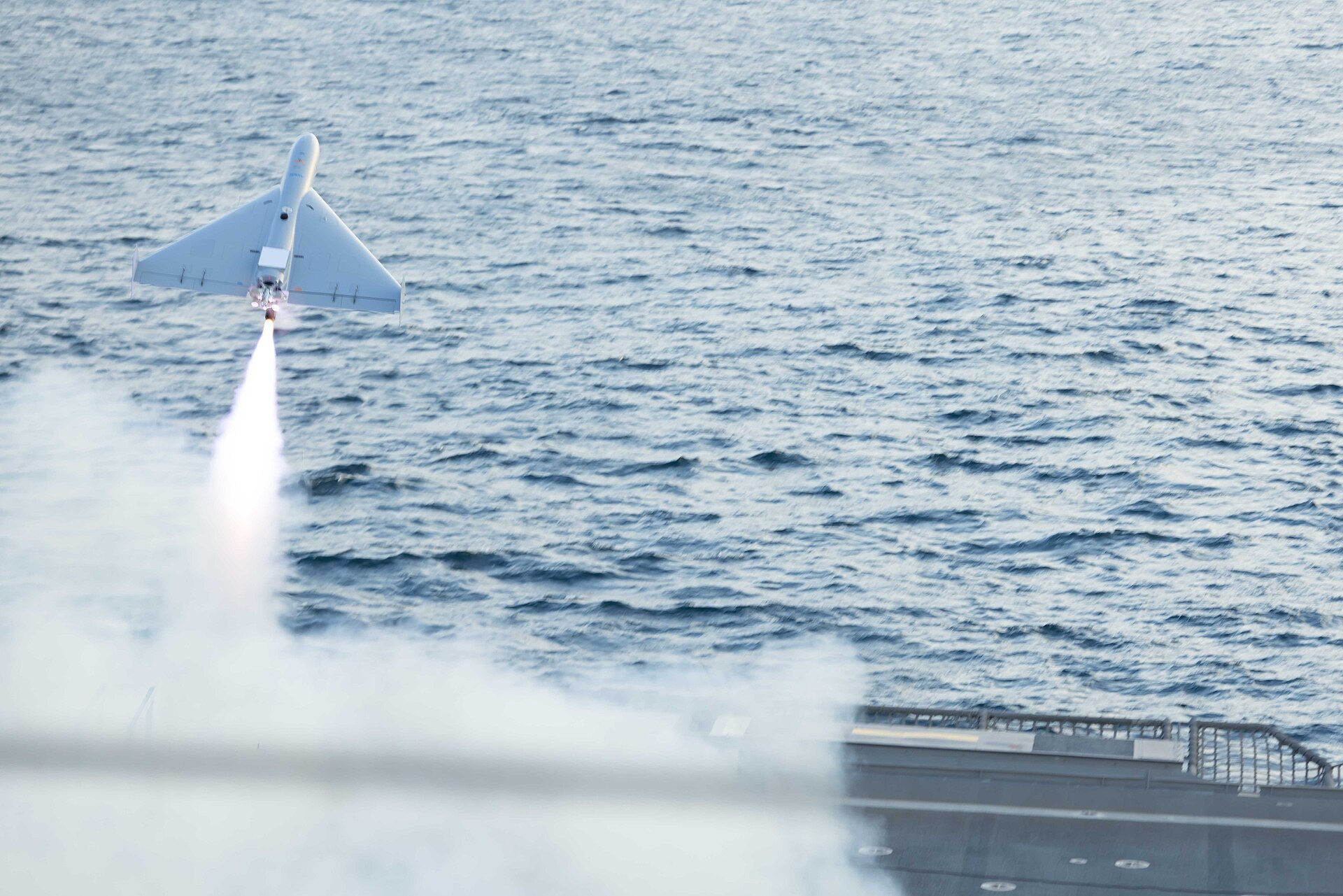
The scale of Iranian attacks has been staggering. Saudi air defences have intercepted dozens of drones and ballistic missiles on a near-daily basis since 1 March, including 51 drones in a single day and six ballistic missiles aimed at Al Kharj, according to Saudi Defence Ministry statements. The cost asymmetry is stark: Iran’s Shahed-136 drones cost an estimated $20,000 each, while the interceptor missiles Saudi Arabia uses to destroy them cost between $2 million and $4 million apiece.
Faisal bin Farhan and the Dual-Channel Doctrine
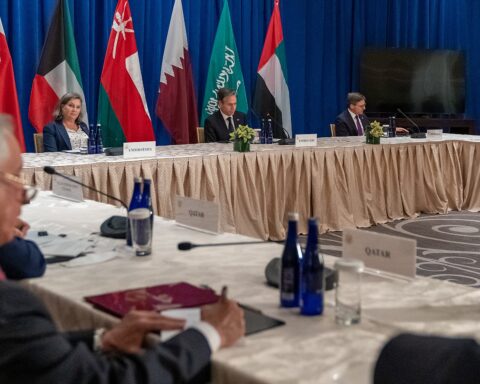
Saudi Foreign Minister Prince Faisal bin Farhan Al Saud has emerged as the architect of what amounts to a dual-channel diplomatic doctrine — publicly condemning Iran at the United Nations while privately maintaining lines of communication aimed at preventing the conflict from escalating further. That diplomatic strategy culminated in the emergency Arab-Islamic ministerial summit Riyadh convened on March 18 following the Larijani assassination.
Bloomberg reported on 6 March that Saudi officials had “deployed their diplomatic backchannel to Iran with greater urgency to de-escalate tensions.” The backchannel involved both security and diplomatic officials, though Bloomberg’s sources were uncertain whether senior officials had been directly engaged. The communication focused on containing the war’s scope rather than ending it — a distinction that reveals Saudi Arabia’s true strategic calculus.
At the UN Security Council, Saudi Arabia and the UAE jointly condemned Iranian attacks ahead of a special session in early March. The Security Council voted near-unanimously to condemn Iran’s strikes on Gulf states — a diplomatic victory that would have been unimaginable during the détente period, when Saudi Arabia actively blocked anti-Iranian resolutions to preserve the relationship.
The dual-channel approach reflects a sophisticated understanding of wartime diplomacy that Saudi Arabia developed during the Yemen conflict. Riyadh learned that maintaining communication with an adversary during active hostilities does not signal weakness — it provides intelligence, creates off-ramps, and positions the Kingdom as a responsible actor in the eyes of international mediators. The absence of a credible international coalition to end the fighting has made bilateral channels even more critical.
Pakistan’s Prime Minister Shehbaz Sharif added a third dimension to the diplomatic architecture when he flew to Riyadh on 12 March — hours after calling Iranian President Pezeshkian — positioning Islamabad as the only country with active senior-level diplomatic contact on both sides of the conflict. The visit underscored Saudi Arabia’s ability to activate its alliance network for diplomatic purposes without deploying military force.
What Does the Saudi Media’s Tone Shift Reveal About Riyadh’s Intentions?
In Saudi Arabia’s media environment, editorial columns in state-aligned publications function as sanctioned policy signals. The shift in tone between June 2025 and March 2026 is not journalism — it is statecraft conducted through print.
MEMRI’s analysis of Saudi media coverage documented a transformation that went far beyond standard wartime rhetoric. Khaled Al-Malik, editor of the Saudi daily Al-Jazirah, predicted that “Iran will be a different country” after the war — one that “threatened others with nuclear weapons” and would be “unlike what it has been for four decades.” This was not commentary; it was anticipation of regime change published in a state-aligned newspaper.
Abd Al-Rahman Al-Rashed, one of Saudi Arabia’s most influential journalists, posted imagery on social media suggesting the Islamic Republic’s collapse — captioning it “The Islamic Republic: 1979-2026.” The implication was unmistakable: Riyadh’s media establishment was not merely condemning Iranian attacks but celebrating the prospect of the Iranian system’s destruction.
Columnist Fahd Dibaji expressed optimism that Khamenei’s death would “liberate Iran, Iraq, and Yemen from the ideology” of Iranian governance. An unnamed columnist in Okaz framed the shift as establishing “sovereignty protected by force” with “national security a purely Saudi decision.”
| Dimension | June 2025 | March 2026 |
|---|---|---|
| Language toward Iran | “Sister nation,” “brotherly Islamic Republic” | “Brazen,” “cowardly,” “existential threat” |
| Blame attribution | Israel and United States | Iran exclusively |
| Regime change references | None | Multiple — “1979-2026,” “liberate Iran” |
| Military rhetoric | “Condemn aggression,” “call for restraint” | “Reserves the right to respond with force” |
| Historical comparisons | None | Saddam’s 1990 Kuwait invasion |
| Proxy references | Neutral — Houthis as Yemeni actors | Hostile — Proxies as Iranian weapons |
The comparison with Saddam Hussein’s Kuwait invasion, made by commentator Daoud Al-Shirian, was particularly loaded. In Saudi political memory, the Kuwait invasion represents the ultimate betrayal by a neighbouring Arab state — and it resulted in a US-led military campaign that destroyed Iraq’s military capabilities for a generation. By drawing the parallel explicitly, Saudi media was signalling that Iran’s actions placed it in the same category as Saddam’s Iraq: a regional aggressor that had forfeited its right to sovereignty protection by attacking its neighbours.
These editorial signals do not appear without sanction in Saudi Arabia’s media landscape. Their uniformity and intensity across multiple publications — Okaz, Al-Jazirah, Al-Sharq Al-Awsat — indicate coordinated messaging approved at the highest levels. The media shift did not follow the policy shift; it accompanied and amplified it, serving as a mechanism for preparing Saudi public opinion for a protracted confrontation that MBS appears to have concluded is unavoidable.
The Military Calculation Behind the Diplomatic Reversal
Saudi Arabia’s diplomatic reversal was not purely ideological or reactive. It was informed by a military assessment that Iran’s strategic position had deteriorated to the point where confrontation carried lower risks than accommodation.
The US-Israeli strikes of 28 February killed Supreme Leader Ali Khamenei, destroyed significant military infrastructure, and degraded Iran’s nuclear programme — achievements that Saudi Arabia had sought for decades through diplomatic pressure, sanctions advocacy, and intelligence sharing. Iran’s retaliatory capacity, while devastating in the short term, was finite. RAND Corporation experts assessed that Iran’s Islamic Republic “shaped by Ali Khamenei over the last 36 years cannot exist without him,” implying fundamental political instability that would weaken Tehran’s ability to sustain prolonged military operations.
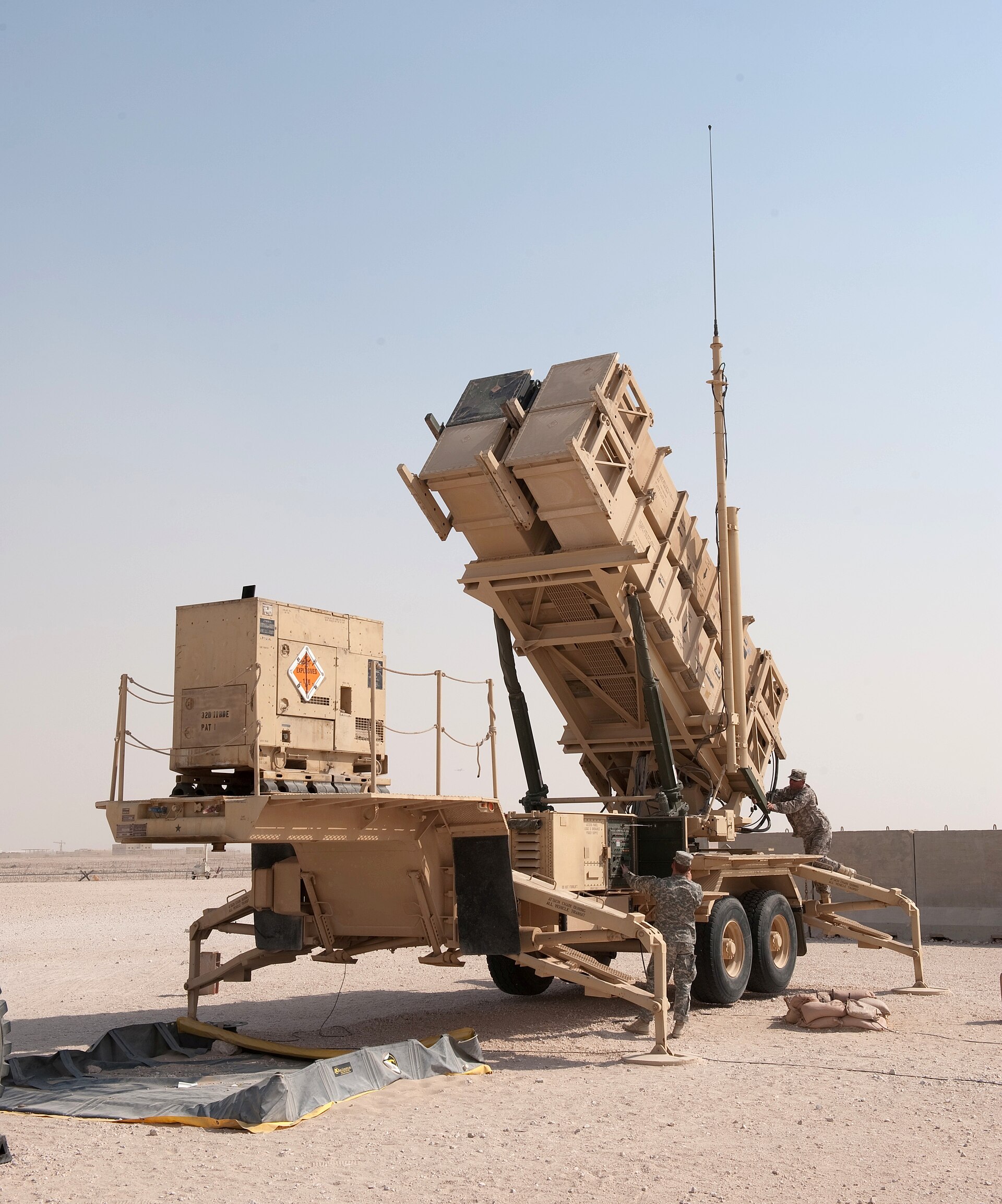
Saudi Arabia’s own military posture supported a confrontational stance. The Kingdom operates one of the region’s most advanced air defence networks, built over decades with American-supplied Patriot systems, THAAD batteries, and indigenous upgrades. While the cost of interception far exceeds the cost of Iranian drones — a ratio documented across multiple analyses — the system has performed effectively, intercepting the vast majority of incoming threats.
The war also offered Saudi Arabia an opportunity that peacetime diplomacy could not provide: the degradation of Iran’s proxy network without Saudi military involvement. Hezbollah, Hamas, the Houthis, and Iraqi Popular Mobilisation Forces — the “axis of resistance” that had constrained Saudi regional ambitions for decades — were being ground down by Israeli and American operations. Saudi Arabia’s restraint from offensive action was not passivity; it was strategic patience, allowing others to do the fighting while Riyadh harvested the geopolitical benefits.
Chatham House analysts noted in March 2026 that the Iran war had taught Gulf states a “hard-power lesson” — that diplomatic hedging had limits and that military capability remained the foundation of sovereignty. For Saudi Arabia, this lesson reinforced MBS’s pre-existing commitment to defence modernisation, including a $5 billion deal signed with China to build combat drones in Jeddah and efforts to localise defence manufacturing through SAMI and GAMI.
The Post-War Architecture Saudi Arabia Is Already Building
While the fighting continues, Saudi Arabia is positioning itself for a post-war regional order that looks dramatically different from the one that existed under the détente. The Kingdom’s diplomatic behaviour since 1 March suggests a five-pillar strategy for the aftermath.
The first pillar is an enhanced American security partnership. Saudi Arabia’s $1 trillion pledge to Trump, reported extensively in February 2026, was never purely economic — it was the price of a deeper security relationship that includes expanded basing rights, advanced weapons systems, and a de facto mutual defence commitment. The Iran war has accelerated negotiations that might otherwise have taken years.
The second pillar is Israeli normalisation. MBS’s public reluctance to pursue the Abraham Accords — a reluctance that deepened after Israel’s Gaza operations — has been quietly set aside. The elimination of Iran’s nuclear programme and the degradation of Hezbollah and Hamas remove the primary security objections that Saudi officials cited privately as barriers to normalisation. The war has made MBS indispensable to both Washington and Jerusalem, strengthening his negotiating position on Palestinian statehood conditions.
The third pillar is Gulf military integration. The Gulf Cooperation Council, which fractured over the Qatar blockade and never fully recovered, has been forced into operational coordination by Iranian attacks on all member states. Saudi Arabia, as the GCC’s largest military power, is positioning itself as the anchor of a collective defence architecture that would have been politically impossible before the war. By 17 March, Gulf states had moved beyond coordination to collectively pressing Washington to neutralize Iran’s military capacity permanently — a demand that would have been unthinkable during the détente era.
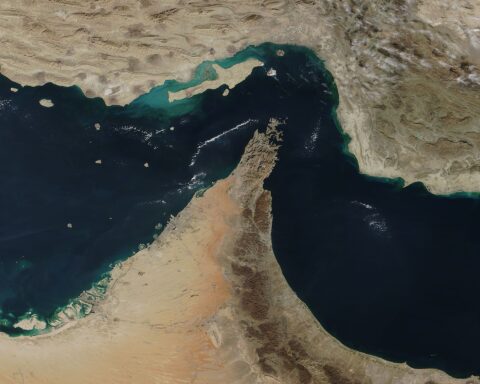
The fourth pillar is energy market dominance. With Iranian oil exports disrupted, the Strait of Hormuz blockaded, and global markets desperate for supply, Saudi Arabia’s role as the world’s swing producer has never been more strategically valuable. OPEC data shows Saudi output increased to 10.882 million barrels per day in February 2026 — up from 10.1 million in January — and Aramco raised its Arab Light benchmark by $2.40, the largest adjustment since August 2022. The revelation that Washington is allowing Iranian tankers to continue transiting Hormuz while Saudi exports remain disrupted adds another layer to Riyadh’s complex wartime calculus.
The fifth pillar is defence industry self-sufficiency. The war exposed Saudi Arabia’s dependence on American weapons systems and spare parts — a vulnerability that MBS has been working to address through SAMI (Saudi Arabian Military Industries) and GAMI (General Authority for Military Industries). The $5 billion Chinese drone deal and discussions with South Korean manufacturers for next-generation air defence systems represent accelerated efforts to diversify suppliers and build domestic capacity.
| Pillar | Pre-War Status | Current Status | Post-War Goal |
|---|---|---|---|
| US Security Partnership | Strained — arms sale debates, JCPOA tensions | Deepening — $1T pledge, expanded basing | Formal defence pact |
| Israeli Normalisation | Stalled — Gaza, Palestinian conditions | Accelerating — shared Iranian threat | Abraham Accords expansion |
| GCC Military Integration | Fragmented — Qatar legacy | Operational coordination under fire | Collective defence framework |
| Energy Market Dominance | OPEC+ discipline, quota disputes | Swing producer in crisis | Permanent structural advantage |
| Defence Self-Sufficiency | Early stages — SAMI, GAMI | Accelerated — Chinese, Korean deals | 50% localisation target |
Can the Détente Ever Be Restored?
The destruction of the Saudi-Iranian détente is likely permanent in its original form. Three structural factors make restoration of the 2023 framework impossible, even if the current war ends quickly.
First, the trust deficit is now existential. Saudi Arabia invested significant political capital in the Beijing Agreement, defended Iran publicly in June 2025, and maintained diplomatic channels through the most dangerous period in Gulf security since 1991. Iran’s response — launching drones and missiles at Saudi territory regardless of these gestures — demonstrated to Riyadh that détente offered no protection against Iranian military action. No Saudi leader will accept a similar arrangement again without enforceable security guarantees that Iran cannot provide.
Second, the domestic political landscape has shifted. Saudi public opinion, shaped by 17 days of air raid sirens over Riyadh and the deaths of Saudi civilians, will not support a return to “sister nation” rhetoric. The social contract that MBS built — security and prosperity in exchange for political quiescence — was shaken by the sirens during Ramadan and the shelter-in-place orders that disrupted daily life for 35 million people. Any future Saudi-Iranian engagement will have to be framed as pragmatic coexistence rather than partnership.
Third, the geopolitical context has changed irreversibly. China, which brokered the original agreement, has seen its credibility as a Gulf mediator diminished by the failure of the détente to prevent war. Beijing’s inability — or unwillingness — to restrain Iran after the agreement was signed undermines the proposition that Chinese mediation offers a viable alternative to American security guarantees. Saudi Arabia is unlikely to entrust its security to a framework guaranteed by a power that demonstrated no ability to enforce compliance.
What may emerge instead is a cold peace — formal diplomatic relations without strategic trust, maintained for practical reasons (consular services, Hajj coordination, energy market management) but stripped of the aspirational language that characterised the 2023-2025 period. The deeper question — whether Saudi Arabia can end a war it did not start — depends on whether Riyadh can build a diplomatic architecture from the wreckage of the one that collapsed. Iran, if its current regime survives, will emerge from the war economically devastated and militarily diminished, reducing both its ability and its incentive to threaten Saudi Arabia directly.
“Iran will be a different country… unlike what it has been for four decades.”
Khaled Al-Malik, editor of Saudi daily Al-Jazirah, March 2026
The deeper question is whether Saudi Arabia even wants the détente restored. The evidence suggests that MBS views the current conflict as a once-in-a-generation opportunity to reshape the regional order. A weakened Iran means weaker proxies, reduced competition for regional influence, and a security environment more favourable to Vision 2030’s long-term goals. The détente served its purpose — buying time and reducing risk during a period of Saudi domestic transformation. Now that the transformation has reached a stage where external confrontation is manageable, the insurance policy is no longer needed.
Frequently Asked Questions
When did Saudi Arabia shift its position on Iran?
Saudi Arabia’s shift from neutrality to confrontation occurred on 28 February 2026, when Iran launched retaliatory strikes on Saudi territory following US-Israeli attacks on Iran. The Foreign Ministry described Iran’s actions as “brazen and cowardly” and reserved the right to respond with military force — a dramatic change from June 2025, when Saudi Arabia called Iran a “sister nation” and condemned strikes against it.
Did Saudi Arabia really lobby the United States to attack Iran?
The Washington Post reported that Crown Prince Mohammed bin Salman made multiple private phone calls to President Trump advocating military action against Iran in the weeks before the 28 February strikes, citing four unnamed sources. Saudi Arabia denied the report, stating it had been “consistent in supporting diplomatic efforts.” The New York Times separately reported that MBS had been “speaking regularly with Trump, urging harsh action against Iran.”
What was the China-brokered Saudi-Iran agreement?
The Beijing Agreement, signed on 10 March 2023, restored diplomatic relations between Saudi Arabia and Iran after seven years of severance. Brokered by China, it led to the reopening of embassies, the exchange of ambassadors by September 2023, the resumption of direct flights in December 2024, and the reactivation of a 2001 security cooperation agreement. The agreement collapsed when Iran struck Saudi territory on 1 March 2026.
Is Saudi Arabia officially at war with Iran?
Saudi Arabia has not declared war on Iran and has not launched offensive military operations against Iranian targets as of 16 March 2026. The Kingdom occupies a position of defensive confrontation — intercepting Iranian drones and missiles over its territory, condemning Iran diplomatically, and supporting allied military operations through basing and intelligence sharing, but stopping short of direct military engagement.
What happens to Saudi-Iran relations after the war?
A restoration of the 2023 détente is considered unlikely by most analysts. The trust deficit created by Iranian attacks on Saudi territory, the shift in Saudi public opinion, and China’s diminished credibility as a mediator make a return to “sister nation” rhetoric politically impossible. A cold peace — formal diplomatic ties without strategic trust — is the most probable outcome, with relations managed through practical necessity rather than aspirational partnership.
How has the Saudi media’s tone toward Iran changed?
Saudi state-aligned media shifted from describing Iran as a “brotherly Islamic Republic” in June 2025 to supporting regime change in March 2026. Multiple Saudi columnists referenced the collapse of the Islamic Republic, compared Iran to Saddam Hussein’s Iraq, and predicted the “liberation” of Iran, Iraq, and Yemen from Iranian ideology. The uniform tone across publications including Okaz, Al-Jazirah, and Al-Sharq Al-Awsat indicates coordinated messaging approved at the highest levels of government.