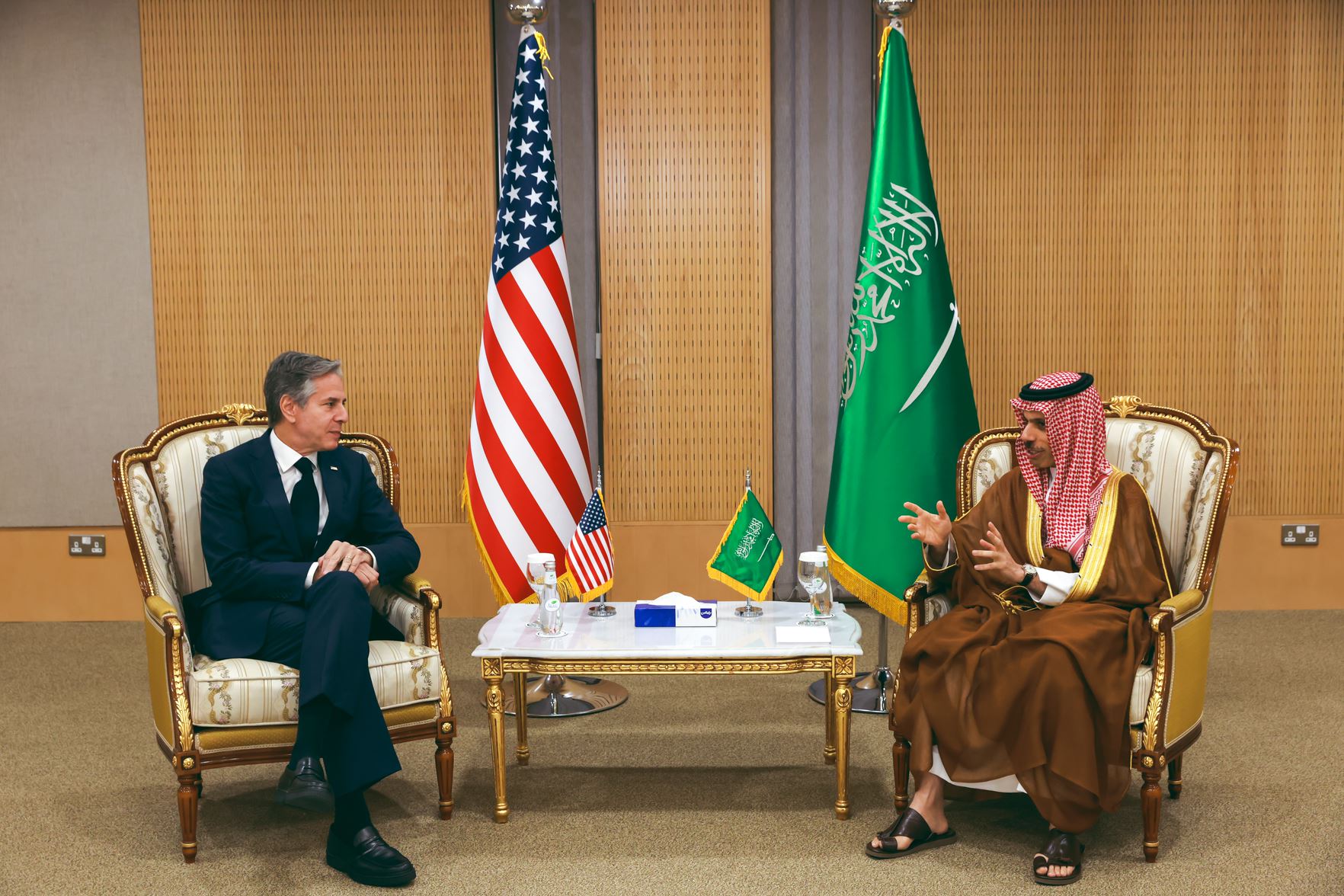

RIYADH — Saudi Arabia possesses the most expensive and extensively equipped military in the Arab world, a force that has absorbed more than $600 billion in Western arms over the past two decades and yet has never once launched a direct strike against a state adversary. That restraint ended its passive chapter on March 19, 2026, when Foreign Minister Prince Faisal bin Farhan declared before twelve allied nations that trust with Tehran had been “completely shattered” and that the Kingdom “reserves the right to take military action.” The statement marked the most explicit threat of Saudi offensive operations since the 1991 Gulf War, raising an urgent question that defense analysts, Gulf diplomats, and Pentagon planners are now scrambling to answer: what would happen if the Kingdom actually used the arsenal it spent a generation assembling?
The answer is more formidable — and more complicated — than most observers appreciate. A review of Saudi procurement records, force disposition data, coalition contributions, and wartime performance over the first twenty days of the Iran conflict reveals a military establishment that bears little resemblance to the force that stumbled into Yemen in 2015. Three factors have converged to reshape Saudi strike calculus: a $78 billion defense budget that ranks fifth globally, a new defense minister in Crown Prince Mohammed bin Salman‘s brother who has restructured command authority, and an unprecedented multinational coalition already operating from Saudi soil.
Table of Contents
- How Large Is Saudi Arabia’s Military?
- What Can the Royal Saudi Air Force Actually Do?
- The Air Defense Shield Under Twenty Days of Fire
- Why Did the Yemen War Damage Saudi Military Credibility?
- The Khalid bin Salman Reforms
- What Would a Saudi Strike on Iran Look Like?
- The Coalition Force Multiplier
- Can Saudi Arabia’s Navy Control Two Seas at Once?
- The Strategic Missile Force Nobody Discusses
- The War Economy Behind the Arsenal
- What Stops Saudi Arabia From Striking Tomorrow?
- The Strike Readiness Assessment
- Frequently Asked Questions
How Large Is Saudi Arabia’s Military?
Saudi Arabia maintains approximately 257,000 active military personnel spread across five formal branches — the Royal Saudi Land Forces, the Royal Saudi Air Force, the Royal Saudi Navy, the Royal Saudi Air Defense Force, and the Royal Saudi Strategic Missile Force — plus the Saudi Arabian National Guard, a parallel military structure of roughly 100,000 troops that reports directly to the Crown Prince. Combined, the Kingdom fields more than 350,000 uniformed personnel, a figure that excludes private military contractors and the approximately 15,000 Pakistani troops that deployed to Saudi Arabia in early March 2026.
These raw numbers, however, obscure the real story. Saudi Arabia does not compete on manpower. Iran fields 610,000 active troops and can mobilize several million Basij militia. The Kingdom’s military advantage has always been technological — its forces operate platforms that Iranian counterparts cannot match and in many cases cannot even detect.
| Indicator | Saudi Arabia | Iran | Saudi Advantage |
|---|---|---|---|
| Active military personnel | 257,000 | 610,000 | Iran leads 2.4x |
| Defense budget (2025) | $78 billion | $10.3 billion | Saudi leads 7.6x |
| 4th/5th generation fighters | 304 | ~40 | Saudi leads 7.6x |
| Main battle tanks | 840 | ~1,500 | Iran leads 1.8x |
| Ballistic missile interceptors | ~1,100 | 0 | Saudi exclusive |
| Naval combat vessels | 55 | ~100 | Iran leads in quantity; Saudi in tonnage |
The spending disparity is the defining asymmetry. Saudi Arabia’s $78 billion defense budget — a figure confirmed by Breaking Defense in February 2025 — represents 21 percent of total government spending and 7.1 percent of GDP. Iran’s official military budget is roughly $10 billion, though actual spending including IRGC off-book expenditures may reach $25 billion according to IISS estimates. Even at the higher estimate, Saudi Arabia outspends Iran by more than three to one.
Global Firepower ranks Saudi Arabia 25th among 145 nations in its 2026 composite military strength index, while Military Power Rankings places it 17th when factoring in equipment quality and logistics capability. Both rankings have shifted upward since the war began, reflecting the combat data now available on Saudi air defense performance. That same data is now reshaping Gulf arms procurement, as battlefield economics force the Kingdom to diversify beyond its traditional American suppliers.
The Middle East briefing 3,000+ readers start their day with.
One email. Every weekday morning. Free.
What Can the Royal Saudi Air Force Actually Do?
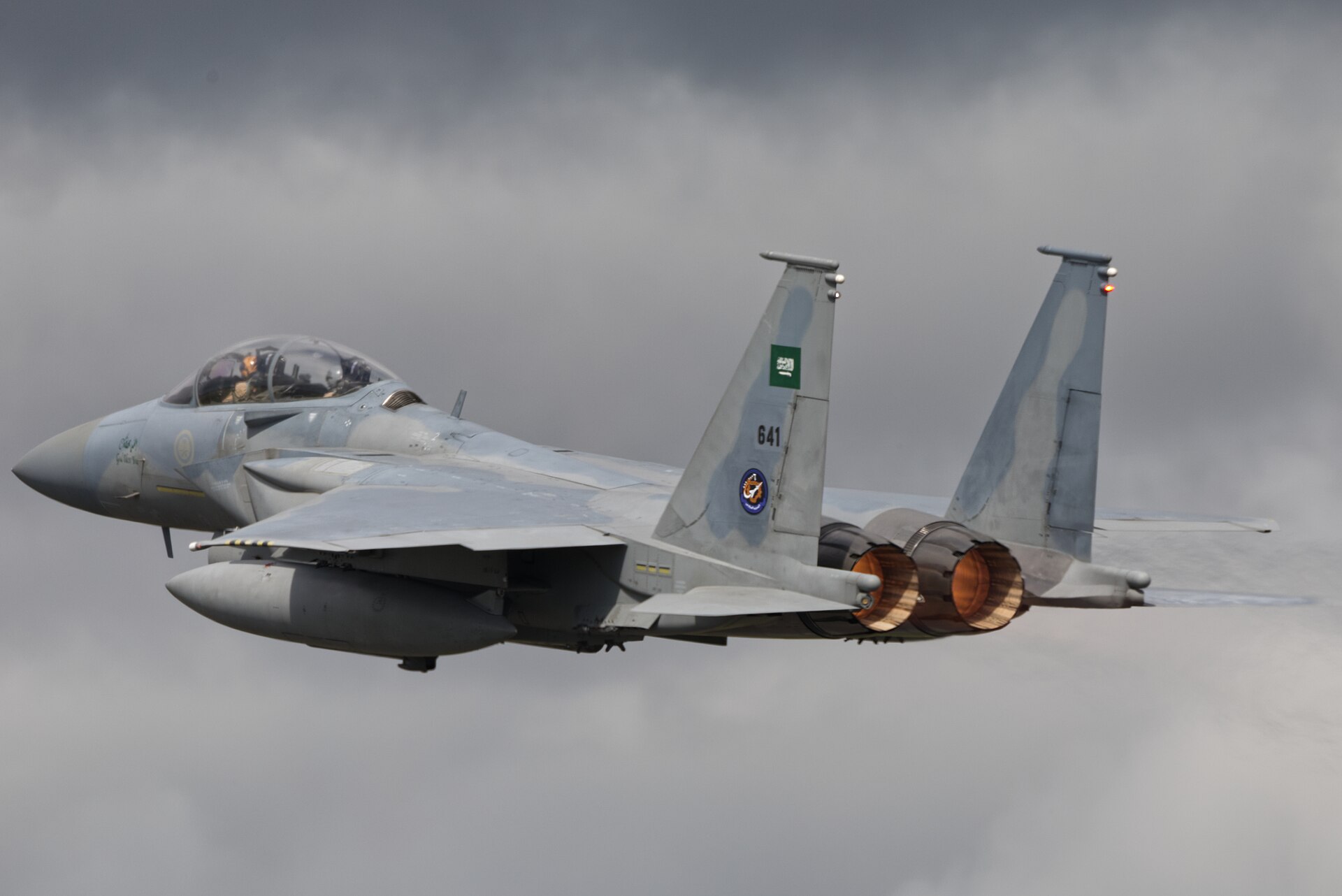
The Royal Saudi Air Force operates the most powerful combat air fleet in the Middle East outside of Israel, with 914 total aircraft including 304 4th-generation or better combat fighters. The backbone of this force is the F-15 family — Saudi Arabia flies the second-largest F-15 fleet on earth after the United States Air Force.
The fleet breaks down into three tiers. At the top sit 84 F-15SA Strike Eagles, the most advanced variant of the F-15 ever built for export. Delivered between 2016 and 2020 under a $29.4 billion Foreign Military Sales contract, the F-15SA features an APG-63(V)3 active electronically scanned array radar, digital fly-by-wire flight controls, an infrared search-and-track system, and compatibility with the full range of American precision-guided munitions including JDAM, SLAM-ER, and the AGM-84H SLAM-ER standoff cruise missile. A single F-15SA can carry 23,000 pounds of ordnance — more than a World War II heavy bomber.
Below the F-15SA sit approximately 68 F-15SR aircraft, older F-15S models upgraded to near-SA standard with improved avionics and weapons integration. Meanwhile, American A-10 Thunderbolt II attack aircraft and AH-64 Apache helicopters are conducting maritime interdiction operations in the Strait of Hormuz, destroying Iranian fast-attack boats to reopen the waterway. The third tier comprises 80 F-15C/D air superiority fighters, primarily tasked with defensive counter-air missions over Saudi territory. Complementing the Eagle fleet are 72 Eurofighter Typhoons, making Saudi Arabia the largest Typhoon operator outside Europe, and a diminishing fleet of Tornado IDS strike aircraft that continue to serve in the ground attack role.
The RSAF’s theoretical combat radius encompasses all of Iran’s western military infrastructure. An F-15SA operating from King Fahd Air Base near Taif can reach Tehran with a single aerial refueling, while targets in Iran’s Khuzestan province — home to the bulk of Iranian oil infrastructure — lie within unrefueled combat range. Saudi Arabia operates six Airbus A330 MRTT tanker aircraft and has access to additional American KC-135 and KC-46 tankers operating from Gulf bases.
A critical and underappreciated capability is the RSAF’s precision strike capacity. During the Yemen campaign, despite widespread criticism of targeting failures, Saudi pilots flew more than 25,000 combat sorties and dropped tens of thousands of precision-guided munitions. The operational experience — painful and controversial as it was — produced a generation of combat-tested aircrew that neither Qatar, the UAE, nor any other Gulf state possesses.
The Air Defense Shield Under Twenty Days of Fire
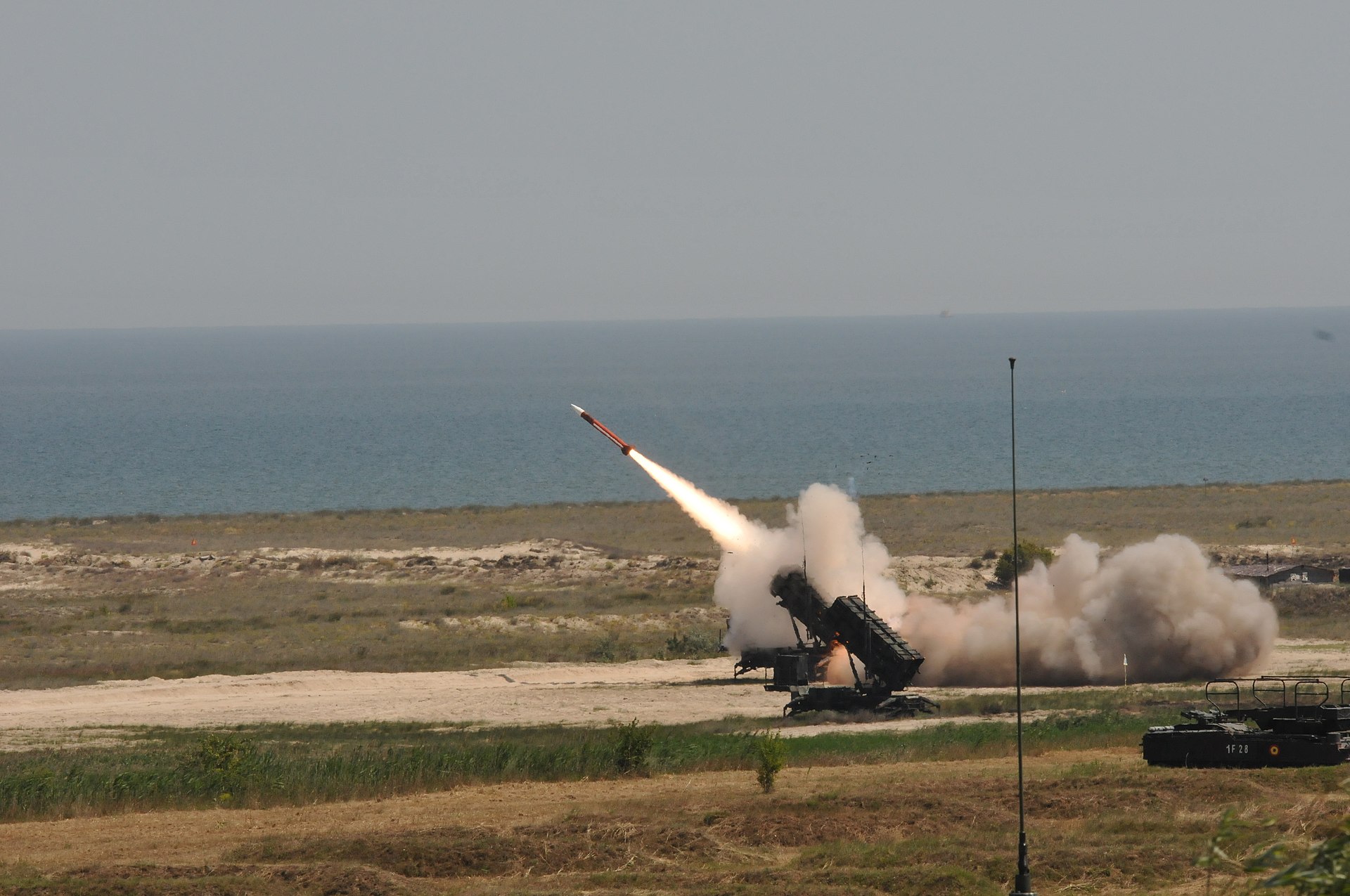
The Royal Saudi Air Defense Force operates the most extensive integrated air and missile defense network in the Middle East, a layered system that has been tested under sustained combat conditions since February 28, 2026. The results have been both impressive and sobering.
At the core of the network are 108 MIM-104 Patriot launchers organized into six battalions, fielding a mix of PAC-2 GEM-T interceptors for aircraft and cruise missiles and PAC-3 MSE interceptors for ballistic missile threats. Saudi Arabia operates more Patriot launchers than any country except the United States. In February 2026, just weeks before the war began, the US State Department approved a $9 billion sale of up to 730 additional PAC-3 MSE missiles — an order that the conflict has made dramatically more urgent.
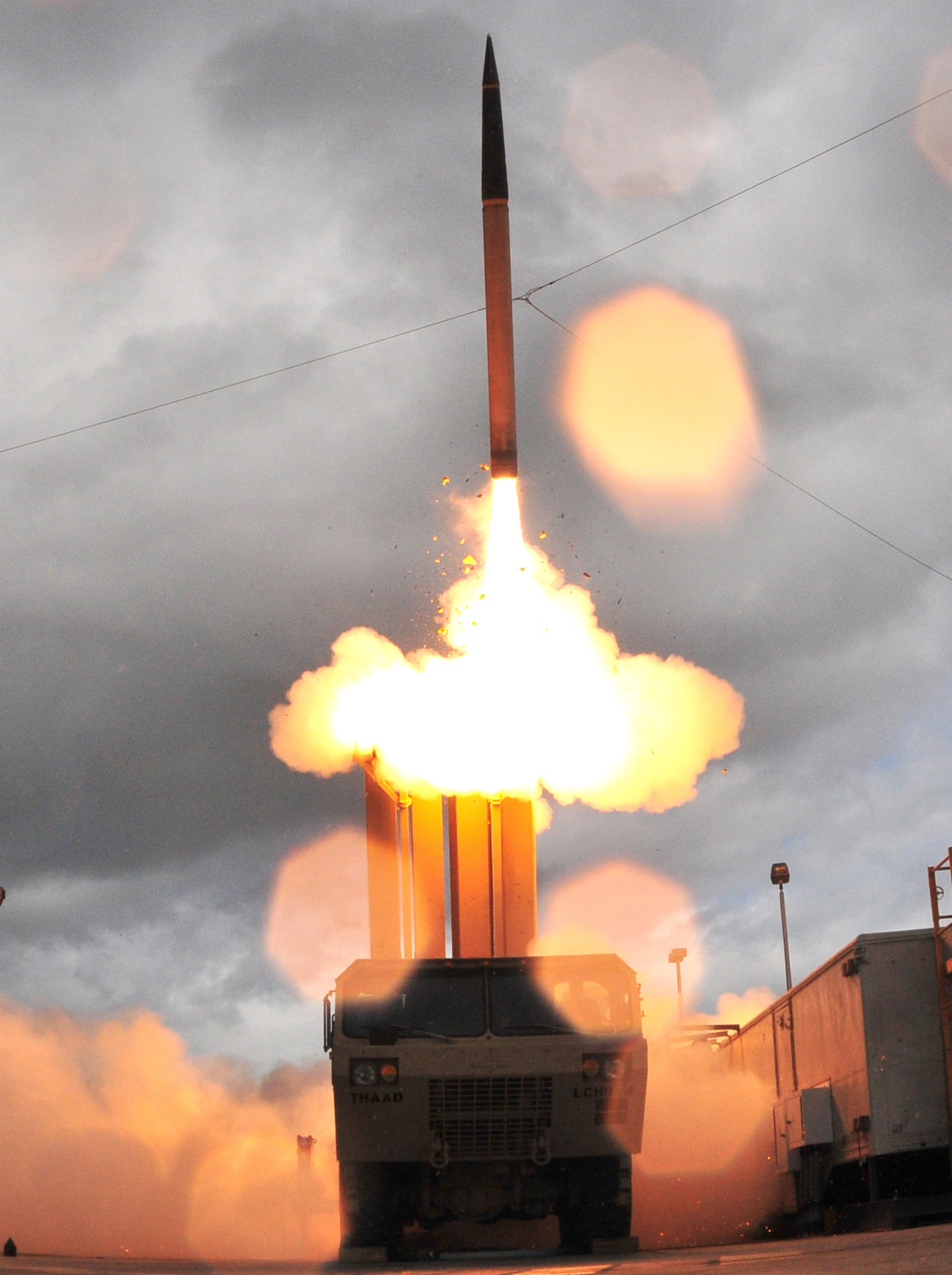
Above the Patriot layer sits one operational THAAD (Terminal High Altitude Area Defense) battery, inaugurated in July 2025 as part of a seven-battery, 360-interceptor package signed in October 2017. A second battery crew was completing training at Fort Bliss, Texas when the war erupted. THAAD provides exoatmospheric interception capability against medium-range ballistic missiles — the class of weapon Iran has been firing at Riyadh and the Eastern Province.
Combat data from the first twenty days paints a mixed picture. Saudi Patriot and THAAD batteries have intercepted an estimated 75 to 90 ballistic missiles, firing between 150 and 250 interceptors to engage those targets — an engagement ratio of roughly two interceptors per incoming missile, consistent with standard doctrine. Against cruise missiles and drones, the success rate has been lower. Iran has launched more than 3,800 missiles and drones at Gulf targets since February 28, according to figures cited by Al Jazeera, and a significant number have evaded interception, particularly the low-flying Shahed-136 one-way attack drones that hug terrain below radar coverage.
The interceptor sustainability question is acute. At the current rate of consumption, the $16 billion emergency arms package rushed through by Secretary of State Marco Rubio on March 20 addresses an immediate crisis. CSIS analysis of the depleting global interceptor inventory warns that sustained Iranian launches at the current rate would exhaust Saudi Patriot PAC-3 stocks within 60 to 90 days without emergency resupply, a timeline that has concentrated minds in both Riyadh and Washington.
Why Did the Yemen War Damage Saudi Military Credibility?
Understanding what Saudi Arabia can do in 2026 requires understanding what it failed to do in 2015. The Saudi-led intervention in Yemen — launched in March 2015 with a stated objective of restoring the internationally recognized government and defeating Houthi rebels — became the Kingdom’s longest and most painful military experience. After a decade of operations, no core objective had been achieved.
The failures were systemic, not merely tactical. An assessment by the Arab Center Washington DC published in March 2025 identified five structural problems: the absence of a coherent strategy or exit plan; reactive rather than proactive campaign design; divergent agendas between Saudi Arabia and the UAE that fractured coalition unity; reliance on air power alone without sufficient ground maneuver capacity; and a command structure that prioritized political loyalty over operational competence.
The Middle East Institute’s assessment was blunter: Saudi Arabia was “running around in circles,” investing enormous resources for minimal territorial gains while Iran’s proxy — the Houthis — grew stronger with each year. The Small Wars Journal concluded in November 2025 that the Saudi military demonstrated itself to be “more of a self-defense military than an expeditionary one,” incapable of sustained ground operations without direct American advisory support.
These criticisms were largely valid at the time. They are substantially less valid today, for reasons that have received insufficient attention in Western analysis. The Saudi military that stumbled into Yemen in 2015 was led by Mohammed bin Salman, then a 29-year-old deputy crown prince with no military experience, operating through a defense ministry that had not fought a conventional campaign since 1991. The military that faces Iran in 2026 has been restructured from the top down by a different member of the royal family, with different doctrine, different command relationships, and nine years of continuous combat experience.
The Khalid bin Salman Reforms
When Prince Khalid bin Salman was appointed Minister of Defense in September 2022, he inherited an institution that had been humiliated in Yemen and questioned by every major Western defense think tank. What followed was the most significant restructuring of Saudi military command authority since the establishment of the modern armed forces.
The reforms operated on three axes. The first was command integration. Khalid bin Salman established a Joint Forces Command modeled on the US Goldwater-Nichols framework, breaking down the rigid service-branch silos that had prevented coordinated operations in Yemen. For the first time, air, land, naval, and air defense forces operated under a unified operational commander for theater-level operations.
The second axis was human capital. The defense minister launched the largest military exchange program in Saudi history, sending hundreds of officers annually to American, British, French, and South Korean military academies. Simultaneously, a ruthless performance review system replaced the seniority-based promotion structure that had elevated politically connected officers over competent ones. According to a Tactical Report analysis from 2026, more than 40 percent of battalion-level commanders in the Saudi Arabian Army were replaced between 2023 and 2025.
The third axis was doctrine. The Kingdom moved away from the large-scale expeditionary warfare model that failed in Yemen toward what defense analysts describe as a deterrence-plus-precision framework: maintaining overwhelming defensive capability while developing the capacity for selective, high-precision offensive strikes against hardened targets. This doctrine is explicitly designed for a scenario in which Saudi Arabia must strike Iranian military infrastructure — not occupy Iranian territory.
The February 2026 World Defense Show in Riyadh provided visible evidence of these reforms in action. At the event, the defense ministry signed four major agreements with MBDA (French missile systems), Raytheon Saudi Arabia, Hanwha Aerospace (South Korean precision munitions), and Leonardo (Italian electronic warfare systems). The show generated $8.8 billion in contracts across 60 deals, with 46 percent of contract value going to Saudi national companies — up from just 4 percent domestic content when defense localization began in 2018.
What Would a Saudi Strike on Iran Look Like?
The most likely Saudi offensive scenario is not a full-scale air campaign against Tehran. It is a precision strike package targeting Iranian launch sites, drone production facilities, and forward operating bases in southwestern Iran — the staging areas from which the daily attacks on Gulf infrastructure originate.
A review of Saudi force disposition and Iranian infrastructure geography suggests three probable target sets. The first encompasses Iran’s ballistic missile launch sites in Khuzestan and Fars provinces, the positions from which Shahab-3 and Qiam-1 missiles have been fired at Riyadh and the Eastern Province. These sites are within 800 kilometers of Saudi airbases — well within unrefueled F-15SA combat radius.
The second target set includes the drone assembly and launch facilities scattered across western Iran. Iran operates at least fifteen known drone production and assembly sites, according to IISS data, many of them deliberately co-located with civilian infrastructure to complicate Western targeting approval. A Saudi operation would face no such political constraint. Riyadh is not bound by the US rules of engagement that limit American strikes to sites verified as exclusively military.
The third and most strategically significant target set is Iran’s integrated air defense network along its western border. Iran operates a mix of Russian-supplied S-300PMU-2 systems and indigenous Bavar-373 long-range surface-to-air missiles. Suppression of these systems — known in military terminology as SEAD (Suppression of Enemy Air Defenses) — would be a prerequisite for sustained Saudi air operations over Iranian territory. The RSAF has trained extensively on SEAD tactics in joint exercises with the US Air Force, and the F-15SA carries the AGM-88 HARM anti-radiation missile specifically designed for this role.
The strike package itself would likely involve 48 to 72 aircraft per wave, with F-15SA strike fighters escorted by Eurofighter Typhoons in the air superiority role, supported by Airbus A330 MRTT tankers and AWACS command-and-control aircraft. American ISR (intelligence, surveillance, and reconnaissance) support — including real-time satellite targeting data — would be essential. Washington has not publicly committed to providing this support for Saudi offensive operations, but the depth of US-Saudi intelligence sharing since February 28 makes it operationally feasible.
The operational challenge is not capability but sustainability. A single strike wave can be executed with high confidence. A sustained multi-day air campaign — the kind that would be required to degrade Iran’s launch capacity permanently — would strain Saudi munitions stocks, aircrew endurance, and tanker availability. This is the fundamental difference between a punitive strike and a war-ending campaign, and it is the calculation that has kept Saudi F-15s on the ground for twenty days.
The Coalition Force Multiplier
Saudi Arabia is not facing Iran alone, and the coalition assets now operating from Saudi soil substantially change the strike calculus. As of March 20, at least seven nations have deployed military assets to the Kingdom or are operating in direct support of Saudi air defense.
| Nation | Assets Deployed | Primary Role | Status |
|---|---|---|---|
| United States | THAAD battery, Patriot batteries, F-35s, F-22s, B-2 bombers, KC-46 tankers, AWACS | Air defense, strike, ISR | Operational since Feb 28 |
| United Kingdom | RAF Typhoon squadron, air defense radar | Air defense, CAP | Operational since March 5 |
| Pakistan | ~15,000 troops, JF-17 fighters, air defense systems | Ground defense, point air defense | Deployed March 8-12 |
| Greece | Patriot battery | Air defense (Yanbu refinery) | Operational since March 15 |
| France | SAMP/T air defense, Rafale fighters (regional) | Air defense, maritime patrol | Regional deployment |
| South Korea | Technical advisors, Cheongung II SAM components | Air defense technical support | Advisory since March 10 |
| Turkey | KORAL electronic warfare systems | EW support | Under negotiation |
The most significant coalition contribution is American. The United States has approximately 45,000 military personnel in the Gulf region as of mid-March, including assets at Prince Sultan Air Base, Al Udeid Air Base in Qatar, and Al Dhafra Air Base in the UAE. The Pentagon’s $200 billion supplemental funding request submitted on March 19 — the largest war funding request since Iraq — confirms that Washington views the Gulf as a sustained theater of operations.
Pakistan’s deployment is the largest non-American contribution and the most politically significant. Islamabad has deployed approximately 15,000 troops to Saudi Arabia, including air defense units and JF-17 fighter aircraft. As a nuclear-armed state with the sixth-largest military in the world, Pakistan’s presence provides Saudi Arabia with a deterrent capability that extends well beyond conventional military math. Yet the terms under which Pakistan’s September 2025 defence pact could escalate from garrison deployment to combat participation remain deliberately ambiguous.
The Greek Patriot battery that intercepted Iranian missiles over Yanbu on March 19 demonstrated something even more important than additional firepower: the willingness of NATO member states to directly engage Iranian weapons on Saudi soil. This engagement, the first time a European NATO ally’s air defense system has fired in anger in defense of a Gulf state, establishes a precedent that fundamentally alters Iran’s escalation calculus.
Can Saudi Arabia’s Navy Control Two Seas at Once?
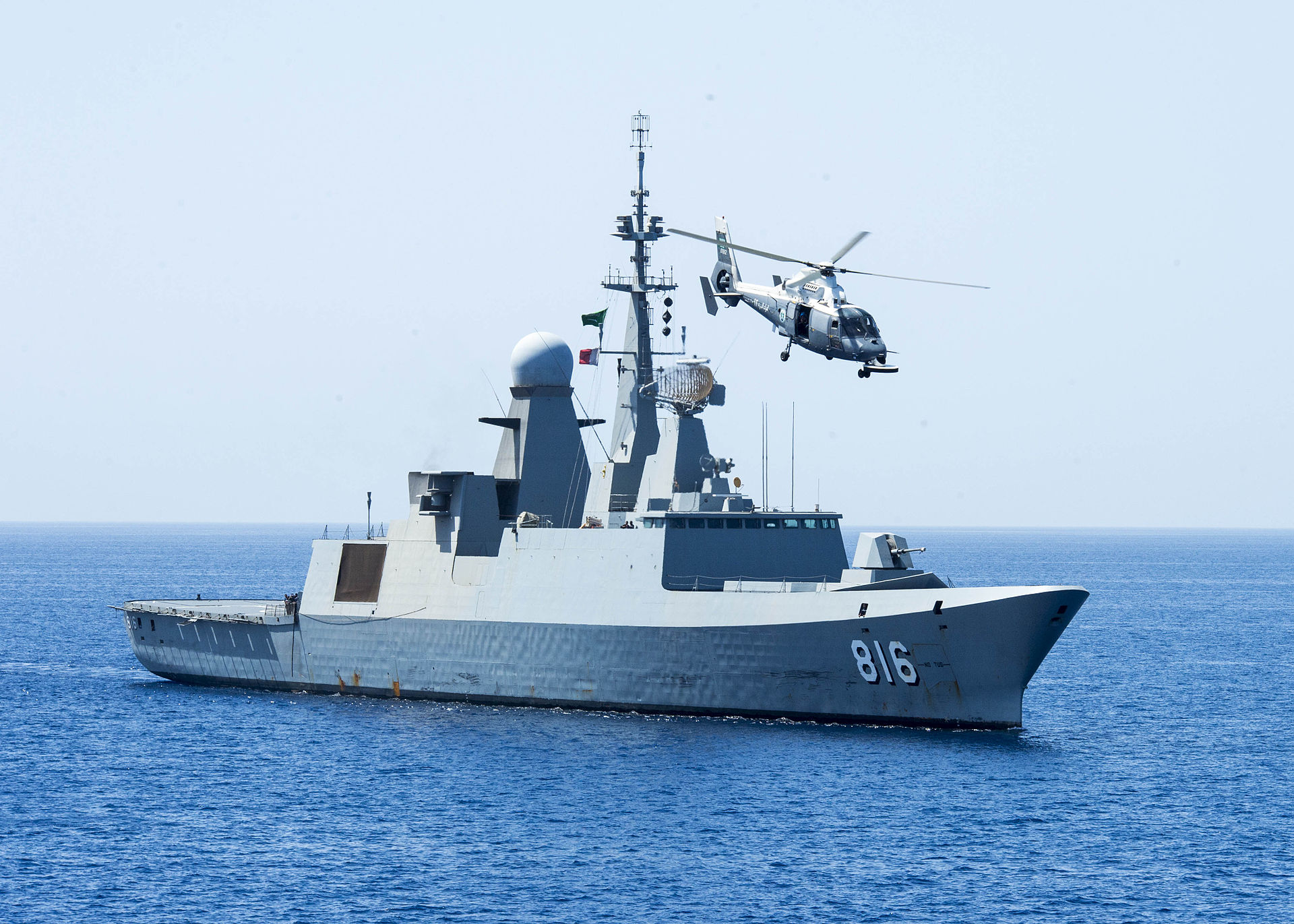
The Royal Saudi Navy operates 55 combat vessels across two separate fleet commands — the Eastern Fleet based at Jubail on the Persian Gulf and the Western Fleet based at Jeddah on the Red Sea. This geographic split has always been both the Saudi Navy’s defining strategic challenge and its unique advantage: no other Gulf state maintains a two-ocean capability.
The Eastern Fleet, which faces the Iranian naval threat directly, fields four Al Riyadh-class guided missile frigates (3,700 tons, built by DCN France), four Badr-class corvettes, and nine Al Siddiq-class patrol boats equipped with Harpoon anti-ship missiles. The Western Fleet includes four Al Madinah-class frigates and a growing number of Multi-Mission Surface Combatants being built by Navantia of Spain under a contract signed in 2018.
In a direct naval confrontation with Iran, the Saudi surface fleet would be outmatched in quantity — Iran’s Islamic Revolutionary Guard Corps Navy alone operates hundreds of fast attack craft, coastal defense missile batteries, and submarine-launched weapons. The IRGC Navy’s strategy is explicitly designed to overwhelm conventional naval forces through swarming tactics in the confined waters of the Persian Gulf, using speed boats, mines, and anti-ship cruise missiles launched from mobile coastal batteries.
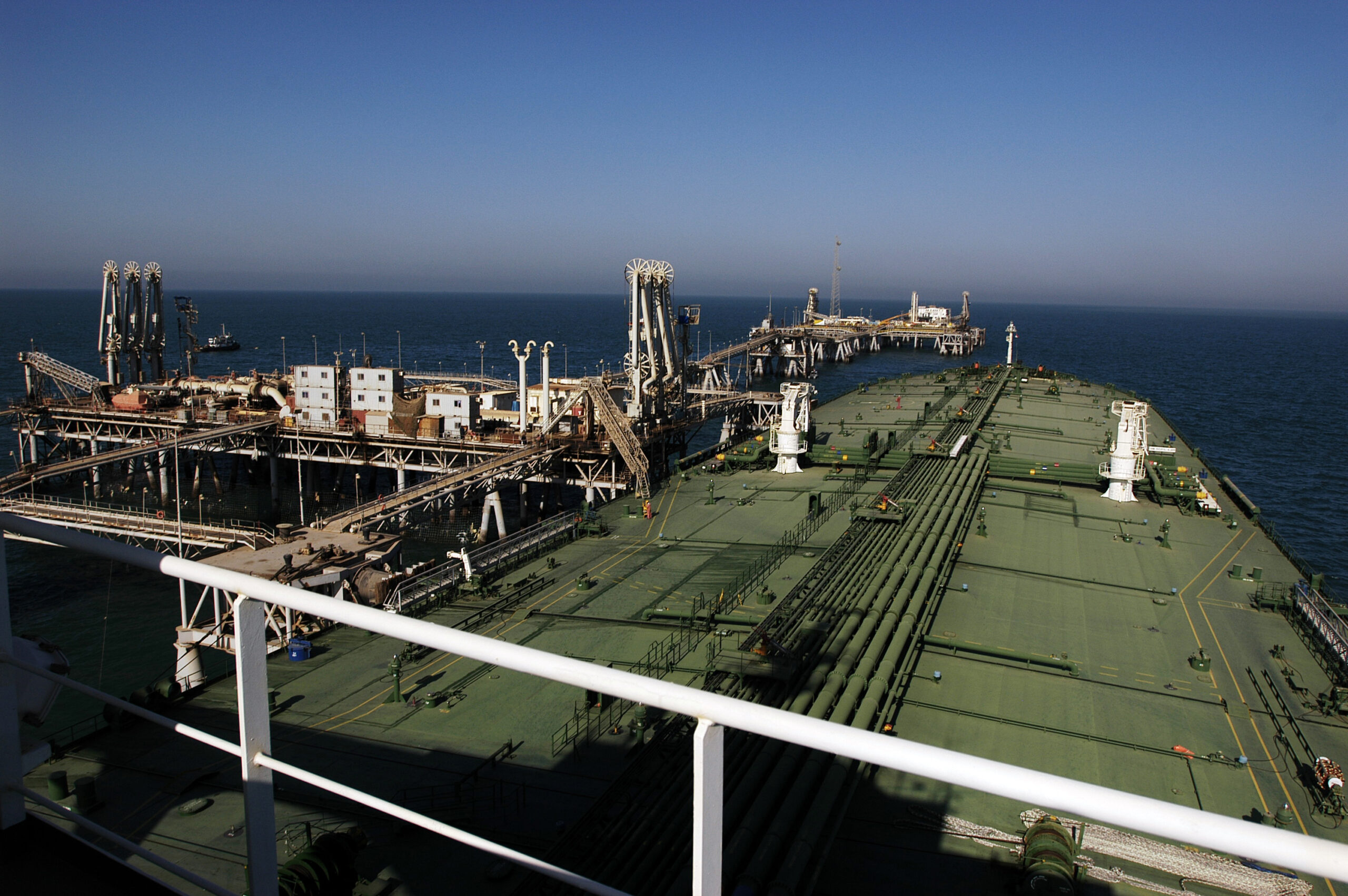
Saudi naval doctrine accordingly does not envision a fleet engagement in the northern Persian Gulf. The Saudi Navy’s wartime role is threefold: protecting the Red Sea export corridor around Yanbu (which has become Saudi Arabia’s primary oil export route since the Strait of Hormuz was disrupted), conducting mine countermeasures in the southern Gulf approaches, and providing anti-ship missile defense for offshore oil platforms and desalination facilities.
The Red Sea mission has become critical since Iran began targeting Yanbu infrastructure. Saudi Arabia’s Yanbu refinery complex processes 400,000 barrels per day and serves as the western terminus of the East-West Pipeline — the bypass route that avoids Hormuz entirely. Defending this corridor is now arguably the Saudi Navy’s most important wartime mission, and it has deployed the bulk of the Western Fleet’s assets accordingly.
The Strategic Missile Force Nobody Discusses
Saudi Arabia is one of only nine countries known to possess intermediate-range ballistic missiles, and the Royal Saudi Strategic Missile Force is the least discussed branch of any major military power. This silence is deliberate. The RSSMF operates under extraordinary secrecy, and Saudi Arabia has never publicly tested, displayed, or acknowledged the specific capabilities of its strategic deterrent. The force’s relevance has sharpened as the war raises fundamental questions about whether Iran’s surviving enriched uranium will push Saudi Arabia toward its own nuclear capability, potentially transforming the RSSMF from a conventional deterrent into a delivery system for a very different kind of warhead.
Open-source intelligence indicates the force possesses two missile types. The first is the CSS-2 (DF-3A), a Chinese-supplied liquid-fueled intermediate-range ballistic missile acquired in 1987 in one of the Cold War’s most dramatic covert arms deals. Between 30 and 120 DF-3A missiles were delivered — the exact number remains classified — with a maximum range of approximately 4,000 kilometers. The DF-3A can reach any point in Iran, Israel, or South Asia. Its circular error probable of roughly 300 meters, however, limits its utility to area targets or — in the unspoken calculus of strategic deterrence — cities.
The second system is the DF-21 (CSS-5), a solid-fueled medium-range ballistic missile acquired from China in approximately 2007 with CIA facilitation, according to a Newsweek investigation published in 2014. The DF-21 has a range of 1,700 kilometers and a dramatically improved CEP of approximately 30 meters, making it a credible conventional precision strike weapon. Every major Iranian military installation, nuclear site, and government complex lies within DF-21 range from Saudi launch positions.
The strategic missile force has never been used in anger. Its existence serves a deterrent function that operates on two levels: first, as a signal to Iran that Saudi Arabia possesses a retaliatory capability that cannot be neutralized by attacking air bases — a vulnerability underscored by Riyadh’s decision to open the more distant King Fahd Air Base in Taif to US forces after Prince Sultan Air Base came under sustained fire (ballistic missiles launch from mobile transporter-erector-launchers that are extremely difficult to locate and destroy); and second, as a hedge against a future in which Saudi Arabia might pursue nuclear warheads for these delivery systems — a possibility that has moved from theoretical to openly discussed since Iran’s nuclear program was destroyed in the opening days of the 2026 war.
The War Economy Behind the Arsenal
Military capability is ultimately a function of economic capacity, and Saudi Arabia’s war economy is the strongest in the Gulf by a decisive margin. The Kingdom’s $78 billion defense budget for 2025 — projected to reach $80 billion for 2026 as wartime supplemental spending kicks in — represents 7.1 percent of GDP, a proportion exceeded among major economies only by Israel.
More significant than the headline number is the trajectory. Saudi defense expenditure rose from $53.9 billion in 2021 to $72.5 billion in 2025, reflecting a compound annual growth rate of 7.7 percent according to Research and Markets data. The 2026 war spending will push the total above $80 billion for the first time in the Kingdom’s history.
Under Vision 2030, Saudi Arabia has pursued an aggressive defense industrialization strategy through two institutional pillars: the General Authority for Military Industries (GAMI), which regulates the sector, and Saudi Arabian Military Industries (SAMI), the state-owned conglomerate that manufactures. The results have been uneven but directionally clear. Defense spending localization — the proportion of military procurement sourced from domestic industry — rose from 4 percent in 2018 to 25 percent by the end of 2024, according to GAMI governor Ahmad Al-Ohali’s statement at the World Defense Show.
SAMI now operates across five divisions: Aerospace, Land Systems, Sea Systems, Defense Systems, and Advanced Electronics. At the Al-Kharj Land Systems Industrial Complex — a one-million-square-meter facility that became fully operational in early 2026 — Saudi Arabia assembles and maintains armored vehicles, artillery systems, and ammunition. A separate program with Turkey’s Baykar will produce Akinci-class unmanned combat aerial vehicles in Saudi Arabia, with more than 70 percent of production content to be sourced domestically and first deliveries expected to the RSAF by late 2026.
| Year | Localization Rate | Key Milestone |
|---|---|---|
| 2018 | 4% | GAMI established, SAMI launched |
| 2020 | 8% | First domestic defense contracts awarded |
| 2022 | 13.7% | World Defense Show inaugural edition |
| 2023 | ~15% | SAMI Land Industrial Complex construction begins |
| 2024 | 25% | Record domestic contract share at WDS |
| 2025 | ~28% | THAAD battery inaugurated, HEET vehicle program launched |
| 2026 (target) | 30-35% | Al-Kharj complex operational, Akinci UAV production begins |
| 2030 (target) | 50% | Vision 2030 defense localization goal |
The localization drive is not merely an economic diversification exercise — it is a wartime necessity. The current conflict has exposed the fragility of foreign supply chains for critical munitions. Patriot PAC-3 MSE interceptors cost approximately $4 million each and are manufactured exclusively at Lockheed Martin’s facility in Camden, Arkansas. At the current rate of consumption, Saudi Arabia is spending $100 million per week on Patriot interceptors alone. Domestic production capability — even partial — would fundamentally change the calculus of sustained defensive operations.
What Stops Saudi Arabia From Striking Tomorrow?
If Saudi Arabia possesses the military capability to strike Iran — and the evidence compiled above suggests it does — then the question becomes why it has not done so after twenty days of sustained bombardment that has killed at least 20 people, damaged critical energy infrastructure, and prompted Prince Faisal bin Farhan to declare that trust with Tehran is “completely shattered.”
Five factors constrain Saudi offensive action, and they operate independently. Any one of them could be removed without triggering a strike; the combination of all five has, so far, maintained restraint.
The first constraint is American preference. Washington has explicitly asked Gulf states not to conduct independent offensive operations against Iran, seeking to maintain escalation control. The tension between American restraint preferences and Saudi self-defense imperatives has been the defining strategic friction of the conflict. MBS has been “speaking regularly with Trump, urging harsh action against Iran,” according to the New York Times, but the Crown Prince has channeled his aggression through American power rather than Saudi power — a calculation that keeps Riyadh’s hands clean while Washington absorbs the escalation risk.
The second constraint is interceptor conservation. Every Patriot missile fired at an incoming Iranian weapon is one less available for future threats. Saudi air defense commanders must calculate whether the current threat level justifies the interceptor expenditure of offensive operations, which would inevitably provoke Iranian retaliation at a scale designed to overwhelm defensive systems. This is the cruel mathematics of air defense: attacking makes you more vulnerable, not less. Iran’s strike on Diego Garcia on 21 March proved that Tehran’s actual missile range extends to 4,000 kilometres, double what Iranian officials publicly claimed, further complicating the interceptor calculus for every Gulf state.
The third constraint is intelligence dependency. Saudi offensive operations would require real-time targeting data that only American satellites and signals intelligence can provide. If Washington withheld this support — as it could, without any formal notification — Saudi strike aircraft would be flying with degraded targeting capability against an adversary that has spent decades hardening its infrastructure against exactly this scenario.
The fourth constraint is regional politics. Saudi Arabia has just assembled a 12-nation coalition that condemned Iran’s attacks. Several members of this coalition — notably Turkey, Pakistan, and Qatar — would be deeply uncomfortable with Saudi offensive operations that could be perceived as joining an American-Israeli war against a Muslim nation. The diplomatic capital that Riyadh invested in the March 19 Riyadh Communiqué could be spent in a single night of airstrikes.
The fifth constraint is the Yemen precedent. Every Saudi military planner remembers what happened the last time the Kingdom launched an air campaign without a clear exit strategy. The institutional memory of Yemen’s decade-long quagmire acts as a powerful brake on offensive ambitions, regardless of how much the military has improved since 2015.
The Strike Readiness Assessment
Military readiness for a specific operation depends on the intersection of five distinct factors: force quality, logistics depth, intelligence access, coalition support, and political authorization. Evaluating Saudi Arabia’s readiness to conduct offensive operations against Iran requires assessing each factor independently and then determining whether the combination is sufficient.
| Factor | Indicator | Current Status (March 2026) | Readiness Score (1-10) |
|---|---|---|---|
| Force Quality | Platform capability, crew training, precision munitions stocks | 304 4th-gen fighters, combat-tested aircrew from Yemen, JDAM/SLAM-ER stocks adequate for initial waves | 8 |
| Logistics Depth | Munitions reserves, maintenance capacity, sortie sustainability | Strong for 72-96 hour campaign; degraded beyond 7 days without US resupply; interceptor stocks declining | 6 |
| Intelligence Access | Real-time targeting data, BDA capability, SIGINT | Dependent on US ISR sharing; joint operations center active at PSAB; no independent satellite capability | 5 (without US) / 9 (with US) |
| Coalition Support | Allied combat/support assets, basing rights, political backing | 7 nations deployed on Saudi soil; 12-nation political coalition; Greek Patriot precedent set | 8 |
| Political Authorization | Leadership decision, domestic support, international legitimacy | “Reserves the right” declared publicly; 12-nation mandate; domestic opinion overwhelmingly supportive after 20 days of bombardment | 7 |
The assessment yields a composite picture: Saudi Arabia is militarily ready for a limited precision strike campaign (72 to 96 hours) with high confidence of tactical success. It is not ready for a sustained multi-week air campaign against hardened Iranian targets without direct American combat participation. The critical variable is American intelligence support — without it, readiness drops from adequate to marginal; with it, the Kingdom can execute strikes at a level of precision comparable to Western air forces.
The conventional wisdom that Saudi Arabia cannot or will not fight is no longer supported by evidence. The Kingdom’s military has been rebuilt, re-equipped, and battle-tested. Its coalition support is unprecedented. Its political leadership has publicly signaled willingness. The question is not whether Saudi Arabia can strike Iran. The question is whether the strategic benefits of striking outweigh the risks of restraint — and after twenty days of drones over Riyadh and missiles hitting oil infrastructure, that calculation is shifting with every incoming warhead.
“What little trust there was before has completely been shattered. So when this war eventually ends, in order for there to be any rebuilding of trust, it will take a long time.”
Prince Faisal bin Farhan, Saudi Foreign Minister, March 19, 2026
The military that Saudi Arabia built for a war it didn’t want is the most capable Arab fighting force assembled since Egypt’s October 1973 crossing of the Suez Canal. Whether Riyadh chooses to use it will depend not on capability but on a political judgment that only one man in the Kingdom can make — and Mohammed bin Salman has never been accused of excessive caution.
Saudi Arabia’s military transformation is formidable, but the Kingdom is not facing Iran alone. A constellation of allies — some expected, others improbable — has coalesced into the accidental alliance defending the Kingdom, a multinational coalition whose composition reveals as much about the shifting global order as Saudi Arabia’s own arsenal does.
Frequently Asked Questions
How many fighter jets does Saudi Arabia have?
The Royal Saudi Air Force operates 914 total aircraft, including 304 advanced 4th-generation combat fighters. The fleet includes 84 F-15SA Strike Eagles (the most advanced F-15 variant ever exported), approximately 68 F-15SR upgraded aircraft, 80 F-15C/D air superiority fighters, and 72 Eurofighter Typhoons. Saudi Arabia operates the second-largest F-15 fleet in the world after the United States Air Force.
How much does Saudi Arabia spend on defense?
Saudi Arabia’s 2025 defense budget reached $78 billion, making it the fifth-largest military spender globally. This represents 21 percent of total government spending and 7.1 percent of GDP. Defense expenditure grew from $53.9 billion in 2021 to $78 billion in 2025 at a compound annual growth rate of 7.7 percent. The 2026 budget is projected to exceed $80 billion with wartime supplemental spending.
Does Saudi Arabia have ballistic missiles?
Saudi Arabia operates two types of Chinese-supplied ballistic missiles through the Royal Saudi Strategic Missile Force. The DF-3A (CSS-2) is a liquid-fueled intermediate-range ballistic missile with a 4,000-kilometer range, acquired in 1987. The DF-21 (CSS-5) is a solid-fueled medium-range ballistic missile with a 1,700-kilometer range and approximately 30-meter accuracy, acquired around 2007 with CIA facilitation. Both systems can reach all major Iranian targets.
How effective is Saudi Arabia’s air defense system?
Saudi Arabia operates 108 Patriot missile launchers across six battalions and one operational THAAD battery — the most extensive integrated air and missile defense in the Middle East. During the first twenty days of the Iran conflict, these systems intercepted an estimated 75 to 90 ballistic missiles. Performance against low-flying drones and cruise missiles has been less consistent, with the Shahed-136 one-way attack drone proving particularly difficult to intercept due to its low radar cross-section and terrain-hugging flight profile.
Has Saudi Arabia’s military improved since the Yemen War?
Defense analysts identify three structural reforms since the Yemen intervention. Defense Minister Prince Khalid bin Salman established a Joint Forces Command for integrated operations, replaced over 40 percent of battalion-level commanders between 2023 and 2025, and shifted doctrine from expeditionary warfare to a deterrence-plus-precision framework. The $8.8 billion in contracts signed at the 2026 World Defense Show and the 25 percent defense localization rate (up from 4 percent in 2018) reflect a military establishment undergoing rapid modernization.
What coalition forces are deployed in Saudi Arabia?
As of March 2026, at least seven nations have deployed military assets to Saudi Arabia or are operating in direct support of Saudi air defense. The United States maintains the largest presence with THAAD batteries, Patriot systems, F-35s, F-22s, and approximately 45,000 personnel across the Gulf region. Pakistan has deployed approximately 15,000 troops including air defense units, while Greece, the United Kingdom, France, South Korea, and Turkey have contributed assets ranging from Patriot batteries to electronic warfare systems.