
RIYADH — Saudi Arabia is sitting on $2.5 trillion in untapped mineral reserves, and the state-owned mining giant Ma’aden has just announced the largest capital programme in the history of the global mining industry to extract them. While Iranian missiles and drones consume the world’s attention and dominate coverage of the Kingdom’s future, a quieter but arguably more consequential transformation is unfolding beneath the desert floor — one that could redefine Saudi Arabia’s economic identity for the next century. The $110 billion investment plan, unveiled at the Future Minerals Forum in Riyadh in January 2026, targets gold, phosphate, aluminium, copper, lithium, and rare earth elements across eight megaprojects designed to vault Ma’aden into the ranks of the world’s three largest mining companies within a decade.
The timing is deliberate. The Iran war has exposed, in the most visceral terms possible, the danger of an economy still tethered to hydrocarbons. Oil refineries have been struck. Tanker routes have been blockaded. The war premium on crude has whipsawed from $120 to $87 in a single week. Against that backdrop, the mining pivot is not just a diversification strategy — it is an existential insurance policy for a kingdom that can no longer afford to bet its future on a single commodity.
Table of Contents
- What Is Saudi Arabia’s Mining Strategy?
- How Large Are Saudi Arabia’s Mineral Reserves?
- Ma’aden’s Eight Megaprojects
- The Gold Rush Beneath the Arabian Shield
- Can Ma’aden Really Become a Top-Three Mining Company?
- Phosphate, Aluminium, and the Full Value Chain
- The Mineral Sovereignty Matrix
- Why Did the Iran War Accelerate the Mining Pivot?
- Manara Minerals and the Overseas Acquisition Strategy
- What Does Saudi Arabia’s Mining Boom Mean for the Global Supply Chain?
- The Contrarian Case for Saudi Mining
- Risks the $110 Billion Plan Cannot Bury
- Frequently Asked Questions
What Is Saudi Arabia’s Mining Strategy?
Saudi Arabia’s mining strategy is a state-directed programme to transform the Kingdom into a global mining powerhouse by 2035, positioning mineral extraction as the “third pillar” of the national economy alongside hydrocarbons and petrochemicals. The strategy, formalized under Vision 2030’s National Industrial Development and Logistics Program, aims to increase mining’s contribution to GDP from $17 billion in 2024 to $75 billion by 2030 — a fourfold increase in six years, according to the Ministry of Industry and Mineral Resources.
The architecture rests on three interconnected pillars. First, massive domestic extraction led by Ma’aden, the Saudi Arabian Mining Company, which is 65.4 percent owned by the Public Investment Fund. Second, overseas acquisitions through Manara Minerals, a joint venture between Ma’aden and PIF, which has already deployed $2.5 billion to acquire a 10 percent stake in Vale Base Metals. Third, regulatory reform that has slashed the mining tax rate from 45 percent to 20 percent, launched nine exploration licensing rounds covering hundreds of thousands of square kilometres, and invested $1.5 billion in geological surveying of the Arabian Shield.
The strategy is explicitly modelled on the success stories of Australia, Canada, and Chile — nations that built globally competitive mining industries through a combination of geological endowment, regulatory certainty, and infrastructure investment. The difference is speed. What those countries built over decades, Saudi Arabia intends to compress into a single decade, backed by sovereign wealth that no private-sector mining startup could match.
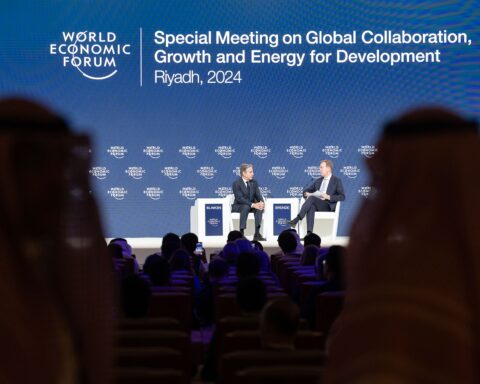
Bob Wilt, Ma’aden’s American-born CEO, framed the ambition at the January 2026 Future Minerals Forum in Riyadh: “We want to be world champions. That doesn’t mean the biggest mining company in the world, but we want to provide the minerals for strategic impact, downstream development, to boost GDP, and help with the balance of payments.” The $110 billion capital programme announced at that forum — the largest in mining history — was the clearest signal yet that the rhetoric is backed by real money.
How Large Are Saudi Arabia’s Mineral Reserves?
Saudi Arabia’s confirmed mineral reserves are valued at 9.375 trillion Saudi riyals, or approximately $2.5 trillion, according to the National Minerals Program’s 2025 assessment. That figure has nearly doubled from the $1.3 trillion estimate published in 2016, driven by new discoveries of rare earth elements, transition metals, and expanded geological surveys of previously unmapped terrain.
The sheer scale of the resource base is staggering. The Arabian Shield, a Precambrian geological formation covering roughly 670,000 square kilometres of western and central Saudi Arabia, contains concentrations of gold, copper, zinc, silver, rare earths, and base metals that have barely been explored by modern standards. Before 2020, less than five percent of the shield had been surveyed using contemporary geophysical techniques. The $1.5 billion national geological survey programme is systematically closing that gap, with operations planned to continue in three-to-five-year cycles.
| Region | Primary Minerals | Estimated Value (SAR Trillions) | Key Projects |
|---|---|---|---|
| Northern Borders | Phosphate, bauxite | 4.6 | Wa’ad Al Shamal, Phosphate 3 |
| Central Arabian Gold Region | Gold, copper, zinc | 1.8 | Mansourah-Massarah, Ad Duwayhi |
| Arabian Shield (West) | Rare earths, base metals | 1.5 | Exploration-stage |
| Eastern Province | Industrial minerals, silica | 0.9 | Ras Al Khair industrial |
| Madinah-Qassim Belt | Gold, copper, silver | 0.7 | 9th licensing round sites |
The rare earth element discoveries are particularly significant in the context of global geopolitics. China currently controls approximately 60 percent of global rare earth mining and 90 percent of processing, according to the International Energy Agency. Saudi deposits include dysprosium, terbium, neodymium, and praseodymium — elements essential for electric vehicle motors, wind turbines, and advanced military systems. If Saudi Arabia can develop a processing capability alongside extraction, it would offer Western and Asian manufacturers an alternative to Chinese dependence at precisely the moment when supply chain diversification has become a national security priority for the United States, the European Union, Japan, and South Korea.
Ma’aden’s Eight Megaprojects
The $110 billion capital programme announced by CEO Bob Wilt at the January 2026 Future Minerals Forum centres on eight megaprojects spanning gold, phosphate, aluminium, and base metals. Two are already under construction. Six are in various stages of planning, feasibility assessment, and partner selection. Together, they represent the most ambitious single-company mining expansion programme in global history, according to S&P Global Market Intelligence.
The numbers Wilt outlined are not incremental. Ma’aden intends to triple its phosphate business, triple its gold production, and double its aluminium output — all within a decade. The programme would require hiring tens of thousands of workers, building new processing facilities, extending rail and port infrastructure, and securing energy supply for operations that consume enormous quantities of electricity and water in one of the world’s most arid environments.
| Project | Mineral Focus | Est. Investment | Status (March 2026) | Target Year |
|---|---|---|---|---|
| Phosphate 3 (Phase 1) | Phosphate fertilizer | $7B+ | Under construction (50% complete) | 2027 |
| Aluminium expansion | Aluminium, bauxite | $12B | Under construction | 2028 |
| Mansourah-Massarah expansion | Gold | $4B | Planning | 2029 |
| Central Arabian gold complex | Gold, copper | $8B | Feasibility | 2030 |
| Northern phosphate expansion | Phosphate, ammonia | $15B | Planning | 2031 |
| Rare earth processing hub | REE, lithium | $10B | Feasibility | 2032 |
| Base metals complex | Copper, zinc, nickel | $18B | Pre-feasibility | 2033 |
| Downstream industrial park | Multiple | $20B+ | Conceptual | 2035 |
The strategic delivery partner for the portfolio is Hatch, a Canadian engineering firm selected in February 2026 to implement a portfolio-wide approach to project development. The Hatch partnership signals Ma’aden’s awareness of its own capacity constraints — building eight megaprojects simultaneously requires programme management expertise that the Kingdom’s nascent mining sector does not yet possess domestically.
The most advanced project, Phosphate 3 Phase 1, had reached 50 percent completion by March 2026 and remains on budget for 2027 production, adding 1.5 million tonnes of annual capacity to an already dominant phosphate operation. Phosphate is Ma’aden’s highest-margin business and the Kingdom’s strongest competitive advantage in mining — Saudi Arabia holds the world’s fifth-largest phosphate reserves and benefits from proximity to Asian agricultural markets that consume the bulk of global fertilizer supply.
The Gold Rush Beneath the Arabian Shield
In January 2026, Ma’aden reported the addition of 7.8 million ounces of new gold resources across four key areas — operating mines, brownfield extensions, early-stage prospects, and entirely new discoveries. The announcement effectively doubled the company’s known gold resource base in a single reporting period and signalled that the Arabian Shield’s gold potential has been systematically underestimated for decades.
The Kingdom currently operates six major gold mines. The flagship Mansourah-Massarah operation, which began production in 2022, is Saudi Arabia’s largest gold mine with an annual production target of 320,000 ounces. The mine delivered a 3.0 million ounce net resource increase year-on-year in 2025, with drilling continuing through 2026 and further growth expected as the orebody becomes better understood.
Total Saudi gold production stands at approximately 450,000 ounces annually — a fraction of Australia’s 10.6 million ounces or Canada’s 7.4 million, according to the World Gold Council. But the trajectory matters more than the current output. Ma’aden’s exploration budget for gold jumped from $21 million in 2022 to $146 million in 2025 — a 600 percent increase in three years, according to the Ministry of Industry and Mineral Resources. In 2024, the minesite exploration budget hit SAR 1.05 billion ($280.5 million), with 72 percent allocated to gold and 23 percent to copper.
The Arabian Shield’s gold mineralisation shares geological characteristics with the world’s most productive gold regions. The Precambrian greenstone belts that host Saudi deposits are structurally similar to the Yilgarn Craton in Western Australia, the Abitibi Belt in Canada, and the Birimian Shield in West Africa — all of which have yielded billions of ounces of gold over decades of intensive exploration. The difference is that the Arabian Shield has received a tiny fraction of the exploration drilling those regions have experienced. As one senior Ma’aden geologist told S&P Global in January: “We are still at the surface. The deeper systems have not been tested.”
Can Ma’aden Really Become a Top-Three Mining Company?
Ma’aden’s ambition to rank among the world’s three largest mining companies within a decade faces a formidable competitive landscape. The current top three — BHP ($56 billion revenue in 2024), Rio Tinto ($54 billion), and Glencore ($217 billion including commodity trading) — are diversified, century-old enterprises with operations spanning dozens of countries. Ma’aden posted SAR 37.2 billion ($9.9 billion) in revenue for the full year 2025 and SAR 7.6 billion ($2 billion) in net profit, according to its Q3 earnings release. Impressive growth — revenue rose 24 percent year-on-year and net profit surged 91 percent — but still a fraction of the global leaders.
The path to the top three depends on executing the eight megaprojects on time, expanding the revenue base from three commodities (phosphate, aluminium, gold) to at least six (adding copper, lithium, and rare earths), and achieving downstream integration that captures processing margins rather than exporting raw material at bulk commodity prices.
| Company | Headquarters | Revenue ($B) | Net Profit ($B) | Primary Commodities | Countries of Operation |
|---|---|---|---|---|---|
| BHP | Australia | 56.0 | 13.4 | Iron ore, copper, coal | 23 |
| Rio Tinto | UK/Australia | 54.0 | 11.7 | Iron ore, aluminium, copper | 35 |
| Glencore | Switzerland | 217.0 | 4.3 | Copper, zinc, coal, trading | 40+ |
| Vale | Brazil | 42.0 | 7.8 | Iron ore, nickel, copper | 25 |
| Ma’aden | Saudi Arabia | 9.9 | 2.0 | Phosphate, aluminium, gold | 3 |
Three factors work in Ma’aden’s favour. First, sovereign backing: the PIF’s 65.4 percent ownership means Ma’aden can access capital at rates and timescales that publicly traded competitors cannot. The $110 billion investment plan is not dependent on quarterly earnings calls or shareholder approval — it is a state directive. Second, phosphate pricing power: Saudi Arabia is the world’s second-largest phosphate exporter after Morocco, and global fertilizer demand is structurally rising as agricultural yields must increase to feed a population heading toward 10 billion by 2050. Third, the rare earth and critical minerals opportunity: if Ma’aden can establish processing capability for rare earths, lithium, and copper, it would be entering markets where demand is growing at 15-25 percent annually, driven by the energy transition, according to the IEA’s 2025 Critical Minerals Outlook.
The obstacles are equally clear. Ma’aden has never operated outside the Middle East at meaningful scale. Its workforce, while growing, lacks the depth of experience that BHP and Rio Tinto have accumulated over more than a century. Water scarcity, extreme heat, and the logistics of building in remote desert locations add significant cost premiums to every project. And the geopolitical environment — with the Iran war demonstrating that Saudi territory is not immune to attack — introduces risk calculations that Australian or Canadian mining projects simply do not face.
Phosphate, Aluminium, and the Full Value Chain
Ma’aden’s current business rests on two pillars that together generate more than 80 percent of revenue: phosphate fertilizers and aluminium. Both are now being aggressively scaled through the eight megaproject programme.
The phosphate operation, centred at Wa’ad Al Shamal in the Northern Borders region, is already world-class. Saudi Arabia holds the world’s fifth-largest phosphate reserves, and Ma’aden’s integrated operation — mining phosphate rock, converting it to diammonium phosphate (DAP) and monoammonium phosphate (MAP) fertilizer, and exporting via dedicated rail to the Red Sea port of Ras Al Khair — is among the lowest-cost phosphate producers globally. Phosphate 3 Phase 1, currently 50 percent complete, will add 1.5 million tonnes of annual capacity and is on budget for 2027 production. The broader northern phosphate expansion (Project 5 in the megaproject list) targets an additional $15 billion investment that would make Saudi Arabia the world’s largest phosphate fertilizer producer, overtaking Morocco’s OCP Group.
The aluminium business underwent a fundamental transformation in July 2025 when Ma’aden completed the acquisition of Alcoa’s 25.1 percent stake in Ma’aden Aluminium Company (MAC) and Ma’aden Bauxite and Alumina Company (MBAC). The $1.35 billion transaction — comprising approximately $1.2 billion in Ma’aden shares and $150 million in cash — gave Ma’aden full ownership of the entire aluminium value chain from bauxite mining at Al Baitha to alumina refining and aluminium smelting at Ras Al Khair Industrial City. Alcoa recorded a $780 million gain on the sale, indicating the assets were undervalued on its books relative to their market worth.
Full ownership matters because it eliminates profit-sharing with a foreign partner and gives Ma’aden unrestricted control over expansion decisions. The aluminium expansion megaproject (Project 2) targets a doubling of smelting capacity, with an estimated $12 billion investment. Saudi Arabia’s aluminium ambitions are supported by cheap domestic energy — natural gas feedstock for power generation is available at subsidised rates that make Saudi smelting costs competitive with the lowest-cost producers in the Middle East and Russia.
The Mineral Sovereignty Matrix
A useful framework for evaluating Saudi Arabia’s mining ambitions compares the Kingdom’s position across five dimensions of mineral sovereignty — the degree to which a nation controls its mineral value chain from subsurface to end-product. The framework assesses geological endowment, extraction capability, processing depth, supply chain control, and workforce readiness, scoring each on a five-point scale against global mining leaders.
| Dimension | Australia | Canada | Chile | China | Saudi Arabia (2026) | Saudi Arabia (2035 Target) |
|---|---|---|---|---|---|---|
| Geological endowment | 5 | 5 | 4 | 4 | 4 | 5 |
| Extraction capability | 5 | 5 | 4 | 5 | 2 | 4 |
| Processing depth | 3 | 4 | 3 | 5 | 2 | 4 |
| Supply chain control | 4 | 4 | 3 | 5 | 2 | 3 |
| Workforce readiness | 5 | 5 | 4 | 4 | 1 | 3 |
| Composite score | 22 | 23 | 18 | 23 | 11 | 19 |
Saudi Arabia’s 2026 composite score of 11 out of 25 reflects the fundamental challenge: extraordinary geological endowment paired with nascent industrial capability. The $110 billion programme is essentially a decade-long sprint to close the gap. If the 2035 targets are met — a composite of 19 — Saudi Arabia would match Chile’s current position and approach Australian levels, albeit with a very different mineral mix.
The weakest dimension is workforce readiness. Australia’s mining sector employs approximately 280,000 people, most with decades of accumulated expertise. Canada’s mining workforce numbers about 110,000 direct employees. Saudi Arabia’s mining sector currently employs fewer than 50,000 workers, according to the Ministry of Industry, and the vast majority lack the specialised geological, metallurgical, and process engineering skills that advanced mining operations require. The Hatch partnership, the Canadian mining cooperation MOU announced in February 2026, and active recruitment of expatriate mining engineers from Australia and South Africa are all aimed at closing this gap — but workforce development is inherently a multi-decade endeavour.
The dimension where Saudi Arabia can move fastest is processing depth. With sovereign capital and subsidised energy, building refineries and smelters is primarily an engineering and construction challenge rather than a knowledge gap. The Alcoa acquisition demonstrated this logic: full ownership of the aluminium value chain gives Ma’aden the platform to expand processing capacity without foreign partnership constraints. Applying the same model to copper, lithium, and rare earth processing is the central logic of the downstream industrial park megaproject.
Why Did the Iran War Accelerate the Mining Pivot?
The Iran war, which began on February 28, 2026, did not create Saudi Arabia’s mining strategy — the foundations were laid years earlier through the 2020 mining law reform, the Ma’aden-PIF restructuring, and the Future Minerals Forum initiative launched in 2022. But the war accelerated the pivot in three concrete ways that would have taken years to achieve through normal bureaucratic channels.
First, the collapse of NEOM’s most ambitious components freed tens of billions of dollars in PIF capital for reallocation. The cancellation of $6 billion in Trojena ski resort contracts, the termination of The Line’s tunnel programme, and the broader restructuring of NEOM into five separate entities managed by different state bodies represented a tacit acknowledgment that some Vision 2030 megaprojects were consuming capital without delivering returns. Mining, by contrast, generates revenue from year one of production and has a clear path to profitability.
Second, the war demonstrated the fragility of oil-dependent revenues with a clarity that no economic model could match. When Brent crude crashed from $108 to $98 per barrel on March 25 — on nothing more than a rumour of a diplomatic breakthrough — the entire fiscal architecture of the Saudi state shuddered. Oil still accounts for roughly 60 percent of government revenue, according to the IMF. Every dollar of oil price movement translates to approximately $3 billion in annual revenue variance. A mining sector generating $75 billion in GDP by 2030 would provide a structural buffer that no amount of sovereign wealth fund management can replicate.
Third, the war created new urgency around critical minerals for defence. Saudi Arabia’s air defence system — Patriot and THAAD batteries that have intercepted an estimated 75 to 90 ballistic missiles with an 85 to 90 percent success rate, according to Pentagon assessments — depends on components manufactured from rare earth elements, high-grade copper, and specialised alloys. Domestic supply of these materials would reduce dependence on foreign suppliers whose reliability, as the war has shown, cannot be guaranteed when shipping routes are disrupted and geopolitical alignments shift.
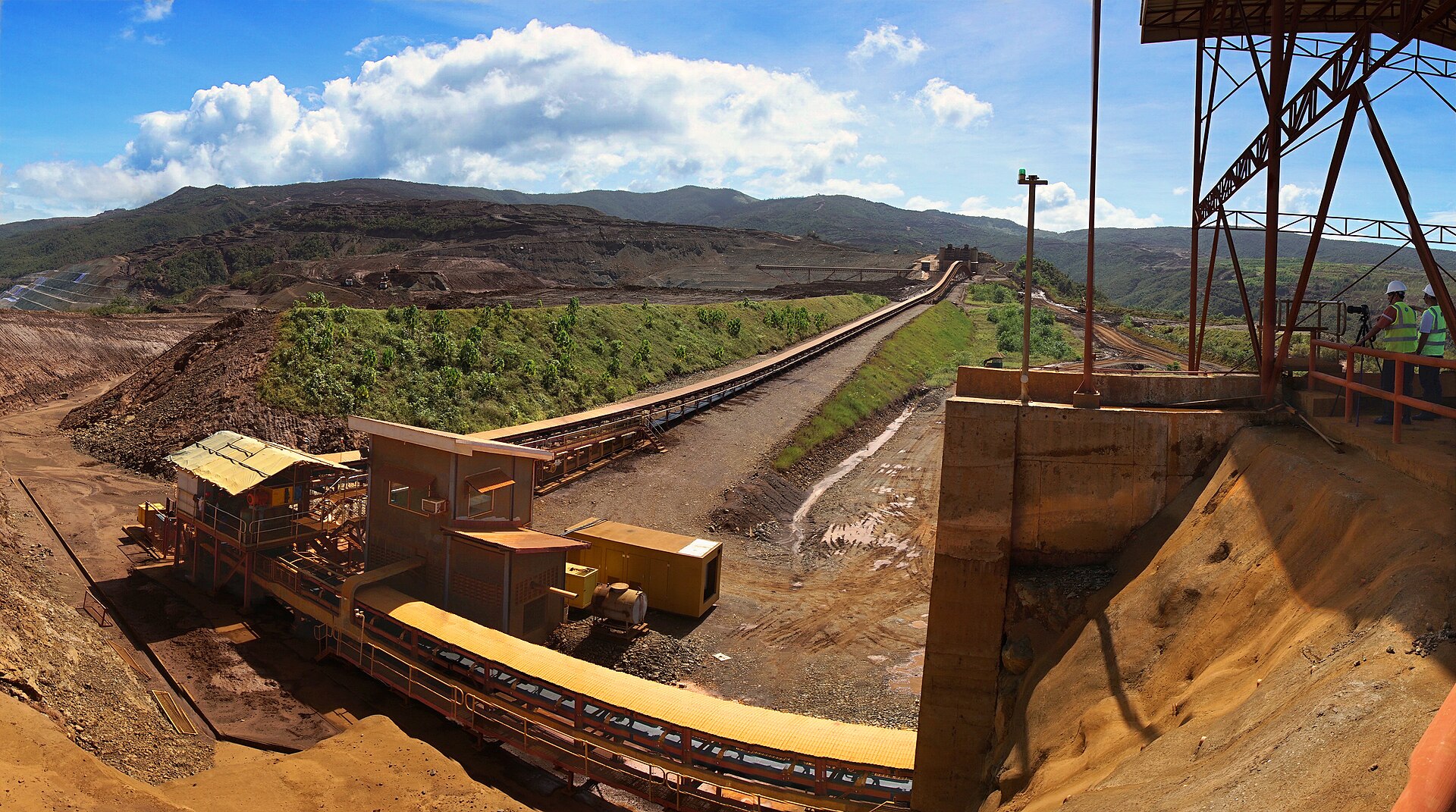
Manara Minerals and the Overseas Acquisition Strategy
Saudi Arabia’s mining strategy is not confined to its own borders. In 2023, Ma’aden and PIF established Manara Minerals Investment Company as a dedicated vehicle for acquiring stakes in overseas mining projects and companies. The logic is straightforward: while Saudi domestic reserves are vast, the Kingdom lacks deposits of certain critical minerals — notably nickel and high-grade iron ore — that are essential for downstream manufacturing. Acquiring positions in foreign mining assets fills those gaps while generating investment returns.
Manara’s first major move was the $2.5 billion acquisition of a 10 percent stake in Vale Base Metals (VBM), completed in April 2024. VBM is the holding entity for Vale’s energy transition metals business, encompassing nickel, copper, and cobalt operations across Canada, Brazil, and Indonesia. The deal valued VBM at an implied enterprise value of $26 billion and gave Saudi Arabia direct exposure to some of the highest-quality base metal assets in the world.
The acquisition followed a pattern that PIF governor Yasir Al Rumayyan has applied across sectors: taking meaningful minority stakes in world-class assets, gaining board representation and strategic access, and using the position to build institutional knowledge that can be transferred back to Saudi domestic operations. It is the same playbook PIF used with its Lucid, Posco, and SoftBank investments — financial deployment combined with industrial learning.
Manara’s pipeline reportedly includes additional targets in Australian lithium, African copper, and Central Asian rare earth deposits, according to Bloomberg Intelligence. The February 2026 Canada-Saudi MOU on critical minerals cooperation, signed as part of a broader diplomatic realignment during the Iran crisis, provides a governmental framework for Manara to pursue Canadian mining assets with reduced regulatory friction.
The overseas strategy also serves a geopolitical purpose. By embedding Saudi capital into the mining supply chains of allied nations — Canada, Brazil, Australia — Crown Prince Mohammed bin Salman is creating financial interdependencies that strengthen diplomatic relationships beyond the traditional oil-for-security framework that has defined Saudi foreign policy for seven decades.
What Does Saudi Arabia’s Mining Boom Mean for the Global Supply Chain?
If Ma’aden executes even half of its eight megaproject programme, the global mining supply chain will be materially reshaped within a decade. Three commodities would see the most significant impact: phosphate, rare earth elements, and aluminium.
In phosphate, Saudi Arabia would overtake Morocco as the world’s largest fertilizer producer, according to projections by BMO Capital Markets. This matters because global food security depends on phosphate fertilizer — there is no substitute for phosphorus in plant biology. The concentration of global phosphate production in Morocco (which controls roughly 70 percent of reserves through OCP Group) and China (which periodically imposes export restrictions) creates supply chain vulnerabilities that agricultural importers in India, Brazil, and Southeast Asia have long worried about. A Saudi phosphate expansion would diversify global supply and, given Ma’aden’s cost advantages, likely apply downward pressure on global fertilizer prices.
In rare earths, Saudi Arabia’s entry could break — or at least crack — China’s near-monopoly on processing. China currently controls roughly 60 percent of rare earth mining and 90 percent of processing capacity, according to the IEA. The United States, European Union, Japan, and South Korea have all launched “friend-shoring” initiatives aimed at building alternative supply chains, but progress has been slow because rare earth processing requires enormous capital investment and specialised expertise. Saudi Arabia, with $2.5 trillion in untapped reserves including significant rare earth deposits and effectively unlimited sovereign capital, is one of the few potential entrants that could achieve commercial scale within a realistic timeframe.
In aluminium, full ownership of the value chain from bauxite to smelter gives Ma’aden the platform to expand into downstream products — aluminium alloys for automotive, aerospace, and construction applications — that capture higher margins than primary metal. Saudi aluminium production currently accounts for approximately 1.3 percent of global output. The expansion programme could raise that share to 3-4 percent by the mid-2030s, primarily serving Gulf and Asian markets.
Saudi Arabia’s mineral wealth of $2.5 trillion, combined with Ma’aden’s $110 billion investment programme, positions the Kingdom as the most significant new entrant to the global mining industry since China’s state-directed expansion in the early 2000s.
S&P Global Market Intelligence, January 2026
The Contrarian Case for Saudi Mining
The conventional narrative around Saudi Arabia’s economic transformation frames NEOM and The Line as the centrepieces, with mining as a secondary diversification play. That narrative is backwards. Mining is already the most commercially viable pillar of the post-oil economy, and it will likely generate more revenue, more jobs, and more strategic value than any megaproject currently in the Vision 2030 portfolio.
The evidence is hiding in plain sight. Ma’aden’s net profit surged 91 percent to SAR 7.6 billion ($2 billion) in the first nine months of 2025, driven by record phosphate output and strong aluminium pricing. Revenue rose 24 percent to SAR 27.9 billion. EBITDA margins expanded to 41 percent. These are returns that NEOM, the Red Sea tourism project, and the Qiddiya entertainment complex will not match for decades, if ever.
The mining sector’s GDP contribution target — $75 billion by 2030 — would make it larger than the entire Saudi tourism industry, larger than the entertainment sector, and second only to hydrocarbons in overall economic weight. Vision 2030 envisioned mining as a supporting actor. The war, and NEOM’s partial collapse, have promoted it to the lead role.
There is a deeper contrarian point: the war itself is generating the conditions for a mining boom. High oil prices — driven by the war premium on crude — are filling state coffers with the capital needed to fund the $110 billion programme. Defence spending is creating domestic demand for the very minerals Ma’aden intends to produce. And the geopolitical realignment triggered by the Iran conflict is opening doors to mining partnerships — with Canada, Australia, and potentially the United States — that were previously complicated by Saudi Arabia’s careful balancing act between Washington and Beijing.
The war did not create Saudi mining. But it may prove to be the catalyst that transforms mining from a line item in a strategic plan into the foundation of a post-hydrocarbon economy.
Risks the $110 Billion Plan Cannot Bury
For all its ambition, Ma’aden’s expansion programme faces risks that sovereign capital alone cannot resolve.
Water scarcity is the most fundamental constraint. Mining and mineral processing are water-intensive operations. Saudi Arabia’s annual renewable water resources amount to just 89.5 cubic metres per capita — among the lowest in the world, according to the World Bank. The Kingdom already relies on desalination for approximately 60 percent of its drinking water, and desalination plants are themselves vulnerable to military attack, as the Iran war has demonstrated. Scaling eight megaprojects simultaneously will require either massive desalination expansion or the adoption of dry processing technologies that remain largely experimental at commercial scale.
The workforce gap poses a structural challenge that cannot be solved with money alone. Saudi Arabia’s Saudisation policies require increasing proportions of local employment in all sectors, but the Kingdom produces fewer than 500 mining engineering graduates annually, according to the Ministry of Education. Australia, by comparison, has 17 universities offering accredited mining engineering programmes. The Hatch partnership and international recruitment drives are stopgaps, not solutions. Building a domestic talent pipeline capable of sustaining eight simultaneous megaprojects will require a generation of educational investment.
Geopolitical risk, ironically, cuts both ways. The Iran war has accelerated the mining pivot by exposing oil dependency, but it has also raised the security risk profile of investing in Saudi mineral assets. Insurance premiums for industrial operations in the Gulf have surged since February 2026. Foreign mining companies evaluating Saudi joint ventures must now price in the possibility of missile or drone attacks on processing facilities — a risk calculation that does not apply to mines in the Pilbara, the Abitibi, or the Atacama.
Finally, there is execution risk at a scale that Ma’aden has never faced. The company has successfully built and operated phosphate and aluminium complexes. It has never simultaneously delivered eight megaprojects across multiple commodity sectors in multiple regions of the country. The history of mega-programmes in the Gulf — including NEOM itself — suggests that timelines slip, costs escalate, and political priorities shift. The $110 billion figure is an aspiration. The actual spend will depend on commodity prices, global demand, and the Kingdom’s fiscal position over the coming decade.
Frequently Asked Questions
What minerals does Saudi Arabia mine?
Saudi Arabia mines gold, phosphate, bauxite (for aluminium), copper, zinc, silver, and industrial minerals including silica and limestone. The Kingdom also holds significant untapped reserves of rare earth elements, lithium, and base metals that are in early-stage exploration. Ma’aden, the state mining company, is the primary operator with six active gold mines and integrated phosphate and aluminium processing complexes at Wa’ad Al Shamal and Ras Al Khair Industrial City.
How much is Saudi Arabia’s mineral wealth worth?
Saudi Arabia’s mineral reserves are valued at approximately $2.5 trillion (SAR 9.375 trillion), according to the National Minerals Program’s 2025 assessment. This figure nearly doubled from the $1.3 trillion estimate in 2016, driven by new discoveries of rare earth elements and transition metals in the Arabian Shield. The Northern Borders region alone holds SAR 4.6 trillion in phosphate and bauxite resources.
What is Ma’aden’s $110 billion investment plan?
Ma’aden announced a $110 billion capital programme at the January 2026 Future Minerals Forum in Riyadh — described by CEO Bob Wilt as the largest in mining history. The plan targets tripling gold and phosphate production, doubling aluminium output, and developing eight megaprojects over the next decade. Two projects are already under construction, including the Phosphate 3 expansion at 50 percent completion.
Can Saudi Arabia compete with Australia and Canada in mining?
Saudi Arabia’s geological endowment — particularly in phosphate, gold, rare earths, and base metals — is comparable to leading mining nations. Its competitive advantage lies in sovereign capital backing ($110 billion from PIF-supported Ma’aden), cheap energy for processing, and strategic geographic position between Asian and European markets. The primary disadvantages are workforce inexperience, water scarcity, and the geopolitical risk environment demonstrated by the 2026 Iran war.
How does the Iran war affect Saudi Arabia’s mining plans?
The Iran war accelerated Saudi mining investment by exposing oil revenue fragility, freeing PIF capital from collapsed megaprojects like NEOM’s Trojena, and creating defence-driven demand for critical minerals including rare earths and high-grade copper. High oil prices during the war are also generating the fiscal surplus needed to fund the $110 billion programme. However, the war has increased insurance costs and security risks for mining operations in the Gulf region.
What is Manara Minerals?
Manara Minerals is a joint venture between Ma’aden and the Public Investment Fund established in 2023 to acquire stakes in overseas mining projects. Its first major acquisition was a $2.5 billion investment for a 10 percent stake in Vale Base Metals, giving Saudi Arabia access to nickel, copper, and cobalt supply chains across Canada, Brazil, and Indonesia. Manara’s pipeline reportedly includes targets in Australian lithium and African copper.