
RIYADH — Saudi Arabia’s multibillion-dollar missile defense network has intercepted hundreds of Iranian ballistic missiles and drones since the war began on February 28, maintaining an estimated 85 to 90 percent success rate against incoming ballistic threats. But satellite imagery and intelligence assessments now reveal a vulnerability so fundamental that it threatens to render the entire system useless: Iran has been systematically destroying the radars that make interception possible. At least four AN/TPY-2 radar systems — the “eyes” of the Terminal High Altitude Area Defense (THAAD) network — were struck across Jordan, Saudi Arabia, and the UAE in the war’s first week, each representing a loss of $300 to $500 million in irreplaceable hardware. An additional early warning radar at Al Udeid Air Base in Qatar, valued at over $1 billion, was confirmed destroyed on the first night of the conflict. The implications extend far beyond the immediate battlefield. With only 16 AN/TPY-2 radars ever manufactured, the destruction of even a fraction represents a strategic catastrophe that will take years and billions of dollars to repair — and forces a wholesale rethinking of how the Gulf defends itself against missile attack.
Table of Contents
- What Happened to the THAAD Radars Over Saudi Arabia?
- Why Did Iran Target Sensors Instead of Interceptors?
- The Sensor Vulnerability Assessment
- The $20,000 Drone That Killed a $500 Million Radar
- How Much Has Saudi Arabia Spent on Missile Defense?
- The Patriot Interceptor Depletion Crisis
- Can Saudi Air Defenses Survive Without Their Eyes?
- What the 2019 Aramco Attack Should Have Taught Riyadh
- The Shield That Held — and the Myth Behind It
- The 30-Month Replacement Problem
- What Must Change in Gulf Missile Defense?
- Frequently Asked Questions
What Happened to the THAAD Radars Over Saudi Arabia?
Between February 28 and March 8, 2026, Iran executed a coordinated campaign of strikes against the radar infrastructure underpinning American and allied missile defense across the Gulf. The targets were not launchers, interceptors, or command posts. They were the AN/TPY-2 transportable radar systems manufactured by Raytheon — the X-band, active electronically scanned array sensors that provide detection and tracking data to THAAD interceptor batteries, and whose destruction effectively blinds the entire missile defense chain.
The first confirmed strike hit the Muwaffaq Salti Air Base in Jordan on approximately March 1. Planet Labs satellite imagery published on March 5 by CNN showed debris surrounding a blackened THAAD radar at the base, where a THAAD battery had been deployed since at least mid-February. The image left no ambiguity: the radar’s 9.2-square-meter antenna array, housing 25,344 solid-state transmit/receive modules, had been destroyed.
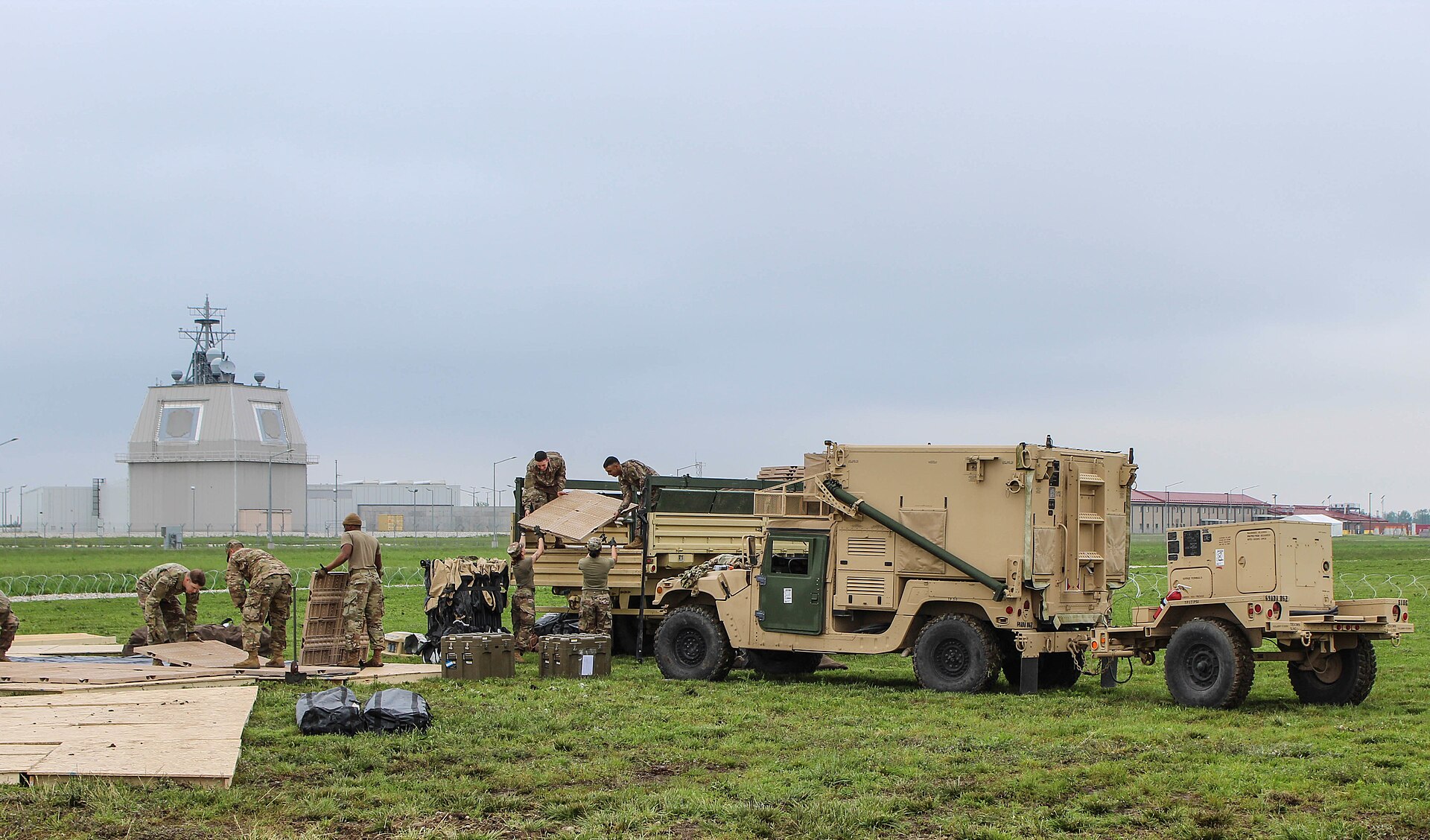
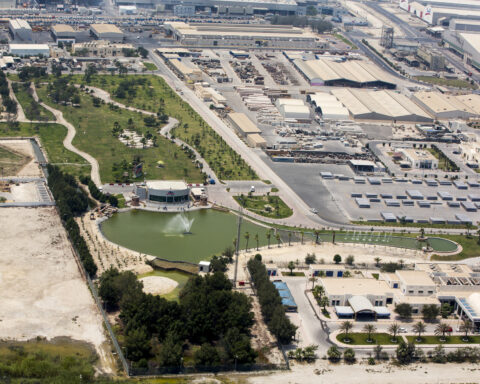
At Prince Sultan Air Base in Al-Kharj, Saudi Arabia, satellite imagery from the same period showed smoke rising from the radar site. CNN reported that a tent sheltering a radar system for a nearby THAAD battery was “badly charred, and debris was scattered around it.” Prince Sultan Air Base — home to the US Air Force’s 378th Air Expeditionary Wing and the Combined Air Operations Center that coordinates coalition air operations across the Middle East — had become a priority target from the war’s opening hours.
The UAE suffered at least two additional confirmed or probable strikes. At Al Ruwais, satellite images showed dark markings from apparent strikes on three buildings at a THAAD battery, including a pull-through vehicle shed used to store radar systems. At Al Dhafra Air Base, Planet Labs imagery indicated AN/TPY-2 infrastructure had been “at least targeted and possibly damaged,” according to CNN’s analysis.
On March 8, the Islamic Revolutionary Guard Corps declared that coordinated ballistic missile strikes over a 24-hour window had destroyed four THAAD-associated radars using Ghadr, Emad, and Kheibar Shekan ballistic missiles. The claimed total: $1.2 billion in destroyed radar equipment. While the IRGC routinely exaggerates battlefield results, independent satellite verification has confirmed at least two complete radar destructions and two probable additional hits — making even the conservative estimate a strategic disaster.
The most consequential single loss may have occurred at Al Udeid Air Base in Qatar on the first night of the conflict. The AN/FPS-132 Block 5 Upgraded Early Warning Radar — a US Space Force-operated system providing 360-degree surveillance coverage across the Gulf — was struck by an Iranian missile. Installed in 2013 at a cost of approximately $1.1 billion (roughly $2.1 billion in 2026 dollars), this fixed-site radar was one of the most capable early warning assets in the entire US military inventory. Its destruction removed a critical layer of warning time for incoming ballistic missile threats targeting Saudi Arabia, the UAE, and other Gulf states.
Why Did Iran Target Sensors Instead of Interceptors?
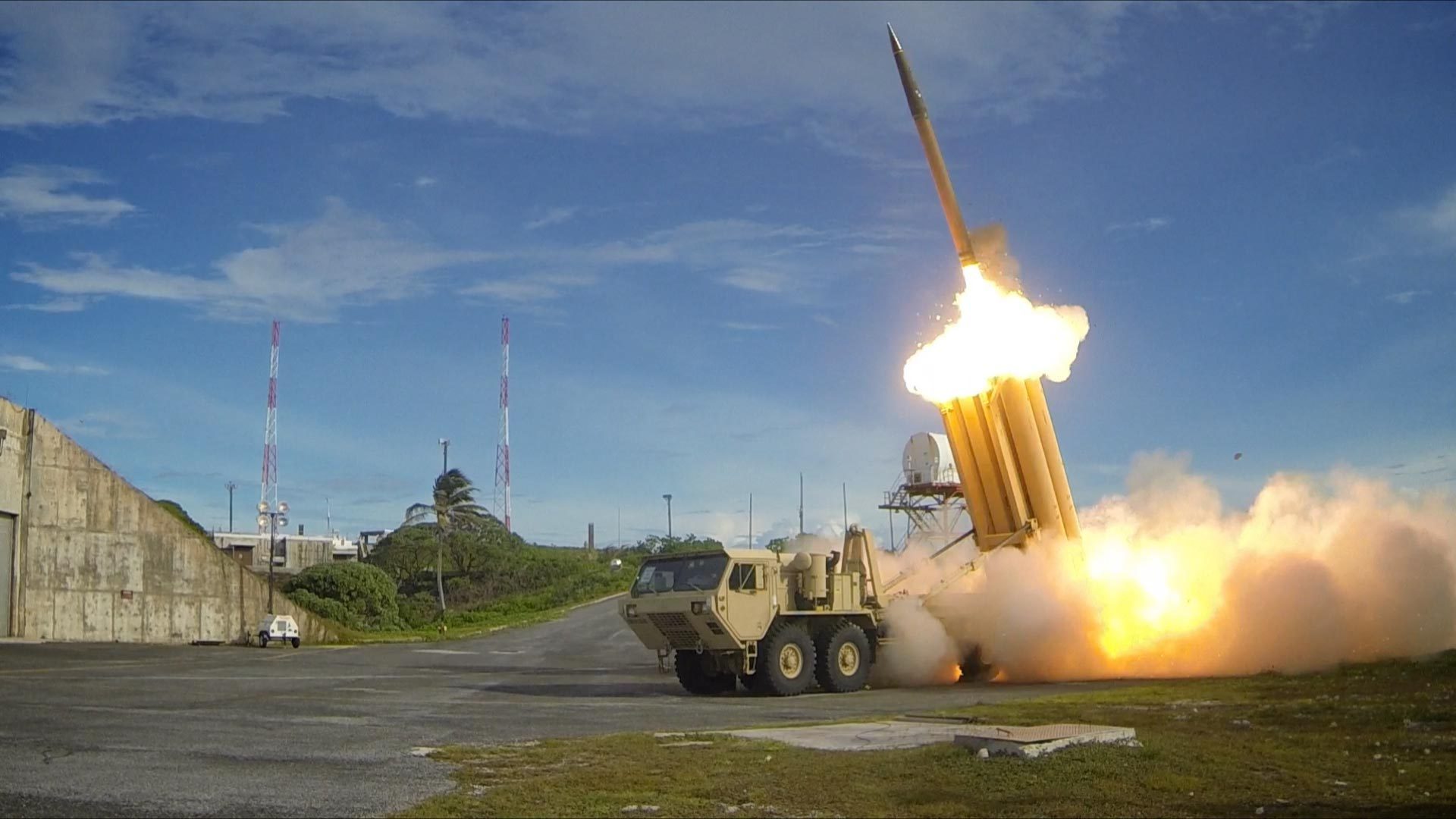
Iran’s decision to prioritize radars over launchers reflects a sophisticated understanding of modern missile defense architecture — and a calculated bet that destroying sensors yields higher strategic returns than overwhelming interceptors. The logic is straightforward: a THAAD battery without its radar is a $1 billion collection of inert metal tubes. The launchers remain intact, the 48 interceptors sit ready, but without tracking data from the AN/TPY-2, nothing can be fired. As N.R. Jenzen-Jones, director of Armament Research Services, told the Jerusalem Post: “The AN/TPY-2 radar is essentially the heart of the THAAD battery, and the loss of even a single radar of this type would represent an operationally significant event.”
The IRGC itself articulated the strategy with unusual clarity. On March 4, an official statement declared: “With the successful destruction of more than seven advanced radars, the eyes of the US and the usurping Zionist regime in the region have been blinded.” The phrasing was not rhetorical. It described a deliberate operational concept — what Defence Security Asia characterized as “precision counter-sensor warfare,” a doctrine focused on collapsing detection timelines and complicating engagement sequences by targeting the surveillance backbone rather than the kinetic defenses themselves.
The approach inverts the conventional calculus of missile defense. Since the 1991 Gulf War, the Western assumption has been that adversaries would attempt to overwhelm interceptors through sheer volume — launching more missiles than the defense could engage. Iran has indeed pursued saturation attacks, firing over 1,200 missiles and drones at Saudi Arabia alone since February 28. But the sensor-targeting campaign represents an entirely different vector of attack: rather than exhausting the defense, it eliminates the defense’s ability to see.
The operational effects are already visible. Israeli Channel 14 reported — though The War Zone noted it was unconfirmed — that “malfunctioning and/or damaged U.S. radars have caused delays in early warning alerts.” The IRGC separately claimed that Israeli air-raid sirens were “triggered only upon missile impact rather than during the approach phase,” suggesting warning times had collapsed in areas where radar coverage had been degraded. Whether these specific claims are accurate, the principle is sound: degraded sensor coverage means less reaction time, which means lower interception rates, which means more warheads reaching their targets.
The Sensor Vulnerability Assessment
The destruction of Gulf missile defense radars reveals a hierarchy of vulnerability that defense planners failed to adequately address. Each sensor type has different characteristics — cost, replaceability, mobility, and strategic importance — that determine how damaging its loss is to the broader network. The assessment below maps these factors across the major systems targeted or at risk in the current conflict.
| Sensor System | Unit Cost | Total Global Inventory | Gulf Deployment | Replacement Time | Vulnerability Rating |
|---|---|---|---|---|---|
| AN/TPY-2 (THAAD radar) | $300-500M | ~16 | 5-7 | 30 months | Critical |
| AN/FPS-132 (Early Warning) | $1.1-2.1B | ~5 | 1 | 3-5 years | Catastrophic |
| Patriot AN/MPQ-65 radar | $125-180M | ~240 | 20-30 | 12-18 months | High |
| Aegis SPY-1/SPY-6 (naval) | $500M+ | ~100 | 6-10 | Mobile (ship-based) | Moderate |
| Saudi HAWK radar systems | $50-80M | ~300 | 16 | 6-12 months | Moderate |
The assessment reveals a pattern that defense planners should have anticipated: the most strategically important sensors are also the scarcest, the most expensive, and the hardest to replace. The AN/TPY-2 sits at the intersection of maximum strategic value and maximum vulnerability. With only 16 ever produced globally — 13 for the US Army, 2 for the UAE, and 1 activated by Saudi Arabia in July 2025, with 6 more on order — the loss of even four represents a quarter of the world’s entire inventory. No amount of money can replace them quickly; Raytheon’s production line manufactures roughly one per year under standard conditions, and the September 2025 upgrade program was already stretching capacity.
The fixed-site AN/FPS-132 at Al Udeid represents an even worse category: a system so large, so expensive, and so few in number that its destruction creates a gap that may persist for years. Unlike the transportable AN/TPY-2, which can theoretically be redeployed from other theaters, the Al Udeid radar was purpose-built infrastructure. Rebuilding it requires “substantial time, engineering resources, and financial investment,” according to CSIS analysis.
“Only 16 AN/TPY-2 radars have been produced for all customers; losing two or more in days creates a massive interception gap that will take years to fill.”
The War Zone, March 7, 2026
The $20,000 Drone That Killed a $500 Million Radar
The most devastating number in this war is not a casualty count or an oil price. It is a ratio: 25,000 to 1. That is the approximate cost asymmetry between an Iranian Shahed-136 one-way attack drone — estimated at $20,000 to $50,000 per unit — and a single AN/TPY-2 radar that it can destroy. In economic terms, Iran can produce 10,000 to 25,000 Shahed drones for the cost of one radar it eliminates. Even at the higher-end cost estimates that emerged from leaked Iranian government documents — which put the unit price closer to $80,000 after battlefield upgrades — the math remains catastrophically lopsided.
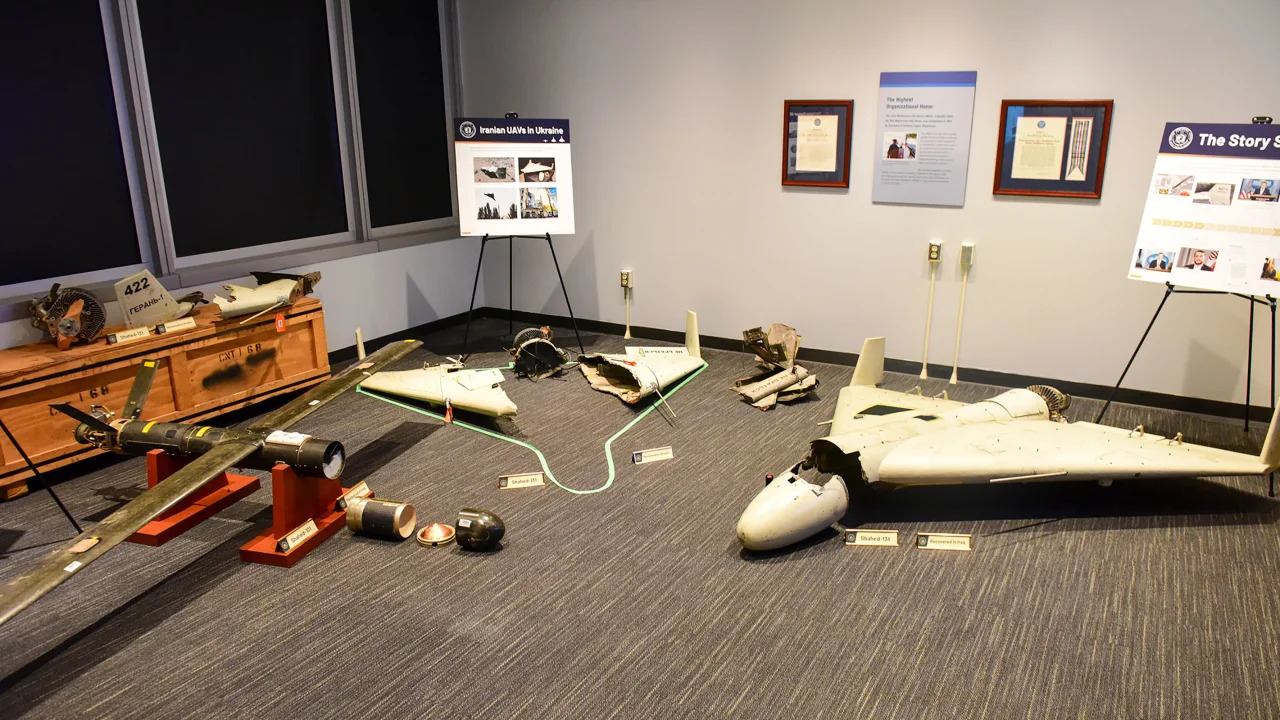
The cost asymmetry operates at every level of the engagement. Bloomberg’s analysis of what it called “Iran’s missile math” documented the cascading disparity: a $20,000 drone forces the expenditure of a $4 million Patriot PAC-3 MSE interceptor to shoot it down — a 200:1 ratio. But if that same drone evades interception and strikes a THAAD radar, the ratio leaps to 25,000:1. And the destruction of that radar renders useless a further $500 million or more in THAAD interceptors that can no longer receive targeting data, pushing the effective cost multiplier into territory that makes traditional defense spending calculations meaningless.
| Scenario | Attack Cost | Defense Cost / Loss | Ratio |
|---|---|---|---|
| Shahed drone intercepted by Patriot PAC-3 | $20,000-$80,000 | $4 million | 50-200:1 |
| Shahed drone destroys AN/TPY-2 radar | $20,000-$80,000 | $300-$500 million | 3,750-25,000:1 |
| Ballistic missile destroys AN/FPS-132 radar | $500,000-$2 million | $1.1-$2.1 billion | 550-4,200:1 |
| Mixed salvo blinds full THAAD battery | $5-$10 million | $1+ billion (radar + useless interceptors) | 100-200:1 |
Iran has exploited this asymmetry with industrial efficiency. Since February 28, Tehran has launched over 2,000 drones at Gulf targets alongside 174 ballistic missiles and 8 cruise missiles. The drone swarms serve a dual purpose: they saturate air defenses, forcing the expenditure of expensive interceptors, while a subset targets the radar infrastructure that makes interception possible. It is the military equivalent of attacking both the sword and the eye simultaneously — and it is working.
How Much Has Saudi Arabia Spent on Missile Defense?
Saudi Arabia has invested more than $80 billion across three decades in what became the most comprehensive air defense network in the Middle East. The Kingdom operates six Patriot battalions with 108 M902 launchers, a mix of PAC-2 GEM-T and PAC-3 hit-to-kill interceptors, and activated its first THAAD battery — purchased under a 2017 deal valued at $15 billion — in July 2025. That deal covers 7 fire units, 7 AN/TPY-2 radars, 44 launchers, 360 interceptor missiles, and 16 mobile fire control units, with deliveries scheduled through 2028. A separate $2.3 billion contract signed in 2020 covers the Gallium Nitride-based radar upgrades. An additional 400 M1097 Avenger short-range anti-aircraft systems provide point defense against low-altitude threats.
Defense expenditure has risen sharply, from $53.9 billion in 2021 to $72.5 billion in 2025 — a compound annual growth rate of 7.7 percent — making Saudi Arabia the sixth-highest defense spender globally. The 2026 budget allocated approximately $78 billion for the military sector, representing 21 percent of government spending and 7.2 percent of GDP. Under Mohammed bin Salman’s defense modernization agenda, the Kingdom aims to localize 50 percent of military spending by the end of the decade, though the rate has risen only from 4 percent in 2018 to 19.35 percent in 2024.
The numbers are staggering — and yet the war’s first eleven days have exposed a fundamental mismatch between the amount spent and the protection actually achieved. The war bill Saudi Arabia is accumulating goes far beyond interceptor expenditure. CSIS estimated the cost of Operation Epic Fury’s first 100 hours alone at $3.7 billion — $1.7 billion in air defense interceptors, $3.1 billion in munitions replacement, $350 million in combat losses and infrastructure repair, and $196 million in operational costs. The New York Times put the first full week’s bill at approximately $6 billion. Saudi Arabia’s share of these costs, while not publicly disaggregated, is substantial given that the Kingdom hosts the largest deployed missile defense infrastructure outside the continental United States.
The Patriot Interceptor Depletion Crisis
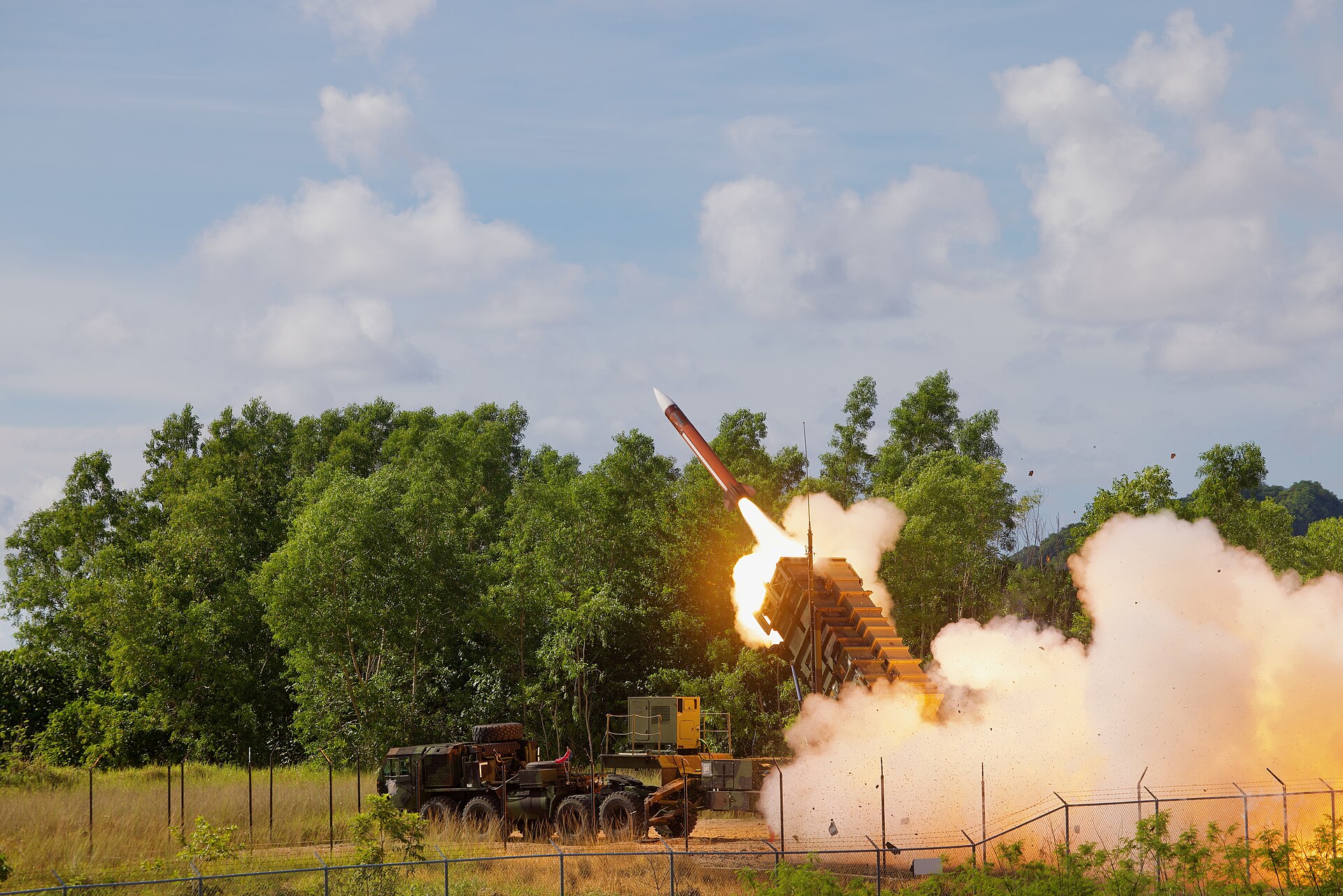
The sensor destruction problem compounds an interceptor supply crisis that was already acute before the first radar was hit. Over 800 Patriot anti-ballistic missiles were expended in just the first five days of hostilities — a figure that exceeds the total number of Patriot interceptors launched throughout the entire Russia-Ukraine war over nearly three years. At a cost of approximately $4 million per PAC-3 MSE interceptor, the five-day bill for Patriot ammunition alone reached $2.4 billion.
The depletion rate is unsustainable. CBS News reported that Arab states are “running dangerously low on interceptors,” while Military Times characterized the situation as a “race of attrition” between Iran’s production capacity and the US-led coalition’s ability to replenish. Lockheed Martin delivered a record 620 PAC-3 MSE interceptors in 2025 — a 20 percent increase over the previous year — but the war consumed more than that record annual output in under a week. The Pentagon and Lockheed Martin signed a deal in January 2026 to triple production from approximately 600 to 2,000 per year by the end of the decade, but that capacity expansion is years away from full realization.
Saudi Arabia faces a specific constraint. A delivery gap since mid-2023, combined with a backlog of 360 THAAD interceptors that constrains replenishment, means the Kingdom entered the war with fewer reserves than its procurement record might suggest. The September 2025 contract for $9.8 billion — covering 1,970 PAC-3 MSE interceptors in the largest-ever contract for Lockheed Martin’s Missiles and Fire Control division — was signed with this vulnerability in mind. But production takes time. Even at the planned tripled rate, matching the depletion pace of the current conflict requires output that will not materialize until 2029 or 2030.
THAAD interceptor production faces an even more severe bottleneck. Current output stands at 96 per year, with a framework agreement signed on January 29, 2026, targeting 400 per year — a quadrupling that Lockheed Martin’s new Munitions Acceleration Center in Camden, Arkansas, was specifically designed to achieve. Yet at 96 per year, replacing Saudi Arabia’s contracted 360 THAAD interceptors — setting aside any wartime expenditure — would require nearly four years of dedicated production. The math is unforgiving.
Can Saudi Air Defenses Survive Without Their Eyes?
The answer depends on which eyes remain. Saudi Arabia’s air defense architecture is layered, and the destruction of THAAD radars — while operationally devastating for high-altitude ballistic missile defense — does not eliminate all sensor coverage. Patriot batteries retain their own AN/MPQ-65 radars, which provide tracking data for medium-range engagement. Aegis-equipped US Navy destroyers operating in the Gulf carry SPY-1 or SPY-6 radar systems capable of ballistic missile tracking. And the Kingdom maintains a network of older HAWK and Shahine systems with independent radar suites.
But these alternatives cannot fully compensate for AN/TPY-2 losses. The THAAD radar operates in the X-band at frequencies specifically optimized for discriminating warheads from decoys and debris during the terminal phase of ballistic missile flight. Its detection range of 870 to 3,000 kilometers, depending on target characteristics and operational mode, provides a surveillance envelope that no other deployable system can match. The Patriot’s AN/MPQ-65, while capable, operates at shorter ranges and lower altitudes. Aegis provides excellent naval-based coverage but is tethered to ship positions and cannot be permanently stationed over land-based installations. The discrimination problem grows considerably worse if Iran deploys its Khoramshahr-4 multi-warhead ballistic missile, which splits into multiple independent re-entry vehicles that surviving radars must individually classify and track — a task that demands precisely the X-band resolution the destroyed AN/TPY-2 radars provided.
Ryan Brobst, deputy director of the Center on Military and Political Power at the Foundation for Defense of Democracies, acknowledged the severity to Bloomberg while noting that “the US military and its partners have other radars that can continue to provide air and missile defense coverage, mitigating the loss of any single radar.” The qualifier matters: mitigating is not replacing. Each AN/TPY-2 loss reduces the density of sensor coverage, creates gaps in detection geometry, and shortens the warning time available to engage incoming threats. When enough gaps accumulate, the system’s overall effectiveness degrades below the threshold at which sustained defense is possible.
Newsweek reported that the US had already been forced to pull THAAD defenses from Asia to reinforce the Gulf — a redeployment that creates new vulnerabilities in the Pacific theater at precisely the moment when tensions with China over Taiwan remain elevated. The global THAAD inventory is simply too small to absorb combat losses while maintaining worldwide commitments. Thomas Karako, director of the Missile Defense Project at CSIS, described AN/TPY-2 radars and similar assets as “scarce and strategic resources” belonging to the “Exquisite Class” of weapons systems being rapidly depleted alongside Patriot missiles and Tomahawk cruise missiles.
What the 2019 Aramco Attack Should Have Taught Riyadh
The September 14, 2019 drone and cruise missile attack on Aramco’s Abqaiq and Khurais oil processing facilities should have been the definitive warning. At least one Patriot battery was in place at Abqaiq but failed to engage any of the incoming weapons. The attack succeeded completely, temporarily halving Saudi oil production — roughly 5.7 million barrels per day — and demonstrating that the Kingdom’s air defenses had a catastrophic blind spot.
The failure had three distinct causes, each of which has been partially but not fully addressed in the subsequent seven years. The incoming cruise missiles flew below Patriot’s engagement altitude, exploiting the system’s optimization for high-altitude ballistic threats. Saudi defenses were oriented toward Iran across the Gulf and south toward Yemen, but at least some weapons struck from the west, according to CNBC reporting. And NBC News cited assessments that Saudi troops operating the defenses had “low readiness, low competence, and are largely inattentive.”
The 2019 attack accelerated Saudi Arabia’s THAAD procurement and drove investment in layered defense. But the deeper lesson — that air defense architecture must protect itself as fiercely as it protects the assets behind it — went unheeded. The radars destroyed in March 2026 were high-value, high-visibility targets positioned at known military installations. Iran did not need sophisticated intelligence to locate them; the AN/TPY-2’s physical size and electromagnetic signature make it detectable, and the bases hosting THAAD batteries in Jordan, Saudi Arabia, and the UAE were publicly known.
Defense Express characterized the radar losses as “a total fiasco” — the inability to defend costly, vital assets “represents serious security lapses.” The 2019 lesson was that Saudi defenses had gaps. The 2026 lesson is more alarming: the defenses themselves are vulnerable, and the adversary has figured out how to exploit that vulnerability at industrial scale.
The Shield That Held — and the Myth Behind It
The dominant narrative since the war began has been one of success. Pentagon reports of a 90 percent reduction in Iranian missile launches have been cited as evidence that the air campaign is degrading Iran’s offensive capability. Saudi and UAE interception rates of 85 to 90 percent against ballistic missiles have been presented as validation of decades of defense investment. After the Prince Sultan Air Base intercepts, Arab News reported that Saudi air defenses had “performed admirably” in maintaining air sovereignty over the world’s most valuable energy infrastructure.
These claims are not false. They are incomplete. An 85 percent interception rate sounds impressive until you calculate what 15 percent leakage means when Iran has fired 174 ballistic missiles — approximately 26 warheads reaching their targets. Against 1,200 total projectiles including drones and cruise missiles, even a 90 percent aggregate success rate means 120 impacts. Two of those impacts killed civilians in Al-Kharj. Others struck the US Embassy in Riyadh, damaged Ras Tanura oil processing, and — most consequentially — destroyed the radar systems on which future interception depends.
The contrarian reality is this: the shield held in the sense that Saudi Arabia was not overwhelmed. Population centers were not devastated. Oil infrastructure, while damaged, continues to operate through alternative pipeline routes. But the shield is being degraded faster than it can be replenished, and the most critical components — the sensors that give the shield its sight — are being systematically eliminated. A defense that intercepts 85 percent of threats today but has 30 percent fewer sensors tomorrow is not a shield that is holding. It is a shield that is eroding.
Consider the arithmetic. Before the war, the Gulf region had approximately five to seven AN/TPY-2 radars providing overlapping high-altitude coverage from Jordan in the west to the UAE in the east. Eleven days into the conflict, at least two are confirmed destroyed and two more probably damaged. That represents a 30 to 60 percent reduction in THAAD-grade sensor coverage — a degradation that cannot be compensated by lower-tier radars optimized for different threat profiles. The intercept rates being celebrated in Riyadh and Washington reflect the performance of systems that still have functioning sensors. As those sensors continue to be targeted, the rates will decline, and the warheads that slip through will strike infrastructure, military assets, and potentially population centers with increasing frequency.
The collective defense alliance among Gulf states adds additional sensor and interceptor depth, but it cannot overcome the fundamental scarcity problem. There are not enough advanced radars in the entire US military inventory to replace what has been lost while maintaining other global commitments.
The 30-Month Replacement Problem
The AN/TPY-2’s replacement timeline illuminates the full scale of the crisis. Under standard production conditions, manufacturing a single replacement unit requires approximately 30 months, according to Defence Security Asia’s assessment. No surplus units exist in storage. The production line at Raytheon’s facility is already committed to the Saudi Arabia foreign military sale and upgrade programs. Accelerating production requires expanded manufacturing capacity that cannot be improvised on wartime timelines.
| System Lost | Location | Estimated Replacement Cost | Replacement Timeline | Strategic Gap Created |
|---|---|---|---|---|
| AN/TPY-2 #1 | Muwaffaq Salti, Jordan | $300-500M | 30+ months | Western defense arc degraded |
| AN/TPY-2 #2 | Prince Sultan AB, Saudi Arabia | $300-500M | 30+ months | Central Saudi coverage reduced |
| AN/TPY-2 #3 | Al Ruwais, UAE | $300-500M | 30+ months | UAE high-altitude defense compromised |
| AN/TPY-2 #4 | Al Dhafra, UAE (probable) | $300-500M | 30+ months | Southern Gulf coverage gap |
| AN/FPS-132 | Al Udeid, Qatar | $1.1-2.1B | 3-5 years | Strategic early warning eliminated |
The total bill for radar replacement alone ranges from $2.3 billion at the low end to $4.1 billion at the high end — and that assumes production capacity exists, which it does not at the required scale. The IRGC claimed total radar losses of up to $4 billion over nine days, an Iranian figure that may be inflated but is not wildly inconsistent with independent estimates when the Al Udeid radar is included.
Interim measures exist but are imperfect. The US can redeploy AN/TPY-2 units from Japan, Turkey, or Israel — but each redeployment creates a new gap elsewhere. Naval Aegis platforms can partially compensate with ship-based radar coverage, but they operate from the sea and cannot replicate the land-based coverage geometry. The operational reality is that Gulf missile defense will operate with degraded sensor coverage for a minimum of two to three years, regardless of how much money is allocated to reconstruction.
What Must Change in Gulf Missile Defense?
The Iran war has delivered a verdict on Gulf missile defense architecture that no exercise, simulation, or procurement strategy ever could. Five structural changes are now inescapable.
Sensor hardening and dispersal must become a first-order priority. The AN/TPY-2 was designed as a transportable system — it can be moved on standard military vehicles — but in practice it was deployed at fixed, known locations behind minimal passive defenses. Future deployments require hardened shelters, active defense systems to protect radar sites, decoy emitters, and a doctrine of frequent relocation that denies the adversary static targeting data.
Directed energy weapons must be fielded to close the cost-asymmetry gap. A $20,000 drone destroying a $500 million radar is only viable because the defenses between them — kinetic interceptors at $4 million each — cannot economically sustain the exchange rate. High-energy laser systems, currently in advanced testing by Lockheed Martin, RTX, and Northrop Grumman, offer the potential for engagements at a cost-per-shot measured in dollars rather than millions. The US-Saudi defense relationship will increasingly be defined by how quickly these systems can be developed, produced, and deployed.
Distributed sensor networks must replace centralized radar dependence. Instead of relying on a small number of exquisitely capable and exquisitely expensive radars, future Gulf air defense should incorporate dozens or hundreds of smaller, cheaper, networked sensors whose individual loss does not create catastrophic gaps. The technology exists — phased array modules have been shrinking and cheapening for years — but the doctrinal and procurement shift required is profound. The case for diversified, layered systems is already being validated in combat: South Korea’s Cheongung-II medium-range air defense system achieved a 96 percent intercept rate against Iranian missiles in the UAE, demonstrating that non-American systems can fill critical gaps in the existing architecture. Saudi Arabia’s $3.2 billion commitment to the same Korean platform signals that the diversification imperative is already reshaping procurement.
Electronic warfare capabilities must be expanded. Iran’s drones navigate primarily by GPS/INS guidance. Robust GPS jamming and spoofing across Saudi airspace could degrade drone accuracy without expending a single interceptor. The current conflict has exposed a remarkable lack of electronic warfare infrastructure relative to the kinetic defense investment.
Domestic production must accelerate. Saudi Arabia’s defense localization rate of 19.35 percent means that over 80 percent of its missile defense capability depends on foreign production lines operating on peacetime schedules. Mohammed bin Salman’s Vision 2030 target of 50 percent localization by 2030 looked ambitious before the war. It now looks existential. The Kingdom cannot sustain a protracted conflict while waiting in line behind other customers for American-made interceptors and sensors. The General Authority for Military Industries and the Saudi Arabian Military Industries consortium have made progress in ammunition production and armored vehicle manufacturing, but missile defense sensor technology requires precision engineering capabilities that remain years from domestic realization. The irony is acute: the war that demonstrated the need for defense self-sufficiency is the same war that exposed how far Saudi Arabia remains from achieving it.
Taken together, these five imperatives amount to a generational reconstruction of Gulf missile defense — not a repair of the existing architecture but a replacement of its underlying assumptions. The pre-war model assumed that adversaries would try to overwhelm the shield. Iran demonstrated that it is cheaper and more effective to blind the shield instead. Every procurement decision, every deployment doctrine, and every allied burden-sharing agreement must now be reconsidered in light of that lesson. For the Crown Prince, whose defense modernization agenda underpins both national security and economic ambition, the stakes could not be higher. The next generation of Gulf missile defense must be designed not merely to intercept what flies toward it, but to protect the systems that make interception possible.
Frequently Asked Questions
What is the AN/TPY-2 radar and why is it important?
The AN/TPY-2 is a transportable X-band radar manufactured by Raytheon that serves as the primary sensor for the THAAD missile defense system. It detects and tracks incoming ballistic missiles at ranges of 870 to 3,000 kilometers, providing the targeting data that THAAD interceptors need to engage threats. Without a functioning AN/TPY-2, an entire THAAD battery — including its launchers and interceptors — cannot operate. Only approximately 16 units have ever been manufactured, making each one irreplaceable on short timelines.
How many THAAD radars has Iran destroyed in the 2026 war?
Satellite imagery and independent analysis have confirmed the destruction of at least two AN/TPY-2 radars — at Muwaffaq Salti Air Base in Jordan and Prince Sultan Air Base in Saudi Arabia — with two additional probable strikes at Al Ruwais and Al Dhafra in the UAE. The IRGC claimed four confirmed destructions in a single 24-hour period on March 8. An additional AN/FPS-132 early warning radar at Al Udeid Air Base in Qatar was also confirmed destroyed, representing a separate but related loss valued at over $1 billion.
How long does it take to replace a destroyed THAAD radar?
Under standard production conditions, manufacturing a single replacement AN/TPY-2 radar requires approximately 30 months, according to defence industry analysts. No surplus units exist in storage, and Raytheon’s production line is already committed to existing orders including Saudi Arabia’s $2.3 billion radar contract. The fixed-site AN/FPS-132 radar destroyed at Al Udeid would require three to five years to rebuild given its complexity and scale. The practical effect is that Gulf missile defense will operate with degraded sensor coverage for a minimum of two to three years.
How much has Saudi Arabia spent on missile defense?
Saudi Arabia has invested over $80 billion across three decades in air defense systems, including a $15 billion THAAD deal signed in 2017, a $2.3 billion radar upgrade contract in 2020, and a $9.8 billion Patriot PAC-3 MSE interceptor order in September 2025. The Kingdom operates six Patriot battalions with 108 launchers and activated its first THAAD battery in July 2025. Annual defense spending reached $72.5 billion in 2025, representing approximately 7.2 percent of GDP.
What is the cost asymmetry between Iranian drones and Gulf missile defenses?
The cost disparity is extreme at every level of engagement. An Iranian Shahed-136 drone, estimated at $20,000 to $80,000, forces the expenditure of a $4 million Patriot interceptor to shoot it down — a ratio of 50 to 200:1. If a drone evades interception and destroys an AN/TPY-2 radar valued at $300 to $500 million, the ratio leaps to 3,750 to 25,000:1. This asymmetry is economically unsustainable for the defending side and represents a structural advantage that Iran has exploited throughout the conflict. Riyadh may have found an answer to this cost imbalance: Ukrainian interceptor missiles and kamikaze drones that cost a fraction of American alternatives and are purpose-built for the Shahed threat. The financial windfall for defence contractors is explored in depth in an analysis of how the Iran war turned defence stocks into the safest bet on earth.
Can Saudi Arabia’s Patriot systems compensate for THAAD radar losses?
Partially but not fully. Patriot batteries retain their own AN/MPQ-65 radars, which provide tracking data for medium-range engagement. However, these systems operate at shorter ranges and lower altitudes than the AN/TPY-2, and cannot replicate its high-altitude ballistic missile discrimination capability. US Navy Aegis-equipped destroyers provide supplementary coverage but are limited by ship positioning. The net effect of THAAD radar losses is a reduction in warning time, a narrowing of the engagement envelope for high-altitude ballistic threats, and increased vulnerability to weapons that the remaining systems were not optimized to counter.
The asymmetric cost challenge extends beyond air defence. In the Strait of Hormuz, Iran has begun deploying naval mines — cheap, indiscriminate weapons that cost as little as $1,500 each to produce. The U.S. Navy destroyed 16 Iranian minelaying vessels on March 10, but Iran retains the capability to lay hundreds more.