
RIYADH — Saudi Arabia has positioned itself as the indispensable mediator in at least four active international conflicts over the past eighteen months, hosting ceasefire negotiations between Ukraine and Russia, maintaining a backchannel to Tehran while Iranian missiles strike Saudi cities, brokering humanitarian corridors in Sudan, and facilitating the diplomatic reopening between Washington and Damascus. No other capital on earth is simultaneously mediating this many disputes at this scale. The paradox is extraordinary: the Kingdom is being bombed by one of the parties it is trying to bring to the table.
The mediation imperative has grown more urgent as seven days of war have fractured the US-Gulf security alliance, with Gulf allies publicly questioning whether Washington can be trusted to protect the partners it dragged into conflict without warning.
That contradiction — peacemaker under fire — defines the most ambitious diplomatic strategy any Gulf state has attempted. Crown Prince Mohammed bin Salman has spent the better part of a decade transforming Saudi Arabia from a regional oil power into a global diplomatic hub, and the Iran war that began on 28 February 2026 is now the ultimate stress test of that transformation. Riyadh is not merely hosting talks; it is arguing that a nation capable of absorbing missile strikes while keeping diplomatic channels open to all sides is exactly the kind of mediator the twenty-first century requires.
This analysis examines Saudi Arabia’s emergence as a global peace broker, the diplomatic infrastructure that supports that role, and whether the credibility of a nation under attack can survive the pressures of a war it did not start but cannot escape. The evidence spans four active mediations, seventeen months of diplomatic activity, and a strategic vision that treats conflict resolution not as altruism but as the foundation of economic survival.
Table of Contents
- What Role Is Saudi Arabia Playing in Global Peace Negotiations?
- How Did Saudi Arabia Become the World’s Mediator?
- The Ukraine Playbook That Wrote the Rules for Riyadh Diplomacy
- Why Is Saudi Arabia Talking to Iran While Tehran Bombs Saudi Cities?
- Can a Nation Under Attack Be a Credible Peace Broker?
- The Diplomatic Readiness Index
- What Gives Saudi Arabia the Edge Over Traditional Mediators?
- The Economic Calculus Behind Saudi Peace Diplomacy
- How Does the Iran War Test Saudi Arabia’s Diplomatic Architecture?
- The Contrarian Case for War Making Saudi Diplomacy Stronger
- Saudi Arabia’s Diplomatic Infrastructure and the Riyadh Apparatus
- What Happens If Saudi Mediation Fails?
- Frequently Asked Questions
What Role Is Saudi Arabia Playing in Global Peace Negotiations?
Saudi Arabia is simultaneously engaged in mediation or diplomatic facilitation across at least four major international conflicts, a scope of activity that no other nation — including traditional mediation powers such as Switzerland, Norway, or Qatar — is matching in 2026. The Kingdom’s diplomatic portfolio includes the Russia-Ukraine war, the Iran-Gulf conflict, the Sudanese civil war, and the post-Assad transition in Syria.
The Ukraine track alone illustrates the scale. President Volodymyr Zelensky visited Jeddah in March 2025 for direct talks with Crown Prince Mohammed bin Salman, and his delegation — led by Chief of Staff Andriy Yermak, Foreign Minister Andrii Sybiha, and Defence Minister Rustem Umerov — remained in the Kingdom for follow-up technical negotiations with American counterparts. By March 2025, US and Ukrainian delegations were meeting in Riyadh on a near-weekly basis, with at least five rounds of talks focused on partial ceasefires covering energy infrastructure and civilian sites. The original plan for a Trump-Putin summit was for it to take place in Riyadh, though it ultimately occurred in Alaska in August 2025. The symbolic significance of Riyadh as the preferred venue was not lost on any participant.
On Iran, the mediation is more urgent and more dangerous. Bloomberg reported on 6 March 2026 that Saudi officials had intensified their backchannel to Tehran, with security and diplomatic officials from both sides communicating with increased frequency despite the fact that Iranian missiles and drones had struck Saudi territory repeatedly since the war began on 28 February. Several European and regional governments are backing the Saudi effort, according to the European officials cited by Bloomberg.
In Sudan, the Jeddah Declaration brokered by Riyadh established the framework for a ceasefire and humanitarian corridor between the Sudanese Armed Forces and the Rapid Support Forces. That process evolved into the Quartet Plan, developed in partnership with the United States, the UAE, and Egypt — one of the most comprehensive blueprints for restoring order in a conflict that has displaced over ten million people, according to UN estimates.
And in Syria, it was Saudi engagement that helped open channels between Washington and Damascus following the fall of the Assad regime, with the Kingdom facilitating meetings between President al-Sharaa and the Trump administration that contributed to the gradual lifting of Western sanctions.
| Conflict | Saudi Role | Key Activity | Status (March 2026) |
|---|---|---|---|
| Russia-Ukraine War | Host, facilitator, prisoner exchange mediator | 5+ rounds of US-Ukraine talks in Riyadh; Zelensky visit; Trump-Putin summit originally planned for Riyadh | Ongoing technical talks |
| Iran-Gulf War (2026) | Direct backchannel mediator | Intensified security and diplomatic communications with Tehran (Bloomberg, 6 March 2026) | Active, urgent |
| Sudan Civil War | Primary mediator, Jeddah Declaration host | Brokered ceasefire framework; developed Quartet Plan with US, UAE, Egypt | Framework in place, implementation fragile |
| Syria Transition | Diplomatic facilitator | Opened channels between Washington and Damascus; facilitated sanctions relief dialogue | Progressing |
How Did Saudi Arabia Become the World’s Mediator?
Saudi Arabia’s emergence as a global diplomatic broker did not happen overnight. It is the product of a deliberate strategic shift that began around 2020, when the Kingdom pivoted from military adventurism — epitomised by the costly intervention in Yemen — toward a diplomacy-first foreign policy designed to serve the economic objectives of Vision 2030. The transformation required building relationships with every major power bloc simultaneously, a strategy analysts at Chatham House have described as “managing multipolarity.”
The foundation is structural. Saudi Arabia maintains strong security ties with the United States, extensive economic partnerships with China, energy coordination with Russia through OPEC+, and expanding trade relationships with India and the broader Global South. The International Crisis Group noted that this “multi-alignment” strategy gives Riyadh credibility with parties that would never accept mediation from a capital perceived as firmly in one geopolitical camp. Moscow trusts Riyadh in a way it does not trust London. Washington trusts Riyadh in a way it does not trust Beijing. Tehran trusts Riyadh — or at least did until February 2026 — in a way it does not trust any Western capital.
That trust was built through concrete diplomatic investments. The Beijing Agreement of March 2023, which restored Saudi-Iranian diplomatic relations after a seven-year rupture, demonstrated that Riyadh could navigate between adversaries. That same Chinese diplomatic infrastructure has been reactivated during the current war, with Beijing dispatching envoy Zhai Jun to Riyadh on March 8 to present a five-point ceasefire plan to Faisal bin Farhan. The prisoner exchange programme between Russia and Ukraine, facilitated through Saudi channels, proved that the Kingdom could deliver tangible results in the most fraught bilateral relationship on the planet. According to Rasanah, the International Institute for Iranian Studies, Saudi Arabia’s success as a mediator between global poles rests on its “hybrid geopolitical character” — perceived by both Russia and the United States as friendly territory, or at least not hostile.
The Washington Institute for Near East Policy identified five pillars of Saudi mediation capacity: religious authority as custodian of Islam’s two holiest sites, energy leverage as the world’s swing oil producer, financial power through the Public Investment Fund’s $930 billion portfolio, geographic centrality at the crossroads of three continents, and the personal relationships that Mohammed bin Salman has cultivated with leaders from Trump to Xi to Putin.
A peer-reviewed study published in the Journal of Liberty and International Affairs characterised this approach as “niche diplomacy” — a middle power strategy that leverages specific comparative advantages rather than attempting to match the military reach of superpowers. The study noted that Saudi Arabia strategically employs mediation, religious diplomacy, humanitarian aid, energy leadership, and sports diplomacy in an integrated approach to global influence that no other middle power replicates.
The Ukraine Playbook That Wrote the Rules for Riyadh Diplomacy
The Ukraine negotiations established the operational template that Saudi Arabia now applies to the Iran crisis. Understanding how Riyadh handled the Ukraine track illuminates why the Kingdom believes it can mediate a conflict in which it is also a target.
The process began in February 2025 when US Secretary of State Marco Rubio and Russian Foreign Minister Sergey Lavrov met at the Diriyah Palace in Riyadh for a 4.5-hour session — the first formal US-Russian governmental meeting since the invasion of Ukraine. The agenda covered three objectives: restoring embassy staffing, creating a high-level team for Ukraine peace talks, and exploring closer bilateral relations. Rubio described the meeting as “the first step of a long and difficult journey.”
The choice of venue was not accidental. Riyadh offered what no other capital could: a location acceptable to both Moscow and Washington, with a host government that maintained functional relationships with Russia (through OPEC+), the United States (through a $110 billion arms deal and the Trump-MBS transactional alliance), and Ukraine (through humanitarian aid commitments). Switzerland was too closely aligned with EU sanctions. Turkey had attempted mediation but was constrained by NATO membership. The UAE lacked the geopolitical weight. Only Riyadh checked every box.
The Diriyah Palace talks established several principles that now define Saudi mediation practice. First, confidentiality: the 4.5-hour session produced a terse joint statement but no leaks, a level of information security that European diplomats described as unprecedented for talks of this magnitude. Second, neutrality of framing: Saudi officials did not publicly endorse either side’s position, a discipline that irritated Kyiv but maintained Riyadh’s credibility with Moscow. Third, sustained follow-up: rather than hosting a single summit and declaring victory, Riyadh committed to hosting rolling negotiations, with US-Ukrainian technical talks continuing through at least March 2025.
The model produced results. A partial ceasefire on energy and critical infrastructure strikes was negotiated through the Riyadh channel. Prisoner exchanges were facilitated. And when the plan for a Trump-Putin summit was being discussed, Riyadh was the first and most natural venue proposed.
That the summit ultimately moved to Alaska in August 2025 did not diminish Saudi credibility. Russian President Vladimir Putin briefed Crown Prince Mohammed bin Salman on the results and, according to Arab News, “reiterated his thanks and appreciation for the Kingdom’s steadfast position and the crown prince’s constructive efforts to achieve peace.” The appreciation was genuine: Riyadh had created the conditions that made the Alaska summit possible.
Why Is Saudi Arabia Talking to Iran While Tehran Bombs Saudi Cities?
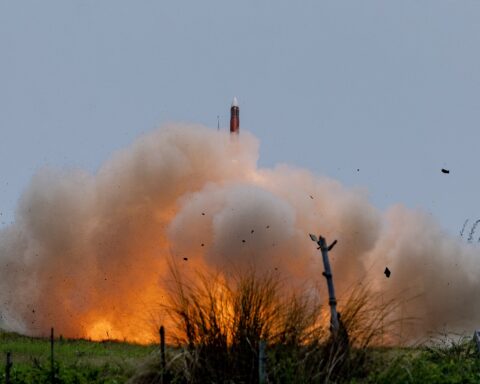
The question seems absurd on its face. Since 28 February 2026, Iranian missiles and drones have struck the Ras Tanura oil refinery complex, hit the US Embassy in Riyadh, targeted Prince Sultan Air Base with ballistic missiles, and threatened civilian infrastructure across the Eastern Province. Saudi air defences have intercepted dozens of incoming projectiles — a remarkable technical achievement — but the Kingdom is unambiguously under attack. Why, then, would Riyadh maintain diplomatic communications with the government firing those missiles?
The answer lies in a calculation that distinguishes Saudi strategic thinking from the American approach. Washington framed the Iran war as an exercise in decisive force: strikes on Tehran, Isfahan, Qom, and Karaj destroyed military infrastructure and killed Supreme Leader Ali Khamenei. President Trump declared that Iran must offer “unconditional surrender” and ruled out negotiations. The American theory of victory is destruction of Iranian military capacity.
Riyadh’s theory is different. Saudi officials recognised that even a militarily defeated Iran would remain a geographic neighbour with 88 million people, an ideological infrastructure that survives regime change, and proxy networks embedded across Lebanon, Iraq, Yemen, and Syria. The failure of pre-war diplomacy did not convince Saudi planners that diplomacy itself was futile — only that it had been attempted too late and without sufficient leverage.
The Bloomberg report of 6 March 2026 revealed that Saudi officials had used their backchannel to Iran “with increased urgency to ease tensions and keep the conflict from worsening.” The talks involved both security and diplomatic officials, though the precise seniority of participants remained unclear. Several European nations were backing the effort, recognising that a diplomatic off-ramp needed to exist even if Washington was not yet ready to use it.
The Carnegie Endowment for International Peace identified the strategic logic in a March 2026 analysis: the Gulf monarchies are “caught between Iran’s desperation and the US’s recklessness.” Iran was lashing out at Gulf states precisely to pressure them into lobbying Washington for a ceasefire. Riyadh’s response was to absorb the pressure while maintaining its own channel to Tehran — not because Saudi officials trusted the Iranian government, but because the alternative was to let the war escalate until no diplomatic architecture remained.
Crown Prince Mohammed bin Salman conveyed messages to the leaders of Bahrain, Kuwait, Qatar, and the UAE shortly after the Saudi foreign ministry formally condemned Iran’s retaliatory strikes. The message to Gulf allies was explicit: avoid any military involvement against Iran that could drag Yemen’s Houthis into the conflict. Saudi officials’ greatest fear, according to Middle East Eye, was that “any escalation will be used as a pretext by Tehran to unleash its network of proxies.” The GCC’s decision on collective military action became the most consequential internal debate in Gulf politics since Iraq’s invasion of Kuwait in 1990.
Can a Nation Under Attack Be a Credible Peace Broker?
Conventional diplomatic theory says no. The standard model of mediation requires a neutral third party with no stake in the outcome. By that measure, a Saudi Arabia absorbing Iranian missile strikes should be disqualified from mediating any conflict involving Iran. The question is whether the conventional model still applies in a world where no capital is truly neutral, and whether the qualities that make an effective mediator have changed.
The evidence from the past eighteen months suggests they have. Saudi Arabia’s mediation of the Ukraine conflict succeeded not because Riyadh was neutral about the war — the Kingdom’s energy interests were directly affected by European sanctions and Russian supply disruptions — but because it was uniquely positioned to deliver concessions from both sides. A mediator who can call Moscow and Washington with equal credibility is more useful than one who has no relationships with either.
The academic literature supports this evolution. A 2025 analysis from the Washington Institute for Near East Policy argued that Saudi Arabia exemplifies a “non-traditional mediator” model in which “economic leverage and personal leadership relationships substitute for formal neutrality.” The Royal United Services Institute (RUSI) in London reached a similar conclusion, noting that Saudi Arabia’s “pragmatic, diplomacy-driven, and economically oriented strategy” represents a significant shift from military projection toward conflict resolution as a form of national power.
The Iran case presents a harder test. Saudi Arabia is not merely interested in the outcome; it is being physically harmed by the conflict. Yet that very vulnerability may strengthen rather than weaken its position. Tehran knows that Saudi Arabia has every incentive to find a solution that stops the missiles. That alignment of interest — Riyadh genuinely wants the fighting to end, not for ideological reasons but for existential ones — can create a form of credibility that formal neutrality cannot match. A mediator who will lose billions in economic output every week the war continues is a mediator who will work harder than one with no skin in the game.
Historical precedent offers partial support. Egypt brokered the Camp David Accords despite having fought four wars with Israel. Norway facilitated the Oslo Accords while maintaining strong opinions about Palestinian self-determination. Turkey mediated between Russia and Ukraine in 2022 despite being a NATO member. In each case, the mediator had a direct stake in the outcome, and that stake was the engine of diplomatic urgency rather than an obstacle to it.
The Diplomatic Readiness Index
To assess Saudi Arabia’s mediation capacity relative to other potential brokers, a structured comparison across seven dimensions reveals why Riyadh has emerged as the venue of first resort for conflicts involving major powers.
| Dimension | Saudi Arabia | Switzerland | Turkey | Qatar | UAE |
|---|---|---|---|---|---|
| Access to Russia | 9/10 | 3/10 | 7/10 | 5/10 | 6/10 |
| Access to United States | 9/10 | 6/10 | 5/10 | 7/10 | 8/10 |
| Access to Iran | 7/10 | 5/10 | 6/10 | 8/10 | 4/10 |
| Access to China | 8/10 | 4/10 | 5/10 | 5/10 | 7/10 |
| Economic Leverage (incentives to offer) | 10/10 | 6/10 | 4/10 | 7/10 | 8/10 |
| Operational Security (confidentiality) | 9/10 | 9/10 | 4/10 | 7/10 | 7/10 |
| Summit Infrastructure | 10/10 | 8/10 | 6/10 | 7/10 | 9/10 |
| Composite Score | 62/70 | 41/70 | 37/70 | 46/70 | 49/70 |
Several observations emerge from this assessment. Saudi Arabia scores highest on economic leverage — the ability to offer trade deals, investment, energy supply guarantees, and reconstruction funding as incentives for conflict resolution. The PIF’s $930 billion portfolio gives Riyadh a chequebook that no other mediator can match. When Saudi Arabia hosts talks, the implicit message is that the Kingdom can fund the peace as well as broker it.
Operational security is a dimension that analysts frequently overlook. The Diriyah Palace talks between Rubio and Lavrov produced no substantive leaks despite lasting 4.5 hours and involving sensitive discussions on nuclear arms, territorial concessions, and diplomatic recognition. Saudi Arabia’s security apparatus, while controversial in other contexts, provides a controlled environment that delegations from authoritarian and democratic states alike find acceptable. Switzerland matches Saudi Arabia on this dimension; Turkey, which leaks routinely to its domestic press, scores poorly.
Qatar scores well on access to Iran — Doha has historically maintained closer ties to Tehran than any other GCC capital — but the Iran war has severely damaged that position. Iranian drones targeted Qatari LNG facilities, forcing the shutdown of 20 percent of the global LNG market. Qatar’s forced choice between diplomacy and war has narrowed its ability to serve as a credible Iran interlocutor. Saudi Arabia, despite being attacked, has maintained its channel — a counterintuitive advantage.
The Diplomatic Readiness Index highlights why traditional mediators — Switzerland, Norway, Finland — have been sidelined in twenty-first century conflicts. They score well on process (neutrality, institutional capacity, legal frameworks) but poorly on leverage (economic incentives, military deterrence, personal relationships with autocratic leaders). The world’s most dangerous conflicts are being fought by governments that do not respect process. They respect power. Saudi Arabia offers both.
What Gives Saudi Arabia the Edge Over Traditional Mediators?
Three structural advantages separate Saudi mediation from the Swiss-Norwegian model that dominated twentieth-century conflict resolution.
The first is speed. Traditional mediation operates through institutional channels: the UN Security Council, the International Court of Justice, special envoys appointed through bureaucratic processes that can take months. Saudi mediation operates through the personal network of Crown Prince Mohammed bin Salman. When Zelensky needed a venue for talks with the Americans, MBS could offer one within days. When the Iran war began and a backchannel was needed to Tehran, Saudi security officials activated existing relationships within hours. The Chatham House analysis of Saudi foreign policy noted that Riyadh’s ability to “manage multipolarity” depends on decision-making speed that multilateral institutions cannot match.
The second advantage is economic integration. Saudi Arabia does not merely host talks; it embeds them within a broader economic proposition. The Rubio-Lavrov meeting at Diriyah Palace took place in a restored historical site that Saudi Arabia is developing into a $20 billion cultural and tourism district — a subtle but unmistakable signal about the economic future that peace enables. The PIF’s investments span seventy countries, creating economic relationships that can be leveraged as incentives or withheld as pressure.
Energy gives this leverage particular force. Saudi Arabia produces approximately 9.5 million barrels of oil per day and maintains spare capacity of roughly 3 million barrels — the world’s only significant oil buffer. In a crisis, Riyadh can increase production to stabilise markets or withhold supply to increase pressure. This is not a theoretical capability; Aramco’s emergency rerouting of oil exports through the East-West Pipeline to Yanbu demonstrated operational flexibility that affects every oil-importing nation on earth. A mediator who controls the marginal barrel of global oil supply has leverage that the Swiss Federal Department of Foreign Affairs simply does not possess.
The third advantage is cultural acceptability. Saudi Arabia occupies a unique position in Islamic civilisation as custodian of Mecca and Medina, the two holiest sites in a religion practiced by nearly two billion people. This gives Riyadh automatic credibility in Muslim-majority conflict zones — Sudan, Syria, Yemen, and the broader Iran file — that Western mediators lack. It also provides neutral ground for meetings between leaders of Muslim-majority nations who might refuse to meet in a Western capital perceived as culturally hostile.
The European Parliament’s 2025 analysis of Saudi foreign policy acknowledged this multidimensional advantage, noting that “Saudi Arabia has managed to maintain its hybrid geopolitical character between Russia and the United States, therefore being perceived by both sides as friendly territory.” That perception — acceptable to all, aligned with none — is the essential prerequisite for effective mediation, and Saudi Arabia has cultivated it more successfully than any other nation currently operating on the global diplomatic stage.
The Economic Calculus Behind Saudi Peace Diplomacy
Saudi Arabia’s diplomatic activism is not driven by altruism. It is the logical extension of an economic strategy that requires regional stability to succeed. Vision 2030’s $3.3 trillion transformation programme depends on foreign direct investment, tourism, entertainment, technology transfers, and the construction of megaprojects that cannot function in a war zone. Every missile that strikes Saudi territory is an argument against every investment pitch the PIF has made to global capital.
The numbers are stark. Saudi Arabia attracted $7.9 billion in foreign direct investment in 2024, according to UNCTAD data, and was targeting $15 billion by 2028 under a revised PIF strategy. Tourism revenue reached $36 billion in 2024, with 100 million annual visitor arrivals targeted by 2030. The entertainment sector, anchored by Riyadh Season and the Diriyah cultural district, was projected to contribute $10 billion annually by 2028. All of these revenue streams require security. All of them are threatened by the Iran war.
| Sector | 2024 Revenue / Target | 2030 Target | War Impact Assessment |
|---|---|---|---|
| Foreign Direct Investment | $7.9 billion | $15 billion | Severe — investors defer commitments during active conflict |
| Tourism | $36 billion | $75 billion (100M visitors) | Critical — airlines cancelling routes, travel advisories issued |
| Entertainment & Events | $6 billion | $10 billion | High — international events require security guarantees |
| NEOM / Megaprojects | $40 billion committed | $500 billion total | Moderate — construction continues but investor confidence damaged |
| Oil & Gas (Aramco) | $313 billion revenue (2024) | Diversification target | Mixed — high prices benefit revenue but supply disruptions threaten market share |
| Data Centres / Tech | $2.5 billion invested | $10 billion | Severe — cyberattacks and physical threats undermine hosting credibility |
This economic exposure creates what economists call an “alignment of incentives” between Saudi Arabia and the parties it is trying to bring to the table. Riyadh is not a disinterested observer offering its good offices out of diplomatic tradition. It is a stakeholder whose economic model depends on peace, and that dependency makes it a more committed and resourceful mediator than any government operating from a position of comfortable detachment.
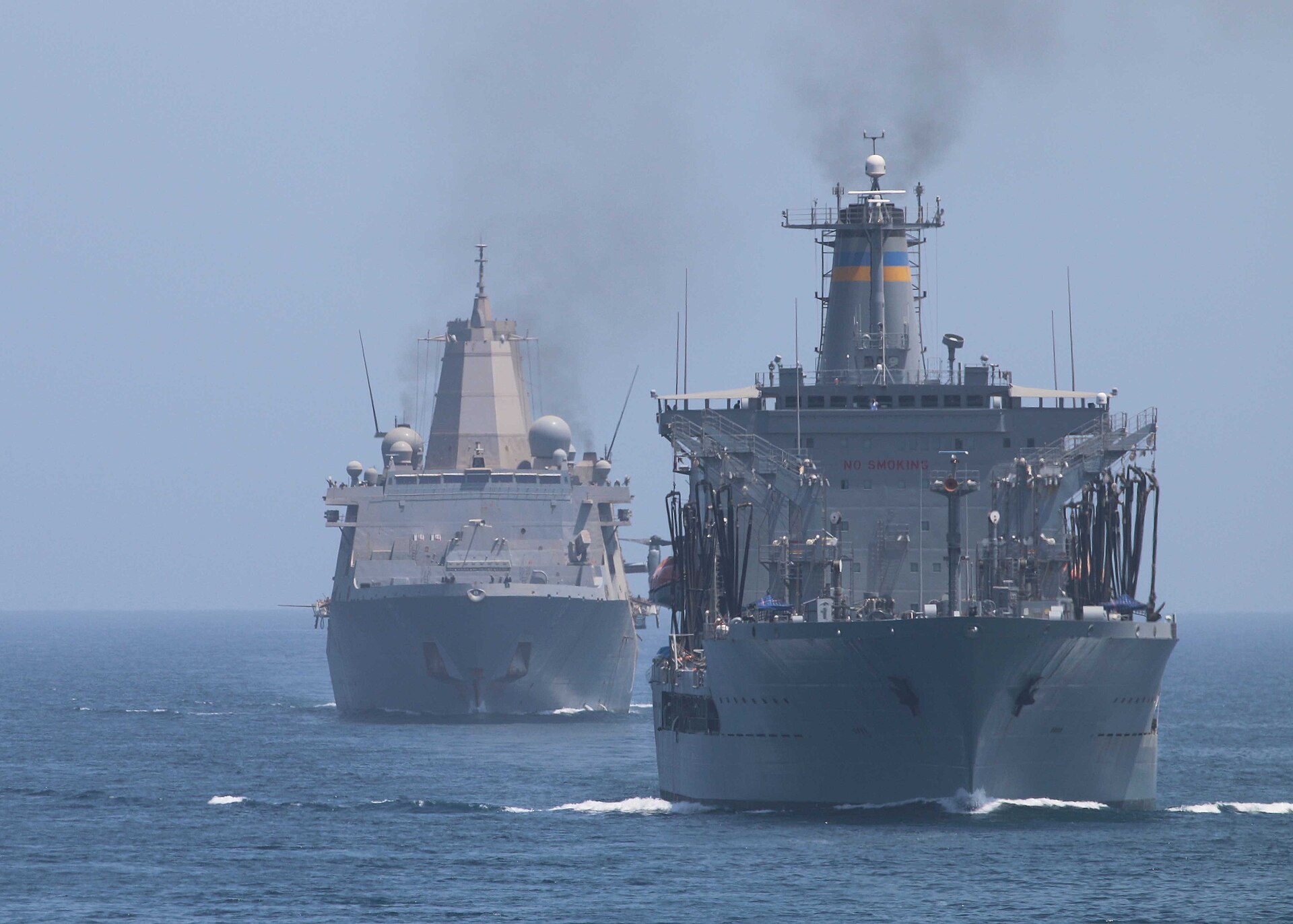
The Strait of Hormuz closure amplifies this dynamic. Before the war, approximately 21 million barrels of oil per day — roughly 21 percent of global consumption — transited the strait. Iran’s effective closure of the waterway through mines and missile threats has forced Saudi Arabia to reroute exports through the East-West Pipeline to Yanbu on the Red Sea, a 5-million-barrel-per-day artery that is now the Kingdom’s primary export route. Every day the strait remains closed costs the global economy an estimated $4.2 billion in disrupted trade, according to Lloyd’s of London calculations. Saudi Arabia’s role as the only producer with both the spare capacity and the alternative export infrastructure to partially compensate for the disruption gives it leverage that no other mediator possesses.
The impact on Saudi financial markets has been significant but not catastrophic. The Tadawul index fell 12 percent in the first week of the war before stabilising, a performance that analysts attributed to market confidence in Saudi Arabia’s diplomatic capacity as much as its military defences. Investors are betting that Riyadh will find a way to end the conflict, or at least contain it, because the alternative — a prolonged war that destroys the Vision 2030 investment thesis — is too costly for the Kingdom to accept.
How Does the Iran War Test Saudi Arabia’s Diplomatic Architecture?
The Iran war has imposed three specific tests on Saudi Arabia’s diplomatic infrastructure that previous mediations did not require.
The first test is simultaneity. When Saudi Arabia hosted Ukraine talks, the Kingdom was not under physical attack. Diplomats could focus on the negotiation without worrying about missile alerts. Since 28 February 2026, every diplomatic meeting in Riyadh takes place under the implicit threat of incoming fire. The Saudi Defence Ministry reported intercepting three ballistic missiles near Prince Sultan Air Base, two cruise missiles east of Al Jouf, five missiles and five drones across multiple targets, and numerous drone incursions over Riyadh, Al-Kharj, and the Eastern Province — all within a single week. Conducting diplomacy under these conditions requires compartmentalisation that few governments have practiced.
The Saudi Cabinet meeting chaired by Crown Prince Mohammed bin Salman on 3 March 2026 declared that the Kingdom reserves the “full right” to respond to Iranian aggression while simultaneously signalling willingness to mediate. That dual posture — military readiness combined with diplomatic openness — is the defining feature of Saudi strategy in the current crisis and represents a sophistication that earlier, more hawkish Saudi foreign policy lacked. Defence Minister Khalid bin Salman manages the military portfolio while the foreign ministry and intelligence services manage the backchannel to Tehran — a deliberate separation of functions that allows each track to operate without constraining the other. The challenge is compounded by the fact that Iran’s own leadership is now deeply divided, with President Pezeshkian signaling peace while the IRGC continues firing missiles.
The second test is credibility with the attacker. Iran is striking Saudi Arabia not because Tehran considers Riyadh an enemy in the same sense as Washington or Tel Aviv, but because attacking Gulf states is Iran’s primary mechanism for pressuring the United States to stop the war. As the Carnegie Endowment analysis observed, Iran’s strategy is to make the war so costly for America’s Gulf allies that they demand Washington negotiate. Saudi Arabia must therefore maintain enough credibility with Tehran to serve as a diplomatic channel while absorbing enough punishment to demonstrate that the pressure campaign is not working. It is an extraordinarily delicate balance.
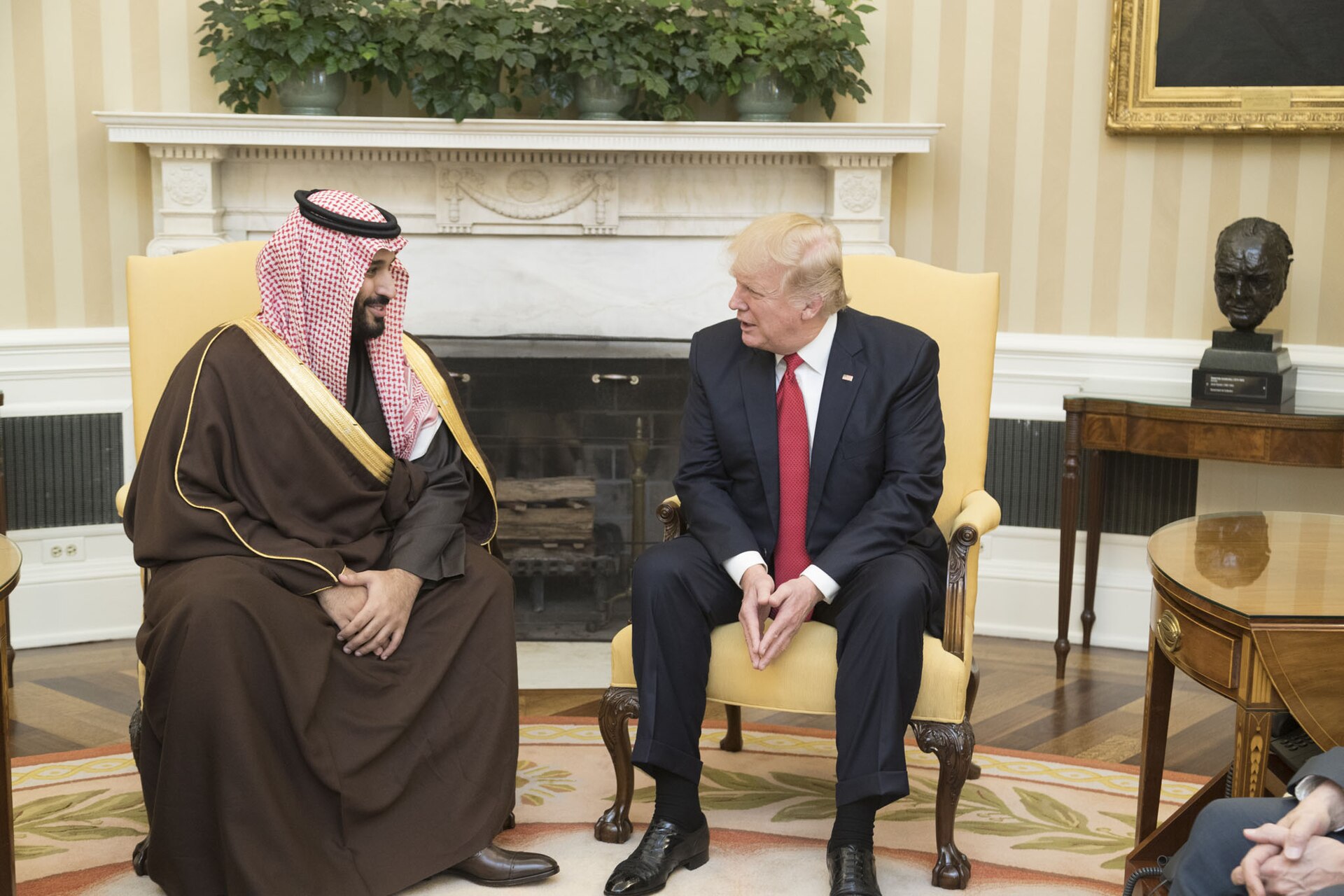
The third test is alliance management. Saudi Arabia’s primary security guarantor is the United States, which is currently at war with the country Saudi Arabia is trying to negotiate with. Trump’s explicit refusal of negotiations — demanding Iran’s “unconditional surrender” — creates tension with Riyadh’s mediation efforts. If the Saudis are seen as undermining American war aims by offering Iran an off-ramp that Washington has not authorised, the alliance could fracture. If the Saudis are seen as too closely aligned with Washington, their credibility with Tehran collapses. Managing this tension requires the transactional relationship with Trump to be robust enough to accommodate strategic disagreement — a quality that few alliances in history have demonstrated under wartime conditions.
The Contrarian Case for War Making Saudi Diplomacy Stronger
The conventional assumption is that the Iran war weakens Saudi Arabia’s position as a global mediator. A country dodging missiles seems less stable, less attractive, and less capable of the sustained engagement that effective mediation requires. The contrarian view — supported by evidence from the first week of the conflict — is that the war is actually accelerating Saudi Arabia’s diplomatic ascent.
Three mechanisms drive this counterintuitive outcome.
First, urgency creates demand. Before the war, Saudi mediation was a choice: countries could accept Riyadh’s offer or work through other channels. Since the Strait of Hormuz closed and oil prices surged past $120 per barrel, every oil-importing nation on earth has a direct stake in Saudi Arabia’s ability to broker a ceasefire. Japan, South Korea, India, and the European Union — none of which previously viewed Riyadh as a diplomatic priority — are now actively supporting Saudi mediation efforts because the alternative is an energy crisis that could tip their economies into recession. The war has made Saudi diplomacy not optional but essential.
Second, demonstrated resilience builds credibility. Saudi Arabia’s air defence network has performed remarkably well against Iranian strikes, intercepting the majority of incoming missiles and drones. The fact that Riyadh continues to function as a diplomatic capital while under fire is itself a demonstration of state capacity that impresses potential negotiating partners. A mediator that can maintain composure under bombardment signals a seriousness of purpose that comfortable, unattacked capitals cannot match.
Third, wartime information asymmetry is a diplomatic asset. Saudi intelligence services now have real-time data on Iranian military capabilities, targeting priorities, and operational weaknesses that peacetime collection could not have provided. When Saudi officials communicate with Tehran through the backchannel, they do so with knowledge of Iran’s actual military situation — including which weapons systems are depleted, which proxy networks are activated, and which targets Iran is likely to strike next. This operational intelligence gives Saudi mediators an informational advantage that no neutral third party could possess.
The Atlantic Council’s March 2026 analysis of the Iran war acknowledged this dynamic, noting that “the Gulf states, and Saudi Arabia in particular, have emerged from the first week of the conflict with enhanced rather than diminished diplomatic standing, precisely because their willingness to absorb punishment while maintaining channels to all sides demonstrates a strategic maturity that the region has historically lacked.”
The comparison with Qatar is instructive. Doha had positioned itself as the Gulf’s premier diplomatic broker, successfully mediating the 2023 Israel-Hamas ceasefire and maintaining the closest GCC-Iran relationship. But when Iranian drones struck Qatari LNG facilities in March 2026, Qatar was forced to shut down exports representing 20 percent of the global LNG market. The economic damage was so severe that Doha’s diplomatic bandwidth collapsed; the government shifted from mediation to crisis management overnight. Saudi Arabia, with a more diversified economy and deeper military reserves, absorbed comparable attacks without losing its diplomatic footing. The war revealed which Gulf state had built its mediation capacity on solid foundations and which had built on sand.
Saudi Arabia’s Diplomatic Infrastructure and the Riyadh Apparatus
The physical and institutional infrastructure that supports Saudi mediation is a strategic asset that receives insufficient attention in analyses focused on personal diplomacy. While MBS’s relationships with world leaders provide the entry point for negotiations, it is the Kingdom’s investment in diplomatic facilities, intelligence networks, and institutional capacity that sustains multi-track mediation over months and years.
The Diriyah Palace complex, where the Rubio-Lavrov talks took place, represents the most visible element of this infrastructure. The restored historical site in the birthplace of the first Saudi state has been developed into a $20 billion cultural district that doubles as a diplomatic venue of exceptional security and symbolic weight. Foreign delegations arriving at Diriyah are reminded that Saudi statecraft has a three-hundred-year history — a message that distinguishes Riyadh from Gulf competitors whose diplomatic traditions are measured in decades rather than centuries.
Beyond Diriyah, Saudi Arabia has invested in a network of secure conference facilities across multiple cities — Riyadh, Jeddah, Al-Ula, and NEOM — that can host simultaneous diplomatic tracks without the participants in one negotiation encountering those in another. This geographic distribution proved valuable during the Ukraine talks, when American and Ukrainian delegations met in Riyadh while separate backchannel communications with Russian intermediaries were maintained through Jeddah.
The institutional architecture is equally important. The Saudi foreign ministry underwent a significant restructuring in 2023-2024, with Prince Faisal bin Farhan establishing dedicated mediation units staffed by diplomats trained in conflict resolution methodologies drawn from both Western and Islamic traditions. Saudi Arabia’s General Intelligence Presidency maintains relationships with intelligence counterparts across the Middle East, Central Asia, and Africa that provide the informational foundation for mediation efforts. These relationships are older and deeper than the Kingdom’s diplomatic relationships, in some cases predating the modern Saudi state.
The role of the Royal Court should not be underestimated. In Saudi Arabia’s system, the Royal Court functions as a parallel foreign ministry with direct access to the Crown Prince and the ability to make commitments that the formal diplomatic service cannot. When Bloomberg reported that Saudi officials had intensified their backchannel to Iran, the communication almost certainly passed through Royal Court channels rather than the foreign ministry — a distinction that matters because it signals the highest level of Saudi authority and commitment.
| Institution | Primary Function | Mediation Role | Key Advantage |
|---|---|---|---|
| Royal Court | Direct access to Crown Prince | Highest-level backchannel communications | Can make immediate commitments without bureaucratic delay |
| Foreign Ministry | Formal diplomatic relations | Hosts multilateral talks, manages UN coordination | Institutional credibility and legal frameworks |
| General Intelligence Presidency | Intelligence collection and analysis | Maintains security channels with counterparts | Real-time information on conflict dynamics |
| Public Investment Fund | Sovereign wealth management | Economic incentives and reconstruction funding | $930 billion portfolio enables financial diplomacy |
| Ministry of Defence | Military operations | Military-to-military de-escalation channels | Operational knowledge of conflict participants |
The financial dimension of Saudi diplomatic infrastructure deserves specific attention. The PIF’s $930 billion portfolio is not merely a sovereign wealth fund; it is a diplomatic instrument. When Saudi Arabia hosts mediation talks, the implicit offer of post-conflict investment and reconstruction funding gives negotiations a material dimension that purely facilitative mediators cannot provide. In the Sudan context, Saudi pledges of humanitarian aid and reconstruction assistance provided tangible incentives for warring parties to engage with the Jeddah process. In the Ukraine context, Saudi energy supply guarantees and trade commitments serve as confidence-building measures that complement the diplomatic discussions.
The OPEC+ framework adds another layer. Saudi Arabia co-manages global oil production with Russia through OPEC+, giving Riyadh a standing institutional relationship with Moscow that provides natural cover for diplomatic communications. When Saudi and Russian officials meet within the OPEC+ framework, discussions can range far beyond oil production quotas without attracting the diplomatic attention that a dedicated bilateral summit would generate. This informal channel was reportedly used during the pre-war period to explore Russian interest in a Ukraine settlement, and it continues to provide a communication platform even as the Iran war complicates the broader relationship.
The comparison with other mediation infrastructures is illuminating. Norway, which facilitated the Oslo Accords and has maintained a mediation unit within its foreign ministry for decades, operates with an annual mediation budget of approximately $15 million and a staff of fewer than thirty dedicated mediators. Switzerland’s Federal Department of Foreign Affairs employs roughly fifty diplomats in its peace and human rights division. Saudi Arabia’s combined diplomatic, intelligence, and financial infrastructure dedicated to conflict resolution dwarfs these figures by orders of magnitude — though the exact budget is not publicly disclosed. The Kingdom’s advantage is not just greater resources but a different model entirely: one that integrates economic power, security capability, and personal leadership access into a mediation apparatus that traditional diplomatic institutions were never designed to match.
This infrastructure investment reflects a strategic judgement that mediation capacity is a permanent national interest rather than a situational response to specific conflicts. Saudi Arabia is building the physical, institutional, and human capital to serve as a global diplomatic hub for decades, not just for the current crises. The Iran war is testing whether that investment can withstand the pressures of active combat, but even if the current mediation efforts fall short, the infrastructure will remain — and the next conflict that requires a venue acceptable to all sides will find Riyadh ready.
What Happens If Saudi Mediation Fails?
The consequences of diplomatic failure are asymmetric. For the United States and Iran, a failed mediation means continued military operations with attendant costs and risks but no existential threat to either nation. For Saudi Arabia, failure carries five distinct dangers that together could constitute a strategic catastrophe.
The first danger is economic. Every week the Iran war continues, Vision 2030 loses momentum. Foreign investors defer commitments. Tourism collapses as airlines cancel routes and governments issue travel advisories. Megaproject timelines extend. The US Embassy in Riyadh went to shelter-in-place status on 7 March 2026, advising all Americans to avoid the embassy — a signal that international confidence in Saudi security is fragile. If the war drags on for months, the capital flight could set Vision 2030 back by years.
The second danger is proxy escalation. Saudi officials’ greatest fear, as reported by Middle East Eye, is that the war provides a pretext for Iran to activate the Houthis in Yemen. The Saudi royal family spent eight years and an estimated $100 billion on the Yemen intervention before securing a fragile ceasefire. A Houthi re-escalation, potentially with more advanced Iranian weapons now flowing through wartime channels, would open a second front that Saudi Arabia cannot afford.
The third danger is alliance fragmentation. The GCC’s 50th Extraordinary Ministerial Meeting produced a joint statement condemning Iranian aggression, but the underlying dynamics are more complex. Kuwait’s air defences engaged hostile targets that breached its airspace. Oman, which had been mediating US-Iran nuclear talks, suffered drone attacks on its Duqm port. Bahrain became one of Iran’s primary targets. If Saudi mediation fails and the war intensifies, GCC unity — already strained by divergent threat perceptions — could fracture, with smaller states cutting separate deals with Iran to protect themselves.
The fourth danger is reputational. Saudi Arabia has invested heavily in its identity as a responsible global power. Mohammed bin Salman’s legacy is now tied not just to economic transformation but to diplomatic achievement. If the mediation efforts fail publicly — if the backchannel to Tehran produces nothing and the war escalates beyond control — the narrative of Saudi diplomatic competence collapses, and with it a significant component of the Kingdom’s soft power strategy.
The fifth danger is the precedent. If military force alone determines the outcome of the Iran conflict — if diplomacy is shown to be irrelevant against a determined adversary — then the entire premise of Saudi Arabia’s diplomatic pivot is undermined. Future conflicts in the region will be resolved through force rather than negotiation, and Saudi Arabia’s comparative advantage shifts from diplomatic capital to military spending. That is a world in which Saudi Arabia can survive but not thrive, and it is the outcome that the Kingdom’s mediation efforts are ultimately designed to prevent.
| Scenario | Probability | Impact on Saudi Arabia | Impact on Global Order |
|---|---|---|---|
| Mediation succeeds: ceasefire brokered through Saudi channels | 15-20% | Transformative — establishes Riyadh as premier diplomatic capital | Reinforces mediation as conflict resolution tool |
| Partial success: Saudi channel contributes to eventual settlement | 35-40% | Positive — confirms diplomatic credibility without sole credit | Mixed — diplomacy plays a role alongside military outcomes |
| Mediation bypassed: US-Iran deal without Saudi involvement | 20-25% | Negative — diplomatic irrelevance undermines positioning | Reinforces superpower bilateralism |
| Mediation fails: war escalates despite Saudi efforts | 15-20% | Severe — economic damage, alliance strain, reputational loss | Negative — validates military-first approach |
The Gulf monarchies are caught between Iran’s desperation and the US’s recklessness. Their diplomatic bandwidth is the only thing preventing a regional conflict from becoming a global one.
Carnegie Endowment for International Peace, March 2026
Frequently Asked Questions
Is Saudi Arabia officially mediating the Iran war?
Saudi Arabia has not formally declared itself a mediator in the Iran conflict. Instead, the Kingdom is maintaining what Bloomberg described on 6 March 2026 as an “intensified backchannel” to Tehran involving security and diplomatic officials. This informal approach allows Saudi Arabia to pursue de-escalation without requiring formal recognition from any party and avoids the political complications of official mediation status during an active military conflict.
How many conflicts is Saudi Arabia mediating simultaneously?
Saudi Arabia is actively engaged in diplomatic facilitation across four major conflicts: the Russia-Ukraine war (hosting multiple rounds of US-Ukrainian technical talks in Riyadh), the Iran-Gulf war (maintaining a direct backchannel to Tehran), the Sudanese civil war (the Jeddah Declaration and Quartet Plan), and the Syrian transition (facilitating Washington-Damascus diplomatic contact). No other nation is currently mediating this breadth of international disputes.
Why did Saudi Arabia host the Rubio-Lavrov talks instead of Geneva or Vienna?
Riyadh was chosen because it is simultaneously acceptable to both Moscow and Washington. Switzerland was seen as too aligned with EU sanctions policy by Moscow. Turkey, a NATO member, lacked full Russian trust. Saudi Arabia’s OPEC+ partnership with Russia, combined with its $110 billion security relationship with the United States, gave it unique credibility with both sides. The 4.5-hour meeting at Diriyah Palace produced no substantive leaks, demonstrating the operational security that both delegations required.
Can Saudi Arabia be a neutral mediator while being attacked by Iran?
Traditional diplomatic theory requires mediator neutrality, but contemporary conflict resolution increasingly relies on “interested mediators” whose economic or security stakes give them the motivation and leverage to drive negotiations. Saudi Arabia’s vulnerability to Iranian attacks creates an alignment of interest with ceasefire outcomes that formal neutrality cannot replicate. Historical parallels include Egypt’s role in Middle East peace despite having fought wars with Israel.
What leverage does Saudi Arabia have over Iran in ceasefire talks?
Saudi Arabia’s leverage derives from three sources: energy market influence as the world’s swing oil producer with 3 million barrels per day of spare capacity; economic incentives through PIF investment capacity; and geographic control of alternative export routes that bypass the Strait of Hormuz. Additionally, Saudi Arabia can influence GCC collective military decisions, including whether Gulf states join the US military campaign against Iran or remain non-combatants — a distinction that matters enormously to Tehran’s strategic calculations.
What role does MBS personally play in Saudi mediation efforts?
Crown Prince Mohammed bin Salman serves as the central node in Saudi Arabia’s mediation network, maintaining personal relationships with Presidents Trump, Putin, and Zelensky, as well as Gulf leaders and the Iranian interlocutors established during the 2023 Beijing Agreement. His ability to make rapid decisions without bureaucratic delay gives Saudi mediation a speed advantage over institutional mediators. Putin personally briefed MBS on the results of US-Russia talks, indicating the seniority of the diplomatic channel.
How does the Iran war affect Saudi Arabia’s role in the Ukraine conflict?
The Iran war has complicated but not terminated Saudi involvement in Ukraine diplomacy. Saudi Arabia continues to host technical talks between US and Ukrainian delegations in Riyadh. However, the Kingdom’s bandwidth is now divided between two major conflicts, and its relationship with Washington — the common variable in both — must accommodate potential strategic disagreements over whether to negotiate with Iran. The Iran crisis may ultimately enhance Saudi credibility in the Ukraine track by demonstrating that Riyadh can manage multiple mediations under extreme pressure. For a detailed analysis of why no ceasefire has materialised despite these efforts, see the structural barriers standing between the Gulf and peace.