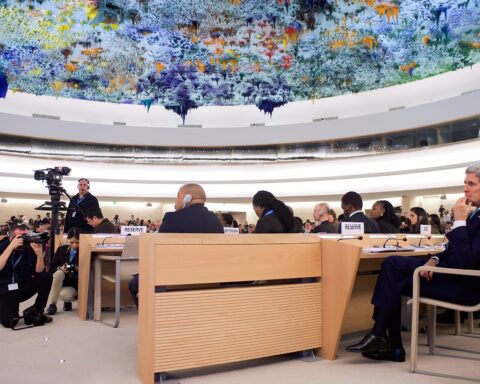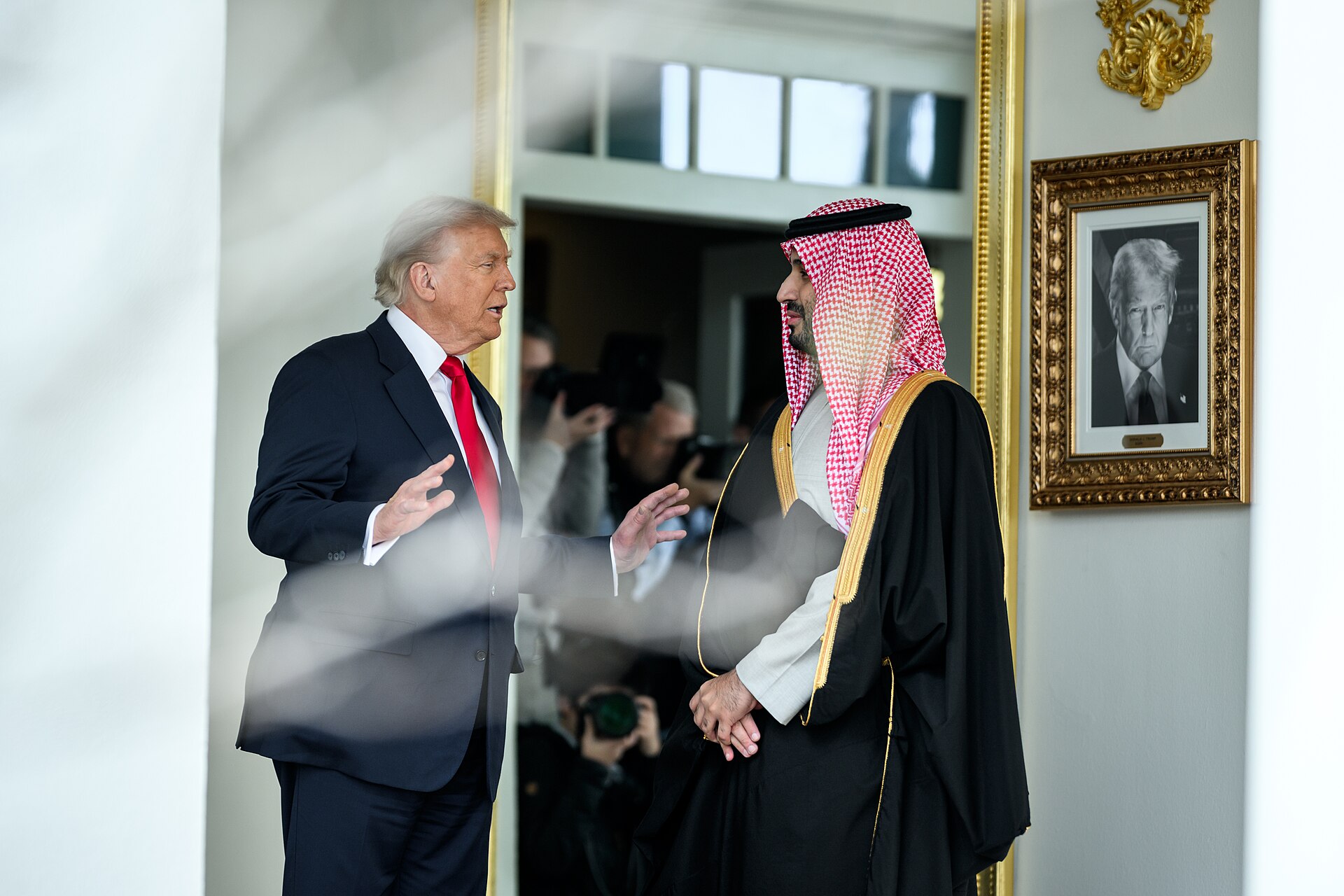

RIYADH — Saudi Arabia has absorbed more than six hundred Iranian missile and drone strikes across twenty-six days of war, opened King Fahd Air Base to American combat aircraft, expelled Iran’s military attaché, and rerouted the majority of its oil exports through the Red Sea — yet Crown Prince Mohammed bin Salman has not once articulated, publicly or through intermediaries, what terms Riyadh would accept to end the fighting. That silence is not passivity. It is the sound of a leader who understands that every day the war continues, the price of peace rises — and the bill is being written in Washington, not Tehran. The real question confronting the 15-point ceasefire plan rejected by Iran on March 25 is not whether Tehran will accept it. The question is whether anyone has asked what Riyadh demands — and whether any party can afford to pay.
Table of Contents
- Why Is Saudi Arabia Writing Its Own Ceasefire Terms?
- The Formal Defense Treaty That Changes Everything
- What Nuclear Rights Is Riyadh Demanding From Washington?
- The Reparations Bill Iran Cannot Pay
- Can the United States Deliver What MBS Wants?
- The Arms Package That Rewrites Regional Power
- The Strategic Leverage Matrix
- How Did Twenty-Six Days of War Create Fifty Years of Leverage?
- Will Saudi Arabia Accept Any Peace That Leaves Iranian Missiles Intact?
- The Contrarian Case for Managed Tension
- What History Teaches About War Settlements and Saudi Demands
- The Price of Saudi Peace
- Frequently Asked Questions
Why Is Saudi Arabia Writing Its Own Ceasefire Terms?
The Kingdom is not at the ceasefire table because it has not been invited. Washington’s 15-point plan, proposed on March 25 through Pakistani diplomatic channels, addresses the bilateral confrontation between the United States and Iran. It covers sanctions relief, nuclear rollback, missile limitations, and the reopening of the Strait of Hormuz, according to Bloomberg and France 24 reporting. Nowhere in the leaked framework do Saudi Arabia’s specific security requirements appear as binding conditions. Riyadh is expected to benefit from a general de-escalation, but it is not a named party to the proposed settlement.
That omission is both deliberate and strategic. A senior Saudi official told CNN on March 26 that the Kingdom “remains supportive” of a peaceful resolution, while simultaneously making clear that Saudi Arabia’s patience for Iranian attacks “is not unlimited,” as Foreign Minister Prince Faisal bin Farhan stated earlier in March. The gap between those two statements contains a negotiating position that no diplomat has yet put on paper.
Saudi Arabia’s absence from formal peace talks mirrors a broader pattern. During the fifteen-point ceasefire negotiations, Riyadh allowed Washington to absorb the diplomatic risk of proposing terms while preserving its own ability to reject any outcome that fails to meet unspoken conditions. Prince Faisal’s declaration that Iran’s “heinous attacks” had shattered trust built over years of outreach reserved Riyadh’s right to military response — a right the GCC formally invoked under Article 51 of the UN Charter on March 1, according to the GCC Ministerial Council’s extraordinary session statement.
The strategy carries risks. Iran’s five-point counterproposal, outlined by President Masoud Pezeshkian on March 12, includes formalized Iranian sovereignty over the Strait of Hormuz, reparations from the United States and Israel for over 1,200 Iranian deaths, and binding guarantees against future military action, according to NPR and PBS reporting. If Washington and Tehran reach a bilateral agreement that ignores Saudi concerns — particularly regarding Iranian missile capabilities and Gulf security architecture — Riyadh would face the worst possible outcome: a neighbor that remains militarily capable and diplomatically aggrieved, with international legitimacy to match.
The Formal Defense Treaty That Changes Everything
The single most consequential demand Saudi Arabia is positioning to make is a formal, Senate-ratified mutual defense treaty with the United States. Before the war, this was an ambitious diplomatic aspiration negotiated intermittently since 2023. After twenty-six days of absorbing Iranian strikes while hosting American combat operations, it has become an existential requirement that Washington will struggle to refuse.
The proposed framework, discussed extensively before the war began, is modeled on the US-Japan Security Treaty, which commits the United States to defend Japan in the event of an armed attack on territories under Japanese administration. Applied to the Saudi context, such a treaty would make the Kingdom the only Arab country with a formal American defense guarantee — a status currently reserved for NATO allies, Japan, South Korea, Australia, and the Philippines, according to the Washington Institute for Near East Policy.
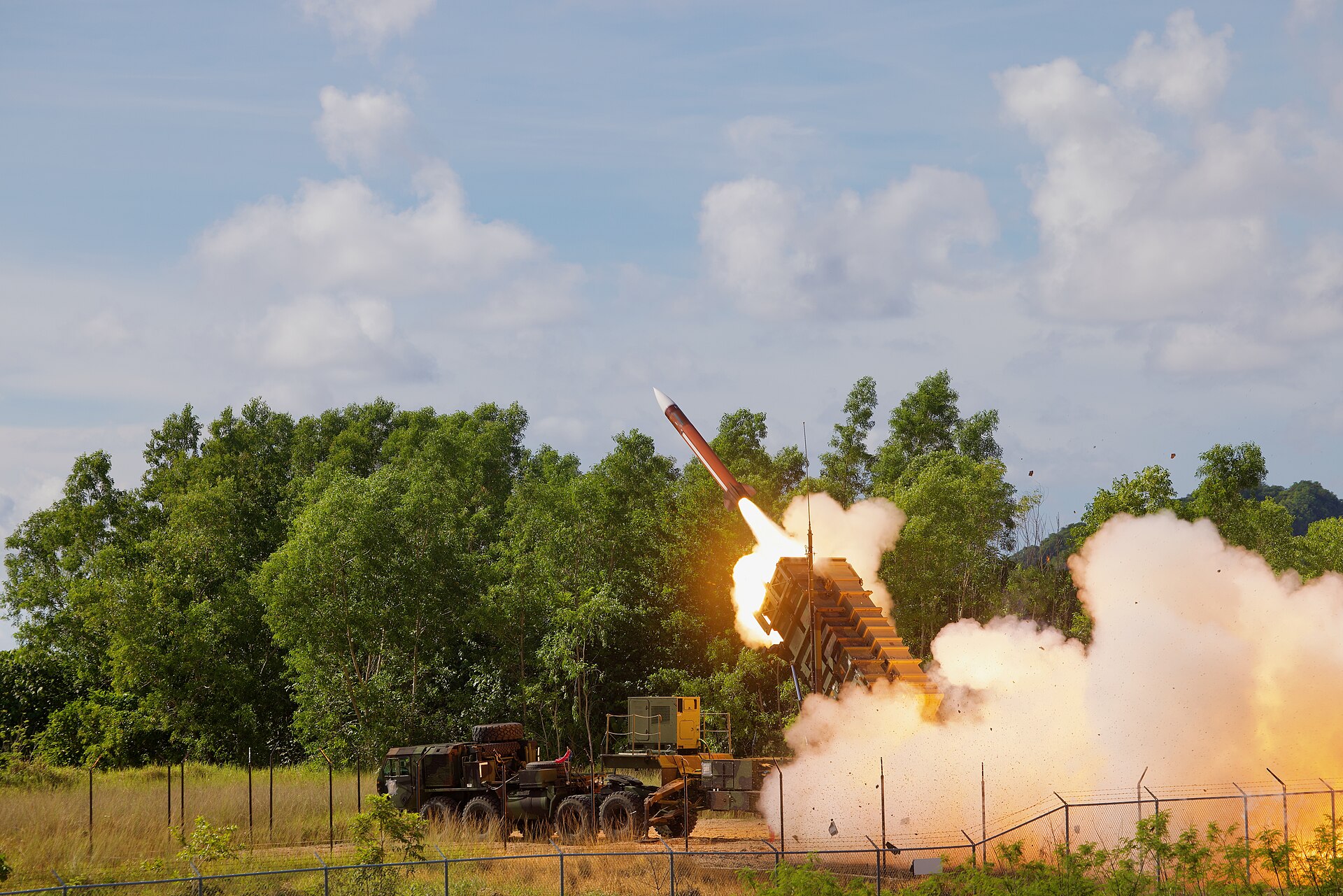
The war has fundamentally altered the calculus on both sides. Saudi Arabia has opened King Fahd Air Base in Taif to US forces, providing a strategic location approximately 1,200 kilometres from the Iranian border — well outside the range of most Iranian ballistic missiles, as Middle East Eye reported on March 20. Prince Sultan Air Base near Al Kharj, the primary US facility, has faced repeated drone attacks and sustained damage to five American tanker aircraft. By offering Taif as an alternative, MBS demonstrated a willingness to deepen military cooperation precisely when the cost of that cooperation became visible to every Saudi citizen watching missile interceptions from their rooftops.
Before February 28, the United States could argue that Saudi Arabia faced no imminent existential threat requiring a treaty-level commitment. That argument collapsed when the first Iranian cruise missile struck Ras Tanura. The Kingdom has since absorbed strikes on Riyadh, Dhahran, Yanbu, Jubail, and Shaybah — attacks that targeted not only military infrastructure but civilian airports, residential areas, and the US Embassy compound in Riyadh itself. The Foreign Policy analysis published on March 24 identified four specific demands Gulf states would make, with a formal security commitment topping the list.
A treaty would require Senate ratification — a process that introduces domestic American politics into what MBS views as a strategic necessity. The Wilson Center has outlined the arguments for and against such a commitment, noting that the Hoover Institution published a supportive analysis arguing that a US-Saudi military agreement “makes strategic sense” in the post-Iran-war environment. The bipartisan resistance that blocked earlier iterations of a defense pact, often linked to Saudi human rights concerns and the Khashoggi affair, faces a fundamentally different political environment when American troops are already operating from Saudi bases under active fire.
What Nuclear Rights Is Riyadh Demanding From Washington?
Saudi Arabia’s demand for uranium enrichment rights predates the war, but the conflict has transformed it from a diplomatic ambition into what Riyadh frames as a sovereign imperative. The Kingdom is seeking a Section 123 agreement — the legal framework governing US civilian nuclear cooperation with foreign governments — that explicitly permits domestic uranium enrichment and fuel fabrication. Iran’s nuclear program, which the US-Israeli strikes of February 28 sought to destroy, has paradoxically made Saudi nuclear ambitions more politically viable.
The Trump administration informed Congress in February 2026 that its pursuit of a civilian nuclear cooperation agreement with Saudi Arabia may not include the strict non-proliferation conditions typically required in similar US accords, according to the Arms Control Association. The draft agreement employs “additional safeguards and verification measures” for enrichment, conversion, fuel fabrication, and reprocessing — language that acknowledges these activities will occur rather than prohibiting them, as PBS reported. Senator Edward Markey and congressional colleagues have demanded the administration deny Saudi Arabia access to nuclear weapons technologies, but the political dynamics of wartime alliance-building have undercut the non-proliferation lobby’s leverage.
Saudi Energy Minister Prince Abdulaziz bin Salman stated that the Kingdom would enrich uranium and produce yellowcake, a processed uranium concentrate created after mining but before enrichment, citing the country’s significant domestic uranium reserves. The Foundation for Defense of Democracies noted that the proposed agreement would allow Saudi Arabia to acquire both enrichment and reprocessing technologies — capabilities that could, if Riyadh chose, enable production of weapons-grade uranium and plutonium.
The war provides MBS with a straightforward argument: Iran maintained a nuclear program under international agreements for decades while simultaneously developing the missile capabilities that now strike Saudi cities. A Kingdom that cannot enrich its own uranium while its neighbour enriches, builds, and launches is a Kingdom structurally disadvantaged in any future confrontation. The destruction of Iran’s Natanz and Fordow facilities — a development that simultaneously eliminated Iran’s nuclear threat and opened a regional power vacuum — creates what Saudi officials view as a narrow window to establish nuclear-energy independence before international non-proliferation pressure reasserts itself.
The UAE’s Barakah nuclear power plant, the first operational nuclear facility in the Arab world, provides a template. Abu Dhabi accepted the “gold standard” 123 agreement with the United States in 2009, forgoing enrichment and reprocessing rights. Riyadh has consistently refused to accept the same terms, arguing that a country of Saudi Arabia’s size and energy requirements should not be constrained by a model designed for a smaller Gulf state. The war strengthens that argument by demonstrating that Saudi Arabia’s energy infrastructure is a primary strategic target — making energy self-sufficiency, including nuclear fuel independence, a national security matter rather than an economic preference.
The Reparations Bill Iran Cannot Pay
The United Nations Security Council Resolution 2817, adopted on March 11 with 135 co-sponsors, demands that Iran halt attacks on GCC states and provide compensation for damage caused. The resolution, presented by Bahrain on behalf of the Gulf Cooperation Council and Jordan, establishes a legal framework for reparations claims that Saudi Arabia intends to pursue regardless of how the war ends.
The infrastructure damage to Saudi Arabia’s Eastern Province alone runs into billions of dollars, though no comprehensive assessment has been published. Iranian strikes have targeted Ras Tanura — the largest refinery in the Kingdom, as Axios reported — as well as Khurais, Shaybah, and Jubail processing facilities. The Yanbu SAMREF refinery, a joint venture between Aramco and ExxonMobil, was struck by ballistic missile, temporarily shutting down oil loading operations at Saudi Arabia’s primary alternative export terminal. Aramco described the situation as the largest operational crisis in its history. The global consequences of this disruption are now quantified: the OECD projects Saudi export losses have erased a full year of global growth improvement and driven inflation across the G20 to 4.0 percent.
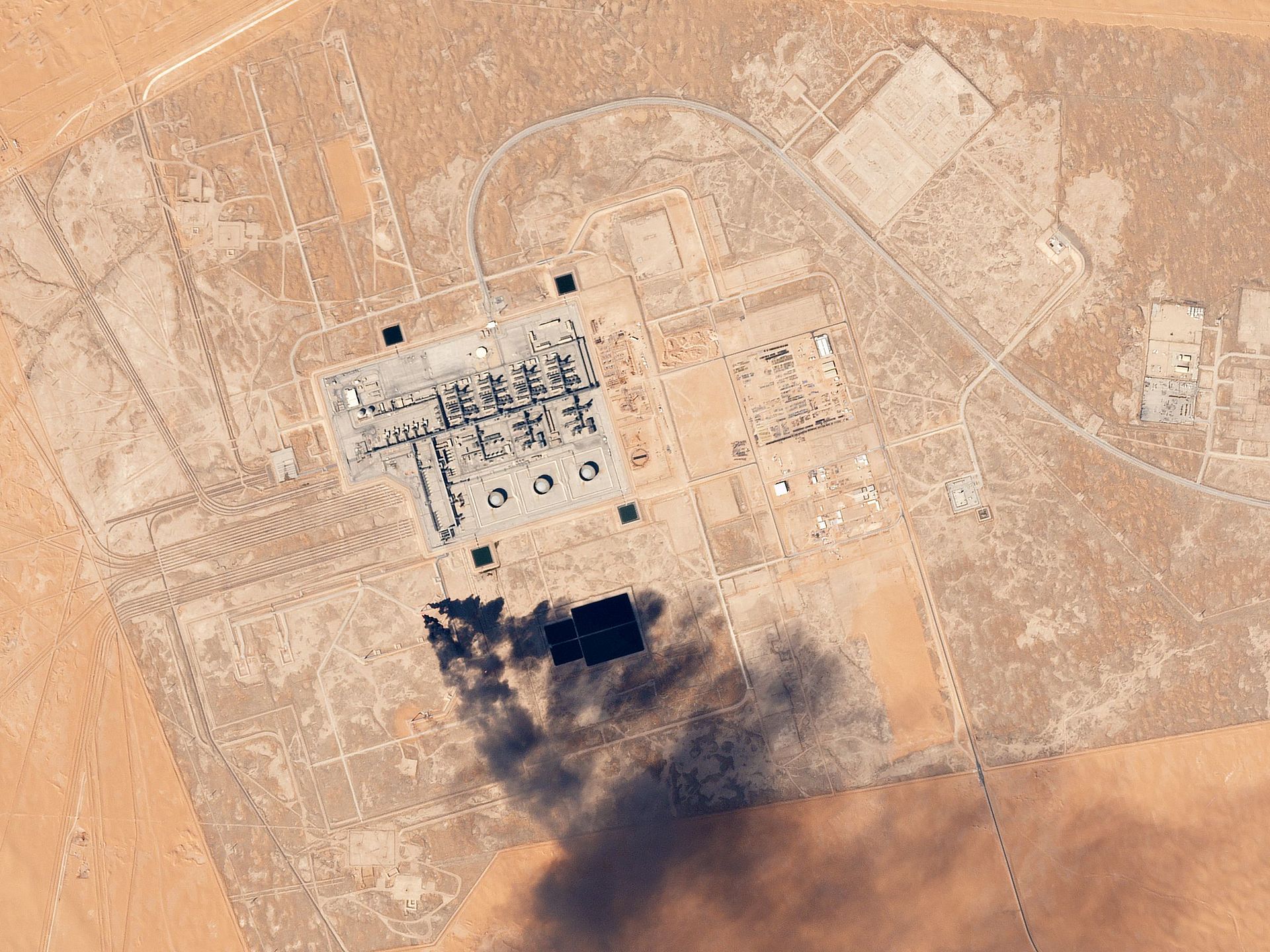
Beyond direct infrastructure damage, Saudi Arabia’s reparations claim would encompass lost oil revenue from production disruptions, the cost of rerouting exports through the East-West Pipeline to Yanbu, the economic impact of flight cancellations that grounded over 12,000 Middle Eastern flights by March 3, the collapse of tourism revenue (luxury hotel bookings dropped an estimated 45 percent in the first two weeks of March, according to AGBI analysis), and the broader FDI deterioration that major investment banks estimate at 60 to 70 percent below year-on-year levels for Q1 2026.
Iran cannot pay these claims. The Iranian economy, already under heavy sanctions before the war, has absorbed approximately 9,000 US and Israeli strikes across nuclear facilities, missile production sites, and air defense systems. Over 82,000 buildings have been destroyed, according to US military damage assessments. Iran’s own reparations demands — for damage caused by US and Israeli strikes that killed over 1,200 Iranians and injured more than 12,000, per Amnesty International and HRANA reporting — create a mutual claims structure that guarantees legal and diplomatic deadlock for decades.
The strategic value of reparations for Saudi Arabia is not financial recovery but political leverage. A standing claim against Iran, backed by a UN Security Council resolution, provides diplomatic ammunition for maintaining sanctions, justifying military readiness, and extracting concessions in any future normalization process. Riyadh’s legal team, which has been quietly assembling documentation since the first strikes, understands that the claim matters more than the payment.
Can the United States Deliver What MBS Wants?
The United States faces a structural problem in meeting Saudi demands: the most important concessions Riyadh seeks require Senate ratification, Congressional approval, or both. A formal defense treaty needs a two-thirds Senate vote. The F-35 sale requires Congressional notification and a review period during which any member can object. The 123 nuclear agreement must be submitted to Congress for a mandatory 90-day review, during which either chamber can pass a resolution of disapproval. Every major Saudi demand passes through a legislative body that has, in recent years, voted to block arms sales, imposed reporting requirements on the Saudi relationship, and publicly criticized MBS over human rights.
The war reshapes this landscape but does not eliminate it. American troops are operating from Saudi bases under fire. Five US Air Force tanker aircraft have been damaged at Prince Sultan Air Base. The US Embassy in Riyadh was struck by two Iranian drones. These facts create a political environment in which blocking Saudi arms sales or defense cooperation carries direct costs for American service members — an argument that cuts through domestic political resistance more effectively than any lobbying campaign.
Trump’s personal relationship with MBS provides executive-branch enthusiasm but not legislative certainty. The November 2025 bilateral meeting at the White House produced agreements on strategic defense, artificial intelligence, nuclear energy, critical metals, and financial partnership, according to Arab News. But Trump did not publicly commit to a one-way security guarantee or announce mutual-security obligations. The war transforms the calculation: MBS can now argue that Saudi cooperation is not a favour to the United States but a contribution to American national security, backed by evidence measured in intercepted missiles and opened air bases.
The Atlantic Council’s analysis of the evolving US-Gulf relationship noted that the war “could change the US relationship with Gulf states” fundamentally, while the Carnegie Endowment observed that Gulf monarchies are “caught between Iran’s desperation and the U.S.’s recklessness.” The Middle East Council on Global Affairs framed the Gulf’s UN strategy as a “diplomatic counterstrike” — suggesting that GCC states are not passively waiting for Washington to deliver but actively constructing the international legal and political conditions that make American compliance more likely.
The Arms Package That Rewrites Regional Power
Saudi Arabia’s request for 48 Lockheed Martin F-35 Lightning II fighters, confirmed by Trump in November 2025, represents the most consequential arms sale in the Middle East since the Camp David Accords gave Israel its qualitative military edge guarantee. At approximately $100 million per aircraft, the $4.8 billion package would make Saudi Arabia the first US security partner in the Middle East other than Israel to operate the fifth-generation stealth fighter, according to Air and Space Forces Magazine.
Israel has not opposed the transfer outright but has warned the White House that any move must come with a political payoff. An Israeli official told media that “the supply of F-35s to Saudi Arabia needs to be subject to Saudi normalization with Israel.” Before the war, normalization was the central condition linking all three legs of the proposed mega-deal: defense treaty, nuclear cooperation, and Israeli recognition. The war has weakened this linkage by creating facts on the ground that make Saudi Arabia’s military needs self-evident, independent of any diplomatic quid pro quo with Jerusalem.
The broader arms race triggered by the war — described by multiple analysts as the largest since the Cold War — provides context for Saudi demands that extend well beyond the F-35. The Kingdom’s 2026 defense budget of $78 to $80 billion, combined with wartime emergency procurement, creates a client capable of purchasing virtually any system the United States is willing to sell. Additional items on Saudi Arabia’s wish list include THAAD missile defense batteries, advanced radar systems, precision-guided munitions to replenish stocks depleted by weeks of interceptions, and potentially the MQ-9 Reaper drone — systems that would transform the Royal Saudi Armed Forces from a conventional military into a force capable of independent power projection across the Gulf.
The Fox News analysis noting that “Saudi Arabia is already America’s top arms buyer” framed the F-35 decision as the capstone of an existing commercial relationship worth $142 billion in announced deals. For Riyadh, the F-35 is less about any single aircraft’s capabilities than about the political signal it sends: that the United States views Saudi Arabia as a strategic peer to Israel in the regional security architecture, not a subordinate client whose access to advanced technology is permanently conditional on another country’s approval.
The Strategic Leverage Matrix
Saudi Arabia’s bargaining position across the five major demand categories — defense treaty, nuclear rights, reparations, arms transfers, and Iranian military degradation — can be assessed through a structured framework that maps Riyadh’s leverage against Washington’s capacity to deliver and Iran’s capacity to resist.
| Demand Category | Pre-War Leverage (1-10) | Current Leverage (1-10) | US Capacity to Deliver | Iranian Resistance | Timeline to Resolution |
|---|---|---|---|---|---|
| Formal Defense Treaty | 4 | 8 | Moderate — requires Senate | Low (bilateral US-Saudi) | 12-24 months |
| Nuclear Enrichment Rights | 3 | 7 | Low-Moderate — Congressional review | N/A (bilateral US-Saudi) | 18-36 months |
| War Reparations from Iran | 0 | 6 | Low — Iran cannot pay | Very High | Decades (legal process) |
| Advanced Arms (F-35, THAAD) | 5 | 9 | High — executive can expedite | Low (bilateral) | 6-18 months |
| Iranian Missile Degradation | 1 | 8 | High — ongoing US strikes | Existential (Iran’s deterrent) | Linked to war duration |
The matrix reveals a consistent pattern: the war has approximately doubled Saudi Arabia’s leverage across every category. Arms transfers, where the executive branch has maximum flexibility and Congressional resistance is weakened by wartime solidarity, represent the easiest win. The defense treaty, while carrying higher political costs, benefits from the strongest emotional and strategic argument — American troops already on Saudi soil, under fire, without a legal framework guaranteeing mutual obligations. Nuclear rights remain the most politically difficult demand, requiring both executive negotiation and Congressional acquiescence, but the destruction of Iran’s nuclear infrastructure creates a non-proliferation environment that is paradoxically more permissive for Saudi ambitions.
The framework also highlights a critical asymmetry: Saudi Arabia’s demands are primarily bilateral with the United States, while Iran’s resistance is relevant only to the reparations and military degradation categories. This means MBS can pursue four of his five major objectives regardless of what happens in US-Iran ceasefire negotiations — a structural advantage that explains Riyadh’s strategic patience.
| Leverage Factor | Mechanism | Durability After Ceasefire |
|---|---|---|
| Base access provision | King Fahd Air Base opened to US combat operations | High — creates ongoing dependency |
| Interceptor expenditure | Hundreds of Patriot and THAAD interceptors consumed | Medium — replenishment creates procurement dependency |
| Oil rerouting | 3.66 million bpd through Yanbu Red Sea terminal | High — demonstrates strategic flexibility |
| Diplomatic restraint | GCC invoked Article 51 but did not enter war | High — reserves future military option |
| Civilian exposure | Debris falling on residential areas in Eastern Province | Very High — domestic political mandate for security |
How Did Twenty-Six Days of War Create Fifty Years of Leverage?
The arithmetic is straightforward. Before February 28, 2026, Saudi Arabia was asking the United States for a defense treaty, nuclear cooperation, F-35 fighters, and regional security guarantees. Washington’s response, negotiated intermittently across the Biden and Trump administrations, consistently attached conditions: normalization with Israel, human rights improvements, non-proliferation standards, and Congressional buy-in. Each condition represented a point of friction that slowed progress and gave American legislators leverage over the Kingdom.
The war eliminated or weakened every conditioning mechanism simultaneously. Normalization with Israel, the crown jewel of the proposed mega-deal, has been complicated by the broader Middle Eastern conflict that preceded the Iran war. MBS has taken an increasingly anti-Israel stance since late 2025, partially in response to Gaza and Lebanon developments, making normalization less viable as a bilateral condition. Human rights concerns, while unchanged in substance, carry less political weight when Saudi Arabia is hosting American combat forces under fire. Non-proliferation standards are undermined by the destruction of Iran’s nuclear program, which removed the primary threat that justified strict enrichment restrictions. Congressional opposition is softened by the reality that blocking Saudi arms sales now carries national security implications for deployed American personnel.
The Hoover Institution’s analysis arguing that a US-Saudi military agreement “makes strategic sense” reflects a broader shift in establishment thinking. Before the war, the pro-agreement camp consisted primarily of defence industry advocates and Gulf-oriented foreign policy specialists. The war has added the Pentagon, CENTCOM commanders, and a significant portion of the national security establishment to the list of stakeholders who view a formal Saudi alliance as operationally necessary rather than diplomatically convenient.
MBS’s timing is deliberate. The CNN report published on March 26 detailed how “Trump’s Gulf allies push to have their concerns addressed before Iran war ends” — a formulation that reveals the core strategy. Addressing concerns “before” the war ends means embedding Gulf demands into the ceasefire architecture, making them preconditions rather than post-war aspirations. The UAE’s adviser to the president told CNN that Abu Dhabi’s thinking “does not stop at a ceasefire, but rather turns toward solutions that ensure lasting security” — diplomatic language for refusing to accept any settlement that does not include permanent structural changes to regional security.
The deeper question is not whether these conditions will be accepted but how Saudi Arabia’s leadership interprets them. Riyadh remains supportive of a peaceful resolution to this conflict. What it will not accept is a resolution that returns the region to the status quo ante.
Senior Saudi official, via CNN, March 26, 2026
Will Saudi Arabia Accept Any Peace That Leaves Iranian Missiles Intact?
The short answer, based on public statements from Saudi and Emirati officials, is no. Saudi Arabia wants Tehran’s cruise and ballistic missile capabilities degraded “as much as possible” before the war ends, CNN reported on March 26, citing officials familiar with Riyadh’s position. The UAE stated that it would be “difficult” for the region to continue to live with an Iranian missile and drone program. While the perceived nuclear threat still looms, both kingdoms see Iran’s conventional missile arsenal as a more urgent risk than its nuclear ambitions — a prioritization that the war’s daily bombardment has made viscerally clear.
This demand places Saudi Arabia in potential conflict with Washington’s ceasefire objectives. The US 15-point plan includes “limits on missiles” but does not require the destruction of Iran’s missile production capability, according to France 24’s reporting on the plan’s contents. Iran has rejected even this modest constraint, with Tehran describing the proposal as “extremely maximalist and unreasonable,” per Al Jazeera. The gap between what Saudi Arabia wants (substantial degradation), what the US has proposed (limits), and what Iran will accept (nothing) represents the most intractable obstacle to any ceasefire.
The air defense war over Saudi Arabia has achieved a 90 percent interception rate against ballistic missiles and approximately 85 percent against drones since February 28, according to Saudi Defense Ministry figures. These numbers are impressive but unsustainable. Every Patriot interceptor fired over Riyadh costs between $3 million and $6 million. Every Iranian drone costs between $20,000 and $50,000. The cost asymmetry means that Saudi Arabia’s air defense budget depletes faster than Iran’s offensive capacity — a calculation that makes permanent missile degradation, rather than defensive interception, the only viable long-term strategy.
The GCC’s UN Resolution 2817 demands that Iran “immediately cease” attacks, but a ceasefire that halts current hostilities without dismantling production capacity simply resets the clock. Saudi officials have studied the 2019 Abqaiq-Khurais precedent, when Iranian-linked drone strikes temporarily halved Saudi oil production and elicited no military response. The lesson Riyadh draws is that deterrence without degradation fails — a conclusion that the current war has validated at catastrophic cost.
The Contrarian Case for Managed Tension
The conventional narrative frames Saudi Arabia as a victim of the Iran war, desperate for peace and dependent on American protection. The evidence supports a more nuanced reading: MBS is actively managing a conflict that, for all its costs, delivers strategic benefits that decades of peacetime diplomacy failed to produce.
Consider the economic paradox. Oil prices traded above $110 per barrel for most of March, representing approximately a 45 percent increase from the pre-war range of $75 to $78 per barrel, according to AGBI analysis. This windfall has partially offset the estimated 60 to 70 percent FDI collapse and the $840 billion in Vision 2030 investments now at risk, as The Middle East Insider reported. When ceasefire rumors briefly crashed Brent crude 6.1 percent to $98.03 per barrel on March 25 — the sharpest single-day decline since the war began — the Kingdom received a preview of what peace would cost in lost revenue. Saudi Arabia’s pre-war fiscal breakeven was $70 per barrel. Revised estimates by Jadwa Investment place the wartime breakeven at $88 to $92 per barrel, incorporating defense spending, infrastructure repair, and economic stimulus costs.
The arithmetic creates a paradox: war boosts oil revenue above breakeven, but peace drops it below. A managed, low-intensity continuation of hostilities — in which Iran launches enough attacks to sustain the war premium but not enough to overwhelm Saudi defenses — represents the fiscal sweet spot that Riyadh will never publicly acknowledge but quietly benefits from.
Beyond economics, the war has accelerated domestic priorities that years of reform failed to advance. The Saudi military’s performance under fire has exceeded expectations that were shaped by the Yemen experience, demonstrating operational competence that strengthens MBS’s domestic legitimacy. The Eastern Province civilian population, historically the site of Saudi Arabia’s most significant Shia minority and a region with complex political dynamics, has rallied around national defense in ways that deepen social cohesion. The PIF’s pivot from megaproject spending to strategic procurement — cutting NEOM funding while investing in AI, mining, and food security — represents a rebalancing that was politically difficult before the war made it existentially necessary.
This is not to suggest that MBS wants the war to continue indefinitely. Saudi civilians have died. Aramco’s operations face their largest crisis in corporate history. The Eastern Province is under sustained bombardment. The argument is narrower: that MBS benefits from a protracted negotiation period during which the war continues at manageable intensity, because every additional day of fighting increases the price Washington must pay for Saudi cooperation and reduces the price Riyadh must accept for peace.
What History Teaches About War Settlements and Saudi Demands
Three historical episodes illuminate the pattern of Saudi post-war demands: the 1991 Gulf War, the 2019 Abqaiq-Khurais attacks, and the 2023-2025 normalization negotiations that preceded the current conflict.
After the 1991 liberation of Kuwait, Saudi Arabia hosted over 500,000 American troops and served as the primary staging ground for Operation Desert Storm. The Kingdom expected a comprehensive regional security architecture in return. What it received was a continued American military presence that gradually became politically toxic, contributing to Osama bin Laden’s radicalization and the eventual US withdrawal from Saudi bases after September 11. The lesson: hosting American forces without a formal treaty creates dependency without guarantees.
The 2019 Abqaiq-Khurais attack demonstrated the opposite failure. Iranian-linked drones and missiles struck the heart of Saudi oil infrastructure, temporarily removing 5.7 million barrels per day from global production — approximately 5 percent of world supply. The Trump administration’s response was limited to sanctions and diplomatic pressure. No military retaliation occurred. Saudi Arabia absorbed the attack, repaired the damage within weeks, and received no permanent security upgrades in return. The lesson: absorbing an attack without extracting concessions is a strategic waste of crisis.
The 2023-2025 normalization negotiations, which sought to link a Saudi-Israeli peace deal with American defense commitments and nuclear cooperation, established the template for MBS’s current demands. The three-way structure — defense treaty plus nuclear rights plus Israeli normalization — was always more favourable to Saudi Arabia than to any other party, because Riyadh held the only asset all parties wanted (normalization) while receiving two assets it desperately needed (security and nuclear). The war has altered this calculus by making Saudi demands achievable without the normalization component, since the political conditions attaching normalization to the package have been weakened by the broader Middle Eastern conflict.
| Crisis | Saudi Contribution | What Saudi Demanded | What Saudi Received | Outcome Assessment |
|---|---|---|---|---|
| 1991 Gulf War | Hosted 500,000+ US troops, funded $36 billion | Permanent security guarantee | Informal basing agreement | Underdelivered |
| 2019 Abqaiq-Khurais | Absorbed attack, restored production | Military response, deterrence | Sanctions, diplomatic support | Failed |
| 2023-2025 Normalization | Offered Israel recognition | Defense treaty, nuclear rights | Negotiations stalled | Incomplete |
| 2026 Iran War | Bases, airspace, oil rerouting, absorbed 600+ strikes | Treaty, nuclear, F-35, reparations, missile degradation | Pending | Maximum leverage window |
The pattern is clear: Saudi Arabia has historically underperformed in converting wartime contributions into post-war structural gains. MBS, who has studied these precedents, is determined not to repeat them. The current war represents the largest Saudi contribution to an American-led military effort since 1991, with the added dimension that Saudi territory — not a neighbouring country’s — is the target. The emotional and political case for maximum concessions has never been stronger.
The Price of Saudi Peace
The total cost of Saudi Arabia’s post-war demands, measured in American dollars and geopolitical commitments, is staggering. A formal defense treaty permanently commits the United States to defending the Kingdom — a commitment that constrains future American foreign policy flexibility in the Gulf. Nuclear cooperation with enrichment rights creates a Saudi fuel cycle that arms control advocates warn could eventually produce weapons-grade material. The F-35 sale alters the regional balance of power and strains the US relationship with Israel. Reparations claims against Iran guarantee decades of diplomatic friction. Missile degradation requirements extend the war’s duration and scope.
The alternative — a peace that fails to meet Saudi demands — is equally costly. A dissatisfied Saudi Arabia could reduce oil production cooperation within OPEC+, accelerate its pivot toward Chinese and Russian military equipment, pursue nuclear cooperation with South Korea or France instead of the United States, or simply withdraw the base access that American forces now depend on. The Saudi-UAE rivalry adds another dimension: Abu Dhabi’s separate track of demands and its willingness to “inch toward” the war creates competitive pressure that prevents either Gulf capital from accepting a settlement the other views as inadequate.
The UAE ambassador to the United States warned against “ending Iran war too soon,” according to The Jerusalem Post — a public statement that reveals how deeply Gulf states have committed to the strategy of linking ceasefire to comprehensive security reform. The Times of Israel reported that Gulf states that initially “opposed war with Iran” are now “pushing to keep the fight going” until their conditions are met. This evolution — from reluctant bystanders to active stakeholders in the war’s outcome — represents the most significant shift in Gulf strategic posture since the formation of the GCC in 1981.
MBS is unlikely to publish a formal list of demands. The power of his position lies in ambiguity: allowing Washington to guess at Riyadh’s requirements, overshoot in its offers to secure cooperation, and commit to concessions that would be politically impossible to propose if Saudi Arabia had named a specific price. The ceasefire negotiations will proceed between the United States and Iran. The peace settlement will be written, ultimately, by MBS — in his own time, on his own terms, at a price that reflects twenty-six days of absorbed fire and a lifetime of strategic patience.
The war will end when Riyadh decides the price has been met. Until then, Saudi Arabia’s peace will cost more than its war.
Frequently Asked Questions
What are Saudi Arabia’s main demands for ending the Iran war?
Saudi Arabia is positioning to demand five major concessions: a formal, Senate-ratified mutual defense treaty with the United States modeled on the US-Japan alliance; uranium enrichment rights under a Section 123 nuclear cooperation agreement; the sale of 48 F-35 stealth fighters and advanced missile defense systems; war reparations from Iran backed by UN Security Council Resolution 2817; and the substantial degradation of Iran’s cruise and ballistic missile capabilities before any ceasefire takes effect.
Why is Saudi Arabia not at the ceasefire negotiation table?
The 15-point ceasefire plan proposed by Washington on March 25 addresses the bilateral US-Iran conflict and does not include Saudi Arabia as a named party. Riyadh’s absence is strategic: by allowing Washington to absorb the diplomatic risk of proposing terms, Saudi Arabia preserves its ability to reject any outcome that fails to meet its unspoken conditions while accumulating leverage through continued military cooperation and base access.
Does Saudi Arabia want the war to continue?
Saudi Arabia does not want indefinite war — its civilians have been killed, its oil infrastructure has sustained damage, and its economy faces disruption. However, evidence suggests MBS benefits from a protracted negotiation period during which fighting continues at manageable intensity, because each additional day increases Saudi leverage over the United States and strengthens the case for maximum concessions in any post-war settlement.
How has the Iran war changed Saudi Arabia’s nuclear ambitions?
The destruction of Iran’s nuclear facilities at Natanz and Fordow simultaneously eliminated the primary regional nuclear threat and created a power vacuum that Saudi Arabia intends to fill. The Trump administration’s draft 123 agreement does not expressly forbid Saudi uranium enrichment, a departure from the “gold standard” non-proliferation terms accepted by the UAE for its Barakah nuclear plant. Saudi Energy Minister Prince Abdulaziz bin Salman has stated the Kingdom will enrich uranium and produce yellowcake.
What is Saudi Arabia’s oil breakeven price during the war?
Before the war, Saudi Arabia’s fiscal breakeven oil price was approximately $70 per barrel. Revised estimates by Jadwa Investment place the wartime breakeven at $88 to $92 per barrel, incorporating increased defense spending of $78 to $80 billion, infrastructure repair costs, emergency military procurement, and economic stimulus measures. Oil traded above $110 per barrel for most of March 2026 but briefly crashed 6.1 percent to $98.03 on March 25 following ceasefire rumours.
Will the United States give Saudi Arabia F-35 fighters?
President Trump confirmed in November 2025 that the United States plans to sell F-35 stealth fighters to Saudi Arabia. Saudi Arabia has submitted a request for 48 aircraft at approximately $100 million each. The sale requires Congressional notification and review. Israel, the only current Middle Eastern F-35 operator, has not opposed the transfer outright but has warned that any deal should be linked to Saudi normalization — a condition weakened by the broader regional conflict and the war’s demonstration of Saudi military needs.