
RIYADH — The alliances Mohammed bin Salman spent a decade constructing were designed for a world that no longer exists. The Beijing-brokered rapprochement with Tehran, the OPEC+ partnership with Moscow, the careful balancing act between Washington and Beijing, the sports diplomacy courting European capitals — all of it assumed a region at peace. Twenty-four days of war have exposed which of those relationships carried weight and which were diplomatic theatre. The partners Saudi Arabia expected to stand beside it in crisis largely stood aside. The ones that showed up — Greek Patriot crews, Pakistani infantry, Ukrainian drone specialists, Indian warships — were never part of the plan.
Since Iran’s retaliatory strikes began on 28 February 2026, Saudi Arabia has absorbed 575 drone attacks, 42 ballistic missiles, and 7 cruise missiles, according to the Saudi Ministry of Defence. The Kingdom’s alliance network has been stress-tested more violently than at any point since the 1990 Iraqi invasion of Kuwait. The results reveal a fundamental truth about geopolitics: alliances built on trade summits and investment conferences shatter under missile fire. Alliances built on shared threat perception and military interoperability endure. The map of Saudi Arabia’s strategic partnerships on 27 February 2026 bears almost no resemblance to the one that exists today.
Table of Contents
- How Did the 2026 Gulf War Reshape Saudi Arabia’s Alliance System?
- The Beijing Deal That Died in the First Forty-Eight Hours
- Why Did Turkey Abandon Neutrality for the Gulf?
- What Did Pakistan’s Defence Pact Actually Deliver?
- The Accidental Coalition — Greece, Ukraine, India, and the Partners Nobody Predicted
- Did China Lose the Middle East?
- Moscow’s War Dividend — Oil, Leverage, and the Sanctions That Vanished
- How Did the US-Saudi Relationship Transform in Twenty-Four Days?
- Can the GCC Hold Together Under Fire?
- The Alliance Durability Matrix — Which Partnerships Survived and Why
- The Contrarian Truth — Wartime Alliances Are Replacing Peacetime Ones
- What Will Saudi Arabia’s Post-War Alliance Architecture Look Like?
- Frequently Asked Questions
How Did the 2026 Gulf War Reshape Saudi Arabia’s Alliance System?
The 2026 Gulf War has produced the most rapid realignment of Middle Eastern alliances since the 1991 Gulf War coalition formed in response to Saddam Hussein’s invasion of Kuwait. In less than four weeks, relationships that took years to construct have collapsed, while partnerships that existed only on paper have been activated under fire for the first time.
Before 28 February, Saudi Arabia maintained a carefully calibrated network of partnerships designed to maximise strategic flexibility. The Kingdom held simultaneous relationships with Washington (defence), Beijing (trade and diplomacy), Moscow (OPEC+ coordination), Islamabad (military cooperation agreements), Ankara (cautious engagement), and multiple European capitals (investment and sports diplomacy). Crown Prince Mohammed bin Salman had spent the better part of a decade constructing what analysts at the International Institute for Strategic Studies described as “the most diversified alliance portfolio in the Gulf’s history.”
The war tested every thread of that network simultaneously. Iran’s first retaliatory strikes hit GCC states within forty-eight hours of the US-Israeli campaign beginning, according to Al Jazeera’s live coverage of the conflict. Saudi Arabia found itself absorbing hundreds of drone and missile strikes while simultaneously managing diplomatic relationships with a dozen capitals, each making its own calculation about involvement. The results have been asymmetric in ways that Riyadh neither expected nor prepared for.
Three categories of alliance have emerged from the wreckage. First, alliances that collapsed entirely — the Beijing-mediated rapprochement with Iran being the most consequential casualty. Second, alliances that activated beyond expectations — Pakistan’s military deployment and Greece’s Patriot battery engagement being the clearest examples. Third, alliances that transformed in character — the US-Saudi relationship shifting from transactional arms sales to existential military dependence. Each category carries distinct implications for Saudi Arabia’s post-war strategic posture.
The Beijing Deal That Died in the First Forty-Eight Hours
The most significant diplomatic casualty of the 2026 Gulf War is the March 2023 Beijing Agreement, which normalised relations between Saudi Arabia and Iran after seven years of severance. Brokered by Chinese President Xi Jinping in a display of Beijing’s growing diplomatic ambitions, the agreement was hailed as evidence that China could play the role of Middle Eastern peacemaker — a function Washington had monopolised for decades.
The agreement survived barely three years. When Iranian drones and missiles struck Saudi territory on 28 February and 1 March 2026, the diplomatic architecture collapsed within hours. Saudi Arabia conducted just two attacks from Iran in the first forty-eight hours, compared to more than 150 missiles and 500 drones directed at the UAE, according to the Atlantic Council’s analysis of the early conflict. This initial restraint suggested Tehran was attempting to preserve whatever remained of the rapprochement with Riyadh. It did not last.
By mid-March, Iranian strikes on Saudi Arabia had escalated dramatically. Energy facilities in the Eastern Province came under sustained attack. Drones struck the SAMREF refinery. Projectiles hit residential areas in Al Kharj, killing two people and injuring twelve, according to Saudi civil defence authorities. The US Embassy in Riyadh was struck by two drones. On 21 March, Saudi Arabia expelled Iran’s military attache and four embassy staff, giving them twenty-four hours to leave the Kingdom — a move that a Saudi researcher told Reuters had “effectively ended the 2023 Beijing-mediated normalization agreement.”
Saudi Foreign Minister Prince Faisal bin Farhan delivered the epitaph in characteristically measured language. “What little trust there was before has completely been shattered,” he told reporters. The Kingdom, he added, reserved the right to respond militarily — a statement that would have been unthinkable six months earlier, when Riyadh was still pursuing backchannel contacts with Tehran.
Why Did Turkey Abandon Neutrality for the Gulf?
Turkey’s transformation from cautious observer to active participant in Gulf security represents one of the war’s most consequential alliance shifts. Before February 2026, Ankara maintained careful equidistance between Tehran and the Gulf capitals, pursuing trade relationships with Iran while simultaneously selling drones to the UAE and hosting diplomatic engagements with Riyadh.
Iranian missiles ended that calculus. Turkey intercepted two Iranian ballistic missiles using NATO Patriot systems in the first weeks of the conflict, according to CNBC reporting on the incidents. The strikes, which targeted areas near Incirlik Air Base — home to an estimated fifty US tactical nuclear weapons — crossed a threshold that forced Ankara to choose sides. By mid-March, Turkey had deployed three NATO Patriot batteries to defend against further Iranian attacks, according to Defense News.
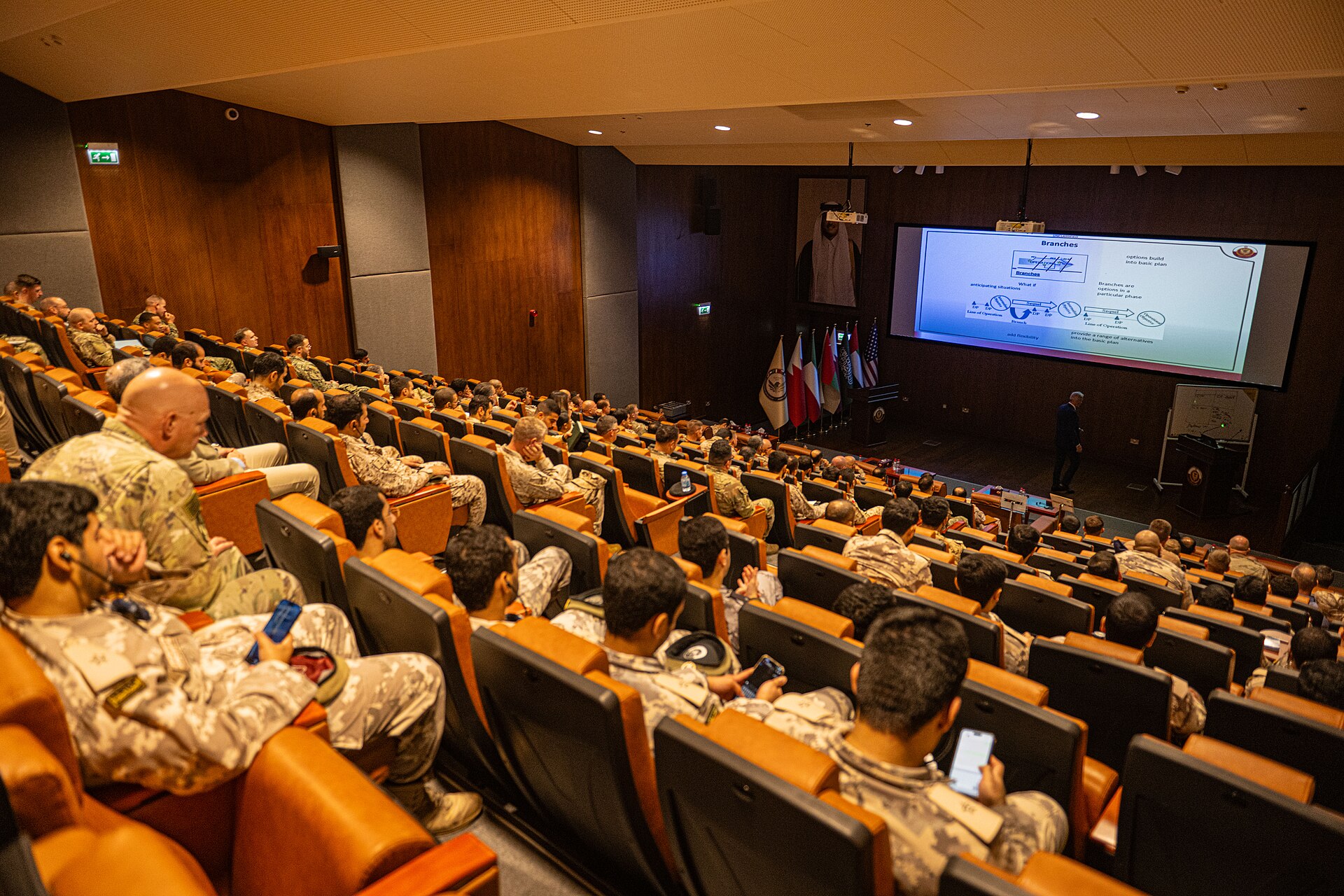
The diplomatic response was equally dramatic. Turkish, Saudi, Egyptian, and Pakistani foreign ministers convened in Riyadh for what became known as the security pact that America was not invited to — a quadrilateral arrangement that positioned four major Muslim-majority military powers as collective guarantors of Gulf security. The agreement represented a structural departure from the post-1945 framework in which Gulf security was exclusively an American responsibility.
Turkey’s shift carries particular weight because Ankara commands NATO’s second-largest military and controls the Bosphorus Strait — a strategic chokepoint that connects the Black Sea to the Mediterranean. Turkey’s entry into Gulf security arrangements effectively extends the alliance network from the Persian Gulf to the Eastern Mediterranean, creating what Chatham House analysts described as a “security corridor” spanning three critical waterways.
The cost of Turkish involvement has been tangible. Three Iranian missiles struck Turkish territory as of mid-March, damaging infrastructure near military installations. Turkish President Recep Tayyip Erdogan, who had spent years cultivating economic ties with Tehran worth approximately $5 billion annually in bilateral trade, found himself presiding over a relationship that Iranian retaliatory strikes had rendered untenable.
What Did Pakistan’s Defence Pact Actually Deliver?
The Saudi-Pakistani mutual defence agreement, signed in September 2025, was widely dismissed by analysts as a symbolic gesture — a diplomatic courtesy rather than a binding commitment. The Brookings Institution published an assessment describing it as carrying “more signal than substance,” noting that Islamabad had historically avoided military entanglements in Gulf conflicts despite deep financial dependence on Saudi Arabia.
The 2026 war proved the sceptics partially wrong. Pakistan activated the defence pact for the first time in its history, deploying troops to Saudi Arabia and positioning naval vessels for Gulf escort duties. Prime Minister Shehbaz Sharif flew to Jeddah in mid-March for an emergency meeting with Crown Prince Mohammed bin Salman, during which both leaders discussed what official statements described as “regional security developments” — diplomatic language for coordinating wartime military cooperation.
The deployment carried enormous domestic risk for Islamabad. Pakistan shares a 959-kilometre border with Iran. Its Balochistan province contains a significant Shia minority. Tehran had warned explicitly that any Pakistani military involvement in Gulf operations would carry “severe consequences” for bilateral relations. The fact that Islamabad deployed anyway — accepting the risk of Iranian retaliation on its own border — revealed either genuine conviction that Saudi Arabia’s security was a vital Pakistani interest, or calculation that the financial consequences of abandoning Riyadh outweighed the security consequences of angering Tehran.
The Chatham House assessment of the defence pact, published before the war, noted that it “sets a precedent for extended deterrence” in the Gulf — meaning Pakistan’s nuclear arsenal could theoretically serve as a backstop for Saudi security. Whether this nuclear dimension factored into Iran’s decision-making during the conflict remains a matter of intense analytical debate. What is clear is that Pakistan’s deployment transformed the pact from paper to operational reality in less than three weeks.
The Accidental Coalition — Greece, Ukraine, India, and the Partners Nobody Predicted
Perhaps the most striking feature of Saudi Arabia’s wartime alliance network is the prominence of partners that Riyadh never cultivated as strategic allies. Three cases illustrate the pattern.
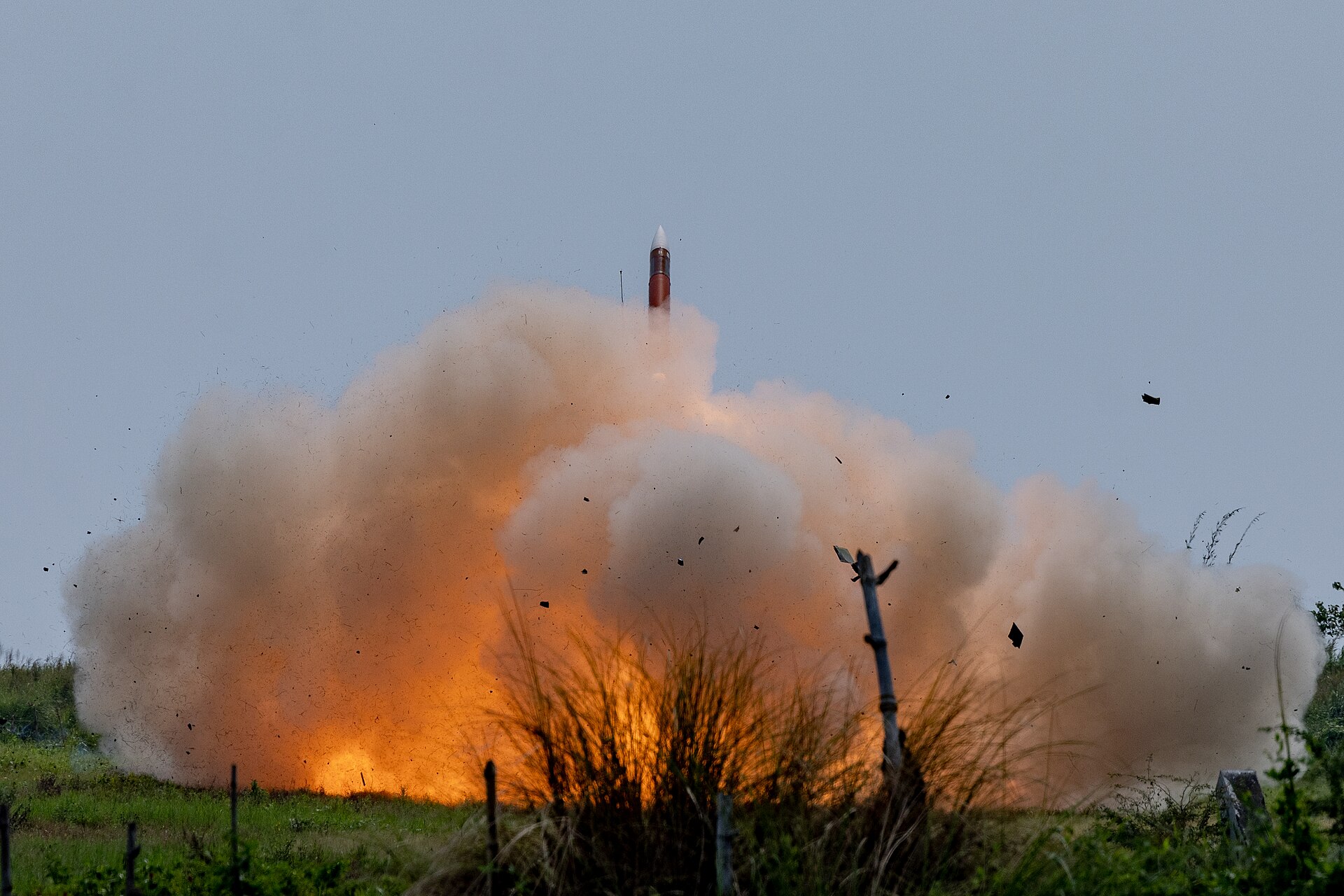
Greece deployed a Patriot missile battery to Saudi Arabia that, according to Janes defence intelligence, intercepted two Iranian ballistic missiles — the first combat engagement by a Greek military unit outside European or NATO-mandated operations in modern history. The deployment placed Greek soldiers in the direct line of Iranian fire to defend a Gulf monarchy, an arrangement that would have been inconceivable twelve months earlier. Athens’ motivation was partly alliance solidarity — the battery operated under broader European contributions to Gulf air defence — and partly transactional, with reports suggesting Saudi investment commitments to Greece played a role.
Ukraine contributed 201 military counter-drone experts to the Gulf region, according to Al Jazeera, bringing hard-won expertise from two years of defending against Russian Shahed drones — the same Iranian-designed weapons now striking Saudi infrastructure. Ukrainian technicians provided real-time tactical guidance on electronic warfare countermeasures, drone detection, and kill-chain optimisation. The irony was acute: Ukraine was helping defend Saudi Arabia against the same drones that Iran had sold to Russia for use against Ukrainian cities. The deployment established Kyiv as an unexpected but valuable partner in Gulf security, creating a relationship built entirely on shared operational experience rather than diplomatic tradition.
India deployed warships to the Gulf of Oman to escort fuel tankers, according to Bloomberg, marking New Delhi’s most assertive naval deployment in the Middle East in decades. India’s motivation was existential: the country imports approximately 85 percent of its crude oil, and 60 percent of those imports transit the Strait of Hormuz. With 9.4 million Indian citizens living and working in Gulf states, the humanitarian dimension added urgency. India’s warship deployment placed it alongside Pakistan in defending Gulf shipping lanes — an arrangement that neither Islamabad nor New Delhi would have voluntarily chosen but that the war’s logistics demanded.
The coalition that emerged was not designed by any strategic planner. It was assembled under fire, driven by immediate military necessity rather than diplomatic preparation. A Greek air defence crew, Ukrainian drone specialists, Pakistani infantry, Indian naval escorts, British destroyers, French fighter jets, and German logistics units found themselves operating in overlapping theatres of a single conflict — coordinated loosely through CENTCOM but bound more by shared threat than by treaty.
Did China Lose the Middle East?
Beijing’s position in the Gulf has suffered what the Hudson Institute described as a “catastrophic strategic setback.” China’s Middle East strategy rested on three pillars: the 2023 Saudi-Iran normalisation agreement as evidence of Chinese diplomatic capability, oil imports from both Saudi Arabia and Iran as economic leverage, and Belt and Road infrastructure investments as long-term influence tools. The war has damaged all three.
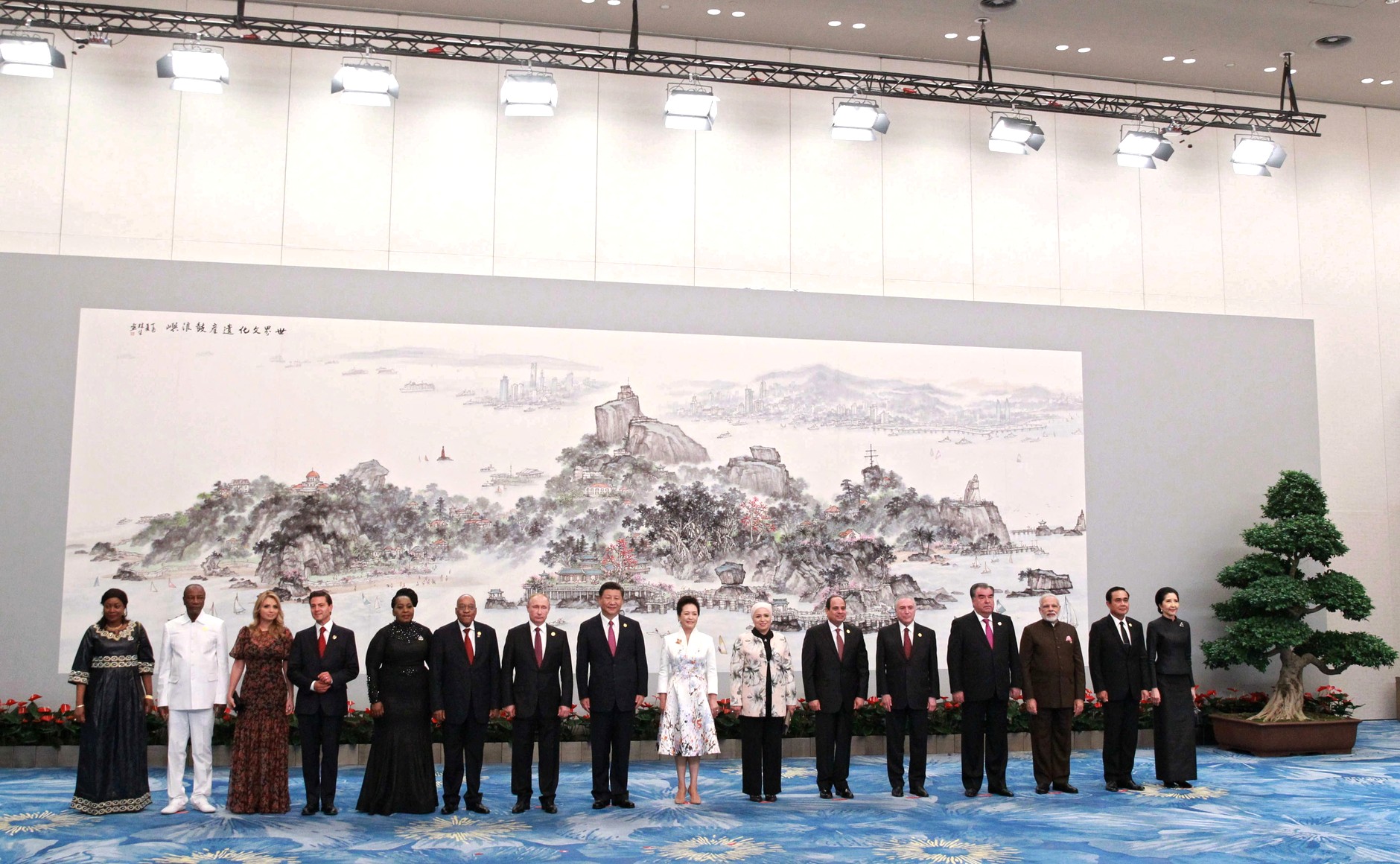
The Beijing Agreement is functionally dead, undermined not by diplomatic failure but by kinetic reality — it is difficult to maintain a normalisation process with a country that is actively bombing your oil refineries. China’s subsequent attempts at mediation have gained no traction, with both Tehran and Washington dismissing Beijing’s calls for restraint. Iran’s President Masoud Pezeshkian appealed directly to Indian Prime Minister Narendra Modi and the broader BRICS bloc to intervene, bypassing Beijing’s diplomatic channels — a signal that even Tehran no longer views China as a credible mediator.
China’s oil supply vulnerability has been exposed with particular severity. Approximately 40 percent of China’s crude oil imports transited the Strait of Hormuz before the war, according to the International Energy Agency. With Hormuz traffic reduced by an estimated 70 percent, Beijing faces its most acute energy security crisis since the founding of the People’s Republic. Japan and South Korea face similar exposure — Japan imports roughly 90 percent of its oil through Hormuz, and both nations have been forced into emergency measures including strategic petroleum reserve releases that cannot be sustained indefinitely.
The deeper strategic loss is reputational. Beijing positioned itself as an alternative to Washington’s alliance-based approach to Gulf security — offering economic partnership without military entanglement, trade without political conditions. The war has demonstrated that economic partnerships provide no security when missiles are falling. Saudi Arabia’s turn toward military allies — the United States, Pakistan, Turkey, European NATO members — has reinforced the very alliance architecture that China sought to make obsolete. As one Gulf-based diplomat told the Financial Times: “When you’re under fire, you don’t call your trading partner. You call the country that can shoot down the missile.”
Moscow’s War Dividend — Oil, Leverage, and the Sanctions That Vanished
Russia has emerged as the war’s most paradoxical beneficiary. Moscow maintains its alliance with Tehran through weapons sales and diplomatic support, while simultaneously profiting from the energy crisis that Iran’s attacks have created. The arrangement is cynical even by the standards of great-power politics.
Russia earned an estimated €7.7 billion in oil export revenue during the first two weeks of the conflict, according to data compiled by Euronews, as global buyers scrambled for non-Gulf crude. The Hormuz blockade removed approximately 20 million barrels per day from global markets, sending Brent crude above $126 per barrel at its peak — a price level that transforms Russian fiscal arithmetic from deficit to surplus. TIME magazine described Russia as “the early winner of the Iran war,” noting that Moscow had achieved through Tehran’s aggression what its own diplomacy could not: a sustained period of elevated oil prices.
President Trump’s decision to ease Russian oil sanctions in response to the crisis compounded the windfall. The executive order, reported by NBC News, removed restrictions on Russian crude exports to allow Western-aligned buyers to access alternative supplies while Hormuz remained closed. The policy handed Moscow precisely the sanctions relief it had sought since 2022 — delivered not through negotiation but through the strategic chaos created by its Iranian ally. The irony was not lost on European capitals: Trump was simultaneously bombing Iran and lifting sanctions on Iran’s primary weapons supplier.
Russia’s OPEC+ partnership with Saudi Arabia, which had been the backbone of oil market management since 2016, has been strained but not severed. Riyadh needs Moscow’s cooperation to manage post-war oil markets. Moscow needs Riyadh’s tolerance to maintain its OPEC+ seat. The relationship has become transactional in a way that would have been unthinkable during the warmth of the 2017-2023 period, when Mohammed bin Salman and Vladimir Putin regularly appeared together at international summits projecting shared purpose.
How Did the US-Saudi Relationship Transform in Twenty-Four Days?
The US-Saudi defence relationship has undergone its most significant transformation since the 1990 deployment of American forces to defend the Kingdom against Saddam Hussein’s Iraq. In the space of three weeks, the relationship shifted from a transactional arms-sales arrangement — characterised by Saudi complaints about congressional restrictions and American frustration over OPEC+ production decisions — to an existential military interdependence in which both parties need each other for immediate survival.
The numbers tell the story. The United States has deployed an estimated 50,000 military personnel to the region since the conflict began, with Saudi Arabia hosting the largest concentration. King Fahd Air Base in Taif was opened to American forces in mid-March, selected because its location in western Saudi Arabia places it farther from Iranian drone range than Prince Sultan Air Base in the central region, which has come under repeated attack. Approximately 200 Western personnel, including American advisers, are already stationed at the facility, providing medical and recreational infrastructure for extended deployments.
The Rubio State Department fast-tracked $16.5 billion in arms sales to Gulf states, bypassing standard congressional review processes, according to Al-Monitor. The sales included advanced munitions, air defence interceptors, and electronic warfare systems — precisely the categories that congressional human rights concerns had previously delayed or blocked. The war eliminated the political space for opposition: with American diplomats and service members under direct Iranian fire in Riyadh, legislative resistance to Gulf arms sales evaporated.
The historical parallel is instructive but incomplete. When American forces deployed to Saudi Arabia in 1990 during Operation Desert Shield, the presence generated intense domestic controversy within the Kingdom. Osama bin Laden cited the stationing of “infidel forces” on Saudi soil as justification for al-Qaeda’s campaign against both the Saudi monarchy and the United States. The 2026 deployment has generated no comparable backlash — in part because the Iranian threat is immediate and visible to every Saudi citizen who has heard air-raid sirens, and in part because MBS has consolidated domestic authority to a degree that his father’s generation never achieved.
Trump told Mohammed bin Salman that “the United States stands with Saudi Arabia,” according to Al Arabiya’s report of their early-March conversation. The statement, which in a different context might have sounded routine, carried genuine weight: American Patriot batteries were at that moment intercepting Iranian missiles over Saudi cities. The alliance had moved from rhetoric to shared combat operations, creating bonds of mutual dependence that will shape the relationship for a generation.
Can the GCC Hold Together Under Fire?
The Gulf Cooperation Council’s response to the war has defied predictions of fragmentation. Analysts who expected Saudi-UAE tensions — which had been building since 2017 over Yemen policy, oil production quotas, and economic competition — to paralyse the bloc underestimated the unifying effect of an external threat directed at all six member states simultaneously.
Iran’s strikes were indiscriminate in their targeting of GCC states. Within the first forty-eight hours, missiles and drones hit the UAE (which suffered the heaviest initial bombardment with more than 150 missiles and 500 drones), Bahrain, Kuwait, Qatar, and Oman, in addition to Saudi Arabia, according to the Atlantic Council’s assessment. The breadth of the attacks eliminated the possibility of individual neutrality — every GCC state was a target regardless of its position on the underlying US-Israeli campaign against Iran.
The GCC Secretariat convened its 50th Extraordinary Ministerial Session, issuing a statement that condemned Iranian attacks and called for collective defence measures. Qatar declared Iranian military and security attaches persona non grata following a missile strike on the Ras Laffan gas facility. Bahrain sustained 385 Iranian strikes but maintained its defensive posture. Kuwait marked Eid under drone fire. Even Oman — historically the GCC’s most Iran-sympathetic member — found itself absorbing Iranian drone strikes that killed two people in Salalah.
UAE Foreign Minister Sheikh Abdullah bin Zayed told his American counterpart that the UAE was “prepared for the war to last up to nine months,” according to Middle East Eye reporting — a statement that signalled Abu Dhabi’s commitment to sustained military engagement regardless of the conflict’s duration. The willingness of all six GCC states to accept the costs of collective defence — diplomatic severance with Tehran, economic disruption, civilian casualties — represents the most unified GCC posture since the organisation’s founding in 1981.
The unity is real but not without strain. Saudi Arabia and the UAE continue to disagree on the preferred endgame: Riyadh favours a negotiated conclusion that preserves some residual diplomatic channel with Tehran, while Abu Dhabi’s posture suggests a preference for more comprehensive Iranian defeat. These differences are manageable in wartime but will resurface in any post-conflict settlement.
The Alliance Durability Matrix — Which Partnerships Survived and Why
The war has provided an unprecedented natural experiment in alliance durability. By examining which partnerships survived the stress test and which failed, a clear pattern emerges: alliances grounded in military interoperability and shared threat perception proved durable, while those built primarily on economic complementarity or diplomatic convenience collapsed under pressure.
| Partner | Pre-War Basis | Pre-War Strength | Wartime Performance | Post-War Outlook | Durability Score |
|---|---|---|---|---|---|
| United States | Arms sales, oil politics | Transactional | Combat deployment, existential defence | Deep military integration | 9/10 |
| Pakistan | Defence pact (2025), labour ties | Symbolic | Troop deployment, PM emergency visit | Operational military partner | 8/10 |
| Turkey | Limited trade, cautious engagement | Minimal | Security pact, Patriot deployment, 3 missiles absorbed | New security architecture partner | 7/10 |
| Greece | Investment ties | Negligible | Patriot battery in combat, 2 ballistic missiles intercepted | Military cooperation framework | 7/10 |
| United Kingdom | Arms sales, intelligence sharing | Moderate | Fighter jets, helicopters, destroyer deployed | Enhanced military partner | 8/10 |
| India | Trade, labour migration | Economic | Warship escort deployment, 9.4M citizens at risk | Expanded security engagement | 6/10 |
| Egypt | Sunni solidarity, GCC aid recipient | Rhetorical | Late pledge to defend Gulf (after 3 weeks silence) | Uncertain — pledges not yet tested | 5/10 |
| China | Trade, Belt and Road, Beijing Agreement | Strong (economic) | No military contribution, mediation failed | Economic partner only | 3/10 |
| Russia | OPEC+ coordination | Moderate (energy) | Profiteering from crisis, sanctions relief gained | Cynical energy partnership | 2/10 |
| Iran | Beijing Agreement normalisation | Fragile | Active belligerent — 575+ drone attacks on Saudi territory | Severed | 0/10 |
The matrix reveals a consistent pattern: the five highest-scoring partnerships all involve countries with deployable military assets in or near the Gulf. The three lowest-scoring relationships — Iran, Russia, and China — are partnerships built on economic logic rather than security cooperation. Economic interdependence, it turns out, creates leverage but not loyalty. A country that buys Saudi oil does not necessarily have any incentive to defend the infrastructure that produces it.
The framework also exposes a second dynamic: the speed of alliance formation. Partnerships that required years of diplomatic preparation (the Beijing Agreement) proved brittle, while relationships assembled under fire (Greek Patriot deployment, Ukrainian drone advisers) proved operationally effective within days. This suggests that shared combat experience creates stronger alliance bonds than diplomatic ceremonies — a conclusion consistent with research published by the International Institute for Strategic Studies on alliance formation during the 2022-2024 Ukraine conflict.
The Contrarian Truth — Wartime Alliances Are Replacing Peacetime Ones
The conventional analysis of Saudi Arabia’s alliance system — advanced by think tanks from Brookings to the Carnegie Endowment — held that MBS had built a masterful multi-vector strategy, hedging between great powers to maximise Saudi leverage. The reality is less flattering. The multi-vector strategy was designed for a world in which Saudi Arabia would never need to call on its allies for anything more demanding than investment capital or diplomatic statements.
The war has exposed a structural flaw in the MBS alliance architecture: it prioritised breadth over depth. Having relationships with thirty countries is less valuable than having deep military interoperability with five. Saudi Arabia maintained defence cooperation agreements with dozens of nations but conducted meaningful joint exercises with fewer than ten. The Kingdom purchased weapons systems from multiple suppliers — American Patriot and THAAD, British Eurofighters, French missiles — but invested inadequately in the training, logistics, and command integration required to operate them as a unified defensive system under sustained attack.
The alliances that are now proving most valuable — Pakistan’s troop deployment, Greece’s Patriot battery, Ukraine’s counter-drone expertise, the UK’s naval and air deployments — share a common characteristic: they are grounded in specific military capabilities rather than general diplomatic goodwill. Egypt’s pledge to defend the Gulf, delivered three weeks into the conflict, is instructive by contrast: Cairo commands the Arab world’s largest military but has not yet deployed meaningful force to the theatre, leaving its commitment in the category of rhetorical support rather than operational contribution.
When you’re under fire, you don’t call your trading partner. You call the country that can shoot down the missile.
Gulf-based diplomat, as quoted by the Financial Times, March 2026
The implication for post-war Saudi strategy is clear. The Kingdom will emerge from this conflict with a fundamentally different understanding of what constitutes a real alliance. Economic partnerships — with China, with Russia, with European investment funds — will continue to serve commercial purposes. But the inner circle of Saudi security partnerships will be defined by countries that deployed forces, absorbed risk, and operated under fire alongside Saudi troops. That inner circle looks very different from the one that existed on 27 February.
What Will Saudi Arabia’s Post-War Alliance Architecture Look Like?
The post-war alliance architecture will be structured in concentric rings, with the innermost ring reserved for partners that proved their commitment under fire and the outer rings for states whose contributions were limited to economic cooperation or diplomatic statements.
The innermost ring will contain the United States, Pakistan, the United Kingdom, and Turkey — the four countries that deployed significant military assets to Saudi territory or conducted combat operations in defence of Saudi interests. This ring will be characterised by formalised mutual defence agreements, permanent or rotational military deployments, integrated air defence networks, and joint procurement programmes. The Turkey-Saudi-Egypt-Pakistan security architecture that emerged during the war is likely to be institutionalised, creating a non-NATO collective security framework for the Islamic world.
The second ring will include Greece, France, Germany, and other European states that contributed military assets through bilateral or NATO-adjacent arrangements. India, which deployed warships for escort operations, will occupy a unique position — militarily engaged but resistant to formal alliance structures. Ukraine’s counter-drone specialists represent a capabilities partnership that both Kyiv and Riyadh will seek to expand.
The outer ring will contain China and Russia — countries whose economic relationships with Saudi Arabia survived the war but whose strategic utility was demonstrated to be negligible in a security crisis. China will remain Saudi Arabia’s largest crude oil customer. Russia will remain an OPEC+ partner. Neither will be trusted with anything that matters when missiles are falling.
| Ring | Partners | Basis | Mechanisms |
|---|---|---|---|
| Inner (Combat-Tested) | US, Pakistan, UK, Turkey | Military deployment under fire | Mutual defence treaties, permanent bases, integrated air defence |
| Second (Operational) | Greece, France, Germany, India, Ukraine, Australia | Force contributions, capabilities | Bilateral defence agreements, rotational deployments, training exchanges |
| Outer (Economic) | China, Russia, Japan, South Korea | Trade, energy, investment | Commercial agreements, OPEC+ coordination, no security component |
| Severed | Iran | None | Diplomatic rupture, potential long-term hostility |
The most consequential unknown is whether Saudi Arabia will seek a formal NATO-style collective defence treaty with its inner-ring partners, or prefer a looser network of bilateral agreements that preserves Riyadh’s freedom of action. The Saudi royal family’s historical preference for bilateral relationships — which allow the Kingdom to calibrate each partnership independently — suggests the latter. But the war has demonstrated that bilateral arrangements lack the command integration and burden-sharing mechanisms that multilateral alliances provide. The four-power security pact negotiated in Riyadh during March 2026 may represent the embryonic form of a new collective security organisation — one that neither replaces NATO nor replicates it, but fills a gap in the global security architecture that the war has made impossible to ignore.
Whatever form it takes, the post-war alliance system will rest on a principle that the pre-war system neglected: alliances are only as valuable as the military capabilities they can deploy under fire. Diplomatic statements, trade agreements, and investment pledges are not alliances. They are relationships. The distinction, as twenty-four days of war have demonstrated with lethal clarity, is not academic.
Frequently Asked Questions
What alliances did Saudi Arabia lose during the 2026 Gulf War?
Saudi Arabia’s most significant alliance loss was the 2023 Beijing-mediated normalisation agreement with Iran, which collapsed after Tehran launched more than 575 drone attacks and 42 ballistic missiles at Saudi territory. The Kingdom expelled Iran’s military attache on 21 March 2026, effectively severing the diplomatic relationship. China’s role as a trusted mediator was also diminished, as Beijing’s calls for restraint gained no traction with either Tehran or Washington.
Which unexpected countries sent military forces to defend Saudi Arabia?
Several countries not traditionally associated with Gulf security deployed military assets to defend Saudi Arabia, including Greece (Patriot missile battery that intercepted two Iranian ballistic missiles), Ukraine (201 counter-drone experts), India (warships for tanker escorts in the Gulf of Oman), and Pakistan (troop deployment under the 2025 mutual defence pact). The United Kingdom sent additional fighter jets, helicopters, and a destroyer following the Iranian strikes.
How did the US-Saudi military relationship change during the war?
The relationship transformed from transactional arms sales to existential military interdependence. The United States deployed approximately 50,000 troops to the region, opened King Fahd Air Base in Taif to American forces, and fast-tracked $16.5 billion in arms sales to Gulf states. American Patriot batteries engaged in combat operations defending Saudi cities, creating shared combat experience that fundamentally deepened the bilateral relationship.
Did China lose influence in the Middle East because of the Iran war?
China suffered a significant strategic setback. The Beijing Agreement that normalised Saudi-Iranian relations — Beijing’s signature diplomatic achievement in the region — collapsed within weeks of the war’s start. China’s mediation attempts gained no traction, and Iran bypassed Beijing to appeal to India and BRICS for intervention. The war reinforced the primacy of military alliances over economic partnerships in Gulf security, favouring the US-led approach that China had sought to supplant.
How did Russia benefit from the 2026 Gulf War?
Russia earned an estimated €7.7 billion in oil export revenue during the first two weeks of the conflict as global buyers scrambled for non-Gulf crude. Brent crude peaked above $126 per barrel, transforming Russian fiscal arithmetic from deficit to surplus. President Trump also eased Russian oil sanctions to allow Western buyers access to alternative supplies — delivering sanctions relief that Moscow had sought since 2022 without requiring any Russian concession in return.
Will the GCC survive the internal tensions exposed by the war?
The GCC has demonstrated stronger unity than analysts predicted, with all six member states absorbing Iranian strikes and collectively condemning Tehran’s attacks. The 50th Extraordinary Ministerial Session produced a unified statement and coordinated defence measures. However, Saudi-UAE disagreements over the preferred wartime endgame — Riyadh favouring negotiation, Abu Dhabi preferring comprehensive Iranian defeat — will resurface in post-conflict diplomacy and could strain the coalition if not managed carefully. The divergence is sharpest on the question of direct military action: while Abu Dhabi may prefer a more aggressive posture, Riyadh has calculated that restraint delivers more strategic value than any strike package the RSAF could launch.