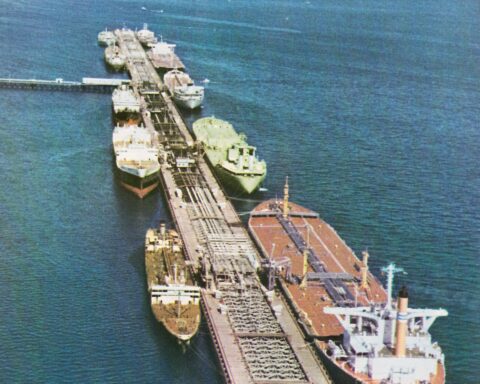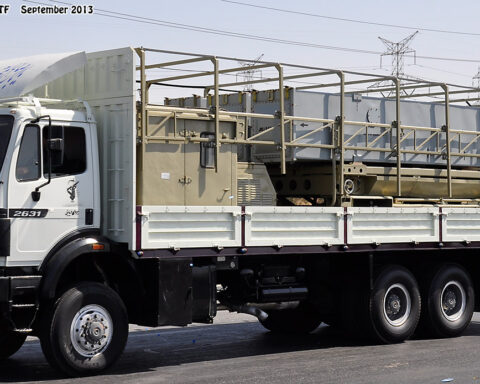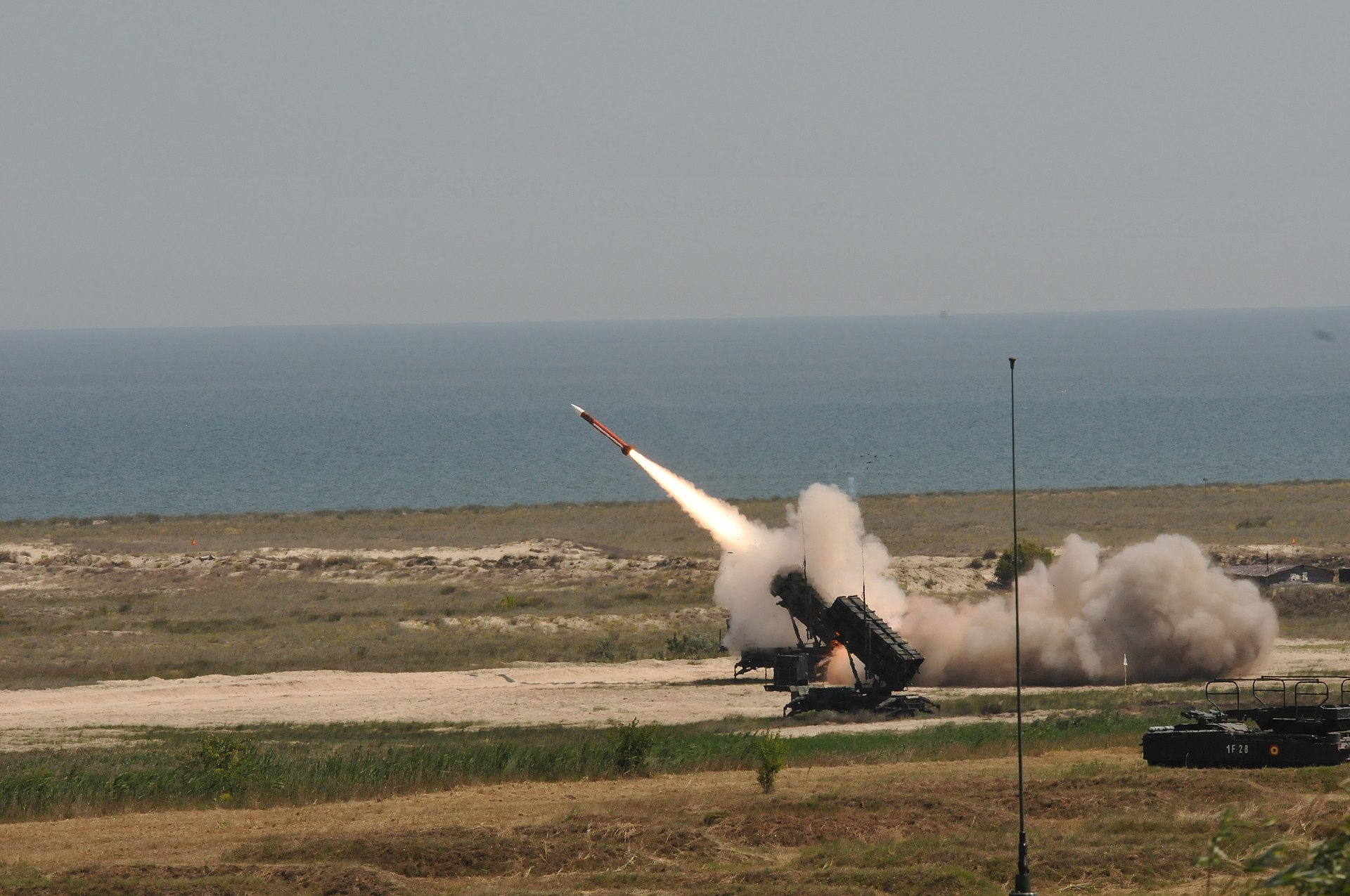

RIYADH — Saudi Arabia has spent twenty days absorbing Iranian missiles, drones, and ballistic warheads without firing a single offensive shot at Tehran. That strategy of restraint — once praised as masterful diplomacy that kept Riyadh above the fray of a war it did not start — is now failing on its own terms. Iran is escalating regardless. The damage is accumulating faster than any defensive system can absorb. And the six Gulf Cooperation Council armies that collectively spend $114 billion a year on defence have yet to deploy a single offensive weapon against the country attacking them.
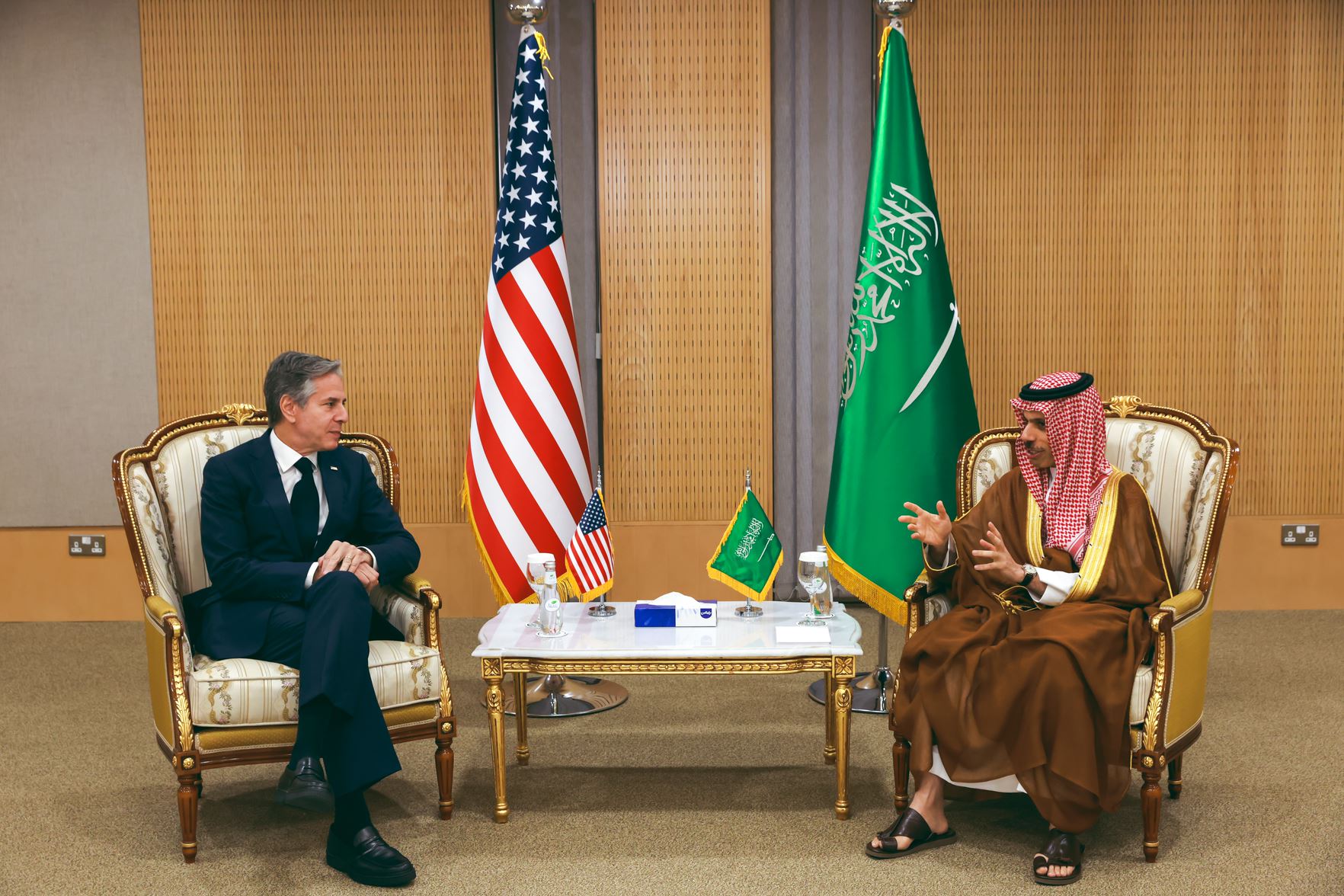
Foreign Minister Prince Faisal bin Farhan Al Saud declared on March 19 that Saudi Arabia “reserves the right to take military measures if it deems them necessary,” warning Tehran that patience in the Gulf is “not unlimited.” Qatar expelled Iran’s military attachés hours after missiles damaged the Ras Laffan complex that supplies twenty percent of the world’s liquefied natural gas. The United Arab Emirates has counted more than two thousand Iranian projectiles aimed at its territory since February 28. Kuwait’s largest refineries were struck on March 19. The restraint that was supposed to shield the Gulf from the worst consequences of the Iran war has instead made every Gulf state a target with no deterrent.
The question confronting Riyadh, Abu Dhabi, and Doha is no longer whether restraint was the right initial strategy. It was. The question is whether it remains viable after Iran demonstrated, in the span of seventy-two hours between March 17 and March 19, that it is willing to systematically attack the energy infrastructure that underpins the Gulf economy — and that defensive interceptions alone cannot stop every warhead. Three analytical frameworks, six military scenarios, and the historical precedent of the 1980s Tanker War all point to the same conclusion: the Gulf states are approaching the moment where inaction becomes more dangerous than action.
Table of Contents
- Why Has Saudi Arabia Refused to Strike Iran?
- What Has Three Weeks of Restraint Cost the Gulf?
- The Damage Ledger Nobody Wants to Read
- Can the GCC Fight Iran Without the United States?
- The Retaliation Calculus — When Restraint Becomes Self-Defeating
- What Would a GCC Offensive Against Iran Look Like?
- The Targets That Would Matter Most
- Iran’s Arsenal Is Not Inexhaustible
- How Did the Iran-Iraq Tanker War End?
- The Alliance Pressure Saudi Arabia Cannot Ignore
- What Happens to the War If Saudi Arabia Strikes Iran?
- The Greater Price of Ending Restraint
- Frequently Asked Questions
Why Has Saudi Arabia Refused to Strike Iran?
Saudi Arabia’s decision to absorb three weeks of Iranian attacks without retaliating was not born of weakness. It was a calculated strategic choice rooted in three assumptions that held true for the first two weeks of the war — and are now breaking down.
The first assumption was that the United States and Israel would degrade Iran’s offensive capability quickly enough that Gulf states would never need to fire a shot. The February 28 strikes that killed Supreme Leader Ali Khamenei and destroyed Iran’s nuclear infrastructure were supposed to deliver a knockout blow. The Pentagon estimated in its initial briefings, according to Reuters, that Iran’s retaliatory capacity would be “significantly diminished” within seven to ten days. Twenty days later, Iran launched its largest single-day drone barrage against Saudi Arabia — one hundred drones in twenty-four hours, far exceeding the previous daily average of twenty-five.
The second assumption was that restraint would maintain Saudi Arabia’s diplomatic credibility and protect its economic relationships. By refusing to participate in offensive operations, Riyadh positioned itself as a victim rather than a belligerent, preserving its ability to mediate and its standing with non-aligned nations, particularly China and India. Crown Prince Mohammed bin Salman reportedly calculated that staying out of the fight would give Saudi Arabia a stronger hand at the negotiating table when the war ended. Riyadh’s decision to expel five Iranian diplomats on March 21 marked the definitive end of the restraint posture, eliminating the last diplomatic channel that had constrained Saudi Arabia’s escalation options.
The Middle East briefing 3,000+ readers start their day with.
One email. Every weekday morning. Free.
The third assumption was that Iran would direct its retaliation primarily at American and Israeli targets rather than Gulf energy infrastructure. This proved catastrophically wrong. According to data compiled by the International Institute for Strategic Studies, approximately sixty percent of Iran’s retaliatory strikes since February 28 have targeted Gulf state territory — not American bases, not Israeli assets, but the sovereign territory and economic infrastructure of countries that did not participate in the opening attacks. The sustained bombardment ultimately forced Riyadh’s hand: on March 21, Saudi Arabia opened King Fahd Air Base in Taif to US forces, abandoning the restraint posture this article examines.
What Has Three Weeks of Restraint Cost the Gulf?
The cost of restraint is no longer theoretical. It can be measured in destroyed infrastructure, shattered economic confidence, and a deterrence posture that has been exposed as hollow. Twenty days of absorbing attacks without meaningful retaliation have sent a clear signal to Tehran: the Gulf states are targets that do not fight back.
Iran has fired more than five hundred ballistic and cruise missiles and approximately two thousand drones at targets across the Gulf since February 28, according to Pentagon estimates cited by Bloomberg. Saudi Arabia’s air defence network — anchored by Patriot PAC-3, THAAD, and the newly deployed Greek Patriot battery at Yanbu — has intercepted the vast majority of incoming threats. But even a ninety-five percent intercept rate means that dozens of warheads have reached their targets.
The economic damage has been staggering. Brent crude surged from $73 per barrel on the eve of the war to $119 at its peak on March 19, a sixty-three percent increase in three weeks. The European natural gas benchmark TTF traded twenty-four percent higher on March 19 alone, after Iran struck Qatar’s Ras Laffan facility. Goldman Sachs estimated on March 17 that the Gulf faces its worst recession in a generation, with regional GDP growth projected to contract by 3.2 percent in 2026 — the sharpest downturn since the 2020 pandemic.
The Tadawul, Saudi Arabia’s main stock exchange, has shed fourteen percent of its value since February 27, wiping approximately $430 billion from the capitalisation of listed companies, according to Bloomberg terminal data. The index’s partial recovery in early March was erased by the South Pars escalation. Foreign direct investment commitments for the first quarter of 2026 have collapsed by an estimated seventy percent compared to the same period in 2025, according to a preliminary assessment by the Saudi Investment Ministry cited by the Financial Times.
The Damage Ledger Nobody Wants to Read
The seventy-two hours between March 17 and March 19 inflicted more physical damage on Gulf energy infrastructure than the preceding seventeen days combined. The escalation followed Israel’s strike on Iran’s South Pars gas field processing facilities at Asaluyeh on March 18 — an attack that Tehran used as justification to declare all Gulf energy facilities legitimate military targets.
| Facility | Country | Date | Weapon | Reported Damage |
|---|---|---|---|---|
| Ras Laffan Industrial City | Qatar | March 19 | Cruise missiles | 17% LNG export capacity knocked offline (QatarEnergy) |
| Samref Oil Refinery | Saudi Arabia | March 19 | Drone strike | Drone crash damage, partial shutdown (Saudi Defense Ministry) |
| Riyadh — two refineries | Saudi Arabia | March 18 | Ballistic missiles | Intercepted; debris damage to surrounding areas |
| Shah Gas Field | UAE | March 17 | Drone strike | Fire, facility damage (Abu Dhabi National Oil Company) |
| Mina Al-Ahmadi Refinery | Kuwait | March 19 | Drone strike | Damage to two processing units (Kuwait Petroleum Corp.) |
| Mina Abdullah Refinery | Kuwait | March 19 | Drone strike | Damage to gas processing unit (Kuwait Petroleum Corp.) |
| Jubail Industrial City | Saudi Arabia | March 18 | Cruise missiles | Intercepted near petrochemical facilities |
The single most consequential strike was the attack on Ras Laffan. QatarEnergy CEO Saad al-Kaabi confirmed that seventeen percent of Qatar’s LNG export capacity was taken offline, affecting a facility that supplies nearly one-fifth of global LNG shipments. Unlike an oil pipeline that can be rerouted through alternative infrastructure, there is no spare LNG export capacity sitting idle anywhere in the world. The damage at Ras Laffan will take months to repair, and the price signal has already reshaped global gas markets.
Iran simultaneously issued what amounted to an ultimatum through Middle East Eye, ordering Saudi Arabia, Qatar, and the UAE to evacuate their energy workers from all petroleum and petrochemical facilities. The order was framed as a humanitarian warning. In practice, it was a declaration that every refinery, every LNG terminal, every petrochemical plant in the Gulf is now a designated target. Compliance would require shutting down the energy infrastructure that generates ninety percent of government revenue for Kuwait, sixty-five percent for Saudi Arabia, and thirty percent for the UAE.
Can the GCC Fight Iran Without the United States?
The Gulf Cooperation Council’s six member states — Saudi Arabia, the UAE, Qatar, Kuwait, Bahrain, and Oman — collectively spent $114.5 billion on their militaries in 2023, according to the Stockholm International Peace Research Institute. Saudi Arabia alone allocated $78 billion to defence in its 2025 budget, making it the world’s seventh-largest military spender. The UAE spent $20.7 billion. By comparison, Iran’s official defence budget was approximately $7.3 billion in 2024, though actual spending is estimated to be significantly higher when Islamic Revolutionary Guard Corps expenditures are included.
On paper, the disparity is overwhelming. The Royal Saudi Air Force operates 914 aircraft, including 232 F-15 Eagles, 72 Eurofighter Typhoons, and 81 Tornado IDS strike aircraft, according to Global Firepower. The UAE Air Force fields 79 F-16E/F Desert Falcons — among the most advanced Block 60 variants ever built — alongside 30 Mirage 2000-9 multirole fighters. Qatar operates 36 Rafale fighters acquired from France, some of the most capable air superiority platforms in any Middle Eastern inventory. A comprehensive assessment of Saudi Arabia’s military capabilities and strike options against Iran reveals the Kingdom’s force structure has been fundamentally reshaped since the Yemen campaign.
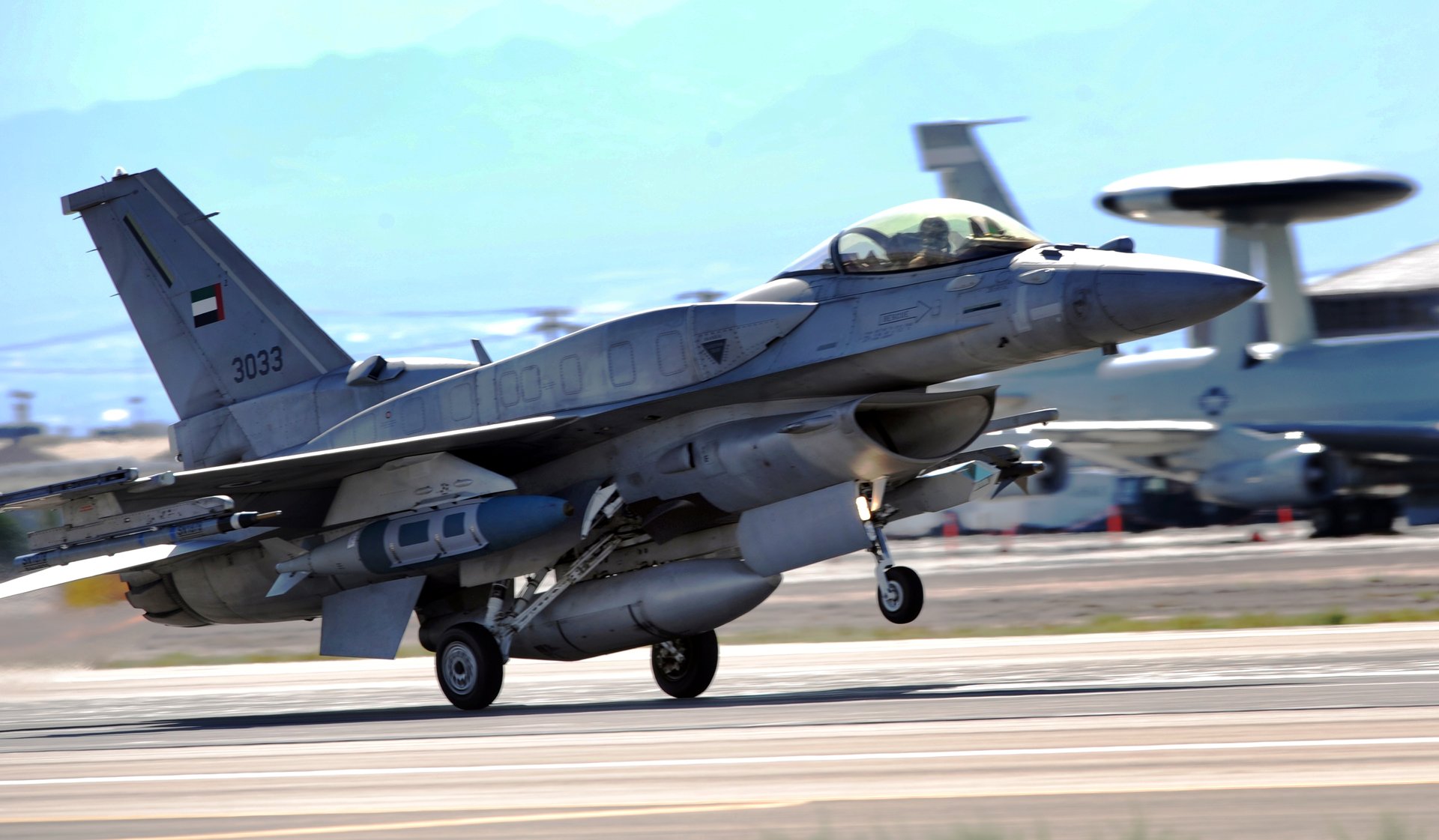
The combined GCC air fleet exceeds six hundred combat aircraft, more than double Iran’s operational fixed-wing combat fleet of approximately 250 aircraft, many of which are aging American F-14 Tomcats and F-4 Phantoms acquired before the 1979 revolution. In a conventional air-to-air contest, the GCC would achieve overwhelming superiority within hours.
Naval power tells a different story. Saudi Arabia’s navy operates 29 vessels, including modern Al-Riyadh class frigates and Al-Badr class corvettes, but its fleet is modest relative to its coastline. The UAE Navy is better positioned with its Baynunah-class corvettes, but neither fleet has conducted combat operations against a hostile naval force. Iran’s naval forces, particularly the IRGC Navy’s fleet of fast attack craft and anti-ship missile batteries lining the Strait of Hormuz, present an asymmetric threat that conventional naval superiority does not easily overcome.
The critical gap is not hardware — it is operational experience, intelligence, and command integration. The GCC states have never fought a joint offensive campaign. Defence Minister Prince Khalid bin Salman has modernised Saudi Arabia’s command structures, but the Peninsula Shield Force, the GCC’s nominal joint military, has never been tested in a war against a state adversary. Without American intelligence, surveillance, and reconnaissance assets — particularly satellite imagery and signals intelligence — the GCC’s ability to identify and strike Iranian military targets would be significantly degraded.
| Capability | GCC Combined | Iran | GCC Advantage |
|---|---|---|---|
| Annual defence spending | $114.5 billion | $7.3-25 billion (est.) | 4.6-15.7x |
| Combat aircraft | 600+ | ~250 | 2.4x |
| 4th/5th generation fighters | ~420 | ~30 | 14x |
| Main battle tanks | ~2,200 | ~1,600 | 1.4x |
| Ballistic missiles | Limited | 3,000+ (pre-war) | Iran advantage |
| Drone inventory | Growing | Thousands (Shahed-series) | Iran advantage |
| Active military personnel | ~420,000 | ~610,000 | Iran advantage |
| Naval vessels | ~110 | ~400+ | Iran advantage (quantity) |
The answer, then, is qualified. The GCC could conduct limited offensive strikes against Iran without direct American participation — particularly air strikes on Iranian military infrastructure within range of Gulf-based fighters. But a sustained campaign would require American intelligence support, aerial refuelling, and electronic warfare capabilities that no GCC state possesses independently. The more relevant question is not whether the GCC can fight alone, but whether Washington would allow its Gulf allies to strike Iran using American-made weapons without American authorisation — a question the Rubio arms deal of March 20 has made more urgent than ever.
The Retaliation Calculus — When Restraint Becomes Self-Defeating
Strategic restraint works when it achieves one of three outcomes: it prevents escalation, it builds diplomatic leverage, or it buys time for allies to resolve the underlying threat. After twenty days, the evidence suggests that Saudi Arabia’s restraint is achieving none of these objectives.
Four variables determine whether a defender’s restraint remains rational or has crossed into self-defeating passivity. These variables form a decision matrix that every military staff in the Gulf is now consulting, whether they acknowledge it publicly or not.
| Variable | Week 1 (Feb 28-Mar 6) | Week 2 (Mar 7-13) | Week 3 (Mar 14-20) | Trend |
|---|---|---|---|---|
| Damage Accumulation Rate | Low — mostly intercepted, limited infrastructure hits | Moderate — Hormuz closed, first refinery strikes, airport shutdowns | Severe — Ras Laffan damaged, Kuwait refineries struck, 100 drones/day | Accelerating |
| Deterrence Value of Restraint | High — Iran initially targeted US/Israeli assets primarily | Declining — Iran shifted 60% of strikes to Gulf territory | Near zero — Iran declared all Gulf energy as targets, issued evacuation ultimatum | Collapsing |
| Diplomatic Leverage Gained | Strong — UN condemnation, global sympathy, China/India support | Moderate — some leverage spent, allies growing impatient | Weakening — allies questioning why GCC won’t defend itself, Graham threatens to kill defence pact | Diminishing |
| Escalation Risk of Retaliation | Very high — would have drawn GCC into a US/Israel war | High — but Iran already attacking Gulf regardless | Moderate — Iran is already at maximum escalation against Gulf | Declining |
The critical insight is that escalation risk — the primary reason for restraint — has declined sharply while damage accumulation has surged. In Week 1, a GCC strike on Iran would have been a dramatic escalation because Iran had not yet systematically targeted Gulf states. By Week 3, Iran is already doing everything the Gulf states feared retaliation would provoke. The Retaliation Calculus reveals a paradox: the worst-case scenario that restraint was designed to prevent has arrived anyway.
When the deterrence value of restraint falls to zero — when the adversary attacks regardless of whether you retaliate — passivity ceases to be strategic patience and becomes a unilateral disarmament of your deterrence posture. Iran’s calculus is now simple: Gulf states absorb damage without responding, so there is no marginal cost to increasing the pace and severity of attacks. Each unanswered strike reinforces the expectation that the next one will also go unanswered.
“The patience that is being exhibited is not unlimited. I call on Iran to recalculate quickly and stop attacking their neighbours.”Prince Faisal bin Farhan Al Saud, Saudi Foreign Minister, March 19, 2026
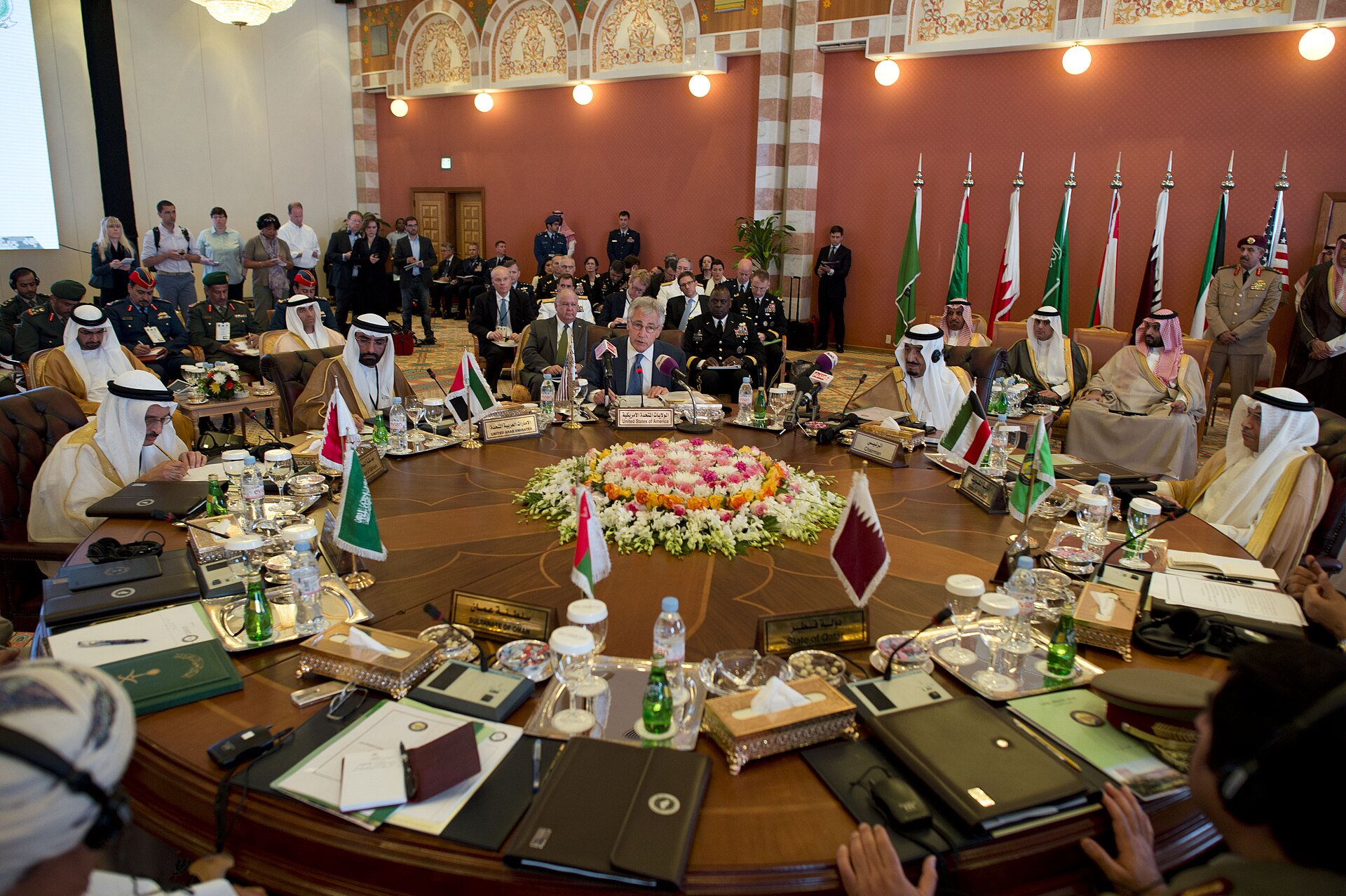
That warning was not delivered in isolation. On the same day, twelve Arab and Islamic nations convened in Riyadh to collectively condemn Iran’s attacks and endorse the right to self-defense under Article 51 of the UN Charter — a diplomatic milestone that transformed Faisal bin Farhan’s words from a Saudi position into a multilateral ultimatum.
What Would a GCC Offensive Against Iran Look Like?
A GCC offensive against Iran would not resemble the American campaign that began on February 28. The Gulf states lack the deep-strike capability to hit targets in central Iran, the intelligence architecture to conduct a strategic air campaign independently, and the political appetite for regime change. Any GCC military action would be calibrated, proportional, and designed to impose costs on Iran’s ability to continue attacking Gulf infrastructure — not to win the war outright.
The International Institute for Strategic Studies published an analysis on March 19 identifying three tiers of offensive options available to the GCC states.
The first tier involves strikes on Iranian military assets within range of Gulf-based aircraft. Saudi Arabia’s F-15SA fleet, equipped with SLAM-ER standoff missiles, can strike targets up to 280 kilometres inside Iranian territory without entering Iranian airspace. The UAE’s Desert Falcons carry AGM-84H SLAM-ER and AGM-88 HARM anti-radiation missiles. These platforms could target the IRGC Navy’s missile batteries and fast-boat bases along the Iranian coast — the very assets launching the daily drone and missile barrages against Gulf states. Bandar Abbas, Bushehr, and Jask harbour the IRGC Navy’s principal forward-operating facilities.
The second tier involves naval action in the Persian Gulf. Saudi and UAE warships, potentially coordinated with the US Fifth Fleet, could enforce an exclusion zone against Iranian naval vessels operating outside Iranian territorial waters. The IRGC Navy’s fleet of fast attack craft — the primary platform for mine-laying operations that have shut the Strait of Hormuz — would be legitimate targets under the law of armed conflict, given that they have been used to attack commercial shipping.
The third tier — and the one most likely to trigger uncontrollable escalation — involves strikes on Iranian energy infrastructure in a tit-for-tat exchange. Iran has already struck Gulf refineries, LNG facilities, and gas fields. A retaliatory strike on Iran’s Kharg Island oil export terminal or Bandar Abbas refinery would impose severe economic costs on Tehran but would also invite further escalation against Gulf energy assets. This is the scenario every Gulf capital wants to avoid, yet it is the scenario Iran’s behaviour is making increasingly likely.
The Targets That Would Matter Most
Not all targets are strategically equal. The IISS analysis and a separate assessment by the Arab Center Washington DC both suggest that the most effective GCC strikes would target Iran’s offensive launch infrastructure rather than its energy or civilian assets.
Iran’s drone campaign against the Gulf originates from a relatively small number of production and launch facilities. The Shahed-136 one-way attack drones that constitute the majority of daily attacks against Gulf states are manufactured at facilities in Isfahan and Karaj. The IRGC’s coastal missile batteries — which have been used to threaten and attack commercial shipping in the Strait of Hormuz — are concentrated along a three-hundred-kilometre stretch of coastline from Jask to Bandar Abbas.
| Target Category | Specific Assets | Strategic Impact | Escalation Risk | GCC Capability |
|---|---|---|---|---|
| IRGC Navy bases | Bandar Abbas, Bushehr, Jask fast-boat facilities | Reduces daily drone/missile launches, opens Hormuz corridor | Moderate | Within F-15SA/F-16E range |
| Coastal missile batteries | Anti-ship missile sites from Jask to Qeshm Island | Enables commercial shipping resumption | Moderate | HARM missiles effective |
| Drone launch/storage sites | Forward operating bases near the coast | Reduces drone tempo against Gulf facilities | Low-Moderate | Standoff weapons effective |
| Radar and C2 facilities | Iranian air defence radars, command centres | Enables further operations, degrades Iranian SA | Moderate | Electronic warfare support needed |
| Energy infrastructure | Kharg Island terminal, Bandar Abbas refinery | Maximum economic pain, tit-for-tat | Very High | Within range but politically constrained |
The most strategically productive strikes would focus on the first three categories — the platforms Iran is using to conduct daily attacks. Destroying IRGC Navy forward bases and coastal missile sites would have an immediate, measurable impact on the tempo of attacks against Gulf states while creating a credible deterrent against further escalation. It would also signal that the Gulf states are willing to impose costs without crossing the threshold into an energy-for-energy exchange that neither side can win.

Iran’s Arsenal Is Not Inexhaustible
The conventional wisdom holds that Iran’s arsenal of cheap drones and missiles gives it an essentially unlimited capacity to sustain attacks on Gulf states for months or years. The evidence from three weeks of war challenges this assumption.
Iran has expended more than five hundred ballistic and cruise missiles since February 28, according to Pentagon estimates. Before the war, Iran’s ballistic missile inventory was estimated at approximately three thousand by the IISS Military Balance 2025. At the current rate of expenditure — roughly twenty-five ballistic missiles per day — Iran would exhaust its pre-war inventory within four months, assuming zero attrition from American and Israeli strikes on production facilities. That assumption is generous. The United States has struck at least eleven missile production and storage sites since the war began, and Iran’s ability to manufacture replacement missiles while under sustained bombardment is severely degraded.
The drone picture is more complex. Iran’s Shahed-series drones are cheap to produce — estimated at $20,000 to $50,000 per unit — and use commercially available components that are easier to source than ballistic missile propulsion systems. Iran maintained pre-war drone production capacity of approximately one hundred units per day, according to Western intelligence estimates cited by the Washington Post. But production facilities have been targeted, supply chains disrupted, and some of the commercial components Iran relies on are subject to sanctions enforcement that has tightened significantly since February 28.
The IRGC’s public statement on March 19 that it is “still building missiles and the war will go on” was as much propaganda as it was operational reality. Iran is certainly still producing weapons. But the claim obscures a critical trend: the sophistication and accuracy of Iranian attacks has declined measurably since Week 1. The proportion of precision-guided ballistic missiles in daily barrages has fallen, replaced by a higher ratio of one-way attack drones that are cheaper but easier to intercept. This shift suggests that Iran’s precision missile inventory is depleting faster than it can be replenished.
If Gulf states were to strike the forward-operating bases and coastal launch infrastructure that Iran uses to conduct daily attacks, the attrition rate on Iran’s remaining arsenal would accelerate sharply. The combination of American strikes on production facilities and GCC strikes on launch infrastructure would create a two-front attrition problem that Iran’s defence industrial base cannot sustain indefinitely.
How Did the Iran-Iraq Tanker War End?
The closest historical parallel to the current situation is the Tanker War of 1984-1988, when Iran and Iraq systematically attacked each other’s oil exports and the commercial shipping of neutral Gulf states. The parallels are instructive — and the differences are alarming.
During the Iran-Iraq Tanker War, Iran attacked 190 ships over four years. In the 2026 war, Iran has effectively shut down all commercial shipping through the Strait of Hormuz in three weeks — a level of disruption that took years to achieve in the 1980s. The acceleration reflects Iran’s vastly improved missile and drone technology, the proliferation of precision-guided munitions, and the absence of the nuclear deterrent that once constrained Iranian behaviour.
The Tanker War ended only after the United States intervened directly with Operation Earnest Will and Operation Praying Mantis. Earnest Will provided naval escorts for reflagged Kuwaiti tankers. Praying Mantis, launched in April 1988 after the USS Samuel B. Roberts struck an Iranian mine, destroyed half of Iran’s operational navy in a single day. The message was unambiguous: attacks on commercial shipping in the Persian Gulf would be met with overwhelming force. Iran’s maritime campaign collapsed within months.
The lesson is not that military force always works. The lesson is that deterrence requires a credible threat of punishment, and that passive defence without offensive consequences is inherently unstable. The Tanker War ended not because Iran ran out of missiles, but because the cost of continued attacks exceeded the benefit. The Gulf states have not yet established a comparable cost calculus. Every unanswered drone strike reinforces Iran’s assessment that the current campaign is asymmetrically advantageous.
The Alliance Pressure Saudi Arabia Cannot Ignore
The decision to retaliate is not Saudi Arabia’s alone. It is shaped by a web of alliance relationships that are pulling Riyadh in contradictory directions.
Washington is simultaneously the Gulf states’ primary security guarantor and the architect of the war they are being punished for. The Pentagon’s $200 billion supplemental budget request — the largest single wartime funding request since World War II — includes provisions for expanding Gulf air defence and replacing interceptor missiles consumed at an unprecedented rate. Secretary of State Marco Rubio’s decision on March 20 to bypass Congressional review and rush $16 billion in arms to Gulf states signals that Washington expects the Gulf states to defend themselves more aggressively and is providing the tools to do so.
Senator Lindsey Graham’s threat to kill the US-Saudi defence pact unless Riyadh strikes Iran directly reflects a growing bipartisan frustration in Washington. The argument, stripped to its essence, is that the United States cannot sustain a trillion-dollar war to defend Gulf states that will not contribute to their own offence. The political economy of the alliance is shifting: American support is becoming conditional on Gulf military participation, not just on the provision of bases and financial support.
On the other side, China and India — Saudi Arabia’s largest oil customers — are pressing for restraint. Beijing’s special envoy arrived in Riyadh on March 9 with a message that Faisal bin Farhan relayed publicly: “dialogue remains the only path to de-escalation.” India, which imports approximately forty percent of its crude from the Gulf, has privately urged Saudi Arabia not to take any action that could further disrupt energy supplies. But neither China nor India has offered to provide the military assets that would make restraint sustainable — no air defence systems, no naval escorts, no intelligence sharing.
The alliance pressure is converging on a narrow corridor of action: Washington wants the GCC to fight; Beijing and New Delhi want the GCC to hold back; and the GCC’s own populations, who are living under daily air raid sirens for the first time in their history, are increasingly questioning a strategy that has failed to protect them. Eight million Riyadh residents received their first air raid alert on March 19. The political cost of continued passivity is rising faster than the geopolitical cost of action.
What Happens to the War If Saudi Arabia Strikes Iran?
The most consequential scenario analysis of the current war is not what happens if the Gulf states continue to absorb attacks. It is what happens if they stop absorbing and start striking.
Six scenarios emerge, ranging from limited calibrated action to a full Gulf entry into the war as a co-belligerent alongside the United States and Israel. Each carries distinct risks and potential outcomes.
| Scenario | Action | Likely Iranian Response | Strategic Outcome | Probability |
|---|---|---|---|---|
| Limited coastal strikes | GCC air strikes on IRGC Navy bases along coast | Intensified drone attacks, but reduced missile launches from targeted bases | Modest reduction in attack tempo; establishes deterrent credibility | Most likely |
| Hormuz clearing operation | GCC + US naval forces clear mines, destroy coastal batteries | Iran attempts to re-mine, deploys fast attack craft | Partial reopening of Strait within weeks; ongoing naval combat | Likely (with US) |
| Drone production strikes | GCC contributes aircraft to US-led strikes on Iranian drone factories | Full-scale retaliatory campaign against Gulf energy infrastructure | Reduces long-term drone threat but triggers severe short-term escalation | Possible |
| Energy-for-energy | GCC strikes Kharg Island or Bandar Abbas refinery | Maximum retaliatory attacks on all Gulf energy assets | Mutual economic devastation; fastest path to ceasefire or total war | Unlikely unless Gulf suffers catastrophic hit first |
| Full co-belligerency | GCC formally joins US-Israeli coalition, contributes to strategic air campaign | Iran treats GCC as primary enemies, escalates to maximum capacity | Accelerates Iranian military defeat but transforms Gulf states from victims to combatants | Unlikely |
| Continued restraint | No offensive action, increased defensive measures only | Continued escalation of attacks on Gulf energy; damage accumulates | Slow economic strangulation; deterrence posture permanently degraded | Declining probability |
The first scenario — limited strikes on IRGC Navy coastal infrastructure — represents the most likely initial action. It is proportional, defensible under international law as self-defence, directly connected to the ongoing attacks, and achievable with existing GCC capabilities. It would not require formal entry into the US-Israeli war and could be characterised as a defensive operation to protect Gulf sovereignty rather than an offensive campaign against Iran.
The risk is that Iran does not distinguish between limited and unlimited strikes. Tehran may interpret any GCC offensive action as entry into the war, regardless of how narrowly the strikes are targeted. Iran’s response calculus is shaped by revolutionary ideology, factional politics within the surviving IRGC leadership, and the desperate strategic position of a regime under simultaneous attack from three directions. Rational escalation management assumes a rational opponent; three weeks of data suggest that Iran’s decision-making is driven as much by institutional survival instincts as by strategic calculation.
The Greater Price of Ending Restraint
Every option carries costs. The question is no longer whether Saudi Arabia will pay a price for its choices in this war, but which price it is willing to accept.
Continued restraint means accepting that Iran will keep attacking Gulf infrastructure at an escalating rate, that the deterrence value of the GCC’s $114 billion military will approach zero, and that the economic damage to Saudi Arabia’s energy infrastructure and broader economy will compound with every passing week. It means telling eight million Riyadh residents that the kingdom’s armed forces will intercept incoming missiles but will not strike the bases from which they are launched. It means telling Japan, South Korea, and Europe that the Gulf states cannot guarantee the security of their own energy exports.
Military action means accepting the risk of escalation, the diplomatic cost of being perceived as a combatant rather than a victim, and the possibility that Iran will respond with attacks even more devastating than those it has already conducted. It means spending interceptor missiles — each Patriot PAC-3 round costs approximately $4 million — even faster, while also expending precision-guided munitions on offensive strikes. It means the deaths of Saudi, Emirati, Qatari, and potentially Kuwaiti service members in a war that began as an American and Israeli operation.
The case for ending restraint rests on a single proposition: the worst-case scenario of inaction is now worse than the worst-case scenario of limited offensive action. Iran has already declared all Gulf energy infrastructure a legitimate target. The evacuation ultimatum issued through Middle East Eye was not a negotiating position — it was a statement of operational intent. Restraint did not prevent this escalation. It may have encouraged it.
The Iran-Iraq Tanker War lasted four years because no external power imposed sufficient costs to end it. The 2026 Gulf energy war has produced more disruption in three weeks than the Tanker War produced in four years. The trajectory is clear. The only variable is how long the Gulf states wait before recognising that absorbing punishment indefinitely is not a strategy — it is a slow-motion capitulation to an adversary that has made its intentions explicit.
Prince Faisal bin Farhan’s statement that patience is “not unlimited” was not rhetoric. It was a signal that the Retaliation Calculus has shifted, that the internal debate within the Saudi national security establishment has moved from whether to act to when and how. The restraint trap is closing. The question is whether the Gulf states will choose the timing of their exit — or whether Iran will choose it for them.
The full range of endgame possibilities — from total U.S. military victory to mutual exhaustion to regional escalation — is examined in the five scenarios for how the Iran war ends, each scored against Saudi Arabia’s strategic interests.
The restraint calculus shifted further on March 20 when President Trump signaled that the United States was considering winding down military operations while simultaneously deploying 8,000 additional Marines to the Gulf. If Washington withdraws its operational umbrella before Iranian strike capabilities are fully neutralised, Saudi Arabia may be forced into the very military action it has spent three weeks avoiding.
Frequently Asked Questions
Has Saudi Arabia struck Iran in the 2026 war?
No. As of March 20, 2026, Saudi Arabia and all other GCC member states have maintained a strictly defensive posture throughout the three-week conflict. Saudi Arabia’s military actions have been limited to intercepting incoming Iranian missiles and drones using Patriot, THAAD, and other air defence systems. Foreign Minister Faisal bin Farhan stated on March 19 that the Kingdom “reserves the right to take military measures” but has not exercised that option.
How many Iranian missiles and drones have targeted Gulf states since the war began?
Iran has launched more than 2,500 projectiles — including over 500 ballistic and cruise missiles and approximately 2,000 drones — at targets across the Gulf since February 28, according to Pentagon estimates cited by Bloomberg. The UAE alone has counted more than 2,000 Iranian drones and missiles aimed at its territory. Saudi Arabia intercepted its largest single-day barrage on March 17, when approximately 100 drones were launched in a twenty-four-hour period.
What military capabilities do the GCC states have to strike Iran?
The six GCC states collectively operate more than 600 combat aircraft, including Saudi Arabia’s 232 F-15 Eagles, the UAE’s 79 F-16E Desert Falcons, and Qatar’s 36 Dassault Rafale fighters. Combined annual defence spending exceeds $114 billion. However, the GCC has never conducted a joint offensive campaign against a state adversary and would likely require American intelligence and logistical support for sustained operations.
Would GCC strikes on Iran violate international law?
Under Article 51 of the United Nations Charter, states have an inherent right of self-defence when subjected to armed attack. Iran has launched thousands of projectiles at GCC territory, damaged critical infrastructure, and issued explicit threats to destroy Gulf energy facilities. Legal scholars at Chatham House and the IISS have assessed that proportional defensive strikes on Iranian military assets used to conduct attacks on Gulf states would be justified under international humanitarian law and the law of armed conflict.
What happened during the Iran-Iraq Tanker War, and why does it matter now?
The Tanker War of 1984-1988 saw Iran and Iraq systematically attack each other’s oil exports and neutral Gulf shipping. Iran attacked 190 ships over four years. The conflict ended only after the United States launched Operation Praying Mantis in April 1988, destroying half of Iran’s operational navy in a single day. The historical precedent suggests that passive defence without offensive consequences prolongs rather than ends maritime and energy conflicts in the Persian Gulf.
Could GCC strikes on Iran cause oil prices to rise further?
Short-term oil price spikes are likely in any escalation scenario. Brent crude has already risen from $73 to $119 per barrel during the war. However, several analysts — including Goldman Sachs and the International Energy Agency — argue that the fastest path to price stabilisation is the reopening of the Strait of Hormuz and the cessation of attacks on Gulf energy infrastructure, both of which may require offensive military action to achieve. The paradox of the current situation is that restraint has not prevented oil price spikes; it has prolonged them.
The sanctions contradiction deepened further on March 20, when the Treasury Department released 140 million barrels of Iranian crude onto global markets — a decision that effectively funded the adversary Saudi Arabia is being asked not to fight.