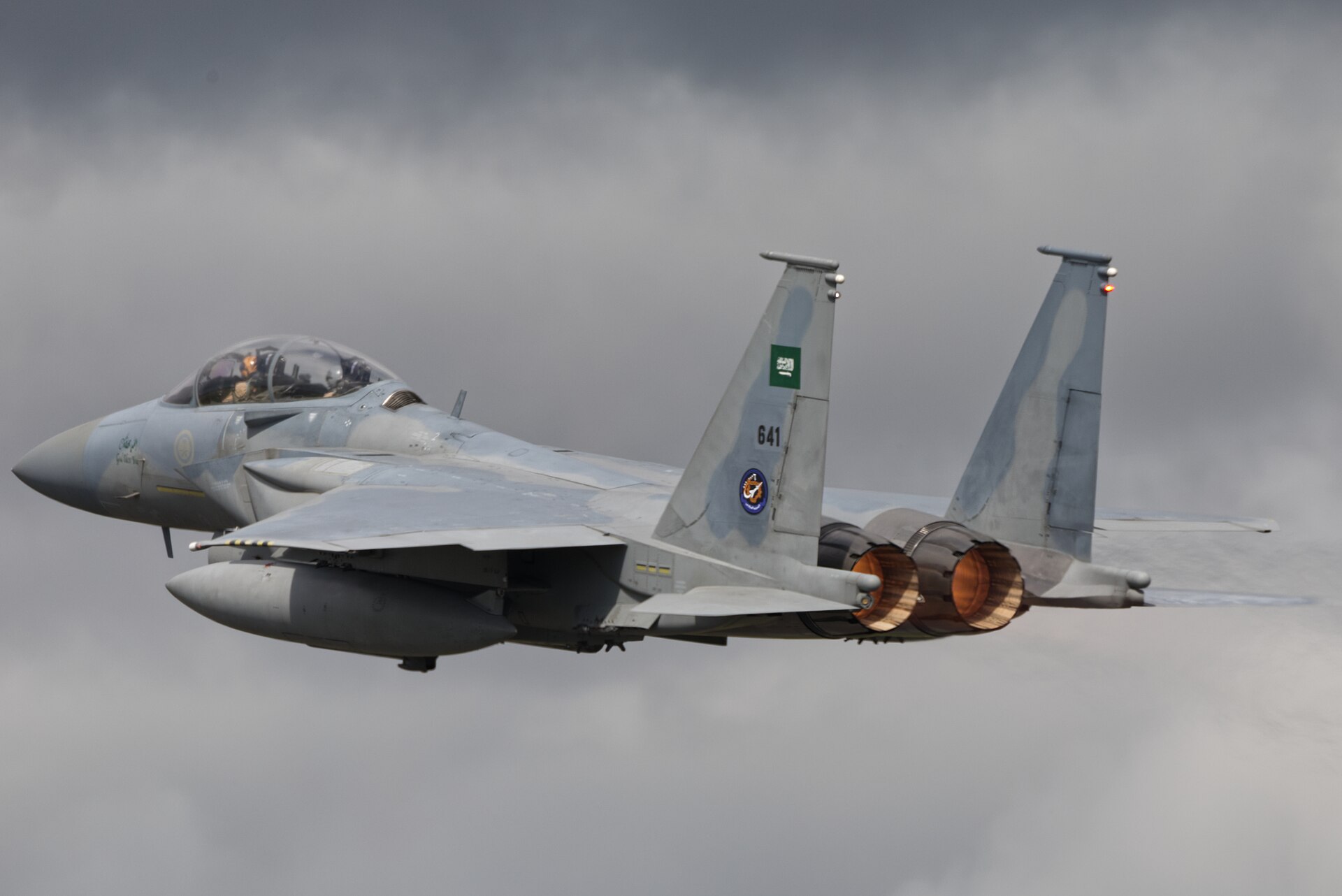

RIYADH — Twenty-four days into a war that has sent more than a thousand Iranian drones and four hundred ballistic missiles toward Gulf Arab states, Saudi Arabia has absorbed the punishment without returning fire. The Royal Saudi Air Force, one of the best-equipped in the Middle East, has not flown a single offensive sortie against Iran. The Kingdom’s F-15SA strike fighters remain loaded with precision-guided munitions on aprons across at least four major air bases — and every morning, the order to launch does not come. The question reverberating through defence ministries from Washington to Abu Dhabi is deceptively simple: why not?
The answer, according to senior Western diplomats, Gulf security officials, and analysis of Saudi military dispositions, is that Crown Prince Mohammed bin Salman has made a calculated bet that strategic patience will yield more than kinetic action — and that the risks of entering the war as a combatant far outweigh the costs of enduring drone strikes. It is a bet that grows harder to sustain with every missile that falls on Saudi soil, and the evidence suggests the margin for maintaining it is narrowing by the day.
The calculus shifted again hours later when Trump ordered a five-day halt to energy infrastructure strikes, opening a diplomatic window that could reshape the choices facing Riyadh.
Table of Contents
- How Many Times Has Iran Attacked Saudi Arabia Since the War Began?
- What Military Assets Could Saudi Arabia Deploy Against Iran?
- Could Saudi Fighter Jets Reach Iranian Targets Without American Help?
- What Would Saudi Arabia Actually Strike in Iran?
- The Saudi Strike Decision Matrix
- Why Has MBS Not Ordered a Strike on Iran?
- What Did the Yemen War Teach Saudi Arabia About Offensive Campaigns?
- How Would Iran Respond to a Direct Saudi Attack?
- What Would Change If Saudi Arabia Entered the War?
- The Contrarian Case for Saudi Restraint as a Strategic Weapon
- Where Is the Breaking Point?
- Frequently Asked Questions
How Many Times Has Iran Attacked Saudi Arabia Since the War Began?
Since the United States and Israel launched Operation Epic Fury against Iran on 28 February 2026, Iran’s Islamic Revolutionary Guard Corps has conducted a relentless campaign of retaliatory strikes against Saudi Arabia and its Gulf neighbours. The scale of the assault has no precedent in the modern history of the Arabian Peninsula.
According to data compiled from the Saudi Ministry of Defence, the Foundation for Defense of Democracies’ Long War Journal, and open-source intelligence trackers, Iran has directed more than 600 drones and at least 50 ballistic and cruise missiles at Saudi territory in the first 24 days of the conflict. The Saudi Royal Air Defense Forces have intercepted the overwhelming majority — shooting down 47 drones in a single three-hour barrage on one occasion — but the sheer volume has tested even the Kingdom’s layered missile shield to its operational limits.
| Date | Target | Weapon Type | Result |
|---|---|---|---|
| March 2 | Ras Tanura refinery | 2 drones | Intercepted; debris caused fire. Refinery shut down for 11 days (550,000 bpd offline) |
| March 5 | Prince Sultan Air Base | 3 ballistic missiles | All intercepted and destroyed (Saudi MoD statement) |
| March 8 | Al-Kharj residential area | Drone strike | 2 killed (Indian and Bangladeshi nationals), 12 injured |
| March 8 | US Embassy, Riyadh | 2 drones | Both struck the compound; damage confirmed |
| March 13 | Riyadh Diplomatic Quarter | 31 drones | All intercepted by Saudi air defences |
| March 14 | Saudi air base (undisclosed) | Drone strike | 5 US tanker aircraft damaged |
| March 17 | Eastern Province oil fields | ~100 drones | Largest single-day barrage; fourfold increase over daily average of 25 |
| March 20 | Eastern Province | 2 drones | Intercepted and destroyed (Saudi MoD) |
| March 20 | Yanbu Red Sea port | Drone strike | Hit oil export terminal; prompted diplomatic expulsion |
| March 22 | Riyadh | 3 ballistic missiles, 60 drones | All intercepted; largest combined barrage targeting the capital |
The attack on Yanbu on 20 March marked a strategic inflection point. Yanbu is Saudi Arabia’s primary Red Sea oil export terminal and the western terminus of the East-West crude oil pipeline — the 1,200-kilometre lifeline that has become the Kingdom’s only viable export route since Iran effectively shut the Strait of Hormuz. Striking Yanbu demonstrated that Iran could reach Saudi Arabia’s last remaining oil chokepoint, and it prompted Riyadh to expel Iran’s military attaché and four embassy staff within 24 hours, severing the last diplomatic channel between the two countries.
Two foreign nationals have been killed on Saudi soil — both migrant workers — and at least 23 people injured across multiple incidents. The physical damage, while significant at Ras Tanura, has been contained by the effectiveness of Saudi and US-operated air defence systems. But the psychological and political toll is mounting. Eight million phones received Saudi Arabia’s first-ever nationwide air raid alert on 19 March. Sirens have sounded in Riyadh, a city of eight million, on at least six separate occasions.
What Military Assets Could Saudi Arabia Deploy Against Iran?
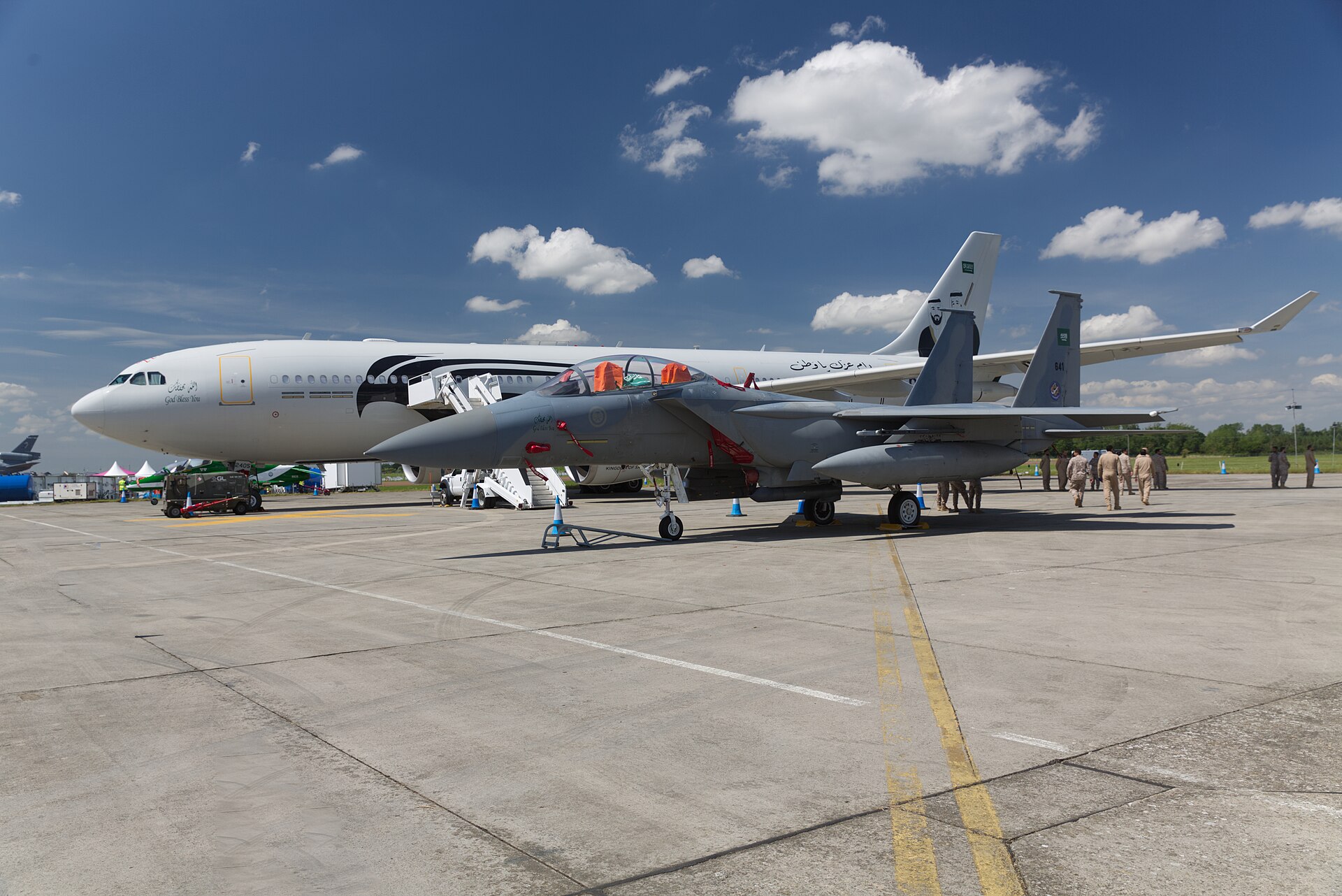
The Royal Saudi Air Force is the fourth-largest in the Middle East and one of the most heavily capitalised in the world. Saudi Arabia’s annual defence budget exceeds $75 billion according to the International Institute for Strategic Studies, making it the fifth-highest military spender globally in absolute terms and the highest as a proportion of GDP among major economies. The question is not whether Saudi Arabia possesses the hardware to strike Iran — it is whether that hardware, and the personnel operating it, can be effectively wielded in a complex offensive campaign against a country with significant air defences of its own.
| Aircraft Type | Role | Quantity | Combat Radius | Key Capabilities |
|---|---|---|---|---|
| F-15SA Strike Eagle | Multirole strike | 84 | ~1,270 km | AESA radar, conformal fuel tanks, JDAM/Paveway/SLAM-ER |
| F-15S/SR Strike Eagle | Strike/air superiority | ~70 | ~1,100 km | Being upgraded to SA standard; precision-guided munitions |
| F-15C/D Eagle | Air superiority | ~55 | ~1,000 km | AIM-120 AMRAAM, AIM-9X; aging but still operational |
| Eurofighter Typhoon | Multirole | 72 | ~1,390 km | Storm Shadow cruise missile capability; Tranche 2/3 |
| Tornado IDS | Precision strike | 80 | ~1,390 km | Upgraded to GR4 standard; Paveway IV, Brimstone |
| A330 MRTT | Aerial refueling | 6 | N/A | Each can refuel 6 fighters simultaneously; extends combat radius to 2,500+ km |
The RSAF’s approximately 210 F-15 variants make it the second-largest F-15 fleet in the world after the United States, according to a 2026 assessment by Key.Aero. The F-15SA — the most advanced variant in service anywhere — carries the APG-63(V)3 active electronically scanned array radar, can deliver AGM-84H SLAM-ER standoff land-attack missiles at ranges exceeding 270 kilometres, and features an infrared search-and-track system that allows it to detect and engage targets without emitting radar signals. These are not defensive interceptors. They are purpose-built for deep-strike missions into defended airspace.
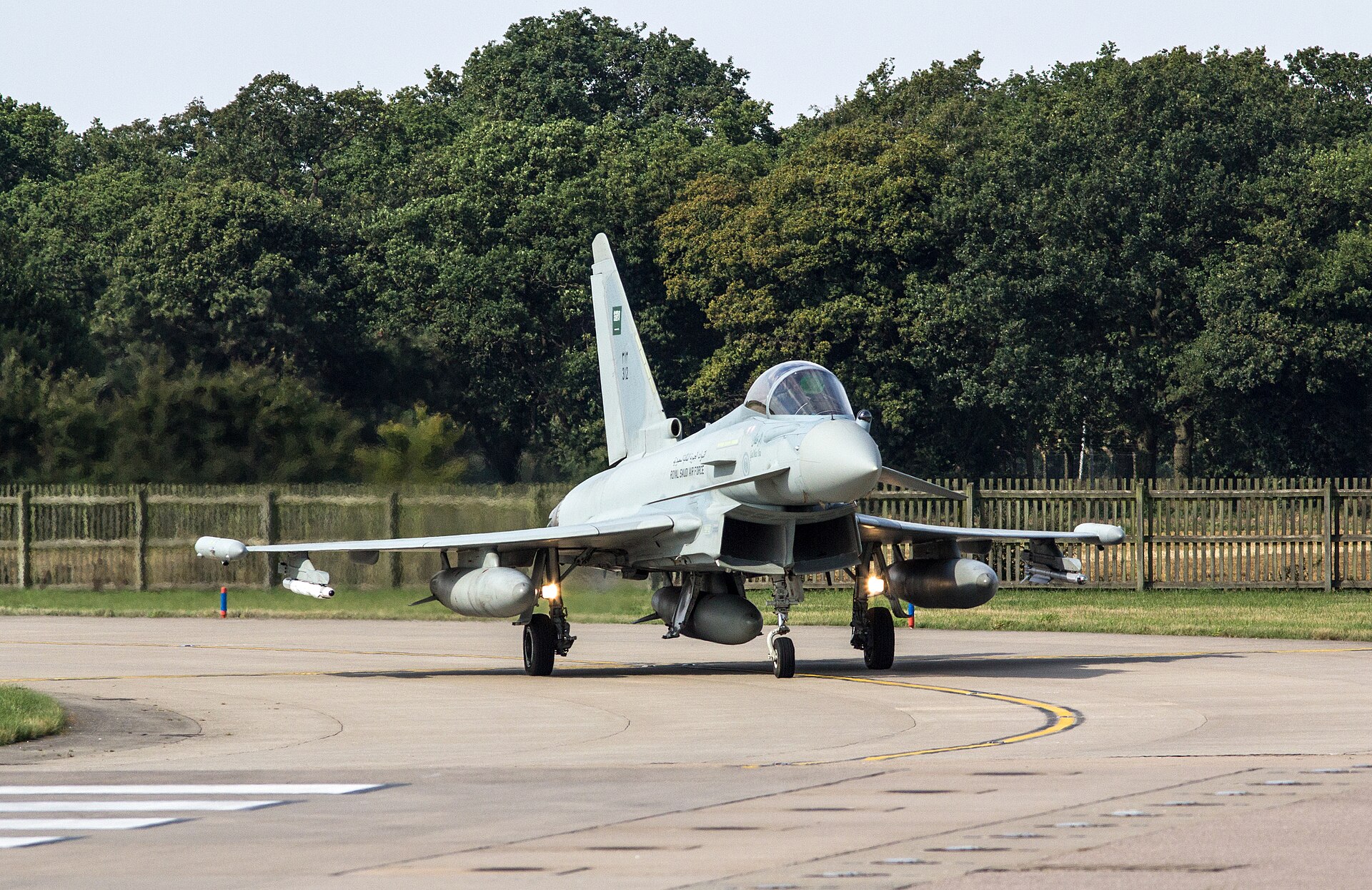
The 72 Eurofighter Typhoons, delivered between 2009 and 2017, add a European dimension to Saudi strike capability. The Typhoon’s integration with the Storm Shadow/SCALP EG cruise missile — a stealth weapon with a range of over 500 kilometres — gives the RSAF a standoff strike option that would not require Saudi pilots to penetrate Iranian airspace at all. The 80 Tornado IDS aircraft, though older, have been upgraded to the equivalent of the British GR4 standard and remain highly effective precision-strike platforms carrying Paveway IV guided bombs and Brimstone anti-armour missiles.
Beyond manned aircraft, Saudi Arabia maintains the Royal Saudi Strategic Missile Force, a secretive branch operating from at least three bases — Al-Sulayyil, Al-Jufayr, and Al-Watah — in the Kingdom’s central desert. The force is equipped with Chinese-supplied DF-21 medium-range ballistic missiles, according to the IISS, with a range of approximately 1,770 kilometres. The number of operational missiles remains classified, but analysts at the Nuclear Threat Initiative and Jane’s Defence have estimated the inventory at between 30 and 120 DF-21s, with potential domestic production capability established with Chinese technical assistance since 2021. These missiles can reach every major city in Iran, including Tehran, Isfahan, and Shiraz, from Saudi territory without the need for air refueling or overflight rights.
Could Saudi Fighter Jets Reach Iranian Targets Without American Help?
Geography is on Saudi Arabia’s side. The straight-line distance from Dhahran — the RSAF’s largest Eastern Province base — to Tehran is approximately 1,050 kilometres. To Bandar Abbas, Iran’s principal naval base on the Strait of Hormuz, it is roughly 500 kilometres. To Isfahan, home to Iran’s principal nuclear enrichment facilities, the distance is approximately 1,200 kilometres. Every one of these targets falls within the unrefueled combat radius of the F-15SA, the Eurofighter Typhoon, and the Tornado IDS.
| Saudi Base | Iranian Target | Distance (km) | Within F-15SA Range? | Within Typhoon Range? |
|---|---|---|---|---|
| Dhahran (Wing 11) | Bandar Abbas | ~500 | Yes | Yes |
| Dhahran (Wing 11) | Isfahan (nuclear) | ~1,200 | Yes (marginal) | Yes |
| Dhahran (Wing 11) | Tehran | ~1,050 | Yes | Yes |
| King Fahd (Taif) | Bushehr (reactor) | ~1,100 | Yes | Yes |
| Prince Sultan (Al-Kharj) | Shiraz | ~900 | Yes | Yes |
| Hafr al-Batin (Wing 15) | Kharg Island (oil) | ~400 | Yes | Yes |
With the six Airbus A330 MRTT aerial refueling tankers in its fleet, the RSAF could extend the combat radius of its strike packages to well over 2,500 kilometres — enough to reach any point in Iran and return. The tankers can simultaneously refuel six fighters using a combination of boom and probe-and-drogue systems, meaning a single MRTT sortie could support an entire strike package. But air refueling in contested airspace, near Iranian air defences, would significantly increase the risk profile of any mission.
The more relevant constraint is not range but the suppression of enemy air defences. Iran operates a layered air defence network that includes Russian-supplied S-300PMU-2 batteries, domestically produced Bavar-373 systems (which Iran claims are equivalent to the S-300), and the Khordad 15 medium-range system. The S-300 in particular, deployed around nuclear sites and Tehran, can engage targets at altitudes up to 30 kilometres and ranges of 200 kilometres. An RSAF strike package would need to suppress or destroy these systems before delivering ordnance on high-value targets — a mission set known as SEAD (Suppression of Enemy Air Defences) that the RSAF has trained for but never executed in combat.
This is where American support becomes not optional but essential. The US Air Force operates dedicated SEAD platforms — the EA-18G Growler and the F-16CJ equipped with AGM-88 HARM anti-radiation missiles — that the RSAF does not possess. Without American electronic warfare and SEAD support, Saudi pilots flying into Iranian airspace would face a defence network that, while degraded by three weeks of US and Israeli strikes, retains significant residual capability. The United States has been systematically targeting Iranian air defences since 28 February, but Pentagon briefings have acknowledged that an estimated 40-60 percent of Iran’s S-300 batteries remain operational as of mid-March.
What Would Saudi Arabia Actually Strike in Iran?
If the order came, Saudi military planners would face a targeting hierarchy that reflects both military logic and political constraints. Former Saudi military officers and Western defence consultants who have worked with the Saudi Ministry of Defence describe three tiers of potential targets, each carrying different levels of escalation risk.
The first tier — lowest risk, highest military value — would be the IRGC drone production and launch facilities responsible for the daily attacks on Saudi territory. These include the Shahed-136 drone assembly plants in Isfahan province and the forward-deployed launch sites in Iran’s southwestern Khuzestan region, close to the Iraqi border. Striking these targets could be framed as self-defence under Article 51 of the UN Charter, and would directly reduce the threat to Saudi civilians and oil infrastructure.
The second tier would encompass IRGC Navy bases along the Persian Gulf coast, particularly at Bandar Abbas, Bushehr, and Jask. These facilities house the fast attack craft, midget submarines, and anti-ship missile batteries that Iran has used to enforce its Hormuz blockade. Striking them would serve both Saudi self-defence and the broader coalition objective of reopening the Strait — but would cross a threshold from defensive retaliation to active participation in the US-led campaign.
The third tier — highest risk, most politically sensitive — would include Iranian ballistic missile storage and launch facilities, command-and-control nodes, and IRGC ground force positions. These targets overlap with the US and Israeli target sets, and striking them would make Saudi Arabia a full co-belligerent in what Tehran frames as a war of aggression against the Islamic Republic. Bernard Haykel, the Princeton professor who maintains regular contact with MBS and has analysed the Crown Prince’s strategic calculus in Bloomberg interviews, has noted that MBS harbours deep concerns about the consequences of Iran’s complete state collapse — a scenario that striking third-tier targets could accelerate.
The Saudi Strike Decision Matrix
The decision facing Mohammed bin Salman can be mapped across five dimensions, each of which must be weighed independently before a composite assessment emerges. Analysis of Saudi statements, diplomatic communications, and military dispositions across the first 24 days of the conflict reveals a strikingly consistent pattern: every dimension that favours striking is counterbalanced by a corresponding risk that counsels restraint.
| Dimension | Case for Striking | Case for Restraint | Current Weight |
|---|---|---|---|
| Military effectiveness | RSAF can reach all Iranian targets; US/Israeli strikes have degraded Iranian air defences | RSAF has never conducted SEAD operations; Yemen showed coordination weaknesses | Slightly favours restraint |
| Diplomatic leverage | Entering the war strengthens Saudi claim on postwar security architecture | Restraint preserves Saudi Arabia’s position as victim, not aggressor; maximises sympathy from BRICS and Global South | Strongly favours restraint |
| Economic risk | Destroying Iranian drone capability reduces future attacks on oil infrastructure | Iranian escalation could target Yanbu pipeline, desalination plants; oil exports already at 4.2m bpd via Red Sea | Strongly favours restraint |
| Coalition politics | US privately welcomes Saudi participation; $16B arms deal creates expectation of reciprocity | UK, France, Pakistan deployed defensively; Saudi offensive action may fracture defensive coalition | Balanced |
| Domestic legitimacy | Saudi public anger at Iranian attacks is mounting; drone strikes on residential areas fuel demand for action | MBS’s social contract is economic prosperity, not military glory; war casualties would break the compact | Slightly favours restraint |
The matrix reveals that four of five dimensions currently favour restraint, with only the coalition politics dimension evenly balanced. This explains why Saudi Arabia has not struck Iran despite possessing the means and the provocation — and why, critically, the calculation is not static. Every additional Iranian attack shifts the domestic legitimacy dimension toward action. Every failed interception, every civilian casualty, every strike on critical infrastructure erodes the case for patience.
The framework also reveals the tipping-point scenario: if Iran were to successfully strike a major desalination plant, killing significant numbers of civilians and threatening the water supply of millions, the domestic legitimacy dimension would flip decisively toward action, and the composite calculation would shift from restraint to strike. Saudi Arabia derives approximately 70 percent of its drinking water from desalination, according to the Saline Water Conversion Corporation, and a successful attack on even one of the major East Coast facilities would create an immediate humanitarian crisis that no amount of strategic patience could justify.
Why Has MBS Not Ordered a Strike on Iran?
The Crown Prince’s restraint is not passivity — it is the most deliberate strategic decision of his tenure. Analysis of MBS’s diplomatic communications, public statements through intermediaries, and the pattern of Saudi military deployments across the first 24 days reveals a coherent doctrine that senior Gulf security officials privately describe as “strategic absorption.”
MBS has spoken regularly with US President Donald Trump since the war began, according to the New York Times and Al Arabiya reporting. The substance of those calls, according to White House officials cited by the Jerusalem Post, is that MBS has urged Trump to “keep hitting the Iranians hard” — a formulation that reveals the Crown Prince’s preferred posture. He wants Iran punished. He wants the IRGC’s capability degraded. He simply wants the United States and Israel to do it.
This is rational self-interest, not cowardice. By allowing the US and Israel to bear the military burden while Saudi Arabia absorbs Iranian retaliation, MBS achieves several objectives simultaneously. He preserves Saudi Arabia’s diplomatic positioning with China and Russia, both of which have condemned the US-Israeli strikes but have not criticised the Gulf states for failing to prevent them. He maintains the Kingdom’s status as a victim of unprovoked Iranian aggression — a framing that has unified the GCC, secured Pakistan’s deployment of troops to Saudi soil, and brought British, French, and Greek military assets to the region under defensive mandates. And he avoids putting Saudi military personnel in harm’s way in an offensive campaign whose outcome is uncertain.
The UK Prime Minister’s call with MBS on 6 March, confirmed by Downing Street, resulted in additional British fighter jets, helicopters, and a destroyer being sent to the Gulf — all framed as defensive support for a kingdom under attack. Pakistan’s Prime Minister Shehbaz Sharif visited Jeddah on 12 March and pledged to defend Saudi Arabia. Kuwait’s Crown Prince Khaled al-Hamad al-Sabah called MBS to condemn Iranian attacks on GCC countries. Every one of these diplomatic gains depends on Saudi Arabia remaining a victim, not becoming a combatant.
Both Saudi Arabia and the UAE harbour significant concerns about Iran’s regional ambitions, but also recognise the potential for widespread instability if Iran were to experience a complete internal collapse, creating a delicate balancing act.
Bernard Haykel, Princeton University, Bloomberg Interview, March 2026
There is also the fear of what comes after. If Saudi strikes accelerate Iran’s state collapse — a scenario that the death of Supreme Leader Khamenei and the shaky succession of his son Mojtaba has already made plausible — the resulting power vacuum could be worse than the current regime. A fragmented Iran, with IRGC factions controlling different regions and weapons stockpiles, could pose a more unpredictable and dispersed threat to Saudi Arabia than the current centralised command structure. As the Middle East Forum assessed on 5 March, Iran’s attacks on Arab states have already backfired by unifying the Gulf against Tehran — but that unity depends on a recognisable Iranian state to oppose.
What Did the Yemen War Teach Saudi Arabia About Offensive Campaigns?
The shadow of Operation Decisive Storm, launched in March 2015 against Houthi forces in Yemen, hangs over every discussion of Saudi offensive capability in Riyadh. The Yemen campaign was supposed to last weeks. It lasted years. It was supposed to demonstrate Saudi military modernisation. It exposed critical weaknesses instead.
Anthony Cordesman, the pre-eminent CSIS analyst of Gulf military capabilities, assessed that Saudi Arabia “exhibited only limited to moderate capability to cooperate and fight effectively” in Yemen. The RSAF conducted thousands of airstrikes but struggled with target selection, battle damage assessment, and civil-military coordination. Civilian casualty incidents — many of them documented by the United Nations Panel of Experts — eroded international support and triggered arms export restrictions from key supplier states including Germany, Canada, and briefly the United Kingdom.
The operational lessons were specific and damning. The RSAF had not developed a “suitable overall battle management concept,” according to Cordesman’s CSIS assessment, and had focused more on acquiring the most advanced individual weapons systems than on creating the integrated command-and-control architecture needed to operate them as a coherent force. Joint warfare capabilities between the air force, army, and navy remained underdeveloped. Interoperability between American, British, and French equipment — the three primary sources of Saudi arms — was hindered by incompatible data links, communications systems, and logistics chains.
A campaign against Iran would be an order of magnitude more complex than Yemen. Iran possesses a layered air defence network that the Houthis never had. It has an air force — though largely obsolete — that could contest Saudi airspace. It has ballistic missile capability that dwarfs Yemen’s modified Scud arsenal. And it has a geography of mountains, dispersed military facilities, and hardened underground bunkers that would require sustained precision-strike campaigns measured in weeks, not sorties.
Saudi military planners understand these limitations. The $3 billion F-15 sustainment programme approved by the US in early 2026 addresses maintenance readiness but not the deeper problems of force integration and joint operations. The World Defense Show in February 2026 — featuring 1,468 exhibitors from 89 countries, according to the General Authority for Military Industries — showcased Saudi Arabia’s ambition to build a domestic defence industrial base through the Saudi Arabian Military Industries (SAMI) corporation. But ambition and capability are separated by years of institutional development that the current crisis does not afford.
How Would Iran Respond to a Direct Saudi Attack?
The calculus of Iranian retaliation is the single most powerful argument against a Saudi offensive. Iran has demonstrated, across 24 days of conflict, that it can sustain a daily campaign of drone and missile strikes against Gulf targets. If Saudi Arabia crossed the threshold from absorbing those strikes to launching its own, Tehran would almost certainly escalate both the volume and the targeting of its retaliation.
The Responsible Statecraft analysis published in early March articulated what Gulf leaders already understood: Iran has repeatedly signalled that US bases in the region are legitimate targets, and any sustained campaign could see facilities in Qatar, the UAE, Saudi Arabia, and Bahrain come under intensified fire. The June 2025 attack on Al Udeid Air Base in Qatar — a precursor incident before the current war — demonstrated Iran’s willingness to strike coalition infrastructure directly.
Three specific Iranian escalation scenarios concern Saudi military planners most:
- A concentrated strike on Saudi desalination infrastructure along the Eastern Province coast. The Jubail desalination complex alone produces 1.4 million cubic metres of drinking water per day, serving several million people. Its destruction would create a humanitarian emergency within 48 hours.
- A sustained barrage against the Yanbu oil export terminal and the East-West pipeline pumping stations, which are distributed across 1,200 kilometres of desert and are difficult to defend simultaneously. Saudi Red Sea oil exports currently average 4.2 million barrels per day through Yanbu — nearly the Kingdom’s entire export volume since Hormuz closed.
- Activation of dormant IRGC proxy networks within Saudi Arabia’s Eastern Province, home to a significant Shia population and the majority of Saudi oil production. Iran has historically cultivated ties with dissident groups in the region, and a Saudi offensive could provide the pretext for internal destabilisation that Riyadh has long feared.
The March 20 drone strike on Yanbu — the first successful Iranian attack on the Red Sea coast — demonstrated that the third scenario is not hypothetical. Iran can already reach Saudi Arabia’s western infrastructure. An offensive that provoked further escalation could threaten the one export route keeping the Saudi economy functional.
What Would Change If Saudi Arabia Entered the War?
The decision to launch offensive strikes would transform Saudi Arabia’s position in the conflict from protected bystander to active co-belligerent, with cascading consequences across at least four domains.
The defensive coalition would fracture. The British, French, Pakistani, and Greek forces currently deployed to the Gulf are operating under defensive mandates. Their governments can justify protecting Saudi Arabia from unprovoked Iranian aggression; they cannot justify supporting a Saudi offensive against Iran without new parliamentary authorisations and political debates that none of those governments wants. The UK’s deployment of additional fighter jets after the PM’s 6 March call with MBS was explicitly framed as defensive — a framing that Saudi entry into the war would invalidate.
China and Russia, which have thus far limited their responses to rhetorical condemnation of the US-Israeli strikes while maintaining economic relationships with the Gulf states, would face pressure to take a harder line. Saudi Arabia’s massive oil-supply relationship with China — the Kingdom was Beijing’s largest crude supplier in 2025 — provides insulation against Chinese sanctions, but a Saudi offensive against Iran would complicate Beijing’s careful balancing act and could delay the economic partnerships that MBS has cultivated as a hedge against Western dependency.
The economic costs would be immediate and severe. Saudi Arabia’s stock market, the Tadawul, has already experienced significant volatility since the war began. An offensive posture would trigger capital flight, increase insurance premiums on all Saudi assets (not just those in the Eastern Province), and potentially prompt downgrades of sovereign debt. The Public Investment Fund, with over $930 billion in assets, would face mark-to-market losses across its global portfolio as markets priced in expanded Gulf conflict.
Most significantly, Saudi entry into the war would end the possibility of Saudi Arabia serving as a postwar mediator or broker. MBS has positioned the Kingdom — through the FII Priority Summit in Miami, through diplomatic engagement with multiple parties, through the restraint itself — as a power that can help shape the postwar order. A country that bombs Iran cannot broker its reconstruction. The Responsible Statecraft analysis noted that Gulf leaders recognise “neutralising the current regime could potentially translate into the unparalleled hegemony of Israel” — an outcome that serves neither Saudi nor broader Arab interests.
The Contrarian Case for Saudi Restraint as a Strategic Weapon
The conventional narrative frames Saudi restraint as a sign of weakness, military incapability, or political paralysis. The evidence supports a radically different interpretation: Saudi Arabia is winning the war precisely because it refuses to fight it.
Consider the ledger after 24 days. Saudi Arabia has suffered two civilian fatalities, minor infrastructure damage, and a temporary refinery shutdown. In exchange, it has received: a commitment of US military protection including the deployment of additional Patriot and THAAD batteries; British, French, and Greek combat aircraft operating in Saudi airspace; Pakistani ground troops on Saudi soil; the expulsion of Iranian diplomatic staff (a move that costs Riyadh nothing and signals resolve); an international consensus that Iran is the aggressor; and a strengthened negotiating position for whatever postwar security architecture emerges.
Iran, by contrast, has expended hundreds of ballistic missiles and over a thousand drones — weapons that take months to replenish — against a country that has not fired back, achieving negligible military effect while unifying the entire GCC against Tehran. The Middle East Forum assessment was explicit: “Attacking Gulf Arab states was a huge mistake for Iran.” Before the war, Gulf states had adopted a narrative that viewed Israel as a greater threat to regional stability than Iran. That narrative has “completely collapsed” under the weight of Iranian missiles landing on Arab soil.
The Gulf Cooperation Council issued an unprecedented joint statement with the United States condemning Iran’s “indiscriminate and reckless missile and drone attacks against sovereign territories across the region.” Qatar — which had maintained closer ties with Tehran than any other Gulf state — shot down two Iranian Su-24 bombers, the first time any Gulf state has engaged Iranian aircraft. These are strategic victories that Saudi Arabia achieved not by attacking Iran but by absorbing Iran’s attacks and letting the world see who the aggressor is.
The restraint strategy also serves MBS’s domestic agenda. The social contract that underpins Vision 2030 — economic transformation in exchange for social compliance — depends on stability and prosperity, not military glory. Saudi citizens did not sign up for a war. They signed up for entertainment cities, tourist resorts, a tech economy, and a future beyond oil. MBS returning body bags from Iran would fracture the compact in ways that drone interceptions do not. As long as the air defence shield holds, restraint is the strategy that preserves both the Kingdom’s international position and its domestic political architecture.
Where Is the Breaking Point?
Restraint has limits, and those limits are closer than the diplomatic language suggests. Three tripwires could transform Saudi Arabia from a patient absorber of punishment into an active combatant overnight.
The first is a mass-casualty event on Saudi soil. The Al-Kharj strike killed two people — both migrant workers, in a sparsely populated area. If an Iranian missile or drone were to strike a populated urban area in Riyadh, Jeddah, or Dammam, killing dozens or hundreds of Saudi nationals, the political pressure on MBS to respond with force would become irresistible regardless of strategic calculations. Public anger, amplified by social media in a young population with 99 percent smartphone penetration, would demand visible retaliation.
The second is a successful attack on critical water or power infrastructure. Saudi Arabia’s dependence on desalination creates a vulnerability with no equivalent in any other major country. A single successful strike on the Jubail or Ras Al-Khair desalination complexes could trigger water rationing for millions of people within days. This is not an economic inconvenience — it is an existential threat. MBS could not maintain restraint while citizens lacked drinking water, and every military and intelligence official in Riyadh knows it.
The third is an American request for direct Saudi participation. The Trump administration has thus far been content with Saudi Arabia’s provision of basing access — the opening of King Fahd Air Base in Taif to US operations was confirmed on 21 March. But if the war expands, if American casualties mount, or if Trump’s domestic political calculus requires demonstrating broad coalition participation, Washington could press Riyadh to contribute more than airbases. A direct American request, tied to the ongoing $16 billion arms relationship and the implicit security guarantee that underpins it, would be exceptionally difficult for MBS to refuse.
The diplomatic expulsion of Iran’s military attaché on 21 March was described by Saudi Foreign Ministry sources as a “penultimate step.” The word “penultimate” was not accidental. It signals that one step remains before Saudi Arabia considers its diplomatic options exhausted and its military options activated. What that final step looks like — and when it comes — may be the most consequential decision of Mohammed bin Salman’s career.
Frequently Asked Questions
Has Saudi Arabia ever attacked Iran directly?
Saudi Arabia has never launched a direct military strike against Iran. The two countries have engaged in proxy conflicts — most notably in Yemen, where Saudi-led coalition forces fought Iranian-backed Houthi rebels from 2015 to 2023 — but have never exchanged direct military fire. The current crisis, in which Iran has struck Saudi territory while Riyadh has refrained from retaliating, is unprecedented in the bilateral relationship.
How many fighter jets does Saudi Arabia have?
The Royal Saudi Air Force operates approximately 361 combat aircraft, including roughly 210 F-15 variants (F-15C/D, F-15S, and F-15SA), 72 Eurofighter Typhoons, and 80 Panavia Tornado IDS strike aircraft, according to defence assessments from the IISS Military Balance and open-source databases. This makes it one of the ten largest air forces in the world by number of advanced combat aircraft.
Could Saudi Arabia’s missiles reach Tehran?
Yes. Saudi Arabia’s DF-21 medium-range ballistic missiles, operated by the Royal Saudi Strategic Missile Force, have a range of approximately 1,770 kilometres — sufficient to reach Tehran (approximately 1,050 km from Dhahran), Isfahan (1,200 km), and every other major Iranian city. The RSAF’s fighter aircraft, particularly the F-15SA and Eurofighter Typhoon, can also reach Tehran within their unrefueled combat radius.
Why is Saudi Arabia not fighting back against Iran?
Crown Prince Mohammed bin Salman has adopted a strategy of “strategic absorption” — absorbing Iranian attacks while allowing the United States and Israel to conduct the offensive campaign. This preserves Saudi Arabia’s diplomatic standing as a victim of aggression, maintains the defensive coalition of Western and regional forces, avoids risking Saudi military casualties, and positions the Kingdom for a role in the postwar order. The strategy depends on the continued effectiveness of the Saudi air defence shield.
What would happen if Saudi Arabia attacked Iran?
A Saudi offensive would transform the Kingdom from a protected bystander to an active co-belligerent, likely triggering intensified Iranian retaliation against Saudi oil infrastructure, desalination plants, and civilian areas. It would fracture the defensive coalition of Western forces operating under defensive mandates, complicate Saudi relationships with China and Russia, trigger economic consequences including capital flight and sovereign debt concerns, and end Saudi Arabia’s ability to serve as a postwar mediator. The strategic calculation currently favours restraint, though multiple tripwires could change that assessment rapidly.
That postwar mediator role, however, depends entirely on what kind of peace emerges. A deal negotiated between Washington and Tehran without Saudi input could leave the Kingdom facing a strategic settlement worse than the war it endured.
How effective is Saudi Arabia’s air defence system?
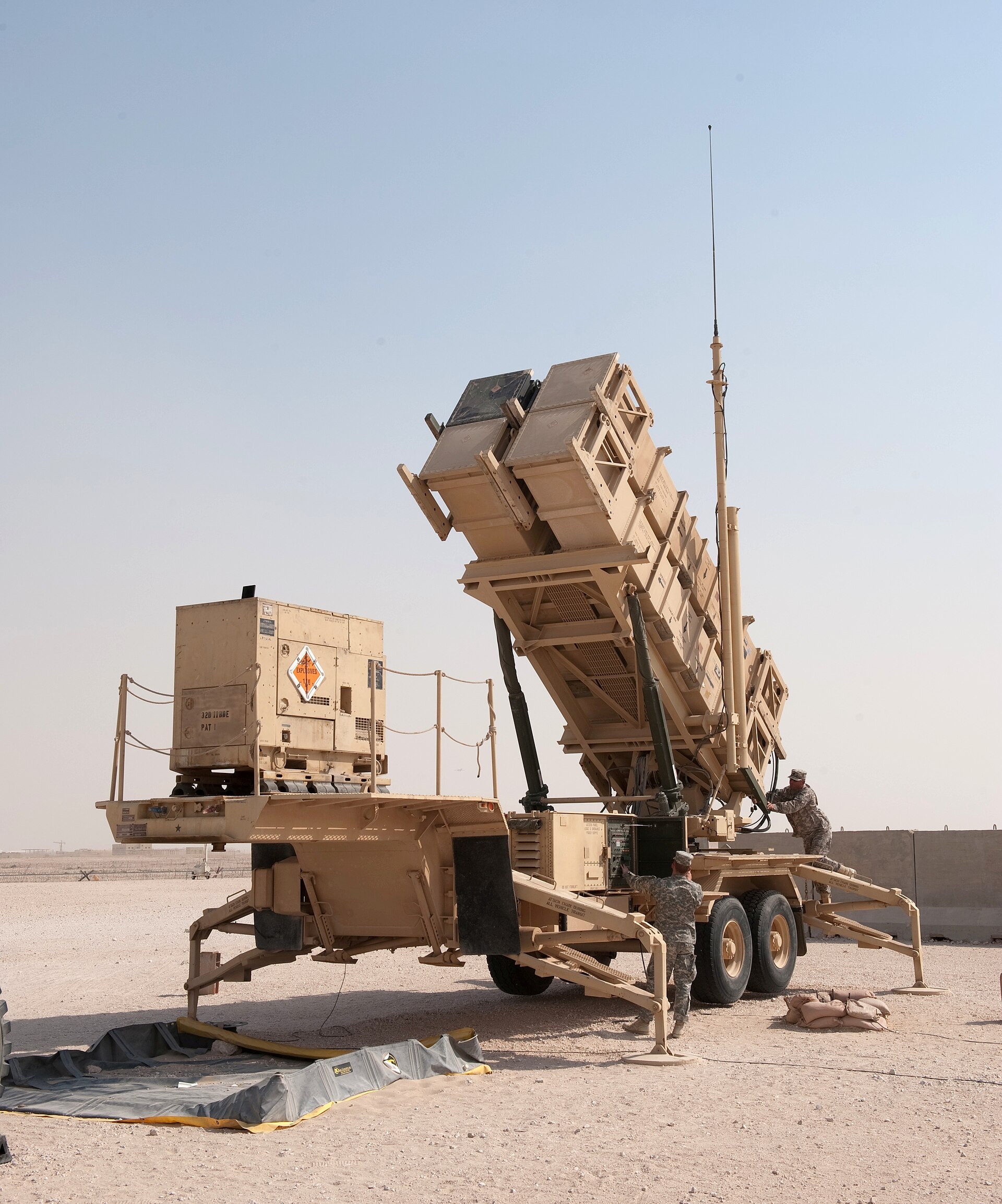
Saudi Arabia operates a layered air defence network including US-supplied Patriot PAC-3 and THAAD batteries, French Shahine systems, and British Rapier units, supplemented since the war began by US-operated Patriot and THAAD reinforcements. The system has intercepted the vast majority of Iranian missiles and drones, including a barrage of 60 drones and 3 ballistic missiles targeting Riyadh on 22 March. However, the system is not impenetrable — debris from interceptions has caused damage, and the sheer volume of daily attacks is consuming interceptor stocks at a rate that raises long-term sustainability questions.