RIYADH — Thirty-one days without reliable air travel has turned Saudi Arabia from the Middle East’s most connected economy into something approaching a walled state. The aviation shutdown that began when Iran launched its first strikes on February 28 was supposed to be temporary — a few days of disruption while the missiles flew — but no major airline has set a return date, EASA has told operators to avoid Saudi airspace entirely, and the US Embassy is ordering non-essential personnel to leave. What started as a safety precaution is becoming a structural crisis that threatens every pillar of the Kingdom’s economic model.
Saudi Arabia handled 128 million airport passengers in 2024, according to the World Travel and Tourism Council. That throughput — roughly 350,000 people a day moving through Riyadh, Jeddah, Dammam, and Medina — was not a convenience. It was the circulatory system of an economy built on the premise that the Kingdom would be open, reachable, and globally integrated. With that system strangled, the damage is compounding daily across tourism, expat labour, conferences, Hajj logistics, and foreign direct investment in ways that the missile-strike headlines are drowning out.
Table of Contents
- How Many Flights Has Saudi Arabia Lost in 31 Days?
- The Airlines That Left and the Regulators Who Pushed Them
- What Does $240 Million a Day in Lost Tourism Look Like?
- The Expat Economy Cannot Function by Email
- How the Conference Shutdown Kills Soft Power
- Can 1.8 Million Hajj Pilgrims Reach Makkah Without Flights?
- Why Can’t Airlines Just Resume Flying When the Missiles Stop?
- Is This Worse Than COVID for Saudi Aviation?
- Riyadh Air and the Death of a Launch Window
- Frequently Asked Questions
How Many Flights Has Saudi Arabia Lost in 31 Days?
More than 11,000 flights into, out of, and within the Middle East have been cancelled since February 28, affecting over one million passengers, according to Cirium aviation analytics data cited by Arab News. Saudi airports have borne a disproportionate share, with daily cancellations running into the dozens and delays into the hundreds across all five major terminals.
On a single day in late March, the Air Traveler Club recorded 70 flight cancellations at Saudi airports, stranding thousands at Riyadh’s King Khalid International and Jeddah’s King Abdulaziz International. On another day, Travel and Tour World documented 63 cancellations and 604 delays across Jeddah, Riyadh, Medina, Dammam, and Al-Jouf.
Those are the numbers that get reported. The numbers that don’t are the flights that were never scheduled in the first place. Airlines plan routes months ahead. When British Airways, Lufthansa Group, Air France, and Cathay Pacific pulled their Saudi services, they didn’t just cancel existing bookings — they stopped selling future seats. The booking pipeline, which feeds airport revenue, hotel occupancy, car hire, and downstream spending, dried up weeks before the flights would have operated.
Before the war, 97 airlines operated to Saudi airports from 214 airports in 70 countries, according to Saudi General Authority of Civil Aviation data. That network represented decades of route development, bilateral air service agreements, and marketing spend by the Saudi tourism ministry. Each cancelled route is not a tap that gets turned back on when the airspace reopens. It is a commercial relationship that has to be rebuilt — slots renegotiated, crews retrained on the route, insurance repriced, and booking demand rebuilt from zero. The early disruption of 293 flights in a single day was the first tremor of what has become a sustained collapse.
The Airlines That Left and the Regulators Who Pushed Them
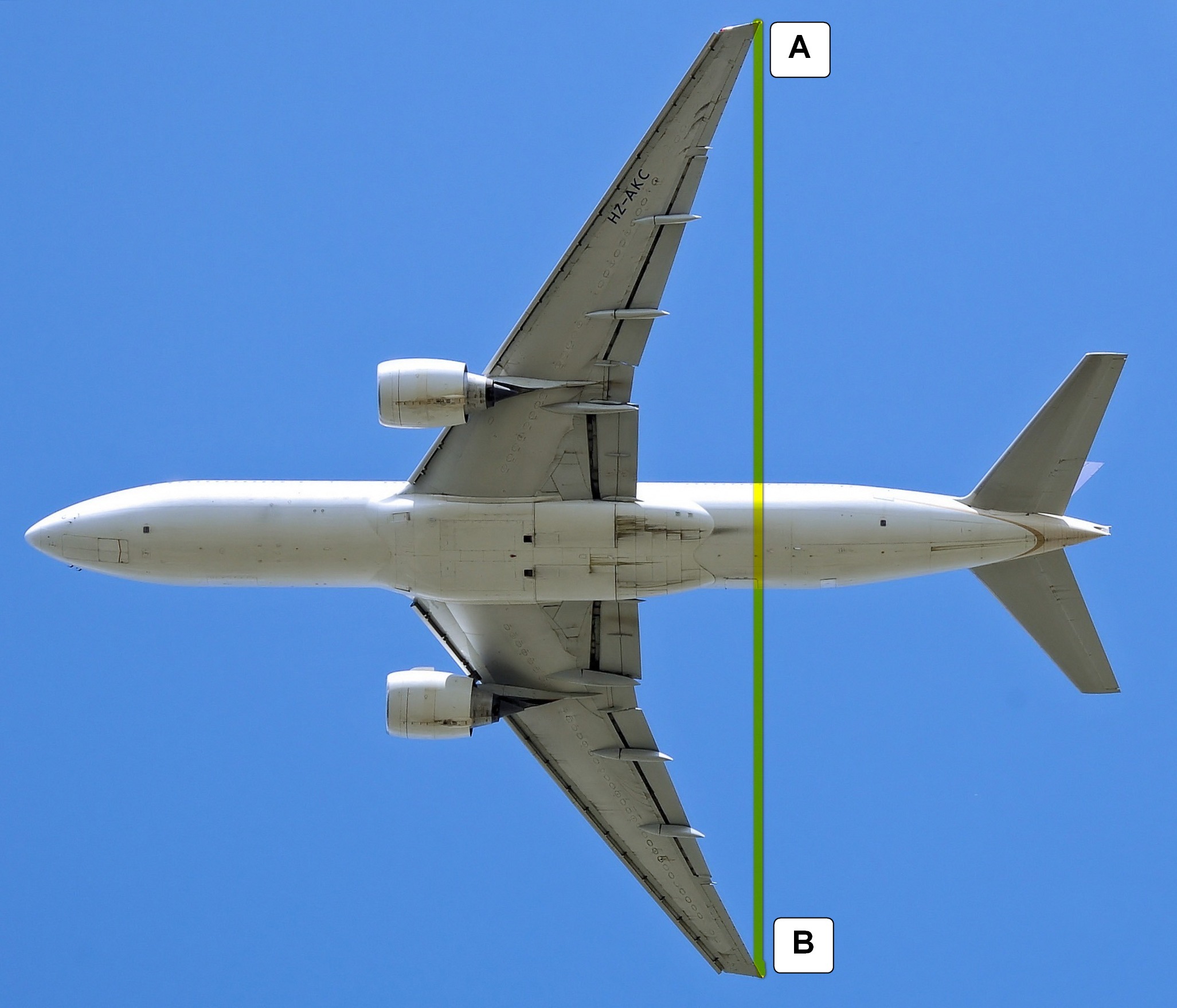
The European Union Aviation Safety Agency issued Conflict Zone Information Bulletin CZIB 2026-03-R5, instructing operators to avoid Saudi Arabian airspace with a narrow exception for southern Saudi airspace at Flight Level 320 or above. The FAA followed with its own NOTAM and Special Federal Aviation Regulation covering risks to civil aviation in the Persian Gulf region, including Saudi Arabia. Between them, the two regulators that govern most of the world’s long-haul fleet told airlines to stay away.
The carrier response has been sweeping. British Airways, Lufthansa and its subsidiaries (Swiss, Austrian, Brussels Airlines, Eurowings), Air France-KLM, Cathay Pacific, Scoot, LOT Polish, and Aegean Airlines have all suspended Saudi services. Cathay Pacific cited “regional operational safety concerns” when it pulled all flights to both Dubai and Riyadh, and set its suspension through April 30 — the furthest-out date any carrier has committed to, and one that still carries no guarantee of resumption.
The US State Department added institutional weight on March 8, ordering non-emergency government employees and family members to leave Saudi Arabia and elevating its travel advisory to Level 3 — “Reconsider Travel” — citing the risk of Iranian drone and missile strikes targeting the Kingdom. When the American embassy tells its own staff to leave, the insurance industry and corporate travel departments notice. PwC closed its offices in Saudi Arabia, Qatar, the UAE, and Kuwait. Citigroup evacuated its Dubai office. The professional services corridor that Vision 2030 depends on for deal execution and audit work is operating remotely, if at all.
What Does $240 Million a Day in Lost Tourism Look Like?
Saudi Arabia’s tourism sector generated SAR 300 billion — roughly $80 billion — from 29 million international arrivals in 2025, according to Saudi Ministry of Tourism figures reported by Arab News. The WTTC’s broader Middle East estimate of $800 million per day in regional tourism losses puts Saudi Arabia’s share at roughly $240 million daily.
Travel and tourism contributed over 10 percent of Saudi GDP in 2025, with sector employment reaching 2.7 million jobs, per WTTC data. That spending, annualised, works out to approximately $219 million entering the Saudi economy every day through tourism alone. With the aviation shutdown now in its second month and no airline offering a resumption date, that daily figure is accumulating into a loss measured in billions.
The hotel sector has been devastated. Eti Bhasin, Executive Director of Majestic Hotels UAE, told Arab News in March that the industry was seeing “over 80 percent cancellations coming in for the next two weeks owing to the ongoing war situation.” That figure was from early in the crisis. Four weeks later, with no end date in sight and airlines extending cancellations through April, the cancellation rate has had nowhere to go but deeper. Hotels that took on debt to expand for Vision 2030’s tourism targets are now servicing that debt with empty rooms.
“Over 80 percent cancellations coming in for the next two weeks owing to the ongoing war situation.”
Eti Bhasin, Executive Director, Majestic Hotels UAE, Arab News, March 2026
The 2.7 million jobs in travel and tourism are not abstract. They are hotel staff in Jeddah, tour guides in Al-Ula, car rental agents in Riyadh, restaurant workers in the Diriyah entertainment district. Many are on the short-term contracts that characterise Saudi Arabia’s tourism workforce — easy to hire when demand surges, easy to let go when it vanishes. The Kingdom spent years building an entertainment and tourism sector from scratch, recruiting international hospitality brands and training a generation of Saudi workers for a service economy. That workforce is now idle, and every week it stays idle makes it harder to reconstitute.
The Expat Economy Cannot Function by Email
Saudi Arabia’s non-Saudi population sits at approximately 13 to 16.4 million people — 44.4 percent of the total population — and accounts for roughly 80 percent of the private sector workforce, according to Global Media Insight and Vision 2030 AI data from 2025. That ratio is not a policy choice the government can reverse. It is a structural feature of an economy that industrialised faster than it could train domestic labour. Construction, oil services, healthcare, hospitality, retail, and logistics all run on foreign workers who arrived by plane and whose contracts, family visits, emergency travel, and eventual departures all depend on functioning aviation.
The shutdown cuts in both directions. Expats already in the country who need to leave — for family emergencies, contract endings, or because their governments told them to — face the situation that thousands of stranded foreign workers have already encountered: limited seats on the flights that do operate, prices inflated by scarcity and war-risk surcharges, and routes that now involve multi-stop diversions through Oman or East Africa. Expats outside the country who were due to arrive for new contracts or rotational shifts cannot get in. The labour pipeline that keeps Saudi industry staffed is backing up at both ends.
The professional services exit compounds the damage. The Big Four firms and global consultancies that closed their Saudi offices have not stopped working — they have relocated to London and Dubai, where their teams are available for video calls but not for the kind of in-room, face-to-face engagement that complex deals require. No major privatisation closes over Zoom. No infrastructure bond gets priced by a team that cannot visit the site.
How the Conference Shutdown Kills Soft Power
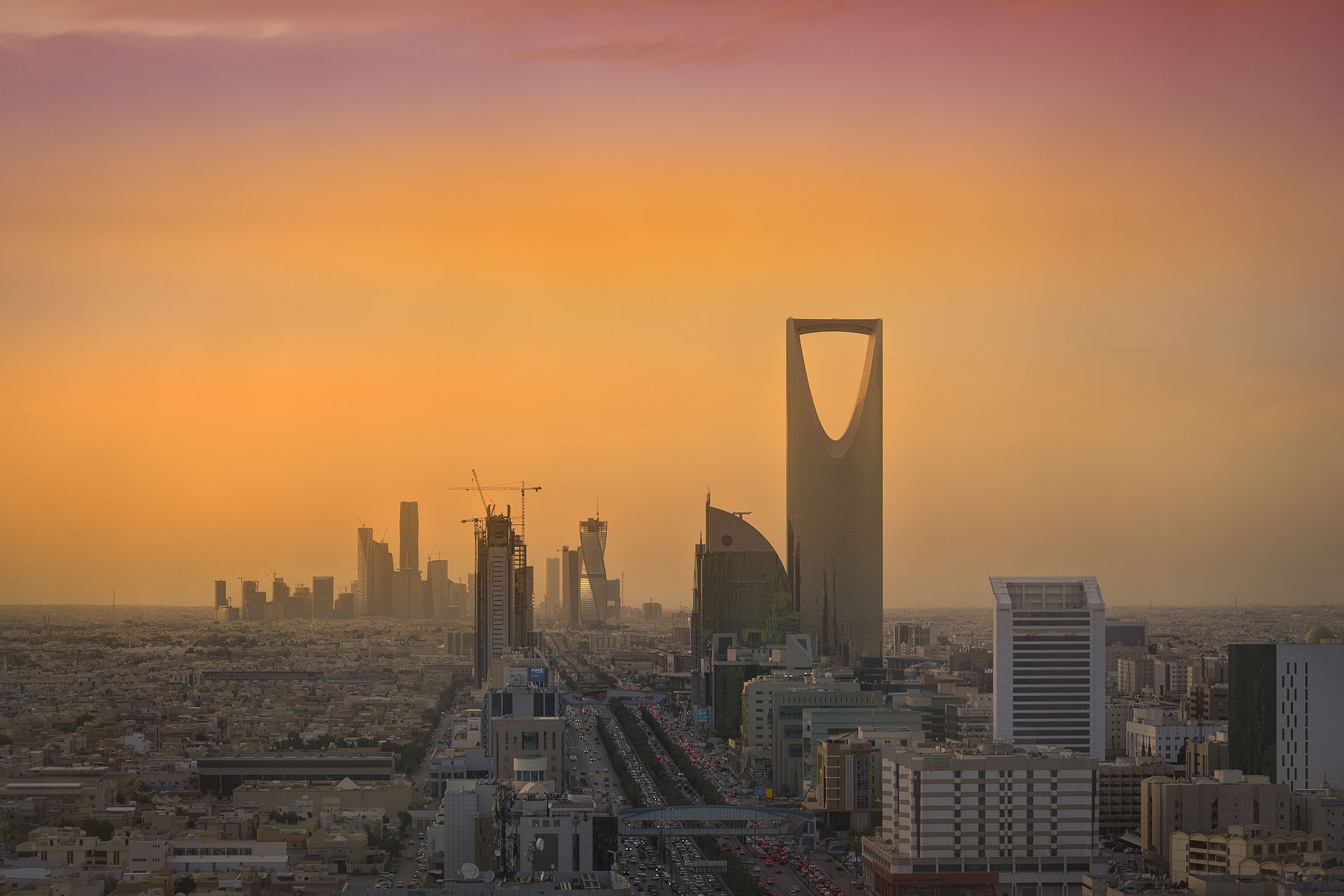
Saudi Arabia spent the past five years turning itself into a conference destination — hosting the Future Investment Initiative, the World Economic Forum, Formula 1, major boxing events, and dozens of sector-specific summits designed to signal that the Kingdom was open for business. According to Northbourne, an events consultancy, at least 15 large events in Saudi Arabia have been postponed or cancelled since the war began, as reported by AGBI.
The World Economic Forum, which had scheduled a meeting in Jeddah, announced a postponement. Its statement said the decision “reflects a commitment to convening the meeting under conditions that ensure its full strategic impact,” according to Bloomberg and Fortune reporting from March 24. The F1 Saudi Arabian Grand Prix, a centrepiece of the Kingdom’s sports diplomacy calendar, was cancelled — a single event that generated an estimated $100 million in local economic activity.
Conferences are not just revenue. They are the physical infrastructure of deal-making. The Future Investment Initiative — known colloquially as “Davos in the Desert” — exists because MBS understood that getting 6,000 executives, fund managers, and government officials into the same hotel for three days produces more investment commitments than a year of bilateral meetings. That logic works in reverse: every cancelled conference is a year’s worth of deals that won’t happen, partnerships that won’t form, and soft-power impressions that won’t be made. The reputational cost is harder to measure than the direct revenue loss, but it may be larger. Saudi Arabia cannot be the future of global business if global business cannot physically get there.
Can 1.8 Million Hajj Pilgrims Reach Makkah Without Flights?
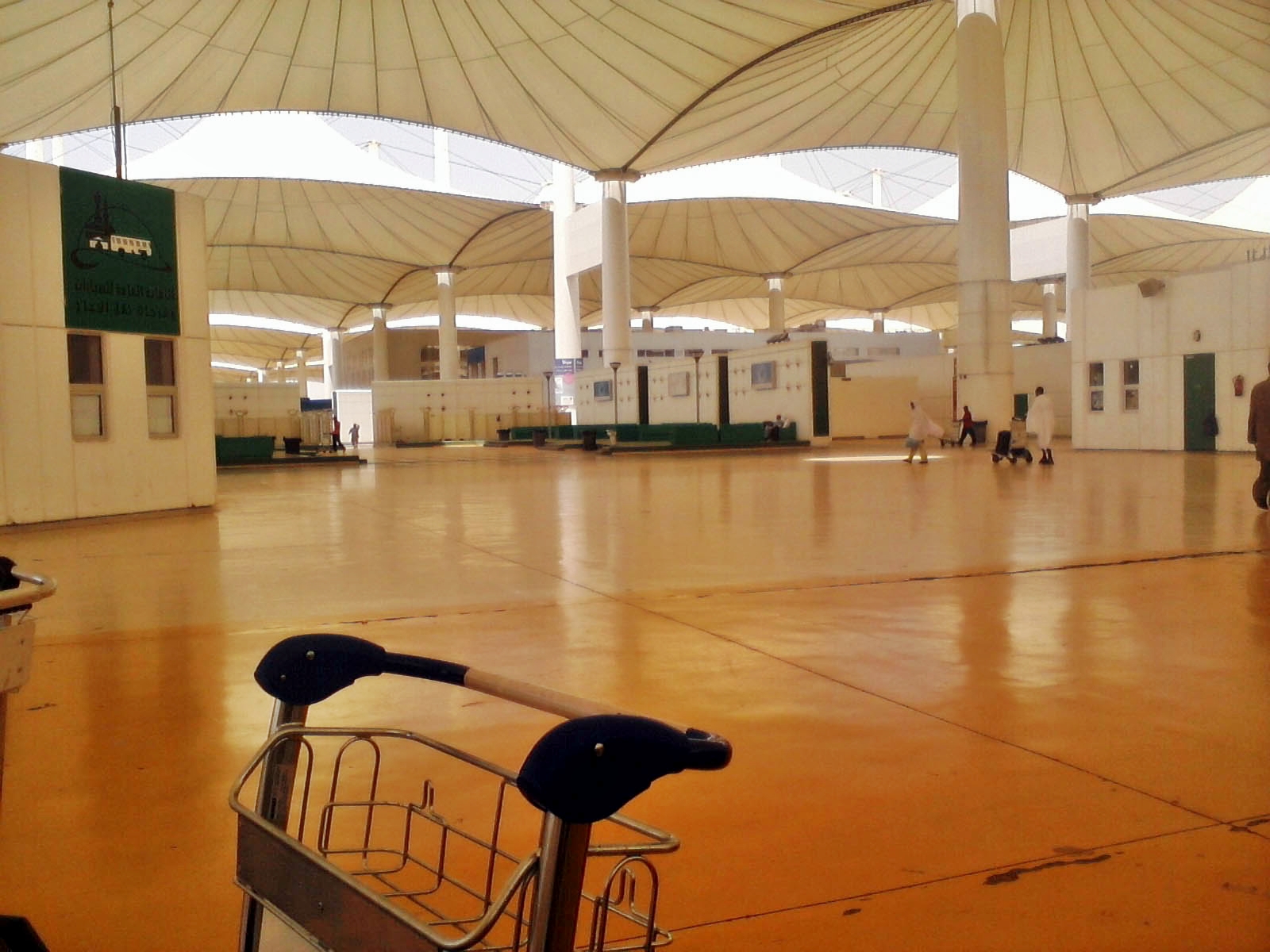
Almost certainly not at full scale. Hajj 2026 begins around June 4, with the first pilgrim groups from distant countries traditionally arriving in mid-April — roughly 18 days from now. In a normal year, 1.8 to 2.5 million international pilgrims arrive by air through Jeddah and Medina, both of which have dedicated Hajj terminals built for the annual surge.
The last time Hajj was severely disrupted was 2020, when COVID-19 restrictions forced Saudi Arabia to limit the pilgrimage to 1,000 domestic pilgrims — down from 2.5 million the previous year. The diplomatic and religious fallout was enormous. Saudi Arabia’s custodianship of the Two Holy Mosques is the deepest source of its legitimacy in the Muslim world, and restricting access to Makkah during the holiest rite in Islam strained relations with governments from Indonesia to Nigeria. The Kingdom does not want to repeat that experience, but the mathematics of moving 1.8 million people by air through a war zone with closed airspace and cancelled airline routes are brutal.
EASA’s directive permits flights only in southern Saudi airspace at Flight Level 320 and above. Jeddah sits in the western Hejaz region, technically outside the primary conflict zone in the Eastern Province and central Arabia where Iranian strikes have concentrated. A narrow operational window for Hajj flights may be possible — but it requires airlines to accept war-risk insurance premiums that have multiplied since February, with long-haul carriers facing six-figure surcharges per round-trip. Indonesia, India, Pakistan, Bangladesh, and Egypt — the five largest sources of Hajj pilgrims — are all long-haul routes where those premiums make the economics almost unworkable without state subsidies.
Why Can’t Airlines Just Resume Flying When the Missiles Stop?
Because a wall of insurance costs stands between Saudi Arabia and normal air connectivity even after the last missile lands. War-risk insurance premiums for Gulf flights have increased by 50 to 500 percent since February 28, according to Skift and AirGuide Business reporting, and underwriters will need months of quiet before they come down.
Indian carriers face additional costs of up to $120,000 per widebody round-trip. Private jet operators, who serve the executive and royal travel market, face surcharges of up to $50,000 per flight.
These are not temporary price spikes that drop when the news cycle moves on. Insurance underwriters at Lloyd’s of London and the major aviation reinsurers price war-risk based on actuarial models that incorporate the duration of conflict, the types of weapons deployed, and the proximity of strikes to civilian infrastructure. Iranian strikes have hit the Riyadh Diplomatic Quarter, the Eastern Province, Shaybah, and Prince Sultan Air Base — a geographic spread that encompasses Saudi Arabia’s three busiest airport regions. A ceasefire announcement alone will not bring premiums back to pre-war levels — months of sustained quiet will.
Jet fuel has compounded the cost problem. Prices surged over 60 percent, from roughly $87 to $150-200 per barrel, according to Safe Fly Aviation data. Combined with insurance, the additional per-flight cost to operate into Saudi Arabia has pushed ticket prices 15 to 25 percent higher on routes that still operate — and made the economics of many cancelled routes commercially unviable even if regulators lifted their restrictions. The broader economic geography of the conflict, including the Strait of Hormuz disruption, feeds directly into these fuel costs. Airlines will not resume money-losing routes out of goodwill.
Is This Worse Than COVID for Saudi Aviation?
On two critical axes — endpoint visibility and competitive dynamics — yes, it is structurally worse. COVID had a vaccine timeline and hit every country equally. This war has no resolution date and is punishing Saudi Arabia while rival hubs in Dubai, Doha, and Muscat keep operating.
Saudi Arabia suspended all international flights on March 14, 2020. The suspension lasted approximately nine months. The result was a 7 percent GDP contraction in Q2 2020, according to Saudi General Authority for Statistics data. Tourism evaporated. Expat departures spiked. Hajj was gutted.
COVID, though, had two features this crisis lacks. First, it had a visible endpoint. Vaccines were in development from month one, and airlines could plan recovery schedules around clinical trial timelines. Route planners at Emirates and Saudia started rebuilding their networks six months before borders reopened because they could model when the restrictions would lift. This war has no vaccine equivalent. No one — not the Pentagon, not Riyadh, not Tehran — can say when Saudi airspace will be safe for routine commercial operations. The one-month war balance sheet makes clear that the conflict is intensifying, not resolving.
Second, COVID was global. Every country’s aviation sector collapsed simultaneously, which meant no competitor gained an advantage. This crisis is regional. Dubai, which sits closer to Iran but whose airspace restrictions have been more narrowly drawn, is already positioning itself to absorb Saudi Arabia’s lost traffic. Abu Dhabi, Doha, and Muscat are all operational alternatives for conferences, tourism, and business travel that would have gone to Riyadh or Jeddah. Every week the Saudi shutdown continues, competing Gulf hubs capture relationships and bookings that may not return.
Goldman Sachs projects Saudi Arabia faces a potential GDP contraction of just over 3 percent from the war’s combined effects, according to AGBI reporting. Kuwait and Qatar face contractions of up to 14 percent. CSIS estimates Saudi Arabia’s projected 2026 budget deficit at almost 4 percent of GDP. The aviation shutdown is not the only cause of these numbers, but it is the mechanism through which much of the non-oil economic damage transmits. Oil can still leave Saudi Arabia by tanker. People and money cannot arrive without planes.
Riyadh Air and the Death of a Launch Window
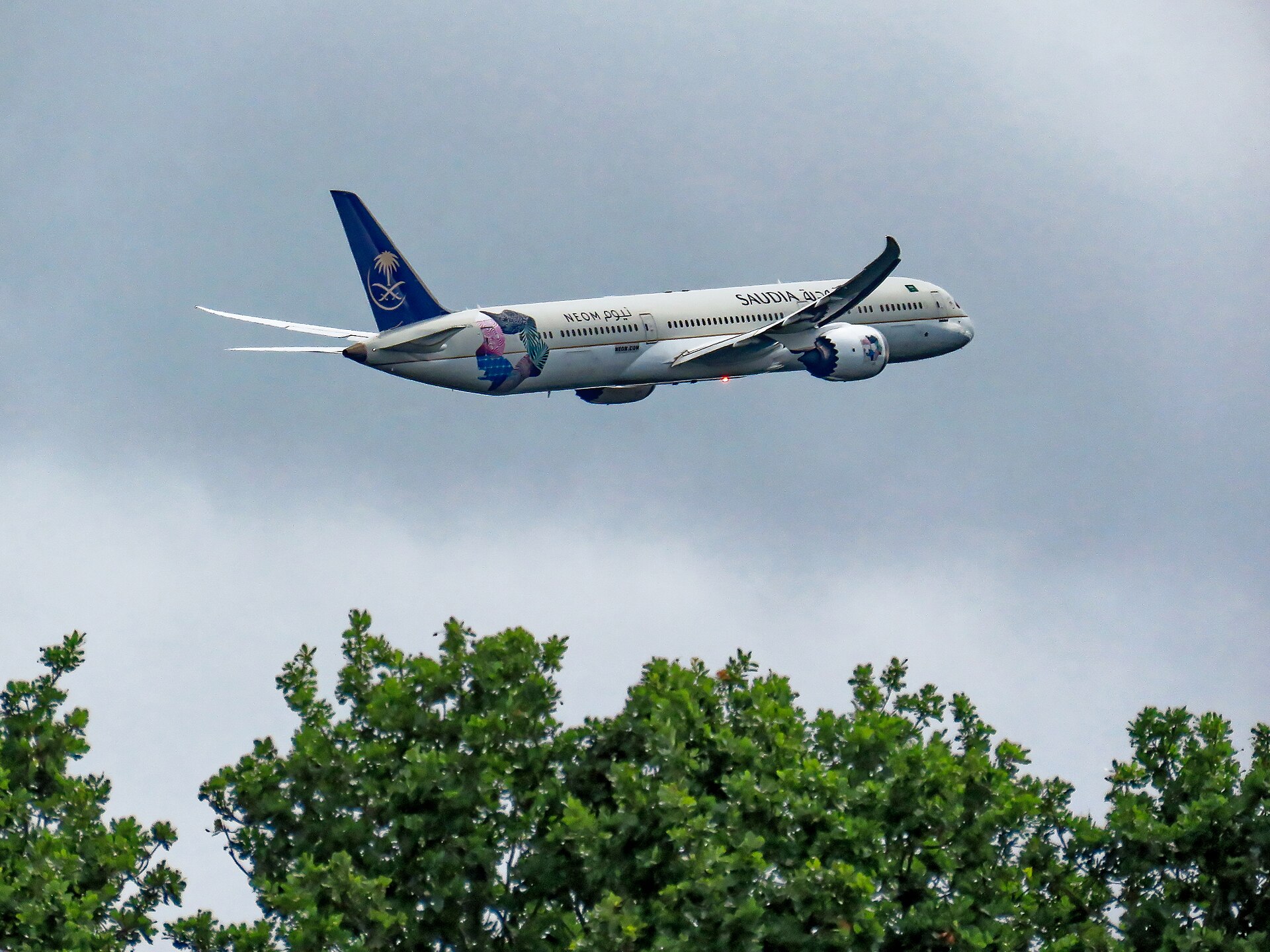
Riyadh Air, the Kingdom’s new national carrier and one of the flagship projects of Vision 2030, launched its first commercial flight in October 2025. The airline had targeted public service by Q1 2026 with 15 initial destinations. Delta Air Lines had announced an Atlanta-to-Riyadh nonstop beginning October 2026. Saudia was introducing the Airbus A321XLR on nine new routes. Over 30 new routes were planned for 2026 across Saudi carriers.
All of it is frozen. Riyadh Air cannot launch passenger service into a market where EASA and the FAA have told airlines to avoid the airspace, where insurance premiums have multiplied, and where the US Embassy is telling American citizens to leave. The airline was designed to be the physical connector of MBS’s economic vision — the carrier that would bring tourists to Al-Ula, executives to NEOM, and investors to Riyadh’s financial district. Its fleet sits on the ground, its trained crews idle, its launch marketing frozen. Every month of delay erodes the first-mover advantage that was the entire strategic rationale for building a second national carrier. The broader pattern of Vision 2030 megaprojects stalling or being restructured now includes the one project that was supposed to physically connect the others.
The Delta partnership is particularly telling. Atlanta-Riyadh was to be the first nonstop between Saudi Arabia and the American South — a route targeting the business travel market between two cities that are each building themselves as logistics and finance hubs. Delta does not fly routes for prestige. It flies routes that fill seats. If the security environment makes October 2026 unviable, Delta will reallocate the aircraft to a route that makes money, and Riyadh will have to convince the airline to try again in 2027 or 2028 — against a market that has by then learned to route through Dubai or Doha.
The Small Wars Journal warning no one heeded
In June 2025, nine months before the first Iranian missile struck Saudi soil, Small Wars Journal published an analysis identifying “weaponizing commercial airspace disruption” as an emergent Iranian asymmetric strategy. The thesis was straightforward: Iran did not need to shoot down a civilian airliner to cripple Gulf aviation. It just needed to make the airspace dangerous enough that Western regulators would do the job for it. The cost to Iran of launching drones and missiles that trigger EASA and FAA restrictions is a fraction of the economic damage those restrictions impose on Gulf economies that depend on air connectivity. Thirty-one days in, the strategy is working exactly as described. The Houthi entry into the war on March 28, opening a second front that threatens Saudi airspace from the south, compounds the problem by shrinking the narrow southern corridor that EASA had left open.
The alternative connectivity options that have emerged are cargo solutions, not passenger solutions. A sea-to-air cargo corridor and Saudi Railways freight to the Jordanian border can move goods, but they cannot move the 350,000 daily passengers that Saudi airports handled before the war. They cannot move Hajj pilgrims. They cannot move the consulting teams, the conference delegates, or the executives whose physical presence in the Kingdom is what an import-dependent economy requires to function. Saudi Arabia built itself as a hub. Hubs work because they are at the centre of a network. When the network collapses, the hub is just a building.
Frequently Asked Questions
Which airlines are still flying to Saudi Arabia as of March 31, 2026?
Gulf-based carriers including Saudia, flynas, and flydubai have maintained limited domestic and regional services, though with reduced frequencies and route cancellations on specific days. Turkish Airlines has continued some services to Jeddah and Riyadh with modified routings that avoid eastern Saudi airspace. Pakistani and Jordanian carriers have operated intermittent services. No European or East Asian long-haul carrier is currently operating scheduled passenger flights to Saudi Arabia, and no carrier has published a firm resumption date.
What would happen to Hajj 2026 if the aviation shutdown continues through May?
Saudi authorities could negotiate dedicated Hajj flight corridors with EASA and the FAA, potentially limiting operations to western Saudi airspace where strike activity has been minimal. This would require government-backed war-risk insurance pools — a mechanism Indonesia and Malaysia used during the 2014 MH17 crisis to keep flights operating over conflict-adjacent routes. Without such intervention, the Hajj could face a repeat of the 2020 scenario: domestic-only or drastically reduced numbers, with the additional political complication that the restriction would be caused by war rather than a pandemic, raising questions about the Kingdom’s ability to fulfil its custodianship obligations.
How does the aviation shutdown affect Saudi Arabia’s sovereign credit rating?
Moody’s placed Saudi Arabia on negative outlook in early March 2026, citing war-related disruption to non-oil economic diversification. The aviation and tourism shutdown directly undermines the non-oil GDP growth that rating agencies had been tracking as the key metric for Saudi Arabia’s A1 rating. CSIS estimates the 2026 budget deficit will reach nearly 4 percent of GDP, up from a planned 2.3 percent. A prolonged shutdown that visibly stalls Vision 2030 implementation could trigger a downgrade, which would raise borrowing costs for the Public Investment Fund and the megaproject financing that PIF’s portfolio depends on.
Could Saudi Arabia reroute international flights through Oman or Jordan?
Some limited rerouting is already occurring, with flights diverting through Omani and Jordanian airspace to avoid the most restricted Gulf zones. Muscat’s Seeb International Airport has seen a 40 percent increase in transit passengers since March, according to Omani aviation authority data. Jordan’s Queen Alia International has added charter capacity for Saudi-bound passengers willing to complete the trip overland. These workarounds add 4 to 12 hours of travel time and steep additional cost, making them viable for urgent travel but impractical for the volume tourism and routine business travel that Saudi Arabia’s economy requires.
What is Iran’s stated position on Gulf aviation disruption?
Iranian state media has not directly addressed the commercial aviation shutdown, but IRGC-affiliated commentators on Tasnim News Agency have framed the economic disruption of Gulf states as a legitimate consequence of their support for American military operations. Tehran’s official position, reiterated through Foreign Ministry spokesperson Nasser Kanaani, is that Iran’s strikes target only military infrastructure and that civilian aviation is not threatened. Western aviation regulators and insurance underwriters have rejected this assurance, noting that Iranian weapons have struck civilian areas including the Riyadh Diplomatic Quarter and that the geographic spread of strikes encompasses major airport zones.