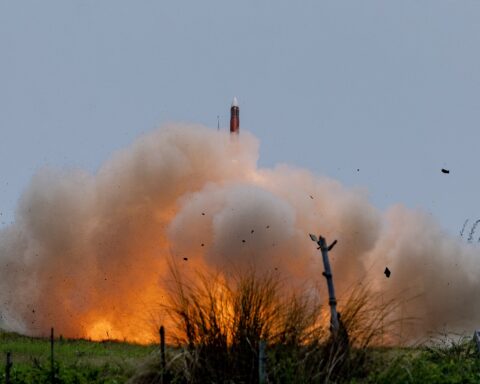
RIYADH — Britain’s deployment of a Sky Sabre air defense battery to Saudi Arabia, confirmed by Defence Secretary John Healey on March 31, adds a third national layer to the Kingdom’s missile shield and a coordination problem no additional interceptor can solve. Saudi airspace is now defended by US Patriot batteries operating under CENTCOM engagement authority, a UK Sky Sabre system run by Royal Artillery personnel answering to British commanders, and approximately 2,600 Pakistani troops whose formal mandate restricts them to training and advisory roles.
When an Iranian ballistic missile crosses the radar horizon at three times the speed of sound, the engagement order must pass through — or around — three sovereign command chains that share track data on Link 16 but have never shared an engagement decision in combat. Iran has fired more than 3,500 missiles and drones at Gulf states since the war began. On a single day in March, 1,206 strikes arrived in one wave. Against that volume, every second lost to coordination between national command chains is a second the defense does not have.
Table of Contents
- What Has Britain Deployed to Saudi Arabia?
- Three Chains of Command, One Airspace
- How Does a Coalition Engagement Order Travel?
- The Poland Precedent and Why It Does Not Apply
- What Happens When 1,200 Missiles Arrive in a Single Day?
- The Interceptor Math Behind the Seam
- Can the Hormuz Summit Solve What the Batteries Cannot?
- What the Architecture Needs and What It Has
- Frequently Asked Questions
What Has Britain Deployed to Saudi Arabia?
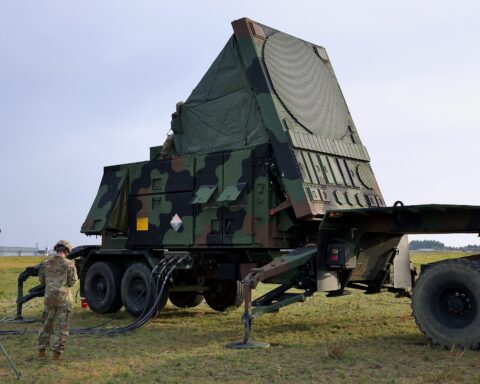
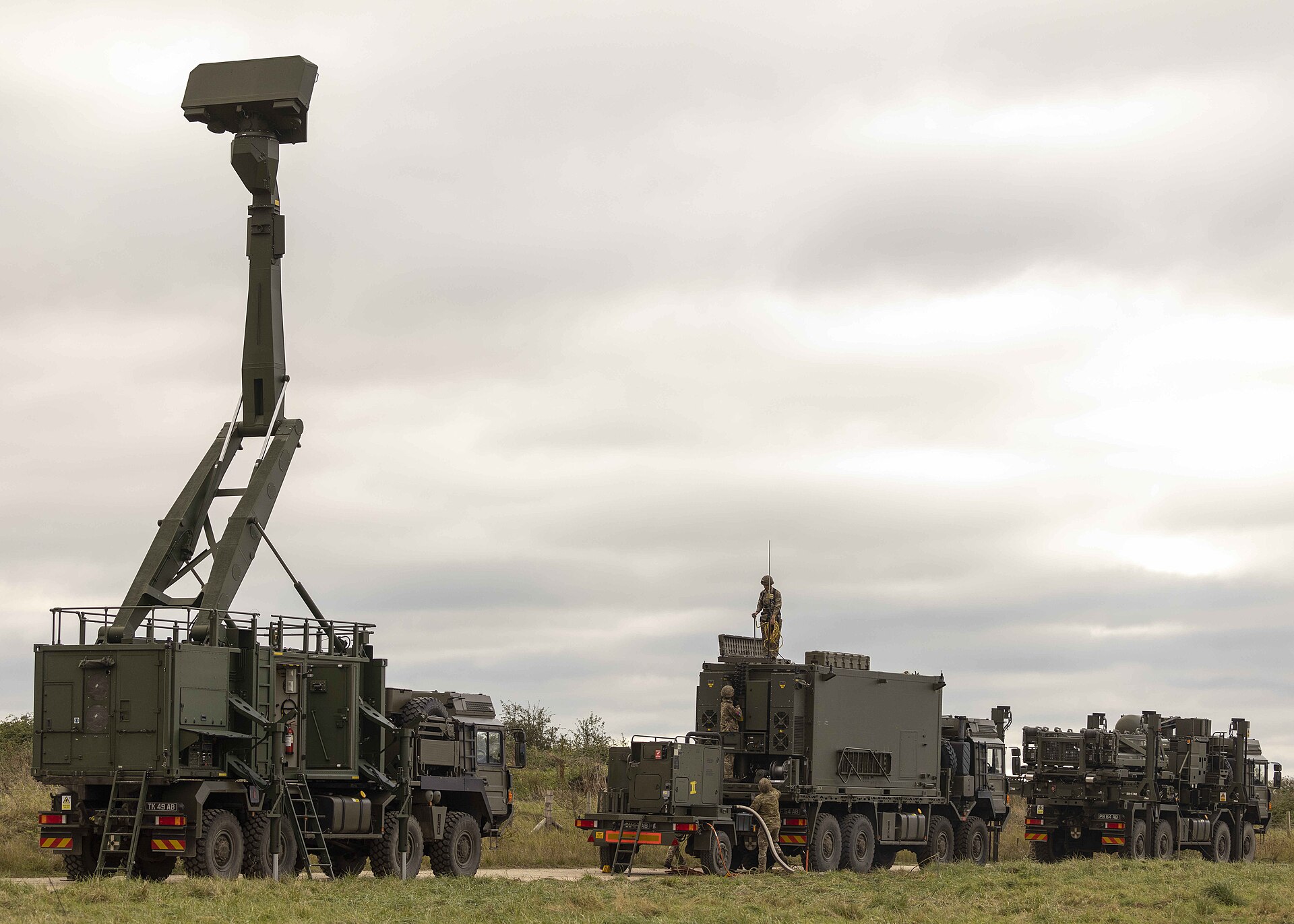
Sky Sabre replaced Britain’s Rapier missile system in 2021 after fifty years of service. The system pairs a Saab Giraffe AMB radar — 360-degree coverage out to 120 kilometers — with Common Anti-Air Modular Missiles that exceed 2,300 miles per hour and can engage 24 separate targets simultaneously. Its command node, the Surface-to-Air Missile Operations Centre, runs Rafael’s MIC4AD command-and-control software and communicates via NATO-standard Link 16 tactical datalinks. At a maximum engagement range of 25 kilometers — extending to 45 kilometers with the CAMM-ER variant — Sky Sabre occupies the terminal defense layer, engaging threats at short range that longer-range systems either missed or elected not to fire on.
Britain’s best will help you defend your skies.
— John Healey, UK Secretary of State for Defence, to Saudi Defence Minister Prince Khalid bin Salman, Riyadh, March 31, 2026
Healey’s announcement extended beyond a single battery. Britain is deploying Sky Sabre launchers to Saudi Arabia, a Lightweight Multirole Launcher to Bahrain, the Rapid Sentry ground-based missile system to Kuwait, and the RAF’s ORCUS counter-drone system to Kuwait, with approximately 1,000 soldiers across the region to install, operate, and train allied forces on the new equipment. UK pilots in theater have already logged more than 1,280 flight hours protecting British nationals, bases, and regional partners.
The commitment is not small. Britain operates six Sky Sabre systems total — one stationed in the Falkland Islands, one now in Saudi Arabia, a third of the UK’s ground-based air defense inventory deployed outside Europe at a moment when NATO’s eastern flank still absorbs the bulk of British defense planning. The original programme cost £618 million under a 2016 contract with Rafael as lead contractor; an additional £118 million went to MBDA in August 2025 for six new Land Ceptor iLaunchers, a 50 percent expansion in launcher inventory that has not yet been delivered.
Three Chains of Command, One Airspace
What Riyadh now operates is not a designed integrated air defense system. It is a multinational stack assembled under wartime pressure, each layer carrying its own command doctrine, identification friend-or-foe protocols, and escalation authority.
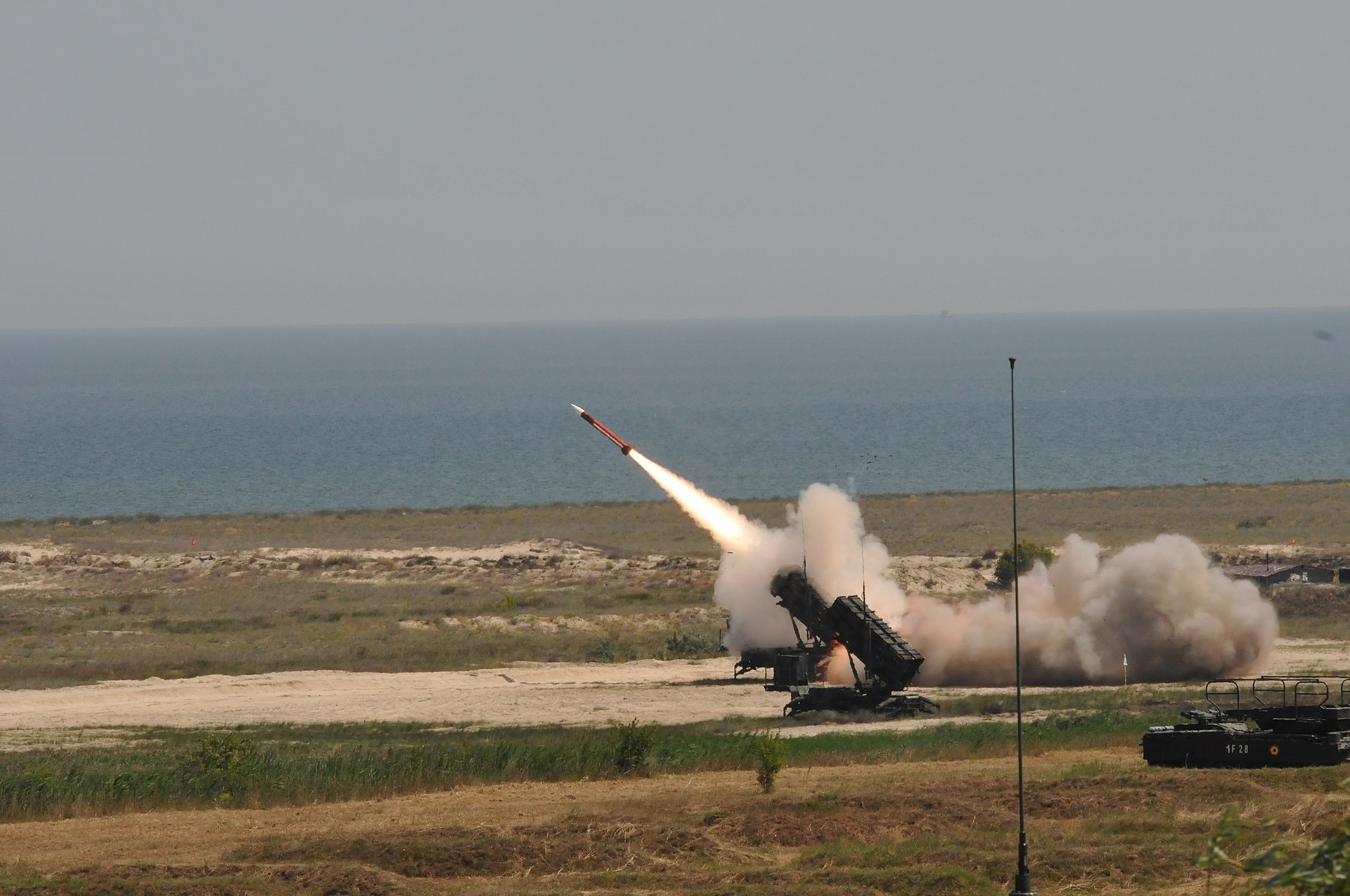
The Patriot layer — the backbone of Saudi air defense for three decades — runs under US CENTCOM engagement authority. An Air Defense Artillery Fire Control Officer sits colocated with the Regional or Sector Air Defense Commander, who authorizes engagement decisions down through battalion level. Every Patriot fire unit in Saudi Arabia operates within this American command chain, including Saudi-owned launchers, because US-provided fire control software, threat libraries, and real-time intelligence feeds govern the system’s targeting decisions. A Greek-operated Patriot PAC-3 battery deployed to Yanbu on the Red Sea coast — which intercepted two Iranian ballistic missiles targeting the SAMREF oil refinery in March — adds another node within the US-derived chain but introduces a third national military culture into the Patriot layer alone.
The Sky Sabre layer runs through its SAMOC, staffed by UK Royal Artillery personnel and British battle space managers who hold engagement authority under the UK chain of command. The system speaks Link 16, the same datalink protocol Patriot uses, and can share target track data — position, velocity, heading. What it does not share through that link is whether an engagement command has been issued. Both systems see the same incoming missile; neither sees whether the other has committed to fire.
Systems such as Sky Sabre, Patriot, Aegis and NASAMS will likely have significant difficulties communicating with one another.
— MITRE Corporation, “Coalition Air and Missile Defense: Integration and Interoperability,” July 2024
Then there are the Pakistani ground forces. The Strategic Mutual Defence Agreement signed at Al Yamamah Palace in September 2025 carries a collective security clause — an attack on one party treated as an attack on both. But those troops operate under Pakistani military doctrine with a mandate formally limited to training and advisory functions within the Kingdom. Their rules of engagement and escalation authorities derive from a defense establishment that the Gulf International Forum described as operating “at a lower level of technical complexity compared with their Western counterparts” — a gap that becomes operational when Pakistani Air Defence Corps units need to coordinate with American and British systems tracking the same inbound threat.
How Does a Coalition Engagement Order Travel?
A Saab Giraffe radar operating within the Sky Sabre battery detects an incoming Iranian Fateh-class ballistic missile at the outer edge of its 120-kilometer detection envelope. Track data feeds into the SAMOC, where British battle space managers classify the target, assess trajectory, and — if the missile falls within Sky Sabre’s 25-kilometer engagement range — prepare a CAMM launch. Simultaneously, a Patriot AN/MPQ-65 radar acquires the same track and passes it through the American chain: battalion fire direction center, ADAFCO, and up to the Regional Air Defense Commander for engagement authorization.
Both systems now hold the same track. Both have interceptors loaded. The engagement question — who fires, and does the other system know a shot has been taken — must resolve within roughly ninety seconds between first detection and impact. Link 16 delivers the shared radar picture, but engagement commands travel through national chains that do not intersect.
Identification adds delay. Each national system applies its own IFF interrogation protocols — the electronic call-and-response that distinguishes friendly aircraft from hostile missiles. An object one system classifies as a confirmed threat may sit at a lower confidence level in the other’s threat library, depending on software version, intelligence feed, and national criteria for classification. NATO spent decades standardizing this process across its membership. The Saudi configuration has not had decades.
RUSI’s April 2024 paper on UK ground-based air defense command and control found that “the UK currently lacks GBAD C2 capacity” and that “7 Air Defence Group has a very small cadre of personnel who might be considered professional air defenders.” Interoperability, the paper added, “places a premium on experience in dealing with multiple systems” — experience that a Royal Artillery battery arriving in a new theater, alongside an American architecture that predates Sky Sabre by two decades, has not yet built.
Against a single inbound, the coordination delay is manageable. Officers talk on radio nets, confirm assignments, fire. Against a saturation wave — dozens of simultaneous tracks crossing different engagement zones, each requiring a shoot-or-hold decision in seconds — every manual coordination step compounds across the entire defended area.
The Poland Precedent and Why It Does Not Apply
Sky Sabre’s deployment to Poland from March 2022 to December 2024 — thirty-two months alongside US and Polish Patriot batteries near the Ukrainian border, under Operation Stifftail — is the closest operational precedent for the Saudi configuration. During that deployment, Sky Sabre became the first non-US system integrated into the US Army’s Integrated Battle Command System, the software layer designed to allow any sensor on a battlefield to cue any shooter regardless of manufacturer or national origin. The integration was real: Sky Sabre received track data from American sensors and fed its own radar picture into the US fire control network under a single engagement authority.
The differences between Poland and Saudi Arabia run deeper than geography. In Poland, the threat was latent — Russian aerospace activity near NATO borders, not daily missile salvos. IBCS integration was demonstrated in controlled exercises, not under fire. The entire command architecture operated within NATO’s Air Command and Control System, built on decades of standardized procedures, shared identification protocols, and rehearsed rules of engagement. Over thirty-two months, no engagement order was ever issued against a live target.
Saudi Arabia offers none of those conditions. Patriot batteries have already expended 943 interceptor rounds in a single ninety-six-hour period during Operation Epic Fury. Iranian missiles and drones arrive on a daily cadence. The command architecture is not NATO but an ad hoc arrangement between three nations — the United States, the United Kingdom, and Pakistan — that have never jointly operated air defense systems in combat. The IBCS software that bridged the integration gap in Poland has not been announced as part of the Saudi deployment. Without it, Sky Sabre and Patriot share a radar picture through Link 16 but maintain separate, sovereign engagement chains.
What Happens When 1,200 Missiles Arrive in a Single Day?
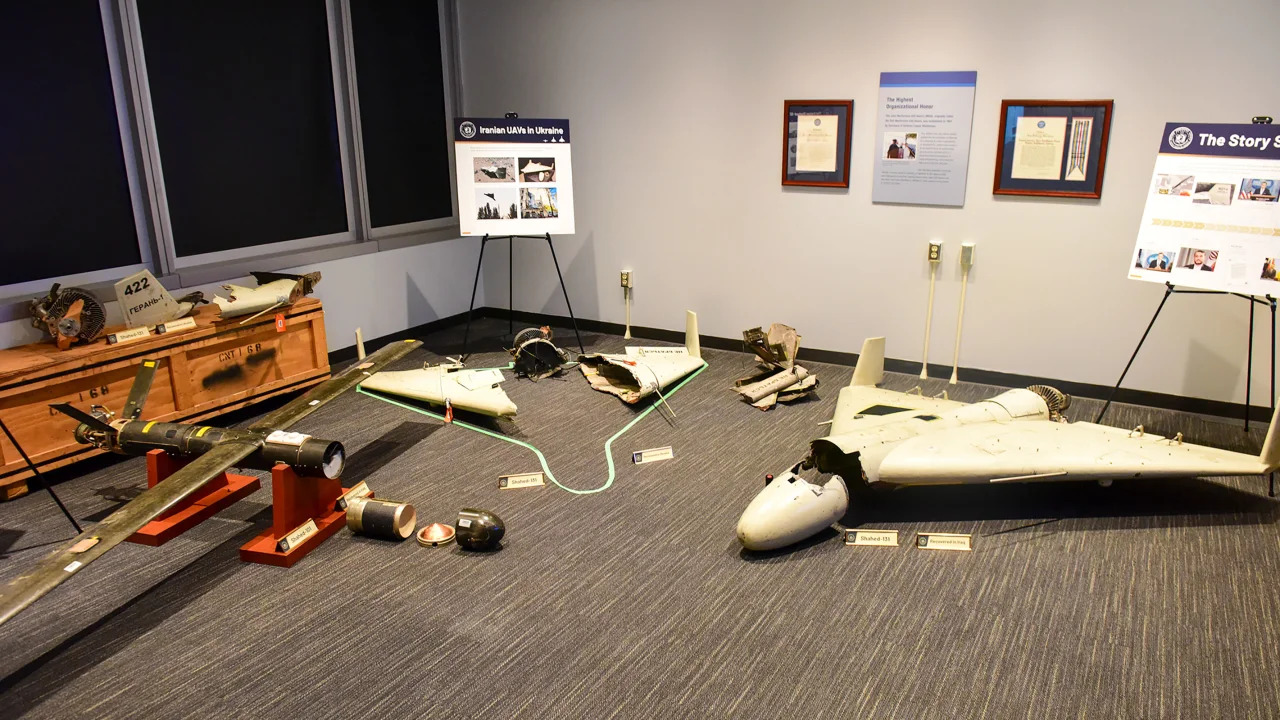
Iran’s air campaign against Gulf states has evolved from an initial shock phase — massive simultaneous volume to overwhelm defenses — into a sustained attritional phase designed to drain interceptor stocks faster than Western production lines can replenish them. The tactical doctrine employs combined waves: cheap Shahed-series drones force defenders to expend expensive interceptors on low-value targets, while ballistic missiles carrying heavier warheads aim to punch through the depleted screen behind them. Iran has fielded fiber-optic-guided drone variants adapted from Ukrainian battlefield innovations, immune to the electronic jamming that Gulf air defenses rely on against earlier Shahed models.
In one documented attack wave, Iran launched 137 missiles and 209 drones at UAE, Qatar, and Kuwait simultaneously — multi-node saturation designed to prevent any single national defense system from concentrating its full capacity. CSIS analysis found that “countering mass drone attacks cannot rely primarily on traditional air defense missiles,” requiring drone-against-drone defense layers to preserve expensive interceptors for the ballistic threats that follow.
The command seam between Patriot and Sky Sabre creates conditions for two specific failure modes under this kind of pressure. The first is double engagement — both systems fire at the same inbound because neither knows the other has committed an interceptor. At $4.1 million per PAC-3 MSE round against a drone costing between $20,000 and $50,000, a cost exchange ratio running to roughly 114 to 1 in Iran’s favor at the midpoint of drone production costs, every redundant shot accelerates the stockpile depletion that Iran’s entire campaign architecture is engineered to produce.
The second is gap exploitation. An inbound threat passes from one system’s primary engagement zone into another’s, both operators expecting the other to engage, neither engaging. This is not a technology problem — the radars work, the missiles work. It is a doctrine problem: no standing protocol governs the handoff between national systems in the seconds an incoming threat takes to cross the boundary between their respective engagement zones.
| System | Operator | C2 Authority | Engagement Range | Datalink | Saudi Status (April 2026) |
|---|---|---|---|---|---|
| Patriot PAC-3 MSE | Saudi Arabia / US CENTCOM | RADC/SADC via ADAFCO | 160 km | Link 16, JTIDS | Operational since 1990s |
| Patriot PAC-3 (Greek battery) | Hellenic Army / US-aligned chain | CENTCOM-derived | 160 km | Link 16 | Deployed to Yanbu, March 2026 |
| Sky Sabre (CAMM) | UK Royal Artillery | SAMOC / UK national chain | 25 km (CAMM-ER: 45 km) | Link 16 | Deployed March 31, 2026 |
| Pakistani ground forces | Pakistan Army (SMDA) | Pakistani military doctrine | Advisory role; AD Corps assets TBC | Not integrated | ~2,600 troops deployed |
Sources: GOV.UK, Missile Defense Advocacy Alliance, CENTCOM doctrine, SMDA documentation
The Interceptor Math Behind the Seam
The command coordination problem sits atop a supply problem that makes every wasted engagement round costly in ways that compound across months of sustained fire.
In the first ninety-six hours of Operation Epic Fury, US and Gulf Patriot batteries expended 943 interceptor rounds — a volume equivalent to approximately eighteen months of combined Lockheed Martin and Boeing factory output at the current production ceiling of roughly 620 PAC-3 MSE interceptors per year. The $9 billion sale approved by Washington in January 2026, covering up to 730 PAC-3 MSE missiles for Saudi Arabia, would replace roughly one major engagement sequence if the entire order arrived tomorrow. Kelly Grieco of the Stimson Center has warned that replacing depleted stocks “would take years” and that the Department of Defense cannot rapidly scale production to meet wartime consumption rates.
Sky Sabre’s CAMM interceptors are cheaper and faster to produce, but the system’s 25-kilometer engagement envelope means it functions as the terminal defense layer — engaging threats that Patriot either missed or chose not to fire on at longer range. That complementary relationship depends entirely on shot coordination between systems. An uncoordinated architecture spends Patriot rounds on targets Sky Sabre could handle at closer range, burning through the expensive stockpile while the cheaper system sits with loaded launchers and no engagement order.
| Metric | Value | Source |
|---|---|---|
| PAC-3 MSE unit cost | $4.1 million | Military Times |
| Shahed drone unit cost | $20,000–$50,000 | Military Times / Fox News |
| Cost exchange ratio (Iran’s favor) | ~114:1 | Calculated from above |
| Annual PAC-3 MSE production ceiling | ~620 rounds/year | Military Times |
| Rounds fired, first 96 hours (Epic Fury) | 943 | Military Times |
| Approved PAC-3 sale to Saudi Arabia | $9 billion (730 missiles) | Breaking Defense |
| Sky Sabre CAMM engagement range | 25 km (CAMM-ER: 45 km) | MDAA / British Army |
| Defense contracts signed at WDS 2026 | $8.8 billion (60 contracts, 73 MOUs) | Al Defaiya / Arab News |
The World Defense Show 2026 in Riyadh closed with those 60 military contracts and 73 memorandums of understanding — procurement velocity that reflects Saudi urgency. Delivery timelines for advanced missile systems, though, run to years. Iranian drone production cycles in weeks.
Can the Hormuz Summit Solve What the Batteries Cannot?
UK Prime Minister Keir Starmer convened a 35-nation summit on April 3 to discuss reopening the Strait of Hormuz — without the United States at the table. The Sky Sabre deployment is the kinetic complement to this diplomatic initiative: Britain providing hardware, troops, and training to establish credibility as an independent security guarantor in the Gulf, operating on its own terms rather than as a subsidiary of American force projection.
The military logic is less tidy than the diplomatic logic. Adding a UK command presence to Saudi air defense increases British exposure directly — an Iranian drone struck the UK RAF base in Cyprus in March 2026, and Iranian officials have named British facilities in Bahrain and Qatar as targets. Every additional national flag over an air defense battery is a deterrent signal and, as the Cyprus strike demonstrated, a target.
The Gulf International Forum observed that “defence cooperation and the establishment of joint military industries require the coordination and integration of defence standards” — a long-term institutional project that the current deployment is compressing into wartime operational tempo. The SMDA between Saudi Arabia and Pakistan, with its collective security clause, adds a formal treaty obligation to a military architecture that cannot yet share an engagement command across national boundaries in real time.
Thirty-five nations sat at a summit table on April 3. The engagement decision that matters, when a missile crosses the radar horizon, rests with a Royal Artillery sergeant in a SAMOC container and an American ADAFCO officer in a Patriot battery — two people who may never have trained together, operating under two different national authorities, sharing a Link 16 feed that MITRE has assessed will have “significant difficulties” passing actionable targeting information between their systems.
What the Architecture Needs and What It Has
The technical solution exists — or has existed, in a different theater under different conditions. The IBCS integration demonstrated during thirty-two months in Poland showed that Sky Sabre’s radar picture could feed into an American fire control network under a unified engagement authority. Replicating that integration in Saudi Arabia would require deploying IBCS software, training joint crews, and establishing a single engagement authority that supersedes national command chains — the kind of interoperability framework NATO built across its eastern flank over decades of peacetime preparation.
What Healey brought to Riyadh is hardware: launchers, radars, a battery, battle space managers, a thousand soldiers. RUSI’s 2024 paper on GBAD requirements specified that successful coalition air defense depends on publishing “tracks to subscribers without sharing source code to support interoperability with diverse UK partners” — a federated model that preserves national sovereignty over individual systems while enabling a shared operational picture. MITRE’s companion study called for a similar federated architecture, “with each nation having unique requirements for sovereign defense,” connected through common data standards rather than common command authority.
The gap between that model and what is operational in Saudi airspace today is not principally technological. Link 16 functions. Radars detect. Missiles intercept at published rates of 85 to 90 percent against ballistic threats. The gap is doctrinal and procedural: who defers to whom when two systems track the same inbound, which national authority holds primacy in the overlap zone, and how that authority transfers in the seconds between detection and required engagement. The coalition air defense shield over Saudi Arabia now includes American, British, Greek, and Pakistani elements. The wiring that turns those elements into a single functioning system — the doctrine, the procedures, the shared muscle memory of joint operations — is still being built under fire.
Frequently Asked Questions
How does Sky Sabre’s missile guidance differ from Patriot’s?
Sky Sabre’s CAMM uses active radar homing — the missile carries its own seeker and guides itself to the target after launch, a fire-and-forget capability that allows the launcher to immediately cycle to the next threat. Patriot’s PAC-3 MSE also employs an active radar seeker but uses a hit-to-kill kinetic energy intercept — no explosive warhead, relying instead on the missile body striking the target directly at closing speeds exceeding Mach 5. CAMM’s soft-launch vertical ejection system fires the missile upward before the motor ignites, allowing 360-degree engagement without physically slewing the launcher toward the target — a mechanical advantage during saturation attacks arriving from multiple azimuths simultaneously.
Has Sky Sabre ever engaged a live target in combat?
No live combat engagement has been recorded for Sky Sabre. The system completed British Army acceptance trials at the Hebrides Range in Scotland before achieving initial operating capability in October 2021. Its predecessor, Rapier, saw combat during the Falklands War in 1982, where it was credited with fourteen confirmed kills against Argentine aircraft but also suffered reliability problems in the South Atlantic conditions. The Saudi deployment, operated by 16 Regiment Royal Artillery, will be Sky Sabre’s first test under sustained hostile fire — and the first time its operators must coordinate engagement decisions with a foreign system in real time rather than in exercises.
What is IBCS and why does its absence from the Saudi deployment matter?
The Integrated Battle Command System, developed by Northrop Grumman for the US Army, is designed to create an “any sensor, any shooter” architecture — allowing a radar operated by one nation to directly cue an interceptor operated by another, with engagement authority managed through a single software interface rather than through separate national chains. The US Army plans to field IBCS as its standard air defense command system by the late 2020s. The Saudi deployment has not included it, leaving Patriot and Sky Sabre connected only through Link 16’s track-sharing capability — a shared picture of what is in the sky, without shared authority over who fires at it.
Could Saudi Arabia build its own integrated command system?
Saudi Arabia’s General Authority for Military Industries has set a target of localizing 50 percent of military procurement by 2030, up from 19.35 percent in 2024. Saudi Arabian Military Industries signed C4ISR development agreements at World Defense Show 2026, and the Kingdom’s defense spending — $75 billion annually, fifth-largest in the world — provides the financial base for an indigenous air defense command architecture. Building a sovereign system comparable to IBCS, though, requires a decade or more of software development, testing, and integration with existing platforms from multiple foreign manufacturers — a timeline measured against a war in which engagement decisions must be made within ninety seconds.
How many PAC-3 interceptors does Saudi Arabia have remaining?
Exact figures are classified, but GCC PAC-3 stockpiles were reported to have fallen to approximately 400 rounds after the opening weeks of sustained Iranian strikes — a figure that represents less than half of one major saturation event at the consumption rate demonstrated during Operation Epic Fury’s first ninety-six hours. The approved $9 billion US sale covering 730 PAC-3 MSE missiles would roughly double current stocks if fully delivered, but Lockheed Martin’s production expansion target — tripling output to approximately 2,000 rounds per year — carries a completion date of 2030.