
RIYADH — Saudi Arabia has spent more than $300 billion on defense over the past five years, ranking seventh globally and first in the Middle East. Twenty-six days of Iranian missile and drone barrages have revealed that this staggering sum purchased some of the world’s most advanced military hardware — and left the Kingdom dependent on foreign soldiers to operate it. The gap between what Saudi Arabia owns and what it can independently deploy is the most consequential strategic vulnerability the Iran war has exposed.
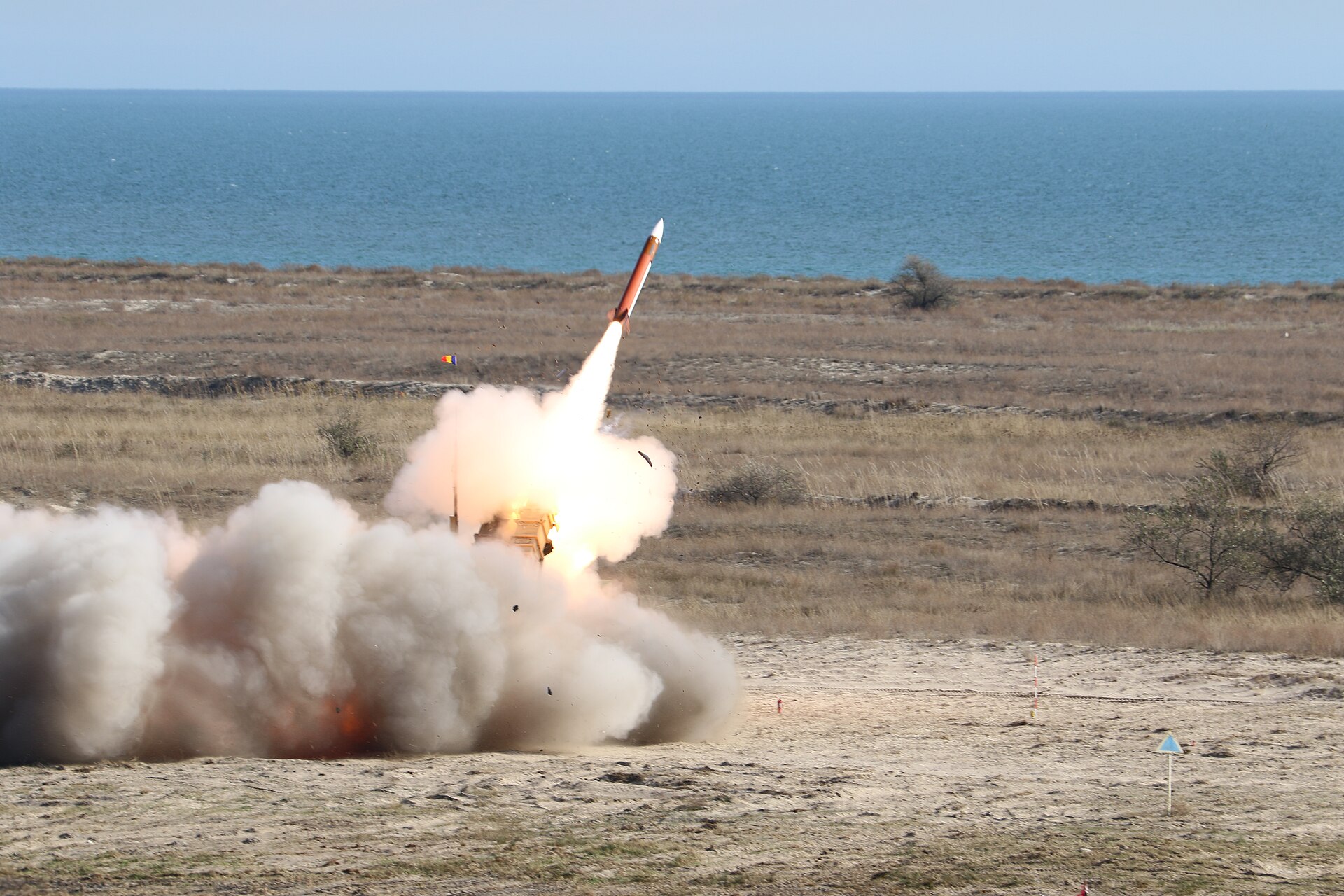
The Royal Saudi Air Defense Forces have intercepted an estimated 85 to 90 percent of Iranian ballistic missiles since February 28, according to the International Institute for Strategic Studies. Yet the operators sitting behind those Patriot consoles include American crews, Greek air force personnel, and contracted technicians from Raytheon. The interceptors themselves are running low, with each PAC-3 MSE costing between $4 million and $12 million — while the Shahed-136 drones they are destroying cost Tehran less than $50,000 apiece. Crown Prince Mohammed bin Salman’s Vision 2030 defense pillar promised to localize 50 percent of military procurement by the end of the decade. The war has both validated that ambition and exposed how far the Kingdom remains from achieving it. The global arms race triggered by the Iran war has placed Saudi Arabia in a worldwide queue for interceptors, competing with dozens of nations for the same limited production slots.
Table of Contents
- The $80 Billion Question
- What $300 Billion in Defense Spending Actually Bought
- How Does Saudi Arabia’s Air Defense Architecture Perform Under Fire?
- The Human Capital Gap No Arms Deal Can Close
- Is Saudi Arabia’s Defense Localization on Track or a Decade Behind?
- SAMI and the Defense Industrial Base
- Why Did Saudi Arabia Turn to Ukraine for the Weapons America Cannot Deliver?
- The World Defense Show and the Diversification Sprint
- Can Money Solve the Drone Cost Asymmetry?
- The Defense Capability Readiness Matrix
- The Contrarian Case — Dependency as Strategic Asset
- What Must Change Before the Next War?
- Frequently Asked Questions
The $80 Billion Question
Saudi Arabia allocated $78 billion to its military sector in 2025, representing 21 percent of total government spending and 7.2 percent of gross domestic product, according to data from SIPRI and the Saudi Ministry of Finance. The previous year’s expenditure reached $80.3 billion, placing the Kingdom seventh globally — just $1.5 billion behind the United Kingdom and ahead of every other Middle Eastern state combined outside of Israel.
These figures are not new. Saudi Arabia has maintained its position among the world’s top ten military spenders for more than three decades, with cumulative defense expenditure between 2020 and 2025 exceeding $390 billion. The scale is difficult to contextualize: Saudi Arabia spends more on defense than Canada, Australia, and South Korea, countries with larger populations, broader alliance obligations, and more diversified defense industrial bases.
| Year | Spending (USD billions) | % of GDP | Global Rank |
|---|---|---|---|
| 2019 | $61.9 | 8.0% | 5th |
| 2020 | $57.5 | 8.4% | 6th |
| 2021 | $55.6 | 6.6% | 7th |
| 2022 | $75.0 | 7.4% | 5th |
| 2023 | $79.2 | 7.1% | 6th |
| 2024 | $80.3 | 7.0% | 7th |
| 2025 | $78.0 (budgeted) | 7.2% | 7th (est.) |
The numbers suggest a nation armed to the teeth. The reality, as the Iran war has demonstrated, is more nuanced. Spending and capability are not synonyms. The Kingdom’s defense budget bought extensive hardware inventories — F-15 Strike Eagles, Eurofighter Typhoons, Patriot and THAAD batteries, French frigates, and British Tornado aircraft — but the institutional infrastructure required to operate, maintain, integrate, and command these systems in a sustained high-intensity conflict remained underdeveloped. What twenty-six days of war have exposed is not a spending problem. It is a capability problem, and the distinction carries trillion-dollar implications for the decade ahead.
What $300 Billion in Defense Spending Actually Bought
To understand the gap between Saudi Arabia’s defense expenditure and its wartime performance, it is necessary to examine where the money went. Defense budgets in the Gulf operate differently from those in NATO countries. A disproportionate share — estimated by defense economists at 60 to 70 percent — flows into hardware procurement and foreign maintenance contracts rather than training, doctrine development, or indigenous manufacturing.
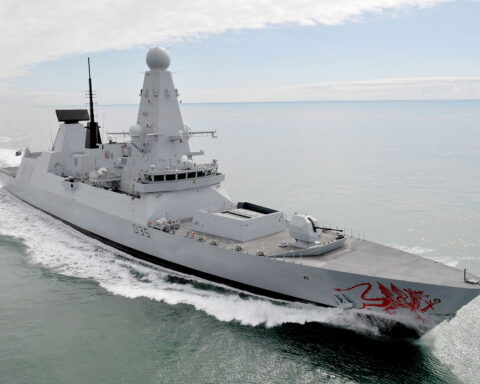
The result is an inventory list that reads like a defense exhibition catalog. The Royal Saudi Air Force operates approximately 270 combat aircraft, including F-15SA Strike Eagles equipped with the latest AESA radars and precision-guided munitions. The Royal Saudi Land Forces field more than 1,000 main battle tanks, predominantly M1A2 Abrams variants. The Royal Saudi Navy has commissioned French-built Makkah-class frigates and is taking delivery of Spanish-designed Avante 2200 corvettes. The air defense network anchored by Patriot PAC-2 and PAC-3 batteries, supplemented by THAAD systems, constitutes the most expensive missile shield in the Middle East.
Yet hardware sitting on a ramp or in a maintenance bay is not the same as hardware integrated into a responsive, multi-domain command architecture. The Iran war has tested not whether Saudi Arabia possesses these systems, but whether it can sustain their operation under the relentless tempo of daily missile and drone strikes.
| Program | Value (USD) | Supplier | Status |
|---|---|---|---|
| THAAD batteries (7 units) | $15 billion | Lockheed Martin / US | 4 of 7 operational by end 2026 |
| PAC-3 MSE missiles (730) | $9 billion | RTX (Raytheon) / US | Approved January 2026 |
| F-15SA fleet sustainment | $3 billion | Boeing / US | Ongoing |
| Bayraktar Akinci UCAVs | $3+ billion | Baykar / Turkey | Production in Kingdom by 2026 |
| Naval expansion (frigates/corvettes) | $2.5 billion | Navantia / Spain | Delivery ongoing |
| Ukrainian interceptor systems | Undisclosed | SAMI / Ukraine | Deal signed March 2026 |
The total pipeline of major defense orders currently under contract or recently approved exceeds $40 billion. That figure does not include the annual sustainment, training, and logistics contracts — estimated at an additional $15 to $20 billion per year — that keep existing platforms operational. Saudi Arabia is not under-investing in defense by any financial metric. It is, however, purchasing capability in a form that requires foreign hands to deliver it.
How Does Saudi Arabia’s Air Defense Architecture Perform Under Fire?
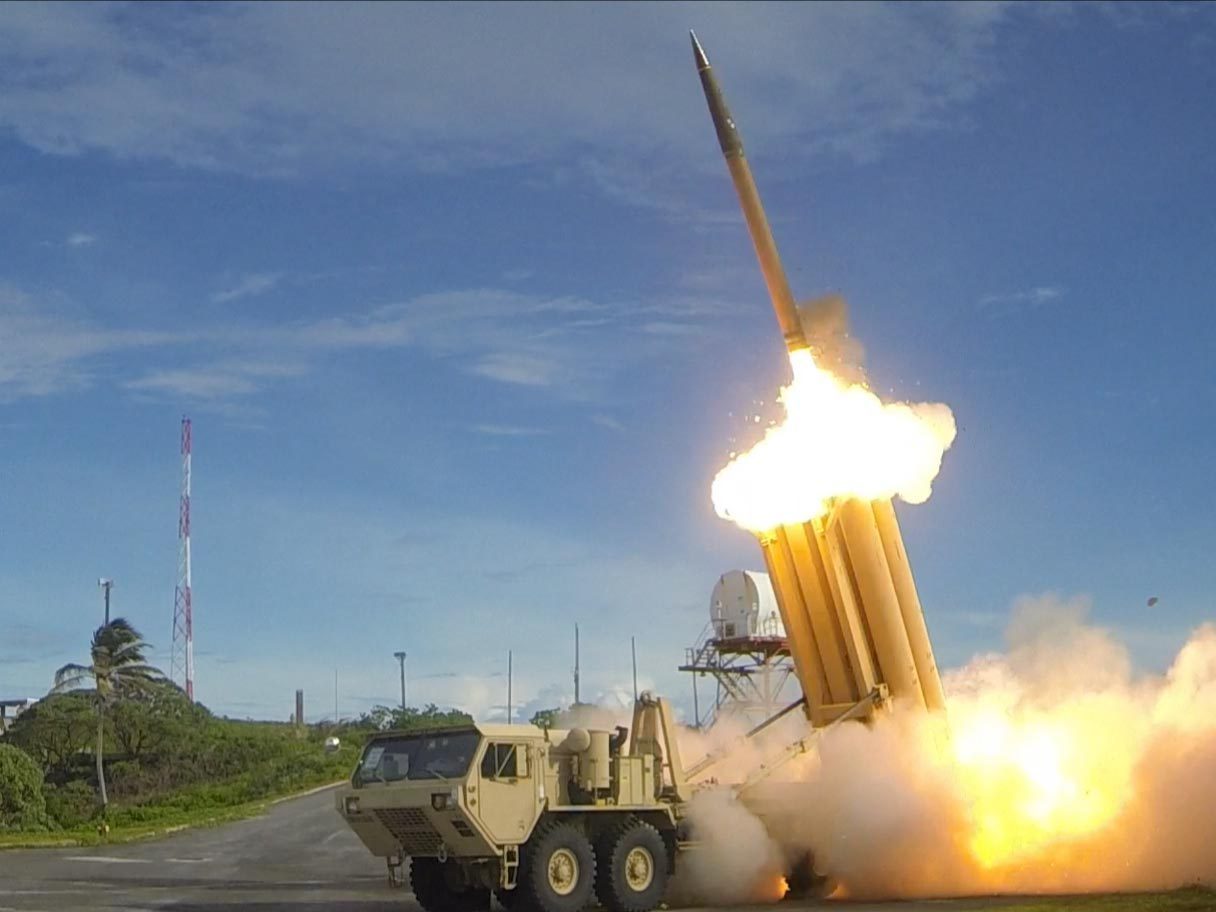
Before the first Iranian missile crossed into Saudi airspace on February 28, skeptics questioned whether the Kingdom’s layered air defense network — assembled at enormous expense over two decades — would function as designed under the stress of actual combat. The 2019 Aramco attacks, in which cruise missiles and drones struck the Abqaiq processing facility and Khurais oil field without interception, had shaken confidence in the system’s reliability. The question was not whether Saudi Arabia possessed air defense systems. It was whether those systems, operated by a mix of Saudi, American, and allied crews, could perform when the incoming threats were real, numerous, and sustained.
The answer, twenty-six days later, is qualified but substantially positive. The Royal Saudi Air Defense Forces have delivered a performance that exceeded most pre-war predictions. Since February 28, Saudi and allied air defense systems have intercepted an estimated 85 to 90 percent of Iranian ballistic missiles targeting the Kingdom, with an overall drone interception rate of approximately 85 percent across the Gulf Cooperation Council, according to assessments by the International Institute for Strategic Studies published in March 2026.
Iran has fired more than 1,200 missiles and drones at GCC member states in the first seven days of the conflict alone, according to interception tallies released by individual GCC defense ministries. The pace has not relented. On March 25 alone, Saudi Arabia intercepted and destroyed 21 drones in the Eastern Province, along with one ballistic missile and five additional drones earlier in the night. The cumulative number of intercepts since the war began likely exceeds 2,000.
These numbers represent a genuine achievement. During the September 2019 Aramco attacks, Saudi air defenses failed to detect or intercept the cruise missiles and drones that struck Abqaiq and Khurais, temporarily knocking out half the Kingdom’s oil production. The improvements since — including better integration of radar networks, deployment of additional Patriot batteries, and the introduction of THAAD systems — represent a significant upgrade in the Kingdom’s defensive posture.
The caveat is equally significant. Even a 10 percent leakage rate, applied across hundreds of projectiles, means dozens of warheads have successfully struck targets. Iran’s strike on the Yanbu refinery, its attacks on Eastern Province oil infrastructure, and the drone that hit the US embassy compound in Riyadh all penetrated Saudi defenses. The system works. It does not work perfectly. And in a conflict where a single successful strike on a desalination plant or power grid could trigger a humanitarian crisis, imperfect is a dangerous standard.
The Human Capital Gap No Arms Deal Can Close
The most revealing detail of Saudi Arabia’s wartime defense posture is not which systems it operates, but who operates them. The Patriot batteries that have defended Riyadh, Dhahran, and Jubail since February 28 have been operated by a combination of Saudi crews, American military personnel, and a contingent of 120 to 130 Hellenic Air Force soldiers deployed under a bilateral agreement — with Saudi Arabia covering all operational costs and financing Greece’s upgrade to the PAC-3 configuration.
This arrangement is not a wartime improvisation. It is a structural feature of Saudi defense capability. The Kingdom has purchased some of the most sophisticated military hardware on earth, but the pipeline of trained operators, maintenance technicians, doctrine developers, and systems integrators required to operate that hardware independently has not kept pace with procurement.
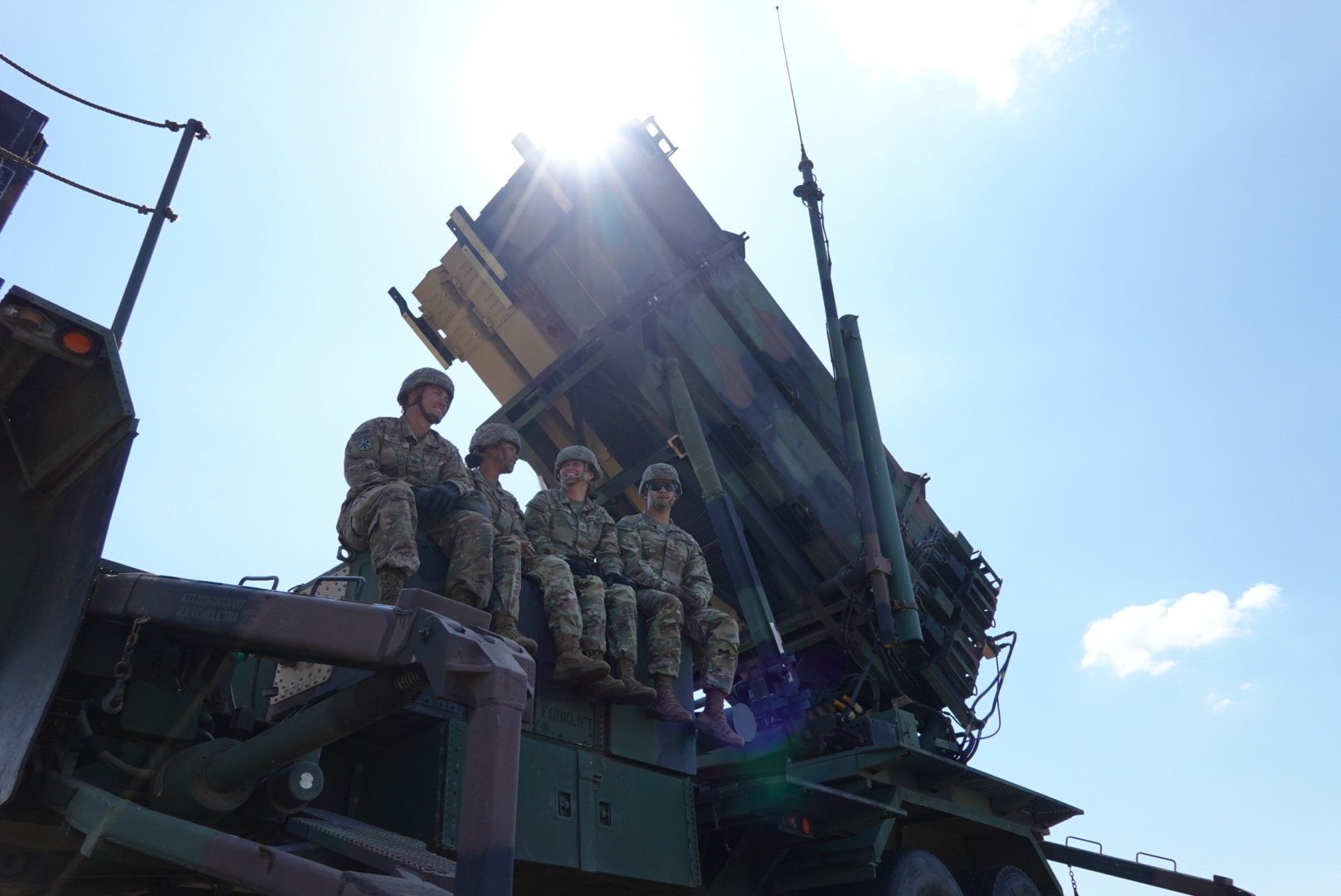
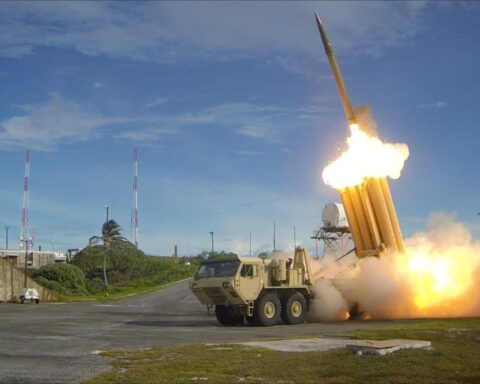
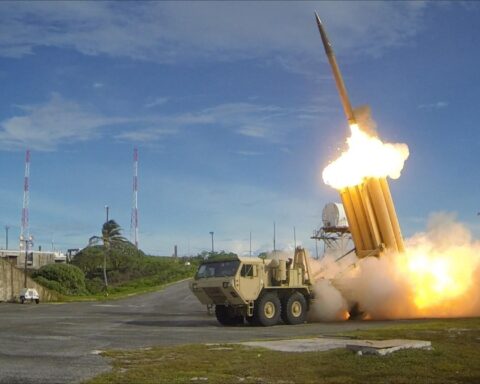
The THAAD system offers a particularly instructive case. Saudi Arabia signed a $15 billion contract for seven THAAD fire units in 2017. The first battery was inaugurated in July 2025 — eight years after the order was placed. The fourth battery completed its training cycle at Fort Bliss, Texas, on January 8, 2026, barely seven weeks before the war began. The remaining three batteries are not expected to be operational until 2028. A system ordered nearly a decade ago is still not fully deployed, and its operators are still being trained on American soil.
The human capital gap extends beyond air defense. The Royal Saudi Air Force’s F-15SA fleet requires hundreds of maintenance specialists, many of whom are employed by Boeing and its subcontractors under Foreign Military Sales support agreements. The naval fleet’s French-built frigates depend on DCNS (now Naval Group) technicians for advanced combat system maintenance. Even the Public Investment Fund’s recent pivot toward grain stockpiling and essential commodities reflects a recognition that self-sufficiency — in any domain — cannot be purchased overnight.
Training a Patriot battery crew takes approximately 14 weeks of intensive instruction followed by months of proficiency exercises. Training a THAAD crew takes longer. Developing the institutional knowledge to integrate these systems into a multi-layered air defense network — with shared radar pictures, coordinated engagement zones, and real-time threat assessment — takes years. These are not capabilities that can be accelerated by writing larger checks.
Is Saudi Arabia’s Defense Localization on Track or a Decade Behind?
When Crown Prince Mohammed bin Salman unveiled the defense pillar of Vision 2030 in 2016, the core promise was transformational: Saudi Arabia would localize 50 percent of its military spending by the end of the decade, creating a domestic defense industry that would reduce foreign dependency, generate high-skill employment, and eventually become an export competitor. A decade later, the progress is real but the gap between ambition and achievement is wider than official communications acknowledge.
The General Authority for Military Industries reported that the localization rate of Saudi military spending reached 24.89 percent by the end of 2024, up from 4 percent in 2018 and 19.35 percent the previous year. The Vision 2030 target is 50 percent localization by 2030. On a linear trajectory, the Kingdom would reach approximately 35 to 38 percent by 2030 — well short of the stated goal.
Defense localization in the Saudi context encompasses three tiers. The first is local assembly and final integration of foreign-designed systems — the easiest to achieve and the tier where most progress has been made. The second is licensed production with meaningful technology transfer, including the ability to modify and maintain systems without foreign support. The third, and most elusive, is indigenous design and development capability — the ability to conceive, prototype, test, and manufacture defense systems from a blank sheet.
| Tier | Description | Estimated Achievement | Key Examples |
|---|---|---|---|
| Tier 1 | Local assembly / final integration | 40-50% | Bayraktar Akinci assembly, ammunition, light vehicles |
| Tier 2 | Licensed production + tech transfer | 15-20% | SAMI-Otokar armored vehicles, SAMI-Aselsan turrets |
| Tier 3 | Indigenous design and development | 3-5% | HEET vehicle platform, some small arms, EW components |
The gap between Tier 1 and Tier 3 is where the strategic vulnerability lies. Assembly and integration can be stood up in two to three years with sufficient investment. Indigenous design capability requires a defense engineering ecosystem that takes decades to mature — universities producing specialized graduates, research institutes developing fundamental technologies, a procurement culture that tolerates the delays and cost overruns inherent in developmental programs, and private sector companies willing to invest in defense R&D without guaranteed near-term returns.
GAMI has allocated SR6 billion ($1.6 billion) specifically for research and development, and local and foreign investments in military manufacturing are projected to reach SR37.5 billion ($10 billion) by 2030. These are serious numbers by regional standards. They are modest compared to the R&D budgets of the defense industries Saudi Arabia is trying to emulate: Turkey’s defense sector spent approximately $2.5 billion on R&D in 2024 alone, while South Korea invested more than $4 billion annually in defense research.
SAMI and the Defense Industrial Base
Saudi Arabian Military Industries, the state-owned national champion established in 2017 under the Public Investment Fund, has grown from a concept to an organization employing more than 7,000 people, 71 percent of whom are Saudi nationals. Employee numbers grew more than 600 percent in 2023 alone, and at the World Defense Show in February 2024, a SAMI representative stated that the company aimed to achieve “full manufacturing, mass production for all types” by 2027.
The portfolio of subsidiaries has expanded accordingly. SAMI Land Co. handles ground combat systems, SAMI Autonomous Co. focuses on unmanned platforms, and the SAMI Land Industrial Complex in Al Kharj — expected to be operational by early 2026 — will build and upgrade light military vehicles under the indigenous HEET platform. In July 2025, SAMI finalized agreements with three Turkish firms — Otokar, FNSS, and Aselsan — for technology transfer and in-Kingdom manufacturing of armored vehicles, infantry fighting vehicles, and turret systems.
The Bayraktar Akinci program represents SAMI’s most ambitious venture. The $3 billion-plus deal with Turkey’s Baykar is described as the largest defense export contract in Turkish history. By 2026, 300 Saudi employees had completed training at Baykar facilities in Turkey, and more than 70 percent of Akinci production was targeted for local manufacturing at SAMI facilities. If achieved, this would represent a genuine leap in Saudi defense industrial capability — moving from mere assembly to meaningful production of a complex weapons platform.
The comparison with peer organizations is instructive. The UAE’s EDGE Group, established in 2019, has already expanded from 30 products to 201, employs 14,100 people across more than 35 subsidiaries, and recorded $2.3 billion in export contracts in 2024 — a figure expected to more than double in 2025. A peer-reviewed analysis published by Defense and Security Analysis in 2025 concluded that “EDGE remains larger and more capable of managing complex projects, though SAMI may have greater long-term potential.” That assessment — larger potential but less current capability — encapsulates the Saudi defense industrial challenge.
Saudi Arabia is not just buying weapons — it is buying the ability to make weapons. Every major non-American defense deal signed since 2025 includes technology transfer, factory construction, and training infrastructure built on Saudi soil.
Defense analysts, World Defense Show 2026
Why Did Saudi Arabia Turn to Ukraine for the Weapons America Cannot Deliver?
In March 2026, SAMI signed a deal to purchase Ukrainian-made interceptor missiles, with the Kyiv Independent reporting that negotiations were underway for a “huge deal” that could encompass a broader range of Ukrainian defense products. The decision to source weapons from a country in the midst of its own existential war is remarkable — and reveals the depth of Saudi Arabia’s wartime procurement crisis.
The logic is straightforward. Each PAC-3 MSE interceptor costs between $4 million and $12 million, while Iran’s Shahed-136 drones cost an estimated $20,000 to $50,000 to manufacture. At a rate of dozens of drone interceptions per day, the mathematics of this exchange rate are unsustainable. Ukrainian interceptor drones, by contrast, cost between 1,000 and 4,000 euros per unit — roughly one-tenth to one-fortieth the cost of a Shahed and one-thousandth the cost of a Patriot interceptor. They are, as defense analysts have noted, the only weapon system that achieves cost parity or advantage against Iranian drone swarms.
Ukraine’s defense industry has a further advantage: production capacity forged under the pressure of real combat. Ukrainian manufacturers can produce tens of thousands of interceptor units per month, a throughput rate that Western defense contractors — constrained by peacetime production lines and export control bureaucracies — cannot match. The Saudi-Ukrainian defense partnership emerging from this war may prove to be one of its most enduring geopolitical consequences.
Washington’s response has been to accelerate its own deliveries. The $9 billion PAC-3 MSE deal approved in January 2026 represented an unprecedented expedited sale, bypassing normal congressional review timelines. Secretary of State Marco Rubio bypassed standard notification procedures to rush $16 billion in arms to Gulf states, including Saudi Arabia and Israel. But the fundamental problem — insufficient global production capacity for the interceptors the Gulf needs — cannot be solved by political urgency alone. Raytheon’s PAC-3 production line can manufacture approximately 500 missiles per year. Saudi Arabia ordered 730 in a single transaction, competing for production slots with every other nation seeking to replenish its missile stocks.
The World Defense Show and the Diversification Sprint
The third edition of the World Defense Show, held in Riyadh from February 8 to 12, 2026, concluded with deals worth SR33 billion ($8.8 billion) — a record for the biennial event. The show attracted 1,486 exhibitors from 89 countries and drew 137,000 visitors, making it the largest defense exhibition ever hosted in the Middle East. Prince Khalid bin Salman, the defense minister, personally oversaw the signing of key agreements.
The 220 agreements signed — 93 government-to-government deals and 127 corporate partnerships — reveal a deliberate strategy to diversify Saudi Arabia’s defense supplier base beyond its traditional dependence on the United States. New partnerships were formalized with Slovakia, Malaysia, South Korea, Turkey, China, Russia, and Brazil, covering domains from air defense and armored vehicles to drone technology and naval systems.
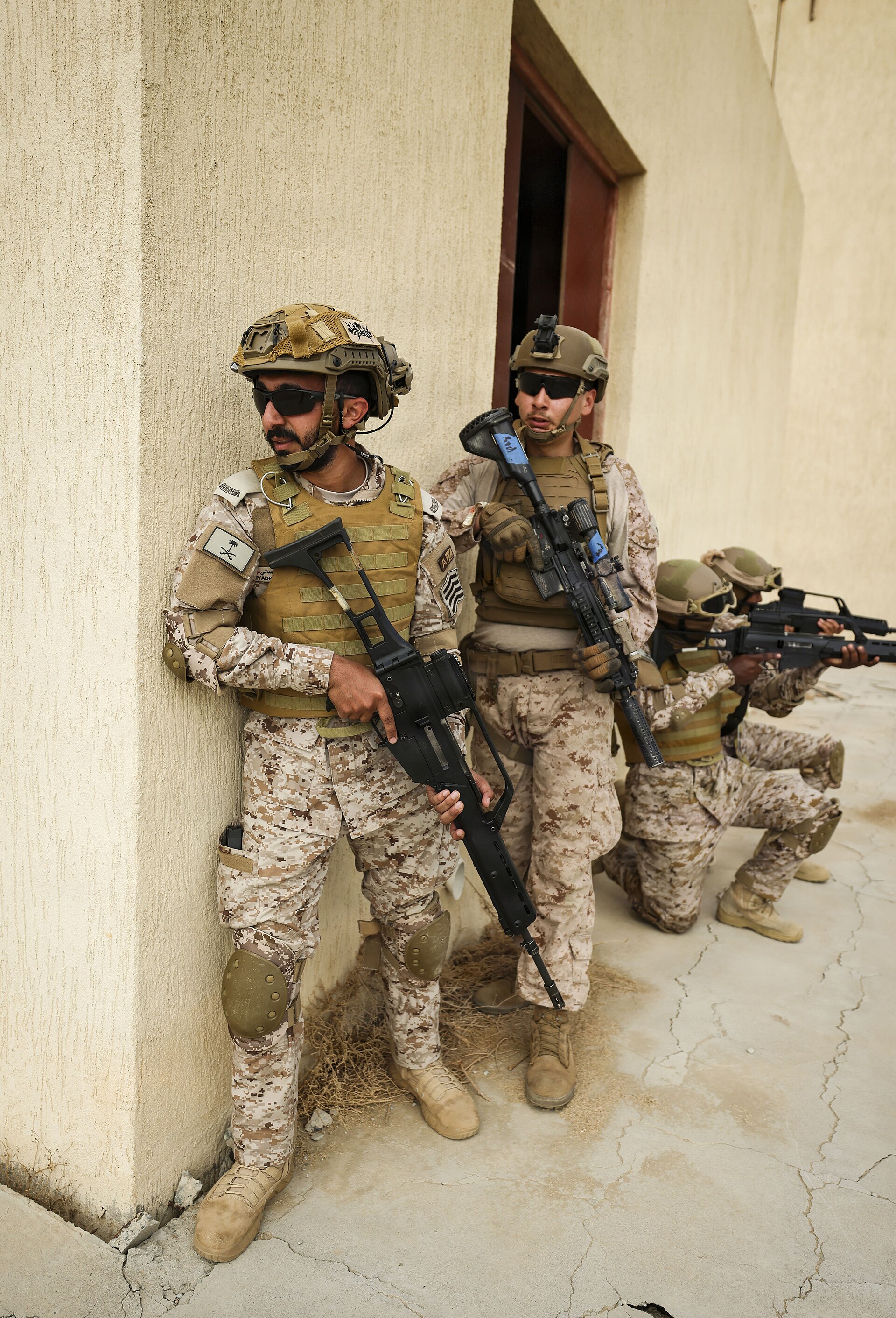
The diversification is not cosmetic. South Korea’s Defense Acquisition Program Administration signed a cooperation framework covering defense research, technological innovation, and missile defense systems — areas where Seoul’s capabilities rival or exceed those of traditional European suppliers. Turkey’s Baykar, already Saudi Arabia’s largest non-American defense partner, deepened its relationship through additional UCAV and autonomous systems contracts. The Chinese presence, while politically sensitive, expanded into drone technology and strategic missile cooperation.
The war accelerated this diversification from strategic preference to operational necessity. When interceptor stocks deplete faster than any single supplier can replenish them, multiple supply chains become a survival requirement rather than a procurement philosophy. Saudi Arabia’s defense leadership, led by Prince Khalid bin Salman, appears to have internalized this lesson: the Kingdom’s $8.8 billion in World Defense Show contracts were signed just weeks before the first Iranian missiles struck.
Can Money Solve the Drone Cost Asymmetry?
The defining tactical challenge of the Iran war is the cost exchange ratio between Iranian offensive systems and Saudi defensive systems. Iran’s drone arsenal operates at a price point that renders traditional air defense economically unsustainable over an extended campaign. A Shahed-136 loitering munition costs between $20,000 and $50,000 to produce. A PAC-3 MSE interceptor costs between $4 million and $12 million. At the extreme end, this represents a 600-to-1 cost advantage for the attacker.
The mathematics compound over time. If Iran launches 50 drones per day — a pace it has sustained multiple times during the current conflict — and Saudi Arabia intercepts 85 percent with premium interceptors, the daily cost of defense exceeds $170 million at the lower end of the PAC-3 price range. Over a month, that figure approaches $5 billion in interceptor expenditure alone, not counting the missiles that miss, the radar and command infrastructure costs, or the wear on launch systems operating at near-continuous tempo.
| Iranian System | Unit Cost | Saudi Interceptor | Unit Cost | Exchange Ratio |
|---|---|---|---|---|
| Shahed-136 drone | $20,000-50,000 | PAC-3 MSE missile | $4-12 million | 80:1 to 600:1 |
| Shahed-136 drone | $20,000-50,000 | Ukrainian interceptor drone | €1,000-4,000 | 5:1 to 50:1 |
| Fateh-110 ballistic missile | $300,000-500,000 | THAAD interceptor | $12-15 million | 24:1 to 50:1 |
| Emad MRBM | $1-3 million | PAC-3 MSE (2 per target) | $8-24 million | 3:1 to 24:1 |
This is why the Ukrainian interceptor drone deal matters so much. At 1,000 to 4,000 euros per unit, Ukrainian systems bring the exchange ratio down to a range where sustained defense becomes economically viable. A drone-on-drone engagement at a 5:1 or 10:1 cost ratio is sustainable; a missile-on-drone engagement at a 600:1 ratio is not. The Saudi defense establishment has learned, under fire, that the most expensive solution is not always the most effective one — and that the optimal air defense architecture combines layered systems at different price points rather than relying exclusively on premium interceptors.
The broader lesson applies beyond air defense. Saudi Arabia’s traditional procurement model — buying the most expensive, most advanced, American-made system available — was designed for a strategic environment where deterrence, prestige, and alliance signaling mattered more than sustained operational use. The Iran war has imposed a different logic: affordability, availability, and throughput now matter as much as technological sophistication.
The Defense Capability Readiness Matrix
To assess where Saudi Arabia stands in the transition from defense spender to defense power, eight capability dimensions reveal the gap between investment and readiness. Each dimension is scored on a five-point scale, from 1 (minimal capability, fully dependent on foreign support) to 5 (world-class capability, fully self-sufficient). The scores reflect assessments drawn from SIPRI data, GAMI reporting, World Defense Show disclosures, and open-source analysis of wartime performance.
| Capability Dimension | Score (1-5) | Assessment | Key Gap |
|---|---|---|---|
| Hardware Procurement | 5 | World-class. Virtually unlimited budget, access to top-tier Western and emerging supplier systems. | None — spending is not the problem |
| Operator Training | 2 | Limited. THAAD crews trained in US. Patriot batteries include Greek and American operators. F-15 pilot pipeline adequate but narrow. | Insufficient domestic training infrastructure |
| Maintenance & Sustainment | 2 | Heavy reliance on OEM contractors (Boeing, Raytheon, Naval Group). Local MRO capacity growing but not self-sufficient. | Foreign technician dependency for complex systems |
| Systems Integration | 3 | Improved significantly since 2019 Aramco attacks. Multi-layer radar integration operational. Still depends on US THAAD-Patriot interoperability protocols. | Command architecture partially imported |
| Indigenous Manufacturing | 2 | SAMI growing rapidly but early-stage. Tier 1 assembly established. Tier 2/3 capacity minimal. EDGE Group (UAE) 5+ years ahead. | Decade behind peer regional manufacturers |
| Doctrine & Strategy | 3 | Wartime learning accelerating doctrinal development. Joint operations with coalition partners improving. No independent combined-arms doctrine tested. | Untested without coalition support |
| Supply Chain Resilience | 2 | Near-total dependence on foreign supply chains for interceptors, spare parts, and advanced munitions. Wartime depletion rates expose single-source vulnerabilities. | Interceptor stock depletion rate unsustainable |
| R&D and Innovation | 1 | Nascent. GAMI R&D budget of $1.6 billion is serious but far below Turkey ($2.5B) and South Korea ($4B+). No indigenous advanced weapons program producing operational systems. | No sovereign R&D ecosystem yet |
The aggregate score of 20 out of 40 tells a clear story. Saudi Arabia scores at or near the top in the one dimension where money is sufficient — hardware procurement — and near the bottom in dimensions that require time, institutional development, and human capital investment. The Kingdom is, in capability terms, an armed customer rather than a military power. The distinction matters because customers depend on their suppliers’ willingness and ability to deliver, while military powers can sustain operations independently.
The iron law of defense development is that you can buy a weapon in two years, train a crew in two more, and build an industry in twenty. Saudi Arabia is trying to compress that timeline. The war may be the pressure that finally makes it possible — or the crisis that proves it cannot be done.
Defense analyst, International Institute for Strategic Studies, March 2026
The Contrarian Case — Dependency as Strategic Asset
The conventional analysis of Saudi Arabia’s defense dependency treats it as a vulnerability — a strategic weakness that adversaries can exploit and allies can use as political leverage. Every think tank assessment, every congressional hearing on Gulf security, and every academic paper on Saudi military modernization frames the dependency in negative terms. And the evidence supporting that conventional view is substantial: during the 2019 Aramco attacks, the systems that should have defended the Kingdom’s most critical infrastructure were operated by crews that may not have been fully alert to the threat. Dependency creates fragility.
There is an alternative reading, less comfortable but arguably more accurate, that the Kingdom’s defense dependency is not merely a weakness to be overcome. It is, in its current form, a strategic asset that has kept Saudi Arabia alive.
Consider the counterfactual. If Saudi Arabia possessed a fully indigenous defense capability — if it could manufacture its own interceptors, train its own crews, and sustain operations without foreign support — the geopolitical incentive for the United States, the United Kingdom, France, and Greece to deploy their own military assets in defense of the Kingdom would be dramatically reduced. American Patriot crews in Saudi Arabia are not just operating air defense systems. They are a tripwire that ensures any Iranian attack on Saudi territory is simultaneously an attack on American military personnel. Greek Patriot operators serve an identical function for European engagement.
The $80 billion annual defense budget does not merely purchase hardware. It purchases relationships. The F-15 sustainment contract is a $3 billion annual commitment that keeps Boeing’s support infrastructure embedded in Saudi military operations. The THAAD program creates a $15 billion dependency on Lockheed Martin that neither company nor country can easily dissolve. Every major defense contract creates institutional ties, personnel exchanges, intelligence sharing arrangements, and mutual dependencies that function as de facto security guarantees — more reliable, in some respects, than the formal treaty alliances Saudi Arabia lacks.
Prince Mohammed bin Salman’s strategy may be more sophisticated than the simple narrative of “buying independence” suggests. The goal is not to eliminate dependency — an impossible ambition for a nation of 35 million facing a rival of 88 million with a mature, if sanctioned, defense industrial base. The goal is to diversify dependency, spreading procurement across enough suppliers that no single partner can use arms sales as political leverage while ensuring that multiple major powers have a direct material stake in Saudi security.
The World Defense Show’s 220 agreements across 89 countries represent this strategy in action. By purchasing Turkish drones, Ukrainian interceptors, South Korean air defense technology, French naval systems, and American missile shields simultaneously, Saudi Arabia ensures that its defense is everyone’s business. The arms diversification sprint triggered by the war is not about replacing America. It is about making sure that Saudi Arabia’s survival is commercially indispensable to the defense industries of a dozen nations.
What Must Change Before the Next War?
The Iran war will end. The capability gaps it has exposed will not close automatically. History suggests that the post-war period is precisely when the pressure to reform dissipates — when defense budgets contract, when the urgency of institutional change gives way to the comfort of returning to business as usual, and when the lessons written in interceptor smoke over Riyadh are filed and forgotten. Saudi Arabia has made this mistake before: the 1991 Gulf War exposed critical air defense weaknesses that took more than a decade to address, and the 2019 Aramco attacks revealed gaps that were only partially closed before the current conflict began.
Saudi Arabia’s defense establishment faces a set of decisions in the post-war period that will determine whether the Kingdom enters the next crisis — and in a region defined by serial conflict, there will be a next crisis — in a stronger or weaker position.
The first priority is interceptor stockpiling at a scale the Kingdom has never attempted. The 730 PAC-3 MSE missiles ordered in January 2026 represent approximately 18 to 24 months of wartime consumption at current rates. Post-war procurement must build a strategic interceptor reserve sufficient for a 90-day high-intensity campaign — requiring an inventory of at least 2,000 to 3,000 PAC-3 missiles plus a comparable quantity of lower-cost drone interceptors. The total cost of such a reserve would exceed $25 billion in interceptors alone.
The second priority is the human capital pipeline. GAMI and SAMI have made creditable progress in expanding their workforces, but the Kingdom needs a generation of defense engineers, not merely a generation of defense employees. This requires partnerships with Saudi universities — King Fahd University of Petroleum and Minerals, King Saud University, and the new defense-focused institutions under GAMI’s umbrella — to produce graduates with the specialized skills in radar engineering, ballistic missile design, systems integration, and cyber defense that a sovereign defense industrial base demands.
The third priority is the transition from foreign operators to Saudi-crewed systems on a realistic timeline. The THAAD program offers a model: train Saudi crews at Fort Bliss, then gradually transfer operational responsibility as competence builds. This model should be replicated across every major platform, with contractual milestones that reduce foreign crew presence by a specified percentage each year rather than leaving the transition to informal arrangements.
The fourth priority is indigenous R&D investment at a level that matches ambition. GAMI’s SR6 billion R&D allocation is a starting point, not a destination. Turkey’s defense R&D trajectory — from negligible domestic capability in the 1990s to a $2.5 billion annual R&D budget and globally competitive products like the Bayraktar TB2 by the 2020s — demonstrates that the transition is possible within a generation. But it requires sustained investment through multiple budget cycles, tolerance for failed programs, and a willingness to accept that the first generation of indigenous systems will be inferior to imported alternatives.
The fifth, and perhaps most uncomfortable, priority is doctrinal honesty about what Saudi Arabia can and cannot do independently. The war has proven that the Kingdom can defend its airspace with coalition support. It has not proven that it can do so alone. Post-war defense planning should proceed from this honest assessment rather than from the aspirational language of full sovereignty that characterizes official Vision 2030 defense communications. A defense strategy built on diversified partnerships, graduated capability transfer, and strategic stockpiling is achievable. A strategy built on full independence within a decade is not.
Frequently Asked Questions
How much does Saudi Arabia spend on defense annually?
Saudi Arabia spent $80.3 billion on defense in 2024, making it the seventh-largest military spender globally and the largest in the Middle East. The 2025 budget allocated $78 billion, representing 21 percent of government spending and 7.2 percent of GDP. Cumulative defense spending over the past five years exceeds $300 billion, according to SIPRI data and Saudi Ministry of Finance budget documents.
What is Saudi Arabia’s defense localization rate?
The General Authority for Military Industries reported that 24.89 percent of Saudi military spending was localized domestically by the end of 2024, up from just 4 percent in 2018. The Vision 2030 target is 50 percent localization by 2030, but current trajectory suggests the Kingdom will reach approximately 35 to 38 percent by that date. Local manufacturing capacity remains concentrated in Tier 1 assembly, with limited indigenous design capability.
How effective is Saudi Arabia’s air defense system against Iranian missiles?
Saudi Arabia’s Patriot and THAAD systems have intercepted an estimated 85 to 90 percent of Iranian ballistic missiles since the war began on February 28, 2026, according to the International Institute for Strategic Studies. The drone interception rate across the Gulf Cooperation Council is approximately 85 percent. While these rates exceeded pre-war expectations, the remaining 10 to 15 percent leakage rate has still allowed dozens of successful strikes on critical infrastructure.
Why does Saudi Arabia rely on foreign operators for its defense systems?
Complex weapons platforms like the Patriot and THAAD require years of specialized training and institutional knowledge that Saudi Arabia is still developing. American crews, Greek air force personnel, and defense contractor technicians supplement Saudi operators because the Kingdom’s training pipeline has not kept pace with its hardware procurement. THAAD crews train at Fort Bliss, Texas, and the first Saudi battery only became operational in July 2025 despite an order placed in 2017.
What is SAMI and what role does it play in Saudi defense?
Saudi Arabian Military Industries is a state-owned defense company established in 2017 under the Public Investment Fund. SAMI employs more than 7,000 people, 71 percent of whom are Saudi nationals, and operates subsidiaries covering land systems, autonomous platforms, and aerospace. Its most significant program is the $3 billion-plus Bayraktar Akinci UCAV production partnership with Turkey’s Baykar, which targets 70 percent local manufacturing by 2026.
How does Saudi Arabia’s defense industry compare to the UAE’s EDGE Group?
The UAE’s EDGE Group, established in 2019, is currently larger and more capable than SAMI. EDGE operates 35-plus subsidiaries, employs 14,100 people, has expanded its product catalog from 30 to 201 items, and recorded $2.3 billion in export contracts in 2024. Academic analysis published in 2025 concluded that EDGE leads in managing complex projects while SAMI holds greater long-term potential due to Saudi Arabia’s larger market and spending power.
What happened at the 2026 World Defense Show?
The third World Defense Show in Riyadh concluded with a record $8.8 billion in deals across 220 agreements, including 93 government-to-government pacts and 127 corporate partnerships. The event drew 1,486 exhibitors from 89 countries and 137,000 visitors. Key new partnerships included defense cooperation agreements with Slovakia, Malaysia, South Korea, and expanded relationships with Turkey, China, and Brazil — reflecting Saudi Arabia’s deliberate diversification away from exclusive US dependency.
Why is the drone cost asymmetry so important for Saudi defense?
Iran’s Shahed-136 drones cost between $20,000 and $50,000 each, while the Patriot PAC-3 MSE interceptors used to destroy them cost $4 million to $12 million per unit — creating a cost exchange ratio as extreme as 600:1 in Iran’s favor. At sustained interception rates of dozens per day, this asymmetry makes traditional missile defense economically unsustainable. Ukrainian interceptor drones at 1,000 to 4,000 euros per unit are the only systems that achieve cost parity, which is why Saudi Arabia’s new arms partnerships prioritize affordable, high-volume solutions alongside premium systems.