
RIYADH — Saudi Arabia and Israel have never exchanged ambassadors, never signed a peace treaty, and never publicly acknowledged any form of military partnership. Yet twenty-six days into the Iran war, the two nations are fighting on the same side, sharing the same radar feeds, and defending the same airspace through a US-brokered command architecture that neither government will discuss on the record. The most consequential military alliance in the modern Middle East is one that officially does not exist.
The contradiction sits at the heart of the 2026 conflict. Crown Prince Mohammed bin Salman and Israeli Prime Minister Benjamin Netanyahu both lobbied President Donald Trump to strike Iran, according to a Washington Post investigation published on February 28. Saudi Arabia then opened King Fahd Air Base in Taif to American forces conducting operations against Iranian targets. Israel launched waves of strikes from bases that depend on Saudi-monitored airspace for safe passage. And the entire defensive shield protecting the Arabian Peninsula from Iranian missiles and drones runs through CENTCOM’s Combined Air Operations Center in Qatar, where Israeli and Saudi data streams merge into a single operational picture. What follows is the definitive account of how two nations without diplomatic relations became de facto co-belligerents in a war that is reshaping the Middle East.
Table of Contents
- How Did Saudi Arabia and Israel End Up on the Same Side?
- What Role Did MBS and Netanyahu Play in Starting the War?
- King Fahd Air Base — The Decision That Ended Neutrality
- How Does CENTCOM Connect Saudi and Israeli Air Defenses?
- What Intelligence Are Saudi Arabia and Israel Sharing?
- The Alignment Spectrum — Mapping the Invisible Alliance
- Why Does Saudi Arabia Deny Cooperating With Israel?
- The Palestine Paradox
- The Arms Pipeline — Fifteen Billion Dollars in Parallel
- What Happens to the Alliance After the War Ends?
- The Contrarian Case — Normalization Is Now Unnecessary
- Frequently Asked Questions
How Did Saudi Arabia and Israel End Up on the Same Side?
The alignment between Riyadh and Jerusalem did not begin on February 28, 2026, when American and Israeli forces struck Iran. It began years earlier, through a series of structural changes to the regional security architecture that made cooperation functionally inevitable — even without a single signed agreement between the two capitals.
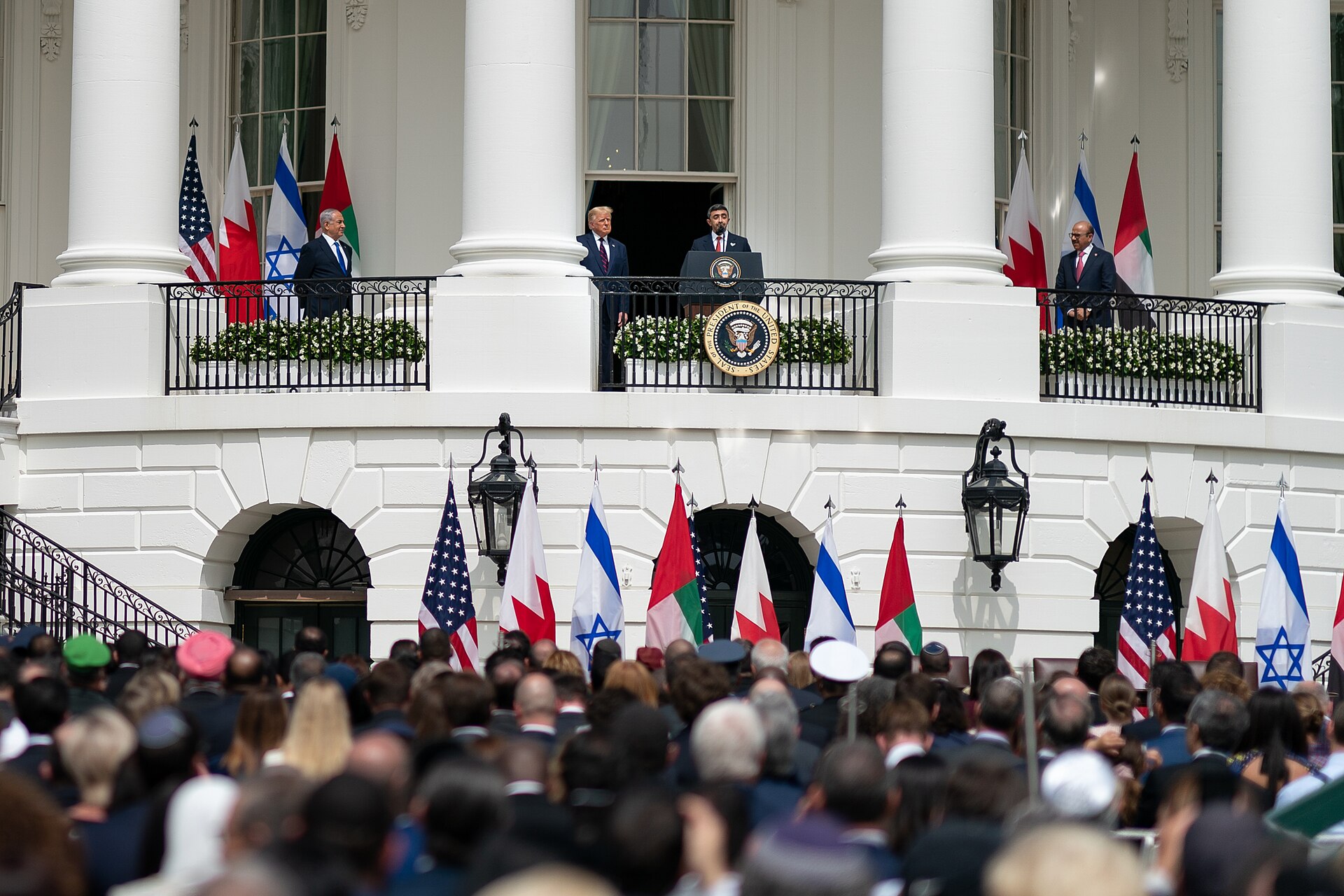
The most important of these changes was Israel’s transfer from US European Command to US Central Command in September 2021, a bureaucratic decision with revolutionary strategic consequences. For decades, Israel had been deliberately kept separate from the command structure that managed US military relationships with Arab states. The Pentagon feared that placing Israel alongside Saudi Arabia, the UAE, and Egypt under the same combatant command would force Arab governments into an uncomfortable proximity they could not publicly accept. By 2021, that calculus had shifted. The Abraham Accords, signed in September 2020 between Israel, the UAE, and Bahrain, demonstrated that at least some Arab states were willing to formalize relations with Israel. Moving Israel into CENTCOM signalled that Washington viewed the entire region as a single operational theatre.
The integration proceeded faster than anyone in Washington anticipated. By 2022, participating countries had begun connecting their radar and sensor systems to CENTCOM’s network. Saudi Arabia, which had never signed the Abraham Accords and maintained no official relationship with Israel, found itself sharing a common operating picture with Israeli forces through the simple act of linking its air defense radars to an American command centre that happened to include Israeli data feeds. The architecture was designed so that no individual country needed to formally acknowledge any bilateral connection. Everything flowed through the American hub.
A regional defense framework established under CENTCOM’s coordination functioned as a discreet network for information-sharing, joint exercises, and operational planning aimed at countering Iran’s missile and drone arsenal. The stated goal was real-time coordination on intelligence, radar connectivity, cyber communication, and integrated missile defense systems. By the time Iran launched its first retaliatory strikes against Gulf targets on March 1, 2026, the infrastructure for Saudi-Israeli cooperation was already in place. The war did not create the alliance. It activated it.
What Role Did MBS and Netanyahu Play in Starting the War?
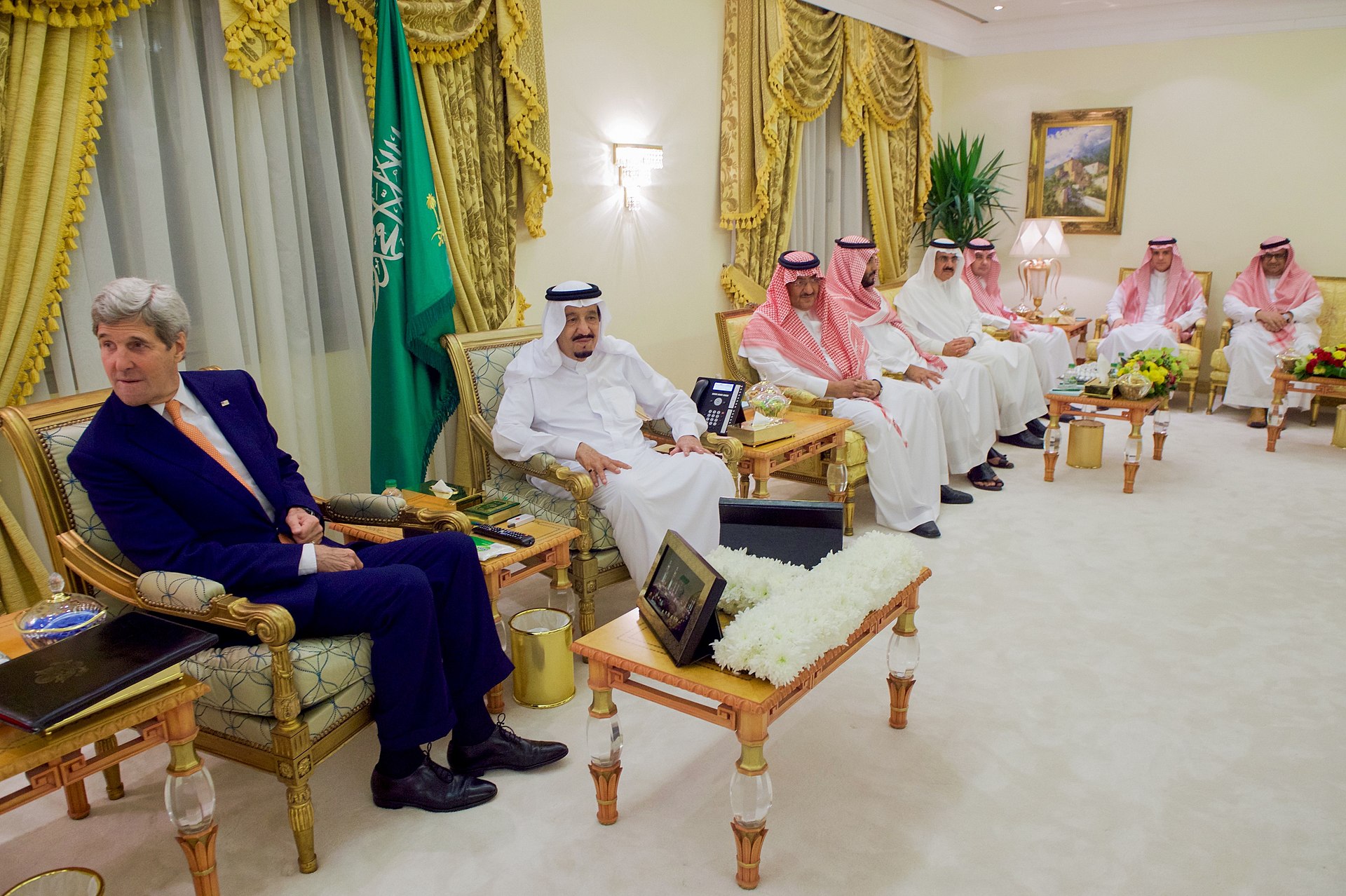
Both leaders lobbied President Trump to strike Iran, and both denied doing so. The Washington Post reported on February 28, 2026, that Trump’s decision to launch wide-ranging strikes against Iranian military and nuclear infrastructure came after weeks of private pressure from Crown Prince Mohammed bin Salman and Prime Minister Benjamin Netanyahu. According to the Post, MBS made multiple private phone calls to Trump over the preceding month, advocating military action despite publicly supporting diplomatic solutions.
The lobbying operated on parallel tracks that never formally intersected. Netanyahu continued a long-standing Israeli campaign to persuade Washington that Iran’s nuclear programme represented an existential threat requiring military action. The Israeli argument centred on intelligence assessments of Iran’s enrichment progress and its expanding ballistic missile capability. MBS’s argument was different. According to officials cited by the Post, the Crown Prince framed the moment as a “historic opportunity” to reshape the Middle East’s strategic balance, neutralising the Iranian threat that had constrained Saudi ambitions for decades.
Saudi Arabia denied the reporting within forty-eight hours. Fahad Nazer, the spokesman for the Saudi Embassy in Washington, stated that “the Kingdom of Saudi Arabia has been consistent in supporting diplomatic efforts to reach a credible deal with Iran. At no point in all our communication with the Trump Administration did we lobby the President to adopt a different policy.” The denial was unequivocal. It was also largely disbelieved by the diplomatic and intelligence communities in Washington, London, and across the Gulf.
US intelligence assessments, reported by multiple outlets, indicated that Iran was unlikely to pose a direct threat to the US mainland within the next decade. The decision to strike was therefore driven not by an imminent American security concern but by the convergent interests of two regional powers that shared an enemy but could not share a stage. MBS needed Iran weakened to secure Vision 2030 and consolidate Saudi regional dominance. Netanyahu needed Iran’s nuclear programme destroyed to secure Israel’s long-term survival. Both found in Trump a president willing to act on their combined advocacy, and both benefited from an outcome they could claim they had neither sought nor orchestrated.
King Fahd Air Base — The Decision That Ended Neutrality
When reports emerged on March 20, 2026, that Saudi Arabia had granted the United States military access to King Fahd Air Base in Taif, the announcement shattered any remaining pretence of Saudi neutrality. The base, located in the western Hejaz region approximately 1,400 kilometres from the nearest Iranian launch positions, was selected precisely because it sits beyond the effective range of most Iranian ballistic missiles and drone systems — making it a staging area that Iran could threaten but not easily reach.
King Fahd Air Base houses three Royal Saudi Air Force wings and represents one of the Kingdom’s most capable air combat facilities. Its runways can accommodate every aircraft in the US inventory, from F-35 stealth fighters to B-1B Lancer bombers. Opening it to American forces conducting operations against Iran placed Saudi Arabia in a category that Defence Minister Khalid bin Salman had spent weeks trying to avoid: co-belligerent. Neither Saudi Arabia nor the UAE formally declared war on Iran as of March 25. Neither country deployed forces in an offensive capacity against Iranian targets. But providing basing for the power conducting the strikes is, under international law, a form of material support that Iran has repeatedly cited as justification for its retaliatory attacks on Gulf infrastructure.
The decision was an apparent reversal. In the war’s opening days, Saudi officials stated publicly that their military bases could not be used to attack Iran. The reversal came after twenty days of Iranian drone and missile strikes against Saudi territory, including attacks on the Yanbu oil export terminal, the Eastern Province’s petroleum infrastructure, and residential areas. By the time MBS authorised the Taif decision, Saudi air defences had already intercepted more than three hundred Iranian projectiles, and the political space for neutrality had collapsed.
The strategic calculus behind the Taif decision reflected a reality that defence analysts had long predicted. Saudi Arabia’s $78 billion annual defence budget, the seventh largest in the world and representing 7.3 percent of GDP, was designed to deter precisely the kind of sustained aerial campaign that Iran was conducting. Yet deterrence had failed. Intercepting drones that cost Iran $20,000 to build with Patriot missiles that cost $4 million apiece was an equation that could not hold indefinitely. Granting the United States basing rights for offensive operations was, in the Saudi strategic calculation, the cheapest way to stop the incoming fire. The fact that those offensive operations also served Israeli strategic objectives was a secondary consideration that Saudi officials preferred not to discuss.
The Wall Street Journal and Bloomberg reported on March 24 that the UAE had taken parallel steps, shutting down every Iranian-run institution in Dubai and preparing logistical support for what Abu Dhabi assessed could be a months-long conflict. The Gulf’s two most powerful economies were no longer bystanders. They were participants in everything but name — a distinction that mattered enormously in Riyadh and Abu Dhabi but not at all in Tehran.
How Does CENTCOM Connect Saudi and Israeli Air Defenses?
The technical architecture connecting Saudi and Israeli air defences is simultaneously the most consequential and least discussed element of the 2026 war. It operates through CENTCOM’s Combined Air Operations Center at Al Udeid Air Base in Qatar, where sensor data from across the Middle East converges into a single common operating picture that is shared, without restriction, with all coalition members.
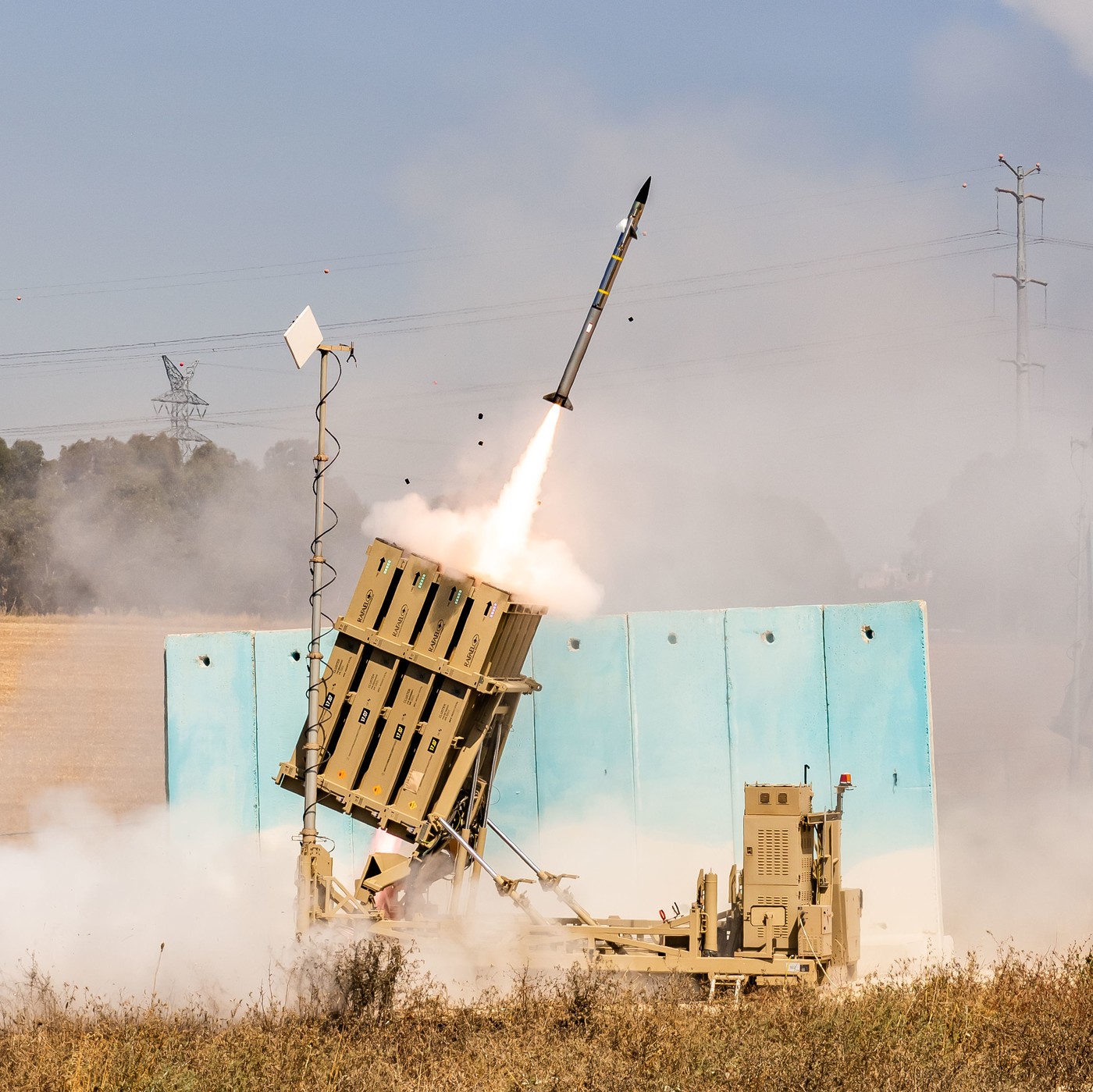
The system works as follows. Saudi Arabia’s AN/FPS-117 long-range radar arrays and its Patriot missile batteries feed tracking data into CENTCOM’s network. Israel’s ELM-2084 radars, Green Pine systems, and its multi-layered missile defence architecture — Iron Dome for short-range threats, David’s Sling for medium-range, and Arrow for ballistic missiles — feed into the same network. A unified communications system supervised by CENTCOM allows real-time early warning on developing aerial threats. When Iran launches a ballistic missile from its western provinces, Saudi radars may detect it first. The data reaches CENTCOM’s fusion centre in seconds. Israeli tracking systems pick up the same object. The combined picture provides launch-point identification, trajectory projection, and intercept solution options faster than any single national system could achieve alone.
This integration was tested operationally during Iran’s April 2024 attack on Israel, when Tehran launched more than three hundred drones and missiles in a single salvo. Saudi Arabia and the UAE passed intelligence about Iran’s plans to American and Israeli forces, according to the Times of Israel and other outlets. Missiles and drones were tracked immediately after launch by radars in Persian Gulf countries via the CENTCOM operations centre. The information was relayed to fighter jets from “several countries” in the air over Jordan, to warships in the eastern Mediterranean, and to Israel’s missile defence batteries. The result was a ninety-nine percent interception rate.
The 2026 war has stretched this architecture to its operational limits. Saudi forces have intercepted Iranian drones and ballistic missiles over the Eastern Province, Riyadh, and even the Red Sea coast. Greek-operated Patriot batteries deployed in Saudi Arabia have engaged Iranian targets using the same tracking data that Israeli systems consume. The air defence war over the Arabian Peninsula is, in operational terms, an Israeli-Arab-American joint enterprise — even though no document anywhere acknowledges it as such.
Breaking Defense reported in June 2022 that Gulf states were willing to host Israeli sensors as part of a broader air defence network. Satellite imagery subsequently identified Israeli-manufactured Barak missile launchers and an Elta ELM-2084 radar near al-Dhafra airbase south of Abu Dhabi. Open-source intelligence confirmed the deployment of another ELM-2084 in northeastern Somalia, positioned to track aerial threats from Yemen’s Houthis. The physical hardware of Israeli defence technology is already deployed across the Gulf theatre. The war simply gave it purpose.
What Intelligence Are Saudi Arabia and Israel Sharing?
The intelligence relationship between Saudi Arabia and Israel predates the 2026 war by at least a decade, though its scope and depth have historically been a matter of speculation rather than confirmed reporting. The war has made the contours of this relationship more visible than either government would prefer.
Saudi Arabia’s General Intelligence Presidency and Israel’s Mossad have conducted intelligence exchanges focused on Iran since at least the mid-2010s, according to multiple current and former US officials cited in reporting by the Intercept, the Wall Street Journal, and Israeli media. The exchanges have covered Iran’s nuclear programme, its ballistic missile development, the activities of the Islamic Revolutionary Guard Corps across the region, and the capabilities of Iranian proxy forces in Yemen, Iraq, Syria, and Lebanon. An International Consortium of Investigative Journalists report published in October 2025 revealed that Arab states, including Saudi Arabia, had deepened military ties with Israel while publicly denouncing the Gaza war — a pattern of covert cooperation that has only accelerated since February 2026.
During the 2026 conflict, the intelligence sharing has expanded to include tactical military intelligence: launch-point data on Iranian missile batteries, real-time tracking of drone swarms, and assessments of Iranian command-and-control infrastructure. Saudi Arabia’s proximity to Iran — the two countries share a maritime border across the Persian Gulf — gives Riyadh collection advantages that Israel cannot match from its own territory. Saudi SIGINT stations along the Gulf coast can intercept Iranian military communications in near-real-time. Israeli signals intelligence and cyber capabilities, among the most advanced in the world, provide penetration into Iranian command networks that Saudi intelligence has historically lacked. The combination creates an intelligence picture more comprehensive than either service could produce alone.
The practical value of this exchange was demonstrated in the opening days of the conflict. When Iran launched its first retaliatory strikes against Gulf targets on March 1, Saudi radar operators tracked the incoming projectiles within seconds of launch. That tracking data reached CENTCOM’s fusion centre and was available to Israeli early-warning systems almost instantaneously, providing additional confirmation of trajectories and launch sites that Israeli forces were already preparing to strike. The feedback loop — Saudi detection, American fusion, Israeli action — operated continuously through the war’s first twenty-six days without a single public acknowledgment from any of the three participants.
The result is a complementary intelligence relationship that neither side has any interest in dissolving, regardless of the political barriers to formal diplomatic recognition. A Saudi intelligence official provides Iran-related collection to CENTCOM. CENTCOM shares relevant material with all coalition partners, including Israel. An Israeli intelligence assessment of Iranian capabilities is provided to CENTCOM. CENTCOM disseminates it to Gulf partners, including Saudi Arabia. The American hub launders the bilateral exchange, allowing both sides to claim truthfully that they share intelligence with Washington rather than with each other. The structure is elegant in its deniability. It is also, by any functional definition, a bilateral intelligence alliance with an American intermediary.
The Alignment Spectrum — Mapping the Invisible Alliance
The Saudi-Israeli relationship defies conventional alliance categories. It is neither a formal alliance nor a mere convergence of interests. It operates across multiple dimensions with varying degrees of visibility, deniability, and institutionalisation. Mapping these dimensions reveals a relationship that is far more developed than either government acknowledges and far less formalised than Washington has spent years trying to engineer.
| Dimension | Cooperation Level | Mechanism | Visibility | Status Pre-War | Status During War |
|---|---|---|---|---|---|
| Air Defence Integration | Deep operational | CENTCOM fusion centre; shared radar feeds | Covert but documented | Established since 2022 | Fully active; combat-tested |
| Intelligence Sharing | Systematic bilateral | Via CENTCOM hub; some direct channels | Covert | Ongoing since mid-2010s | Expanded to tactical military intel |
| Military Basing | Indirect | Saudi bases host US forces conducting strikes that benefit Israel | Semi-overt after WSJ report | Limited US presence | King Fahd Air Base opened to US |
| Diplomatic Coordination | Parallel but separate | Both lobbied Trump independently; no joint diplomatic action | Leaked via WaPo | Backchannel contacts | Convergent pressure on US |
| Defence Trade | Aspirational | No direct sales; US serves as intermediary for parallel procurement | Public (via DSCA notifications) | GCC interest in Israeli systems | Parallel US arms packages to both |
| Formal Diplomatic Relations | Non-existent | No embassy, no recognition, no treaty | Public | Normalization stalled | Further stalled by war |
The Alignment Spectrum reveals a striking paradox. At the operational level — air defence, intelligence, and indirect military support — Saudi-Israeli cooperation is deeper than many formal alliances. NATO members that share ambassador-level relations often have less integrated air defence networks than what CENTCOM has built between Riyadh and Tel Aviv. Yet at the diplomatic level, the relationship remains frozen. No Saudi official has ever publicly acknowledged any form of cooperation with Israel. No Israeli leader has visited the Kingdom in an official capacity.
The gap between operational reality and diplomatic fiction is sustainable precisely because of the American intermediary. CENTCOM provides the institutional architecture that allows deep cooperation without bilateral acknowledgment. As long as both sides can claim they are cooperating with the United States rather than with each other, the domestic political costs remain manageable. The war has widened the operational cooperation while leaving the diplomatic fiction untouched — a testament to the durability of a structure designed from the start to be invisible.
Why Does Saudi Arabia Deny Cooperating With Israel?
The denials serve three audiences, each with different requirements. The first is the Saudi domestic population, where public opinion on Israel remains deeply hostile. A 2023 survey by the Washington Institute for Near East Policy found that only thirteen percent of Saudis supported diplomatic relations with Israel. Among citizens under thirty — the demographic MBS has staked Vision 2030 on capturing — the figure was marginally higher but still represented a clear minority. Acknowledging military cooperation with Israel while Iranian missiles are striking Saudi cities and Muslim casualties mount in the broader conflict would risk a domestic backlash that no amount of entertainment spending could absorb.
The second audience is the broader Muslim world, where Saudi Arabia’s legitimacy as custodian of Islam’s two holiest cities depends on maintaining a posture of solidarity with Palestinian aspirations. MBS has repeatedly conditioned any normalization with Israel on a “credible path toward a Palestinian state.” Acknowledging cooperation with Israel during a war that Israel initiated alongside the United States — while Palestinian statehood remains unresolved — would undermine the religious authority that underpins the Saudi monarchy’s domestic and international legitimacy.
The third audience is Iran itself. As long as Saudi Arabia maintains the fiction of neutrality, Tehran’s legal and political basis for targeting Saudi territory remains contested. Iran has cited Saudi Arabia’s hosting of American forces as justification for its strikes, but Riyadh’s official position — that it is not a party to the conflict — provides diplomatic and legal cover that would vanish with any acknowledgment of coordination with Israel. The denial is not merely a public relations strategy. It is a component of Saudi Arabia’s war strategy.
There is a fourth audience that Saudi strategists rarely discuss publicly but consider carefully: other Arab and Muslim-majority nations that Saudi Arabia relies upon for strategic partnerships. Pakistan, which signed a Strategic Mutual Defence Agreement with Saudi Arabia in September 2025, has been activated under the terms of that pact to support the Kingdom’s defence. Egypt, Turkey, and Jordan all maintain relationships with Saudi Arabia that could be complicated by any visible Israeli dimension. Pakistan’s Prime Minister Shehbaz Sharif affirmed on March 25 that Pakistan “stands firmly with Saudi Arabia against Iran’s repeated attacks,” but that solidarity is premised on a Saudi Arabia defending itself against Iranian aggression — not a Saudi Arabia operating in concert with Israel. The distinction matters in Islamabad, Ankara, and Cairo in ways that it does not in Washington or London.
The Palestine Paradox
The Palestinian question remains the single greatest obstacle to any public Saudi-Israeli alignment, and the 2026 war has made that obstacle larger rather than smaller. Before the war, normalization between Saudi Arabia and Israel was the diplomatic prize that three consecutive US administrations had pursued. The Abraham Accords, signed in September 2020, brought the UAE, Bahrain, Morocco, and Sudan into formal relations with Israel. Saudi Arabia was supposed to be next — the capstone that would transform the Middle East’s strategic architecture.
That prospect collapsed after October 7, 2023. Israel’s military campaign in Gaza generated levels of public anger across the Arab world that made normalization politically impossible for any Gulf leader. MBS, who had signalled willingness to normalise in a September 2023 interview with Fox News, reversed course. By early 2024, Saudi Arabia was insisting on a Palestinian state as a precondition — a demand that Netanyahu’s coalition, which includes ministers who openly reject Palestinian statehood, could not meet.
The Iran war has deepened the paradox. On one hand, it has demonstrated the practical value of Saudi-Israeli cooperation more vividly than any diplomatic negotiation could. The shared air defence network that intercepted Iranian missiles over Saudi cities in March 2026 proved that the security rationale for alignment is not theoretical. It is operational and life-saving. On the other hand, the war has made public normalization harder than ever. Israeli forces are simultaneously fighting in Iran, maintaining military operations in Gaza, and conducting strikes in Lebanon. The optics of Saudi Arabia normalizing relations with a country engaged in military operations across three predominantly Muslim territories are worse in 2026 than they were in 2024.
The Institute for National Security Studies in Tel Aviv published an analysis in early 2026 noting that Saudi-Israeli normalization was “drifting away — not collapsing outright but steadily receding.” The Middle East Institute in Washington reached a similar conclusion, arguing that “normalization is slipping away” as the regional conflict environment made any public rapprochement politically untenable. These assessments did not account for the possibility that normalization might become strategically irrelevant — a possibility that the war’s operational dynamics have made increasingly plausible.
The Arms Pipeline — Fifteen Billion Dollars in Parallel
In January 2026, weeks before the war began, the US State Department approved two arms packages that together captured the architecture of America’s dual relationship with Saudi Arabia and Israel. The first was a $6.7 billion sale to Israel covering Apache helicopters, Joint Light Tactical Vehicles, and other military equipment. The second was a $9 billion sale of PAC-3 Patriot missile interceptors to Saudi Arabia, described by the Defence Security Cooperation Agency as equipment that would “significantly improve Saudi Arabia’s contribution to the integrated air and missile defense system in the region.”
The language was precise. The Patriot sale was framed not as a standalone Saudi procurement but as a contribution to a regional system — the same system that includes Israeli air defence assets. The $15.7 billion in combined sales represented a single strategic investment packaged as two bilateral transactions. Washington was arming both sides of an alliance that formally did not exist, using the same justification (countering Iranian threats) for both sales.
Direct defence trade between Saudi Arabia and Israel remains nonexistent. No Israeli defence company has publicly sold systems to the Kingdom. But the interest is documented. In September 2021, Breaking Defense reported that Saudi Arabia was considering Israeli-made missile defence systems, including the Arrow family of interceptors. The GCC’s interest in the Arrow system dated to at least 2015, when Gulf officials explored procurement options through informal channels. Israel Aerospace Industries signed a $3.1 billion deal in 2024 to supply Germany’s air force with Arrow 3 interceptors, establishing a precedent for selling Israel’s most advanced missile defence technology to non-traditional partners.
The deployment of Israeli defence technology in the Gulf proceeded through indirect channels. Satellite imagery confirmed Israeli Barak missile launchers and Elta ELM-2084 radars near al-Dhafra airbase in the UAE. These deployments were never publicly announced by either Israel or the UAE. They were identified by open-source intelligence analysts monitoring commercial satellite feeds — a pattern of covert deployment that mirrors the broader Saudi-Israeli relationship: operational substance hidden beneath diplomatic silence.
The arms pipeline has implications that extend beyond the current conflict. Israel Aerospace Industries announced in February 2026 that the Arrow 4 interceptor, designed to defeat the most advanced ballistic missile threats, could enter operational service within months. Arrow 4 represents a qualitative leap in missile defence technology — a system capable of exo-atmospheric interception that would give its operator near-total protection against ballistic missile attack. Saudi Arabia, whose war costs are mounting daily, has every strategic reason to seek access to Arrow technology. Israel has every commercial reason to sell it. The only barrier is the absence of diplomatic relations — a barrier that the CENTCOM architecture and American intermediation have already demonstrated can be circumvented for every other category of defence cooperation.
| Recipient | Value | Equipment | Strategic Purpose |
|---|---|---|---|
| Israel | $6.7 billion | Apache helicopters, JLTVs, munitions | Offensive capability against Iran |
| Saudi Arabia | $9.0 billion | PAC-3 Patriot interceptors | Contribution to integrated regional missile defence |
| Combined | $15.7 billion | Offensive + defensive | Single strategic investment in dual-track alliance |
What Happens to the Alliance After the War Ends?
Three scenarios define the post-war trajectory of the Saudi-Israeli relationship. Each produces a different Middle East, and each depends on variables that remain unresolved as the war enters its fourth week.
The first scenario is formalisation. If the war ends with a decisive defeat of Iran’s military capability, including the destruction of its nuclear programme and the degradation of its proxy network, the strategic rationale for Saudi-Israeli cooperation becomes easier to defend publicly. MBS could argue that Iran’s neutralisation removes the threat that justified caution. Normalization could proceed under a framework that includes meaningful Palestinian concessions, even if they fall short of full statehood. This scenario aligns with Washington’s long-term objective and would represent the culmination of a twenty-year American diplomatic project. It is also the least likely outcome, because it requires an Iranian defeat so comprehensive that both Saudi domestic opinion and Netanyahu’s coalition politics align in favour of Palestinian accommodation.
The second scenario is institutionalised ambiguity. The war ends with a negotiated settlement that leaves Iran weakened but intact, its nuclear programme delayed but not destroyed, and its proxy network diminished but not eliminated. In this scenario, the Saudi-Israeli operational relationship continues exactly as it operates today — through CENTCOM, through parallel US arms sales, and through intelligence exchanges that neither side acknowledges. Normalization remains “on the table” indefinitely, providing diplomatic advantage to both sides without requiring the political risks of implementation. This scenario is the most likely and the most stable, because it allows both governments to extract the security benefits of cooperation without bearing the domestic political costs of formal recognition.
The third scenario is rupture. The war escalates in ways that force Saudi Arabia to choose between its relationship with Israel and its standing in the Muslim world. A catastrophic Israeli military action — strikes causing mass civilian casualties in Iran, a ground invasion, or the use of nuclear weapons — could create conditions where MBS determines that any association with Israel, however indirect, is a political liability. In this scenario, the operational cooperation continues at reduced levels through CENTCOM, but Saudi Arabia publicly distances itself from Israel and potentially conditions future engagement on Palestinian statehood demands it knows Israel will reject. The alliance survives in attenuated form, but the prospect of normalization dies for a generation.
| Scenario | Likelihood | Iran Outcome | Normalization | Operational Cooperation |
|---|---|---|---|---|
| Formalisation | Low (15-20%) | Decisive defeat | Proceeds with Palestinian concessions | Expands into direct defence trade |
| Institutionalised Ambiguity | High (55-65%) | Weakened but intact | Remains “on the table” indefinitely | Continues via CENTCOM framework |
| Rupture | Moderate (20-25%) | War escalation / Israeli overreach | Dies for a generation | Continues at reduced levels |
The Contrarian Case — Normalization Is Now Unnecessary
The conventional narrative holds that the Iran war will eventually drive Saudi Arabia toward normalization with Israel, because shared security interests create irresistible pressure toward formal alignment. This narrative misreads what the war has actually demonstrated.
The 2026 conflict has proven that Saudi Arabia and Israel can achieve every meaningful security objective of a formal alliance without the political costs of diplomatic recognition. They share intelligence through CENTCOM. Their air defence systems are integrated through American command architecture. Their arms procurement is coordinated through parallel US sales that serve the same regional strategy. Their leaders communicate their preferences to Washington independently but arrive at convergent outcomes. The operational substance of an alliance is already in place. The only missing element is the ceremony.
For MBS, the absence of ceremony is a feature, not a bug. Formal normalization would require concessions on Palestinian statehood that Netanyahu’s government cannot deliver. It would generate domestic opposition from Saudi conservatives and religious authorities who view Israel’s conduct in Gaza and the broader region as incompatible with Saudi Arabia’s role as custodian of Islam’s holiest sites. And it would eliminate the ambiguity that currently allows Saudi Arabia to maintain relationships with both Israel and the broader Muslim world — a strategic flexibility that normalization would permanently foreclose.
For Netanyahu, the calculus is similarly pragmatic. Formal normalization with Saudi Arabia was always valued primarily for its security dimensions — intelligence sharing, air defence coordination, and the prospect of containing Iran through a unified regional front. The war has delivered all of these benefits without requiring Netanyahu to make concessions on Palestinian statehood that would collapse his governing coalition. The Israeli prime minister is extracting the strategic value of normalization without paying the political price.
The most stable alliances in the Middle East are the ones that nobody signs. Saudi Arabia and Israel discovered they could share everything except embassies — and that embassies were the one thing neither side needed.Analysis, March 2026
The war may therefore represent not a step toward normalization but its functional replacement. The CENTCOM-brokered cooperation model provides a template for indefinite security partnership without diplomatic recognition — a structure that survives changes in government, shifts in public opinion, and fluctuations in the Palestinian issue. Washington may find that its twenty-year campaign to formally align Riyadh and Jerusalem has been rendered irrelevant by a war that accomplished the substance of alignment while making the formality politically impossible.
This is the contrarian reality of the 2026 conflict. The war that was supposed to accelerate Saudi-Israeli normalization may have made it permanently unnecessary. Both capitals are achieving their security objectives through an invisible alliance that costs nothing domestically and delivers everything strategically. The incentive to formalise a relationship that already works in practice is, paradoxically, weaker now than at any point since the Abraham Accords.
Frequently Asked Questions
Are Saudi Arabia and Israel formally allied in the Iran war?
No. Saudi Arabia and Israel have no diplomatic relations, no peace treaty, and no formal military alliance. However, both countries participate in a US-brokered air defence network through CENTCOM that integrates their radar and sensor systems. Both lobbied the United States to strike Iran, and Saudi Arabia has opened King Fahd Air Base to US forces conducting operations that serve Israeli strategic objectives.
Does Saudi Arabia share intelligence directly with Israel?
Intelligence sharing flows primarily through the United States. Saudi Arabia provides Iran-related intelligence to CENTCOM, which shares relevant material with all coalition partners including Israel. Israeli intelligence assessments similarly reach Saudi Arabia through American channels. Some reporting suggests limited direct bilateral intelligence contacts have existed since the mid-2010s, but both governments deny any direct exchange.
Why did Saudi Arabia open King Fahd Air Base to US forces?
After twenty days of sustained Iranian drone and missile attacks on Saudi territory — including strikes on the Yanbu oil terminal, Eastern Province infrastructure, and residential areas — Saudi Arabia reversed its initial position that its bases could not be used against Iran. King Fahd Air Base in Taif was selected because it sits approximately 1,400 kilometres from the nearest Iranian launch positions, beyond the effective range of most Iranian ballistic missiles.
Will the Iran war lead to Saudi-Israeli normalization?
Normalization faces significant obstacles. Saudi Arabia conditions recognition on a credible path toward Palestinian statehood, which Netanyahu’s governing coalition opposes. Israeli military operations in Gaza and Lebanon make public Saudi-Israeli rapprochement politically toxic. The war has paradoxically demonstrated that both countries can achieve the security benefits of an alliance without formal diplomatic recognition, potentially reducing the incentive to normalize.
How does CENTCOM integrate Saudi and Israeli air defences?
CENTCOM’s Combined Air Operations Center at Al Udeid Air Base in Qatar receives radar and sensor data from participating nations, including Saudi Arabia and Israel. This data is fused into a common operating picture shared with all coalition members. The system provides real-time early warning on aerial threats, allowing coordinated interception of Iranian missiles and drones without requiring direct Saudi-Israeli military communication.
What arms has the US sold to Saudi Arabia and Israel recently?
In January 2026, the US approved a $6.7 billion arms package for Israel covering Apache helicopters and other military equipment, and a $9 billion sale of PAC-3 Patriot interceptors to Saudi Arabia. The combined $15.7 billion in sales serves a single regional defence strategy packaged as two separate bilateral transactions, reflecting Washington’s dual role as arms supplier to both halves of an undeclared alliance.