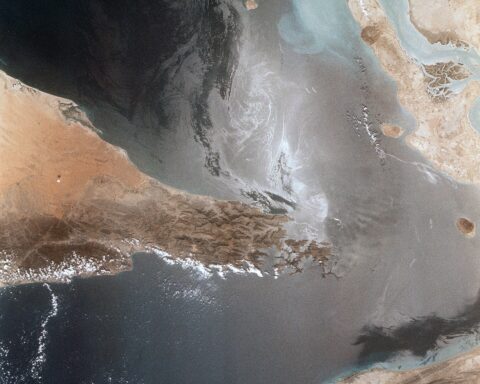
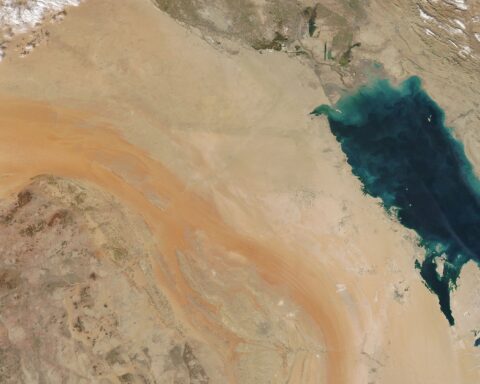
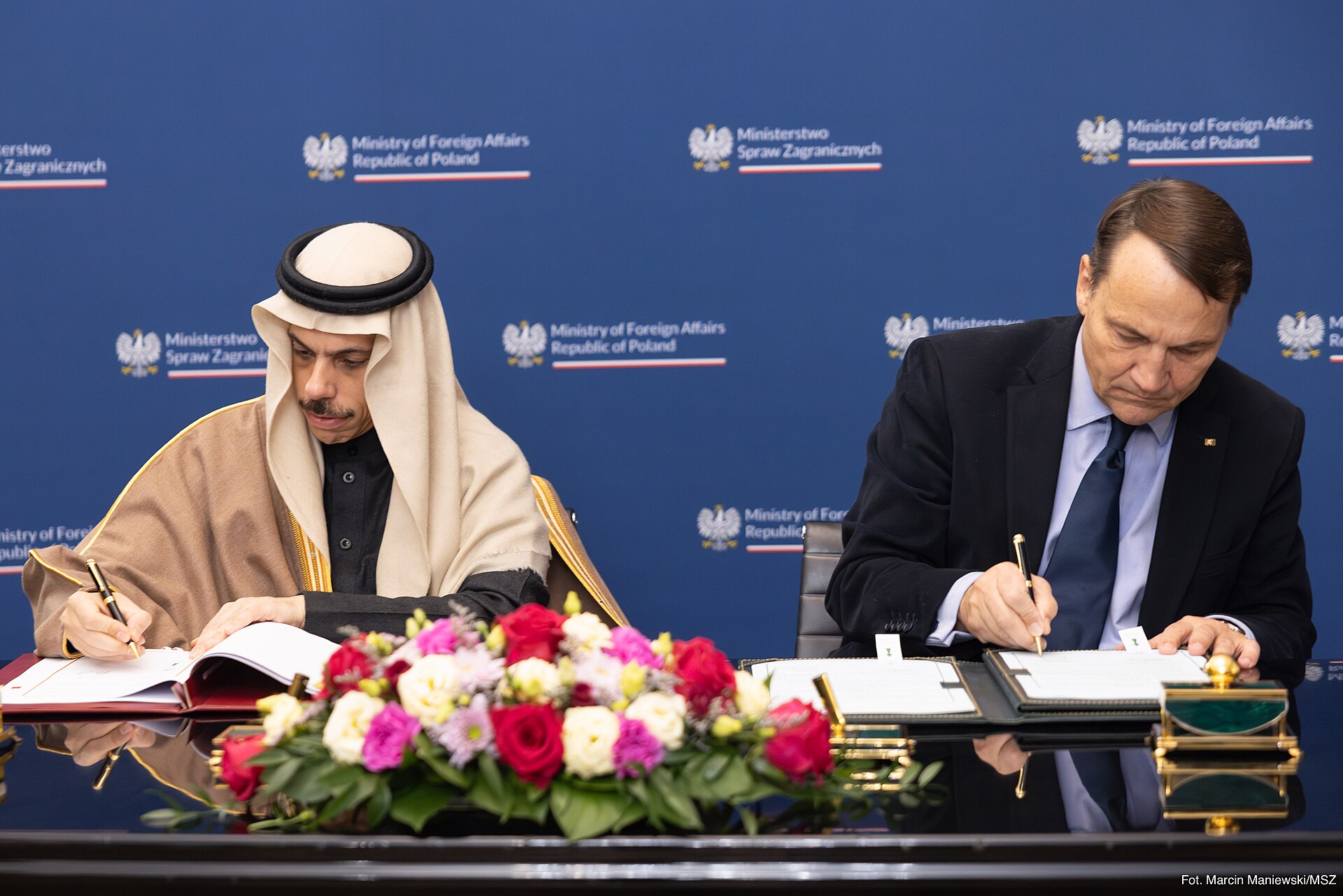
RIYADH — South Korea’s presidential chief of staff landed in Riyadh on Sunday carrying a handwritten message from President Lee Jae-myung to Saudi leadership — the same day Donald Trump formally declared a US naval blockade of the Strait of Hormuz. Kang Hoon-sik, the most senior domestic aide in Seoul’s executive office, met Saudi Foreign Minister Prince Faisal bin Farhan to discuss what both governments described as “bilateral cooperation, regional developments, and implications for regional security and the global economy,” language so deliberately vague it said everything about how carefully South Korea is navigating a crisis created by its own security guarantor.
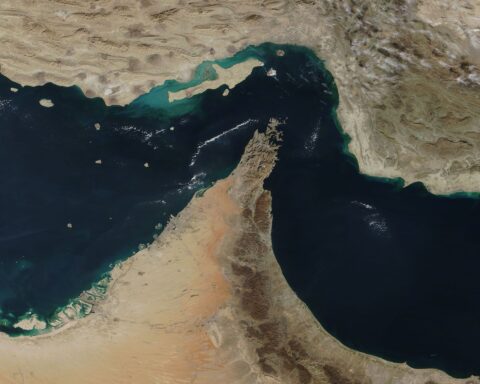
The timing was not coincidental. South Korea imports 70% of its crude oil and 20% of its natural gas through the strait that Washington just shut down, and Saudi Arabia supplies 36% of Korea’s total crude — 945,200 barrels per day as of January 2026, according to MEES. Seoul dispatched its envoy not to protest the blockade, not to publicly request an exemption, but to negotiate an alternative supply route through Saudi Arabia’s Red Sea port of Yanbu, effectively asking Riyadh to absorb the logistical cost of a US military decision that Seoul cannot openly criticize without fracturing the alliance architecture that shields it from North Korea.
Table of Contents
A Blockade-Day Mission Seoul Could Not Send to Washington
Kang Hoon-sik is not a foreign policy envoy. He is the president’s chief of staff — the person who runs Lee Jae-myung’s office, manages the domestic political agenda, and speaks with the authority of the Blue House itself. Dispatching him to Riyadh, Kazakhstan, and Oman in sequence, accompanied by Ministry of Trade, Industry and Resources officials and executives from Korea’s national energy companies, was the functional equivalent of sending a head-of-government-level delegation. The Korea Times reported on April 7 that Kang told journalists before departing: “Our economy relies heavily on oil and naphtha imports from the Middle East, making it all the more urgent to secure alternative supply lines.”
That urgency has a precise number behind it. According to CSIS analysis of IEA data, approximately 61% of South Korea’s crude oil and 54% of its naphtha arrive via Hormuz — the passage now under US naval interdiction. South Korea is the third-largest single destination for Hormuz crude flows after China and India, receiving 12% of total throughput in the first quarter of 2025. When Kang added that “every barrel of crude oil and every ton of naphtha matters at this point,” he was describing an economy in which petrochemical feedstocks no longer have a clear route to Korean ports.
Seoul signed the March 21 multilateral statement calling for Hormuz to be reopened, but it has not joined the US-led naval coalition that the UAE entered. The Diplomat described South Korea’s posture as “equivocal” — a diplomatic term for a country that cannot say yes to Washington without accepting the economic consequences, and cannot say no without accepting the strategic ones. Trump publicly criticized Japan, South Korea, and Australia in mid-March for declining to commit forces. A US policy expert warned in the Korea Times on April 8 that Seoul could face additional tariffs if it paid Iranian transit tolls — a threat that forecloses the Chinese-brokered yuan-payment channel through which Beijing has been shepherding its own vessels through the strait.
So South Korea came to Riyadh. It came because Riyadh is the one capital that can redirect crude supply away from the blockaded strait without requiring Seoul to take a public position on the blockade itself.
The Middle East briefing 3,000+ readers start their day with.
One email. Every weekday morning. Free.
Can Yanbu Handle What Hormuz Used to Carry?
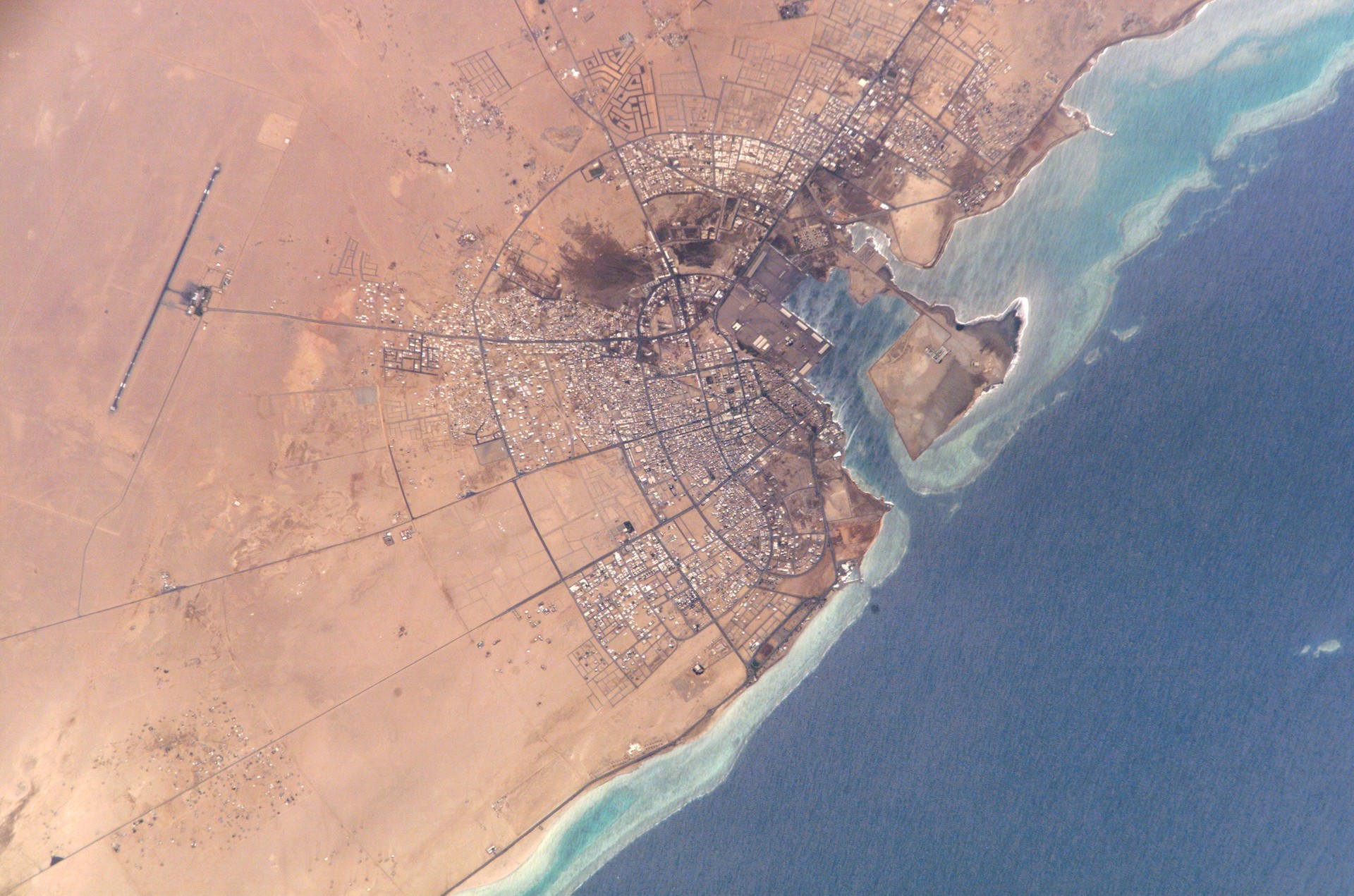
The answer, as of April 12, is partially — and the timing of the Kang visit reflects how narrow the margin is. Saudi Arabia restored its East-West Pipeline to full 7 million barrel-per-day capacity on the same day as the Riyadh meeting and blockade declaration, according to Arab News. But Yanbu’s effective wartime throughput remains 3-4 million bpd against a nominal pipeline capacity of 4.5 million bpd, because the bottleneck is not in the pipe — it is in the berths, storage tanks, and VLCC loading infrastructure at the Red Sea terminal. Monthly VLCC loadings at Yanbu hit 47 by late March, up from 11-12 per month before the war, according to Argus Media.
South Korea’s Industry Minister Kim Jung-kwan told a radio interviewer on April 12 — the same day as Kang’s meeting — that Saudi Arabia had committed to prioritize crude shipments to South Korea and that Seoul was “preparing measures to allow our vessels to use the Red Sea route, including the possibility of escort operations by the Cheonghae unit’s Dae Joyoung destroyer.” The Cheonghae Unit is South Korea’s anti-piracy naval deployment in the Gulf of Aden, a 4,500-tonne destroyer that has operated in the region since 2009. Repurposing it as a crude tanker escort through the Red Sea would represent the first time Seoul has used its naval forces to protect energy supply lines rather than international shipping lanes — a distinction that matters enormously in how Washington reads the signal.
Kim also confirmed that Seoul had “received commitments to prioritize allocations to Korea,” a statement reported by the Seoul Economic Daily that aligns with Saudi Arabia’s broader shift from multilateral OSP pricing to bilateral crude allocation deals since the war began. South Korea has already locked in 80% of its May crude requirement, securing 110 million barrels of alternative supply from 17 countries for April and May, according to S&P Global reporting on April 8. The government has not tapped its Strategic Petroleum Reserve — 100.1 million barrels, or 34 days of consumption per CSIS data — and the supplementary budget passed by Korea’s National Assembly includes 869.1 billion won ($640 million) in naphtha import price differential subsidies.
But those are stopgap numbers. The Red Sea route adds approximately 15 days to a round-trip tanker voyage compared to Hormuz, and the berth congestion at Yanbu means that even with pipeline capacity restored, the physical throughput serving all of Saudi Arabia’s Asian customers — not just South Korea — cannot replace what Hormuz carried.
Seoul’s Two Diplomatic Tracks: Riyadh and Tehran
The Kang mission to Riyadh is only half of Seoul’s crisis response. On April 9-10, South Korea appointed former Ambassador to Kuwait Chung Byung-ha as a special envoy to Tehran, according to Bloomberg and the Korea Times. Chung’s mandate is narrower and more urgent: negotiate safe passage for 26 South Korean vessels currently stranded in or near the Strait of Hormuz. These are not hypothetical ships. They are tankers, chemical carriers, and cargo vessels caught between Iran’s selective passage regime and the US blockade zone, unable to transit in either direction without risking seizure or interdiction by one side or the other.
Iran’s toll architecture — approximately $2 million per VLCC, payable via Kunlun Bank or USDT on the Tron blockchain according to Al Jazeera — technically permits South Korean vessels to transit. Iran has cited South Korea among “friendly” nations eligible for passage, despite Seoul being a US treaty ally with 28,500 American troops stationed on its territory. But the politics of paying that toll are combustible. A South Korean tanker routing payment to an IRGC-linked account through a Chinese state bank while Seoul simultaneously declines to join the US naval coalition would, as Doo Jin-ho of the Korea Research Institute for National Strategy told the South China Morning Post, create “a Catch-22 situation for Seoul — it has to choose between harsher US pressures including tariffs and potential harm to its people and businesses in the region.”
The Riyadh track sidesteps this problem. By securing Saudi commitments to reroute crude through Yanbu — a port on the Red Sea, outside the blockade zone, reachable without transiting Hormuz or paying Iranian tolls — Seoul reduces the volume of crude that needs to pass through the strait at all. The Tehran track addresses the ships already trapped. Together, the two tracks form a single coordinated strategy: minimize future Hormuz dependence through Riyadh, and recover stranded assets through Tehran, without publicly contradicting Washington on either front.
Saudi Arabia has said nothing publicly about the US blockade. It has not joined the coalition, not condemned it, and not acknowledged that its own Yanbu infrastructure is functioning as the economic pressure valve for a military operation it declined to participate in. That silence is the diplomatic product Seoul came to Riyadh to purchase.
Saudi Arabia as the Supply-Diplomacy Relay
Jim Krane of the Baker Institute at Rice University wrote earlier this year that the Iran war has shifted the US presence in the Gulf “from protector of trade to instigator of war.” That inversion is the structural context for the Kang visit. Before February 2026, the US Fifth Fleet’s primary justification was ensuring freedom of navigation through Hormuz for oil tankers heading to allied economies in Asia and Europe. Now the US Navy is blockading the same strait, and the allies who depended on that freedom of navigation — South Korea, Japan, Australia — are scrambling for alternatives.
Saudi Arabia occupies a unique position in this scramble. It is the only major crude exporter with both the pipeline infrastructure to bypass Hormuz entirely and the bilateral relationships with Asian buyers deep enough to negotiate supply rerouting at government-to-government level. The Yanbu route exists because Saudi Arabia built the East-West Pipeline in the 1980s during the Tanker War, when Iranian and Iraqi attacks on Gulf shipping forced Riyadh and Kuwait to negotiate alternative routing arrangements with major Asian customers — the exact template now being reprised four decades later.
But the 2026 version is structurally different. In the 1980s, the threat to Hormuz came from two warring Gulf states, and the US was the external guarantor of transit. In 2026, the US is the party blockading the strait, and Saudi Arabia — which stayed out of the coalition even as its neighbour the UAE joined — is absorbing the diplomatic labour of managing the consequences for America’s own allies.
South Korea cannot go to Washington and say “your blockade is destroying our economy” without triggering the tariff retaliation Trump has already threatened. It can go to Riyadh and say “we need crude through Yanbu” without any of those political costs, because the supply relationship is bilateral, commercial, and carries no coalition membership requirement.
The scale of that bilateral relationship provides its own insulation. South Korea imported $30.57 billion in Saudi crude in 2023, according to S&P Global. Over the past 18 months, Korea and Saudi Arabia have signed a $3.2 billion Cheongung-II air defense deal in February 2024, an $867 million Hanwha missile radar contract in July 2024, and a $2.4 billion Hyundai Engineering contract for Aramco’s Jafurah gas processing plant. South Korea’s National Pension Service invested $300 million in the Jafurah project in October 2025. That is approximately $6.8 billion in defense and energy investment in a year and a half — deep enough that Saudi Arabia has a direct commercial interest in keeping Korean industry supplied with the feedstocks it needs to keep producing.
What South Korea Stands to Lose
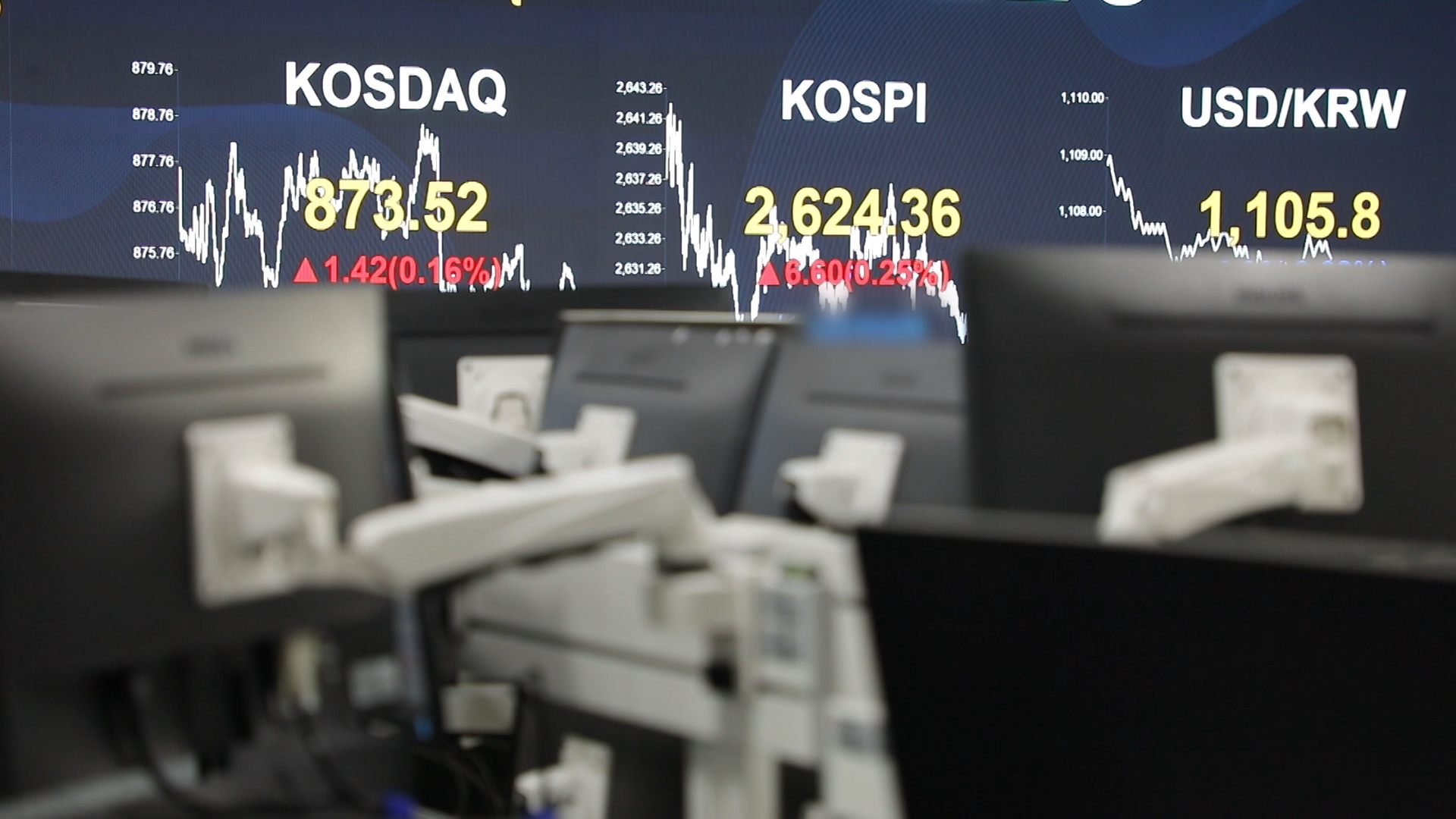
The Kang mission’s urgency is legible in the damage already sustained. South Korea’s KOSPI index suffered its worst single-session drop in 43 years when the Hormuz crisis began, according to CSIS analysis. The Korean won hit a 17-year low. The OECD downgraded South Korea’s growth forecast by 0.4 percentage points — the steepest cut among major advanced economies.
Naphtha spot prices in Singapore reached $1,000 per metric tonne by March 25, a 60% increase in one month, and Korean petrochemical inventories were down to approximately two weeks of supply, according to Carnegie Endowment analysis from March. Samsung Electronics and SK Hynix together produce roughly 80% of the world’s high-bandwidth memory chips and 70% of global DRAM — semiconductors that go into every data centre, smartphone, and AI training cluster on the planet. Those chips require ultra-pure petrochemical inputs derived from naphtha. A sustained naphtha shortage does not just hurt Korean GDP; it constrains the global semiconductor supply chain at a moment when demand is at historic highs.
President Lee Jae-myung acknowledged the bind in remarks reported by Asharq Al-Awsat: “There are not many alternative routes, and if shipments are cut off altogether because of heightened risk, it could have a serious impact on South Korea’s crude supply and pose a major risk to the public, so we need to strike a balance and accept a certain degree of risk.”
The supplementary budget’s $640 million in naphtha subsidies is designed to prevent petrochemical producers from passing the full cost increase to downstream manufacturers. But if Yanbu throughput cannot scale fast enough and the Tehran passage negotiations stall, South Korea faces a scenario in which it must either tap its SPR or participate in an IEA coordinated release. The IEA has already committed South Korea to releasing 22.5 million barrels under a coordinated release arrangement, which according to CSIS analysis would reduce government reserves to roughly 26 days of consumption. Kim Yong-beom, the presidential chief of staff for policy, told the Korea Times on April 7 that “price increases are unavoidable to some extent, but we will make every effort to contain them” — the kind of statement a government makes when it knows the containment may not hold.
The $7 Billion Seoul Already Paid
South Korea has been here before — not with the same crisis, but with the same structural dynamic of paying an economic cost generated by US-Iran confrontation. Between 2019 and 2023, South Korea held approximately $7 billion in frozen Iranian oil revenues, blocked under US secondary sanctions that Seoul enforced despite having no independent dispute with Tehran. In September 2023, approximately $6 billion of those frozen funds were transferred to Qatar as part of a US-Iran prisoner exchange under an OFAC waiver. Seoul was the intermediary, the custodian, and the party that bore the compliance costs and diplomatic friction with Iran — all in service of a US negotiating objective.
The 2026 crisis extends that pattern into physical infrastructure. South Korea is again absorbing the cost of a US strategic decision regarding Iran, but this time the cost is not frozen bank accounts — it is 26 stranded ships, a 60% increase in naphtha prices, a 43-year stock market record, and a presidential chief of staff flying to Riyadh on blockade day to secure crude that used to arrive through a strait the US Navy protected for free. The Riyadh meeting, the Yanbu rerouting, the Cheonghae destroyer escort, the Tehran envoy, the 110-million-barrel alternative supply stockpile, the $640 million naphtha subsidy — all of it is Seoul building a parallel supply architecture around a US military action it cannot endorse and cannot oppose.
China has offered an alternative. Beijing’s yuan-payment transit channel through Hormuz, brokered via Kunlun Bank, has successfully moved Chinese-flagged vessels through the strait since the crisis began. But South Korea accepting Chinese-intermediated passage would carry strategic costs that dwarf the naphtha price spike — it would validate Beijing’s framing that Asian dependence on US-protected sea lanes is a structural vulnerability, and it would hand China strategic influence over a US treaty ally at precisely the moment Washington is trying to consolidate its Indo-Pacific coalition. Seoul’s decision to approach Saudi Arabia through Yanbu rather than China through Hormuz is a choice about which dependency it prefers: a commercial crude relationship with Riyadh, or a strategic debt to Beijing.
Prince Faisal bin Farhan’s meeting with Kang Hoon-sik lasted long enough for the Saudi foreign ministry to issue a statement and for the Korean delegation to secure what Kim Jung-kwan later described as a commitment to “prioritize allocations.” Saudi Arabia is managing the blockade’s consequences one bilateral meeting at a time, without joining the blockade, without opposing it, and without saying anything in public that would force it to choose between Washington and the Asian economies that buy its oil. Riyadh did not create the bottleneck at Hormuz, but it is selling the bypass.
Frequently Asked Questions
How long would South Korea’s strategic petroleum reserves last if Hormuz remained fully blocked?
South Korea’s government-held SPR stands at 100.1 million barrels, which covers approximately 34 days of national consumption at current rates, according to CSIS data. Combined government and private reserves extend that to roughly 67 days. However, an IEA coordinated release — to which South Korea has already committed 22.5 million barrels — would reduce government reserves to approximately 26 days. The 110 million barrels of alternative supply Seoul has secured from 17 countries for April-May provides an additional buffer, but that procurement relied on spot markets that are tightening as other Hormuz-dependent buyers compete for the same non-Hormuz barrels.
Has South Korea’s Cheonghae naval unit ever escorted oil tankers before?
No. The Cheonghae Unit, deployed to the Gulf of Aden since 2009, has operated exclusively as an anti-piracy force under the Combined Maritime Forces framework. Its flagship, the 4,500-tonne destroyer ROKS Dae Jo-yeong, has escorted commercial vessels past Somali pirates but has never been tasked with protecting energy supply convoys. Industry Minister Kim Jung-kwan’s April 12 statement about preparing escort operations for Korean-flagged tankers through the Red Sea would represent a fundamental shift in the unit’s mission profile — from multilateral security patrolling to bilateral supply-chain protection.
Why did South Korea send a separate envoy to Tehran rather than relying solely on the Saudi route?
Twenty-six South Korean vessels are physically stranded in or near the Strait of Hormuz, caught between the US blockade zone and Iran’s selective passage system. Rerouting future crude through Yanbu solves the prospective supply problem but does nothing for ships already trapped. Former Ambassador to Kuwait Chung Byung-ha was appointed special envoy to Tehran on April 9-10 specifically to negotiate safe passage for those vessels. South Korea also has a long diplomatic history with Iran — it ranked among Iran’s top crude customers before 2019 sanctions and held $7 billion in frozen Iranian revenues — giving Chung a pre-existing institutional relationship to draw on.
Could South Korea join the Chinese-brokered Hormuz transit channel instead of the Yanbu route?
Technically, yes — Beijing has successfully intermediated Chinese-flagged vessel transits through Hormuz using yuan payments via Kunlun Bank. But South Korea accepting Chinese-brokered passage would carry consequences far exceeding the cost of the Yanbu reroute. It would validate Beijing’s narrative that US sea-lane protection is unreliable, hand China strategic influence over a US treaty ally hosting 28,500 American troops, and potentially trigger the tariff retaliation that US officials have already warned about for countries paying Iranian tolls. Seoul’s choice of the Riyadh track over the Beijing track is a geopolitical decision disguised as a logistics preference.
What is the Cheongung-II deal and why does it matter for the Riyadh meeting?
The Cheongung-II (also known as M-SAM Block-II) is a medium-range surface-to-air missile system developed by South Korea’s LIG Nex1 and the Agency for Defense Development. Saudi Arabia signed a $3.2 billion procurement deal for the system in February 2024, making it one of the largest Korean defense exports in history. Combined with the $867 million Hanwha missile radar deal signed in July 2024 and the $2.4 billion Hyundai Engineering contract for Aramco’s Jafurah gas plant, the bilateral investment relationship totals approximately $6.8 billion in 18 months. That depth of commercial interdependence means Saudi Arabia has a direct financial incentive to keep South Korean industry operational — the same industry that builds the defense systems Riyadh is buying.