
WASHINGTON — On January 13, 2026, President Donald Trump signed Presidential Determination No. 2026-03 designating the Kingdom of Saudi Arabia a Major Non-NATO Ally of the United States, the formal culmination of a White House ceremony held two months earlier and the most visible upgrade to the bilateral defense relationship since the 1945 meeting between Franklin Roosevelt and King Abdulaziz aboard the USS Quincy. Six weeks after the pen dried on that determination, Iran launched Operation Epic Fury, and within five weeks of sustained ballistic missile and drone attacks, Gulf Cooperation Council states had burned through 86 percent of their entire pre-war interceptor stockpile — roughly 2,400 Patriot rounds consumed from a combined arsenal of approximately 2,800, leaving fewer than 400 missiles between six nations and the next Iranian salvo.
The MNNA designation, created in 1987 as a peacetime instrument for small US-aligned states to participate in cooperative defense research, contains no mutual defense clause, no automatic military assistance provision, and no binding security treaty. It is, by the explicit language of the statute that created it, a trade-access mechanism dressed in the vocabulary of alliance. What Riyadh needed on February 28 was not access to depleted uranium ammunition or the right to bid on US military maintenance contracts — the actual benefits MNNA status confers — but a binding American commitment to shoot down Iranian missiles, and that commitment exists nowhere in the document Trump signed. The gap between what MNNA formally grants and what Saudi Arabia actually required was exposed faster than at any point in the instrument’s 38-year history, turning a presidential designation into a live-fire stress test of whether legal status and military reality can survive in the same sentence.
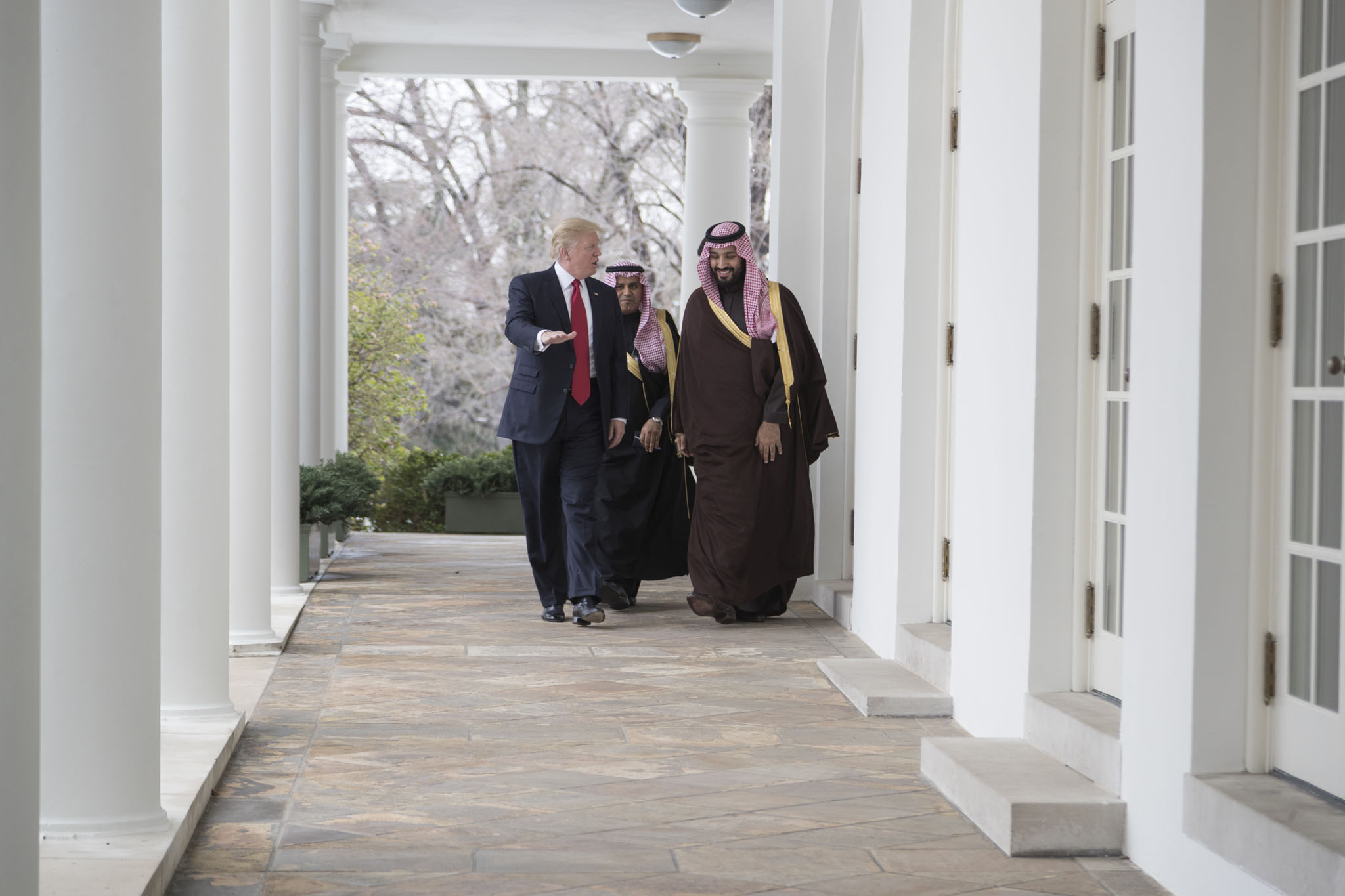
Table of Contents
- What MNNA Was Built to Do — And What It Was Never Designed For
- From Ceremony to Crisis: The 100-Day Timeline
- What Does MNNA Status Actually Give Saudi Arabia?
- The Trillion-Dollar Architecture
- Why Did GCC Interceptor Stocks Collapse So Fast?
- The F-35 Ceiling: MNNA With an Asterisk
- What Security Guarantee Did MBS Actually Want From Washington?
- Tehran’s Calculus: The Designation That Deterred Nothing
- Saudi Hedging and the MNNA Trap
- Frequently Asked Questions
What MNNA Was Built to Do — And What It Was Never Designed For
The Major Non-NATO Ally designation was born in 1987 as the Sam Nunn Amendment, Section 2350a of Title 10 of the United States Code, and its original purpose was strikingly modest: it authorised the Secretary of Defense, with the concurrence of the Secretary of State, to enter into cooperative research and development agreements with non-NATO countries that Washington considered strategically aligned. The first five recipients — Australia, Egypt, Israel, Japan, and South Korea — were either already sheltered under formal US security treaties (Australia, Japan, South Korea) or occupied unique positions in American strategic planning that made the designation a formalisation of existing reality rather than an expansion of commitments. None of them were under active ballistic missile attack when they received the status, because the instrument was never conceived as a wartime tool.
In 1996, Congress added Section 2321k to Title 22 of the United States Code, expanding the practical benefits available to MNNA holders, but the expansion was entirely in the domain of defense trade: eligibility to loan and receive US equipment for research purposes, the right to host US War Reserve Stockpiles on their territory, priority access to excess defense articles, and permission to purchase depleted uranium ammunition. Tressa Guenov, the Director of Programs and Operations at the Atlantic Council’s Scowcroft Center and a former Deputy Assistant Secretary of Defense, described the designation in November 2025 as “a favourite tool of U.S. presidents to cap off major visits with a symbolic flourish to indicate elevated relations” — and, with the directness that comes from having sat in the Pentagon, added that it “does not provide any special or enforceable security guarantees, nor is it a binding treaty.” Guenov also observed that Saudi Arabia already enjoyed many of the designation’s practical benefits before Trump signed the determination, a point that raises an uncomfortable question about what, precisely, was being purchased in January 2026 beyond the optics of the word “ally” in a presidential document.
Saudi Arabia joined a list that includes Argentina, Bahrain, Brazil, Colombia, Kuwait, Morocco, Pakistan, the Philippines, Qatar, Thailand, and Tunisia — and it is, by an enormous margin, the largest economy and most powerful military among them. The designation was not built for a state of Saudi Arabia’s scale, strategic ambition, or threat environment, and applying it to a country absorbing Iranian ballistic missiles while simultaneously pledging a trillion dollars in US investment turns an administrative convenience into something the Sam Nunn Amendment’s framers would not recognise.
From Ceremony to Crisis: The 100-Day Timeline
The chronology that connects the MNNA announcement to the Iranian war is compressed enough to function as its own argument. On November 18, 2025, Trump announced the designation at a White House state dinner during Crown Prince Mohammed bin Salman’s visit to Washington, alongside a package that included a Strategic Defense Agreement, a Civil Nuclear Energy Cooperation framework, a Critical Minerals Framework Agreement, an AI Memorandum of Understanding, and the confirmation of F-35 deliveries to the Kingdom — the most elaborate single-visit bilateral package in the history of US-Saudi relations. At the same dinner, MBS raised Saudi Arabia’s investment commitment to the United States from $600 billion, pledged during Trump’s May 2025 visit to Riyadh, to “almost $1 trillion,” a figure that equals the Kingdom’s entire 2023 annual GDP.
The Presidential Determination formalising the MNNA status was signed on January 13, 2026, and published in the Federal Register on January 23 as Presidential Determination No. 2026-03. Sixteen days after the signing — on January 29 — Iran, China, and Russia formally signed their trilateral strategic pact, explicitly framed as a multipolar counter to Western military dominance and linking Tehran to two permanent members of the UN Security Council in a coordinated defense, energy, and diplomatic framework. The day after that, January 30, the Defense Security Cooperation Agency notified Congress of a $9 billion Foreign Military Sale to Saudi Arabia comprising 730 PAC-3 MSE interceptor missiles, the type of munition that would, within weeks, become the most strategically consequential commodity in the Middle East.
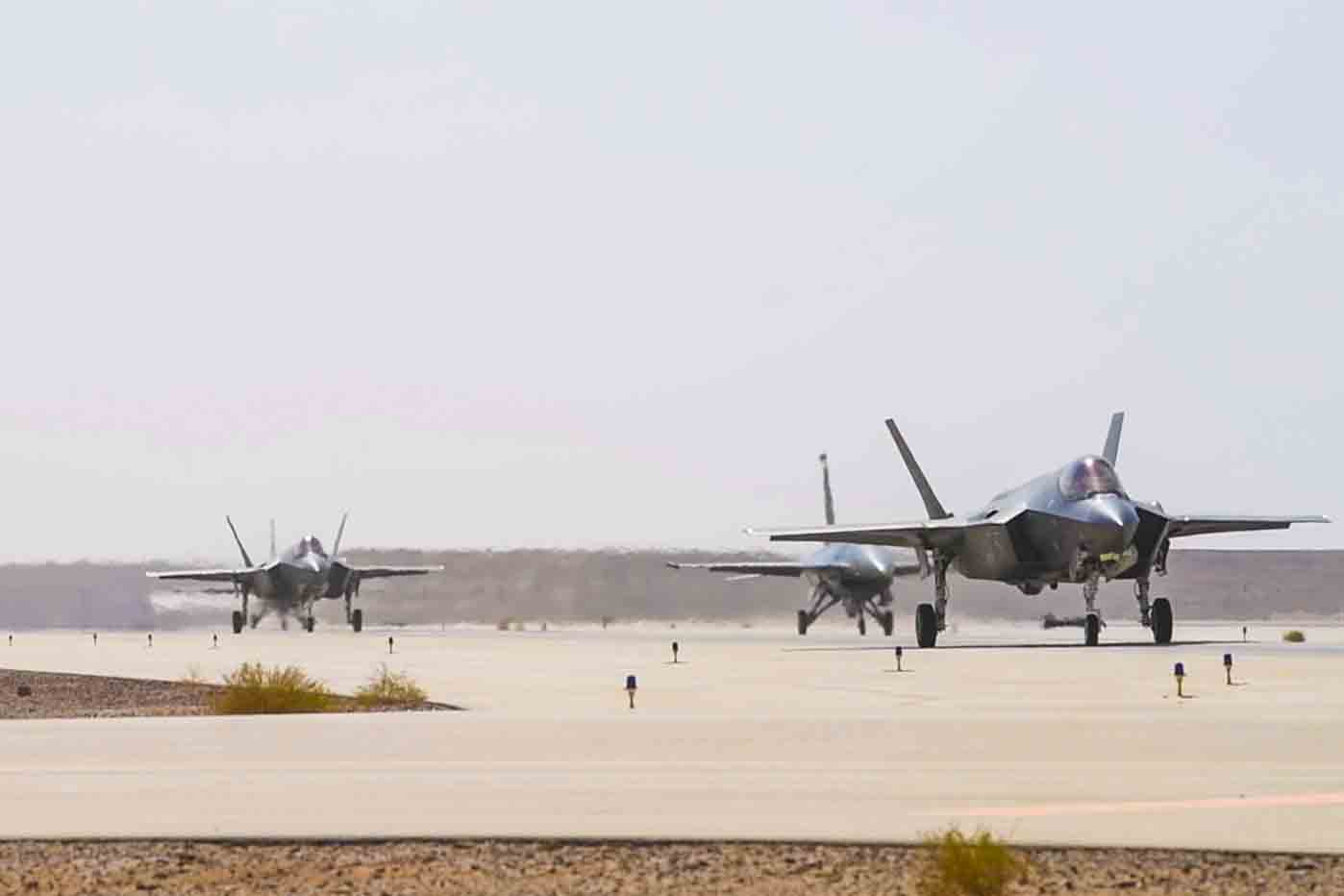
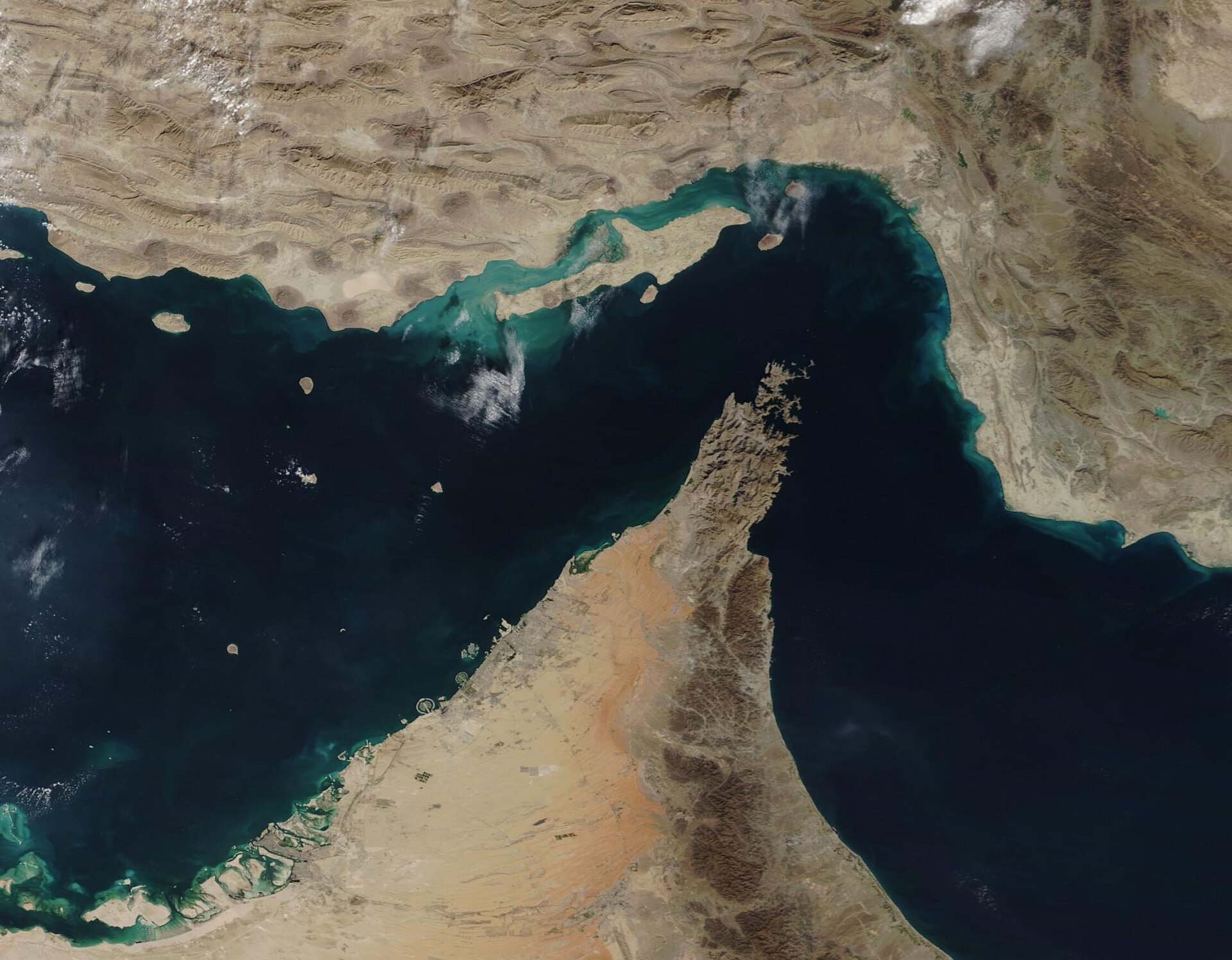
Then came February 28. Iran launched Operation Epic Fury, and the entire edifice of the November 2025 agreements entered contact with reality. Within the first five weeks, Saudi Arabia absorbed at least 38 ballistic missiles and 435 drones, according to compiled strike data. Iranian missiles struck Prince Sultan Air Base outside Riyadh — a joint US-Saudi facility — wounding at least 12 to 15 American service members and destroying or damaging US refuelling aircraft including a Boeing E-3 Sentry and at least one KC-135 Stratotanker, per NPR and the Jerusalem Post. Every MNNA holder in the Gulf — Bahrain, Kuwait, Qatar, and Saudi Arabia — was struck, a fact that rendered the designation’s supposed signalling value to adversaries entirely theoretical. The 100-day arc from ceremony to crisis compressed what might otherwise have taken years to reveal: that the gap between MNNA’s legal text and the wartime requirements of a state under sustained aerial bombardment is not a gap at all, but an absence.
What Does MNNA Status Actually Give Saudi Arabia?
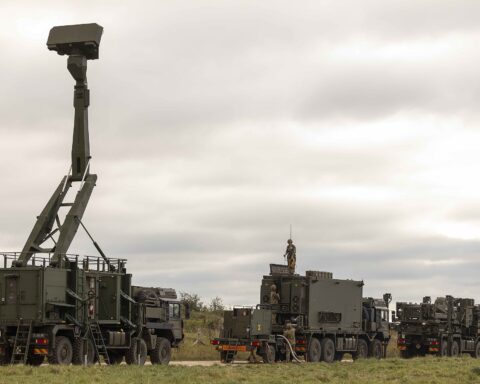
The formal benefits of Major Non-NATO Ally status are enumerated in US law and are, measured against the scale of what Saudi Arabia faces, remarkably narrow. An MNNA holder can loan and receive US military equipment for cooperative research and development purposes; host US-owned War Reserve Stockpiles on its territory outside of US military facilities; sign research and development memoranda of understanding with the Department of Defense; purchase depleted uranium ammunition; receive priority access to excess defense articles that the US military is disposing of; bid on US military maintenance contracts; and enter into bilateral or multilateral training agreements under specified conditions. These are supply-chain and procurement benefits — useful for a country building long-term defense-industrial capacity, largely irrelevant to a country that needs 730 PAC-3 interceptors delivered before the next Iranian salvo.
What MNNA does not confer is where the analytical weight falls, and the US State Department’s own description of the designation is unambiguous on this point. There is no collective defense obligation. There is no automatic military assistance trigger. There is no binding security treaty. The designation is, under 22 USC 2321k, a mechanism for facilitating defense trade, not a commitment to fight. Andrew Leber, a nonresident scholar at the Carnegie Middle East Program, noted in his analysis of the November 2025 visit that Saudi Arabia’s MNNA status “fell short of Qatar’s recent security guarantees” — a reference to Trump’s October 2025 executive order, issued after an Israeli strike on Hamas negotiators in Doha, which stated that “the United States shall regard any armed attack on the territory, sovereignty, or critical infrastructure of the State of Qatar as a threat to the peace and security of the United States.” Qatar received that language on top of the MNNA status Biden had granted in January 2022; Saudi Arabia received MNNA alone, without the executive-order escalation that transforms symbolic status into something approaching an operational commitment.
The practical distinction matters because it shaped Iranian targeting decisions. Tehran struck all four Gulf MNNA holders — and the absence of a deterrent effect suggests that Iranian military planners assessed MNNA status for exactly what it is under the statute: a procurement-facilitation tool, not a red line backed by American force. Iran’s sustained campaign treated the designation as irrelevant to its targeting calculus, which is, by any measure, the most damaging verdict a deterrence instrument can receive.
The Trillion-Dollar Architecture
The investment pledge that accompanied the MNNA designation — MBS raising Saudi Arabia’s commitment from $600 billion to “almost $1 trillion” — represents a transformation in the structural logic of US-Saudi relations that is at least as consequential as the defense designation itself, and possibly more so, because it shifts the relationship from a security-guarantee model to a transactional architecture in which economic commitments and defense access are explicitly linked. The $1 trillion figure, equivalent to the Kingdom’s entire 2023 GDP, spans artificial intelligence infrastructure, energy production, and defense procurement, with the largest components directed toward making Saudi Arabia a global AI data hub powered by its hydrocarbon reserves — a bet that the Kingdom’s oil and gas can underwrite a post-oil future if routed through American technology.
The defense component within this broader investment architecture is itself enormous. The May 2025 defense cooperation agreement, announced during Trump’s Riyadh visit, was valued at $142 billion and described by the White House as “the largest military cooperation agreement in US history,” structured across five categories — air force and space, air and missile defense, maritime and coastal security, border and land forces, and information and communications — and involving Lockheed Martin, RTX, Boeing, Northrop Grumman, and Palantir. But the Stimson Center’s Joaquin Matamis offered a cautionary note that anyone covering US-Saudi defense deals should have tattooed on their forearm: Trump’s 2017 $110 billion defense agreement with Riyadh produced $34.6 billion in Foreign Military Sales notifications and approximately $30 billion in actual completed transactions — roughly 27 cents on every headline dollar. If the same conversion rate applies to the $142 billion figure, actual deliveries would land closer to $38 billion, still large but a fundamentally different proposition from the number on the press release.
Whether the implicit argument — that a country investing a trillion dollars in the American economy is too embedded to abandon — holds under the pressure of a sustained Iranian campaign is the question the war is currently answering, and the answer so far is that economic entanglement creates political friction against abandonment without creating any legal mechanism to prevent it.
Why Did GCC Interceptor Stocks Collapse So Fast?
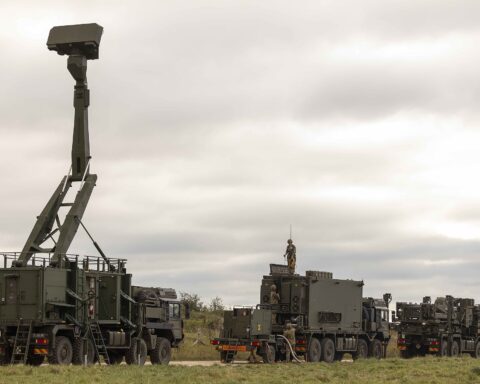
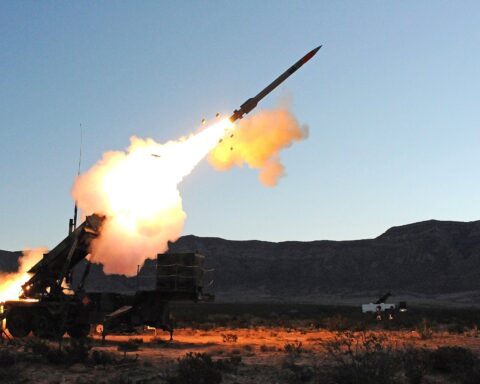
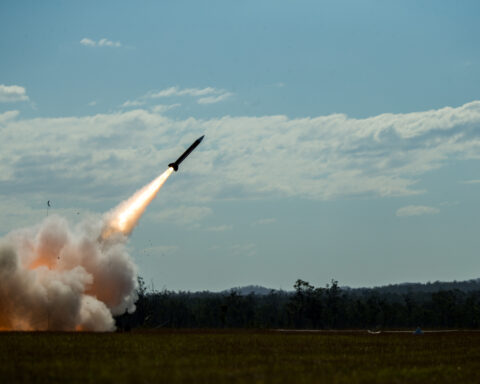
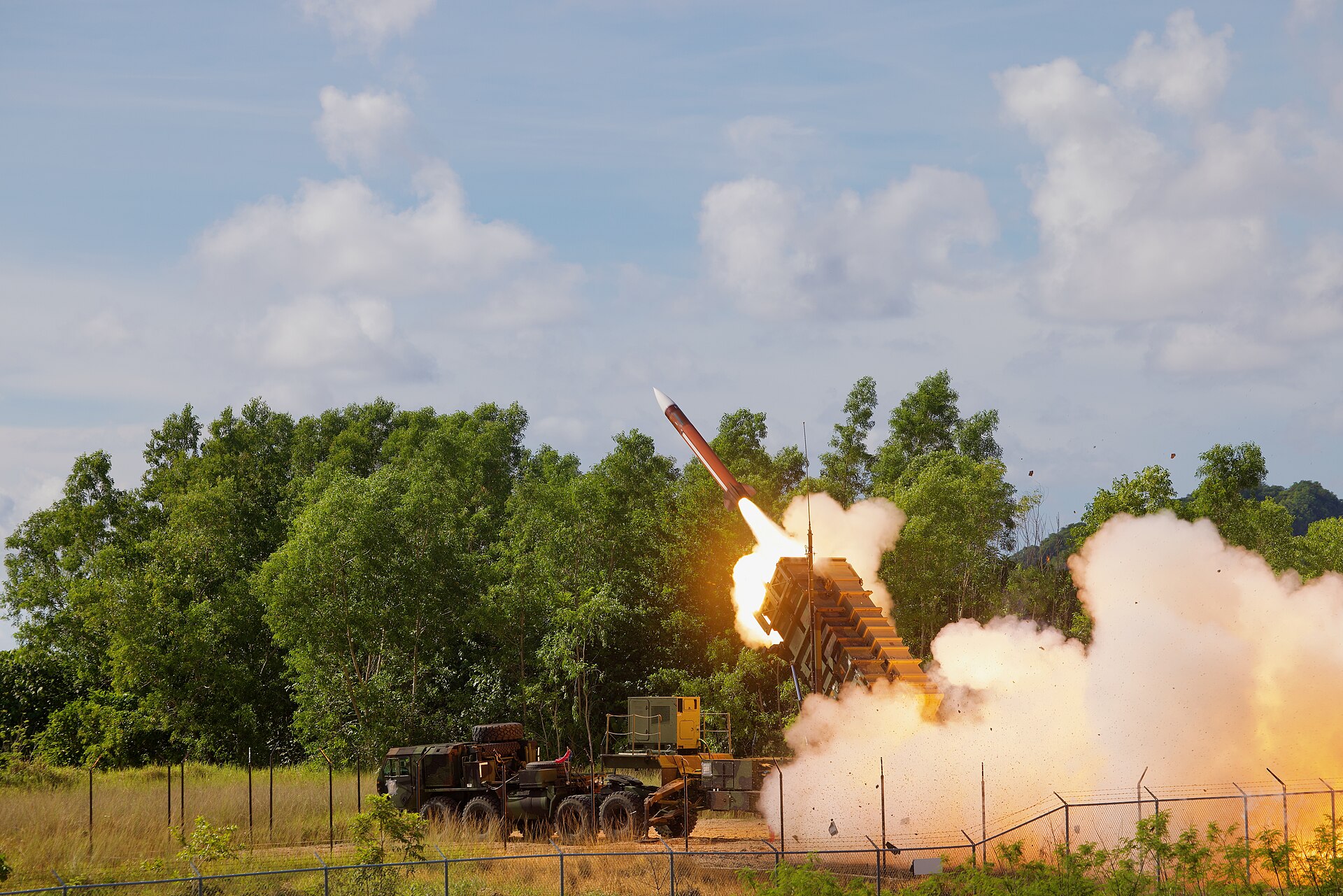
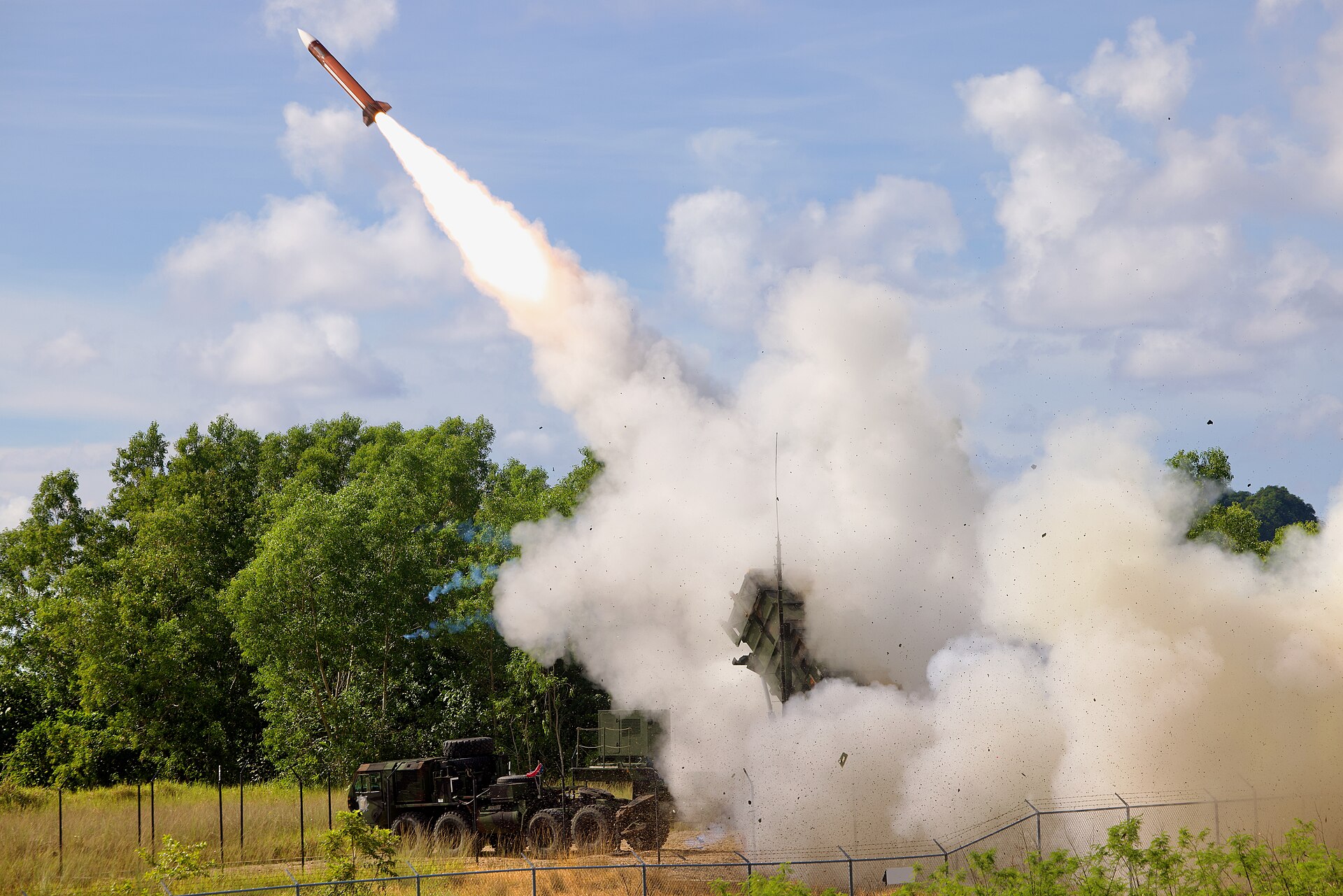
The mathematics of the interceptor crisis are simple and brutal, and they expose the structural gap between MNNA’s defense-trade facilitation and the wartime consumption rates that Saudi Arabia actually faces. Before the February 28 outbreak of hostilities, the combined GCC stockpile of Patriot-family interceptors — primarily PAC-3 MSE rounds — stood at approximately 2,800 units across all six member states. Within five weeks, approximately 2,400 of those rounds had been expended, leaving roughly 400 interceptors distributed across the entire Gulf at a moment when Iran showed no indication of reducing its strike tempo. The depletion rate was not a failure of planning in any conventional sense; it was a consequence of Iran prosecuting a deliberate war of interceptor attrition across the entire GCC simultaneously, treating the region’s air defense as a single depletable resource rather than six separate national shields.
| Metric | Figure | Source |
|---|---|---|
| Pre-war GCC interceptor stock | ~2,800 rounds | The Defense News |
| Interceptors expended (5 weeks) | ~2,400 rounds | The Defense News |
| Remaining stock (late March 2026) | ~400 rounds | The Defense News |
| Lockheed Martin current production rate | ~650/year (2025 record) | Lockheed Martin |
| Target expanded production rate | 2,000/year | Lockheed Martin / Dept. of War |
| Expanded capacity expected | End of 2030 | Lockheed Martin |
| PAC-3 MSE sale to Saudi Arabia (Jan 30, 2026) | 730 rounds / $9 billion | DSCA |
| Iranian strikes on Saudi Arabia (2026) | 38 missiles, 435 drones | Compiled strike data |
The $9 billion PAC-3 MSE sale that the Defense Security Cooperation Agency notified to Congress on January 30, 2026 — comprising 730 interceptor missiles — was approved 17 days after the MNNA Presidential Determination and 29 days before the war began. At the consumption rate the GCC experienced in March, 730 rounds would last approximately 11 days of sustained operations, assuming Saudi Arabia were the sole consumer and Iran maintained its observed strike tempo. Lockheed Martin currently produces approximately 650 PAC-3 MSE rounds per year — a record set in 2025 — and the January 2026 framework agreement to expand capacity to 2,000 rounds annually will not reach that target until the end of 2030. At current production rates, replacing the 2,400 rounds already expended would require nearly four years of maximum output with zero additional consumption, a condition that the ongoing war makes fictional.
This is the arithmetic that transforms the MNNA designation from a policy achievement into an analytical problem. The designation facilitates Saudi Arabia’s ability to purchase American defense equipment — but the equipment Saudi Arabia most urgently needs does not exist in sufficient quantities to purchase. MNNA status grants priority access to excess defense articles, but there are no excess PAC-3 missiles; there are, by every available estimate, insufficient PAC-3 missiles for America’s own requirements plus those of every ally and partner currently under threat. The designation solves a legal-access problem for a country facing a production-capacity crisis, which is the equivalent of giving someone a library card during a paper shortage.
The F-35 Ceiling: MNNA With an Asterisk
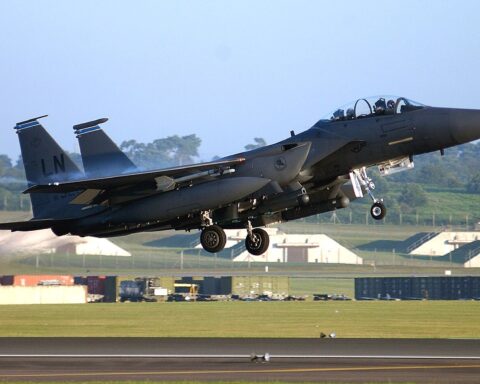
Among the November 2025 package’s headline items was Trump’s confirmation that Saudi Arabia would receive 48 F-35A Lightning II stealth fighters, a commitment that carries enormous symbolic weight in a region where fifth-generation fighter access has functioned as the ultimate measure of American strategic trust. Trump himself, in characteristically direct language, said of Saudi Arabia and Israel that “they are both at a level where they should get the top of the line.” But what Saudi Arabia will actually receive is not the top of the line — it is a deliberately constrained variant, less capable by design than Israel’s F-35I “Adir,” stripped of advanced weapons systems, enhanced electronic warfare suites, and full-spectrum software updates that the Israeli version carries.
The constraint is not discretionary; it is legally mandated. The 2008 US law establishing Israel’s Qualitative Military Edge (QME) requires the United States to ensure that Israel maintains a decisive technological and operational advantage over all regional states, and the F-35 sale to Saudi Arabia must comply with that requirement. Netanyahu confirmed publicly that Secretary of State Rubio assured him the US remains “committed to maintaining Israel’s qualitative edge in all areas, including Israel’s advantage regarding the supply of F-35 aircraft.” The practical effect is that Saudi Arabia’s MNNA status — which is supposed to signal an elevated defense relationship — coexists with a statutory ceiling that guarantees the Kingdom will always receive inferior versions of the same platforms Israel operates, a tension that MNNA’s framers never contemplated because the instrument was not designed for a region where American law requires one ally to be technologically subordinate to another.
The F-35 deliveries are, in any case, years away from operational reality, and the war is happening now. Carnegie’s Andrew Leber noted that Saudi Arabia “didn’t secure nuclear cooperation like the UAE achieved in 2009,” placing the MNNA designation and even the F-35 commitment in a hierarchy of American strategic concessions where Riyadh received less than both its smaller Gulf neighbour and its regional rival. The F-35 announcement gives MBS a talking point; the QME law gives Israel a veto; and the gap between the two is filled by the kind of strategic ambiguity that functions well in peacetime communiques and collapses under the weight of Iranian ballistic missiles arriving at joint US-Saudi air bases.
What Security Guarantee Did MBS Actually Want From Washington?
The answer, based on the public record and the analytical consensus across multiple research institutions, is straightforward: Mohammed bin Salman sought a Senate-ratified mutual defense treaty modeled on the US-Japan security arrangement, a legally binding commitment that would obligate the United States to treat an armed attack on Saudi Arabia as an attack requiring American military response. What he received instead was MNNA status — an executive designation that requires no Senate ratification, carries no defense commitment, and can be revoked by any future president without congressional approval. The distance between what was sought and what was granted is not a matter of interpretation; it is a matter of legal category, and the New Lines Institute stated the implications with unusual clarity: “The lack of any codified U.S.-Saudi mutual defense treaty raises the risk of U.S. disengagement or an inadequate settlement with Iran, as the two partners never established a formal treaty with codified mutual defense articles, such as provisions within NATO or U.S. agreements with Japan and South Korea.”
The September 2019 Abqaiq precedent weighs heavily in this calculation. When Iranian drones and missiles struck Saudi Aramco’s Abqaiq processing facility — knocking out 5.7 million barrels per day of production in the largest single attack on global oil supply infrastructure in modern history — the United States deployed 3,000 additional troops to the Gulf and announced new sanctions against Iran’s Central Bank, but launched no military retaliation. Trump himself, in the immediate aftermath, said: “That was an attack on Saudi Arabia, and that wasn’t an attack on us.” That sentence, more than any legal analysis, established the baseline in Riyadh’s strategic planning: absent a binding treaty, the United States would condemn, sanction, deploy, and reinforce, but it would not fight for Saudi Arabia. The 2019 precedent made a mutual defense treaty not a diplomatic nicety but a strategic necessity, and the fact that MBS travelled to Washington in November 2025 and returned with MNNA status instead of that treaty is the central failure — from Riyadh’s perspective — of the entire visit.
Qatar’s trajectory sharpens the comparison. Doha received MNNA from Biden in January 2022 and then, in October 2025, received a separate Trump executive order stating that any armed attack on Qatar would be treated as a threat to American peace and security — language that falls short of a Senate-ratified treaty but vastly exceeds anything in the MNNA statute. Saudi Arabia, which hosts more US military infrastructure, purchases more American weapons, and has pledged a trillion dollars in US investment, received the lower-tier instrument without the higher-tier executive order. Mohammed Cherkaoui, a professor of conflict resolution at George Mason University, described the broader dynamic as “an unprecedented era of trust deficit and end of Gulf exceptionalism in Washington,” a characterisation that captures the gap between what Saudi Arabia’s investment buys in economic terms and what it fails to secure in security terms.
Tehran’s Calculus: The Designation That Deterred Nothing
Iran’s military operations since February 28 offer the most empirically rigorous test of MNNA’s deterrent value, and the results are unambiguous. All four Gulf MNNA holders — Bahrain, Kuwait, Qatar, and Saudi Arabia — were struck by Iranian missiles and drones, with Bahrain expending an estimated 87 percent of its Patriot interceptor stocks, the UAE and Kuwait consuming roughly 75 percent, and Qatar approximately 40 percent. The designation deterred nothing, intercepted nothing, and imposed no cost on Iranian decision-making that is visible in Tehran’s targeting patterns. Iranian missiles arrived at Prince Sultan Air Base, and the MNNA designation that was supposed to signal elevated relations provided precisely the same protection as the absence of any designation: none.
Iranian Foreign Minister Abbas Araghchi’s public framing is instructive for what it reveals about Tehran’s assessment of the US-Saudi relationship’s structural weaknesses. Araghchi stated that “Iran respects the Kingdom of Saudi Arabia and considers it a brotherly nation,” attributing Iranian military operations to “enemy aggressors” — a rhetorical strategy designed to drive a wedge between Riyadh and Washington by treating Saudi Arabia as a hostage of American regional policy rather than a willing participant. The fact that Iran struck a joint US-Saudi military facility while simultaneously offering Saudi Arabia rhetorical respect suggests that Tehran’s planners distinguished between the American military presence on Saudi soil (a legitimate target) and Saudi sovereignty itself (a relationship to preserve for post-war diplomacy), a distinction that the MNNA designation’s vague language about “elevated relations” does nothing to complicate.
The Iran-China-Russia trilateral pact signed on January 29, 2026 — one day before the PAC-3 sale notification to Congress — provided Tehran with a diplomatic architecture that offsets whatever signalling value the MNNA designation was supposed to carry. By linking itself to two permanent members of the UN Security Council in a coordinated defense, energy, and trade framework, Iran constructed a counter-alignment that renders American designations of Gulf states strategically marginal. Steven A. Cook, the Eni Enrico Mattei Senior Fellow at the Council on Foreign Relations, observed that Gulf leaders “did not want the war” but need Trump to “oust the Iranian regime” entirely, adding that “any outcome leaving Iran in control of the Strait of Hormuz would be a strategic defeat” for Washington. If Cook’s assessment is correct, then MNNA status is not merely insufficient — it is categorically irrelevant to the outcome that both Washington and Riyadh require, because the instrument addresses procurement access while the strategic requirement is regime change or permanent naval dominance, and the distance between those two things cannot be bridged by any designation short of a formal alliance.
Saudi Hedging and the MNNA Trap
Jesse Marks, CEO of Rihla Research and Advisory, identified what may be the MNNA designation’s most consequential long-term effect — not in what it grants Saudi Arabia but in what it constrains. Writing for the Gulf International Forum, Marks argued that MNNA status creates “legal and operational linkages” binding Saudi Arabia to US military systems while introducing “concrete U.S. technology-security requirements that narrow the room for ambiguity” on Saudi cooperation with Russia and China. In other words, the designation is not merely a grant of benefits; it is a framework of obligations that limits Riyadh’s ability to pursue the diversified security partnerships it has been building since at least 2016, when Saudi Arabia signed its first strategic partnership agreement with Beijing.
Saudi Arabia’s hedging posture — strategic partnerships with China in 2016 and 2022, with Russia in 2019, and MBS’s public statement that the Kingdom would seek nuclear weapons if Iran acquires them — reflects a cold assessment that American security commitments, absent a binding treaty, are contingent on the political preferences of whichever president occupies the White House. The 2019 Abqaiq non-response confirmed that assessment. The MNNA designation was supposed to address it, and it did not — but it did create a new set of constraints on the alternative strategies Riyadh has been developing. Neil Quilliam and Kristian Alexander of Chatham House argued in March 2026 that Tehran’s strikes and Trump’s broader Middle East manoeuvrings demonstrate to Gulf states “they should no longer rely on America for security guarantees,” a conclusion that sits in direct tension with an MNNA designation whose primary effect is to deepen Saudi Arabia’s integration into American defense-industrial supply chains.
The trap, if Marks’s analysis holds, works like this: MNNA status makes Saudi Arabia more dependent on American weapons systems (particularly the Patriot architecture and the promised F-35s) while providing none of the security guarantees that would make that dependence strategically rational. It narrows Riyadh’s ability to buy Chinese air defense systems or pursue Russian military partnerships — the very alternatives that would reduce its vulnerability to exactly the kind of American non-commitment that Abqaiq demonstrated and that the current war is reinforcing. Bernard Haykel, a professor of Near Eastern Studies at Princeton, captured Riyadh’s predicament in an interview with the Deseret News: Saudi Arabia views itself as a “neutral party” caught in the conflict, asking “why are the Iranians attacking us, what do we have to do with this” — a position that MNNA status, with its explicit framing as an American alliance designation, makes functionally impossible to maintain. The Kingdom cannot simultaneously be a Major Non-NATO Ally of the United States and a neutral party in a war between the United States and Iran, and the designation forces Riyadh into exactly the alignment that makes it an Iranian target while providing exactly none of the protection that would make that targeting survivable.
Saudi media anchor Rafi’a al-‘Amri declared during MBS’s November 2025 Washington visit that “the time for [trying to] blackmail, humiliate, or intimidate Saudi Arabia has come to an end” — a statement that reflected the domestic narrative of a Kingdom arriving at strategic parity with its American partner. Five months later, with interceptor stocks depleted and Iranian missiles landing on joint military facilities, the question is not whether the era of intimidation has ended but whether the $1 trillion investment pledge and the MNNA designation together constitute a new form of it — one in which Saudi Arabia pays an unprecedented economic price for a security relationship that remains, under the law, entirely discretionary on Washington’s part.
Frequently Asked Questions
How many countries currently hold MNNA status?
As of April 2026, 20 countries hold Major Non-NATO Ally status: Argentina, Australia, Bahrain, Brazil, Colombia, Egypt, Israel, Japan, Jordan, Kenya, Kuwait, Morocco, New Zealand, Pakistan, the Philippines, Qatar, Saudi Arabia, South Korea, Thailand, and Tunisia. Peru was also designated alongside Saudi Arabia in the January 2026 Federal Register publication. The list has expanded from the original five designees in 1987 (Australia, Egypt, Israel, Japan, South Korea) through a combination of presidential determinations and congressional legislation, with the most rapid expansion occurring during the George W. Bush and Obama administrations when countries including Pakistan, Afghanistan (later revoked), and several Latin American states were added. Taiwan holds a unique status — it is treated “as though it were designated a major non-NATO ally” under the Taiwan Relations Act without being formally listed.
Can MNNA status be revoked, and has it ever been?
Yes, MNNA status can be revoked by presidential determination, and it has been revoked once in the designation’s history. Afghanistan was designated an MNNA by President Biden in July 2022, retroactively recognising the former Afghan government’s cooperation with the United States, but that designation was revoked following the Taliban’s consolidation of control. The revocability of MNNA status through executive action — without requiring congressional approval — distinguishes it sharply from Senate-ratified mutual defense treaties, which cannot be unilaterally terminated by a president. For Saudi Arabia, this means the designation survives only as long as the sitting president chooses to maintain it, a structural vulnerability that a change in administration or a shift in domestic political sentiment toward Riyadh could eliminate overnight.
How does the MNNA designation interact with AIPAC and congressional opposition to Saudi arms sales?
AIPAC has been actively supporting legislation questioning MNNA grants to Gulf states, and Israeli officials have stated publicly that even a downgraded F-35 “in Saudi hands would be a strategic game-changer” — indicating that the pro-Israel lobby views MNNA-facilitated arms transfers as a potential threat to Israel’s QME regardless of the constrained variants mandated by the 2008 law. Congressional opposition to Saudi arms sales has historically been bipartisan, with the Senate voting in 2019 to block certain weapons transfers over the Yemen war, and the MNNA designation does not override congressional authority to block or condition Foreign Military Sales notifications. The $9 billion PAC-3 MSE sale notified to Congress on January 30, 2026, remains subject to the standard 30-day congressional review period, during which either chamber could introduce a resolution of disapproval — a mechanism that MNNA status does not circumvent.
What would a Senate-ratified mutual defense treaty with Saudi Arabia actually require?
A Senate-ratified mutual defense treaty would require two-thirds approval from the US Senate (67 votes), a threshold that no Saudi-related security measure has come close to achieving in the current political environment. The treaty would need to specify the conditions under which an armed attack on Saudi Arabia would trigger an American military response, the geographic scope of the commitment (whether it covers only Saudi sovereign territory or extends to Saudi interests in the broader Gulf), and the duration and termination provisions. For context, the US-Japan mutual security treaty — the model MBS reportedly sought — was ratified in 1960 and has survived 13 presidential administrations of both parties. The political obstacles to a Saudi equivalent include bipartisan congressional hostility stemming from the Khashoggi killing, the Yemen war, OPEC+ production decisions that have periodically antagonised Washington, and the fundamental structural challenge that two-thirds of the Senate would need to commit the United States to potentially fighting Iran on Saudi Arabia’s behalf — a vote that few senators in either party would take in an election cycle.
Has Iran’s oil production been affected enough to change the economic dynamics of the war?
Iran’s oil exports, which averaged approximately 1.5 million barrels per day prior to the February 2026 outbreak, have been disrupted but not eliminated, with maritime insurance and shipping challenges reducing volumes by an estimated 30 to 40 percent through March 2026 according to tanker-tracking data. Princeton’s Bernard Haykel warned that oil prices should be “at least $150” per barrel given the conflict’s threat to Gulf production infrastructure, but prices have traded below that level partly because Saudi Aramco’s production has not been taken offline at the scale of the 2019 Abqaiq attack. The economic dynamic that most directly intersects with the MNNA designation is the cost of the interceptors themselves: at roughly $12 million per PAC-3 MSE round, the 2,400 rounds expended across the GCC represent approximately $28.8 billion in consumed munitions — equivalent to roughly 20 percent of Saudi Arabia’s entire annual state budget, spent on defensive operations in five weeks, with no replacement supply available at production-sufficient scale.