
RIYADH — Saudi Arabia’s Tadawul All Share Index lost 12 percent of its value in the first week of the Iran war, erasing roughly $300 billion in market capitalisation in five trading sessions. Then it did something no other Gulf exchange managed: it recovered. By the time the Saudi Exchange suspended trading on March 17 for the Eid al-Fitr holiday, the TASI had clawed back to 10,886 — a net decline of less than 1 percent from its pre-war close on February 27. Dubai’s main index, by contrast, fell 17 percent and stayed there. Abu Dhabi’s exchange triggered emergency circuit breakers. Qatar’s bourse faces GDP projections showing a possible 14 percent contraction if the Strait of Hormuz remains contested through April.
The divergence is not accidental. It reflects a combination of Aramco’s outsized index weighting, aggressive local institutional buying, the Public Investment Fund’s stabilising presence, and the Saudi Central Bank’s $448 billion in foreign reserves defending the riyal-dollar peg. As the Tadawul enters a seven-day Eid suspension with the war entering its third week, the question confronting every fund manager in the Gulf is whether Riyadh’s market resilience is structural or borrowed time.
Table of Contents
- What Happened to the Tadawul When the War Started?
- How Does Saudi Arabia’s Stock Market Compare to Other Gulf Exchanges?
- The Aramco Effect
- Which Tadawul Sectors Gained and Which Collapsed?
- Why Did Local Buyers Step In When Foreign Investors Fled?
- The Defense Dividend
- SAMA’s $448 Billion Shield
- The Trillion-Dollar Stabiliser
- Can the Tadawul Survive a Second Month of War?
- Gulf Wartime Market Resilience Matrix
- The Eid Pause and What Comes After
- Frequently Asked Questions
What Happened to the Tadawul When the War Started?
The Tadawul All Share Index closed at 10,847.93 on February 25, 2026 — three days before U.S. and Israeli forces launched strikes against Iran on February 28. Within the first trading session after the war began, the TASI shed 2.2 percent in what Bloomberg described as the biggest single-day loss since April 2025. The decline would have been far steeper had Saudi Aramco, which constitutes approximately 12 to 16 percent of the TASI’s total weighting, not surged 3.4 percent on expectations of higher oil revenue.
By the end of the first week of March 2026, the damage was severe. Net foreign selling on the Tadawul exceeded $8 billion, according to Saudi Exchange data, as international funds scrambled to reduce Gulf exposure. The TASI touched 10,365 — its lowest level since October 2023, representing a 13.88 percent decline from levels twelve months earlier. Trading volumes surged past SAR 8.2 billion on several sessions, roughly double the daily average from January, as panic selling collided with opportunistic buying.
What happened next distinguished the Tadawul from every other exchange in the region. Domestic institutional investors, led by pension funds, government-linked entities, and high-net-worth Saudi nationals, began accumulating shares at prices not seen in two years. Al Rajhi Bank, the Kingdom’s largest Islamic lender, rose 1.2 percent in a single session during the second week of March. Saudi National Bank, the Gulf’s largest bank by assets, added 0.9 percent. The banking sector, which represents roughly 40 percent of the TASI’s market capitalisation, became the anchor that held the index together.
By March 16 — the last full trading day before the Eid suspension — the TASI had recovered to 10,886.63, essentially returning to its pre-war level. The recovery was uneven, with energy and banking stocks driving the rebound while real estate and tourism-linked companies remained deeply depressed. The pattern was unmistakable: Saudi Arabia’s stock market absorbed the worst geopolitical shock in its history and stabilised within two weeks.
How Does Saudi Arabia’s Stock Market Compare to Other Gulf Exchanges?
The Tadawul’s performance looks even more remarkable when measured against its Gulf peers. Every major exchange in the region suffered more severe and more sustained damage. The contrast reveals a structural advantage that Saudi Arabia has built over the past decade of market reform — and a vulnerability in smaller Gulf economies that the war has mercilessly exposed.
| Exchange | Pre-War Close | War Low | Peak Decline | March 16 Close | Net Change | Circuit Breaker |
|---|---|---|---|---|---|---|
| Saudi Tadawul (TASI) | 10,848 | 10,365 | -4.5% | 10,887 | +0.4% | No |
| Dubai Financial Market (DFM) | 4,812 | 3,994 | -17.0% | 4,108 | -14.6% | Yes (-5%) |
| Abu Dhabi (ADX) | 9,245 | 8,156 | -11.8% | 8,440 | -8.7% | Yes (-5%) |
| Qatar Exchange (QSE) | 10,321 | 9,015 | -12.7% | 9,380 | -9.1% | No |
| Kuwait Boursa | 7,680 | 6,890 | -10.3% | 7,050 | -8.2% | No |
| Bahrain Bourse | 1,982 | 1,710 | -13.7% | 1,755 | -11.5% | No |
The Dubai Financial Market endured the most dramatic collapse. UAE regulators took the unprecedented step of shutting both the DFM and the Abu Dhabi Securities Exchange for two full trading days on March 2 and 3 — the first wartime market closure in Gulf history. When trading resumed on March 4, the DFM General Index plunged 4.71 percent on the opening session, according to Khaleej Times reporting, while the ADX fell 2.8 percent in early trade before recovering slightly to close 1.9 percent lower. Both exchanges imposed temporary negative-five-percent daily price limits on all securities to prevent cascading liquidations.
Dubai’s real estate sector, the engine of its economy, was devastated. The DFM real estate index collapsed approximately 30 percent in two weeks, plunging from 16,800 points to roughly 11,700 points, according to Ukrainian news outlet UNN. The destruction reflected both physical damage — Iranian drone strikes struck near Dubai International Airport — and a capital flight dynamic as expatriate investors liquidated property holdings to fund departures from the UAE.
Qatar’s bourse avoided the drama of a forced closure but faced an equally bleak fundamental outlook. Bloomberg reported on March 15 that Qatar’s GDP could contract by 14 percent in 2026 if the Strait of Hormuz remains contested through April, driven by the emirate’s near-total dependence on liquefied natural gas exports that transit the waterway. Kuwait faces a comparable projection, according to the same analysis. Goldman Sachs subsequently released detailed projections warning that Gulf economies face their worst recession in a generation, with Qatar and Kuwait staring down 14 percent GDP contractions.
The Tadawul’s outperformance is not merely relative — it has become the only Gulf exchange where international institutional investors are still actively deploying capital rather than purely withdrawing it. Saudi Arabia’s geographic advantage (its Red Sea export terminals bypass the Strait of Hormuz), Aramco’s pricing power, and the TASI’s deeper liquidity pool all contribute to a market that has absorbed the war’s shock rather than transmitting it.
The Aramco Effect
Understanding the Tadawul’s resilience requires understanding Saudi Aramco’s dominance of the index. Aramco represents between 12 and 16 percent of the TASI’s total market capitalisation — a concentration that, in peacetime, is considered a structural risk. In wartime, it has become the market’s ballast.
Aramco shares traded at SAR 27.10 as of the final session before Eid, up approximately 13.72 percent year-to-date, according to Investing.com data. The stock’s 52-week range spans SAR 23.04 to SAR 27.48, meaning the current price is within striking distance of its annual high despite seventeen days of drone and missile bombardment across the Gulf. The paradox is straightforward: war is good for oil prices, and oil prices are good for Aramco.
Brent crude climbed past $102 per barrel by March 16, according to Fortune, with analysts at JPMorgan projecting sustained prices above $100 for as long as the Strait of Hormuz remains contested. Saudi Arabia’s ability to redirect exports through its Red Sea terminals — the East-West pipeline to Yanbu, in particular — means that Aramco’s production, while reduced, is not entirely stranded in the way that Qatari LNG or Kuwaiti crude is.
The timing of Aramco’s Q4 2025 ex-dividend date — March 16, the final trading day before the Eid break — added another layer of support. The company reported full-year 2025 net profit of SAR 348 billion ($93 billion), maintaining its position as the world’s most profitable listed company. Its dividend yield stands at 5.02 percent, a level that attracts yield-hungry institutional investors even in a conflict zone. Shareholders of record as of March 16 are entitled to the quarterly distribution, scheduled for payment on March 31.
Aramco’s gravitational pull on the index works in both directions. On days when the oil giant rallied on price expectations, it dragged the entire TASI upward even as construction, hospitality, and consumer stocks declined. A single percentage-point move in Aramco can shift the index by 15 to 20 points — more than the combined weight of the bottom hundred TASI constituents.
Which Tadawul Sectors Gained and Which Collapsed?
The war created the sharpest sectoral divergence in the Tadawul’s history. Energy and banking stocks rallied while real estate, tourism, and consumer discretionary companies suffered double-digit losses. The pattern mirrors wartime market behaviour globally — essential industries gain while discretionary spending evaporates — but the scale of the divergence in Saudi Arabia reflects the unique structure of an economy simultaneously fighting a war and building a future.
| Sector | Performance | Key Driver | Outlook |
|---|---|---|---|
| Energy | +11.2% | Aramco rally, oil above $100 | Bullish while Hormuz contested |
| Banking | +3.8% | Flight to quality, strong Q1 expectations | Stable, earnings resilient |
| Materials | +5.4% | SABIC gains on chemical price rises | Mixed, dependent on trade routes |
| Utilities | +2.1% | Defensive positioning, SEC demand | Stable, essential services |
| Telecoms | -1.3% | stc stable, Mobily slightly down | Neutral, demand inelastic |
| Food & Staples | -3.7% | Supply chain fears, import costs | Pressure if Hormuz persists |
| Real Estate | -9.2% | Project delays, expatriate departures | Bearish near-term |
| Consumer Services | -12.8% | Tourism collapse, event cancellations | Bearish, F1/entertainment halted |
| Healthcare | +1.5% | Wartime demand, government spending | Moderately bullish |
| Insurance | -6.4% | War risk claims, reinsurance costs | Bearish, exposure increasing |
The energy sector’s 11.2 percent gain was driven almost entirely by Aramco, but smaller energy companies also benefited. Saudi Electricity Company held steady as wartime demand for power — particularly for military installations, desalination plants running at maximum capacity, and the expanded air defence network — offset any softness in commercial consumption.
Banking’s resilience deserves particular attention. Al Rajhi Bank, the world’s largest Islamic lender by market capitalisation, and Saudi National Bank, the Gulf’s largest conventional bank, both reported expectations of strong first-quarter earnings on the back of rising net interest margins and increased government deposits. Saudi banks hold minimal direct exposure to Iranian counterparties, and the Kingdom’s domestic lending market is insulated from the cross-border credit freezes affecting banks in the UAE and Bahrain.
The consumer services sector bore the heaviest losses. The cancellation of the Saudi Arabian and Bahrain Formula 1 Grand Prix events, the suspension of international tourism visas, and the closure of Saudi airspace to commercial traffic from several Gulf states collectively wiped out billions in expected revenue. Companies linked to the entertainment sector — Saudi Arabia’s $38 billion gaming push, the Jeddah Season festival circuit, the Riyadh Boulevard — saw share prices fall between 10 and 20 percent as investors priced in a quarter or more of lost revenue.
Why Did Local Buyers Step In When Foreign Investors Fled?
Foreign institutional investors sold a net $8 billion in Saudi equities during the first two weeks of the war, the largest sustained outflow since the Tadawul opened to direct foreign investment in 2015. The selling was concentrated in the first five trading days, when global risk models flagged the entire Gulf as uninvestable, and diminished sharply in the second week as the air defence network demonstrated its effectiveness and Aramco’s Red Sea export routes proved viable.
Domestic buyers filled the gap with a speed and scale that surprised even veteran Gulf market analysts. Government-linked institutional investors — pension funds, the General Organisation for Social Insurance (GOSI), and entities affiliated with the Public Investment Fund — accounted for the bulk of the buying. Their mandate was not entirely market-driven. Several Saudi financial analysts, speaking to Bloomberg on condition of anonymity, described the buying as a coordinated effort to prevent a market collapse that could have cascading effects on consumer confidence, bank balance sheets, and the Kingdom’s ability to raise debt in international capital markets.
High-net-worth Saudi individuals also played a significant role. The Kingdom’s wealthiest families, many of whom hold substantial positions in TASI-listed companies, viewed the sell-off as a buying opportunity rather than a signal to flee. Unlike expatriate investors in Dubai or Doha — who were simultaneously liquidating assets and booking flights out of the region — Saudi nationals with deep ties to the Kingdom saw the war as a temporary disruption rather than an existential threat to their economy.
The domestic buying pattern explains a phenomenon that puzzled international observers: the Tadawul’s trading volumes surged even as the index stabilised. In a typical market crash, volumes decline after the initial panic as sellers are exhausted. In Riyadh, volumes remained elevated because every foreign seller found a willing domestic buyer at prices the locals considered cheap.
The capital flow dynamic extends beyond equities. Goldman Sachs relocated its Gulf trading desk from Dubai to Riyadh in the war’s first week. HSBC moved key personnel from Doha. JPMorgan expanded its Saudi operation. The financial institutions that spent the previous five years building presence in Dubai and Abu Dhabi as alternatives to Riyadh discovered that physical security trumps lower tax rates when missiles are landing near your office. Foreign Policy described the capital flight from Dubai, Saudi Arabia, and Qatar as “jeopardising the entire global economy,” but the flow was not uniform — it was directional, moving from the Gulf’s periphery to its centre.
Retail investor behaviour reinforced the institutional trend. The Tadawul’s retail trading platform, which Saudi Arabia had aggressively expanded as part of its capital markets deepening strategy, saw record account openings in the first two weeks of March. Younger Saudi investors, many of whom had begun trading during the post-pandemic market boom, treated the war-driven sell-off as a generational buying opportunity. Social media posts on Saudi financial forums showed widespread sentiment that selling during a national crisis was both financially foolish and patriotically inappropriate — a cultural factor that has no equivalent in the more transactional, expatriate-dominated markets of Dubai and Doha.
The Defense Dividend
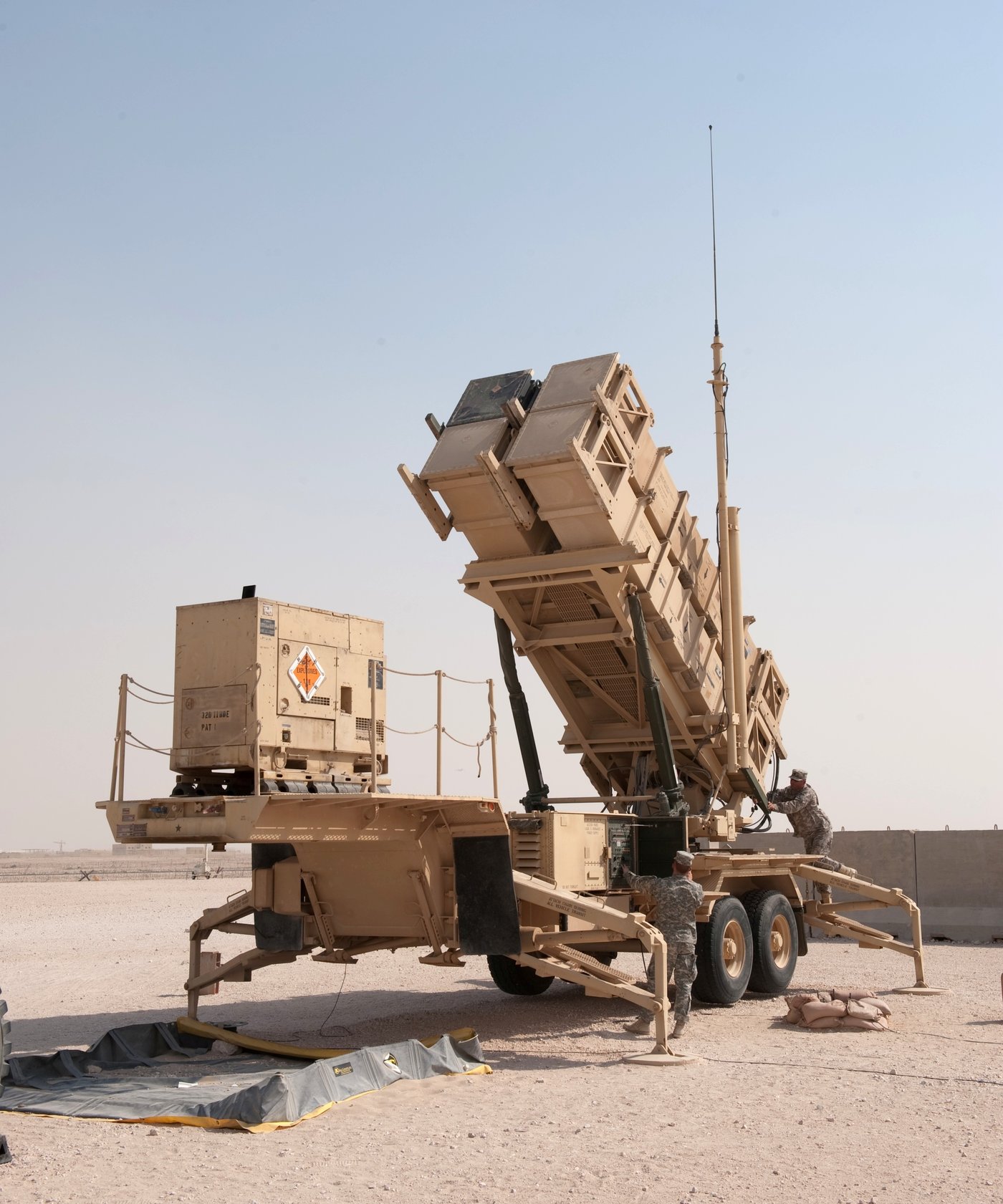
Saudi Arabia’s defence industry is experiencing what military analysts call a “wartime validation premium.” The Kingdom’s investment in air defence systems — Patriot batteries, THAAD interceptors, and an emerging network of Korean-made KM-SAM launchers — has been tested under live fire for seventeen consecutive days. The interception rate, while not publicly disclosed, has been high enough to prevent any catastrophic hit on critical infrastructure within Saudi borders.
Saudi Arabian Military Industries, the PIF subsidiary that anchors the Kingdom’s defence localisation strategy, is not publicly listed on the Tadawul. SAMI operates across five divisions — aerospace, land systems, naval, defence systems, and advanced electronics — and reported significant contract wins at the World Defense Show 2026 in February, where 60 defence deals worth approximately SAR 33 billion ($8.8 billion) were announced. The WDS 2026 drew 1,486 exhibitors from 89 countries and 137,000 visitors, according to the Saudi Exchange’s event records.
The defence dividend flows through the Tadawul indirectly. Companies in the materials and industrial sectors that supply components to SAMI and its affiliates have seen their order books swell. The SAMI Land Industrial Complex in Riyadh, covering 82,000 square metres with an annual capacity of 1,500 military vehicles, began operations in early 2026 — a facility whose output is now more urgently needed than its designers anticipated.
International defence contractors with Saudi joint ventures have also benefited. The war validated the Crown Prince Mohammed bin Salman’s decade-long investment in air defence and military localisation, transforming what critics once dismissed as vanity spending into the shield that is preventing a repeat of the 2019 Abqaiq-Khurais attacks on a vastly larger scale.
The defence dividend also has a procurement dimension. Saudi Arabia signed a $5 billion deal to manufacture Chinese combat drones in Jeddah during the war’s first two weeks, and Ukraine dispatched drone defence teams to the Kingdom. Every new defence contract represents future revenue for Saudi companies and employment for Saudi workers — the Vision 2030 goal of military localisation being achieved under the pressure of live combat rather than the timelines of a peacetime industrial strategy. Investors tracking the defence supply chain on the Tadawul are pricing in a procurement cycle that will last years beyond whatever ceasefire eventually ends the current conflict. The pattern extends well beyond defence: across at least eight sectors, the war is compressing Vision 2030 timelines that peacetime bureaucracy had stretched to the end of the decade.
SAMA’s $448 Billion Shield
The Saudi Central Bank entered the war with foreign reserves of approximately $448 billion, down from a six-year peak of $475 billion in the final quarter of 2025, according to Trading Economics data. These reserves — held across U.S. Treasury bonds, foreign currency deposits at international banks, gold, and Saudi Arabia’s Special Drawing Rights position at the International Monetary Fund — constitute the ultimate backstop for the riyal-dollar peg and, by extension, for investor confidence in the Tadawul.
The peg matters enormously for market stability. The Saudi riyal’s fixed exchange rate of 3.75 to the U.S. dollar means that foreign investors buying TASI-listed stocks face no currency risk. In the UAE, by contrast, while the dirham is also pegged, the smaller reserve base and the more direct physical damage from Iranian strikes has created whispers — denied by the UAE Central Bank — of peg vulnerability. For institutional allocators comparing Gulf markets, the solidity of SAMA’s reserves is a factor that tilts allocation toward Riyadh.
The cost of maintaining this shield is substantial. Analysts estimate that SAMA’s reserves are draining at between $12 billion and $18 billion per month as the Kingdom simultaneously funds military operations, covers the gap between reduced oil export revenue and a government budget designed for peacetime, and intervenes in currency markets to suppress any speculative pressure on the riyal. At the lower end of that range, Saudi Arabia has roughly three years of reserve runway. At the higher end, the window narrows to two years.
SAMA’s governor, Ayman al-Sayari, has not publicly addressed the reserve drawdown. The central bank’s last official statement on monetary policy, issued before the war, reaffirmed the commitment to the peg and to price stability. Inflation in Saudi Arabia remains relatively contained — below 3 percent — in part because the government has frozen domestic fuel and electricity prices, absorbing the cost difference through fiscal subsidies rather than passing it to consumers.
The Trillion-Dollar Stabiliser
The Public Investment Fund’s $941 billion portfolio has entered what analysts describe as an undeclared wartime footing. PIF Governor Yasir al-Rumayyan signalled in late 2025 that the fund intended to reduce international investments and focus more capital on domestic deployment — a shift that the war has dramatically accelerated.
PIF’s wartime priorities have crystallised around three pillars: defence industrial investment through SAMI, agricultural acquisitions to secure food supplies for 35 million residents whose shipping lanes are under fire, and strategic purchases of discounted Tadawul stocks that represent the fund’s own domestic portfolio companies. The fund ranked second globally for sovereign investor deal activity in February 2026, completing $3 billion in transactions in a single month, according to Arab News.
The PIF’s acknowledged need for a 15 percent capital-spending cut reflects the tension between wartime demands and Vision 2030 ambitions. Giga-project spending — NEOM, Qiddiya, the Red Sea Global resort complex — has been frozen or sharply reduced as the same budget lines are redirected toward interceptor missile procurement, infrastructure hardening, and emergency food stockpiling. The war has forced PIF to choose between building Saudi Arabia’s future and defending its present.
For the Tadawul, PIF’s domestic buying has been a stabilising force. The fund holds significant stakes in dozens of listed companies, and its willingness to add to positions during the sell-off sent a signal to other domestic investors that the Kingdom’s largest institutional player saw the decline as temporary. The PIF effect is circular: its buying stabilises prices, which prevents margin calls on leveraged positions, which prevents forced selling, which maintains the price level that PIF’s own portfolio valuations depend upon.
Can the Tadawul Survive a Second Month of War?
The Tadawul’s recovery through the first seventeen days of the war is impressive but not conclusive. Three structural risks threaten the market’s stability if the conflict extends into April and beyond, and each one grows more dangerous with time.
The first risk is Aramco’s earnings trajectory. Oil at $102 per barrel is beneficial for Aramco’s revenue line, but the Strait of Hormuz blockade has reduced Saudi Arabia’s export capacity by roughly 60 percent. Aramco can ship approximately 2 to 3 million barrels per day through its Red Sea pipelines to Yanbu, but the Kingdom’s pre-war export capacity exceeded 7 million barrels per day. If the blockade persists, Aramco’s next quarterly earnings — expected in May — could show a revenue decline despite higher prices, as volume losses overwhelm per-barrel gains.
The second risk is the SAMA reserve drawdown. Every month of war reduces the Kingdom’s financial cushion by $12 billion to $18 billion. If reserves fall below $400 billion — a level that currency markets consider the minimum for maintaining a credible peg — the riyal could face speculative pressure for the first time since the 1986 oil price collapse. A peg crisis would be devastating for the Tadawul, as foreign investors would face currency losses on top of equity losses.
The third risk is the physical one. Saudi Arabia’s air defence network has performed admirably, but it is finite. Israel’s interceptor shortage has already forced the IDF to ration its own missile defence, and Saudi Arabia faces a similar calculus. If Iran shifts from the drone swarms that have characterised the first two weeks toward heavier ballistic missile salvoes — which the IRGC has threatened — the cost-per-intercept rises dramatically, and the probability of a successful strike on a major economic target increases.
Against these risks, the Tadawul has three structural advantages that no other Gulf market possesses. Its liquidity depth — the TASI had over 200 listed companies before the war — provides diversification that smaller exchanges lack. Its domestic investor base is large, wealthy, and patriotically motivated to buy the dip. And Aramco’s sheer scale means that even a partial recovery in export volumes would generate enough revenue to fund both the war effort and shareholder returns simultaneously.
Gulf Wartime Market Resilience Matrix
Comparing Gulf markets during the Iran war requires more than a simple index-level comparison. The underlying drivers of market performance — export route diversification, reserve adequacy, domestic investor depth, physical damage exposure, and economic concentration risk — vary dramatically across the GCC. The following matrix scores each exchange across five dimensions that collectively determine wartime market resilience.
| Dimension | Tadawul (Saudi) | DFM (Dubai) | ADX (Abu Dhabi) | QSE (Qatar) | Boursa (Kuwait) | BHB (Bahrain) |
|---|---|---|---|---|---|---|
| Export Route Diversification | 8/10 | 3/10 | 4/10 | 2/10 | 2/10 | 1/10 |
| Central Bank Reserve Adequacy | 9/10 | 7/10 | 8/10 | 7/10 | 6/10 | 4/10 |
| Domestic Investor Depth | 9/10 | 4/10 | 5/10 | 5/10 | 6/10 | 3/10 |
| Physical Damage Exposure | 6/10 | 3/10 | 4/10 | 5/10 | 4/10 | 2/10 |
| Economic Concentration Risk | 7/10 | 4/10 | 6/10 | 2/10 | 3/10 | 3/10 |
| Composite Resilience Score | 39/50 | 21/50 | 27/50 | 21/50 | 21/50 | 13/50 |
Saudi Arabia’s composite score of 39 out of 50 reflects its advantages across nearly every dimension. The Kingdom’s East-West pipeline network, which connects Eastern Province oil fields to Red Sea export terminals at Yanbu, provides a Hormuz bypass that no other Gulf producer fully replicates. Its $448 billion in SAMA reserves dwarf the central bank holdings of every GCC neighbour except Abu Dhabi. And its domestic investor base — a population of 35 million with substantial household savings and a cultural disposition toward national solidarity during crises — has proven willing to absorb foreign selling at a scale that would overwhelm thinner markets.
Dubai scores lowest among the larger exchanges because of the emirate’s unique vulnerabilities. Its economy is built on services — tourism, real estate, aviation, logistics — that are directly disrupted by war. Dubai has no oil of its own and depends on federal Abu Dhabi structures for defence. The DFM’s investor base is heavily expatriate, and expatriates are leaving. The 30 percent collapse in Dubai’s real estate index within two weeks illustrates how quickly a services-based economy can unravel when the physical security assumption that underpins it is removed.
Qatar’s low resilience score reflects its dangerous dependence on a single export commodity — liquefied natural gas — that must transit the Strait of Hormuz. Qatar is the world’s second-largest LNG exporter, and its entire export infrastructure faces eastward into the Persian Gulf. The Bloomberg projection of a potential 14 percent GDP contraction in 2026 if the strait remains contested is not alarmist; it reflects the mathematical reality of an economy with no alternative export route.
Bahrain scores lowest of all, reflecting its tiny reserve base, physical proximity to Iran (just 200 kilometres across the Gulf), direct missile and drone damage to civilian infrastructure, and an economy heavily dependent on financial services that are migrating to Riyadh.
The war has answered a question that Gulf markets have debated for a decade: in a genuine crisis, which financial centre can absorb the shock and which ones amplify it? The answer, measured in index points and capital flows, is unambiguous.
Gulf Wartime Market Resilience Matrix analysis, March 2026
The Eid Pause and What Comes After
The Saudi Exchange confirmed that the Tadawul would suspend all trading activity from Tuesday, March 17, through Monday, March 23 — a seven-day Eid al-Fitr break that coincides with the war’s transition from its second to its third week. The timing is both coincidental and consequential.
For the market, the pause provides a cooling period. Leveraged positions that might have faced margin calls in a continuous trading environment will remain frozen. Short sellers cannot press their bets. The psychological reset of a religious holiday — Eid al-Fitr marks the end of Ramadan, during which many Saudi investors traditionally reduce their market activity — may soften the emotional intensity that has characterised trading since February 28.
That cooling period proved far shorter than the market needed. By the time the Tadawul reopened on 24 March, eight days of escalation had fundamentally altered the risk landscape that investors had priced in before Eid, with ballistic missiles striking Riyadh province and oil crashing 13 percent in a single session.
For the war, a week is an eternity. The military situation as of March 17 remains fluid. Iran continues to launch drone and missile attacks across the Gulf. The United States is pressuring NATO allies and China to contribute naval forces to reopen the Strait of Hormuz, with limited success so far. Crown Prince Mohammed bin Salman is reported by the New York Times to be in regular contact with President Trump, urging continued military pressure on Tehran — a report that Saudi officials have denied.
When the Tadawul reopens on March 24, it will face a market that has had seven days to digest developments that could go in radically different directions. A ceasefire or de-escalation would likely trigger a relief rally of 5 to 10 percent as foreign capital returns and risk premiums compress. A major escalation — an Iranian strike on Saudi oil infrastructure, an expansion of the ground war in Lebanon, or a failed attempt to force the Strait of Hormuz — could push the TASI back toward its 10,365 low or below. Early signs point toward the latter scenario: on March 23, the Tadawul faces its worst reopening in history as Asian markets plunged, oil topped $114, and Trump’s Iran ultimatum expired without a diplomatic resolution.
The Eid break also coincides with Aramco’s scheduled Q4 2025 dividend payment date of March 31. Investors who were on the register as of the March 16 ex-dividend date will receive their payments regardless of what the market does when it reopens. For yield-focused investors, the combination of a 5.02 percent dividend yield and a share price near annual highs makes Aramco one of the few wartime investments in the Gulf that is paying investors to wait.
Saudi Arabia’s financial markets have absorbed the worst geopolitical shock in a generation and emerged, against all expectations, as the Gulf’s last functioning capital market. The conventional wisdom before February 28 held that a regional war would be equally devastating for all Gulf economies. Seventeen days of combat have proven that assumption spectacularly wrong. The Tadawul’s recovery — powered by Aramco’s pricing advantage, SAMA’s reserve depth, PIF’s institutional buying, and a domestic investor class that refused to panic — represents something more significant than a market rebound. It represents a structural shift in where the Gulf’s financial centre of gravity lies. Capital that fled Dubai and Doha in the first week of the war has not returned. Much of it has moved to Riyadh. The Crown Prince’s long-stated ambition to make Saudi Arabia the region’s dominant financial centre may have been achieved not by the megaprojects and conferences that were designed to attract it, but by the simple, brutal demonstration that when the missiles fly, the Tadawul is the last exchange standing.
Frequently Asked Questions
What is the current level of the Saudi Tadawul stock market index?
The Tadawul All Share Index (TASI) closed at 10,886.63 on March 16, 2026, the last trading session before the seven-day Eid al-Fitr suspension. This represents a near-complete recovery from the war-driven low of 10,365 reached in early March, and is essentially flat compared to the pre-war close of 10,847.93 on February 25.
How has Saudi Aramco’s stock performed during the Iran war?
Saudi Aramco shares have risen approximately 13.72 percent year-to-date, trading at SAR 27.10 as of March 16, 2026. The stock benefited from oil prices surging above $102 per barrel, a 5.02 percent dividend yield, and the company’s ability to redirect exports through Red Sea terminals bypassing the Strait of Hormuz blockade. Aramco reported full-year 2025 net profit of SAR 348 billion.
Why did the Dubai stock market crash harder than the Saudi market?
Dubai’s DFM index fell 17 percent during the Iran war compared to the Tadawul’s near-flat performance. Dubai’s economy depends heavily on services — tourism, real estate, aviation — that are directly disrupted by conflict. The DFM’s heavily expatriate investor base liquidated holdings to fund departures, its real estate index collapsed 30 percent, and UAE regulators were forced to impose emergency circuit breakers and a two-day market closure.
When does the Tadawul reopen after the Eid break?
The Saudi Exchange confirmed that trading will resume on Monday, March 24, 2026, after a seven-day Eid al-Fitr holiday closure running from March 17 to March 23. The reopening session is expected to be volatile as the market processes developments from the war’s third week, including any changes in the Strait of Hormuz situation and the March 31 Aramco dividend payment.
Is Saudi Arabia’s stock market a safe investment during the Iran war?
The Tadawul has demonstrated greater resilience than any other Gulf exchange during the Iran war, supported by Aramco’s pricing power, SAMA’s $448 billion in foreign reserves, domestic institutional buying, and Saudi Arabia’s Red Sea export route diversification. Structural risks remain, including SAMA reserve drawdowns of $12 billion to $18 billion monthly, potential Aramco volume declines, and the physical threat of escalating Iranian missile attacks.