
The Red Sea off Saudi Arabia’s coast holds one of the most scientifically documented and reliably accessible whale shark aggregations on Earth. Every spring, more than 100 juvenile whale sharks — the world’s largest fish — gather at a shallow reef platform south of Jeddah, drawn by plankton blooms in warming waters. For divers and snorkellers, this is a bucket-list encounter in one of the world’s least-dived seas. This guide is part of our Saudi Arabia Diving Guide and covers everything you need to plan your whale shark trip: where to go, when to go, how to get there, and what to expect in the water.
Best Time to Visit: March to May (peak aggregation at Shib Habil, Al Lith); November to May for the Farasan Banks
Top Locations: Shib Habil reef near Al Lith; the Farasan Banks (via liveaboard from Al Lith or Jizan)
Visa Required: Yes — tourist e-visa available online
Budget: Day trip from Jeddah approx. $150–$250 per person; Farasan Banks liveaboard from ~$1,150–$1,650 per person for 7–8 nights
Experience Level: Snorkelling open to all comfortable swimmers; scuba diving suitable for Open Water level and above
Avoid: Coming in June–August expecting whale sharks at Al Lith — the main aggregation disperses by late May
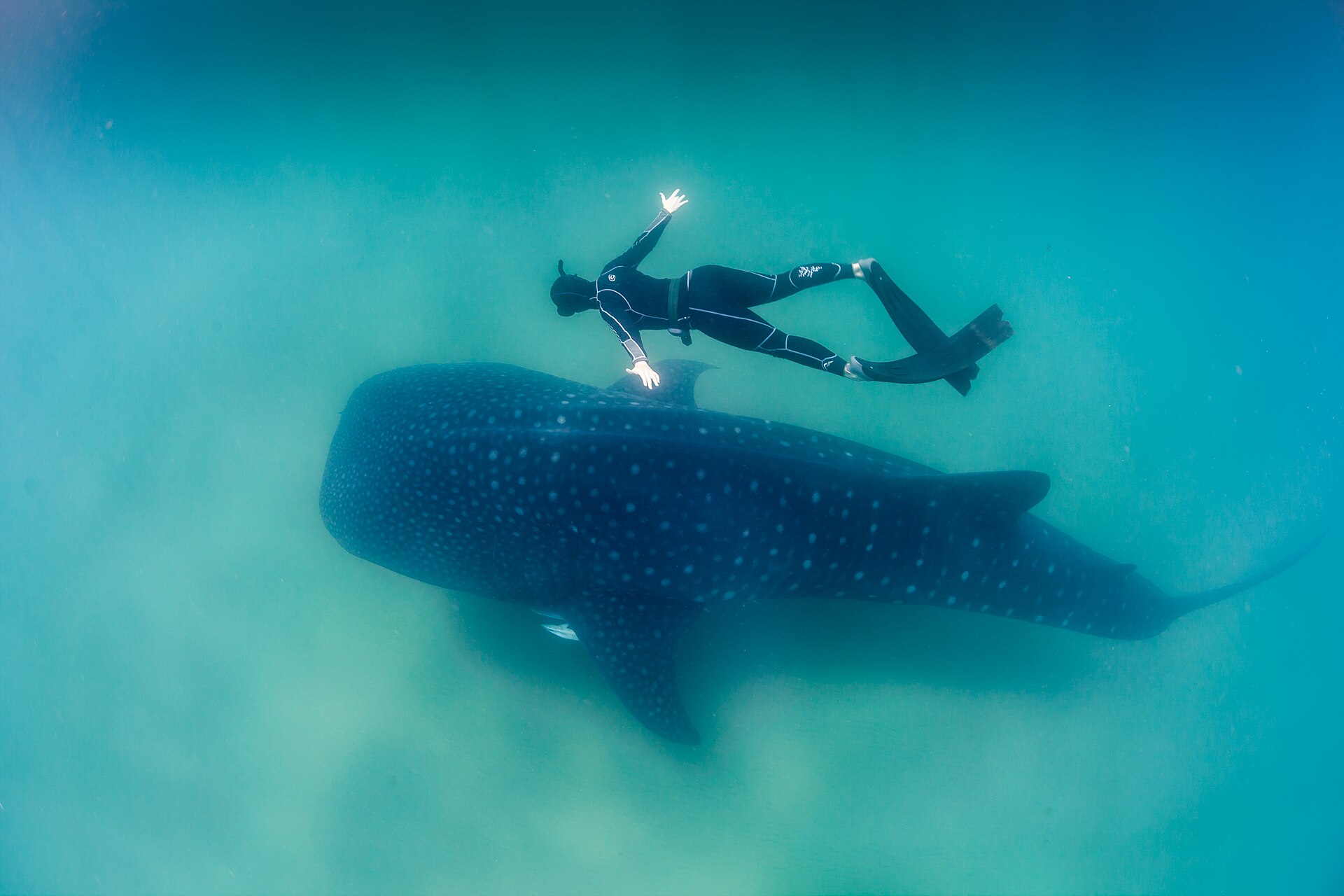
Why Saudi Arabia’s Red Sea Is a World-Class Whale Shark Destination
Saudi Arabia’s stretch of the Red Sea is not just another place where whale sharks occasionally pass through. The reef known as Shib Habil, located roughly 4 kilometres off the coast of Al Lith — a small coastal town approximately 210 kilometres south of Jeddah — is one of the only confirmed seasonal aggregation sites for juvenile whale sharks in the Indian Ocean basin.
Researchers from King Abdullah University of Science and Technology (KAUST) began studying the site in 2009 and published landmark findings in the journal PLOS ONE in 2014. Their satellite-tagging programme tracked 47 individual sharks — the largest such study ever conducted on the species at the time. The results confirmed that Shib Habil functions as a nursery habitat: all individuals present were juveniles ranging from 2.5 to 7 metres in length, with a near-equal sex ratio of males and females. This is unusual — most whale shark aggregation sites elsewhere in the world are dominated by male sharks. The Shib Habil site is the only location in the Indian Ocean known to regularly attract large numbers of juvenile females.
KAUST researchers estimate that more than 100 whale sharks visit the site each year. Most individuals remain in the area for approximately three weeks before dispersing, with the majority staying within the southern Red Sea. Around 10 per cent of tagged sharks departed into the western Indian Ocean, likely following seasonal upwelling and food availability. The sharks make remarkable deep dives between feeding sessions — satellite data showed regular dives to 400 metres, and three individuals reached depths exceeding 1,000 metres.
For divers and travellers, what this research reveals is reassuring: this is not a chance encounter. During the peak season, the probability of seeing whale sharks at Shib Habil is high.
The Whale Shark Species: What You’re Swimming With
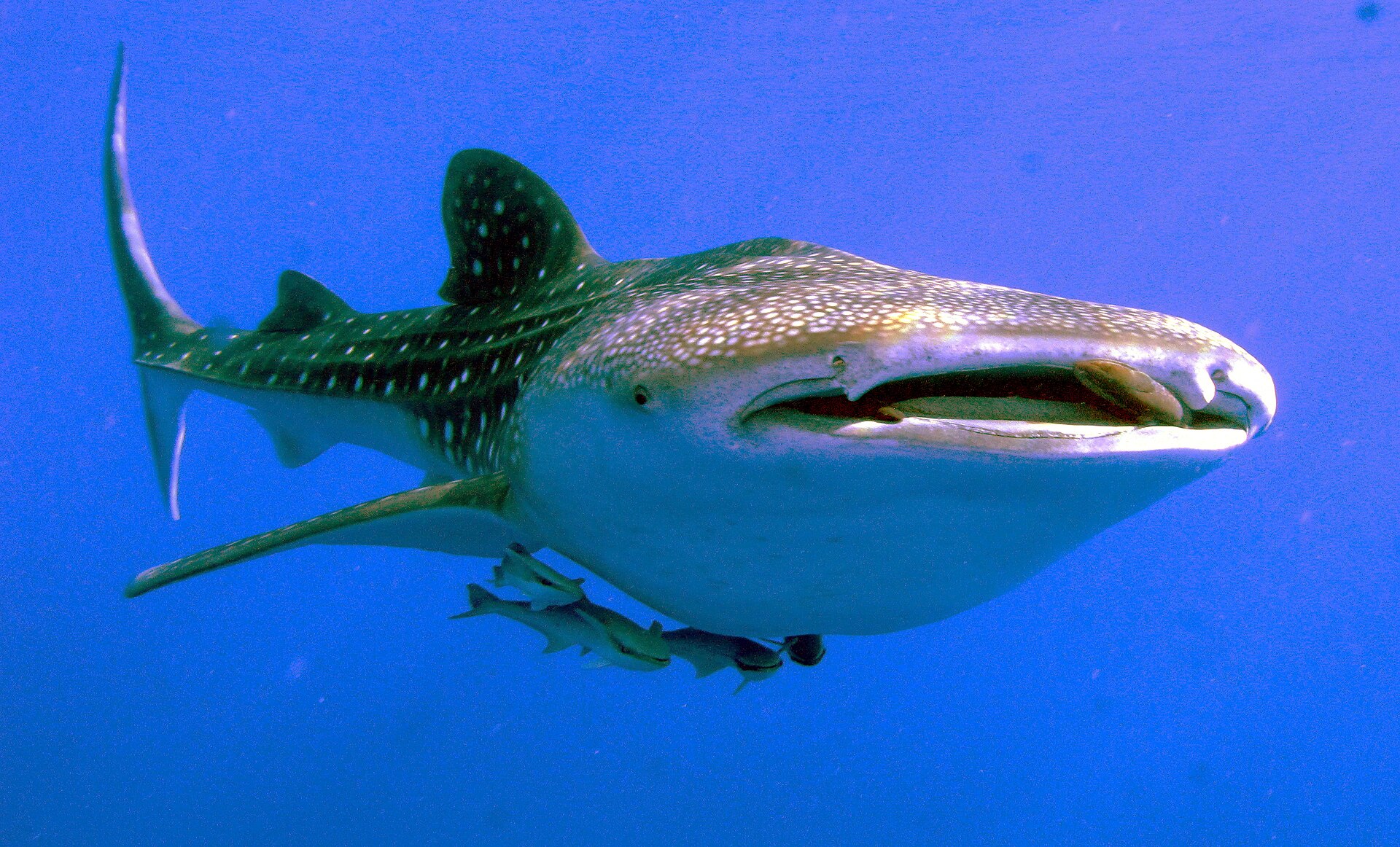
The whale shark (Rhincodon typus) is the largest fish on the planet. Adult specimens regularly reach 9 to 12 metres in length, with reports of individuals up to 18 metres, though the juveniles found at Shib Habil are typically 3 to 6 metres. Their skin is dark grey with a white belly, marked by a unique pattern of pale spots and stripes that acts like a fingerprint — individual sharks can be identified from photographs.
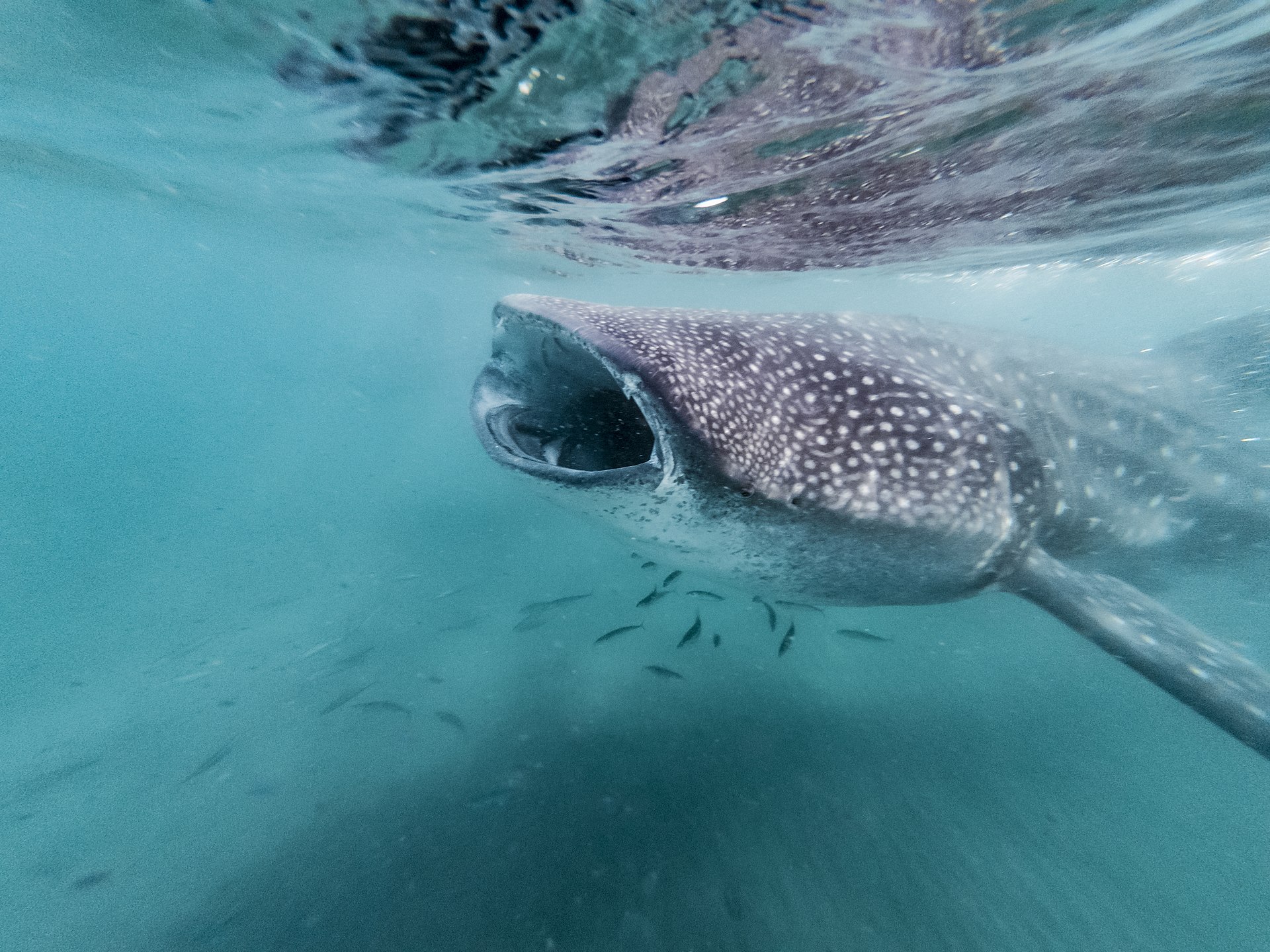
Despite their size, whale sharks are filter feeders. They pose no danger to humans. They feed by swimming slowly with their wide mouths open, filtering vast quantities of seawater through specialised gill pads that capture zooplankton, small fish, fish eggs, and algae. A single shark can process more than 6,000 litres of water per hour in this manner. The plankton blooms that drive the Shib Habil aggregation are linked to Red Sea seasonal patterns — the warming of coastal waters in late winter and spring triggers explosive plankton growth, and the whale sharks follow.
The species is listed as Endangered on the IUCN Red List, with global population declines of more than 50 per cent over the past 75 years attributed to fishing pressure, bycatch, and ship strikes. The Saudi Red Sea population, largely shielded by the country’s limited historical fishing pressure in these waters, represents a genuinely important conservation resource.
Where to See Whale Sharks in Saudi Arabia
Shib Habil Reef, Al Lith — The Primary Aggregation Site
Shib Habil is the headline destination. This submerged reef platform sits about 4 kilometres offshore from Al Lith, in waters that are generally shallow and clear — conditions ideal for whale shark encounters at the surface and in the upper water column. Researchers concentrated their work at the northern end of the platform, where plankton concentrations are highest and whale shark activity is most consistent during the March-to-May window.
The broader Al Lith area offers more than just whale sharks. The reef system here is described by divers as pristine and largely undisturbed, featuring diverse hard and soft coral communities alongside the large pelagic visitors. The Five Sisters — a group of reef pinnacles in deeper water nearby — attract manta rays, hammerheads, and other shark species. Visibility is typically excellent in the March-to-May period, often exceeding 20 metres.
The main access point for Al Lith diving is Hope of Spring, a PADI 5-Star dive centre that runs day trips and multi-day packages specifically targeting the whale shark season. They offer 3-day trips with six dives, combining whale shark encounters with general reef diving in the area. Departing Jeddah by road to Al Lith takes approximately 2.5 to 3 hours.
Practical tip: Book Al Lith trips as far in advance as possible for the March–May window. Dive operators in Saudi Arabia have limited capacity and the whale shark season coincides with peak demand. Last-minute bookings in April are frequently unavailable.
The Farasan Banks — The Remote Liveaboard Frontier
For experienced divers seeking a more immersive expedition, the Farasan Islands and their surrounding reef system — the Farasan Banks — represent some of the most biodiverse and least-dived waters in the entire Red Sea. Located off the coast near Jizan in the far southwest of Saudi Arabia, the Banks are accessible only by liveaboard.
The Living Oceans Foundation’s Red Sea coral reef survey recorded the highest live coral cover anywhere in Saudi Arabia’s Red Sea waters at the Farasan Banks — nearly 30 per cent, in an environment largely untouched by recreational diving. The Banks host 79 identified coral species, hawksbill and green sea turtle nesting areas, and a rich pelagic environment that includes whale sharks, tiger sharks, manta rays, and hammerhead sharks.
Whale sharks at the Farasan Banks are accessible over a much longer season than Al Lith: liveaboard operators report reliable encounters from November through May. In spring, whale sharks actively feed on the rich plankton found along the southern coast in large numbers. The departure point for most Farasan Banks liveaboards is the port of Al Lith, with 7-night and 8-night itineraries exploring pristine dive sites including Mar Mar, Dohra, Jadir, and the coral atolls of Mudarr and Fantasy. Operators including Dive Pro Liveaboard, Ocean Breeze, and Scuba Zone offer regular itineraries during the season, with pricing typically ranging from around €1,150 to €1,650 per person for a week aboard.
Yanbu and the Seven Sisters
Further north, the Yanbu reef system — including the famous Seven Sisters pinnacles — also sees occasional whale shark transits, particularly from June to September when liveaboard itineraries shift north following pelagic migrations. Yanbu has established dive infrastructure with multiple PADI operators offering day trips. Whale shark sightings here are less predictable than at Al Lith or the Farasan Banks, but the broader marine environment — sea fan forests, the WWI-era Iona shipwreck, hammerhead schools — makes Yanbu a strong destination in its own right. See our Yanbu travel guide for accommodation and logistics.
When to Go: Seasonal Guide
| Period | Al Lith / Shib Habil | Farasan Banks | Water Temp | Visibility |
|---|---|---|---|---|
| November–February | Rare / early arrivals | Good — season opens | 22–26°C | Excellent (20–30m) |
| March–May | Peak — high probability | Peak — consistent | 24–28°C | Excellent (20–30m) |
| June–August | Very low — dispersed | Low — season closing | 28–32°C | Good (15–25m) |
| September–October | Occasional | Not recommended | 28–30°C | Good (15–20m) |
The optimal window — if you can only visit once — is April. Water temperatures are pleasant at around 26–28°C (a 3mm wetsuit is comfortable), visibility is at its peak, above-water heat is tolerable, and the whale shark aggregation at Shib Habil is at full strength. Late March and early May are strong alternatives.
How to Dive or Snorkel with Whale Sharks
Do You Need to Be a Certified Diver?
No. Whale sharks in Saudi Arabia can be encountered by snorkellers as well as scuba divers. The animals at Shib Habil frequently feed at or near the surface, making snorkel encounters genuinely viable. You need to be a confident, calm swimmer — able to float easily, breathe through a snorkel, and kick with fins without panicking. Strong swimming ability is not required; calm composure is.
For scuba divers, a PADI Open Water certification (or equivalent) is the minimum for day trips to Al Lith. The Farasan Banks liveaboards typically require Advanced Open Water or equivalent due to the depth and pelagic nature of some dives. Check specific operator requirements before booking.
What to Expect in the Water
Whale sharks at Shib Habil are described by guides and researchers as relatively relaxed around humans — they are accustomed to occasional observer presence and typically do not flee immediately. The standard approach is to enter the water quietly from the boat, allow the whale shark to come to you or pass naturally, and maintain a respectful distance (a minimum of 3 metres from the body, 4 metres from the tail is standard international guidance).
Surface-feeding behaviour involves the shark moving slowly through the water column with its wide mouth open, filtering plankton. In these moments, keeping parallel to the shark and matching its pace — without rushing, splashing, or cutting across its path — gives the longest encounter time. Dives typically last 45 to 60 minutes. On a good day at Shib Habil during peak season, multiple encounters within a single dive are possible.
Responsible interaction rules: Do not touch whale sharks. Do not use flash photography. Do not block the animal’s path. Do not approach from directly in front of the mouth — the suction created by filter feeding is considerable. Stay out of the animal’s direct travel line and observe from the side. These rules protect both you and the shark.
Gear Recommendations
For snorkelling: a well-fitting mask, snorkel, and long-bladed fins. A 3mm full-length wetsuit or lycra rashguard provides sun protection and minor thermal comfort. Reef boots are useful for boat entry and exit. A surface marker buoy (SMB) is advisable in open water.
For scuba: standard tropical configuration — a 3mm wetsuit, BCD, regulator, and either a 10-litre or 12-litre cylinder (typical tank sizes used by Saudi operators). Underwater cameras are popular — the spot patterns of whale sharks make for extraordinary photography, and the clear Red Sea water produces exceptional results. A wide-angle lens is recommended given the size of the subjects.
Getting There: Logistics
Getting to Saudi Arabia
International visitors need a Saudi tourist e-visa, available online through the Saudi eVisa portal in most cases. See our Saudi Arabia visa guide for full details on eligibility, costs, and the application process. The e-visa costs approximately $135 and covers stays of up to 90 days. Citizens of many Western countries, including the UK, US, Australia, Canada, and EU member states, are eligible. The Saudi Arabia travel guide covers entry requirements, customs, and general travel practicalities in full.
Jeddah is the main international gateway for Red Sea diving. The King Abdulaziz International Airport is served by direct flights from London, Paris, Frankfurt, Dubai, and most major hubs. From Jeddah airport, Al Lith is approximately 210 kilometres south — around 2.5 to 3 hours by road.
Getting to Al Lith
Al Lith is accessible by private car, rental car, or with organised transfers arranged through dive operators. There is no direct public transport connection. Renting a car in Jeddah and driving south on Highway 5 (the Corniche Road heading south) is the most flexible option. The road is good and well-signed. Al Lith has basic hotels and guesthouses, though most divers base themselves in Jeddah and travel down for multi-day dive trips.
Getting to the Farasan Banks
Liveaboards departing for the Farasan Banks typically depart from Al Lith port. Some operators arrange transfers from Jeddah as part of the package. The nearest commercial airport with regular service to Jizan (the closest major city to the Farasan Islands themselves) is Jizan Regional Airport, served by domestic Saudi Airlines and flynas flights from Riyadh and Jeddah. See our Farasan Islands guide for detailed logistics on reaching the archipelago.
Dive Operators and Liveaboards
Day Trip Operators from Jeddah / Al Lith
Hope of Spring (hopespringdive.com) — Saudi Arabia’s first PADI 5-Star Dive Resort, based in Jeddah with regular Al Lith expeditions during the whale shark season. They run structured 3-day packages with six dives that combine whale shark encounters with general reef diving. Equipment rental available. PADI certification courses offered year-round.
Al-Ahlam Marine — Another established operator with an Al Lith branch offering day trips and multi-day whale shark packages. Good local knowledge of Shib Habil conditions.
Liveaboard Operators for the Farasan Banks
Multiple European-managed liveaboard operations run Farasan Banks itineraries during the November-to-May season. Operators worth researching include Dive Pro Liveaboard (MY Dive Pro), Ocean Breeze Liveaboards, and Scuba Zone Liveaboard. Most 7-night itineraries are priced in euros and include all dives, meals, and equipment use on board. A typical 7-night Farasan Banks trip costs between €1,150 and €1,650 per person depending on cabin type and operator. Liveaboard comparison sites such as liveaboard.com and divesafarimaster.com allow side-by-side booking comparisons.
What Else Will You See?
The whale sharks are the headline act, but the Saudi Red Sea’s marine biodiversity is remarkable across the board. At Shib Habil and the broader Al Lith reef system, divers routinely encounter manta rays, hammerhead sharks, grey reef sharks, whitetip reef sharks, hawksbill turtles, and schools of large pelagic fish including trevally and barracuda. The coral itself — largely undamaged by bleaching events that have hit other parts of the Red Sea — features dense table corals, staghorn formations, and extensive soft coral gardens.
The Farasan Banks expand this further: tiger sharks frequent the southern passes, dolphin pods are common, and the coral cover records measured by the Living Oceans Foundation place this among the healthiest reef systems remaining in the broader Indian Ocean region. Divers exploring the Saudi coral reefs of the Farasan Banks are entering water where recreational diving is still genuinely rare — a feeling that has vanished from most of the world’s popular dive destinations.
For those who prefer to stay above the surface, snorkelling in Saudi Arabia offers outstanding shallow-water experiences along the entire Red Sea coast, including reef areas accessible directly from beaches near Umluj in the north. The whale shark snorkelling at Al Lith does not require scuba certification and is one of the most accessible big-animal encounters anywhere in the region.
Conservation and Responsible Tourism
The whale shark is listed as Endangered by the IUCN. Saudi Arabia currently has no formal whale shark tourism regulation at Shib Habil, unlike sites in Australia (Ningaloo Reef) or Mexico (Holbox/Isla Mujeres) where strict codes of conduct and permit systems are in place. This places the responsibility squarely on individual divers and operators.
Responsible interaction means: no touching, no riding, no blocking, no flash photography, maintaining minimum distances (3 metres from the body, 4 metres from the tail), and limiting the number of people in the water with a single animal at any time. Operators with experience at the site generally enforce these standards, but less reputable operators may not. When choosing a dive company, ask specifically about their whale shark interaction protocol before booking.
KAUST continues to conduct research at the Al Lith site. If you photograph whale sharks during your visit, you can contribute to ongoing population monitoring by submitting your images — particularly those showing the spot pattern behind the gill slits — to the Wildbook for Whale Sharks (sharkbook.ai), a global citizen science database that uses photographic identification to track individual animals and population movements.
Conservation note: The Red Sea whale shark population is considered distinct from other Indian Ocean and Pacific populations based on movement data. The majority of tagged sharks stayed within the Red Sea throughout their tracked period. This semi-enclosed population may be more vulnerable to local pressures than wide-ranging populations elsewhere.
Frequently Asked Questions
Are whale shark encounters guaranteed?
Nothing in wildlife tourism is guaranteed, but Shib Habil is one of the most reliably productive whale shark aggregation sites in the world during March–May. In peak season, most dive trips to the site encounter whale sharks. The Farasan Banks offer a longer season but lower per-dive encounter rates than the Al Lith aggregation at its peak.
Can beginners do this dive?
Yes. Snorkelling with whale sharks requires no dive qualification — only comfort in open water with a mask and fins. For scuba, Open Water certification is sufficient for Al Lith day trips. The Farasan Banks liveaboards typically require Advanced Open Water.
Is it safe to swim with whale sharks?
Yes. Whale sharks are filter feeders and pose no predatory threat to humans. They have very small, vestigial teeth. The only risk is accidental collision — their size and the power of their tails means careless proximity can result in injury. Maintaining the recommended distances and staying to the side of the animal eliminates this risk.
What time of day are encounters most likely?
Whale sharks at Shib Habil are most active and most visible in morning sessions when plankton concentrations are highest near the surface. Early morning dives (departing at or before sunrise) tend to yield the best encounters. Afternoon conditions can also be good but are more variable.
Do I need travel insurance for diving in Saudi Arabia?
Yes. Ensure your policy explicitly covers scuba diving to the depths you plan to dive, medical evacuation, and hyperbaric (decompression) treatment. The nearest hyperbaric chamber to Al Lith is in Jeddah. Always dive with a certified guide who knows local emergency procedures.
Explore More Saudi Arabia Travel Guides
- Saudi Arabia Diving Guide — Complete guide to Red Sea diving
- Snorkeling in Saudi Arabia — Best Red Sea sites for non-divers
- Farasan Islands — Saudi Arabia’s untouched Red Sea paradise
- Yanbu Travel Guide — Red Sea gateway and diving paradise
- Saudi Arabia Coral Reefs — The Red Sea’s extraordinary reef systems
- Umluj Travel Guide — Saudi Arabia’s northern Red Sea gem
- Saudi Arabia Travel Guide 2026 — The complete guide to visiting the Kingdom
- Saudi Arabia Visa Guide — Every visa type explained