
MANAMA — The Strait of Hormuz has seen war before. Between 1981 and 1988, Iraqi jets and Iranian gunboats attacked 411 commercial vessels, killed more than 400 civilian seafarers, and turned the Persian Gulf into the most dangerous waterway on earth. Yet through it all, oil kept flowing. At its worst, the original Tanker War disrupted fewer than 2 percent of Gulf shipping. The strait never closed. In March 2026, Iran achieved in seventy-two hours what eight years of the first Tanker War never managed: it shut the world’s most important shipping lane almost entirely. Tanker traffic through Hormuz has dropped to near zero. Very Large Crude Carrier day rates have smashed all-time records at $423,736. Seven of the twelve international P&I clubs have cancelled war risk coverage for the Gulf. And the United States Navy, which once ran the largest convoy operation since the Second World War, has admitted it does not currently have the ships to escort tankers through the strait. This is the Second Tanker War — and it is already more economically devastating than the first.
Table of Contents
- The First Tanker War — 411 Ships, 400 Dead, and a Strait That Never Closed
- What Happened to the Strait of Hormuz in March 2026?
- The Invisible Siege — How Insurance Markets Closed the Strait Without a Single Mine
- What Naval Weapons Can Iran Deploy in the Strait of Hormuz?
- The Mine That Changed Everything — Iran’s Deadliest Asymmetric Weapon
- Why Are Oil Tanker Rates at All-Time Records?
- Can the US Navy Escort Tankers Through Hormuz Again?
- Saudi Arabia’s Maritime Achilles Heel — Ras Tanura, Jubail, and the Pipeline Alternative
- The Hormuz Risk Matrix — Measuring the Second Tanker War Against the First
- Why the Second Tanker War May End Faster Than Anyone Expects
- How Is Global Shipping Rerouting Around the Gulf?
- Who Pays for a Closed Strait? The $1 Trillion Question
- Frequently Asked Questions
The First Tanker War — 411 Ships, 400 Dead, and a Strait That Never Closed
The original Tanker War began almost as an afterthought. In 1981, as Iraq and Iran ground through the second year of their eight-year war, Iraqi aircraft started hitting merchant vessels bound for Iranian ports in the northern Persian Gulf. The logic was brutally simple: choke Iran’s oil revenues and starve the war machine. By March 1984, Iraq escalated further, extending attacks southward to strike ships serving Iran’s oil-loading complex at Kharg Island. Two months later, Iran began retaliating against vessels trading with Iraq’s Gulf allies, principally Kuwait and Saudi Arabia. The Tanker War had become a two-sided campaign.
Between 1981 and 1988, combatants attacked 411 commercial ships. Iraq was responsible for 283 of those attacks; Iran carried out 168. Of the 239 oil tankers struck, 55 were sunk or declared constructive total losses — a 23 percent destruction rate. More than 400 civilian seamen were killed, according to the US Naval History and Heritage Command, with hundreds more wounded. The cargo toll exceeded 30 million tons.
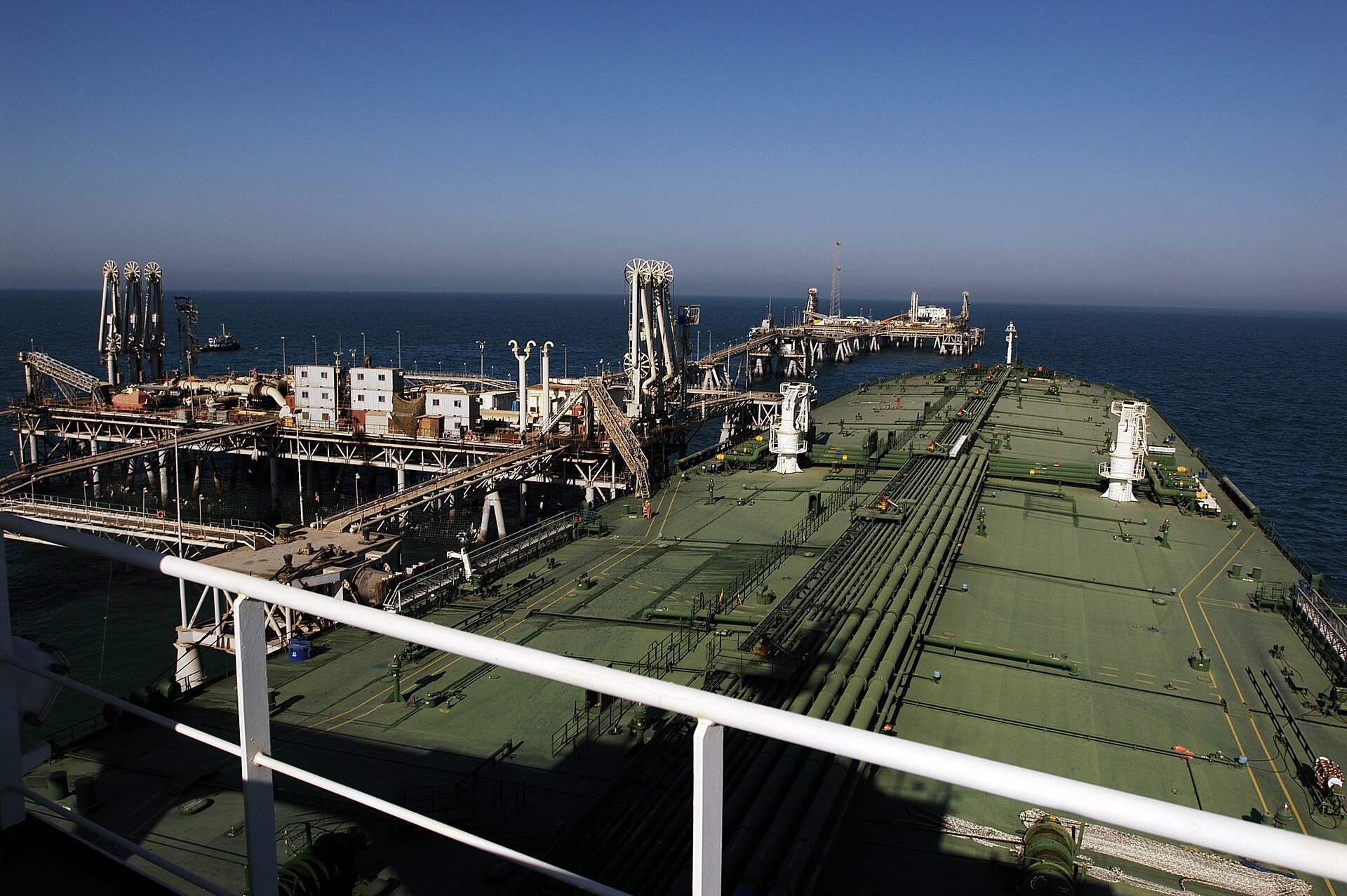
The most remarkable fact about the first Tanker War, however, is how little it actually disrupted trade. Even at the campaign’s peak intensity, fewer than 2 percent of ships transiting the Persian Gulf were attacked. Oil continued to flow. Iran compensated for rising insurance premiums by lowering the price of its crude. Global oil prices, counterintuitively, declined steadily through the mid-1980s. The strait never closed. The lesson that two generations of naval strategists drew from this experience was reassuring: the Tanker War demonstrated that Gulf shipping could absorb significant punishment and keep functioning.
That lesson has now been comprehensively invalidated.
The critical difference between the two conflicts lies not in the volume of ordnance expended but in the mechanisms of disruption. In the 1980s, ships were attacked individually, and the industry adapted by accepting manageable losses, hiring security teams, and purchasing war risk insurance at elevated but affordable premiums. Tanker owners calculated that the risk of attack was low enough — and the profit margins high enough — to justify continued operations. The system bent but did not break.
In 2026, the system broke within seventy-two hours, and it broke through a mechanism that the admirals of the 1980s never anticipated: the withdrawal of insurance coverage. Iran did not need to sink a single supertanker to close the strait. The insurance industry did it for them.
What Happened to the Strait of Hormuz in March 2026?
The closure of the Strait of Hormuz followed directly from the US-Israeli strikes on Iran that began on 28 February 2026 and killed Supreme Leader Ayatollah Ali Khamenei. Iran’s retaliatory missile and drone attacks struck targets across the Gulf Cooperation Council states, including Aramco’s Ras Tanura refinery, the US Embassy in Riyadh, and military installations in Bahrain, Qatar, and the UAE. Within forty-eight hours, the conflict had escalated from targeted strikes to a regional war spanning six countries.
The strait itself became a combat zone on 1 March 2026, when the oil tanker Skylight was struck by a projectile north of Khasab, Oman, killing two Indian crew members and injuring three others. The attack in Omani territorial waters highlighted the impossible position facing Sultan Haitham, whose country controls the strait’s southern shore while attempting to mediate the conflict. The following day, a senior Islamic Revolutionary Guard Corps official confirmed the strait was officially closed and threatened any vessel attempting to pass. The IRGC backed the declaration with a visible deployment of fast attack boats, coastal missile batteries, and — most critically — an unknown number of naval mines.
The effect was immediate. Tanker traffic through Hormuz dropped by approximately 70 percent within twenty-four hours. More than 150 ships anchored outside the strait, their owners unwilling to risk a transit. Within seventy-two hours, traffic had fallen to near zero. The downstream damage is accelerating: Iraq has been forced to shut its Rumaila field and cut 1.5 million barrels per day of production as southern export terminals ran out of tanker capacity. Maersk, CMA CGM, and Hapag-Lloyd — three of the world’s largest container shipping lines — suspended all Strait of Hormuz transits. QatarEnergy ceased production at its two main liquefied natural gas facilities. Bloomberg’s Hormuz traffic tracker showed what analysts described as a “signal fog,” with GPS interference surges compounding the physical danger of missiles and mines.
The US Maritime Administration issued Advisory 2026-001A for the Strait of Hormuz, Persian Gulf, Gulf of Oman, and Arabian Sea, warning of military operations and potential retaliatory strikes by Iranian forces. The Joint Maritime Information Center assessed the regional maritime threat level as Critical — the highest designation available.
Todd Humphreys, a GNSS expert at the University of Texas at Austin, identified GPS interference as a “significant factor” in the de facto blockade. Ships approaching the strait reported sudden navigation failures, with GPS signals either disappearing entirely or providing false position data that could lead vessels into mined waters or Iranian territorial waters. The electronic dimension of the blockade — invisible but potent — represents a capability that Iran did not possess during the first Tanker War and that the shipping industry has no established protocol for managing.
The speed of the closure caught the global shipping industry unprepared. The International Maritime Organization had conducted no fewer than three scenario-planning exercises since 2019 on a potential Hormuz closure, but each had assumed a gradual escalation over weeks rather than a near-instantaneous shutdown. The collapse of insurance coverage within forty-eight hours — the mechanism that actually closed the strait to commercial traffic — was not modelled in any of these exercises. The shipping industry had prepared for the wrong war.
The Invisible Siege — How Insurance Markets Closed the Strait Without a Single Mine
Iran’s mines and missiles did not close the Strait of Hormuz. The insurance industry did. Before the first Iranian missile had hit a tanker, the financial infrastructure that makes commercial shipping possible had already begun to collapse. The result is what maritime analysts have called “the invisible siege” — a blockade enforced not by warships but by actuaries.
The mechanics are straightforward. Every commercial vessel transiting a conflict zone requires war risk insurance, typically purchased as an additional premium on top of standard hull and cargo policies. Before the February strikes, war risk premiums for Hormuz transits ran at approximately 0.125 percent of hull value, occasionally rising to 0.2-0.4 percent during periods of elevated tension. These were manageable costs.
Within hours of the strikes, premiums surged to 1-1.5 percent of hull value per voyage — a 150-fold increase from baseline. For a Very Large Crude Carrier with a hull value of $100-120 million, this translated to an additional cost of $250,000 or more per single transit. But the premium escalation was only the beginning.
Between 1 March and 2 March 2026, seven of the twelve clubs constituting the International Group of Protection and Indemnity Clubs issued seventy-two-hour cancellation notices for war risk coverage in the Persian Gulf, Gulf of Oman, and all Iranian territorial waters. The seven clubs — Gard AS, NorthStandard, Steamship Mutual, Assuranceforeningen Skuld, the American Club, the Swedish Club, and the London P&I Club — collectively insure approximately 90 percent of the world’s ocean-going commercial tonnage. When they withdrew coverage, they did not merely raise the cost of a Hormuz transit. They made it legally impossible for most commercial vessels to attempt one.
| Period | Premium (% of Hull Value) | Cost per VLCC Transit | Change |
|---|---|---|---|
| Pre-crisis baseline | 0.01% | $10,000-12,000 | — |
| Elevated tension (2024-25) | 0.125-0.4% | $125,000-480,000 | 12-40x |
| Post-strike (1 March 2026) | 1.0-1.5% | $1,000,000-1,800,000 | 100-150x |
| P&I withdrawal (2 March 2026) | Unavailable | N/A — coverage cancelled | Infinite |
Lloyd’s of London Joint War Committee expanded its listed high-risk areas to encompass the entire Persian Gulf, eastward to the Arabian Sea off Pakistan, westward to the southern Red Sea, and southward past the Horn of Africa. The JWC issued cancellation notices at a frequency unprecedented in its 336-year history. As one insurance analyst observed: “Insurance withdrawal is doing the work that physical blockade has not — the outcome for cargo flow is largely the same.”
The parallel to the Red Sea shipping crisis of 2023-24 is instructive. When Houthi attacks on commercial vessels in the Bab el-Mandab strait began in late 2023, war risk premiums for that corridor rose from 0.05 percent to 1.0 percent within three months — a twentyfold increase. The Hormuz crisis exceeded that pace within seventy-two hours. The difference is scale: the Red Sea carries significant but substitutable traffic. Hormuz handles roughly 21 million barrels of oil per day, a fifth of global consumption, along with a fifth of the world’s LNG trade. There is no alternative waterway.
What Naval Weapons Can Iran Deploy in the Strait of Hormuz?
Iran’s ability to threaten the Strait of Hormuz rests on a doctrine that Western military planners call anti-access/area denial — the use of layered, overlapping weapons systems to make a defined geographic area too dangerous for an adversary to operate in. The strait’s geography makes it uniquely suited to this approach. At its narrowest point, Hormuz is approximately 30 miles wide, with two shipping lanes of 2 miles each separated by a 2-mile median. The lanes run through Omani and partially Iranian territorial waters. Depths range from 200 to 330 feet — ideal conditions for mining.
Iran maintains an estimated 5,000 to 6,000 naval mines of Soviet, Russian, Chinese, and North Korean origin. The arsenal includes contact mines, moored mines, bottom-influence mines (triggered by acoustic, magnetic, or pressure signatures), and the EM-52 — a Chinese-produced rocket-propelled rising mine armed with a 600-pound high-explosive warhead, deployable in waters up to 600 feet deep. US intelligence has identified the EM-52 as one of the most dangerous maritime weapons in the region, theoretically capable of crippling an aircraft carrier. Iran can deploy mines from surface vessels, submarines, small boats under 30 feet long, and repurposed civilian craft. Even limited mining can halt transit through the strait within hours.
Beyond mines, the IRGC Navy operates a fleet of fast attack boats numbering in the hundreds, including 10 Houdong missile boats, 25 Peykaap II missile boats, and additional C-14 and MK13 vessels, many capable of speeds between 50 and 70 knots. These boats employ swarm tactics — coordinated attacks by dozens of fast-moving vessels designed to overwhelm the defensive systems of larger warships through sheer numbers and simultaneous approach vectors.
| System | Type | Range | Speed | Warhead | Threat Level |
|---|---|---|---|---|---|
| Khalij-e Fars | Anti-ship ballistic missile | 300 km | Mach 3-4 | 650 kg | Critical — terminal electro-optical guidance |
| Noor | Sea-skimming cruise missile | 120-300 km | Subsonic | 200 kg | High — reverse-engineered Chinese C-802 |
| Qader | Cruise missile (upgraded Noor) | 300 km | Subsonic | 200 kg | High — extended range variant |
| EM-52 | Rocket-propelled rising mine | Seabed to target | High | 270 kg (600 lb) | Critical — can threaten carriers |
The Khalij-e Fars missile deserves particular attention. This single-stage solid-propellant anti-ship weapon, based on the Fateh-110 ballistic missile, combines a range of 300 kilometres with terminal electro-optical guidance that allows it to track and strike moving vessels. At Mach 3-4, it gives defending ships roughly 30-45 seconds of warning from the point of detection to impact. No purely defensive system can reliably intercept a salvo of these weapons launched simultaneously from multiple coastal positions. The Khalij-e Fars transforms the threat calculus from one of individual vessel risk to systematic denial of the waterway — any ship within 300 kilometres of the Iranian coastline, which includes the entirety of the strait and most of the western Gulf, is within the engagement envelope.
Iran’s submarine force adds a further layer of threat. The fleet includes three Tareq-class (Kilo-class) diesel-electric submarines capable of mine-laying and torpedo attacks, alongside a larger number of Ghadir-class and Nahang-class midget submarines optimized for short-range ambush, mine insertion, and special operations in the shallow waters of the Gulf. The integrated effect — mines below, missiles from the coast, swarm boats on the surface, and submarines lurking in the shallows — creates what analysts at the Center for Strategic and International Studies describe as a “magazine-drain” environment, designed to force adversaries to expend their defensive missiles faster than they can be replenished.
The Mine That Changed Everything — Iran’s Deadliest Asymmetric Weapon
On 24 July 1987, the very first day of Operation Earnest Will, the supertanker SS Bridgeton struck an Iranian M-08 contact mine thirteen miles west of Farsi Island. The explosion ripped through the outer hull but failed to prevent the 401,382 deadweight-ton vessel from completing its voyage. The incident was embarrassing rather than catastrophic — but it exposed a vulnerability that has only grown more dangerous in the intervening four decades.
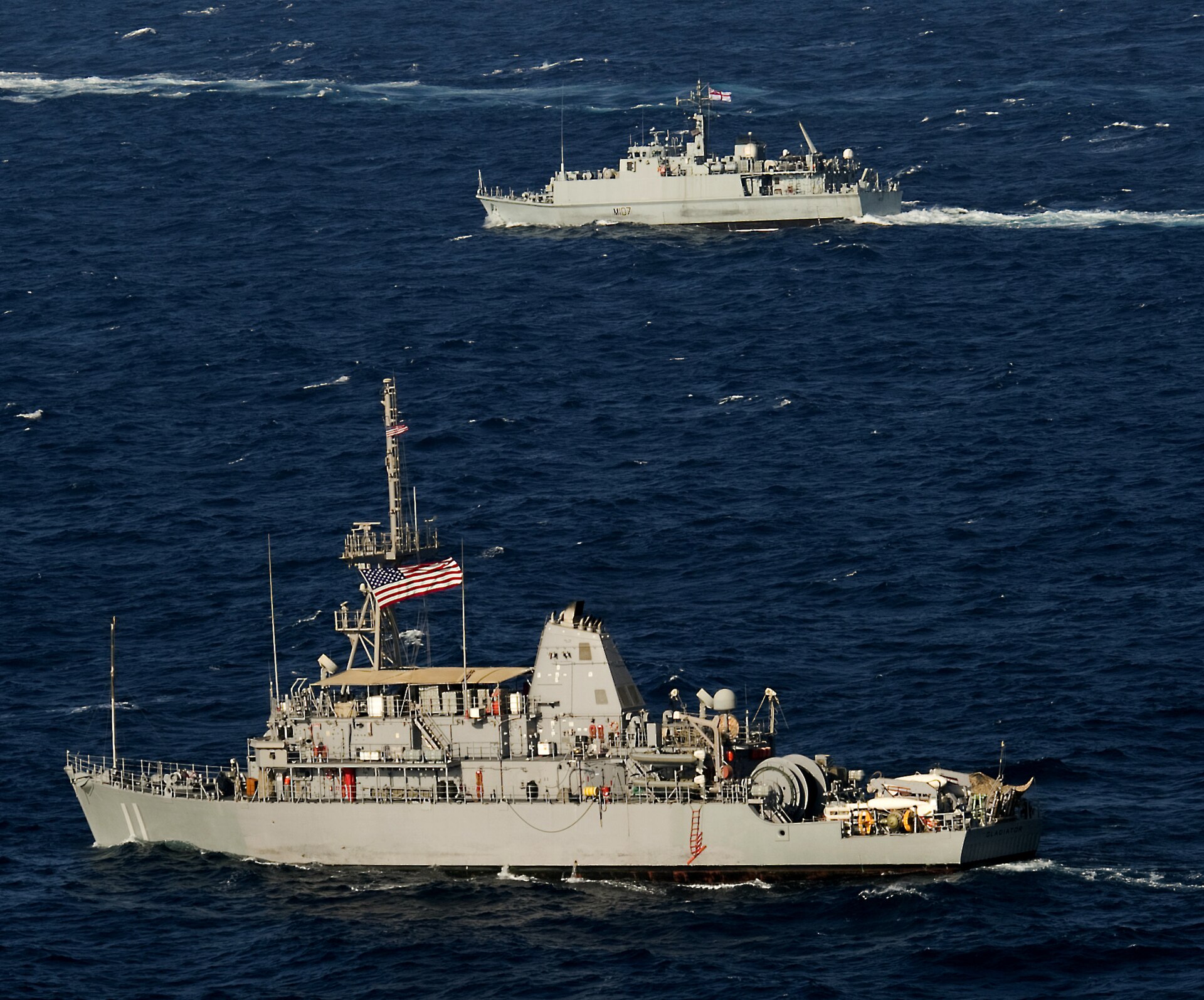
The defining mine warfare incident of the first Tanker War came on 21 September 1987. US Army helicopters operating under Operation Prime Chance tracked the Iran Ajr, a 614-ton Japanese-built landing craft converted for covert minelaying. After observing the vessel dropping mines into shipping lanes, MH-6 Little Bird helicopters raked it with minigun fire. When Iranian sailors resumed laying mines thirty minutes later, a second sustained barrage — including rockets — killed three crew members and forced the remaining twenty-six to abandon ship. The next morning, Navy SEALs boarded the Iran Ajr and discovered nine mines still on board, along with a logbook recording past minelaying operations and maps of mine locations.
The logbook proved decisive seven months later. On 14 April 1988, the guided-missile frigate USS Samuel B. Roberts struck an Iranian M-08 contact mine while transiting international waters during Operation Earnest Will. The explosion ripped a fifteen-foot hole in the hull, broke the keel, flooded the engine room, and knocked both gas turbine engines off their mounts. Ten sailors were injured, four seriously burned. US Navy divers recovered unexploded mines nearby whose serial numbers matched the sequence found aboard the Iran Ajr — proof beyond dispute that Iran was responsible.
Four days later, the United States launched Operation Praying Mantis, the largest American surface naval engagement since the Second World War. US forces destroyed two Iranian oil platforms used as command-and-control nodes, sank the Iranian frigate IRIS Sahand, severely damaged another frigate, and sank at least three armed speedboats. The operation demonstrated overwhelming American naval superiority — but it also demonstrated that a single mine costing a few thousand dollars could cripple a warship worth hundreds of millions.
That cost asymmetry has only deepened. In 1988, Iran possessed a few hundred mines, mostly crude contact weapons. Today, its stockpile stands at an estimated 5,000 to 6,000, including advanced influence mines with acoustic, magnetic, and pressure triggers designed to defeat modern mine countermeasures. As defense analysts at the Strauss Center have noted, the cost asymmetry between offensive and defensive weapons that defines the current Iran conflict extends to the maritime domain with particular force: a mine costing $10,000-25,000 can sink a tanker worth $100 million or neutralize a warship worth $2 billion.
Why Are Oil Tanker Rates at All-Time Records?
On 3 March 2026, the benchmark freight rate for Very Large Crude Carriers hit $423,736 per day — an all-time record and an increase of more than 94 percent from the previous Friday’s close. Brokers reported Arabian Gulf-to-Far East fixtures above $445,000 per day, with confirmed spot deals exceeding any rate previously recorded in the tanker industry’s history.
The rate explosion reflects three simultaneous pressures. The first is supply withdrawal: tanker owners are pulling vessels out of the Arabian Gulf entirely or refusing to accept charters for Gulf loading ports, reducing the available fleet for the world’s most important crude export region. The second is route lengthening: cargoes that would normally transit Hormuz are being rerouted around the Cape of Good Hope, adding weeks to voyage duration and effectively removing each diverted vessel from the spot market for an extended period. The third is risk pricing: charterers are now paying not just for transportation capacity but for the geopolitical risk premium embedded directly into freight rates.
The concentration of market power has intensified the problem. Sinokor is projected to control at least 24 percent of the VLCC spot fleet in 2026 — an unprecedented level of market concentration that gives a single operator significant pricing influence over global crude transportation costs.
| Period | Average Day Rate ($/day) | Context |
|---|---|---|
| 2023 average | $35,000-55,000 | Normal market conditions |
| Late 2024 (Red Sea disruption) | $60,000-90,000 | Houthi attacks on shipping |
| Q1 2025 average | $40,000-50,000 | Stabilized post-Red Sea |
| 28 Feb 2026 (pre-strike) | $218,000 | Day before Iran strikes |
| 3 Mar 2026 (record) | $423,736 | All-time record — 94% increase in 72 hours |
The implications extend far beyond oil. Higher tanker rates feed directly into the cost of crude for refiners, which feeds into gasoline and diesel prices for consumers. Every $10,000 increase in daily VLCC rates adds approximately $0.20-0.30 per barrel to the delivered cost of crude oil. At current rates, the freight component alone adds roughly $3-4 per barrel above pre-crisis levels — and that is before the war risk insurance surcharge, which adds another $2-3 per barrel. Together, logistics costs are adding $5-7 per barrel to the price of every barrel of Gulf crude that reaches a refinery, regardless of the headline Brent price.
Can the US Navy Escort Tankers Through Hormuz Again?
On 3 March 2026, President Trump announced that the US Navy might begin escorting tankers through the Strait of Hormuz “as soon as possible,” explicitly invoking the precedent of Operation Earnest Will. Three days later, the administration announced a $20 billion reinsurance programme for oil tankers, with the Development Finance Corporation insuring losses on a rolling basis. Lloyd’s of London signalled its willingness to work with the US government on insurance solutions for Hormuz transits. The escort mission gained operational teeth with the deployment of a third carrier strike group to the Gulf, giving CENTCOM the surface combatants needed to provide both carrier defense and convoy protection simultaneously.
The shipping shutdown has had cascading consequences beyond tanker traffic. On 9 March, Saudi Arabia began cutting oil production as Gulf storage tanks filled to capacity, with Kuwait, the UAE and Iraq also slashing output in the face of a physical inability to export through the closed waterway.
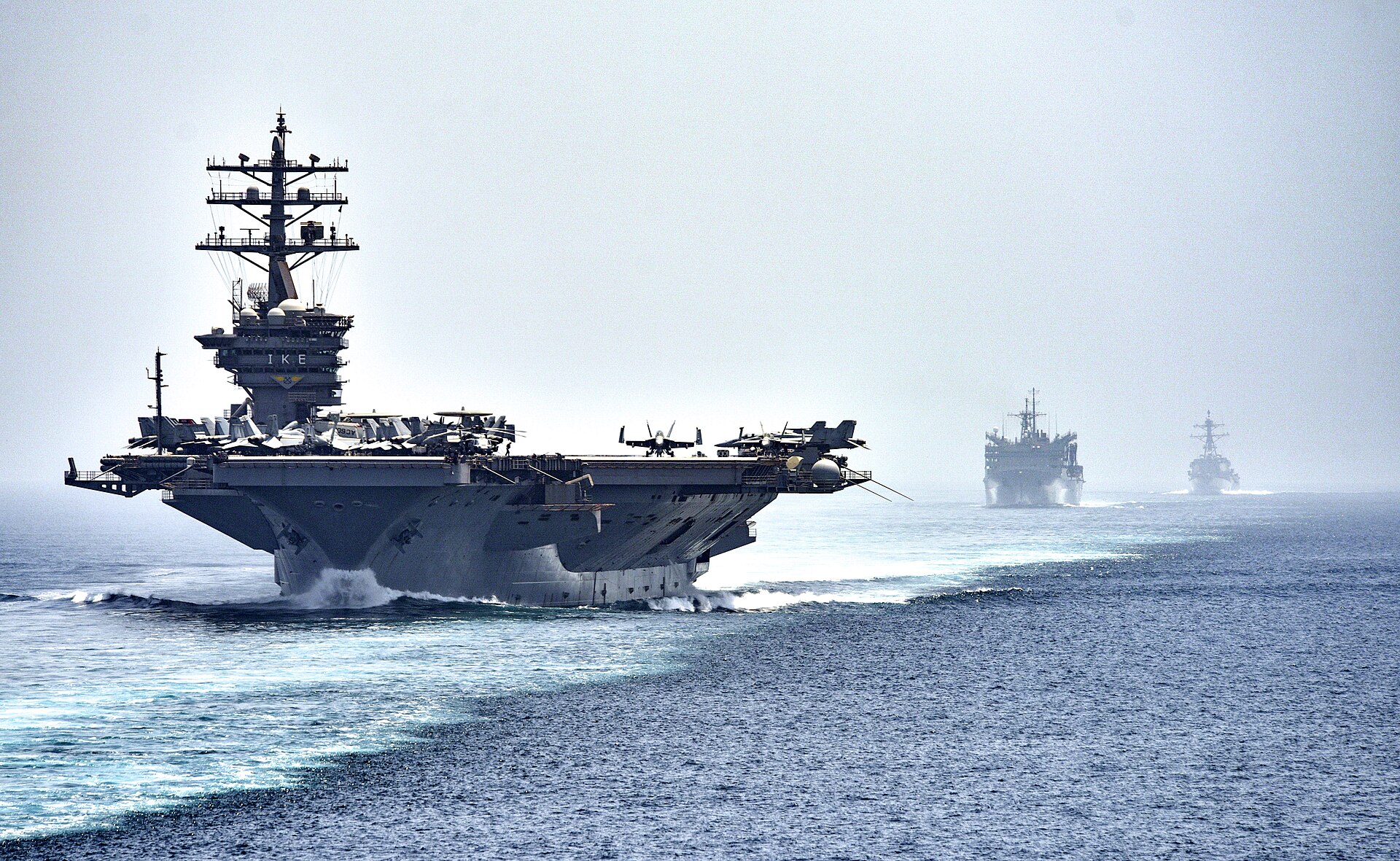
The rhetoric, however, has run ahead of operational reality. A US official told Fox News Digital: “We are not escorting ships through the Strait of Hormuz and we will not speculate on future operations.” A senior administration official separately told CNN there was “no specific timeline” for launching escorts. Most significantly, the US Navy told shipping industry leaders directly that it does not currently have the naval availability to provide sustained escort operations through the strait. Protecting all tankers seeking passage would require a very large number of warships and support assets — assets currently committed to ongoing combat operations against Iran.
The contrast with 1987 is stark. When Operation Earnest Will launched, the United States reflagged eleven Kuwaiti tankers under the American flag and assigned dedicated warship escorts from the guided-missile destroyer USS Kidd, the cruiser USS Fox, and the frigate USS Crommelin. The operation ran for fourteen months and represented the largest naval convoy operation since the Second World War. But in 1987, the US Navy had 568 ships. Today, the fleet has shrunk to approximately 296 deployable vessels, while its operational commitments have expanded to include simultaneous operations in the Western Pacific, the Red Sea, the Mediterranean, and now the Persian Gulf combat zone.
Ship owners have responded to the uncertain trajectory of America’s war with practical scepticism. Industry leaders have stated that they need to see a sustained period without attacks before venturing through again — government reinsurance and escort promises notwithstanding. A convoy operation requires not just escort warships but mine countermeasures vessels to sweep the route ahead of each transit, anti-submarine assets to protect against Iran’s Kilo-class submarines, and air cover to defend against coastal anti-ship missiles. Providing this layered protection on a continuous basis would absorb a significant fraction of the entire US Fifth Fleet.
Saudi Arabia’s Maritime Achilles Heel — Ras Tanura, Jubail, and the Pipeline Alternative
Saudi Arabia’s exposure to the Hormuz closure is defined by geography. The Kingdom’s most important export infrastructure — the facilities that generate the revenues underpinning Crown Prince Mohammed bin Salman’s Vision 2030 transformation programme — sits on the Persian Gulf coast, inside the chokepoint.
Ras Tanura, Saudi Arabia’s largest oil export terminal, has a capacity of approximately 4.5 million barrels per day of crude oil and 2 million barrels per day of natural gas liquids and refined products. It accounts for roughly one quarter of Saudi Arabia’s total oil exports. On 2 March 2026, the Ras Tanura refinery — with a capacity of 550,000 barrels per day — was forced offline following Iranian drone and missile strikes. Saudi officials stated the damage came from debris from an intercepted missile rather than a direct hit, but the distinction made little difference to the refinery’s output: it went dark.
Jubail, one of the largest industrial ports in the Middle East, serves the world’s biggest petrochemical complex and handles exports of refined petroleum products, petrochemicals, chemical fertilizers, and sulfur. Both Ras Tanura and Jubail require shipping access through the Strait of Hormuz. With the strait closed, these facilities are effectively landlocked.
The Kingdom’s insurance policy against a Hormuz closure is the East-West Pipeline, also known as the Petroline — a 1,200-kilometre system consisting of two pipelines (48-inch and 56-inch diameter) running from the eastern oil fields to the Red Sea port of Yanbu. Built in 1981 — not coincidentally, the same year the first Tanker War began — the pipeline’s capacity was increased to 5 million barrels per day in 1992. The Yanbu terminal complex has a combined crude loading capacity of approximately 4.3-4.5 million barrels per day at maximum throughput, including the King Fahd Industrial Port and the Yanbu South Terminal added in 2018.
Aramco is exploring plans to reroute oil exports via the Red Sea to bypass Hormuz entirely, according to Bloomberg. But the arithmetic is unforgiving. Saudi Arabia’s pre-crisis export capacity through Hormuz-dependent facilities significantly exceeds what Yanbu can handle, even at maximum throughput. And the Red Sea route itself faces risks from Houthi threats from Yemen, creating the perverse possibility that the Kingdom’s Hormuz alternative could itself come under attack.
The deeper vulnerability is temporal. The East-West Pipeline was built in 1981 — forty-five years ago. While its capacity has been expanded, the system was designed as a strategic reserve, not as a primary export route. Running it at maximum throughput for an extended period introduces maintenance and reliability risks that Aramco’s engineers have never tested under combat conditions. A single point of failure along the 1,200-kilometre pipeline — whether from Iranian missile strike, sabotage, or mechanical failure — would eliminate the Kingdom’s only functioning export route. Saudi Arabia has poured $75 billion into military hardware over the past decade, but the most important piece of infrastructure in the Kingdom today is a pair of steel pipes running through the desert.
The strategic implications extend beyond energy exports. Saudi Arabia imports approximately 80 percent of its food, much of it through Gulf ports. The Hormuz closure has disrupted these supply chains simultaneously with the oil export crisis, creating a dual vulnerability that food security analysts have described as the Kingdom’s most dangerous domestic challenge since the formation of the modern state. The maritime crisis is not just about oil revenues — it threatens the basic logistics of feeding 36 million people.
The Hormuz Risk Matrix — Measuring the Second Tanker War Against the First
Comparing the two tanker wars requires a framework that goes beyond headline statistics. The differences are not merely quantitative — more ships, higher rates, bigger premiums — but qualitative. The character of the threat, the mechanisms of disruption, and the available responses have all changed fundamentally.
Three dimensions define the comparison: kinetic threat (the physical danger to vessels), financial threat (the economic mechanisms that halt shipping), and systemic threat (the vulnerability of the global system to disruption). In 1987, the kinetic threat was high but the financial and systemic threats were moderate. In 2026, all three are at levels never previously recorded.
| Dimension | 1980s Tanker War (1981-88) | 2026 Hormuz Crisis | Change |
|---|---|---|---|
| Duration | 7 years (sustained, low-intensity) | Days (acute, high-intensity) | Compressed timeline |
| Ships attacked | 411 over 7 years | Traffic halted entirely in 72 hours | From attrition to closure |
| Traffic disruption | <2% of Gulf shipping | ~100% (near-total halt) | 50x increase |
| Oil price impact | Initial spike, then decline | $70 to $90+/bbl in days | Sustained elevation |
| Insurance response | Premiums rose modestly | 150x premium increase; 7/12 P&I clubs cancelled | Systemic withdrawal |
| VLCC day rates | Elevated but functional | All-time record $423,736/day | Market breakdown |
| US convoy operation | Launched within weeks | Proposed but not yet possible | Capacity gap |
| Iran mine capability | Hundreds, crude types | 5,000-6,000, including rising mines | 10-20x increase |
| Iran anti-ship missiles | Limited, short-range | 300 km range, Mach 3-4 ballistic | Qualitative leap |
| Civilian casualties (seamen) | 400+ killed over 7 years | At least 2 killed in first days | Too early to compare |
| GPS/electronic warfare | Not applicable | Active GPS interference/jamming | New dimension |
The matrix reveals a fundamental shift in the nature of the threat. The first Tanker War was a war of attrition — ships were attacked one by one, and the shipping industry adapted by accepting manageable losses. The Second Tanker War is a war of denial — the combination of physical threat, insurance withdrawal, and electronic disruption has made the strait impassable for virtually all commercial traffic simultaneously. The transition from attrition to denial represents a qualitative change in Iran’s ability to weaponize the Strait of Hormuz.
Why the Second Tanker War May End Faster Than Anyone Expects
The conventional analysis treats the Hormuz closure as a sustained crisis that will persist for weeks or months, gradually grinding down the global economy until diplomatic pressure forces a resolution. This analysis may be wrong. The very severity of the Second Tanker War contains the seeds of its own termination — and the mechanism is not diplomatic but economic.
Iran’s economy depends on the Strait of Hormuz at least as much as its adversaries’ economies do. Before the war, Iran exported approximately 1.5-1.8 million barrels of crude oil per day, almost all of it through the Gulf. The closure has eliminated Iran’s own oil revenues alongside everyone else’s. Iran’s foreign currency reserves, already depleted by years of sanctions, are hemorrhaging at a rate that the post-Khamenei leadership in Tehran cannot sustain. Every day the strait remains closed costs Iran between $100 million and $150 million in lost oil revenue — money the regime desperately needs to fund both the war effort and domestic stability.
The CSIS analysis of Iran’s historical strait-closure threats reached a consistent conclusion: the threat was always viewed as a bluff because the self-inflicted economic damage made sustained closure irrational. The current crisis initially appeared to invalidate that assessment — a regime facing existential military threat from US and Israeli strikes abandoned rational economic calculation in favour of pure deterrence. But the logic of self-harm reasserts itself rapidly. David Hewitt, principal at Hewitt Energy Perspectives, has argued that historical thinking “underestimated the actions of a regime posed with existential threat.” That is true for the decision to close the strait. It is less true for the decision to keep it closed.
The post-Khamenei Iranian government faces a choice that will define the course of the war: keep the strait closed and bleed its own revenues, or reopen it under negotiated terms and regain the income stream needed for regime survival. The diplomatic backchannel Saudi Arabia has established with Tehran may find its most productive use not in negotiating a ceasefire over territory or nuclear weapons, but in brokering a mutual de-escalation of the maritime crisis that is destroying both sides’ economies simultaneously.
There is historical precedent for this pattern. During the first Tanker War, Iran discovered that attacking Gulf shipping was a weapon that cut both ways. By 1986, Iran was lowering its own crude prices to compensate buyers for the elevated insurance costs of loading at Iranian terminals — effectively paying the cost of its own naval campaign. The economic self-harm accelerated Iran’s willingness to accept the UN ceasefire resolution in July 1988. The dynamics of the 2026 crisis are operating on a compressed timeline: the economic pain that took years to accumulate in the 1980s is building in days. The Iranian government’s cash reserves are thinner, its economy more vulnerable to sanctions, and its population more restive than at any point since the Islamic Revolution. The strait may reopen not because of American military pressure or Saudi diplomatic skill, but because Tehran simply runs out of money to keep it closed.
This does not mean the reopening will be clean or complete. Even after Iran signals willingness to allow commercial traffic, the mine clearance operation required to make the strait safe for navigation will take weeks. The US Navy’s mine countermeasures fleet — already stretched thin before the crisis — faces the task of sweeping an unknown number of mines from a waterway that covers hundreds of square miles. The insurance industry will demand verified mine clearance before resuming coverage. And the psychological scar on the shipping industry — the memory of how quickly the system collapsed — will embed a permanent risk premium into Hormuz transits for years to come.
The psychological damage will be compounded by physical damage that no diplomatic agreement can reverse. Pollution contaminating the Persian Gulf for decades — from sunken tankers, burning oil facilities, and naval munitions on the seabed — represents a cost of the Second Tanker War that will outlast any ceasefire, and one that the first Tanker War, fought in deeper and more open waters, never inflicted at comparable scale.
How Is Global Shipping Rerouting Around the Gulf?
With the Strait of Hormuz effectively closed, global shipping is attempting the most significant route restructuring since the Suez Canal blockage of 2021 — but at a vastly larger scale and with far fewer alternatives.
Oil cargoes that would normally transit Hormuz face three options, none satisfactory. The first is Saudi Arabia’s East-West Pipeline to Yanbu, which can handle up to 4.3-4.5 million barrels per day but cannot replace the 21 million barrels per day that normally transit the strait. The second is the Cape of Good Hope route, which adds approximately 6,000 nautical miles and 15-20 days to the journey from the Gulf to East Asia — absorbing tanker capacity and pushing day rates to historic levels. The third is to draw from strategic petroleum reserves, a temporary measure that delays rather than solves the supply problem.
For LNG, the situation is more severe. Qatar exported approximately 9.3 billion cubic feet per day of LNG through Hormuz in 2024, representing roughly one-fifth of global LNG trade. Unlike oil, LNG cannot be rerouted through pipelines — it requires dedicated liquefaction facilities, specialised carriers, and regasification terminals. QatarEnergy’s decision to cease production at its two main LNG facilities has removed approximately 10 billion cubic feet per day of gas from global markets, with immediate consequences for Asian economies that depend on Gulf LNG — particularly China, India, and South Korea, which together account for 52 percent of all Hormuz LNG flows. Europe faces its own Hormuz vulnerability, with approximately 10 percent of EU LNG imports transiting the strait — Italy, Belgium, and Poland the most exposed member states.
The Cape of Good Hope route deserves closer examination because it reveals the hidden costs of maritime rerouting that headline oil prices do not capture. A VLCC sailing from Ras Tanura to Yokohama via Hormuz covers approximately 6,500 nautical miles in 16-18 days. The same voyage via the Cape of Good Hope covers approximately 12,500 nautical miles in 32-35 days — nearly doubling the transit time and fuel consumption. Each diverted VLCC is effectively removed from the spot market for an additional two to three weeks per round trip. With the global VLCC fleet numbering approximately 800-850 vessels, and a significant proportion either trapped inside the Gulf or diverted to the Cape route, the effective supply of available tankers for Gulf crude transport has contracted by an estimated 30-40 percent. This supply contraction, rather than the Iranian threat itself, is the primary driver of the record freight rates that are adding dollars per barrel to the cost of crude oil worldwide.
The rerouting also creates a secondary bottleneck. The Cape of Good Hope route converges with the diverted Red Sea traffic that has been rerouting around Africa since Houthi attacks began in late 2023. The waters around South Africa’s coast are now handling traffic volumes they were never designed for, with port congestion, extended anchorage times, and increased collision risks creating what maritime safety authorities have described as a dangerous concentration of large vessels in confined coastal waters.
Container shipping has been less visibly affected but no less disrupted. Maersk’s instruction to all vessels inside the Gulf and bound for the region to proceed to shelter effectively halted container traffic to and from the ports of Jebel Ali (Dubai), Dammam (Saudi Arabia), and Kuwait. The goods that flow through these ports — electronics, machinery, food imports, consumer products — sustain the daily economies of Gulf states with a combined population exceeding 60 million people. The food security implications for Saudi Arabia, which imports approximately 80 percent of its food, are severe.
Who Pays for a Closed Strait? The $1 Trillion Question
The Strait of Hormuz handles an estimated $1 trillion in annual trade, making it the single most economically significant chokepoint in the global maritime system. The economic damage from its closure radiates outward in concentric circles, hitting different stakeholders at different speeds and with different intensities.
The first circle is the Gulf producing states. Saudi Arabia, the UAE, Kuwait, Qatar, Iraq, and Iran itself lose billions of dollars per week in oil and gas export revenues. Saudi Arabia’s fiscal breakeven oil price — the price required to balance the government budget — was approximately $96 per barrel before the crisis. While the oil price has risen above $90, the volume of Saudi exports has plummeted. Revenue equals price multiplied by volume, and when volume approaches zero, no price is high enough to compensate. Saudi financial markets have already absorbed this reality.
The second circle is the global energy system. Approximately 89 percent of crude oil and condensate passing through Hormuz is destined for Asian markets. Japan, South Korea, India, and China — the world’s second, tenth, fifth, and second-largest economies respectively — face energy shortages that threaten industrial output and economic growth. The International Energy Agency estimates that a sustained Hormuz closure would reduce global GDP growth by 0.5-1.0 percentage points in the first quarter of disruption. Japan and South Korea face the sharpest impact, with both nations importing more than 70 percent of their crude through the now-closed strait.
The second circle also encompasses the European energy system. While Europe is less directly dependent on Hormuz crude than Asia, the disruption of global oil supply pushes prices up for all consumers regardless of source. European refiners who thought they had diversified away from Gulf dependence following the Ukraine crisis discovered that in a globally interconnected oil market, a closed Hormuz affects Rotterdam as surely as it affects Yokohama — just through different transmission mechanisms. The Brent crude benchmark, which European refiners price against, has risen above $90 per barrel with analysts forecasting $100 if the disruption extends beyond five weeks.
The third circle is the shipping industry itself. The combination of record freight rates, cancelled insurance, and idle vessels has created a financial environment unlike anything the industry has faced. P&I clubs are demanding massive capital calls from shipowners due to war risk exposure. Charterers who locked in long-term contracts at pre-crisis rates are facing force majeure claims. The human cost is also rising: seafarers aboard vessels anchored outside the strait face indefinite delays, with reports of crew welfare deteriorating as fresh provisions and rotation schedules are disrupted.
The fourth and least visible circle is the global financial system. Commodity trading firms that hold large positions in Gulf crude face margin calls as prices spike and delivery schedules collapse. Banks that have financed tanker construction and operations face asset impairment as vessels sit idle. The derivative contracts tied to Hormuz transit volumes — insurance products, freight futures, commodity swaps — form a web of financial obligations that amplify the physical disruption into systemic financial stress. The 2008 financial crisis demonstrated that seemingly contained disruptions can cascade through interconnected financial systems. The maritime professionals managing the Hormuz crisis have studied that lesson carefully.
The Trump administration’s $20 billion reinsurance programme represents an attempt to break the insurance deadlock. By having the Development Finance Corporation backstop war risk losses, the government aims to give commercial insurers the confidence to resume coverage and allow tanker traffic to restart. But reinsurance addresses only one leg of the problem. Shipowners still face the physical risks of mines, missiles, and fast attack boats. No insurance payout compensates for a dead crew.
The deeper question is whether the Second Tanker War permanently changes the economics of Gulf oil trade. Even after the immediate crisis passes, the demonstrated fragility of the Hormuz chokepoint will force energy importers — particularly in Asia — to accelerate diversification away from Gulf crude. Investment in alternative energy sources, strategic petroleum reserve expansion, and pipeline infrastructure that bypasses maritime chokepoints will all receive new urgency. Saudi Arabia and its Gulf neighbours face the prospect that the crisis not only destroys short-term revenues but accelerates the long-term structural decline in demand for their primary export product. The hundred-dollar barrel may prove to be the last high-price cycle before the world’s largest energy consumers decide that dependence on a thirty-mile-wide waterway controlled by an unstable region is simply too dangerous to sustain.
Insurance withdrawal is doing the work that physical blockade has not — the outcome for cargo flow is largely the same. The strait is not formally closed in a legal sense, but for the vast majority of shipowners, it is operationally shut.
Maritime risk analysis, March 2026
Frequently Asked Questions
How much oil passes through the Strait of Hormuz?
Approximately 20.9 million barrels per day of oil transited the Strait of Hormuz in the first half of 2025, representing roughly one-fifth of total global oil consumption and approximately 27 percent of all seaborne oil shipments worldwide. An estimated 100 cargo-carrying vessels pass through on an average day, 60 to 70 percent of which are oil tankers and gas carriers.
What was the Tanker War of the 1980s?
The Tanker War was a sustained campaign of attacks on commercial shipping in the Persian Gulf from 1981 to 1988, fought as part of the broader Iran-Iraq War. A total of 411 ships were attacked by Iraqi and Iranian forces, killing more than 400 civilian seafarers. Despite the scale of violence, the Tanker War disrupted fewer than 2 percent of Gulf shipping and never succeeded in closing the Strait of Hormuz.
Why have insurance companies stopped covering Gulf shipping?
Seven of the twelve international Protection and Indemnity clubs — collectively insuring approximately 90 percent of the world’s ocean-going commercial tonnage — issued seventy-two-hour cancellation notices for war risk coverage in the Persian Gulf following the February 2026 strikes. War risk premiums surged 150-fold, from 0.01 percent to over 1.5 percent of hull value, before coverage became effectively unavailable at any price.
What is Operation Earnest Will?
Operation Earnest Will was the US Navy’s convoy escort operation during the 1980s Tanker War, running from July 1987 to September 1988. The United States reflagged eleven Kuwaiti tankers under the American flag and provided dedicated warship escorts through the Persian Gulf. It was the largest naval convoy operation since the Second World War and established the precedent that President Trump has cited for potential 2026 escort operations.
Can Saudi Arabia export oil without the Strait of Hormuz?
Saudi Arabia operates the East-West Pipeline (Petroline), a 1,200-kilometre system connecting the eastern oil fields to the Red Sea port of Yanbu with a maximum capacity of approximately 5 million barrels per day. The Yanbu terminal complex can handle 4.3 to 4.5 million barrels per day of crude loading. This provides significant but incomplete coverage — Saudi Arabia’s total export capacity exceeds what Yanbu can handle, and the Red Sea route faces its own security risks from Houthi forces in Yemen. As Trump declared the war very complete and oil prices crashed, the viability of this alternative route became the central question for Saudi export capacity.
How many mines does Iran have?
Iran maintains an estimated 5,000 to 6,000 naval mines of various types, including contact mines, moored mines, bottom-influence mines, and the advanced EM-52 rocket-propelled rising mine. This represents a ten- to twenty-fold increase from the few hundred mostly crude mines Iran possessed during the 1980s Tanker War, and constitutes one of the largest mine arsenals of any nation.
What is the Trump administration’s $20 billion reinsurance programme?
Announced on 6 March 2026, the programme uses the US Development Finance Corporation to provide political risk insurance for maritime trade through the Strait of Hormuz, backstopping losses up to $20 billion on a rolling basis. The aim is to give commercial insurers confidence to resume war risk coverage, thereby enabling tanker traffic to restart. The programme addresses the financial barrier to shipping but does not resolve the physical dangers of mines, missiles, and Iranian naval forces.
The standoff over the strait intensified on March 10 when Trump threatened Iran with “death, fire, and fury” while the IRGC vowed to “set fire to any ship” that attempted to transit. For the latest developments, see the full report on Iran’s Hormuz threat and Trump’s plan to seize the strait.
The mine threat escalated further on March 10 when the U.S. Navy destroyed 16 Iranian minelaying vessels near the Strait of Hormuz, confirming that Iran had begun deploying sea mines in the waterway.