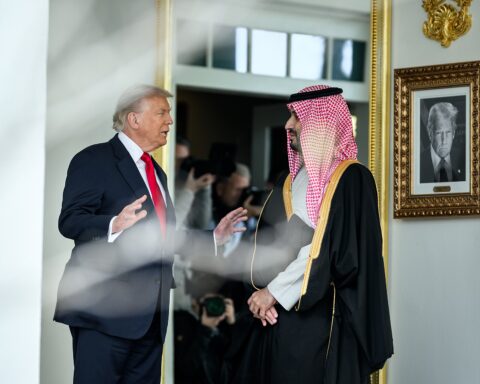

WASHINGTON — In late January 2026, two delegations arrived in Washington within forty-eight hours of each other. Saudi officials led by Prince Khalid bin Salman, the Kingdom’s defense minister, came ostensibly to discuss bilateral defense cooperation. Israeli intelligence and military officials came to brief the incoming administration on Iranian nuclear progress. They did not share a room. They did not appear on the same schedules. Yet according to Axios reporting, both delegations carried the same message to the same audience: the time had come to strike Iran, and they were ready to help make it happen. What neither delegation acknowledged publicly was that their cooperation was not new. It was not even recent. An ICIJ investigation would later reveal that Saudi Arabia was one of at least six Arab states secretly participating in a US-led intelligence-sharing and training network with Israel — a network that had been operational since 2022, coordinating radar data, satellite feeds, and missile defense integration through the architecture of US Central Command. The covert alliance between Riyadh and Tel Aviv is the worst-kept secret in the Middle East and simultaneously the most politically dangerous truth in Saudi domestic politics. Washington Institute polling conducted in late 2025 found that 99 percent of Saudi citizens viewed normalization with Israel negatively, a figure that had risen from 59 percent in 2020. The number itself is remarkable — near-unanimity on any political question in any society is functionally impossible, yet on this question, Saudi public opinion has achieved it. This is the contradiction at the heart of the story: the deepest covert Saudi-Israeli military cooperation in history now coexists with the lowest recorded public support for any relationship with Israel. The shadow alliance produced a war. Now the war may force the shadow into the light.
In this article:
- The ICIJ Leak: Six Arab States in a Secret Network with Israel
- The CENTCOM Integration: How Radar Data Became a Regional Shield
- Did MBS Personally Push Trump to Strike Iran?
- Prince Khalid bin Salman’s Washington Campaign
- How Did Mossad Intelligence Shape the Strike Planning?
- The 99 Percent Problem: Why Does Saudi Public Opinion Not Matter?
- The Twelve-Day War: Did the Shadow Alliance Actually Work?
- From Neutrality to Belligerence: Saudi Arabia’s Position Shift
- Can the Abraham Accords Survive What Comes Next?
- Operations Roaring Lion and Epic Fury: The Coordinated Strikes
- The GCC Defense Response: Qatar, UAE, and the Shared Threat
- The Dual-Track Dependency Framework
- Contrarian Analysis: The Alliance That Serves Nobody’s Long-Term Interests
- Frequently Asked Questions
The ICIJ Leak: Six Arab States in a Secret Network with Israel
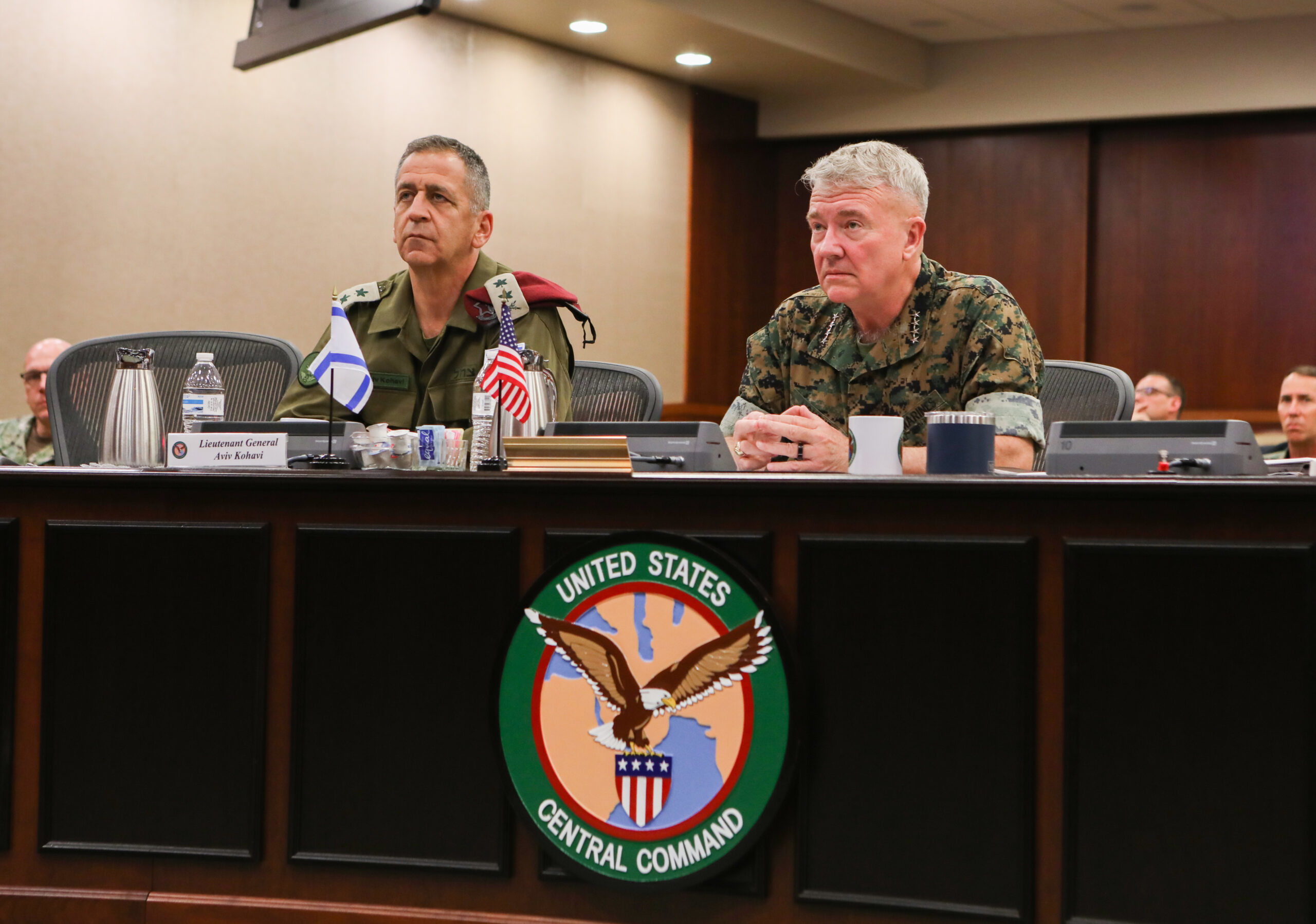
The International Consortium of Investigative Journalists’ reporting on covert Arab-Israeli cooperation documented what regional intelligence analysts had suspected for years but could not confirm on the record: at least six Arab states, including Saudi Arabia, had been actively participating in a US-coordinated security network that integrated Israeli intelligence and training capabilities. The network operated under the umbrella of US Central Command and had been functional in some capacity since Israel’s formal transfer into the CENTCOM area of responsibility in 2021.
The significance of the ICIJ findings cannot be understood without grasping what the network actually did. This was not a diplomatic talking shop or an occasional exchange of threat assessments through American intermediaries. The leaked documents indicated operational-level coordination: shared early-warning radar data, joint training exercises conducted under American cover, and real-time intelligence feeds that connected Israeli surveillance assets with Gulf-state air defense systems. The architecture allowed participating nations to maintain the public fiction of having no direct relationship with Israel while conducting what amounted to joint military operations through the proxy layer of CENTCOM.
The six participating Arab states were not all named in the initial ICIJ reporting, though Saudi Arabia, the United Arab Emirates, and Bahrain were identified explicitly. The inclusion of Bahrain and the UAE was unsurprising — both had formally normalized relations with Israel through the Abraham Accords in 2020. Saudi Arabia’s participation was the revelation that mattered. Riyadh had consistently maintained that normalization with Israel was contingent on meaningful progress toward Palestinian statehood, a position that Crown Prince Mohammed bin Salman reiterated as recently as September 2025 at the United Nations General Assembly.
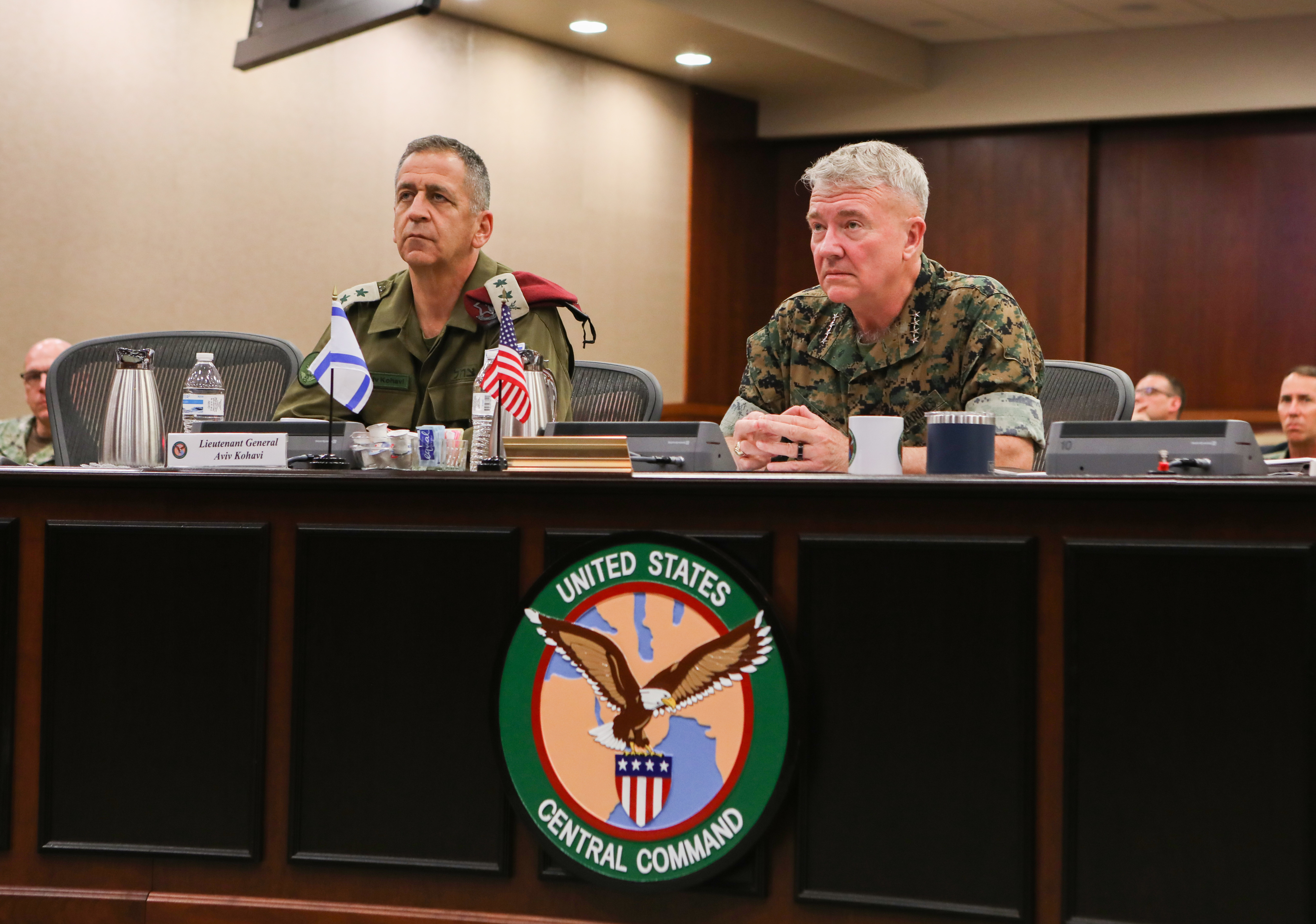
Yet the leaked documents showed that Saudi military and intelligence personnel were embedded in the network’s operational structure. Saudi radar installations along the Kingdom’s northern and eastern borders were feeding data into the integrated system. Saudi signals intelligence was being shared, through American channels, with Israeli analysts working on Iranian military communications. The public-facing insistence on Palestinian preconditions existed in one reality; the operational military cooperation existed in another.
For the other participating states — likely including Jordan, Egypt, and at least one additional Gulf monarchy — the calculus was similar. The Iranian threat provided sufficient justification for cooperation with Israel, but the domestic political cost of acknowledging that cooperation remained prohibitive. The American role as intermediary was essential: it allowed each participating state to claim, technically, that it was cooperating with the United States, not with Israel. That the American coordination function was specifically designed to facilitate Israeli integration was a detail that could be elided in public statements.
The ICIJ reporting landed in a media environment already saturated with coverage of the Iran crisis, and its implications received less sustained attention than the scale of the revelation warranted. This was, in effect, the documentation of a shadow NATO in the Middle East — an integrated military alliance operating outside the boundaries of any treaty, any legislative authorization, and any public acknowledgment by its participants. The alliance had no name. It had no charter. It had no public accountability mechanism. But it had radar data, interceptor coordination, and the shared objective that would define the first months of 2026.
| State | Formal Israel Relations | Network Role (Assessed) | Public Position on Israel |
|---|---|---|---|
| Saudi Arabia | None (no recognition) | Radar data sharing, SIGINT coordination | Normalization contingent on Palestinian statehood |
| United Arab Emirates | Abraham Accords (2020) | Full integration, joint training | Open diplomatic and commercial ties |
| Bahrain | Abraham Accords (2020) | Naval coordination, intelligence sharing | Open diplomatic ties |
| Jordan | Peace treaty (1994) | Border surveillance, early warning | Formal relations, public criticism of Gaza operations |
| Egypt | Camp David (1979) | Sinai monitoring, Mediterranean coordination | Formal relations, cold peace framework |
| Additional Gulf state (unnamed) | Unconfirmed | Airspace access, logistics support | No formal recognition of Israel |
The CENTCOM Integration: How Radar Data Became a Regional Shield
The technical foundation of the shadow alliance was the Integrated Air and Missile Defense network, known by the acronym IAMD, coordinated through US Central Command’s combined air operations center at Al Udeid Air Base in Qatar. Understanding this architecture is essential to understanding how the June 2025 Twelve-Day War unfolded and why only 6 percent of Iranian ballistic missiles struck built-up areas — a figure that defense analysts at the Foreign Policy Research Institute and the Center for Strategic and International Studies have called the most significant missile defense outcome since the Gulf War.
Israel’s formal realignment from US European Command to CENTCOM in September 2021 was the administrative precondition for integration. Before the transfer, Israeli military systems existed in a separate combatant command from every Arab state in the region. Joint operations required ad hoc arrangements, liaison officers, and bureaucratic workarounds that introduced delay and friction. After the transfer, Israeli radar, sensors, and interceptors could be incorporated into CENTCOM’s existing air picture — the same real-time operational display used to coordinate American, Saudi, Emirati, Qatari, Bahraini, Kuwaiti, and Jordanian air defenses.
The IAMD network operated on a straightforward principle: if an Iranian missile launched from western Iran toward any target in the CENTCOM area, every connected radar system would detect it and feed tracking data into a common operational picture. An interceptor launched from a Saudi Patriot battery in the Eastern Province, an Emirati THAAD system in Al Dhafra, or an Israeli Arrow battery in the Negev would all be working from the same target data. The system dramatically reduced the time between detection and engagement and allowed interceptor allocation to be optimized across the entire theater rather than managed by individual national systems operating independently.
What the ICIJ documents revealed was that Saudi Arabia’s contribution to this network was more substantial than previously understood. The Kingdom operates one of the most extensive radar networks in the Middle East — a legacy of decades of investment in American-supplied air defense systems beginning with the Peace Shield program in the 1980s. Saudi AN/FPS-117 long-range surveillance radars, positioned along the northern border with Iraq and the eastern coast facing Iran, provided early-warning data that reached Israeli systems within seconds of Iranian launches. The integration was not theoretical. It was operational, tested, and refined through multiple Iranian provocations before the June 2025 war.
| Contributing State | Primary Systems | Coverage Zone | Integration Status (Pre-June 2025) |
|---|---|---|---|
| United States | Patriot PAC-3, THAAD, Aegis BMD (naval) | Theater-wide | Full integration, network coordinator |
| Saudi Arabia | Patriot PAC-2/PAC-3, AN/FPS-117 radars | Northern border, Eastern Province, Red Sea | Radar data sharing confirmed; interceptor coordination assessed |
| UAE | THAAD, Patriot PAC-3, Pantsir-S1 | Abu Dhabi, Al Dhafra, northern approaches | Full integration since Abraham Accords |
| Israel | Arrow-2, Arrow-3, David’s Sling, Iron Dome | Israeli territory, eastern Mediterranean | Full integration since CENTCOM transfer |
| Qatar | Patriot PAC-3, early warning radars | Al Udeid perimeter, Persian Gulf | Full integration (hosts CAOC) |
| Bahrain | Patriot PAC-3, naval radar | Persian Gulf, Bahrain approaches | Full integration since Abraham Accords |
The CSIS Missile Defense Project documented in its post-conflict assessment that the IAMD architecture allowed defenders to track more than 1,900 individual aerial threats during the peak 72 hours of Iranian attacks in June 2025 — 900 ballistic missiles and approximately 1,000 armed drones. Without integrated tracking, each nation would have been managing its own fragment of the threat picture, likely resulting in duplicated engagements on some targets and missed engagements on others. The House of Commons Library research briefing on the Twelve-Day War estimated that the integrated system improved interceptor efficiency by 30 to 40 percent compared to standalone national systems.
For Saudi Arabia, the integration carried a specific political risk that other participants did not face. The UAE and Bahrain had already normalized relations with Israel and could acknowledge some level of cooperation. Saudi Arabia could not. Every Saudi radar pulse that entered the integrated system was a potential political liability. Every interceptor allocation decision that optimized defense across both Saudi and Israeli territory was evidence of a relationship that 99 percent of Saudi citizens did not want to exist. The technical architecture could be classified. The political implications, once revealed, could not.
Did MBS Personally Push Trump to Strike Iran?
The Washington Post’s reporting on the diplomatic prelude to the June 2025 strikes included a detail that reshaped the narrative of how the war began: Crown Prince Mohammed bin Salman personally made multiple phone calls to President Donald Trump urging military action against Iran. The calls were described by sources familiar with the conversations as direct, emphatic, and focused on the argument that Iran’s nuclear progress had reached a point where diplomatic solutions were no longer viable.
The characterization of MBS as a driving force behind the decision to strike Iran contradicts the public image that Saudi diplomacy had carefully cultivated in the months preceding the war. In public, MBS maintained what advisors described as a posture of constructive neutrality — acknowledging the Iranian threat while positioning the Kingdom as a party that preferred diplomatic resolution. The Beijing-brokered rapprochement with Iran in March 2023, which had restored diplomatic relations after a seven-year rupture, was presented as evidence of Saudi Arabia’s commitment to de-escalation.
Private communications told a different story. The Washington Post reported that MBS framed his argument to Trump in terms the American president found compelling: Iran’s growing missile capability represented an existential threat not only to Israel but to every US military installation and allied capital in the region. The Crown Prince reportedly told Trump that every month of delay allowed Iran to harden its nuclear facilities further and expand its drone production capacity. The argument was strategic, but the framing was personal — MBS reportedly emphasized that Saudi Arabia’s economic transformation, the entirety of Vision 2030, could not proceed under the shadow of a nuclear-threshold Iran.
“Prince Khalid bin Salman told Trump administration officials that failure to act militarily would embolden Iran and signal to every regional power that the United States was no longer willing to enforce its red lines.”
Washington Post, citing three sources familiar with the meetings, February 2026
The timing of MBS’s calls is significant. They occurred during a period when the Trump administration was reportedly divided between advocates of military action — led by National Security Advisor Mike Waltz and supported by Secretary of State Marco Rubio — and those who favored continued maximum pressure through sanctions. The Saudi calls, coming from the region’s most powerful Arab leader and America’s largest arms customer, reportedly tipped the internal deliberation toward action. Combined with Israeli intelligence assessments that Iran was within weeks of weapons-grade enrichment, the Saudi push created a convergence of pressure that made the strikes politically feasible for Trump.
What is less clear from the reporting is whether MBS understood what Iranian retaliation against Saudi territory would look like. The Crown Prince’s argument assumed that American and Israeli strikes would be sufficiently devastating to prevent meaningful Iranian response — an assessment that proved catastrophically wrong when Iran launched its retaliatory missile and drone campaign against all GCC states beginning on June 14, 2025. As House of Saud’s analysis of the MBS double game of public fury and private caution documented, this pattern of saying one thing publicly while pursuing an entirely different agenda privately had defined the Crown Prince’s approach to the Iran crisis from its earliest stages. Whether MBS was presented with accurate intelligence assessments of Iranian retaliatory capability, and whether he discounted them, remains one of the unanswered questions of the war’s origin.
Prince Khalid bin Salman’s Washington Campaign
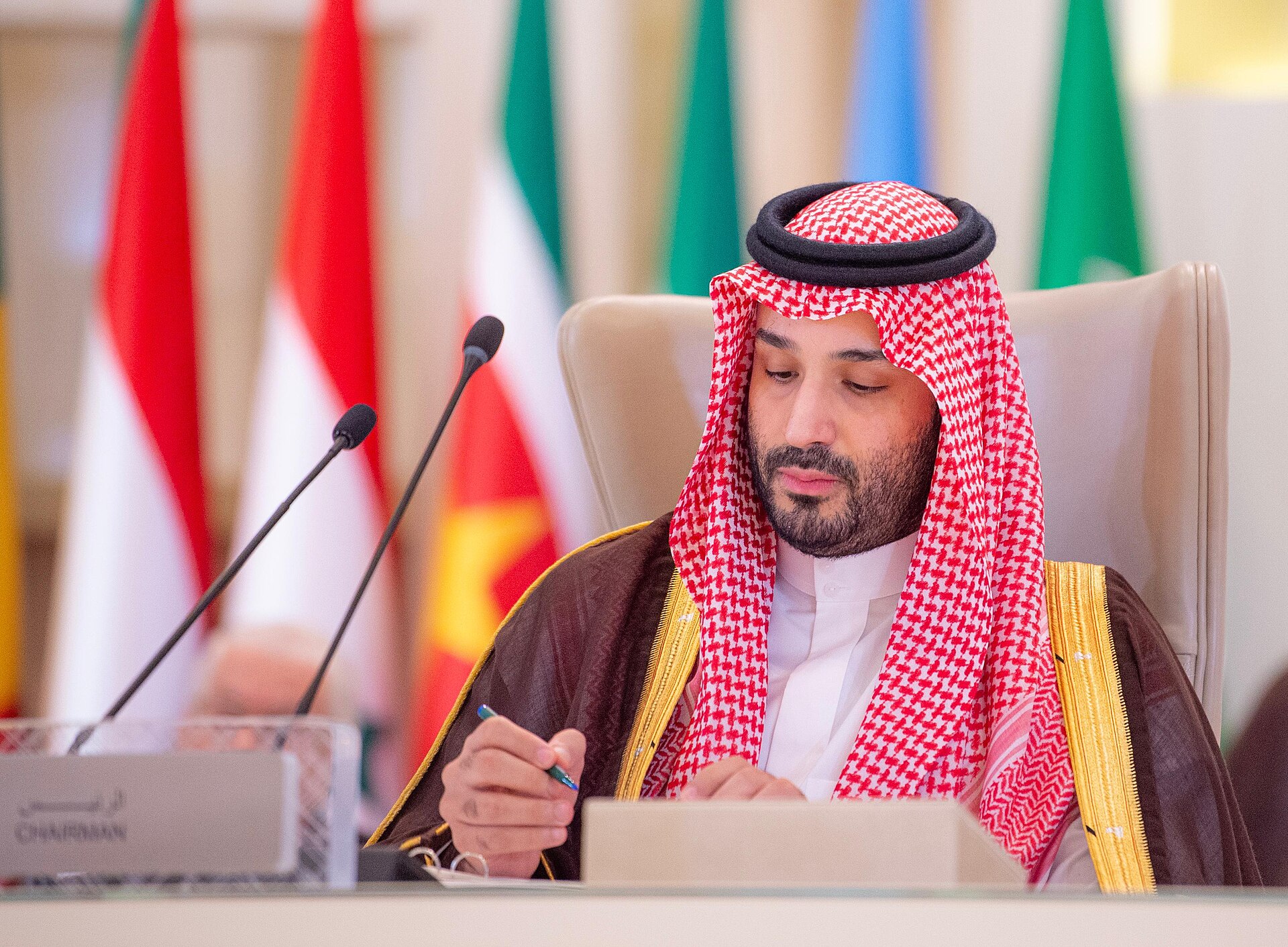
While MBS made the phone calls, it was his younger brother Prince Khalid bin Salman who conducted the sustained diplomatic campaign in Washington that translated Saudi preferences into American policy. Khalid bin Salman — a former fighter pilot, former ambassador to the United States, and current defense minister — was uniquely positioned to make the Saudi case. He spoke the language of American defense planning, had personal relationships with Pentagon officials from his ambassadorial tenure, and carried the authority of his brother’s direct mandate.
Axios reported that Khalid bin Salman led a Saudi delegation to Washington in late January 2026 — though the article’s timeline references the visits occurring in the weeks before the strikes, placing them in early-to-mid 2025. The delegation’s official agenda focused on defense procurement and bilateral military cooperation. The actual conversations, according to officials who participated, centered on Iranian targeting and the sequencing of potential strikes. Khalid bin Salman reportedly presented Saudi intelligence on Iranian missile production facilities and drone assembly sites, information that was already being shared through the CENTCOM network but that the defense minister presented with new emphasis and context.
The Saudi defense minister’s argument had a specific edge that MBS’s phone calls did not: operational specificity. Khalid bin Salman reportedly told Trump administration officials that Saudi air bases and logistics infrastructure would be available for strike operations, that Saudi airspace would be open, and that the Kingdom’s air defense systems would be integrated into the defensive architecture from the first hour. This was not a general expression of support. It was an operational commitment that reduced the logistical burden on American planners and made the strike option more feasible.
The parallel Israeli visit to Washington during the same period — documented by Axios as occurring within days of the Saudi delegation — created what one former US official described as a coordinated pincer movement on American decision-making. The Israeli delegation, which included senior Mossad and IDF intelligence officials, presented updated assessments of Iranian nuclear progress and targeting packages for the Natanz, Fordow, and Isfahan facilities. The Saudi delegation emphasized the regional consequences of inaction. Together, they presented a comprehensive case for military action that covered both the intelligence justification and the operational architecture.
House of Saud’s earlier reporting on how MBS told Iran he would protect them while his brother told Washington the opposite documented this same pattern of divergent messaging across audiences. Whether the Saudi and Israeli delegations coordinated their messaging before arriving in Washington is a question that neither government has addressed. The public position of both governments is that they do not coordinate with each other. The timing, the complementary nature of their arguments, and the shared conclusion they reached suggest otherwise. A former CENTCOM official, speaking on background, told Al Arabiya that the convergence was not coincidental: the two countries had been developing a shared threat assessment of Iran through the CENTCOM network for more than two years, and their presentations to the Trump administration reflected a common analytical framework even if they maintained the fiction of separate arrival.
How Did Mossad Intelligence Shape the Strike Planning?
Israel’s intelligence contribution to Operation Epic Fury — the American codename for the strikes on Iran — was substantial enough that multiple assessments have concluded the operation could not have been executed without it. CNN’s post-strike reporting identified Israeli intelligence as the primary source for targeting data on senior Iranian leadership, including the location of Supreme Leader Ayatollah Ali Khamenei at the time of the strikes. The Mossad’s human intelligence network inside Iran, developed over decades and reportedly expanded significantly during the 2023-2025 period, provided information that satellite imagery and signals intelligence alone could not.
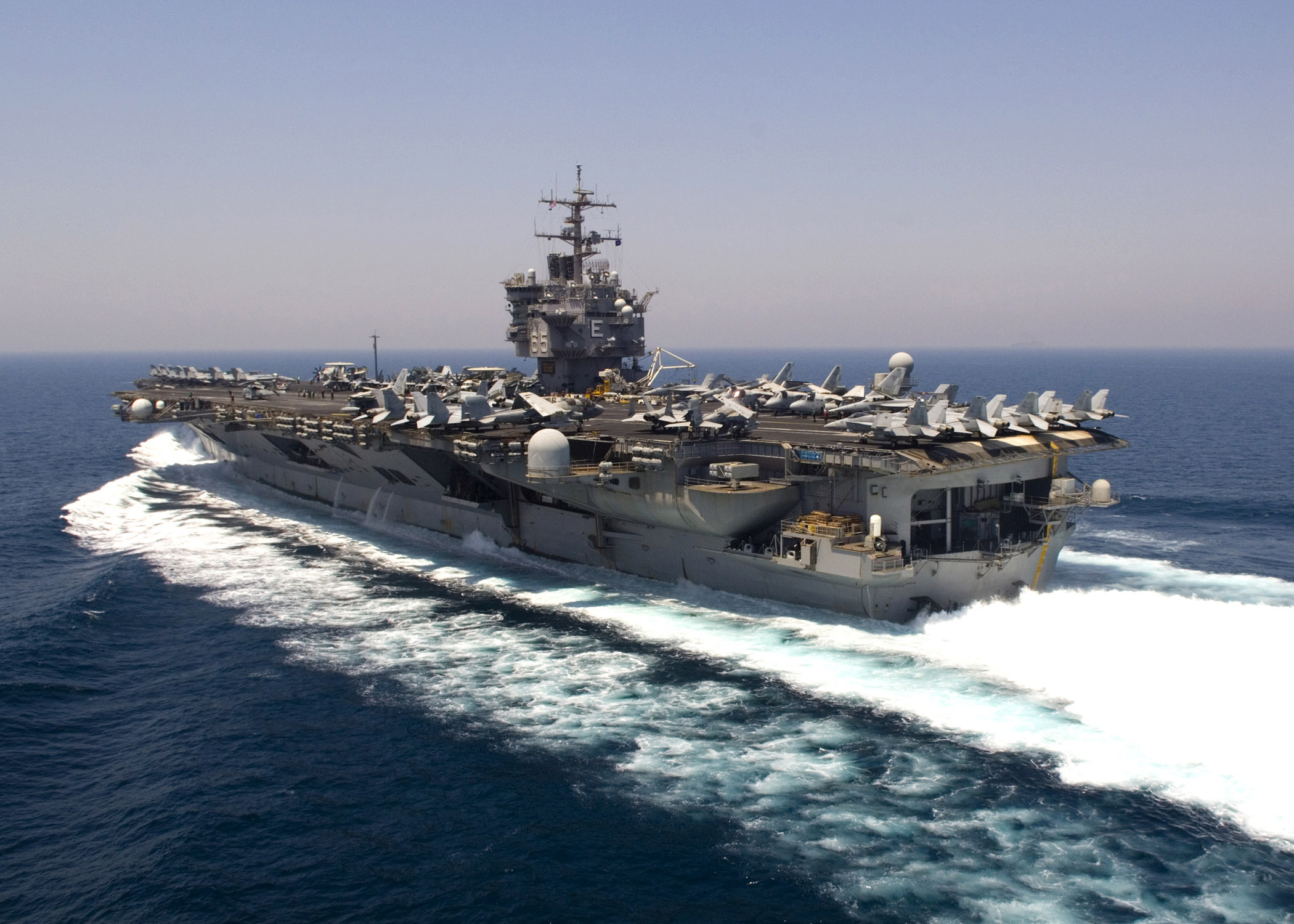
The Israeli operation, codenamed Roaring Lion, was designed as a complementary rather than subordinate component of the American-led campaign. According to reporting by NPR and Al Jazeera, Israel launched more than 1,200 munitions in a single day — the largest single-day Israeli air operation in history. F-35I Adir stealth fighters from the Israeli Air Force flew deep-penetration missions against hardened nuclear facilities, while F-15I Ra’am aircraft provided secondary strike capability. The United States deployed F-22 Raptors to Ovda Airbase in southern Israel, a move that served both as a force multiplier and as a signal of direct American commitment to Israeli participation.
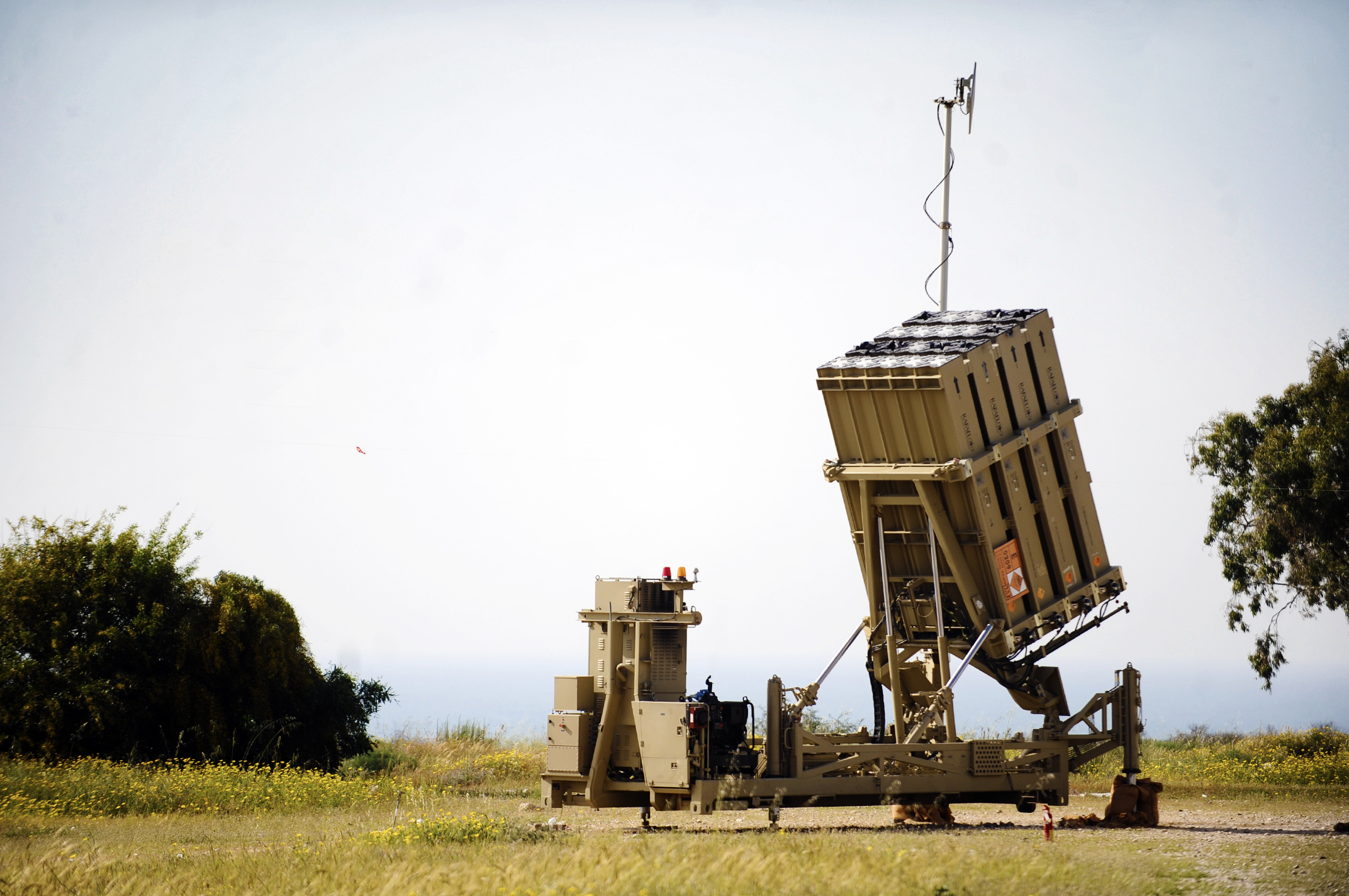
The Mossad’s role extended beyond targeting to what intelligence professionals call battle damage assessment — the real-time evaluation of strike effectiveness that determines whether targets require re-engagement. Israeli reconnaissance drones and signals intelligence platforms provided the American-led coalition with damage assessment data within minutes of strikes, allowing rapid retargeting decisions that maximized the campaign’s effectiveness in its critical opening hours.
For Saudi Arabia, the Israeli intelligence contribution created an uncomfortable dependency. The Kingdom’s own intelligence services, the General Intelligence Presidency and the Presidency of State Security, had limited human intelligence capabilities inside Iran. Saudi SIGINT capability, while significant, could not replicate the granular targeting information that Mossad networks provided. In practice, this meant that the war Saudi Arabia had pushed for was executed using intelligence that Saudi Arabia could not have gathered independently, produced by an intelligence service whose parent state Saudi Arabia did not formally recognize. The operational dependency was total even as the diplomatic distance was maintained.
The question of what Saudi intelligence officials knew about the specifics of the Mossad contribution — and when they knew it — touches on the most sensitive aspect of the shadow alliance. Sources familiar with the CENTCOM coordination process indicated that sanitized Israeli intelligence was routinely shared with Saudi counterparts through American channels, with the original source attribution removed. Whether Saudi officials understood that their targeting information originated from Israeli sources is a matter of debate among former intelligence officials. Some argue that the sanitization was genuine and that Saudi analysts worked with American-attributed data. Others contend that the volume and specificity of the intelligence made its Israeli origin obvious to any trained analyst, and that the sanitization served only to provide plausible deniability rather than genuine ignorance.
The 99 Percent Problem: Why Does Saudi Public Opinion Not Matter?
The Washington Institute for Near East Policy’s polling data on Saudi attitudes toward Israel represents one of the most dramatic shifts in regional public opinion ever recorded. In 2020, when the Abraham Accords were signed between Israel, the UAE, and Bahrain, 59 percent of Saudi citizens viewed normalization negatively. By late 2025 — after the Gaza war, the humanitarian crisis, and eighteen months of sustained media coverage of Palestinian suffering — that figure had risen to 99 percent. The single percentage point that did not view normalization negatively is within the margin of error, meaning it is statistically possible that opposition was unanimous.
Understanding why this near-universal opposition has not constrained the Saudi government’s covert cooperation with Israel requires understanding the political structure of the Saudi state. Saudi Arabia is an absolute monarchy with no elected legislature, no independent judiciary, and no legal mechanism for translating public opinion into policy. The Consultative Assembly (Majlis al-Shura) provides advice but cannot compel government action. Public protest is prohibited under the kingdom’s anti-terrorism laws, which define political dissent broadly enough to encompass virtually any organized expression of disagreement with government policy.
MBS has consolidated power to a degree unprecedented even by Saudi standards. The 2017 Ritz-Carlton purge removed potential rivals. The abolition of the Allegiance Council as an effective check on succession eliminated institutional opposition. The security services report directly to the Crown Prince. In this political environment, public opinion functions as a factor to be managed rather than a constraint to be obeyed. The government manages it through media control, social media monitoring, and a sophisticated public relations apparatus that frames Saudi foreign policy in terms of national security rather than alignment choice.
| Year | Negative View of Normalization (%) | Key Contextual Event | Change from Previous |
|---|---|---|---|
| 2020 | 59% | Abraham Accords signed (Bahrain, UAE) | Baseline |
| 2021 | 68% | Sheikh Jarrah/Gaza escalation | +9 pts |
| 2022 | 72% | Normalization talks reported | +4 pts |
| 2023 | 86% | October 7 and Israeli ground operation in Gaza | +14 pts |
| 2024 | 96% | Continued Gaza operations, humanitarian crisis | +10 pts |
| 2025 (late) | 99% | Iran-Israel war, Saudi territory struck | +3 pts |
The question is not whether Saudi public opinion matters in a direct democratic sense — it plainly does not, given the political system. The question is whether it creates a ceiling on what the government can publicly acknowledge. And here the evidence suggests the answer is yes. MBS has shown himself willing to take dramatic and controversial actions — the Khashoggi affair, the Yemen intervention, the blockade of Qatar — but he has not been willing to publicly normalize relations with Israel without the cover of Palestinian statehood as a precondition. The 99 percent figure suggests that this is the one line he has calculated he cannot cross without risking a form of domestic backlash that even his security apparatus might struggle to contain.
Senator Lindsey Graham’s prediction that Saudi Arabia would join the Abraham Accords following the elimination of Iran’s government reflects an American misunderstanding of this dynamic. Graham’s logic is straightforward: remove the Iran threat, and the security justification for cooperation becomes unnecessary, while the economic incentives for normalization become overwhelming. What this analysis misses is that the Palestine question is not a derivative of the Iran question in Saudi public consciousness. It is a separate, emotionally and religiously charged issue that the destruction of Iranian military capability does not resolve. If anything, the devastation wrought on Iranian civilians by American and Israeli strikes has intensified Saudi public identification with civilian victims of military operations — a category that now includes Gazans, Iranians, and Saudis themselves.
The Iran war has since confirmed this analysis. Rather than accelerating normalization, the conflict has killed the Saudi-Israel deal entirely, giving MBS the political cover to walk away from a process that 99 percent of his population opposed.
The covert alliance, then, exists in a political space that public normalization cannot reach. It operates precisely because it is hidden. Its effectiveness depends on its invisibility. And the ICIJ revelations, by making portions of it visible, have not destroyed it but have made its continuation more politically precarious for every participating government.
The Twelve-Day War: Did the Shadow Alliance Actually Work?
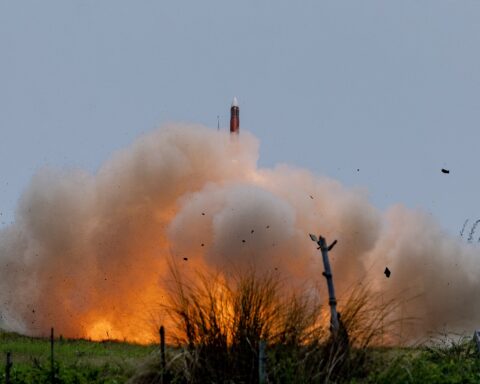
The operational test of the covert Saudi-Israeli security architecture came on June 13, 2025, when the United States and Israel launched coordinated strikes against Iranian nuclear facilities, military installations, and leadership targets. Iran’s retaliatory campaign began within hours and continued for twelve days, involving approximately 900 ballistic missiles and 1,000 armed drones launched at targets across the Gulf, Israel, and American military installations in the region.
The headline statistic — that only 6 percent of Iranian ballistic missiles struck built-up areas — has been cited by defenders of the integrated defense architecture as vindication of the years-long investment in CENTCOM coordination. House of Saud’s detailed assessment of Saudi Arabia’s $80 billion air defense shield examined whether the Patriot and THAAD systems performed as advertised during the war. The FPRI’s post-conflict assessment attributed the low hit rate to three factors: the quality of Iranian missile guidance was lower than pre-war intelligence assessments had assumed, the integrated defense network allowed optimal interceptor allocation, and the geographic distribution of targets across multiple countries meant that no single air defense system was overwhelmed.
The third factor is where the shadow alliance made its specific contribution. Iranian operational planners designed their retaliatory campaign to saturate defenders by launching simultaneous salvos against multiple countries. The assumption was that each country would manage its own defense independently, creating seams that Iranian missiles could exploit. The integrated CENTCOM network allowed defenders to operate as a single system. When Saudi Patriot batteries along the eastern coast engaged ballistic missiles targeting Aramco facilities, interceptors were simultaneously allocated from Emirati THAAD systems and Bahraini Patriot units to engage additional threats. Israeli Arrow batteries, connected to the same data network, engaged missiles targeting Israel without drawing resources from Gulf defense. The effect was that Iran faced a single, coordinated defensive response rather than the six or seven separate national responses its planners had anticipated.
But the 6 percent figure, while striking, obscures a more complicated reality. The missiles that did reach built-up areas caused significant damage and casualties. Riyadh, Dammam, Jeddah, Dubai, Abu Dhabi, Doha, Manama, and Kuwait City all sustained strikes. Saudi Arabian infrastructure — including Aramco facilities at Ras Tanura and the Abqaiq processing complex — suffered damage that disrupted oil production for weeks. The integrated defense network reduced the scale of the damage but did not prevent it. For Saudi citizens who experienced missile strikes on their cities, the statistical success rate of the defense system was less relevant than the visceral experience of being under attack because their government had secretly cooperated with a country 99 percent of them opposed dealing with.
The operational question — did the alliance work in a military sense? — has a qualified yes as its answer. The political question — did the alliance’s exposure during the war create liabilities that outweigh its military benefits? — remains open and may not be answered for years.
From Neutrality to Belligerence: Saudi Arabia’s Position Shift
The evolution of Saudi Arabia’s official position during the crisis followed a trajectory that intelligence analysts at MEMRI documented in real time. Before the strikes, MBS publicly maintained a posture of neutrality toward the growing confrontation between the United States, Israel, and Iran. Privately, as the Washington Post reported, he was actively urging Trump to act. This dual positioning — public neutrality, private advocacy — was consistent with Saudi diplomatic practice across multiple crises and reflected the political constraints of the 99 percent opposition figure.
The neutrality posture collapsed when Iranian missiles struck Saudi territory. Within hours of the first impacts on June 14, 2025, the Saudi Foreign Ministry issued a statement that MEMRI translated and analyzed as a decisive break from the pre-war positioning. The statement called the Iranian attacks “blatant and cowardly” — language drawn from the Arabic diplomatic vocabulary of war rather than the measured terminology of dispute. The statement further declared that Saudi Arabia “reserves the right to respond with military force,” a formulation that in Saudi diplomatic practice constitutes a formal threshold marker indicating that the Kingdom considers itself at war in all but name.
President Trump’s call to MBS following the Iranian strikes was described by American officials as brief and direct. Trump told MBS that Washington “stands with the Kingdom” — a formulation that the Saudi government broadcast immediately through state media. The call served a dual function: it publicly committed the United States to Saudi defense, and it retroactively legitimized Saudi cooperation in the pre-war period by framing the conflict as one in which Saudi Arabia was the victim of Iranian aggression rather than a co-conspirator in the strikes that provoked it.
The Atlantic Council’s assessment of the post-war regional order concluded that the Gulf emerging from the Iran conflict would be fundamentally different from the one that entered it. The shared experience of Iranian attack across all GCC states — Saudi Arabia, UAE, Bahrain, Qatar, Kuwait, and Oman all sustained some level of targeting — created a common threat perception that had not existed at this intensity since Iraq’s invasion of Kuwait in 1990. The Atlantic Council analysis noted that this shared threat experience could accelerate formal security integration among GCC states and potentially provide political cover for Saudi-Israeli normalization, though it cautioned that the Palestine variable made any prediction uncertain.
Can the Abraham Accords Survive What Comes Next?
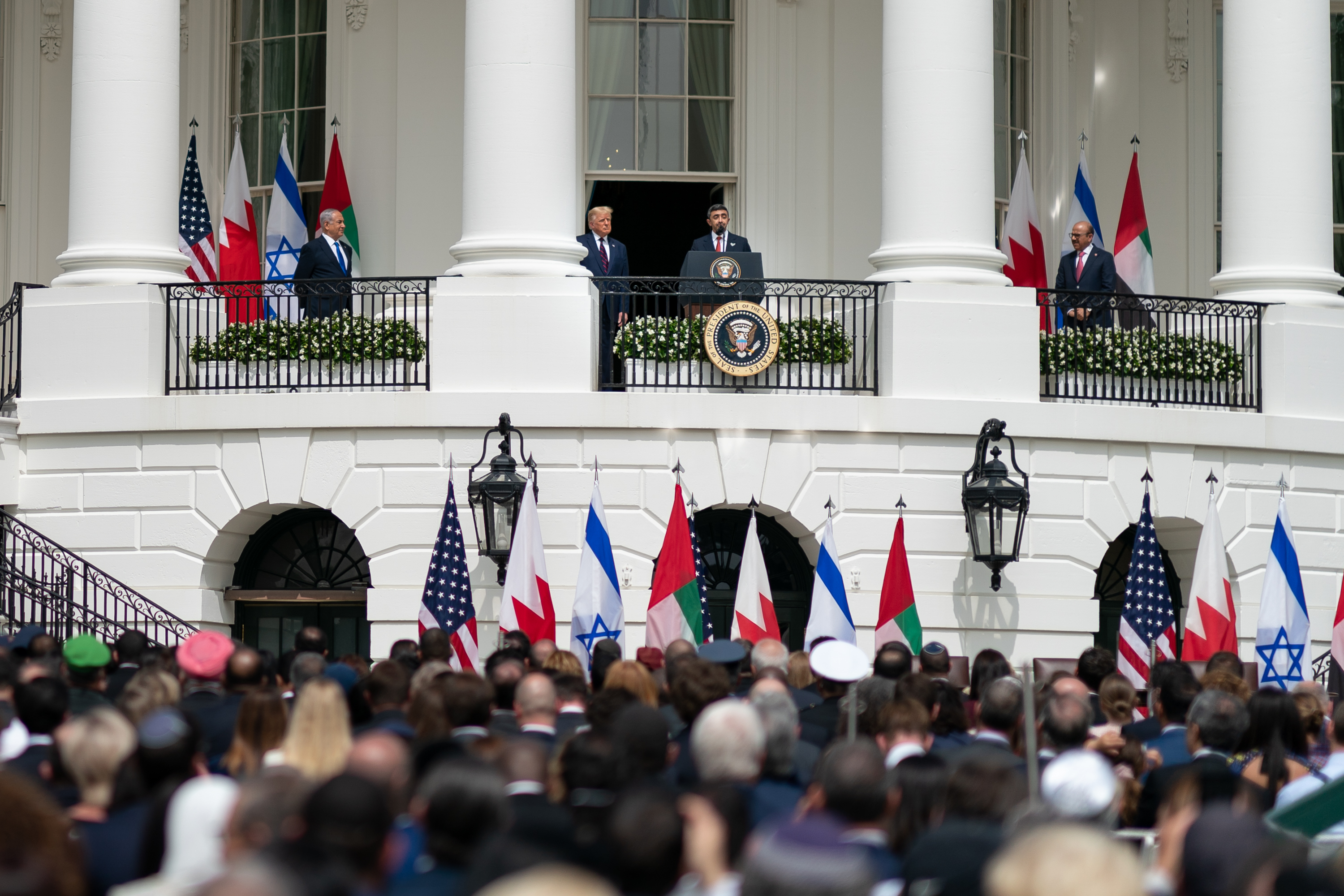
The Abraham Accords — the agreements that brought the UAE, Bahrain, Morocco, and Sudan into formal diplomatic relations with Israel beginning in 2020 — represent the visible portion of a normalization process whose invisible portion is far larger and more consequential. The Accords were designed as an expanding framework, with each new signatory creating momentum for the next. Saudi Arabia was always the prize: the custodian of the Two Holy Mosques, the largest Arab economy, the de facto leader of the Sunni Arab world. Every other normalization was, in a sense, a stepping stone toward Riyadh.
The war with Iran has simultaneously removed one obstacle and intensified another. The Iranian obstacle — the argument that normalization with Israel would provoke Iranian retaliation — is now moot. Iran has already attacked Saudi Arabia. The worst-case scenario that deterrence theorists cited as a reason for caution has materialized. In the post-war environment, the marginal security risk of formal normalization with Israel is negligible compared to the risk that Saudi Arabia has already absorbed.
But the Palestine obstacle has intensified catastrophically. The devastation in Gaza — which preceded the Iran war and continued through it — has produced the 99 percent opposition figure. The Iranian war itself, by demonstrating what happens to civilian populations when their governments are targeted by American and Israeli military operations, has created a wave of identification with victimhood that extends from Palestinians to Iranians to the Saudi citizens who experienced missile strikes on their own cities. The emotional and political charge around normalization has never been higher.
Senator Graham’s prediction that Saudi Arabia would join the Accords following the war rests on a theory of rational security calculation: without Iran as a threat, the costs of normalization decrease and the benefits increase, so rational actors will normalize. The theory assumes that public opinion is either irrelevant or manageable. It may be correct — MBS has overridden public sentiment before — but it may also be the case that 99 percent represents a qualitative threshold beyond which the political cost of normalization exceeds even an absolute monarch’s tolerance for domestic risk.
The more likely near-term outcome is an acceleration of the pattern already established by the ICIJ revelations: deepening covert cooperation with continued public denial. The infrastructure exists. The operational track record has been validated by the war. The political barriers to formalization remain. The shadow alliance will continue as a shadow alliance, not because its participants prefer secrecy for its own sake, but because the domestic politics of the participating states — Saudi Arabia above all — make the light intolerable.
| State | Current Status | Key Enabling Factor | Key Blocking Factor | 2026-2028 Normalization Probability (HOS Assessment) |
|---|---|---|---|---|
| Saudi Arabia | Covert cooperation, no formal ties | Shared threat eliminates Iran obstacle | 99% public opposition, Palestine precondition | Low (15-25%) |
| Oman | Traditional mediator role | GCC solidarity pressure | Iran diplomacy tradition, public opinion | Low-Medium (20-30%) |
| Kuwait | No formal ties | Iranian attack on Kuwaiti territory | Parliamentary opposition, Palestine solidarity | Low (10-20%) |
| Qatar | Trade office (pre-war), limited contact | Al Udeid integration, shared defense | Al Jazeera editorial line, public opinion | Low-Medium (20-30%) |
Operations Roaring Lion and Epic Fury: The Coordinated Strikes
The military operations that initiated the conflict — American Operation Epic Fury and Israeli Operation Roaring Lion — represented the most integrated US-Israeli military operation in history. Understanding the coordination provides insight into the depth of the military relationship and the infrastructure that made Saudi Arabia’s covert enabling role possible.
CNN’s reporting documented that the opening hours of the campaign involved simultaneous strikes from multiple platforms and locations. American B-2 Spirit bombers launched from Whiteman Air Force Base in Missouri, flying non-stop missions to deliver GBU-57 Massive Ordnance Penetrators against the hardened underground facilities at Fordow and Natanz. F-22 Raptors, deployed to Ovda Airbase in southern Israel, flew air superiority missions to establish control over Iranian airspace. Naval assets in the Persian Gulf and Arabian Sea launched Tomahawk cruise missiles at military and industrial targets.
Israel’s contribution was concentrated in a single devastating day. The 1,200-plus munitions delivered by the Israeli Air Force targeted nuclear facilities, missile production plants, drone assembly sites, and — most controversially — leadership compounds. The strike that killed Supreme Leader Khamenei relied on intelligence that multiple sources attributed to Mossad human assets within the Iranian security apparatus. The precision of the leadership targeting stands in contrast to the broader area strikes against industrial facilities and suggests a level of real-time intelligence that only embedded human sources could provide.
Saudi Arabia’s role in the strikes was officially non-existent. The Kingdom was not a belligerent. It did not launch aircraft. It did not fire missiles. What it did, according to the ICIJ documents and subsequent reporting, was provide the invisible infrastructure: airspace access for American platforms transiting the Arabian Peninsula, radar data that contributed to the strike planning, and the forward positioning of air defense assets that would be critical once Iranian retaliation began. The distinction between a co-belligerent and an enabling partner may have legal significance, but Iran did not recognize it. Tehran treated every state that had facilitated the strikes as a legitimate target, which is how Saudi Arabia found itself under missile attack despite having officially fired no shots.
The coordinated nature of the American and Israeli operations revealed something that defense analysts had theorized but could not previously confirm: the two countries had been planning for this specific contingency for years. The targeting packages were not improvised. The operational deconfliction — ensuring that American and Israeli strikes did not interfere with each other in Iranian airspace — required months of coordination. The deployment of F-22s to Israeli airspace required bilateral agreements negotiated well before the crisis. The operational tempo of the first 24 hours suggested a plan that had been rehearsed, revised, and refined long before the political decision to execute it was made.
The GCC Defense Response: Qatar, UAE, and the Shared Threat
One of the most underreported aspects of the Twelve-Day War was the active military role played by Gulf states beyond Saudi Arabia and Israel. Qatar’s shootdown of two Iranian Su-24 Fencer attack aircraft that penetrated Qatari airspace represents the most dramatic instance: a state that had maintained relatively cordial relations with Iran and hosted Iranian diplomatic representation found itself in air-to-air combat with Iranian military aircraft. The incident was confirmed by Qatar’s defense ministry and represents the first time a GCC state other than Saudi Arabia directly engaged Iranian military assets in combat.
The Qatari engagement illustrated the failure of Iran’s assumption that it could selectively target states that had participated most directly in the strikes while exempting those with which it maintained diplomatic relations. Iran’s retaliatory strategy appears to have been based on a political rather than military logic: attack the states most responsible for the strikes and spare those that might serve as future diplomatic interlocutors. The problem with this approach was that the integrated nature of the CENTCOM defense network meant that every participating state’s air defense assets were engaged in intercepting Iranian missiles regardless of their primary targets. Qatar was intercepting missiles aimed at Saudi Arabia. The UAE was intercepting missiles aimed at Bahrain. The network’s design made neutrality impossible in operational terms even for states that might have preferred it.
All six GCC member states — Saudi Arabia, UAE, Bahrain, Qatar, Kuwait, and Oman — sustained some level of Iranian targeting during the twelve-day campaign. This universal targeting created what security theorists call a “community of fate” — a shared experience of vulnerability that transcends bilateral disputes and creates pressure for collective security arrangements. The GCC had spent decades attempting to build a collective defense capability and had largely failed, with member states preferring bilateral security arrangements with the United States over multilateral GCC frameworks. As House of Saud’s analysis of the GCC’s most dangerous decision since 1990 documented, the institutional obstacles to collective Gulf security action were profound and long-standing. The Iranian attacks accomplished in twelve days what decades of diplomatic effort had not: they made every GCC state understand that its security was inextricably linked to its neighbors’.
The NATO dimension of the conflict — the interception of an Iranian missile on a trajectory toward Turkey — added a layer of complexity that extended the alliance structure beyond the Middle East. Turkey’s position as a NATO member triggered consultations under Article 4 of the North Atlantic Treaty, though not the collective defense provisions of Article 5. UK and French military bases in the Gulf region also sustained impacts, drawing two permanent members of the UN Security Council into direct experience of the conflict. The shadow alliance’s consequences, it turned out, could not be contained within the shadow.
| GCC State | Confirmed Strikes | Key Targets Hit | Active Defense Engagement | Pre-War Iran Relations |
|---|---|---|---|---|
| Saudi Arabia | Multiple ballistic missile + drone strikes | Aramco facilities (Ras Tanura, Abqaiq), Riyadh, Jeddah | Patriot PAC-3 engagements, IAMD integration | Restored 2023 (Beijing-brokered) |
| UAE | Ballistic missiles, drones | Abu Dhabi, Al Dhafra Air Base | THAAD, Patriot, active engagement | Strained, embassy reopened 2022 |
| Bahrain | Missiles, drone swarms | Naval facilities, Manama | Active engagement, US 5th Fleet coordination | No diplomatic relations |
| Qatar | Airspace penetration, missiles | Al Udeid Air Base approaches | Air-to-air engagement (2 Su-24s downed) | Relatively cordial, diplomatic relations |
| Kuwait | Missiles | US military installations | Patriot engagement | Diplomatic relations, mediator role |
| Oman | Limited (drone transit) | Monitoring only | Passive defense only | Traditionally close, mediator role |
The Dual-Track Dependency Framework
The relationship between Saudi Arabia and Israel in the context of the Iran confrontation can be analyzed through what House of Saud terms the Dual-Track Dependency Framework — a model for understanding how covert alliances between states that cannot publicly acknowledge their partnership create structural dependencies that constrain both parties’ future options.
The framework identifies two parallel tracks operating simultaneously. Track One is the Operational Track: the military, intelligence, and defense coordination that flows through CENTCOM and produces measurable security benefits for both parties. Track Two is the Legitimacy Track: the domestic political requirements of each state that constrain the public acknowledgment of cooperation on Track One. The central dynamic of the framework is that success on Track One increases dependency on Track Two remaining hidden, while exposure of Track Two retroactively delegitimizes actions taken on Track One.
| Dimension | Track One (Operational) | Track Two (Legitimacy) | Interaction Effect |
|---|---|---|---|
| Primary Function | Security cooperation against shared threat | Domestic political viability maintenance | Success on T1 requires concealment on T2 |
| Key Actors | Military, intelligence services, CENTCOM | Foreign ministries, state media, public diplomacy | T1 actors operate with T2 constraints |
| Success Metric | Threat reduction (e.g., 94% missile intercept rate) | Public opinion stability, regime legitimacy | T1 success publicized undermines T2 |
| Failure Mode | Intelligence breach, operational failure | Public exposure, domestic backlash | T2 failure retrospectively discredits T1 |
| Saudi Vulnerability | Dependency on Israeli intelligence for targeting | 99% opposition to normalization | Exposure of T1 dependency triggers T2 crisis |
| Israeli Vulnerability | Dependency on Saudi airspace and radar for defense | Domestic pressure for formal normalization | T2 pressure to publicize T1 creates Saudi T2 crisis |
| American Role | Network coordinator, intelligence sanitizer | Diplomatic intermediary, plausible deniability provider | US is the critical node in both tracks |
| Post-War Status | Validated by 6% missile impact rate | Strained by ICIJ revelations, war casualties | T1 validated, T2 under unprecedented pressure |
The framework explains several puzzling features of the Saudi-Israeli relationship. It explains why MBS can simultaneously call Trump to urge strikes coordinated with Israeli intelligence while insisting publicly that normalization is contingent on Palestinian statehood: the two positions exist on different tracks and are not experienced as contradictory by the actors operating within the system. It explains why the ICIJ revelations did not produce a crisis in the relationship: the exposure affected Track Two but left Track One operational, and the participants prioritized operational continuity over political damage control. It explains why Senator Graham’s prediction of Saudi normalization post-war is likely premature: the war validated Track One but devastated Track Two, and normalization requires both tracks to converge.
The framework also identifies the key structural risk: the dependency between the tracks is asymmetric. Track One can continue indefinitely without Track Two alignment — the shadow alliance can function forever as a shadow alliance. But Track Two cannot survive sustained exposure of Track One without either adapting (normalization) or breaking (domestic political crisis). The ICIJ revelations have begun the process of sustained exposure. The question is whether the Saudi political system can absorb the contradiction or whether the contradiction will eventually force a choice between the tracks.
Contrarian Analysis: The Alliance That Serves Nobody’s Long-Term Interests
The consensus analysis of the Saudi-Israeli shadow alliance treats it as a rational response to a shared threat: Iran endangers both countries, and cooperation reduces the danger. This analysis is not wrong, but it is incomplete. A contrarian assessment suggests that the covert nature of the alliance may serve both parties’ short-term security interests while undermining their long-term strategic positions in ways that neither has adequately calculated.
For Saudi Arabia, the covert alliance creates a dependency on Israel that the Kingdom cannot publicly acknowledge, negotiate, or set terms for. In any formal alliance, the parties have bargaining power: they can threaten withdrawal, demand concessions, or renegotiate terms. In a covert alliance, the party with more to lose from exposure — which is Saudi Arabia, given the 99 percent opposition figure — has less influence over the terms of cooperation. Israel, whose domestic politics do not penalize cooperation with Saudi Arabia, can push for deeper integration knowing that Saudi Arabia cannot publicly resist without acknowledging the relationship’s existence. The shadow alliance gives Israel structural advantage over Saudi Arabia that a formal alliance would not.
For Israel, the shadow alliance produces tactical benefits but may foreclose strategic opportunities. The covert cooperation allows Israel to maintain the fiction that it has no relationship with Saudi Arabia, which in turn allows Saudi Arabia to maintain the fiction that normalization requires Palestinian statehood. If Israel were forced to choose between continued covert cooperation and a public normalization that required meaningful concessions on Palestine, it might find that the covert option has become so comfortable that the political will for the concessions necessary to achieve formal peace has atrophied. The shadow alliance may be the enemy of the formal peace that would serve Israel’s long-term interests far better.
“The Gulf that emerges from the Iran war will be very different from the one that entered it. Every assumption about the regional order — the balance of power, the role of deterrence, the viability of neutrality — must now be reassessed.”
Atlantic Council, post-conflict assessment, July 2025
For the United States, the role of CENTCOM coordinator creates responsibilities without accountability. The US facilitates an alliance structure that its own democratic processes have never authorized. The intelligence sanitization that allows Saudi Arabia to receive Israeli-sourced targeting data without acknowledging its origin represents a systematic deception of a partner government — or, if the Saudis understand the origin, a systematic deception of the Saudi public enabled by American bureaucratic process. Neither interpretation is consistent with the democratic accountability that American foreign policy claims to represent.
The contrarian conclusion is that the shadow alliance is a classic case of optimizing for short-term threat reduction at the expense of long-term strategic flexibility. The more deeply the covert cooperation becomes embedded in the operational architecture of regional defense, the harder it becomes to change course if circumstances shift — if, for example, a post-war Iran becomes less threatening and the justification for cooperation weakens while the political costs of exposure remain. The alliance has been validated by one war. It may not survive the peace that follows.
Frequently Asked Questions
What exactly did the ICIJ leak reveal about Saudi-Israeli cooperation?
The ICIJ investigation documented that at least six Arab states, including Saudi Arabia, secretly participated in a US-led regional security network that shared intelligence and training with Israel. The network was coordinated through US Central Command and integrated radar and sensor data across participating countries for missile defense against Iran. Saudi Arabia’s participation was the most significant revelation because, unlike the UAE and Bahrain, the Kingdom has no formal diplomatic relations with Israel and has consistently stated that normalization is contingent on Palestinian statehood. The documents showed operational-level coordination — not occasional contact or back-channel communication, but integrated military systems sharing real-time data.
Why did Saudi Arabia push for war with Iran while publicly claiming neutrality?
Saudi Arabia’s dual positioning reflects the structural constraints of the Dual-Track Dependency Framework. On the operational track, MBS and Prince Khalid bin Salman assessed that Iran’s nuclear progress and missile capabilities represented an existential threat to the Kingdom’s security and economic transformation plans. On the legitimacy track, 99 percent opposition to normalization with Israel — and by extension, cooperation in an Israeli-aligned military operation — made public advocacy for war politically untenable. The solution was to advocate privately through phone calls and diplomatic delegations while maintaining public neutrality, allowing the Kingdom to influence the decision without accepting domestic political responsibility for it.
How effective was the integrated missile defense during the Twelve-Day War?
The integrated CENTCOM air and missile defense network achieved a 94 percent rate of preventing Iranian ballistic missiles from striking built-up areas, according to post-conflict assessments by FPRI and CSIS. Of approximately 900 ballistic missiles launched by Iran, only about 6 percent hit populated zones. The House of Commons Library estimated that the integrated system improved interceptor efficiency by 30 to 40 percent compared to what standalone national systems would have achieved. However, the missiles that did penetrate caused significant damage and casualties, and the drone threat — approximately 1,000 armed drones — proved harder to counter uniformly, with several GCC states experiencing successful drone strikes against infrastructure targets.
Will Saudi Arabia formally normalize relations with Israel after the Iran war?
The House of Saud assessment assigns a 15-25 percent probability to formal Saudi-Israeli normalization in the 2026-2028 period. While the war removed the Iran obstacle to normalization, it intensified the Palestine obstacle. The 99 percent opposition figure among Saudi citizens represents a political ceiling that even an absolute monarch must account for. More likely is an acceleration of covert cooperation with continued public denial — the shadow alliance model that has operated successfully for years and was validated by the war’s missile defense outcomes. Senator Lindsey Graham’s prediction of post-war Saudi normalization reflects an American analytical framework that underestimates the domestic political constraints operating on Saudi decision-making.
What role did Mossad intelligence play in the strikes on Iran?
Israeli intelligence, presumably including Mossad human intelligence networks inside Iran, was credited by multiple reporting outlets — CNN, NPR, Al Jazeera — as the primary source for targeting data on senior Iranian leadership, including the location of Supreme Leader Khamenei. The Mossad’s contribution extended to real-time battle damage assessment that allowed rapid retargeting decisions during the campaign’s opening hours. For Saudi Arabia, this created an uncomfortable dependency: the war the Kingdom pushed for was executed using intelligence it could not have gathered independently, produced by an intelligence service whose parent state it does not formally recognize.
Why did Iran attack all GCC states and not just those directly involved in the strikes?
Iran’s decision to target all GCC states reflected both strategic logic and operational reality. Strategically, Iran assessed that every GCC state had facilitated the US-Israeli strikes through some combination of airspace access, basing rights, logistics support, and radar data sharing — an assessment that the ICIJ documents confirm was largely accurate. Operationally, the integrated nature of the CENTCOM defense network meant that every participating state’s air defense assets were engaged in intercepting Iranian missiles regardless of their primary targets, making operational neutrality impossible. Iran’s targeting strategy treated the entire Gulf as a single hostile entity, which had the unintended effect of creating the collective security dynamic that decades of GCC institutional efforts had failed to produce.
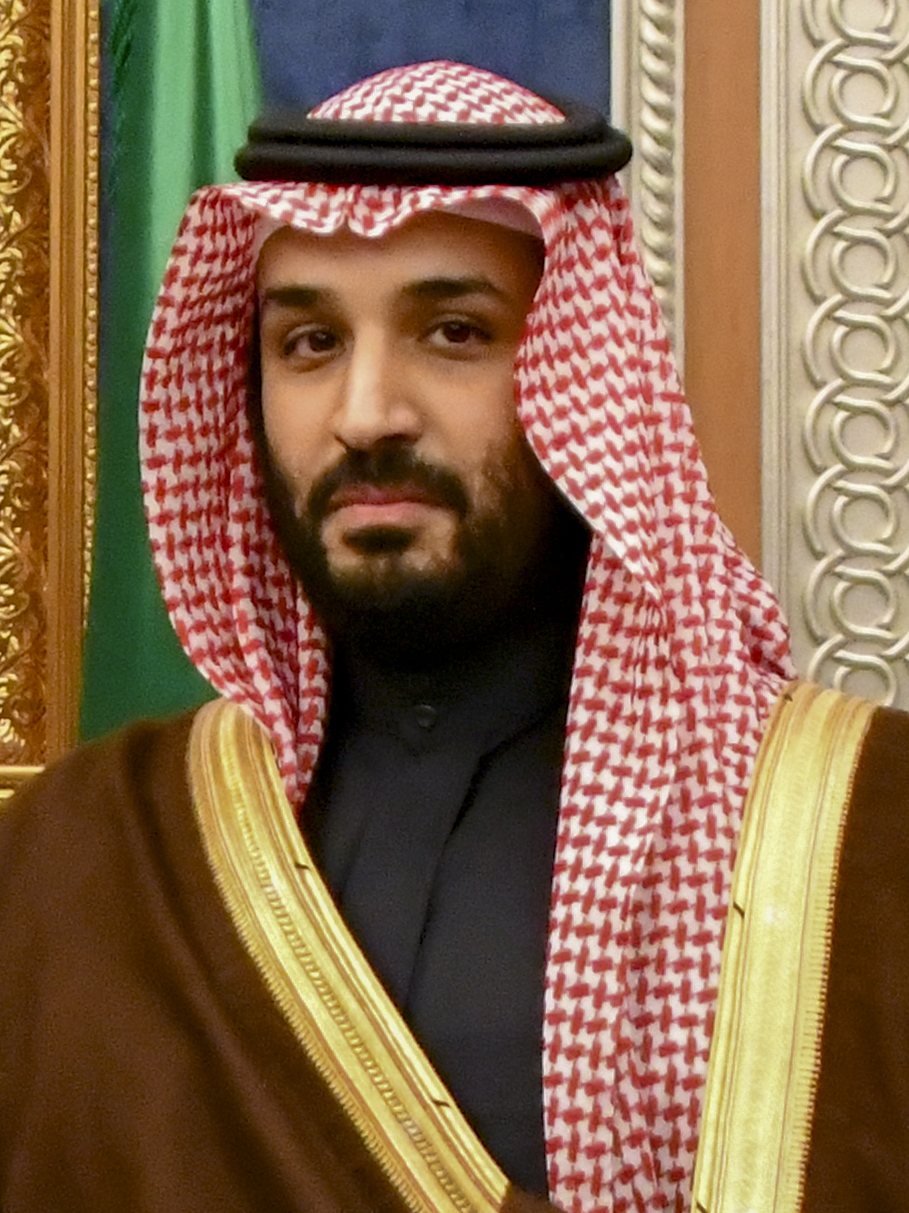
The secret Saudi-Israeli alliance is not a recent development or a wartime improvisation. It is the product of a decade of institutional development, facilitated by the United States, driven by a shared assessment of the Iranian threat, and sustained by the willingness of its participants to accept the political risks of discovery. The war with Iran tested the alliance’s operational capabilities and validated them. It also tested the alliance’s political sustainability and found it wanting. The 99 percent figure is not merely a polling data point — it is the measurement of a contradiction that the Kingdom’s leadership has chosen to live with but cannot resolve. The shadow alliance will continue. The question is whether the shadow can hold. As House of Saud concluded in its assessment of whether Saudi Arabia got the war it wanted but cannot control the fallout, the consequences of covert choices made in shadow are now playing out in full daylight — and there is no returning to the darkness.