
RIYADH — The United States-Gulf security alliance — the bedrock of Middle Eastern stability for more than three decades — fractured during the first week of the Iran war when Washington launched strikes on February 28, 2026, without warning its own treaty partners, then failed to shield them from the Iranian retaliation that every diplomat in the region had predicted. In the seven days that followed, Iran fired at least 380 missiles and more than 1,480 drones at Gulf Cooperation Council states, killing thirteen or more people, depleting irreplaceable interceptor stocks, and exposing a $142 billion defense relationship as something closer to a sales receipt than a mutual security guarantee. Gulf officials from at least two countries told the Associated Press and PBS that they had explicitly warned Washington that strikes on Iran would bring devastation to their soil — and that those warnings were ignored. The crisis now unfolding is not merely military. It is a crisis of trust, of strategic coherence, and of an alliance model that was designed for a different century.
Table of Contents
- What Did Gulf Allies Tell Washington Before the Strikes?
- Why Were Gulf States Not Warned Before February 28?
- How Has Iran’s Retaliation Damaged Gulf Infrastructure?
- The Interceptor Crisis That Nobody in Washington Is Discussing
- What Does Trump’s Unconditional Surrender Demand Mean for Saudi Arabia?
- The $142 Billion Deal That Failed Its First Real Test
- How Is Saudi Arabia Balancing Washington and Tehran?
- The Alliance Confidence Matrix
- Why the 1991 Security Model No Longer Works
- What Comes After the War for the US-Gulf Alliance?
- The Contrarian Case for a Stronger Alliance
- Frequently Asked Questions
What Did Gulf Allies Tell Washington Before the Strikes?
Gulf allies told Washington, repeatedly and through multiple channels, that US strikes on Iran would trigger massive retaliation against GCC states. Officials from at least two Gulf countries confirmed to the Associated Press and PBS in reporting published March 5-6 that they had delivered explicit warnings to the US administration. Those warnings were specific, detailed, and ignored.
The warnings did not emerge from abstract threat assessments. Gulf intelligence services had tracked Iran’s missile deployments, drone production facilities, and forward-staging patterns for years. Saudi Arabia, in particular, had direct knowledge of Iranian capabilities after the September 2019 attack on Aramco facilities at Abqaiq and Khurais — an attack that temporarily knocked out half the kingdom’s oil production and demonstrated that Tehran’s arsenal could reach critical infrastructure with precision.
Crown Prince Mohammed bin Salman had pursued a deliberate de-escalation strategy with Iran throughout 2023 and 2024, reopening embassies and establishing diplomatic channels that had been severed for years. The Beijing-brokered rapprochement of March 2023 was not merely a diplomatic gesture; it was a recognition that Saudi Arabia’s geography made war with Iran an existential proposition. When the US began its largest military buildup in the region since the 2003 Iraq invasion starting in January 2026, Riyadh intensified its diplomatic backchannel to Tehran, attempting to forestall the exact scenario that unfolded on February 28.
The backchannel carried a dual message. To Iran, Saudi Arabia signaled that the kingdom sought no part in any military confrontation. To Washington, Saudi diplomats conveyed that Iran’s response to strikes would not be limited to Israeli or American targets — that Tehran would treat the entire Gulf as a battlefield. This was not speculation. It was an assessment grounded in Iranian military doctrine, which has long treated GCC states hosting US forces as legitimate targets in any conflict with the United States.
Saudi Arabia’s warnings were echoed across the Gulf. Qatar, which hosts more than 10,000 US military personnel at Al Udeid Air Base, had particular reason for concern: the base represented both a shield and a target. Kuwait, which had signed its Defense Cooperation Agreement with the United States in September 1991 — just months after liberation from Iraqi occupation — communicated through military channels that its territory would be among the first hit. The United Arab Emirates, which formalized its own defense cooperation agreement in 2019, pressed similar concerns.
The collective message from every Gulf capital was identical: if you strike Iran, we will absorb the consequences. Washington heard the message. It proceeded regardless.
Why Were Gulf States Not Warned Before February 28?
Gulf states were not warned before the February 28 strikes because the US-Israeli operational planning deliberately excluded GCC partners from the intelligence loop, treating them as bystanders in a war that would be fought over their territory. No Gulf government received advance notification of the timing, scope, or targets of the strikes that initiated the conflict.
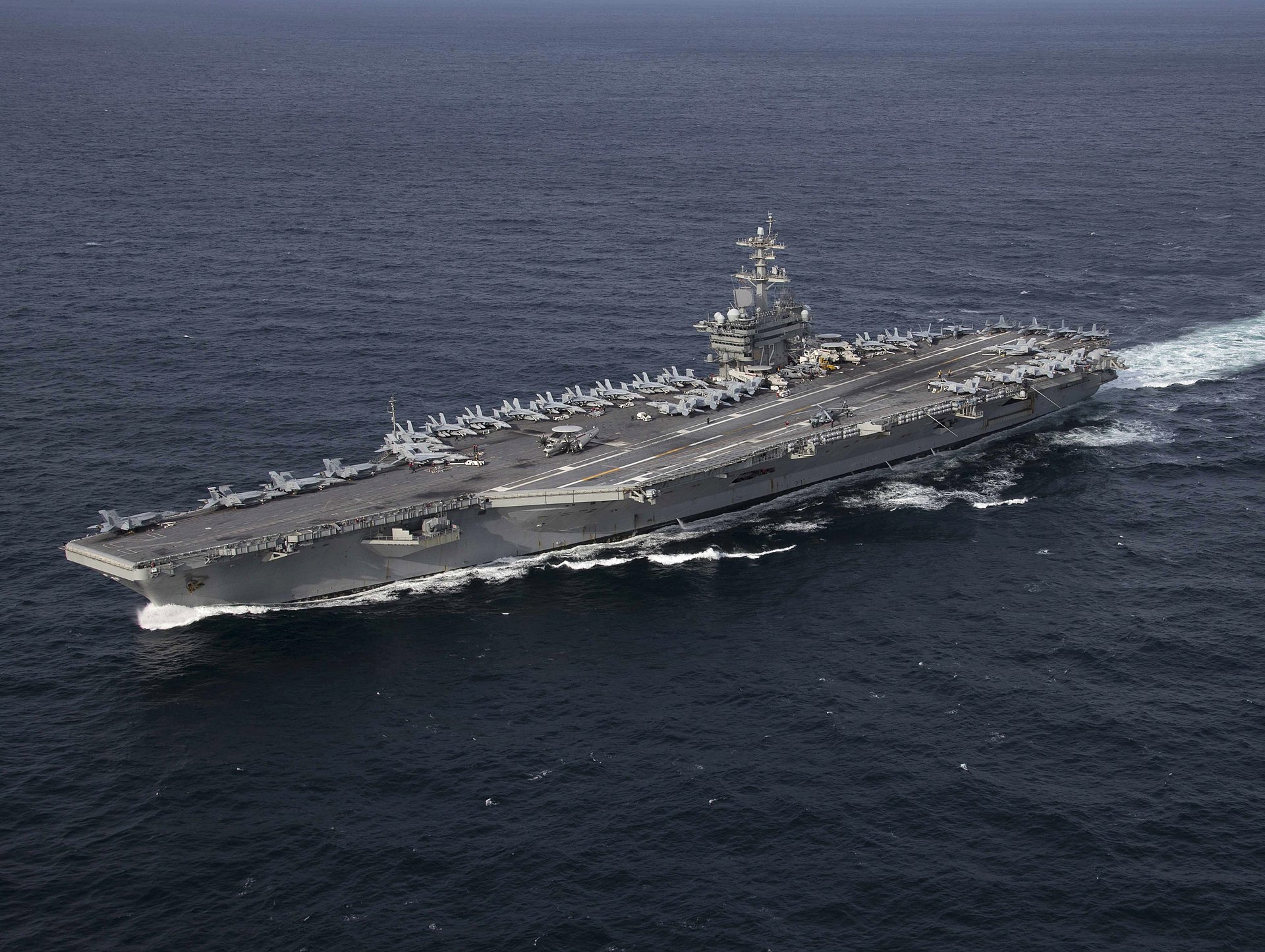
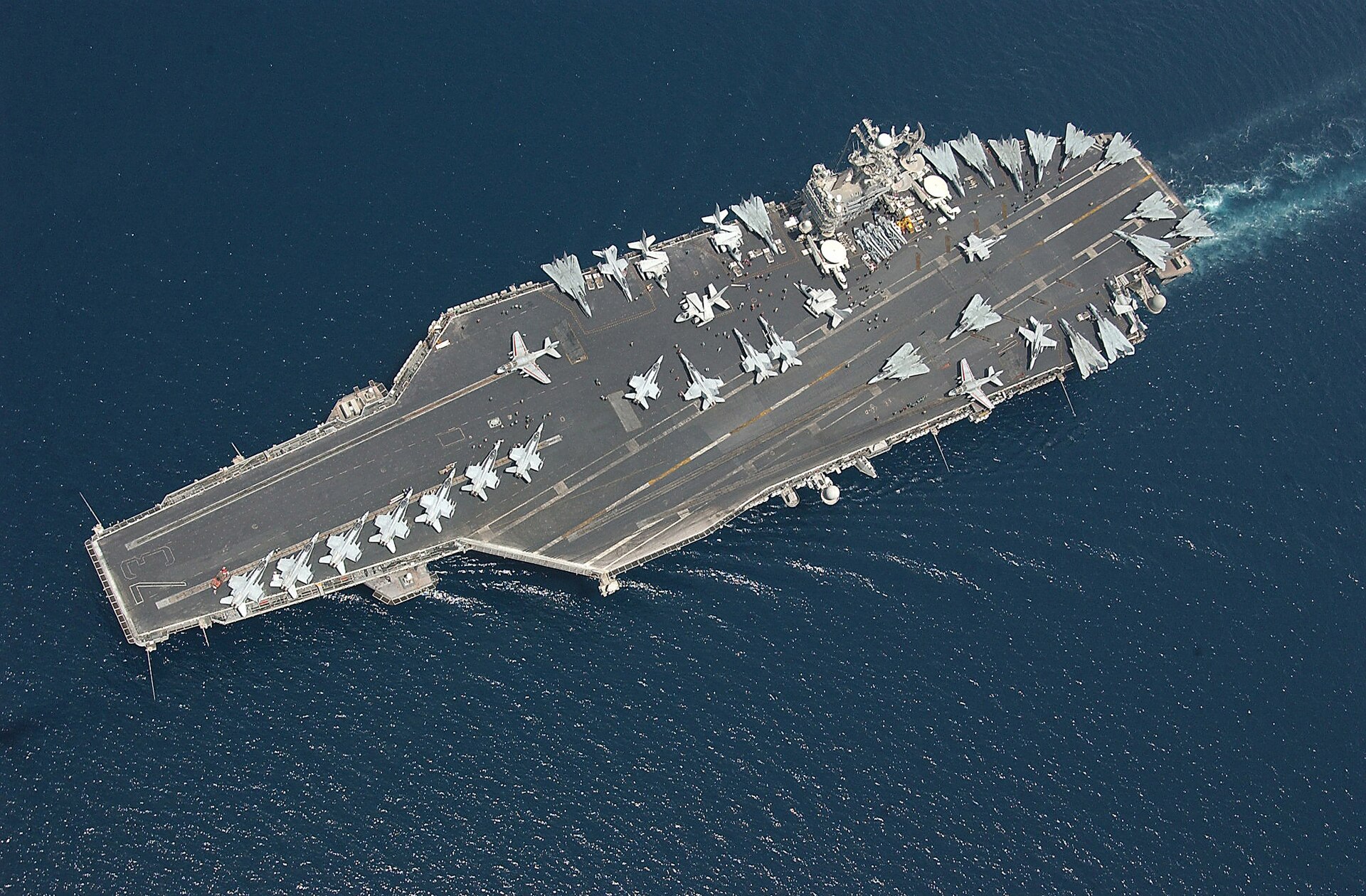
The intelligence-sharing failure is extraordinary by the standards of modern alliance management. The United States maintains bilateral defense cooperation agreements with every GCC state. It operates major military installations across the region — Al Udeid in Qatar, Arifjan in Kuwait, the Naval Support Activity in Bahrain, Al Dhafra in the UAE. American commanders on those bases are, in effect, guests of sovereign Gulf nations. Yet when the decision was made to launch the most consequential military operation in the Middle East since the 2003 invasion of Iraq, the hosts were not informed. The Pentagon has since responded to the expanding crisis by ordering a third carrier strike group to the Gulf — a belated acknowledgment that the conflict requires a sustained naval presence far exceeding initial plans.
The exclusion was not accidental. It reflected a decision-making structure in which US-Israeli coordination operated on a separate track from US-Gulf consultation. The strikes of February 28 were planned primarily through the US-Israeli military channel, with operational security concerns apparently overriding alliance obligations. The calculation in Washington appears to have been that informing Gulf states would risk leaks that could compromise the operation — an assessment that Gulf officials regard as both insulting and dangerous.
This is Netanyahu’s war. He somehow convinced the president to support his views.
Prince Turki al-Faisal, former Saudi intelligence chief, in an interview with CNN
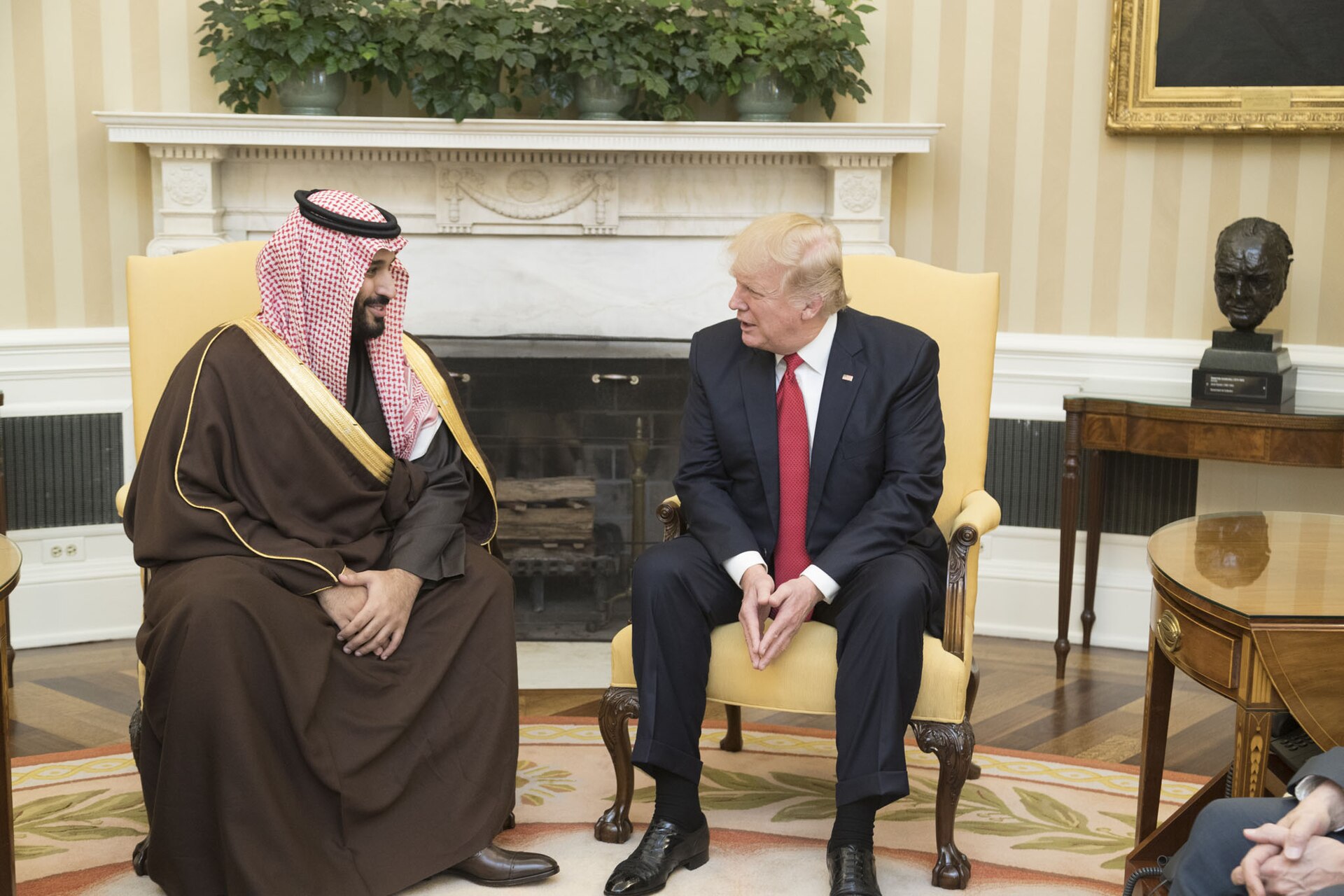
Prince Turki al-Faisal’s characterization, delivered in a CNN interview, captured the rage circulating through Gulf capitals. The former Saudi intelligence chief — a figure who has served as both ambassador to Washington and London and who represents the diplomatic establishment of the Al Saud — was not speaking off the cuff. His statement was a calibrated expression of a view held at the highest levels of the Saudi royal family: that the United States had subordinated the security interests of its Gulf partners to the strategic preferences of Israel.
The historical contrast is damning. In 1990, when Iraq invaded Kuwait, the United States assembled a coalition with Gulf states as full partners. Saudi Arabia hosted the deployment of more than 500,000 US troops. The kingdom was consulted at every stage of planning. King Fahd personally authorized the use of Saudi territory as the staging ground for Operation Desert Shield and, subsequently, Desert Storm. The alliance functioned as an alliance — with shared intelligence, shared risk, and shared decision-making.
In 2026, the architecture of consultation collapsed. Gulf states learned of the strikes through the same channels as the general public: breaking news alerts and social media. Within hours, Iranian missiles and drones were incoming. The allies who had warned Washington about this exact scenario were left to defend themselves against the consequences of a decision they had no role in making.
The failure was compounded by the nature of the strikes themselves. The US and Israel hit targets across Iran — nuclear facilities, military installations, command-and-control nodes. The scope was broad enough to ensure a maximalist Iranian response. Gulf states, which had argued for restraint or, at minimum, limited strikes with diplomatic off-ramps, found themselves absorbing the full fury of an adversary that had been given every incentive to escalate.
How Has Iran’s Retaliation Damaged Gulf Infrastructure?
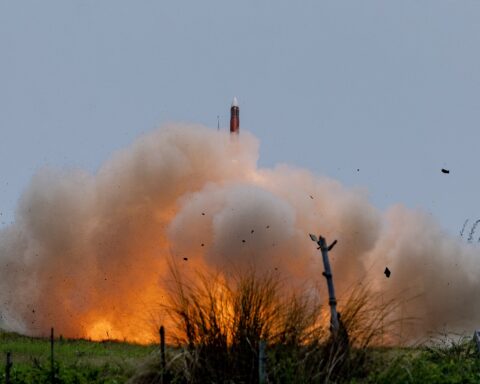
Iran’s retaliation has inflicted significant damage across all six GCC states, with the scale of the assault exceeding what most defense planners had modeled even in worst-case scenarios. According to tallies compiled by the Associated Press from official government statements, Iran has fired at least 380 missiles and more than 1,480 drones at Gulf targets since February 28 — a barrage that has tested the limits of every air defense system in the region.
The interception data from each GCC state tells the story of a coordinated, multi-axis assault designed to overwhelm defenses through sheer volume.
| Country | Ballistic Missiles | Cruise Missiles | Drones | Penetrations / Notes |
|---|---|---|---|---|
| UAE | 165 | 2 | 541 | 35 drones penetrated defenses |
| Kuwait | 97 | — | 283 | 6 US soldiers killed (March 2) |
| Bahrain | 45 | — | 9 | Naval facility targeted |
| Qatar | 18 (combined ballistic/cruise) | — | — | Al Udeid Air Base vicinity |
| Jordan | 13 | — | 49 | Multiple interceptions confirmed |
| Saudi Arabia | Confirmed incoming fire | — | — | No specific numbers released |
The UAE absorbed the heaviest volume of fire: 165 ballistic missiles, 2 cruise missiles, and 541 drones. While the UAE’s layered air defense network — which includes THAAD, Patriot, and the South Korean-designed Cheongung II system — intercepted the vast majority, 35 drones penetrated defenses. Each penetration represents a potential strike on civilian infrastructure, military installations, or critical energy facilities. The scale of the drone assault alone — 541 platforms — is without precedent in the history of Gulf defense.
Kuwait faced 97 ballistic missiles and 283 drones. The most devastating single incident of the war occurred there on March 2, when a drone strike killed six US soldiers — the first American military fatalities since the conflict began. The attack on a base hosting US personnel underscored a reality that Pentagon planners had acknowledged in classified assessments but never fully addressed in public: that US forward-deployed forces in the Gulf are themselves vulnerable to the same Iranian weapons that threaten their host nations.
Qatar faced 18 ballistic and cruise missiles directed at targets in the vicinity of Al Udeid Air Base, the nerve center of US air operations in the Middle East. The base hosts more than 10,000 US military personnel and serves as the forward headquarters of US Central Command’s air component. Under a security guarantee established by executive order in October 2025, the United States pledged to guarantee Qatar’s security — a pledge now being tested by the very conflict that Washington initiated.
Bahrain, home to the US Navy’s Fifth Fleet, intercepted 45 missiles and 9 drones. Jordan, though not a GCC state, has been drawn into the conflict zone, facing 13 ballistic missiles and 49 drones. Saudi Arabia confirmed incoming fire but, in a departure from the transparency shown by its neighbors, declined to release specific interception figures — a decision that analysts interpret as either operational security or an indication that the kingdom’s own defenses were more heavily tested than Riyadh wishes to acknowledge publicly.
At least thirteen people have been killed across Gulf countries from Iranian attacks in the first week alone. Airports, diplomatic compounds, and civilian neighborhoods have been hit or threatened. The psychological impact — the air-raid sirens, the interceptor launches visible from residential areas, the knowledge that each incoming ballistic missile carries a warhead capable of destroying a city block — has transformed daily life across a region that has known relative internal security for decades.
The scale of Iranian fire must be placed in context. During Iran’s retaliatory strike on Israel in April 2024 — at that time the largest single drone and missile attack in history — Tehran launched approximately 300 projectiles. In the first week of the current conflict, Iran has fired nearly six times that number at Gulf targets alone. The escalation reflects both Iran’s expanded production capacity and its strategic calculation that overwhelming volume is the only reliable method for penetrating modern air defense networks. The 35 drones that penetrated UAE defenses represent a success rate of approximately 6.5 percent — a figure that sounds small until one considers that each penetrating drone carries a warhead capable of striking a desalination plant, a power station, or an airport terminal.
The Interceptor Crisis That Nobody in Washington Is Discussing
Behind the interception statistics lies a crisis of mathematics that threatens to unravel the entire Gulf defense architecture. According to US Department of Defense budget documents, the interceptor missiles used by Patriot and THAAD systems cost between $3 million and $12 million each. The Shahed-series drones that comprise the bulk of Iran’s aerial assault cost between $30,000 and $50,000 to produce. For every dollar Iran spends on a drone, Gulf states spend between $20 and $28 to destroy it.
This cost asymmetry is not new — defense economists have written about it for years. What is new is the scale at which it is being exploited. Iran has fired more than 1,480 drones at Gulf states in seven days. Even assuming that not every drone requires a dedicated interceptor (some are engaged by electronic warfare systems, short-range air defense guns, or fighter aircraft), the drain on missile stocks is severe. At least one Gulf ally’s interceptor inventory is, according to officials who spoke to reporters, “rapidly depleting.”
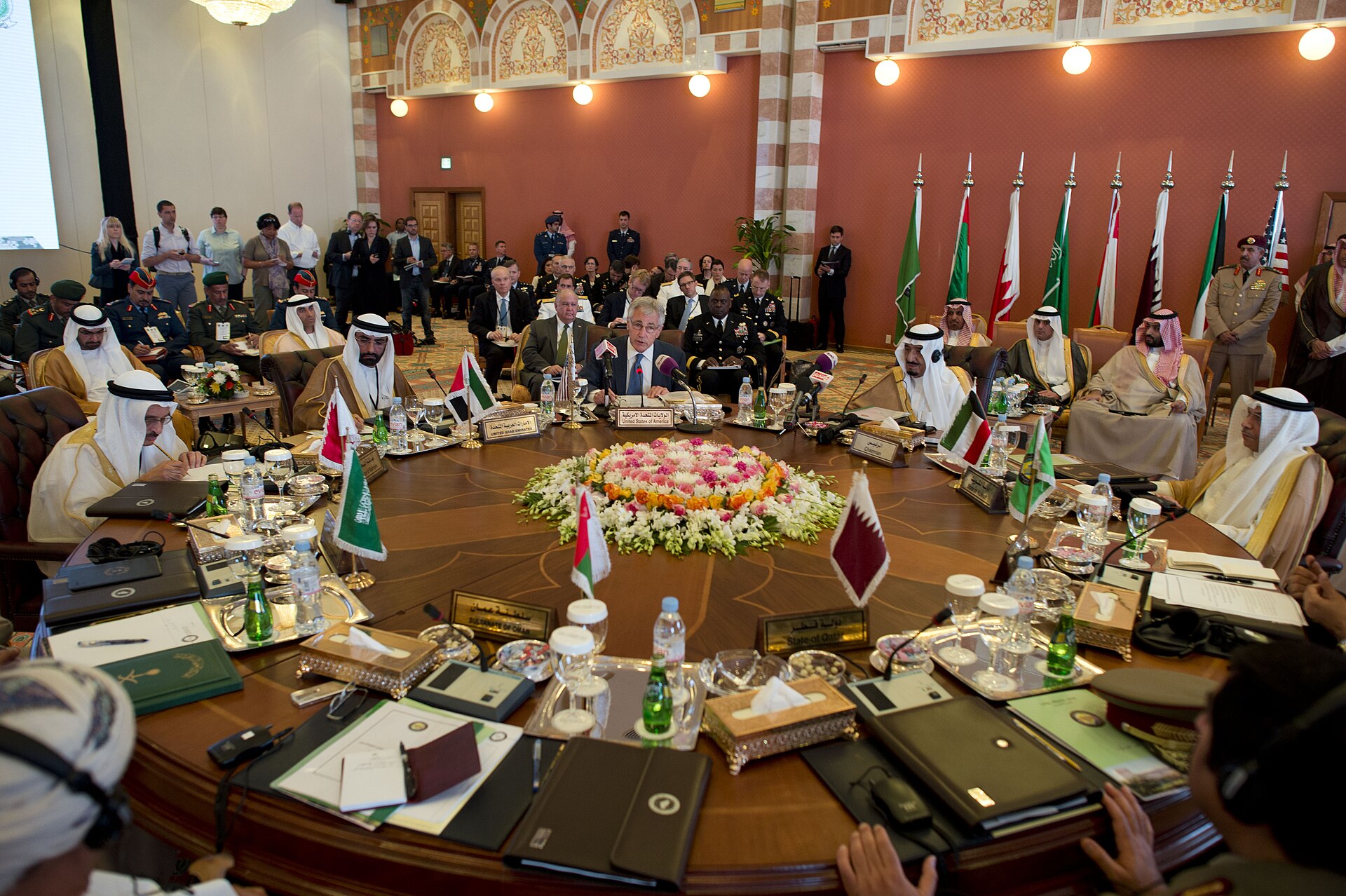
The production bottleneck compounds the problem. Patriot PAC-3 interceptors and THAAD interceptors are manufactured by Lockheed Martin on production lines that also supply the US military, Israel, and other allied nations. The current rate of production was calibrated for peacetime consumption and periodic testing, not for a sustained multi-front air defense campaign consuming interceptors at wartime rates. Gulf states, Israel, and the US military are now drawing from the same constrained production pipeline — and each has compelling reasons to prioritize its own stocks.
The arithmetic is relentless. A single THAAD interceptor costs approximately $12 million. A single Patriot PAC-3 MSE interceptor costs approximately $5 million. A Shahed-136 drone costs approximately $30,000 to $50,000. To defend against a salvo of 100 drones using Patriot interceptors — even assuming a generous one-to-one engagement ratio — costs $500 million. Iran can produce the same 100 drones for $3 million to $5 million. Over the course of a sustained campaign, this disparity does not merely favor the attacker; it threatens to bankrupt the defender.
Despite decades of heavy defense spending, Gulf states remain highly exposed to missile and drone warfare.
Ali Bakir, defense analyst
Bakir’s assessment captures the structural vulnerability in terms that no amount of procurement spending can refute. The exposure is not a function of insufficient investment — the GCC states have collectively spent hundreds of billions of dollars on air defense over the past two decades. It is a function of the fundamental economics of modern asymmetric warfare, in which cheap offensive systems can exhaust expensive defensive ones at ratios that no procurement budget can sustain indefinitely.
The implications extend beyond the current conflict. Even if the war ends tomorrow, Gulf states will need years to replenish interceptor stocks. The production lead time for a Patriot PAC-3 MSE interceptor is approximately 30 to 36 months from order to delivery. THAAD interceptors have similar timelines. Every interceptor fired this week is one that cannot be replaced until 2028 or 2029 — leaving Gulf air defenses degraded for the intervening period.
Washington has shown little public awareness of this dimension of the crisis. Congressional debates have focused on the strikes themselves, on Iran’s nuclear program, and on the geopolitical objectives of the campaign. The question of whether the United States can actually sustain the air defense of its Gulf allies — whether the industrial base exists to replace what is being consumed — has received almost no attention. It should receive the most. Europe’s own response to the Iran war has been equally fractured, with the continent divided into five distinct camps and unable to fill the gaps left by America’s transactional approach.
What Does Trump’s Unconditional Surrender Demand Mean for Saudi Arabia?
President Trump’s declaration on Truth Social on March 6 — “There will be no deal with Iran except UNCONDITIONAL SURRENDER!” — represents the most direct contradiction of Saudi strategic interests since the war began. Riyadh wants the conflict to end quickly, through a negotiated settlement that restores regional stability. Trump wants total capitulation from a regime that has shown no inclination to capitulate.
The demand for unconditional surrender has no modern precedent in US Middle Eastern policy. It echoes the terms imposed on Germany and Japan in 1945 — conflicts that required years of total war, millions of casualties, and the physical destruction of the enemy’s homeland. Applied to Iran — a nation of 88 million people, with mountainous terrain that would make ground invasion catastrophically costly, and with the capacity to sustain asymmetric warfare across the entire region for months or years — the demand is either aspirational rhetoric or a commitment to a war of indefinite duration. Either interpretation is alarming for Gulf states.
Iran’s foreign minister rejected any ceasefire, stating: “We didn’t ask for a cease-fire even last time.” The statement referred to Iran’s posture during the Iran-Iraq War of 1980-1988, when Tehran fought for eight years despite devastating losses, chemical weapons attacks, and international isolation. The historical reference was deliberate: Iran was signaling that it will not surrender, conditionally or otherwise, and that it is prepared for a long war.
For Saudi Arabia, a long war is the worst possible outcome. Every day the conflict continues, Iranian missiles and drones strike Gulf territory. Every day, interceptor stocks diminish. Every day, oil markets grow more volatile, shipping through the Strait of Hormuz grows more dangerous, and the economic diversification agenda that Crown Prince Mohammed bin Salman has staked his domestic legitimacy on — Vision 2030 and its associated megaprojects — faces further disruption.
The divergence between Washington’s war aims and Riyadh’s strategic interests is now the central fault line in the US-Gulf relationship. Saudi Arabia is pursuing a dual-track approach: maintaining its alliance with the United States while simultaneously working diplomatic channels to bring the conflict to a negotiated conclusion. But Trump’s unconditional surrender demand makes the diplomatic track nearly impossible to sustain. No mediator can broker a deal when one side has declared that the only acceptable outcome is the other side’s total capitulation.
The fracture deepened further when the US ordered non-emergency embassy staff to leave Saudi Arabia, a move that Gulf officials privately described as an acknowledgment that Washington could not guarantee the safety of its own diplomats on allied soil.
The White House has not clarified what “unconditional surrender” means in operational terms. Does it require regime change in Tehran? The dismantlement of Iran’s missile program? The dissolution of the Islamic Revolutionary Guard Corps? The abandonment of Iran’s nuclear enrichment capabilities? Each of these objectives would require a different level of military commitment, a different timeline, and a different tolerance for Gulf casualties. That the administration has not defined its terms — or, apparently, consulted its Gulf allies on what terms would be acceptable — is itself an indictment of the alliance’s functionality.
The $142 Billion Deal That Failed Its First Real Test
On May 13, 2025, the White House announced what it called the “largest defense deal in US history”: a $142 billion package of arms sales and security cooperation agreements with Saudi Arabia. The deal was celebrated as the cornerstone of a renewed US-Saudi strategic partnership. Ten months later, it stands as the most expensive unfulfilled promise in the history of bilateral defense relations.
The deal covered an extensive portfolio of defense capabilities. F-15SA fighter jet upgrades would modernize the backbone of the Royal Saudi Air Force. THAAD batteries would provide an upper-tier missile defense layer against ballistic missile threats. Patriot PAC-3 systems would strengthen point defense of critical infrastructure. MQ-9B Reaper drones would give Saudi Arabia advanced intelligence, surveillance, and reconnaissance capabilities. Two thousand Advanced Precision Kill Weapon Systems (APKWS) would convert unguided rockets into precision-guided munitions. The contractors involved — Lockheed Martin, RTX (formerly Raytheon), Boeing, Northrop Grumman, and Palantir — represented the full spectrum of the American defense industrial base.
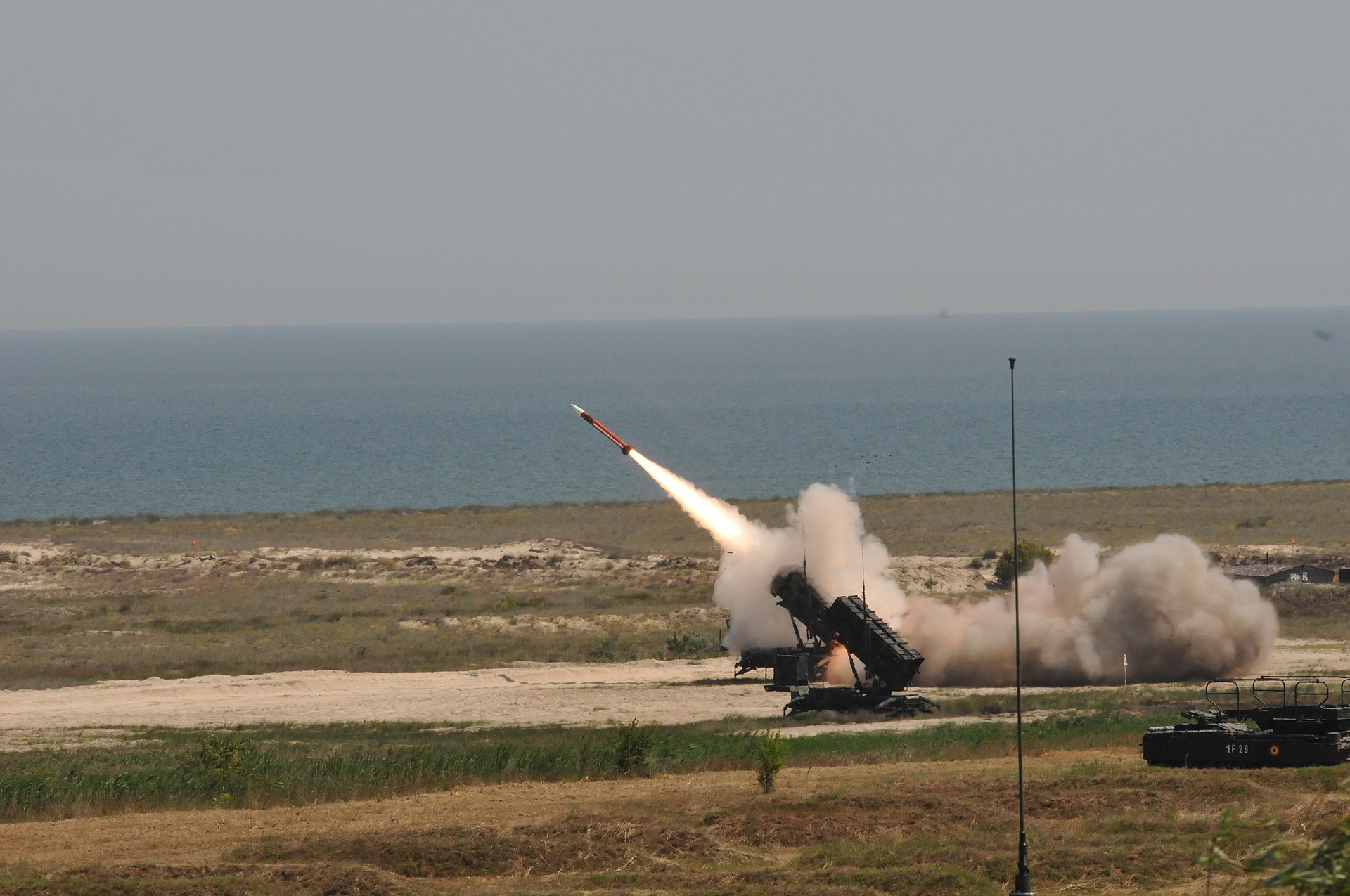
The gap between the deal’s promise and the war’s reality is stark. When Iran launched its retaliatory strikes on February 28 and the days that followed, Saudi Arabia relied primarily on its existing defense systems — the Patriot batteries and aircraft already in its inventory, supplemented by whatever layered defense capabilities it had independently acquired and integrated. The new THAAD batteries promised under the May 2025 deal had not yet been delivered. The F-15SA upgrades were still in progress. The MQ-9B drones were not yet operational in Saudi service.
This is the structural problem with defense deals measured in decades and wars measured in days. The $142 billion package was designed as a ten-year program of capability development. It assumed that the security environment would remain stable enough for the gradual delivery, integration, testing, and fielding of each system. The Iran war destroyed that assumption within hours of its first strike.
Saudi Arabia had never had a formal defense cooperation agreement with the United States until the 2025 deal. The historical absence is remarkable. The kingdom has been America’s most important Arab partner since the 1945 meeting between Franklin Roosevelt and King Abdulaziz aboard the USS Quincy. It was the staging ground for Operation Desert Storm. It hosts US military personnel and has purchased hundreds of billions of dollars in American weapons. Yet the formal legal architecture of the relationship was virtually nonexistent.
In the 1990-91 Gulf War, the US-Saudi defense relationship rested on what Prince Turki al-Faisal later described as “one paragraph letter of three sentences” — a commitment by the United States to withdraw its troops from Saudi territory when asked. That was the entirety of the formal obligation. The $142 billion deal of May 2025 was supposed to replace this informal arrangement with something durable. Instead, the war arrived before the ink was dry, and Saudi Arabia found itself defending against Iranian missiles with the same ad hoc arrangements that had characterized the relationship for decades.
The defense contractors, meanwhile, face their own reckoning. Lockheed Martin’s production lines for THAAD and PAC-3 interceptors are running at capacity. RTX (the parent company of Raytheon, which manufactures Patriot systems) has acknowledged that expanding production will require years and billions in capital investment. The war has created demand for interceptors that the industrial base cannot satisfy — a problem that no number of signed contracts can solve in the near term.
How Is Saudi Arabia Balancing Washington and Tehran?
Saudi Arabia is pursuing a dual strategy of extraordinary complexity: maintaining its public alignment with the United States while simultaneously operating diplomatic backchannels to Iran aimed at ending the war through negotiation. Crown Prince Mohammed bin Salman has personally conveyed messages to the leaders of Bahrain, Kuwait, Qatar, and the UAE urging them to avoid any escalatory actions that could deepen Gulf involvement in the conflict.
The balancing act reflects Saudi Arabia’s unique geographic and strategic position. The kingdom shares no border with Iran, but it shares a waterway — the Persian Gulf — and an airspace that Iranian missiles can traverse in minutes. It is America’s most important Arab ally, but it is also Iran’s most important Arab interlocutor, having restored diplomatic relations through the Beijing-mediated deal of 2023. It needs American weapons to defend itself, but it needs Iranian restraint to survive.
MBS’s message to Gulf leaders was carefully calibrated. It did not call for breaking with the United States. It did not call for accommodating Iran. It called for avoiding escalation — a formulation that implicitly criticized Washington’s maximalist approach without explicitly challenging it. The message acknowledged a reality that no Gulf leader can say publicly but all understand privately: that the GCC states are caught between an ally that started a war without consulting them and an adversary that is punishing them for that ally’s decisions.
The Saudi diplomatic backchannel to Iran has intensified since February 28. The channel, which was established during the 2023 normalization process and maintained through Omani and Iraqi intermediaries, has carried messages aimed at establishing boundaries for the conflict. Saudi Arabia’s core message to Tehran has been consistent: the kingdom did not participate in the strikes, does not seek war with Iran, and is working to create conditions for a ceasefire.
Iran’s response to the Saudi outreach has been ambiguous. Tehran has not specifically targeted Saudi oil infrastructure — a restraint that some analysts interpret as a signal that Iran distinguishes between Gulf states that host US strike assets and those that maintain diplomatic channels. But Iran has confirmed incoming fire directed at Saudi territory, and the kingdom’s refusal to release specific interception data suggests that the volume of attacks may be more significant than Riyadh’s public posture acknowledges.
The tension between Saudi Arabia’s alliance obligations and its survival instincts is playing out in real time. Riyadh is positioning itself as a potential mediator — a role that requires distance from both belligerents. But the kingdom is also a target of Iranian attacks, which makes neutrality impossible. And it is a customer of American weapons, which makes independence from Washington a matter of aspiration rather than reality. The balancing act cannot be sustained indefinitely. At some point, Saudi Arabia will have to choose between deepening its alignment with Washington’s war aims and breaking with them in pursuit of a negotiated settlement. The first week of the war has made that choice more urgent — and more consequential — than anyone in Riyadh anticipated.
The Alliance Confidence Matrix
The state of the US-Gulf alliance can be assessed across six critical dimensions, each measured against its pre-war baseline, its performance during the first week of the conflict, and its impact on mutual trust. The Alliance Confidence Matrix provides a structured framework for evaluating where the relationship stands as of March 7, 2026 — and where the most dangerous fractures lie.
Each dimension is scored on a scale of 1 to 5, where 5 represents full alignment and mutual confidence, and 1 represents a near-complete breakdown. The scores reflect the assessments of Gulf officials, defense analysts, and regional diplomats as conveyed through public statements and on-the-record reporting during the first week of the war.
| Dimension | Pre-War Status (1-5) | War Performance (1-5) | Trust Impact (1-5) | Assessment |
|---|---|---|---|---|
| Intelligence Sharing | 4 | 1 | 1 | Total failure — allies not warned of Feb 28 strikes |
| Defense Commitment | 4 | 2 | 2 | US assets present but Gulf states bore defensive burden |
| Strategic Alignment | 3 | 1 | 1 | Unconditional surrender demand vs. Gulf desire for negotiation |
| Diplomatic Coordination | 3 | 1 | 1 | No pre-strike consultation; post-strike divergence on war aims |
| Arms Supply Reliability | 4 | 2 | 2 | $142B deal signed but deliveries incomplete; interceptor stocks depleting |
| Post-War Vision | 3 | 1 | 1 | No shared framework for post-conflict regional order |
The matrix reveals a pattern of catastrophic degradation across every dimension. Intelligence sharing, which operated at a functional level before the war (score: 4), collapsed entirely when it mattered most (score: 1). The failure to warn Gulf allies of the February 28 strikes was not a lapse in protocol — it was a decision to exclude treaty partners from the most consequential intelligence-sharing event of the decade. The trust impact is correspondingly severe: Gulf intelligence services will now question whether any shared intelligence from Washington can be considered complete or reliable.
Defense commitment shows a less dramatic but still significant decline. The United States has substantial military assets in the region — the buildup since January 2026 was the largest since the 2003 Iraq invasion. But during the first week of Iranian retaliation, Gulf states relied primarily on their own air defense systems to intercept incoming missiles and drones. US-operated Patriot and THAAD batteries contributed to the defense, but the overwhelming burden fell on national air defense forces. The score of 2 reflects a presence that was necessary but insufficient.
Strategic alignment suffered the sharpest pre-war to wartime decline. Before the strikes, the United States and Gulf states shared a broad concern about Iranian nuclear ambitions and regional destabilization — a score of 3, reflecting alignment on objectives if not always on methods. Trump’s unconditional surrender demand shattered whatever alignment remained. Gulf states want the war to end. Washington, as expressed by the president, wants Iran’s total capitulation. These objectives are not merely different — they are incompatible.
Arms supply reliability, scored at 4 before the war, dropped to 2 as the reality of interceptor depletion and production constraints became apparent. The $142 billion deal was supposed to be the ultimate expression of supply reliability. Instead, it exposed the gap between contractual promises and physical delivery. Systems that had been ordered but not yet delivered could not contribute to defense. Interceptors that had been delivered were being consumed faster than they could be replaced.
The post-war vision dimension, already weak at 3, collapsed to 1. The United States and Gulf states have articulated no shared framework for what the region should look like after the conflict ends. Washington’s position — unconditional surrender — implies regime change or near-regime change in Iran, an outcome that Gulf states regard as potentially more destabilizing than the current government. Riyadh envisions a negotiated settlement that preserves Iranian sovereignty while constraining its weapons programs. The two visions have almost nothing in common.
Why the 1991 Security Model No Longer Works
The US-Gulf security model that emerged from the 1991 Gulf War was built on a simple proposition: the United States would protect Gulf states from external aggression, and Gulf states would provide basing access, energy market stability, and strategic alignment. For three decades, the model functioned because it was never seriously tested. The Iran war has tested it — and it has failed.
In 1991, the security relationship operated as a genuine partnership. When Iraq invaded Kuwait on August 2, 1990, the United States consulted extensively with Gulf allies before committing to military action. King Fahd of Saudi Arabia made the sovereign decision to invite US forces onto Saudi soil — a decision with profound domestic political and religious implications. The resulting coalition included forces from Saudi Arabia, Kuwait, the UAE, Qatar, Bahrain, Oman, Egypt, Syria, and dozens of other nations. The war was fought by a coalition, planned as a coalition, and concluded as a coalition.
The contrast with 2026 is total. The February 28 strikes were planned by the United States and Israel. Gulf states were not consulted, not warned, and not included in the operational decision-making. When Iran retaliated, Gulf states absorbed the strikes. The security model had shifted from partnership to something that more closely resembles collateral — Gulf states were not allies in the operation but casualties of it.
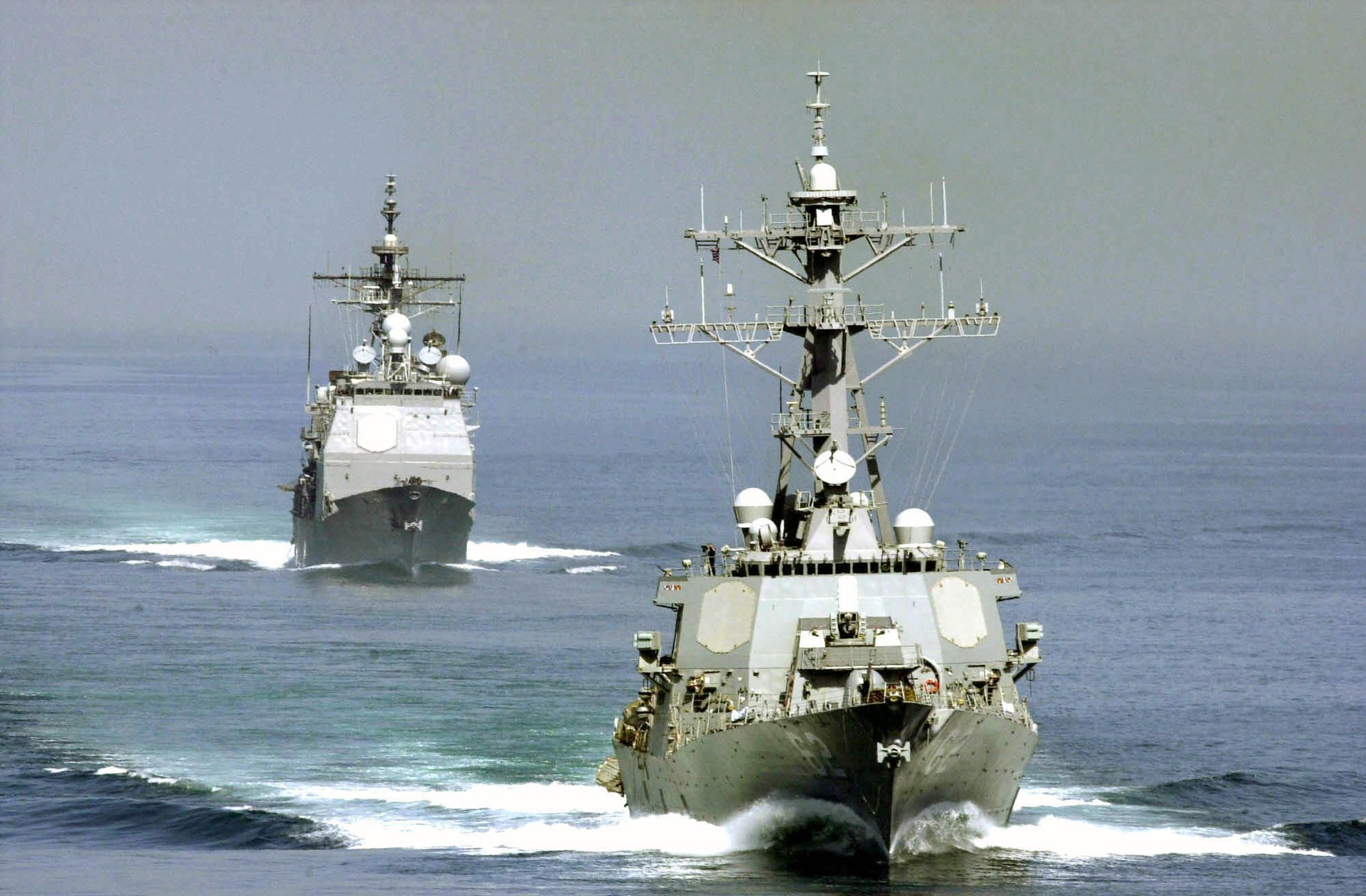
Several structural changes explain why the 1991 model cannot be replicated. First, the nature of the threat has changed. In 1991, the threat was a conventional military invasion — Iraqi tanks rolling across a border. The response was equally conventional: an armored coalition force that expelled the invader. In 2026, the threat is an asymmetric barrage of missiles and drones launched from hundreds of kilometers away. No coalition ground force can intercept a Shahed drone. No diplomatic communiqué can stop a ballistic missile in flight. The threat requires a different kind of defense — one measured in interceptor stocks and radar coverage, not in divisions and brigades.
Second, the political context has changed. In 1991, the United States had a clear and universally supported objective: the liberation of Kuwait. Every Gulf state shared that objective. In 2026, the objectives are contested. The United States and Israel struck Iran to degrade its nuclear program and military capabilities. Gulf states did not share those priorities — or at least did not share them to the degree that justified the risk of massive Iranian retaliation against their territory. The casus belli was not theirs. The war was not theirs. But the consequences were.
Third, the balance of power has shifted. In 1991, Iran was exhausted from eight years of war with Iraq and posed no significant threat to Gulf states. Iraq was the adversary, and Iraq was defeated. In 2026, Iran possesses a missile and drone arsenal capable of striking every capital in the Gulf simultaneously. Its proxy networks extend across Iraq, Syria, Lebanon, and Yemen. Its capacity for asymmetric escalation — through attacks on shipping, energy infrastructure, and civilian targets — exceeds anything that existed in the 1991 threat environment. The Gulf states face an adversary that the 1991 security model was never designed to counter.
Fourth, the US commitment itself has changed. In 1991, the United States deployed more than 500,000 troops to the Gulf. In 2026, the US military buildup — the largest since 2003 — brought significant but smaller numbers. More importantly, the political commitment is different. The Bush administration in 1991 built domestic and international consensus for the Gulf War over six months. The Trump administration in 2026 launched strikes with minimal congressional consultation and no coalition-building. The difference in process reflects a difference in priority: in 1991, the Gulf was the objective. In 2026, the Gulf is the staging area.
The vulnerability of maritime commerce in the Gulf further underscores the model’s obsolescence. In 1991, the US Navy could secure the Strait of Hormuz against Iraqi threats with relative ease. In 2026, Iran’s anti-ship missile capabilities, mine-laying capacity, and fast-attack craft present a multi-dimensional threat to commercial shipping that naval forces alone cannot neutralize. The economic dimension of Gulf security — the safe passage of oil tankers — is now at risk in ways that the 1991 model never anticipated.
What Comes After the War for the US-Gulf Alliance?
The post-war US-Gulf alliance will bear little resemblance to the pre-war version. The question is not whether the relationship will change, but whether the changes will be managed or chaotic, incremental or revolutionary. Three scenarios capture the range of possible outcomes, each with different implications for regional stability, energy markets, and the global balance of power.
The first scenario is diversification. Gulf states have already begun exploring security relationships with non-US partners. France has defense cooperation agreements with the UAE and Qatar. The United Kingdom maintains a naval facility in Bahrain and has expanded military ties with Oman. China, which brokered the Saudi-Iran normalization in 2023, has signaled interest in a larger security role in the Gulf — an interest that Washington has historically treated as a red line but that the war may transform into a reality that the US must accept.
Diversification does not mean replacement. No single country can substitute for the United States as a security guarantor — China lacks the force-projection capability, France and the UK lack the scale, and Russia lacks the credibility. But a Gulf security architecture that draws on multiple partners rather than a single patron would reduce the vulnerability that the first week of the war exposed. If the United States can launch a war without consulting its Gulf allies, the rational response for those allies is to ensure they have alternatives.
The second scenario is formalization. Gulf states may demand that the informal, deal-based security relationship with the United States be replaced by formal mutual defense treaties with binding obligations. The model would be NATO’s Article 5, which commits all members to treat an attack on one as an attack on all. Saudi Arabia’s lack of a formal defense agreement before 2025 — the “one paragraph letter of three sentences” that governed the relationship during the Gulf War — is now seen as a catastrophic gap. A formal treaty would have required the United States to consult Saudi Arabia before launching strikes that would predictably result in attacks on Saudi territory.
The obstacles to formalization are significant. The US Senate must ratify treaties, and securing two-thirds support for a mutual defense commitment to Gulf monarchies would face political headwinds. Gulf states themselves may resist the constraints that a formal treaty would impose on their own diplomatic freedom — including their ability to maintain backchannels with Iran. But the war has made the costs of informality clear, and the pressure for a more binding arrangement will be intense.
The third scenario is fragmentation. The alliance could fracture along bilateral lines, with each Gulf state negotiating its own terms with Washington based on its individual threat assessment, basing arrangements, and arms purchases. This is, in many ways, the pre-war status quo — but accelerated by mutual distrust. In a fragmented scenario, Saudi Arabia might pursue strategic autonomy while maintaining arms purchases; the UAE might deepen its bilateral defense cooperation agreement; Qatar might seek to formalize the US security guarantee already established by executive order; and Kuwait might question the value of a defense agreement that did not prevent six American soldiers from dying on its soil.
The economic dimension of the post-war reckoning cannot be separated from the security dimension. Gulf states are the largest sovereign wealth fund holders in the world. Saudi Arabia’s Public Investment Fund alone manages more than $900 billion in assets. The UAE’s Abu Dhabi Investment Authority and Qatar Investment Authority hold comparable sums. These funds give Gulf states financial leverage that few American allies possess — the ability to fund their own defense diversification, to invest in alternative partnerships, and to reduce economic dependence on the United States in ways that reinforce strategic autonomy. If the war accelerates the trend toward Gulf financial independence from dollar-denominated markets, the consequences for the US-Gulf relationship will extend far beyond the military domain.
Whichever scenario prevails, the structural change is already underway. Atlantic Council analysts have described the emerging Gulf as a “very different” strategic environment from the one that existed before February 28 — one in which US primacy is no longer assumed, where Gulf states are simultaneously allies and autonomous actors, and where the security architecture must account for threats that the old model was never designed to address.
The Contrarian Case for a Stronger Alliance
The prevailing narrative of alliance collapse, while grounded in the events of the first week, may not capture the full trajectory of the US-Gulf relationship. There is a credible, evidence-based argument that this crisis could paradoxically produce a stronger alliance — one with formal commitments, clearer obligations, and more honest strategic communication than the informal arrangement it replaces.
The historical precedent is NATO. The North Atlantic Treaty Organization was forged in 1949, but it was the crises of the Cold War — the Berlin Blockade, the Korean War, the Suez Crisis, the Cuban Missile Crisis — that transformed it from a paper alliance into a functional military organization. Each crisis exposed weaknesses, generated recriminations, and forced institutional reforms that left the alliance more capable than before. The Suez Crisis of 1956, in which the United States opposed its own allies France and Britain, was arguably more damaging to intra-alliance trust than anything that has occurred in the Gulf. Yet NATO not only survived Suez — it emerged with a clearer command structure, a more integrated military planning process, and a more realistic assessment of American leadership.
The Iran war could serve a similar catalytic function for the US-Gulf relationship. The intelligence-sharing failure of February 28 has created irresistible pressure for formalized consultation mechanisms — the equivalent of NATO’s North Atlantic Council, where all members have a voice in decisions that affect collective security. The interceptor crisis has created pressure for joint procurement and stockpiling arrangements. The strategic divergence on war aims has created pressure for political-level coordination on issues that were previously left to bilateral conversations.
Gulf states have powerful incentives to pursue reform within the alliance rather than exit from it. The United States remains the only country capable of providing the high-end air and missile defense systems that the war has proven essential. THAAD, Patriot, and their successors have no equivalents in the Chinese, Russian, or European arsenals — at least not at the scale and level of integration that Gulf defense requires. The $75 billion that Saudi Arabia has invested in its military over the past decade is overwhelmingly invested in US-origin platforms. Switching suppliers is not a matter of signing a new contract — it would require rebuilding entire defense architectures from the ground up, a process measured in decades and hundreds of billions of dollars.
The United States, for its part, has powerful incentives to repair the relationship. Gulf basing access is essential for US power projection across the Middle East and South Asia. The loss of Al Udeid, Arifjan, or the Fifth Fleet headquarters in Bahrain would represent a strategic catastrophe that no amount of over-the-horizon capability could compensate for. Gulf energy production remains critical to global markets and, by extension, to the US economy. And Gulf states are among the largest customers for American defense products — a commercial relationship that supports hundreds of thousands of jobs and sustains the defense industrial base.
The strongest version of the contrarian case rests on mutual dependency. Neither side can walk away. The United States cannot project power in the Middle East without Gulf basing. Gulf states cannot defend themselves against Iran without American weapons and, increasingly, American operational support. The current crisis is severe, but it is a crisis within a relationship that both sides need — and that historical precedent suggests can be reformed rather than abandoned.
The counterargument is that NATO’s crises occurred within a framework of shared democratic values, institutional culture, and geographic proximity that the US-Gulf relationship lacks. The analogy has limits. But the core insight — that crises can force institutional maturation — applies regardless of the political systems involved. The question is whether the political will exists on both sides to convert anger into architecture. The answer will determine whether the US-Gulf alliance of 2030 is stronger or weaker than the one that cracked during seven days in March 2026.
Frequently Asked Questions
Were Gulf states warned before the US strikes on Iran on February 28?
No. Officials from at least two Gulf countries confirmed to the Associated Press and PBS that they were not given advance warning of the strikes. Gulf states had previously warned the United States that strikes on Iran would trigger massive retaliation against GCC territory, but those warnings were disregarded in the US-Israeli operational planning process.
How many missiles and drones has Iran fired at Gulf states since the war began?
According to tallies compiled by the Associated Press from official government statements, Iran has fired at least 380 missiles and more than 1,480 drones at Gulf Cooperation Council states since February 28, 2026. The UAE has faced the heaviest volume, with 165 ballistic missiles, 2 cruise missiles, and 541 drones, of which 35 drones penetrated air defense systems.
Why are Gulf air defense interceptors running low?
The cost asymmetry between Iranian offensive weapons and Gulf defensive interceptors is draining stockpiles at unsustainable rates. Interceptor missiles cost $3 million to $12 million each, according to US Department of Defense budget documents, while Iranian Shahed-series drones cost $30,000 to $50,000. Production lead times for replacement interceptors are 30 to 36 months, meaning stocks cannot be replenished during the current conflict.
What is the $142 billion US-Saudi defense deal?
Announced by the White House on May 13, 2025, the deal is described as the largest defense agreement in US history. It covers F-15SA fighter jet upgrades, THAAD missile defense systems, Patriot PAC-3 interceptors, MQ-9B Reaper drones, and 2,000 Advanced Precision Kill Weapon Systems. The contractors involved include Lockheed Martin, RTX, Boeing, Northrop Grumman, and Palantir.
What does Trump’s “unconditional surrender” demand mean for the war?
President Trump declared on Truth Social on March 6 that there would be “no deal with Iran except UNCONDITIONAL SURRENDER.” Iran’s foreign minister rejected any ceasefire, saying “We didn’t ask for a cease-fire even last time.” The demand directly contradicts Saudi Arabia’s push for a quick negotiated end to the conflict and signals a potentially prolonged war.
Did Saudi Arabia have a formal defense agreement with the US before 2025?
No. Despite decades of close military cooperation and hundreds of billions of dollars in arms purchases, Saudi Arabia had no formal defense cooperation agreement with the United States until the May 2025 deal. During the 1990-91 Gulf War, the entire US commitment to Saudi Arabia rested on what Prince Turki al-Faisal described as “one paragraph letter of three sentences.”
How is Saudi Arabia responding to the crisis diplomatically?
Crown Prince Mohammed bin Salman has pursued a dual strategy: maintaining the public alliance with the United States while intensifying diplomatic backchannels to Iran aimed at a negotiated end to the conflict. He has conveyed messages to the leaders of Bahrain, Kuwait, Qatar, and the UAE urging restraint and avoidance of escalation beyond the current scope of hostilities.