
Table of Contents
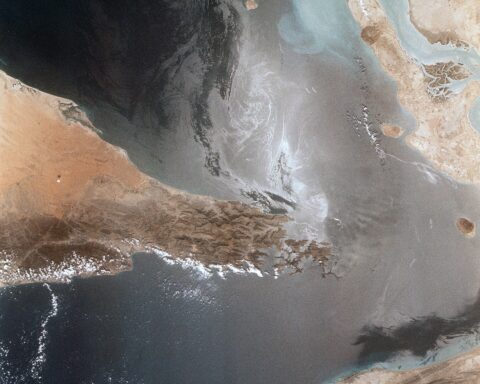
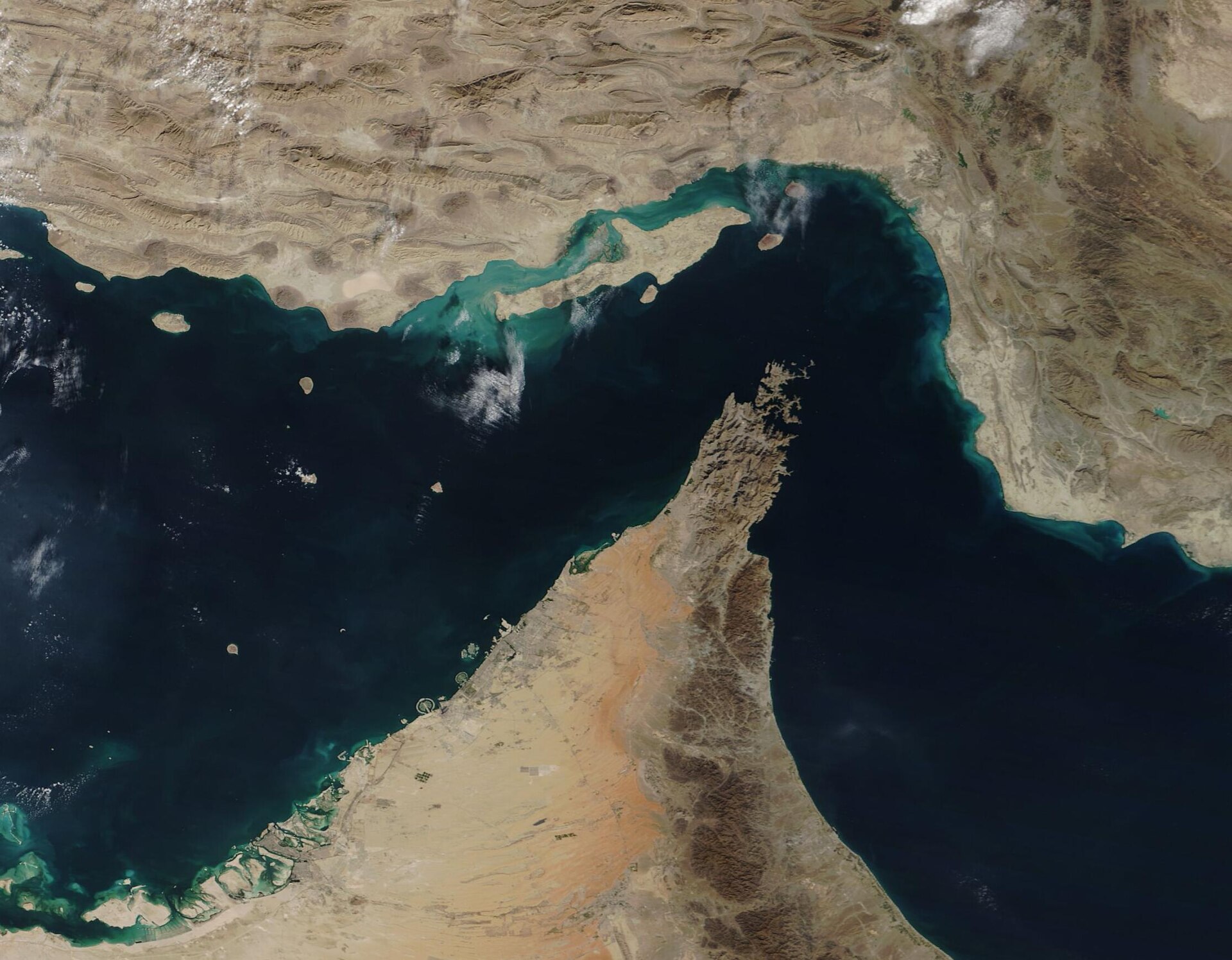
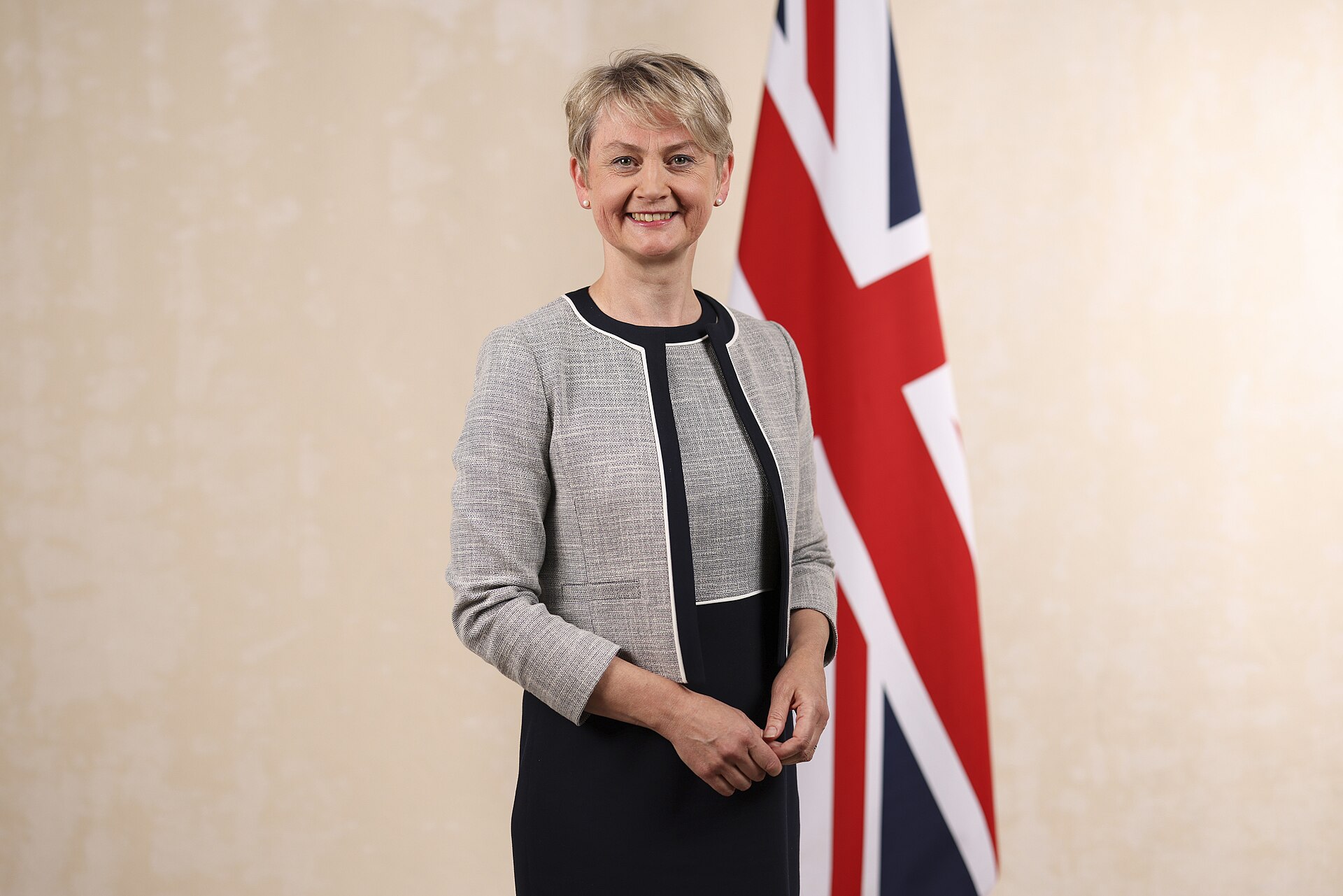
LONDON — British Prime Minister Keir Starmer announced on April 1 that the United Kingdom will convene a virtual summit of 35 nations on April 3 to address the closure of the Strait of Hormuz, positioning London as architect of what officials are calling a “third lane” diplomatic track — distinct from the American military campaign against Iran and from Tehran’s own sovereignty claims over the waterway. Foreign Secretary Yvette Cooper will chair the session, which is scheduled 72 hours before President Trump’s April 6 deadline for the strait’s reopening.
By assembling a parallel coalition two days before Washington’s ultimatum expires, Starmer is constructing a diplomatic structure that can absorb the outcome regardless of whether Trump’s military pressure succeeds or collapses. The 35-nation roster includes Bahrain and the UAE but not the United States — and not Saudi Arabia.
Thirty-Five Flags, No Warships
The coalition grew from seven signatories to 35 in two weeks. On March 19, the United Kingdom, France, Germany, Italy, the Netherlands, Japan, and Canada issued a joint statement on Hormuz. By April 1, the roster had quintupled to include South Korea, Australia, New Zealand, Denmark, Norway, Sweden, Finland, the three Baltic states, Romania, Bulgaria, Croatia, Slovenia, the Czech Republic, Portugal, Albania, Kosovo, North Macedonia, Montenegro, Moldova, Panama, the Marshall Islands, Nigeria, Trinidad and Tobago, Chile — and, from the Gulf, Bahrain and the UAE.
The expansion follows a pattern. NATO members and their Pacific partners form the core. Small states with flag-of-convenience registries — Panama, the Marshall Islands — bring maritime credibility. Bahrain and the UAE provide the Gulf anchor. But the joint statement, according to Politico’s E&E News, “does not include any commitment to send naval vessels or other resources.” E&E News framed the summit as “largely a gesture to placate President Trump.”
That characterization may understate what London is building. The summit is structured in two sequential tracks: a diplomatic and political assessment chaired by Cooper, followed by a separate session in which military planners will “look at how we can marshal our capabilities and make the strait accessible and safe after the fighting has stopped,” according to UPI and bne IntelliNews. The second track is post-war institutional planning — not crisis response.
France, Germany, Italy, and Japan all ruled out sending naval vessels during the active combat phase when the G7 met on March 27, according to Euronews. The 35-nation summit operates within that constraint. It is not a war coalition.
What Does Starmer Actually Want from April 3?
Starmer’s public framing has been consistent. “This is not our war,” he said on April 1. “We will not be drawn into the conflict. That is not in our national interest.” He added: “Whatever the pressure on me and others, whatever the noise, I am going to act in the British national interest in all decisions that I make.”
Fifty-nine percent of British voters oppose involvement in the Iran conflict. Starmer, governing with a domestic mandate built on cost-of-living promises rather than foreign policy ambition, cannot afford to be dragged into a Gulf war. Twenty percent of Britain’s LNG imports come from Qatar — £5.9 billion per year in Qatari gas — and 200,000 British citizens live in Gulf states.
The summit lets Starmer occupy both positions simultaneously. By convening nations rather than deploying ships, he creates a diplomatic fait accompli: a pre-formed coalition with a shared assessment framework, ready to act the moment hostilities end. If Trump’s April 6 deadline produces a breakthrough, Starmer’s coalition becomes the implementing body. If Trump’s pressure fails, the coalition becomes the alternative path.
Cooper’s stated objective is to “assess all viable diplomatic and political measures we can take to restore freedom of navigation, guarantee the safety of trapped ships and seafarers and resume the movement of vital commodities,” according to the UK government’s April 1 readout. The language is procedural — deliberately so. It commits to assessment, not action.
Trump Responds: “Go Get Your Own Oil”
The American reaction was immediate. On April 1, Trump posted on Truth Social a direct attack on Starmer and the coalition: “All of those countries that can’t get jet fuel because of the Strait of Hormuz, like the United Kingdom, which refused to get involved in the decapitation of Iran… build up some delayed courage, go to the Strait, and just TAKE IT.”
He continued: “You’ll have to start learning how to fight for yourself, the U.S.A. won’t be there to help you anymore.” And: “Go get your own oil.”
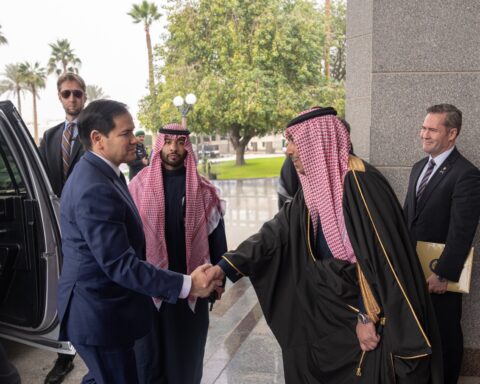
In a separate post, Trump called NATO “a paper tiger” and threatened withdrawal from the alliance — a threat he has made before but one that carries different weight during an active Gulf war. Secretary of State Marco Rubio had previously stated that “the Strait of Hormuz will reopen, one way or another,” according to Al Jazeera, but the administration offered no public comment on the British summit itself.
Washington views Hormuz as a military problem requiring force; London views it as a diplomatic problem requiring consensus. Trump’s “just TAKE IT” and Starmer’s “this is not our war” are not merely different policy preferences — they reflect incompatible theories of how the strait gets reopened. The US is not among the 35 nations, according to militarnyi.com.
Where Is Riyadh?
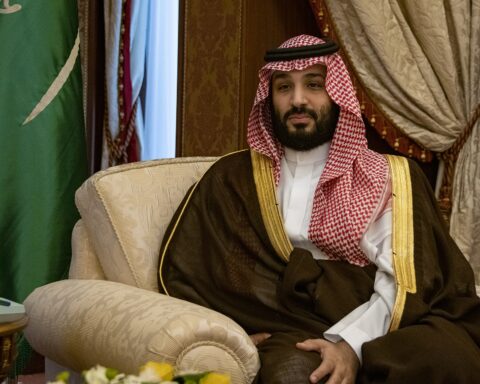
Saudi Arabia’s name does not appear on the publicly circulated 35-nation roster. Bahrain is there. The UAE is there. Saudi Arabia is not.
The absence creates a specific diplomatic problem. Riyadh has spent the past month constructing its own multilateral architecture — the Jeddah trilateral with Qatar and Jordan, the Islamabad engagement with Pakistan — designed to position MBS as a mediator rather than a belligerent. As this publication has reported, MBS built a two-tier coalition at Jeddah and Islamabad precisely to control Saudi Arabia’s positioning in the conflict’s diplomatic endgame.
Joining Starmer’s summit would mean accepting a British-chaired framework — one that explicitly rejects the US military track that Riyadh has quietly supported through Sky Sabre deployments and other arrangements. Saudi Arabia has called for peace, lobbied for war, and denied both within the same weekend. Sitting at Starmer’s table would collapse that ambiguity.
But staying away carries its own cost. If the 35-nation coalition becomes the institutional framework for Hormuz’s post-war reopening, Saudi Arabia — the strait’s most consequential stakeholder, with $1.2 trillion in annual trade from the five Gulf countries at risk from prolonged closure — would be absent from the body designing the rules. GCC Secretary-General Jasem al-Budaiwi stated in March that “we emphasise the necessity of involving the GCC countries in any talks or agreements,” according to the Jerusalem Post. Two GCC members are at Starmer’s table. The GCC’s largest member is not.
Starmer and MBS spoke by phone on March 24. The UK government readout said Starmer “updated on planning around the Strait of Hormuz” and said Britain was “working with partners on what a viable plan could look like.” That call preceded the summit announcement by eight days. Whether it constituted an invitation or a notification is a distinction Riyadh will parse carefully. Iran has said it will fight for six months.
Iran’s Counter-Framework: Tolls, Bans, and Bilateral Deals
Tehran has not waited for the summit to present its own answer to Hormuz. On March 31 — one day before Starmer’s announcement — Iran’s Parliament Security Committee approved the Strait of Hormuz Management Plan, which imposes transit tolls on commercial shipping, bans US and Israeli vessels entirely, and asserts Iranian sovereignty over the waterway, according to ANI News and Business Standard. Iran has not ratified the UN Convention on the Law of the Sea.
The legislative move reframes the strait from an international waterway governed by customary freedom-of-navigation principles into a passage subject to Iranian sovereign authority. It is a direct counter to the 35-nation summit’s premise — that a multilateral coalition can collectively restore “freedom of navigation” — by asserting that navigation was never free to begin with, merely tolerated.
Iran has reinforced the legislative framework with operational facts on the water. Since declaring the strait “open to peaceful ships” on March 25, Tehran has selectively permitted passage for Chinese vessels, according to Al Jazeera and the Christian Science Monitor. Iran is building a two-tier maritime order at Hormuz — one in which access depends not on international law but on bilateral relationships with Tehran. China, which imports roughly 40 percent of its oil through the strait, has explicitly opposed multilateralizing the Hormuz security question. Global Times described the US approach as “trying to drag in others to turn the issue into a multilateral one.”
Iran’s five counter-demands for ending the war include “exercise of sovereignty over the Strait of Hormuz” as a precondition, according to CNBC. That demand is structurally incompatible with any framework — American, British, or otherwise — predicated on restoring international transit rights. The 35-nation summit proposes to build a post-war order around freedom of navigation. Iran proposes to build a post-war order around sovereignty.
“This is not our war. We will not be drawn into the conflict. That is not in our national interest.”
— Keir Starmer, UK Prime Minister, April 1, 2026
East of Suez Without a Fleet
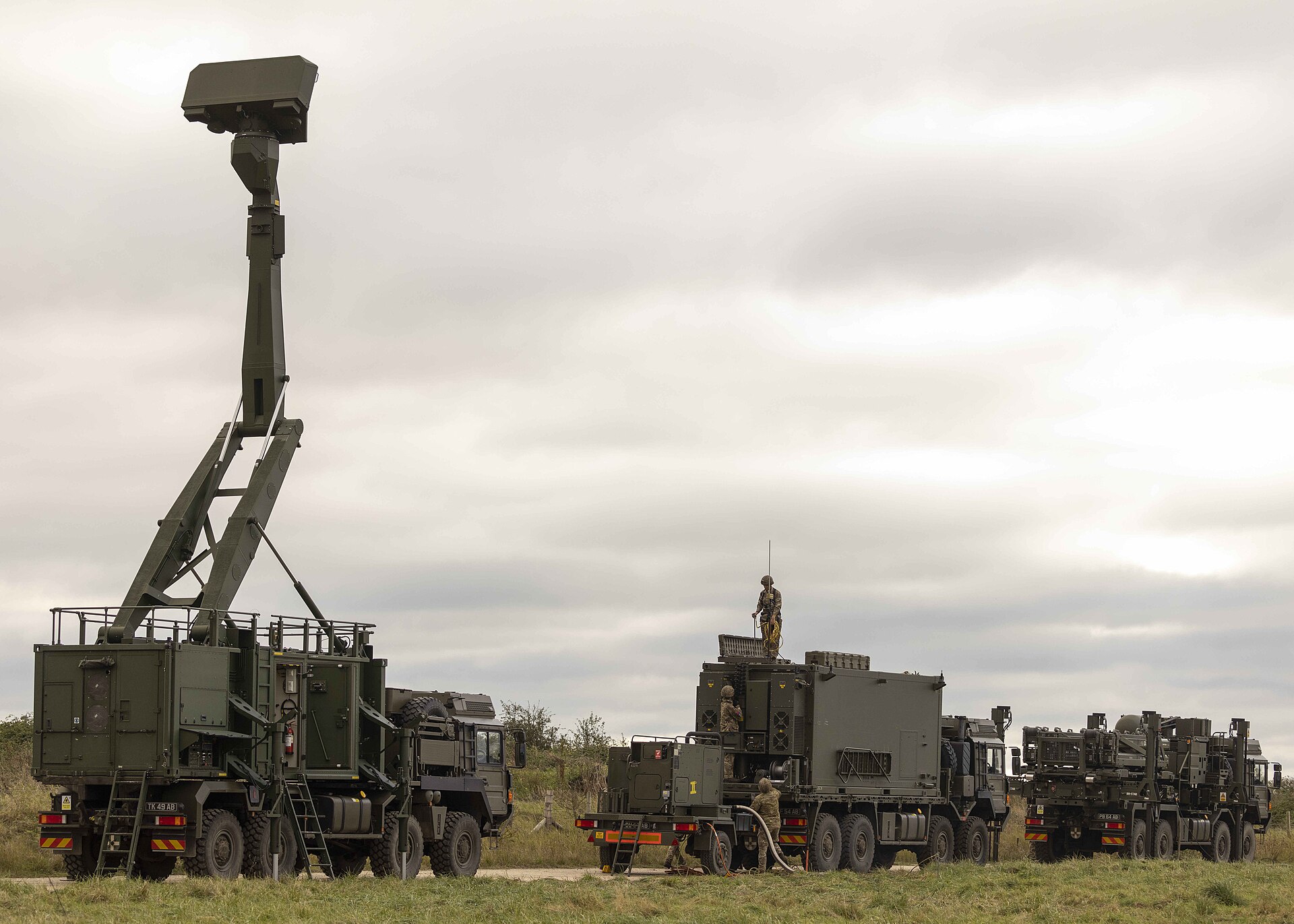
Britain’s military posture in the Gulf is real but specific. Defence Secretary John Healey visited Saudi Arabia, Qatar, and Bahrain in late March, describing Britain’s role as focused “entirely on defensive operations,” according to the UK Ministry of Defence. Approximately 1,000 British troops are deploying to install and operate four air defense systems across four Gulf states: Sky Sabre in Saudi Arabia, Lightweight Multirole Launcher in Bahrain, Rapid Sentry and ORCUS counter-drone systems in Kuwait, and RAF Typhoons extended in Qatar.
Sky Sabre has a range of 25 kilometers and can engage 24 projectiles simultaneously — relevant in a conflict where more than 3,500 Iranian missiles and drones have been fired at Gulf infrastructure since Day 1, now 32 days ago. MBS bought an insurance policy, not a warplane, when he secured the F-35 deal.
But the gap between Britain’s land-based deployments and its maritime posture is conspicuous. HMS Jufair in Bahrain — reopened in 2018 as the UK’s first permanent base “East of Suez” in 47 years — has no permanently assigned Royal Navy vessels as of early 2026, according to the UK Defence Journal. Britain returned to the Gulf with a base but not a fleet. Starmer launched the UK’s Defence Diplomacy Strategy at RUSI on March 24, the same day as his phone call with MBS.
A Responsible Statecraft analyst compared Starmer’s approach to Admiral Nelson at Copenhagen and warned that deploying autonomous mine-clearing vessels without Iranian consent would be “a reckless proposition” and “a suicide mission.” A Chatham House analyst offered a blunter assessment: “Starmer’s reluctance to get involved in the Iran conflict may prove an important part of his legacy, but it also indicates the UK’s declining ability to influence the US and project power. An offer to host a summit on how to open the Strait of Hormuz may be the best the UK can do to contribute to a solution.”
The same Chatham House analysis noted that “the Gulf states may welcome an increased European military presence to enhance protection from Iran and hedge against relying too much on an erratic US.”
Background: Three Maritime Coalitions in Six Years
The Strait of Hormuz has now generated three distinct multilateral security frameworks in six years, each reflecting a different theory of how to manage the waterway.
Operation Sentinel launched in July 2019 after Iran seized British-flagged tankers. The US Central Command-led operation drew Australia, Bahrain, Britain, Qatar, Saudi Arabia, and the UAE by November 2019, according to GlobalSecurity.org. It was explicitly American-led, with Washington providing command structure and intelligence.
The European Maritime Awareness in the Strait of Hormuz — EMASOH — launched in February 2020 after France proposed it in November 2019. Denmark, Belgium, France, Germany, Greece, Italy, the Netherlands, and Portugal joined. EMASOH was explicitly independent of Sentinel, focused on de-escalation rather than deterrence. Britain was involved in early discussions but did not join the final roster.
Now Starmer’s 35-nation summit represents a third model: neither American-led deterrence nor European de-escalation, but a broader diplomatic framework designed for the post-war transition. The progression — from 7 nations under US command in 2019, to 8 European nations in 2020, to 35 nations under British chairmanship in 2026 — tracks the expanding complexity of Hormuz governance.
The mid-April SPR cliff and the most consequential OPEC meeting in history now converge with Starmer’s diplomatic calendar. If the strait remains closed past Trump’s April 6 deadline, the energy dimensions of the crisis will overtake the military ones. Starmer’s coalition is structured for precisely that contingency — a world in which the war winds down but the strait does not reopen automatically, and someone needs to manage the transition.
Frequently Asked Questions
Which countries are in the 35-nation coalition and how were they selected?
The coalition includes the original seven signatories — the UK, France, Germany, Italy, the Netherlands, Japan, and Canada — plus South Korea, Australia, New Zealand, Denmark, Norway, Sweden, Finland, Estonia, Latvia, Lithuania, Romania, Bulgaria, Croatia, Slovenia, the Czech Republic, Portugal, Albania, Kosovo, North Macedonia, Montenegro, Moldova, Panama, the Marshall Islands, Nigeria, Trinidad and Tobago, Chile, Bahrain, and the UAE. The roster skews heavily toward NATO members and their Pacific partners, with flag-state registries (Panama, Marshall Islands) adding maritime-law standing. Russia, China, India, and the United States are absent, as are Saudi Arabia, Kuwait, Oman, and Qatar from the Gulf.
What legal authority does a 35-nation coalition have over the Strait of Hormuz?
None, in a binding sense. The strait is governed by customary international law and the transit passage provisions of UNCLOS Part III, but Iran has not ratified UNCLOS and asserts sovereign rights over its territorial waters in the strait. A coalition statement carries political weight — 35 flags representing a substantial share of global maritime trade — but cannot compel Iran to permit passage. Any enforcement action would require either a UN Security Council resolution, which China and Russia would veto, or a military operation outside the summit’s stated mandate.
How does Britain’s current Gulf military presence compare to its Cold War-era deployments?
During the “East of Suez” era (1820-1971), Britain maintained a permanent naval squadron in the Gulf, with warships at Bahrain, Sharjah, and Aden providing continuous maritime patrol. The 1968 Wilson withdrawal ended that presence entirely. The 2018 reopening of HMS Jufair restored a permanent base but not a permanent fleet — the facility has no assigned Royal Navy vessels as of early 2026. Britain’s 2026 Gulf presence is defined by land-based air defense systems and RAF aircraft, not by the naval power that historically underpinned British influence in the strait. The shift from sea-based to land-based power projection reflects both budgetary constraints and the changed nature of the threat — missiles and drones rather than hostile navies.
Could Iran’s Hormuz Transit Toll Plan survive legally under international law?
Iran’s Parliament Security Committee approved the plan on March 31, but its legal standing is contested. Under UNCLOS Article 38, ships and aircraft enjoy the right of transit passage through straits used for international navigation, and coastal states cannot suspend or impede that right. Iran’s position rests on its non-ratification of UNCLOS and its claim that the strait falls under Iranian sovereign authority rather than the transit passage regime. Legal scholars are divided: some argue that transit passage rights exist under customary international law regardless of UNCLOS ratification, while others note that without a binding international court ruling, enforcement depends on power rather than precedent. Iran’s selective passage policy — permitting Chinese vessels while blocking others — creates a de facto toll system even without formal international recognition.
What happens if the summit fails to produce a joint plan before Trump’s April 6 deadline?
The summit is designed to survive that scenario. Its two-track structure — diplomatic assessment followed by military planning for the post-war period — does not depend on resolving the crisis before April 6. If Trump’s deadline passes without the strait reopening, the 35-nation coalition becomes the default non-American framework for managing the transition. If the US escalates militarily after April 6, the coalition provides diplomatic cover for nations that want to participate in reconstruction without being associated with the military campaign. Starmer’s architecture is built for the long game, not the deadline.