
For decades, the partnership between Saudi Arabia and the United Arab Emirates was the load-bearing pillar of Gulf stability. Two wealthy, ambitious monarchies moving in lockstep on oil policy, regional security, and economic modernization. That era is over. What has emerged in its place is the most significant rupture in Gulf politics since the 2017 Qatar blockade, and this time, there is no easy resolution on the horizon.
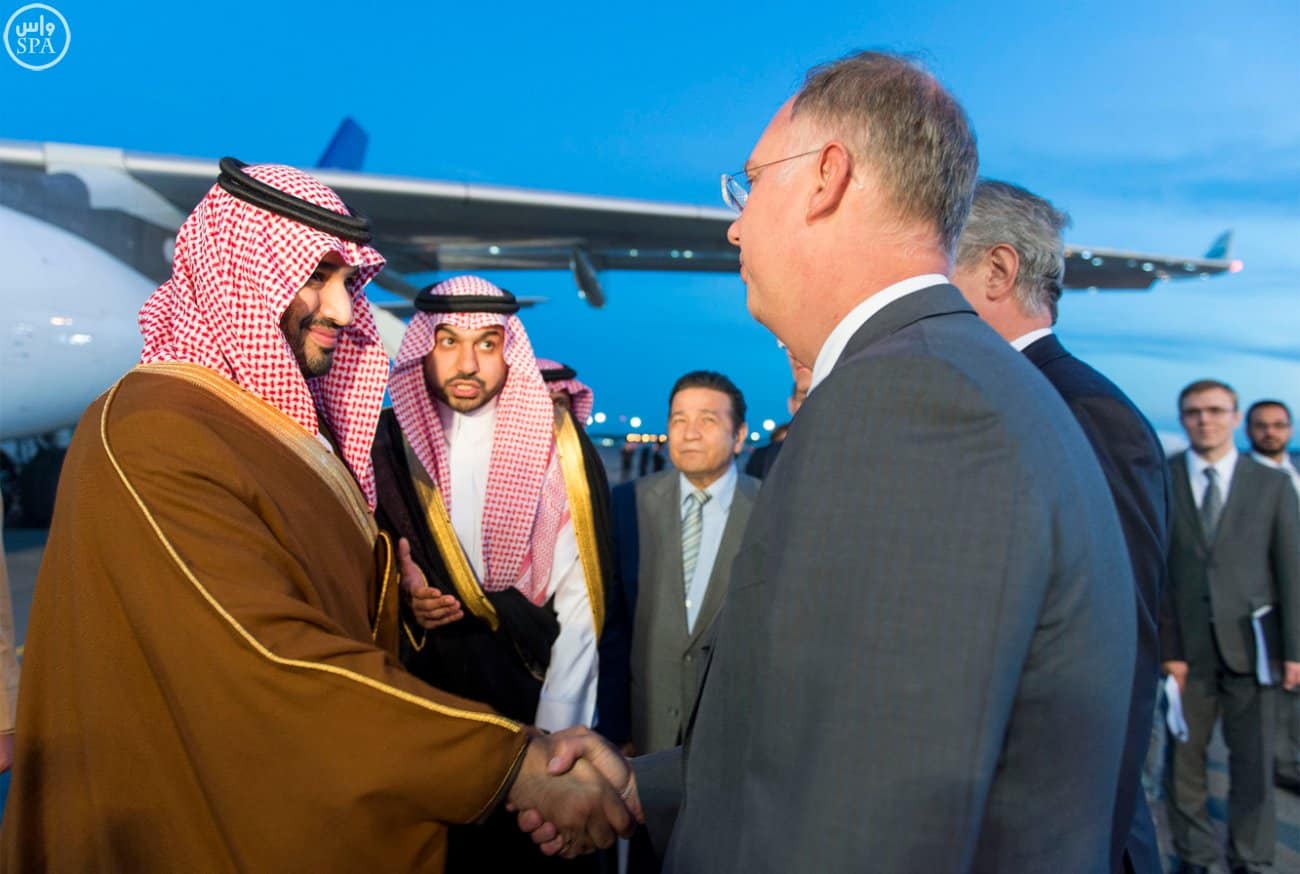
The escalation reached a new threshold on February 21, when Crown Prince Mohammed bin Salman sent a detailed letter of grievances to Sheikh Tahnoon bin Zayed al-Nahyan, the UAE’s influential national security advisor. The letter, reportedly shared with American and Western officials, laid out Riyadh’s position in blunt terms: the UAE’s activities in Yemen and Sudan have crossed a red line, and Saudi Arabia will no longer tolerate them.
This is not a diplomatic spat. It is a structural realignment that will reshape the Gulf for the next decade.
The Spark: Al-Mukalla and the Weapons Ship
The immediate trigger was dramatic. On December 30, 2025, Saudi Arabia launched airstrikes on the southern Yemeni port city of al-Mukalla, targeting what Riyadh described as a weapons shipment linked to the UAE. The vessel in question, the Greenland, flagged out of St. Kitts, had arrived from the Emirati port of Fujairah with its tracking devices disabled. Its cargo was allegedly destined for the Southern Transitional Council, the UAE-backed separatist movement operating in southern Yemen.
Saudi Arabia called the shipment an “imminent threat” and characterized the UAE’s conduct as “highly dangerous.” Abu Dhabi denied sending weapons, claiming the shipment consisted of vehicles for its own forces and that Riyadh had been informed. Within days, the UAE announced the withdrawal of all remaining forces from Yemen.
But the damage was done. The al-Mukalla strike was the point of no return, the moment when the quiet competition between these two Gulf powers became an open confrontation. For Saudi Arabia, Yemen has always been its exclusive sphere of influence, a war it entered in 2015 to prevent an Iranian-aligned government on its southern border. The UAE’s support for the STC, a faction with its own territorial ambitions in the south, was viewed in Riyadh as a direct challenge to Saudi authority.
The Letter: MBS Draws the Line
The February 21 letter from MBS to Tahnoon bin Zayed was extraordinary for its directness. In Gulf diplomacy, disagreements between ruling families are typically managed through back channels, intermediaries, and carefully worded communiques. This letter abandoned that tradition entirely.
On Sudan, the Crown Prince stated that Saudi Arabia “can no longer tolerate” the UAE’s support for the Rapid Support Forces in Sudan’s ongoing civil war. On Yemen, MBS characterized Saudi military intervention as a national security necessity and described the kingdom’s position in unmistakable terms: Yemen is Riyadh’s sphere, and the UAE’s decision to arm the STC without Saudi approval constituted a violation of that understanding.
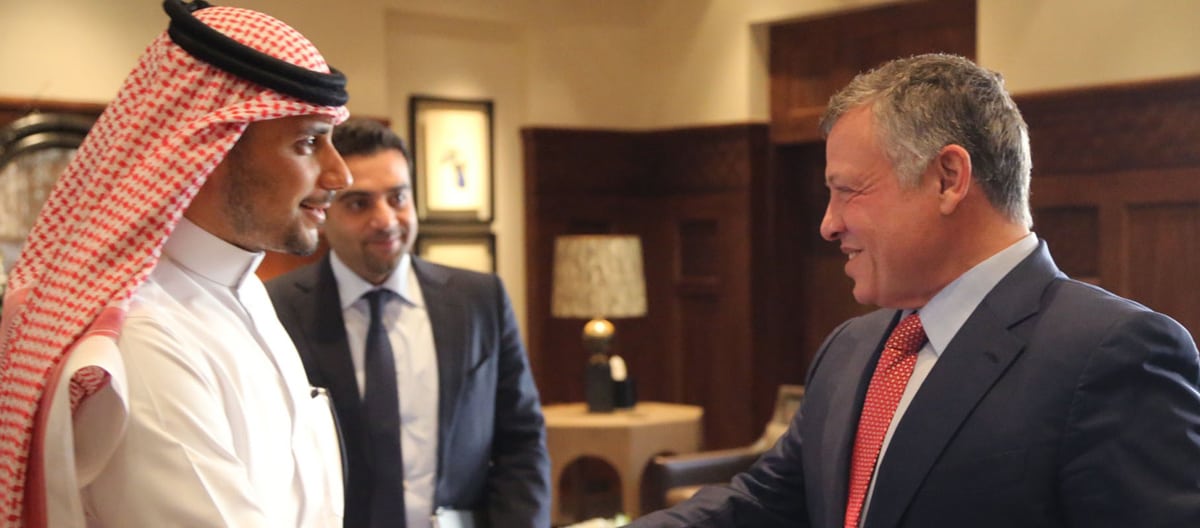
The letter proposed mediation through Prince Khalid bin Salman, the Saudi Defence Minister and MBS’s younger brother. But the proposal came wrapped in ultimatum, not invitation. The fact that the letter was shared with Western capitals was itself a signal: Riyadh was internationalizing the dispute, ensuring that any future Emirati escalation would be viewed through the lens of Saudi Arabia’s formal, documented objections.
Proxy Wars and Competing Visions
The Yemen dimension is only the surface. Beneath it lies a far deeper rivalry over the future direction of the Gulf itself.
In Sudan, Saudi Arabia and the UAE find themselves on opposite sides of a catastrophic civil war. The UAE’s alleged support for the RSF, which has been accused of widespread atrocities, has put Abu Dhabi at odds not only with Riyadh but with a growing chorus of international condemnation. Saudi Arabia has positioned itself as the responsible regional actor, hosting peace talks and calling for restraint. The contrast is deliberate.
In the Horn of Africa, the competition extends to Somalia, where the Somali government severed ties with the UAE over accusations that Abu Dhabi was facilitating Israel’s recognition of Somaliland. Saudi Arabia, which has carefully managed its position on the Israel-Palestine question, has used the UAE’s Abraham Accords normalization as a rhetorical weapon. Saudi-aligned social media accounts have branded the UAE as “Israel’s Trojan horse” and denounced the normalization as a military alliance disguised in the language of peace.
The Abraham Accords dimension is particularly toxic. The UAE’s normalization with Israel in 2020 was supposed to be a landmark achievement, a template for broader Gulf engagement with the Jewish state. Instead, it has become a wedge issue. Saudi Arabia, which has explored normalization as part of a broader U.S. security pact, has pointedly refused to follow the Emirati example without Palestinian statehood guarantees. The result is a public relations war in which both sides accuse the other of strategic recklessness.
The Information War
Gulf rivalries have always had a media component, but the Saudi-UAE information war has reached a new intensity. Saudi-aligned influencers and media accounts have launched a sustained campaign against Abu Dhabi, describing the UAE as “an Israeli project wearing an Arab cloak” and an agent of foreign interests in the region.
The UAE has responded with its own asymmetric tactics. According to multiple reports, Abu Dhabi lobbied pro-Israel organizations in Washington, including pressing the American Jewish Committee to raise concerns about alleged antisemitism in Saudi Arabia. The Zionist Organization of America issued a statement expressing “deep concern” about what it called Saudi propaganda directed against Israel, the United States, and the UAE.
This weaponization of Washington advocacy networks marks a new and dangerous phase. Both nations are competing for influence in the American capital, and the willingness to recruit third-party organizations into what is fundamentally an intra-Gulf dispute suggests a level of hostility that will be difficult to walk back.
Economic Warfare: Riyadh vs. Dubai
The geopolitical confrontation is mirrored by an intensifying economic rivalry that threatens to reshape the business landscape of the entire region.
Saudi Arabia’s aggressive campaign to attract corporate headquarters to Riyadh has been a direct assault on Dubai’s position as the Gulf’s business capital. Riyadh’s ultimatum to multinational companies, requiring them to establish regional headquarters in the Saudi capital to qualify for government contracts, has drawn hundreds of firms away from the UAE. The competition for foreign direct investment, talent, and tourism revenue has moved from friendly rivalry to zero-sum contest.
The ongoing recalibration of Vision 2030 and the recent ministerial reshuffle signal that Saudi Arabia is doubling down on this strategy. The dismissal of Investment Minister Khalid al-Falih and his replacement with Fahad al-Saif, a Public Investment Fund insider, suggests that the PIF’s investment strategy for 2026-2030 will prioritize economic competition with the UAE as a core objective.
On oil, the long-simmering OPEC tension between the two countries persists. The UAE has complained for years that its production quota does not reflect its expanded capacity. Saudi Arabia, as OPEC’s de facto leader, has used production adjustments as leverage, a dynamic that grows more volatile as both nations seek to diversify their economies away from hydrocarbon dependence.
The Defense Show Boycott
Perhaps the most visible symbol of the rupture came at the World Defense Show in Riyadh in early February. Emirati defense firms boycotted the event, a stunning public snub at what was supposed to be a showcase for Gulf unity and Saudi Arabia’s growing defense industry.
The show went on without them. Over 1,400 exhibitors from 89 countries attended, and 60 defense deals worth approximately $8.8 billion were signed. Reports have emerged of a forthcoming F-35 deal and a massive order for M1 Abrams tanks, underscoring Saudi Arabia’s determination to build a defense industrial base that does not depend on Gulf neighbors. The kingdom’s defense localization rate has risen from 4 percent in 2018 to 25 percent in 2024, and the trajectory is clear: Saudi Arabia intends to become a defense power in its own right.
The Emirati absence at the World Defense Show was not just a logistical decision. It was a statement. And in Riyadh, it was received as one.
Washington’s Dilemma
The Saudi-UAE rift presents a significant challenge for the United States, which has historically relied on the Gulf monarchies as a unified bloc. U.S. Senator Lindsey Graham publicly urged both nations to mend ties “as Iran pressure mounts,” but the appeal fell on deaf ears.
For Washington, the danger is real. A divided Gulf complicates everything from Iran containment to counterterrorism cooperation, from energy market stability to the broader architecture of Middle Eastern security. The Trump administration’s efforts to broker a Saudi-Israeli normalization deal, which would be the signature diplomatic achievement of a second term, depend on Gulf cohesion that no longer exists.
Both Saudi Arabia and the UAE are sophisticated operators in Washington. Both maintain extensive lobbying operations, cultivate relationships across the political spectrum, and understand the mechanics of American power. The fact that their rivalry has now spilled into the Washington arena, with both sides recruiting American organizations and lawmakers as proxies, suggests that neither views reconciliation as imminent.
The GCC Under Strain
The Gulf Cooperation Council, the six-nation bloc founded in 1981 to provide collective security against Iran, has survived previous crises. The Qatar blockade of 2017 was eventually resolved. But the Saudi-UAE rift is different in character and scale. Qatar was a small state that could be pressured and eventually brought to terms. The UAE is Saudi Arabia’s economic and military peer in the Gulf, a nation with global ambitions and the resources to pursue them.
The House of Saud and the Al Nahyan ruling family of Abu Dhabi have been intertwined for generations, bound by tribal connections, intermarriage, and shared strategic interests. The deterioration of that relationship raises fundamental questions about whether the GCC can function as a meaningful institution when its two most powerful members are in open competition.
For the smaller Gulf states, Kuwait, Oman, Bahrain, and Qatar, the Saudi-UAE rift creates uncomfortable choices. Each will be pressed to choose sides or, at minimum, to navigate between two gravitational pulls that are moving in different directions.
What Comes Next
The MBS letter to Tahnoon bin Zayed was not a diplomatic feint. It was a formal articulation of Saudi Arabia’s position, delivered to the UAE’s most powerful intelligence and security figure and shared with the international community for the record. The proposal for mediation through Prince Khalid bin Salman keeps a door open, but the terms of any resolution would require the UAE to accept Saudi primacy in Yemen and retreat from its Sudan entanglement, concessions that Abu Dhabi is unlikely to make willingly.
The more probable trajectory is a prolonged period of managed hostility. Not a cold war in the full sense, but a persistent rivalry that plays out across multiple theaters: Yemen, Sudan, the Horn of Africa, OPEC, corporate headquarters, defense procurement, Washington lobbying, and social media. Both nations are too economically intertwined for a complete rupture, but the era of strategic partnership is over.
As one veteran Gulf analyst noted, the two countries that were supposed to be the twin engines of Middle Eastern modernization have stumbled into a feud that could polarize the region for years to come. For Saudi Arabia, the calculation is clear: the kingdom is large enough, wealthy enough, and ambitious enough to chart its own course, with or without Abu Dhabi’s blessing. Whether that confidence is justified will be one of the defining questions of the Gulf’s next decade.